In short
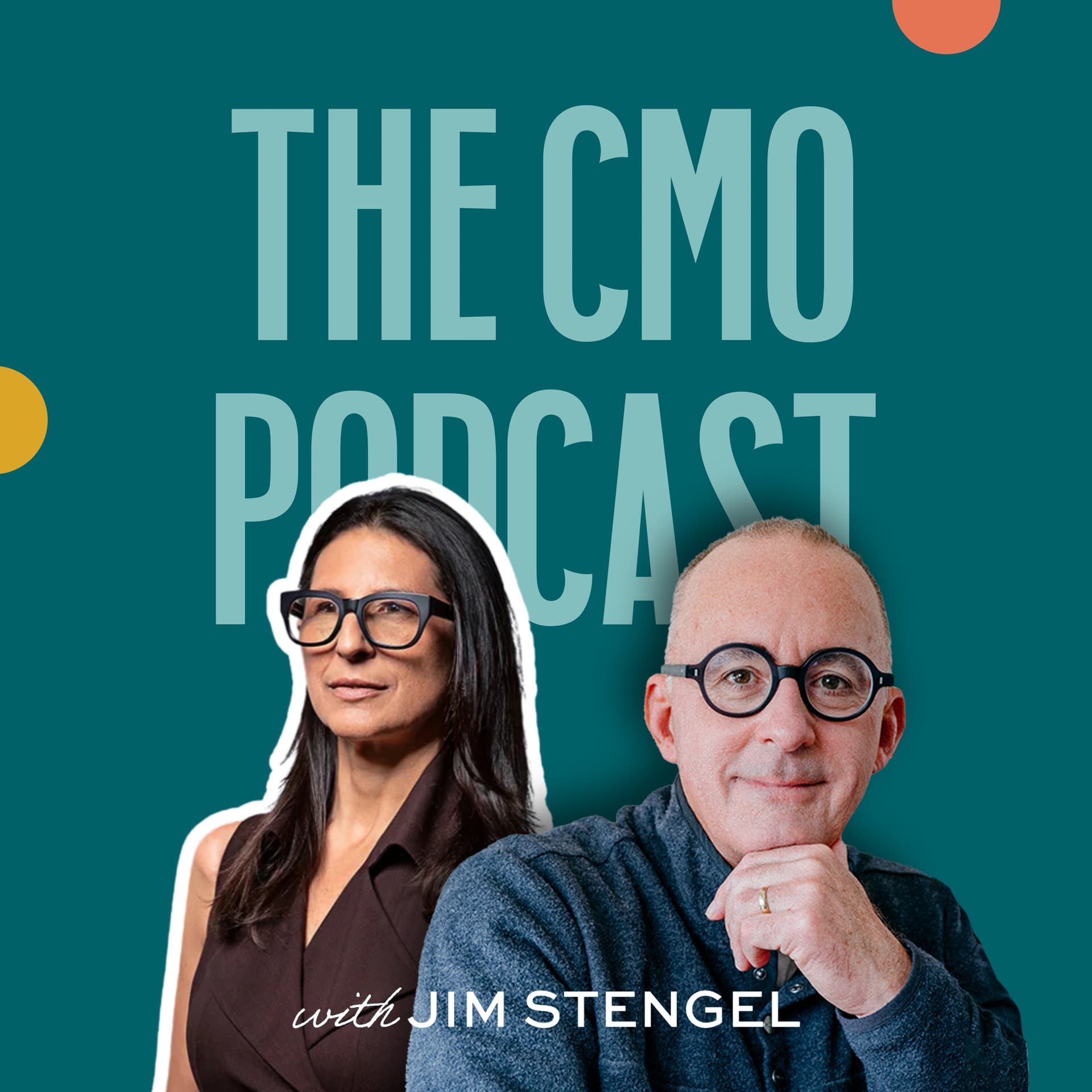
The episode argues that marketers should stop youth-obsessing and treat Gen X (born ~1965–1980) and baby boomers (50+) as the “most powerful and undeveloped” growth audience. Rivard claims Gen X and boomers control about 70% of U.S. disposable income and represent an ~$8.3T market growing to ~$12.6T as millennials age. He says brands should choose an audience upfront because it affects brand design, messaging, and staffing.
Guest
Brent Rivard, Canadian CEO/co-founder of Geezer Creative (founded 2024). Background includes studying at an Ivy Business School in Ontario, ~20 years at agencies including BBDO, Anomaly, Donor, and Loroche, and a stint as CMO before starting Geezer Creative.
Key claims
“If you want insights into a 53-year-old, don’t ask a 27-year-old.” Marketers copy old youth playbooks; ad agencies “ignore experience.” Luxury, beauty, and travel are shifting first.
Notable examples
Luxury using older actors; beauty brands like Pam Anderson “makeup free,” Jones Road (50+ reflective staff), Caddis Eyewear photography; beer examples like Michelob Ultra and Modelo; travel advisors often 70+; Labatt’s NHL “goal light” synced to fans’ phones.
Written by AI. May contain mistakes. Listen to the episode to check what was said.
Chapters
Tap a time to open that second in VOUnderstanding Generational Marketing
2:31 to 3:42
Explore the untapped market potential of Gen X and Boomers in marketing.
“This week, we're kicking off a series of episodes focusing on one of the most important choices we marketers make, which audience is the best one, the right one for you.”
Brent's Perspective on Gen X
3:42 to 6:00
Brent discusses his personal connection to Gen X and its work ethic.
“So this is my conversation with an advocate who is fighting for smarter audience choices in advertising.”
Challenges in Marketing to Older Audiences
6:00 to 7:48
Delve into the common pitfalls brands face when targeting older generations.
“So that's where I'm becoming less typical of a Gen Xer and embracing the things that other generations are doing that I admire.”
Brands Doing It Right
7:48 to 9:09
Brent highlights brands that effectively market to older consumers.
“We're the ones with 70 % of the disposable income, but nobody wants to talk to us.”
The Case for Experience in Marketing
9:09 to 13:34
Learn about the importance of experience in advertising and its impact on targeting older demographics.
“Well, you feel very strongly about this, and I've obviously done my homework on you.”
The Focus on Youth in Marketing
15:01 to 17:29
Discuss the trend of marketers targeting younger demographics and its implications.
“I'll put aside the juniorification, which has happened for, as you say, some economic reasons, probably some others as well.”
Case Studies of Successful Brands
17:31 to 19:34
Explore examples of brands like Michelob Ultra and Carlsberg targeting older demographics.
“It's funny that they were way ahead of their time.”
The Travel Industry's Unique Position
19:36 to 21:42
Examine how the luxury travel sector is adapting to cater to older clients.
“that spends$1 ,000 a month on products that help their skin.”
The Importance of Understanding Audience
21:44 to 24:50
Discuss the necessity of identifying target audiences in marketing.
“And that's a decision that goes beyond the marketing function, right?”
Shifts in Marketing Strategies
24:52 to 27:38
Analyze the evolution of marketing strategies and the need for bold decision-making.
“And our generation wasn't represented by good is good enough.”
Show all 19 chapters
Brent's Entrepreneurial Journey
28:52 to 30:58
Brent shares his experiences and lessons learned as a founder.
“Now, let's talk about your personal story in approaching this for a minute.”
The Importance of a Sharp Story
30:58 to 32:45
Discussing the significance of a clear brand narrative.
“And don't get frustrated, which is impossible.”
Navigating Brand Purpose and Marketing
32:45 to 34:59
Brent talks about the balance of brand purpose in marketing.
“In fact, I was just with a very fast growth AI company who's rich with talent, lots of clients growing like crazy.”
Curiosity and Market Exploration
34:59 to 38:11
Encouragement for marketers to ask questions and seek growth.
“Shockingly, even though they wrote the playbook for everybody to follow.”
Reflections on Significant Campaigns
38:11 to 42:01
Brent reflects on pivotal campaigns that shaped his career.
“No, find a partner that can deliver on that problem with the confidence that you require to help you because don't trip over that process now.”
Transitioning from Advertising to CMO
42:01 to 42:45
Learn about the challenges and insights gained from transitioning from an advertising role to a CMO position.
“and we landed on something, we had the right clients aligned with the right agency.”
Navigating Client Relationships
42:45 to 44:26
Discover the importance of empathy and understanding in client marketing roles.
“And was that challenging, that transition?”
Influences from Childhood Brands
44:26 to 45:58
Explore how early brand influences shaped Brent's view on advertising and marketing.
“Did it make you more, you said more empathetic?”
Inspiration and Resilience
45:58 to 47:14
Brent discusses the personal inspiration from his wife and the resilience required in life.
“And, you know, we think of the Taylor Swifts and the Madonnas of the world that have been successful.”
Transcript
Automatic transcript. May contain errors.0:00Jim Stengel:Before we dive into today's episode, we would very much appreciate a moment from you to make sure you're subscribed to the show on Apple Podcasts, Spotify, or wherever you listen, along with optioning to auto-download the episodes. It really is the best way to never miss an episode, along with supporting the show and the amazing team that helps me bring it to you. And while you're there, leave us a rating or review. It only takes a minute and helps more people find the show and helps us learn. And of course, share this episode with a friend or colleague who might enjoy it. We wouldn't be here six years later and still going so strong without you all, our community.
0:36Jim Stengel:So thank you for being part of it. Now onto the show. What's the first brand, Brent, you remember making an impact on you as a small boy? It was just those pure white Nikes with the black stripe. I was obsessed. And maybe that's what sucked me into the world of advertising and brands, because that was the I know it's such a typical answer from an ad guy, but it's the truth. And the other one that's funny is the other one is the rock band Kiss. I remember as a very six, seven year old being obsessed, you know, and I was like, but if you look at them, they're a big brand and they still are. They learned merchandise.
1:13They were the original marketers. And, you know, we think of the Taylor Swift's and the Madonna's of the world that have been successful. Like you go back in time, they were kind of the original.
1:22Jim Stengel:Gen X, baby. Nike and Kiss. Yeah, there you go. As you said, you're typical. Yeah, I sure am. Hi, I'm Jim Stengel. I've helped hundreds of major brands discover and activate their purpose. Because when a brand's purpose is clear, compelling and authentic, profit naturally follows. Each week, I welcome the CMOs, the chief marketing officers of your favorite brands to speak to how their job is so much more than marketing. These leaders share their inspiration and challenges along with how they try to build a full, healthy, and happy life in and out of the office. And it's that energy that reaches everyone they touch.
2:01Jim Stengel:And we're glad you're here to feel that energy and to learn from these remarkable leaders. So here we go. If I told you that the most powerful and undeveloped growth market in America isn't Gen Z, isn't Gen Alpha, and isn't even Millennials, would you think I was losing it? Well, that is what this episode is all about, choosing the right growth audience for your brand. Our guest today argues that the opportunity, an$8 trillion and growing opportunity, is right next door, but largely ignored in modern marketing. It's Gen Xers and baby boomers. This week, we're kicking off a series of episodes focusing on one of the most important choices we marketers make, which audience is the best one, the right one for you.
2:42Jim Stengel:We will also explore best practices and how leaders are marketing to different generations. And to start us off, my guest this week is Brent Rivard, CEO and co-founder of Geezer Creative, an agency built around one bold premise. The marketing industry has been ignoring consumers, people over the age of 50. Brent will talk about Gen X and boomers controlling roughly 70 % of disposable income in the U.S., yet most brands are still obsessively targeting youth. Gen X alone outspends Gen Z in categories like alcohol by multiples, and affluent 50-plus consumers are driving massive growth in travel, wellness, longevity, and lifestyle spending.
3:21Jim Stengel:My guest Brent is Canadian and studied at the Ivy Business School in Ontario. He then spent about two decades at top agencies such as BBDO, Anomaly, Donor, and Loroche. After a stint as CMO, Brent founded Geyser Creative in 2024 to help brands reposition themselves for what he believes is the most overlooked and fastest growing audience in America. So this is my conversation with an advocate who is fighting for smarter audience choices in advertising. Here's Brent. Brent, welcome to the CMO Podcast. We are releasing this episode on April Fool's Day. So don't take any offense to that. But I have to say, are you one of those guys that does silly things in April Fool's or?
4:02Yeah, I know. I avoid all those, you know, made up holidays for the most part. But but yeah, that's fun.
4:08Jim Stengel:I think it's kind of a mean holiday. Every time I've sort of done that, you know, my kids were younger. It's like it never ends well. And actually, this will be an interesting one when you think of how popular now AI has become. Right. Because we don't know what's real right now anyway. Yeah. I can't go onto Instagram and know what's real and not anymore. So, you know, the value is slowly decreasing. But, you know, I think it'll devalue April Fool's Day where people already don't know what's a joke and what's not. That'd be a very positive outcome of AI. So, hey, I think you are part of the Gen X cohort, born between 65 and 80.
4:44Jim Stengel:And I'm obviously right in smack in the middle of the baby boom generation. So I want you to start with what ways are you a typical Gen Xer and what ways are you definitely not? Oh, that's a fantastic question. I mean, I kind of look at it as we're just grinders. I mean, Gen X just, you know, get to work, get it done. We never complained. And this is maybe to our demise as well. We didn't complain. We respected authority. We got to work before our bosses did and we left after they did. That's just a big difference in our generation was this, that we were, you know, we were just the original hustlers, I think, and just get after the problems.
5:24And, you know, we didn't, we, and to our demise, we didn't take any time for ourselves, right? There were no mental health days in the Gen X world, right? There was no such thing. And maybe there should have been, you know, maybe that's to our demise. Yeah.
5:37Jim Stengel:Any way you're not sort of a Gen X type? I think I'm kind of really typical Gen X. Yeah. You know, I think that what I just talked about is something that I'm becoming not as typical because I'm starting to embrace, hey, maybe, you know, maybe a little meditation in the sauna after a workout is a good idea. Whereas instead of just rushing to the next meeting, maybe taking a moment and a beat. So that's where I'm becoming less typical of a Gen Xer and embracing the things that other generations are doing that I admire. Well, you're the first guest on this show in a series of episodes we're doing on exploring marketing to different generations, different audiences.
6:13Jim Stengel:This is kind of where you sit now with this agency that you started. So do you have any watch outs or advice for us as we start this series? You're the first episode of several we'll do over the next few months. Just embrace everything. And I think that that's what's not happening for marketers, right? As marketers are still youth obsessed. And, you know, that's kind of what this agency was founded from the beginning is just, you know, getting after a specialized market that's completely ignored. When people do market to it, they do it wrong. So, you know, that's for the most part kind of where our head's at.
6:46Jim Stengel:You know, this is such a fundamental decision every marketer has to make, right? What audience they will focus on to grow their brands. And then obviously, once you decide that affects everything. how you design your brand, your marketing. So if you're going to be consumer-centric, you have to start with deciding what audience you're going to be consumer-centric or audience-centric about. You've worked with a lot of brands in your career in advertising and now with Geezer Media. Yes. When you think about this topic, who do you think has done this well, in your opinion? What brands, what categories?
7:18There's very few. I mean, what was interesting to see this past year is luxury, right? So luxury has figured it out that, you know, maybe I should market to the people with all the money when I'm selling a luxury good and$4 ,000 handbags, you know, you saw the luxury category get after it. And, you know, with older representation, older Hollywood, older actors, and, you know, celebrities instead of the youth. But you don't see many companies doing this properly because nobody's, nobody's, we're the ignored generation. It really is fascinating to watch that, you know, We're the ones with 70 % of the disposable income, but nobody wants to talk to us.
7:54I think there's a lot of underlying reasons behind that. Then you have a few glimmers. I think that we're seeing the beauty industry start to pay attention to it. We're seeing the uprising of the Pam Andersons going makeup free and proudly, strongly representing their age and not the obsession of looking younger. We're seeing those moves. You're seeing the beauty companies start to pay attention to. I was in with my wife in Manhattan. and I went to Jones Road and I was happy to see that not only does Joan Road say it, act like it on their website, but when you went in, the sales representatives were also reflective of that 50 plus audience.
8:30Not all of them, of course, it's a mix. I thought that was good. Caddis Eyewear, I think does a good job. I walked by and there's a tiny store in the West Village, but I was pleasantly surprised and it stopped me in my tracks to look at the photography. And I went, oh, my God, somebody is doing it right. Like these are young, young spirited photographs of people that are 50 plus and presented appropriately, as opposed to, you know, as soon as we think 50 plus, it's slightly overweight. The gray, short haired woman that looks like she's 80, not 50. Right. So there's some there's some it's starting.
9:04I really do think that our timing is particularly good. And I'm hoping that I'm correct. But we see a lot of brands just starting to shift, but not enough yet.
9:14Jim Stengel:Well, you feel very strongly about this, and I've obviously done my homework on you. Could you kind of go a little bit deeper? You're already going there, but what your point of view is about this failure to make a good informed choice about the audience you're going to try to design your marketing and your brand for? How did you come around to this point of view? Why did it inspire you so deeply that you found that an agency focused on this? And so could you just go a little bit more deeply about your personal story when coming around to this point of view? Yeah, it's funny. It's a big story.
9:47It's not a complicated one, but it's big. It was a combination of frustration with advertising agencies. And, you know, my frustration that they've become a bunch of generalists, yet the finite nature of marketing problems is looking for specialists to solve them. And it's actually a verb now, the juniorification of ad agency people because of a failed business model. And now we're eliminating all the most expensive and the most experienced people in favor of just making your numbers work. And that's a failed experiment. And we know that. And we've been watching the consolidation the past few years of the large holdcos and seeing what's happening.
10:30It's the only industry in the world that ignores experience. It's kind of fascinating that if you think of it on its simplest terms, like if I need a litigating lawyer, I want a veteran, right? I want somebody that's maybe a year out from retirement. You know, if I need somebody to build my house, I want somebody that's built a thousand, right? If I'm having heart surgery, I don't want Doogie Howser doing my surgery. I want somebody, but then it comes to ad executives and people are like, ah, not the 28 year old will do, you know? So there's the frustration from that standpoint and watching all of the most talented people that I had the benefit of growing up in the industry with and watching them age out of a business where, you know, less than 5 % of the industry is 50 plus.
11:14And that's, that's just beyond shameful, right? It's a, that's like a, that's like malpractice when you actually think about it. And how much
11:22Jim Stengel:of the spending in the American economy is 50 plus? 70 % of the disposable income. It's$8.3 trillion market right now. And if you want to feel a little bit older, I mean, millennials, I believe start turning 50 in four to five years and that 8.3 trillion is going to go to 12.6. Yet we're ignoring it, which is kind of fascinating. So there was, there was the frustration with the ad businesses angle. And then it was, it was just the numbers, right? And then it started just resonating to think that it's more difficult than I planned on it being, but I'm confident that marketers are going to pay attention to this and to realize that you know you're what is the average tenor of a cmo right now i mean is it a year and a half maybe three years somewhere in between like you're you're paid to grow businesses and it's not happening right we have the entire alcohol industry i mean your stocks are down 41 since 2021 and you're still marketing to 21 year olds you know where Gen X outspends, I think it was Gen X and Boomers' status, they outspend Gen Z by a factor of 8 to 1 in alcohol sales.
12:31Yet we're still seeing the same behaviors. The combination of the frustration with the industry and the frustration with marketers not paying attention to this, and then for us, the opportunity, which is, hey, we have an opportunity to right a wrong and to get a bunch of really talented people back to work on some really big juicy briefs and business problems to solve. And the thesis is really simple that if you want to understand the insights into a 53-year-old, you probably shouldn't ask a 27-year-old. Right? And we've even said, if a client comes along and just loves our experience angle and says, you know, hey, we're launching a new Skittles candy to 14-year-olds, I have to decline that invite and say, I don't know the insights into them.
13:15I don't understand their language. We're probably not the agency for you. So that was kind of the thesis at the beginning was, you know, this combination and collision of a market being ignored, the necessity for specialized people to get after specialized problems, and then the frustration that's going on in the ad industry and how it's declined significantly.
13:43Jim Stengel:Commerce media has moved beyond experimentation. Today, marketers are expected to prove incremental impact and scale what works. That's why on April 14th, IAB is bringing the industry together for the 2026 Connected Commerce Summit in New York City. Qualified brand and agency leaders can request a free pass, while all other media professionals can save$150 on tickets with a code CMOPODCCS26. Join marketers, retail partners, and platform leaders for practical conversations about what is actually driving commerce growth right now. And this year focuses on execution, how to integrate in-store media into full funnel strategy, how to align marketing, merchandising, and analytics teams, and how to build measurement models that reflect total business impact.
14:33Jim Stengel:You'll hear real case studies, actionable insights, and operating approaches you can bring back to your organization immediately. If you're ready to move from testing to scalable performance, this is where it happens. Visit iab.com slash CCS to learn more and request your free pass or enter the code CMOPODCCS26 for$150 off ticket prices. We'll see you there.
15:01Jim Stengel:I'll put aside the juniorification, which has happened for, as you say, some economic reasons, probably some others as well. But this issue of focusing on youth is not new. I've been in the category for decades and most brands, most agencies are going after younger audiences. So what do you think the root cause of that is and how do you break that pattern? It's that's a big question too. I think to oversimplify it is you have a lot of marketers continuing to use the same playbook. And, you know, here we are in this inception of AI where it's changing everything. But is anybody really changing?
15:38You're still, it's still the same playbook, but markets have changed. Attitudes have changed. The way we purchase has changed, but marketers are still stuck in that. Let's keep my head below the clouds. Yep. You know, it's almost remember the area. You'll remember this. It was basically, you know, I used to run big car accounts and I used to say to the media director every once in a while, Hey, you forgot to change the date. Like you copied and pasted last year's media plan into the new one, right? Oh, they were launching the Toyota Camry. Let's go back four years. And so you've got marketers following that same playbook.
16:12And then I think you have an issue in the marketing departments as well, where there's too much youth. We like to market to ourselves, right? I like to think of myself through my lens. So I think that there's another factor there that you have a 35-year-old trying to make a mark for themselves in marketing, and they're marketing the 35-year-olds because that's a natural kind of knee-jerk. We look at it through our own lens. It's funny, and I mean this in the best way possible. You'd think that marketing leaders would be regarded as at the forefront of everything. But if you actually look back and I think of all the people that I've worked with, it's kind of like they're kind of the last to the party in some cases, right?
16:53So there's risk. There's inherent risk with saying, I'm going to take 25 % of my budget and my sales at least or stable or declining, but I've kind of started to turn the tap off a little bit, there's risk to say, hey, I'm going to get after a campaign and go after 50 plus as a segment and stick my neck out. But I'm telling you, the company that does it first is going to become famous in a hurry. And then my prediction is, is then everybody's going to follow. It's going to be the new shiny object to say, wow, we just found some growth. I mean, who's going to be the first beer company It's funny that they were way ahead of their time.
17:34I'm probably dating myself. It's probably 20 years ago where, and I don't know if it was in the United States at the time I was in Canada, but Carlsberg had an ad that said, welcome to your Carlsberg years. And if I reflect, they were 20 years too early because the market wasn't sizable enough back then. So I don't know that, you know, that would have been successful, but if they're looking at it now, they should dust that one off and give it another try.
17:56Jim Stengel:You know, Michelob Ultra, I don't know the numbers on this, but just I see it as a consumer. They're sort of marketing toward fitness and wellness, but it seems to be their casting and they're putting out, you know, I think a more older audience or a more mature audience. And that brand, it has been growing. It's one of the few in the category that is that is growing. Yeah, I actually think it's the only one in their portfolio that's going. Obviously, I have probably eight years I spent working with AB InBev, and I still stay in touch with a lot of people there. And you're right. It's the only brand that's growing.
18:29But even that, I mean, I remember the Super Bowl ad from last year. I've heard the process wasn't easy to get everybody to buy into having the older demographic in that spot. And, you know, maybe now that they've had some success, they'll get after it. But there's an easy one to say, hey, you're doing it and it's working.
18:48Jim Stengel:Modelo as well. When I think about Modelo, who also is a very hot, it's a very hot brand now. I mean, they're all about working hard and we're the beer. It's kind of the old Budweiser kind of thought. But as I look at their casting and how they're presenting themselves, it is a broad, diverse mix of people, you know, across generations with this one thing, time that together is they work hard, they care, and this is a reward. So maybe something's shifting. Yeah. We're seeing the glimmers. You're seeing the doors opening a little bit. I think the beauty category is the biggest one. Because if you think of, there's one thing to be youth obsessed, but then there's one thing that shift in selling to look younger constantly.
19:28And we're seeing that they're starting to move slightly away from that. And it's only logical. I mean, you can talk to somebody that's getting an allowance, or you can talk to somebody that spends$1 ,000 a month on products that help their skin.
19:43Jim Stengel:You've also said, I think I've seen this in other venues, that the travel industry, which you have some experience in, understands this opportunity well, is acting on it. So could you speak a little bit about that category? You were CMO of a travel company for several years before you started the Geyser Media. Yeah. What are they doing? How are they getting this right? I mean, who has been a leader in that business? What could others learn from what they're doing? Yeah, it's funny because in the travel business, all the money is made in the luxury category. And we're going to see the proliferation of artificial intelligence exaggerate that, right?
20:18That's the one sheltered area that they have is that the ultra high net worth individuals aren't ever going to book anything on their own. So you have that. And then naturally, of course, they're 35-year-old millionaires as well. But for the bulk, that's where that category resides from a business standpoint. And then if you actually look at one of the problems that they do have is that, you know, of the 80 % of the highest producing travel advisors in the luxury category, the median age is over 70. So, again, have the reverse situation of where we're criticizing marketers that are young, just focusing on themselves.
20:58But you've also got 75 year old travel advisor that, you know, has a roster of a mirror image of themselves doing all of the business. So that's where that kind of resides. But I think the travel category, they have the opposite problem, that they need to start paying attention to the ultra high net worth young people, right, instead of just focusing on where they are today. It's kind of the opposite problem. But I think that that's just, they're the ones that get that, yeah, the person that spends$150 ,000 on a long weekend vacation with their spouse typically is over 50.
21:34Jim Stengel:Now, this decision on an audience for your brand and your company is a fundamental one. At P &G, we used to teach you to start with a who, right? Who are you trying to go after? And that's a decision that goes beyond the marketing function, right? If you're really going to design your services, your products, your offerings, your communication to a specific audience, everybody has to be part of that, right? Everybody in R &D, comms, finance, HR, everyone. So do you feel like that's part of the problem? That's a heavy lift. And it may not be as fun to look at an audience that might be 50 plus who has different values, needs than the people who work at the company, because companies tend to be a little bit younger.
Read the full transcript
22:23Jim Stengel:So have you had any experience in dealing with that? Who's done that well? Who's tackled that? Because doing any company-wide initiative that transforms things, changes things, is a heavy lift. And that's where this word brave comes in, right? You need a brave marketer to be able to say, you know what? I don't have to. I was speaking to a VP of marketing at a large beverage company, I'll say. And you could hear, yes, yes, nodding. I understand. Yeah. Sure. young people aren't drinking flavored syrup anymore. In fact, they're pushing back against it and they're not drinking alcohol. It requires a brave marketer to, as you said, it's not just them waving their magic wand and saying, I'm going to get after the obvious.
23:11You've got to get all your colleagues on board. You got to go to the CMO with a bold thought. You have to change the way things have been done in that organization from years. Like talk about the first person at Procter & Gamble from your alma mater that, you know, no, actually, you know what, I don't think this way is the only way. I think, I know you've been doing it for 20 years, but you know what I think, Jim, is I think we should try doing it this way. That requires a brave person. I think once upon a time, going back to your first question about, you know, Gen X and we were grinders, we made our careers from wanting to disrupt, from wanting to do things differently.
23:48And that was the way to get the promotion, to get your name in Ad Age magazine or Adweek, and to really send your career on another trajectory. And I think somewhere, and I don't know where, but that changed. And I think that there's this safety of the same way of doing things and not wanting to gather R &D, HR, and everyone to say, I think we might be doing it wrong. Or maybe not. It's not even wrong. In no case am I recommending to marketers, you know what you need to do is you need to shift 100 % of your dollars away from Gen Z and into Gen X, right? No. But what I'm suggesting is there's a lot of money here with people that are buying your product and they're ignored.
24:39And just might you allocate some money, do a test and learn and be the most celebrated marketer in your building and start a trend. So I think it's just, I think people are just good is good enough. And I didn't grow up that way. And our generation wasn't represented by good is good enough.
25:01Jim Stengel:Now, hearkening back to my P &G days, we had a principle that I want you to talk about. And it was that it's critical to capture an enormous market share at the entry point of a category or a re-entry point of a category. So we were obsessed with the first diaper on a baby's bottom had to be Pampers. The first detergent that someone should try when they buy a new machine has to be tied. Same with Crest Toothpaste. The first toothbrush and toothpaste has to come from Crest. And we spent a lot of money on programs to be there at that entry point. And we often said when budgets are tough, times are tough, those are the last dollars to cut.
25:42Jim Stengel:So that does kind of naturally skew your spending young, you know, in most cases. So what's your take on that? Do you think that still holds true? Because obviously the theory at P &G was that first impression is deep and it's powerful and it sets the standard and brands that typically own entry point go on to have a dominant market share? I think there's still a role for it. There's no question. As I said, in no respect, do I want people to shift all of their spending to Gen X. But it's not as true as it once was. So, you know, there used to be a purchase funnel, right? And now there's kind of like a purchase mayhem, right?
26:22And it used to be that, you know, if you got the pampers on the baby for the first one, then they're going to buy Pampers exclusively for the rest of their parenting lives. But that's the part that's not true anymore. You have multiple opportunities to conquest and to gain a customer nowadays. We're not as loyal as we once were. That whole old playbook, that market has shifted so dramatically. But again, as I say, there's a role for that, though. I'm not suggesting that you don't talk to them to get the first. But what I'm suggesting is, is there's another opportunity, right, down the timeline that isn't being taken advantage of.
27:02And that's where, you know, I suggested from my last answer that there's fear that, oh, my God, what if I take away from because budgets are finite, too, right? Nobody's going and saying I need an incremental 50 million, right, to test and learn, you're gonna have to take money from your current activities, try it further down the timeline. But I think that's where the opportunity is currently being ignored. And that's where I think there's a massive amount of growth potential for so many marketers out there.
27:37Jim Stengel:Hey, everybody. This is Andrea Sullivan, the CEO of Vibe. And we produce the CMO podcast and are so excited to have partnered with Jim Stengel for so many years. I wanted to tell you a little bit about something that could be right for you. Vive is a program for entrepreneurs and business leaders who want to get more out of their life and become their best and happiest selves, both personally and professionally. We have a 12-month program that allows people to meet up with some of the best business leaders out there and additionally experts in the wellness sector so that you can learn how to nurture yourself.
28:12Jim Stengel:So we teach things around sleep optimization, meditation, all those good things as well. Please reach out to us at podcasts at vibe.co to get more information. That's P-O-D-C-A-S-T-S at V-Y-V-E dot co. Thanks for listening to the CMO podcast and hope to talk to you more about vibe. Working across teams is tough, but Asana helps you handle it. Asana AI can spot roadblocks and assign work to keep everything on track. That's how work gets handled. Visit us at asana.com.
28:52Jim Stengel:Now, let's talk about your personal story in approaching this for a minute. I mean, you had a long career in advertising. You worked as a CMO for a while, but you decided to jump, start your own firm with a couple of friends. You know, a lot of people dream of that. I mean, I left P &G and did a similar kind of thing. But, you know, a lot of people don't do it. I get a lot of calls to say, I'm thinking of doing something on my own. What have you learned? And it's always a good discussion. So you're passionate about this topic. You see a gap in the marketplace. You see what's happening in the advertising industry in terms of staffing.
29:26Jim Stengel:And you're saying it's not going to end well. So tell us a little bit about how it's going as a leader, as a person starting something up, even though the opportunity is big. What are you learning about yourself? What are you learning about your team? What are you learning about brands? as you have this discussion with them that, you know, they nod their heads, but some of them act and some of them don't. So tell us a little bit about what the last, what, two years has been like? Yeah, just about, yeah, a year and a half. Anyway, it's not for the faint of heart. I will never sit as a founder and an entrepreneur and say that this game is easy.
30:02You know that too well, Jim. But it's, the benefit is the learning. You know, I had the pleasure of doing an MBA some years ago. And I can tell you that one year of owning your own company is about 73 MBAs. And you trip and you fall and you learn, but you just, again, you keep grinding and you keep telling your story and you make sure that it's a sharp story. You know, advice for anyone out there trying to open an ad agency or any company. We all know strategy is more about what you choose not to do versus what you choose to do. And yeah, it's hard. It would be hard for me to say, no Skittles, I don't want your million dollar retainer.
30:42But you have to make tough choices. So I mean, my advice to anyone out there is get real specific. And what's haunting to me as well with advertising and the way it's gone is that when did we stop paying attention to our own brands, make your brand your first client, your own brand and sweat the details. And don't get frustrated, which is impossible. That's just actually, that's probably terrible advice. You're going to get frustrated. I get frustrated daily, if not hourly. So there's a lot of fulfillment that comes out of it. You know, when you start to, when you move a client from head nodding to saying, I'm going to give this a try.
31:16And we're grateful for the ones that we have that have, that have started with us. It's very fulfilling when you start seeing it work or you talk about the philosophy of your business, but you haven't taken it on a test drive yet. You know, one of our philosophies is, is once upon a time agencies used to love God. I hearken back to one of the companies I worked at, Lowe Roche, Jeffrey Roche was a creative director and founder at the time. He demanded eight weeks to come back with work to clients. I'm like, eight weeks? If you get eight days, you're blessed nowadays. And then it was the drop of the curtain.
31:50Ta-da, here is all of our wondrous thinking. Whereas the geezer philosophy is we'd rather meet 10 times over a three-week period and involve our clients in the process and iterating with us. And when you see that come to life and you see, wow, the rounds of revisions that we used to go through are gone. And it's very gratifying to go, it worked. Because we essentially took something from theory to practice. And that doesn't always work. And we know that, right? So in theory, every marketer should be allocating a significant amount of their margin. to testing this out and seeing if they're leaving money on the table.
32:31In practice, that's not happening at the level that we'd love to see it, but we are seeing it and we're grateful for it.
32:38Jim Stengel:You said a few moments ago about the importance of a sharp story. And I'd like you to go back to that for a moment. I talked to a lot of young companies. In fact, I was just with a very fast growth AI company who's rich with talent, lots of clients growing like crazy. Their story's not sharp. No. And then you see that a lot of the tech world. Yeah. And it's like, that might be okay for now, but once you have a few competitors pop up, how are you different? What sets you apart? And I just find that is such a, you know, it's obviously it's hammered into you when you, when you're a PNG about how's your brand different?
33:17Jim Stengel:What's your point of difference? What's your purpose? How are you meaningful? And what's your sustainable competitive advantage, all that good stuff. So could you talk a bit about arriving in a sharp story? Yeah, it's hard. I can't remember who the writer was that had the quote. I'm sorry, I wrote you a long letter. I didn't have time to write you a short one. I think it was Abe Lincoln, actually. Oh, it was. Amazing. There you go. But that's just a fascinating way to look at. I mean, you need to start with your long story and then you really need to be honest with yourself and keep revisiting it.
33:46I think that the Geezer thesis is so simple, which is it took us a long time to get there, though. It wasn't that simple, right? And you have to make some hard choices about what you're not going to do, what you're going to do, who you're for, who you're not, who's the company you want to keep, who's the company you don't want to keep, who would we be great for, but who would we be terrible for? And just, right. You think of how many companies, God, I've worked for how many ad agencies, and they all at one point in time, we're not going to pitch. All they do is pitch, right. But that's a hard decision, right.
34:17To say, we're going to put our foot down and say, we're not going to do this in favor of that. So, and too few companies do it. And I think too few companies know, you know, I think the tech world, they're just not wired as marketers, right? And that's a good line of hire people that aren't like you. I don't need to hire another four versions of me. That would be terrifying. But hire people that aren't like you. So the tech people need to start hiring marketers and understand how to build brands and brand equity and build shareholder value in a different way. But I think that the knee jerk is, is we are going to surround ourselves with a bunch of ai phds and techies and then what happens is is when you go to 10 of their websites they all look the same they all use the same ai program to create the website the colors are kind of the same they just end up blending in and i think we went away from you know i'm not against performance marketing either but when you dialed it in a hundred percent i think we all lost a lot of brand and you know you've done it how many times have i stood up in front of a audience as a speaker and said, I know people are sick of hearing us talk about Nike and Apple, but they're kind of still the only ones doing it right.
35:26Shockingly, even though they wrote the playbook for everybody to follow. I'm hoping we're going to see a shift and that we're going to see people dial back to brand and start caring about their purpose. Even you had a great segment for listeners out there. You had some fantastic guests talking about brand purpose and whether it's dead or not. And I think it's dialing back to the role of it. But at the same time, the maker of this glass doesn't need to have a brand purpose, right? It's marketers at one point, everybody shifted, everybody needs a purpose. But I think we're seeing the dialing back to, oh, maybe I do need to be more specific with who I am as a company, who we are and who we're not.
36:01And it just makes selection better overall for you and for the customer.
36:05Jim Stengel:Now for the senior marketers listening and are inspired by, hey, maybe I haven't thought about my audience creatively enough or thoughtfully enough, or where's the spending or where's the spending going? What would be your playbook for that CMO? And if you're working with someone now who's doing it well, and you can talk about that, beautiful. If not, just pull some principles. But what should they go do if they're thinking? Get curious. I mean, this is the other thing. Remember why you got in this business? I love marketing. I love advertising. I love business. like it's an obsession like get curious like just ask yourself the question am i potentially leaving growth on the table what that's what you get paid for get excited about it dig right all we have now is data we don't even know what to do with it once upon a time by the time your data was telling you anything it was too late right it was months and months and months of taking primary data and somebody coming to you and presenting what that said.
37:05And even oftentimes that was opinion, but the speed of AI out there right now with how we can, how we can scour markets, billions and millions of data points in the blink of an eye. I mean, it's not even, it's not even that much work, but it starts with you. It starts with get curious about whether you're leaving money on the table. You might not be, but if you are, you know, get some data, get a whiteboard and a marker, get some smart people around you and start talking and do what it is that we set out to do in this business, which is find another market. And if it's there, fantastic. How rewarding is that?
37:40How many marketers really nowadays are saying, oh, I delivered 12 % year over year growth. I can't name one. Right. So get excited about that maybe being the end of the story.
37:52Jim Stengel:Simple stuff, right? Get a team together, get curious, ask some fundamental questions. That's the beautiful part about this function, right? It's one of the few in business that that's their brief. And then again, if it's, hey, call me, I'd love to do business with you. But if it's not, don't let it end there. Don't then do the old playbook of, oh, now I'm going to get, you know, the top 10 agencies in the country to pitch. No, find a partner that can deliver on that problem with the confidence that you require to help you because don't trip over that process now. I think we're just at the point where the old playbooks are really going away.
38:27And AI, I think, didn't even know that it was going to be part of its benefit. I think AI is forcing everyone to just kind of relook at everything and going, maybe it's not the right way that we did 20 years ago, isn't the right way today. And again, that's about getting curious as well, right?
38:53Jim Stengel:Brent, let's flip into the creative brief. You had a long career in advertising, I think like 18 years and a couple of years, three or four as CMO. As you reflect on that, you worked at all these blue chip agencies, had great accounts. Could you speak to one or two initiatives or campaigns that you worked on that you reflect now at this point in your career and say that was very meaningful to me or very, very important to my development? Yeah. Anomaly, when I went on board with Anomaly and we opened the Toronto office together with the partners and Frankie Rodriguez was the CEO at the time who's from here in New York, that was kind of game changing for me.
39:31And what's interesting is, is that you talk about inspiration that, you know, Anomaly at the time was very clear with who they were and who they weren't. The name was the idea. So as I look at Geezer Creative, the name is the idea, right? There's a lot of similarities in how this works. And the interesting thing about the Canadian market is, and not to be critical of the US market, but the Canadian market doesn't have one-tenth of the budgets that the US market has. So the creative that comes out of Canada doesn't start with a Tom Hanks voiceover and a Fleetwood Mac track under, right? That doesn't happen.
40:08It doesn't even happen with a Canadian artist that's like a B-level. It just doesn't. So you have to outthink instead of outspend. And at the time, the CMO at the time of Labatt, Jorn Soket, who I give a lot of credit to, gave me the clearest creative brief I've ever been given in my life. We're a big American brand in Canada against our number one competitor named Molson Canadian. Right? We've just lost the rights to the NHL. And 40%, 4-0 % of beer is consumed in Canada while watching hockey. we need to own hockey go that was our brief and i'm like bless you for the clearest creative brief that we have to come up to we came up with the insight uh which is clear as it's clear in every sport nowadays it's clear in concerts now that the real fans aren't in the arena right the real fans are in their garage the real fans are down in their basements and the most elated part of the game is when a goal scored and there's this great symbol which is the goal light in behind the net that goes off and of course the loud horn that sounds and gets everybody excited so we decided instead of marketing at people with another beer ad that we were going to make a piece of branded utility and we crafted an actual physical goal light that synced up with your phone to your favorite team and when they scored that had the horn noise and the light would go off we thought we were on to something clever but i mean these things sold out in minutes we crashed our website the day of releasing.
41:39Famous people everywhere were referencing it. Goaltenders were like, sorry for your bud red light going off too much last night. That was my bad. And so that was probably some of the proudest work that we've done. And then, you know, I could go on for hours about the next wave of the campaign. But that was some of my proudest work because, again, it was not conventional. We looked for other solutions. We got curious in a hurry. and we landed on something, we had the right clients aligned with the right agency. That was where you felt trust and you felt a tremendous amount of gratitude in a room working with people that were smarter than you, teaching you about their business.
42:20And it made a difference and it made a huge difference. Still lives on today. It's still part of the campaign. That was God 10 years ago.
42:26Jim Stengel:And there was, you know, you said it was a great brief and a clear brief. It also had a clear constraint. Yes, 100%. Yeah. And it had an enemy. Yeah, right, right. And a ton of tension. Yeah. About five years ago, you left advertising and went to be CMO of a travel group and a large one. Why did you do that? And was that challenging, that transition? Yes. Yeah, okay. Why I did that was, again, it was out of curiosity. I got a call from a friend of mine that J.D. O 'Hara, who's the CEO of Internova Travel group and said, hey, you know, I'm thinking of bringing in a CMO. You know, I've admired your work that you've done over your career.
43:08We stayed close to each other. We're, you know, why don't you take a crack at this coming this way and being a client? And I'd always wondered, you know, you always had those questions in your head of, you know, what's going on in that building? And clients always telling you, guys, only 15 % of my job is advertising. It was an appropriate amount of fear, right? And anxiety to be like client. I mean, I'm pretty comfortable in the role that I've been doing in advertising for years. So it took me out of my comfort zone and yeah, it was challenging. Navigating the client world is incredibly different.
43:41There's a lot of good in it and there's a lot of challenges in it. And I think that it also helped me reflect and get excited about going back into advertising because I realized that ad people, like we started this discussion, Gen X people are different. Ad people are different too, right? Ad people start with nothing's impossible and I spent a lot of time having to convince a lot of people to do things a certain way because again they're stuck in their way so I think what it's done for me as a professional and as an ad agency owner is I have a tremendous amount of empathy for the CMO role and the marketing function within a building that wherever in a world where everything's ROI next week Thursday right nobody's nobody's doing play in the long game so it taught me an awful lot and And again, it was a lot of fun.
44:26I enjoyed it. I'm really grateful for those years.
44:28Jim Stengel:How did you evolve as a leader? I mean, did it make you more patient? Did it make you more, you said more empathetic? Yeah. And I think what it did, what it does for me in my role is that I can be tremendously helpful by saying, ooh, I know what you're worried about going into that meeting with the CEO who speaks one language and that's finance. So I've actually shared that experience with a few clients and it's been successful where I've said, you need to speak in their language, right? You need to speak in ROI, right? You don't push back against it. Don't come up with the reason why they shouldn't be focused on that first.
45:04You're not going to win that argument. So I've been able to be very empathetic and very helpful to clients on how to navigate, you know, a discussion with a CFO and a CEO that come from the finance world on why they should be investing an incremental$20 million with you, right? That's a, that's not an easy discussion. So I've helped, I've helped out that way, but it's, it's a, very different world. And I think, again, it's been a tremendous amount of growth for me.
45:28Jim Stengel:What's the first brand, Brent, you remember making an impact on you as a small boy? It was just those pure white Nikes with the black stripe. I was obsessed. And maybe that's what sucked me into the world of advertising and brands, because that was the, I know it's such a typical answer from an ad guy, but it's the truth. And the other one that's funny is the other one is the rock band Kiss. I remember as a very six, seven-year-old being obsessed. You know, and I was like, but if you look at them, they're a big brand and they still are. They learned merchandise. They were the original marketers.
46:02And, you know, we think of the Taylor Swifts and the Madonnas of the world that have been successful. Like you go back in time, they were kind of the original.
46:09Jim Stengel:Gen X, baby, Nike and Kiss. Yeah, there you go. As you said, you're typical. Yeah, I sure am. So, Brian, who has been the most inspiring person in your life? My wife. Challenges. Had my wife go through some health problems. And that whole, like, I can lay down in the corner or I can get up, dust myself off and get back after it. So, really inspiring. Is she an advertising person? Yes. She's the president of an ad agency. It'll remain unnamed. There you go. Resilient, right? Gen X? Yeah, Gen X. Gen X, yeah. It's going through. Well, Bren, thank you for this. Kicking off our series about different audiences.
46:49Jim Stengel:I mean, this whole show has been about one really fundamental question. Are you thoughtful enough about who you're designing for, who you're marketing to, whose life you're trying to make better? And I love the depth we went on that. And I love that as a question we can leave this show with and go back to your teams. Are you curious enough? And do you feel like you have the audiences that will help you exceed your growth targets over and out? Give it a shot. I mean, all you can be is wrong. Again, in this day and age, you don't have to spend millions of dollars to test something, right? You can spend hundreds of dollars on a meta platform and get some pretty interesting feedback that same day, right?
47:30Jim Stengel:All right, Brent. Well, I hope April Fool's Day goes well for you and no one plays any tricks. We'll both behave. Yes, we will. Yes. All right. Thanks, man. Thanks for this. It was really, really terrific. Yeah, I appreciate this. Thanks for having me. I'm a huge fan of the show. And this has been a good one for me. That was my conversation with Brent Rivard. Three takeaways from this one for your business brand in life. And the first one is a simple one, and we hear it a lot in the show. Be curious. A key, key, key characteristic of top leaders we hear again and again in the show is their curiosity.
48:02Jim Stengel:When I asked Brent for advice on what a CMO should do to pick the right audience for their brand and not be obsessively youth-focused, he just said, be curious, ask deep questions, get your team together, get some creative people around the table, and ask some fundamental questions. Second takeaway, and relate it, hire a team for your business or brand that represents the consumers, the people that you want to market to. It's a diversity point, but it's also a point that's just so, so simple. If you want to appeal to an audience that's not like you, you need to populate your team with people who are not like you.
48:37Jim Stengel:And third takeaway, the importance of a sharp story for every company. As I talked to Brent about starting his own company after many years at big agencies and one stint as a CMO, he talked about how important it is to have your story sharp. Who are you? Why are you here? And how are you different? I think that's important for companies of two or three people up to companies with two or 300 ,000 people. Thanks, as always, for listening. And remember, this is part of a series of episodes that we will be doing over the next several months about choosing the right audience for your brand. So listen up.
49:11Jim Stengel:We won't be dropping one of these every week. We will sprinkle them among our more traditional classic episodes. But we want to do several episodes about this very fundamental marketing choice that we are sometimes not as thoughtful about as we need to be. who is the right audience for your business looking forward with your growth goals in mind.
49:32Jim Stengel:That's it for this week's episode of the CMO Podcast. As always, I would be grateful if you shared our show with your friends, along with subscribing and leaving a review on Apple Podcasts, Spotify, or wherever you listen. The CMO Podcast is a Vive Original Production.
From the publisher
If you think the biggest growth opportunity in marketing is Gen Z, Millennials, or Gen Alpha, this episode may change your mind. We kick off a special monthly series focused on how marketers approach different generations, starting with Gen X and Baby Boomers.
To explore the 50+ audience, Jim welcomes Brent Rivard, CEO and co-founder of Geezer Creative, an agency built around one bold premise: the marketing industry has been ignoring consumers who represent an $8 trillion opportunity.
Gen X and Boomers control roughly 70% of disposable income in the U.S., yet most brands remain obsessively focused on youth. Gen X alone outspends Gen Z by multiples in categories like alcohol, while affluent 50+ consumers are driving massive growth in travel, wellness, longevity, and lifestyle spending.
Brent studied at the Ivey Business School in Ontario and went on to spend two decades at top agencies, including BBDO, Anomaly, Doner, and Lowe Roche. After a stint as a CMO, he founded Geezer Creative in 2024 to help brands reposition themselves for what he believes is the most overlooked and fastest-growing audience in North America.
Tune in for a conversation with an advocate fighting for smarter audience choices in advertising.
—
Learn more, request a free pass, and register at iab.com/ccs
Promo Code for $150 off ticket prices: CMOPODCCS26
—
This week's episode is brought to you by IAB.
See Privacy Policy at https://art19.com/privacy and California Privacy Notice at https://art19.com/privacy#do-not-sell-my-info.