In short
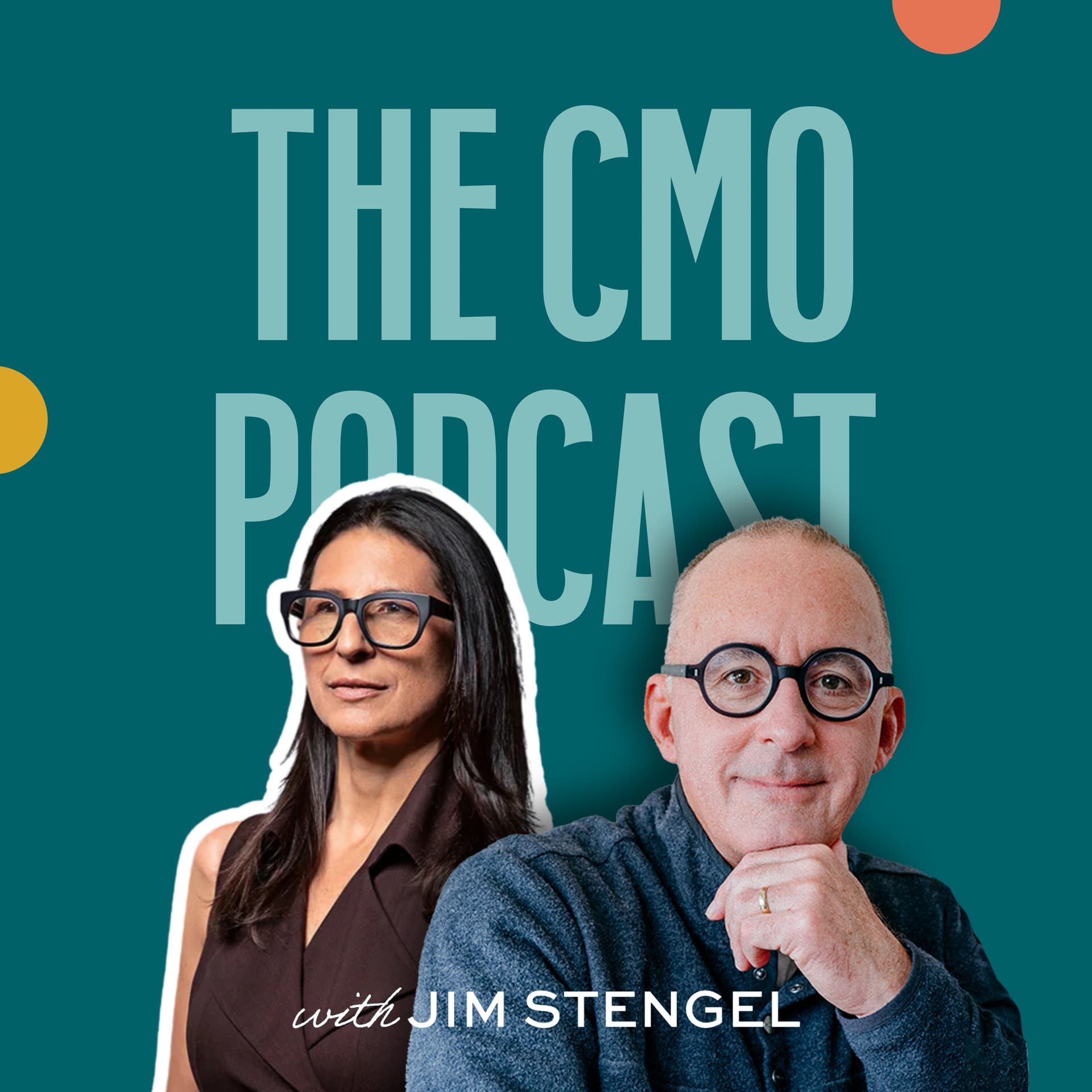
The CMO Podcast: Episode Summary
Episode Title
Melody Lee (Mercedes-Benz USA) | Success is Never Solo
Host
Jim Stengel
Guest
Melody Lee, Chief Marketing Officer, Mercedes-Benz USA
Episode Description In this episode, Jim Stengel engages in a deep conversation with Melody Lee, the CMO of Mercedes-Benz USA. They discuss her career journey, challenges in modernizing legacy brands, and the importance of teamwork and creativity in marketing. Recorded at the Cannes Festival of Creativity, this episode emphasizes the role of marketing in shaping brand identity and connecting with consumers.
---
Key Themes and Highlights
- Career Journey of Melody Lee
- Background: Graduated from Georgia Tech with both BS and MS in International Affairs.
- Early Career: Started with a $12/hour internship at a PR firm; six years in public relations before transitioning to brand marketing.
- Experience: Held senior roles at Cadillac, Shiseido, and MillerKnoll before joining Mercedes-Benz in 2023.
- Modernizing Legacy Brands
- Challenge: Balancing modernization with respect for brand heritage is crucial.
- Lessons Learned:
- Honoring Legacy: Understand that each leader is a steward of the brand, responsible for its evolution without discarding its history.
- Modernization Approach: Use the brand's past as a foundation while innovating for future relevance.
- Leadership Philosophy
- Team Success: Success is defined by the growth and achievements of the team, not personal accolades.
- Mentorship Influence: Melody emphasizes the importance of learning from mentors and fostering a supportive environment.
- Crisis Communication Insights
- Crisis Perspective: Experience in crisis communication has shaped her ability to assess situations calmly and guide the team through challenges effectively.
- Importance of Clarity: Clear communication is essential in times of uncertainty, ensuring that the team understands the context and purpose behind decisions.
- Creative Evaluation and Development
- Creative Evaluation: Emphasis on using a clear brief to evaluate creative work, focusing on how well it answers strategic objectives rather than personal preferences.
- Fostering Creativity: Melody believes creativity can be inspired, and problem-solving is a key aspect of her creative approach.
- Innovation and Market Adaptation
- Adapting to Change: Discusses the challenge of navigating market changes, technological advancements, and consumer expectations.
- Focus on Customer Experience: Prioritizing customer-centric strategies enhances innovation and brand resonance.
---
Key Takeaways
- Learning from Early Experiences: The foundation of a successful career is built on early experiences, especially in crisis management and communication.
- Value of Diverse Experiences: Career diversity enriches leadership capabilities and adaptability.
- Team Over Ego: Effective leadership is about elevating others and focusing on collective success rather than individual achievements.
- Empathy in Communication: Successful communication hinges on understanding the audience and delivering messages without jargon.
---
Conclusion
Melody Lee's insights from her journey at Mercedes-Benz and previous roles illustrate the dynamic nature of modern marketing, particularly in the luxury automotive sector. Her emphasis on teamwork, crisis management, and creativity provides valuable lessons for CMOs and marketing professionals navigating today's complex landscape.
Podcast Sponsor
Deloitte and StrawberryFrog
For more insights and resources, visit [Deloitte's CMO Program](https://cmo.deloitte.com) and [StrawberryFrog](https://strawberryfrog.com/jim).
---
Feel free to share this summary with colleagues or anyone interested in the evolving role of CMOs in today's marketing landscape!
Written by AI. May contain mistakes. Listen to the episode to check what was said.
Transcript
Automatic transcript. May contain errors.0:00What if the smartest marketing play is not to move forward, but to zoom out? Deloitte believes the most powerful move a CMO can make is to look beyond the next step and see the broader perspective. That's what the Deloitte CMO program is for, a place to gain fresh perspective and connect with leaders who've stood where you stand. Together, Deloitte will help you see the bigger picture so your next move isn't just fast, but right. Learn more about the CMO program at cmo.deloitte.com. Hey, it's Jim. I'm here with Matt Spiegel, EVP of True Audience Growth Strategy at TransUnion. That's quite a job title, Matt.
0:34Yes. Welcome. Thank you. So tell me about your company and why it matters for our audience CMOs. Well, listen, Jim, the challenge of the day is that there's so much information about consumers out there and the challenge is most companies don't have all that information. You have some purchase history, you maybe have some web history, but you don't have a full picture of customers. We're working really hard across on a suite of identity products, of audience products, and measurement products to bring a holistic view of customers to marketers. So when CMOs work with you, what light bulbs go off for them?
1:03So Jim, we help brands bring clarity from chaos. We help them understand a picture of their customers with a 360 degree view in order for marketers to make bigger, more strategic bets. Well said, Matt. Learn more at transunion.com slash clarity. That's transunion.com slash clarity. Hi, it's Jim. Joining me is Matt Spiegel, EVP of True Audience Growth Strategy at TransUnion. Matt, we talk a lot on this show about building brands that people love, But that starts with understanding them, right? Jim, absolutely. Every customer ultimately has a story, but most brands are only going to see part of it.
1:36At TransUnion, we really focus on helping marketers connect those dots across devices, across channels, across platforms with the goal of helping marketers see a full person behind the data. That clarity is gold. That is special. So how do you do it? Ultimately, we put together the pieces of information that help you predict behavior, help you personalize messages, prove the impact of every marketing decision at the end of the day. And our marketing solution suite gives brands the visibility and confidence to invest smarter and ultimately grow faster. So if you want to turn data into understanding and understanding into growth, visit transunion.com slash clarity.
2:10What's the first brand that creatively inspired you way back when you were a little girl? It's going to sound really crazy, but the Dallas Cowboys, what a juggernaut brand it is, right? They haven't even been good in a while, but there's still such a strong brand with some of the best selling merchandise in the world. They're known globally. You don't have to explain who the Dallas Cowboys are, which league they're in. Growing up, you could just talk about the Cowboys and people either loved or hated it. And I loved that about the brand. So it's one of those, you know, love or hate the team, root for them or not.
2:39You can't really dispute how strong they are from a marketing and branding perspective. Hi, I'm Jim Stengel. I've helped hundreds of major brands discover and activate their purpose. Because when a brand's purpose is clear, compelling, and authentic, profit naturally follows. Each week, I welcome the CMOs, the chief marketing officers of your favorite brands, to speak to how their job is so much more than marketing. These leaders share their inspiration and challenges, along with how they try to build a full, healthy, and happy life in and out of the office. And it's that energy that reaches everyone they touch.
3:14And we're glad you're here to feel that energy and to learn from these remarkable leaders. So here we go. Mercedes-Benz is one of the world's most enduring luxury brands. Next year, it celebrates its 100-year birthday. Well, today we have the CMO who is guiding the marketing strategy for Mercedes-Benz as it enters its second century. Melody Lee has been the CMO of Mercedes-Benz US for the past two years. Melody had an inauspicious beginning to her career in marketing. She graduated from Georgia Tech with a BS and MS in Internal Affairs and took a$12 an hour internship in a PR firm and never looked back.
3:49After six years in PR, where she learned a lot, we'll talk about that, Melody jumped to the client side with a six-year stint at Cadillac. We'll also talk about that and what she learned from that pivotal experience. She then served in senior roles at Shiseido and Miller Null before joining Mercedes in the summer of 2023. We recorded this episode in person at the Cannes Lions Festival of Creativity. Here's my conversation about modernizing legacy brands and how to build your crisis communication chops. Here's Melody. Well, hi, Melody. Welcome to the Samwell Podcast. Thank you, Jim. We're here in the second day of the Cannes Festival.
4:23So how's your festival going so far? I know you said before we started recording, you have a bit of jet lag. Just a tiny bit. I landed yesterday afternoon and hit the ground running, but that's the way I like to do it when I come to Europe. We were just talking about this before we started recording, but this is my first time back in many years, and it is a completely different festival. Yeah, yeah. What do you notice different about it? Well, I was joking that there are a lot more LED screens around. Oh, yeah, they are. Right. And every single panel, speaker, everything is talking about AI. That's what I noticed.
4:52Yeah, yeah, yeah. So how do you, what's your strategy for the week? I mean, how much do you do things like this versus sit in an audience or look at work or meet with partners? I try to condense it into a couple of days. I'm only here for two and a half days and then I head back out on Thursday and I just like to pack it all in one after one after another. But yeah, it's a good spread between meeting with media partners, understanding what's going on with them, what innovations they're bringing, what they could do better for us, poking my head out above water, you know, to see what else is going on with other brands and other agencies.
5:22And then seeing what the social life has to offer at night, of course. So how many hours of sleep do you get a night? Last night I saw seven. That's pretty good. That's good. That's way above average. Thank you. I did four parties and still slept seven hours. That's good. That's really good. Any early highlights for you? Well, I just came from a great business insider breakfast this morning, and I was just inspired by my fellow panelists. I was with the CMOs of Salesforce, Citi, and Elf Beauty, three very different brands. Oh, Corey, yeah. Yes, from Mercedes-Benz. So it's just really interesting to hear the different approaches.
5:53Yeah. Any quote you wrote down that was like really blew you away? I just had a really good quote in my last meeting with a media partner, actually, which was, creative will be automated, creativity never will be. Oh, I love that. Maybe you've heard that before. I don't know. No, I haven't. But I thought it was great. That's good. Yeah, we were talking about AI. Could be the headline of the show. There you go. Did you bring any colleagues with you? I'm here by myself when it comes to Mercedes-Benz North America, but I have German colleagues here. Got it. You doing anything with them? Yeah. We have plenty of meetings together.
6:19We do a lot of joint work, even though Mercedes-Benz US operates a bit autonomously from the headquarters. There's still a lot of linkages and coordination. So we try to take our meetings together where we can. So a lot of people are here this week to sharpen their creativity skills, right? To learn from others, to listen to stories, to think about their impact in their organization. So my question for you, it's a little bit of a tough one. Do you feel creativity skills can be sharpened? Can it be trained? Can it be learned? I think it can be further inspired. I don't know about sharpening. I think that there is a certain degree of skill that probably comes innate.
6:56But I think that it can be built by proper inspiration. Do you consider yourself a creative person? Yes. I would say my creativity comes more through solving problems. not so much the aesthetics of creativity or creative itself. I think I've learned over time how to judge creative and how to evaluate it. But, you know, in the sort of traditional sense of am I creative in an environment like the Ken Lions? No. But if you ask me to solve a problem, I will get very creative with solving the problem. Yeah. So when you think about evaluating creative, I mean, this is a big topic. I hear it from a lot of companies who are struggling with it.
7:34And there are some scales out there. Leo Burnett has a kind of a famous one to 10 scale. Do you use anything when you're looking at creative in the early stages? You know, maybe something is presented to you as a concept or an idea or a different way of thinking. What kind of, do you use anything explicitly or is it more of a hunch? I have the brief in front of me, always. Say more about that. And the brief, in my opinion, should be one page. A good one should be short and to the point. And then I have it in front of me for that first evaluation of creative. I have it for the midpoint and I have it for the end.
8:04Did it answer the brief? If the brief is good, if the strategy is sound, that's how I evaluate it. It shouldn't be based on subjective norms of do I like this or not. So what's for you the characteristics of a really strong brief? It answers questions right away. Who's this for? What's it intended to do? What are the mandatories that it must deliver? But again, you got to do it in one page. That's the key. Do you have your team do it or your agencies? The team should be doing this. Your team. Absolutely. Agencies can deliver the creative brief in response. But the strategy and the strategic brief should be set by us.
8:35We're the business. So Melody, you have a very interesting career journey. And I want to start the discussion with the Cadillac chapter and the Mercedes chapter, which obviously you're still in. So in Cadillac, your goal is to modernize the brand to attract new buyers while respecting the heritage and of course, not losing your core customers. And a Mercedes, it seems the goal is similar. I'm sure there are lots of nuances. So a lot of brands that are listening have that challenge, modernizing a brand while honoring the heritage. So what have you learned in that process? What are the principles to modernize a brand that you think are broadly re-applicable?
9:10Honoring the legacy always comes first. And modernization can't come at the expense of discarding heritage or not honoring what's come before you. And I have learned over the course of the last 10 years that I'm just but one shepherd, one steward of the brand in this moment of time. And I don't think I understood that quite as well during my time at Cadillac. When I was there, I was there to be a change agent, to challenge the status quo and to break things. I was very young. Yeah, I was very young and less experience in my marketing career at that point. And by the time I landed here at Mercedes-Benz, where the brand is 140 years old next year, I realized it's just a moment in time.
9:50And I'm just here to make sure that it goes where it needs to go in this moment in time. So you were very young, going back to the Cadillac experience to start with. You were very young. You came in to transform things. As you look back on it, what was the most challenging part of that time for you? Getting people to believe in the brand itself. We didn't have a product problem. We had a brand challenge. We needed people to buy back into the Cadillac brand, right? We were developing some of the best products in the world. Our engineers, our manufacturers, the prowess of General Motors in Detroit, undisputed.
10:19But people weren't buying into this idea of Cadillac as a luxury brand that they wanted to own. And so that was a huge challenge for our marketer to really change that. And I always talk about provoking reappraisal. To have to provoke reappraisal for a brand whose average buyer was 62, 63 years old, really challenging. Yeah. So how did you go about it? It's a great challenge. You talk about solving problems as a kind of a strength. That's a big one. My CMO at that time, Uwe Ellinghouse, used to say as a mantra, if you're not winning the battle, you got to change the battleground. And so that's what we tried to do in the marketing arena was change that battleground and change the setting.
10:55You know, as you know very well, Jim, you're not going to change it with one tactic, one channel, one thing at a time. But if you're changing the whole thing, moving the brand from Detroit to New York, if you recall that time period, it was a big deal. Very much so. That was about moving the battleground to the home of luxury, to really understanding what that was about. Producing a TV commercial for the Oscars, a big media platform that didn't have a car until the last three seconds. That's a big deal in automotive. It's always about the car. So those were some of the things that we did. We built Cadillac House, the first experiential space of its kind for automotive.
11:29That was another way of provoking reappraisal and changing the battleground. And then finally, introducing vehicle subscription, the Netflix of cars. That was innovative. It's not a lot that Cadillac comes out with that first innovation, but we did at that time before even the Germans did. So as you look back on that with time and perspective, what did you learn most about yourself as a leader? I learned that I can move a little too quickly. I am guilty sometimes of making those subjective decisions about what I think is cool when it's really not at all about that. and making decisions in a marketing vacuum that weren't tied necessarily to the commercial or to the business.
12:08And I think the time between Cadillac and Mercedes-Benz has given me that opportunity to learn that. So the famous move to New York that was followed in the press a lot. So they reversed it at some point. They did. Right. So as you look back on that with your perspective, you know, was it a good idea at the time and not well executed? Or was it, do you think a flawed idea? I still believe very much in the idea. I think we had to change the aperture. We had to completely look at the brand in a different way. And to do that, sometimes you have to take some radical decisions. And so I still believe in it.
12:41And I don't believe it was poorly executed either. I think that timing matters and the timing changed and the circumstances changed and the brand needed to be closer again to its headquarters. And that's what happened in 2018 when they moved back. Yeah, yeah, yeah. So for those listening who don't have a product issue, but have a brand issue, where do you think they should start based on your experience at Cadillac? And we'll talk about Mercedes in a minute. I have to get a little existential because I think that's what we did at Cadillac is we really soul searched and went back into ourselves.
13:12I spent a good 18 months in a room with our designers, our engineers, the people who actually made the product to really try to draw out the substance of what it is that they thought made the product special. And then we took what we could and applied it to the brand in a way that hopefully resonated with a different generation of folks, because that's what we needed was to conquest and bring new people into the brand. But I think it starts with figuring out, again, what it is that makes your legacy special, and then trying to figure out what threads you pull forward. That's always the trick, I think, in my opinion, with a luxury brand and with a brand that's been around for a long time.
13:49You can't discard entirely and start over. That's not how it works. So as you think about, you moved on to Mercedes years later, and you're also trying to modernize that brand, of course, and attract new users. Stronger brand probably than Cadillac to start with. Objectively speaking, yeah, by most measures. Yeah, yeah. So what did you, how did that experience on Cadillac help you in what you're doing now? Well, first of all, it taught me the car business, and that's really important. We can be marketers who just like to market, but we need to understand the business first and foremost. And I think really understand the mechanics of the three-tier system in the United States, if you're probably familiar with it, but maybe not all of your listeners are.
14:28You have the OEM or the original equipment manufacturer, us, the automakers at tier one. You have our dealers at tier three with the franchise system and our system of 50 states with franchise laws at tier three. And then you have tier two, which every OEM calls something different, but that's where our shared resources go for marketing, right? So there's this three-tier system of marketing that makes things just a little bit more complex, right? I also learned about how to be a marketer when your product takes five years to develop, because that changes the way that you approach your timelines and your go-to-markets.
14:59Because right after Cadillac, I went into beauty and CPG, and I was taught the difference between a five-year product development cycle and an 18-month cycle for eyeshadow, for example. And that just really completely changes the way you think. And it changes the relationship between brand and performance marketing entirely. So these are some of the lessons that I took from my first time is just really understanding the car business, really understanding what it takes to sell a car, especially the United States, where it's different than anywhere else in the world, and then bringing it to the Mercedes-Benz brand as well with a different view on what marketing needed to be.
15:31So what's your biggest challenge been on Mercedes-Benz? We've talked about the Cadillac brand a good bit, but what's it been different from Cadillac? Mercedes-Benz is a very different kind of automotive brand where we, and I know this again, objectively speaking, we have the biggest product portfolio of any car brand, not just luxury. We are famous for our variants. We have a lot of variants even within one segment of vehicle. We pride ourselves on that from a product standpoint and having the right offering for the person who's looking for it. But that creates an enormous amount of complexity for a marketer.
16:06We have a lot to communicate. And then on top of that, we had one of the most ambitious stated goals for the electric future. We said we would go all electric by 2030 a few years ago. And did we misjudge that? Yes, we absolutely misjudged that. And even our global chairman and CEO, Ola Kalanias, has been on the record in saying so. But when you invented the automobile in 1886 by filing that first patent, that burden of responsibility to pioneer and to be at the forefront is always going to be heaviest on you. And that's us at Mercedes-Benz. So we took a bet. We took a swing with the electric future.
16:40But that, along with our variant proliferation and the complexity of the brand, is one of our biggest challenges. So with all of that, how do you focus? Again, you have to take your bets. You cannot focus. I mean, we have over a hundred variants we're talking about out in the marketplace, right? So we have to prioritize and take some bets. We can't communicate every single vehicle all of the time. Yeah. So what process do you go through to figure out what your strategy is going to be for that year and what vehicles to focus on, what models, what areas of communication or social? So walk us through how you go about that discipline.
17:14Generally speaking, there's two categories. There's your launch vehicles, your newness, right? That you have to put your resources behind. And then the second category is the managing the lifecycle of what already exists within your portfolio. The launch piece of it is a little bit easier. And most marketers know how to do the pre-launch, launch, post-launch and get it up and running. It's the management of the lifecycle of vehicles that exists that's a little bit more challenging. And we do that in close partnership with our sales colleagues. So my VP of sales at Mercedes-Benz in the United States is my closest colleague.
17:44We have to talk constantly. His name is Bart. Bart and I have to talk about what's in inventory, what's selling down, what's not, what are we allocating to our dealers, what's being produced in whatever plant we're talking about, whether it's our Tuscaloosa plant, where we do all of our SUVs, or it's our German plant or our South African plant. We look at all of those details together. He's the expert on it, and he shares it with me. And then we respond tactically as quickly as we can. And that's incumbent upon us. I used to always work in global marketing organizations where it's a little bit different.
18:14It's more about the setting of the strategy, the standards, the guidelines, the consistency around the world. But when I sit in my new role here in North America for Mercedes-Benz, it's much more so about the tactical while also still building the brand. This is why I love this job so much. It's both. I have to exercise both sides of the brain as a marketer all the time.
18:39We all want to stay ahead of the digital curve. And IAB, the Interactive Advertising Bureau, invites you to do just that at the 2026 IAB Annual Leadership Meeting in Palm Springs on February 1st through 3rd. If you're a qualified consumer brand or agency leader, you can access free passes and travel vouchers. And for everyone else, you can take$500 off your ticket with code, all caps, ALMCMOPOD26. This is your chance to join a three-day gathering of the industry's brightest minds and boldest voices shaping the year ahead. You'll hear agenda-setting conversations, candid fireside chats, and dynamic breakouts on the topics that matter most, from AI and commerce media to measurement and addressability.
19:23This year's lineup concludes everyone from Kevin Bacon and Bozema St. John to creator Remy Bader, along with leaders from Forbes, Major League Soccer, General Motors, and Meta. Visit iab.com slash ALM to learn more and check out the link in the show notes to register and receive$500 off your ticket.
19:46We're going to talk about that a lot more in a minute, but I want to stay with your career path for a second. You started in PR and crisis communications at Hill and Knowlton, and you spent six years doing that. So that's a big part of your early career. So how did that experience shape you? I liken crisis communications to dog years. So even though it says six years on my resume, I was really there for 42. It gave me so much perspective to start my career. First of all, the agency side, which I tell every young person I speak to start on the agency side. It's some of the best years you will have.
20:16You need to spend your younger years doing it. But also it's the best camaraderie, teamwork, understanding of deadlines that you'll ever feel. You'll also get such a great view of all the different industries and all the different brands and the way they all go to market differently. So I think that's such a critical part. So I'm really grateful that I got to start that way. Crisis, though, gives you enormous perspective because you learn truly what a crisis is, right? Is there a ship on fire? Was there an oil spill? Do you have a massive drop in stock price because your CEO did something untoward?
20:53That's a real crisis. And so then later on in my career, whenever someone thought, this is a real crisis, Melody, what do we do? I'd say it's actually not a real crisis. Let's just calm down and step back for a second. Is the car just a little late to launch? That's not an actual crisis. So it just gave me that really incredible perspective. And the other thing that Crisis Comms gave me was this perspective on what it takes to withdraw from the bank of brand equity and what it takes to actually build it. So during moments of crisis, you can make those withdrawals from that bank. Right. So I started my career first just taking and then thinking, oh, wait, then what's the other side of the coin?
21:31How does a marketer or else build the brand so that in moments like that, you have enough equity to draw from? So I think there's a really good basis for what I then eventually went into. Yeah. As you think back in that time, is there one situation, one story, one client that was especially kind of a definitive experience for you? Yeah, there were several. And actually, it was not during the six years, although I could tell you many stories. Actually, I will start there and then I'll give you a second example from when I was at GM. But we were called upon by the International Olympic Committee in 2008 for the Olympic Games in Beijing because, and I don't know if you recall this, Jim, but there were, it was some of the most intense protests the Olympic Games had ever seen against the regime in China, right?
Read the full transcript
22:17There were human rights protests and free Tibet, you know, demonstrations. And there was a lot going on. And a lot a lot of the organizers of the games actually worried that the games would truly be boycotted again. So the IOC called at that time Sir Martin Sorrell at WPP and said, can you please send us a SWAT team, essentially, of crisis communicators to come to Switzerland and help get us into a better place? And this was about I don't want to say it was about six months prior to the games themselves in China. So I was given somewhere between three and six hours of notice to get on a plane, not told how long I'd be there.
22:52And I ended up being there for six months. Wow. Yeah. I went with a suitcase ready for a week. What a fantastic assignment, though. It was really it was quite amazing. And then, you know, after we spent a lot of time in Switzerland, just getting the team ready to go there, we then went over to China with the IOC for the games. And that was a really formative experience for me, having a front seat to the politics of international sport, of the China-U.S. relationship or the China relationship with the rest of the world, geopolitics. Everything sort of came into perspective during that time. So that was one of, I would say, the big foundational moments of my six years at Hill and Olton.
23:30And then later on, when I was at General Motors, I'd been in the marketing position for just a few months when the ignition switch recall occurred. Right. And as you probably remember, lives were lost. This was a serious issue. And Mary Barra was new as chairman and CEO of General Motors. And so I was actually seconded onto the crisis communications team to help prepare her for testimony in Congress. So she went to the House, the Senate, and I think she went back again. I remember it well. One more time. Yeah. And again, another really important experience for me to be part of that front seat in the automotive industry, seeing what the ramifications can be without a culture of safety.
24:12And General Motors completely shifted culture after that. Mary's still CEO now, 10 plus years later. I had a front row seat to understanding the character of someone like that leading through a moment that could have tanked her career, but she chose to do the right things. She's Fortune's number one powerful woman this year. She is. For the second or third year in a row. That's right. Now, that's an amazing experience you have. And we're living in strange times now, right? Tariffs, geopolitics, you name it. How do you counsel people today in terms of leading and how to lead, how to show up with their people, how to show up externally?
24:48I'm sure you have principles that guide you. So, you know, if I had brought you into our CMO class this week to talk to 60 people who at any given time, we're probably dealing with a crisis of some large or small magnitude. How do you approach it? What are the kind of questions you ask? How do you start? Never lose sight of the humanity of any situation. Any situation is created by some sort of humanity, and that can be good or bad. You can get out of it with great humanity as well. So never lose sight of the people in the room, what they do, what motivates them, how they act in moments of stress, which might be different than how they act when things are going well.
25:25I try to keep sight of that, even if it's Mary Barra I'm talking about, or if it was the lawyers that were in the war room for whatever crisis it is. I think keeping sight of that and understanding that people are there, there's so much more than what they're doing at that moment or what they're saying at that moment or what they're delivering in a piece of paper. I think that's really important. And this is an overused word, but what I really try to live by and maybe what my team would tell you if you ask them my hallmark, it would be transparency. I try to be as clear and open all the time. There's so much that leaders think they can't say or shouldn't say or they're afraid to defend or whatever it is.
26:06But people have got to understand the context that they're operating in. They've got to understand why their task or the button they need to push on this approval process ladders up to something much greater. And you talk a lot about purpose, right? And so it's not just about brand purpose. It's about providing the purpose behind everything we do, the decisions we make and the purpose behind what they do on a daily basis. That requires an enormous amount of trust in them. And asking for that trust back, though, to be that transparent. I probably tell my team much more intimate detail than my colleagues do.
26:38And there's a lot of risk in that, but I choose to trust and I choose to give them that purpose. Yeah, I love that. Now, you're a great communicator, right? I can tell that from the discussion we've been having for the last 30 minutes. Obviously, your first six years were kind of a watershed experience for you in how to communicate. So what has made you such a great communicator? I mean, did you have role models? Do you practice it? Were you always this way? Did you study communication in school? No. No. But how do you coach people to be as clear and compelling as you are? Oh, first of all, I am very anti-jargon.
27:16I think we're all guilty, whether we're marketers or not. Especially in dysfunction. But marketers really are very good at jargon. By the way, I love walking the Quasette in Cannes, which is the big street that goes up and down, connects all the hotels, and listening to these conversations that go by me. There's so much terrible jargon and actually some lack of humanity in some ways too. But anyway, can you imagine an alien landing on this planet on the cross-ed during chem line? They would go home quickly. Exactly. And so I think we're often guilty of that, not just marketers, but anybody in any field, just believing that everyone outside of what you do understands what you do and what you're talking about.
27:55And I think the first key to communications is empathy. It's understanding who your audience is and then speaking to that audience without condescension and without patronization, but with respect that they're smart and they can get it. As long as you speak in a way that's clear. My mother will tell you, she put me on stage for the first time when I was 18 months old to sing in a church program. So I think that also helped. And she also had us start piano and violin competitively when we're very typical Asian immigrant parents. My brother and I both started playing when we were really young. And so I've never had a fear of a public appearance of any sort, which also is really helpful.
28:30But I really do think it comes down to empathy. It comes down to understanding who you're speaking to and then really trying to break through with them. I also live in mortal fear of losing someone, like losing them from a conversation. Like, you know, that moment when their eyes glaze over? Yeah. And you're like, what do you do when that happens? Yeah. When you're losing someone, I stopped talking for a second. I let the pause, like wake, kind of restart the moment. I do that in a room too, by the way, when the side conversations start. Just go silent. Yeah. Yeah. Right. Right. Yeah. And stops.
28:58Okay. Let's, let's go, let's go back to Mercedes. You've been CMO there about two years, right? Yes. Where do you feel you made the biggest impact so far? My people, my team. Absolutely. Purpose. It brings me back to purpose. This is why I'm such a fan of your work because I truly believe that what we do as marketers is bring purpose to the brands that we again, have a privilege to steward for just a small moment in time. And I came into an organization where this is to quote my old CMO at Cadillac again, where marketing was the, they were the flower arrangers, you know, they were the people who threw the parties and events and like made a TVC once in a while.
29:35What I recognized right away was that there was an internal education that needed to happen with my colleagues, with the rest of the organization to express what it is that we do as marketers. That once was out there, once we started to explain that it is the infinite loop, we call it the path from purchase to the path to passion and back that infinite loop that goes back and forth. This is what we do. And we can plot every activity we do in marketing on that loop. And everyone can see exactly. Most people talk about it as the funnel. I realize that, but again, you know, anti-jargon, right? So once every person on the marketing team could see what their work was on this loop of pushing this customer from purchase to passion and back and forth and back and forth.
30:20There was just such a sense of renewed energy and purpose behind everything that they did. And at the same time, we started to educate our colleagues on the benefits of marketers as well. So I think that's my proudest achievement, honestly. And how do you start that? Because I have found in some organizations, the work of marketing, A, they're not valued by their colleagues and the work they do is not the right work. So that's to start there. You have to be doing the right work that is about passion and purpose and purchase. So how do you deal with that? How do you be sure your people are working on the right stuff?
30:53You have to say no to a lot of things for them. I think often, especially in a very German, very hierarchical organization, there's not a lot of no. There's a lot of top down, here's a project, here's initiative. This is what somebody wants. Just do it. And my job as a leader is to say, to what end does that deliver for our business? Does that help our profit goals? Does that help our sales goals? If it doesn't answer either of those questions, I don't know why we're doing it. And now you need me to say this for you, right? That you're not going to do this. But if what you're trying to achieve is X, then let's generate ideas for that, right?
31:30So I think the reframing of the conversations for my people, the saying no to the things that don't matter, that's my job, honestly. So when you ask me if I'm a creative person, I think that's where my creativity comes out. Not so much of like the casting in a commercial, right? That's a good thing. Yeah, that's somebody else's decision, right? But these are the ways we solve problems. Everyone seems to be chasing the next big thing. The fastest answer, the quickest win. But great CMOs believe the real power isn't in the speed, it's in stepping back to see the bigger picture. That's why everything Deloitte does in their CMO program, from their industry-leading capabilities to their connected network of CMOs, is designed to help you zoom out and gain fresh perspective.
32:16Deloitte will help you see the bigger picture together. Learn more about the CMO program at cmo.deloitte.com.
32:31Since you've developed this infinite loop, passion to purchase, what have you noticed has changed the most in your organization? The innovation and thinking that comes from thinking more holistically about our customer and what we're trying to do. So it's not so much about that one initiative that's like right there between consideration and purchase, right? It's more so, wait a second, how do I take this initiative and now push this person past this purchase loop? And then over here, you know, to the after sales experience. I just see that it drives a lot of thinking outside of what they're doing on a daily task level and into a space where they're like, but what about this entirely different idea that has nothing to do with the way that we market cars, but is just another way that we create a better experience.
33:15So there's just a lifting outside of their job descriptions and their scope to a place where it's much more customer centric. Now you worked in CBG for a while between Cadillac and Mercedes. You're in a longer purchase cycle in Mercedes. CPG is shorter. How does that affect how you think about going to market with your team and the work that you do? So during my time in beauty and CPG, I learned so much more about speed to market. And the thing that I observed and I liked a lot was the willingness to fail. Maybe because the stakes are a little lower. It's not$150 ,000 cars. So, you know, it's a$40 eyeshadow instead.
33:54But there was a willingness to experiment with products and see if it stuck and just use it as like a live market research opportunity. Right. And we don't get that luxury in cars so much. We have to, like we talked about earlier, spend five years developing a vehicle and hope that we got it all right and prognosticated correctly into the future about materials and technologies. And I really like that spirit of innovation and thinking entrepreneurially that comes from the CPG world. That really rapid iteration and innovation taught me a lot. Let's get back to your leadership. Amazing start with Hill and Knowlton, learning everything about communication and crisis.
34:31I mean, the category you're in now, automotive, and you came back to it, so you must love it. But it's got everything going on, right? Electrification, when, how, autonomous vehicles, ride sharing, trade wars, tariffs. You're in the middle of everything. Your skills probably early in your career are serving you very well. But I just want to talk to you a little bit about how do you lead in that environment, right? Because we talked about you can provide clarity, not certainty. But even clarity is probably challenging sometimes. So how do you approach that? How do you work with your executive leadership team and your team to sort of be the best leader you can be in such...
35:05I often get asked, what category do you think is the most interesting these days? I say automotive. Oh, really? Well, look at everything. It has everything. Yeah. Consumer change, technology change, world change. So it's really layered and I think super interesting. And so I love following your category, but just talk a bit about how you lead in this hyper dynamic environment. I'm afraid I don't have some sort of radical answer for it. It's constant and clear and concise communications. You just have to communicate through this whole thing, right? One day it's, this is what we know about tariffs.
35:37And the next day it's changed. And the third day is how are we going to address this for the customer? What's best for them? What they need right now? But it's about communicating constantly. And I believe in the importance also of being visible with my team, walking down the hallway, seeing them, encouraging them. I try not to do it in a way where it seems like I'm monitoring what they do, but just listening to them, hearing their conversation, understanding what's facing them as challenges on a daily basis. And then again, communicating constantly through that, however I can through whatever medium, through any moment, firesides, ask me any things.
36:13I have to do that sort of thing. You know, I can't just sit in meetings all day long, making decisions without understanding and then bringing that, all of that back to them. But to me, there's no, there's no silver bullet except communicating through. I mean, like that it applies to marriage, to child raising, to, you know, to all of it. Life principles. Yeah. So do you have any rituals? You talked about, you know, town halls and walk down the halls and popping in, but do you have anything that you do that you think has been particularly effective? Is it a Monday morning meeting? Is it a Friday afternoon letter?
36:44I mean, I hear CMOs do have a lot of interesting rituals to sort of stay in touch with your organizations. I believe in that face-to-face moment. So probably my version of the letter or the town hall or whatever, I do do town halls, of course, but my version is just walking down, literally and connecting and seeing them sitting down for a second, listening for a second. I may not always have a question or something I need, but I just want to hear what they're working on. The best moments are the moments where I see a three, like a group of three of them who do very different things, have a breakthrough.
37:14There's nothing better at all. So to me, those are my rituals. Who has been a role model or mentor for you in this journey of being a better and better leader? I have so many of them. Yes. I was really fortunate to have an early mentor named Bob Ferguson at Hill and Nolton. He eventually moved over to General Motors and then brought me over. So that's how my career started in automotive and Detroit and at Cadillac. And Bob is full of the best phrases. He's Texan like I am. So we have some funny ones. But the one thing he said to me really early on because he saw in me who I am, which is a sort of typical type A overachiever with straight A's and winning musical competitions and whatever it was.
38:00And he looked at me and he was like, Melody, you don't need to worry about your own achievement. All you need to worry about is making those around you successful. Your boss, your colleagues, the people eventually who are going to be on your team, make them successful, do what it takes to make them successful and your successful follow. And it was the best thing you could have told my overachieving person. So that was a really fundamental moment. And then Uwe Ellinghaus, who I've mentioned a couple of times as well, was my CMO at Cadillac, came from BMW, Mont Blanc. That man understood luxury and taught me what it means to market the intangible and to get people to pay the premium, which is a whole different kind of marketing as well.
38:41A lot that I learned alongside him as well. And Mary Barra, I spoke about her, just watching her over these last 10 years. Talk about, I mean, you watch Automotive and this is a chairman and CEO that's really navigated it at one of the biggest and probably most important companies for the United States. And just watching her do that with grace and character is really inspiring. Yeah. Those are great mentors. What are your personal priorities right now as you look at the year or two ahead? We talked about the two years, you know, you worked on your team and the work of marketing, building confidence in marketing.
39:13as you look forward, what are your personal priorities? Again, you know, I come back to this idea of being a steward right now. Being a steward of something means that you have to leave it better than you found it. And one thing that I've tried to evolve myself on is being a change agent doesn't mean wholesale change or step change necessarily. Sometimes it just means preserving the leadership that Mercedes-Benz has had as a brand for 140 years and preparing it for its next 140 years. So even though I think we're very prone as marketers to say like, this is like my big idea for changing things or my big progress that I'm going to make, sometimes it's just a lot of really small things that you do right over time.
39:59And then you look back and you say, I made this brand a little bit stronger than when I found it. And that's all that, that's my major personal priority for my time here. You work with a lot of partners, right? I see you in a lot of places. So when you think about that, which partnership right now, I mean, it's hard to choose one because so many are so important, but which one are you giving the most time to right now? My most important partnership is not the one that I give the most time to. So I'm going to answer those in two different ways. My most important partnership is my marriage, my husband, because my career would be not anywhere near where it is without his support.
40:35He is the infinitely smarter, more liked partner in our relationship. He's a data scientist, incredibly intelligent PhD in chemical engineering, but he has always supported my career moved every single time I said, Hey, I think we should move. We've moved to all over Detroit, New York city, Atlanta for this last job. Right. And he's been the primary caretaker of our kids. So without that, there is no career for Melody Lee as a marketer. So that is my most important partnership, but it's unfortunately probably not where I put most of my time. What does he like driving before we leave him? He likes wagons.
41:08Yes. We're wagon people. So his, his dream car would be an E63, an AMG wagon. Pretty good car. It's pretty good. Yeah, it's pretty good. But in terms of the partnership professionally, I probably spend the most time with any of our agency leads. Mercedes is a little bit different than a lot of other brands, maybe not just an automotive, but like any brand in that we've had a ton of longevity with our partners. So Merkley and Partners, part of Omnicom has been our agency for over 20 years. And that's unusual, as you know, in this business, right? In a place where RFPs are more du jour. And so my philosophy has been one of, it's easy to come in as the CMO and change everything, you know, fire these people, bring in the people you trust, fire the agency.
41:53I've not done any of that. I really wanted to challenge myself to work with what already exists with the people who already know and love and respect this brand and have all this institutional knowledge that we can tap and challenge them to rise up for the next generation. I think that's the harder task actually than switching everyone out. So I spend a lot of time with all of our AORs, whether that's Merkley and Partners on the creative side or public school in Zarnowski for our experiential work and several other ones that we work with. Really smart advice you just shared. We had Emily Silver from Dick's Sporting on the show a few months back and she shared the exact same.
42:27She came in from the outside from Pepsi and her CEO said to her, who's remarkable, just come in and learn and visit people and build relationships and listen what's special about this organization. Don't feel like I'm expecting you to change anything. As you learn, come forward and we could talk about things that you think need changing, but come in and build relationships, learn about the business, learn about the brand. What a gift. Yeah, for sure. That's very, that's a wonderful thing for my CEO. Yeah, absolutely. Absolutely.
43:22founders. And we want to help people to grow their businesses, but also to grow themselves. And so we bring in people from Shark Tank to talk to our founders, but we also focus on wellness. We want to make sure that people are leaning into becoming their best selves, their best and happiest selves. So if you are someone that wants to learn how to grow your business and grow yourself, check us out at vive.co. That's V-Y-V-E dot co. We'd love to talk to you.
43:58Okay, we're going to flip into the creative brief and we're here in Cannes, so it's going to be ultra creative. So how can you tell when your organization, and I would call it, you know, your agencies included are creatively thriving? What are the signs? It's an energy thing, I think. You're not going to get every single creative project right. You're just not. Some are going to be great and some are going to fall short of the mark and some are just going to be mediocre and maybe, you know, more so in the middle than absolutely great creative all the time. It's just not possible and wouldn't make the great creative great.
44:29Right. But there is a, I'll give you an example of a campaign that we had last year when we hit upon the insight that it wasn't about electric versus internal combustion versus plug-in hybrid. It was, you should pick the powertrain that you want, right? So in colloquial internal terms, we called it the pick your powertrain campaign. And I'm not saying that this is radical. And I think a lot of the automotive brands started to go this way once we saw that the market wasn't quite ready for an all electric future. But this insight was so simple. But back to the customer and what the customer was shopping for.
45:08They're not coming in necessarily and saying, well, there is a cohort that comes in and just says, I want electric. But most Mercedes-Benz customers were coming in and saying, I want an E-Class. Tell me what you've got available. And then let's talk about whether electric is right for me or internal combustion or whatever. And just these like very simple insights crystallizing helped the creative be really, really good and strong as well. So it resulted in a great campaign. And when you see these kinds of moments crystallize and you see the energy that comes out of it, that's when you know something's like clicking and working and people are really inspired around it.
45:42And they pick up that language, right? So Picker Paratrain is now a very common language within Mercedes-Benz globally. But it started in the United States. Power of the idea, right? So do you still pursue music? Do you still play? I do, yes. I saw my childhood piano in my house. Oh. So you do it for fun or are you part of any groups or do you do any kind of recitals or anything? like that? I mean, I'll still play the odd bar mitzvah if you ask me. I still do weddings and bar mitzvahs if somebody asks me to do it. Yeah. But mostly I just entertain my kids. Yeah. Do they play? No, no. They like their sports.
46:18I get it. I get it. What's the first brand that creatively inspired you way back when you were a little girl? Wow. It's going to sound really crazy, but the Dallas Cowboys. Well, you're from Texas. I get it. But what a juggernaut brand it is, right? They haven't even been good in a while, but there's still such a strong brand with some of the best selling merchandise in the world. They're known globally. You don't have to explain who the Dallas Cowboys are, which league they're in growing up. You could just talk about the Cowboys and people either loved or hated it. And I loved that about the brand.
46:49So it's one of those, you know, love or hate the team, root for them or not. You can't really dispute how strong they are from a marketing and branding perspective. What do you think's been their magic? How'd they do that? I'm a lot older than you. I remember when they were, you know, just like really iconic and they still are, but the days when they were winning, but when they were winning Super Bowls and yeah, because you're right. I think Kansas city is trying to one up them, but yeah, for sure. For sure. I, I, I think it's in the deep emotions that they elicit you again, you either love or you hate them.
47:22They're very polarizing. And I think polarizing brands sometimes are the most iconic ones. What brands or people do you admire for their creativity? I think there's a lot of interesting things happening with open AI right now. Just watching how all these big and small brands navigate AI, sell it to the world, communicate what it is. I think we're seeing just the beginning of it. And I think following this is very interesting. Like who's going to truly be the defining voice of artificial intelligence and what it really means for everybody. I think that's a really interesting space to watch. I will always watch the luxury brand space as well too, because it's an analog, of course, for everything that we do in automotive.
48:06And I do, of course, Mercedes-Benz is, again, unquestionably luxury, but we also watch outside of our category as well to see what the cues are that are going on out there. What are longtime heritage brands like Chanel doing to stay relevant, to keep their businesses going, especially in an environment of protectionism and nationalism and a tough, you know, trade environment. So we'll always, well, I always watch that space as well. Yeah, that's very smart. I mean, just pause on it for a minute. I think looking at things outside your category is so fundamental. And I think a lot of people get stuck in their category.
48:43And if you want to change your standards and get lateral ideas, you have to look outside your category. And I love the brands that have evolved themselves even in a short amount of time, like Duolingo, for example. Right. I have kids who love playing, like playing, so I'd use that word, playing Duolingo, but at the same time, they're learning Chinese. Right. So to have gamified this world of learning a language is really impressive. And they have done so through a very smart, deliberate social strategy as well. We've had their CMO on the show. I saw that. Yeah. If you haven't listened, you should.
49:14It's a masterclass in marketing. I just listened most recently to Sofia Colucci because she and I I judged the Ad Age Awards together. Oh, yeah. That's another great show. She's really sharp. It was a great episode. Yeah. What have you learned from your children about creativity? Unboundedness of it. The ability to think without restraint or constraint. And sometimes we as marketers have to put ourselves back into that space, not worrying about the budget or worrying about whether the agency can execute it or whether you have the media partner to bring it to life. this unbounded, you know, way of thinking about the world is really, it's really inspiring to look at.
49:50My son can sit there and my 11 year old, I have 13 and 11 year old, but the 11 year old can sit there and make one paper plane after another, just testing different iterations. I changed this flag. Yes, literally. Right. Without calling it anything in jargon. Yeah. Yeah. Right. And it's really, it's pretty magical to watch. Also, he's telling me what's cool and what's not cool now. Also helpful. Yeah, that is helpful. Kids are always helpful. that way. And they remain that for your whole life. And they tell you you're not cool. Yeah. Right. But they can help you get there. Yeah. Maybe. Yeah. Who's been most inspiring in your life?
50:22My parents, of course, the way that they came over to a country without speaking the language with very little money, with very little resources, probably expected me to do something totally different, but are still proud of having built a better life for us. I mean, there's Nothing more inspiring than that. What did they do? My dad was an engineer, is an engineer, has retired now for Lockheed Martin Aerospace Engineer. I know, worked a pretty cool job. Worked on the F-16, F-22, F-35 programs. Really, really neat. My mother was a homemaker, stayed home with us, raised the family, but was a trained singer and musician.
50:59So that's where the musical skills come from and the musical drive comes from. Where'd you grow up? Fort Worth, Texas. Back before it was DFW and Fort Worth was just Fort Worth. Yeah. And the airport changed everything. Yeah. Isn't there still a great rodeo or something there? Absolutely. Yeah. Yes. It's called Cowtown or where the West begins for its stockyards. Good brand equity. Yes. We got stock show day off when we were growing up. Really? Yes. One day to go look at the livestock. I love that. It's real. So is there a question I have not asked you that you thought was coming? Thank you for not asking me about AI.
51:33All right. Well, sometimes we do, but it has to go there naturally. Yeah. You mentioned tariffs too, but I'm also happy with the way we had the discussion. Yeah, right. Right. Well, thank you. Yes, of course. It was a pleasure. It was fun too. Yes, it was. Thank you so much. That was my conversation with Melody. Three lessons from this one for your business brand and life. First lesson, the power of learning in your first job. Melody talked about how much she learned in crisis communication in the PR firm she worked for six years. The crazy assignments she had, but the skills she learned in communication and handling crisis have continued to pay off in her career.
52:11Second lesson, the diversity of a career path. Melody left the automobile industry after she worked at Cadillac. She went into consumer goods at Shiseido and then she came back to Mercedes-Benz and is a better leader because she had the diversity of experience she had. So a career path is like a jungle gym. Getting different assignments, having different experiences will make you a better leader. And last takeaway, I love this one. Frame success as your team's success, not your success. Melody learned this earlier in her career from a mentor that it wasn't about her and it was not about her success.
52:46Her success will be defined in the success of her team and the company. It's a very powerful leadership lesson. Drop your ego at the door. It's about others. That's it for this week's episode of the CMO Podcast. As always, I would be grateful if you shared our show with your friends, along with subscribing and leaving a review on Apple Podcasts, Spotify, or wherever you listen. The CMO Podcast is a Vive original production. The views and opinions expressed by podcast speakers and guests are solely their own and do not reflect the opinions of our sponsors or its personnel, nor do our sponsors advocate or endorse any individuals or entities featured on the episodes.
From the publisher
This week, Jim welcomes Melody Lee, the Chief Marketing Officer of Mercedes-Benz USA. Mercedes-Benz is one of the world’s most enduring luxury brands and will celebrate its 100th anniversary next year.
Melody’s career in marketing had an inauspicious start. She graduated from Georgia Tech with both a BS and an MS in international affairs, took a $12/hour internship at a PR firm, and never looked back. After six years in PR, Melody made the jump to the client side with a six-year stint at Cadillac. She then held senior roles at Shiseido and MillerKnoll before joining Mercedes-Benz in the summer of 2023.
Recorded during the Cannes Festival of Creativity, this episode features a conversation about modernizing legacy brands and building your creative chops.
---
This week’s episode is brought to you by Deloitte and StrawberryFrog.
Learn more: https://strawberryfrog.com/jim
See Privacy Policy at https://art19.com/privacy and California Privacy Notice at https://art19.com/privacy#do-not-sell-my-info.