In short
Episode Summary: Reflections on the Journey to Chief Marketing Officer with Jim Stengel
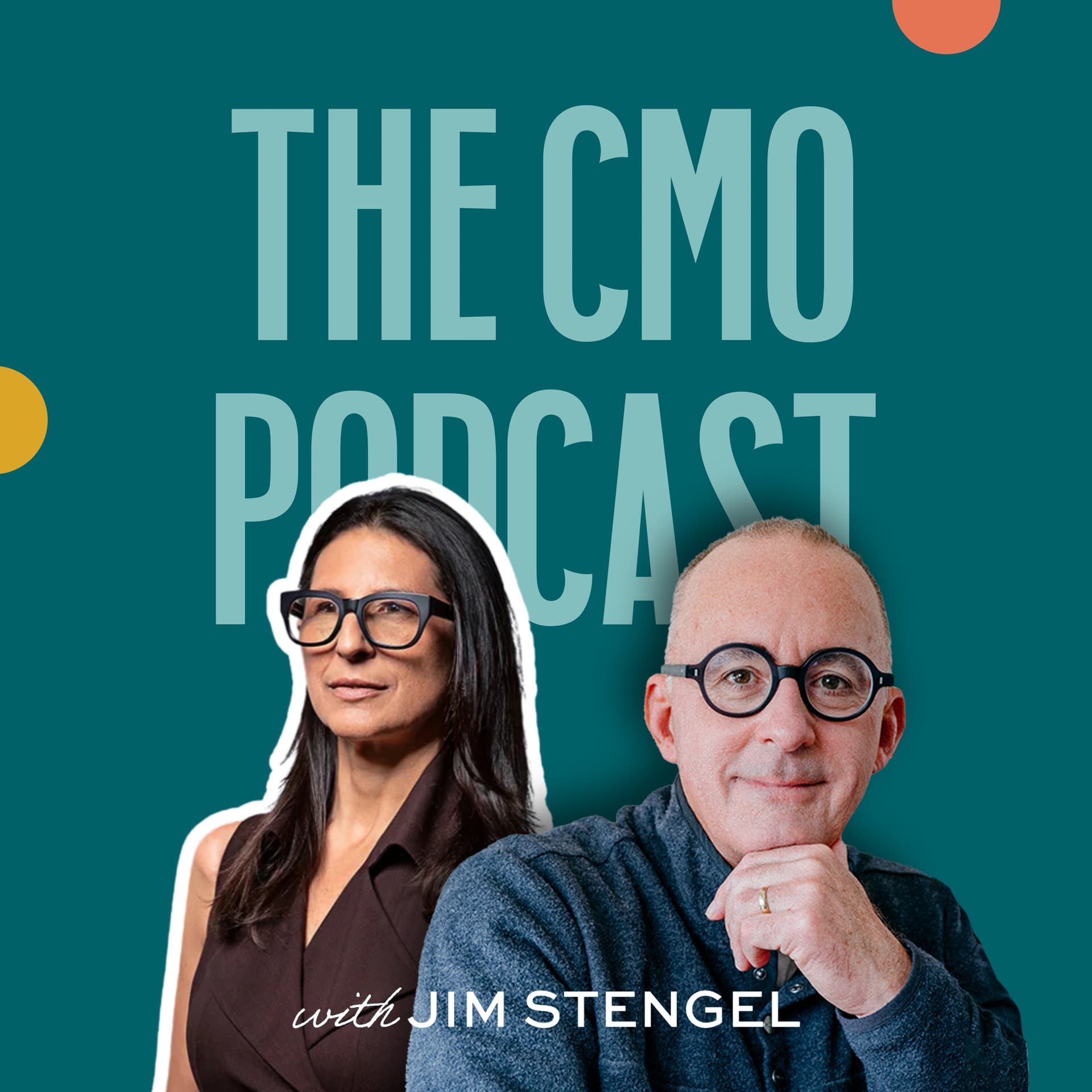
Podcast Overview Podcast Title: The CMO Podcast Host: Jim Stengel, former CMO of Procter & Gamble Episode Title: Reflections on the Journey to Chief Marketing Officer Episode Description: This episode features Jim Stengel reflecting on his journey to becoming a CMO, discussing significant moments and lessons learned along the way. He also outlines a CMO to-do list that highlights key characteristics for aspiring CMOs.
Key Themes & Discussions
- Personal Reflections on Becoming a CMO
- Jim shares his journey, underscoring that his path to becoming a CMO was unexpected and not part of his initial career plan.
- He emphasizes the importance of connection and influence within an organization, recounting an internal viral campaign at P&G that advocated for his promotion to CMO.
- Characteristics of a Successful CMO
- Jim introduces a CMO To-Do List, outlining ten key characteristics for aspiring CMOs:
- Know Your Why: Understand and communicate your passion for the role.
- Business First: Position yourself as a business leader, not just a marketer.
- Build High-Performance Teams: The success of any CMO is tied to the strength of their team.
- Create Authentic Advocates: Build genuine support through consistent actions.
- Operate at a Higher Level: Think strategically about the role and responsibilities.
- Have Ambition and a Vision: Set high goals for your role and the organization's future.
- Be Curious: Continuous learning is essential for success in marketing.
- Reflect and Renew: Take time to reflect on personal and professional growth.
- Enjoy the Journey: Emphasize the importance of finding joy in the work.
- Cultivate Brand Forward Culture: Recognize the connection between organizational culture and brand identity.
- Industry Insights
- Discussions on the evolving role of CMOs, highlighting that 80% of CMO openings are filled by outsiders, and the importance of maintaining a strong personal brand.
- Emphasis on the financial value of a strong brand, especially in inflationary times, and how brands provide pricing flexibility.
- Guest Interaction
- The episode includes interactions with Matt Spiegel from TransUnion, discussing the importance of data in marketing and how insights can enhance brand engagement.
- Participants share their experiences and apprehensions about the role of CMO, with an emphasis on the challenges of leadership, team dynamics, and personal growth.
Key Takeaways
- Self-Reflection is Crucial: Jim encourages aspiring CMOs to assess their motivations, strengths, and areas for growth.
- Building Relationships is Key: Effective marketing leaders build strong relationships across their teams and with consumers, fostering a supportive environment.
- Adaptability and Learning: The landscape of marketing is constantly changing; staying curious and open to new ideas is essential for success.
- Joy in Work: Finding satisfaction in the role and fostering a positive atmosphere is vital for both personal and organizational success.
Conclusion This episode offers valuable insights for current and aspiring CMOs, blending personal anecdotes with practical advice. Jim Stengel's reflections not only highlight his journey but also serve as a guide for others aiming to navigate the complexities of marketing leadership effectively.
Additional Resources
- Marketer’s Self-Evaluation: Listeners are encouraged to reflect on their skills and growth areas using a self-evaluation tool linked in the show notes.
- For further learning, access the CMO program at [Deloitte](https://cmo.deloitte.com).
Acknowledgments This episode is brought to you by Deloitte and StrawberryFrog, reflecting their commitment to advancing the marketing profession.
Written by AI. May contain mistakes. Listen to the episode to check what was said.
Transcript
Automatic transcript. May contain errors.0:00Hi, everyone. It's Jim. I have Matt Spiegel of TransUnion with me. Matt, I want to start with what do you love about your job? Yeah, it's a great question, Jim. You know what? I love the fact that I get to be out at events and conferences and working with clients to really think about how marketers solve problems that matter at scale. The job of a marketer is as challenging as ever, and we get to do some interesting things to make their job easier. When you work with a client, where do you get the most satisfaction? You know what? I think seeing ideas come to reality. We ultimately are an enable of great marketing.
0:28So we don't do creative. We don't do media planning. We provide the data, the identity insights, the measurement tools that make great marketing possible. So when we get to see the end product, sometimes later, it's really cool to see. Well, super to have you here. Super to be a partner. Thanks for joining us today. Thank you, Jim. So if you want to turn data into understanding and understanding into growth, visit transunion.com slash clarity. What if the smartest marketing play is not to move forward, but to zoom out. Deloitte believes the most powerful move a CMO can make is to look beyond the next step and see the broader perspective.
1:00That's what the Deloitte CMO program is for, a place to gain fresh perspective and connect with leaders who've stood where you stand. Together, Deloitte will help you see the bigger picture so your next move isn't just fast, but right. Learn more about the CMO program at cmo.deloitte.com. Hi, everyone. It's Jim. I'm here with Matt Spiegel, EVP of True Audience Growth Strategy at TransUnion. Matt, you've spent your career helping marketers understand people through data, and that's harder and more important now than ever. It really is, Jim. There's really just so much information out there, and unfortunately, it's often disconnected.
1:35Marketers typically see fragments, maybe a purchase here or a click there, but what they really need is clarity, true full picture of who their customers are, and ultimately how to reach them. Well, tell me how your solution strategy comes in and helps CMOs and their teams bring clarity to chaos. Well, Jim, we ultimately do that with a 360 view of the customer. And so it's about ultimately combining data, truly trusted data, identity resolution, which is a deep analytical problem, and measurement that actually helps understand performance. So ultimately, we work hard to help marketers move faster, to deepen their insights, and to ultimately make every dollar work harder.
2:11We believe strongly that when you truly understand your audience, you can build a real brand and real relationships with customers that last. Where were you when I was a CMO? I don't know how to answer that. Learn more at transunion.com slash clarity. That's transunion.com slash clarity. I want you to do a little self-reflection. Do you really want this role? I mean, you feel it seminally that this is right for you. Do you have some apprehension about it? I did, which we'll talk about in a minute. And then answer the question I asked Natalia. Why do you feel this is a perfect fit, that you will be in your flow?
2:46And try to make that explicit. And then let's chat about it. Hi, I'm Jim Stengel, and I help major brands find their purpose and activate it, and the profits follow. For seven years, I was the global marketing officer for Procter & Gamble, where I oversaw the marketing of hundreds of brands. You may not know it, but the CMOs, the chief marketing officers of all of your favorite brands are trying to connect you with your favorite products and services through purpose. And on this show, I delve into how they do it. Today's episode is something a little different. We return to the beautiful Miraval Berkshires, a place known for reflection, intention and growth.
3:26And that spirit is exactly what this conversation is all about. My own reflections on the journey to being a chief marketing officer. A few weeks ago, we welcomed four of the next generation of marketing leaders for a roundtable discussion. We did that in person at a summit in the Berkshire sponsored by the Vayner Agency. VaynerMedia's founder and CEO, Gary Vaynerchuk, actually encouraged me to start this podcast almost six years ago. Well, this presentation you're about to hear kicked off that summit. Record it live with active participation from the audience with a real in-the-room sound. I asked each of them and now you listeners, why do you want to be a CMO?
4:04We each have our own journey, but today I'll take you through mine, including an internal viral campaign within P &G that ultimately led to me being offered the role. Then I walk us through my version of the CMO to-do list, 10 key characteristics to help you ascend the ladder. So whether you're aspiring to the CMO seat, just starting your marketing journey, or simply curious about how leaders grow, this one's for you. Let's jump in. Well, good morning, everyone. Funny story about Gary and myself. We're kind of different people, right? In a good way. I was at P &G for 25 years, but every two years they have an alumni reunion.
4:41It's the biggest alumni base, active alumni base in the world, bigger than Goldman Sachs. And this year is Berlin, so it's happening right before Cannes, so I'm going to go to that. But I was with, this was in Cincinnati, actually, and it was like 2 ,000 people who come to this. So Gary was on stage. I was following him. So I was backstage, and he's on the stage with all these ex-PNG people swearing at them and yelling at them and so on. And then I come on and do my thing, and Gary grabs me after we were together, and he said, we're terrific together. He said, we need to do more. So then he calls me a couple days later and says, we should do a podcast.
5:18And so I put him off for, I don't know, two years. So I said, I can't be tied down to that. I don't want to do it. And he kept calling me. And he said, listen, we'll take care of everything. You just show up and be yourself. So we did the first one on May 1st, 2019 in Hudson Yards with Kristen Lemkow, J.P. Morgan Chase. Who's J.P. Morgan Chase? Yeah. She was my first guest. And we did it in person. The chemistry was so amazing. She made it so easy for me. And it was so fun. And then we did Pedro Ayer from AB InBev. Then we did Scott Galloway. And that's five and a half years later. I say this a lot.
5:56I'm very thankful to Gary for his vision and his out-of-the-box thinking. And to put us together, I got to Andrea that way and Avery and the whole team at Vayner. So the journey to being a CMO, I looked at all of your bios, the companies you're from, and it's an amazing group of people at a really interesting time in your careers. So good for you for doing this. And as I said, try to make an objective to understand a bit about each person in this room, what they're dealing with and what drives them. And you will hold that with you and it will inspire you. And one reason I do the podcast every week is all the things you're saying.
6:38I'm uplifted. I'm inspired. I'm excited. I'm proud to be in the industry. And that's what you have a chance to do in a very concentrated way. And I do want to say kudos to your bosses for supporting you to come here. And so be sure when you go back, you thank them and you debrief with them, well, this is fresh. Because that will be just very, very, very special. And one reason I'm saying this, your bosses believe in you because they sent you here and other things I'm sure they do with you. But this is a number from Norm Houston at Russell Randall. Does anyone know Norm? He's a headhunter and a good one.
7:17Was a practitioner, decided to go into leadership consulting. And I work with him sort of once a year on a program like this. 80 % of CMO openings in the last year were filled by outsiders. So the fact your bosses sent you here is a vote of confidence that you're a player and you have potential. and we're investing in you and we believe in you. That is a tremendous statement. And that is, I think, a very shocking number. So I want to start by setting the context for the journey to be a CMO with some reflection from a recent guest on the podcast, Natalia Ball, the chief growth officer for Mars Pet Care, which is$30 billion business.
7:57It's big. 60 % of Mars revenue is in pet care. We think of them as M &M snack company, but this is their horse. And it's growing like mad. So I had a really interesting conversation with her. And as I was thinking about my remarks that in our discussion, she, I asked her a question. I can't even remember what I asked her or something, but she came back to me. She said, I don't want to talk about that. I want to talk about when I first met you. So this is where this clip begins is when she met me and she describes it pretty well herself. I was a relatively new CMO when she met me. So let's just listen to her and reflect.
8:32You came to Venezuela to Caracas, which was where the P &G headquarters were for Latin America back in that time. And I am from Venezuela, so that's where I started my career at P &G. And when you came, we had a big brand building event with awards. And you actually gave me an award for marketer of the year or something like that. I don't remember exactly what it was. But what I do remember when you came was I said, he's who I want to be when I grow up. And that was the first time I decided I wanted to be CMO. And here I am 25 years later talking to you. So this is a big moment for me, Jim. I'm really excited about talking to you today because I remember very clearly that week when you came down to Caracas and talked to us.
9:15Oh, I love that story. Thank you, Natalia. That's very moving. I didn't expect this. It didn't come up in my prep for you. What about that moment made you think, wow, I want to be in that role someday? What was it? Well, I mean, I felt you were so in touch with consumers. You were talking about Latin American consumers as if you were in their dining rooms and their living rooms. And also the love that you showed for our brands. It was something that was really inspiring to me. And in general, you were very positive about the role that we as marketeers were playing in driving growth for the company and building capabilities for the future.
9:52And so I was very inspired by that. And that's when I said, I want to be CMO. I want to build brands. I want to drive pros. I mean, it was very nice to hear that for myself. But what's the lesson in that? I had no idea. Right. I don't remember that. But in the moment, I had an impact on her and how she remembers it. They're watching you. They're watching all of your moves, how you spend your time, what you talk about. I happened on that visit, because I always did, I went into consumers' homes before I came to meet the organization. So I went into three or four households, low-income consumers, understand the role of brands, the role of advertising, the role of marketing.
10:30And so she picked up all of that. So what you say and what you do is closely watched today, and even more so, the higher you go. But just remember that every day you have the potential to do that, which is why we're in this business. It's all about elevating people, whether they're consumers or your employees. I'm going to play one more clip from her because I asked her a question I'm going to ask you in a minute. You said a few minutes ago that you're in your perfect job. What about this job is so perfect for you? We all know when we're in a perfect job. I felt the same way when I was at Pia G's CMO.
11:04But what is it about, describe the experience and why this is perfect for you. I would say it's two things. Number one, the blend of challenges that I deal with every day are completely different. So on the one hand, obviously, we're talking about brand experiences, brand building, creativity. I love that. The fact that I get to still work on those things. I'm really good at it and I love it. Innovation is another one. But at the same time, we are working on, for example, strategic revenue management, connected commerce, building sales capabilities. how do we approach insight generations, portfolio strategies.
11:39So the breadth of challenges that I get to work on on any given day is super energizing for me. The combination of different challenges, working with the business on creating long-term growth plans, where do we put our resources, and working with the leadership team in general. But then the second thing I would say is that I think I'm learning so much in this job. I love when I am in a job where I can add a lot of value to the business. So I know that I add value and I bring a lot, but I also get value from the business. And I feel here, I'm striking that perfect balance because every day I learn something new.
12:15And actually I capture some of those things in a special diary that I have. What did I learn today? And I am surprised of how much every day I'm able to capture there, either because I work with external partners on questions that I have, and I'm lucky to partner with consultancies, with agencies with peers and I get a lot of external inspiration that I really appreciate or just working on the challenges that we have and we don't know how to crack is really energizing because you learn a new approach. So I think the combination of those two breaths of experiences as well as learning is what makes this my dream job.
12:52So, well, that's what I wanted to set the context for that. I want to talk about really three things today. Why you want to be a CMO? Pretty fundamental question. You heard why she wants to be one or is enjoying being one. My unexpected journey to being a CMO wasn't in the cards, wasn't on my career plan, which is interesting, but I still wound up in it. So I want to tell that story a bit. And then to sort of give you a to-do list, right, to walk out. So that's what we're going to do today in the time we have remaining. And the first one is, so once a year for the last 10 years or so, I go to a program with Deloitte in Westlake, Texas at their university.
13:31Amazing training center, residential. And we do about a three-day residential program, not unlike this, on development of CMOs. And it's generally people who are in the seat already. And it's a fabulous program. Vayner has been out to help with this. We've recorded some shows out there. But last year, I was looking at the research they do on the people who come. And it's about 40 CMOs in different industries. And I was combing through the research and they do a good job of surveying them and having, you know, Zooms with them. And I saw a number there that 50 % of the people weren't sure they wanted to be in that role.
14:08What? So we're having a CMO development program with people who are in the chair and half of them aren't sure they want to be there. So of course I opened my remarks with them about what the hell is going on in the room. And that led to really interesting places. So I kind of want to start there with you. And I want you to do a little self-reflection. Do you really want this role? I mean, you feel it seminally that this is right for you. Do you have some apprehension about it? I did, which we'll talk about in a minute. And then answer the question I asked Natalia. Why do you feel this is a perfect fit, that you will be in your flow?
14:46And try to make that explicit. it. And then let's chat about it. Anyone want to share, anyone apprehensive about the role? Got a lot of nods. Why are you apprehensive about it? I have spent the last decade working for arguably the best CMO in the industry. And that is? Greg Lyons, who is a titan. He is an instinctual marketer. He is in the people business. And I've benefited from his leadership and coaching and tough love for a long time. And so any apprehension that I have is just seeing the qualities that are required for people to be effective in our organizations. It's not functional marketing.
15:30It's matrixed negotiation. It is you standing as the first and last line of defense between the consumer's needs and the rest of the company's demands. And so what I've seen him do, and it sounds like you've had a pretty up-close seat, is he sort of had three things and I wrote them down. And what I realized is the role of the CMO is to help the organization outthink things that don't seem like they're things that you can outthink. And I watched him over a generation form really high-quality relationships and use that to move the agenda forward. And some days it felt like forward and some days it felt like backward.
16:11But over the long arc, we are bending and rotating towards the right thing for the business and for people. The second thing I saw him do was have really new and novel, high quality ideas. He didn't just turn up and critique other people's ideas. He had a really strong perspective on things that helped the entire organization move forward with pace. And then I watched him and him built a team around him who was able to relentlessly execute even when it was hard and to run the race at pace even when the distance was unknown. And like, hey, gosh. So if I feel when I look at the CMO chair that those are really big shoes to walk in, I feel my lived experience tells me like it's a stamina.
16:57It's a mental stamina and fortitude that's required for departments of 800 people to do what they need to do in their jobs. Well, he's an amazing role model. Always weird to follow someone like that, but it's also, you have to be yourself, take what you can from them, but then be yourself in the job. Anyone else have apprehension? Tell me what company you're with. I'm with H &R Block. Oh yeah? Okay, good. I think it has more to do with me than the role, but I feel like 10 years ago, I didn't think I'd be in the US. So that's, you know, that happened. I didn't think I would get an MBA. That happened.
17:34I happened to find my way into marketing. So that was by chance. I'm here because I love my boss, Jill Kress. She's a very inspiring leader. And I think, you know, my understanding of marketing has shifted so much under her leadership that that's what made me stay for as long as I did for the last six years within marketing. I'm an empath and so I love the opportunity to deeply empathize with people who are our clients at scale and I think that is something that modern marketing allows you to do to empathize at scale to build connections at scale so it is that aspect of marketing that I'm really passionate about but marketing is a lot more than that and so you know that's where the apprehension comes in that How do you really sort of at scale understand all the things that make up modern marketing today?
18:32But what I feel really good about is at the center of it, at the heart of it, is empathizing with the client. And I feel like that's where my energy is, my passion is. That's the part I'm really confident in. It's the everything else that I feel like how do you sort of scale and learn and grow and moments and opportunities like this allow you to do that. That's so important. That's a fundamental. If you enjoy getting close to clients, understanding them, empathizing with them, bringing that back into the company, you're half the way there.
19:23network of CMOs is designed to help you zoom out and gain fresh perspective. Deloitte will help you see the bigger picture together. Learn more about the CMO program at cmo.deloitte.com.
19:39So let's move to the other one. Those of you, I mean, I assume because you're in the room, you have an inkling that you want to this job with apprehension. What about this role is a a great fit for you? Anything that you could share with the group that will be helpful at large? Yes. One of the things that I really love about marketing, particularly direct consumer marketing, is finding that right balance between magic and logic, between the art and the science. And I just think it is such an enduring challenge, but one that is endlessly interesting. And where I've seen it go awry is when the pendulum swings one way or the other, and it's about creating that balance.
20:16And so I think that's super, super exciting that you have to be that agile, that you have to have that right blend of skills across that spectrum of magic and logic. So I think it's something that always keeps you on your toes and forces you to continually learn and to re-evaluate your position on things. Yeah, I love that. And you're with? I'm with Ralph Lauren. Okay. Oh, great. Super, super. Thank you. Anyone else on Perfect Fit? I find a resistible calling in a duality of the challenge of the role. On one hand, we've been talking about change, how it's fast, I have no idea what the future is going to hold, but something that I believe to be true is that great brands, hyper relevant with consumer, will always thrive in the future, are going to be a key to business success.
20:57But opposite to that, what I keep finding is that business have this temptation to see marketing as a cost center as opposed to a business driver. Navigating that duality is something that I think is going to be critical for me to learn. That's why I'm attracted to the role. Yeah, absolutely. That's a key issue. I hope you get some insights coming out of here on that issue. So it's interesting because I don't really give this a lot of thought, to be honest, like in my day job. But even just doing this two-minute exercise, actually very clear to me that this is what I want to do. And I immediately broke it down in who, why, and what.
21:33Like who I am is like, I'm a generalist. So I like touching a little bit of everything, influencing everything without having to be an expert in everything. In the why, it's like, ultimately, I want to leave some kind of legacy. I know that's a big word, but, you know, just influencing culture both internally and externally through the power of brands. And then the what is just what you do in the day-to-day. I think it's just fun what we do. Strategy, you know, the brands, conceptual thinking, and then just the people. I like the profile of marketeers, the people I work with, people in this room here.
22:07That's beautiful. And the last point, I hear that a lot on the show. So people saying, if we're not enjoying our work, fun, exuberant, exciting, how do we expect the organization to be excited about it? And how do we expect the people outside the company to be excited about it? I mean, Greg talks about this. You know, are you finding joy in your work? Are you finding joy in the project you're working on? Because if you're not, it's not going to work. You know, you're behind on a critical path or something. that's one thing, but the essence of what you're working on, if you don't think it's going to make some difference and bringing a smile to someone's face, improving someone's life, making life easier for somebody, you're wasting your time.
22:49And I think keeping that standard and checking with your organization, are you jazzed with what you're working on? Are you getting energy from it? And if half of them say no, wow, what a waste of human capital and financial capital. I just wanted to add a little bit of like the why now conversation, building on your why. I think we're at this interesting inflection point where everyone talks about like, oh, the CMO tenure is shrinking. That is actually fake news. I was reading this really interesting piece. I think it was by True Search talking about the average CMO tenure is actually increasing to 3.4 years.
23:23And also that for the first time, like we're seeing more and more CMOs move into the CEO role. I know this was the case. H &R Block. Yep, exactly. H &R Block at 2B, at many amazing and companies, I think that the role of CMO to sort of, you know, prove the business case for marketing is actually becoming more and more clear. We know from every business case study ever that brand is the moat that drives profitability and all that fun stuff. And I think we're starting to see that role transition into like a CEO role more and more. And the why now to me is incredibly exciting for our industry. And another thing I would add to that, the times we're living in, right?
23:59One thing is certain, inflation. It was happening before the tariffs. No one's arguing. Prices are going to go up. What's important in an inflationary environment? Brands. Great brands give you pricing flexibility. That's the financial value of a brand. And we don't talk about that enough. Even companies, you know, why does Procter & Gamble or why are they able to employ people at a lower cost? Because the reputation of the company. They go to the capital markets. They get favorable treatment because the reputation of the company. So the power of brand is in your flexibility to deal with pricing.
24:36Now you've got to be careful, value equation, consumers, you can't, but pricing flexibility is going to be really, really powerful to people growing their earnings and growing their revenue in the next several years. So the time is now. Anyone else on why this is right for you, why you feel? I'm at Meta, and I agree with what everyone said in terms of like, I mean, I'm really, I've always, I've been in this business for over almost 25 years. And I will say that I still have love for building great brands that connect deeply with culture. I think the thing that I've grown to really enjoy as I've matured in my career is also bringing up teams.
Read the full transcript
25:20And I think that this role has like, you know, the role of CMO has such an impact in terms of like developing the next generation and really bringing up marketers to sort of like, you know, thinking about all the years of experience that I've had, the mentors that I've had. And how can I transfer that to scale that with sort of the next group of marketers to me is something that I'm really excited about because I think we are in a critical place. But I think that also marketing is also deemed in many ways, as you were talking about a call center, you know, the sort of the essence of what it means to build a brand is often discounted and it's not valued as much.
26:00And I think that that's really, really important to make sure that we're teaching our teams and our colleagues that we have to protect that. And that's really, really important. So that's something that also energizes me. We're going to talk about the team part a lot. You said when you first opened your mouth, you said you've been working 25 years and building brands as part of culture and you really get energy from that. Why is that? You know, for me, it's all about the relationship. I think about the brands that have had impact in my life. And it makes me really excited to have a role in shaping that for someone else.
26:33You know, I think about brands that remind me of my childhood. I think about brands that now serve me to support me as a mother of young children. You know, I think about brands that have been there for me. And for me, it's just such a powerful thing to figure out the human truth and to make that solid connection. And it all comes down to relationships at the end of the day. But for me, that's why I get really excited. Okay. Anyone dealing with imposter syndrome? You all are. It's okay. Really, we all have it. It will never go away. It's healthy, I think, in some respects to have a bit of it because it means you're restless, you're learning, you're not totally on top of it.
27:11And that actually is a good, speaking of self-awareness in this environment, that's a good thing to be self-aware of. I think the way to not get paralyzed by it is to understand what is really driving at that moment, that feeling, and do something to act on it. If the imposter syndrome is found, I don't feel like my leadership team's fully functioning, and I'm not sure I'm up to it. And we've all been there because the dynamics on the team. Okay, where can you get some help? Who can you share this with? You know, what about your behavior in the past is leading to that? So I think the more you sort of take it apart and maybe have someone to share that with, it will be helpful.
27:52If it's a new technology, there's lots of ways to understand it better. So it just takes a step. It just takes a step. And when AI was, you know, starting to get lots and lots of publicity two or three years ago, all the experts that I talked to and I brought them into classes I was leading just said, are you all using it personally? Just a simple question. Yes, no. If no, why not? And here's how I recommend you get started. If you are, what are you learning? What are you experiencing? How many platforms have you used? It's just, but you have to create time for it.
28:32We all want to stay ahead of the digital curve. And IAB, the Interactive Advertising Bureau, invites you to do just that at the 2026 IAB Annual Leadership Meeting in Palm Springs on February 1st through 3rd. If you're a qualified consumer brand or agency leader, you can access free passes and travel vouchers. And for everyone else, you can take$500 off your ticket with code, all caps, ALMCMOPOD26. This is your chance to join a three-day gathering of the industry's brightest minds and boldest voices shaping the year ahead. You'll hear agenda-setting conversations, candid fireside chats, and dynamic breakouts on the topics that matter most.
29:13from AI and commerce media to measurement and addressability. This year's lineup concludes everyone from Kevin Bacon and Bozema St. John to creator Remy Bader, along with leaders from Forbes, Major League Soccer, General Motors, and Meta. Visit iab.com slash ALM to learn more and check out the link in the show notes to register and receive$500 off your ticket.
29:39so next i want to go into my own journey to becoming a cmo and share a photo grabbed during that time at png it was the 90s i was in cufflinks a tie nicely cut hair interesting glasses very 90s that's a few years ago i was actually working in prague at that time so it was before i was cmo it was my first international assignment my first first general manager assignment times have changed. No cufflinks, no pens in the pocket. I was 25 years total at P &G, 18 in line management in four different countries, five different cities. I thought the perfect fit for me was a line job. And I had a fast track career at P &G.
30:22I was promoted quickly. I was sent around to different assignments too quickly, in my opinion. But I really wanted to be the head of a big business unit, head of a big geography, and maybe have a crack at CEO. And I was certainly on that path. So I was working on that. I was sort of in that zone. I was the global franchise leader at the time for Baby Care, which was a giant business at P &G. Pampers is the largest brand. I run that in Western Europe and I was brought into Cincinnati to run it globally. I got a call from a friend who was in Europe and said, rumor is that the CMO is retiring at P &G and we think you would be great.
31:03We'd like you to go for it. And I was like, I didn't even know he was retiring. But what happened is sort of, this is before social, a viral thing started within the P &G culture and people start to call each other and they start to talk to their bosses. and this big campaign started of put Jim in the job. That led to the CEO, A.G. Laffley at the time, who I never worked with. I was in management meetings with him and so on, but I never worked on a team with him. He called me and he said, there's a lot of people who are calling me that think you're right for the job. I don't know you. Could you come downtown?
31:39I was working out at the tech center for baby care and have a chat with me. So I didn't do a whole lot of prep. I went down, I went into his office and we ended up talking for about two hours. I said to him, this was really fun. There's lots of things bouncing around in my head. He wasn't offering me the job. We were just talking about it. I don't think I was top in his mind at that point. I said, let me just think about it and you do the same and why don't we meet in a week or two? So I went home and talked to my wife and the more I thought about it, the more I got energy from it. So I put together in classic P &G fashion, a one pager And when I went back to see him, I said, if I got the role, here's what I would do.
32:21And he offered me a job on the spot. And this was like in April-ish. It wasn't announced until like August. And honestly, pretty much my seven years in the job was executing the one-pager. So you never know. I'm curious how this viral internal campaign started because I know everybody in this room, and a lot of them have been at their organizations for a long time, which isn't that common. We also have some people who've been in different roles. But how did the viral internal campaign start? So I thought about this in prep for this, why that viral campaign started. And I can still remember some of the people who are advocates.
32:54I think four things. And this is kind of, it's going to relate to a lot of things you were talking about just a minute ago. And the first one is from when I joined the company, 18 years before this, people liked being on my team. They just did. Whether or not I was on a team or leading a team, they had fun. They enjoyed it. They felt fulfilled, developed. They felt that I cared. They felt that I did the things a boss should do when I led a team, and I did the things I should do when I was on a team. So whether it's R &D, product supply, finance, I had lots of fans from 18 years of being great on a team.
33:32Second one, I value creativity and innovation. It was clear. Agencies loved working with me. R &D loved working with me. I took the time to learn about others, to learn what makes them tick, to get into their shoes. And that developed hundreds, maybe thousands of advocates over 18 years of doing that. When we did a briefing for a new innovation, a product innovation, a commercial innovation, it was always, I always asked the question, what if? How could this be higher? How could this have bigger impact? I mean, I was always like Greg does, raising the standard. So third is business credibility.
34:11People said, you know, he's worked in Europe. He's worked in acquisitions. He's worked in developing markets. He's worked in multiple categories. He has a pedigree of results. So I trust him that he'll be thinking about the business. And so that's massive. And then I had a history and a reputation for thinking about what are the gaps in capabilities in our organization, in our company, and challenging, not in an asshole way, but in a positive way, challenging the status quo with data, with input, with customer, consumer, employee input. So I like change. I'm very comfortable with change. In fact, when I'm in an environment which doesn't value change, I get very frustrated and I'm not at my best.
34:55I certainly learned that in lots of coaching and so on and so forth in my career. And it's one reason I'm doing what I'm doing now. So it's these things that were sort of behind the viral campaign. And then once it began, it was just, it sort of took a life of its own. And also because of that, when it was announced, finally, that I was a CMO, the reaction internally was very positive. And you know, you know what it's like as a leader, when people want you in the role, they can't wait to help you. And I certainly tapped into that from my first day. So that's sort of why that viral campaign happened.
35:28So my question for you, let's stay on that. You're all a step or two away from the top job in your company, in the marketing area, the brand area. Would a viral campaign happen for you today? And I would think about that with high self-awareness, high humility, high honesty. If yes, it's probably yes I know, maybe. If yes, what about it? And if no, what can you do about it? Because there's nothing more powerful. But do you feel a viral campaign would happen for you? or why would it happen for you? And if there might be a gap, why would it not? I shared yesterday with the group that sort of my intention and my word for this moment together is that I'm searching for something.
36:11There's so much in here that I can't tell you how it's resonating with me, but it's also making me very uncomfortable. So I'm really sitting with that. I think in particular, my answer is definitely yes and no. I'm at a bit of an inflection point in my own kind of career where I've taken on things very quickly at Shutterstock. some of which are the concepts not new to me, the applications new to me. And so I think I'm I'm frankly doing my team a disservice in some cases that I am. I've been here kind of sitting with because I plan to go home and own that and talk to them about what it is that they need from me that they're not getting right now.
36:46I asked them the question on Friday and said, I'm going away for a minute. Let's have a really, really honest conversation when I get back. So this idea of a viral campaign, I think that the honest answer is that there are functions that would cheer. And there are some people that would say, I'm not sure she's there yet because I don't think I'm getting what I need from the team. And I think I'm finally really I've been trying. I'm a pretty self-aware person, which I hope is really obvious. But I'm really struggling because some of the things that are not going as well as I'd like them to are typically my strengths.
37:18So it's a really, really uncomfortable moment to be in. Yeah. Very, very good timing. I think it was very serendipitous. But that's why I think for me, the answer is both yes and no. I think it's very rectifiable and I think it's rectifiable pretty quickly. But I have got to make moves and I want to really be honest about what they should be. Great. Anyone else? It's great. Thank you. I think for me, I've only been with the company about two and a half years. And so to your point on the business credibility and the time, I just think you need at a company, you need a good chunk of time to really establish yourself as a leader, develop that followership.
37:57And especially the bigger your company is, I think the more challenging that becomes. And so I'm really curious, just as we think about the discussion later today, is like, how do we get there? And how do you start to build that over time. Because having been at a company previously where I was there for 19 years, yes, maybe that viral campaign would have happened there. But then you go somewhere new and you do have to start over and it's a rebuilding. And so I'm just curious, you know, how we do that. Yeah, that's good. I think a lot of that comes down to, you know, looking at your calendar, how do you spend your time?
38:30What thing you can do that week to build a relationship with someone who's important for the company and for your role and the function?
38:44Hi, everybody. I'm Andrea Sullivan, the CEO of Vive, and we have produced the CMO podcast with Jim Stengel for many years. And I'm sitting in his seat right now. It's so exciting. I wanted to tell you a little bit about one of our programs. It's called Vive by Vayner. It's a 12-month program that's designed for C-suiters and founders. And we want to help people to grow their businesses, but also to grow themselves. And so we bring in people from Shark Tank to talk to our founders, but we also focus on wellness. We want to make sure that people are leaning into becoming their best selves, their best and happiest selves.
39:24So if you are someone that wants to learn how to grow your business and grow yourself, check us out at vive.co. That's V-Y-V-E dot co. We'd love to talk to you.
39:42Yeah. So I keep coming back to that stat that you started with, which is that 80 % of the CMO positions come from the outside. So I'm trying to balance that kind of juxtaposition here. So I'm looking around at other people's companies. I like that. Yeah. I mean, I think, you know, listening to when Norm presented that stat, and talked about what's behind that stat, you know, one key one is that you're often, you get into a culture and they develop a view of you. That view may not be the right view for the next level, which we'll get to in a minute. So you have to be very cognizant of how you are seen and the box people put you in.
40:25And the box you are in is, it's a really creative person. Lots of ideas. You know, really fun to work with, but nothing sort of seems to happen with those ideas. And they don't seem to value my point of view. You're going to be seen as the creative type. And when it comes down to naming a CMO, that's not enough. You know, and then the other end might be you're the analytics type. And you're really good at analysis, but you have trouble explaining it. You have trouble making it relevant. You have trouble applying it. It's going to put you in another box. So the reason that 80 % is because you fall into a paradigm, unless you work actively to change that paradigm.
41:07And that is possible. There's the 20%. There are examples in this room of people who've done that, your bosses. But be cognizant of the paradigm. You know, I had a, luckily I had lots of continuity in that company. I had a good paradigm because of the things that started the viral campaign. And was I 100 % intentional on that? No. just who I am, but it worked. And I became more intentional about it. I'd like to share a couple of my paradigms that I'm finding. At Bose in the past four years, I joined a team that was not existing and I built it out. And initially I just had six people working on my team and was very effective in building personal rapport, being myself, my own style.
41:50Things were moving fast and quickly. Now I have hundreds of people. I never changed my communication style. And that is given two problematics. One is that my style doesn't work for everybody. And also my communication style works really well one-to-one. But I wouldn't be the one that you would define as the inspirational, concise, compelling speaker. And that takes a lot of effort. Take time out of the business to get it done. Yeah, that's a profound point you made. And the fact that you're aware of that, it's huge. There's a CMO friend who is a big company, and I was talking to her, and I asked her about her communication rhythms.
42:36And it wasn't a great answer. And I said, why don't you just, because I did this P &G, I said, why don't you just take every Monday morning at 9 or 9.30, one half hour, and just welcome everyone to join and just tell them what's on your mind. What's important to you this week? What have you done that's inspired others? What have you seen that's inspired you? How's the company doing? What are you worried about? What are you happy about? Don't over script it. Plan it maybe for 10 minutes on Sunday night. Don't have slides. Just connect. and she was very uncomfortable doing it. She started it. The response was incredible.
43:21You could see it in their data from the organization. The whole company started joining it, not just marketing. So all of a sudden, she has 1 ,000, 1 ,200 people joining to hear her because it gave them a connection to the company, and it gave them a bit of insight into what's happening at the highest level of the company. So think about your communication, your rhythm, your style, what's comfortable for you. You can't do enough of that, especially now, because your organizations are uptight. I guarantee it on many levels. And you know that. You know that. My final piece for today is the CMO to-do list.
44:01And the data I go to for this to-do list certainly is one beautiful thing about my life. And this is an example of that. I play in a lot of circles. I do a lot of things with Can Lions every year with people like yourself. I do a lot of things with Deloitte, not just that one program, but many other. I'm an adjunct professor at Kellogg. I only do exec ed. And I have the podcast where I meet amazing people every week. So I have a lot of data about what makes for a good CMO and what's good prep for it and so on and so forth. And of course, I have my own personal experience. So I want to share with you this sort of top 10 list.
44:34The first one, we've been talking about it. Know and communicate why you would love this job. If people don't sense you really want a job, you're not going to get it. I mean, tell this to my kids. If you want a role, tell them that. This is your dream, and this is why it's your dream, and you want to be helpful to the company and the people and the consumers, and that is so foundational. If you're close to a tie with someone else, that's going to take you over. So know your why. You start at the work here and communicate it. Second one, we talked about be business first, always. Don't be seen as a marketer.
45:10be seen as a really good business person. And if you listen to my podcast, you'll hear this over and over again. You'll hear it from Greg Lyons. Business first all the time. What's the company trying to do and how can marketing develop their strategies to achieve that in a way that is unique? So business, business first. Number three, build high performance teams. It's kind of why I got the job at P &G. And I hear this over and over again on my show. In fact, the analysis I did the last 52 weeks of CMO podcast using AI, this came out like number two. Team building, pride in team, filling gaps in my team, making sure I have the standards right, that everyone on the team is strong.
45:54If you don't do that, you will fail. And I've seen it. I've seen it up close and personal. Create authentic advocates. We talked about that. It has to be real. It can't be made up. It's what you do day in and day out, over and over. And this one, operate one or two levels up. This doesn't mean you're not doing your current job really well, but think one or two levels up. What kind of questions should I be asking? What should I be anticipating? What's the strategy behind this robust? Will this lead us to competitive advantage? So think about the questions your boss's boss asks and sort of role model that.
46:32But one beautiful thing about working for the companies you work for, there's role models all over the place. And I had the same at P &G. I learned a lot from one, two, three up. Number six, have ambition and a vision. On that one pager I shared with my CEO when I went back for a week, it was not just return P &G to its glory because we were in a funk. It is to be the best brand building company in the world. For benchmarks could not be Unilever and Henkel and SC Johnson. It had to be the Apples and the Nikes, which changed our work, changed our KPIs, changed our ambition. So and that led to all sorts of tactics that arguably did lead us to be seen, to be and be seen as, if not the best brand building company in the world, one of the best.
47:20And we were not at all like that when I came into the role. So have an ambition and a vision. be curious and role model. We've already talked about that. Curiosity is talked about over and over again on my show. It's the one characteristic I want to ask people, what's the most important driver for a successful CMO? Curiosity. Not just from CMOs, from CEOs I talk to. If you don't have curiosity, especially in our field, how do you expect to lead? Reflect and renew. We have jobs that are activity driven, that are crazy. And if you let it control you, you will be in activity mode all the time and never in renew and reflection.
48:00The beautiful thing about Vayner is they asked you to come here. You said, yes, this is a big reflection and renew time. And if we don't do this on the business and on yourself, you will not be successful. I mean, even at this point in my career in life, I build in time for renewal and reflection. Intentionally, I put it on my calendar. And I know that when I put it on calendar. I get in the mood. I do it. I enjoy it. I write things down. I ideate. I benchmark a little bit, but it just keeps me happier. And I think keeps me successful in what I want to do in my life. And I think it's the same with everyone I talk to on the show and beyond that.
48:38Enjoy the journey. We talked about that and be a brand forward culture builder. The culture is the brand. The brand is the culture. I mean, I don't know who said that, but it is so true. It's not just building a strong culture, building a strong culture that comes through and how your brand shows up. So I think we're going to wrap it up. Thank you, everyone. Yeah, really great questions. You're wonderful. As we wrap up, I'd like to leave you with a bit of homework. Linked in the show notes and post it on our LinkedIn page is what I call the marketer's self-evaluation. It's made up of seven points.
49:15I'd like you to rate yourself on each one from one to 10 for a total possible perfect score of 70. Reflecting on your score in each area should help you build on your strengths and create a plan to improve your weaknesses, all in service of the ultimate goal for some of you, becoming a CMO. And with that, I hope you've enjoyed this special deviation from our usual format. We'll be back next week with a new conversation. See you then. That's it for this episode of the CMO Podcast. If you found this helpful and entertaining, I would be so grateful if you could share our show with your friends, and I would be super happy if you subscribe so you can be updated as we publish new episodes.
49:55And if you really want to help, leave us a five-star rating and a positive review on Apple Podcasts or wherever you listen. The CMO Podcast is a Vive original production. Episodes of the CMO Podcast are produced by Vive. The views and opinions expressed by podcast speakers and guests are solely their own and do not reflect the opinions of our sponsors or its personnel, nor do our sponsors advocate or endorse any individuals or entities featured on the episodes.
From the publisher
This week's episode is something a little different. Jim returns to the beautiful Miraval Berkshires — a place known for reflection, intention, and growth. And that spirit is exactly what this conversation is all about: Jim's own Reflections on the Journey to Chief Marketing Officer.
We each have our own journey, but today, Jim will take you through his — including an internal viral campaign within P&G that ultimately led to him being offered the role. Then, he walks us through my version of the CMO To-Do List: ten key characteristics to help you ascend the ladder. So whether you're aspiring to the CMO seat, just starting your marketing journey, or simply curious about how leaders grow — this one’s for you. Let’s jump in!
Head over to our LinkedIn to complete your own Marketer’s Self-Evaluation.
---
This week's episode is brought to you by
Deloitte and StrawberryFrog.
Learn more: https://strawberryfrog.com/jim
See Privacy Policy at https://art19.com/privacy and California Privacy Notice at https://art19.com/privacy#do-not-sell-my-info.