In short
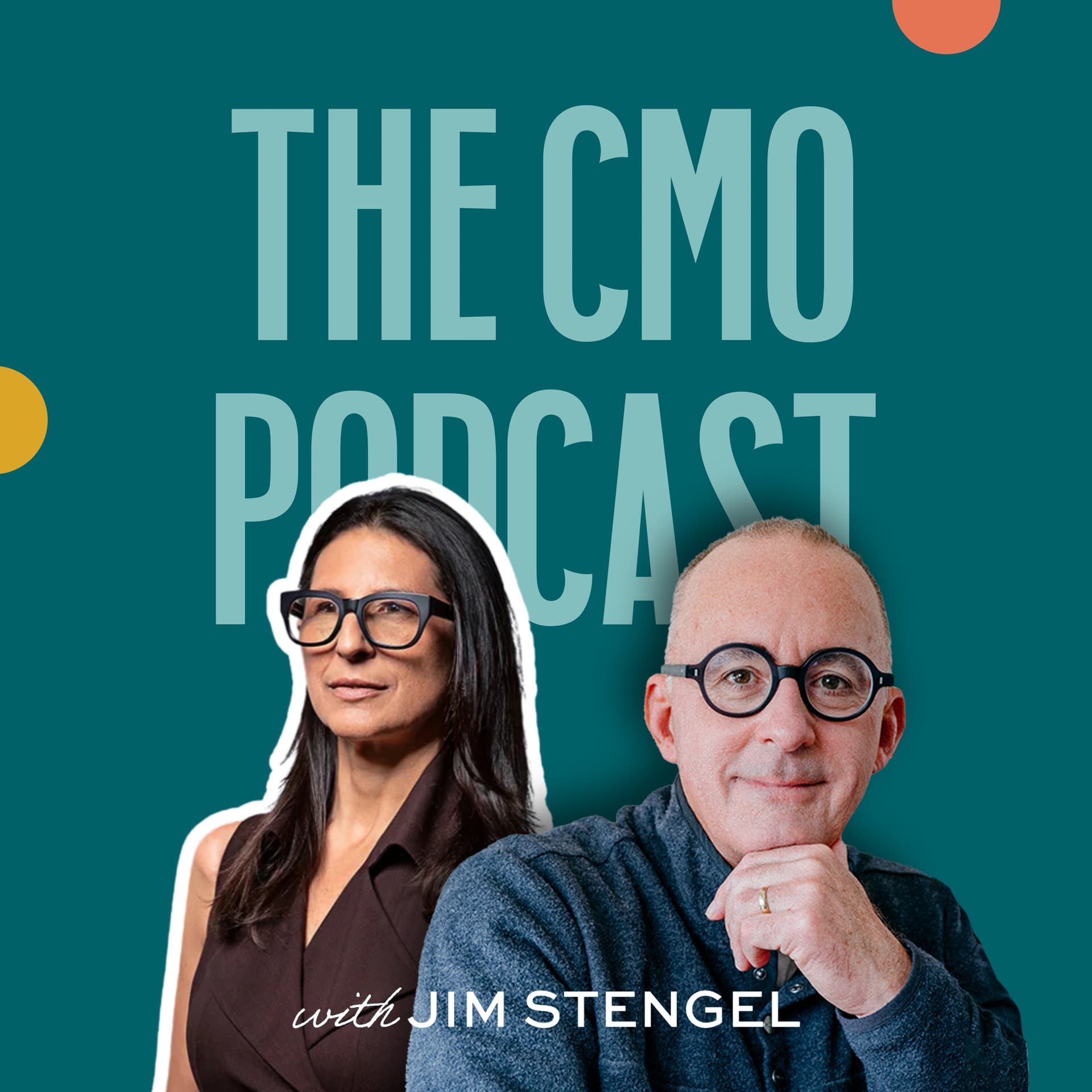
Sharina Smith, Enterprise Chief Marketing Officer at American Family Insurance (AmFam), discusses her career, marketing leadership, and how AmFam partnered with Disney for the Hulu competition series Designed to Last (premieres May 5).
Guest backgrounds
Pittsburgh-area native; Ohio State engineering undergrad; MBA from USC. Spent 11 years at Kraft, then roles at AbbVie Pharmaceuticals and JCPenney before joining AmFam in 2019 (VP Marketing → enterprise CMO).
Key claims
AmFam’s brand purpose is to inspire, protect, and restore dreams. She frames her leadership as “centered” (clear strategy, trust team) rather than “leading from the center.” She emphasizes building marketing as a business partner via customer data platform, marketing mix analysis, and cross-functional trust.
Notable examples
Relationship with President Talisa Yancey built on “smart curiosity” and intellectual sparring. Designed to Last: three teams build home-protection designs for wind, water, fire, and snow; judged on protection plus aesthetics. Education hub, social, and agent tools extend beyond the show.
Written by AI. May contain mistakes. Listen to the episode to check what was said.
Chapters
Tap a time to open that second in VOIntroducing Sharina Smith and American Family Insurance
0:42 to 3:05
Meet Sharina Smith, CMO of American Family Insurance, and learn about the company's mission.
“I always ask, what's the first brand that had an impact on you as a young, young child?”
Welcoming Sharina Smith to the Podcast
3:05 to 3:21
Sharina shares her recent trip to Barcelona and its unique experiences.
“Full disclosure, my company has been working with Serena and her team for the past several years.”
The Relationship with Talisa Yancey
3:21 to 4:32
Sharina discusses her professional relationship with Talisa Yancey, emphasizing collaboration and mutual respect.
“One of the things I always love about Barcelona is I feel like no matter how many times you've been, You can go to Sagrada Familia and it's like a whole new experience because they've added a tower.”
The Concept Behind 'Design to Last' Series
4:32 to 7:27
Sharina explains the inspiration and purpose behind the upcoming Hulu series 'Design to Last'.
“And you've now worked with her very closely for seven years.”
Creating a Competition Show Focused on Home Protection
7:27 to 11:28
Explore how the idea for a competition show was developed to educate homeowners on protection.
“a little bit more about the concept of the show, because I think it's super interesting.”
Lessons from Industry Inspiration and Binge Culture
11:28 to 13:55
Sharina shares insights drawn from successful marketing campaigns and consumer behavior.
“Because I suspect this was a reasonable investment, right?”
Binge Culture and Brand Engagement
14:02 to 15:40
Explore how binge culture can be harnessed for effective brand messaging.
“Where are the places where you can have someone really pay attention and listen?”
Innovative Marketing Strategies at American Family
15:40 to 16:32
Discover how American Family Insurance aims to change home protection perceptions.
“This is Andrea Sullivan, the CEO of Vive, and we produce the CMO podcast and are so excited to have partnered with Jim Stengel for so many years.”
Cross-Functional Team Building
16:32 to 19:16
Understand the importance of involving diverse teams in the marketing process.
“And what role does this play in that journey, which every executive is on, of course, in their company?”
Transforming American Family's Marketing Approach
19:16 to 22:46
Learn about the transformation of marketing strategies at American Family Insurance.
“Because it's definitely a very different activity system and team and culture than it was when you joined.”
Show all 23 chapters
Evolving Leadership Styles
22:46 to 28:00
Explore the evolution from reactive to centered leadership in marketing.
“And sometimes you have to change out people, change some of the work, change incentives.”
Energized by Brand Growth and Team Impact
28:00 to 28:52
Discover how Sherina Smith finds motivation in her team's work and the rebranding journey.
“I mean, management development hurdle is?”
Overcoming Academic Struggles: A Personal Journey
28:52 to 33:10
Sherina shares her challenges in engineering and how a mentor guided her to realize her true interests.
“I feel like I have a lot more, not one of its time, but I have a lot more thought space to devote to that and to devote to how we continue to grow as a brand and as a team.”
Lessons from Kraft: Business Foundations
33:10 to 35:52
Learn about the invaluable lessons Sherina took from her 11 years at Kraft Foods.
“but imagine if he did that just to a few students in his lifetime of coaching, the legacy that leaves.”
Transitioning to American Family Insurance
35:52 to 39:24
Sherina discusses the pivotal moments and feelings that drew her to American Family Insurance.
“The way that we embraced team and customer outcomes was also a really good foundation building, typical classic consumer business and consumer brand building.”
My Superpower in Marketing: Bridging Science and Art
39:24 to 41:10
Explore how Sherina views her unique ability to blend analytical and creative thinking in marketing.
“And so I think about marketing and what my superpower is, is really that intersection of being able to take in the left and the right brain information and process it into something that drives a business.”
Influential Authors: Lessons from Dickens and Fitzgerald
41:10 to 42:01
Sherina reflects on how the works of Dickens and Fitzgerald shaped her perspective on storytelling.
“And two authors were important for you, Charles Dickens and F.”
Storytelling and Brand Connection
42:01 to 43:19
Explore how storytelling techniques in literature apply to brand building.
“the idea of a character who would give his life for the person that he loves and pretend like he's someone else, that Sidney Card and Charles Darnay mix, I think is really interesting.”
Influence of Family Background
43:20 to 44:16
Discuss the impact of family upbringing on personal success and values.
“I think it's just, I like to journal because I like writing.”
Maintaining Balance as a Leader
44:17 to 46:39
Learn about the importance of personal time and reflection for leadership.
“Like you never wondered what he was thinking.”
First Brand Impact
46:40 to 48:08
Discover Sharina's first brand memory and its significance.
“I always ask, what's the first brand that had an impact on you as a young child?”
Legacy at American Family
48:09 to 49:19
Understand Sharina's vision for her brand's impact and ethos.
“When people look back at your time there, what do you hope they'll take away?”
Inspiration and Leadership
49:20 to 51:25
Sharina discusses the most inspiring figures in her life and their influence.
“You know, way back when I was at P &G, I used to talk about that and said, if we had a KPI that was all about building friendships, you know, would we behave differently on our brands?”
Transcript
Automatic transcript. May contain errors.0:00Jim Stengel:Before we dive into today's episode, we would very much appreciate a moment from you to make sure you're subscribed to the show on Apple Podcasts, Spotify, or wherever you listen, along with optioning to auto-download the episodes. It really is the best way to never miss an episode, along with supporting the show and the amazing team that helps me bring it to you. And while you're there, leave us a rating or review. It only takes a minute and helps more people find the show and helps us learn. And of course, share this episode with a friend or colleague who might enjoy it. We wouldn't be here six years later and still going so strong without you all, our community.
0:36Jim Stengel:So thank you for being part of it. Now onto the show. You know, this question is coming up. I always ask, what's the first brand that had an impact on you as a young, young child? I've been anticipating this question and really like thinking about it. I'm from Pittsburgh, as you said. I think the first brand that I was aware of that I knew in our house, there was no substitute for Heinz Ketchup. I still remember the ad where the bottle tilts and it takes a long time for the ketchup to pour out. I remember like it was one of the things that you just, it was the first thing I knew that you had to buy this brand.
1:13It was a very specific brand that you had to buy and it was intentional.
1:17Jim Stengel:Hi, I'm Jim Stengel. I've helped hundreds of major brands discover and activate their purpose. Because when a brand's purpose is clear, compelling, and authentic, profit naturally follows. Each week, I welcome the CMOs, the chief marketing officers of your favorite brands, to speak to how their job is so much more than marketing. These leaders share their inspiration and challenges, along with how they try to build a full, healthy, and happy life in and out of the office. And it's that energy that reaches everyone they touch. And we're glad you're here to feel that energy and to learn from these remarkable leaders.
1:52Jim Stengel:So here we go. My guest this week is a CMO whom I know very well. You will certainly feel that in our conversation. Sharina Smith is the Enterprise Chief Marketing Officer of American Family Insurance. Founded nearly a century ago in Madison, Wisconsin, American Family, or AmFam, has grown into one of the largest mutual insurers in the United States. It serves millions of customers and generates more than$19 billion in annual revenue. The company has built its brand around a powerful purpose, to inspire, protect, and restore people's dreams. My guest Sharina joined American Family in 2019 as VP of Marketing and is now the enterprise CMO for American Family and its subsidiary brands.
2:32Jim Stengel:Sharina is responsible for helping guide the company's flagship brand. She also leads the company's marketing transformation as well as customer growth strategies across the company. Born and bred in the Pittsburgh, Pennsylvania area, Sharina graduated from Ohio State and earned her MBA from USC. Sharina spent a foundational 11 years at Kraft, which we will talk about before time at AbbVie Pharmaceuticals and JCPenney. We capture this conversation as American Family builds excitement for an upcoming streaming series on Hulu called Design to Last, with first episode available May 5th. This is my wide-ranging and very personal chat with Sharina.
3:07Jim Stengel:Full disclosure, my company has been working with Serena and her team for the past several years. Here we go. Serena, welcome to the CMO Podcast, and thank you for joining us, especially as you're recently back from Barcelona. Yeah, my God. One of my favorite cities in the world. So how was your trip? Was it fun? Was it interesting? Did you discover anything new? The trip was great. One of the things I always love about Barcelona is I feel like no matter how many times you've been, You can go to Sagrada Familia and it's like a whole new experience because they've added a tower. They've done something different inside.
3:41And so this one was really cool because they have finished most of it. They have one tower left. And we happened to set our time like right at one o 'clock, like 1, 1.30, which is perfect timing for the sunlight to come in through the new stained glass window. So it was pretty spectacular.
3:57Jim Stengel:Well, speaking of trust and friendship, we had your boss Talisa Yancey on the show about five years ago. Amazing. I know you did. And I re-listened to that. And she was COO at the time. She's now president. You were a relatively new employee. And our conversation covered curiosity as a skill, Russell Wilson, the Super Bowl ad that you had recently done. We talked about Bridgerton. We talked about her grandmother. We talked about all kinds of things. So now she's the president and you're the CMO. I know. So I want you to talk about that relationship. And you've now worked with her very closely for seven years.
4:37So Talisa hired me. She was the CMO. I was interviewing for the vice president of marketing role. I remember I interviewed with her. I came through a somewhat circuitous process for her to get to know me. One of her agency partners, a friend of mine introduced me to their agency partner, which happened to be the AmFam agency partner. And so through that relationship, that agency partner, at the time, I thought it was going to be a media strategist or something I was interested in. And I wanted to learn more about the agency world. And they came back and they're like, well, I don't actually have a job for you, but I know someone who's looking for a VP of marketing.
5:10You guys, I think, would hit it off. And when I met her, he was absolutely right. We have a lot in common. I've learned tons from her. We have what we both say. She says, I'm not an insurance native. I am not an insurance native either. But we are customer natives. And so we bring a different outside-in view to the industry, I think, and that helps us just think differently together about how we can grow this business. And we have similar, I'll say, similar sensibilities about life, about family, and about our approach to building teams in business.
5:44Jim Stengel:What do you, I mean, I know you, so I know this is a very special relationship and a very productive one, by the way. So what could you share about that part of the relationship? You know, what, how do you work with Talisa? What rituals do you have? What sorts of things do you talk about with her? Because I know she lets you do your thing, but she's always there as a sounding board. So what could others learn about this productive relationship? She is. I mean, she's a partner. And what I really enjoy about working with Talisa is she always respects smart curiosity. She's willing to be challenged.
6:19she's willing to do some intellectual sparring which we do sometimes and it always comes back to the brand and so you know I'm I've never had a time when we've had an intellectual sparring session that I have felt at risk or I have felt unsure of my footing because she's always open to ideas always open to how it builds the brand and if she doesn't agree it becomes a teachable moment and so it just becomes a moment of I hear what you're I hear what you're saying but here's why I don't necessarily think that's the best route for us to go. And here's what will have to be true for it to be. Or sometimes we test things out.
6:54Sometimes it's, I don't know, you try it. Let's see what happens. And that level of openness and trust, I think, is what makes our working relationship really special for me.
7:05Jim Stengel:Now, I've been trying to have you in the show for quite a while and we finally did it. And I'm glad we waited because we're hosting on the show in a week in your life at American Family, which is very significant, right? As we are releasing this episode, you're releasing a collaboration with Disney on a new streaming series called Design to Last. It will be on Hulu starting May 5th. So talk about the original inspiration and then say a little bit more about the concept of the show, because I think it's super interesting. I've seen some of your trailers. They're very good. They're very funny. They're very fun.
7:37Jim Stengel:So take us back to the origin story of that idea? So I'll just give a little bit more context. Probably all the viewers who are seeing this will know that insurance is a very competitive category. Most ads at any given time are an insurance ad on any high value piece of content that you watch. And so our particular challenge as a business was how do we break through? How do we create a moment that allows us to punch above our weight? That was sort of the business problem that we wanted to solve, given how we go to market and what our budget constraints look like. Separately, we knew from a customer perspective that we have opportunities.
8:14Customers don't understand this industry very well. We wanted to stand out as an insurance company who can be a partner to our customers. And we thought one way to do that is to find a partner who's more of a long-term partner versus just buying media from a lot of different places. And so we went to Disney and said, we don't know exactly what it looks like, but this is what we're trying to accomplish. And from that, we started brainstorming, okay, what could we do together? The first thing we did was a bit more tried and true. We were presenting sponsor in the category for Captain America, some obvious connection of American Family Insurance, a protector and Captain America, the protector.
8:49He has a shield. We have a shield of a roof line. And so we started there, but then I was like, I actually really want to go deeper. And so from that, we got in a room and started brainstorming. And as we started talking through who our customer is, We were in parallel doing a new segmentation study to talk about this proactive protector, this person who is, as a personality trait, is really proactively focused on their home. Home is the center of their life. Home is a place where their dreams come to life. And they're very interested in ways to use technology, ways to be thoughtful and really going beyond the norm on how they think about protecting their home.
9:29And in those conversations between us, Disney, our creative agency, this concept was born of, well, what if we had a show that really allowed people to show off their chops of how well they can proactively protect their home against the elements? because why do you buy insurance? Because you want insurance to be there for you whenever you have an instant where you can't really plan for the uncertainty of weather. But we also know that you don't want to have to be in the situation where you have a claim. You want to have thought through, a partner who helps you think through how do I practically protect my home?
10:01And that was kind of the core. That was the core of where it started. And we just started building from there on how do we really bring this to life? What would be engaging? What's the surround content for it? Who hosts? Who are the contestants? What kind of people do we want for the contestants? Yeah.
10:18Jim Stengel:And it's basically a competition, right? They have to build something to withstand that is designed to last. Yeah. So it's a competition show. It's called Designed to Last. There are three teams. Each of our teams is a mix of people with varying levels of skill. So think like architects, building contractors, interior design. And we really wanted people to think about it like it's your home. So it could be something that is really good at protecting. But if you really are connected to your home, you want it to look good. You want it to be visually appealing. You want it to be something that a customer could easily do.
10:52And so those were all the rules or the guardrails that we put in place for how we would judge these contests. And each one of them is a weather event. So we start with wind. We do water. We do fire. And we also do snow. And we're in this business. So we talked with our claims and our product teams to help us understand what are the things that happen most often that customers aren't always prepared for or that we know there are some tweaks that customers could make that really would make a difference in how they think about proactively protecting their home. We took that to Disney and together we sort of came up with what we want the challenges to look like.
11:30Jim Stengel:Was it a tough sell internally? Because I suspect this was a reasonable investment, right? It was a reasonable investment. Yeah. It was, you know, obviously for something like this, we had conversations. Disney came. We met with Talisa and a roundtable of leaders in the organization that would be most relevant for us. So product claims, legal. And once people really understood what it was, there was actually a lot of excitement for it. We certainly excitement in the building for an opportunity to show our industry as a partner in protection. We often get framed as an industry in comedy. And I get that.
12:05It's about levity in a moment when you're under extreme stress and sometimes humor and laughter can help to relieve that. But we wanted to go a different way. As I said, we're a challenger brand and we're looking for ways to break through. And I felt like as a brand, we think of what we do as being noble. We know that we're there for customers that sometimes what's your worst day and worst day can be relative. Sometimes worst day is a fender bender, sometimes worst day is a tornado. And so this, I think in the building, there's a lot of excitement. I let a team across the enterprise to really galvanize the group to feel really comfortable and confident in the work that we're going to put forward.
12:43Jim Stengel:Have you ever done anything like this in your career? Is this a first? This is a first. like in terms of like full production and leveraging entertainment as a real tool. This is a first at this scale. Yeah. Were you inspired by anything from one of your colleagues in a different industry? I mean, did you see something that another company did and said, we should apply those principles to, you know, what we're trying to do? Because as you say, the industry is largely about humor. You are taking a very different direction. I certainly thought that the Barbie movie was one of the smartest marketing things ever.
13:15It was a movie. It galvanized people to talk about Barbie in a way that we hadn't talked about her before. It gave her personality. It made her a whole character. And so I definitely thought that I'm sure what Mattel got in terms of earned media and just talk value and cultural relevance from that was significantly more than the dollars they had to put in to build it. And so that was one thing that we had been talking about, like, wow, that was really smart. How can we put our brand at the center of something that there's no way to talk about the show without talking about the brand, different than sponsored or brought to you by, but more intrinsically connected to the content and the engagement of the show.
13:53So that was definitely one of the things that we've talked about. And then we've just sort of been talking a lot about how do people consume content now? How are people taking in messages? Where are the places where you can have someone really pay attention and listen? And one of the things that we had talked about a lot was just binge culture. People sit like, you can sit down and lose three hours just watching something that's interesting. What I wouldn't pay to have three hours share of mine from someone really just intent and focused on the messages that we want to share as a brand. And so this felt like a really cool and smart way to do that.
14:28Jim Stengel:What are your hopes and dreams for it? A bit of a pun on your purpose, I guess. But eight months from now, a year from now, what do you hope happens? I certainly hope that people find it as entertaining as we do. I hope that it changes the way people think about being proactive protectors of their home. The way we've built it is it sits at the center of an ecosystem of more communication vehicles. So there's social that surrounds it. We have actually built an education hub at our website. So it'll be a place at the website you can come to and learn more about how you practically protect your home, ask questions.
15:04It'll be interactive and personalized to the content as you ask. We have tools for our agents. So it's a full ecosystem and more than just a TV show. So my hope is, well, the ultimate hope is that we see a business lift. I'm also hoping that as we expand our brand beyond our traditional 19 states and engage in a 50 state brand that we use, this becomes basically a beachhead to help our brand to grow even more and improve our awareness.
15:39Hey, everybody. This is Andrea Sullivan, the CEO of Vive, and we produce the CMO podcast and are so excited to have partnered with Jim Stengel for so many years. Wanted to tell you a little bit about something that could be right for you. Vive is a program for entrepreneurs and business leaders who want to get more out of their life and become their best and happiest selves, both personally and professionally. We have a 12-month program that allows people to meet up with some of the best business leaders out there. and additionally experts in the wellness sector so that you can learn how to nurture yourself.
16:14So we teach things around sleep optimization, meditation, all those good things as well. Please reach out to us at podcasts at vibe.co to get more information. That's P O D C A S T S at V Y V E.co. Thanks for listening to the CMO podcast and hope to talk to you more about vibe.
16:39Jim Stengel:so it's a it's a bold idea right and it's a it's a very very interesting one when you think about the internal side of this you know there's the external stuff you hope it lifts your business you hope people are engaged in your brand for a long time i'm sure you want the brand equity you talked about you brought your executives together when you brought disney and you brainstorm so you're already engaging people but what are you doing to sort of help on your culture journey in American Family? And what role does this play in that journey, which every executive is on, of course, in their company?
17:12Yeah. So I talked a little bit about our team. And so we pulled together a cross-functional team of folks who don't typically touch marketing content. And so to start, we really started with helping people understand the production process, helping them understand, okay, you're going to do the script. You read the script. This is what's going to be in it. This is how you think about a business objective that turned into a marketing strategy that has now turned into a creative idea. And now we're at the point, we're going to bring this creative idea to life. Bringing folks on that journey with us that aren't traditionally that connected to the marketing at this stage, I think has been a great team builder.
17:50It's created a level of pride in the work and ownership of the work that I don't know that we necessarily have when it's just the marketing team goes off, develops content, and we bring it back and have a ta-da moment because this is not a ta-da moment. We are doing a PR release internally. So we have a huddle once a month where it's like an enterprise huddle. We share content and information. This will be shared at a huddle where we also have a guest speaker to talk about claims. And so it's sort of like we're going to talk about claims. And then we're also going to talk about basically bringing that journey to life through an entertainment and content series with Hulu.
18:24So I think our teams are excited. They had not, to your point, there hasn't been anything in the category done like this before. So to share not only was it going to be a content series, but also that we would be giving them tools so they would be able to take advantage of some of the awareness and the excitement that we drive from the show, I think, also engendered and endeared them to our marketing is exciting and our marketing is something that they're excited to be a part of.
18:49Jim Stengel:Now, I've known you and Talisa for many years, and this innovation that we're talking about now didn't come out of nowhere, right? There has been a lot of intentional work by you, Talisa, your entire team on everything related to marketing. The work, the team, the team structure, the company purpose. You've gone through quite a transformation in the last several years, and you obviously have been a big part of that. Could you walk us through at a high level what's changed with AmFam in the brand marketing over the last several years and how you made that happen, what you learned along the way in the journey?
19:28Jim Stengel:Because it's definitely a very different activity system and team and culture than it was when you joined. It is. It is. I would say I think of, you know, this is like a relay race, right? And so you pick up the baton from the person who held the seat before you. And most oftentimes, it's not that you're going to tear something down and reinvent, create something all over new, right? Most times you're going to pick up the baton, you keep the race going, and you keep reinventing, and you progress the vision forward. So I would say when I entered the scene to pick up the baton for this race, our team was excited about marketing.
20:09I think where we had some capability gaps that we had not had. So some things around marketing, mix analysis that weren't in place, that we built a team around that. Our customer data is an ongoing transformation that we're working through where we had data sitting in a lot of different places. We are now focused on putting all of our customer data in one place, which is really becoming the, I'll call it the foundation and platform for a lot of the marketing orchestration that we're doing and our ability to be very targeted in how we think about the custom audiences that we want to serve. We did a lot of work on getting people excited about not just the marketing, but the business of marketing.
20:51So I think our team on the, this team really understood marketing, but really, I call it, I've been on a journey of improving our business acumen. So making sure that not only does the marketing team understand the marketing, but the marketing team understands the business, where we fit into the business lifecycle. How does customer acquisition and customer retention turn into profitable customer acquisition and retention? Another goal I had was just to be a true seamless partner to the business. So when I first started, I asked my team, what do you want people to say about us? And they said, we want people to say that we are respected business partners.
21:30And I was like, okay, that's what we're going to be. And I feel really excited and proud that that is what we are. I mean, I think that we have a really close working relationship with our technology and information team, which is how we're partnered to build out the customer data platform systems to, we have a very close working relationship with, in this industry, what we would call like the product lines, because we don't own the P &L, but we certainly are drivers of it. We have a great relationship with sales. And I think one of the things that we're most proud of is that we've become very fluid across the organization with all of our partners.
Read the full transcript
22:03We recently got engagement results in some of the places where we score the highest as a manager trust, team trust, but also on I'm excited about the prospects and I feel really good about my contribution to the business. And that had not always been the case. That's been a lot of fun to get people really engaged and excited about the why behind what we do. There's the customer why behind what we do and there's the business side why of what we do. And it's really shifted the way we think about the ideas that we're excited about or not.
22:32Jim Stengel:What has made it work as well as it has? Has it been consistency? Has it been the leadership team? Because what you just rattled off there is impressive and you said it so easily, but that's a lot of hard work and there's ups and downs. And sometimes you have to change out people, change some of the work, change incentives. So what do you think really made this work as well as it has that resulted in the innovation we've been talking about with Disney and a lot more? Yeah, I mean, certainly there's been some team building. I spent a lot of time recruiting talent into the team that could really lead, guide, coach, and develop some of the younger marketers on our team.
23:14I spent a lot of time doing that. And so it meant for me that there were a lot of places, gaps that I filled personally until I could get the right person. But I feel really confident that that decision of talent and who you bring onto the team is probably the most important decision that you make. And so while it meant I had to extend myself a little bit differently than I probably would have expected to for longer than I probably intended, I'm really excited about the team that we've been able to build. We have spent a lot of time as a team building trust. We do team coaching once a month where we spend time really being honest with each other and talking about where are the spaces and places where we can help support and where are the processes that are broken that we need to fix.
23:56I think as a collective team, we have a lot of skill around collaboration. We have a lot of skill around trust. We have worked really hard to build in a level of conflict management that helps us to move things faster. So that's been, to your point, that's been a lot of work. I think the other thing that, to your point, it starts top down. And so the relationship that I have with Talisa is very helpful because I feel confident and trusted that my leadership is behind me. And so then that extends to my team, which allows them to extend that level of confidence and trust to the team out from us.
24:34Our vision as an organization is around being customer driven. And so it's really the right time to be customer crusaders within the organization, because we've spent a lot of time educating the organization on the customer journey, helping to bring people along and where they fit in the customer journey. And And from there, a lot of that has flowed through the rest of this team. I mean, I am a firm believer that when people feel good about the work they're doing, they feel like it's appreciated, they feel heard, and they can see constructive results, then hard work doesn't feel as hard. It feels really rewarding.
25:07And that's really what I think the journey our team has been on.
25:10Jim Stengel:Now, I've observed you in this journey, right? And you have moved, I think, from a position where the job in some sense controlled you because you didn't have all the people in all the roles you needed. And you take your job and your KPIs and the company's success very seriously. So now you have the people in the right spots. How did you go from the job controlling you to you controlling the job and reframing how you spend your time and the kinds of places where you show up? because I think that's been quite a transformation that I think a lot of people could benefit from your mindset from putting this thing together and now where you are now.
25:50Yeah, I mean, so my leadership style has always been to lead from the center and it probably always will be just because at heart I'm a practitioner and I'm a marketer's marketer. I love the work. I'm energized by the work. And if I wasn't at work, I still just naturally think about it. But I do think that I had to evolve from leading from the center to being centered as a leader. And what I mean by that is leading from the center can often mean that you have your arms and legs and everything. And so you're constantly responding. You're constantly giving feedback, responding to stimulus versus being centered as a leader.
26:29I think I did a much better job of like, wait, let me just get clear on what is our strategy? What is our vision? Getting the right team in place and then able to articulate that in a way that's compelling for the rest of the team. And the way we've done that has been a lot of different ways. It's been through what I would call a full curated day of storytelling where we've bought in guest speakers from around the building. And we've been very intentional about how we order that content throughout the day to help the team really embody and understand where we're going. It's also been around me creating clear structure and boundaries for where I will be engaged and where I won't.
27:08But the biggest thing has been, I think of it as, I was thinking about this this morning, it's a little bit of like, what do they say on the airline? You should put on your mask before you put on others. I think I was putting on everybody else's mask and not mine. Once I started to put on my own mask and really create space and time for me to be thoughtful, trust my team to be a lot more strategic, then I felt the team relax into their confidence around the strategy and the vision. And I was able to be a lot more of a value add in how I gave feedback to them or how I give feedback to them.
27:41Jim Stengel:How's it feel to be a centered leader now? I mean, and we're always working on the next thing, right? How we want to improve, how we want to spend our time. But talk about that. How does it feel to go from leading from the center to be a centered leader? I love that, by the way. And what do you think your next, I mean, management development hurdle is? I feel more energized than ever. I'm honestly having the time of my life in this job. I love the team that we've built. I love the work that we're putting out in the market. I like the impact that we're having. I think that we sit at the precipice of a very exciting time within the organization.
28:25There aren't that many teams who get to see a brand go from being, We've always been a national organization. We haven't always been a national brand. And so recently with the rebrand of one of our products that we sell through Costco from Connect to American Family Insurance, we're a national brand. Not every team gets to go through the wave of learning how to do it, watching the market respond to it, being thoughtful about how you do that. And so that has been incredibly energizing for me. I feel like I have a lot more, not one of its time, but I have a lot more thought space to devote to that and to devote to how we continue to grow as a brand and as a team.
29:17Jim Stengel:now you grew up in pittsburgh pennsylvania or the pittsburgh pennsylvania area you're an excellent student in grade school and secondary school you went to ohio state to study engineering and you're not and for the first time you were not really happy and you were struggling for the first time in academics. But there was a professor who kind of helped you out of that. Tell us that story. So to your point, you know, I was a really good high school student. I got A's in most classes and it was, I worked hard, but it wasn't, I'll put it, I worked hard, but it wasn't like impossible work for me. And so graduating from high school, I had this thought of like, oh, what will I do?
29:56At the time, it was the early nineties. And it seemed like there was a lot of demand in the market for engineers. I did well in physics, calculus, chemistry, fine. I could be an engineer. And so I did. I started. I tried. So I started at Ohio State in engineering. The first year was great because I was taking a lot of the classes that I had genuine interest in that were required. Psychology, micro and macroeconomics, some history classes. And then the second year, all those engineering classes kicked in. Physics, chemistry, calculus, engineering graphics. And it It was not my finest hour. I'll just leave it at that.
30:32And I remember like that moment where you're like, shoot, now what? And my parents, to their credit, were pretty, I'm the fourth of three kids. So maybe this is why they were kind of chill. But I just remember they were kind of like, yeah, you're going to need to either go to a smaller school because I don't know, is Ohio State too big? Or you need to change your major. It's kind of up to you what you want to do about that. But you need to do something about that. So I went back to school kind of like, now do I do? And there was a new class. There was a literature class that I always liked it.
31:04I always liked literature, always liked reading. I actually went to the first day of the class. The class was full and the professor told me it was full. And I said, well, can I just stay anyway? He's like, actually, no, because my class is full. We had some banter back and forth. And he's like, all right, stay after class. And so I stayed after class. And he's like, you know what? I respect your persistence. I'm going to let you stay. They would actually physically bring a desk from another classroom into the class. It was literally a full class. But from there, I just learned a ton from him.
31:33Professor Williams was his name. He taught literature. That was an African-American literature class, but he taught a lot of different English classes at Ohio State. We developed a strong working relationship. I started going to office hours. And one of those office hours, he just asked me, like, what's the story? Why are you so desperate to be in my class? and I explained to him that I was a fledgling engineering student and I was I'm just looking to raise my GPA professor Williams and I really like English so I figured I could take a couple English classes and so he's like okay stop there let's stop with like what do you really like and what do you really do well and where do you get energy and move from that point like your your how does he say your gifts are going to make room for you but they're not going to make room for you if you don't go into the spaces and places that you don't have the energy or the interest.
32:22And he's like, I have no doubt you could be an engineer. You just don't want to deep down inside somewhere. So let's go spend time on the things that you really like. And he just started encouraging me on, I kept taking a lot of his classes. I took a lot more English classes. He asked me, what did I think about business? Because I had taken econ the prior year and did well in and I liked psychology. And he was like, you should go look at the marketing department, see what they have. And so I did. And the rest, as they say, is history. But from there, he was really just a good mentor and an encourager of trusting your own thoughts, not looking at what you think other people think you should do, but really focus on the things that you have excitement and energy for and the rest of the things follow.
33:08Jim Stengel:It's an amazing story. And I guess he knew the impact he had on you because you followed up with him. but imagine if he did that just to a few students in his lifetime of coaching, the legacy that leaves. I mean, it's just an amazing story. And all of us have that in front of us. We have the opportunity to mentor, to coach, to be a sponsor. And I think it's just the most powerful thing we could do as leaders. And I know you agree with that. Oh, absolutely. To your point, we stayed friends, certainly throughout my time at Ohio State, and followed up with each other throughout my career until they recently passed away.
33:44unfortunately, but all the way through, like he had been kind of a touchstone because I always felt like it was almost like a proving point to say, look, you were right. And he's like, I know I was right. I don't need you to keep coming back. Tell me I was right. I know I was going to be right, but it really created a good friendship with him.
34:00Jim Stengel:Well, let's stay with the career journey. You spent 11 years early in your career at craft and that was significant in your development. Several people had a pretty big influence on you. So can you speak a bit about those 11 years. What did you learn from that pivotal time at Kraft? And what did some of those people who've also had a big impact on you teach you? Yeah, I mean, I think what I really loved about the time I spent at Kraft and what I think they do currently and did really well is that those jobs are basically full P &L jobs. Like you're learning from day one how to run a brand as a business.
34:38And so I learned, it was essentially like business school in practice, because you learn how to work across a lot of different functions. You understand all of the ways that the P &L works. You understand how to move things around to hit your business goals. I had to learn how to partner with manufacturing. I had to learn how to partner with the R &D team. I learned a lot about food science and food safety. You're deep into customer research. I think it was a great opportunity for me to learn how to lead people that did not report to me directly. So you come into this ecosystem as a relatively junior marketer coming out of business school, and you're leading teams of people who have been doing their jobs for 20 to 30 years.
35:21That in and of itself, I think, required a different level of self-awareness. And what was cool about that environment is I think of it as you had to be an agile learner. You had to be a courageous learner because sometimes you learn things that were not convenient. And you had to be able to respond to it quickly. And you couldn't necessarily have, you could be sensitive about the information or the way it was delivered to you. You just had to take it in and lead. So for sure, those 11 years were a big part of what makes me who I am as a leader. The culture was great for me. The way that we embraced team and customer outcomes was also a really good foundation building, typical classic consumer business and consumer brand building.
36:05In terms of the things I learned, I had a lot of people there that I worked with. And there's just like quotes that go through my head every now and again. One of them is this idea of empowerment and accountability. And so the notion of everybody wants to be empowered, does everybody want to be accountable? And how do you help teach people what accountability means? How do you teach people how to use critical thinking to take, what I'll say, controlled risk with contingency plans? because that's really what the accountability part looks like. I thought that Kraft did a really great job of teaching you not just the P &L, but kind of the construct of, I used to have a boss who told me, if you know the P &L, you know the P &L.
36:46It doesn't actually matter what the product is. It doesn't matter if it's a service or a product. You understand how to drive growth. You understand how to manage the fixed costs underneath it. And you understand how your variable costs are changing your profit levels, period. And I felt like I learned that lesson over and over again across a lot of different brands for the 11 years that I was there.
37:04Jim Stengel:Then you went to AmFam. You had a job or two in between, right? You worked a bit in retail. And you talked a bit about how you stumbled upon AmFam in a way. But when you had the meeting with some of the people internally, including Talisa, what was it that really pulled you over the line? Because it was a whole different industry for you. Yeah. So true story. It's going to sound like I made this up, but I did not. This is definitely a true story. So I lived in Chicago at the time because I worked at craft. I was home by myself watching the Super Bowl because I'm sort of a marketing geek and want to see the ads.
37:36And that year, Amphim had a commercial with Jennifer Hudson. And I remember, like, I can remember, I can see where I was on my couch watching that commercial thinking, oh, and it was somewhat of a, it was a quieter commercial. I remember it starts in black and white. It's not like, it wasn't like the traditional loud voices or whatever that you get in a Super Bowl commercial is much quieter, but really well done and elegant. And I remember the casting of it because I remember Jennifer Hudson was really hot at the top. Well, she still is. But at that moment, I feel like she was new on the scene.
38:11The storytelling was great. And I just, at the moment, I remember thinking, oh, that was a really good ad. That seems like a really cool company. I liked the idea that they made a commercial that really spoke to me directly with people that resonated with me. Done. Didn't think about it again. And so when the opportunity came back, the first thing I thought of was like, oh, oh yeah, no, I know that brand because I remember the Jennifer Hudson ad. I remembered how it made me feel and I remembered what I thought they must be like as a company. And so off of the bat, I was very interested and open to this insurance company, it was all about dreams.
38:49Because I just thought that the notion of inspire, protect, restore had so much emotional depth to it. I felt like it was presented in a way that as a company, it felt like, yes, it's insurance, but also almost like a lifestyle brand in the way it came to life and the advertising. So all of that for sure, drew me in that it was something that I wanted to be a part of. When I met the team, the team was great. I mean, I still work with people right now. who interviewed me and hired me. And so we laugh about that a lot. But I thought there was a warmth. There's definitely a sense of that family sense came through, a level of integrity in, I think Talisa talks about this in her podcast, but the idea that you could bring your whole self, like you could come and bring your whole self here, be accepted and really flourish in that environment.
39:51Jim Stengel:that's a good segue for the creative brief and my first question is you have a lot of strength and that was in this podcast is is uh is proof of that what would you say is your single most powerful superpower oh single most powerful superpower for me i think that i i liken myself to an architect, right? So when I think about an architect, I think about someone who understands like the science and the structure, my engineering background aside, but just structure and true, the guts of the business, along with someone who really can appreciate art. And so I think about marketing and what my superpower is, is really that intersection of being able to take in the left and the right brain information and process it into something that drives a business.
40:42So that consumer insight at the intersection of business value and how do you turn that into storytelling that is compelling for business growth is the place where I get the most energy. I don't know if it's my superpower, but it's certainly where I get a lot of energy from doing that. And I find myself doing that to build things over and over again from consumer packaged goods to I spent some time in pharmaceuticals to retail and now insurance.
41:07Jim Stengel:That's a pretty good superpower for a CMO, just saying. Now, you're an avid reader growing up. And two authors were important for you, Charles Dickens and F. Scott Fitzgerald. Why are those two authors the ones that you took to when you were growing up? Yeah. So for Charles Dickens, I remember reading A Tale of Two Cities. I loved the juxtaposition of the best of times, the worst of times. I feel like we always are constantly living in a paradox of everything is great and everything is not. and we're always trying to find the place in the middle where you can take advantage of what's great and you can continue to solve the problems of what's not.
41:46And there is something about that book and the way that he's able to really tell that paradoxical story of what's happening at pre-liberated France that I really liked a lot. It resonated. I thought the storytelling, the character development, the idea of a character who would give his life for the person that he loves and pretend like he's someone else, that Sidney Card and Charles Darnay mix, I think is really interesting. I love the elegance of the storytelling. So now you're going to make me nerd out. But like the elegance where it's, there's a lot of foreshadowing in that. When I think about what we do when we're at our best in terms of building brand and leveraging the brand to tell stories that emotionally connect with customers, many times there's some foreshadowing that's happening.
42:30There's a story that starts here, but doesn't necessarily end until you get to the point of transaction. but you're constantly building and following the customer through that storytelling. So I don't know. I like him a lot. F. Scott Fitzgerald, I just think, has a bit of whimsy to some of the stories that he tells. This Side of Paradise, Great Gatsby there. It's whimsy. There's a level. There's a dark underside to those stories. But again, it's two things living at once at the same time. And I always kind of like, I'm drawn to the way those stories are told.
42:59Jim Stengel:Are you still a big reader? I am. So what are you reading now? I just finished reading a book called The Personal Librarian, and it's about a woman who was a librarian to J.P. Morgan. I'm also reading a book, but it's about journaling. And the whole book, it's about the alchemy of journaling, basically. And each chapter is essentially a short story, but then it sort of lands you in a place to then journal. I think it's just, I like to journal because I like writing. It's interesting to now have a book that develops all these interesting prompts to get me to what to write about. So that's on my current list.
43:34Jim Stengel:You have three siblings. You're one of four. Two of your siblings are doctors. One's a lawyer. So that's quite a family. What did mom and dad do that worked out so well to have four kids like you? Well, for sure, we hit the parent lottery. Like, there's no doubt about that. We hit the parent jackpot. I would say my parents, there was a lot of structure in our home. My dad was in law enforcement. So he started as a police officer, moved into being a detective in law enforcement and narcotics. And then he was a parole officer for a while. And my mom was retired as an administrative assistant. Between the two of them, they sort of moved in hand, like hand in glove.
44:16I would say my dad was a direct personality. Like you never wondered what he was thinking. Always very supportive, but always a very objective and rational partner in helping you to get from point A to point B. He didn't leave a lot of wiggle room for foolishness, as he would call it. And my mom was sort of the velvet side of that glove. And she is, she's still that. She can be firm, but she definitely was the softer side of his perseverance, his structure, and his direct, I'll call it straight, no chaser style. What was interesting to me about them is they always knew, you know, my dad would always say, you got to know what you got, and then you got to work with it.
44:56And so for him, he felt like, I know what I've got and I'm not relenting because I have every belief in the capacity of my children and I'll do everything that I can to make sure they're successful. And I'm going to make sure that they believe that they can be successful. And I think that was probably the biggest part of it. Like he didn't ever doubt it and he never created space for us to doubt it. And so even more than the work, it was really like the esteem that they put in each of us.
45:28Jim Stengel:Now, you talked about reading being a passion. The CMO job's tough, right? We all know that. It's demanding. It can suck you up. You have to get in front of it, which you have done. But what else beyond reading keeps you grounded, refreshed, balanced, sharp? So certainly reading. I spend a lot of time with family. Faith is very important to me. And so I spent a lot of time just sort of reflecting on that. And it's a part of what grounds me and my core. It's what guides how I treat the people that I work with and that I lead. It's a lot of how I self-identify. And so that's definitely a grounding factor for me.
46:09The other thing I have gotten much better at now that I'm a center leader, not just leading from the center, has been just taking time away. I don't think that I had been really good in the past at creating boundary and space. And something that I've started maybe like two years ago now has been at least seven days out of the year that I take. And there's just there's no contact. I turn off my laptop. I turn off my phone. And I just spend a week with me journaling, really being introspective, meditation. And it feels like a reset for me. And it's quite energizing. I find it to be anyway.
46:45Jim Stengel:You know, this question is coming up. I always ask, what's the first brand that had an impact on you as a young child? Talisa said Coca-Cola with a great story, right? So what is yours? What do you recall as being the first brand that made you aware of a brand having an impact? Yeah, I've been anticipating this question and really like thinking about it. And there's advertising and there's brands. I guess I'll set advertising aside for a second and talk about the brand. I'm from Pittsburgh, as you said. I think the first brand that I was aware of that I knew in our house, there was no substitute for Heinz ketchup.
47:21I still remember the ad where the bottle tilts and it takes a long time for the ketchup to pour out. I remember like it was one of the things that you just it was literally written on the list. You're going to buy Heinz ketchup, not not any other ketchup. And it wasn't really acceptable in the house that like anything else. That's probably the first time I first brand. Like, I don't even know if I knew Heinz was a brand and not just the product until I got probably like 10 or 11, 12 years old because it was such a staple in the house. But that's probably the first thing I knew that you had to buy this brand.
47:56It was a very specific brand that you had to buy, and it was intentional.
47:59Jim Stengel:It's still a great brand and still a very differentiated product. It's a big part of it. And they do a great job of storytelling. Yeah, they do. They do. What's the legacy you hope you leave behind at American Family? You've been there seven years. You'll be there longer. When people look back at your time there, what do you hope they'll take away? I hope that people, one of the things we talk a lot about is that brand is more than advertising. Brand is an ethos. Brand is exceptional customer service. Brand is something you have an emotional connection to. and it is a core driver for customer decisions.
48:40And so I hope that in the time that I've been here, people embody that and people really take to heart the idea that the way we think about our customer, if we as a brand become like a best friend, it would mean that we anticipate their needs. It would mean that we seek to understand them and please them, delight them at times. and it would mean that we think about our business and we make decisions about our business in the same way we'd make decisions for our best friend. And that in and of itself to me is kind of the core of building brand because then that guides all the decisions that you make down to communication and the way you talk about it.
49:19Jim Stengel:It's a great metaphor. You know, way back when I was at P &G, I used to talk about that and said, if we had a KPI that was all about building friendships, you know, would we behave differently on our brands? And the answer is yes. You know, you wouldn't make a stupid ad. You wouldn't put out a promotion that was confusing. You wouldn't have a package that was hard to open because you wouldn't do that for someone that you love, that you had a relationship with. So I think it's a wonderful metaphor. And I think also, by the way, when you're doing work that seeks to build a relationship and friendship, it's better work.
49:52Jim Stengel:It's more rewarding work. It's more sustained. So I love that thought. Yeah, I mean, I think it's part of why we started here with the Hulu campaign. There's Hulu, there's some other work we've done that's an Inspire campaign that is long-form storytelling. But both of those bodies of work are about spending time to share the humanity of who we are as a brand and to build that connection to who we are and what we believe as a brand and to bring people along in an engaging way. Who's been the most inspiring person in your life, Sharina? Ooh, this one's hard because we've kind of talked about three of them already.
50:30I would be hard pressed to ever say that my parents haven't been two of the most inspiring people. It's hard to separate them because they're sort of like they operated in a very much of a yin and yang kind of way. Professor Williams certainly came around at a very pivotal moment for me where things could have gone a lot of different ways. And it certainly was his influence that guided me. But if I set those two aside, I would say probably the most be my sister. So my sister is nine years older than I am. As you mentioned, she's a doctor. And as the story goes, I was long anticipated. She's the one who named me.
51:09She had two brothers and no sisters. Really, really, really wanted a sister. And I can't remember a time when she hasn't been the person that I call to celebrate, to cry with, for advice, for just someone to laugh with. She is a great leader in her own right. And so she gives me leadership tips. She helps me to think through how to approach difficult, thorny situations in a way that represent our values and the way we grew up, and also takes into account the world, the complicated world we currently live in. And so, yeah, I would say it's
51:44Jim Stengel:Well, okay, Sharina. Well, this has been marvelous. Did I ask you everything you thought I would ask you? Or did I throw you any curveballs? Superpower was a curveball I hadn't prepared. But I think, yeah, we talked about pretty much everything. Did I answer the way you had expected me to answer? Well, you know, it's always interesting to prepare for someone who you know. I think it makes it actually very special. But also, it's a little bit more challenging. Yeah. You know, because I think you just want to, you know the person, but you want to convey something to our audience that is very helpful and inspiring and entertaining.
52:18Jim Stengel:And I think we did that. I think you did that. Wow. I had some good help. Thank you. Well, good luck with the series. It was really fun to talk about it. I'll be watching it. I love the trailer. My wife loved the trailer. Oh, good. Oh, good. So we'll be tuned in on May 5th, my birthday. So well done. You premiered it on my birthday. It's your birthday gift. Designed to last. That was my conversation with Shireen. Three takeaways from this one. If you're a business brand and life. I love this one. We'll have to start with this. Going from being a leading from the center kind of leader to being a centered leader.
52:50Jim Stengel:Such a powerful soundbite, such a powerful thought. Sharina talked about how she's always been a practitioner. She likes being in the middle. She likes having her hands on a lot of things. As she matured, she hasn't lost that tenaciousness, but she's much more of a centered leader helping her team and her company thrive. It's a wonderful lesson. The second takeaway is the power and importance of being a business first leader and a marketing leader second. Sharina spent a lot of time in this podcast talking about that was her learning at Kraft. That's how she operates now. That's how she onboarded when she came to American Family.
53:26Jim Stengel:She's always about what is the business? What are the economics? What's our P &L? What drives it? What are the growth drivers? What are my relationships like with other functions? She's business first. And by the way, being business first has made her an exceptional marketing leader. And the third takeaway is think deeply about how you engage people. Shareena's story about their long form content, the Disney project that's airing on Hulu in early May that started with how do we just think about engagement at a whole different level? How can we think about doing something which is a first in a category?
54:00Jim Stengel:and they're not the biggest spending company, but she wanted to be the most creative and innovative in thinking about engagement with your customers as well as your internal audience. That's it for this week's episode of the CMO Podcast. As always, I would be grateful if you shared our show with your friends, along with subscribing and leaving a review on Apple Podcasts, Spotify, or wherever you listen. The CMO Podcast is a Vive Original Production.
From the publisher
What does it take to transform a legacy brand and yourself as a leader at the same time?
To celebrate the launch of the streaming series on Hulu, Designed to Last, Jim welcomes Sherina Smith, Enterprise Chief Marketing Officer at American Family Insurance. Founded nearly a century ago in Madison, Wisconsin, American Family, or AMFAM, has grown into one of the largest mutual insurers in the United States. It serves millions of customers and generates more than $15 billion in annual revenue. The company has built its brand around a powerful purpose: to inspire, protect, and restore people’s dreams.
Designed to Last is one of the boldest moves in the category, a first-of-its-kind streaming series on Hulu, with the first episode available now.
Sherina joined American Family in 2019 as VP of Marketing and is now the Enterprise CMO for American Family and its subsidiary brands. She is responsible for helping guide the company’s flagship brand. She also leads the company’s marketing transformation, as well as customer growth strategies across the organization. Born and raised in the Pittsburgh, Pennsylvania area, Sherina graduated from Ohio State and earned her MBA from USC. She spent a foundational 11 years at Kraft, which we discuss, before roles at AbbVie Pharmaceuticals and JCPenney.
Tune in as Sherina dives into how the show came to life, why long-form content is a powerful way to build engagement, and how brands can create deeper emotional connections in a crowded, competitive space.
---
Stream Designed to Last on Hulu now!
See Privacy Policy at https://art19.com/privacy and California Privacy Notice at https://art19.com/privacy#do-not-sell-my-info.