
In short
The CMO Podcast Episode Notes
Episode Title
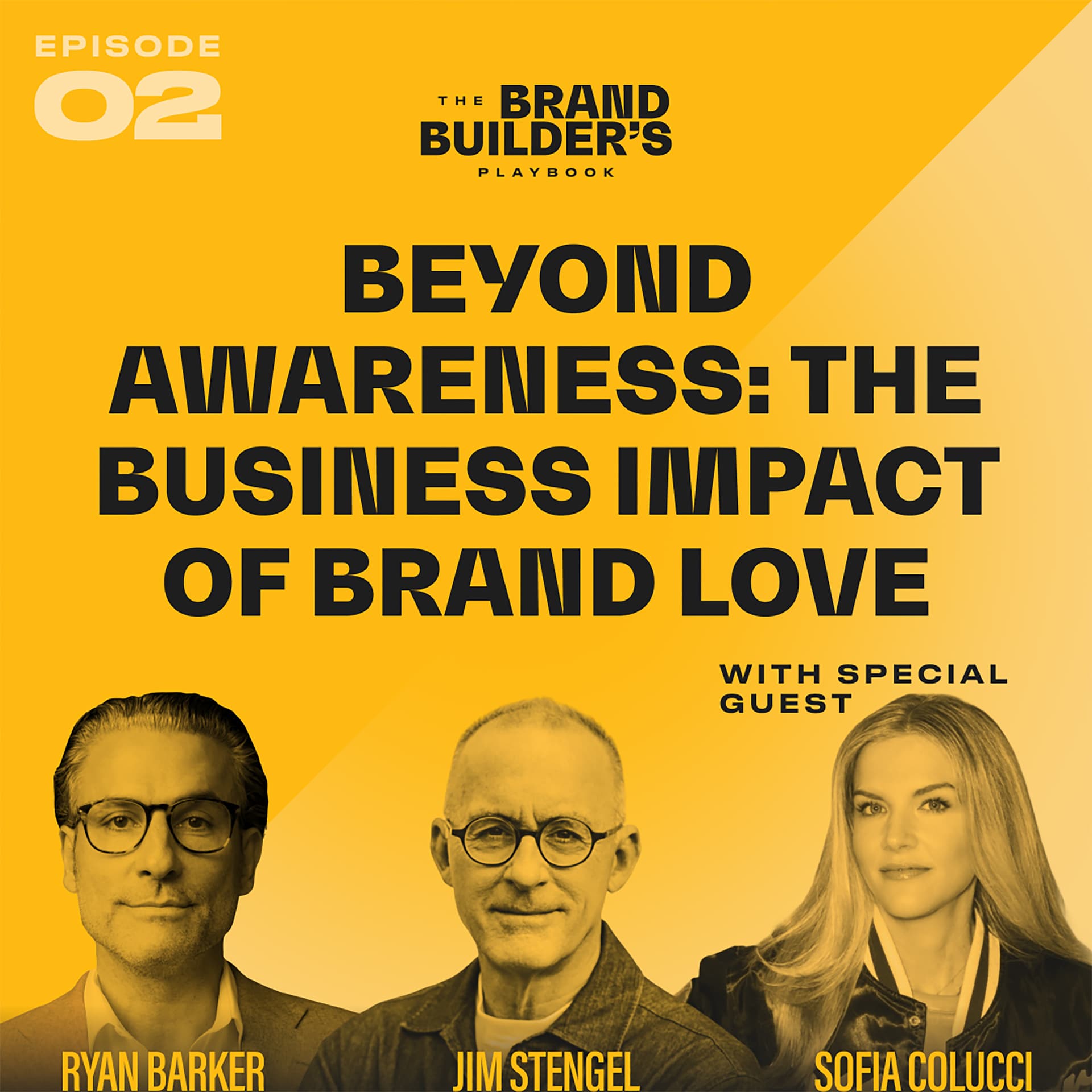
The Brand Builder's Playbook // Beyond Awareness: The Business Impact of Brand Love with Sofia Colucci (Molson Coors)
Episode Overview In this episode, Jim Stengel, Ryan Barker, and Lindsey Waking engage in a dynamic discussion about the significance of "brand love" and its measurable impact on business growth. They are joined by Sofia Colucci, Chief Marketing Officer of Molson Coors, who shares insights on how to convert consumer affection into loyalty and financial success.
Key Themes and Discussions
- Introduction to Brand Love
- Definition: Brand love is described as an emotional and rational connection that consumers have with brands, which drives loyalty and can translate into measurable business metrics, such as pricing power and market performance.
- Importance: Emphasized as a critical asset for brands, challenging the perception that it is merely a soft metric.
- Current Trends and Examples
- Nutter Butter: Discussion on how Nutter Butter is leveraging unconventional creativity to attract younger audiences through meme humor, reflecting the need for brands to take risks to generate love.
- Spotify: Acknowledged as a "love brand," highlighting how emotional connection allows for innovation and expansion into new markets and product categories.
- Starbucks: Mentioned as a brand working to rekindle love among consumers after losing some loyalty, with a focus on returning to its core values.
- Sofia Colucci's Insights
- Background: Sofia shares her journey from early experiences in retail to becoming a CMO and emphasizes the importance of understanding consumer identity.
- Brand Love Framework:
- Identifying how brands resonate with consumers on an emotional level, particularly in the beer category where brand identity plays a significant role.
- Discusses the necessity of adapting marketing strategies to connect with new audiences while maintaining authenticity.
- Measuring Brand Love: Highlights the use of both short-term and long-term metrics to gauge brand health and consumer affinity, leveraging data to correlate brand equity with business outcomes.
- Cultural Relevance and Adaptation
- Brand strategies must evolve to remain relevant in changing cultural landscapes, particularly in connection to identity and lifestyle trends.
- The discussion also touches on external factors affecting the beer market, such as the rise of non-alcoholic options and cannabis, stressing the need for brands to diversify their portfolios.
Key Takeaways
- Emotional Connection: The deeper the emotional ties consumers have to a brand, the more resilient and profitable the brand is likely to be in the long term.
- Risk and Creativity: To cultivate brand love, embracing creative risks is crucial. Brands that don’t innovate may fall behind.
- Cultural Signals: Brands serve as identity signals for consumers, and understanding this can help in tailoring marketing strategies effectively.
- Holistic Measurement: Companies should focus on both short-term sales metrics and long-term brand equity to gauge success.
Frameworks and Strategies
- Sofia presents her framework, termed "MUSCLE," which focuses on building brands that resonate with consumers on an emotional level.
- Encouragement for brands to maintain consistency in their messaging while being adaptable to new cultural trends.
Closing Thoughts The episode concludes with reflections on the importance of brand love in developing a sustainable and resilient brand strategy. Listeners are reminded to integrate both immediate and long-term thinking in their brand-building efforts to foster loyalty and growth.
Call to Action Listeners are encouraged to download worksheets related to the episode and share insights with colleagues who may benefit from the discussion on brand love and its practical implications in marketing.
---
For more insights and resources, you can visit the podcast's official page and check out related episodes and worksheets.
Written by AI. May contain mistakes. Listen to the episode to check what was said.
Transcript
Automatic transcript. May contain errors.0:01We are on a mission to build brands that people want to hang out with. And we've had that mission for years now, and that's not changing. Welcome to the Brand Builders Playbook, the show for modern marketers who are done with guesswork and ready to implement what actually works. Hi, everyone, and welcome to Episode 2 of the Brand Builders Playbook. This is Jim Stengel. I'm Ryan Barker. And I'm Lindsay Waking. I am so excited to be working with both of you in this series. Last week's episode was awesome with Chris Burgrave, but our topic this week is hard to beat the business impact of brand love.
0:37And since we're speaking of brand building playbooks in late 2025, as we did last week, this will be our tradition. We will open each episode with a brief discussion of a brand's playbook that you are currently liking, hopefully related to the topic of the week. And this week is brand love. Last week, I talked about Chili's. Lindsay, what's your one for this week, a playbook on brand love that you're admiring? I've really been loving Nutter Butter. Have you guys seen that? Yeah, of course. I mean, they've been coming up really organically in a lot of interviews we've been doing around like Gen Z and different brands that Gen Z, like people we've talked to just really love.
1:13And I think they are doing a phenomenal job of like leveraging weird creativity. You know, it's like a, I think it's like 150 year old brand, but they hadn't done advertising. They may be not that old, but they haven't done advertising in like decades. And so they were kind of starting from scratch, trying to figure out how to win over a new younger audience. And they really leaned into this idea of being like nutty. And then I think they found like the most, you know, they really tapped into kind of an absurdist, surrealist sense of humor, like meme humor online and have created, honestly, the weirdest content I've ever seen.
1:51Like it is like, but it's perfect. Like if you, you know, if you study internet absurdism, it's exactly, you know, it's executed perfectly. I was looking for attribution data before this to see, you know, like it's performing really well on social and it does seem to be like there are some bumps in sales. They've launched some new products too. So who knows if it's exactly from this move yet, but, but it seems to be hitting. And I, I just think it's such a brave way to stand out and to generate love. And I think like, you know, we'll probably talk about this more, but I think in order to generate love, you have to take risks, right?
2:25Like people, there is no one who is deeply loved who isn't also hated or disliked in some way. And I think what they're doing was risky as hell, but it seems to be paying off. Do you think they took a page out of the Skittles playbook? I think so. Yeah. I think that's probably a good precursor. And by the way, they're 55 years old. I just looked it up as you were speaking. Okay. Wow. Still, you know, they're not a teenager, right? No. So Ryan, what about your brand playbook of the week? Well, one of the benefits of brand love is to have permission to expand to new adjacencies, new geographies, and new constituents.
3:00I woke up this morning, checked into the Barrett database, and Spotify is a love brand across multiple audiences, especially Gen Z, Zillennials, Millennials. And it's not about just love for creating new features. They've expanded into audiobooks and podcasts. podcasts. They've created tools that have empowered artists to do more of their content creation more. And then even more recently, their ad network has just recently expanded into Amazon. And so I love all of that comes across is innovating with purpose. And it's one of the key metrics that we're seeing that they're picking up. So very impressed with them.
3:38I mean, the brand I think I would talk about this week on brand love and the playbook actually is Starbucks. And I'm really interested to see how the story continues. Brian Nickel came in a year ago as the new CEO from the outside, from Yum Brands and from Chipotle and P &G, that's his background. I think he came in with the right philosophy, the right attitude. And the goal was to help people fall in love again with Starbucks after so many people, including myself, had walked away. I mean, it's a work in progress. It's not easy. He's a year into it. There's some hard work he's doing on stores and on overhead.
4:17And to build brand love when you're going through some structural changes, not easy. You just got to keep coming back to your fundamentals, why we're here, your purpose, which I think he's doing a good job of. So they're getting back into culture. You're seeing them a bit more that way. So I think it's a story that's still being written. And that's why I love seeing it. I think it is a playbook that they are writing as they go. And they're looking at the history and what's been special about the brand, but also what they're going to need to do in the future. So I'm loving watching that one. Okay, Ryan, last week we talked about why it's important to build a brand.
4:54So could you talk a bit about this concept of brand love, brand equity? You've been in this space for a long time. I have. It's interesting, especially when we deal with Wall Street. When folks first hear brand love, they tend to cringe. It sounds this soft vanity metric. But what we're really talking about is the emotional and rational connection that consumers have with brands. And we have the ability to prove that brand love is, in fact, an asset. I would say to oversimplify from a Wall Street's perspective, three things that folks are looking for in understanding that brand love is sustainable is one is pricing power.
5:34Love brands can reduce price sensitivity. The lifetime value of a consumer gets maximized. You can call that loyalty, but it's not just behavioral. It's emotional and folks are willing to pay a premium. And then it's the ability to reduce the cost of acquisition. Love brands don't have to spend as much because they've already tickled the heartstrings of today's generation and tomorrow. So those aren't vanity metrics and they can be measured in real time. So, Lindsay, that was a mouthful. and it was very kind of hard data about brand love, you know, pricing power, long-term value of a customer, market share growth.
6:10You talk about your company plunges into interesting topics and that are related to brand love. When you think about how you define and approach brand love, what do you talk about in your company when you work for clients who are trying to build their brand love? Yeah, I mean, I think we think about all the, I even hate the word irrational because I don't think the distinction between rational and irrational is a little bit of an outdated model, I think, to begin with, that everything is emotional and then we just, you know, we justify it rationally. But, you know, we really specialize in understanding what are the hidden emotional dynamics that drive our decisions and our behavior.
6:52And, you know, I think about brand love, like, you know, I do think about the ways in which we cherish or treasure or favor certain products. But I also think a lot about identity signals. And I know I think we're going to get into this later in the episode after our conversation about cores, but brands represent something from us. It's not just that we love the product. It's also that we love what it stands for and really what it means about us. Like, you know, if you are a Jeep person, what does that say about who you are? If you listen to Taylor Swift or if you eat Nutella, like all these, not every brand has this dynamic, but especially we are in an era of like hyper identity where we are all trying to find signals in which to communicate and express all of the beautiful and crazy and weird and sophisticated nuances of who we are.
7:39And, you know, we turn to things like diagnoses to do that. We turn to things like style to do that. We turn to things like hobbies to do that. We turn to things like brands to do that. And so when I think about love, I think sometimes in the branding world, we can be very like self-centered about it. Like, what is it about my product that people really love? But a lot of times it's, what is this product saying about you? What does it symbolize in the culture that people are picking up and using as like an identity signal as a way to broadcast who they are? And I think that's kind of really, really interesting things I think are happening with Brand Love.
8:16And you hear it, you know, like we were just working on Friskies, the cat food. one of our researchers was doing like a whole deep dive into like Frisky's fanatics because Frisky's has some fanatical fans you know it's interesting because it's also you know a value brand you know this fanaticism is so intense that people will literally like walk uphill while it's snowing across state lines to like get their cat's favorite food obviously there are so many debates in our industry about what loyalty really looks like and how elastic or inelastic it is but you can't deny, you know, that there are moments where people will move heaven and hell in order to get the thing that they really want.
8:55And so I think that's like another dimension of how we, of how we think about it, both kind of identity. And then, you know, all the ways we will defy logic and sense in order to pursue something because it's either that good or that meaningful, or it represents something that, that meaningful. It's interesting because you talk about how a lot of folks want to oversimplify that it's about the product. And it's interesting how quite often brand is put into the responsibility of a CMO when it's the most important asset for the whole organization. And I think that there's a lot of truth in what you're saying.
9:26And the difficulty is how do you operationalize brand given that it can come to life and love can come to life through the product, through the pricing, through distribution, through customer service, through messaging, all of those levers play a role in building brand. Lindsay, I love what you said. I want to underscore something. When we talk about brand love, often in our industry, we tend to go to the premium brands that everyone likes to talk about Netflix, Apple, et cetera, et cetera. I love what you said about value brands. I mean, Aldi has an incredible customer following. Walmart has an incredible customer following.
10:02So it's just not a concept for premium. people just go out of their way and they love these brands. And those are just two examples, but there are many, many more. So this is a concept for everyone. Absolutely. Yeah, I love that point. So Ryan, anything before we dismiss Lindsay to take a break with some of her Nutter Butters and maybe some coffee and listen to our discussion with Sophia? Anything you want to highlight for our audience to listen for? I'm looking forward to hearing what Sophia has to say. I would say the concept of love, while it seems overly simplistic as a way of explaining, And the fact that this is a financial asset, it's important to speak the language to all stakeholders, whether you're talking to the board, to finance, to the consumer, don't diminish the importance of it by just the label and the name.
10:49That's brilliant. And, you know, I'm really interested in how she thinks about how you, you know, stay, stay relevant in terms of brand love over the course of like a long lifetime of a brand, because there's such that push and pull of what makes, you know, what's core in a brand and then how culture is changing around it. And, you know, so many iconic brands meant something at some point and then the culture changes and that symbolism isn't there anymore. And you have to kind of re find, I don't think you have to re find a purpose, but you have to re find how to express that purpose in a modern culture.
11:23And like alcohol is probably one of the best categories to really understand that dynamic. So that's what I'll be listening for. Are you both in the category? Do you both drink beer, Ryan? Oh, yes. Oh, yes. Lindsay? I am newly sober, but I was a big beer drinker growing up. Well, growing up is a weird phrase. In my 20s. Well, I'm sure Sophia will talk about the non-alc trend in the category, which I think is real and here for the long term. Okay, gang, we'll see you after the discussion, Lindsay and Ryan, let's bring Sophia into this. Let's do it. Each week, we will bring on a special guest. And this week, I am super excited to bring on Sophia Colucci, CMO at Molson Coors to talk about brand love.
12:10I can think of no one better. Welcome, Sophia. Thanks for having me. We have to start with you have a new CEO. What will you say to this CEO to help you accelerate brand love at Molson Coors? Yes, Rahul, our new CEO, I've worked closely with him in the past. He's a great guy, great leader and we're really energized by his vision and look like he is really focused on driving results and he has already been clear that he wants to put both the consumer and the customer at the forefront and so you know when we think about how marketing connects to that our vision around building brands that people want to hang out with isn't going away because we want to make sure that we're attracting people and building brand love for for our brands we're still very much focused on driving creatively effective marketing.
12:58I've talked about that framework with you before. So that is actually we're going to double down on that, frankly, because for for us to achieve the ambitions that Raul wants us to deliver, it's going to be critical that every single thing we do in marketing, both at a national level and at a local level, is really based around building magnetic brands that people want to hang out with, that everything is focused though around driving results and for results it comes down to obviously brand health and we'll talk about that um driving which is then going to get into share and then ultimately financial results so top line and bottom line growth and so so rahul is familiar with the journey that we've been on we've already been talking about you know how we're going to continue to grow it and build it as we go on to the next chapter with molson course okay sophia you've been at Molson Coors over five years.
13:50And before that, you were with PepsiCo working on Quaker Oats for some time. Was there an experience you can share with Ryan and myself where this concept of building brand love really took root with you? Sure. And look, I've been working now in consumer packaged goods for over 20 years. So PepsiCo before this, a company called Maple Leaf Foods in Canada before. But I actually think that the concept of building brand love started even before my career. It actually started in my first one of my first part time jobs. And that was at a Canadian drugstore called Shoppers Drug Mart. So very similar to like a Walgreens, I would say that because Canada doesn't have the same department store type feeling like, you know, targets like their, their cosmetics department was quite big.
14:35And I used to work in cosmetics as a part time job. So I was like, a 1516 year old girl selling cosmetics, low end and highland and cosmetics to people that came in and i learned so much stocking the shelves talking to consumers and really observing how people were thinking about what they were purchasing and and really what was going into the building of the brands and so a great example is i would actually you know start to realize like why why was a woman picking up a l 'oreal hair color instead of revlon and i would actually start to look at you know what was their packaging like what was you know who were they choosing for their models what was the advertising that i was then seeing on television and i started to really think about all those connections and think about like this like sense that women were just and some men too of course reaching for a particular brand based on all of these different levers that the actual brand was pulling so you know it made me really interested in marketing and how brands build, you know, consumer affinity, even before I got into university or even into a company where I worked in marketing.
15:47I love that. How would you explain to our listeners what brand love is and the difference compared to just simple recognition? Yeah, I mean, I think like, everyone has different ways to describe it. And so what I'm going to say probably is not, you know, rocket science for anyone. But brand love really drives like emotional connection and loyalty. It sets us apart from a sea of sameness and makes people proud to hold in their hands. And so again, if you think about what we're trying to do at Molson Coors, especially if you think about the beer category, nothing is more important than that badge value, that brand that you hold in your hand.
16:25So we are on a mission to build brands that people want to hang out with. And we've had that mission for years now, and that's not changing. And so I think that's the biggest one because, you know, in a category like this, like it's very different than, you know, other categories where maybe people are consuming them more at home or in private, like in a brand, in a category like beer or alcohol, like that's where really driving that brand love and that connection is so important. Sophia, your category has been famous over the decades for emotional advertising as a way to build brand love. And obviously the world has changed and there's so many more ways to do that.
17:05How do you think the way you build brand love has shifted in your category, your core category and the related ones that you work in as well? Yeah, I mean, I think the reality is like if you look at the core tenets of building brand love, like it still comes down to really understanding who your consumer is and what your brand stands for and the role that they play in the consumer's lives. And so if you think we're in 2025, like I don't think that necessarily has changed per se versus where consumers were 20 or 30 years ago. Now, I do think, though, the choices that consumers have have really changed and the way we can connect with consumers has really changed.
17:51So obviously, you know, I'm sure you talk about this a lot with other people on your podcast, like traditional ways of reaching consumers, while still important, they're evolving. And so we need to think about not just, you know, linear television, which, by the way, like connecting with consumers while they're watching live sports and beer is still super, super important. But at the same time, how do we think about partnering with the right creators, influencers, making sure that our brands are showing up in the right places? So I think, you know, going back to it, the core principles of building brand love, knowing who your consumer is, being true to what your brand is all about, those stay the same.
18:31It's more about the how and then also continuing to think about understanding who you're competing against and knowing that that's going to continue to evolve. You know, you talk about the emotional connection and then your peers that you're competing with. some of our listeners don't have the luxury of having a superior product, or they might even be at pricing parity. Do you believe that the emotional connection can be leveraged in a way if you are at parity in both product and price to win? Absolutely. And I think the reality is there are so many different reasons consumers are reaching for brands.
19:06And we have a variety of brands in our portfolio, and they come at different price points and you know we have different levers that we can work with we can obviously think about like advertising to consumers to reach to them through traditional means like again like being in live sports or partnerships with celebrities and of course we can also work on pricing but the reality is like we are not necessarily seeing that just by focusing on pricing like that's what's going to drive that long-term brand love and so if you think about it like we have brands within our portfolio Peroni is a great example that actually plays in the above premium segment of beer.
19:47So it is a higher priced beer option for consumers and it's growing. It's growing double digits. And we know that people love the brand. They love what it stands for. It's bringing style to the world of beer. It's the type of beer and brand that people can hold in their hands and be proud of. And it is competing against other beverage options that might be less expensive, but there is a different reason consumers are reaching for it. Sophia, you talked about Peroni. I mean, you've worked on so many brands that are loved, and we talked about your early career experience in that. Is there one in your portfolio now that you would highlight as you think has been exemplary in building its affinity with consumers' brand love, if you will?
20:36So when you would draw out and why? Yeah, I think there's I can probably give an example from the US and even Canada, depending on time. So I would start with the US and its Coors Banquet. So look there, we definitely have industry headwinds in the beer category, but we're still seeing so much brand love and in particular for Coors Banquet. And what we've really been leaning into is what makes this brand so distinct and really authentically, you know, what has been stood for for the last 150 years. It's grown the last five consecutive years and 16 straight quarters of share growth. And so, like I mentioned, it's 150 years old, but what consumers love about it, it's authenticity.
21:22And it's loved by poor drinkers who've been reaching for this brand for decades. But what's really interesting now is that we're seeing so much love and connection with younger legal age drinking consumers. So it's actually one of the fastest growing brands, beer brands with legal age drinking Gen Z drinkers. And I'm gonna botch it because I wanna just say Gen Z drinkers, but it's the ones that are legal age, the legal age. It's one of the fastest growing beers with this audience. And the brand love is so strong that they're proud to wear banquet merch. If you actually go to festivals like Lollapalooza, which by the way, we don't actually sponsor, I saw more Coors Banquet t-shirts than any other brand out there.
22:09And we actually did. We worked with our insights team to say, hey, is there a correlation? And in fact, people who actually wear Coors Banquet merch are five times more likely to want to drink and buy Coors Banquet. And so this is just this irrational love. And I do think like what we've done is we've really leaned into the authenticity that Western culture, that grit, that Coors Banquet has held. It's the essence of Coors Banquet. And it's been there for 150 years. Now, we are in a point in our culture where, you know, country culture is pop culture and it's cool. And so this is a really special time for Coors Banquet.
22:51But we think we have so much momentum and potential. So the team has been really deliberate with that brand. You know, it's really interesting. 150 year old. I think it's one of the most difficult challenges for brand builders. You have a core audience that's grown up with the brand. And then yet you brought a younger generation in. How do you do that? It's very difficult. You can't be all things to all people. Totally. And, you know, and I think we've been again, I think the team has been really smart around the different things that we're trying to do. I think what comes down to it is first and foremost, like honoring and being really focused on the essence of the brand.
23:28And so ensuring that everything we do is stays true to doing things, even when they're hard. Our long term platform is Start Your Legacy that we've continued with Coors Banquet. And then as we think about connecting with consumers, both our core drinkers who've loved us for years, along with these new drinkers, it's how do we bring that authenticity, maintain what's integral about Coors Banquet, but reach consumers in different ways. So here's some examples. So, you know, yes, we have we have a platform around Start Your Legacy. We have like really, really impactful film that we put out there that we put paid media around.
24:07But at the same time, we also have partnerships. So we've been on Yellowstone for a number of years now. And that's been a really big piece of driving Coors Banquet and culture because it's obviously connected with a new generation and an audience that are fans of Yellowstone. Another thing that we've started in the last couple of years is a partnership with Wrangler. Wrangler is a brand that is, you know, there's so much affinity with that brand and Coors Banquet. And last year we launched the first ever beer wash jeans with Coors Banquet. This year we launched a new set of merch, like 20 different clothing pieces with Wrangler and Coors Banquet.
24:50And we've done them in really creative ways. So I think the key in all of this is continuing to stay true on what your brand is all about. And then, you know, focus on that long term platform, but then find different ways to reach your consumers that's still connected to the essence and the long term platform of your brand. You know, what's interesting is with the legalization of marijuana in many places, that poses challenges to beer drinkers. How do you sustain love with trends that are attacking outside the category? Yeah, and it's a great question. And we're constantly looking at what are the other choices consumers have?
25:30What are those macro forces that are out there? And I think the biggest thing is to understand, like, what are the drivers and the reasons that consumers are reaching for some of those other options? And so, for instance, like if you look at something like cannabis, obviously, yes, there's like emotional benefits that they're getting out of it. But in some cases, too, consumers are looking for choices beyond alcohol and they are interested in non-alcoholic options. And so that's another reason. As we think about our portfolio, we are diversifying our portfolio. We've traditionally been, you know, five years ago, we were more of a beer centric portfolio.
26:05We've we've evolved. We are now a total beverage company. And in doing that, we've actually started to push not just into things in alcohol beyond beer, but we've also started to push into non-alc versions of some of our most popular beers. So we have a Blue Moon NA, which is actually a really fast growing non-alcoholic beer. We have a Peroni 00. And we've also, we just announced this year, we have a new partnership with Fevertree, which is one of the most, if you haven't tried it, it's delicious. It's a very premium mixer and it's fantastic. And so that's another example of us diversifying our portfolio to, you know, meet consumers where they are and where they're going.
26:50And maybe not necessarily have the same options to your point around cannabis, but at least what are those options fulfilling and how do we think about diversifying our portfolio and getting into spaces that deliver on those needs? By the way, Peroni Zero and the Blue Moon are wonderful products. There is absolutely no trade-off. I've had them both in the last month, and I haven't had Blue Moon in a while, and I saw you had an NA, so I tried it. It was a really hot day. It was midday, and I had it with some tacos. Delicious. So well done. That's to our ears. You know, it's our R &D teams and our innovation teams, and actually on that note, Jim, they worked really hard.
Read the full transcript
27:27we know from an NA beer perspective, like obviously like table stakes are NA, let's be clear, but we people delivering on something delicious is so important because otherwise, like, why are you drinking it? And so that was one of the key things that we were trying to do with that product. So I'll let the team know. Thank you. That's great job. So Ryan, back to you. Do you want to talk about Netflix? Yeah. You know, we've been talking 10 or 15 minutes. We haven't gotten the metrics. I'm loving the stories. So Sophia, whether someone's new starting out in brand building or seasoned, how do you measure brand love regardless of sectors and categories to help folks have that conversation with other stakeholders who might not be fluent in brand?
28:10Absolutely. And as you can imagine, there is no shortage of different metrics that we look at, and it's a combination of both short-term and long-term metrics. So I'll touch on some of the short term ones, but then the long term ones, I think will be interesting to you. So I think from a short term perspective, like, obviously, there's things that you would imagine that we're looking at, like household penetration, buy rate, competitive interaction. We're also looking at signals on how our brands perform in social as a lot of our thing, the things that we do are driving our brands and culture.
28:40So, you know, I think over the years, we were probably more focused on quantity of impressions. And now we're really focused on quality. So a great example was last year we announced a partnership with the pwhl so the professional women's hockey league um with molson canadian we created jerseys like where we basically move the players names to the bottom of their jerseys so it wouldn't be covered by their hair and like this simple shift drove so much social conversation and shares so much so that even tennis legend billy jean king she shared it on her Instagram. So that to us is like a key signal and quality around brand love.
29:20But we place equal, if not greater emphasis on long-term indicators, which are really critical to building enduring brands. And that's where Vera comes in. So we actually started working with Vera with our insights team, brought them in two years ago. And with Vera, we focus on two key metrics. And so we look at brand equity score, as well as consideration. And we've actually done work with our insights and partners in our analytics team to validate that these metrics, they actually correlate back to sales performance. And so our findings show that while both are really essential to growth, consideration tends to be more predictive of emerging brands.
29:59So like, for instance, like a Topo Chico hard seltzer in our portfolio, but at the same brand equity, it plays a stronger role in driving growth of those established brands, say like a Coors Light. So we really believe that as we think about brand health and measuring brand love, it's not just a one size fits all approach. We've been really deliberate and thoughtful as to how we look at both. And so going back to the question, as we bring in new marketers, we actually have a cadence and a rigor as to how we look at both of those short term indicators, some signals, as well as consistent tracking of the long-term in brand health through Bera.
30:43So measuring for today and tomorrow. It's interesting, the history of the portfolio and proliferation of media, the job gets challenging by the day, and now we have AI in the mix. So curious on how do you build brand love in the world of AI now? Is that a fad? Is that something staying? I think it's the reality is, I'm sure this question comes up all the time, like, I don't think it's a fad. I think it's staying. I also think there's so many industry experts that have talked and have been really eloquent in the way that they've spoken to it. I think you probably both saw it or heard of it. I remember at Khan, one of the leaders from Apple talked about the role of AI and thinking about the role of AI in creativity and then not taking over the driver's seat, but actually playing being shotgun with you and like so i think you know as a marketer that's how we think about it too you know we we value creativity so much humans are still going to be leading the charge but we have to think about you know what are smart ways that we can incorporate ai to make our work stronger and make our people you know more impactful and effective with the work that they do.
31:58And so we are exploring different ways in, you know, we have obviously company-wide things that we're doing. We're also looking specifically from a marketing and creativity side of things. We're always being really thoughtful though, that humans come first in this and that we're really driving it. I have one final question, Sophia, then I'll let Ryan end the segment with you, which has been wonderful, by the way. This is the Brand Builders Playbook, right? And we're in episode two. So we're trying to help people build their own playbook to build their brands. So if we opened up your playbook for building a brand that is loved, what would be the top three things in Sophia's playbook to build a brand that is loved based on all of your wonderful experience?
32:41For sure. So I think, you know, to really make it as tight as possible, the first one is understanding your consumers, just not just who they are, like where they live and what they're into, but really why they love your brand. The second one is understanding that brand and being ruthlessly consistent with it. So it's just like the relationships you have in your life. You know, you don't want friends that are inconsistent. Like you want to know what your brands stand for and you want to make sure that it is consistent year over year. Brands are no different. And then I think the third thing is creating the work that makes you feel something.
33:18And so we've talked about this before, but this has been so important for us. If you think of our creative framework, the first one muscle, the first one is magnetic. It's building work that makes people feel something. It can make you laugh, cry, give you goosebumps. But it's so important in everything we do, especially though with work designed to build brand love. We want our consumers to have that emotional connection with our brands that really moves towards advocacy for our brands. So those would be the three things that I would say. By the way, the MUSCLE framework, we won't talk about in great detail, but you do have a framework, a way that you think about building brands and MUSCLE is your acronym.
34:02So I mean, that's a good one. I think that's an important point to make. Companies, I think, that are able to scale their thinking and their philosophy tend to do better than building brands that are loved. Absolutely. We've been very ruthless about it. But it's really catching on. So we're happy about it. I want to thank you, Sophia. I love how the origin of this started when you were 15 years old selling makeup and that curiosity became refined over the years. And you've had tremendous success. Looking forward to seeing the great magic you continue to endure. So thank you again. Thank you so much, both of you.
34:33Great to see you, Sophia. Okay, Lindsay, we're welcoming you back to the discussion. And I should have brought this up earlier in the show. I've known you for a couple of years now And I've always known you for your brand identity is your long, long hair. And you've cut it. And I just have to reflect a little bit on the discussion we just had with Sophia. You didn't cut it so your hockey jersey would show your number, right?
35:00I did not, although I kind of wish I did. I know. I never thought I'd cut. Like, my long hair was like one thing sacred. Like, it was a sacred thing that I would never change. And when I moved out of New York, I was just in this like, I have this philosophy. If you're going to change one thing, you might as well change everything because the momentum of, of change, I think helps change happen throughout your whole life. And so I was like, fuck it. We're going to, we're going to cut off. We're going to do the one thing I said I'd never do, cut it all off. I did. And when I went to go get my haircut, the woman was like, I just need to make sure, are you going through like a breakup?
35:35Please sign here. I need to know if you're going to cry during this experience. I mean, I've seen it now for about 15 minutes. I like it. Thank you. I like it. Yeah. So anyway, but that's a big move. All right. Now back to Sophia. That was a great discussion, by the way. Just loved it. She's so good. What stood out for you, Lindsay, from that discussion? I mean, before we went into it, you said you were curious about how they think about older brands and brands over long periods. She certainly went there. Yeah. I mean, absolutely. I remember she I wrote down something she said that, you know, nothing is more important than badge value and beer and a category with with alcohol where it's public consumption.
36:13Brand love is so important. And I think what was brilliant about what she was getting at is not just brand love, but she was very tuned into how these brands are identity signals for us and how they're signaling you're a certain type of person. and you know like we were kind of beginning to touch on at the beginning like alcohol is so much a part of our identity like I don't know about you guys like when I was like just of drinking age I started drinking old crow whiskey because I really wanted to be a cool whiskey girl and not like a top shelf whiskey girl I wanted to be like a dive bar whiskey girl and like old crow was like king of like, you know, you're like a tortured poet of like a dive bar queen.
36:57And, but it, you know, it's, it's, it actually forced myself to like, learn to like the product because it symbolized something that I believed in. And I think she was really hitting on that course is that to people. And even the fact that it's on t-shirts and showing up at festivals, like, you know, it, it seems to be kind of part of this identity signal constellation that Carhartt and Levi's and Ford are that are signaling, you know, kind of an American frontiers myth or a working class kind of core cowboy culture, like all these things are kind of coming back into vogue. And Coors is so perfectly set up to symbolize those things within kind of the American psyche.
37:38And she's very aware of that and using it seemingly really smartly. I liked that she talked about the authenticity required to stay to the core of the brand, but at the same time, focusing on tomorrow's generation while preserving today's generation in an authentic way. And that might be two different executions. It dawned on me that to be a successful CMO, not only did she talk about short-term and long-term financial measurement, but it all began when she was 15 and 16 selling makeup. And there's just this general curiosity. If you're not a curious individual, it's probably not the right job for you from a sustainable package because there's so many components and complexities of the emotional connection that you have to harness.
38:23So she's clearly been very successful. I also loved her opening statements about her CEO. And clearly, they have a strong relationship. They see the role of brands in their company, the role of brand love in a similar way. So I think that's going to be interesting to watch this next chapter of Molson Coors because I think that the team seems set up for success. They share the same values, the same philosophy in building a brand. Not every one of our listeners has already leadership's buy-in. So I think that does set it up for success, Jim. Jim, I'm curious how you interpret their – she had kind of said their thrust is creating magnetic brands that people want to hang out with.
39:02Yeah, it's really good. Really good. and it's very, very powerful language and very powerful message to the organization. The rest of that framework is we had her on my other show, the CMO podcast, and she talked in detail about that framework muscle. And it's been a major priority of the company to roll that out around the world. So, so that's going to, I'm going to talk about that in a minute when we close the show, but I think that was, yeah, it's, it's had a profound impact. So we're only in our second show of the season, but we do have this tradition of opening up with a playbook we admire and we have a new tradition where we're going to close each show with one thing you would like our audience to consider adding to their brand building playbook from the topic of the week.
39:49So Ryan, why don't we start with you? What would you recommend our audience consider to add to their playbook on brand love? Absolutely. I think it's too easy for folks to say that brand's all about tomorrow. It's only about long-term. We heard clearly today, Sophia started about the short-term and long-term contribution. If you don't nail the short and long together, you might not be around long enough in order to justify your contribution to the bottom line. So I would say when instilling brand love into the organization, make sure you think about today and tomorrow simultaneously. Lindsay, I want you to be the last word.
40:23So I'll go in with mine for this week, because I want you to have the last word on brand love. On this one, I'm going to go back to the framework. What I recommend you add is if you're the CMO or anyone senior in a company, is there a common philosophy slash framework slash point of view on how you build a brand that is loved and admired and is magnetic? And if you don't, you'll kind of be all over the place. Hard to build a culture if you don't have something like that. So I would recommend you put in your playbook, where are we in terms of having a shared framework or point of view? And if you have a strong one, like companies like Molson Coors, P &G, don't sit on it.
41:04It does change and you do need to renew it and you need to update it. So that's what I would add. So Lindsay, to you, last word. I think if you deal in realms of strategy or research or creative, I think paying attention to how Coors not only like understands their heritage, but then has found a truly like a true understanding of where the culture is going and what people are hungering for in terms of identity and finding a way to kind of reinvent themselves to fit that mythology. Like I often think about, there are these myths in culture, right? There are these stories, like almost archetypes, like the working class man or the starlet or the American frontiers myth.
41:47There are these symbols in all cultures. But, you know, the same is true within American culture. And we're often using our brands to almost be these little shortcuts to tell us, like, I'm this kind of person. And I think in order to really find that formula, you have to understand, you know, what did your brand ever symbolize, if anything? And then where does that line up with the cultural symbols that are really hitting right now? And I think Coors does such a beautiful job of being able to kind of slot themselves into this modern hunger for these more, you know, working class frontiers, cowboys sort of myths in a way that generates a kind of love where you wear a Coors shirt at a festival and it says something about who you are, even if you're not drinking the beer.
42:32And so I think that's powerful. And once you have that framework, then you can do really fun things with it. Like the beer washed jeans, I thought was a brilliant. And it's fun, you know, like. I think sometimes we're so serious about marketing, we forget that once you have that strategy like they do, being able to have fun with it is, I think, the best way to generate love from people. Okay. You're not going to have the last word. Judy Stevens, our producer, joined the show. She's worked at Marvel for years. She has a couple of books out. She knows a lot about brand love. She's a whiskey girl, right?
43:07When you say you're a whiskey girl. I'm a scotch girl. Yes. So what's your scotch brand that you love and what's it say about you? Bricklotti. I'm a Bricklotti fangirl. The iconic teal blue bottle that you will see in many bars and whiskey stores. They just have a very peaty, smoky whiskey that I very much enjoy. And I just generally love the branding. I love what they do for their fans and their bottle releases and all that stuff. But I think once you find one Scotch you love, you discover all these incredible brands that you discover from there. Like, for example, Nick Neon, which is a small independent distillery that's predominantly female run.
43:49I discovered thanks to learning about Scotch. And when you wear T-shirts to the many festivals you go to every year, Judy, what's a shirt you usually sport? Jim loves to make fun of my Formula One fandom. So, yes, I love Formula One. And so that's one of my side fandoms. I think we all have a lot of fandoms, don't we? Absolutely. We do. Yeah, that's why this is a great episode. And we could do a whole nother show on our fandoms. Maybe we should. Yeah. We were talking before we started about my glasses. I'm very known for my round glasses. I mean, it's a brand that I just love, right? I'm a big fan of LGR.
44:24They were a small Italian brand. I learned about them through in France at the Cannes Festival. My glasses broke. I've been loyal to them for like 15 years. And I just saw that they're now that they did all the glasses for the White Lotus season three. So there you go, throwing themselves into culture. I don't buy any of the brand. That's love. That's love. So how about you, Ryan, before we sign off? What's your fandom these days? We're all talking about alcohol. I'm getting thirsty. So no shortage of sectors here. I think for me right now, because of the whole AI component, I am a fan of some of these new toys.
45:02So playing with chat GPT, it's just transformed both my personal and business life tremendously. So I'm a fanboy of AI. Lindsay, last word. Oh, I feel like my fandom right now doesn't fit this formula really well because I'm just like deep into like esoteric mysticism right now. Okay. So old Sufi mystics are my fandom right now. The season, it's Halloween. It's perfect timing, too. Yeah, it is perfect timing. It is. The Florence and the Machine album that's about to drop, I think, is going to play into this. She's really delivering like a coven culture anthem this season. I need to dive in. Well, this show went to good places.
45:50So, everyone, we'll be back next week with part three of the Brand Builders podcast. It's been a great show. Thanks, Ryan, Lindsay, and Judy. Pricing is the topic next week, which is very, very related to brand love, of course. And we'll get into that in great depth next week. So great show. Thanks all. See you next week. Take care, everybody. Thank you. Thanks for listening to the Brand Builders Playbook, where we explore the real strategies behind resilient revenue driving brands. If today's conversation sparked new ideas or helped you see things differently, do us a favor. Follow the show on your favorite podcast app, leave a review and give us a like or rating.
46:26It really helps others find the show and keeps our conversation going. And if you know a brand leader or marketer who needs to hear this, share this episode with them. And don't forget to check out the worksheets in the show notes. We'll be back next week with more insights, more playmakers, and more of what it takes to build brands that last.
From the publisher
Tune in each Friday to enjoy our most recent episode of The Brand Builder's Playbook...
---
How do you turn customer love into business growth? In the second episode of The Brand Builder’s Playbook, the team explores how emotional connection fuels measurable results, from loyalty and repeat purchase to long-term enterprise value.
Jim, Ryan, and Lindsey dive into what it really means to build “Brand Love,” using BERA’s Love Curve to unpack how the most emotionally connected brands outperform competitors on pricing power, market share, and shareholder returns.
They’re joined by Sofia Colucci, Chief Marketing Officer of Molson Coors, who shares how her team translates brand love into bookings, loyalty, and iconic creative ideas; from beer-flavored Pringles to New Balance koozies and even a dive-bar perfume.
“Brand equity isn’t a soft metric. It’s a growth engine. The most loved brands deliver stronger loyalty, pricing power, and market performance.”
---
Download this week’s worksheet here: https://bit.ly/43eFfHi
Read about upcoming episode topics and guests here: https://bera.ai/podcast/
See Privacy Policy at https://art19.com/privacy and California Privacy Notice at https://art19.com/privacy#do-not-sell-my-info.