
In short
The CMO Podcast Episode Summary
Episode Title
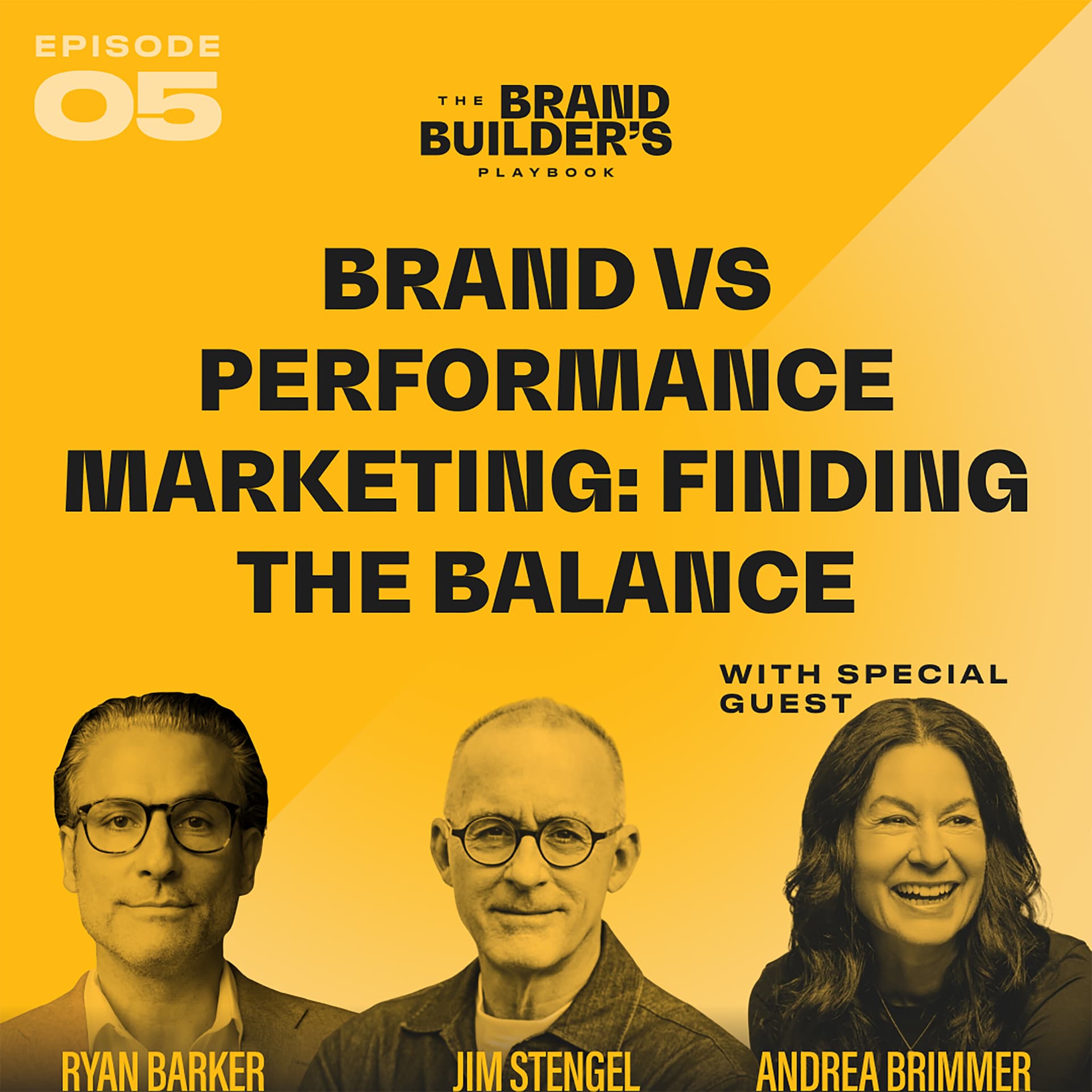
The Brand Builder's Playbook // Brand vs Performance Marketing: Why the Long Game Wins // With Andrea Brimmer (Ally)
Hosts
- Jim Stengel
- Ryan Barker
- Lindsey Wehking
Guest
- Andrea Brimmer, Chief Marketing and PR Officer at Ally
---
Overview In this episode, the hosts delve into the ongoing debate in the marketing world regarding brand marketing versus performance marketing. This discussion features insights from Andrea Brimmer, who has played a significant role in transforming Ally into a respected challenger brand in the financial services sector.
Key Themes
- The balance between long-term brand equity and short-term performance marketing.
- The concept of demand generation vs. demand capture.
- How organizational structure and alignment can enhance brand performance.
---
Detailed Notes
Introduction
- The episode kicks off with the hosts discussing the long-standing tension between brand and performance marketing, noting that this has been a prominent issue among CMOs.
- Jim shares insights from a CMO event at the Cannes Lions Festival where the topic was voted as a top concern for three consecutive years.
Playbook Examples
- Duolingo: Focused on combining brand and performance marketing through cohesive KPIs and engaging branding elements (e.g., a playful mascot).
- Depop: Cultivates community and culture while balancing effective performance marketing.
- Who Gives a Crap: A purpose-driven brand known for its cheeky marketing and social responsibility.
Performance vs. Brand Marketing
- Ryan Barker emphasizes that performance marketing can only be effective when it is brand-led, sharing statistics that show a drop in ROI when brand marketing is neglected.
- Andrea Brimmer argues for abandoning the brand vs. performance dichotomy, advocating for a combined approach of demand generation (brand marketing) and demand capture (performance marketing).
Andrea Brimmer's Insights
- Andrea discusses her journey with Ally, highlighting their commitment to creating a strong brand identity and fostering emotional connections with customers.
- She emphasizes the importance of being transparent and customer-centric, showing that the brand's success is deeply connected to its customer interactions.
- Andrea explains how Ally's investments in women's sports media have enhanced brand favorability and customer acquisition efficiency.
Organizational Alignment
- Andrea shares how she restructured her team to foster collaboration between marketing, communications, and product innovation, ensuring everyone shares responsibility for brand health.
- The shared scorecard approach is implemented, holding various departments accountable for both brand and performance metrics.
Challenges and Solutions
- The episode discusses the challenges organizations face when balancing brand building and performance marketing. Short-termism and the desire for immediate ROI often lead to an over-reliance on performance marketing.
- Andrea outlines strategies for aligning incentives across departments and creating a culture that values brand as a shared asset.
Recommendations for Marketers
- Start with Data: Use quantitative evidence to advocate for brand investments.
- Redefine Language: Frame discussions around demand generation and capture rather than brand vs. performance.
- Create Shared Goals: Implement common scorecards across departments to unify brand and performance responsibilities.
---
Key Takeaways
- Long-term brand building is essential for sustainable performance marketing success.
- The interplay between brand and performance should be viewed as complementary rather than opposing forces.
- Organizational structure must support collaboration and shared accountability for brand health across all levels.
- Emotional connections and customer-centric strategies are critical in the financial services sector, where trust and transparency are paramount.
---
This episode of The CMO Podcast offers invaluable insights for marketers looking to navigate the complexities of branding and performance in today's competitive landscape. By fostering an organizational culture that embraces both aspects, brands can achieve greater success and deliver exceptional consumer experiences.
Written by AI. May contain mistakes. Listen to the episode to check what was said.
Transcript
Automatic transcript. May contain errors.0:01If you don't see those things and feel the soul of the brand, no marketing that I do is going to matter. Welcome to the Brand Builders Playbook, the show for modern marketers who are done with guesswork and ready to implement what actually works. Well, hello, everyone. Welcome to Episode 5 of the Brand Builders Playbook. This is Jim Stengel. I'm Ryan Barker. I'm Lindsay Waking. Well, listen, we're about halfway through the series. We're having a lot of fun with it, and we hope you are too. And we had a great episode last week, and this week is going to be getting into the numbers, which we love.
0:38And we're going to talk about this hotly debated topic, which never seems to go away. And that is the tension between brand and performance marketing. You know, last summer, I host a big CMO thing in Cannes at the Cannes Lions Festival, 60 CMOs. We always ask them to vote on the top issue they're wrestling with. Three years in a row, it's been this one. So anyway, we hope to get some insight today. We have a great guest coming on, but I think it's a really, really hot area. And I hope people will have useful things to put in their playbook regarding this topic after we're done today. But before we get into that, you know what we do before every episode, we all talk about a playbook that each one of us are admiring, you know, that's kind of relevant to the topic of the week.
1:17And I usually go last as today, I'm going to go first because I love the example I have. And it's a brand I had on my other podcast recently, and it's Duolingo. And they have just a fantastic leadership team, fantastic culture. You know, their CEO in their most recent earnings call had marketing in the first paragraph of what was driving their incredible results on brand and performance. So they really think about these two together. They have the teams together. They have the same KPIs. They believe that performance marketing has to build brand, brand builds performance. And they have this crazy mascot, which they manage so beautifully.
1:54He shows up in all kinds of different ways. He's snarky. And by the way, when the mascot is in their marketing, they build performance. And the mascot is the brand. When people ask me to study a brand who gets this topic, I tell them to go look at what Duolingo is doing and how they think about this whole topic of brand and performance. And by the way, the brand is hot. They have high levels of retention. They have new users coming in all the time. It's a sticky brand. So they really have figured it out. So my advice to everyone is go take a look what that brand is doing. There's insights for everyone.
2:26Lindsay, how about you? Oh, Duolingo is such a great one. I'm obsessed with them too. You know what I've, what brand I've really been like looking at lately is Depop. Do you guys know Depop? Yeah. Depop is a, it's a resale secondhand marketplace, but they, I think have done, and you know, like I think secondhand like marketplaces can become very functional pretty quickly, but they have done such a beautiful job of creating not only like a brand, but like community and culture. I think they have like a, I was listening to a talk from someone internally and they were saying how they have a, they have a saying, like you come for the clothes and stay for the culture.
3:03And I think they do such a phenomenal job of cultivating culture and, and community and then using their, you know, sellers as their, as their marketing. They've tapped into like kind of niche aesthetics and niche fandoms and niche obsessions in youth culture. So beautifully. and I think really have understood self-expression and creativity, but they also still do, I think, phenomenal performance marketing at the same time. And it seems like, you know, I haven't heard, it seems like they don't see them so separately, which I think is probably a big takeaway we'll be talking about today. Ryan, your turn.
3:40Bring us home. Jim, who gives a crap? Not being rude. That's the name of the brand. Have you heard of these guys? Started in 2012 out of Australia, expanded into Europe, doing really well in the UK and came to the US in 2024. It is a purpose-driven brand, make things like toilet paper. Their ads are incredibly cheeky and they give 50 % of their profits to something near and dear to all of our hearts in terms of a purpose-driven brand. And for today's topic between brand building and performance marketing, what I love about who gives a crap besides their packaging and their ads and fun is that they have a pretty low cost of acquiring customers.
4:22It all started with brand led, which is one of the things we're going to talk about. And they're direct to consumer. But recently in 2024, when they came to the US now, Whole Foods, Target and Amazon have been distribution. So I'm glad that Lindsay brought a smaller brand and we gave another smaller brand as an example. These are ones to keep our eyes on to see what's happened. So yes, Jim, who gives a crap? Where are the founders from? Are they ex-PNG? But do they come from KC or P &G or any? It's a good question. All right. One's come from P &G, right? We got to see. Not always. Three gentlemen.
4:58Three gentlemen. All right. Well, listen, let's get nostalgic and look back at last week. We had Raj at MasterCard on the show. We went into ROI in a deep way, and he is such a seasoned leader and so articulate about his strategies. I mean, we always learn something to listen to him. But this week, we're going to get into what we just talked about. That's brand-to-performance marketing. And Ryan, I think you need to kick us off here because you love this topic. You can talk about it endlessly. You have data to support it. Your company is very much about this. So why don't you kick us off and get us started on talking about brand-to-performance marketing?
5:31Yeah. Well, you also, with the publishing, great work on Harvard Business Review, where we started this off two years ago with brand versus performance. And then now more recently with the work report that was published earlier this year with our friends and other colleagues on called the multiplier effect. There's been this false choice that performance marketing is the king and that as long as we are spending the bulk on performance marketing, brand sort of like a nice to have because you can measure all those clicks. And what we've managed to calculate is that the reality is performance marketing performs well when you're brand led and that it's not brand versus performance.
6:10It's brand times performance. And you can unlock this quantifiable, predictable multiplier effect. Two interesting stats that we pulled. One is if you're a balanced brand between brand building, performance marketing, and you cut brand out, perhaps there's pressure, your ROI will drop on average by 40%. If you're a performance driven engine and you turn on brand and you become brand live, the median ROI in the work report is plus 90%. So this is the real deal. And I'm excited for our guests to get into this because I think a lot of marketers struggle to not only get out of what we would call the doom loop when you're performance led, but how do you persuade our leaders that, hey, taking two steps back might actually lead to five steps forward and using data and facts to have that argument?
7:01Well, listen, let's take a little tangent here. And I like both of your points of view on this. Maybe you first, Lindsay. was that data that Ryan just cited. Why is it still attention? Why is it the top issue people are voting on that they're wrestling with? I mean, the data is there and that multiplier effect got a massive, massive reach. Thousands of people downloaded that. Why does it deserve an episode in this series? It's a great question. I feel like anyone who's been in marketing has been in these tussles and these arguments have existed in every new business pitch and every client conversation that we've all had for decades now.
7:36And my instinct is that like, just in cultures that want constant optimization, even though the data is there, brands still feel so amorphous to people. It's so, you know, it's harder to see, it's harder to define. It's, you know, a little more irrational. You know, I wonder if that just rubs against this culture that wants, you know, again, even though we have the numbers that wants to be able to see the clicks and see the ROI and, you know, attribution modeling on brand is difficult and has a lot of challenges that come to it. And I think it rubs against this rationality, but it's funny because it just feels like such a false dichotomy because what is performance without something to perform in favor of?
8:20If you have no meaning or no idea or that your thing doesn't mean something to someone, what exactly are you optimizing? I don't know. Ryan, what's your take on that? We talked a little about this in, I think, a couple episodes ago, but short-termism, right? We're all obsessed with short-term gratification, especially Wall Street. I think for non-brand people measuring clicks and attribution in real time, they get to see the results. Not understanding that if there was the brand engine, that's probably contributing a significant amount of that success. Or if you're performance-led without the brand building, that's not sustainable.
8:55And that's when folks will end up realizing they have to spend twice as much, three times as much just to get the same results from this. So I think it's short-termism and measurability. And not a lot of folks realize that there's been a lot of upgrades on the ability to measure brands at depth in real time against culture. And I think that's it. Folks want to see real data to support these suppositions. What do you think would be the biggest change we can make? Is it KPI? Is it Unite Branded Performance? Is it organizational change to put these teams together? I mean, with the clients you work with, Lindsay, what are they doing?
9:28Yeah. I mean, it feels like a lot of times things are very siloed. And so you're not, you know, you're not having the right people in the room at the same, like these are two, it's kind of like the head and the heart, you know, like you have to yoke them together. And I feel like we're just so used to separating everything. And then, you know, we're fighting, like teams are fighting for resources. That strikes me as the biggest thing, but, you know, I'm curious, Jim, having run a lot of these teams at the highest level and have been in the highest level of these conversations, like, what did you see?
9:56I think it's almost always the answers in the organization and what you value, what you measure, how you set up your structure, kinds of things that are people that are heroes in the organization. So I think if you get everyone to realize that everyone's job is, I think Young Brands has a slogan, something like sales today, brand tomorrow or something. So everyone has to be working on things that build the brand every day and also build the sales. And they're in a very day-to-day business because they're in quick serve restaurants. But I think the answer is in how you set up your organization.
10:28Yeah, I think you're onto something that I think they've been quite often siloed with different KPIs to focus on, different incentives, not realizing it's two sides of the same coin. We talk a lot about how brand is the engine and performance is the accelerator. And without both, you're not going anywhere fast. Well, every week we bring on a guest that we think is a great fit for this topic. And oh my, is Andrea a great fit for this topic? She is the CMO at Ally. She joined the company way back in 2006 when it was just GMAC. Three years later, she spearheaded the creation and launch of the Ally brand.
11:03And in 2022, 2023, and 2024, Ally was highlighted on the Fast Company Brands at Matterlist. That's a big deal. And Andrea has appeared on the Forbes World's Most Influential CMO List five times, earning her a spot in the 2024 Forbes CMO Hall of Fame. I never got that spot, Andrea. Congratulations. I might be older than you were saying something, Jim. Thank you. No, I don't think so. Hey, last time you and I talked, we talked a lot about women's sports and the rising influence of women's sports. And you were early on that at Ally. And I suspect that that has had a visible impact on your brand. and your performance.
11:47So before we jump into this topic in more depth with Ryan, could you speak a little bit about that commitment to women's sports and what that's done for Ally? It's been incredible. For the 50th anniversary of Title IX, we made a commitment that for every dollar we spend in men's sports media, we were going to match that expenditure into women's sports media. And you think about the trajectory of what's happened in women's sports since that time, I would say we played a role in it, partially, for sure, as a bit of the brand architect of that movement. A lot of our concentration and our focus was in changing the media landscape for women's sports.
12:26And we've seen a commensurate growth in terms of what it's done for the Ally brand. Not only is it an internal pride point from our CEO on down, but our brand favorability, when we look at fans of women's sports is anywhere from 20 to 30 percentage points higher. And we know brand favorability has a direct impact on actually acquisition. So customers or fans of women's sports are six times more likely to open an ally account, and they're opening them at an 87 % more efficient cost to acquire. So we're getting it kind of on both ends of that barbell. Our brand valuation, we measure that with brand finance.
13:07Two years ago, up 31%, the financial services category down 3%. Last year, up again, another 4%. The financial services category again, down 5%. So you're just seeing these huge swings. And then 65 % of everyone that's coming to our storefront is female. And so we really feel very well positioned, especially Jim, given that the predicted wealth transference to women over the next five years is between 10 and 20 trillion dollars and by the way your paid media is doing a beautiful job too thank you it just is very emotional very insightful very interesting so i don't know who's helping you with that if you're doing that internally but i think that it's uh that's helped your brand as well we brought um all of our internal media strategy planning um in-house got an amazing team run by jennifer brockington and lonnie wiles and molly lawson who just do and michelle alfano I would just do an incredible job of finding us the right media, putting us in the right places.
14:09And then I think what we've launched in terms of kind of that, we call it the Ally Words campaign. It puts us in every moment that people need money, which is pretty much every moment in life, without saying those words. So the growth in the last several years has been incredible. And I'm really proud of where the brand stands today. From the Baradatas perspective, we've seen your core loyal customers, the lifetime value, strengthen significantly. And the average financial service brand, especially banks, are all sort of sitting in this commodity area. But your core strengthening, but the number of prospects who are raising their hand that say, I don't currently have an AliBank account, but I'm interested, is also growing exponentially.
14:51Besides the female sports, can you talk a little bit about other tactics or strategies that have led to that success? Yeah, I mean, I think for us, Ryan, honestly, the key differentiator has been that banking is largely a category that people are either unemotional about, apathetic, or they have disdain. And what we decided early on is that we were going to create emotion in an emotionless category. If you think about our classification, we're what's considered a super regional bank. And what's unique about us is we've been able to create a national footprint, even as a super regional bank. And the value proposition is very different in that it's customer first.
15:33And it's, you know, this notion of financial services that truly serve. And we've really tried to tap into that from a marketing perspective. So whether it's things like the commitment we've made to women's sports, whether it's things like our annual banks giving campaign, where we literally give our call center advocates$500 ,000. And we say, spend it however you want on this day with our customers. And our frontline employees are actually having the opportunity to do really unexpected things to help our customers. And then we capture all the content and put it out there. Two unique partnerships that we've done with companies like Hello Sunshine.
16:10And we've created two slates of shows with Hello Sunshine around this notion of side hustlers that really tapped into the insight of how many women left the workforce during COVID and are trying to turn their side hustle into their main hustle. To, you know, just even integration now into a lot of content and shows like hacks and different things. For a brand, whether it's kind of small in terms of our go-to-market spend, I think the creativity is off the charts. And we've really intersected culture in a really unique way in a category that doesn't care about. Awesome. That makes a lot of sense.
16:47You know, today's topic is about brand building versus performance marketing. A lot of organizations struggle with the over-reliance of performance marketing. Can you talk a little bit about that within your organization? Yeah. You know, look, I think about it as demand generation and demand capture. And I think they're completely aligned and you can't have one without the other. And so we try not to overly focus on is this brand or is this performance? We really think about it in the pieces of, you know, kind of generation and capture. We did something really interesting a couple of years ago with MMA and TransUnion, and we actually went out, Ryan, and we tested with 850 ,000 consumers, and we split those groups, and we said, for one group, we're going to just serve a steady diet of, you know, kind of demand generation advertising, and for the other, it's going to just be all demand capture, so a lot of just rate advertising.
17:36And then we look at the differences in terms of what those two different streams of creative did in terms of creating affinity, cost to acquire, and lifetime value. And it was the first time I think there was an industry piece of research that actually proved the fact that you need both. And that's where we really saw that those that got the steady diet of that demand generation advertising not only were more efficient in terms of cost to acquire, but they grew their lifetime value with us at a really significant clip. And so that's been, I think, a landmark piece of work that we've used to really help us think about investment capacity, but also change the narrative internally and kind of up and down the C-suite.
18:23Can you stay with that, Andrea? It's a beautiful story. Can you go a little bit deeper on what you've done organizationally to be sure that people are working together? Maybe they're sharing KPIs, Maybe they're on teams together. So can you talk about how you've set up your organization to really execute what you just talked about? Yeah, absolutely. So actually, I've just gone through a massive operational reorganization on my entire team. And one of the things, Jim, that was a little bit unique about my team is the different pieces and parts of it. So I've got marketing, I've got comms, and then I've also got product innovation.
18:57And we do product innovation in a unique way through something that we call TM Studios, Truthmark Studios. maybe a little known fact, but our ally A is what we call our truth mark, because we've always wanted the brand to stand for transparency and truth. And so TM Studios is within my remit as well. And as a result, you know, those things don't all fit together. They make sense together, but they don't all fit together. And so we just went through a pretty intensive six month, really duration of time that myself and my leadership team got together and worked with Marcaps and said, okay, what are the different capabilities that a modern marketing and communications machine needs to have?
19:41But then we matched that against high-performing organizations. So what are the organizations that are driving the highest output? What do those capabilities look like of those organizations? And then we mapped that against what do we want to have? What are we good at that we need to keep? What are we not good at that we absolutely have to have? And what are we doing today that maybe doesn't make sense or nobody cares about anymore? And then how do those pieces and parts come together? And so organizationally, we designed around this idea of really kind of a group responsible for insights, future thinking, innovation, AI strategy, MarTech, all the things that kind of fuel the thinking across the group.
20:24Then we created clear lines around execution. so media audience strategy budget allocation identification of kpis that group has owns all that and then the other group that owns all the manifestation of the way that we show up in the world so they take that plan and have creative top to bottom content social all of it and then a group that measures us so i call it switzerland right direct report into me no budging the data know versions of your own reality, measurement and optimization and that how comes and kind of office the CMO round that out. And then one group with all of product and lifecycle marketing.
21:09And so it's really almost, I don't want to say a linear flow because I don't think there's any such thing as a linear flow in this marketing communications world. There's clear lines, there's clear ownership, and one piece fuels the other and helps bring to life the strategy that we've just talked about. Andrea, I'd love to double click on one of the parts, budget allocation. For a lot of our audience, that might be a challenging piece between brand building and performance marketing. Can you talk a little bit about that process? Yeah, absolutely. So, you know, we start with baseline, right? What are we committed to that we just have to allocate?
21:44I mean, long duration sponsorship. So you kind of start a little bit backwards, agency fees, etc. And then from there, what we try and do is what I would call zero-based budgeting, which is, let's not think about what we did last year. Once we take out the commitments that we have, knowing what our business goals are, knowing what the complexity of the media environment is, the complexity of the consumer, how technology is changing things, we create these waterfalls. And we say, okay, based on all of those elements, those are different inputs. Let's develop a waterfall that would actually get you to what is the right number from a media perspective.
22:21And then we decide, okay, we either have enough budget for that or we don't. And align on what we think that number needs to be. And then from there, really work through how much of it needs to go into demand generation and how much of it really needs to go into demand capture to balance the two things that we're always constantly trying to balance, one being brand health KPIs, and the second being business outcomes. And one of the things that I really like, Ryan, that we've done that I think is different in the last couple of years is the senior leadership team at Ally has a shared scorecard.
22:58And so awareness and brand health KPIs are not just on my scorecard. They're on the CEO scorecard, the CFO scorecard, the business leaders, the head of HR. So it's forced very different kinds of conversations. In fact, the reason I was late to get to you guys is I was just with the CFO and our CEO and our head of the consumer business talking about the fact that we're trending negatively on the brand health KPIs. And what are we going to do to bolster that in terms of incrementality? Because now we all own it. And it's not a fight between me and our CFO of I don't care about awareness. That's your problem because we're not going to get paid if we don't deliver on our shared scorecard.
23:39Sounds like the organization truly believes that brand is everyone's responsibility. I think that's a brilliant recommendation for folks because we've seen many, many companies where the performance marketing folks have their own KPIs, brand has their own. And the fact that you guys have laddered this up across all leadership and brought them in, I think is brilliant. One of the things I think has always been a differentiator at Ally and is special about this place and probably the main reason that I've stayed here my entire CMO career is the fact that I truly believe that everybody walks the walk when it comes to believing that the brand is a shared asset that we all have responsibility for.
24:17And I will tell you the business has done things like waiving overdraft fees and being the first to waive overdraft fees that were big brand acts that had more impact on anything than what I could have done from a marketing perspective. I think the same holds true for the way that our frontline employees show up and interface with our consumer customers and our dealer customers every day. The way that my HR partners think about benefits, recruiting, training, even the way that we evaluate ourselves on the what and the how at Ally. and the how is rooted in the principles of do it right, which is our tagline, you know, which we consider the golden rule.
24:55So it is, it is integrated across the totality of the company, all the way up to like our investor relations group and how much they talk about brand. And if you listen to one of our earnings calls, our CEO will talk about brand and the performance of the brand all the time. And it's not from a marketing perspective, it's an asset that the entire organization owns. And I think that's what's truly set us apart. Here, here. Andrea, how did you get there? How did you get to a place where everyone sees it as a shared asset? You share KPIs, brand is talked about in your earnings reports. Has it always been in the genes of allies since you started?
25:34I honestly think, Jim, because it's been part of our origin story. I mean, if you think about, you touched on it on the onset, we were GMAC. We were spun out of General Motors, bought by Cerberus, taken private with the intentionality of going public. Right when that happened, it was during the worst financial crisis since the Great Depression. Took a$17 billion tarp loan from the American public, which we paid back in full with interest, I may add. And the origin story was we easily could have been left for dead, but we had to create something highly differentiated. And we had to create something that wasn't going to work unless everybody owned a different piece of it.
Read the full transcript
26:13being able to create a company from the ground up together with a group of people created an owner mentality that everybody has. And another, I would say a unique aspect of Ally is we do this thing called Own It Grants. And every year, every single employee of the company gets 100 shares of Ally stock. And it's created this owner's mindset. I think we started the program five or six years ago. Like if you were an employee that was here five or six years ago, and you've held on to your stock and not done anything with it, you know, it's worth 50,$60 ,000. Think about that for an hourly employee who's on the front line.
26:50Think at$60 ,000 of Ally stock, right? So it's these things that we've done to create this ownership mentality of you all own the brand experience. And like I always say, I say this to the board all the time, I can have the best marketing in the world. If you don't feel it as a customer, when you call, or when you go to our storefront, or when you get on our mobile app or the way you see us show up in the community, things that we're doing. You know, we just made$150 million commitment to workforce development in the communities where we work and live. If you don't see those things and kind of feel the soul of the brand, no marketing that I do is going to matter.
27:32And I think people at Ally ubiquitously just really feel that. I think part of it is I've been very vocal about I don't own the brand. You guys own the brand. It's just my honor to be able to talk about it. Fact that from the CEO down, everybody's embraced that mindset. You have a very clear point of view in this brand of performance marketing and it's working and it's how you set up your organization. For those that are struggling to kind of do what you're doing, still an issue that is voted as one of the top issues in the function. What would your counsel be to get to a place where you are? Yeah, I mean, my counsel would be one, you have to have fact to sell to more linear thinkers, right?
28:09I mean, that's just the reality. And so you've got to work with partners that can help you, whether it's the bears of the world or others that can help you with the right kind of data to put the narrative together and tell the story well internally. Two, I think start small, do some tests and learns and prove out the thesis. Three, get aligned language. I think we do ourselves a disservice as a marketing organization by calling it brand versus performance. I really do. And that's why we've tried to strike that from our lexicon and really think about it more in terms of this demand generation and this demand capture, because brand can do as much to drive performance as vice versa, right?
28:56And so getting common language across the organization from your CFO, to your business leaders, to your marketing organization. And if there's bifurcation within your marketing organization between, you know, there's a performance team and there's a brand team, bring those teams together in different ways, create common language, create common goals. And then I think the last thing is the notion of creating this common scorecard and making everybody responsible for both aspects of demand generation and demand capture, because it's not going to work unless at the end of the day, you're all being measured against that and compensated against that.
29:38Makes a lot of sense. Andrea, also for our audience, when you're in tough times and if perhaps the balance between demand generation and the other side of the equation, talk about how you navigate that and to ensure that we don't lose too much on the brand side. Yeah. You know, what we've done that I think has been interesting, Ryan, is there have certainly been times where, let's just say, we're tracking behind in terms of our customer growth goals. And we want to go out and do a promotion in the marketplace. Typically, promotions, you know, you would think about those as very performance oriented, right?
30:14We're going to incentivize consumers to come to Ally. And instead of doing it in a way that is what we would call off-brand or more performance focused, we try and do it in a way that it is brand accretive. So I'll give you a really good example. We did a campaign a couple of months ago called Graduate Financially. We're running behind in terms of customer growth. We didn't do any incentive with it, but we went out and we launched a campaign focused on people that opened bank accounts, maybe in their 80s, you know, in the 80s or the 90s and are still with those banks. And we reminded them of different trends that were big in the 80s and the 90s and said, you've moved on from these.
31:03You're no longer, you know, wearing this. You're no longer doing the Harlem Shuffle. You're no longer doing this, that or the other thing. So why are you still with the same bank? And we launched that in a really brand positive way. It wasn't in the Ally Words campaign. So it wasn't part of the main campaign. It was tangential to that, but it was in the Ally tone. It was fun. It was disruptive. We got Taylor Lautner to do a post on TikTok and do a TikTok and wear some of the things that he used to wear back in that era and talk about why haven't I thrown these things away. So just a really fun way of doing it.
31:39And then after we created that inertia in the marketplace in a very brand specific brand tone, Then we went out and incentivized with promotion through our refer friends program so that we started the momentum first and then incentivized in a very ally way through advocacy. And so I think that's how we've balanced it, where we don't see any loss of brand momentum because you're not hitting people with a blunt force instrument. And anytime we do a promotion, you know, we do it in a really brand, a creative way. I think this is literally the playbook for how to set up the organization, incentivize, ensure you get alignment from all the stakeholders.
32:21I think it literally checks the box on all the components and takes a lot of work. It does take a lot of work. And it takes a lot of you've really got to be invested in it and you can't get deterred. And I'm not going to say it's been an easy journey. There have been times where, you know, I've been deflated, defeated, all those kinds of things. But you've got to go off, take your cool off lap. come back and keep working at it. And I just think that that's, you know, that's the big thing. And maybe just one last thing that I'd leave everybody with is I think where CMOs get in trouble, maybe sometimes fall out of favor, especially when it comes to this bifurcation of allocation between brand and performance is misalignment with the CEO.
33:03And I think it's really critical that as a marketer, if you've got that access to spend as much time being highly aligned with your CEO on what the vision is. What does he or she want the brand to stand for? How much are they willing to push for it? How much risk are they going to allow you to take? What is their investment capacity in it? And to make sure that there's no misalignment. And I think that's one of the things. Look, I've been 12, 13 years in my CMO chair and five different CEOs. And I'd say the first thing that I've invested time in is getting that alignment and shared vision with the CEO.
33:41Excellent way to end it. Just one last question, Andrew. We're in the fall, going into 2026. What are you looking forward to most for Ally in 2026? I'm really excited. We've got this new focused forward strategy, which is our new North Star at Ally and this notion of really kind of focusing in on the core. I've just gone through this reorg, as I mentioned, the team's heads down on a bunch of new creative work. And I'm most excited about, I would say, what's the moxie for Ally and how are we going to show up as we get into Q4 and go into the fall and really reground ourselves on the core, kind of a new consumer strategy as well around really creating primacy around the bank.
34:21So there's a lot of exciting things happening here. And I'm probably the most excited and invigorated as I've been in a long time. It sounds fantastic. We'll be watching. All right. Hope to make you proud. No, thank you for this. It's been a real gift. Really appreciate it. Thank you. Appreciate you taking interest in LA and our story. So thank you. Absolutely. Well, Lindsay, welcome back. Did you enjoy your break? Yeah. I mean, that was fantastic. I could listen to her all day. Yeah. Yeah. I felt like we needed to give her like two hours and not 20, 25 minutes. She's an amazing person, right?
34:54So let's get that out of the way. Just an incredible CMO, incredible leader, incredible human being in the job a long time. Just learning in that. Need to do a study at some point on continuity and results in CMO, because everyone talks about how fast they churn through. There's a lot of them that don't churn through fast and I think have a big impact on their organizations. So what's your take? You were sitting back listening to all this as Ryan and I were putting out these interesting questions. What was your take? Yeah. I mean, she said so many incredible things. I think, you know, this was early on, but one of the things I really love that she talked on before we get into the performance stuff, you know, she had this phrase creating emotion in an emotionless category.
35:29And we did a big piece of research on the financial industry. We launched nonfiction research off of it. It was called The Secret Financial Lives. And one of the biggest things that we had talked about in that piece was how money is so emotional, yet banking is so unemotional. And at some point, I think it was a banking executive who told us you basically have to torture people to leave their bank, that it's just, you know, we just don't think about that kind of purchase emotionally. And so I think there was something, you know, we talk about brand, something so powerful and being willing to bring emotion to that category.
36:04And then, you know, I think one of the most brilliant things she said is she doesn't think about it like brand versus performance, but she thinks about demand generation and demand capture. And it's so simple, but in that like shared linguistic like reframe is a whole worldview that kind of takes away that, you know, that butting heads that we talked about and aligns both of them on the same side of the table. And I don't know, to me, that was one of the most brilliant reframes that I feel like every company could employ tomorrow. Ryan, how about yourself? And you're in the middle of the conversation, but what's your, what's your takeaway from it?
36:41Totally agree with Lynn's, the renaming of it. And she said, it's a disservice to marketers, but they're walking the walk from the organizational alignment, Brand is an asset, something we've talked about in many episodes, Jim, starting from the CEO down. It's everyone's responsibility and having to rebuild that alignment constantly as new executives come in. It's a grain in the culture and then the balance between or being agile on good times and bads and how you do allocation. But you could hear just the level of sophistication and test and learn and process that goes into this. And it's not easy.
37:17I was thinking about a number of companies as she spoke, you know, they reminded me of. And, you know, she talked about giving freedom to the branches to spend some money to help their customers. That's very Zappos. when it was just so far above everyone in customer experience. So I thought about, and actually I talked about Duolingo earlier in the show. You know, the way she thinks about brand and performance and marketing is almost identical to how Duolingo talks about it, how they think about it. Obviously very different business models, but you've got very similar strategies. And they set up their organization as Andrea talked about to walk the talk.
37:54And there was a little bit of even a little bit of P &G in there, putting in deeply thinking about the capabilities you want to build and where's competitive advantage and organizing your teams around those things. You know, very disciplined, methodical approach to organizing their company. And yet they value creativity. So I think she gets that right, too. So anyway, how about you? What do you think about? You know, one of the things that I plugged into that I really appreciated was how she, you know, she talked about how when someone picks up the phone and calls the customer service rep at the bank, that matters just as much, if not more than any marketing.
38:30And, you know, that were, like you said, Zappos, like Nordstrom, like all these great. And I think it's so true that especially with banking, that like every one of those interactions is doing so much more marketing for you than any marketing campaign ever could. And I think taking from like the great customer service companies of our time. Yeah, I just think that is a massive mind shift that a lot of companies don't have. The oversimplification besides changing from brand versus performance, stop pitting them against each other is, in her words, the steady diet. The steady diet on that long term journey of building that asset, that relationship with consumers.
39:08What about as a leadership role model? What would you highlight from that discussion? I mean, we spent just 20, 25 minutes with her, but what did you learn from her as a leader that you think would be helpful for our audience? I think not enough CMOs embrace the financial counting, the math that brings the credibility, the facts into the equation, which helps bring some of the intimidation of brand being this soft, emotional thing. And it sounds like she's had to do that playbook over and over again with several folks at Ally. So I think as a leader, understanding all those components, bringing in other lines of business.
39:47But as she said, it starts with the CEO's vision, spending time, understanding that vision, and then educating brands role on this and that steady diet. Yeah. And, you know, I think maybe to Ryan's point, like she seems like an expert translator. You know, she used to phrase, you know, with with straight linear thinkers, you have to begin with facts, you know. And in that, you can tell she speaks multiple languages, multiple ways of thinking about the world, which I really admire. And I think a lot of times it's a power of more feminine leadership. But then I think the other thing that I thought was very wise is she ensures that it's not just her that carries the responsibility for the brand.
40:31Because it's not. All these other functions are 100 % determining how brand is doing. And, you know, I think there can feel so much pressure often that like if this is my domain, I'm 100 percent responsible for it. And I think advocating for a structure that spreads that responsibility across everyone who who does impact that can be hard to advocate for. But, you know, it's obviously working brilliantly. Maybe Duolingo needs to have brain as an asset, as a new language course. There you go. I have to get them together. You know, these are the little things that are interesting. You know, we recorded this and she was on a field visit.
41:11She wasn't in headquarters. She was in Charlotte. She had just come out of a meeting with her CEO and CFO about brand and it had some negative trends. So they were all together addressing it. She was in a cool t-shirt, you know, relaxed. So I think all those small things, you know, she talked about the meeting she just went at was, which was a really important meeting. She talked about being in the field. She was dressed in a cool, casual, approachable way. I mean, I think she would be someone wonderful to work with or work for. Absolutely. A sage. So we always end with one thing you would recommend for audience to consider adding to their playbook on our topic of the week.
41:48And obviously this one is brand and performance marketing. Brian, what would you add? What would you recommend people consider adding to their playbook? I think if you're an audience and you don't have the luxury of an organization that appreciates brand as an asset. Start with the facts and just taking the statistics of a negative 40 % ROI, if you're too heavy in performance ribbon, or how do we unlock that plus 90 % when we get the balanced diet properly allocated? I think start with that. Start with the numbers and the facts. How about you, Lindsay? I think that's brilliant. I really think the redefining what brand and performance means in your own language.
42:28And what are you really working towards? For her, she called it demand generation and demand capture. But I think finding your own language, I think it's such a powerful tool in putting people on the same side of the table. I think we're all lying. I mean, mine would be, she said it toward the end, common language, common goals, common scorecard, and not in the function across functions. I mean, that's hard, but it's very powerful and it will be an accelerator of your career if you're able to pull that off. And by the way, if you don't do it as a CMO, it's not going to get done. All right. I hate to end this.
43:03I know. This is so fun. It's so much fun. So we have episode six next week. Another great one about choosing the right partnerships and collaborations. It'd be fun. Really, really fun episode. But this one, This one was an instant classic. Yeah, she was pretty iconic. A little bit of a CMO crush. All right, everyone. We'll see you next week for episode six. Thanks for listening to the Brand Builders Playbook, where we explore the real strategies behind resilient revenue driving brands. If today's conversation sparked new ideas or helped you see things differently, do us a favor, follow the show on your favorite podcast app, leave a review and give us a like or rating.
43:45It really helps others find the show and keeps our conversation going. And if you know a brand leader or marketer who needs to hear this, share this episode with them. And don't forget to check out the worksheets in the show notes. We'll be back next week with more insights, more playmakers, and more of what it takes to build brands that last.
From the publisher
Every CMO faces the same question: how do you balance long-term brand equity with short-term performance marketing?
In the fifth episode of The Brand Builder’s Playbook, hosts Jim Stengel and Ryan Barker, along with guest co-host Lindsey Wehking, tackle one of the most heated debates in modern marketing: brand versus performance. Is short-term activation enough, or does long-term brand building ultimately win?
This week’s guest is Andrea Brimmer, Chief Marketing and PR Officer at Ally, who has spent nearly two decades transforming Ally from a regional bank into one of America’s most admired challenger brands. Andrea shares the inside story of launching the Ally brand, driving growth through bold, customer-centric marketing, and proving that financial services can stand for transparency and trust. The conversation explores how to build brands people truly love, balance creativity with measurable results, and use brand purpose as a competitive advantage.
“We have to stop calling it brand versus performance. It’s demand generation and demand capture. And you can’t have one without the other.” — Andrea Brimmer
If you’ve ever wondered how to build a brand that punches above its weight, Andrea’s playbook is one you won’t want to miss.
—
Download this week’s worksheet: https://bit.ly/4hFTZ7W
Read about upcoming episode topics and guests here: https://bera.ai/podcast/
See Privacy Policy at https://art19.com/privacy and California Privacy Notice at https://art19.com/privacy#do-not-sell-my-info.