In short
Australian retail’s shift under online competition, the importance of “making noise,” in-store experience, and how AI/automation will change jobs and shopping.
Guest
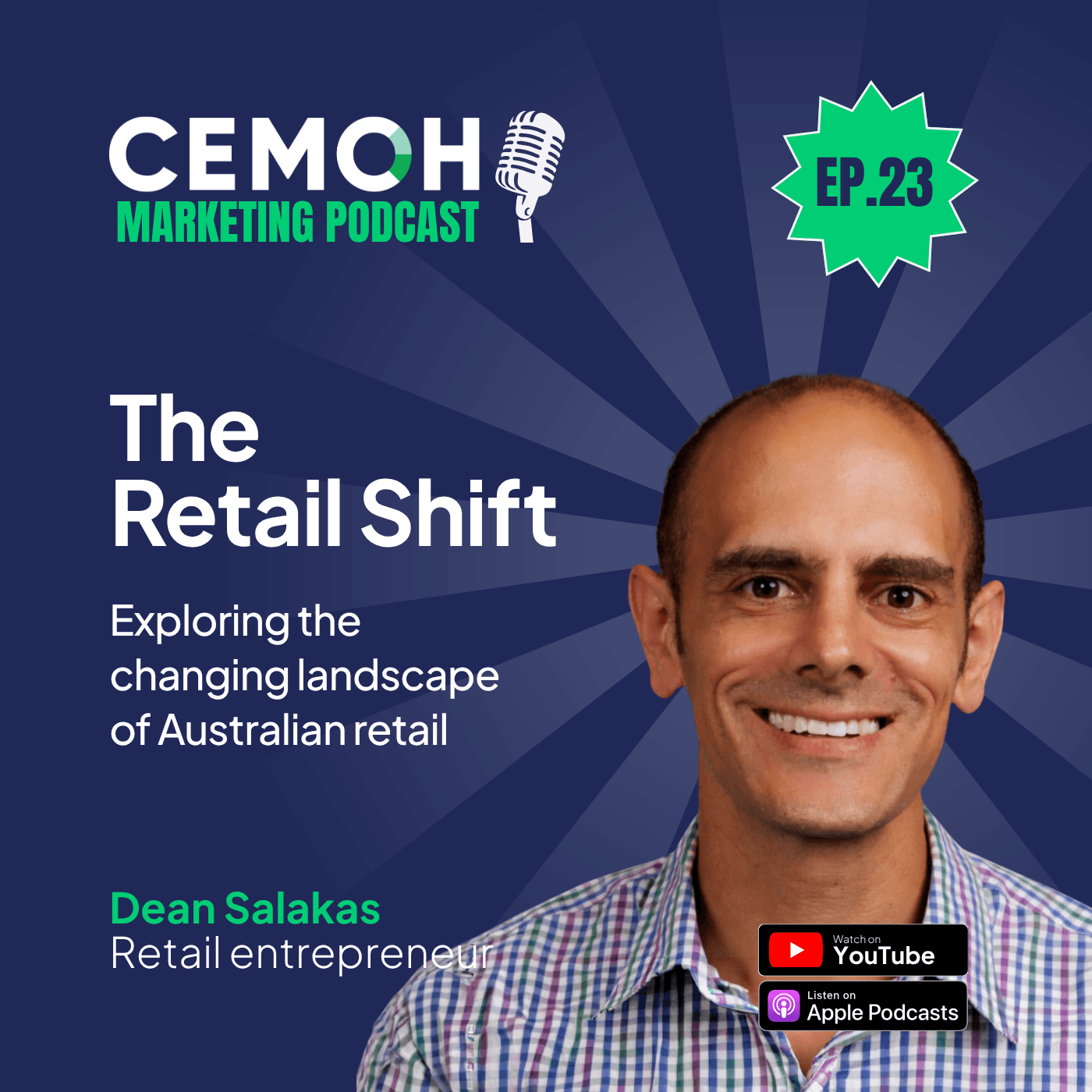
Dean Salakas, founder/owner of The Party People (party supplies retailer). Grew up working in the family business; launched online in 1999 (Australia’s first click-and-collect). Became Google AdWords first advertiser (2003), later worked at Woolworths head office as a business analyst, then acquired The Party People in 2007; grew it through triple-digit growth, exited in 2024 after a COVID recovery and acquisition. Now focuses on the RooTock retail community (WhatsApp group).
Key claims
Don’t rely solely on “buying customers”; win by solving customer problems and ensuring people know you. Retail differentiation is about mission (helping people have parties), not just selling products. Experience matters, but failures often start earlier than “bad experience.” AI won’t eliminate all jobs; it will displace some and force people to adapt. Physical stores will remain majority of sales; opening stores can increase local online sales.
Notable examples
The Party People “wow factor” (massive, visually packed store); Mecca, Culture Kings, JD Sports for experience; Barbecue’s Galore and Lincraft as cautionary cases; Amazon Go and inventory-count robots (Kmart/Bunnings) as automation signals. RooTock community prioritizes value over spam/pitches.
Written by AI. May contain mistakes. Listen to the episode to check what was said.
Chapters
Tap a time to open that second in VODean Salakas' Retail Journey
0:45 to 6:07
Dean Salakas shares his extensive career in retail, starting from a family business to multiple exits.
“you do enjoy today's show, please rate us and review us wherever you watch this.”
The State of Online Retail
6:07 to 6:40
Discussion on the current online retail landscape and its challenges.
“We all say that we'll never do it again and everyone does that again because it's maybe some sort of masochist in us all that says, you know, it'll be different this time.”
Strategies for Small Retailers
6:40 to 8:14
Insights on how small retailers can stand out in a competitive market.
“My first one was to get your thoughts on online, the state of online at the moment, because we're seeing that takeover of Amazon, of Sheen, of Timu, and all those kind of things.”
The Importance of Charisma in Retail
8:14 to 10:41
Exploration of the role of charisma and personal connection in retail success.
“You've got to make sure people know about you.”
Creating Memorable Retail Experiences
10:41 to 14:03
Dean discusses the importance of creating engaging in-store experiences for customers.
“charisma is such an important part of retail.”
Retail Experience Leaders
14:03 to 14:51
Discover which brands excel in creating exceptional retail experiences.
“So, yeah, some of these brands are doing it great.”
The Downfall of Retailers
14:51 to 16:18
Learn about the reasons behind the failure of certain retail businesses.
“Do you see a trend there in those businesses failing?”
Defining Your Business Mission
16:18 to 17:17
Understand how a clear business mission can differentiate your company.
“There were other problems before the experience fell away.”
The Importance of Growth Capital
17:17 to 18:11
Explore why raising capital at the right time can accelerate business growth.
“If you were starting the party people today in 2026, what would you do differently?”
AI's Role in Retail
18:11 to 19:35
Examine the current adoption of AI technology in the retail sector.
“I mean, like, are there a lot of retailers using it?”
Show all 19 chapters
AI as a Tool for Efficiency
19:35 to 20:52
Learn how AI can streamline operations and enhance productivity in retail.
Future of Jobs with AI
20:52 to 22:33
Discuss the potential impact of AI on future job markets and roles.
“You know, so you've already replaced stock takers in some of these stores.”
Quality of Life and AI
22:33 to 23:49
Explore how AI may transform family dynamics and improve quality of life.
“So people probably won't adapt as fast as then.”
The Relevance of Physical Retail
23:49 to 27:54
Understand the ongoing significance of physical stores in the retail landscape.
“The computer has made our lives better, I would say.”
The Rise of Retail Stores from Online Brands
28:00 to 31:01
Explore the trend of online brands opening physical retail stores and the key insights from the host's experience.
“You've got Oz Heron Beauty opening stores, Adore Beauty opening stores.”
Importance of Passionate Staff in Retail
31:02 to 34:20
Discover why hiring passionate employees enhances customer experience and drives business success.
“And we've been open six weeks and we've had 25 star Google reviews already.”
Balancing Automation with Human Connection
34:21 to 39:28
Learn the risks of over-automating retail and the importance of maintaining a human touch in customer interactions.
“So it's almost a free trip, to be honest.”
Building a Supportive Retail Community
39:29 to 42:00
Understand how creating a community-focused platform can provide support and resources for retail professionals.
“if I start charging these guys for what they're doing.”
Closing Remarks and Reflections
42:00 to 42:27
The hosts express gratitude and summarize their discussion.
“We have sponsors pay for our events, but they don't get to pick.”
Transcript
Automatic transcript. May contain errors.0:08Simon Dell:So welcome to another of the SEMO marketing podcasts. I am in the back of a shop here and that is really, really kind of suitable for the man that we have on the show today. Very quickly before we get started, my name is Simon Dell. I run a business called SEMO, where Australia's largest fractional marketing network. If you want to find out more about us, www.simo.com. We essentially match people who have marketing issues and we match them with the right people or solutions. So we're not an agency. We're a fractional marketing network, which is kind of my wanky term for not saying an agency. But with all that out of the way, if you do like this, you do enjoy today's show, please rate us and review us wherever you watch this.
0:51Simon Dell:That would be super helpful. But enough of that. We're talking to a gentleman today, uh dean salakis uh so welcome first of all welcome to the show how are you very well indeed um i dean is a retail guru that's probably the best two words that we could use to describe him but dean give us a bit of a give us the the sort of uh you know the three minute overview of your career because it's it's been very interesting and i think there's obviously a lot that we can learn from you today? Yeah, Retail Guru is very generous. I'm not sure about that, but three minutes, geez. I always say to people, Dean, they got to do it like a film trailer, right?
1:36Simon Dell:So you take all the best bits, all the explosions and the sex scenes and shove it in three minutes. All right, we'll see what we can do. I guess, yeah, I'll try for three minutes. I'll look at the bottom corner and see if I can keep it there. But yeah, so I guess I started my career out at I had a family business. My mom started The Party People, which was a party supplies retailer selling balloons, decorations, costumes. She actually started as a clown and then she developed it into a retail business. That's a whole story in itself. Mate, I was going to say there is so much to digest on that.
2:07There's a lot to unpack there actually. There's a lot to unpack. You gave me three minutes, so I'm going to keep moving. As a kid, four years old, I'd work in the family business, you know, packing stuff and doing things and just helping around the shop. But as I grew up, got a license, I'd do deliveries and all sorts of stuff. So kind of had my career in retail from the very beginning and went to university while I was working in the family business, did a university project where I was looking at the marketing and launched the business online with, sorry, backtrack a little bit. while in high school, I launched the business online in 1999, became Australia's first retailer to offer click and collect.
2:49In 2003, I was doing a uni project, discovered this thing called Google Ads, which was coming to Australia, Google AdWords, and launched on there. And I became Google AdWords first advertiser. And I was paying one cent a click. There's a lot to unpack here, but we'll just keep moving. Oh God, yeah.
3:06Simon Dell:So many questions I need to follow up on here, but go on yeah keep going yeah there's a few things there um and yeah and i built that business i actually went on to work at woolies and i was still working the family business part-time so i went to head office and i was a business analyst and there's a lot to unpack there as well won an innovation award there and did some fun stuff and sat on new line committees and got to report to the board stupid things they do and um and then i had an opportunity my mom wanted to exit the business so my brother and i essentially acquired it because they had a buyer and she didn't want to give it to us.
3:37That was just her way of making sure we didn't take things for granted. And so, yeah, we bought the business in 2007. I was still working at Woolies all the way to 2009 and we were going through triple digit growth. So I decided to take the leap and jump into the business full time by 2009. And the business was just on a rocket ship from the beginning and we kept that rolling. And we had ups and downs like every business owner has. So, So, you know, the first few years were just, we were flying. And then as things got bigger, it got, you know, we made a lot of mistakes. So we had the roller coaster that you have when you grow a business and from good times to really bad ones.
4:20And, but yeah, towards COVID and there's a whole nother thing to unpack there. We came out of COVID very strong and made an acquisition. That acquisition, someone came and acquired off us 18 months later for a lot more than we paid for it. And then they wanted to buy the rest of the business, which they did in December 2024. So I took an exit from the party people in 2024.
4:43And then I decided I wanted to go fishing every day and that would be my life. And that didn't agree with me. So people started calling me, asking me for help with stuff and little projects. And I kept picking up sort of, if you want to call it consulting gigs. I said two things when I sold the business. I was like, I'm not going to become a consultant. I'm not going to do a startup. started consulting and that, that, that, that was fun for a bit. And then, um, went to one of the conferences, started a WhatsApp chat with Jethro Marks, uh, to figure out where we were going to go drinking one night.
5:14That chat group was a hundred people by the end of the first day. It was 300 by the end of the conference. And now it's 4 ,000 plus, uh, 18 months later. And that's become my primary focus now is continuing to build the community. So I'm I'm pretty selective with the work I'm taking and, um, and I, I focus on, on the community cause I just need to give it base and air. And, you know, I've been through business a long time or I've had four exits now. And I know that we're, we're on that rocket ship again. You know, we've, we've grown really fast in 18 months and this was a really critical phase for me to continue to continue the momentum.
5:52Um, it's the hardest part to keep that momentum and, um, and also not get lost in what you're doing. So, yeah, I'm working it all out again and I'm in a startup and two things I said I wouldn't do, I'm doing both of them. So that's where I am today.
6:07Simon Dell:Four minutes, I was one minute over. No, that's cool. We all say that we'll never do it again and everyone does that again because it's maybe some sort of masochist in us all that says, you know, it'll be different this time. And it never is. It never is. Look, I'm not going to, there's a thousand things to unpack there, but I want to talk about retail and today. and get your thoughts on that because we've got 30 minutes and whatever, and that's what I want to focus on. And look, there is a lot of questions. My first one was to get your thoughts on online, the state of online at the moment, because we're seeing that takeover of Amazon, of Sheen, of Timu, and all those kind of things.
6:53Simon Dell:We're just seeing these beasts in the marketplace in a, what is a relatively small marketplace? You know, Australia's, you know, 27, 28 million people. How do small retailers stand out in that kind of environment? Yeah, I would say that's a really good question. It's not easy. And I think, well, where do I go with this? I would say one mistake I see people make a lot. Let's talk about what doesn't work so well, and that's buying customers is difficult. Businesses that are totally reliant on buying customers, they do work. So I'm not saying it doesn't work. Definitely you can buy customers and that's through digital advertising and stuff like that.
7:38And it should always be part of your mix, 100%. But where you want to get to with growing a business is to stand, like you want to, you know, you want to have an amazing product and by an amazing product, I mean, you want to solve a customer problem better than anyone else. Yeah. Um, and there's a very big distinction there. Um, and that's probably number one thing. I mean, you could, you could argue retail is really simple. You've got to have a great product that solves a problem and you've got to make sure everyone knows about it. And you can't have one without the other. You can't, like I see so many businesses that are amazing at what they do, but nobody knows about them and it's not enough to be amazing.
8:14You've got to make sure people know about you. So to stand out, you know, the answer to that question, it's funny because I would say every business I've built, I've had four exits now. And each time the strategy has been slightly different, um, or not slightly, it's been quite different. Um, but I've always made a lot of noise. And I think you've got to make noise about what you do. The big thing I see people is like, you know, people introduce themselves. You say, what are you doing? Oh, I'm just, uh, whatever. And you're like, there's a mistake right there. Like I'm just, uh, like when people ask me, Dean, what do you do?
8:43I'm like, Hey guys, I'm the chief party dude. We have Australia's largest party store. We're the biggest and the best. Um, you know, we help people make, have the parties they dream about. Just come straight out. Right. And, uh, you know, and I think it's important that you need to, you know, scream from the rooftops, what you do, be proud of it. And that's, I think you just got to make a lot of noise about what you're doing with it's media PR, you know, I think that's the key thing is just making noise.
9:09Simon Dell:It's, it's, I, I hear that, that problem so many times and not just in retail right i get people that coming to me you know b2b software developers right and you know they've got a good team they've got a smart team they've got smart people they've got a good product and they all sit there and just we don't know how to tell people about what it is that we do um and you know and i think retail is probably a little bit easier in some sense about making a noise i think there's lots of things you can do if if you're if you're a b2b software developer it's it's so hard to sort of you know i i always say to them it's like you need to find someone to stand on top of the building and shout across the roofs about how how good you are yeah you do and and you know i think that's in b2b and those sort of more drier spaces that's symptomatic of the people that are running the business are good at what they they do right they're good at software development that's why they started a software development business but i think if you're in retail, um, I think I shared the wrong link.
10:09Simon Dell:So people, people are accidentally joining the wrong, um, the, the wrong chat. But I think if you're in retail, you have to be a, a marketer too. Um, I think you, I think that to a degree is part and parcel. We're all in sales. Everyone. Yeah. When you're running a business, you're in sales. Yeah. You've got, you've got to be at a date. Where was I watching the other day? Something that somebody was talking about how, uh, when you're in this kind of business, it's, there's a lot to do with charisma and it's interesting, you know, talking to you and seeing you talk, charisma is such an important part of retail.
10:48Simon Dell:And I think, I think it's, and it's interesting. I'm not sure I call it charisma too. I mean, I was going to say, yeah, that's, I mean, you see it as charisma. I just, I just like being real with people and trying to help. It's that simple. Like, I just love helping people. I just want to try my best to help people. And like, I get up on stage and I speak a lot. And for those people that are listening that have heard me speak, they'll tell you that I'm not the most polished speaker. I don't get up there. I don't walk up and down the stage. For all intensive purposes, I would probably say I'm, in terms of the craft of speaking, probably average.
11:26But I get up there and I guess I think about my audience and I just want to make sure they get heaps of value. so people come away from my talks they don't say you're an amazing speaker they go oh that helped or that was great or i really learned something yeah that's what i get that's the feedback i get like people do say to me like i said what do you think of those and they'll be like yeah you're okay as a speaker but the content was awesome although you know or i took this this one takeaway that i just you know people come to me five years after i've you know they've heard me speak it's like oh you'd still use that concept today or whatever so you know i guess you see it as charisma but i guess i just see it as trying to help and trying to yeah do good in the
12:05Simon Dell:world you know yeah i it was i watched a video the other day and the guy was mentioning that word charisma and i think you know i there's no we're not getting a long argument about it now but i felt that was an appropriate word because it combined knowledge passion um enthusiasm all those kind of things if someone's charismatic they tend to be a lot of the they have a lot of those traits yeah um and i think whether it's you personally or whether it's your brand has charisma you know i think that to me feels like a you know something that i think is important for um for retailers how important taking taking the next step from that we still often we talk in you know retail about that that retail experience about how once you step into a store step through the doors, how important is that?
12:56Simon Dell:You know, talk to me about what that was like with the party people, you know, people walking in the doors. What were they hit with? Yeah. I mean, people that walked into the party people, the first thing people were like, and I mean, I had this almost every time people would walk in and be like, wow, this place is massive, you know? And, you know, you'd walk into my store, there'd be balloons everywhere. It's decorations. It's packed to the roof with product. It's, yeah. displays everywhere like i mean we're talking uh walking to my store and it was eight meters for the roof or whatever yeah um but you had just stuff in there everywhere and it just was like i mean we're a party store so we could be a little messier but make it really sort of visually appealing when you walked in so people just came in and had that wow factor from the get-go and um that that was great because people just come in straight away they you know you know people judge you on your first five seconds like a person the store's the same they judge you as soon as they walk in and they walk in and they're like holy moly this is amazing yeah um where's the where's the back of the store they can't even see it you know that experience is just a great way to start who else do you think is doing that well out there then from an experience perspective i mean all these large format stores some are doing great like you feel that when you walk into like a mecca they do a great um you know there's definitely a few guys that do it that create that wow factor that you've got, like, you know, Culture Kings, you know, do it well.
14:23So, yeah, some of these brands are doing it great. JD Sports, I did a store walk with them. That's great. You walk in there, you just feel the vibe straight away. You get that from the staff. You get that from the way the merchandising is done. You get that from the visuals. They've got all this, you know, fun video going on in the store. So, yeah, I think there's a few people doing it really, really well and just thank you when you walk in.
14:42Simon Dell:There's obviously, and we won't mention names because, you know, because you want to obviously carry on working in this industry but there's obviously a few people that are not doing it well and you know we've seen that we've seen that slew of businesses failing in australia over the last almost almost with regularity i think every year there's some there's some big names go do you think that that's that's largely down to the fact that that that experience they've left that experience behind and just become a bit formulaic or they've got staff that don't care or the product hasn't been refreshed.
15:17Simon Dell:Do you see a trend there in those businesses failing? Look, definitely I would say on the face of it, you see the experience has deteriorated and often people say, oh, the problem was the experience was crap. You look at Barbecues Galore, Lincraft, these guys, people go, well, they lost their way when it came to experience. I think the easy thing to do is just profess to know the answer. Businesses are complex and hard. Like, I mean, as a business owner, every day people are coming to you going, oh, you could do this so much better. Or did you, you know, have you had this idea or whatever? Like, it's easy from the outside to have an opinion.
15:51I would say being internally is a bit harder. And the reason I say these, I think some of these big failures, there's much more to the story than just the experience being terrible. There was something that started it. Like, Barbecue's Galore is a great example where, you know, as I understand it, they were pretty constrained cash-wise and capital-wise. And the first thing to go was these loyalty programs and experience stuff and the in-store, the sexy stuff that made them great. And that was a spiral downwards for them. But it wasn't the first thing that was the problem. There were other problems before the experience fell away.
16:22But 100%, I mean, like we say experience. I think the bigger problem, and I have this conversation with a lot of entrepreneurs and business owners and even large enterprises. I just ask them, you know, what problem do we solve for the customer? I think it's got to start there. Like what problem do you solve? Like my party store, the thing differentiated me from everyone. Everyone thought they were in the business of selling party products. I looked at it that I was in the business of helping people have parties. And it seems like a tiny distinction. It seems like semantics, but it's not. It makes the biggest difference when you start thinking about strategy and things you do.
16:58Do you offer services that don't make any money? Yeah, you do because that's about helping people have parties. Do you do this? Do you do that for the customer? Anything that's about helping them have a party, you do it because that's on mission and it's on brand. A business that just tries to sell products and I'm not going to wear my businesses right now, but that's their focus right now and it's not how I see the right strategy.
17:17Simon Dell:If you were starting the party people today in 2026, what would you do differently? What would I do differently? Oh, look, I think I'd open more stores, but I was always on that mission, to be honest. I probably would have raised capital. I think one thing I was always shy of was letting someone in and having a business partner to accelerate the growth. I think that's probably the main thing if I was to look back, just letting someone in, especially when you're on the rocket ship. I think the thing is people ask for money when things are bad. You need to ask for money when things are really, really good because you're selling them that dream and you're on the rocket ship and they want to come on the rocket ship.
17:56They don't want to come on board when things are plateaued and you're just a good business. Like it was really hard to try to raise when you're just a good business.
18:03Simon Dell:Look, obviously, you know, we can't have these conversations without mentioning, you know, AI and artificial intelligence and how that's impacting. What do you see the trends out there? I mean, like, are there a lot of retailers using it? Is there still low levels of adoption? What do you see happening in that space? There's a full spectrum going on at the moment, but definitely things are moving faster than, ever in my time as a retailer things are moving so fast and there's such a big gap between the guys that are using ai there's there's guys in the retail community that are using ai that half the stuff they talk about i don't understand anymore and um there's other people that are just using chat gpt you know i mean i had coffee with someone yesterday but not even using that but like you've got such a broad spectrum of, of, of people adoption.
18:57Um, yeah, it's all over the place to answer your question. It's all over the place. I think, I think the one thing, if I was to put people's mind at ease, cause everyone's probably anxious about, they know AI can do so much, but they, they probably not using it to its potential. That's, that's the majority of people. And, uh, that's probably almost everyone, but, um, you know, no one's an expert, I think is the best way to put it. So, you know, when people think, oh, I don't know enough, well, nobody, nobody is the expert at the moment. Everyone's learning because it's just, it's a changing day by day situation.
19:30Simon Dell:Yeah. I mean, look, obviously, you know, as we said at the start, I'm sitting here in the back of a retail shop. And, you know, a lot of the things that you've said so far, I'm sort of nodding and going, okay you know this is this is important for me to understand um but um ai to me has been has been an extra member of staff um you know it allowing claude to have access to the back end of my shopify site to get it to upload orders write descriptions um you know put things into categories is the sort of thing that i can set it going and then walk away and have dinner with the kids and come back and it's done is to me is is revolutionary it is it's crazy you know um and does it make mistakes absolutely um you know it's it's written descriptions for games that we sell here that it just inferred the inferred how the game works based on the title of the game um but it's it's about training it it's about teaching it it's about telling giving it boundaries and rules in which to operate um so you know it's it's it's an amazing tool and i i think the main thing i worry about bigger picture stuff is that you know i have two children who are you know seven and ten years old and what hell what the hell the job market looks like in 10 years time if they decide that they want to go into retail yeah you know what do you what do you think what do you see that do you see a fundamental shift in everything by then or this is this is a can of worms we could go down here i would say like you know and i did a linkedin post yesterday on how robots are counting inventory in stores in kmart bunnings at the moment they've got these little robots that look like a they look like your robo vac if anyone's got a robo vac and it's got a little pole on and it's looking at the inventory levels on every shelf and it's doing an inventory count every night.
21:34Wow. You know, so you've already replaced stock takers in some of these stores. You know, I've seen overseas, I've seen robots stacking shelves, you know, so we are entering an age where, you know, AI can do almost anything a human can do. And it's going to be a really interesting future. I would say, look, and I'm, it's going to be so controversial and everyone's got an opinion on this, but I would say, I don't think AI is going to take all our jobs. I think it will take jobs, but we will do something else. Like I think of when online came around and when, when the, when the computers came around, when computers came around, everyone went, oh, they're going to take all our jobs.
22:17They don't need computers anymore. Like they used to, we used to calculate everything manually. Now computer does it. We all going to lose our job. Well, people found different things to do. So I think we're going through that phase now where people will do different things and society will evolve. The challenge is that it's moving faster than it did with computers. So people probably won't adapt as fast as then. So a lot of people are going to be put out pretty substantially and it's going to be a real tough time emotionally for a lot of people that their job's no longer required because an AI can do it.
22:48but I think so I think people need to be thinking about how do I where do I need to be in the next five or ten years with what I do where do I fit in I think that's the question you need to be asking rather than worrying too much about you're taking a job because jobs will be there we'll find a way I think but yeah you've got to figure out where you fit you know I my opinion again which
23:07Simon Dell:may seem controversial is that you know we we we moved sort of in the 50s and 60s maybe the 70s to you know both parents working um in society you know that that became the normal and i and i and i have this feeling that as ai starts swallowing up some of these jobs that you know we need maybe that will start and allow us to free us to sort of go well you know if economically we're sound enough um maybe we don't both we don't need both parents working anymore maybe we can have the father or the mother staying at home and raising families and and then families get bigger and become more important.
23:46I think quality of life will improve for sure. Yeah, yeah, yeah. The computer has made our lives better, I would say. Yeah, yeah, absolutely. And I think our lives better, of course.
23:58Simon Dell:What was my last question today was, well, let's just continue on that one for a second because cost of living impact is causing some challenges for everybody. do you think this this is a big call i hope i know the i know how you answer this do you think the physical store is more important today than it has ever been or do is it just is is that are we losing that significance or you know if someone's sitting there going do i do i focus on e-commerce or do i um you know do i open more physical stores it's interesting when i said to you what you would do differently from the party people. And the answer was open more physical stores.
24:42Simon Dell:So I'm guessing you still feel that that physical ability to walk in and interact with somebody is still important. Yeah. But let me, let me unpack a few sort of reasons why I'd say the first stuff, but the reasons why one, when, when e-commerce was growing, like even today, if you ask the average punter who's not in retail, what percentage of business is done online versus in stores. I would say almost all of it. It's like 80 % online and it's not, it's only 20%. Only 20 % of all retail sales are online. And that's after 30 years of growth, right? It's growing slowly. In our lifetime, if you look at the curve of, if you, and I've done it, I've got a graph in the background, but if you look at the adoption of AI, sorry, store sales versus physical store sales versus online sales, it's creeping, right?
Read the full transcript
25:28It's creeping at less than 1%, right? And in our lifetime, physical stores will be the majority of retail sales in our lifetime. Based on the curve, the graph, nothing has moved the needle. People would say, oh, we've got 5G coming. We're going to have this massive leapfrog of adoption of shopping online. And we did it. Every time there's been an innovation online, the needle hasn't moved that much. COVID was the biggest one that moved the needle. It just went through the roof online shopping and then it came back to the curve so that's number one i would say physical stores are going to be where the majority of retail sales are done in the future now that's a generalization because some categories are 80 online and 20 store and vice versa so that's a that's a generalization but that's the general thing the other thing i would say is that you look at this this is what opened my eyes to validating it further was i went to the u.s and in March for Shop Talk.
26:22And we take Aussies to Vegas every year for Shop Talk to see what the best in the world are doing. And actually where I got the biggest learning was sitting at the airport. I'm sitting at the airport. There's an Amazon Go store, which is fully automated, right? You just walk in, pick up stuff and walk out. There's a self-checkout kiosk. Just think of a bunch of fridges with a little self-checkout station and you can just grab everything out of the fridge, put it in the self-checkout station pay and walk off. Yeah. Neither of these two concepts were busy. But you looked over at the manual store where people had to walk in and get served by a checker.
26:58And it was like buzzing, right? People in there walking around. Like as human beings, whatever the psychology, we don't have time to go on, but there's a psychology there that people just want to interact with people. Yeah. So I think for me, that kind of just answered it for me is that physical stores are going to be part of the mix forever or for our lifetime anyway, let's just say that. And I think it's critically important. And I'll just leave with a third thing. Every time someone opens a store, I hear this from every retail, I've never heard contrary to this. Every time they open a store in an area, let's say, so Culture Kings opened their store in Vegas, online sales in the US went through the roof.
27:38You open a store in a new suburb, online sales in that area go through the roof. And every retailer I speak to validates that is what happens. So people often think if you open a store, it's going to cannibalize your sales. It's completely the opposite. So I just think, yeah, moving forward, physical stores. And I'm saying that, but you look at all the pure plays for the last five, 10 years, they're all static to do physical plays. You've got Oz Heron Beauty opening stores, Adore Beauty opening stores. You've got all these pure play businesses starting to open stores. And there's a reason because they've seen that trend already.
28:09Simon Dell:look i i had um and i'm forgetting his name now but he was on my podcast in the early days the os hair and beauty guy yeah guy yeah one of the one of those two of them isn't there too yeah it would be guy anthony anthony i think oh maybe no i think it was anthony actually yeah you know i think it was anthony um it was in the 30 30 or 40 30s or 40s the number in the number of podcasts because we're in something like 160 now but it was back in the 30s and 40s but anyway but that was before they they had the retail the retail play um so yeah and i saw one of his stores open in intrapilly which is my local shopping center and i was like you know that was i remember that you know i remember having those early discussions about would you move into to retail and and i think in those early days they were like yeah yeah that's that's on our plan you know and but obviously it's become such a you know cornerstone of their their their business now but um but it's interesting i think just the learnings you know for those who listening to this who don't know me my background is marketing and it has been for 20 years and i opened this retail store sitting behind me about six weeks ago um and we sell we sell board games board games puzzles it's nothing in here there's nothing in this shop with batteries a screen or requires a charger other than my till right everything in here is about you know using your brain social you know building you know relationships with you know family around the table that kind of thing the very traditional stuff um and and there's things in here that range from eight dollars squishy things for kids for eight dollars up to ball games that cost three hundred eighty dollars um and i think the most important learning that i've taken out of this in the last six weeks that has made my life so much easier and we've talked about experience today you've talked about really early on about what problem do you solve and things like that right to me and it's lucky that i'm in this industry but to me it's been having people working here who are so passionate about games and board games and all those kind of things one of the guys who works here owns 350 board games yeah he was a former ceo cto ceo he's five years away from retirement and he just went i don't want to do that anymore yeah yeah um he said i want to be i want to sit in here eight hours a day and talk to people about board games yeah you know and i think if you if you're building a retail business and my lesson to people out there would be go and go and find people who work in your to work in your business who are passionate about what you're doing yeah and if you're in fashion find someone that's passionate about fashion if you've got if you're hair and beauty find people that are interested in hair and beauty right because if you get those right people it just makes your life so much easier.
31:01Simon Dell:A hundred percent. And we've been open six weeks and we've had 25 star Google reviews already. Every single one of them bar, maybe two has mentioned one of the staff in the review. And that speak, that to me speaks volumes about them and what's important to the customer when they come in here. Yeah, for sure. Definitely. And I did the same with the party people. Like I put people that were passionate about helping people have parties, you know, it it makes i think a lot of people a lot of people lose sight of that and sit there and go you know is it better for me to employ a 18 year old on a casual low low base wage or should i get somebody that's a bit more invested in the products that i'm selling um who might be more expensive um and i think that second option sort of will pays pays massive dividends in the end yeah i I mean, soon we'll be at the crossroads of do we hire an AI robot to sit at the checkout or do we hire that second person you mentioned that is passionate?
32:06And I'd still hire the passionate person and not inspect the robot. Every day. Every day.
32:10Simon Dell:It's interesting you say about that checkout thing. I mean, I remember going into a Uniqlo store, the one here in Brisbane, where they have those dump bins where you just put your clothes in and it scans everything. Yeah, yeah. And it tells you what you've got to pay and you do that. And I was like, I just, and there's still, there's two people sitting behind a till and And I was like, I just want to go over there. I get that this might be quicker and easier. And I don't know. It's amazing how people want to buy from people. Even in the supermarket, I don't know if this is, not everyone's the same as this, but I know when I go through the supermarket and I've got the self-checkout option and I've got a person, I'm only going to self-checkout because it's quicker.
32:49Otherwise, I prefer to get served by the person.
32:52Simon Dell:I think for me, when I'm spending, when I'm doing the weekly shop and I've got to feed two boys and I'm spending$200,$300, I'm going, I'm going through the self checkout here because number one, I don't want to do it. I don't want to be putting 300, you know,$300 worth of food through a self checkout. But, um, you know, I want to go through the, I mean, I want to go through the demand checkout. Yeah. Um, you know, I think, yeah, it's, it's the evolution of retail at the moment, I think is, is fast. It is to a degree, a little bit scary. Yeah. But I think as you've probably seen, the people that do it well are really going to smash it out of the park.
33:33Yeah. I would say the people that are thinking back to that, how do I help my customer solve their problem more than anything else and just focus on the customer. I think that's the key. People that just think, how do I automate everything? Probably going to make some big, big mistakes. If you automate, you can get Amazon Go to run, your physical store can be an Amazon Go store. Not sure that's going to work out for you very well, you know? Yeah. So I think just being careful about, because, you know, like your brand, your emotional connection with your customer, the more you automate, depending on how close to the customer that is, the more you lose that connection with the customer.
34:10Yeah. I mean, not stepping on things like, you know, you've got live chat and all this sort of stuff, but the more you can have a human being involved, the better connection you're going to have with your customer.
34:20Simon Dell:and and i'll add one other thing to that as well is those people that you have that the where you're trying to help those people do it from a position from the other side of the till don't hide behind the till or the counter whatever if you get out and stand in the aisles and have conversations with people one thing we've just noticed here is that they're just people nine out of ten people want to have a chat you know this whole day and age where you're sort of going hey can I help you and someone telling you to fuck off and leave me alone um again they're in they're in a business where they genuinely want some help but they want but I think to your point they want help but they don't want to feel sold to yeah 100 that's probably the thing I would I would say help people don't sell to them for sure and that's the that's the big distinction help people don't sell to them you know if you're helping you're solving a problem if you're selling to them you're selling stuff to them and that's the difference yeah selling if you're selling you're solving your problem rather than their problem so that's right look last last couple of observations for you is that is there anything else that you think you know that you've seen out there i mean you mentioned going to las vegas i'm i'm just scribbled a note here that i need to go to las vegas you do you do yeah you need to come with us and of course for you from your benefit and we you and i can both we can write that off as a business as you spend absolutely absolutely well i mean with vegas i mean the conference depending on the business will will fund half of it as well.
35:44So it's almost a free trip, to be honest. It's just time. Issues time.
35:51Simon Dell:Mate, there's so many good games expos all around the world. I've written them all down and I'm just going, okay, that's where me and the kids are going on a holiday next year and that's the next year after that. I don't know whether the ATO is going to be pleased with me trying to write my kids' flights off as a business. No, I don't think they're going to like that. well, we'll see how we go with that. So mate, look, thank you for that. I think that's, you know, look, I'm sure we could talk, um, for a lot longer, especially about your mum being a clown. Um, that's, uh, that's something I'm going to say for next time because clown that decided to launch a website.
36:27Simon Dell:So not, not so silly. No, not so. Yeah. She's a smart, smart clown, man. Smart clown. But, um, if anyone wants to reach out to you, what's the best way of finding you and tell us just maybe right at the end there, just a little bit about the, cause the WhatsApp groups seem to be exploding. They are. They're growing, which is great. And just the word of mouth passing on for that. And you're in there, which is great. Yeah, yeah. Traps in there. Yeah. But yeah, so if you want to connect with me, I think LinkedIn's the best place to get me. So connect with me on LinkedIn. It's just Dean. My name's there, Dean Salakis.
37:00And as far as the community goes, I've got a pinned post in there you can have a look at, which shows you what the community looks like. And it's free for everyone. So the RooTock community is free to be involved. And for people, what it's about, it's about connecting with other human beings in retail. That's what it's all about. That's our mission. That's what we'll always be about. We're about connecting people. And, you know, it's a difficult business we work in in retail. It's not easy. And the thing that I, the reason I started it, I guess, or the reason I grew it is because every time I went to a conference, I just felt like I was catching up with family and these people get me.
37:34And, you know, I just wanted to have a place where we could have those conversations. We didn't have to wait for a conference to have those conversations. a place where you could ask questions to our peers, get advice, you know, reach out for help, tell them when you're having bad times and anyone got any, anyone can help you out. There's plenty of that going on in the community. And I think it's, you know, I just, I love it. I love what we've created and I'm really excited about the fact that we've given people a space for this to happen. And I guess, um, yeah, if people want to join, jump in, test it out, see if you like it.
38:04But, you know, like you said, it's been exploding and that's just because people that jump in there get so much value out of it. and they keep telling their friends, which is great.
38:11Simon Dell:Yeah, I think from my perspective, one of the refreshing things about it was there are, and again, we won't name them, but there are other retail organizations, retail representative organizations out there who I found are very finance-driven. They're there to make money. They're there to kind of grow membership and things like that. And I think to a degree, some of them have forgotten the purpose behind what they're there to do. And I think with your group, it really feels like purpose is first, you know, and everything else comes from that. Yeah, I mean, I have to, you know, walk the talk if you want to call it that.
38:57But I talk about, you know, solving a problem and this solves a problem and that's going to be put first always. So when, and I can tell you now every day, some service provider calls me up and says, can I advertise in the group? And it's like, no, you can't. because it takes away from the experience. Oh, not so much. It's just a little one. It's like, yeah, yeah, no. Anything that takes away from what we're trying to do, that's anything that's in any way detrimental, we won't do it. So I get offered money every day for people to advertise in there and I just won't allow it because that's – and look, I could make a lot of money doing it.
39:27Like I even did the numbers the other day and we're talking hundreds of thousands of dollars if I start charging these guys for what they're doing. But we're going to build what is something that Jethro and I both wanted for us as business owners. And we'll just keep doing that. And we'll always be staying on mission. And if these guys want to pay to have access, we'll find ways to do it, but it won't be compromising what gives people the most value, which is having a safe space. They can go in and ask questions. They're not going to be spammed. They're not going to be pitched. But you can ask.
39:52I mean, don't get me wrong. If you go in there and you say, hey, I need a 3PL or I need a marketing person, by all means, Simon, jump in there and tell them you can help them out. You're welcome to do that. But no one's in there unsolicited pitching. That's for sure.
40:04Simon Dell:look i did a a webinar podcast the other week with a lady who'd built and i'm going to forget the now forget the organization that she had but she um she built this lunch thing for women female women's lunch thing and she would get um at its peak she would be getting um you know a thousand people along to a lunch on a friday you know and um essentially the way she made money was she went to people that were you know businesses and said do you have a product that these women would be interested in and if you do you can come along and share the product in a demonstrations kind of way and so the women would come to the lunch they'd all do you drinking the champagne having a great old time and then there was products turning up going hey we just want to show you our latest you know fashion item or whatever it was right and and that's kind of where i go that feels like you're still in the safe space and if i was going along to a retail thing that was focused on networking and education and support and help but someone turned around saying can we show you this at the same time and be like yeah of course you can because because the focus is not about those products the focus is about help and support yeah i would say i agree with you but i'll say we we do take it further there we don't let them so we have sponsors at our events we don't let them share what they do.
41:28We have it in there in a subtle way. So we have it on the page who the sponsors are and what they do, but they can't pitch. They can't get up. They don't get a speaking slot on stage or any of that. Just because again, I hate going to these things and hate getting pitched too. I love learning about stuff, but I don't want to be pitched too. And there's a difference, right? So you don't mind. So if you see there that there's someone there and you want to look into it, you can look into it on your own time. So we don't allow any pitching at any of our events. We have dinners. people pay for the dinners, people pay for the sponsors, people pay for the drinks.
41:59So yeah, so we have sponsors. That's how we, you know, money. We have sponsors pay for our events, but they don't get to pick. It's that simple.
42:06Simon Dell:Yeah. Mate, thank you for your time today. It has been fun and educational. And I've got lots of notes the next time we talk. And mate, appreciate your time. Looking forward to catching up next time.
42:25Thank you.
From the publisher
A great product isn't enough, if nobody knows about it, you don't have a business. In this episode of The Cemoh Marketing Podcast, Simon Dell sits down with Dean Salakas, four-time business exit veteran and co-founder of Retail Community, to talk about building The Party People into one of Australia's best-known retail brands and what he'd do differently if he started again today.
Dean covers why buying customers only gets you so far and the real difference between selling products and solving a problem, why physical stores are set to remain the majority of retail sales in our lifetime even as the online giants grow, the psychology behind why shoppers still choose a person over a self-checkout, his rule for hiring passionate staff over cheap ones, and how AI and automation are reshaping retail without replacing the human connection that keeps customers coming back. Practical, hard-won advice from someone who's built and sold four businesses, for any retailer trying to stand out in a market being squeezed by Amazon, Shein and Temu.
Connect with Dean on LinkedIn - https://www.linkedin.com/in/deansalakas/
We would love to know what you think, so give us a rating and review on Apple Podcasts and Spotify.
🌟 SUBSCRIBE to our YouTube channel to learn weekly expert marketing tips and ideas.
If you think you have a great story for the podcast, contact our producer at podcast@cemoh.com.
🚀 If you need help growing your business, visit cemoh.com to find an experienced marketing consultant to help you.