
In short
Simon Dell explains how to succeed in the first 90 days after starting a fractional CMO engagement, covering onboarding, conducting an audit, building team trust, setting meeting/reporting cadence, balancing early wins with long-term strategy, and defining day-90 success metrics.
Guest backgrounds
No external guests; Simon Dell is the sole speaker. He is CEO of SEMO.
Key claims
Clients must feel confident in week one via a short kickoff that sets expectations without overwhelming them. Don’t skip diagnosis: run a structured audit before implementing changes. Earn credibility with the marketing team (and beyond) to avoid internal undermining. Establish proactive rhythms to prevent chaos. Choose genuine quick wins that don’t replace the strategy.
Notable examples
“Diagnosis before treatment” (doctor/mechanic analogy); success at day 90 as “8/10 goals achieved,” then review the remaining two.
Written by AI. May contain mistakes. Listen to the episode to check what was said.
Chapters
Tap a time to open that second in VOUnderstanding the First 90 Days
0:45 to 2:14
Overview of the first 90 days in a client engagement and its structure.
“So the six sections we're going to talk about today is number one, the onboarding experience.”
Onboarding Experience
2:14 to 5:42
Discussing the key elements of making clients feel comfortable in the first week.
“And what we're going to do is we're going to try and talk about what the client should feel in week one.”
Conducting an Audit Before Action
5:42 to 8:14
Explaining the importance of performing an audit before diving into solutions.
“I suspect the first step in your engagement is to do this audit and do this assessment, right?”
Building Trust with the Team
8:14 to 11:28
Strategies for establishing trust with existing team members during onboarding.
“Section number three, building trust with the team.”
Setting the Cadence
11:28 to 13:33
Understanding the importance of establishing meeting rhythms and decision-making processes.
“They won't know what to expect and they won't be able to predict outcomes.”
Early Wins vs. Long-Term Strategy
13:33 to 14:00
Balancing the need for quick wins with the benefits of long-term strategic planning.
“So that was section four, setting the cadence.”
Balancing Early Wins and Long-Term Strategy
14:00 to 16:22
Learn how to find a balance between achieving quick wins and focusing on long-term strategic goals with clients.
“So maybe in that first strategy session, maybe that onboarding experience, you can sit there and go, okay, well, here's the long-term things that we're going to do.”
Defining Success in the First 90 Days
16:22 to 19:05
Understand the key indicators of success to aim for during the first 90 days with a new client.
“So that's section five, early wins versus long-term strategy.”
Building Trust Across the Team
19:05 to 21:28
Discover the importance of establishing trust with all team members, not just those in marketing.
“I often feel like we need better input, external input for us to help put together 90-day plans.”
Transcript
Automatic transcript. May contain errors.0:06Simon Dell:So, welcome to another SEMO marketing podcast and my name is Simon Dell and for those of you that don't know me, I am the CEO of SEMO, CEO of SEMO. it's quite hard to say actually especially if you had a few drinks I haven't had a few drinks but it's hard to say that today I'm going to talk specifically about the first 90 days that's what this is about if you are becoming a consultant you're going into fractional consultancy we're going to talk about the first 90 days when you're working with a client so not the first 90 days of you being a consultant but the first 90 days with you as a with you having a client um and uh i'm going to do that with uh in in some structure in six sex six sections um and uh hopefully i'm going to get through it without my uh children bursting in the room and disturbing me in the middle of this podcast.
1:19Simon Dell:So fingers crossed on that one. So the six sections we're going to talk about today is number one, the onboarding experience. Number two, the audit before action. Number three, building trust with the team. Number four, setting the cadence. Number five is going to talk about early wins versus long-term strategy. And number six is about what success looks like at day 90. So I'm going to try and talk to each of those about three or four minutes. And if there's any questions that come out of this, comments, love to hear that. Please email me back, simon at simo.com. I'm happy to field any suggestions and questions.
2:09Simon Dell:So let's start. with the onboarding experience. And what we're going to do is we're going to try and talk about what the client should feel in week one. And I think that's the key thing here is to try and put yourself in the position of the client and how they would want to feel within the first week of an engagement. Now, different people do different things, but I think there's not a consultant out there, be it a fractional CMO or CFO or COO or whoever it is. I don't think there's a consultant out there that doesn't start with some sort of kickoff meeting and have a discussion forum about what everybody expects from the engagement.
2:56Simon Dell:Now, you may have done some of this already through the proposal, but I think it's it's important to put this information out there for the leadership to discuss and potentially other members of the team to discuss who may not have been involved in the original proposal. So having a kickoff meeting where you are setting expectations and that's expectations of time invested, engagement, processes, all those kind of things. You're essentially introducing your way of working to them without overwhelming them and also without going counter to everything in the way that they work so you don't necessarily want to walk in and go hey here's i don't care how you've done things in the past this is how i do things take it or leave it you kind of want to make sure that you're working within the framework that they're comfortable with what you don't want them to feel is that they are a guinea pig you don't want them to feel that this is an experiment that you're finding your way so go prepared and go prepared presenting yourself as somebody who's done this before
4:17um whether that's true or false doesn't matter whether it's true or false in your you know whether you've worked in this industry before but you do need to go in there with that
4:27Simon Dell:idea that um you are somebody who has done this before and that this is the best way for success and that they need to feel comfortable with the way that you're doing everything cover as much as you can without overwhelming them if you're going to sit there for a 90 minute meeting, you're going to overwhelm them. You know, this should be 30 minutes, 45 minutes, maybe an hour. You want to make sure that they feel that this engagement is deliberate and not improvised. Does that, hopefully that will make sense. Okay. Again, empathy as to how they should feel here. They're spending money on a, potentially on a position or a role they've never spent in the past.
5:21Simon Dell:They are wanting to see results. They are wanting you to step change their business. So you need to be confident. And when you onboard yourself into their business, so that they understand that this is someone who's done this before and we're in good hands. that section one the onboarding experience section two the audit before action i've spoken about this with many many many people we've had this conversation in many podcasts the idea about resisting the urge to start doing immediately and instead instead running a structured audit or assessment first now you may have actually already done that prior to actually starting an engagement, but I suspect you haven't.
6:10Simon Dell:I suspect the first step in your engagement is to do this audit and do this assessment, right? It is tempting to go in and start fixing things.
6:28Simon Dell:And whilst I say it in one sentence not to do that, I also appreciate that it's probably impossible not to completely not do that. If that sentence makes sense, it probably doesn't. But I know it's hard to, there will naturally be things that you look at and go, hey, I can just fix that quickly. If you have to do that, if you feel that that's going to get you an easy, that's potentially an easy win, we'll talk about this in a minute in terms of early wins versus long-term strategy. but just do the audit first if you can run a structured audit ask questions dive deep into the business understand all these kind of things run through what the audit covers with them tell them how long it's going to take explain the process again this might be part of the onboarding experience um and also you've got to remember that these clients are often impatient they want to see results they want things to happen we know that that is marketing it is unfortunate but that is the way things are so you've got to think about how do you communicate to an inpatient client the diagnosis has to come before treatment we do that in every other part of our lives doctors, mechanics, financial advisors.
7:56Simon Dell:Diagnosis comes before treatment and it should be no different when it comes to marketing. So audit before action, plan, strategy before implementation.
8:14Simon Dell:Section number three, building trust with the team. Now this is super important. You may be walking into a business where you it's just you and the CEO or you and the founder and you're not involved with anybody else but more often or not nine times out of ten you are meeting potentially people who are in existing marketing internal marketing roles you are potentially going to be working with agencies who've been executing certain things for this company um and you need to introduce yourself to them with a level of sensitivity that feels like you're not threatening them especially if they've never had this sort of senior marketing leadership before so understand the politics of walking into someone else's territory understand how you can earn credibility with the people who actually execute your strategy rather than just the founder who hired you.
9:17Simon Dell:So this may be a case of you presenting, hey, here's what I've done before. This may be a case of you making it very clear about your responsibilities while you're in the business. It might be an option to start saying to certainly, potentially some of the junior marketing people that you're here to help them, upskill them, improve their knowledge and understanding of marketing in general, help make their roles a success because for them that might mean longevity in the role that might mean promotions all those kind of things there is a sensitivity here that you need to be aware of and the sensitivity is based around them feeling nervous about their jobs and if you don't do that you are going to get people that don't want to work with you or even worse, actively undermining you.
10:15Simon Dell:There is nothing worse than you going in where you spent all this time trying to build up the trust of the CEO and then other established marketing people in the business then try and undermine what you're trying to do. And again, this is applicable for CMOs, CFOs, any consulting level of, you know, any consultant level. so build that trust within the team there's various obvious ways that you can do that and I would say the best way of doing it is asking them for their opinions asking them for their thoughts picking their brains spending time with them understanding what they've done in the past reading their suggestions if they've put plans together commenting on their campaigns commenting on work that they've done before, you know, being positive, um, but also not being sycophantic.
11:10Simon Dell:You need to be honest. Um, and I think most people will eventually thank you for being honest, as long as you still, still, they feel that that doesn't jeopardize their jobs. So building trust within the team, that was number three. That's super important. think about how you do that might be taking them out to lunch nothing it could be as simple as that setting the cadence is number four so this is about understanding how we establish meeting rhythms reporting structures decision making processes within the first month so that engagement doesn't become reactive later on so the more you do ad hoc the more nervous that will make people.
11:58Simon Dell:They won't know what's coming. They won't know what to expect and they won't be able to predict outcomes. So therefore they won't be able to work successfully in a space where they don't understand how things work. Okay. So that's super important that you give them established meetings, uh, that they know when they're going to be needed. Um, and not excessive, you know, eating into the rest of the time of their work, that you understand how you report things as much as how much you would like them to report things. Okay. So, um, and then also understand how you're making decisions. So that decision-making process, is it you that's unilaterally making a decision or are you doing that as a team?
12:44Simon Dell:Is it that you're presenting options to the senior leadership and they're making the decisions? How's that all going to work? This is literally the backbone of your engagement with these clients. The better you can present a typical week or fortnight, this is going to avoid chaos down the track. If you don't do this, decisions, questions, actions, all become reactive instead of proactive. And once things start becoming reactive, your engagement is in jeopardy. So the more proactive you can be, the better. So that was section four, setting the cadence. And section five, early wins versus long-term strategy.
13:40Simon Dell:Again, I think I said this earlier on, it's very easy to want to get early wins. And I think to a degree you have to, I think there are things that you can do, you know, maybe adjustments that you make in existing campaigns. Maybe that there are, there's something missing that you can quickly get fixed or, you know, maybe there's an event coming up that you can provide some input into in order for them to get a better result. so there is a tension between you getting these early wins because there is a tendency for us to want to justify our retainers or justify the money that we're being paid um and the early win sort of goes hey you spent that money with me look what i've achieved really quickly whereas if you're doing deeper strategic work and deeper thinking that obviously takes longer to pay off you know that may not be for three to six months until they start seeing changes potentially even longer than that so i can understand that it makes people nervous if you are not seeming to get some sort of win early on so it's very it would be very easy for me to sit there and say don't do the early wins do the long-term strategy but i understand in the realism of most situations that's not possible so but what i'm trying to say is don't get bogged down in the early wins um how to choose a genuine quick win that doesn't compromise the bigger plan think about those kind of things because the danger is also also you go in and make a load of quick wins and they go wow that's made a massive difference we don't need the longer term strategy we all know that's not going to work all right so think about those genuine quick wins that you could pick um ensuring that they don't they don't stop you from um you know doing that strategic bigger planning work that you need to do um this is where coming in armed with examples pause of things that you've done before would be super helpful.
16:01Simon Dell:So maybe in that first strategy session, maybe that onboarding experience, you can sit there and go, okay, well, here's the long-term things that we're going to do. And here's the short-term things, the quick wins that we feel that we can implement so that there is a balance between the two and the client is very aware that you're looking at both. Okay. So that's section five, early wins versus long-term strategy. the final section is understanding what success looks like at day 90 um you want to paint a clear picture of what should be true by the end of the first quarter so you want to make sure that you've established trust you want to make sure there's a clear plan in place you want to make sure that the first miserable progress you can see that um
17:00Simon Dell:if you can do all of those kind of things and present that at the start to sort of go hey here's where we want to get to in 90 days and at the end of 90 days you can sit there and go this is what we agreed we were trying to get to at the end of 90 days here's what we've achieved we've achieved eight out of our 10 goals in the first 90 days. Then big round of applause, everyone goes, okay, well, let's look at the two that we didn't, let's analyze those, maybe we do another 90-day plan, et cetera, et cetera. Essentially, if this is your first engagement with a client, it could be that the next 90 days involves two clients, that you've picked up a second client and you're working with them both at the same time.
17:45Simon Dell:So that's where I think there is a really important, it's really important to remember that this client may not be in isolation. So this is another reason why you have to make sure that all of this is structured, because if you are flying by the seat of your pants, as it were, with this client and you're doing the same with two other clients, that is only going to end in unmitigated disaster. So it's important to present what success looks like at the end of those first 90 days and then review that whether that's sales goals whether that's eyeballs whether that's brand recognition whether that's visibility whether that's success and events and things like that all of those things it's important to understand what you're trying to achieve in those 30 and 90 days making sure you are tracking them and presenting them back to the client.
18:59Simon Dell:I strongly suggest 90-day plans. I love 90-day plans. I am terrible at doing them myself. I often feel like we need better input, external input for us to help put together 90-day plans. But I think every business should be working to 90-day plans. so that to me is the first 90 days um the onboarding experience the audit before action building trust with the team setting the cadence early wins and long-term strategy and what success looks like in 90 days i do just want to very touch on number three again very quickly because that trust within the team thing. I can't stress how important it is to look beyond just the marketing people that you're working with when you're in a business like this.
20:01Simon Dell:I think it's super important that you build trust with everybody. So leadership, junior team, junior and marketing team members, the finance team, the operations team, the sales team, the person that makes the tea. I think doing that will give you some insights into the business that perhaps sitting in a boardroom with the leadership is not going to give you. Understanding the clients and the target market from the people that are working with them on any given day is just extremely valuable so building trust is about having those conversations having talking to these people asking them questions asking them questions about their personal lives you know within reason um but building working strong working relationships with these people all of that is that sort of first 90 days with your client some of that you may keep to yourself some of that might be targets goals that you want for yourself and for your own in your own 90 days and some of that might be customer facing but those 90 days are an absolute
21:27Simon Dell:benchmark for the long-term success and the long-term relationship with the client so getting them right is super super important hopefully that's useful information hopefully that helps you in terms of um you know your activity with a as a consultant if you're hiring a consultant hopefully that helps you as well because hopefully that allows you to understand your expectations of the people that you're hiring the people that you're engaging with so but as I say any questions suggestions ideas out of this please pass those through to me um and uh yeah look the other thing is if you do want to become part of this podcast you'd like to join me on the podcast and have a conversation about something anything don't care whatever it is um then really really happy to have that conversation and see say where we can go
22:34Thank you.
From the publisher
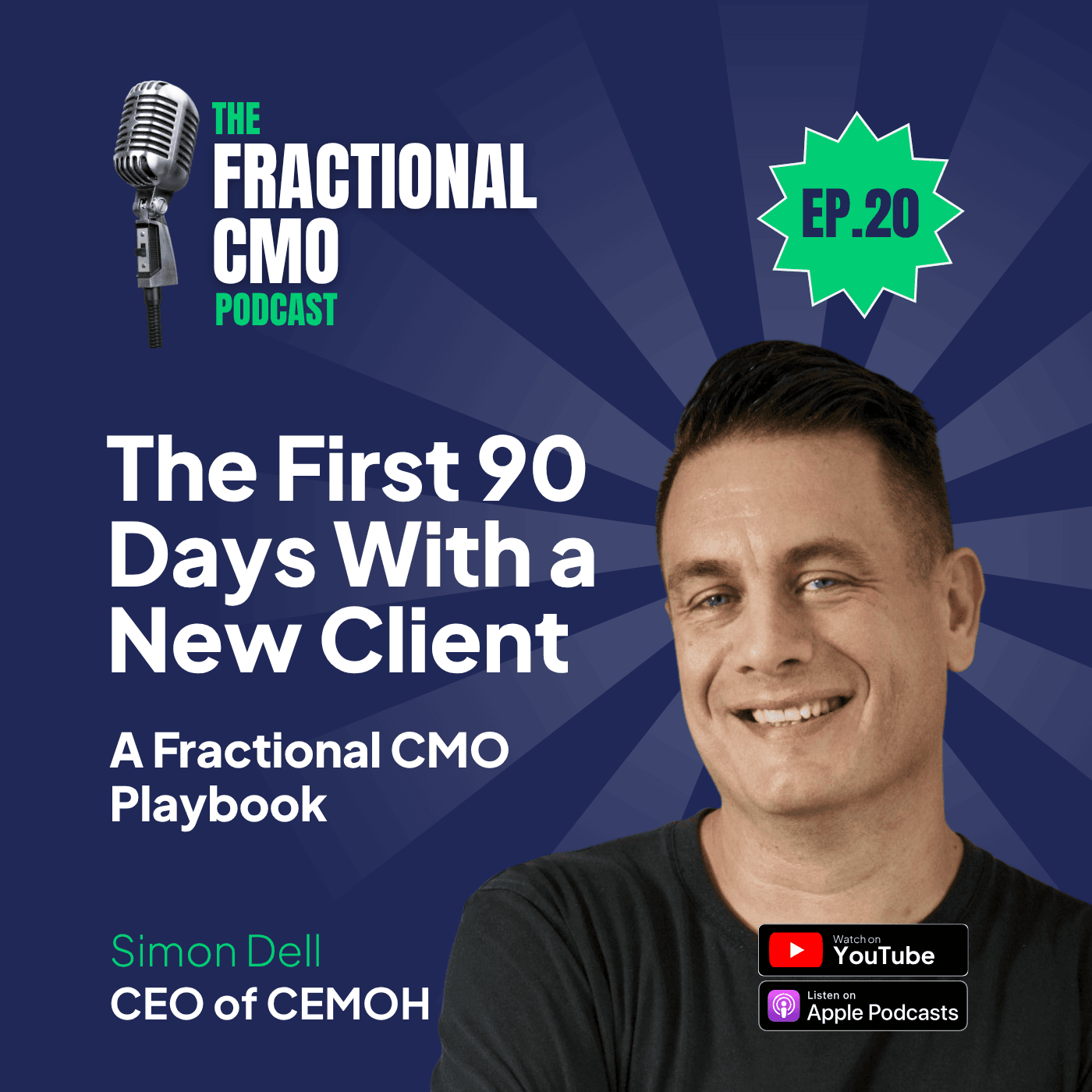
The first 90 days with a new client make or break a fractional CMO engagement. In this solo episode of The Fractional CMO Podcast, Simon Dell shares a six-part framework for onboarding a new client, building trust, and proving your value fast.
Simon covers what a client should feel in week one, why the audit comes before the action, how to build trust with the whole team, setting the right cadence, balancing early wins with long-term strategy, and what success looks like at day 90. Practical marketing and consulting advice for anyone starting a fractional CMO role, or hiring one.
We would love to know what you think, so give us a rating and review on Apple Podcasts and Spotify.
🌟 SUBSCRIBE to our YouTube channel to learn weekly expert marketing tips and ideas.
If you think you have a great story for the podcast, contact our producer at podcast@cemoh.com.
🚀 If you need help growing your business, visit cemoh.com to find an experienced marketing consultant to help you.