In short
Discussion of Australia Post’s 2026 E-commerce Report (published annually since ~2014/15) and what its 2025 data implies for Australian online retail, including slowing growth, multi-retailer behavior, marketplaces, sales/discount habits, BNPL, AI-driven discovery, and social/live shopping.
Guests
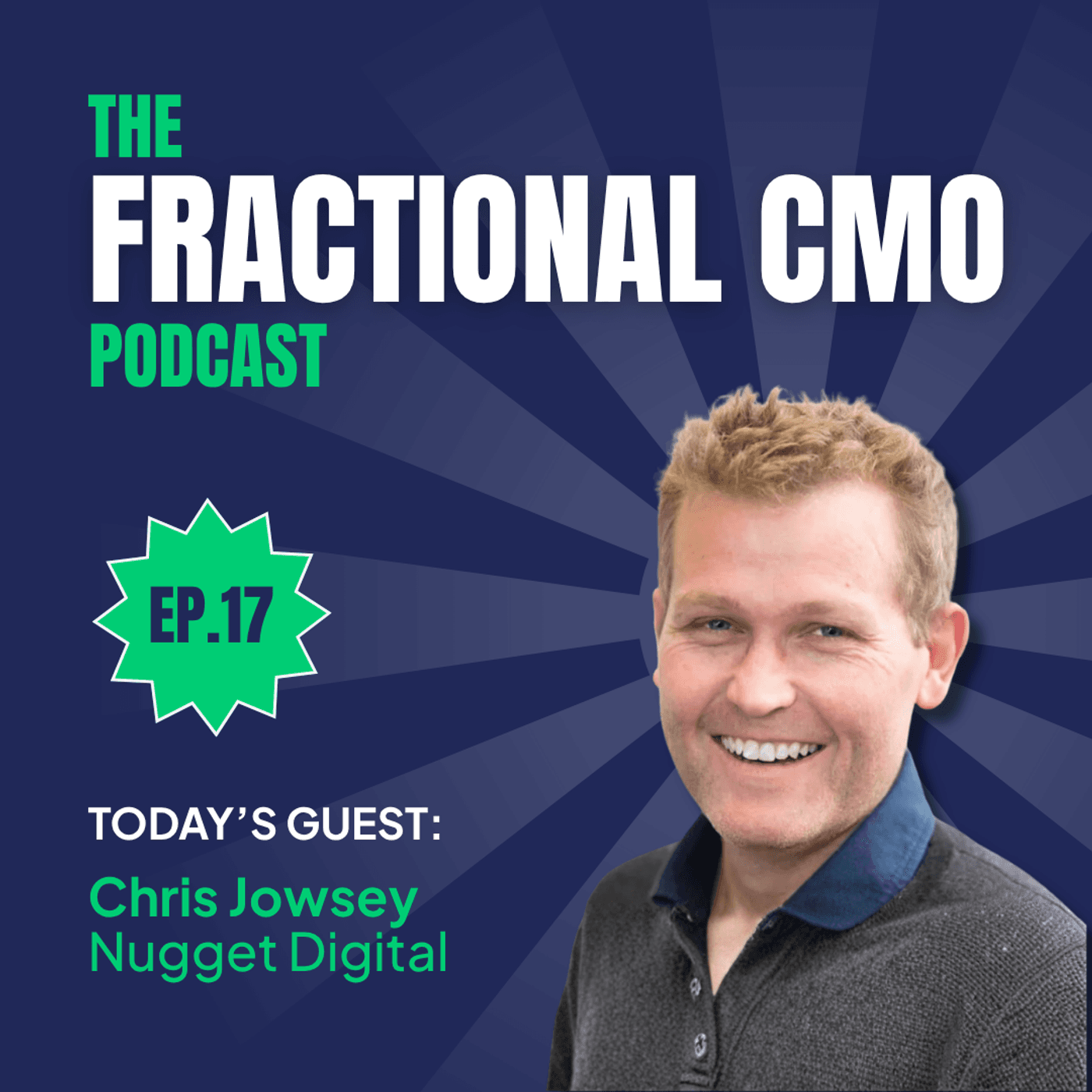
Chris Jowsey, Sydney-based fractional CMO for ~5–6 years; prior digital marketing background in e-commerce for big tech; works across e-commerce brands, tech, and professional services, focusing on digital strategy and growth.
Key claims
Online retail is 24% of total retail; $82B spent online with 14% YoY growth but slowing since COVID; 41% shop online fortnightly; average household buys from 16 online retailers; 73% wait for sales; BNPL growth tied to shrinking basket sizes; AI will drive discovery (e.g., ~65% use AI for product research) but risks reducing “browsability” and trust.
Notable examples
Buying pesticide/fungicide online instead of driving to Bunnings; buying a $5 Timu watch; trombone purchase for a child; live shopping parallels (China) and upcoming TikTok Shop; parcel lockers mentioned as underused.
Written by AI. May contain mistakes. Listen to the episode to check what was said.
Chapters
Tap a time to open that second in VOGuest Introduction
0:46 to 1:40
Simon Dell welcomes Chris Jowsey back to the podcast.
Overview of AusPost 2026 E-commerce Report
1:41 to 3:38
Discussion on the significance of the AusPost 2026 e-commerce report.
“and then really in my capacity as a fractional CMO, work across e-commerce brands, tech companies, professional services firms.”
Current Trends and Consumer Behavior
3:39 to 5:30
Analysis of current consumer spending trends and their implications.
“But we're not going to be able to sort of look at every single stat, otherwise we'll be here until Saturday.”
Rising Online Retail Participation
5:31 to 6:20
41% of people are shopping online fortnightly, demonstrating a shift in consumer habits.
“2026 has been a bit of a basket case so far across many areas.”
Diverse Online Retail Experiences
6:21 to 8:34
Exploration of the variety of online retailers and changing consumer preferences.
“interesting numbers here two interesting numbers number one is that 41 percent of people are shopping online fortnightly um and the one that really stood out to me was 16 retailers per household.”
Challenges of Low-Cost Marketplaces
8:35 to 11:40
Discussion on the challenges and perceptions of low-cost marketplaces like Timu and Shein.
“it's one of the bigger trends I think in the last couple of years is just, you know, there's a broad spectrum now of retailers.”
Market Trends: Quality Over Price?
11:41 to 14:00
Speculation on the shift towards quality in online shopping preferences.
“Marketplaces in Australia, I think, are like 23 % of the total number.”
E-commerce Market Trends
14:00 to 15:06
Discusses the evolving preferences in e-commerce and the importance of clear propositions.
“bargain basement of the internet and e-commerce and now we're coming out the other side where people are going, all right, yeah, I still want to buy online, but I want it to be decent.”
Consumer Purchase Behavior
15:06 to 17:47
Explores consumer habits around waiting for sales and how it affects purchasing decisions.
“to proposition yourself across both of those because you can get into trouble, particularly the smaller players.”
Buy Now, Pay Later Trends
17:47 to 19:50
Addresses the impact of Buy Now, Pay Later options on shopping behavior and basket sizes.
“So anyway, there's a lot of other stuff here.”
Show all 16 chapters
AI's Role in E-commerce
19:50 to 21:48
Examines the influence of AI on online shopping habits and brand discoverability.
“So tell me a little bit about some of the sort of key outtakes from the AI section of this.”
Generational Differences in Shopping
21:48 to 24:34
Analyzes how different generations prioritize certainty and speed in their shopping experiences.
“And I think that there's a high level of trust that people have in it, just the way that, you know, most generative AI tools work in the fact that most people, it gives confident answers, right?”
Delivery Expectations and Innovations
24:34 to 28:00
Discusses the importance of delivery certainty and the awareness of parcel lockers in shopping.
“And look, there's going to be data sources like that.”
The Rise of Parcel Lockers and Product Discovery
28:00 to 29:36
Explore how Australians are using parcel lockers and social media for product discovery.
“Look, they were quite open about the stats, I think.”
Social Media Trends in E-Commerce
29:36 to 33:16
Learn about the shift towards social media for product discovery and e-commerce opportunities.
“Yeah, so I think the key change, I think most people really since COVID anyway have really kind of shifted to social for discovery.”
Navigating E-Commerce Challenges
33:16 to 35:30
Understand the challenges in e-commerce including customer retention and cost of acquisition.
“And so I think you've really got to be careful about maintaining margins.”
Transcript
Automatic transcript. May contain errors.0:09Simon:Welcome to another CEMO fractional marketing podcast. I can't even say my own business name. There you go. It's been one of those weeks. If you don't know who I am, my name is Simon Dell. I'm the CEO of CEMO. If you don't know who CEMO is, CEMOH.com. We are Australia's largest fractional marketing network uh probably the world's largest fractional marketing network and no one's ever going to pull me up on that so i might as well just claim that um and uh so if you yes if you want to find out anything out about us go visit the website you can find me on linkedin simondell or email me simon at simo.com uh i have a returning guest today i think he's been on a quite a few times now i can lose track of it but um welcome once again to the podcast uh chris jowsey how are you i'm doing well simon thanks for having me on is this is this your third time or second time i want to say second i want to say second i kind of feel it was more than that but maybe i'll i'll you know maybe when you when you do third maybe you'll get a little trophy or something something like that um the okay so just first of all let's tell everyone a little bit about you you're down in sydney but tell us uh give us a bit of your background on everything yeah sure so yeah i'm a fractional cmo i have been for uh probably the last five or six years and uh my background's working in uh primarily digital marketing in the e-com space uh working for big big tech companies and then really in my capacity as a fractional CMO, work across e-commerce brands, tech companies, professional services firms.
1:53But really, you know, my remin is how to take kind of digital strategies and help businesses grow. So, yeah, that's my summary.
2:04Simon:That's perfect. Perfect. Now, today we're going to talk about something called the AusPost 2026 e-commerce report. And we're going to talk about it because there is some really interesting statistics in there. But give us a little bit of an overview about what that report is and who's produced. Obviously, it's Australia Post, but for the people that perhaps aren't in Australia, give us some context in that. Yeah, I guess, I mean, Australia Post, obviously, our main delivery network here in Australia, Post, I think, have been producing this report for about 10 or 11 years, I think. And so I'd say it's really the leading report in Australia around the e-commerce market as far as kind of sales activity as well as what are the key trends in market as it pertains to e-commerce.
3:02and really that's kind of ramped up since COVID. So, yeah, I'd say each year now it's published around the March timeframe and it's a good insight into kind of what's been happening in the last 12 months around e-com and consumer behavior, I think, in this space and, yeah, I think there's a couple of interesting trends in how things are shifting.
3:24Simon:Yeah, and I have to say there is a lot of data in it. There is a lot of information and largely all of that information is extremely interesting and pertinent to anybody that is operating in any sort of online retail space in Australia, or if you're not in Australia and you're still selling into Australia, it's important as well. But we're not going to be able to sort of look at every single stat, otherwise we'll be here until Saturday. But what we're going to do is we're going to look at, I just wanted to sort of highlight a few of them and just get your thoughts on the numbers, the trends that are changing um and and the long-term impact of that and i think you know the first one is obviously we're all spending a lot of money online it's it's according to the report it's 82 billion dollars which is a huge amount um but i think that the the the interesting or the most notable part of that is that that growth seems to be slowing down so what What was your thoughts on that?
4:28Simon:It's 14 % year on year, but that's slowing compared to what it has been. Yeah, I would say if you look back in the last five years, if you think about since COVID, there was a huge, huge amount of growth that came off the back of COVID in e-commerce in general, obviously with lots of businesses shut down. So we saw this big kind of upward tick in that kind of 2020, 2021, 22 period. and that was really, you know, that was a goldmine for most businesses at that stage. And then probably 2023, 2024, we started to see a bit more of a slowdown, a bit more of a correction that had to happen. You know, those kind of growth rates were never going to continue.
5:11And so I think 25 was, we started to see growth uptick again. So the 14 % number I think is still pretty solid growth. But it's worth kind of caveating that this report really is up until the end of 2025. I think as most people know, 2026 has been a bit of a basket case so far across many areas.
5:40Simon:Chris, that's understatement of the year, that is. So I think we kind of have to caveat onto this report with what's kind of happening the here and now. You know, if you look at the latest kind of consumer confidence numbers, they're kind of the lowest in, I don't know, 50 years or something. So already things are really slowing down at a fast rate. Obviously, RBA has taken interest rates up. So, yeah, it's going to change a lot or already is happening. So we should expect that these numbers are going to soften a lot and are doing. um a couple of other interesting things that i saw is that online retail is 24 percent of total retail so we'll talk about traditional retail in a minute as well um but one of the interesting numbers here two interesting numbers number one is that 41 percent of people are shopping online fortnightly um and the one that really stood out to me was 16 retailers per household.
6:44Simon:So what that means is that the average household, and this is average household, is buying from 16 different online stores. And I guess my question to you is, can you think of 16 stores that you buy from online? Well, I think there's probably the four or five go-tos for most things. And then I reckon if you go through my credit card statement, there's probably another 15 or 20 random ones. Probably. And so, yeah, I think that, I mean, in the stats they give in the report, I think it's doubled in the last 10 years. But I think it's, you know, that's, I think that's an indication of obviously people's buying behaviors where, you know, if you're not buying through major, say, grocery outlets or major marketplaces like Amazon and eBay and Timo, et cetera, you've probably got then five to ten retailers that you may buy from probably on a little bit more irregular basis.
7:49But it's definitely changed a lot. I think we're seeing this kind of broader spectrum of retailers that people are comfortable purchasing from. I think as well in the last kind of five years, And the experience for most people buying online is fairly consistent now. I mean, five years ago, you would stay away from a lot of e-commerce sites just because there was no trust there. You weren't probably comfortable buying from half of them. And so you probably stayed to ones that you're probably more comfortable in, particularly for the older demographics. And we'll come to that later, I think, as far as kind of this huge amount of growth in that area.
8:34But yeah, I think that's probably, you know, it's one of the bigger trends I think in the last couple of years is just, you know, there's a broad spectrum now of retailers. There's also this habit as well of people buying from multiple brands. You know, I think, and this came up maybe in last year's report or the year before where there's just not a lot of brand loyalty when it comes to buying online. So, you know, whether it's jumping because the latest sales are on and particularly the younger demographic, they're quite happy with jumping between shops and brands, whoever's got the best deal.
9:12And so I think that's also a big driver.
9:15Simon:It's interesting because when I saw that stat and I read that, I was sitting there going, do I buy from 16, whether I'm the demographic or not, do I buy from 16 different retailers? And I guess, you know, straight away, you've got, you know, your major supermarkets, Amazon, as you said, Timu and things like that. And what I thought was quite interesting, certainly for me, is the variety of weird shit I buy online. And reading this report, maybe sit down and go, what was the last five things I bought online? You know, and I'm just sitting there going, this is, it was amazing. It was bizarre because I went, I bought a box of pesticide.
10:06Simon:I'd say these are my last five things, Chris. Yeah, all right, last five. Box of pesticide because one of my chili plants was being attacked by some sort of fungus, right? Or fungicide, whatever, right? And I was like, can I be bothered to drive to Bunnings for a$10 pack of fungicide? I was like, no, fuck it, I'll get it delivered, right? The second one was a party game. I buy a lot of games, ball games. You can kind of see them on the back here. I buy a lot of those. You know, that's fairly standard for me. I buy way too many of them. I bought a watch off Timu because I just generally was interested in seeing what a$5 watch from Timu looks like.
10:44Simon:Or it was a$10 watch. And I have to say it lived up to all of the expectations of a$5 watch. And then I bought some mouth guards for my kids who had just started to play rugby. and then bizarrely this morning, Chris, I bought a fucking trombone online. It's hilarious. Where do you get a trombone from, by the way? There was a store in Sydney. My son is learning the trombone at school. He's still a primary school, but they were like, don't buy an expensive trombone until he goes to high school. So go and get the cheap one that he can use for the next two years. just as a side thing what baffles me i don't i find this with timo is that you can you can buy something for a dollar get it shipped here and how the economics of that work i have no idea in the sense that you can make it you can pack it you can ship it comes all the way to australia for a dollar it's baffling look the whole timo and what what's the other one that everyone buys from timo and um yeah yeah um i bought some stuff from there and largely i would probably say 25 percent of it has been what i would consider you know good value for money you know the rest of it has been you know questionable i know we're going off on a tangent here but do you think those i find those platforms problematic because i still don't know what i'm buying whereas when i'm on amazon i'm like I know what this is and I know that the it's easy to return how do you think the sheens and this team moves of this world are they going to survive or what where where do you think that's going to go I look I think it's actually it's going the other way I think you look at the I mean the stats in the report it's something like you know uh Timo grew like 60 odd percent year on year so So it's very early days, huge amount of growth if you think about how big it is.
12:48Marketplaces in Australia, I think, are like 23 % of the total number. Whereas you go to Asia and other parts of the world, you're talking 50%, 60 % of all online sales are through marketplaces. The whole marketplace thing, I think, is still pretty nascent here. I mean, when Amazon came a couple of years ago, obviously everyone was still used to buying through eBay and Amazon internationally, and then eBay came and set up shop here. And then, you know, more recently, Timu. But yeah, I can only see it growing.
13:25Simon:Yeah, I just find it when you, like, if you go to buy something, if you go, you know, I want a trombone, you end up being bombarded with 50 different retailers selling trombones who are all rated in the same way, you've all got 4.6 stars you just go well which one am i buying and why should i be buying it and you end up buying it on price and not quality and i think and that's an interesting thing is do you think there is a perhaps a trend online that people are going to look for places that are going to deliver the quality to them now perhaps we've gone maybe through the bottom you know bargain basement of the internet and e-commerce and now we're coming out the other side where people are going, all right, yeah, I still want to buy online, but I want it to be decent.
14:13Simon:I want to buy what I'm buying to be decent. I just think what you're seeing now is that there's bigger differences or that there's kind of bigger differences in kind of certain segments of the market that are becoming quite obvious. And whether that's kind of demographics between differences between the young and the old, or as you say, more price conscious versus people that see value. I just think there's a broader market now that can offer all of those things. And I just think being really clear about what your proposition is and whether that's, as you say, if you want to go chase price, you can chase price, but being clear about what your proposition is in market.
14:56And particularly when you go to, you know, if you decide as a smaller e-commerce business that you're going to sell via marketplaces or sell direct, you've got to be super clear about how you're going to proposition yourself across both of those because you can get into trouble, particularly the smaller players. You know, you go and start selling products on Amazon, et cetera. Your margins get squeezed. It may be great as an acquisition channel, but then you've got to really think about, well, how are you going to differentiate between what you're offering on your own D2C site, you know, versus what you're seeing on marketplaces?
15:32Yeah. Because it's very easy to fall into the price trap then because most people on Amazon, etc., are used to looking for the cheapest price or the highest rating.
15:46Simon:Yeah, let's flag that because I think that's quite interesting. One other quick comment there is that the average basket size is around$96, which is kind of where I always thought it was. So that doesn't necessarily surprise me. um and again another number that doesn't surprise me but is quite big um is that 73 percent of people wait for a sale before making a purchase um yeah that's that seems that seems like we're all just sitting here in this circle waiting waiting for the online retailers to discount before we make the purchase. Look, I mean, some of that, that's trained behavior, right? Because most people now are, most retailers are in the cycle of Black Friday, Sunday, Monday, you know, before it was Boxing Day, maybe end of financial year.
16:46There was a couple of times through the year, but most people are trained now and you've got these big sales events and then through the year, you know, you've got heavy discount. and I think we just came out of a period of kind of heavy discounting in the last couple of years where e-tailers are kind of using that as a primary acquisition tool. The problem is everyone then starts to expect it. And particularly the younger demographics, they'll essentially just jump around waiting for the best deal.
17:19Simon:Yeah, yeah. I don't think it's – I mean, that's the difference. if you're making a decision to purchase something, maybe that's an age thing as well, because I'm sort of going, you know, I'm not going to sit and wait for a week, two weeks, or till, you know, November for a sale. You know, if I need a trombone, I need a trombone now, you know, I can't sit there and wait for that retailer to put trombones on discount. um so i i think personally there's this there's there's probably there's purchases that are necessities and then purchases that are perhaps luxuries yeah that's right and i just yeah and i and i just wonder that's 73 then just seems really high i don't know why that's maybe that's just maybe that's they're not always waiting for the sales but that's just maybe that's just a flag that they're looking for.
18:22So anyway, there's a lot of other stuff here.
18:28Simon:Another thing I thought was quite interesting was the buy now, pay later splitting. That seems to be a key thing. Is that something you still see growing? Yeah, I think this probably ties back to the shrinking basket sizes. And you've got now, there's a lot more people buying, like your example where you're buying groceries, you're buying fertilizer, all the kind of stuff you'd normally go to Coles, Woolies, Bunnings for. People are getting quite comfortable just buying those online, getting it delivered the next day. So that's shrinking basket sizes. And then from a payment standpoint, people are used to then just having accounts from a buy now, pay later standpoint, splitting over four payments.
19:14it just becomes the norm for a lot of people. They may have a PayPal account and then have a buy now, pay later or both. And they'll just kind of oscillate between the two as opposed to just lumping everything on a credit card. So that's definitely shrinking. It's definitely shrinking basket sizes. But that's an opportunity in itself because if brands are doing a good job around retention, they should be able to leverage that frequency. Yeah.
19:45Simon:i i find i find the buy now pay later really really easy to use like probably too easy to use the the trombone was on buy now pay later i was like you know because you just sit there and go why why bother doing it now why give the money when you don't have to give the money especially if there's no you know there's no interest being charged and you know and all those kind of things So, but, you know, just to sort of keep pushing through this, AI was a big part of this report. So tell me a little bit about some of the sort of key outtakes from the AI section of this. Yeah, I think that, I mean, Australia Post, we're kind of leaning in heavily to really just kind of talking about in the next three or four years with it, where it's going around agentic commas.
20:30And so that's really the ability for people to buy end to end using AI. obviously we're not quite there yet. I think the stats they had in the report was something like, they're expecting 30 % of all e-commerce sales to go through an agent in the next three years. But I think the biggest thing right now is really at that discovery layer. Most people now are quite comfortable using chat or Claude or whatever their favorite AI tool is to at least discover brands. and I think there was a stat in there around 65 % of people globally are using AI for product research. And so I think the biggest opportunity for brands at the moment is really to sort out what they're doing around.
21:17Most people are used to investing heavily in SEO. It's shifting that budget to GEO, AEO, focus programs, making sure that they appear across answer engines as well as appearing on Google as well from an AI mode standpoint?
21:37Simon:I think to me the AI thing, the danger in the AI thing is a lack of discoverability, right? And I think if you're coming onto a website that, let's say, has thousands of products, my question is if the AI there is going to guide you through a sale or whatever it ever is you want where is the is there a danger do you think that customers will become reliant on ai and that the ai will make the sale so easy that the the you don't get this opportunity for the the customer to look at other products to So, you know, do you think it moves that browsing aspect of being online? Yeah, it does. And I think that there's a high level of trust that people have in it, just the way that, you know, most generative AI tools work in the fact that most people, it gives confident answers, right?
22:40So if you want to say, okay, compare this bike brand with, and, you know, tell me two others that I should consider, it's going to confidently come back with two or three other options. You're not going to go past those two or three options. You're going to just consider those brands and then move on. And you'll end up just doing that, getting comfortable with that approach for everything. So unless you're in that two or three brand consideration window, most people are going to step outside that. I mean, you can see the results already where most people are using, when they're using AI, They don't click outside to even read.
23:19They're not sitting there going, okay, I better go review those three brands that chat's given me just to make sure the data's correct. People are just taking it on first pass, particularly for$10,$20,$30,$50 items. They're not going to bother going to read the detail about it.
23:36Simon:Yeah, but then when that item arrives and it's a piece of shit, you go i think that that that damages the whole you know proposition of ai because i mean there was an article this week about someone who'd made up a made up a story and posted it on reddit and then you know two days later found out that um uh you know one a chat gpt or whoever it was was saying it was the truth verbatim. You know, it hadn't gone back to check any sources. So I wonder whether retailers who rely too heavily on AI are going to find that their, you know, that browsability is going to disappear and somehow that's going to affect their income or affect their revenue.
24:28I mean, it's definitely going to affect shop runs for sure. And look, there's going to be data sources like that. You know, some of them are shifting between, you know, having a heavy focus on Reddit where others don't invest as heavily on forums as far as data sources, and that's going to shift and change. And then you've got people like Shopify who are building agent capabilities straight in. And so, you know, where shops are used to having product data feed into Google Shopping, for example, you know, they'll have those capabilities that will build directly into ChatGPT, et cetera. And hopefully that cleans up a lot of the issues that, you know, we may be seeing at the moment just around kind of accuracy of data.
25:17Simon:Yeah, yeah, okay. There was something else here. We were talking about the difference, you mentioned it earlier on, the difference in generational spend. Yeah. you know that the older the older that you get the more you prefer certainty over speed um which is which is applicable in a lot of my life as well um not just not just e-commerce um but but boomers are but not boomers and i'm certainly not a boomer and any i'll fight anyone who says otherwise um but us us gen x's um you know what where's the growth coming from is it you know is it the boomings is it the gen x is there still room for the gen z's to be buying more yeah i think i think that the last couple of years in in the report they've really highlighted the growth thing really from gen x upwards builders in particular you know which is 80 80 odd plus It's a small part of the market, but even boomers and builders combined, I think it's 35%.
26:25So it's a big part of the market. They've got the biggest basket size. They've got the most amount of money to spend. And so that segment in particular, yeah, there's a really good chart in there, I think, that shows the upward slope of importance of, as you say, certainty over speed. And by the time you get to builders, it's something like 95 % say certainty over speed, which probably makes sense. You've got time on your hands. So speed's not that much of an issue, whereas it's probably 50-50 when you look at Gen Z. And so if you're a high street fashion retailer that's really targeting that Gen Z audience, then you've got to offer speed and certainty.
27:13There are some stats in there from Iconic around the impact of conversion for delivery next day versus delivery in two days. So for people in that kind of segment and audience, speed's really important. But as you say, the later you get on, it's more important to say, hey, I'm going to deliver it on Friday and guarantee that you'll deliver on Friday versus you'll get it tomorrow.
27:39Simon:Yeah. Yeah. It's, yeah, it's, I mean, again, I look back on all the things, those five things i bought this week and i go what what to me was important and and now you've just said it and there was a there was a comment here that um if you give them an arrival date or an arrival day versus some ambiguous fast delivery that's what that's what that older generation wants so that's for example keep going back to the trombone but the trombone was hey it will arrive in five days time so i'm like okay well i will buy that because there is certainty that in five days time it will be here if if they give me an ambiguous hey it's going to get there as quickly as we can you're like well what does that mean that's right so i think that's i think you make there's some some fantastic points there and i think the other thing that was in this section was parcel lockers um have you ever used a parcel locker i i haven't used them i've seen them from time to time and I think AusPost were trying to do a good job in the report and just squeezing it in, just letting people know that they exist.
28:47Look, they were quite open about the stats, I think. Most people don't even know they exist, but they would consider it. Look, I think it's one of those things. If you got into the habit of using it and you found it beneficial, particularly if you you know live next to one or near one in a uh high density area or something um then it's
29:11Simon:gonna be handy but yeah i mean expensive items may be but you know i live in a street where they just throw things on the front of my door and i come and pick it up later on it if someone wants to um you know if someone wants to steal a pack of pesticide from the front my front door then um you know knock them they can knock themselves out so um um last last thing we'll talk about today is uh discovery um and and and this statement seems to be the most obvious statement to make here but just let's talk about the impact of it and the statement is Australians use social media now for product discovery that that seems blatantly obvious but talk to me about how that's changing everything.
Read the full transcript
29:57Yeah, so I think the key change, I think most people really since COVID anyway have really kind of shifted to social for discovery. And it's things like live shopping. You know, it's been a trend that's been big in China. We've probably all seen the memes of the Chinese female presenters who hold up a piece of clothing every two seconds. They're selling like$100 million worth. So that type of thing, I think, you know, in the early 2000s, we used to have live TV shopping, you know, the old Demzell and TVSN networks. You'd go on Carrie Ann Kennelly and you'd have a five-minute slot and you'd sell your wares.
30:44And so it's basically the online version of that. And so TikTok shop isn't currently available in Australia yet. that's probably the biggest one that's coming. And so, you know, that's – I think eBay Live just launched last year. So that's probably the next big thing, particularly for the younger demographic. So, yeah, that's a trend I think that'll only continue.
31:14Simon:It's – you often talk about, you know, how people complaining about how the boomers have got all the money and all those kind of things. But one of the interesting things whenever I get into this argument, and I frequently get into this argument, is that if you're a Gen Z now and you have the capacity and a passion for something, right, whatever it is, you can sit and make yourself a business and an extremely successful business, selling things online, presenting online in a way that no boomer and to be fair, no Gen X ever could. you could literally be starting up tomorrow and as long as you've got your shit together you could be making a lot of money the the options out there now i think for people to become e-commerce sellers without actually being an e-commerce seller does that make sense i think that huge options out there yeah absolutely i mean you see that with the whole influencer space i mean people are just using their leverage or leveraging their audiences really to sell product.
32:27So it's really just an extension of that. Yeah. But as you say, you won't need a physical shop front. You don't need an e-commerce shop front. You're really just adding a buy button to, you know, whichever your network of choice is.
32:42Simon:And I think the other key thing is, again, in the past, you were like, oh, well, now I've got to go and source some products in china and i've got to you know organize some drop shipping and all that shit but now it's not even that and now it's just said i'm just going to simply pass this sale on to someone else who's going to fulfill it for me um and i'm just going to take a cut or a commission or some revenue on the way through um yeah this there seems to me to be all these fantastic options for people out there as well that i i think are growing and growing and you know if people out there want and make some money you know especially if you find a niche if you can find a niche that that no one is tapping into you kind of mentioned the um i'll tell you what this is screaming out for if you're over 80 years old you talk about the builders right um the that sort of the builders and the boomers people teaching them and showing them um places to go places to go on holiday places to go on holiday that that are good for them if that makes sense um you know but they need that influencer in their age range to teach them because that would be a massive a trust thing um we've got a client who does tours to japan um and these are expensive tours and they're expensive and they are really only targeted at anybody over a certain age 65 70 um i can just imagine an influencer in that space who is that age talking to that age demographic absolutely making a fortune absolutely so maybe i maybe that that's that's maybe i've got another 10 15 years and that's what i'm going to be doing then so um but okay look we're just we'll finish up there um just tell us tell us like maybe your your sort of key outtakes or if there's any other the key outtakes that you um that you think on um that you think would be important for people to remember yeah as look i think at the top we we started saying that look things are obviously going to slow down um that that's that's definitely going to happen i think um and particularly now that people are looking to shop more frequently more regularly uh costs you know cost of acquisition is going to go up.
35:05And so I think you've really got to be careful about maintaining margins. You've really got to focus on retention, keeping the customers you've got. So that's, you know, whether it's loyalty programs, having a really good EDM and automation program, these are the types of things you need to focus on now to make sure that you're, you know, you're basically leveraging and getting the most out of your existing customers or all the databases over this next period.
35:33Simon:Okay. Look, there's a lot of information. Anyone who wants to download the report, it's nice and easy to find online. You know, a quick search will send you in that right direction. Give it to an AI bot and tell them to get the key things out of it that are important for you. The last thing I wanted to say is if you watch this and you are interested in having a chat with Chris, Chris can obviously have a longer conversation about e-commerce and strategy and all those kind of bits and pieces. I think Chris's smiley face is on our front page of our website at the moment. Let me just check. There he is.
36:11Simon:So if you scroll down the front page of the website, you'll see right there Chris Jowsey. View his profile. You can actually connect and talk to him directly now through that profile on the CMO website. So do that. ask him and he'll have a chat and I'm sure he'll give normally he'll give some of your time free of charge for that initial consolation consultation so um so do that he's on the front page of the website um thank you Chris um appreciate that any any sort of final words to everybody out there no I think uh yeah it's been an interesting uh start to the year and I reckon uh I was just Hold on for what's next.
36:56Simon:Yeah, it's certain people in certain places making financial decisions for us, I feel. But, you know, it's not a lot we can do other than just keep our fingers crossed and hope it resolves itself. So anyway, mate, thank you again. We will plan out the third one. When you do a third one, I will get a little trophy or something like that. And then you can display it on your shelves behind you versus me and the various assaulted pieces that child is junk on my shelves behind me. But, mate, thank you very much. It's been super helpful, and I really appreciate your insights. Cheers. Thanks, Alvin. No worries.
From the publisher
In this episode of The Fractional CMO Podcast, we're joined once again by returning guest Chris Jowsey, a fractional CMO based in Sydney with a background in digital marketing and e-commerce across tech companies, professional services, and DTC brands.
Simon and Chris dig into the Australia Post 2026 E-Commerce Report, unpacking what the data actually means for businesses operating in the online retail space right now. They cover slowing growth, the rise of marketplace shopping, why 73% of Australians wait for a sale, the shift from SEO to GEO, and what AI-powered discovery means for brands trying to stay visible. Expect some candid takes, a trombone purchase, and a genuinely useful breakdown of where e-commerce is heading.
Chris's LinkedIn — /in/chrisjowsey
We would love to know what you think, so give us a rating and review on Apple Podcasts and Spotify.
🌟 SUBSCRIBE to our YouTube channel to learn weekly expert marketing tips and ideas. If you think you have a great story for the podcast, contact our producer at podcast@cemoh.com.
🚀 If you need help growing your business, visit cemoh.com to find an experienced marketing consultant to help you.