
In short
Whether China’s “robot superpower” rise is leaving ordinary people behind, focusing on a fraying “economic bargain” between the Communist Party and citizens.
Guests
Laura Bicker, BBC China correspondent (based in Beijing), interviewed by Asma Khalid (host, Washington, D.C.). No other guests.
Guest backgrounds
Bicker reports on China across provinces; she’s covered industrial/green-tech regions and labor conditions, including factory heartlands and social unrest.
Key claims
China leads in green/industrial tech (EVs, batteries, solar panels, consumer drones), with robot-heavy “dark factories” and extensive high-speed rail. But slower growth, job insecurity, low wage growth, weak pensions/healthcare, and demographic pressures are eroding trust in the Party’s promise of rising living standards.
Notable examples
Foshan factory labor markets shutting; workers saying wages won’t rise and they can’t afford housing or send money home; COVID-era lockdowns and 2022 Shanghai unrest; “white paper” protests; a northern elderly couple gathering firewood due to no pension; China’s gender imbalance (about 30 million more men than women) and falling birth rates.
Written by AI. May contain mistakes. Listen to the episode to check what was said.
Chapters
Tap a time to open that second in VOCultural Perceptions of China
0:39 to 2:21
Exploring the Western fascination with Chinese culture amidst its technological rise.
“There is this meme you all might have seen going around on social media.”
China's Industrial Ascendancy
2:21 to 3:26
Discussion on China's advancements in green technology and manufacturing.
“And today on The Global Story, the China you're not seeing on social media.”
High-Speed Rail and Infrastructure
3:26 to 4:50
Exploration of China's impressive high-speed rail system and travel experiences.
“Let me start by kind of saying, look, I've traveled this country.”
The Dual Nature of Made in China
4:50 to 6:06
Contrasting the modern high-tech image with historical challenges faced by workers.
“You get nice little gift packets when you're sitting on them.”
Workers' Voices Amidst Change
6:06 to 8:14
Insights from factory workers about their struggles and economic uncertainties.
“And now you have these massive industrial heartlands.”
The Evolving Social Contract
8:14 to 11:11
Analyzing the changing expectations between the Chinese government and its citizens.
“But then this number of workers started to crowd around me.”
Impact of Economic Promises
11:11 to 14:00
Discussion on how economic slowdowns affect the social contract and people's lives.
“Here was a Chinese leader not afraid to open his country to capitalist methods.”
Struggles of the Chinese Workforce
14:00 to 15:00
Explore the challenges faced by factory workers and young people in China.
“And now you're one in five of them who can't get a job.”
Fraying Social Contract in China
15:00 to 17:08
Discuss the dissatisfaction among young people and its implications for the social contract.
“And when you speak to people, they're not criticizing the party in any way.”
The White Paper Protests
17:08 to 17:48
Learn about the significance of the white paper protests in China.
“So when you're looking at these years, you're looking at especially Chinese young people locked in houses and had been for maybe the best part of three years.”
Show all 15 chapters
Economic Impacts of Protests and Policies
17:48 to 19:10
Analyze how the protests and government policies have affected China's economy.
“left blank to get past the censor, but the censor can no longer keep up.”
Demographic Crisis and Its Consequences
19:24 to 21:57
Explore the implications of China's demographic crisis and declining birth rates.
“And then it seems like the situation's been exacerbated, though.”
Social Safety Nets and Economic Stability
21:57 to 24:16
Discuss the lack of social safety nets and its impact on society.
“If you have more than one child, there are subsidies.”
Potential for Unrest
24:16 to 24:30
Consider the factors that could lead to widespread discontent in China.
The Chinese Dream vs. Reality
24:30 to 27:03
Examine the disparity between the ideal of the Chinese dream and the lived experiences of citizens.
“People are kind of unhappy about different things, whether it's housing, whether it's young people, whether it's the elderly with no pension.”
Transcript
Automatic transcript. May contain errors.0:00This BBC podcast is supported by ads outside the UK.
0:30business needs in one place, saving you time, headaches, and serious money. Stop paying for missing pieces. Go to odoo.com. That's O-D-O-O dot com to learn more. There is this meme you all might have seen going around on social media. You've met me at a very Chinese time in my life. Hey y 'all, it's day four of being Chinese. I heard that a lot of you are new to being Chinese. So like many of you, I've recently been informed that I am Chinese. My friend asked me what are my thoughts on the whole becoming Chinese trend. And all I have to say is what took y 'all this long to catch on? Photos and videos of young folks in the West enjoying Chinese food, Chinese wellness tips, Chinese aesthetics.
1:14And yes, these posts are often made with a touch of Gen Z's dry humor. Much of it celebrates a culture that some young Westerners now see as enticing, technologically advanced, and powerful enough to stand up to the United States of America. And to be clear, China does lead the world on making high-tech products like electric vehicles or solar panels. And its economy is growing at a faster clip than the U.S. economy. But inside China, there is a different story that's emerged in some corners in recent years, as economic growth has slowed and the population has shrunk. The BBC's Woman in Beijing, Laura Bicker, says the Chinese Communist Party has had a distinct economic bargain with its people, at least until now.
1:57When you have a future that's uncertain, and the party's telling you, look, we're making China great, you're sitting there going, well, I can't get a job, I've worked this hard. Well, I'm just going to kind of live a different life. So what happens when the government struggles to hold up its end of the bargain? From the BBC, I'm Asma Khalid in Washington, D.C. And today on The Global Story, the China you're not seeing on social media.
2:32Hello, I'm Laura Bicker. I'm the BBC's China correspondent and I'm here in Beijing. It is a pleasure to have you back on The Global Story. Thanks for coming on. Always lovely to talk to you. Laura, we wanted to have you on the show because recently we did a series of episodes on the global story tied to the United States' 250th anniversary. And one big idea that came up was whether we might be witnessing the end of the American century and now the rise of the Chinese century. I will say, at least here in Washington, D.C., that it seems like there is no doubt that China is a superpower that is rivaling the U.S.
3:04in all sorts of ways, economically, diplomatically, culturally. I think before we move on to whether or not that theory is actually true, I want to understand because, you know, you report on China day in and day out. Why are people talking even about this idea of a Chinese century? Are we in an age of Chinese ascendancy? That's basically the question. And I would say in some ways, yes, but there are many parallel Chinas. Let me start by kind of saying, look, I've traveled this country. I've been in nearly every province. And the one thing where China is really ascending is industrial and kind of green technology.
3:37if you go into the factories you will see them producing ream after ream roll after roll of like future focused sector technology they manufacture most of the world's electric vehicles their batteries their solar panels their consumer drones all of these things and when you go in there are even areas where there's dark factories where robots yes are manufacturing at 24 hours a day and when you travel you know all across perhaps the countryside swathes of land are covered in solar panels reflecting the sun's rays. And I think you and I have talked about this before. Even if you stepped outside the building here in Beijing, you'd hardly hear a petrol or diesel car.
4:16It would all be electric vehicles. So if you're looking at the kind of industrial green tech future, yes, China is on the ascendancy. And even experts, Elon Musk did an interview in the last few weeks saying that China may overtake the US when it comes to artificial intelligence very soon. And then you kind of look at the kind of high speed rail that China's got. There are 550 Chinese cities connected by high speed rail. Now, look, I'm not, you know, doing down Amtrak any, but my goodness, these trains leave on time. They are clean. You get nice little gift packets when you're sitting on them.
4:53It is a joy to travel by train in China. Laura, to echo that, the first time I went to China was shortly after the 2016 election. And I remember thinking, you know, China, China had been such a focus of that election cycle and bringing back jobs to the United States. And then I went to China and I went to this robotics convention. I saw the robots in action. I took this high speed train from Beijing to Shanghai. And I remember thinking like, oh, dear, the U.S. is really in trouble. And that, I think, fits with the view that many Americans have thought. But you were about to say there's different versions, I think, of China.
5:30There are many parallel versions of China. So that's the new so-called brand made in China. These are the technologies that President Xi Jinping is really urging its population to focus on. However, there is the other made in China. And if you speak to families, they'll tell you their grandmother suffered during the Great Leap Forward, which was a famine that killed millions when, you know, farmland was misused during Mao's Great Leap Forward and people starved. and they remember not having enough to eat. So if you're looking at that made in China, what happened was there was a mass migration from rural parts of China to the cities.
6:07And now you have these massive industrial heartlands. And if you go to the lakes of Guangdong, which is way in the south, I mean, you drive through warrens of factory, layer upon layer upon layer of textiles, of electronics. I mean, if you go around your house and pick something up, even if it's a T-shirt, you'll see made in China on it. And that is the old style made in China. Again, it was state-sponsored, but it grew massively all the way through the 80s and 90s. Double-digit economic growth. And people saw their lives get better. And in fact, once President Xi took over, he took over a very healthy economy at a time when he was also trying to lift people out of poverty.
6:48And China's actually been quite successful at that. More than 800 million people, according to the Communist Party, have been brought out of poverty. That means there's a burgeoning middle class. It is impressive, but you've got a burgeoning middle class. Now, what we're looking at in current China is that that sector is beginning to struggle. When you say that some people are beginning to feel uncertain about China's future and about the promises that China's made economically, how have you noticed those changes? Have people verbalized that to you? It's really interesting because just after the war in Iran, just after it started, we We went to a place called Foshan.
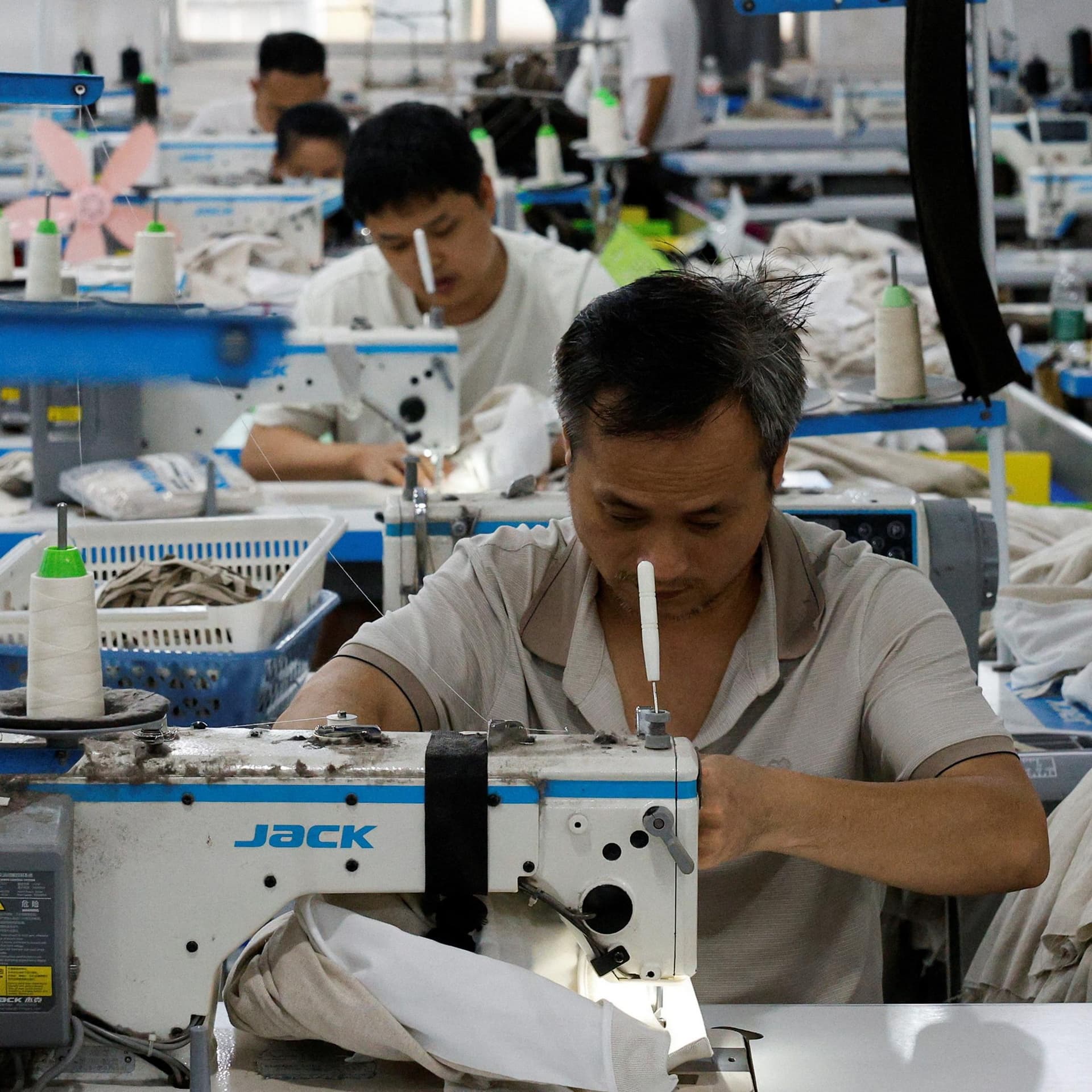
7:26It used to be known as kind of electronics heart of China. Everything looked quite normal. You went through the park and people are still doing their morning dance routine. We'd been there perhaps three years running. And I noticed that if you walk down these streets, they're usually filled with kind of posters advertising jobs. And there are many, many kind of labour areas where you can go and say, look, does a factory need work for the next few weeks? And that's where most workers, you know, get their kind of jobs in this gig economy. And I noticed that many of them had shut up shop. So there were a few kind of labour markets there to kind of go and speak to about how this was impacting them.
8:07And as I walked along, I was kind of speaking to the ones that were still open and they were saying, yes, the Iran war is having an effect. I asked them about automation. Are robots taking jobs? Yes, that's also having an effect. But then this number of workers started to crowd around me. And they're like, who are you? Where are you from? And usually that's a sign I need to get out of there. And I said, look, I'm from BBC foreign media. They went, oh, thank goodness you're here. And that's not a phrase I hear often in China. Usually it's a sign for me to get out of there because the police are coming.
8:38And they crowded around me. They were desperate to talk to me. You do not know how difficult our life is. No one understands what our life is like. We work, we work, we have no life. Please help us. Please tell our story. That is not something that I hear very often in China. And I said, well, I'm here. What do you want to tell me? They said, we just, our wages are not increasing. We have no way to pay for our houses. We have no way to pay money to send home to our children. Now, just to give you an idea, about 300 million workers come from these rural areas to work in these factories. And most of them send money home.
9:20They believe they followed a script. They've done exactly what the Communist Party told them to do. They've worked hard all their lives. They've earned minimum wage all their lives. They've built a China that is an economic juggernaut. And now China's moved on. The Chinese government has moved on to this high-tech industry. And that's what they're promoting. And they feel they're being left behind. They feel like they're being left behind. I think what this trip kind of cemented in my mind was that there's something happening in this country that's really, really difficult to quantify. And of course, one, two, three conversations, you know, you can't generalize this as a country of 1.4 billion people.
9:57But it certainly felt that there was more of an edge to their words, that something was a little bit more febrile than I'd seen in the past. Laura, when you say that there seems to be something unraveling in China that's hard to quantify, what exactly is that something? So one of the things that I've been reporting on in the last couple of years is something called the social contract. Now, what does this mean?
10:25In factories and communes, Mao's created a world which is stripped of material incentives. They've abandoned the star worker system, which once allowed the use of personal skills to earn more money as incentives to production. The rise of China came with a little bit of a contract between the party and the people. Mao has put first his ideology, his determination to transcend human nature and produce his race of selfless men and women who work only for the common good. Now, yes, there was something under Mao where there was this kind of following, but it really started under Deng Xiaoping. And he came to power and in 1978 launched this massive reform and opening up of China.
11:08He went to America. Though opposed to Western democracy, he embraced Western business. Here was a Chinese leader not afraid to open his country to capitalist methods. He wanted to accelerate economic reform within the country because he felt it needed it. Free of red tape. Massive foreign investment and low Chinese wages combined to produce an economic gold rush. But at that time, he wanted to also make clear that this kind of liberalisation did not include politics. We made a tour of the South, the industrial heartlands that I've just talked about back in 1992. And he said, you know, we'll make you rich.
11:50Just don't challenge our monopoly on power.
11:56And for three decades that worked. I mean, GDP growth was about 9 to 10 percent every year. China joined the World Trade Organization in 2001. It became a manufacturing juggernaut. And as I mentioned, in the course of that, 800 million people are lifted out of poverty. They're eating three meals a day. They're buying their houses. 80 % of Chinese families managed to buy their home. And in the course of that, they accepted the increasing surveillance. They accepted the hard work, the very, very long hours. I mean, many of the workers that I speak to work 14 hours a day for a basic wage and get very few breaks.
12:35They accepted the kind of red lines set by the party. Now, that means you don't stray politically, you don't put banners criticizing the Communist Party. And they saw their lives get better generation to generation. But what we're seeing now is that growth has slowed to around 4%. That's the Communist Party figures. And some analysts do believe that growth could be a little bit less than that. And now the future, as I say, is far more uncertain. So, Laura, the social contract you're describing in the Chinese context sounds kind of different than at least my memory of the social contract that I recall learning about in high school here in the United States.
13:18It's this idea that citizens give up some degree of individual independence to have this protection for the common good. And I feel like there's been a version of the social contract that we believe in here in the United States for many years as well. But it sounds like the version of this that you're describing in China is really an economic bargain. Yeah. Follow the party. Believe in the party. Do not cross the party. And we will make you rich. And that is really the kind of way that it worked. That message has been adjusted since Xi Jinping came to power. The New Deal isn't, look, we're going to make you rich.
13:56And that's because he knows that double digit growth is no longer sustainable. the idea is we're going to make China stronger more secure respected in the world and in return we'll protect you from the kind of foreign powers that are might be trying to keep China down but that doesn't work if you're a factory worker struggling to find money enough money for even noodles that day it doesn't work if you're a young person who's locked yourself away for two decades to try to get the best degree that you can. And now you're one in five of them who can't get a job. So this outward looking China that we're seeing, you know, you talk about the Chinese century.
14:39Yes. Yes, OK. We might have a China that is ascending in many sectors, but it's not actually helping the people who helped the old China grow. Was this contract intended for everyone and all levels of society in China? Was it intended to be true for everyone from the factory worker up to, say, the CEO. Yes, it was intended for everyone. And when you speak to people, they're not criticizing the party in any way. They're criticizing the life that they have. And it's all very, very specific. Young people are a really, really good example of this because they take to social media and we get a really good idea of the kind of things they get annoyed at.
15:19Plus, they are rebelling in small ways. I mean, the party's really pushing marriage and children. They've even taxed condoms. So people have just responded with what seems to be a collective shrug. Marriage rates are still falling. Birth rates are still falling to the lowest in decades. And I think when it comes to the big issue here in China for domestic audiences is that Chinese people are not spending enough money. Domestic consumption is still incredibly low despite party efforts to get people to spend. And that's because they're shoveling money under the mattresses. That's because when things are uncertain, when their future is uncertain, people here turn around and go, well, hang on a second, we need to save because we don't know what's coming around the corner.
16:07So that's key. But I'm not saying under any circumstances that there are going to be any kind of mass protests. What I am saying is a rippling, an undercurrent of unhappiness in certain sectors. And that kind of shows its head in different ways, whether it's on social media or whether it's talking to a foreign journalist on the street. Laura, when did those ripples begin? When did the signs first begin to emerge that the social contract might be fraying? COVID. During the COVID pandemic. I think during the first couple of years of the COVID pandemic, there was a real sense that China was handling this well, that they were keeping their people safe.
16:45And then I think as the vaccine spread throughout the West, and it didn't happen here in China because China wanted its own homegrown vaccine and was waiting. I think there started to be ripples of unhappiness. And then came the Shanghai lockdowns, really strict lockdowns where people couldn't even get food. And remind us, when was that? That's back in 2022. I see. So when you're looking at these years, you're looking at especially Chinese young people locked in houses and had been for maybe the best part of three years. So I think it got to the point where then they reached boiling point and the protests took to the streets.
17:36Now, some of you might remember the white paper protests. They basically held up blank sheets of white paper. The humble sheet of A4 is today's banner of protest in China, left blank to get past the censor, but the censor can no longer keep up. You know, you're arresting me with a white paper, what for? I haven't done anything. The BBC saw people being bundled into police cars. This man said people want dignity and the rule of law, and added that he didn't want China's children to go on living in this era of horror. And so they took to the streets with these white paper protests, which spread.
18:15Now, very, very quickly, very quickly, Xi Jinping opened up. But it really kind of, there was an element of resentment. After that, you're seeing an economy in China that is beginning to decline. After being locked away for so long, you know, you're looking at factory output was low, trade had come to a real, real slowing for China. And domestic economy was really low. So they had to rebuild. And that has taken time.
18:51I'm Brooke Gladstone, co-host of WNYC's On the Media. Information doesn't just inform us, it shapes how we see the world, what we fear and who we trust. That's where On the Media comes in. Each week, we investigate how information flows, who controls it, and what that means for our democracy. It's not about the headlines. It's about the hidden structures behind them. Don't be a passive consumer. Listen wherever you get your podcasts.
19:24So COVID was the spark. And then it seems like the situation's been exacerbated, though. You described that situation in Fauchan as being one that really you hadn't experienced before. No, and I think then it's been slices. So when we went into the streets during Donald Trump's tariffs, as well as finding the difficulties that we did, we found a lot of people saying, well, screw that, I'll be poor before I admit that the United States is having an effect on my company. Oh, interesting. There was a real kind of Trump's crazy. So I think Donald Trump's tariffs were a gift in many respects, despite the fact it closed down many factories and production.
20:01It was a gift because it allowed the party to stoke nationalism within the country. And that brings the country together. I think what it did do was put pressures on an already struggling economy. Laura, a few moments ago, you referenced the birth rate in China. And that is an issue that we have often heard about as it relates to China, the aging population. How does that factor into this broader conversation? So China is facing a huge demographic crisis, partly of its own making. So up until January 2016, each family was told you could only have one child. And there was a preference for boys.
20:44So many families would keep having girls, keep having girls, and then eventually they'd have a boy. Now, we don't really know what happened to many of these girls. You know, there was a lot of, were sent overseas. Some were sent to aunts, all of these things. But you were fined if you had that many children. That was decades of a policy that has now resulted in it. Now wait for this, 30 million more men than women. Now, just to put this into perspective, that's like the entire population of Australia. Oh my gosh. Wow. So all of a sudden, these men and women have grown up. Men now outnumber women and they can't find a bride.
21:24Women have also realised, look, I've spent two decades of my life studying, trying to get a career. I'm going to concentrate on having a career. Thank you very much. I don't want to get married and I don't want to have a baby. And so you have these two things colliding. And that is one of the reasons why the country's birth rate has plummeted. And the party are desperately trying to change this by urging people to kind of go out and have children. There are subsidies. If you become a family, there is now child care subsidies. There is more maternity leave. If you have more than one child, there are subsidies.
22:00None of it appears to be working. What does this aging population and decreasing birth rate mean for the social contract? I mean, I think the interesting thing. So if you look at the lack of social safety net, your pension is tiny, your health care is still expensive. That's if you even have a pension at all. You expect in a communist socialist country for that safety net to be there for you. And in truth, it's full of holes. So we went up north to talk to people about their pensions. And we met this elderly couple who were gathering firewood to heat their homes. It's freezing up in the north.
22:36I mean, it gets down to about minus 20 up there in the winter. I mean, they were in their 70s. They still farm to eat. And they live a very, very basic house. And they have this kong, which is a bed that you basically stoke the fire underneath to keep everything warm. So they're shoving wood into it. And he just lit up his cigarette. And I was like, do you have a pension? And he just chuckled to me. He went, no, I don't. Seems like a stupid question to me.
23:08I guess I will become a burden for my children. They will need to look after me. I think I can only keep doing this for another four or five years. But if feeble and weak, then I might be confined to bed. That's it. Over. Ordinary people like us all end up like this. Laura, what does it mean for society as a whole if the government has essentially promised economic stability in return for political obedience, but that the government is not actually able to fully deliver on its end of the bargain? And I think that's what we don't know. We're at a point in history where we don't know where China is heading.
23:51Do I think this will destabilize China? No, because I think stability is the watchword. I also think there are enough people around, and I mean, I speak to people a lot, enough people around who remember the unstable years, who remember what their parents went through, who remember how things were when they couldn't have food on the table. They don't want to destabilise that. I think the biggest threat and where, you know, if there is a threat at all is of something big happening, another COVID, another big event that could cause the ripples of discontent to join up. Right now it's disparate. It's all different.
24:33People are kind of unhappy about different things, whether it's housing, whether it's young people, whether it's the elderly with no pension. But I think if there was something that would unite that, then that would cause an issue to the party. Laura, I have one final question. And that is that as I hear you describing these ripples of discontent, I cannot help but think of so many conversations I've had over the last several years here in the U.S. with my fellow Americans who feel a lot of ripples of discontent as well. I mean, we did an entire episode recently around the 4th of July about the American dream and the idea that here in the U.S.
Read the full transcript
25:13you could do better than your parents' generation financially. And survey after survey has shown that belief in the American dream appears to be fading in the U.S. I mean, are you suggesting that the Chinese dream is fading? And if so, that makes me wonder, well, what does that mean? because a lot of people here in the U.S. have felt that the American dream is fading and yet life kind of just goes on through inertia. Life goes on through inertia. I think if you're talking about the Chinese dream, which Chinese dream are you talking about? If it's Xi Jinping's dream of building this strong China, I think you're seeing, you know, he's well on the way to that.
25:51And I think what he's telling his people is, look, you know, your party has put China on the world stage and we're doing really well and this and this and this and of course you have the state party machinery you have the propaganda around it but whose Chinese dream are we talking about are we talking about a 70 year old who you know just dreams of perhaps getting through the day and maybe having a little bit extra and not having to find ways to feed himself are you talking about a worker who's hoping that he'll learn enough money to send back home are you talking about a young person who hopes to get a really decent job after working so hard and not have the party or his parents on their back about getting married.
26:34I think, you know, whose dream are we talking about? And I think that's the key here. I think the dream for all of these people will adapt. I think China has shown that it can adapt quite quickly. The generations of just getting on with it here and following the party's script doesn't end quickly. So I think when you look at China's position in the world, I think that will only, it can only accelerate, but it will be dragged down by what is happening within its own borders.
27:10Well, Laura, thank you so much for bringing your reporting to us. We always appreciate it. Anytime.
27:22That was Laura Bicker, the BBC's China correspondent. And a reminder that you can always reach us here at The Global Story with any questions, story ideas, even complaints. We take it all. The best way to get in touch is through our email address. It's theglobalstory at bbc.com. And as you loyal listeners of our show may know by now, we here at The Global Story go in-depth every day on one big story that tells us something about where the world and America meet. If you're also looking for a way to catch up on the latest news headlines, then we recommend checking out our sister show, The Global News Podcast.
27:56Today's episode was produced by Sam Shantarasik and Kat Farnsworth. It was edited by Martine Powers and mixed by Travis Evans. Our digital producer is Sam Gruet. Our senior news editor is Chyna Collins. And I'm Asma Khaled. Thanks as always for spending some time with us, and we'll be back again tomorrow.
28:19Thank you.
From the publisher
For decades, the Chinese Communist Party has had a distinct economic bargain with its people — obedience in exchange for economic prosperity. China continues to lead the world in sectors like green technology and robotics, but in recent years, economic growth has slowed. Signs of unrest and unease have appeared. So what happens when the government struggles to hold up its end of the bargain?
The BBC’s China correspondent Laura Bicker speaks with Asma Khalid about the Chinese citizens who feel they are being left behind.
Producers: Sam Chantarasak and Cat Farnsworth
Executive producer: Martine Powers
Mix: Travis Evans
Digital producer: Matt Pintus
Senior news editor: China Collins
Photo: Employees work on a production line at a garment factory in Guangzhou, China, July 27, 2026. Credit: Go Nakamura/Reuters