In short
The episode of BBC’s The Global Story examines how Elon Musk and the far right are using film controversy to push a “political rebalance” of Hollywood. It focuses on Citizen Vigilante, a violent thriller that depicts an unnamed European country overrun by migrant gangs and has Armie Hammer’s character (an ex–U.S. Army soldier) acting as a vigilante who kills migrants, judges, police, and even a rapist’s family. The director Uwe Boll says it was inspired by a 2016 Hamburg case involving Syrian teenagers gang-raping a girl. The episode notes Musk’s “anti-woke” posts, including criticism of Christopher Nolan’s The Odyssey for casting Lupita Nyong’o, and Musk later promoting Citizen Vigilante on X after Germany initially withheld a rating (claims of censorship; “Streisand effect”).
Guest
Mike Wendling, a journalist specializing in the U.S. and international far right, social media, and disinformation. Key claims include Citizen Vigilante functioning as propaganda, and Musk amplifying extreme migration rhetoric (including Great Replacement conspiracy retweets).
Notable examples
The Odyssey controversy; Germany’s rating dispute; Musk’s free-streaming on X; comparison to Taxi Driver and One Battle After Another; alternative conservative hit Sound of Freedom.
Written by AI. May contain mistakes. Listen to the episode to check what was said.
Chapters
Tap a time to open that second in VOElon Musk and Hollywood's Culture Wars
0:37 to 1:50
Discussion on Elon Musk's criticisms of Hollywood and the film 'Citizen Vigilante'.
“You might remember a few months ago that Elon Musk got quite upset about the director Christopher Nolan's new movie adaptation of The Odyssey.”
Overview of Citizen Vigilante
1:50 to 5:14
Detailed plot summary and themes of the film 'Citizen Vigilante'.
“is the right seeking a political rebalance of the movie industry and is a film like Citizen Vigilante the way to go about it?”
Armie Hammer's Fall from Grace
5:14 to 7:00
Exploration of Armie Hammer's career and personal controversies leading to his role in the film.
“Read books, transcribe music, swim at the river, go out at night.”
Director Uwe Boll's Vision
7:00 to 9:11
Discussion of director Uwe Boll's career and intentions behind 'Citizen Vigilante'.
“I got an email from Uwe that had the script in it, and he said, look, I'm making this movie.”
Violence and Social Commentary
9:11 to 11:12
Analysis of the film's violent themes and its commentary on social issues.
“And the Interpol chief is sort of the baddie of the whole thing, corners Michael Sanders and then loses several SWAT teams worth of police to this in his absolute bloodbath.”
Censorship and Controversy
11:12 to 14:00
Examination of the film's censorship issues and Elon Musk's involvement.
“who have been let down by the justice system in Europe.”
Exploring Citizen Vigilante's Impact
14:00 to 16:42
Discussion on the film's themes and Elon Musk's involvement.
“movies i've ever seen before if you've seen it you already know what happened to your emotions rage mixture of feelings of what is wrong with this guy i'm siding with him he's a good guy no he's a bad guy.”
Comparative Analysis of Vigilante Films
16:42 to 19:12
Comparison of Citizen Vigilante with other vigilante films and their messages.
“And he suggested that he might fund a sequel to this film or perhaps other films with one would assume a similar message.”
Censorship and Its Effects
19:12 to 22:20
Examination of censorship impacts on film reception and audience interest.
“So Citizen Vigilante was considered for a ban in Germany.”
The Market for Conservative Films
22:20 to 24:15
Discussion on the success of conservative films and alternative distribution.
“But there's certainly ways around Hollywood if you're a filmmaker and you're savvy and you want to sort of capitalize on different film-going audience.”
Show all 11 chapters
Elon Musk and Hollywood's Wokeness Debate
24:15 to 26:40
Analysis of Musk's criticisms of Hollywood and the woke narrative.
“Whereas a lot of people will argue that Odyssey is, and by all accounts, a lot of people will go and see it, you know, no matter what the politics of it are.”
Transcript
Automatic transcript. May contain errors.0:00This BBC podcast is supported by ads outside the UK.
0:30so you can monitor and engage with the account while your teen learns how to invest and manage money. Learn more at schwab.com. You might remember a few months ago that Elon Musk got quite upset about the director Christopher Nolan's new movie adaptation of The Odyssey. Musk published a string of posts criticizing Nolan for casting Lupita Nyong 'o, a black actor, as one of the central characters. He said that role should have been given to a white actor and that Nolan was afraid of being accused of racism. Musk wanted to take down the Odyssey for being part of Hollywood culture, which some on the right believe is dominated by the left.
1:19Fast forward to now and Musk has been posting about a film that's been firmly rejected by some people on the left. It's a violent thriller called Citizen Vigilante. It features the murder of multiple immigrants in Europe and it stars a disgraced former Hollywood A-lister who's trying to make a comeback. From the BBC, I'm Tristan Redman in London and today on The Global Story, is the right seeking a political rebalance of the movie industry and is a film like Citizen Vigilante the way to go about it?
2:04My name is Mike Wendling. I'm a journalist. I specialize in looking at the far right in the US and beyond. Well, we're delighted to have you here with us, Mike. I waded through most of Citizen Vigilante, the new Army Hammer thriller, and it was a hard watch.
2:23Mike Wendling:It was a hard watch. How did you first hear about it? I first heard about it in the usual places where these kinds of things pop up, which is right-wing, hard-right, far-right social media. And these days, that generally means X. What we used to know is Twitter, owned by Elon Musk. There was chatter about the film. And then, you know, a few news articles appeared. And I realized that Elon Musk had made the film available for free for a limited period of time on that network. I think I actually came across memes of the film before I actually came across the film itself. Can you give us an overview of what the film is about?
2:59Yeah, sure. So the former famous Hollywood actor Armie Hammer plays an ex-U.S. Army soldier who inherits a property empire in an unnamed European country.
3:16The truth is this. You are all being used. Army Hammer's character, Michael Sanders, he has inherited this property empire, but he moonlights as a vigilante. He is the titular citizen vigilante. I'm here to help you take that control back. The state, court, police. See, you think that they've failed you, but they haven't. Now they only exist to control you. It paints a dark, dystopian view of Europe as being completely overrun by migrant gangs, criminals, where women are afraid to go out at night. You walk down the street and you get stabbed or robbed. He's a real hero. We need more guys like this.
4:07And there's only one man who can stop it all because the elites and the justice system are completely ignoring the problems on the ground. And it's our hero, Michael Sanders. He proceeds to go on a rampage, killing gangsters, killing migrants, killing the families of migrants, killing judges. Do you want justice? Yes. A whole load of police officers also get killed by the hero. And ironically, for a film that is supposed to be highlighting the dangers of out-of-control, violent, illegal migrants, The hero is a violent, illegal migrant.
4:48Mike Wendling:It's made very clear that he is in the country without proper legal permission and his body count is high. Yes, the body count is high. And Armie Hammer in the film, the main actor, you may remember him from such films as Call Me By Your Name. He was an A-list Hollywood star, one of the big ones, and he had a quite dramatic fall from grace. What's his story and how did he come to be this? Well, yeah, I mean, you named Call Me by your name. So what do you do around here? Read books, transcribe music, swim at the river, go out at night. Sounds fun. All right, later. He was in The Social Network, which is a fictionalized story of the early years of Facebook.
5:30He was playing both of the Winklevoss twins. Mark? You Mark Zuckerberg? Yeah. Cameron Winklevoss. Hi. Tyler Winklevoss. Are you guys related? That's good. Funny. I've never heard that before. He was a Hollywood star in Ascendance until a former partner had allegations of sexual assault and emotional abuse. Now, he denies all of those claims that several women have come out and made against him. He was never arrested. He was never charged with a crime. But since that happened roughly five to six years ago, he's been persona non grata in Hollywood. He has not starred in a film until this film came out just recently.
6:14I mean, the contrast between Call Me By Your Name and Citizen Vigilante could not be more striking. The first is a sort of quite subtle and nuanced coming of age film set in an Italian summer. And this one is, I mean, how would you describe it? It's one of the most blunt films that I've ever seen. There is no subtlety. And I would also say that the films that we've been talking about that Armie Hammer's starred in are terrific films, and he's a very good actor.
6:44Mike Wendling:None of those talents seem to be on display in this one, though. Do we know anything about how he actually ended up in this role? Like, when did he get the cool? Well, you know, Uwe Boll, the German director who directed this film, called him up and Armie Hammer cried when he got the call because he thought that he had been completely abandoned. I got an email from Uwe that had the script in it, and he said, look, I'm making this movie. I want you to do it. And he was the first person to ask in a long time. I just started crying. I was so happy that someone was going to give me a chance to do what I love to do.
7:15He was doing something in real estate in the Cayman Islands. I mean, this is a guy who was well on his way to being an A-list Hollywood star, and he was just trying to scrape together a living. And for whatever reason, the director thought that he would be perfect for this role. And I read the script and I was like, I don't care what this is about. Let's go do this. And And then we went to Croatia and made a really fun movie.
7:37Mike Wendling:I think that's a symbol of how desperate he might be to actually get back into the acting game. Let's talk about the director. He's not exactly a household name. Who is he? He's known for sort of, how to put this politely, schlock. Pretty sort of bad, low-budget, independent films. Several of his films are sort of, you know, highly ranking on lists of worst films of all time. He does sort of video game adaptations. I mean, first of all, to these reviewers, I can say they always trashed my movies. He sort of wears it as a badge of honor. They just hate me because I'm not like this kind of filmmaker who bends over to this system, to the Hollywood system.
8:16They don't like me. That establishment doesn't like me because I make movies like straight in your face. Okay. Well, so Army Hammer, there's a whole kind of genre of films based around on vigilantes who are out there. Taxi driver. Yeah. Death Wish, The Joker, all sorts. So he's out there trying to perform acts of sort of citizen justice. What does he actually do? And what's the kind of message that comes across from the film? To tell it in sequence, it starts with a very sort of vicious murder of what looks like a mother who's standing next to her son doing some grocery shopping. It's interspersed with news reports and social media clips illustrating how the situation in Europe, this unnamed European country, is completely out of control and migrants roam the streets.
9:05We see the Armie Hammer character go after gangs. An Interpol police officer shows up in a very interesting sort of scene where he claims that Michael Sanders, the character that Armie Hammer plays, is connected to Russia or China or terrorist groups when really he's really a lone wolf. And the Interpol chief is sort of the baddie of the whole thing, corners Michael Sanders and then loses several SWAT teams worth of police to this in his absolute bloodbath. Michael Sanders escapes. He goes on to sort of kill some more people. Some of them are just random civilians, at least one of them. and then a climactic scene happens where he confronts a rapist, a gang of rapists actually, in a home and kills not only the gang but the whole family of one of the gang members.
10:02So the director, Uwe Boll, he went on Piers Morgan's show and he explained why he made the film. He said that he was inspired by a case that happened in Hamburg in 2016 where a group of Syrian teenagers gang-raped a girl and this is one of the incidents that he says inspired him to make this film. I'm against like this uncontrolled migration where people, for example, in Germany are not even allowed to work. Then the resentment in the population grows. Then you have also people just being bored because they're not working. So the integration stacks. Now they're turning into crime and also random crime, as we see with these rapes, with the knife stabbings.
10:49That's not like individual little cases. They're all over Europe into the thousands every year. And if all of this was not absolutely clear as to where the motivation was coming from to make this film, the film ends with a title card. And essentially it says that it's dedicated to the thousands of rape and murder victims who have been let down by the justice system in Europe. There is very little subtlety here. It really kind of hits you over the head. Well, I'm going to put it to you, Mike, that there is one bit of subtlety. And I wonder what you make of this. So there is a scene where our hero, played by Armie Hammer, is on a bus and he confronts a group of kids, teenagers, who have not paid their bus fare.
11:39He actually pulls a gun on one of the teenagers and gives the kids a lecture about why it's a good idea to pay bus fares. And this scene stood out to me because I thought it's very odd that this wealthy American property owner is moving around Croatia on this kind of local municipal bus. It seems to be at odds with his kind of role in the community.
12:00Mike Wendling:It's not the only plot hole in this film by any means. You're suggesting it's not watertight. So, and it struck me that this seemed to be a sort of projection, perhaps on behalf of the director, who is also the writer, as I understand, that they're just kind of annoyed by people who don't pay their bus fares. And it seemed unfair. So he thought maybe he just whack in a scene about that in the film. It's hard to tell what that scene actually means, but I think that you're probably right. It has to do with the low-level sort of social disorder that, interestingly, is also a very key obsession of the far right and the right wing.
12:41A lot of people are worried about this. I don't want to sort of put it exclusively on the far right. But in terms of when the American far right, the international far right look at society, this is one of the things that they sort of point to. Lack of respect. People are getting away with this kind of thing all the time. And then the diagnosis in the film is obviously to go on murderous rampages and pull guns on teenagers in buses.
13:03Mike Wendling:It's pretty extreme. It comes out without much hype. They probably haven't got a massive marketing budget. but it does seem to take off. How has that actually happened? So in Germany, initially, it was not given a rating. Various systems elsewhere in the world use this. If you don't have an age rating, you can't be shown in theaters. So the German authorities refused to initially give it a rating. And so this led to claims of censorship by the filmmaker. And he started shouting about it on social media. Somehow this got the attention of Elon Musk.
13:43and musk said this film is astounding wonderful and it deserves to be seen and it's being censored by the german government and so i'm going to make it free on x for 48 hours this happened about a week ago that got a huge amount of publicity one of the most controversial movies i've ever seen before if you've seen it you already know what happened to your emotions rage mixture of feelings of what is wrong with this guy i'm siding with him he's a good guy no he's a bad guy. Why did he do this? The question now is whether citizen vigilante is a legitimate expression of social anxiety and a rallying call for change, or simply racist slop written specifically to get Elon Musk's attention.
14:24And from there, it has climbed the charts, at least on streaming, at least in some countries, very temporarily. But it definitely has sort of shifted units in terms of rentals and sales on things like Amazon Prime and other sort of streaming services. Okay, so there are plenty of critics, Mike, who are saying that this film promotes violence against migrants and government officials even. As we've heard, Elon Musk has been actively promoting it on X. He has shared on his X account a post by another user which described the vigilante murder of migrant criminals and their families as the moderate response.
15:05That's a quote, the moderate response. I can't keep up with Elon Musk's social media output. He's pretty prolific.
15:12Mike Wendling:But where does he stand on things? What's he saying at the moment? So, you know, Elon Musk has been very involved in politics in the United States and around the world. He was obviously a big supporter of Donald Trump during the 2024 election. He's been sort of a free speech warrior, anti-woke warrior, conservative on some issues. He talks a lot about migration. He has retweeted people who spread what is known as the Great Replacement Conspiracy Theory, which posits that white people are becoming extinct because non-white people from other countries are being secretly or not so secretly being brought into European countries and North America and whatnot.
15:54This has become more explicit in his social media output. It's become a little bit more extreme. Obviously, something like along the lines that you just read out where a slaughter of a family being considered moderate is pretty out there. You know, it is rhetoric. It's online rhetoric. A lot of people around him or defenders of him would say, you know, don't take it super seriously. But it's a constant drumbeat. And it's not just sort of, I suppose, me sticking my finger in the air and seeing which way the wind blows in terms of what he's saying. There's been some research done by folks at the Washington Post and The Guardian and other sort of news agencies and think tanks analyzing the messages that he's putting out, and they sort of back up that conclusion.
16:39At the same time, he's also become much, much more wealthy with the floating of his companies and the business that they're doing. And he suggested that he might fund a sequel to this film or perhaps other films with one would assume a similar message. It's a very sort of curious political development that The World's Richest Man has undergone.
17:08you touched on earlier uh the genre of vigilante films which include taxi driver yeah now this year's oscar winner yes one battle after another yes is arguably another vigilante film and was widely praised for uh leonardo dicaprio's performance yeah absolutely what's the difference Yeah, I think the difference is pretty clear. Well, okay, so there's an artistic difference for sure, because that's a good film, I think. Just as Taxi Driver is a good film. But, you know, politically, I think it's a much more sort of subtle film. It is, take the Leonardo DiCaprio revolutionary character in that film, right?
17:54He's kind of an oaf. We see him after his revolutionary days. And one of the most hilarious scenes in that film is he can't remember the password for the revolutionary group. And he gets like all frustrated and he starts like smashing a phone because he's just constantly high on marijuana. I don't think that anybody goes into that film and comes out saying, you know what, I need to be killing some Antifa soldiers or we need to be raiding an ICE immigration facility in the United States. But I think that if you're so inclined, it might be that you see Citizen Vigilante and you think, gosh, this is a problem that is out of control and I need to do something.
18:35Now, of course, the defenders of the film will say, listen, that is a bit ridiculous. And I think we should all be skeptical about the power of, you know, films or video games or whatever it is to actually sort of motivate behavior. But Citizen Vigilante is very, very clearly a political project. It's very clearly in the category of propaganda. Like it fits the definition of propaganda in a way that all these other films that we've been discussing don't just because they have subtlety, humanity. They make people maybe think, yes, they have violence. Yes, maybe that they glorify violence, but they're just not in the same category.
19:12So Citizen Vigilante was considered for a ban in Germany. But we should point out that the German film authorities have actually changed course on that and they have approved it for theatrical release. It begs the question, is it the right decision to ban a film like that? Or is it just better to let audiences decide whether a film is worth seeing or not? Yeah, I think that the ban led to the, essentially what we call the Streisand effect, right? Named after Barbara Streisand, who'd wanted pictures of her house taken down from the internet and went to great lengths to do that, but ended up getting more attention on it.
19:52So the ban operated in the same way. This film would, if it was sort of given a license right away by the German government and sort of shown in half a dozen theaters around Germany, probably wouldn't have made the splash that it had. I mean, look, generally, I would say we have to be very, very skeptical of censorship. Rating systems are a form of censorship. It's for each individual country to sort of decide what it shows children. I mean, that's the point of rating systems. But clearly here, the initial censorship of the film, because it's just been given an 18 plus rating in Germany, definitely drove people to watch it more so than they would if it wasn't censored.
20:34Is this film showing a new kind of funding model for breakout low budget films? I mean, for one, getting big on streaming services, but also could it be a route to film funding to get the attention of the Elon Musk of this world and persuade them to start funding sequels and what have you? It's interesting, yes. There is a thriving alternative film scene out there of films with a conservative bent. I'll give you another example, one that was actually way, way more successful than this film. It was called Sound of Freedom. It came out about three years ago. It was put out by a studio called Angel Studios.
21:15They're very upfront about their Christian values, their conservative film studio. The film itself dealt with human trafficking. And it was a fictionalized story of a CIA agent who hunts human traffickers in Central America. It was very controversial for its conservative messages. And the lead actor in that film did some interviews with conservative podcasts. And he talked about the QAnon conspiracy and things like that at some point. But the film itself was not as stark as Citizen Vigilante. It certainly wasn't a pure propaganda film in the same way. That film made$250 million. Oh, wow. That's a lot of money.
21:51That is a lot of money. Yeah. It was on general theatrical release. You could see it in cinemas all across the United States, all across the world. It streamed. It was shown in churches. It shows that there's a viable model. There has always been a huge market, particularly in the United States, for Christian-centered, Christian-themed entertainment, right? So there are alternative distribution methods. Hollywood is not all powerful. There are niche markets out there. This particular film that we're talking about is a very specific niche. But there's certainly ways around Hollywood if you're a filmmaker and you're savvy and you want to sort of capitalize on different film-going audience.
22:30So there is a claim that the movie industry is overpopulated by liberals. Elon Musk has been taking potshots at Christopher Nolan's new adaptation of The Odyssey. Looks like it's going to be a huge film, one of the big blockbusters of the summer. Lupita Nyong 'o's in it, as we mentioned earlier on. And Musk is basically claiming that that film is subject to, quote unquote, woke casting. So we've got a situation where he's hyping this film Citizen Vigilante whilst dumping on The Odyssey. I just wonder if you could just analyze that for us a little bit. I mean, what's behind his argument and how common is that refrain when you're in the online world that there are too many woke people in Hollywood?
23:17Yeah, I mean, it doesn't really seem like a fair fight to compare these two films on any level. But that is a very common argument, and it has some merit. So, you know, Hollywood is full of liberals, let's be honest. It just is. On the other hand, that doesn't necessarily mean that Citizen Vigilante is a good film and its message is a sort of mainstream message that should be broadcast throughout the world and except for the woke forces that are holding it back. There's really two different arguments here. You know, Elon Musk is saying, well, you know, wokeism and DEI and diversity has overtaken Hollywood.
23:57But really, it's more of a broader argument that you hear in these spaces. on X, by Musk, by the people that he's sort of following and the extremists that he's retweeting, they feel that messages like the ones that are shown in Citizen Vigilante should be shown to mainstream audiences, even though there's no real evidence that there's a huge market. Whereas a lot of people will argue that Odyssey is, and by all accounts, a lot of people will go and see it, you know, no matter what the politics of it are. I'm guessing that a lot of people are slain in the Odyssey.
24:33Mike Wendling:Yes, this is probably true. It's not necessarily, I think, even about the violence. It's just more about the treatment of the violence, the depiction, obviously this historical context here, the effects of it. I mean, you know, in Citizen Vigilante, the violence at some points is almost sort of weirdly comical. It's kind of unsettling. Compare that to a film like One Battle After Another, where, you know, it's very sort of stylized and well done. It sort of draws you in, in a way that it doesn't in these sort of amateurish films. Well, maybe an alternative way of looking at that might be that if the filmmakers of this movie know that there is an audience or believe that there is an audience who will buy into it because they buy into the political bent of the film or what the political bent of the film appears to be, maybe they're thinking, imagine if we also gave them plot, character development, a great script, maybe they would be a huge audience.
Read the full transcript
25:29Who knows? It's possible. It's possible. So if you look at the film site Rotten Tomatoes, there's a huge audience score on that. Now, that is not a natural phenomenon, right? There's not like a whole lot of people who watched this film in the wild, came across it, thought this was a good film, and went on there. They're part of a political project that they said, we're going to, you know, thumb our noses at the critics and we're going to give this a high score because we believe in the political message that it's sending. we're going to organize so that we can all rent and all buy the film at the same day.
26:06These are not sort of organic phenomenon, if that makes sense. So whether that sustains a huge blockbuster film, I would be very skeptical about that. Mike, thank you so much. We'll leave it to our listeners as to whether or not they want to spend 90 minutes of their life watching Citizen Vigilante. Just don't watch it with your children. Don't have them anywhere near it. Thanks so much, Mike. It's been great to have you. Thanks. That was Mike Wendling, a freelance reporter who covers the American far-right, social media and disinformation. You heard clips from Citizen Vigilante, director Uwe Boll, production at Event Film and Boreville Film, Call Me By Your Name, director Luca Guadagnino, production Frenessy Film Company and The Social Network, director David Fincher, production Columbia Pictures.
26:56Today's episode was produced by Aron Keller and Hannah Moore. It was edited by Bridget Harney and mixed by Travis Evans. Our digital producer is Matt Pintus. Our studio manager was Johnny Baker. Our senior news editor is China Collins. And I'm Tristan Redman. Thanks so much for tuning in. We'll be back again tomorrow. Cheerio.
From the publisher
Citizen Vigilante is a low-budget action thriller starring actor Armie Hammer as a vigilante who hunts down migrant criminals in Europe. The movie faced a muted reception - until Elon Musk posted it to his hundreds of millions of followers on X.com.
We speak to journalist Mike Wendling to understand why this film has become a lightning rod for political and cultural debate, and what its sudden rise reveals about the far-reaching influence of the world’s richest man.
Producers: Aron Keller and Hannah Moore
Executive producer: Bridget Harney
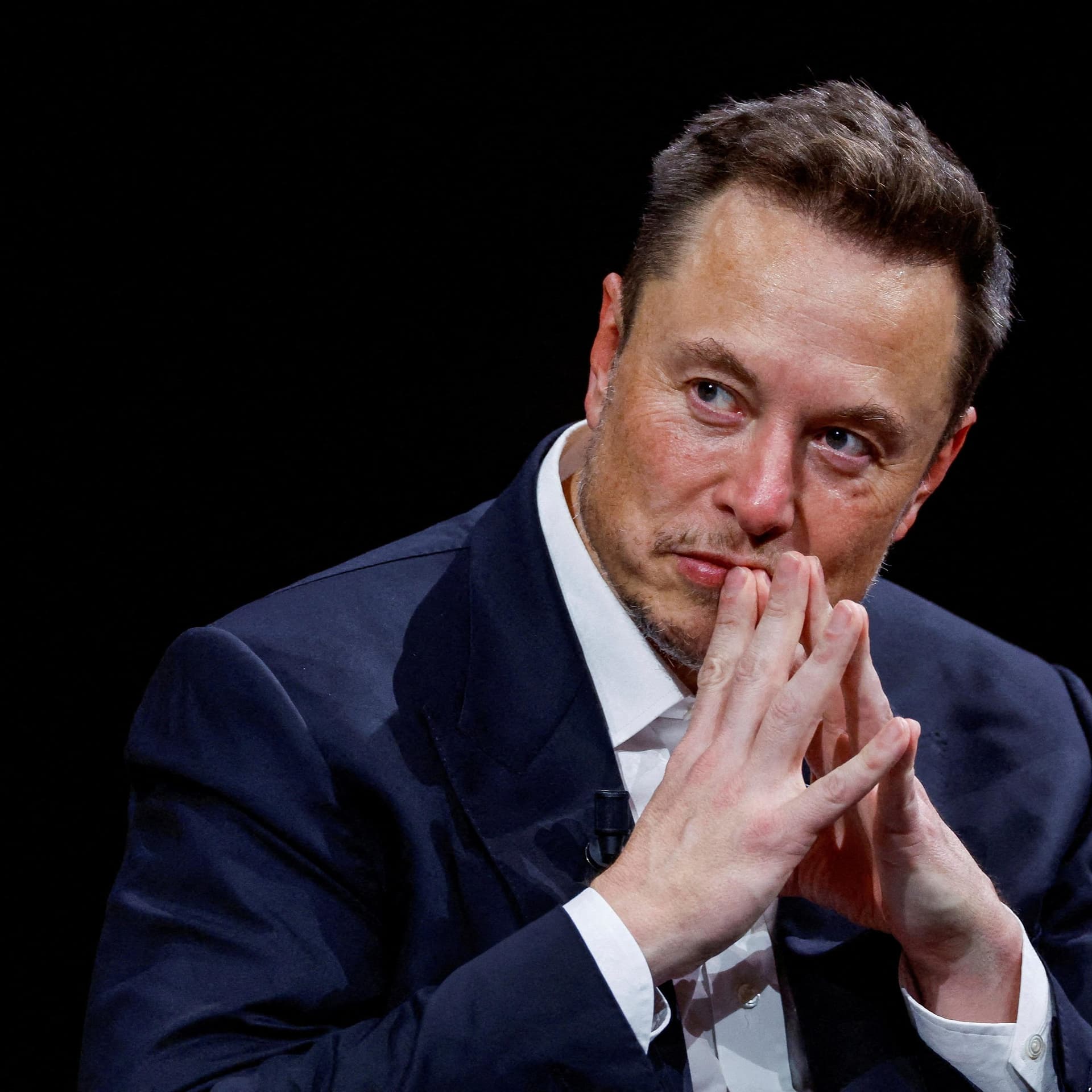
Photo: Elon Musk at the Viva Technology conference, June 16, 2023. Credit: Reuters/Gonzalo Fuentes/File Photo.
Mix: Travis Evans
Video journalist: Matt Pintus
Senior news editor: China Collins