
In short
How cost-of-living pressures and foreign-policy shocks (Iran, tariffs, energy prices) may affect US elections, and why Dave Ramsey argues politicians can’t fix affordability—individual budgeting and debt payoff can.
Guest backgrounds
Dave Ramsey runs Ramsey Solutions (podcasts/publishing). He hosts a call-in “tough love” financial advice show. He says he led 10–15 million people out of debt. He previously built wealth in real estate, then went bankrupt after borrowing too much and being foreclosed/sued.
Key claims
“Control the controllables.” Debt and spending choices—not presidents—drive personal financial outcomes. He downplays the idea that Iran or gas prices alone are causing a US economic crisis. He criticizes volatile tariff policy for hurting small businesses.
Notable examples
A caller with ~$60k–$140k student debt for a history degree; 2000 dot-com, 2008 GFC, and COVID as major shocks; Trump’s tariff “herky-jerky” approach and pledges to cut energy costs by 50% (not delivered).
Written by AI. May contain mistakes. Listen to the episode to check what was said.
Chapters
Tap a time to open that second in VOUnderstanding the Financial Crisis
0:51 to 2:16
Dave Ramsey discusses the current economic challenges faced by Americans.
“But as the US midterms bear down on us, can politicians do anything about it?”
Introduction to Dave Ramsey
2:16 to 4:39
Dave Ramsey introduces himself and his approach to financial advice.
“And today on The Global Story, how could the cost of living crisis affect the elections?”
Challenges and Opportunities in Finance
4:39 to 6:14
Dave talks about the historical context of financial crises and his personal experiences.
“And so the point of that little snide comment is simply that there's always been problems.”
The Philosophy of Financial Control
6:14 to 7:42
Dave shares his philosophy on controlling finances amid crises.
“and build wealth than any other brand in America today.”
Listener Reactions to Tough Love
7:42 to 8:46
Dave discusses listener reactions to his tough love approach in financial advice.
“I feel a bit like I am being presented with a shopping list of things that I haven't done.”
Reflections on Financial Crises
8:46 to 11:14
Dave reflects on recent financial crises, including the dot-com bubble and 2008 crisis.
“As an example, my boyfriend is receiving a pretty large settlement in the next coming months.”
Current Economic Concerns
11:14 to 13:10
Dave addresses current economic issues, including gas prices and foreign conflicts.
“And we had people not making a profit, companies not making a profit, and their stocks going through the roof.”
Impact of the COVID-19 Pandemic
13:10 to 14:00
Discussion on how the pandemic affected economies and personal finances.
“Even though gas prices at the pump are extremely high by American standards, for example?”
Economic Impact of the Pandemic
14:00 to 16:46
Understanding the lasting economic effects of the pandemic on global economies.
“That affected the whole world for about three years.”
The Role of Politicians in the Economy
16:46 to 17:41
Discussing the influence of U.S. politicians on economic conditions.
“I can't lay my hand on one right now in my memory, but other times that I was more worried than I am at this moment.”
Show all 13 chapters
Trump's Economic Policies and Tariffs
17:55 to 21:14
Analyzing the effectiveness and consequences of Trump's tariffs and policies.
“You've previously blamed politicians for what you consider Americans' economic dependence.”
Americans' Financial Mindset
21:14 to 22:22
Exploring whether Americans are generally bad with money and their approach to finances.
“I don't get the opportunity to advise Donald Trump.”
Affordability and the Upcoming Election
22:22 to 26:55
Discussing the relevance of affordability in the context of the U.S. election.
“more than I got to fix the guy in the White House.”
Transcript
Automatic transcript. May contain errors.0:00This BBC podcast is supported by ads outside the UK.
0:51The economy right now is tough. But as the US midterms bear down on us, can politicians do anything about it? On today's episode, we sit down with Dave Ramsey, the famous American financial guru, and he tells us it's not on politicians. It's on us. If you elect a congressman because you think the congressman is going to change your life, you're a fool. Millions of Americans listen to Dave Ramsey's show for financial advice. And if you've never heard him before, let me give you the vibe. It's a call-in show. So I'm getting ready to destroy your life as you know it. Dave's whole brand is tough love.
1:31And if you're one of the callers, maybe you don't always enjoy it. You're not going to spend any money on anything ever for the next three years. On the calls, Dave's sometimes exasperated, especially when the callers have debt, and especially if it's student debt for something like, say, a history degree.
1:50Dave Ramsey:It's a single mom trying to feed three kids, and half of her debt is for a history degree. Full disclosure here. They're going to go 60 and 80 and 120 and$140 ,000 in debt to get a history degree. I have a history degree. I'm not against history degrees. So maybe it's appropriate that I sat there with Dave to hear his take. From the BBC, I'm Tristan Redmond in London. And today on The Global Story, how could the cost of living crisis affect the elections? And why Dave Ramsey says politicians can't save you, only you can.
2:33Dave Ramsey, fantastic to have you with us. Thank you so much for joining us from Nashville, Tennessee. Well, I'm honored, Tristan. Good to hang out with you for a little bit. Could you introduce yourself, please, Dave, for the few listeners in the United States who don't already know you, but also for our listeners around the world who may not be so familiar?
2:51Dave Ramsey:I'm Dave Ramsey. I run a company called Ramsey Solutions, and we do podcasting and publishing. Well, it's great to have you with us. So you have this podcast, Dave, where you speak to people about their financial questions, their worries, their concerns. And listening to your show, it strikes me that you're maybe more plugged into the financial concerns of Americans almost than anyone else I can think of. Is that a fair assessment? Well, we have the honor of speaking to about 30 million a week between podcast and YouTube and talk radio. And certainly they're calling in. It's a call-in format. And so we're talking to the typical American.
3:35Dave Ramsey:Not necessarily all. A lot of financial shows are aimed at rich people. We're not. We're aimed at regular folks. And so we've got our finger pretty well on the pulse. We get to hear a lot. Some of it's kind of crazy and some of it's kind of sad and some of it's really fun. Well, regular folks, as you say, all around the world, not just the United States, are preoccupied right now and have been for a little while with the question of the cost of living and affordability. So many of these concerns, Dave, are tethered to things which are beyond our control. So stuff like, you know, the stock market tariffs, global foreign policy, wars and conflicts.
4:11When did you first notice, Dave, that the cost of living and the price of things was becoming a major concern for Americans? Probably 1982.
4:23Dave Ramsey:Oh, wow. I wasn't expecting you to say that. Well, interest rates were 17 % in those days. And we were just coming out of the Jimmy Carter years, and we had double-digit inflation and moving into the Ronald Reagan years in terms of who was in the White House. And so the point of that little snide comment is simply that there's always been problems. There's always been obstacles. There's always been challenges. And there's always been opportunities. Just to set the table for the rest of this conversation, how would you describe your credo about how to react to financial crises? Like, what would it boil down to for you in a sentence?
5:06You have to control the controllables. the things you can control.
5:10Dave Ramsey:I cannot control the straight of a muse. That's nothing. I can sit and worry about it till 2 a.m. I can't control it. And so I've got to control what I can control. And that's setting up my investments because if there's not a straight of a muse this month, there's going to be one in eight months. There's going to be one in 14 months. The market has always reacted to global events. And so you've got to be in a situation where your personal debts are gone, you've got some cash position, you've got a good income coming in, and you're investing for the long haul, not for the short-term panic, and whichever talking head calls something a crisis this week.
5:53What qualifies you to give that advice to people? Why should they trust you?
5:59Dave Ramsey:They probably shouldn't, but a lot of them have, and it's worked out. The main thing that qualifies me these days is that we've led some 10 or 15 million people out of debt over the years with our classes, books, and podcasts, and into wealth. And we've shown more people how to get out of debt and build wealth than any other brand in America today. And it's over many, many decades. It's not just over the last 10 months or 10 weeks or something. But the background is kind of ridiculous. I started in the real estate business after getting a degree in finance, and I started buying and selling houses in my 20s.
6:36Dave Ramsey:And I got rich, starting a poor redneck hillbilly kid. I ended up with$4 million worth of real estate and a million dollar net worth. And in 1983, was making$250 ,000 a year,$20 ,000 a month. But I borrowed too much money. The banks that we were dealing with got sold to other banks, and they called our notes. And the sad story was we spent the next two and a half years of our life losing everything we owned. We were sued and foreclosed on. And finally, with a brand new baby, a toddler, and our marriage hanging on by a thread, we were bankrupt and we got to start over. And so I have a Ph.D. in DUMB.
7:17Dave Ramsey:I've done stupid with zeros on the end. I can recognize stupid from miles away because I did it myself. and that gives me a unique ability to call something stupid and not be offensive most of the time and it also gives me the ability to hurt with someone that's hurting and be scared with someone who's scared and so we meet people where they are and a lot of them are broken and broke and scared and don't know what to do their next step is and their next step really doesn't have anything to do with a straight-up or amuse it's got to do with their own personal budgets I have to confess when I listen to your show, I feel a bit stressed, Dave.
7:55I feel a bit like I am being presented with a shopping list of things that I haven't done. And I feel quite anxious. Why do you think so many people gravitate towards listening to you? Have you ever heard anyone else saying that they feel stressed listening to your show? Oh, all the time. Just read the hate comments after the YouTube post. Of course they do. Why do they still listen in that case, Dave?
8:25Dave Ramsey:I think they realize that I actually want what's best for them. And so our listeners, when I finish talking to them, my life is not different. But if I did a good job, I can help them move to a different level than they were before. Sometimes more lovingly, sometimes more direct, depending on how the call shakes out and how the person is approaching it. As an example, my boyfriend is receiving a pretty large settlement in the next coming months. If someone is calling up to ask to do something that we tell you not to do, I'm wondering if it's better to do a big down payment and get a mortgage on the house.
9:10Dave Ramsey:Why do you want a mortgage? I don't know. And they know that. We just laugh with them and go, guys, you knew when you called here, we weren't going to tell you to do that. I'm not sure. Well, you just told me you wanted a mortgage. We turn up the heat as the call goes on. Well, let me send him a warning through you, and you're not going to like this. And it gets more stressful. There is no we. You're not married. Exactly. There's a heat. It's his money. But it can end oftentimes with compassion and loving situations. If someone's in a bad situation, I'll walk with them. but I'm not going to endorse their stupidity so they feel better.
9:46Do some of your listeners and viewers think that you're mean? Oh, definitely. Definitely.
9:53Dave Ramsey:Is that what they need from you? No, that's not what they, that's how they feel. And I can't control that. That's not my job. My job is to make sure I help them. Let's zoom out a little bit, Dave, because it'd be great to understand from your perspective where this moment fits into more recent financial crises that we've seen over the last couple of decades. Let's start with the dot-com bubble burst in 2000. Where were you when that happened, and how did it play out, Dave? Well, we were on the air doing this show. That one scared people because it scared them about their future, Their 401ks, their retirement plans invested in good mutual funds took a serious nosedive.
10:46I'm probably down about 25 percent. Probably about 40 percent. And what do you think about that? Not happy with it at all.
10:56Dave Ramsey:The dot-coms were all emerging market tech startups, and they crashed like left and right, and thus the bubble crashed. We burned through the money that we got and times are not looking up right now. It's very sad. It's like being at an ongoing funeral that never ends until the auction comes. And we had people not making a profit, companies not making a profit, and their stocks going through the roof. And some of those went away. So it was mostly centered on I lost a bunch of value in my retirement if I was a very high risk taker. In terms of the shockwaves of that crisis, is it more serious in your view than where we are now?
11:41No, no, no.
11:43Dave Ramsey:Well, where we are now, there's not really a shockwave from what we've got now. 2008 and the pandemic were the two with the highest, by far, shockwaves all the way through the consumer household. To call it where we currently are a crisis, I think that's silly. Well, I'm glad you raised those two because the GFC, the global financial crisis of 2008 and the pandemic, those are the two I wanted to run through with you. When it comes to 2008, did you see that one coming, Dave? No, no, I did not. And honestly, I didn't think it was going to go as deep as it did. It went deeper than I thought it would.
12:21Dave Ramsey:We've seen triple digit swings in the stock market. Major financial institutions have teetered on the edge of collapse and some have failed. As uncertainty has grown, many banks have restricted lending. Credit markets have frozen. And families and businesses have found it harder to borrow money. We are in the midst of a serious financial crisis. Well, the 2008 crisis, there's potentially an interesting parallel with the situation the United States finds itself in at the moment. And that's the fact that in 2008, the U.S. was embroiled in two long-term conflicts, one in Iraq, The other one in Afghanistan, if you fast forward to now, are you concerned that the U.S.
13:05involvement in Iran could keep exacerbating the economic situation?
13:09Dave Ramsey:No, because I don't think it's waking it that bad now. Even though gas prices at the pump are extremely high by American standards, for example? I don't think extremely high is correct. They're lower than they were under Joe Biden. They're higher than they were when Trump went out of office by far. the first time. And so does the president control gas prices? No, they don't. Supply and demand does. And they can do some things like turn on and off pipelines and bomb Iran that affects supply demand. But, you know, gas prices are not causing an economic crisis in the United States today. They're high and they're uncomfortable.
13:50Dave Ramsey:I filled up my truck the other day. It was$150. I didn't like that. How much did it used to cost? You know, it's$100 and it's been as high as$200 it sometimes. It's come down. Okay, well, let's skip forward a few years then to the COVID pandemic in 2020. That affected the whole world for about three years. When you talk to Americans now, six years down the line, how often does it come up? I think when I talk to anyone anywhere in the world, there's a level of PTSD from that event. But economically, I mean, when you shut down entire economies, I don't know what you expect except problems. You shut down personal incomes.
14:33Dave Ramsey:You shut down the source of the personal incomes, which are the companies that are creating the incomes. And so you can't just turn that off and not have a negative effect. You know, the last crisis was the major crisis was the global financial crisis. At that time, the global economy shrunk by 0.1 percent so it was negative 0.1 percent right now in our baseline we're talking about growth at negative three percent so this is the worst since the great depression how much would you say that crisis has shaped the way we are in the world now way more than i wish it did um and there's still some uh hyperbole still some uh lingering effects One of them is, for instance, working remote.
15:19Dave Ramsey:Working remote was almost nonexistent prior to the pandemic. And then it became like this raging fad post-pandemic that you had to work remote. We have 1 ,100 team members here, and we don't work remote. We work at work. And we did through the pandemic, too. And we have found that our productivity is way higher. and the individuals that are in the office have a way higher percentage of getting promoted. There's tons of research coming out now that working remote is bad for the team member. And so people are moving away from it in the United States, but they've not moved all the way away from it.
16:00Dave Ramsey:So we've still got some office buildings and major markets that were full of people pre-pandemic and are empty today. So of those three crises that we've run through there, So we had the dot-com bubble in 2000. We had the global financial crisis, which started in 2008. And then the pandemic of 2020. Where would you rank those three alongside the situation that the United States and the world finds itself in now, Dave? The pandemic is by far the worst thing I've ever experienced in my life. Nothing even close because of the extremes that everything went to. And the economic impact was just devastating in my lifetime.
16:46Dave Ramsey:I'm 66 years old. 2008 would be the second one. Dotcom would be the third one. And again, I've had other things. I can't lay my hand on one right now in my memory, but other times that I was more worried than I am at this moment. So I don't consider us sitting in a major, dramatic crisis right now. There's some pain points in our economy, but I don't think the word crisis applies.
17:37to BBC Podcasts Premium on Apple Podcasts. You can also enjoy a range of our podcasts ad-free with an Amazon Music subscription.
17:49Let's talk a little bit about the role of politicians in the economy in the United States. You've previously blamed politicians for what you consider Americans' economic dependence. You've said presidents should do, quote, as little as possible about the economy. How would you rate Donald Trump on that basis? Medium. There's some things he's done have been very good.
18:17Dave Ramsey:Other things he's done have been a bit showboaty, which we might expect from President Trump. And in general, he's done fine. But some of the things he promised, he's not been able to deliver, but they're really not in his control all the time. You know, President Biden got blamed for 9.6 % inflation coming out of the pandemic. I blame President Biden for a lot of different things, but that wasn't one of them. You supported Donald Trump in the 2024 election. Do you stand by that support? Sure. Yeah. But I've never supported someone 100%. I don't even agree with myself all the time, much less agree with an individual in the White House all the time.
18:59Dave Ramsey:And so we don't play politics. It's just in terms of really getting in and just say, this is my guy, and no matter what he does, he's right. Nah, some of the stuff he does is silly, and some of the stuff he does has been genius. What's been silly, as you say, about his economic policies? Well, the tariff thing was very herky-jerky. It was all over the map because of the methodology he was using to negotiate was so brutal, and it created a lot of volatility. and it has really put the hurt on some small business people. And it really wasn't his intent. I know what his intent was. It doesn't matter what the intent was.
19:38Dave Ramsey:The result was that, you know, I talked to a small business guy the other day. His profits, a whole bunch of his profits went to tariffs this year, and he's not happy. Net, net, net is probably going to be okay over time. But in the short term, man, it created some ripples that were not positive. There are a couple of things that Donald Trump has said over the last few months that have raised some eyebrows, not just in the United States, but also around the world. We're going to play a couple of them to you, and we'd be interested to get your response to them. I don't want to hear about the affordability because right now we're much less.
20:15If you look at energy, we're getting close to$2 a gallon gasoline. I don't want to drive housing prices down. I want to drive housing prices up. The word affordability is a fake word made up by the Democrats. Here's where it's fake, because they made it up. I don't think about American financial situation. I don't think about anybody. When you heard Donald Trump say those things, Dave, what was your reaction? Sounded just like Donald Trump. I mean, he's constantly spouting it's something.
20:43Dave Ramsey:That's his approach to handling the media is dropping sound bites out there one way or the other. Then we can go back and we can look at the actual, what he has actually done versus what he said. Again, do I worship Donald Trump? No, I don't. But I'm also not going to just sit and go, he's the most ridiculous buffoon in the world. Because some of the stuff he's done has been absolutely genius. And some of the things come out of his mouth, we all shake our head and go, what? But there it is. Would you advise Donald Trump to use those kinds of words? I don't get the opportunity to advise Donald Trump.
21:20If you were his advisor, hypothetically speaking.
Read the full transcript
21:24Dave Ramsey:You know, I don't like the word affordability either because it has a spirit of victimhood on it versus I control my destiny by controlling the controllables. If you want to be a homeowner and you make$78 ,000 a year, you cannot choose to live in Manhattan. Do you think Americans are generally bad with money?
22:12Dave Ramsey:money. And that's one of the reasons we have millions and millions of listeners is people are struggling with that issue and going, OK, how can I get better? I got to fix the guy in my house more than I got to fix the guy in the White House. Dave, Americans pride themselves on their pull yourself up by your bootstraps ethos. I feel qualified to say that, Dave, because you can't tell from my accent, but I am actually I am a citizen. I'm a U.S. citizen, so I'm allowed to talk about this. Do you feel that the pull yourself up by your bootstraps ethos is still alive and well? You know, the problem with pull yourself up by your bootstraps is it represents the positive of personal responsibility, but it represents the negative in that it's naive because no one ever does it alone.
23:02Dave Ramsey:I've worked very, very hard and I've told the truth and I've been very principled And I've been very, very, very consistent, sickeningly consistent. I did those things, but I did them in an environment with a lot of wonderful human beings walking alongside me that also believed in this and caused it to happen. Well, let's turn to the current moment, Dave, because it's election season in the United States. A lot of indicators suggest this question of affordability, a word that you've said you don't like, you don't recognize. Nonetheless, it seems for some people it might be the most consistent issue that keeps coming up time and time again and may decide the election.
23:47You interviewed Donald Trump back in October 2024. So, President Trump, thanks for taking time to sit down with us. Just before he was re-elected. We did a show called The Ramsey Show and talked to regular folks every day, calling in most of the time with financial problems. And you asked him back then about the cost of living. They're not concerned with a lot of things,
24:11Dave Ramsey:but they are concerned with$8 eggs,$5 gas, 7 % interest rates, and a house they can't afford with wages not going up as fast as house prices. He pledged in that interview to you that he was going to cut the cost of energy by 50 % and that he was going to bring the tax rate down. I believe I'll be able to get energy down to 50%. 50, 50 % of what it is right now within a period of less than a year. Wow. That's pretty good. It's going to happen fast.
24:47Has he lived up to the pledges that he made to you when you spoke to him back in 2024 on the cost of living?
24:53Dave Ramsey:On the cost of living, those numbers have not happened. But again, he's a politician running for office. And I have never seen a politician ever of either party deliver on something like that because I don't think it's in their control. Now, we don't have$8 eggs anymore, and the grocery basket has not continued to – at the time of that interview, the grocery cart analysis of what someone pays for groceries was skyrocketing, and that has stopped. But he didn't cut it in half, and he didn't cut energy in half. No, that is not. But again, I didn't think he would when he said that. You sound quite forgiving, Dave.
25:33Do you think U.S. voters will be similarly forgiving? I have no idea. I'm not a political analyst. I truly have no idea. Well, you speak to you speak to Americans every day. What's your sense from that, though?
25:46Dave Ramsey:The ones that I speak to think that what happens at their house and if they if they don't think that by the time I finish with them, I want them thinking that what happens at their house is more important than what happens at the White House. But who are they blaming? If you elect a congressman because you think the congressman is going to change your life, you're a fool. When you borrow on credit cards up to your eyeballs and take out a$1 ,200 car payment on a freaking Range Rover and, and, and, and, and borrow money, you've destroyed your life, not the president. I think those that believe that they'll never be able to buy a house because of the, in quotes, affordability crisis, those that believe that the Iran war has caused an economic crisis, which I don't buy off on either one of those things to the extent that someone does to the level of drama that they do.
26:40Dave Ramsey:Those that believe that we're probably not going to vote for Donald Trump or his party anyway. And they're not going to vote for him in the fall. Now, will they marshal up and throw some people out of office? I guess they could. I don't know. Dave Ramsey, thank you so much. It's been a real pleasure to talk through this all with you. Thank you, Tristan. Honored to be with you guys. Thank you for having me. that was dave ramsey consumer finance expert and host of the ramsey show let us know what you thought of today's episode you can email us as always at the global story at bbc.com message us with your feedback and any ideas you might have to for future episodes and please rate us wherever you're listening because it really helps other people find us and a quick recommendation for you as you know our show is about where the world and america meet we have one deep dive on one story every day.
27:34But if you want the very latest news headlines from around the world, then it's our sister show, the global news podcast that you need. I listen every morning. You can find them wherever you get your podcasts. And that's it from the global story for today. The episode was produced by Kat Farnsworth. It was edited by Martine Powers and mixed by Travis Evans. Our digital producer is Charlie Firth and our senior news editor is China Collins. and I'm Tristan Redman. Thanks so much for listening. Have a great weekend. We'll see you next week. Cheerio.
28:28documentaries to in-depth analysis features. Visit bbc.com forward slash subscribe to find out more.
From the publisher
As the midterm elections in America approach, the economy is one of the deciding factors for how people will vote.
Before his second term started, President Trump promised to tackle the so-called affordabilty crisis. But since then, the war in Iran has led to soaring gas prices and a range of tariffs have made some goods more expensive.
How do global events impact people’s finances and in turn how they vote in elections? The talk show host and financial expert Dave Ramsey joins us to discuss.
Producer: Cat Farnsworth
Executive producer: Martine Powers
Digital producer: Charlie Firth
Sound engineer: Travis Evans
Senior news editor: China Collins
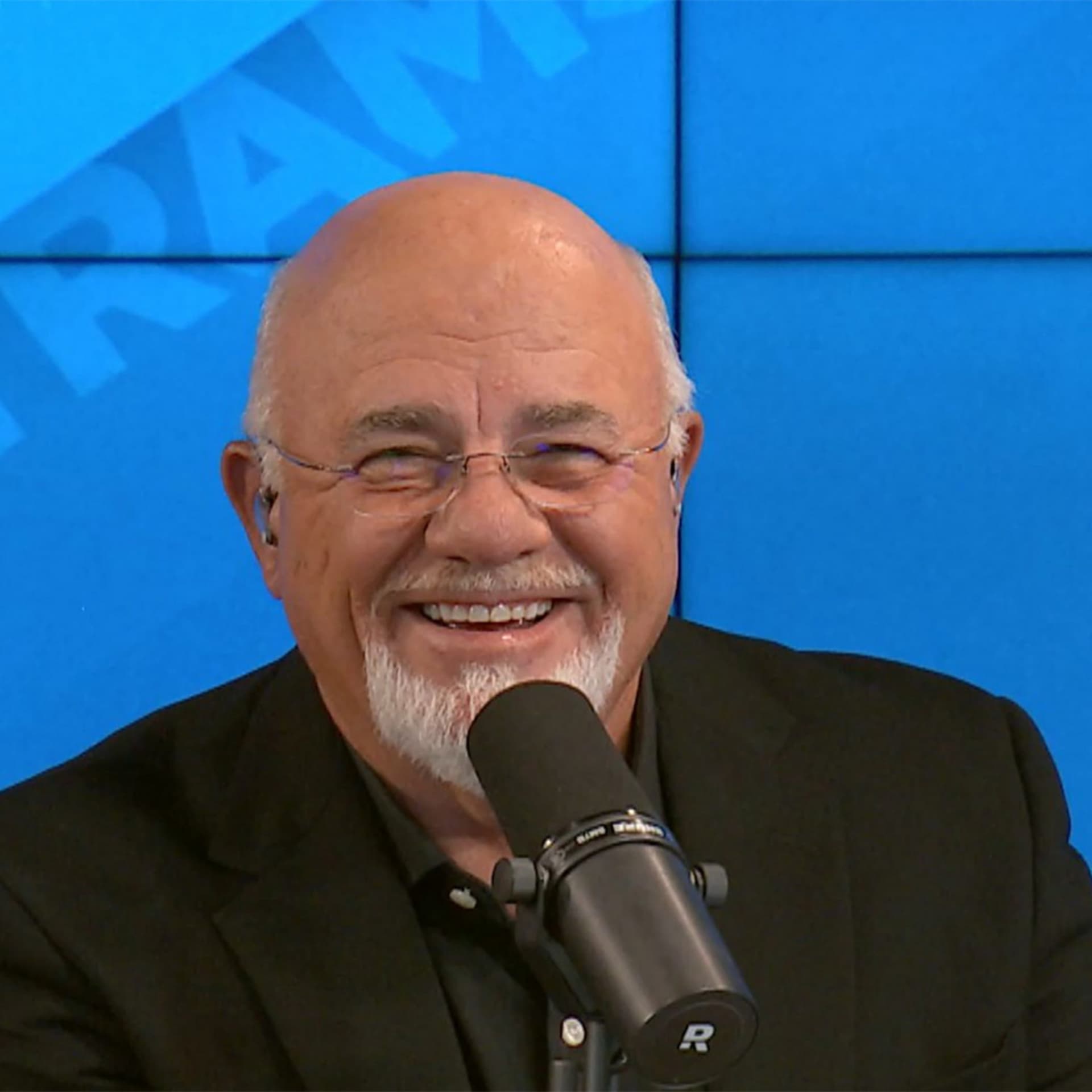
Photo: Dave Ramsey. Credit: BBC