
In short
European leaders shift from early flattery to open criticism of President Trump amid the Iran war, energy costs, and NATO tensions. The episode argues the defiance is growing because public opinion has turned against Trump, but it risks retaliation, including threats to reduce U.S. troops in Germany and broader NATO support.
Guest backgrounds
Katya Adler, BBC Europe editor based in Brussels, reports across Europe; she contextualizes transatlantic relations and European politics.
Key claims
Trump’s second term escalations (tariffs, threats to allies, anger over Iran) are met by a more unified European front; U.S. troop reductions are both symbolic and practical (no long-range missile battalion to Germany); European leaders have “dual audiences” (domestic voters and Washington) and quietly help the U.S. via bases.
Notable examples
German Chancellor Friedrich Merz’s blunt school remarks; Pentagon decision to withdraw 5,000 troops from Germany; Poland PM Donald Tusk warning NATO is disintegrating; EU leaders rallying around Spain’s Pedro Sánchez in Cyprus; Italy’s Giorgia Meloni facing backlash over Iran/Gaza and Pope-related tensions; France’s Jordan Bardella and UK’s Nigel Farage reacting differently to Trump.
Written by AI. May contain mistakes. Listen to the episode to check what was said.
Chapters
Tap a time to open that second in VOEuropean Leaders Confront Trump
0:00 to 0:37
European leaders begin to openly criticize Trump and his policies.
“This BBC podcast is supported by ads outside the UK.”
European Leaders Confront Trump
2:14 to 4:28
European leaders begin to openly criticize Trump and his policies.
“And today on The Global Story, President Trump is facing a more defiant Europe.”
The Impact of Troop Reductions
4:28 to 5:54
Discussion on the strategic implications of reducing U.S. troops in Germany.
“So he's taking out 5 ,000 troops from Germany.”
Historical Context of U.S.-Europe Relations
5:54 to 7:48
Examine past tensions between Trump and European leaders.
“We're going to cut way down, and we're cutting a lot further than 5 ,000.”
Recent European Unity Against Trump
7:48 to 9:14
Analysis of the recent EU summit and European leaders' solidarity.
“So since Donald Trump was reelected, you know, returned to the White House, a year ago, we saw Liberation Day, those tariffs, those punitive tariffs that he wanted to smack onto the Europeans.”
The Future of NATO and European Defense
9:14 to 14:00
Exploration of NATO's role and Europe's defense strategy moving forward.
“Katya, if you can bring us up to speed with what we've seen just in the last few weeks, that's the kind of timeframe I want to zero in on.”
European Defense Investment in Response to Trump
14:00 to 15:06
Explore how Trump's criticism has galvanized Europe to invest in defense.
“Because Donald Trump is absolutely right.”
Public Opinion and Political Leadership in Europe
15:07 to 18:04
Understand the shifting public opinion in Europe regarding the war in Iran and its impact on leaders.
“Katya, is it that the opposition to the war with Iran has grown in Europe?”
Georgia Maloney's Political Balancing Act
18:05 to 21:40
Discover how Italian leader Maloney navigates her relationship with Trump amid local opposition.
“So she has to be careful about how much she stands against her people.”
The Varied Reactions of Conservative Leaders in Europe
21:41 to 24:28
Analyze how different conservative leaders in Europe react to Trump's policies and their electoral implications.
“A fan of the United States and a fan of Donald Trump.”
Show all 11 chapters
Public Sentiment Towards Trump and American Culture
24:29 to 26:50
Examine the complex views Europeans hold towards Trump and their appreciation for American culture.
“I guess I'm just wondering, what are they up to?”
Transcript
Automatic transcript. May contain errors.0:00This BBC podcast is supported by ads outside the UK.
0:30business needs in one place, saving you time, headaches, and serious money. Stop paying for missing pieces. Go to odoo.com. That's O-D-O-O dot com to learn more. With the new Schwab Teen Investor Account, teens can gain hands-on investing experience and build positive money habits. It's an account co-owned by you and your teen, so you can monitor and engage with the account while your teen learns how to invest and manage money. Learn more at schwab.com. When Donald Trump began his second term in the White House, many European leaders chose flattery over a fight. The NATO secretary general praising the U.S.
1:09president for brokering this ceasefire deal, referring to him as daddy, who sometimes has to separate two children. Starmer mentioned more than once that President Trump was being issued this special invitation to come back to the UK. And he noted how unusual and unprecedented that is. Even through tariffs and threats of a Greenland takeover, most of Europe's leaders tried to avoid a public confrontation. Even after the war in Iran began, few openly condemned the move, reluctant to take on the Trump administration. But as the weeks have dragged on, we're now seeing European leaders across the political spectrum, from longtime allies to ideological rivals, willing to openly contradict and criticize the American president.
1:59But clashing with Trump comes with consequences. President Trump is threatening an even larger withdrawal, all because of the German chancellor's criticism of the war in Iran. From the BBC, I'm Asma Khalid in Washington, D.C. And today on The Global Story, President Trump is facing a more defiant Europe. Why now? And what does that mean for an already shaky transatlantic alliance?
2:30I'm Katya Adler. I'm the BBC's Europe editor based in Brussels. But it's my job to kind of zoom all over the continent when things get juicy. As they are right now, which is why we wanted to talk to you. We spoke to Katja as tensions had been ratcheting up between Trump and Europe. The latest salvo was something you all might have heard about involving Germany. Since the start of the Iran war, the German leader, Friedrich Merz, had not been vocal in criticizing the U.S.'s actions. But then, last Monday, he was unusually blunt at an event at a school. The German Chancellor was very candid when talking to a number of students the other day and said that there didn't seem to be a plan for the Iran war when it came to the US administration and that our whole country had been humiliated.
3:19I cannot see what strategic exits the Americans are now opting for, especially as the Iranians are obviously negotiating very skilfully, or rather very skilfully not negotiating. An entire nation is being humiliated by the Iranian state leadership. He said, you know, the Iranians had got, you know, the U.S. administration to go all the way to Pakistan essentially for nothing. Here in Washington, that moment of candor did not go down well with President Trump. He took to his social media site and matter-of-factly wrote that the U.S. was reviewing the possibility of reducing U.S. troops in Germany.
3:54Now, for some context, the U.S. has long had a military presence in Germany. And Trump has long threatened to shrink the U.S. military footprint in Europe. In fact, he tried and failed to move troops out of Germany at the end of his first term. And actually, amongst European leaders, they were a little bit like, oh, well, here we go again. He's threatened this before. We know he can, but he probably won't. But then we saw the news from the Pentagon on Friday. Also breaking tonight, the U.S. pulling thousands of troops out of Germany after that country's leader blasted President Trump. What could be the beginning of a major strategic shift?
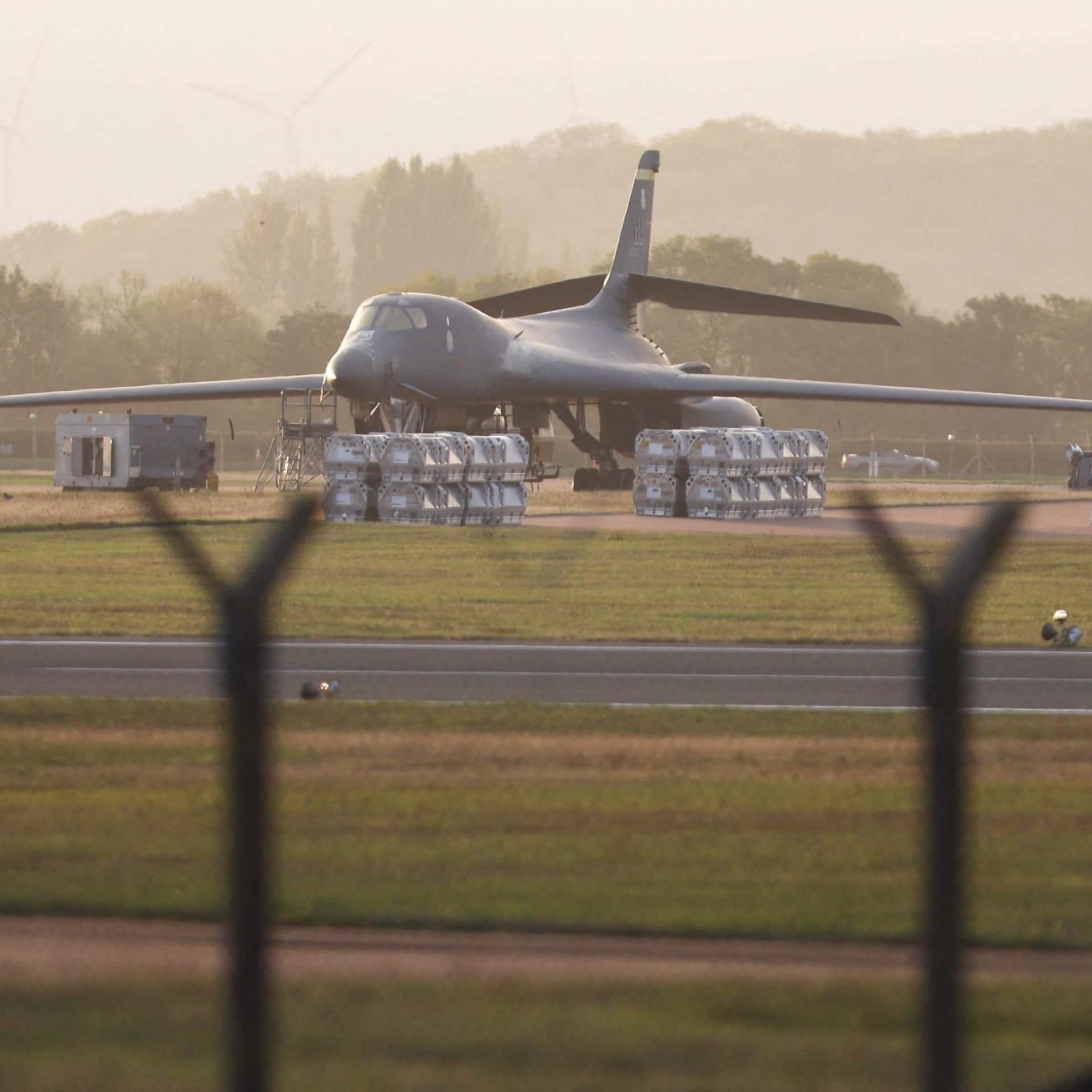
4:32So he's taking out 5 ,000 troops from Germany. That's out of a total of 36 ,000 active U.S. troops in Germany. That's the biggest sort of U.S. contingent in one country in Europe. I don't think it'll make a massive difference on the ground. And symbolically, it's very big. I think even bigger is the fact that the Pentagon has said that they will now no longer be sending a battalion with long range missiles to Germany. Now, Europe knows that it needs to start manufacturing its own long range missiles. And in fact, you've got the UK, Poland, Germany, France and Italy working together on a whole range of missiles, medium and long range ones.
5:15But they're not there yet. And so this was still under Joe Biden. And he said he'd send this battalion with long range missiles as a stopgap. And now they're not coming. So that is a practical exposure for Europe. And symbolically, it's huge. I mean, Russia is clearly going to be watching. This looks like a fractured NATO. It looks like an increasingly exposed Europe. And that makes the countries, particularly those very close to Russia, worried. We heard from Poland's prime minister, Donald Tusk, at the weekend. He said NATO's disintegrating. And it's not clear that Trump will stop at 5 ,000 troops.
5:53Here he was over the weekend talking to reporters. We're going to cut way down, and we're cutting a lot further than 5 ,000. Thank you very much. It's hard to know where to place this latest development in the ongoing rocky relationship between President Trump and Europe, because the president is someone who's known for operating via a cycle of escalations and de-escalations. And so I told Katya that for me, as someone who's covered American politics for a long time, this feels a bit like a movie we've seen before. So could she contextualize this for us? How severe are the latest tensions? Okay, so I think if you say you've seen this movie before, you've probably seen quite a few prequels.
6:35Because obviously we had Donald Trump part one when he was president before, and there were definite tensions with Europe then. But then we had Donald Trump, the real estate magnate in the 1980s, who was vocally very, very angry about the number of German cars on the streets of New York, for example. So a lot of the things that we're seeing in terms of tariffs, this feeling of unfairness towards Europe, but whether it's the fact that he feels that the United States, and let's say this candidly, that he is far from the first US president to say it. He's just a bit more blunt in feeling that the Europeans have been free riding on the Americans when it comes to security, particularly looking at NATO.
7:15But also this idea that it's unfair and that the Europeans are taking advantage of the United States when it comes to trade. This sense of injustice and unfairness being taken for a ride. This doesn't just come from Trump one. But when it comes to the Europeans, yeah, it's bad. I mean, this is a very low moment in transatlantic relations. Is it the lowest you've seen, lower than anything you saw during the first term? When it comes to foreign policy, Donald Trump one was Donald Trump light compared to Donald Trump two. So since Donald Trump was reelected, you know, returned to the White House, a year ago, we saw Liberation Day, those tariffs, those punitive tariffs that he wanted to smack onto the Europeans.
8:01We've seen him threaten to take the territory of a NATO ally, Denmark, earlier this year. We've seen him over the Iran war, livid, I'd say incandescent with European allies who he feels didn't support the United States enough in those attacks, leading him to suggest taking revenge. Really, I mean, what can only be described as revenge, although these aren't directly in his words, we have to say there was a leaked Pentagon memo that was first highlighted by the Reuters news agency that suggests that, for example, when it comes to Spain, that he wants to find a way of throwing Spain out of NATO, just as an aside, that there is no method in NATO in order to do that to a member state.
8:47But anyway, that for the United Kingdom, that the US was reconsidering its support to the United kingdom over the Falkland Islands, which are claimed by Argentina, of course, the president of Argentina, Malay, being a close mate of Donald Trump. So, you know, this is definitely a low point, but I'd say that it's reached this point because the Europeans are now standing up to Donald Trump. So let's talk about that. Katya, if you can bring us up to speed with what we've seen just in the last few weeks, that's the kind of timeframe I want to zero in on. We saw more than two dozen European leaders meet just the other week in Cyprus at an EU summit.
9:26And the meeting, to me, really highlighted the cracks between Donald Trump and his European counterparts, even though clearly America is not part of the EU. What happened there? Well, first of all, the European leaders turned up to this informal summit already in a bad mood with the United States because they had energy on their mind. So the fact is that for the second time in very few years as an energy crisis in Europe. And so they arrived in Cyprus, heads in hand already over that. And, you know, off the record behind closed doors, muttering at Donald Trump's actions in Iran, and only to then hear about this leaked Pentagon memo, in which Donald Trump was saying he wants to find a way of throwing Spain out, for example.
10:14And Donald Trump does have a reputation for vengefulness. And actually, that is what's partly what has made European leaders mindful of not upsetting him too much in previous months. But they absolutely rallied around the Spanish prime minister. Pedro Sanchez has made a real name for himself in standing up to President Trump. I mean, that's what was a curiosity to me, right? I mean, Sanchez has clashed often and frequently with the Trump administration, but it was the rallying around him that was intriguing to me in this moment. Because as you suggested, it's not the same rallying that we might have seen in the prior months of the Trump administration.
10:58If we have a look to straight after the US and Israel launched their attacks on Iran, Sanchez was the first big leader of a big European country to stand up and basically say this is illegal under international law. The UK pussyfooted around saying that. And Macron of France, President Macron of France, did his own little dance around that as well. Sanchez was right at the gate to say it. And who was in Washington straight afterwards on a visit? Chancellor Mertz of Germany. Yes. And Donald Trump sat there. Like Spain has been terrible. And he berated the Spanish president. They've been very Spain.
11:46has been very, very uncooperative. I mean, and said he was going to, you know, he was going to take revenge. So we're going to cut off all trade with Spain. We don't want anything to do with Spain. He was going to impose like smack massive, you know, trade embargo on Spain, which anyway, you could question whether that's possible because Spain is a member of the EU and it's a bit tricky to do that. Single out an individual nation. Yes, yeah, yeah. It is possible in some ways, but in any case, Merz said not a word in public. In public, he said he did behind closed doors. But in public, sitting there next to Donald Trump, not a word.
12:22In fact, he kind of echoed Donald Trump's frustration with Spain for not agreeing to spend more on defense. We are trying to convince Spain to catch up with the 3 % or 3.5%, which we agreed on in NATO. And as the president said, it's correct. Spain is the only one who is not willing to accept that. And that was a pretty dismal moment for European unity, I have to say. The fact that Merz just sat there. This was then a direct contrast now in Cyprus. That's the reason I bring up that story. Because the European leaders did rally around. Partly why they're doing that is because they're thinking about Russia.
13:05You have to think about who, when European leaders come together, what audiences do they have in mind? Domestic audiences, so their own voters back home, who are very angry with Donald Trump over the Iran war, by the way, massively unpopular. And so it benefits them, you're saying, to criticize Trump domestically. Benefits them. Benefits them to stand by Spain in this, in Cyprus. Benefits them vis-a-vis Moscow as well. Because what does Moscow want to see? A disunited Europe. What does Donald Trump want to see? A disunited Europe. What does Beijing want to see? A disunited Europe. And those leaders are very mindful of that.
13:43And in Cyprus, what they did was they united. And they're thinking of European unity and they are thinking about the future of the defence alliance, NATO, that they all rely on for their security. Now, NATO without the United States is in a pretty mess right now. Why? Because Donald Trump is absolutely right. The Europeans have relied on the United States for decades. They have invested in their welfare states. He's right. And they have pulled back from investing in defense. They know they need to change that and they are changing that slowly, but it is a slow process. Europe relies on the United States for command and control.
14:25The United States, we rely on them when it comes to air defense for refueling in the air, those sort of things. You can't just buy that overnight. We rely on the United States, the Europeans, for intelligence still. It's not that we have none, but the United States has simply got more satellites up there. Which is what makes it to me so remarkable, though, the vocal criticism in this moment, given the reliance on the United States for security. But what are they doing at the same time? They are vocally criticizing. The Europeans are coming together. In fact, the United States under Donald Trump has been a real galvanizing force, A, in the Europeans starting to really invest in their defense, B, in working together and realizing they need each other.
15:06That's interesting. And, you know, the UK, Germany, France, Hungary, wherever you look across Europe, they do not support the attacks on Iran, which they see as a war of choice, which has an impact on their own purses, on their own energy prices. Katya, is it that the opposition to the war with Iran has grown in Europe? Because as you mentioned, a little more than two months ago, when the strikes first began, we, as expected, saw Pedro Sanchez, the leader of Spain, speak out very forcefully. And I think we all kind of expected him to have that vocal criticism. But as the weeks and weeks have gone on, he's not the only one.
15:44Yes. So I think the key here is public opinion. That's what you need to look at. So when leaders weren't as outspoken at the beginning of the attacks, they were mindful of their relationship with the United States. When they are speaking more forceful now, they are mindful of public opinion polls. And that is the difference. It's a different audience. What are they doing at the same time, though? If you listen to the former Secretary General of NATO, Jens Stoltenberg, a Norwegian, a man of very few words. For a man of very few words, he's been giving a hell of a lot of media interviews recently.
16:20And he's pointed out that actually, if you really look behind the scenes, most European allies have quietly been helping the Americans when it comes to using their bases. They're just not shouting about it because of public opinion. So actually, he's saying, United States, please look at the facts. We are actually helping you. So, you know, it's quite nuanced. It feels like they have dual audiences. You have to, well, they have multiple audiences. So I think a very interesting leader here is Georgia Maloney. Yeah. Georgia Maloney. I mean, can we kind of just summarize her? I mean, she is somebody who I would say is a conservative leader.
16:58She was very close with President Trump. And to see Trump and Maloney have a bit of a public falling out is a curiosity to me. And it makes perfect sense to me. So she ideologically agrees with Donald Trump's arguments about Christian civilization and having to fight for Christian civilization. She very much, with his America first doctrine, she says Italy first. She is anti-immigration. There are many subjects on which she agrees with Donald Trump. She's been very close to him. So given their ideological similarities, then how do you explain the Fishers? Well, she was seen as a great hope in Europe, actually, somebody who could be a Trump whisperer, who could be a bridge between Europe and Donald Trump in these kind of more tense relations.
17:51But recently, she has had to listen to public opinion polls, because when it comes to the war in Iran, again, the energy crisis, this means that the Italian voters are anti-Iran war. And they are anti-Donald Trump for starting this latest round of violence in the Middle East. So she has to be careful about how much she stands against her people. Over Gaza, for example, as well, the Italians were particularly anti-Israeli action in Gaza. And Giorgio Meloni was much more circumspect in how she talked about Israel and so on. She has to be careful about public opinion. And I've got to mention the criticism with the Pope, an American Pope nonetheless, but a Pope for the world, right?
18:38I've got to imagine that factors into it all. That massively factors. I mean, obviously, the Vatican is an independent country, but it is in Rome. I mean, physically. It is physically in Rome. The Italians, it's a very culturally Catholic country. So when he criticised the Pope for being anti-war, if you like, Giorgio Meloni was out the box saying, you know, don't criticise our Pope. And Donald Trump responded very quickly. You know, again, he has a reputation for being thin-skinned, for saying that, you know, basically he was disappointed in her. You know, essentially that's what it came down to.
19:17Also, I have to say, I happen to know somebody in air traffic control very high up in Europe. And they recounted that when the last Pope passed away, when there was, you know, the funeral for the Pope, basically, what Donald Trump, he likes airspace closed in Europe before he arrives on Air Force One and after he arrives on Air Force One. And so he said to the Italians, of course, you'll be closing airspace. But there were so many world leaders flying in for the funeral. And Georgia Maloney apparently told him, this day is not about you. So she's not afraid to stand up. It's just that it particularly stands out.
20:11So if we've begun to see a bit of a public rift between Maloney and Trump, Maloney is somebody who has an ideological kinship with Trump. What about some of the other conservative opposition figures in Europe? You know, I'm thinking of someone like Bardella in France, right? Or Trump's friend, Nigel Farage, there in the United Kingdom. So before I answer that, I do want to say again that I am an enemy of the black and the white. So this is, I would take issue with this idea that suddenly Europe is turning around and suddenly Meloni. It's just not the case. I bring you back to Greenland again. And this will also help me to answer when it comes to the far right in France.
20:52You mentioned Jordan Bardella, the leader there, for example, in France. What do nationalists do? Nationalists believe in national sovereignty. What was Donald Trump doing? He was threatening the sovereignty of Denmark. So you will find nationalists, even if they agree with a lot of his ideology, they will stand up because that is a threat to national sovereignty. And that goes against what they believe in as well. So Jordan Bardella of France, we're talking about this young president of the National Rally Party, who will be standing to become president of France next year. Now, he has been quite consistently critical of Donald Trump.
21:30You know, Marine Le Pen also has always been critical of Donald Trump. So I don't, this is not a change. They have always tried to distance themselves from Donald Trump. You asked about Nigel Farage in the United Kingdom. Yes. Yeah, yeah. There it is more surprising. A fan of the United States and a fan of Donald Trump. Very, very much. Very vocal in that. So, yes, when Nigel Farage stands up now and says that he's slightly sort of puzzled about the U.S. president's actions in Iran. I am worried about what his war aims are now. It's now been dragging on for way longer than we all thought it would.
22:07So, yes, of course, I'm concerned about it. I'm not sure whether he knows where he's going with his actions in Iran. then yes, I think that is much more surprising. But again, it is driven by public opinion polls. And in the United Kingdom, we are coming up to really important local elections. And he is aware that a large amount of the electorate in the United Kingdom is very critical of Donald Trump. And he is mindful of that too. Katya, a big question on my mind as we've been having this conversation is, okay, if public opinion, you're saying broadly in Europe, it has shifted away from Trump, that Donald Trump is not particularly popular, then the question is how, if at all, he could factor into the electoral future that various leaders see.
22:52And the last time we had you on this show was ahead of the Hungarian elections. And in those elections, we saw that Donald Trump's endorsement was not enough to save his friend Viktor Orban. He lost that election after 16 years in power. And we haven't actually done an entire episode on Hungary. And I should point out that we got a message from one of our listeners named Ashley, who said, and I'm going to quote Ashley here, please do a story on the recent elections in Hungary. Very surprised this hasn't happened yet. I like when our listeners call us out. So unfortunately, we haven't done an entire episode.
23:24But since you are here, I do want to ask why or how was Trump's endorsement not helpful there in Hungary? Hungary's election was lost on Hungarian issues. But what it doesn't help you to do is to be a champion for Donald Trump right now. So I think the fact that Viktor Orban was seen as being close to Trump, that Trump personally endorsed him, it was impressive for a lot of Hungarians that the president of the United States was so enamored with Viktor Orban. You know, it's a very small European country after all. But by the time it came to this election, it did not, it definitely did not help him.
24:04It did not get him any more voters and it didn't persuade his traditional voters to stay with him. But I would say that was largely for domestic reasons. But it didn't have a Midas touch about it, for sure. We've been speaking about the fact that public opinion in Europe is not favorable towards President Trump. But I've got to imagine that there are still Europeans who are fans of Trump. I mean, we hear, for example, about the CPAC events happening in Europe. I guess I'm just wondering, what are they up to? And is there really no appetite for cozying up and being close with Donald Trump. Broadly speaking, no.
24:42Quite frankly, no. I think you're thinking about the former prime minister of the United Kingdom, Liz Truss, who was prime minister for all of 49 days, which was compared to how long it takes a lettuce to rot. I think that's where that was the point of it. That's the one thing most Americans know about her. um so you can i leave it up to you to decide whether or not donald trump might be delighted that she is the one who is permanently championing him but you know she set up a podcast um she you know there's cpac uk now i mean these are these conservative meetings i mean you had them in hungary as well you know they are they are in different in different european countries but no there are there are very few people who go out there right now in europe and saying you know with MAGA hats on.
25:26Just generally across the political spectrum, being close to Donald Trump, apart from fringes, and I would put Liz Truss very much on the fringe, it is not seen as advantageous to cozy up with him. And I mean, apart from anything else, he's just seen as really unpredictable. We live in really, really insecure times. People are scared, Asma. People are really scared. And they want leaders who don't scare them and who they can rely on. So this is not, I don't, I really would not like listeners to move away from this podcast thinking the Europeans feel vindictive towards Donald Trump or they just love to loathe him.
26:03Some might, but that's not the majority opinion, really not. Also, Europeans across the board are not anti-American. There is a great love of the American culture, of people, of the Americans, a great desire from Europeans to go and visit the United States to consume, you know, to sing American songs. I think of my teenage kids, you know, I mean, 100%. That's really lovely to hear. Yes, please do not think this is anti-Americanism that's taken hold of Europe or that Europe has become isolationist in the way that it accuses America of being. There is a desire for a continued friendship and Europe has most definitely not given up on the United States or even Donald Trump.
26:50But on that note, Katya, thank you so much for just bringing all your reporting, your experience to us. I really appreciate it. Thanks for having me on.
Read the full transcript
27:01That was Katya Adler, the BBC's Europe editor. And as always, we really love hearing from listeners. So if you all have any story ideas or questions for us, you can email us. Our address is theglobalstory at bbc.com. And just a reminder that we here at The Global Story, if you are a loyal listener of our show, know that we go deep every weekday on one big story that looks at the intersection of where the world and America meet. If you're also looking for a way to catch up on the latest news from around the world, then we recommend checking out our sister show, The Global News Podcast. That's it for our show today.
27:36Our producers were Valerio Esposito, Chris Benderev, and Hannah Moore. Our show was edited by James Shield and mixed by Travis Evans. Our senior news editor is Chyna Collins. Our digital producer is Matt Pintis. And I'm Asma Khalid. Thanks as always for joining us and we'll talk to you again tomorrow.
From the publisher
When Donald Trump began his second term in the White House, many European leaders chose to pursue flattery instead of a fight. Most sought to avoid public confrontation even as Trump instituted tariffs, spoke of annexing Greenland, and went to war with Iran.
But lately more European leaders across the political spectrum - from longtime allies to ideological opponents - are willing to openly contradict and criticise the American president. The White House appears to be retaliating, especially against Germany, from which the Pentagon has announced it will withdraw 5,000 troops.
Has Europe suddenly become more defiant? And what happens next? Asma speaks to the BBC’s Europe editor, Katya Adler.
Producers: Valerio Esposito, Chris Benderev and Hannah Moore Executive Producer: James Shield Mix: Travis Evans Senior News Editor: China Collins
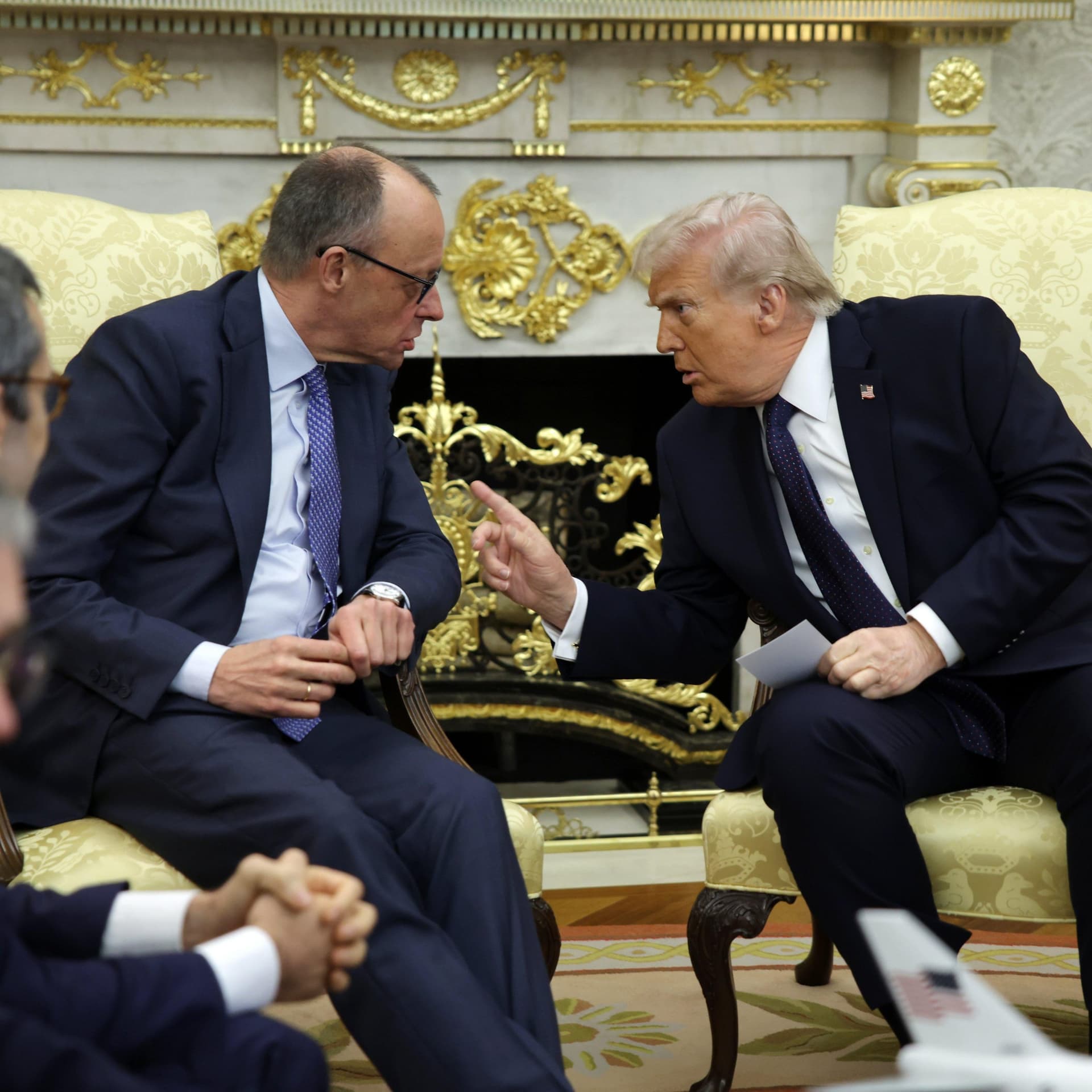
Photo: US President Donald Trump and German Chancellor Friedrich Merz hold a bilateral meeting at the White House, 03 March 2026. Credit: Samuel Corum/Pool/EPA/Shutterstock