In short
The first Riyadh Comedy Festival in Saudi Arabia and how it triggered backlash in the American stand-up world, amid Human Rights Watch criticism that the event is meant to distract from Saudi repression of free speech.
Guests/backgrounds
Frank Gardner, BBC security/Middle East correspondent since the 1980s; Gianmarco Ceresi, New York City comedian.
Key claims
HRW says the festival deflects attention from human-rights abuses. Saudi organizers offered large payoffs; some comedians declined (Shane Gillis) or were disinvited (Tim Dillon). Saudi Arabia’s Crown Prince Mohammed bin Salman is portrayed as image-rehabilitating via entertainment reforms while still clamping down on political dissent, including arrests for tweets.
Notable examples
Viral Zach Woods TikTok; Mark Maron’s onstage remarks; Ceresi cites Saudi content restrictions (no religion/religious figures); Fahad al-Buthiri arrested after ties to a women’s rights campaigner; Streisand-effect-style “more attention” to abuses.
Written by AI. May contain mistakes. Listen to the episode to check what was said.
Chapters
Tap a time to open that second in VOThe Riyadh Comedy Festival Overview
0:36 to 2:24
Discussion on the Riyadh Comedy Festival and its significance in the comedy world.
“What do Beatles member Sir Paul McCartney, YouTube megastar Mr Beast, and former Facebook executive Sheryl Sandberg all have in common?”
Comedians Response and Criticism
2:24 to 5:40
Exploration of American comedians' reactions to performing in Saudi Arabia.
“And why is the country's government suddenly so interested in stand-up anyway?”
The History of Comedy in Saudi Arabia
5:40 to 7:40
Insight into the historical context of comedy in Saudi Arabia and notable figures.
“What was your reaction when you first heard that Riyadh was to be hosting a comedy festival?”
MBS and Societal Changes in Saudi Arabia
7:40 to 11:00
Discussion on Crown Prince Mohammed bin Salman's reforms and their impact.
“Okay, so I mean, there is a history of a certain austerity in Saudi Arabia, as you're describing it.”
Human Rights Concerns Surrounding the Festival
11:00 to 14:00
Examination of human rights issues related to the Riyadh festival.
“Saudi journalist who was lured to the Saudi consulate in Istanbul and then he was suffocated and dismembered.”
Political Dissent and Free Speech in Saudi Arabia
14:00 to 15:21
Explore the paradox of social freedoms and political repression in Saudi Arabia.
“It's something I've always found very odd because let's make no mistake about it.”
Comedian Gianmarco Sareci on Saudi Comedy Festival
16:06 to 16:52
Gianmarco discusses his surprise at the scale of the comedy festival in Saudi Arabia.
“That's Good Bad Billionaire from the BBC World Service.”
Content Restrictions for Performers
16:52 to 20:59
Delve into the restrictions imposed on comedians performing in Saudi Arabia.
“What would have been your response if you had been?”
Defenses and Backlash of Comedians
20:59 to 22:54
Examine the backlash faced by comedians who chose to perform at the festival.
“But who are you being paid by and what are you being used for?”
Analyzing the 9-11 Implication
22:54 to 25:01
Discuss the implications of performing in Saudi Arabia related to 9-11.
“Okay, so he was kind of let go rather than withdrawing.”
Show all 13 chapters
The Political Nature of Comedy
25:01 to 27:51
Explore the inherent political nature of comedy and its impact on events.
“Are you familiar with a term that's known as the Streisand effect, Frank?”
Final Thoughts on the Comedy Festival
27:51 to 28:01
Reflect on the potential outcomes and implications of the Saudi comedy festival.
“That was Frank Gardner, the BBC's security correspondent.”
Where to Watch The Global Story
28:20 to 29:01
Listeners are informed about accessing the show on the iHeart app.
“And you can now watch the global story on the iHeart app.”
Transcript
Automatic transcript. May contain errors.0:00This BBC podcast is supported by ads outside the UK. Hi there, I'm Asma Khaled. And I'm Tristan Redmond and together we're the hosts of the Global Story podcast from the BBC. For those of you who might be new to our show, we here at the Global Story dive deep every weekday on one big story at the intersection of where the world and America meet. And you can now watch the Global Story on the iHeart app. Catch every brand new episode every weekday. Just tap into iHeart to start watching. And we hope you enjoy the show. What do Beatles member Sir Paul McCartney, YouTube megastar Mr Beast, and former Facebook executive Sheryl Sandberg all have in common?
0:43They're all being discussed in the new season of Good Bad Billionaire, the podcast which explores the lives and fortunes of the world's super rich. That's Good Bad Billionaire from the BBC World Service. Listen now and search for Good Bad Billionaire wherever you get your BBC podcasts.
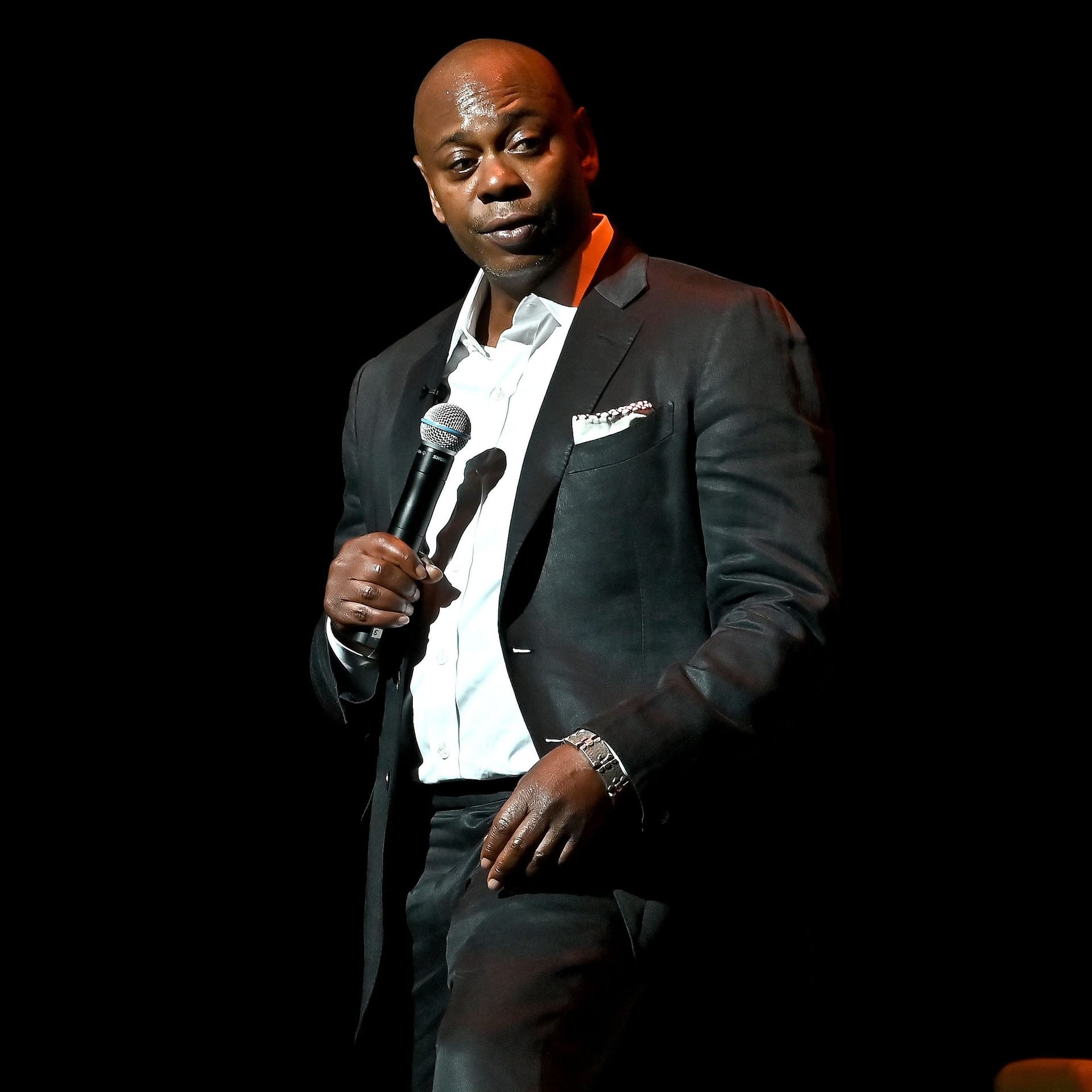
1:00This week, some of the most famous comedians on earth are taking the stage at what's been described as the world's largest comedy festival. We're talking Dave Chappelle, Louis C.K., Bill Burr, Kevin Hart. The list goes on. And it's all happening in an unlikely venue. They were asking me to go to the Middle East soon. What? Where? Why? Saudi Arabia. Is it just randomly you both go to Saudi Arabia? A lot of comics are going. Really? It's a big festival. I will be doing it at the Riyadh Comedy Festival very soon. Get your tickets! Get your tickets! At the first ever Riyadh Comedy Festival in Saudi Arabia's capital city, comedians from around the world are performing at the invitation of the Saudi government.
1:49And some people aren't funny at that funny. We're back with a look at a comedy festival in Saudi Arabia that has quickly become a cultural flashpoint. Don't get me started about the Riyadh Comedy Festival. All these huge acts were offered ridiculous amounts of the bloodiest money on the planet. They're going to be busting out the bone saws at this show. Oh my God! From the BBC, I'm Tristan Redmond. And today on The Global Story, how did the American stand-up world turn on itself over a comedy festival in Saudi Arabia? And why is the country's government suddenly so interested in stand-up anyway?
2:30We'll be talking to a comedian who's been roasting his fellow comics, and to the BBC's Saudi Arabia expert, who'll explain how this festival fits into a larger push to rehabilitate the nation's image.
2:52Our story starts when the organisation Human Rights Watch issues a statement just a few days before the festival is due to start on September the 26th. In the statement, the group accuses the Saudi government of using the Riyadh festival to, quote, deflect attention from its brutal repression of free speech and other human rights violations, end quote. But then American comedians start to pick up on the criticism. Guys, it's that special time of year. It's the Riyadh Comedy Festival. The comic Zach Woods lays into the festival in a TikTok video, which goes viral. And all of your favorite comedians are performing at the pleasure of Turkey Al-Sheikh.
3:36And he is the head of the Entertainment Authority over there. and he has so many people thrown in prison because they tweeted stuff he didn't like about the soccer team or whatever that there's a wing of a prison nicknamed after him. Well, there's a Riyadh Comedy Festival. I don't know if you heard about that. A few days later, the comedian Mark Maron was one of the first stand-ups to mention it on stage. I mean, how do you even promote that? Full disclosure, I was not asked to perform at the Riyadh Comedy Festival. so it's kind of easy for me to take the high road on this one. You might have heard of Shane Gillis.
4:15He's one of the biggest names who declined to participate in the festival. For the troops? Is it for the troops? Not for the troops. It's for the Saudis. For the Saudi princes? Yeah. He says he declined because of concerns over human rights and free speech in the country. But he also said they made him an offer that was hard to refuse. I should have taken the... I got to take the Saudi Arabia deal. I should have taken it. I'm washed. I'm not doing it. That is good. I admire that. Then they doubled the bag, and I was like... They doubled the bag, the princes? It was a significant bag. And one person who's been vocally calling out his fellow comics is stand-up Gianmarco Ceresi.
4:58I will say, in my mind, and you can judge me all you want for this, this is the most disappointing thing Louis C.K. has ever done.
5:12We're going to talk with Jamaka a bit later on, but first, I wanted to get a sense of how this festival came about and how surprising it is that it exists at all. Hello, I'm Frank Gardner, BBC security correspondent, but before that, Middle East correspondent. And I've been going to Saudi Arabia since 1988. Fascinating country, always happy to talk about it. Frank Gardner is a legend at the BBC for his decades-long coverage of the Middle East, and he spent a lot of time in Saudi Arabia. What was your reaction when you first heard that Riyadh was to be hosting a comedy festival? I mean, on the surface, it sounds odd because people tend to think of Saudi Arabia as austere.
5:55I mean, it executes a large number of people by sword for capital crimes. So anybody who's found guilty of murder or armed robbery or drug smuggling, they face the sword. So people tend to think it's this sort of charmless, bleak, austere country. And to some extent, it used to be a bit like that. When I started going in the 80s, I used to be based in Bahrain, and I did business across the water in Saudi Arabia. And I had a soft-topped Mustang convertible, which I used to drive across from Bahrain across the causeway into Saudi. Yeah, there's a very long causeway, isn't there? Yeah. And when it got to Saudi customs, I remember once back in the day, the Saudi customs officer telling me, close the roof up on your car.
6:40And I said, why? It's a nice spring day. It's sun and shining. What's the reason? And he wouldn't give it or wouldn't give it. And I said, come on, I'll close the roof up, but you've got to give me a reason. And he said, you're smiling. You're laughing. You're happy. You're enjoying yourself. That has now changed completely with the ascent to power of Crown Prince Mohammed Salman, who is determined to make Saudi Arabia a much more pleasant place where there is entertainment, cinemas. Women can drive. Men and women can associate freely within reason. And you can feel it. It's palpable. People are happier.
7:18They are openly smiling. MBS, as he's called. He actually gave a speech some years ago saying, you know, for 40 years, we followed the wrong path. We've tried to almost compete. I don't know if he said it in so many words, but essentially, that's what Saudi was doing. It was trying to out-religious the Islamic Republic of Iran. But he's now undone a lot of that for the better. Okay, so I mean, there is a history of a certain austerity in Saudi Arabia, as you're describing it. But is there a history of a comedy scene in any shape or form? Yeah, there is. I mean, prior to the internet, most people in the Middle East tended to watch Egyptian soap operas.
8:00But Saudi Arabia does have its own homegrown comedy scene. and one of the better known comics is somebody called Fahad al-Buthiri, who I met in 2013 in Riyadh. But he had these immensely popular eight-minute reels that would run on YouTube and elsewhere. Saudis loved them. They would poke fun at a lot of things. He had this scene where, for example, the Saudi tourist is in Manhattan. And I love you. And he's saying, oh my God, it's Mickey Mouse. I'm so happy to... What this? This is your wife? He starts getting very upset because Minnie Mouse is wearing a short skirt and he's shouting at him, He's very good at being able to laugh at Saudi culture.
8:54Is he performing at the festival in Riyadh? I haven't seen his name. I don't know. He's kind of disappeared off a lot of the scene. He got arrested in 2018. He was basically arrested in Jordan and brought back. He hadn't done anything wrong, but he had married somebody who was a women's rights campaigner and the Saudi authorities did not like that. And he divorced her in 2018. Well, when Mohammed bin Salman comes to power in 2017, it seems like Saudi Arabia has a bit of an image problem. How does MBS set about trying to overcome that? Okay, well, in 2017, MBS makes his move. He basically carried out a kind of bloodless coup, and he is all-powerful.
9:42But with that power comes the ability to drive through the socioeconomic changes that he's determined to do. And one of the very popular things that MBS has done is to get rid of, or to at least muzzle, the people called the Mutawwa 'een, the religious police, the Committee for the Prevention of Vice and Promotion of Virtue. These are people who drive around in vehicles, whacking women on the ankles and telling them to cover up. They would drive around and they would stop couples in the street demanding to see proof that they were married. I mean, to some extent, they are still there, but they don't have the power they used to.
10:20And instead, Saudi Arabia, under MBS, has poured its efforts into making it a much more normal society. He, I think, is trying to put Saudi Arabia on the global map so that it's not just one big glorified petrol station. Then, the big inflection point. Breaking news on the investigation into the death of the Saudi journalist Jamal Khashoggi. Let's just go... The murder of Jamal Khashoggi. Good morning. Saudi Arabian journalist Jamal Khashoggi entered the Saudi consulate here in Istanbul, Turkey last Tuesday. He was strangled as soon as he entered the building by a team of Saudi assassins who then dismembered his body.
11:02Saudi journalist who was lured to the Saudi consulate in Istanbul and then he was suffocated and dismembered. Now, the CIA said they think it's most likely that MBS, even if he didn't order it, he would have known about it. The damning conclusion of the declassified intelligence report is that Saudi Arabia's Crown Prince Mohammed bin Salman, the country's de facto leader, approved an operation in Istanbul to capture or kill the Saudi journalist. MBS has absolutely denied it. There has never been any hard evidence to link into it. But there have been convictions in that murder. And how close were the people who were convicted to MBS?
11:44So 15 Saudi government agents flew to Istanbul on government planes. You don't get to do that unless you've got authority. Nobody does rogue operations in the Gulf. You know, there was enormous timidity when it comes to not doing anything unless it's signed off from above. So this led to really a pariah status in the West for MBS. Only that year, in the first half of 2018, he'd been given a red carpet rollout in London, in Paris, in Hollywood. He was hanging out with Dwayne The Rock, Dwayne Johnson. All of that, at a stroke, disappeared because it was the most... Even though it was just one person, it was the grisly nature of it.
12:32and it cost Saudi Arabia a huge amount in terms of reputation. I think it's important to point out here in the context of the comedy festival's story in which there are quite a few American comedians taking part that Jamal Khashoggi was a legal resident of the United States at the time that he was killed. Is that right, Frank? As far as I know, yeah. He was basing himself in Virginia but spending some time in Istanbul. He had an American accent. He'd spent a lot of time in the US. He had friends there. And he was a regular columnist for The Washington Post. Well, Frank, the latest attempt to move on from that austere past, as you describe it, is this comedy festival.
13:14But there's been a huge backlash amongst comedians, even from human rights organisations like Human Rights Watch. Can you describe to me what their concerns and criticisms have been, please? Well, their concerns are that Saudi Arabia does not tolerate free speech. And it's true, it doesn't. There are no elections per se. I mean, there might have occasionally been municipal elections, but you can't vote a government out of office. It's the only country in the world that is named after one ruling family. It would be like the UK being called, you know, Winsoristan. It's just absolute power rests with MBS and his father, the king, the monarch.
13:55and yeah, human rights are a real problem there in the sense that a lot of judicial decisions are taken at the arbitrary whim of a judge and there have been horrific stories of people who've been condemned to death and then languishing on death row and then suddenly being drugged on the day of their execution and being dragged out and having their heads chopped off. But when it comes to free speech, people have been locked up for tweets, for even the mildest, not even criticism, but suggesting that it would be nice to know how the state budget is being spent or something to that effect. It's something I've always found very odd because let's make no mistake about it.
14:40MBS, Crown Prince Mohammed bin Salman, is hugely popular in Saudi. Young women especially really like him. They see in him hope for the future. and so in Saudi you've got this paradox where on the one hand you've got the lifting of social restrictions, you've got massive freedoms compared to where it was and yet you've got a clamping down on any kind of political dissent.
15:21Hi there, I'm Asma Khalid. And I'm Tristan Redmond. And together we're the hosts of the Global Story podcast from the BBC. For those of you who might be new to our show, we here at the Global Story dive deep every weekday on one big story at the intersection of where the world and America meet. And you can now watch the Global Story on the iHeart app. Catch every brand new episode every weekday. Just tap into iHeart to start watching. And we hope you enjoy the show. What do Beatles member Sir Paul McCartney, YouTube megastar Mr Beast and former Facebook executive Sheryl Sandberg all have in common?
15:59They're all being discussed in the new season of Good Bad Billionaire, the podcast which explores the lives and fortunes of the world's super rich. That's Good Bad Billionaire from the BBC World Service. Listen now and search for Good Bad Billionaire wherever you get your BBC podcasts.
16:18Gianmarco Sareci is a New York City-based comedian. But I called him during his tour at his hotel in Rochester, New York. And I asked him what surprised him when he first learned about this comedy festival in Saudi Arabia. I think what jumped out was how massive it is. the idea of a festival in Saudi Arabia, no less, that included almost the entire upper echelon of comedy felt very shocking. Were you invited? No, I was not. What would have been your response if you had been? Oh, if I had been invited? Listen, if I got an offer that said it sounded like the low end, which I'm going to modestly assume would be my offer if I got it would be 80, 85 ,000.
17:11I'd go, whoa, oh my God. I'd tell my girlfriend. And then I would do a little Googling. I would go like, okay, who's paying for this directly? The part that I think would have flagged it immediately for me is the content restrictions, which have you seen those? So I have seen some of those restrictions. Could you run us through those, please? Yeah, let me pull up. I have the exact ones right here.
18:01any religion, religious tradition, religious figure, or religious practice.
18:08Strict. And particularly for comedians, the hypocrisy feels so brutal because so much of what we do is criticizing and making jokes about the powers that be, and then you're literally saying, oh, but I can be bought. My silence can be purchased. Since the news of this festival has kind of started trickling out over the last few weeks, the comedians who've signed up to go and perform have been getting all sorts of backlash. Sure. And I just wondered what your response would be to some of the things that they have said to defend their participation. So I'm going to give you a few examples. Sure.
18:51So Pete Davidson from Saturday Night Live. I just, you know, I get the routing and then I see the number and I go, I'll go. Okay. Yeah. You know. Chris DiStefano said he was encouraged by his fiance to take the money. I didn't want to do it either. I was, I was contemplating. I was like, maybe not. And then Jasmine was like, well, we're getting married. We got the house. Who knows? We'll probably sell it again. I was like, I can't do it. And then she was like, you're going to take that money. And I was like, okay. And then I'm going to do one last one. And Bill Burr said, these guys, they're just like us.
19:24I don't speak the language, but I get it. Everybody's just regular. They're dressed different, but they're regular. And we're driving around. And then I'm just like going like, I thought this place was going to be like really tense. And I'm thinking like, is that a Starbucks next to a Pete's coffee next to a Burger King next to a McDonald's next to a Pizza Hut? And everyone was like ridiculously excited that there was going to be stand-up comedy there. And this is what's amazing about the arts and stand-up comedy is comedians have always pushed like the boundaries. And this was like a classic case.
20:10What's your response to these defenses of participation? I think of anyone Tim Dillon was the most, even though he was ultimately disinvited, he just said, I was paid enough money to look the other way. I'm the only honest person just going to do it. Everyone else is going to have a million. They're going to go, well, actually, the Middle East is more progressive now and he's trying to make some change. No, no, no, no, no, no, no, no, no, no. I'm being paid a lot of money to not care about what they do in their country. And I would rather hear that than hear like post hoc reasoning. I'm sure, per Bill Burr's analysis, I'm sure it was cool.
20:51I'm sure it was interesting. I think one of the coolest parts of being a comedian is going to other countries and seeing how they respond. But who are you being paid by and what are you being used for? And I think this art form is exploding in popularity. I certainly feel like with the advent of social media, we're in such unprecedented territory that the government of Saudi Arabia wants to hire 50 comedians to contribute to a rebrand globally. bully. That's a big change. We have new questions to ask ourselves. You mentioned earlier on Tim Dillon, who was supposed to be performing and then pulled out.
21:37Is that right? Could you tell us the story of what happened there? He, at least he said on his podcast that they kicked him off because on his podcast, He was doing an over-the-top mocking of certain flaws with Saudi Arabia's society. And he said, they heard what you said about them having slaves. And I said, I was being positive about it. I was defending them. He goes, well, I know that. I know you were defending them. I said, I was defending them for having slaves. I literally said slaves are probably hard workers and for the most part agreeable. Apparently this got to the people in Saudi Arabia and they were unhappy about it.
22:31They're huge fans of comedy over there. And just was going really hard in the paint on his own podcast. And that got him disinvited, at least according to him. Tim's always someone where it's like, there's some parts that make me angry. And there's some parts that go, as a comedian, I go, well, got to respect it. You let yourself get fired from the gig, you know? Okay, so he was kind of let go rather than withdrawing. Could you tell us about some of the different characters on the circuit who you've heard about who were offered a gig in Riyadh and then declined to take it and what their reasons were for doing so?
23:09I mean, Shane Gillis, he went on his podcast and he said he turned it down. He said, you know, you don't 9-11 your friends. And so for him, I guess, 9-11 was the deal breaker. Can I ask you about the 9-11 thing? Because I keep seeing 9-11 cited. The implication is that by performing in Saudi Arabia, you're performing for a government that was somehow involved in 9-11? Because I guess that's the thing that I just wanted to query because that is an unproven allegation. uh, allegation. But it certainly, it certainly is a belief that a lot of, uh, Americans and, and American comedians have discussed or talked about.
23:56And again, even if I were to go so far and say, uh, it's, it's been shown that there's zero connection. You would certainly joke about the perception of a connection. If you are so scared that you don't even explore that comedic opportunity to be crass, to, to take all the morality out of it and just, go, you're not going to make a joke about that? You're not going to tell a joke about the elephant in the room? That's where I go, you have sold out. I mean, I wonder if you think that the Saudis, in some ways, have kind of maybe bitten off more than they had bargained for here, in the sense that there is something about the inherent nature of comedy, that it is often very political.
24:48And I wonder if you think that maybe this was a miscalculation if the Saudi organizers thought they were going to get an apolitical event. We'll see. It's too early to tell. It's too early to tell. I mean, listen, for all I know, and this is like the super idealist version that some people do believe, you know they they see jessica kirsten perform a jewish lesbian woman and maybe she doesn't talk about some of that stuff on stage but they google her and they look up and they go oh i love this person oh they're gay oh that contributes to a swell of of more pro lgbtq thinking and movements and rights and blah blah blah maybe maybe i i just think it's too early to know what the the impact is but i definitely think these are new conversations about the art form and um i i do think it's comedy's job to not be something you can just box because then we're just propagandists for hire.
26:03And I don't think that's good.
26:16Are you familiar with a term that's known as the Streisand effect, Frank? No. So the Streisand effect, now I'm sure I've got this, it's a very kind of pop cultural reference. And I'm sure I'll get the details wrong. But it goes something like this. When Google Earth published, you know, a kind of complete picture of the Earth online or thereabouts, Barbara Streisand requested that the location of her house be blurred, because she did not want people to be able to see her house from in a satellite image. And of course, the first thing that happened then was everybody went on to Google Earth and tried to look at Barbara Streisand's house.
Read the full transcript
26:54And it just strikes me that maybe a similar thing is happening here, that in a rush to whitewash these kinds of concerns about alleged human rights abuses, a comedy festival like this in Riyadh has actually kind of drawn attention to them. No one was talking about human rights abuses in Saudi Arabia at this particular moment. And yet all of a sudden, it's a pretty hot button topic. I just wonder what you think about that and whether you think that this was a miscalculation to inadvertently bring these concerns to the fore again. I think they may well be regretting their decision possibly to do this.
27:35Look, I'm sure it'll be hailed as a success. Siding Arabia always throws a lot of money at these events. And so, you know, it will go almost seamlessly, I'm sure. But yeah, you're right. There is a paradox there. Frank, thank you so much. Thank you.
27:57That was Frank Gardner, the BBC's security correspondent. And earlier, we heard from Gianmarco Sareci. Gianmarco's latest stand-up special, Thief of Joy, was just released on YouTube. Today's episode was made by Zandra Ellen, James Shield, Annie Brown, and China Collins. And it was engineered by Travis Evans. That's it for The Global Story. See you on Monday. Cheerio.
28:48world and America meet. And you can now watch the global story on the iHeart app. Catch every brand new episode every weekday. Just tap into iHeart to start watching. And we hope you enjoy the show.
From the publisher
This week, some of the world’s most influential comedians have travelled to Saudi Arabia, for comedy festival organized by the government of Crown Prince Mohammed bin Salman. The bill for the Riyadh Comedy Festival includes superstars like Aziz Ansari, Dave Chapelle, Kevin Hart and Louis CK. And the event has attracted significant backlash, with critics accusing the participating comedians of helping Saudi Arabia to “comedy-wash” its record on human rights and free speech.
We speak to the comedian Gianmarco Soresi, who has been highly critical of peers who chose to play the festival, and from BBC security correspondent and resident Saudi Arabia expert, Frank Gardner.
Producers: Xandra Ellin and Valerio Esposito Executive producers: James Shield and Annie Brown Mix: Travis Evans Senior news editor: China Collins