
In short
How prediction markets (e.g., Polymarket, Kalshi) grew into a major US business by monetizing “betting exchanges,” exploiting gaps in gambling laws, and expanding from politics and sports to crypto, celebrity, and geopolitics—while raising concerns about insider trading, unequal payouts, and risky marketing.
Guests
Mitch Labiak, senior business journalist at the BBC; he reports on how prediction markets work, who uses them, and the controversies.
Key claims
Young men are the dominant users (poll: 26% of US men 18–24 vs 14% general population). Profits concentrate heavily (Wall Street Journal: 67% of Polymarket profits go to 0.1% of accounts). Insider trading allegations include a US special forces soldier arrested for betting on Nicolás Maduro’s capture; Polymarket and Kalshi deny wrongdoing. Influencers may not have to disclose risk under CFTC rules.
Notable examples
Cameron George (Utah, 26; crypto/prediction-market influencer) uses markets to track crypto sentiment; Trump vs Harris election predictions; bets tied to the Maduro operation; suspicious Iran-war timing bets; Polymarket’s “Situation Room” bar in Washington, DC.
Written by AI. May contain mistakes. Listen to the episode to check what was said.
Chapters
Tap a time to open that second in VOUnderstanding Prediction Markets
1:03 to 1:56
Exploration of prediction markets and their implications.
“Welcome to the world of prediction markets, where you can bet on anything from the silly, is the earth flat, who's the sexiest man alive, to the sinister.”
Young Men's Engagement in Prediction Markets
1:56 to 4:00
Discussion on the demographics of prediction market users, particularly young men.
“Like, I like the design you've got here and the wood panelling.”
Cameron George: A Case Study
4:00 to 5:56
Profile of a young trader using prediction markets to achieve financial success.
“Someone bet millions of dollars that Trump would praise Allah on Easter.”
The Evolution of Prediction Markets
5:56 to 7:51
Historical context of prediction markets and their emergence in the US.
“There's a prediction market for pretty much everything.”
Regulatory Landscape and Market Worth
7:51 to 10:12
Examination of the regulatory environment and financial worth of leading prediction markets.
“established way for you to make bets on sports or on politics.”
Betting on the Unpredictable
10:12 to 13:00
Overview of the types of bets available on prediction markets and their implications.
“How much are Polymarket and Calci actually worth and how much is that worth changing?”
User Behavior and Market Dynamics
13:00 to 14:00
Analysis of user behaviors and the distribution of profits in prediction markets.
“But it also begs the question as to why they run those geopolitical markets.”
User Habits in Prediction Markets
14:00 to 15:43
Explore how user habits are evolving in prediction markets and the impact of professional bettors.
“But they did tell us that they no longer charge a fee on those markets.”
Insider Trading and Its Implications
15:44 to 17:56
Discuss high-profile cases of insider trading in prediction markets and their consequences.
“Well, so some of them are, as we say, very sophisticated.”
Geopolitical Concerns of Prediction Markets
17:57 to 19:27
Analyze the potential influence of prediction markets on real-world events and decisions.
“Following on from that, in the run up to the Iran war, you had several suspicious bets that were made around when the Iran war would start on Polymarket.”
Show all 13 chapters
Attraction of Young Men to Prediction Markets
19:28 to 22:38
Investigate why young men are drawn to prediction markets and the cultural factors involved.
“So in February, Cauchy came out itself and said that it caught a few insider traders on its platform.”
Risks and Realities of Prediction Markets
22:39 to 25:36
Examine the risks of participating in prediction markets and the implications of unregulated betting.
“And then this becomes this sort of meme of, you know, that's what you're doing on these prediction markets.”
Personal Experiences with Prediction Markets
25:37 to 26:44
Hear personal insights from participants in prediction markets and their views on the system.
“And I think a novice coming in needs to understand that there is nothing stopping any of these, right?”
Transcript
Automatic transcript. May contain errors.0:00This BBC podcast is supported by ads outside the UK. Hi there, I'm Asma Khalid. And I'm Tristan Redmond. And together we're the hosts of the Global Story podcast from the BBC. For those of you who might be new to our show, we here at the Global Story dive deep every weekday on one big story at the intersection of where the world and America meet. And you can now watch the Global Story on the iHeart app. Catch every brand new episode every weekday. Just tap into iHeart to start watching. And we hope you enjoy the show.
1:02This is conflict as financial opportunity, or even entertainment. Welcome to the world of prediction markets, where you can bet on anything from the silly, is the earth flat, who's the sexiest man alive, to the sinister. Advocates of these markets say they make more accurate predictions of what's likely to happen in the world than politicians or polls or the media. Their critics say they're enabling insider trading and encouraging people to gamble money they don't have. From the BBC, I'm Tristan Redman. And today on The Global Story, the truth about prediction markets.
1:56Nice to meet you. How's it going? Yeah, it's going all right. It's very exciting. to be in a studio like this. Like, I like the design you've got here and the wood panelling. The room where it happens. Mitch Labiak is a senior business journalist at the BBC, and he's been looking in depth at prediction markets, how they work, who's using them. So I've been looking into this for several months, and I suppose I want to get a sense of, in the first instance, who was using them. And it turns out to be overwhelmingly young men. So just over a quarter of American men aged 18 to 24 say they've used a prediction market in the last month compared to 14 % of the general population, according to a poll by the American Institute of Boys and Men and Ipsos.
2:38There's also sort of a lot of circumstantial evidence that young men are the key users here. You know, if you look at Logan Poole and sort of his podcast and the fact that it's sponsored by Polymarket, if you look at sort of forums that are typically used by men, such as on discourse and on Reddit, it, having intimate discussions about how to get around geo restrictions. So how you can use these apps in other countries, organic content, you might call it about it. You've been speaking, Mitch, haven't you, to some young men in particular, who've been using prediction markets. What have they told you about their experiences?
3:20Yeah. So we're focusing on just one guy in particular, because I feel like he really helps tell the story he's a young man 26 year old called cameron george lives in utah big online presence first of all he's got 388 000 followers on instagram almost all of his videos are about trading finance prediction markets crypto all of these things this is what he's very interested in boys i just hit an absolute slapper on xrp entered at 306 went up to 320 i still got two other entries, we're going to be eating. Bitcoin's going to go to 150 ,000, XRP's going to go to five, Ethereum's going to go to three.
4:00Someone bet millions of dollars that Trump would praise Allah on Easter. You've seen the post by now, it happened. He's very charismatic when he's talking about these videos and he certainly seems to present this image of someone who's living this big lifestyle with his lime green sports car and his pictures of himself by hotel pools and his five kids. Of his own admission, there's a sort of lifestyle that he's aiming towards. He told me quite candidly, he used to stack shelves in Walmart, and now he is a full-time crypto trader. Oh, wow. One of the ways he says that he is able to do that is using prediction markets.
4:38I've been doing this for five years going on, and I've been making videos since I was 13. So I've been in the online money-making space for quite a bit, but yeah, crypto has really taken over. When 2020 went down and everybody was hiding in their houses, I was buying XRP and a couple other coins, and they've done pretty well over the years. What kind of things is he betting on on prediction markets? He mostly, as he says, uses prediction markets to track the price of cryptocurrency. So if you're on a prediction market, you can make bets on anything, but you can also see how other people are betting.
5:09That's the sort of idea of it, because it looks, if you were to look at the app or the website, it looks like a stock market. I trade crypto, so I am able to go on this, you know, polymarket call, she all the big ones, and you can see exactly what the public's thinking. And it's a little bit different than, you know, putting your opinion out there. I mean, you could post about it all day. You could say you think this. But I feel like it's kind of a unique edge when people are putting their money where their mouth is, you know. Whatever world event or whatever price target it is in crypto, you can kind of see what the public is thinking.
5:41He sort of tracks where the sentiment on the prediction market is going to then buy or sell his crypto. But in terms of why you would want to do that, prediction markets are a great way of getting a sense of sentiment, a sense of what people are thinking, a sense of what people are feeling. In his own words, he said, you know, this is everyone's always had an opinion, but this is the first time in history where people literally put their money where their mouth is. There's a prediction market for pretty much everything. And it is interesting to see where that money is going. So for him, that's what's kind of eye-opening about it and what's exciting about it.
6:14Okay, well, the market you're describing here sounds quite sophisticated at this point. But let's go all the way back to the beginning and do the basics. Where did these prediction markets come from? How did they actually start? The two biggest ones are Polymarket and Kalshi. But they've existed sort of a long time before that. I mean, you know, there were prediction markets in the US purely for academic purposes in the 80s. We've also had prediction markets in the UK for decades, but we don't call them prediction markets. We call them betting exchanges. But the idea is exactly the same. If you sort of have a market and you put your money where your mouth is, as it were, then it's going to be more accurate than an opinion poll.
6:58And for academic purposes, academics found this very interesting. So it was ran sort of within academic circles. But prediction markets or betting exchanges, as they're known in the UK, take this idea and sort of monetize it. What makes Polymarket and Kalshi and their rivals different is this realization that you can use prediction markets to get around, for lack of a better phrase, betting restrictions in the US. So in the US, in most states or in many states, gambling is quite heavily restricted, but prediction markets are not classed as gambling in the US. And so you have this huge demand for American consumers for gambling and for sports betting and for politics betting and the likes of Polymarket and Kalshi taking advantage of that because before they existed, essentially, you couldn't really make, there was no established way for you to make bets on sports or on politics.
7:55Well, Mitch, I mean, that's my preconception of gambling in the United States. They're kind of quite highly regulated, if not completely illegal practice. You know, I think about the Sopranos and I think about Christopher Moltisanti, Tony Soprano's nephew, running his illegal sports book or his illegal poker games. How did all of this start to change? When did Polymarket and Calci erupt onto the scene and somehow ride the wave above these gambling laws? Of course, they will say, you know, they follow the laws that they are under and they sort of follow the regulations that they're required to in any sort of given jurisdiction.
8:37But to answer your question, the demand comes from a rising demand for sports betting, but also a rising demand for politics betting in the US. I suppose that if you wanted to point to a catalyst, a lot of people point to the 2024 election. Thank you very much. Wow.
8:57Prediction markets were predicting that Donald Trump would win. And indeed he did when the polls were predicting that Kamala Harris would win. This was a movement like nobody's ever seen before.
9:12and frankly this was I believe the greatest political movement of all time there's never been that was the first time that people saw I mean a lot of it was an advertising campaign as well you really saw that you can make bets on um on on the election so this helped to cement the idea that prediction markets are more accurate but also advertise the fact that you can indeed make political bets using prediction markets, whereas, as you say, under gambling laws, you cannot gamble on politics. The election of Donald Trump himself was quite helpful. The US Democrats before Donald Trump was elected were and remain quite opposed to prediction markets being as free as they are, whereas Donald Trump's administration has had a more lax attitude towards it and has allowed the Commodities Futures Trading Commission to carry on regulating them, which has allowed them to not be classified as gambling, which is why they can operate in all 50 states.
10:12How much are Polymarket and Calci actually worth and how much is that worth changing? They are worth, according to their most recent valuations,$22 billion in the case of Cauchy and 9 billion in the case of Polymarket, that's US dollars. So this is big money. And these are sort of companies that a few years ago barely existed and barely had anything like this sort of numbers of trades that's going on their platforms at the minute. Well, if that turning point for them was based on bets on politics, how's it expanded since then? Like what's the full range of things that you can bet on on one of these prediction markets?
10:51I mean, you can bet on anything. I think in the UK, sports is where most of the gambling happens. And that's true in the US. But Polymarket and Kelsey have also taken advantage of the fact that, you know, if you can run a market on sports, if you can run a market on politics, then you can run a market on anything. So there are markets on when Jesus Christ might return. There are markets on when or if Kim Kardashian might pass the bar. There are markets on when Taylor Swift might get married or what might get said at the Oscars or how many times Elon Musk might tweet in a week. So they decide what markets go up and they decide what markets come down.
11:24But when I say you can bet on anything that they choose to run a market on, you can bet on anything they choose to run a market on. If they choose to run a market on Kim Kardashian, you can bet on it. If they choose to run a market on anything else, you can bet on it. They don't particularly care who wins or loses. They just want people to bet on their particular market. They take a cut of any bet. And typically, what would their cut be in terms of percentage? Oh, tiny, like less than a percent per bet. But where this becomes controversial are the markets on geopolitics. So you also have markets on the Iran war and on the Ukraine war and on the conflict in Gaza as well.
12:17The Global Story
12:31and America meet. And you can now watch the global story on the iHeart app. Catch every brand new episode every weekday. Just tap into iHeart to start watching. And we hope you enjoy the show.
12:48Polymarket make a point of saying that on their geopolitical markets, they don't take any cut. Now, part of this might be in response to sort of controversy surrounding some of those geopolitical markets. But it also begs the question as to why they run those geopolitical markets. And the only benefit for them would therefore be that it once again, it gets people on the platform. So you sort of come for the exciting and arguably quite gruesome sort of bets on what might happen in the Iran war, but then you stay for the bets on sports and the bets on sort of celebrity culture and the like. Okay, explain to me why you wouldn't take a cut on geopolitical bets because it's considered to be crass or something like that?
13:33It's an interesting one, isn't it? Because some of this has changed even in the last few years. So it used to be that Kaoshi would offer markets on these geopolitical events, but they no longer offer bets on war, terrorism, or assassination. But they did used to offer bets on these sorts of topics. Polymarket has been much more forthright about it. They told the BBC that, you know, removing these markets doesn't have any impact on the events themselves. But they did tell us that they no longer charge a fee on those markets. So we have individuals like Cameron who are placing a relatively small number of bets.
14:14But as the market's becoming more sophisticated, how are the habits of the actual users changing? The short answer is that the vast majority of winners are a very small percentage of people who use the market. So one Wall Street Journal analysis found that 67 % of profits on Polymarket go to 0.1 % of accounts. what that tells you is that while you might have people like cameron or sort of what you might call day traders amateur traders just sort of having a go at this thinking it's a bit of fun the people who are really winning are people who are as you say much more sophisticated bettors making the vast majority of the profits on the platform i mean in a way this is this is no different from what happens on the on the stock exchange in that you know the stock exchanges you have day traders but the sort of real market movements are made by pension funds and hedge funds.
15:08But what's different about it is the way that these prediction markets are marketed to young men is quite a fun way to get involved in gambling, but the real money is going towards the hedge funds, who in the word of one commentator I spoke to said, they're essentially eating their lunch is what's happening there. I mean, that statistic you just gave about 0.1 % of accounts winning most of the money. I mean, that is pretty extraordinary. So there is a promise of big dividends, but in fact, really, the money's been concentrated in very few hands. Who are those hands, though? Well, so some of them are, as we say, very sophisticated.
15:47They're using sort of AI bots and sort of teams and everything else to, at least according to the Wall Street journals and others reporting on this, they're using quite sophisticated teams to make these bets. I suppose, once again, in the same way that a sort of hedge fund or some other kind of fund might bet on the stock market. So, yes, the professionalisation of the industry, but also the other side of it, which is growing evidence that some of the people who are winning are insider traders. Well, let's talk a little bit more about that, because it has been making a lot of headlines in recent months.
16:22What's actually been happening? One of the most high-profile examples, the story starts with the capture of Nicolas Maduro. A remarkable statement by President Trump on a social media post saying that the U.S. has carried out a large-scale strike against Venezuela and its leader, President Nicolás Maduro. This comes a few hours after the U.S. hit Venezuelan military targets in Caracas, the country's capital. A social media page run by the White House posted this video. It shows Mr. Maduro entering the Drug Enforcement Administration headquarters in New York. Several suspicious bets were made in the run-up to that.
17:04There was a lot of suspicion that this was insider trading. And then earlier this year, a special forces soldier, US special forces soldier called Gannon Ken Van Dyke, was arrested for an alleged bet that he made where he won$409 ,000 on Polymarket about the removal of Venezuela's ruler. Special Forces soldier charged with betting on the capture of Nicolas Maduro, making his first court appearance today in North Carolina. Prosecutors say he used classified information to place bets on this Polymarket betting site while helping to plan and execute the operation to take Maduro. He pleaded not guilty to the charges, including the use of confidential government information for personal gain.
17:50And Polymarket said at the time that insider trading has no place on its platform. That's the most high profile example, certainly on Polymarket. Following on from that, in the run up to the Iran war, you had several suspicious bets that were made around when the Iran war would start on Polymarket. and several of those accounts won hundreds of thousands of dollars. The U.S. Senator Chris Murphy said at the time that it was insane that people around the Trump administration are profiting from war and death. These are fundamentally corrupt markets. They are rife with insider trading and they offer incredibly perverse incentives, especially inside government, for government actors to push official decision making towards their financial interests.
18:49A White House spokesperson told us President Trump has been crystal clear. While he seeks a strong and profitable stock market for everyone, members of Congress and other government officials should be prohibited from using non-public information for financial benefit. Do they actually start to have an influence when they become as big as they are on real world markets, say the price of oil or wheat or whatever? Do the prediction markets have the power to start to influence those things as well? I mean, this is precisely the concern around their geopolitical markets, is that they have the power to influence real world events.
19:26This is precisely why the US Special Forces soldier was arrested, is the concern that by making these bets, you could, for example, signal to the Maduro administration that a special operation from the US is coming. That is one of the big concerns around insider trading on these platforms, that in going for a more accurate price, because you have the information, you're sort of suggesting what is very likely to happen, or in the case of Nicolas Maduro, did happen. So those are the high-profile examples. You've got other examples as well. So in February, Cauchy came out itself and said that it caught a few insider traders on its platform.
20:10One of them was a gubernorial candidate and the other one was the editor of some of Mr. Beast's videos. So they were kicked off of its platform, but there were no legal charges in those cases. For people who know their way around prediction markets, are these markets deemed to be more susceptible to the possibility of insider trading than other forms of gambling or other forms of stock market trading? Or is the risk the same? It's an interesting question. Certainly, Kaushche made the point to us that insider trading happens on all markets, which is certainly true. To take the example of President Trump's administration once again, there was evidence, and the BBC has written about this extensively, of suspiciously timed bets also on the stock and commodities market in the run-up to certain announcements regarding the Iran war.
21:03Once again, the Trump administration has denied this and said that it is opposed to insider trading within its administration. Mitch, you've spent some months now deeply ensconced in this whole world. What's it told you about the state of the economy that we live in these days? Yeah, I think one of the best phrases we came across was from the American Institute of Boys and Men, where they referred to economic nihilism. So this feeling that, you know, there are no jobs available for me, the economy is not going to get better, you know, the world is in a pretty dark place, so I might as well just sort of, you know, throw my money on these markets, which sort of almost poke fun at the state of the world.
21:46That's the sort of fear from sort of some people who worry that young men are being, young men in particular, being attracted to these platforms by, as you say, the manosphere and the sort of the online mail culture. So why are some men so drawn to this? Do we have any sense of that? Yeah, I mean, another professor we spoke to, Elvira Bolat from the University of Bournemouth, sort of made the point that prediction markets sort of tickle these boxes for young men who might spend a lot of time online. So there's the sort of the finance bro element. There's the sort of meme culture element. There's the cryptocurrency element.
22:22There's the straight up gambling element. All of these are sort of big parts of online mail culture in the manosphere and things that might be spoken about online within the manosphere. and prediction markets tick all of those boxes. And Polymarket definitely seem aware of this. So there's a meme which we refer to in our piece which sort of summarises this all called monitoring the situation which begins as an image of Jeff Bezos, the founder of Amazon standing with a headset looking extremely muscular in a black t-shirt and the caption reads the masculine urge to monitor the situation. And then this becomes this sort of meme of, you know, that's what you're doing on these prediction markets.
23:02You're monitoring the situation. But Polymarket leant into this and opened a bar in Washington, DC called The Situation Room. It used to be an app for your phone. Now Polymarket, the popular online prediction market company, has some real estate in DC. It just opened a new pop-up bar called The Situation Room. So it was sort of the first time, you know, you could almost see what this online space would look like in a physical space in real life. And videos from the event show almost entirely men at this bar. But the point is, Polymarket is aware of the sort of the online culture and the meme culture that surrounds it and sort of leans into that.
23:37And that's evidenced by who it chooses to partner with as well. When it chooses Logan Poole to partner with, it's aware that Logan Poole is a very famous young male YouTuber turned wrestler turned boxer. He sort of hits at sort of all those demographics as well. Okay, so the marketing spin is of a commanding, masculine, decisive person placing big bets and making a lot of money. But based on what you're telling us today, there's another side to things as well. The possibility that you could lose quite a lot of money. What have you encountered in terms of people who've ended up not quite so well in this?
24:21I suppose Cameron is the main sort of person we spoke to for the story. I mean, of his own admission, his AI bot is down a couple of grand. But there are other stories of people losing, you know, quite a lot more than that. And in terms of, you know, how that contrasts with how this is all advertised, I think it's important to sort of point out at this point that under the Commodities Trading Futures Commission, influencers, when they're speaking about Polymarket and Cauchy or any other prediction markets, do not need to disclose risk, which is, critics say, is one of the big issues with how these platforms work.
24:55They say this sort of helps to normalize this idea of betting big, going big, or going home. Because quite simply, when they speak about it on their podcasts or what have you, whether they're paid to or not, they do not have to disclose risk, whereas you would do if you were speaking about gambling. And where does all this leave Cameron? Is he going to carry on using the markets? He says that the idea still intrigues him, so he's going to stick with it. But I think he has his eyes fairly open about prediction markets. He made the point that he doesn't feel that certain people should be placing money on what he calls these dumbass bets.
25:31I would describe the Wild West as complete, like, zero regulations. Like, you can do anything. Right now, if you want to onboard a million dollars into a polymarket account, there's nothing to stop you. And I think a novice coming in needs to understand that there is nothing stopping any of these, right? But the phrase he used is that he's numb to it.
25:55I suppose he's just sort of accepted in his mind that prediction markets are too big to stop. You really do see this whole system just gamified, right? It's one of those, it's like devil on your shoulder type things where it's like, Yeah, I do think it's extremely useful, but the whole gambling side of, like, there's so many bets that people are genuinely throwing probably way too much money into in terms of what they're worth. His story speaks to that phrase that Cohen used, which is economic nihilism. This idea that, you know, ah, well, sod it, the world's going to hell in a handbasket, I might as well make some money on the way down.
Read the full transcript
26:40Thank you so much, Mitch. That was really great to talk that through with you. Yeah, no, thank you so much for having me here. It's a really great show and it's really great to be on.
26:54That was Mitch Labiak, Senior Business Journalist at the BBC. And that's it for this episode. If you enjoyed the show, you can email us at theglobalstoryatbbc.com. And if you want to catch up on all the latest news headlines, then check out our sister show, The Global News Podcast. The producer today was Hannah Moore. The show was edited by Richard Fenton-Smith and James Shield and mixed by Travis Evans. Our digital producer was Matt Pintus. Our senior news editor is Chyna Collins. And I'm Tristan Redman. Thanks so much for listening. We'll be back again tomorrow. Cheerio.
28:06Transcription by CastingWords to iHeart to start watching. And we hope you enjoy the show.
From the publisher
On prediction markets such as Polymarket people are placing sometimes huge wagers on questions ranging from the sublime (‘will Jesus Christ return by the end of the year?’) to the very serious (‘will the US invade Iran?’).
Gambling is restricted across many US states but prediction markets are not classified as gambling. Their rapid rise over recent years speaks – some say – to an increasing nihilism among young men in particular, who feel they may as well try to profit from world events they cannot control.
Supporters say prediction markets are a smart way to make money. Critics say they are enabling insider trading. So what is the truth behind their rise? We speak to senior business journalist at the BBC, Mitch Labiak.
Producer: Hannah Moore
Mix: Travis Evans
Executive producers: Richard Fenton-Smith and James Shield
Senior news editor: China Collins
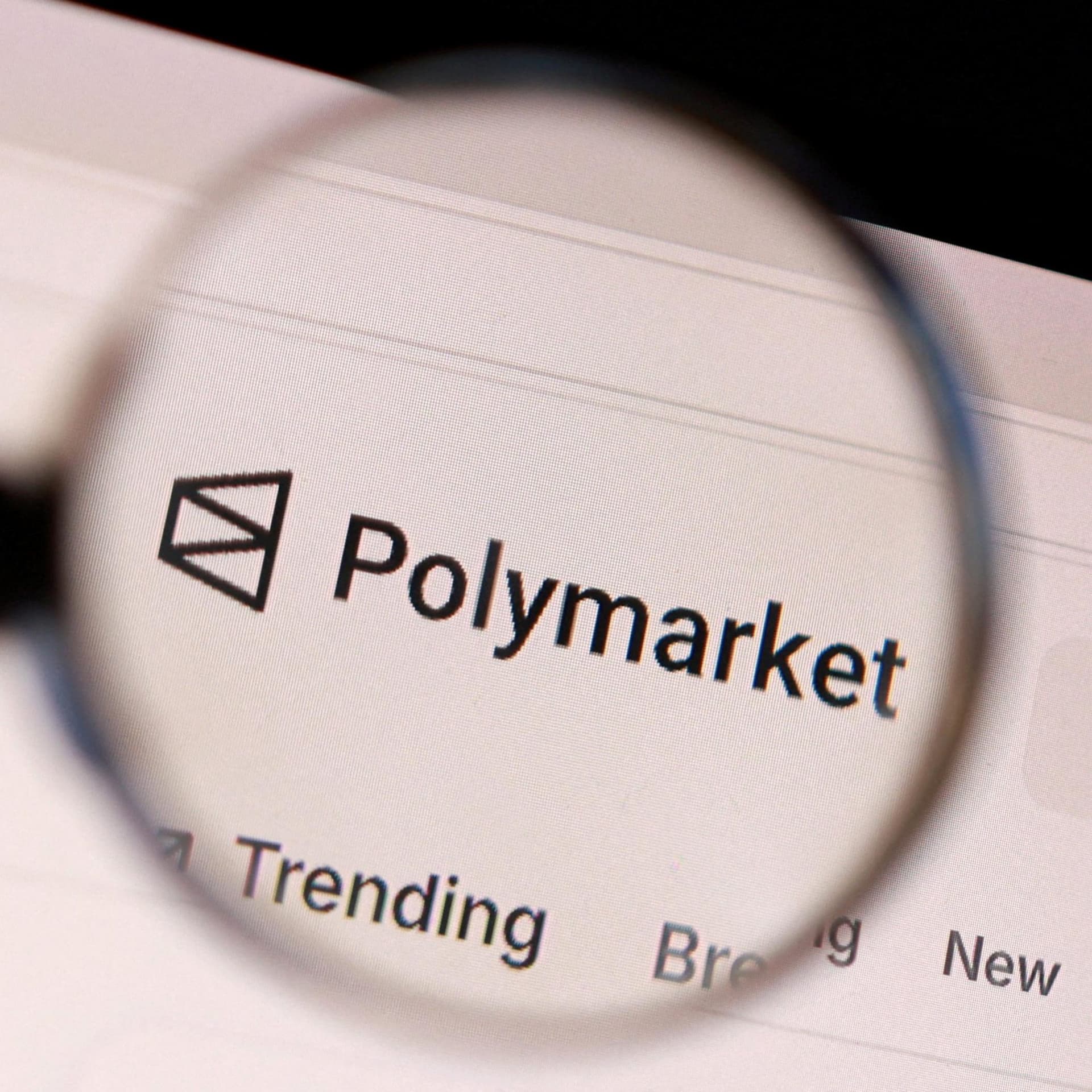
Photo: Polymarket logo appears in this illustration. Credit: Reuters/Dado Ruvic/Illustration/File Photo