In short
How Italy’s Prime Minister Giorgia Meloni became closely aligned with Donald Trump and what that relationship means for Europe and U.S.-Europe politics.
Guests
Barbara Serra, Italian journalist reporting for nearly 30 years; author/observer of Italian politics and identity; long-time acquaintance of the host.
Key claims
Meloni’s appeal to Trump stems from shared conservative identity politics and her ability to manage big male egos learned during her rise in Silvio Berlusconi’s media-driven politics. Though her party has neo-fascist roots (MSI founded by former fascists in 1946), the episode argues she governs pragmatically internationally: cooperating with the EU on immigration and backing NATO/Ukraine rather than aligning with Russia like some coalition partners.
Notable examples
her “Sono una donna…Sono una madre…Sono cristiana” remix; her 2019/2020 opposition-to-COVID rise; 2022 election fears of “fascism on the comeback”; domestic moves on birth certificates and surrogacy; Roberto Saviano fined after migration criticism; Trump calling her “beautiful” at the Gaza Peace Summit; her CPAC speech and April Oval Office warmth during U.S.-Italy trade talks.
Written by AI. May contain mistakes. Listen to the episode to check what was said.
Chapters
Tap a time to open that second in VOExploring Georgia Maloney's Identity Politics
1:02 to 2:30
Discussion on a song related to Georgia Maloney and her identity politics.
“And we'd like to hear what you make of this song.”
Georgia Maloney's Influence and Beliefs
2:30 to 4:38
Analysis of Maloney’s political influence and her core beliefs.
“And she's happy to share those thoughts.”
The Historical Roots of Maloney's Party
4:38 to 8:14
Examining the historical context of Maloney's political party and its origins.
“sovereignty, traditional conservative family values, and very much maintaining and fighting for Italy's identity.”
Maloney's Rise in Italian Politics
8:14 to 12:18
Discussion of Maloney's early political career and her relationship with Berlusconi.
“So what does she actually do when she first gets involved in politics in the early 90s?”
Maloney's Transition to Prime Minister
12:18 to 14:00
Exploration of how Maloney became Italy's Prime Minister amidst the COVID crisis.
“And a few years later, she creates Brothers of Italy.”
Italy's Response to COVID and Elections
14:00 to 15:12
Learn how Giorgia Meloni's response during COVID influenced her political rise.
“And Italy is the first, we all remember the pictures, don't we?”
Global Reactions to Meloni's Election
15:12 to 16:23
Discover how international reactions shaped perceptions of Italy's new leadership.
“Well, it's time now for the Press Review.”
Assessing Meloni's Leadership
17:14 to 21:06
Examine the implications of Meloni's policies on democracy and social issues.
“Okay, so Georgia Maloney is elected in 2022, and there is some concern from various global leaders about what she might do.”
Meloni and Trump: A Political Connection
21:06 to 22:23
Explore the developing relationship between Giorgia Meloni and Donald Trump.
“And you've had cases of high profile journalists and intellectuals who have been taken to court and then eventually fined.”
The Impact of Meloni's Visits to Washington
22:23 to 26:27
Analyze the significance of Meloni's visits to the U.S. and her influence.
“I mean, Trump likes people, you know, like he has to have that kind of like personal connection.”
Show all 12 chapters
Meloni's Historical Context and Political Influence
26:27 to 28:03
Discuss the historical context of Italy and how it might influence Meloni's actions.
“And I think that when things, if things were to escalate and you need someone to do the diplomacy, I wouldn't be surprised if she's the person that makes the call.”
Reflections on Democracy and Influence
28:03 to 28:30
Discussion on the potential influence of Giorgia Meloni on Donald Trump regarding democracy.
“Whether she would say that and whether he would listen, I don't know.”
Transcript
Automatic transcript. May contain errors.0:00This BBC podcast is supported by ads outside the UK.
0:30and your paint project started.
0:35Hi there, I'm Asma Khaled. And I'm Tristan Redmond. And together we're the hosts of the Global Story podcast from the BBC. For those of you who might be new to our show, we here at the Global Story dive deep every weekday on one big story at the intersection of where the world and America meet. And you can now watch the Global Story on the iHeart app. Catch every brand new episode every weekday. Just tap into iHeart to start watching. And we hope you enjoy the show.
1:07We want to start by playing you a song. And we'd like to hear what you make of this song. I'm Georgia. I'm a woman. I'm a mother. I'm Christiana.
1:23Barbara Serra:What's she saying? I'm Georgia. I am Georgia. I am Italian. I am a Christian, I am a mother, I am a woman, and you will not take it away from me. This is Barbara Serra. She's an old friend of mine. She's an Italian journalist who's been reporting for almost 30 years. And she's come to the studio to tell us about Georgia Maloney, the Italian prime minister. So this was a speech that she was giving where she really encapsulates, you know, a lot of the identity politics. It got remixed. I heard it everywhere. and yeah, so I guess a political message that at least resonated in the clubs. Have you danced to this song?
2:05Barbara Serra:Oh, everyone's danced to this song. Yes, yes. No matter what part of the political spectrum they're on? You hit a certain time in the nightclub evening that maybe that doesn't quite matter so much. Yes, it was just everywhere. Sono una donna. Sono una madre. Sono cristiana. It shows what she is. Whether we agree with it or not, she's genuine about her thoughts. And she's happy to share those thoughts. Good evening. Buona serata a tutti. A few days ago, Maloney published an online speech to Italian-Americans. To this day, the United States and Italy share a special bond rooted in the timeless values of faith, family and freedom.
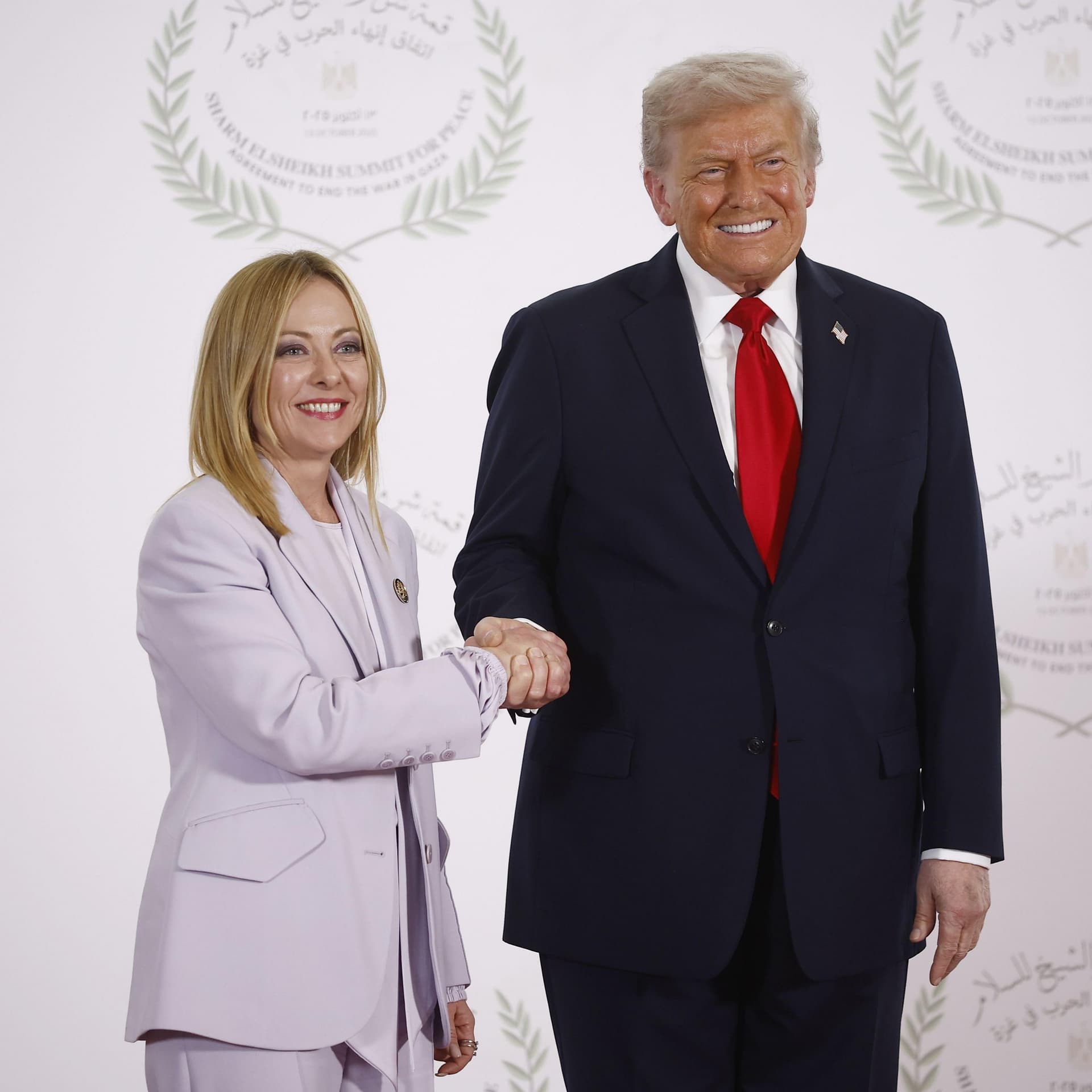
2:53She said she wanted to defend Columbus Day against an attempt to, quote, erase it. I know that there are forces that seek to divide us, to redefine our history and to tear down our shared traditions. They call it war culture. They seek to cancel our culture. They are wrong. Maloney's just passed her third anniversary in power. That's a long time in a country that UD rattles through leaders. But her most significant role could be in her relationship with the United States. Because Donald Trump is a huge fan of Georgia Maloney. At the Gaza Peace Summit in Egypt earlier this month, surrounded by prime ministers and presidents, he turned to her and said this.
3:39She's a beautiful young woman. Now, if you use the word beautiful in the United States about a woman, that's the end of your political career. But I'll take my chances. She wanted to be here and she's incredible. And they really respect her. But Maloney isn't your average hard-right leader. She doesn't fit neatly inside the populist box. From the BBC, I'm Tristan Redman in London. And today on The Global Story, who is Georgia Maloney really? And how is she shaping Donald Trump's attitude towards Europe?
4:18Barbara, who is Georgia Maloney? What are her core beliefs?
4:23Barbara Serra:Georgia Maloney is the Prime Minister of Italy, first female Prime Minister of Italy, and she comes from a party that has neo-fascist roots, right wing. And her core beliefs would be, you know, the identity of Italians, sovereignty, traditional conservative family values, and very much maintaining and fighting for Italy's identity. She is a very interesting figure for two reasons. Politically, Italy is still the third biggest country within the EU, the third biggest economy within the EU. So she does have sway there. It is also like Southern European countries at the forefront of the Migration flows from North Africa, so it's a key area there as well.
5:09Barbara Serra:But also because ideologically we are seeing a switch or a sort of move to the right. We're seeing that pretty much across the West. And here you have someone who tends to have Donald Trump's ear. And so people always talk about her as the bridge, the bridge between Europe and the United States. It seems to me that to understand where Maloney comes from, you need to know a little bit about the roots of her party after the Second World War, after the fall of Benito Mussolini. Can you explain to us, please, where her party comes from and how it became what it is today? So she starts in a party called the MSI, Movimento Sociale Italiano, which literally was born in 1946 after World War II put together by fascists.
5:59Barbara Serra:I think one of the things that makes looking at Italian politics interesting now, as well as in the past, is that it is the country that coined the term fascism. And Mussolini kind of fine-tuned it. Mussolini was an Italian dictator who took power between the two world wars. Italy was a dictatorship from 1925 until 1945, until the end of World War II. And he was a fascist leader. And it's something that has left an indelible mark on Italian society, I think, even now. So literally 1946, a year after the end of the war, this party is formed, which is basically made up of a lot of former fascists who are sort of trying to adapt fascism to democracy.
6:47Barbara Serra:And this party continues for decades. What happened, and it's very interesting that it coincided with Georgia Maloney's coming of age politically, is that in the 90s, the MSI sheds its skin and the leader of what then became Alleanza Nazionale condemns fascism as the greatest evil and creates a new conservative right wing force, which Berlusconi then allows to be part of his coalition government. And this is, you know, this was a massive shift. And it coincides with Georgia Maloney, you know, kind of becoming politically active. I think it very much, she's emblematic of that change. What's her origin story?
7:29Where does she come from? And how does she get to her political beliefs?
7:32Barbara Serra:So she comes from a very working class part of Rome. She was or her family was abandoned by the father. So she was effectively raised by her mom with her sister, who is still close to her and still plays a sideline part in her political life, which is interesting when you think of that broken home, because she is someone that very much pushes the traditional family. And she will say, well, that's because I didn't have one and that's why she appreciates its strength. So very much from, you know, a sort of poorer part of Rome, you know, probably quite a rough part of Rome as well, where maybe being a diminutive blonde girl wasn't the easiest.
8:10Barbara Serra:And she joins politics very, very quickly. So I think age 15. So what does she actually do when she first gets involved in politics in the early 90s? So she's an activist for the youth wing of the MSI. And she always mentions in her autobiography as well that, you know, where she lived was a very left wing area and quite a male heavy, quite macho environment. And, you know, the thing to remember about her is that she is the first female prime minister that Italy's ever had in a country that, you know, can sometimes be a little bit sexist. And so I think it forged her because she was in a minority.
8:47Barbara Serra:So obviously in a left-wing area, you were there as a right-wing activist. There's a word that always comes to mind when I think of her, and I don't like using it because it's sometimes used for women. She's quite scrappy. You can tell that she's quite, you know, she's quite small. She's blonde. So I think that's where she develops quite a, you know, what you still see now, a steeliness. I think she had to fight her way wherever she went. I think you can just tell that. Okay, so if you fast forward through to the 2000s, when she finds herself in government under Silvio Berlusconi, can you tell us who Berlusconi is and how that might have shaped her career?
9:25Barbara Serra:Well, arguably, maybe the fact that she could deal with Berlusconi is the reason that she gets on with Trump. You know, there's a lot of parallels between the two. So who is Silvio Berlusconi? He was a media magnet. Berlusconi was also incredibly well known and a symbol of success. For example, he owned football teams and he owned television and just a lot of other things. And it was very flamboyant, I think is the word that you would use. And he sort of created private television in Italy in the 80s, made a lot of money. and then in the 90s decided that he was going to get into politics. Italy is the country I love.
10:01Here I have my roots, my hopes and my horizons. Here I've also learned my passion for freedom and that's why I've chosen to enter the field.
10:12Barbara Serra:He is, I suppose, what you would call centre-right, always there have been huge accusations of corruption, levied at him, But he was an enormous and easily the defining political figure for decades in Italy. Now, he created this right-wing coalition where it was his party, which had various names, sort of Forza Italia, and then the Northern League, and then Alleanza Nazionale, which is the sort of like reinvented Movimento Social Italiano, which is the party that she joined with the neo-fascist roots. She's one of many firsts, not just the first Italian prime minister, but at the time, the youngest government minister.
10:51Barbara Serra:She was minister for youth. And I think it's very interesting to see the relationship that she had with Berlusconi. Now, Berlusconi was known for surrounding himself with very, very pretty women. If there is one phrase that I found myself saying many, many times in the early 2010s, then that would be bonga bonga. Go on. Hands up if you remember what that was. Well, it was, according to Silvio Berlusconi, elegant dinner parties. OK. And, you know, attractive younger women would be present as well at these elegant dinners. Italian Prime Minister Silvio Berlusconi is struggling to shove a messy scandal involving a beautiful 18-year-old girl under the carpet before this weekend's European parliamentary elections.
11:37Barbara Serra:And there were quite a few showgirls that sort of magically made the step from show business into politics. The trouble started when reports emerged in the Italian press of a course set up for TV showgirls and starlets at Berlusconi's party headquarters. The idea was to give them a quick training in the basics of politics and then put them on the party list for this month's election to the European Parliament. Now, Georgia Maloney, I'm not saying that she's not a good looking woman, but that was never her dynamic. So she went from being a kind of protege of his to then kind of being a rebel. Because at one point in that coalition, she decides, no, actually, this coalition is too soft.
12:18Barbara Serra:It's not right wing enough. And I want to move away. And a few years later, she creates Brothers of Italy. I think it's around 2012. So that's when she goes from Berlusconi protege, in a sense, to slight rebel, to rival. Do you get the impression that there are things that she learned from her relationship with Berlusconi that are standing her in good stead now for her relationship with Trump? Well, if you listen to the people who were not her supporters, they would say she learned how to pander to big male egos with Berlusconi, but also learning how to stand her ground. Although I would say that Berlusconi and Trump are very different people, actually.
12:56Barbara Serra:And it's easy to make comparisons. And people always have, you know, these two big media personalities with huge wealth who managed to galvanize countries, really, and kind of almost shape, you know, it's like Berlusconi's party was his party. And you could argue that even Donald Trump has kind of changed the Republican Party in his image. So you can make those similarities. And Berlusconi predates Trump by a decade at least. But I think they're very different animals, actually. And I think her relationship with them is very different. But does she know how to cope with big male egos? Yeah. Yeah, she does.
13:33So how does she go from being a minister in his government to then being prime minister in her own right?
13:37Barbara Serra:I think the defining moment for her actually happens early 2020 because, you know, that remixed version of the song that we heard at the beginning, that's 2019. She is very much an opposition politician at this point, right? Fiery chat, criticizing the EU, migration, obviously a key topic for her, identity and all of that. And then what happens? Well, COVID happens. And Italy is the first, we all remember the pictures, don't we? The first Western country to be properly hit by COVID.
14:11Barbara Serra:Now, she is effectively the only opposition voice during COVID when, you know, incredibly strict lockdowns were taking place in Italy. And so that just bolstered her. And so come the elections 2022, two years later, she did incredibly well at the elections. And it also coincided with, you know, Berlusconi's health and, you know, waning a little and obviously his age catching up with him. And so she was able to do that. I remember when she was elected around then, there was a lot of kind of agitation on the left around Europe and in headlines and newspapers around Europe. You know, this was a moment that Italy appeared to be regressing back to a kind of fascist past.
14:56Can you explain what that moment was like?
14:59Barbara Serra:I think that in some of the headlines, especially it has to be said in the anglophone press, it was very much like fascism is on the comeback. Well, it's time now for the Press Review. Reactions continue to flood in through the world's papers today after Italy took a sharp turn to the far right in its elections. That's right. We can show you Liberation. That's the French left-leaning paper here. It says in its headline that all fears lead to Rome, not all roads, but all fears lead to Rome. A lot of Italians were worried about what international reaction was going to be. And that was interesting, a sort of muted statement from the Biden administration at the time about how they will cooperate, of course.
15:46Barbara Serra:But there were reports in the papers of Biden aides and people within the administration being worried. And then in a discussion where Biden was asked about the rise of populism in Europe, he said something along the lines of, and then you saw what happened in Italy. So the worries were there at the beginning, just after she was elected.
16:22exterior paint and primer in one is designed to stand strong against extreme weather. It provides max adhesion, hide and performance and repels rain in just 90 minutes after application. And with Dutch Boy's high-performing paints that last, transforming your home has never been easier. Save big money on Dutch Boy paints and head into Menards today and get your paint project started. Save big money at Menards. Hi there, I'm Asma Khalid. And I'm Tristan Redmond, and together we're the hosts of the Global Story podcast from the BBC. For those of you who might be new to our show, we here at the Global Story dive deep every weekday on one big story at the intersection of where the world and America meet.
17:04And you can now watch the Global Story on the iHeart app. Catch every brand new episode every weekday. Just tap into iHeart to start watching. And we hope you enjoy the show.
17:22Okay, so Georgia Maloney is elected in 2022, and there is some concern from various global leaders about what she might do. But have those concerns been justified? How's her leadership actually panned out?
17:37Barbara Serra:There's a lot of people in Italy that have very serious question marks over Georgia Maloney. Even her fiercest critics never really thought that you were going to see black shirts, You know, the black shirts that famously the fascists used to wear as a uniform marching down the streets of Rome. So is there a threat to democracy? Because that's what fascism is. Fascism is a dictatorship, right? Is there a threat to democracy? No. So what happened is that a lot of the headlines perhaps missed the detail of what we should have looked at. And so, you know, fast forward six months a year, people are going, oh, look, Italy is still a democracy.
18:14Barbara Serra:Oh, no, maybe she is just another social conservative. I would say that there's two Georgia Maloney's, right? You have to look at the international stage and then domestic stage. Start internationally. She is a pragmatist. This is someone who, when in opposition, has spoken quite strongly against the European Union. So there were concerns about where she was going to take Italy. But one of her main priorities is immigration. And we have seen a lot of cooperation with the EU. The other major issue, of course, is Ukraine. And she has shown that she has very strong transatlantic credentials. You know, she believes in NATO.
18:54Barbara Serra:And what's interesting and surprises some people is that initially there's quite a lot more than other European countries support for the Russian point of view. I mean, I can't tell you how many conversations I have in Italy with people who will say, absolutely, Russia was provoked because Ukraine was kind of, you know, moving to the West and then America and the EU were trying to pander to Ukraine and all of that. That is quite a common point of view. But not from Georgia Maloney. Not from Georgia, whereas absolutely from Matteo Salvini, for example, who is part of her coalition. He went with a T-shirt with Vladimir Putin on it.
19:30Barbara Serra:So, you know, that's quite a lot of support. But I think in her particular case, it's simply pragmatism. Now, she's not as closely linked to the coalition of the willing as countries like the UK, France and Germany. But she realizes that she is a European leader and needs to stand with the rest of the bloc. And so that was incredibly reassuring, not just for EU countries, but also for the United States. She has shown that she's going to basically play the game and not rock the boat in that way. But that doesn't mean that domestically there aren't issues.
20:08Barbara Serra:So in the song that we heard when she goes, Genitore uno, genitore due, you know, that brain worm I can't get out of my head. It's all parent one, parent two. So that is all about how she pushed for birth certificates, you know, mother and father. And, you know, kind of rowing back on gay rights in Italy. So, for example, she made surrogacy, I think the English translation would be an international crime. So, I mean, surrogacy isn't allowed in Italy. Surrogacy isn't allowed in many countries. But what she's done is that she's made it a crime to do it anywhere else, which obviously presents huge issues for couples, you know, gay or straight, that would have had children through surrogates abroad and brought them in.
20:53Barbara Serra:And so she has taken steps in that direction, but she will say that is her social conservatism and it's not necessarily a kind of dissent into fascism. However, when I speak to many of my journalist friends, they do say that there has been a chilling effect on debate in Italy. And you've had cases of high profile journalists and intellectuals who have been taken to court and then eventually fined. And technically, you could be jailed for having criticized it. The most clear example I can think of is Roberto Saviano, who is the author of Gamora, and he's been under police protection for 20 years because of threats by the Gamora, which is organized crime in Naples.
21:35Barbara Serra:But he's also been an outspoken critic of the government, especially on migration. And in a TV debate, when he was criticizing Maloney's policies when it came to migration and a lot of the deaths in the Mediterranean, he used a very strong word. And for that, he got taken to court and he lost and he was fined. Now, the fine wasn't enormous. It was a thousand euros. The point, though, is that you make an example of him. And so the thing is, if you can do it to him, you can do it to anyone. So 2024, Joe Biden is gone. Donald Trump is elected. George Maloney is one of the only European leaders invited to Washington, D.C.
Read the full transcript
22:14to attend the inauguration. What happens?
22:16Barbara Serra:I think it just goes to show two things, one about her, but one also about Trump. I mean, Trump likes people, you know, like he has to have that kind of like personal connection. And I think obviously he likes her as a politician because they're aligned on so many things. She goes back again to Washington soon after that, doesn't she? Well, the big visit was in April, wasn't it? She's at the Oval Office. Prime Minister Maloney, who's doing a fantastic job, I would say that she has taken Europe by storm. I guess, you know, the level of warmth between the two leaders is often quite easy to gauge.
22:56Barbara Serra:So, you know, sitting there next to one another, but very much the body language as well, very much leaning in. And you can see a warmth. She's also very complimentary about him. The goal for me is to make the West great again. And I think we can do it together. We can. You know, Italian viewers who remember Maloney with Berlusconi, there was an element of that like older man pandering to, but she's also, you know, standing her own. That visit happens just in the middle of the trade negotiations. And remember that at one point the U.S. or Trump had suspended tariffs for 90 days. And so she's there saying things like we shouldn't have a trade war.
23:37Barbara Serra:We can negotiate. And then he replies, yes, 100 percent. We're going to get a deal. So look, she obviously has his ear. Can she change the way things will develop? Well, no, for a variety of reasons. First of all, she's not there representing the EU. Now, obviously, if she's talking about trade, there has to be a deal with the EU of which she's part. But it's this balancing act that she's still playing now, keeping Trump on side, but also realizing that, you know, her actual allies are back in Europe. And so she also makes this appearance at CPAC, doesn't she? Yeah, it's interesting. She attended CPAC, which is the Conservative Political Action Conference, massive conservative conference in the United States.
24:23And good morning, CPAC. How are you?
24:27Barbara Serra:You could tell how much the conference absolutely adored her, as they would, you know, because she symbolizes their values. Stipak understood before many others that the political and cultural battle for conservative values is not just an American battle. It is a Western battle. Because, my friends, I still believe in the West, not just as a geographical space, but as a civilization. And so she starts her speech very much by highlighting everything that unites them. You know, disbelieve in sovereignty, in national identity, in conservative values. But then very intelligently, she starts talking about Ukraine.
25:11Freedom depends on courage. We proved this when we stopped invasions, won our independences and overthrew dictators. And we have done it together the last three years in Ukraine, where a proud people fight for their freedom against brutal aggression.
25:33Barbara Serra:That's her strength, that she will have a captive audience and then she will insert what she wants them to take away. So in August this year, there's this major European-American summit in Washington, D.C. about Ukraine. And you have this group of European leaders that descend on D.C. You've got Mark Rutter from NATO, the British Prime Minister, Emmanuel Macron. So Georgia Maloney's there. Do you feel like in that forum, she's kind of the most important person in the room as far as Trump is concerned? How much is she able to sway him? No, absolutely not. She isn't. I think, listen, Italy is, you could argue all European countries are sort of mid-sized countries that, if anything, are powerful when they're together.
26:19Barbara Serra:So no, she's not in any way the most powerful person in the room, but she knows that. But I think she does have an affinity with Trump. And I think that when things, if things were to escalate and you need someone to do the diplomacy, I wouldn't be surprised if she's the person that makes the call. But that is influence. That is not power. So to what extent do you think she has the power or influence to be a moderating force on Donald Trump? Interesting word, moderating. I would say what's interesting about her and going back to her fascist roots is about what's interesting about Italy. Italy, the country that had a 20 year dictatorship.
27:01Barbara Serra:And if you're Italian, then you know, I mean, it's in living memory, the dictatorship, right? You know where certain things lead to and the war and the destruction and the civil war and the hatred and the violence. And you don't know it from a history book. You know it because, like me, sometimes you open the loft and all sorts of pictures come out with your grandparents in fascist uniforms and letters with swastikas. You know, it's a more, you know it innately. And so again, I'm not saying that Italy has antibodies because, you know, there's neo-fascist groups in Italy right now. But there's more of an awareness.
27:40Barbara Serra:I think the thing to remember about the U.S. is that it's a country that doesn't have that kind of dictatorship in its history. So in my mind, I think that maybe if things were to deteriorate in the States whereby democracy was a threat, I would like to think that maybe someone like her, not just because she's Italian, but Italian who comes from that heritage, would just remind Donald Trump of what the actual threats are and what it means to lose democracy. Whether she would say that and whether he would listen, I don't know. But if it comes to that, and hopefully it won't, she might have a moderating influence in that way.
28:25Thank you so much, Barbara.
28:26Barbara Serra:It's been my pleasure. That was journalist Barbara Serra. If you're enjoying the show, please rate us. It helps others find us. And you can email us your thoughts, questions, and episode suggestions at theglobalstory at bbc.com. Today's episode was made by Hannah Moore, Valerio Esposito, and James Shield. It was engineered by Travis Evans, and our senior news editor is China Collins. I'm Tristan Redman. That's it for The Global Story for today. Thanks for listening, and ciao.
29:09Hi there, I'm Asma Khalid. And I'm Tristan Redmond. And together we're the hosts of the Global Story podcast from the BBC. For those of you who might be new to our show, we here at the Global Story dive deep every weekday on one big story at the intersection of where the world and America meet. And you can now watch the Global Story on the iHeart app. Catch every brand new episode every weekday. Just tap into iHeart to start watching. And we hope you enjoy the show. Thank you.
From the publisher
Giorgia Meloni is Italy’s first female Prime Minister, and her political star has risen rapidly - from working class roots in Rome, to becoming one of the most important and divisive leaders in Europe. A populist whose party has roots in Italian fascism, and who takes a hard right stance on migration and family values, she has formed a kinship with Donald Trump, who this month alone has promoted her autobiography and her speeches online, and called her “beautiful” on stage. In today’s episode, journalist Barbara Serra joins us to discuss Meloni’s increasingly crucial role in US-European relations. Producers: Hannah Moore and Valerio Esposito Executive producer: James Shield Mix: Travis Evans Senior news editor: China Collins
Photo: YOAN VALAT/POOL/EPA/Shutterstock