In short
TikTok’s U.S. ownership change and alleged censorship after the Minneapolis shooting of ICU nurse Alex Preddy, sparking a broader U.S. free-speech vs. moderation debate.
Guests
Mariana Spring, BBC social media investigations senior correspondent (covers how platforms moderate and how companies respond to allegations).
Key claims
TikTok finalized a U.S. “consortium” deal (Jan 22) involving Oracle (Larry Ellison), Silver Lake, and MGX, with ByteDance retaining 19.9%. Users reported reduced reach, search/post failures, and hashtag removals (including “ICE”), plus inability to find videos tied to the Minneapolis shooting clip. TikTok attributes issues to infrastructure/data-center migration glitches, not political censorship. Gavin Newsom’s office said it independently confirmed suppressed Trump-critical content and launched a California legal review.
Notable examples
searching/posting “Epstein,” missing Minneapolis ICU nurse clip, and actress Meg Stalter deleting TikTok over “censored and monitored” claims.
Written by AI. May contain mistakes. Listen to the episode to check what was said.
Chapters
Tap a time to open that second in VOTikTok Censorship Claims
0:38 to 2:10
Discussion on TikTok users' claims of censorship following a shooting incident.
“Over the weekend, some TikTok users here in the United States claimed that the social media platform was censoring content critical of the Trump administration.”
The Business and Political Story of TikTok
2:10 to 3:00
Exploration of TikTok's business dealings and political implications in the U.S.
“I'm here with Mariana Spring, who covers social media at the BBC.”
National Security Concerns Over TikTok
3:00 to 4:25
Overview of national security concerns raised by U.S. officials regarding TikTok.
“officials, both Republicans and Democrats, have been talking about national security threats from China when it comes to TikTok.”
TikTok's New U.S. Ownership Structure
4:25 to 5:41
Details on the new ownership structure of TikTok in the U.S. and its implications.
“And remember, TikTok is largely about kids, young kids.”
User Experience Changes Post-Ownership
5:41 to 8:13
Analysis of how the change in ownership has affected TikTok users' experiences.
“So essentially, it's what we'd call a consortium of investors.”
Controversial Content and Technical Glitches
8:13 to 11:15
Examination of claims about content being blocked and technical glitches on TikTok.
“arm of TikTok is spun off, this officially happens on January 22nd.”
Public Reaction and Political Discourse
11:15 to 14:00
Discussion on the mixed public reactions to TikTok's changes and political discourse surrounding it.
“and I say this from my experience of investigating them and trying to hold them accountable, are not famous for being transparent about what's going on.”
Political Reactions to TikTok Censorship
14:00 to 18:08
Learn about the responses from politicians and celebrities regarding TikTok's content management.
“And these topics are ones that are obviously critical of the administration.”
The Power Dynamics of Social Media
18:08 to 23:27
Discover how social media platforms influence public opinion and political discourse.
“And together we're the hosts of the Global Story podcast from the BBC.”
The Intersection of Politics and Social Media
23:27 to 26:07
Explore the relationship between political narratives and social media censorship practices.
“It strikes me that this is a story that is bigger than this particular online moment, that this is a story of culture and what is happening in the U.S.”
Transcript
Automatic transcript. May contain errors.0:00This BBC podcast is supported by ads outside the UK. Hi there, I'm Asma Khalid. And I'm Tristan Redmond. And together we're the hosts of the Global Story podcast from the BBC. For those of you who might be new to our show, we here at the Global Story dive deep every weekday on one big story at the intersection of where the world and America meet. And you can now watch the Global Story on the iHeart app. Catch every brand new episode every weekday. Just tap into iHeart to start watching. And we hope you enjoy the show.
0:38Over the weekend, some TikTok users here in the United States claimed that the social media platform was censoring content critical of the Trump administration. A major TikTok issue. I don't know what the hell happened, but overnight I lost literally 20 ,000 followers. I don't know if this is happening to anyone else. I don't know if this is just a glitch. The criticism has come to a head after federal agents shot and killed an intensive care nurse, a man by the name of Alex Preddy, a U.S. citizen in Minnesota. The Department of Homeland Security says the agents fired in self-defense. Let me show you the censorship.
1:13Let me just show you. Hashtag removed. Users reported that they could not view or upload videos related to immigration and customs enforcement, otherwise known as ICE. I'm really at the point of deleting this app because they are impeding on our free speech. So this is how it should appear. The latest video under my three pinned videos is the ice shooting analysis. But this is what my page looks like according to people who message me. We are posting factual political information and they are censoring our content. TikTok, for its part, has pointed to technical glitches. Those of you who are not in the United States, I know y 'all see more about our country than we do.
1:58That is against our freedom of speech. And we must resist y 'all. From the BBC, I'm Asma Khaled in Washington, D.C. And today on The Global Story, how TikTok became a flashpoint in the Minneapolis shooting and a sign of a divided America.
2:23I'm here with Mariana Spring, who covers social media at the BBC. And Mariana, welcome back to the show. It's always a joy to have you with us. Thank you so much for having me. So this is a complicated story we want to dissect. And I will say there are a few, if you'll, simultaneous stories going on here. There's a business story, a culture story, a tech story, a political story. But I would say to understand what happened here, I think it's important that we begin with the business story, which is also actually a bit of a political story. And this all starts with the sale of the U.S. arm of TikTok.
3:00For years, U.S. officials, both Republicans and Democrats, have been talking about national security threats from China when it comes to TikTok. And so just the other week, TikTok finalized a deal to spin off a U.S. entity. What exactly is that entity and who controls it? People might remember, if we go a little bit further back in time, that there was a period of time when Donald Trump was last president where he basically decided he wasn't so keen on TikTok operating in the way it does in the US. We're looking at TikTok. We may be banning TikTok. We may be doing some other things. And those concerns were then echoed during Joe Biden's presidency as well.
3:41Do you still prefer banning TikTok? Would you sign that bill? If they pass it, I'll sign it. And essentially what they were saying was there are concerns that ByteDance, which are the parent company, they own TikTok, which is a Chinese company, could have access to sensitive data about US users and they weren't very keen on that. Now, ByteDance, it's worth saying from the get-go, have always very strongly denied any allegations that they are misusing data or breaching privacy or anything like that. But nonetheless, this political storm sort of started to unfold around TikTok. Fast forward to when Donald Trump becomes president again, and there's this kind of imminent threat of a ban to TikTok entirely in the United States just after he's taken office, so this time last year.
4:24You wanted to block TikTok. Why did it change your mind? Because I got to use it. And remember, TikTok is largely about kids, young kids. If China's going to get information about young kids, I don't know. I think, to be honest, I think we have bigger problems than that. Remember as well that TikTok was actually, in the interim, really valuable to Donald Trump during the election. He did really well at reaching a whole range of new younger audiences there. He credits it with part of his victory. I won youth by 36 points. Now, maybe that's because I won on TikTok. I don't know. His attitude towards TikTok seems to have changed quite a lot, perhaps in part also due to the way that he was able to use it during the campaign.
5:07But also it's a hugely popular app with younger people, lots of younger Americans. There are, you know, people whose entire careers essentially are built around the app because they're influencers. They've managed to accrue a huge following. And so suddenly the stance changes. And instead of it being TikTok can't operate in the U.S. anymore, it's actually TikTok can operate in the U.S. still. But only if that bit that operates in the U.S. is slightly separate from the main kind of way that TikTok works in other places. So, Mariana, can you talk us through that, what this new U.S. entity is and who controls it?
5:43So essentially, it's what we'd call a consortium of investors. So it is a group of different, very rich people who are investing in the company and effectively sort of taking on a lot of the responsibility when it comes to, for example, data storage. and where data is held and what can be used and what can't be used. And that is US-based. So there are different people and companies involved, one of which is Oracle, which is this computing giant and a data center partner for TikTok US. And that's chaired by someone called Larry Ellison. He's a Republican mega-donor. People might have heard of him.
6:19He's also a longtime ally of Donald Trump. And then there are other companies. So take US firm Silver Lake and the Emirati investor MGX. They've got some stakes as well. ByteDance, the company that owns TikTok overall, does still have a hold on the U.S. business, 19.9 percent. But essentially what it means is that there are more American companies and investors who have some control over TikTok in a way that just wasn't the case before. And here in the U.S., I will say, Mariana, it was viewed as a sale to Trump allies, in part because we saw the president just the other week take to his own social media.
6:57account and say that TikTok will now be owned by a group of great American patriots and investors. This was seen, at least here in Washington, as a Trump-backed deal. Yeah, and that's the thing about this whole debate around TikTok and its ownership is that it's become very, very politicized. And quite interestingly, both Joe Biden and Donald Trump during their respective presidencies, the one before this one of Donald Trump's, actually had quite similar views about TikTok and concerns around misuse of data and everything else. and it's right to point out that the several of the companies people who are involved in this new deal this new consortium of investors are people who do have links to Donald Trump who've been very supportive of him they would say and has been said by kind of TikTok the company that this won't affect who they favor or don't favor that this doesn't mean that there are political biases in built into how the site works but nonetheless it kind of raises questions about how all of the social media companies actually have become this sort of tool, which if you are a president or a politician or anyone, it's very useful to feel like the people in charge of them at least are on the same page as you or slightly more allied to you.
8:07What they then do with that is a whole other question. So after the deal is finalized and the U.S. arm of TikTok is spun off, this officially happens on January 22nd. American users then log into this new version of TikTok. And can you walk us through what happens? I mean, if you're not a user of TikTok, I mean, look, I have it on one of my devices, but I will say it's a bit overwhelming, so I can't spend loads of time on TikTok. But walk us through, for those who may not know TikTok, what happens? Do you see anything that's different? Are you exposed to anything that's different? So the main thing that users were immediately pointing out in the US was that they weren't getting the views that they were getting before.
8:48And what that suggests is that your videos aren't being pushed, recommended by the algorithms on the For You page, which is the main bit of TikTok that you scroll on. And so there were quite a few users pointing this glitch out saying, what is going on here? Why are we not reaching other people? Then there were specific things that users were concerned about. There were several who pointed out that when they tried to search for or post videos using the word Epstein, as in Jeffrey Epstein, the convicted sex offender and financier who has kind of triggered quite a lot of scrutiny for Donald Trump's administration, although he very strongly denies any link to him.
9:24People started to notice that those kinds of videos weren't getting views or likes or that they couldn't post or they couldn't search for them. And then there were examples. And what does TikTok say to that? So TikTok has come out about all of these glitches and essentially said this was a product of the way that they were moving, you know, changes around the infrastructure with how they hold data, their U.S. data center. So they said, we've made significant progress in recovering our U.S. infrastructure. However, the U.S. user experience may still have some technical issues, including when posting new content.
9:54So basically saying this is a technical glitch, not something that is to do with the new ownership and political decisions. So there's no censorship, no ban over, say, for example, that word Epstein, you're saying that some users felt they could not post about. TikTok has come out to say there are no rules against sharing the name Epstein in direct messages. So, I mean, what's quite difficult when it comes to these sorts of issues around social media is probably like several things can be true at once. So it would make sense that there were technical issues when there's been this kind of change or move in terms of how data is being stored and the infrastructure and everything else.
10:29That kind of seems obvious that perhaps there might be some teething problems. But then also, you know, if a user posts something and they find that to be the case and people have posted screen grabs of this stuff, it's not like they're making it up. That doesn't necessarily mean that every user is experiencing that same thing. It could just be that that happened over a period of time because we know that TikTok, for example, often has quite categorical moderation policies. So they won't allow you to post a particular term or a particular hashtag, which is different to some of the other sites.
10:57And what that can mean is that kind of whole swathes of content are not allowed to exist. And you could find that, for example, some sexually explicit content was being shared with Epstein's name. And that might go part of the way to explain it. And that was always the case. That was even when it was owned by this Chinese company. Exactly. But it's just that people don't notice it because they weren't necessarily looking for it. What is also worth highlighting is that the social media companies across the board, TikTok included, and I say this from my experience of investigating them and trying to hold them accountable, are not famous for being transparent about what's going on.
11:27And so what's quite hard is essentially they come out and say, well, the reason is this. but you've basically just got to trust their word i talked to a lot of the people who've worked at the companies and and you know they describe that opaqueness even when when they work within them and so you can understand why users are saying well hang on a second this doesn't fit and there's just been this this change in ownership and now i can't see this or i can't do that but again as is always the case often jumping to a kind of oh this must be part of a plot or a plan is not necessarily right and sometimes it can be a kind of combination of different factors that are contributing which again is not to say that it's not the case that some of those decisions were made or who knows, but we just don't have the information essentially.
12:07So we have to rely on what TikTok says, which is this wasn't done on purpose. And it kind of makes sense that, you know, glitches would unfold in this way. So Mariana, it seems that the controversy over this new version of TikTok reaches a sort of fever pitch over the weekend when in Minneapolis, federal agents shot and killed a man. What was the controversy online amongst TikTok users over the weekend? Is it related to what was going on and unfolding in Minneapolis? Yeah, so there were several TikTok users, including on TikTok itself, but then also on X and on other sites, pointing out that they didn't seem to be able to search for or to see the video that showed this clip, which has gone very viral of the ICU nurse who was shot and killed by Alex Preti.
12:56Yes, Alex Preti. And people were saying, well, hang on a second, why am I not able to see this? Remember also that there was an incident that happened several weeks ago with a woman who was also shot in Minneapolis. So lots of people will have seen those clips. So if, for example, you saw the clip of that incident, but then now with the new ownership, you don't see the clip of this incident, you can see why people are saying, well, hold up a second. Why is that the case? So, Mariana, to this point about users feeling like there was some sort of censorship going on with Minneapolis, I want to ask you about something I saw online, which is that you saw some celebrities coming out and saying that they felt that TikTok, under this new U.S.
13:34ownership model, was blocking videos, so much so that I saw one star even say that she was deleting her TikTok account. Yeah, so the actress Meg Stolter from Hacks, she posted on Instagram saying that she deleted TikTok because, quote, the app was under new ownership and we are being completely censored and monitored. And there were quite a few different social media users, some famous, some not, who were sharing a similar kind of sentiment, suggesting that this was political and that they couldn't post or view the kind of content they wanted to anymore. then there's also politicians weighing in so take gavin newsom the governor of california he then starts posting some of the screen grabs that are showing you know for example it being trying to search for jeffrey epstein and not being able to find videos and saying well what's going on here suggesting that this is politically motivated so you've got a cohort of people celebrities politicians and just the average social media user saying this is about politics this is about um the way that that donald trump's administration are trying to influence or control the conversation around particular topics.
14:36And these topics are ones that are obviously critical of the administration. You've then got TikTok saying, no, hang on, this is just a glitch. It's technical. It's not political. And then you've actually got, which is probably the majority of users, people who are saying the app is slow. I keep getting old videos. I just can't enjoy using it, which is probably the kind of overriding experience that I've seen more about. But as you might imagine, it's the political stuff that's been getting the kind of attention and views and likes. Yeah. I want to follow up on the politicization of this all. You mentioned the California governor, Gavin Newsom, and we did see on Monday evening, he got rather directly involved saying that it's time to investigate what's going on, that he was going to launch a review into whether TikTok was violating state law by censoring Trump critical content.
15:23And just for some context for listeners, you know, Gavin Newsom has been a really bullish critic of President Trump and many political experts would say that he has presidential ambitions of his own. But nonetheless, I mean, I think it's still worth talking about what he is claiming. So what was he explicitly claiming and how did he enter the picture here? So Gavin Newsom is someone who has really started to build an online presence by kind of trolling, really, Donald Trump and posting on social media in quite a similar of way to how Donald Trump does, often stuff that we'd consider kind of rage-baity, like it triggers a reaction or it's making fun of something.
16:02So it perhaps wasn't much of a surprise at all that he's someone who weighed in quite quickly on this debate about whether certain political ideas were being suppressed in some way. So Newsom wrote on X, his office said, following TikTok's sale to a Trump-aligned business group, our office has received reports and independently confirmed instances of suppressed content critical of President Trump. And Newsom then said, it said that Gavin Newsom would be launching a review of this content and to probe whether the company had violated the state's laws. Now, what I understand from all of that is that they've got confirmed reports of genuine screen grabs and examples of where people have tried to post particular types of content that's critical of the administration and it's not being posted for some reason.
16:43That can be true, but that doesn't necessarily explain why that's the case. And this review that he's talking about, and we haven't really got much more information about it, but I presume involves him speaking to the company itself and also inquiring with the various users. Which has a base in California. Yeah, which has a base in California with all of the major tech companies and, you know, talking to them and figuring out what's happened here and why it's happened. It feels like for TikTok, at least, the kind of perfect storm in so much as you've got this new ownership, you've got stuff that feels political, not popping up in the usual way or not working the usual way.
17:15If the app was otherwise entirely functioning, the political argument that this is being done on purpose would have a much stronger case. But actually within the context of the app not really working, A lot of this stuff does make sense. I mean, I spend a lot of time speaking to people who work inside the companies. And for example, videos that depict violence, which obviously that Minneapolis video, the shooting does, again, often don't get recommended by the algorithms. And a lot of that's to do with TikTok's policy around violence. And moderation. Content moderation. And moderation, yeah, which isn't always consistent.
17:44And in fact, there's lots of criticisms about inconsistency across all the social media platforms with how they deal with what would be perceived as, you know, violent or offensive content in whatever way. but you can see why everybody here has got a kind of different explanation for what's happening. And actually at the root of this really is a kind of lack of transparency from the companies and an acknowledgement by everyone that they actually have the ability to influence public conversation and that is why this is something that everyone's talking about.
18:25Hi there, I'm Asma Khaled. And I'm Tristan Redmond. And together we're the hosts of the Global Story podcast from the BBC. For those of you who might be new to our show, we here at the Global Story dive deep every weekday on one big story at the intersection of where the world and America meet. And you can now watch the Global Story on the iHeart app. Catch every brand new episode every weekday. Just tap into iHeart to start watching. And we hope you enjoy the show.
18:59It sounds like much of the criticism that we are hearing of this new version of TikTok is coming from the political left. At least that's what we're hearing about in terms of this outcry, these allegations of censorship. So are conservatives happy with this new version of TikTok? What's interesting is a lot of the people who are very supportive of Donald Trump online, what we often call the kind of MAGA, Make America Great Again base on social media, have been very vocal about the need for freedom of expression and very concerned about allegations that the social media companies more broadly have been censoring people on the right.
19:34And there has been some evidence to support that, that sometimes moderation rules, policies weren't necessarily fairly applied, although there are also examples of where they say there was censorship and it turned out not to be the case. Nonetheless, you know, they aren't really getting hooked into this TikTok conversation and are much more of the, well actually um and this is all from just looking at their posts on online which obviously is never a reliable sort of poll but does give you a sense of you know quite a lot of them are just saying oh great it's american patriots who now own this site and that's good that means we'll be able to see the truth that's a good thing but there are who do you know across the board politically there there are lots of people who have an issue with the power that the social media companies wield and the ability to either promote or demote certain topics which is kind of how they work So if this issue was a technical glitch or a power outage, were videos that might have been promoted or shared by folks who are more conservative, were they also getting tripped up?
20:33Yeah, so what we do know is that a variety of users, both who appear to be left and right leaning and not into politics at all, have complained about not getting views on their videos. They know their videos aren't being recommended or promoted because they're getting zero views. There are quite a few influencers who've come out to say, oh, hang on a second. Basically, I make my living on TikTok having this profile here and being able to build a following. And I'm not able to access my monetization. I'm not able to use the platform in the usual way. And that is applied across the board. That's not just happening to people on the left.
21:03And even I'd noticed when I put my VPN on so I can see what people in the US are seeing that, you know, you'd get loads of old videos or content you'd already seen or, you know, all that kind of stuff, which just makes your user experience a bit less good, to be honest. I mean, it sounds like all these stories are colliding at the same time, that there's these accusations of censorship coming just days after a Trump-backed deal went through. And that creates suspicion. And, you know, yes, there is still a whole lot we don't necessarily know in this story. You say that, that it's rather opaque to cover these social media companies.
21:36But I am curious that as we are speaking now, what does this story tell us about how social media users in the U.S. are feeling about the state of social media? I think that it highlights something very important, which is everybody really across the board has come to acknowledge that the social media sites are integrated in our way of life. And they have a huge amount of power when it comes to their ability to shape the narrative politically. And politicians across the board, we've spoken about Donald Trump, we've spoken about Gavin Newsom, have got good at trying to game the algorithms, the recommendation systems to get their stuff promoted.
22:14and everyone sees how these apps are a really vital way when you're a political campaigner or otherwise to reach the public and to share and shape views and we've seen that happen across all of the social media sites. I think what this tells us fundamentally is that there is both an acknowledgement of that power by the public in the US but there is also a deep distrust that exists of the social media companies because of that lack of information. We don't really know what's going on here. because people see how much power they do have and because Donald Trump has very much during this presidency aligned himself with the big social media companies.
22:54We've seen those images of him having dinner with Elon Musk and Mark Zuckerberg and the bosses of some of the big AI companies and other big tech companies. And whenever there is any kind of seeming alliance or agreeability, which is unsurprising given that these are very rich and successful US companies, which you'd imagine Donald Trump would want to back anyways, although he has been critical of them in the past for different reasons, again, around this censorship thing. But basically, when you have that kind of political link to these kinds of companies, that will foster distrust actually across the board, but particularly, I guess, for the people who don't like the person who is politically aligning themselves to the companies, which is the people who don't like Donald Trump very much, which is where a lot of this criticism has come from.
23:37It strikes me that this is a story that is bigger than this particular online moment, that this is a story of culture and what is happening in the U.S. right now. Sitting here in Washington, D.C., there is a sense that America, as we've known it for years, is unraveling, that this moment in Minnesota is a bit of a Rorschach test and how it's being perceived online. You'll see those on the left who feel that there is oppression of free speech and protest. And on the right, you hear of this idea of an insurgency against an elected government that is carrying out their perceived mandate. And I want to know from your vantage point, Mariana, what you think this story tells us about the U.S.
24:24in this moment. I think this story is about the power that the social media companies have. And it's about the way that geopolitics and politics and social media and everything else have all kind of fused together and distrust in politicians and distrust in the companies and have created this environment where, you know, a combination of events which could have kind of happened slightly at random but also kind of appeared to be connected, which is how often conspiracy content does spread. but sometimes often these are legitimate things people are raising, how that can kind of create this environment where people don't know what to trust and people are looking for clues constantly themselves.
25:02And if you're someone who doesn't use TikTok or doesn't use social media, this story affects you because the relationship these companies have with the administration in the US kind of affects not just US users but actually everyone all over the world. The attitude that, for example, Donald Trump has towards the way that content is moderated appears to have impacted and influenced some of the decision making that's been made at X or at Meta, which owns Facebook and Instagram, even though they would say they're making these decisions independently. Ultimately, the political wind is affecting these companies because they don't want to be regulated.
25:34They don't want to be shut down. I mean, that's the case why this has happened with TikTok in the first place. And politicians across the board acknowledge the power and importance of being aligned with them.
Read the full transcript
25:47It's actually, in my view, about how social media platforms have become, to some extent, political weapons. But that's not to say that that's in a conspiracy theory way, e.g. people are deliberately controlling and misusing what they say. It's just that they are hugely influential and they are very not transparent about why they promote certain things and why they block certain things and why they don't. And sometimes the explanations are innocent and sometimes they're not.
26:14On that note, Mariana, it's always a pleasure. Thank you so much for joining us. Thank you so much for having me.
26:24That was Mariana Spring, the BBC's social media investigations senior correspondent. And a quick note before we go, if you're looking to catch up on the latest news from around the world, then we recommend checking out the BBC's Global News Podcast. You can find it wherever you listen to your favorite shows. And that's it for the global story today. Our producers were Zandra Ellen, Sam Chantarasek, and Viv Jones. Our show today was engineered by Travis Evans, and our senior news editor is Chana Collins. I'm Asma Khalid. Thanks as always for listening, and we'll talk to you again tomorrow.
27:05Hi there, I'm Asma Khalid. And I'm Tristan Redmond, and together we're the hosts of the Global Story podcast from the BBC. For those of you who might be new to our show, we here at the Global Story dive deep every weekday on one big story at the intersection of where the world and America meet. And you can now watch the Global Story on the iHeart app. Catch every brand new episode every weekday. Just tap into iHeart to start watching. And we hope you enjoy the show.
27:37Thank you.
From the publisher
Over the weekend, some TikTok users in the United States claimed the social media platform was censoring content critical of the Trump administration. Users reported that they couldn’t upload or view videos related to Immigration and Customs Enforcement, otherwise known as ICE. But TikTok disputes that functionality issues were political, attributing them instead to data center outages.
The criticism has come to a head after federal agents shot and killed intensive care nurse Alex Pretti, a US citizen in Minnesota. The Department of Homeland Security says the agents fired in self-defence.
Though the facts remain muddy, the controversy has exposed how a divided America is reacting to the shooting. For the latest, we speak to BBC Social Media Investigations Senior Correspondent Marianna Spring.
Producers: Xandra Ellin, Samantha Chantarasak, and Viv Jones
Executive producer: China Collins
Mix: Travis Evans
Senior news editor: China Collins
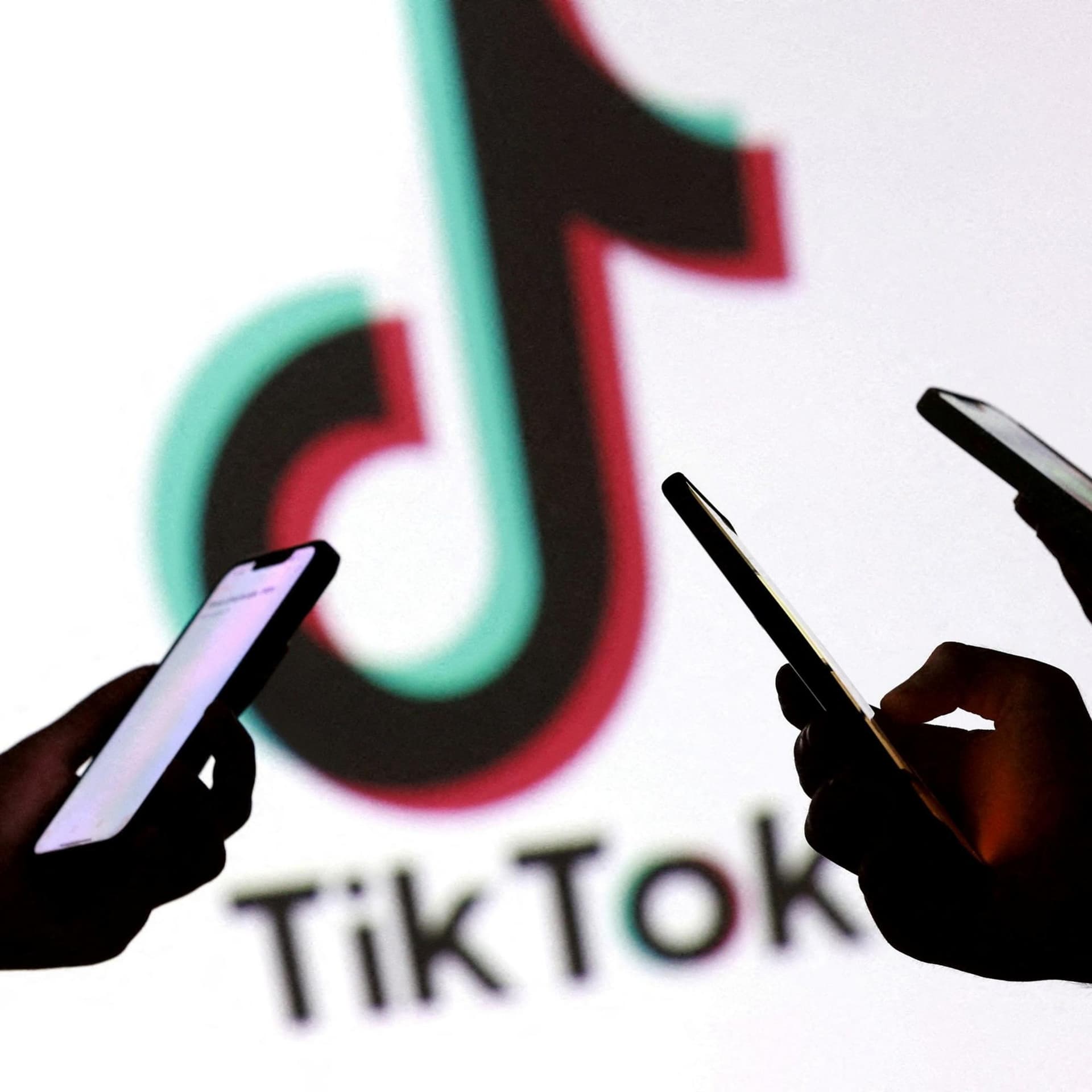
Photo: Teenagers holding smartphones in front of a TikTok logo. September 11, 2025. Credit:Dado Ruvic/Reuters