
In short
The BBC Global Story episode examines whether Iran is “schooling” Donald Trump in dealmaking, amid reported US-Iran negotiation drafts and uncertainty over a potential ceasefire and nuclear-related talks. It contrasts Trump’s Feb 28 war aims and “all or no deal” stance with a leaked memorandum of understanding that would be a 60-day, extendable framework rather than a final nuclear deal.
Guests
Jeremy Bowen, BBC international editor, who has extensive experience reporting on global conflicts and Middle East affairs.
Key claims
The memorandum is not a real deal but parameter-setting to defer issues; Trump’s earlier “regime change” and military objectives have not achieved their goals; Iran’s leadership believes deterrence has weakened and can bargain harder.
Notable examples
60-day ceasefire and Strait of Hormuz reopening with mine-clearing; US sanctions waivers and unfreezing funds; Iran’s “red lines” (release sanctioned funds, preserve nuclear infrastructure); Trump’s Truth Social demands on uranium and call to sign Abraham Accords.
Written by AI. May contain mistakes. Listen to the episode to check what was said.
Chapters
Tap a time to open that second in VOContext of the Iran Negotiations
0:38 to 2:24
Discussion on the background and current state of negotiations between the U.S. and Iran.
“Iran never won a war, but never lost a negotiation.”
Leaked Drafts of the Peace Plan
2:24 to 4:18
Overview of the leaked details of a potential peace plan between the U.S. and Iran.
“Well, we are here in a moment of some uncertainty over Iran.”
Analysis of the Memorandum of Understanding
4:18 to 7:46
Jeremy Bowen analyzes the implications of the leaked memorandum and its differences.
“What they're talking about, though, it seems fairly clear right now, is this so-called memorandum of understanding.”
Iran's Stronger Position
7:46 to 10:10
Discussion on Iran's position and how it affects U.S. negotiations.
“And the price will most likely include the unfreezing of funds, their money, which has been frozen, perhaps the lifting of some sanctions.”
Assessing Trump's Strategic Defeat
10:10 to 12:25
Exploration of the potential strategic defeat for Trump and the U.S. in this conflict.
“to risk a resumption of war if necessary.”
Evaluating Trump's War Aims
12:25 to 14:00
Examination of the war aims laid out by Trump and their current status.
“Netanyahu, particularly of Israel, has been saying for many years, there is only one way of dealing with the Iranian regime, and that is to destroy it.”
Evaluating Iranian Military Capabilities
14:00 to 14:58
Assessing the state of Iranian military assets and their operational readiness.
“Why don't we start with destroying Iranian missiles?”
Terrorist Proxies and Regional Stability
15:02 to 16:46
Discussion on Iran's influence through terrorist organizations in the region.
“So we have ensuring Iran's terrorist proxies.”
The Regime Change Debate
16:48 to 19:18
Analyzing the prospects and challenges of regime change in Iran.
“And it also is underpinned by very, whether or not you agree with it, and many people don't, not least in Iran.”
Nuclear Ambitions of Iran
19:23 to 21:00
Exploring Iran's intentions regarding nuclear weapons and past agreements.
“And we will ensure that Iran does not obtain a nuclear weapon.”
Show all 13 chapters
Iran's Negotiation Stance
21:14 to 22:51
Understanding Iran's position and demands in ongoing negotiations.
“And together we're the hosts of the The Global Story podcast from the BBC.”
Trump's Abraham Accords Proposal
22:55 to 25:59
Examining Trump's push for the Abraham Accords in context of Middle East politics.
“is very often to come in with, just like Trump does, with some pretty strong demands.”
The Future of US-Iran Relations
26:00 to 27:08
Discussing the potential outcomes of US-Iran relations and strategic implications.
“If this memorandum of understanding comes to pass, Jeremy, could this be, as that academic from Scotland suggested, the fastest the United States has ever lost a war?”
Transcript
Automatic transcript. May contain errors.0:00Jeremy Bowen:This BBC podcast is supported by ads outside the UK.
0:30Just tap into iHeart to start watching. And we hope you enjoy the show.
0:37In January 2020, a person with some first-hand experience of the Middle East wrote, Iran never won a war, but never lost a negotiation. Those words were written by Donald Trump in a tweet on the same day that the United States killed Iran's most prominent military commander. Six years later, he's coming face to face with his own proverb as he tries to win a war and a negotiation with Iran. This week, Secretary of State Marco Rubio told reporters that a deal with Iran could be just days away. There's strong alignment and agreement on what a preliminary draft should look like. I think that, like anything with something like this, And it's going to take a couple of days to settle on even down to the disagreements over a word sentence.
1:34Donald Trump said it will only be a great deal for all or no deal at all. But leaked details of a potential draft between the United States and Iran have got some wondering if there is in fact a clear winner. From the BBC, I'm Tristan Redmond in London. And today on The Global Story, we speak to the BBC's international editor, Jeremy Bowen, on why this might be the week that Donald Trump finally lost the art of the deal with Iran.
2:13All right, we're rolling. Jeremy Bowen, I would ask you to introduce yourself, but you don't really need an introduction on this show. It's great to have you back. Thanks for joining us. Well, it's nice to be here. Well, we are here in a moment of some uncertainty over Iran. We're talking to you on Tuesday at 4.45 p.m. UK time. Over the last few days, we've had some mixed messages about what's actually going on with the Iran negotiations. Marco Rubio and Donald Trump have said that there's possibly some kind of deal which is close. The Iranians have denied that. So we don't really know what's going to happen next.
2:54But we're going to try and make some sense of all of this. And I'd like to start, if that's all right by you, Jeremy, by just comparing what we know of a possible peace plan that has been leaked now compared to what was reported by Axos three weeks ago. A deal would involve Iran committing to a moratorium on nuclear enrichment. The U.S. agreeing to lift its sanctions and release billions in frozen Iranian funds. and then both sides lifting restrictions around transit through the Strait of Hormuz. Now, what we have now is a reported memorandum of understanding, which is slightly different, and it goes like this.
3:35There are five points. The ceasefire would last 60 days and could be extended by mutual consent. Second is during the 60-day period, the Strait of Hormuz would be open with no tolls and Iran would agree to clear the mines it deployed in the strait to let ships pass freely. In exchange, the US would lift its blockade on Iranian ports and issue some sanctions waivers to allow Iran to sell oil freely. And then there's a commitment to ending all military operations on every front, including Lebanon. And finally, a plan for further negotiations over Iran's nuclear program. What do you make, Jeremy, of the reported differences between these leaked drafts?
4:17Jeremy Bowen:Well, what I'd say is, let's not get too bogged down in minute differences or even quite big differences between different versions of leaks, because things will change. What they're talking about, though, it seems fairly clear right now, is this so-called memorandum of understanding. Now, that is not a deal. It is essentially an agreement to lay out parameters for further negotiations over an extendable period of 60 days or more. I mean, you can read that as a way of actually deferring some of those really big issues in which they are miles apart, it seems. Now, this has become controversial on different levels.
4:59Jeremy Bowen:And one of them is the fact, you know, the very fact that the Americans are talking and horse trading with the Iranians is just miles away from where Donald Trump started on the 28th of February, where he said, essentially, there was going to be regime church, and it was all going to happen very quickly. And that hasn't happened. And when plan A didn't work, he didn't have a plan B, C, or D, and now he's trying to find a way to reverse out of it. And the Iranians are driving, it appears, a hard bargain. However, what I would say is that both sides, I think, would like to do a deal. The question is, what is the deal?
5:41Jeremy Bowen:And at least if this memorandum gets signed, it is a way of getting shipping going through the Strait of Hormuz again and taking that chokehold of world trade. I want to ask you about that horse trading you're referring to, Jeremy, because although you are saying we shouldn't get too bogged down in the language and possible differences, it's hard not to get drawn into a little bit of that, because there is one very stark difference that stands out to me. And that is a lot of the non-Trumpian language. Some of the things in this memorandum of understanding are things that we're not normally used to hearing from Donald Trump.
6:25So let me give you an example. So we have talk of a plan for further negotiations over Iran's nuclear program, which stands in stark contrast to the version we had three weeks ago, which said the deal would involve Iran committing to a moratorium on nuclear enrichment. There's a big gap between those two things. It doesn't sound here like the United States is dictating terms if this is to be believed.
6:54Jeremy Bowen:They're absolutely not dictating terms. That's Trump's problem. He cannot dictate terms on this because his way of diplomacy and his way of starting wars has not worked. So to use the kind of language that he uses, it turns out Iran has got quite a lot of cards. And it turns out that the United States and Israel, despite the massive military power that they have, the flaws in the political strategy has meant that when he looks at his hand, whoops, he hasn't got nearly all the cards he thought he had. So that means that they have been forced to move in Iran's direction. And to make this deal, if there is to be a deal, work, they're likely going to have to move again, because in return for things like allowing shipping through the strait, Iran is going to demand a price.
7:55Jeremy Bowen:And the price will most likely include the unfreezing of funds, their money, which has been frozen, perhaps the lifting of some sanctions. At the moment, talking about a certain number of waivers for the Iranian oil trade, I don't think that's going to cut it. The fact is they feel that Trump wants a deal. So it's a placeholder to some extent, you believe, in order to negotiate a fuller agreement later on? Well, Donald Trump hates comparisons with the nuclear deal that with the help of European allies, the Americans, under President Obama, made with Iran in 2015, the so-called JCPOA. And that's the deal which he said was the worst deal ever in the world.
8:46Jeremy Bowen:and that's the deal that when he, in his first term, Donald Trump, dragged America out of immediately. And, you know, the questions are, is it possible to get a deal even that good with Iran at the moment? Because the strategic position has changed. And I'll tell you one thing that must be making the Iranian regime feel a little bit stronger, more than a little bit stronger right now is that one of the reasons why the older generation who've now been mostly killed, including the previous supreme leader, Ayatollah Ali Khamenei, they were pretty cautious and he was cautious. And one of the reasons he was cautious was because the Americans always held this great big hammer, if you like, over their heads, which was, if you overreach, if you push us too far.
9:41Jeremy Bowen:We will attack you and we will destroy you. And they've been attacked, but they haven't been destroyed. And so now this new generation of leaders are thinking, well, hang on a minute, they've done their worst. We're still here. So that deterrence, if you like, America's deterrence and Israel's deterrence against Iran has been weakened. And so they're going to continue to push for a better deal for them. And they are prepared as well, it seems, to risk a resumption of war if necessary. If you take a step back and look at the situation that exists right now between the United States and Iran, what does it actually look like?
10:25One of the assessments that we saw today from some of Trump's critics really stood out. A guy called Phillips O 'Brien, who's an international relations professor at St. Andrews University in Scotland, he said that the draft memorandum, when he saw it, he said, if this is true, it's a complete Trump fold and it's historic in being the quickest and most decisive defeat in a war in US history. He also said, there is only one remaining question, how badly has the United States lost this war. Do you agree with that assessment?
11:04Jeremy Bowen:Well, I follow him on Substack. I read his stuff. And he's someone who does come at the problem from a highly critical position, you might say, of Donald Trump. Now, you know, America retains a great deal of military power. Of course, they still have a huge amount of power in the region. But I think that what is absolutely clear is that if Iran and if the Iranian regime, I should say, that Donald Trump in that speech at Mar-a-Lago on the 28th of February, when all this started, among other things, he said, this is a chance for the Iranian people to take over. The best chance they'll have in generations.
11:44Jeremy Bowen:In other words, we're going to get rid of the regime through our bombing campaign. None of that has happened. And if, when and if they do sign on some kind of a dotted line, the Iranian regime comes out of this stronger. In other words, it's still in place. It's had some sanctions lifted. It has a role that may or may not be revenue raising in the Strait of Hormuz, but definitely everybody knows. It would not take more than, you know, a couple of missiles lobbed at a tanker to close the whole thing down again. if the Iranian regime emerges stronger from this war, then yes, it is a serious strategic defeat for the United States.
12:24And actually, it's a strategic defeat by extension of for Israel as
12:29Jeremy Bowen:well, because essentially, Mr. Netanyahu, particularly of Israel, has been saying for many years, there is only one way of dealing with the Iranian regime, and that is to destroy it. And America and Israel should do it together. He's asked previous American presidents if they'd do it. And they've had advice that says, don't touch that one with a barge pole because it's not going to work. But Donald Trump went along with it. So we're seeing the results right now. And so, yes, I've thought from the beginning, the beginning of this war, is that when historians in the future write the histories of the decline of the United States and its imperial power, they'll be writing, well, initially I thought it might be just a chapter on this, I think it might be an entire volume on the significance of this war for America's position in the world, particularly at a time when they are alienating and losing allies elsewhere, not least here in Europe.
13:32When Donald Trump made that speech, Jeremy, in Mar-a-Lago in February and laid out what his war aims were at that point in proceedings, can we go through with you now, please, which of those have actually been achieved and which of them are not achieved? We are going to destroy their missiles and raise their missile industry to the ground. It will be totally, again, obliterated. Why don't we start with destroying Iranian missiles? We're going to annihilate their navy. And annihilating the Iranian navy. Where are we on that?
14:12Jeremy Bowen:Well, the navy, as he's said many times, and the Defence Secretary Pete Hegseth has said, is mostly sunk. Missiles, there's been some excellent reporting coming out of American newspapers, out of the Washington Post and New York Times, that American intelligence estimates are saying that something like 70 % or 75 % of the Iranian missile stockpile remains. And also, the New York Times, I think it was reported, that it was something like 90 % plus of its sites where it stored these various items that the Americans wanted to destroy, that they've now regained access to them, found a way of getting through the rubble, I suppose, including various missile launching platforms along the Strait of Hormuz.
14:57Jeremy Bowen:So I think we can say that that objective has not been reached. Okay, I'm going to move on to a second one, Jeremy. So we have ensuring Iran's terrorist proxies. Ensure that the region's terrorist proxies can no longer destabilize the region or the world. Where are we on that one? Well, by that, they're referring principally to Hezbollah in Lebanon, to the Houthis, who aren't really proxies at all in Yemen, and to the various militias that the Iranians arm, support, and train in Iraq. Now, those militias are still there. They are still powerful in the country, and they're still armed. Hezbollah has suffered some massive blows at the hands of Israel since before this war started, not least the killing of its leadership.
15:46Jeremy Bowen:However, it is still fighting and Israel is hitting it repeatedly and it continues to fight. So I'd say there isn't a big tick against that particular category either. Let's move on to a desire for the Iranian people to overthrow the regime. When we are finished, take over your government. It will be yours to take. This will be probably your only chance for generations. There's a claim and counterclaim on that in the sense that the previous supreme leader is no longer with us, but his son has nominally taken over. Where do you stand on whether or not there has been regime change? Let's be very clear.
16:30Jeremy Bowen:There has not been regime change. It shows the lack of understanding in the White House about the way that things are run in Iran, that they believe that killing the leader would kill the regime. The regime doesn't work like that. It's built into layers and interlocking organizations. And it also is underpinned by very, whether or not you agree with it, and many people don't, not least in Iran. But it's a strong ideology, an ideology that includes as well things like martyrdom. It includes a lot of religion. and it includes also the desire to hang on to power and to keep that system going. And that regime has been engineered to resist and to survive the, as what happened, the assassination, not just of the Supreme Leader, but of many of his close advisors.
17:27Jeremy Bowen:That was not, I think Donald Trump must have thought that was going to be not just a game changer, but a game winner, not at all. And I think we're seeing that because they have continued in power, new people, and they are continuing to be able to fight if necessary, to attack their enemies and to get involved in this negotiation with the Americans who back on the 20th of February were saying they were on the way out. To be fair to Donald Trump, he did say when the United States are done, the people should rise up. Is there a possibility that what's been happening between the United States and Iran over the last few months might have sown the seeds of a future uprising that could see regime change happen?
18:11Jeremy Bowen:Well, maybe because, you know, when this thing finally ends, Iran is going to face massive challenges. Billions of dollars worth of damage has been done. Economically, they were already in a terrible situation, which was why back in January, there were big demonstrations, which, of course, the regime crushed by killing thousands of people. Now, Donald Trump was essentially saying, our planes will do such damage, you guys just need to get on the streets and the House of Cards will go. Not at all. That is not how it's happened. And it is unlikely to happen that way. And not at all likely, I'd say, under the way things are right now.
18:55Jeremy Bowen:Now, in the future, faced with terrible economic problems, who knows? But I think Iranians right now are trying to keep a low profile. Well, they're staying at home unless they support the regime. And some people do. And they can put large crowds onto the streets supporting the regime. But those people who don't support it are staying at home and just trying to get on with survival. Well, that's half a point, Jeremy, out of four war aims. The final one is the big one, arguably. And we will ensure that Iran does not obtain a nuclear weapon. It's a very simple message. they will never have a nuclear weapon.
19:37Jeremy Bowen:Look, the Iranians always denied they wanted to get a nuclear weapon. The late supreme leader, the father of the current one, issued a religious edict, a fatwa, saying that Iran should not have nuclear weapons. There's also the issue, though, that they enriched uranium to a point way beyond the level of which it's necessary for various civil nuclear issues. So, I mean, I think it's pretty clear that the position they wanted to be in was to be a nuclear threshold state where they had the option to go ahead if they wanted to, or they could hold out that possibility as a way of creating leverage with the outside world.
20:22Jeremy Bowen:Now, they may or may not agree as part of some sort of a deal to stop the enrichment of uranium for a certain length of time. They've been prepared to do that in the past. So that would not be revolutionary. The JCPOA agreement of 2015 had quite stringent restrictions on enrichment of uranium, which they were actually keeping to. They were in compliance with that agreement until Donald Trump pulled the Americans out of it. And you could argue that that action, in fact, started them down the path that led to the current war with all the costs that all sides are facing as a result of it, not least the big cost to his own and America's credibility.
21:14Hi there, I'm Asma Khalid. And I'm Tristan Redmond. And together we're the hosts of the The Global Story podcast from the BBC. For those of you who might be new to our show, we here at The Global Story dive deep every weekday on one big story at the intersection of where the world and America meet. And you can now watch The Global Story on the iHeart app. Catch every brand new episode every weekday. Just tap into iHeart to start watching. And we hope you enjoy the show.
21:47Well, Jeremy, right now we're starting to get some better indications of what it is that Iran may want. A few hours ago, Iranian state media released a list of what they say Tehran's red lines are. And I'm going to give you a couple of examples here. One is Iranian funds held under sanction must be released. Washington must recognize Iran's right to intelligence and operational surveillance over the Strait of Hormuz. And then on the nuclear question, maintaining the, quote, infrastructure of Iran's nuclear program, end quote, is not up for compromise. Then on Monday evening, Donald Trump posted on True Social, he said that the enriched uranium of Iran will either be immediately turned over to the United States or destroyed in an approved location.
22:46Now, that's in direct contradiction to what Iran has just said. Does that mean we're at an impasse if this is all true?
22:54Jeremy Bowen:I think what it means is that the way that Iran goes into a negotiation is very often to come in with, just like Trump does, with some pretty strong demands. And then they bargain down from there because they don't want to look weak. They want to come up with the best deal, of course, that they can get. I think the message politically coming from them as well is that Donald Trump needs to know that just because he demands something on Truth Social doesn't mean to say it's going to happen. Well, one of the other things he's been talking about on Truth Social is the Abraham Accords. The Abraham Accords are about recognizing the state of Israel.
23:34So after a conference call on Saturday with Arab and Muslim leaders in the region, he posted that he is, quote, mandatorily requesting that all countries immediately sign the Abraham Accords. Now, Israel haven't been involved in any of these talks, despite being America's ally in the war against Iran. Can you just explain to us what is going on with that post from Donald Trump? Why have the Abraham Accords been introduced into this already quite complex equation?
24:08Jeremy Bowen:Well, we can speculate. I mean, first of all, let's say it's not going to happen. It's certainly not the way that he's saying it, just because he's just posted that they need to do it. That the Saudis especially, but not just the Saudis, have made it very clear that they are prepared to talk about some kind of normalization with the Israelis when the Israelis allow tangible and real and irreversible, irrevocable progress towards the Palestinian state. The current Israeli government, led by Benjamin Netanyahu and kept in place by some extremely hardline religious and political extremists, have been openly saying that they are taking steps to kill off any idea of a Palestinian state.
24:54Jeremy Bowen:So the thought that, say, Mohammed bin Salman, the crown prince of the effective leader of Saudi Arabia now, is going to drop all of that and say, OK, Mr. President, sure, we're going to sign on. It's not going to happen. And while the Saudis don't do it, other countries are going to find it much easier not to do it. We can speculate and say that, you know, perhaps Donald Trump is getting concerned about the fact that back home in America, Republicans on his own side, and also Republicans who are generally very pro-Israel, are concerned that there's a bad deal coming that is going to hurt Israeli interests as well as American interests.
25:33Jeremy Bowen:And so maybe he's thinking, well, if they signed up to the Abraham Accords, then that's something I could say makes this a better deal than anything Obama could have done, and a better deal for Israel as well as for the United States. I mean, he puts these things out there. And very often, that's it, we don't hear from it again. I do not see those countries signing on to the Abraham Accords in the way that he would like them to do. No. If this memorandum of understanding comes to pass, Jeremy, could this be, as that academic from Scotland suggested, the fastest the United States has ever lost a war?
26:14Jeremy Bowen:Well, maybe it's a bit too soon to say that because, of course, this war could start again.
26:23Jeremy Bowen:Probably one of the more credible scenarios for the way the next year might go is that there will be some kind of attritional, low-level conflict. Maybe the Israelis would do more bombing. Maybe the Americans, there might be some incident that cause them to want to do some more bombing. That's if these negotiations don't work. And the issues between them are so huge that that may well be the case. But this is certainly looking to be a strategic defeat for the United States, unless Donald Trump can find a way of proving that he is actually the best dealmaker of all time by coming out with some kind of an arrangement which will get Iran to the place where he'd like them to be, rather than the place where the Iranian regime would like to be.
Read the full transcript
27:14Jeremy, thank you so much. It's been great to talk this through with you. It's a pleasure.
27:23That was Jeremy Bowen, the BBC's international editor. And if you'd like to get in touch, as always, our email is theglobalstoryatbbc.com. We love hearing from you. And if you want to catch up on the latest news from around the world, then look out for our sister show, the Global News Podcast, wherever you listen. Today's producers were Sam Chantarassak and Lucy Paul. The editor was James Shield. The show was mixed by Travis Evans. Our senior news editor is China Collins. Our digital producer was Matt Pintus. And our studio manager was James Piper. I'm Tristan Redman. We'll be back again tomorrow.
28:02Thanks so much for tuning in. Cheerio.
28:11Hi there, I'm Asma Khaled. And I'm Tristan Redmond. And together we're the hosts of the Global Story podcast from the BBC. For those of you who might be new to our show, we here at the Global Story dive deep every weekday on one big story at the intersection of where the world and America meet. And you can now watch the Global Story on the iHeart app. Catch every brand new episode every weekday. Just tap into iHeart to start watching. And we hope you enjoy the show.
From the publisher
This week President Trump and US Secretary of State Marco Rubio have said negotiations with Iran are going well and suggested a deal could be days away. Iran has disputed this.
Donald Trump says he wants “a great deal for all or no deal at all” but leaked details of a possible plan have some wondering if one side might be coming out on top.
We speak to the BBC’s International Editor, Jeremy Bowen, and ask if this might be the week Donald Trump loses the art of the deal – and the perhaps the whole war – with Iran.
CREDITS
Producers: Sam Chantarasak and Lucy Pawle
Digital Producer: Matt Pintus
Executive producer: James Shield
Studio Director: James Piper
Sound engineer: Travis Evans
Senior news editor: China Collins
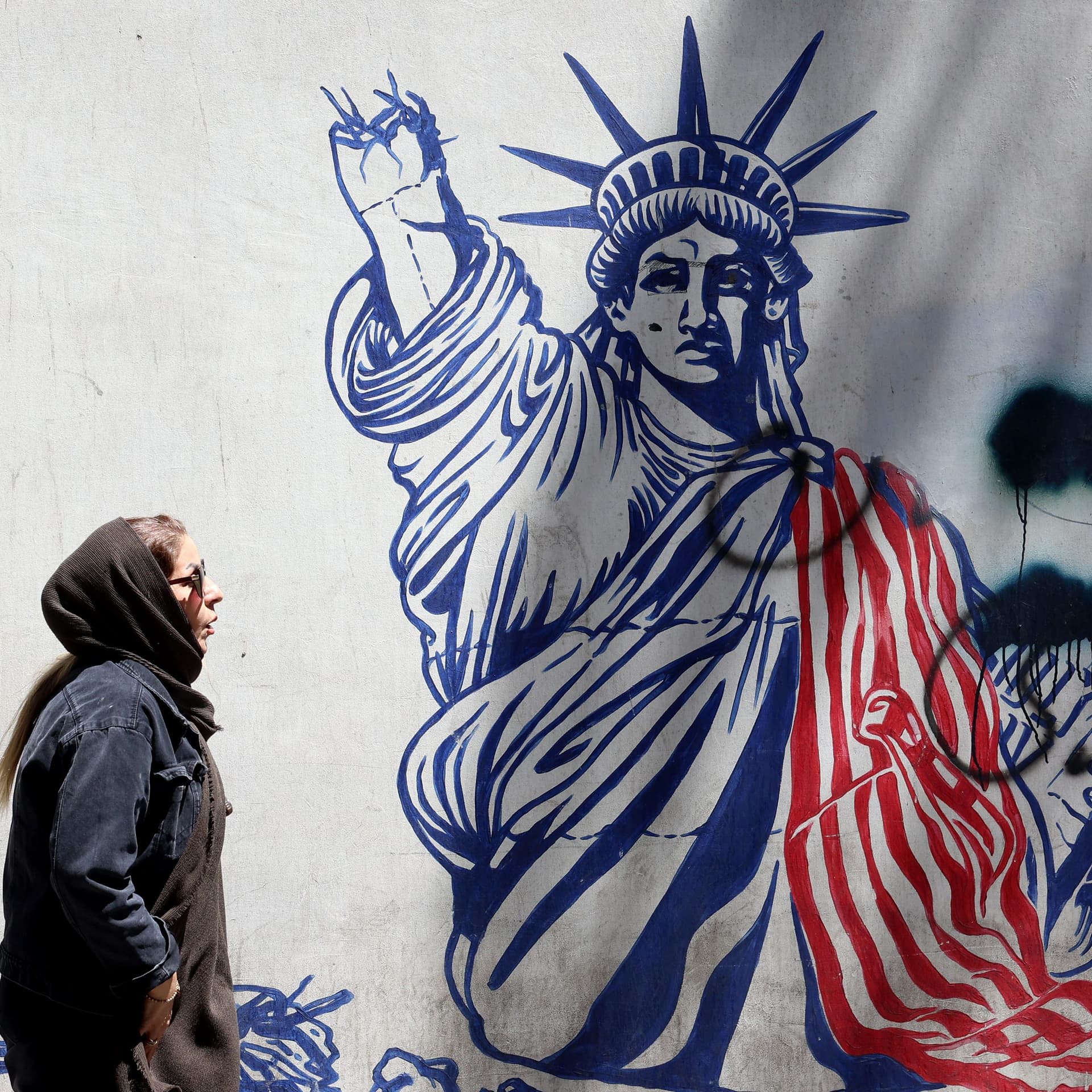
Photo: An Iranian woman walks next to an anti-US mural in Tehran, Iran. (Credit: Abedin Taherkenareh/EPA/Shutterstock)