
In short
Whether it’s ever appropriate to discuss women’s bodies, sparked by online debate about Ariana Grande’s thin appearance after her “Wicked” publicity and the release of her music video “pedal.”
Guests and backgrounds
Monica Hesse, columnist at The Washington Post; wrote a column titled “Is Ariana Grande’s Body Any of Our Business?” Sarah Dytem, journalist and author of Toxic Women, Fame, and the Tabloid 2000s.
Key claims
Body-shaming and health speculation harm young women; Ariana’s “none of your business” message clashes with viewers’ perception that her body looks unhealthy. Art is “two-way”: audiences interpret meaning, but that doesn’t justify shaming. Media history shows tabloid body policing (e.g., “Circle of Shame”/“Hoop of Horror” language). Body positivity and health debates are complicated and sometimes unsustainable. GLP-1/weight-loss drugs may intensify focus on thinness.
Notable examples
“pedal” casting-room plot with male judges; Heat magazine’s “Circle of Shame”; Ariana’s TikTok (2023) and Chicago concert explanation; “Yes And” lyrics (“don’t comment on my body”).
Written by AI. May contain mistakes. Listen to the episode to check what was said.
Chapters
Tap a time to open that second in VOAriana Grande's Body in Public Discourse
1:12 to 2:06
Discussion on the public scrutiny surrounding Ariana Grande's appearance.
“Ariana Grande's body has been talked about more than most.”
The Responsibility of Celebrities
2:06 to 4:11
Examining the social responsibility of celebrities regarding body image.
“And Ariana herself has said nothing to suggest that this break is health related.”
Ariana Grande's Music Video Analysis
4:11 to 4:49
Analyzing the imagery and themes in Ariana Grande's music video 'Pedal'.
“And frankly, even here on our team on The Global Story, we have been wrestling with how to navigate this all and have an informative, respectful conversation that isn't just, you know, that isn't just ghoulish.”
Contrasting Beauty Standards
4:49 to 7:40
Discussion on how different artists face varying scrutiny regarding their bodies.
“Can you describe the imagery, the message that she appears to be trying to get across in your view?”
The Complexity of Artistic Expression
7:40 to 12:43
Exploring the challenges in discussing body image in the context of art.
“I think that we struggle with how to have the conversation with what message viewers and especially young ones should be taking away from a video like this.”
Cultural Commentary on Women's Bodies
12:49 to 14:02
Exploring historical and cultural perspectives on the scrutiny of women's bodies.
“I mean, this fixation has been a part of our culture for years.”
The Nature of Paparazzi Photography
14:02 to 16:33
Explore how paparazzi photography impacts women's representation in media.
“It's an intrusive by design form of photography.”
Body Image and Public Perception
16:34 to 18:47
Discuss how public appetite influences body shaming and magazine success.
“Can I just pause and acknowledge for a moment that is depressing to me, that that is what you're saying human nature wants?”
The Rise of Body Positivity
18:48 to 19:57
Learn about the emergence of the body positivity movement and its history.
“So in response to that, you start to see the formation of a more organized body positivity movement across this period.”
Conflicting Ideals in Body Image
19:58 to 21:15
Examine the contradictions within standards of beauty and health discourse.
“I mean, I felt like that would have been really unthinkable for a Victoria's Secret, let's say, in the 90s.”
Show all 13 chapters
Impact of Weight Loss Medications
21:16 to 23:29
Analyze how weight loss medications impact discussions on women's bodies.
“I would say that we've seen a number of women who have been getting noticeably thinner in the public eye, and that has fueled speculation over whether they're taking GLP-1s to lose weight.”
Celebrity Culture and Body Expectations
23:30 to 26:02
Understand how celebrity culture shapes body image perceptions and discussions.
“And this resurgence of the very, very skinny figure as the ideal.”
The Unavoidable Conversation on Bodies
26:03 to 26:34
Discuss the necessity of addressing body image issues in modern media.
Transcript
Automatic transcript. May contain errors.0:00Sarah Ditum:This BBC podcast is supported by ads outside the UK.
0:30Monica Hesse:an award-winning behavioral scientist and author of the best-selling book, How to Change, as she shares true stories from Nobel laureates, authors, athletes, and everyday people about why we do the things we do and how to make better choices to help avoid costly mistakes. Each episode covers the latest research in behavioral science and dives into themes like the power of self-control, shaping your mindset for success, navigating new beginnings, and why starting over can feel so hard. Listen to choiceology at schwab.com slash podcast or wherever you listen.
1:12Monica Hesse:Ariana Grande's body has been talked about more than most. The pop superstar and actress has been in the spotlight since she was a teenager. But in recent years, online commentary about her appearance has gone into overdrive, especially during the publicity tour for the blockbuster Wicked movies. I have heard it all. I've heard every version of it, of what's wrong with me. And then you fix it, and then it's wrong for different reasons. And in the last week, debate over Ariana Grande's body became louder than ever after the release of her latest music video, in which she looked noticeably quite thin.
1:46Monica Hesse:Two days after the release of that video, the pop star's team put out a statement saying she'll be stepping back from visibility. It went on to say that she looks forward to finishing her current tour on a high note, healthily and happily, and then taking a break from public appearances, which has led to endless ongoing public scrutiny. Now, to be clear, we have no idea what has led to this decision. And Ariana herself has said nothing to suggest that this break is health related. In fact, on Monday at a concert in Chicago, she explained it this way. The announcement that was made yesterday was not a reactive or impulsive thing.
2:23Monica Hesse:It's something that I had decided. It's a plan that I had quietly made a long time ago. And it's a decision that was made from a thought poll and it powered police. Still, this has not stopped the enormous amount of speculation about her body and her health. I need us to stop commenting on women's bodies. We've got to knock it off.
2:45Sarah Ditum:She has a social responsibility as a celebrity to her fans, to her very, very young, very, very female fan base. I feel very, very strongly that in talking about what's happening with Ariana Grande, we are protecting more people than we are harming.
3:01Monica Hesse:Ariana Grande's body is not yours to comment on. Keep your hateful, body shaming comments to yourself. Now, Ariana Grande is not the first woman in the public eye to find her physical appearance picked apart. For most of us, the commentary over whether a woman looks too thin, too fat, too old, too young, too curvy or too muscular, is one that we have heard many, many, many times before. But where is the line between criticism and concern? From the BBC, I'm Asma Khaled in Washington, D.C. And today on The Global Story, is it ever okay to talk about a woman's body?
3:47Monica Hesse:Just a heads up, this episode includes discussions about body image. I want to say at the outset here that we're going to have a difficult conversation today about an issue that is being dissected online and in the media, in public and private conversation. And that is, how do we talk about women's bodies and when, if ever, is it appropriate to do that? It is a thorny topic. And frankly, even here on our team on The Global Story, we have been wrestling with how to navigate this all and have an informative, respectful conversation that isn't just, you know, that isn't just ghoulish. And today, we're going to try to do that.
4:26Monica Hesse:Monica Hesse is a columnist at The Washington Post. And this week she published a column titled, Is Ariana Grande's Body Any of Our Business? And for those of our listeners who may not have followed along with all of this, this immediate conversation was sparked last Friday, July 31st, with the release of Ariana Grande's new music video called Pedal. So, Monica, you've watched this video. Can you describe the imagery, the message that she appears to be trying to get across in your view? Sure. So in this music video pedal, Ariana Grande plays a version of herself. She plays a young singer or actress who goes to a series of casting calls.
5:13Monica Hesse:And in every room she steps into, there are many other young women who are also aspiring singers and actresses. And as she goes into the audition room, every time she is met by a panel of male casting directors who pass judgment on her performance, but also on her appearance. And they repeatedly tell her, not good enough. and every time in this video she she goes into this room her confidence falls she gets more depressed she tries changing her appearance she tries becoming new things until at the end she ends up taking taking up a chainsaw and chainsaw murdering these these men who have been so judgmental to her so the message we believe is supposed to be one of empowerment she walks out of after committing this bloody crime.
6:07Monica Hesse:And all of the other women in the waiting room are cheering for her because someone has stood up for them against the people who are passing these comments on their appearance and bodies. What's tricky is that while expressing this message of empowerment, her body looks in a way that to many viewers appeared unhealthy. She was just so, so thin. And we are accustomed to Ariana Grande being a petite person. But this video was just, she was noticeably underweight. Monica, it sounds like what you're saying is that the reason this video sparked so much conversation is because of the juxtaposition of this feminist message of empowerment that the music video was intending to portray with the physical appearance of Ariana Grande there.
7:04Monica Hesse:I think that, and I mentioned in my column, if a singer like Billie Eilish or Chapel Roan had released this video, I think we would be having a different conversation because they have always had a brand related to sort of bucking traditional beauty standards. But Ariana Grande has set traditional beauty standards. And so when she's coming out and saying, my appearance is none of your business, but her appearance not only looks so unhealthy, but is also perhaps a role model to a lot of young girls. I think that we struggle with how to have the conversation with what message viewers and especially young ones should be taking away from a video like this.
7:55Monica Hesse:One of the reasons it seems that this debate has become so fiery is that Ariana herself is no stranger to commentary about her body.
8:08Sarah Ditum:I think we could be, I think we should be gentler and less comfortable commenting on people's bodies, no matter what.
8:14Monica Hesse:In 2023, she posted a TikTok asking people to be gentler and indicating that there are many different ways to look healthy and beautiful. The body that you've been comparing my current body to was the unhealthiest version of my body.
8:30Sarah Ditum:I was on a lot of antidepressants and drinking on them and eating poorly. And at the lowest point of my life, when I looked the way you consider my healthy, but that in fact wasn't my healthy.
8:46Monica Hesse:And then in 2024, during the press tour for the movie Wicked, she addressed it all herself. I think in today's society, there's a comfortability that we shouldn't have at all. Commenting on others' looks, appearance, what they think is going on behind the scenes or health or how they present themselves. And then in a song that she released in 2024, titled Yes And, it contained the lyrics that said, I'm going to quote here, don't comment on my body, do not reply, your business is yours and mine is mine. It seems that she has made it very clear that she does not want to be talked about. And it seemed a bit like she's trying to address that debate head on here now in this latest video, maybe.
9:35Monica Hesse:But what's your read on this all? I have a little bit of a philosophical read, which may or may not be the right approach. I, first of all, hate having this discussion. I bet you hate having this discussion. This is an incredibly hard discussion to have. And I sincerely hope that Ariana Grande is not listening to us, us being any of us while we have it. Because this is really not about, for me at least, her body in particular, or me thinking I know what's best for her or better than her doctors or better than her friends and family. But art is a two-way street. I know, for example, that when I write a column, when I give it to the world, it is only half finished.
10:24Monica Hesse:It is finished when readers read it and absorb it and come up with their own interpretations of what it meant to them.
10:37Monica Hesse:Ariana Grande is an artist, and what is tricky is that her body is part of her art. So even while her health is none of our business, part of the relationship is that we are going to respond to her art, and we are going to need to figure out a way to have it make sense to us. And so I think that that is why the discussion is so hard, because I don't want us to shame Ariana Grande. I don't want us to act as if we know what she should weigh or why she should weigh that or what she should eat or what color her hair should be or any of that. None of that is any of our business. but we are completing the piece of art that she has put into the world by having this reaction to it and and I'm not sure that it's possible for an artist to ask us not to have these thoughts or these conversations
11:45Monica Hesse:well Monica thank you very much for your thoughtfulness and helping us just try to make sense of this moment. I appreciate it. Thank you. Anytime.
12:21Monica Hesse:a bit of everything. Maybe you go for some free-range self-directed investing, or perhaps you pick up a few farm-fresh trades while you peruse. You can even get help from a dedicated advisor. That's full-service wealth management. Mix, match, and change your mind whenever you want. Because at Schwab, you can invest your way. No matter your goals or appetite for investing, Schwab has everything you need all in one place. Visit schwab.com to learn more. The debate over when to talk about women's bodies, if ever, is not limited to Ariana Grande. I mean, this fixation has been a part of our culture for years.
12:59Monica Hesse:This story goes way, way, way back. But one of the reasons the debate over who gets to say what, if anything, about Ariana Grande seems to be resonating so much in this moment is because many of us feel like we have lived through a version of this before. and that we'd managed to move on from it. So to explore this all, we turned to the writer and journalist Sarah Dytem. She's written a book called Toxic Women, Fame, and the Tabloid 2000s that looks at how the media talked about famous women in recent history.
13:31Sarah Ditum:In the 1990s, you get a really specific heightening of this aggressively critical culture about women's bodies. and it's a kind of coming together of two things really one of them is diet culture which is you know very long-standing and this essentially permanent idea that women should always be maintaining improving and shrinking themselves and the other part of that is the rise of paparazzi photographers and the fact that you now have this situation where famous women who have previously been able to execute a fairly substantial level of control of their images not total control but most of the pictures of them would come out of staged or chosen situations in which they were able to do some of the styling maybe even select some of the shots or be involved in the post production with paparazzi photography that is incredibly different because these are shots that are taken on the fly while you're moving, trying to live your everyday life.
14:36Sarah Ditum:It's an intrusive by design form of photography. And it's also one that really prizes invasion. So the more unflattering a paparazzi shot could be, the more valuable it might be to the photographer because there was this appetite to sort of catch women out, essentially, as if some kind of massive con had been perpetrated on the public by pretending that these women were beautiful all the time. And they should be brought down a peg or two or several more pegs in many cases. So when you say catch them out, what do you mean visually? So in the UK, the kind of canon example of this would be a magazine called Heat.
15:23Sarah Ditum:And Heat's USP was this thing called the Circle of Shame or the Hoop of Horror, which was a red ring that would be printed around quote unquote flaws that women had in their bodies and it's kind of from this era is where I learned all sorts of fundamentally terrible language to talk about my own body so I'd never heard of a muffin top before I've read Heat magazine I'd never heard of a cankle I'd never heard of a bingo wing all of these really deeply unpleasant and negative things that were being literally stamped onto women's bodies in the mainstream press on the newsstand that I could see every day.
16:08Monica Hesse:Was there a sense that there's a public appetite for this and that people wanted to consume what these outlets were selling?
16:17Sarah Ditum:Massively so. These kinds of images only had value because people wanted to consume them. So again, to look back at Heat magazine, when that was a regular entertainment magazine that did not do body shaming, it was not a successful magazine. It only became a successful magazine when it introduced that tabloid body shaming element.
16:38Monica Hesse:Can I just pause and acknowledge for a moment that is depressing to me, that that is what you're saying human nature wants?
16:45Sarah Ditum:I mean it is depressing in some ways I think one of the ways that it was framed positively in the noughties is that women in particular had gone through generation after generation of being made to feel bad about ourselves because we didn't live up to these glamorous celebrity ideals and suddenly the sort of curtain was being pulled back and we were being shown oh hey you know like they don't actually look like this all the time. They're just regular women like us. That's not the whole truth. There is obviously a pretty deep sadism to a lot of this culture. But there was also that, you know, you can call it a fake leaf or you can say that there was a genuine psychological need, maybe not to see the truth behind some of these images to a certain extent.
17:36Monica Hesse:And during this time period in the 90s, I recall there was quite a focus on being what I would describe as being just ultra thin. I mean, those were the images we saw of models during that time period. That was the idealized standard of beauty that was issued out to the public. Was it your sense that during this time period in the 90s that thin, super, super skinny women were sort of exempt from that public criticism in some of these media outlets or were they still equal fodder?
18:06Sarah Ditum:They were still absolutely commented on. I think it's worth saying that there's always been this criticism of thin bodies and women who were perceived as being too thin would be spoken about in very disparaging, very dehumanizing terms. So one of the things that would get thrown around would be just saying, she should eat a sandwich, have a burger. Deeply unsympathetic, deeply unpleasant stuff. And it was aimed at women who were seen as being too thin.
18:37Monica Hesse:So it sounds like you're saying there was this sort of idealized standard of beauty, yet at the same time, there was criticism of that extreme thinness happening at the same time.
18:47Sarah Ditum:Yeah, and often from the same people. So in response to that, you start to see the formation of a more organized body positivity movement across this period. And what time period are we talking about, would you say? I think body positivity, again, it's got pretty deep roots. You can go back to the 1960s to see the origins of the fat acceptance or the fat activist movement. It's a lot earlier than I would have thought. Yeah, but it doesn't really come to prominence or become anything close to a mass movement until it's got the internet behind it. So it's in the 90s and the noughties, really, that you start to see this formation of really resistance to diet culture, this argument that it is shaming to talk about women's bodies.
19:37Sarah Ditum:It's illegitimate to express these opinions about women's bodies in this way. And at the same time, and this is kind of complicated, but this desire to valorize different body shapes and to celebrate women who are seen as departing from the sort of enforced skinniness norm.
19:57Monica Hesse:I mean, I remember that time when we first heard about the first plus size model that Victoria's Secret was having. I mean, I felt like that would have been really unthinkable for a Victoria's Secret, let's say, in the 90s.
20:08Sarah Ditum:Oh, very much. Yeah. I mean, alongside that, you get this commentary about health and this idea that it's wrong to link obesity with ill health and that it is harmful to talk about obesity as a health issue. And it becomes quite complicated because you almost silently transition from this conversation where you're saying we shouldn't shame women's bodies, we shouldn't treat people as bad and disgusting and ugly because they are fat, to this conversation where people are really at the extremes, really pushing very hard this idea that there is no association between body size and health outcomes.
20:54Sarah Ditum:and it's completely illegitimate to link those two. And I think that ultimately makes the body positivity movement unsustainable in the end because it falls apart under the fact that several major figures in body positivity do end up taking steps to reduce their body size because they would like to be healthier and thinner. And so the politics of it proved to be kind of unsustainable in real life, even if the basic sort of imperative to treat people with respect, kindness and not shaming remains true and should be unaffected by the health conversation.
21:39Monica Hesse:I would say that we've seen a number of women who have been getting noticeably thinner in the public eye, and that has fueled speculation over whether they're taking GLP-1s to lose weight. And so we see celebrities' bodies changing in the public eye. And do you think that the prevalence of these weight loss medications has fueled additional debates around women's bodies, and how so?
22:09Sarah Ditum:They've absolutely shifted the way we talk about bodies and size and health 100%. Suddenly you have this raft of medications that are accessible and that fit into your life pretty easily. So you go from this situation where everybody knows, right, that getting thin and staying thin is incredibly, incredibly hard. And it's a lifelong struggle for people to do that without support. And suddenly it isn't. Suddenly that's taken away. And it removes a lot of the impetus for some of the body positivity conversation as well. Because, you know, it's all very well to say there's no association between obesity and health if you can see no prospect of no longer being obese.
Read the full transcript
23:00Sarah Ditum:But suddenly, if you can cease to be obese, you can embrace the fact that there are health benefits that come with it. And there doesn't have to be this taboo around talking about health anymore. So that changes. But it also means that we start to see people who don't have clinical need for GLP-1s for weight loss, probably using weight loss drugs, getting substantially thinner in the public eye. And this resurgence of the very, very skinny figure as the ideal.
23:37Monica Hesse:Do you think that the reason we are all so intrigued by sudden body changes, sudden body weight loss in a celebrity is because we sort of have these parasocial relationships nowadays with celebrities given social media? And so we feel like we're entitled to pry into celebrities' private lives in maybe a way that you couldn't have before. And this feeling of authenticity that, you know, you want to know, just be real with me. Like, it's the idea that you're not straight up with all of us about it.
24:17Sarah Ditum:Right. And I think you're also pointing at something really important about the way that we use celebrities to relate to ourselves. ourselves so celebrities you know they are the people we look to as the image of how we ought to be they are the ideal and whatever we see in celebrity bodies we do take on board and we understand to be the ideal of how we ought to look as well even if you're trying really hard not to even if you would consciously like to push that out of your head at the same time it does seem to
24:48Monica Hesse:me that people are more cognizant about the dangers of body shaming. I mean, it feels like there's even been this shift in tone of, to me, why the conversation around Ariana Grande is making many of us so uncomfortable even to have in public.
25:06Sarah Ditum:Well, yes, it is very complicated. I think there is a lot more knowledge and understanding about how body shaming affects people. I think there is also a lot more awareness that this isn't a conversation that we can just put back in the bottle. I think during the noughties, the traditional mainstream media was still strong enough that there was a perception that if we could just control values there, that we could change things for everyone. But now, really, when you see an image of a famous women it's most likely to be on instagram or on tiktok it's going to have commentary from goodness knows who like in the post or in the comments there are millions and millions of people who all have opinions about women's bodies not all of them kindly or generously expressed but also it's harder to get away from these images as well
26:12Sarah Ditum:so you know I didn't go looking for images from the petal video I saw them because they appeared in my feed but they're there and it's no longer possible to say that we should be protected from seeing such pictures we have to have the conversation even if it's an uncomfortable conversation. We have to be able to talk critically about what the culture is about bodies, what it's doing to us as consumers, and what it's doing to the women whose bodies are being consumed in this way.
26:53Monica Hesse:Well, Sarah, thank you for joining us and providing your analysis and your insights. I really appreciate it. Thank you.
27:11Monica Hesse:That was Sarah Dytem, journalist and author of the book Toxic Women, Fame, and the Tabloid 2000s. And earlier we heard from Monica Hesse, screen's critic for The Washington Post. A quick note that if you all have any thoughts or story ideas for us, we always appreciate hearing from listeners. and you can email us at theglobalstory at bbc.com. As you all know, on The Global Story, we try to dive deep every weekday on one big story about where the world and America meet. But if I can make a quick recommendation, if you are also looking for a way to catch up on the latest news headlines, then you should check out our sister show, The Global News Podcast.
27:49Monica Hesse:Today's episode was produced by Vari McKenzie and Sam Chantaracic. It was edited by Martine Powers and mixed by Travis Evans. Our digital producer is Matt Pintus And our senior news editor is China Collins. I'm Asma Khaled. And that's it for us today. Thanks as always for tuning in. And we hope you have a wonderful weekend. We'll talk to you again on Monday.
From the publisher
Ariana Grande’s appearance in a new music video has sparked speculation, commentary and intense debate over the question of when — if ever — the public should weigh in on a woman's body.
The pop star and Wicked actor is not the first woman in the public eye to come under intense scrutiny, so how has the way we talk about celebrities’ bodies changed over time?
We ask Monica Hesse, screens critic for The Washington Post, and Sarah Ditum, journalist and author of Toxic: Women, Fame, and the Tabloid 2000s, whether it’s ever OK to talk about a woman’s appearance.
Producers: Mhairi MacKenzie and Sam Chantarasak
Executive producer: Martine Powers
Mix: Travis Evans
Senior news editor: China Collins
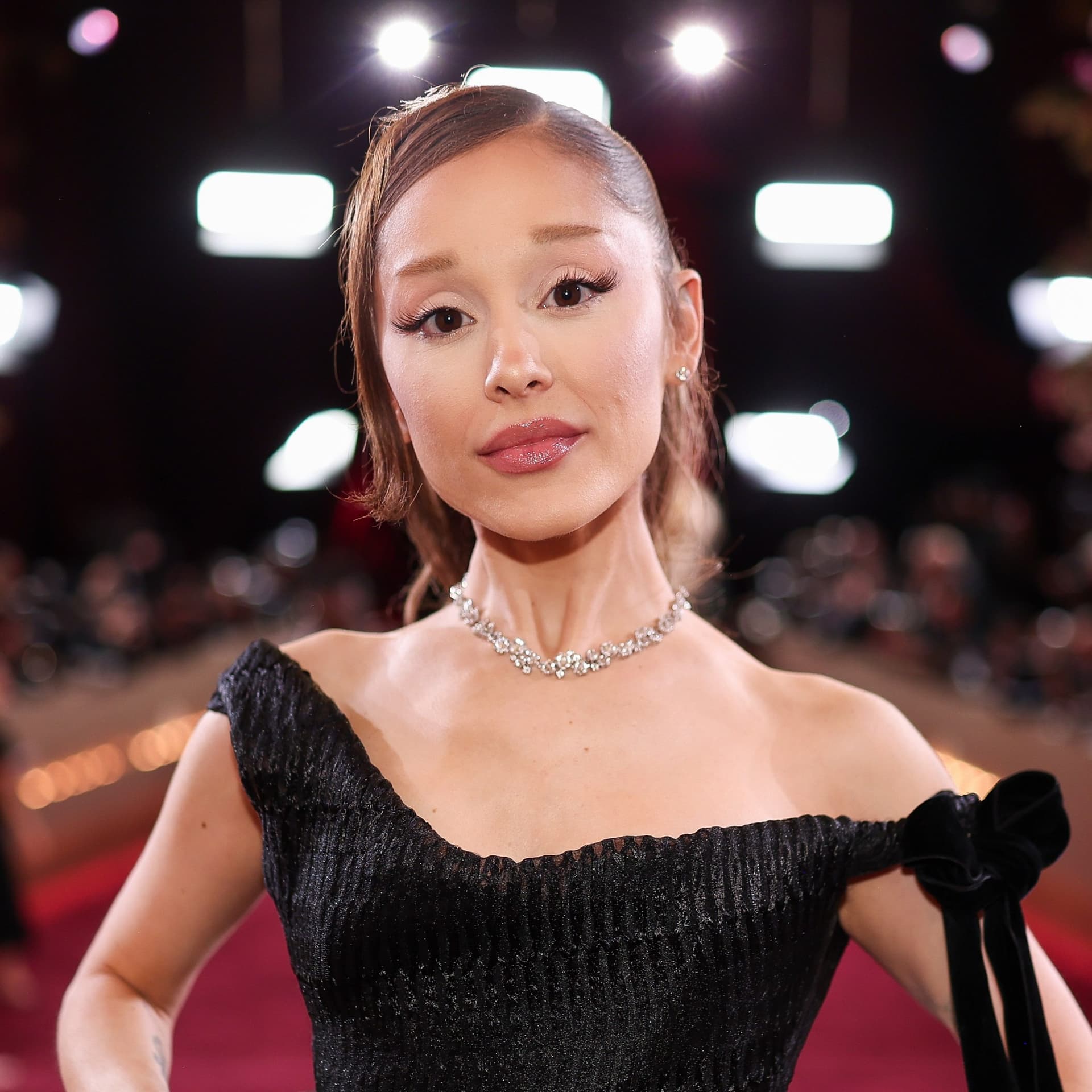
Photo: Ariana Grande at the 83rd Annual Golden Globes in January 2026. Credit: Christopher Polk/2026GG/Penske Media via Getty Images.