In short
The episode asks whether the International Criminal Court (ICC) could realistically target Americans, explaining why the US opposes the ICC and what a “dismantling” plan would mean.
Guests
Katrina Perry (BBC chief presenter; also hosts The President’s Path) interviews Philippe Sands, a human rights lawyer, international law professor, and writer who helped draft the ICC statute’s preamble for Pacific Island states and has worked on international tribunals.
Key claims
the ICC’s jurisdiction covers four crimes (war crimes, crimes against humanity, genocide, and later aggression) and can apply when crimes occur on a state party’s territory, regardless of the perpetrator’s nationality. Sands argues US opposition is driven by sovereignty concerns and fear of ICC exposure, citing US non-ratification of the Genocide Convention and earlier US support for ICC actions (e.g., Sudan; indictments related to Putin).
Notable examples
ICC indictments tied to Ukraine; Rubio’s proposed diplomatic pressure (visa/travel bans for ICC personnel); and debate over alleged ICC bias toward African defendants.
Written by AI. May contain mistakes. Listen to the episode to check what was said.
Chapters
Tap a time to open that second in VOIntroduction to the ICC
0:41 to 2:55
Discussion on the International Criminal Court and U.S. opposition.
“In 2016, a 22-year-old known as Posh George was jailed in the U.S.”
Historical Context of the ICC
2:55 to 4:30
Tracing the origins of the ICC to post-WWII efforts.
“And could it really come after Americans?”
Creation of the ICC
4:30 to 6:20
Details on the establishment and jurisdiction of the ICC.
“Well, just in terms of history, modern international criminal law begins really in 1945, when three global leaders, Franklin Roosevelt, Winston Churchill, and Joseph Stalin, got together at Yalta.”
Philippe Sands' Role in ICC Negotiations
6:20 to 8:13
Philippe Sands discusses his involvement in the ICC's creation.
“And there was then adopted the statute of the International Criminal Court, which came into force four years later in 2002.”
U.S. Relationship with the ICC
8:13 to 10:04
Exploring why the U.S. has not ratified the ICC statute.
“As you mentioned, you've been an actor in its establishment and an actor in the courtroom ever since.”
Historical Concerns About International Law
10:04 to 12:11
Discussing U.S. fears about international law's implications.
“Russia, North Korea, Turkey, Israel, and of course, the United States.”
Evolution of U.S. Posture Towards the ICC
12:11 to 14:01
Examining how U.S. support and opposition to the ICC has changed.
“You're saying that the US didn't sign up to the Genocide Convention because it was worried about the possibility of being pursued for alleged crimes committed in the 19th century against Native American populations.”
Evolving U.S. Posture on the ICC
14:01 to 15:20
Explore the history of the U.S. relationship with the International Criminal Court.
“Politically, it was one of the most difficult days of his entire presidency.”
Reacting to ICC Indictments
15:20 to 16:49
Discuss the U.S. reaction to ICC indictments against Israeli officials.
“territory of Ukraine, irrespective of who commits it, falls within the jurisdiction of the ICC.”
Sovereignty and International Law
16:49 to 18:59
Delve into the arguments surrounding national sovereignty and ICC jurisdiction.
“launching of a diplomatic campaign, essentially, is what he's calling for.”
Show all 14 chapters
Concerns Over U.S. Military Actions
18:59 to 26:03
Examine concerns regarding U.S. military personnel and international law.
“So a Russian who commits, allegedly commits a crime on the territory of Ukraine, will be subject to Ukrainian law, and that law grants competence to the International Criminal Court.”
Weakness vs. Strength in U.S. Diplomacy
26:03 to 26:30
Consider whether the U.S. can dismantle the ICC and its implications.
“British role or the role of other countries.”
Interconnected Rules of International Law
26:30 to 27:38
Reflect on the importance of maintaining international legal frameworks.
“And maybe three or four countries will say, gosh, it's too big a price to pay for our relations with the United States.”
Netanyahu and The Hague: Legal Implications
28:03 to 28:41
Explore the legal aspects surrounding Prime Minister Netanyahu's potential arrest.
“what would happen if Prime Minister Netanyahu visited for the UN General Assembly in September.”
Transcript
Automatic transcript. May contain errors.0:00This BBC podcast is supported by ads outside the UK.
0:30No bouncing between tabs. And best of all, no spreadsheets. Stop managing software and start managing your business with one unified system. Try for free today at odoo.com. That's O-D-O-O dot com. In 2016, a 22-year-old known as Posh George was jailed in the U.S. for wire fraud. Standing by his side when he was arrested was Nigel Farage. Join me, Gabriel Pogan, from The Sunday Times for a wild ride through the worlds of politics, crypto and crime. It's in our new podcast series, PostGeorge, the criminal behind Farage. Search for PostGeorge The Times wherever you get your podcasts.
1:24foundation of our shared way of life. But today, powerful people in faraway places want to take that away from us. Halfway across the world, there's an institution that calls itself the International Criminal Court. Maybe you've heard of it. Maybe you haven't. But chances are you don't know the names of its judges, of its prosecutors, or its president. And you shouldn't have to. But as we speak, the ICC and its friends are waging a war against our country. The State Department has released plans to dismantle the ICC brick by brick. But in a way, this is nothing new. Dear Mr. Secretary General, this is to inform you in connection with the Rome Statute of the International Criminal Court that the United States does not intend to become a party to the treaty.
2:11That's John Bolton speaking back in the 2000s when he was George W. Bush's U.S. ambassador to the United Nations. The notion that somehow we're obliged to sign on to a treaty just because a lot of other people have done it, frankly, is ridiculous. U.S. opposition to the ICC goes back a long way. That'll be a cold day in hell before that happens. But here's the thing. The U.S. isn't and never has been a member of the ICC. So why are successive American administrations so worried about it? From the BBC, I'm Tristan Redmond in London. And I'm Katrina Perry in Washington, D.C., sitting in for Asma Khaled.
2:52Today on The Global Story, what exactly is the ICC? Who is it for? And could it really come after Americans?
3:07Katrina, thank you so much for stepping in to cover asthma when she takes some well-deserved vacation. Many of our viewers, loyal viewers on the BBC News Channel already know you very well. But for listeners of this show who may not know you so well, tell us who you are. Sure. Well, thanks for having me, Tristan. Trying to fill in for the great Asma while she's on holidays. I'm based here in Washington, D.C. And as you say, I'm chief presenter on the BBC News Channel, so listeners may know me from that. And I also host the BBC podcast, The President's Path, So when listeners are finished enjoying this one, they can head over there and check that one out.
3:48Well, I'm very pleased that we're able to bring our listeners today a conversation that you and I have had with Philippe Sands. Now, Philippe Sands is a human rights lawyer. He's an international law professor and a writer. And he's someone with a particular point of view on international courts. He's been a participant at many of them, representing, for instance, countries like the Gambia, Palestine, Mauritius and other nations at various international tribunals. Yes, such an interesting man. And he says to understand the State Department's latest plan to dismantle the ICC, what it's thinking about, what its motivations are, you really have to go back to the beginning.
4:30Well, just in terms of history, modern international criminal law begins really in 1945, when three global leaders, Franklin Roosevelt, Winston Churchill, and Joseph Stalin, got together at Yalta. The conference is to seal Hitler's fate and establish lasting peace. And decided they would not line up the Nazis and execute them, but rather create the International Military Tribunal for Nuremberg. And with that was born in the autumn of 1945, the world's first ever international criminal tribunal. If you wanted certain people killed, you had to have some organization that would kill them, didn't you?
5:11Rome and the rest of them were not killed by Hitler's own hands nor by yours, were they? That delivered its judgment in the autumn of 1946. Now the defendants know who is to die, but we speak for the millions killed because of them. The burned towns, the widows, the fatherless, and the unspeakable horrors of the murder camps. This was the work of the fearless. Let us now have done with them forever. And then nothing much happened for 50 years until we got the crimes of the former Yugoslavia and Rwanda, when the Security Council, led by the United States, created two new international tribunals.
5:54And that catalyzed an effort that had been going on for nearly 50 years to create a permanent, standing International Criminal Court. June 1998. A United Nations proposal to set up an International Criminal Court has brought ministers from 160 countries around the world to a conference in Rome. I participated in those negotiations in Rome. What the United Nations is proposing is a court with jurisdiction over all countries. And there was then adopted the statute of the International Criminal Court, which came into force four years later in 2002. In those negotiations, was there a debate going on about just the level of power that should be given to the court, how far reaching or otherwise that should be?
6:42So basically what happened in the negotiations was that the drafters, the negotiators, agreed that the tribunal would have jurisdiction over four international crimes. War crimes, methods and means of warfare, crimes against humanity, the targeting of individuals, and genocide, the targeting of groups. They'd also be given jurisdiction, but only exercisable at a later date, on a fourth crime, the crime of aggression. So the power that was given to the court was limited to these four international crimes, and it was limited to very specific situations. the conduct which is alleged to be a crime must either take place in the territory of a state party or it must be perpetrated by the national of a state party or it must be referred to the International Criminal Court by the Security Council and absent those three situations basically the court won't have jurisdiction so it was very narrowly constrained and what that meant was that if a state chose not to become a party to the Statute of Rome, as it's called, they could not be subject to the jurisdiction of the court in terms of crimes committed on their territory.
8:01But we'll come back in due course to what happens if a national of a non-state party commits a crime on the territory of a state party. And Philippe, you're not simply an observer of the court. As you mentioned, you've been an actor in its establishment and an actor in the courtroom ever since. Can you just lay out for us what your involvement with the court's been? So, you know, I teach international law. And so for years, and beginning in particular at the time of the Yugoslav and Rwanda crimes, I became involved in international criminal law. I'm not a criminal lawyer. I'm an international lawyer.
8:36That then caused me to be asked by a group of Pacific Island states to join their delegation in the negotiations at Rome. And in fact, what happened was the Pacific Island states, they were given the task of drafting the preamble to the statute of the International Criminal Court. And that task was then allocated to me and to my colleague, Andrew Clapham. And we did the first draft of the preamble. And we assumed that the bigger countries would review our preamble and take out anything as they didn't like. But they never did that. And so the preamble sort of passed under the radar and was approved pretty much as we drafted it.
9:21And then later I got involved in a small number of cases. But it's not my main area of practice. Let's just explain, first of all, because a lot of these acronyms can be confusing. We're talking about the International Criminal Court, which is different to the International Court of Justice, of course. The International Criminal Court is, as you've outlined there, about prosecuting individuals who are accused of very serious crimes. The International Court of Justice is about disputes between countries. But a key part about the ICC is, in a way, not the countries who've signed up to it, but the countries who haven't, many of them incredibly powerful nations, China, Russia, North Korea, Turkey, Israel, and of course, the United States.
10:10Why is the U.S. not a member of the International Criminal Court? The U.S. is not a member of the International Criminal Court because I think any president who is inclined to support it knows that they would never get through the U.S. Senate a ratification of the statute. And so no president has proposed it. When it was adopted in 1998, the United States played a very active part in its negotiation. And so they fashioned a statute that was the most acceptable, I suppose, to the president at the time that was Bill Clinton. In fact, a few months afterwards, Bill Clinton attended a seminar at New York University.
10:50And I happened to be there. At the reception afterwards, I did ask him what his concerns were with the statute of the International Criminal Court. And it was really rather remarkable. He knew particular provisions by heart. And he said, well, I've got a problem, you know, Article X, Article Y. It was really very, very striking. But the bottom line of it was, basically, there's always been a strong strand of opinion in the United States that does not like the idea of international courts exercising jurisdiction either over Americans or in relation to US interests. But just to put this in a historic context, this has been the US position also on many treaties about international criminal law.
11:37So the first ever treaty on international criminal law was adopted in December 1948. It's a very famous treaty. It's the Convention on the Prevention and Punishment of Genocide. And the US signed the 1948 Convention on Genocide, but did not ratify it for 40 years. You might ask yourself, why was that? It was a similar concern that the concept of genocide might be used in relation to things that had happened in the United States, in the treatment of indigenous communities, American Indians, or in the treatment of African Americans, Black Americans. You're saying that the US didn't sign up to the Genocide Convention because it was worried about the possibility of being pursued for alleged crimes committed in the 19th century against Native American populations.
12:25Is that right? Well, or even in the late 20th century in terms of lynchings in the United States and so on and so forth. I mean, to unpack that story, you go to Nuremberg. There were four prosecutors at Nuremberg, one for each of the allied powers, the US, France, Britain, Soviet Union. And the three other countries all urged that the Nazis be convicted of genocide. But Robert Jackson, who was the US prosecutor, and he was on leave as a justice of the US Supreme Court, never mentions the word genocide and never supports the conviction of the Nazis for genocide because he comes under pressure from US Southern senators who are worried that the genocide concept is going to be used, particularly in relation to acts of lynching and other conduct and crimes committed against African Americans.
13:19So it's been a longstanding political issue. Could these crimes be used against us? And so they never ratified it until 40 years after the treaty was adopted. President Reagan made a visit to a cemetery in West Germany, placed some flowers on what he thought was an innocent grave, which turned out to be the grave of an SS officer. Mr. Reagan spent less than 10 minutes in the cemetery, beside the graves of soldiers and SS men, which his officials failed to warn him about. And at that point, all hell broke loose. When the president drove through Bitburg, the anger intensified but never became violent.
13:56Some old wounds have been reopened, and this I regret very much, because this should be a time of healing. Politically, it was one of the most difficult days of his entire presidency. And to quell the rebellion, they said, no, no, no, of course, we are opposed to these kinds of acts and we will ratify the Genocide Convention. So the United States was in the ground floor, Philippe, at least one foot in and one foot out. But how has the U.S. posture to the court evolved since the days of Bill Clinton? Well, I'd say it's been ebbs and flows. I mean, it's very, very peculiar. There's no constant position.
14:34They have not ratified it, so they're not parties to it, but that doesn't mean they haven't supported it. So in 2005, 2006, President George W. Bush lent support to the ICC for its investigations of genocide in Sudan. And the support has come much more recently, even, when the International Criminal Court announced the indictment of President Putin of Russia, and Russia is not a party to the ICC statute. And so you may well ask, what jurisdiction do they have over Russian nationals? It comes back to what I explained at the beginning. Because Ukraine is subject to the jurisdiction of the ICC statute, any crime within the jurisdiction of the court that occurs on the territory of Ukraine, irrespective of who commits it, falls within the jurisdiction of the ICC.
15:26So if a Russian commits a war crime or crime against humanity in Ukraine, they're within the jurisdiction of the court. The US Senate did something remarkable. It voted 100 votes to zero to support the efforts of the International Criminal Court. And then along come the indictments following the terrible events of October the 7th in Israel and the terrible events that have followed subsequently in Gaza. the indictment by the ICC prosecutor, supported by a panel of three judges of the International Criminal Court, of indictments of three Hamas-named individuals and two Israeli government-named individuals, including Benjamin Netanyahu.
16:08And at that point, the US goes ballistic. And so what you see with that, frankly, is an evident double standard. If you're indicting our opponents or our enemies, that's one thing, that's fine. But if you indict our friends or our supporters, that's a real problem. And that brings us to what is happening right now, which is Marco Rubio, the US Secretary of State, writing this big long op-ed in the Wall Street Journal, sending out a press release to back it up, explaining why the US is, to use his words, dismantling the International Criminal Court, which comes down in the last paragraph of his article to the launching of a diplomatic campaign, essentially, is what he's calling for.
16:54It seems to be a pressure campaign, pressurizing allies to adopt the US position towards the ICC. They promise they're going to do things like make diplomatic calls to other foreign nations, kind of encouraging them to take the position the US has. Or, and this is perhaps a threatening sentence, countries that enjoy the benefits of the US security umbrella, he says, are called upon to reject the ICC's purported authority to prosecute American officials and servicemen. And also this point about visa, revoking visas and travel bans for ICC personnel. I suppose before we get into just what Marco Rubio is doing there, Philippe, would you be at risk of a sanction or a travel ban from the US State Department?
17:43Who knows? I mean, who knows what their policies are? I may be, I may not be. But if you look at Rubio's critiques of the ICC, Philippe, the word that keeps coming up is the word sovereignty. So if the United States isn't a signatory of the International Criminal Court Treaty. Why should Americans be prosecuted, in theory, by the ICC? And likewise, Israel is not a signatory of the ICC. So why should Benjamin Netanyahu be prosecuted by the ICC? The United States would argue, and Israel would also argue, that they have their own functional legal systems that are doing their jobs. And to have a supranational court come in is a violation of their sovereignty.
18:35Isn't that a totally fair thing for them to argue? The basic practice, the principle, is very straightforward. I'm a British national. I commit a crime in the United States. I am subject to the jurisdiction of US law. An American comes to the United Kingdom, commits a crime in the United Kingdom. In principle, they're subject to the jurisdiction of English law and of English courts. So a Russian who commits, allegedly commits a crime on the territory of Ukraine, will be subject to Ukrainian law, and that law grants competence to the International Criminal Court. And that is just an established principle and an established practice, and it's not one that the United States, in other areas, has ever objected to.
19:47POSCH GEORGE search for posgeorge the times wherever you get your podcasts
20:00philippe if we come back to the timing of this intervention i mean i've heard officials say here in the u.s and very much off the record but that this is about somehow some kind of side deal back channeling element to a u.s iran deal that the u.s is trying to undermine the icc for Prime Minister Netanyahu because he does have that arrest warrant out for him and he can't travel to all of these countries and that somehow all of this is interlinked and related to the strikes that the US has been carrying out inside Iran, which we still have very limited information on. It may well be. I'm not privy to that information.
20:43I mean, one can see as a negotiating point. You adopt a very far-reaching position to bolster your negotiations, and then you roll back. We've seen it with tariffs. And so it could make sense. The real issue here is that I think Secretary of State Rubio's position is really about attacking the writ of international law more generally, beyond even the Netanyahu situation, and undermining, effectively, putting within its sights the 1945 moment. I mean, if you look in what Marco Rubio is saying, he mentions border patrol agents working to remove what he calls violent criminals from our country. We know that there are massive deportations going on in the U.S.
21:29at the moment. He says U.S. Marines risking their lives to restore order in the Western Hemisphere. Presumably that's a nod to the removal of Nicolas Maduro from Venezuela. If we stand idle, all of them would be at the mercy of foreign judges thousands of miles away, facing the constant risk of prosecution and even imprisonment for the so-called crime of defending their own country. Do you think they are concerned, to your earlier point about Ukraine and Russia, that some of these U.S. personnel who've been in other countries or have been involved with nationals of other countries, that they have an exposure?
22:06Yes, I think they are worried. And I think, to be frank, they're right to be worried. I'm not involved in any of these issues, but I observe and I watch. And I noticed, for example, the debate about the US targeting and killing people on boats in the Pacific and in the Caribbean who are alleged to be involved in drug running or drug smuggling or in some way with the narcotics trade. I think in the eyes of some people, that constitutes a crime against humanity. And if it involves territory or areas or perhaps countries which are parties to the statute of the International Criminal Court, then in theory, the issue is not just with border patrol agents, but it's with the Secretary of Defense.
22:54It's with the upper echelons of the military. It's perhaps even with the US president himself. Marco Rubio has made this claim that the ICC is biased against the United States. But there is a case to be made, isn't there, from the other direction. There's been a critique for a while that the ICC only indicts and goes after black people from Africa, whether they're militia leaders or armed group leaders or even heads of state, and hasn't pursued enough people from Western nations. What do you make of that? I've expressed that view because up until about 2022, it was the case that the only people who'd been indicted were from Africa and happened to be black.
23:42And people who are from Africa and are black do not have a monopoly on international criminality. And I think that element of being conscious of sort of an imbalance in the work of the ICC has been there. But the idea that the ICC is biased against the United States or Britain or the West is really, I think, pretty unsustainable. How many cases are there against US nationals or British nationals? I'm not aware of any. There may be secret indictments, but I doubt it very much. But I think there are fair critiques to be mounted at how the ICC works. I don't think Mr. Rubio's critique is really on point.
24:24But certainly the ICC is not immune from criticism in how it has conducted itself over the last 25 years. Marco Rubio also seems to take extreme issue with the people who are in the ICC. I mean, he has a sentence there where he says, the ICC is backed and run by a powerful network of leftist non-government organizations, smug globalists and hostile third world governments united by their enmity towards the US. What do you say to that? Do you consider yourself one of those smug globalists? Well, I don't know whether he considers me to be one of those people, but I personally don't. I mean, I'm a barrister.
25:05I act for all sorts of people. I've acted on cases for the United States, against the United States, for Britain, against Britain. I personally don't think it's really helpful to start attacking lawyers or even entire countries in this ad hominem sort of way. I mean, at the English Bar in particular, we act for all sorts of people. I'm sure I think you both know that. Am I proud of all the people I've acted for over the years? No, I'm not. It's our principle of how we function. I mean, I'm in a curious situation. you know, I'm married to an American, I have three American children, why would I have an enmity towards the US?
25:48I've been going there for 50 years. No, absolutely not. What I regret is that the country that has done so much for the rule of law that I care about seems, at least for this moment, to have taken its eye off the rule of law. And I'm not starry-eyed about the US role or the British role or the role of other countries. They've done some good things and they've done some not so good things. But basically, without the US, we wouldn't have this system of international criminal law that we have today. Do you think his campaign can work then? Can the US dismantle the ICC? I mean, you know, time will tell.
26:23But my own sense is that what you're seeing here is actually expressions not of strength, but of weakness. And maybe three or four countries will say, gosh, it's too big a price to pay for our relations with the United States. And so we'll withdraw from the International Criminal Court. But my hunch is, no, this causes most other countries to double down because at the end of the day, there is no country in the world that is more dependent on a system of international rules and treaties than the United States. Its well-being economically, its political strength has been constructed off a system of international treaties that it very largely played a lead role in elaborating.
27:07And I think over time, that will come to be seen again. You know, one of the things that made me smile was when I saw the memorandum between the US and Iran and the bit that dealt with the Straits of Hormuz. It is the United States that inserted respect for applicable rules of international law. because ultimately, you know, if you get rid of these rules and that includes the rules of international criminal law, you undermine the system and I think it's going to be the US as much as anyone else that will suffer from that.
27:45Philippe Sands, thank you so much. It's been great to talk this through with you. Thank you very much for having me on. Thank you for your time.
27:56That was the human rights lawyer Philippe Sands. Over the weekend, New York Mayor Zoran Mamdani was asked by the New York Times what would happen if Prime Minister Netanyahu visited for the UN General Assembly in September. I believe that Prime Minister Netanyahu belongs in The Hague. He's a war criminal who has been charged by the International Criminal Court. But Mamdani said it was unclear whether he could legally order the police to arrest Netanyahu as he'd previously said he would. he said he was exploring the legal possibilities. Whatever the law allows me to do in New York City, that's what we will do, but we won't be writing our own laws to that end.
Read the full transcript
28:33Netanyahu has previously called the ICC a kangaroo court and called on Mamdani to focus on issues closer to home. That is it from us for today. Our email, as always, is theglobalstory at bbc.com. We love to hear from you, so do get in touch. Today's episode was produced by Zandra Ellen. It was edited by James Shield. Our digital producer is Matt Pintus. Our studio manager was Mike Regard. Our senior news editor is Chyna Collins. And I'm Tristan Redman. And I'm Katrina Perry. We'll be back again tomorrow. See you then. Cheerio.
29:17In 2016, a 22-year-old known as Posh George was jailed in the US for wire fraud. Standing by his side when he was arrested was Nigel Farage. Join me, Gabriel Pogan, from The Sunday Times for a wild ride through the worlds of politics, crypto and crime. It's in our new podcast series, Pos George, The Criminal Behind Farage. Search for Pos George The Times wherever you get your podcasts.
From the publisher
Marco Rubio’s State Department has unveiled plans to dismantle the International Criminal Court, a tribunal that prosecutes individuals for war crimes, crimes against humanity and genocide. In a video, Rubio calls the ICC, "a global tribunal staffed by unelected globalist bureaucrats who claim their power is almost unlimited.”
The United States is not, nor has it ever been, a party to the ICC, which was established during the presidency of Democrat Bill Clinton. But could the ICC investigate and indict Americans anyway? Today, we hear the view from within the world of international criminal law, with human rights lawyer, writer, and international law professor Philippe Sands.
Producer: Xandra Ellin Executive producer: James Shield Mix: Travis Evans Digital producer: Matt Pintus Studio manager: Mike Regaard Senior news editor: China Collins
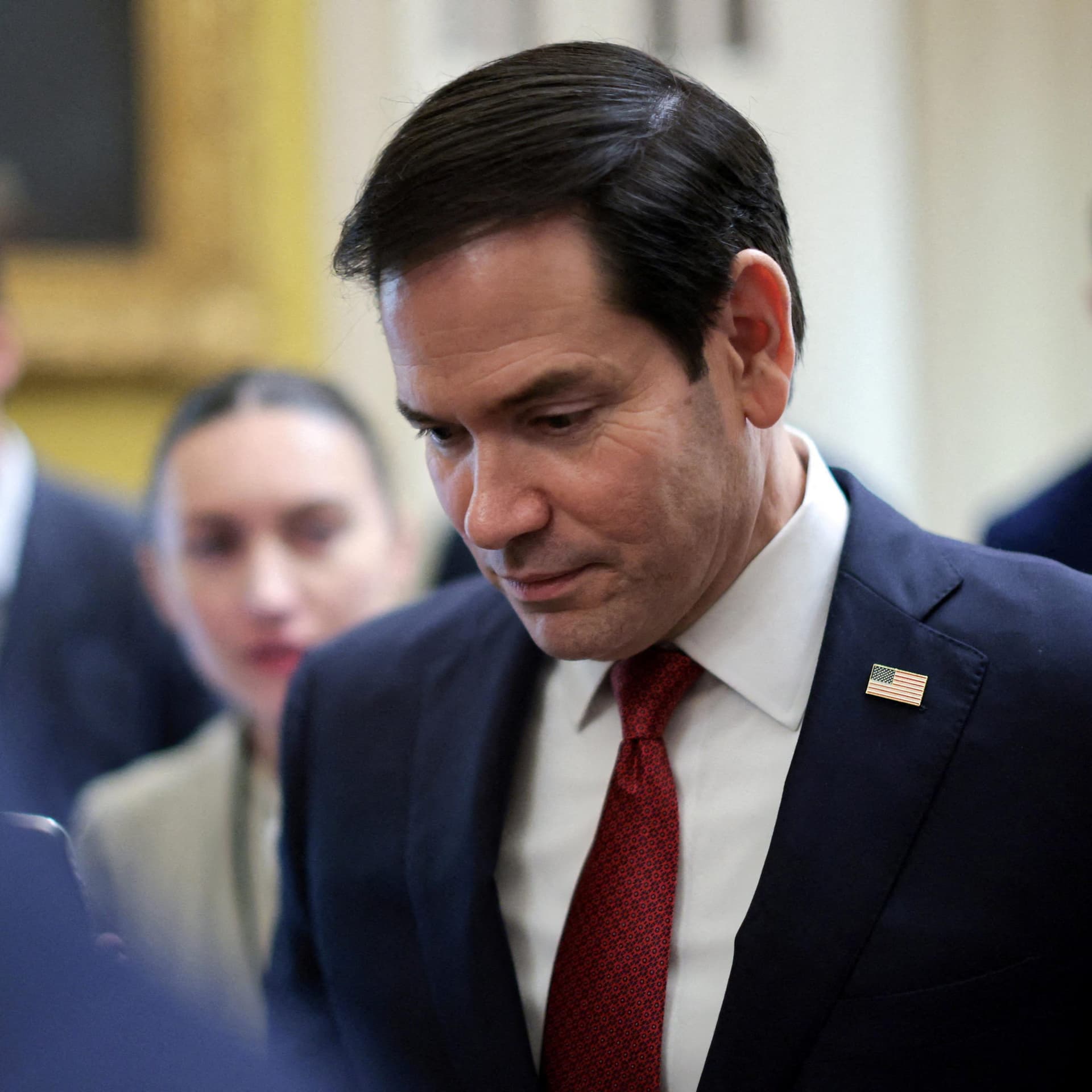
Photo: U.S. Secretary of State Marco Rubio. REUTERS/Jonathan Ernst/File Photo