
In short
Whether Iran has the “upper hand” in the Strait of Hormuz amid escalating US-Iran threats, and what both sides want from negotiations and a proposed ceasefire.
Guests
Parham Gobadi, BBC Persian Service colleague and regular on the show; background in covering Iran/Iranian politics for BBC Persian.
Key claims
The US says it will block ships entering/exiting Iranian ports, aiming to flip leverage so non-Iranian ships can pass while Iranian ones can’t. Iran argues it already controls the strait via targeting and has used it as leverage, potentially more than the nuclear program. A proposed “10-point” plan is attributed to Iran and would include sanctions relief, compensation, and continued Iranian control of Hormuz.
Notable examples
Bandar Abbas, Boucher, Chabahar; Khark Island (most Iranian oil exports). Possible escalation via the Red Sea’s Bab el-Mandeb (Houthis). JD Vance-led talks in Islamabad with Iran’s delegation headed by Mohammad Bagheri Qalibaf (Revolutionary Guard background).
Written by AI. May contain mistakes. Listen to the episode to check what was said.
Chapters
Tap a time to open that second in VOThe Blockade of Iranian Ports
1:12 to 2:40
Discussion on the U.S. blockade of Iranian ports through the Strait of Hormuz.
“Eastern Time, the United States says it began implementing a blockade of all ships entering and exiting Iranian ports through the Strait of Hormuz.”
Iran's Strategic Ports and Islands
2:40 to 4:00
Insight into Iran's key ports and the significance of Khark Island for oil exports.
“does Iran have the upper hand in the Strait of Hormuz?”
Strategic Implications of the Blockade
4:00 to 6:00
Analysis of the implications of the U.S. blockade and Iran's response to it.
“You said a moment ago that they are blocking something that has already been blocked.”
The Iranian Perspective on the Blockade
6:00 to 7:30
Understanding Iran's view on the blockade and its leverage over the Strait of Hormuz.
“They were saying that we have to, in order to counter Americans, we have to block the Strait of Hormuz.”
Ceasefire Talks and Their Context
7:30 to 10:40
Exploration of the ceasefire talks between the U.S. and Iran amidst ongoing tensions.
“It's a really important, actually, point because it can get worse.”
Iranian Delegation and Its Significance
10:40 to 14:00
Details on the Iranian delegation's size and the implications of their negotiations with the U.S.
“but it gives birth to a two-week ceasefire.”
Iranian Factions and Negotiations
14:00 to 15:06
Explore the internal factions in Iran and their stance during negotiations with the U.S.
“Does that mean that there is a very firm idea about who's in charge and what they have to do?”
U.S.-Iran Talks Overview
15:06 to 18:14
An overview of the recent U.S.-Iran negotiations and the positions each side took.
“part of the Revolutionary Guard is willing to end this fight and strike a deal with the Americans.”
Iran's Perspective on U.S. Demands
18:14 to 20:56
Insight into Iran's viewpoint on U.S. demands and their diplomatic strategy.
“We leave here with a very simple proposal, a method of understanding that is our final and best offer.”
The Strategic Importance of the Strait of Hormuz
20:56 to 23:34
Discussing the strategic leverage Iran holds in the Strait of Hormuz amid negotiations.
“They knew they had this potential, but I think they refused to play that card because it was a risky card.”
Show all 12 chapters
Consequences of Failed Negotiations
23:34 to 26:03
Analyzing the implications of the stalled negotiations between Iran and the U.S.
“One of the most important issues is that Iran's ballistic missiles are really low-cost made weapons.”
Conclusion and Reflections
26:03 to 26:58
Reflecting on the discussion and the broader implications of U.S.-Iran relations.
“And it has proven right for them from their own perspective.”
Transcript
Automatic transcript. May contain errors.0:00This BBC podcast is supported by ads outside the UK.
0:30business needs in one place, saving you time, headaches, and serious money. Stop paying for missing pieces. Go to odoo.com. That's O-D-O-O.com to learn more. Self-directed investing, trading, full-service wealth management, automated investing, financial planning, thematic investing, retirement planning. Phew. And to think, that's just a small taste of what Schwab offers. because Schwab knows that when it comes to your finances, choice matters. No matter your goals, investing style, life stage or experience, Schwab has everything you need, all in one place, so you can invest your way. Visit schwab.com to learn more.
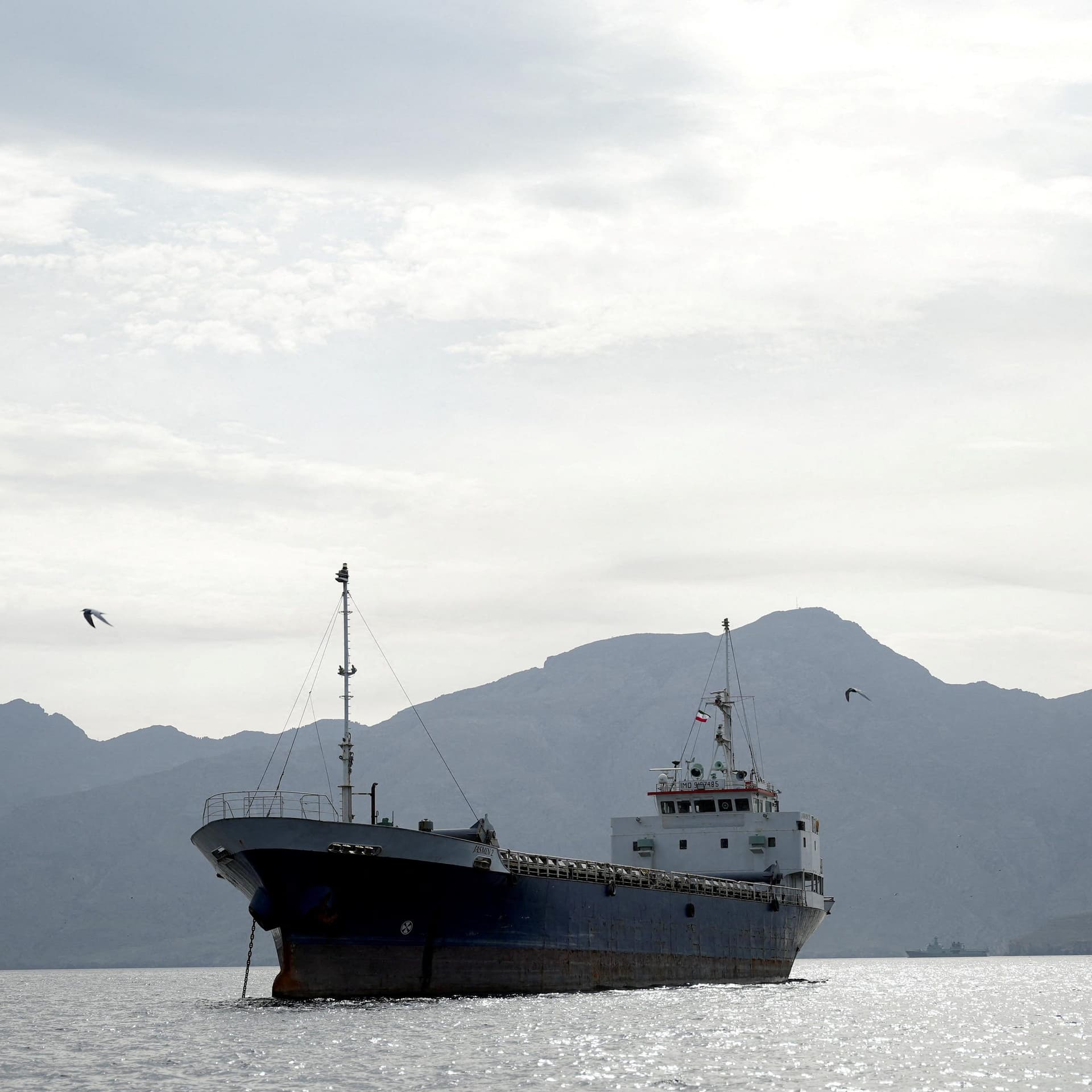
1:14On Monday at 10 a.m. Eastern Time, the United States says it began implementing a blockade of all ships entering and exiting Iranian ports through the Strait of Hormuz. President Trump took to social media and warned that any Iranian ships trying to approach the blockade would be, quote, immediately eliminated. Eliminated, by the way, in all caps. This new blockade and the escalating threats follow weeks when it was Iran which was seemingly in control of this vital shipping lane, barely more than 20 miles wide at its narrowest point. Over the weekend, the Americans and the Iranians failed to reach a deal after a long day of talks.
1:55We can't let a country blackmail or extort the world. Because that's what they're doing. They're really blackmailing the world. We're not going to let that happen. The Trump administration has repeatedly insisted it's winning the war. The Navy is gone. Their air force is gone. Their anti-aircraft is gone. Their radar is gone. And their leaders are gone. But Iran doesn't look totally defeated. Tehran, too, thinks it has the upper hand. To help us understand why and what Iran wants, we're joined by our colleague from the BBC Persian service, Parham Gobadi, a regular on the show. From the BBC in London, I'm Asma Khalid.
2:37And I'm Tristan Redmond. And today on The Global Story, does Iran have the upper hand in the Strait of Hormuz?
2:51At the moment, Donald Trump is saying that the United States is going to blockade Iranian ports. Tell us, what are these ports exactly and what's going in and out of them? So it's quite interesting that he's blocking something that has already been blocked by Iranians. But Iran has several ports. And one of them, for example, is in the southern province of Hormuzgon, Bandar Abbas province. another one further to the west, Boucher, another one further to the east, and that is Chabahar. So not all the ports are along the Strait of Hormuz. So no, not all of them are. Bandar Abbas is at the Strait of Hormuz, but Boucher is in the Persian Gulf, and Chabahar is in Oman Sea.
3:35So they're scattered all over the coastline. However, there are also some other very important islands as well. People have probably heard about Khark Island, that is a strategic island, over 90, 95 percent of Iranian oil export takes place from that island. So a lot of gas, oil, petrochemical sites and facilities are located in the southern part of Iran. You said a moment ago that they are blocking something that has already been blocked. So I just want to be clear on what we're saying here. I mean, it seems like the Trump administration's desire has been to reopen the Strait of Hormuz We have repeatedly heard that from President Trump.
4:16You're talking now about a situation in which Iranian ports will be blocked. How do you square those two things? So Iranians, when they block the Strait of Hormuz, they said that any ship that passes through that, if we haven't checked them, if they belong to the enemy, we're going to target them. And, you know, the insurance costs went through the roof. So technically, the ships could not pass the Strait of Hormuz. Now, what Americans are doing to counter Iranian move is saying that we allow all the other ships to cross. However, those ships that belong to Iran, if they go to Iranian ports, those ones are not allowed to cross the Strait of Hormuz.
4:51But presumably also oil going to other countries, right? Probably at the end of the day, no tanker or ship is going to be able to cross the Strait of Hormuz because it's either going to be targeted by Iranians or Americans. But the theory is that we're flipping the current situation. Until now, we've had a situation where the Iranian ships could get through, but others could not. But the idea is now to flip it so it's the others that can get through and not the Iranians. Exactly. So Americans want to apparently cripple the Iranian economy because Iran's one of the main revenues in Iran is through gas and oil.
5:23So if they can stop Iran's gas and oil export, which is mainly to China and Asia, then they can put huge pressure on Iranian economy. And the status quo traditionally has been freedom of navigation across that strait. Yeah. So this is a very interesting point that you mentioned, because the aim of the war at the beginning was regime change mentioned by both Donald Trump and Benjamin Netanyahu, Israeli prime minister. However, after the war began, Iran blocked the Strait of Hormuz. And now the main concern at the moment, Europeans, Americans, the entire Arab countries, they're all talking about opening up the Strait of Hormuz.
5:59For the world, it came as a shock, but not for Iranians, because hardline Iranians have been talking about that idea for decades, the most hardline part of the Iranian political system. They were saying that we have to, in order to counter Americans, we have to block the Strait of Hormuz. And it has worked tremendously in their favor. Actually, many analysts believe that blocking Strait of Hormuz has paid off and it has become way more significant leverage for Iranians than the nuclear program and that project entirely. Because first of all, they can start making money out of this. Second of all, they have choked off the world economy.
6:38So many Iranian analysts inside Iran, they're saying that give up the nuclear issue. We have a trump card to play right now from now on, and that is the Strait of Ormos. So many analysts believe that the war was for United States and for Israelis. They had tactical success, but strategically they failed. How does what's happening right now fit into Donald Trump's stated aim, which is to reopen the strait, to actually increase the passage of petroleum products above all? We did an episode last week, actually, Paham, on the impact, the economic impacts of what's going on right now. But in your best assessment, are these threats of a blockade likely to increase uncertainty and decrease passage through the strait rather than the other way around?
7:30It's a really important, actually, point because it can get worse. Iranian parliament speaker, Mohamed Bahrir Ghalibov, who also headed the Iran's negotiation team in Islamabad, tweeted something today. And he said that kind of mockingly, saying that the Americans should enjoy the four or$5 gasoline because this is going to be a dream in a few months. Which by the way, by the American standard is already high. It's already high. $5 a gallon gas is not a good deal by most American standards. So why is he saying that? Because they're saying that if Donald Trump, blocks the Strait of Hormuz, we still have another card to play, and that is Babal Mandab Strait through Houthis they can block in the Red Sea.
8:12Many people will remember that Houthis managed to, you know, target ships that were going through the Strait of Babal Mandab. So if they can block that Strait as well, that is going to be extra pressure on the freedom of navigation in the world. So, Parham, the context in which this is all happening is against the backdrop of talks of a ceasefire. This was just last week after, you know, more than a month of strikes by the United States and Israel and retaliatory strikes from Iran across the Gulf. We heard news of this 10-point peace plan. Where did this plan come from? What was in it? And I think it's important for us to understand this context because prior to this escalation, there was a suggestion that, hey, maybe there's actually an off-ramp.
8:58You're right. What happened was that after Iran blocked the Strait of Hormuz and it puts extra pressure on the world economy and Donald Trump wanted to appease Iran by giving this ceasefire, he wanted Iranians to remove the blockade of the Strait of Hormuz. Apparently, this was something that were through backdoor negotiations. It was maybe agreed on or not. But it did not materialize. So the blockade still remained in place. The peace plan is like the number of the things that Iranians have demanded. And they keep saying and talking about it on a daily basis. And one of the most important things in that, for example, is that they want compensation for the damage that has been inflicted on Iran as a result of war.
9:39Well, how likely is it that Donald Trump is going to pay or Israelis are going to pay compensations to Iranian? I don't know, but it's extremely unlikely. The other thing is that they want a guarantee that Iran is not going to be attacked again, because there is a huge mistrust between the two parties, especially Iranians, because they say that, listen, we were in the midst of negotiations with you twice, and you attacked us in the middle of the talks, both times, back in June 2025, in the 12-day war. And this time around, the same scenario took place. Okay, so 10-point plan originates from Iran, the lifting of all primary and secondary sanctions on Iran, continued Iranian control over the Strait of Hormuz, US military withdrawal from the Middle East, an end to attacks on Iran and its allies, the release of frozen Iranian assets, a UN Security Council resolution making any deal binding.
10:35Okay, so this comes from Iran. It's not the basis of a lasting peace plan, but it gives birth to a two-week ceasefire. How was that ceasefire actually reported inside Iran, and how was it received by people? Well, just like Americans, they claimed victory. They said that, listen, we are in control of the Strait of Hormuz. Through the Strait of Hormuz, we managed to make them stop their aggression. So the narrative is totally different inside Iran from the American side. But some analysts, they say that it's a good thing, actually, that both sides are claiming victory because that's how you can stop wars.
11:14I was going to say the same. I mean, there's something to be said for the idea that a deal can only be reached when both sides think they've actually gotten something out of it. But nonetheless, we see these talks then come to some fruition where the Iranians and Americans meet in Pakistan over the weekend. the American vice president attended. And that was frankly a sign, I would say, of how seriously the United States, it seems, was taking these talks. What do we know about the Iranian delegation? It was actually fascinating from several points of view. One was the person who headed this delegation, Mohammad Boghul Golubov, because before that, as you remember, it was Aroch, Iranian foreign minister who headed the delegation.
11:52Before that, during the JCPOA, Iranian nuclear talks back in 2015. So it was always the Iranian foreign minister heading the delegation. This was the first time that an Iranian parliament speaker was heading the delegation and not the Iranian president. Why? Because Mohamed Bagheri-Ghalibov is actually one of the most important politicians in Iran right now. He's coming from the Revolutionary Guard, so he has a background like that. He was Tehran's police chief. But apart from that, the most important thing is that when Iranian commanders, all Iranian commanders were killed during the 12-day war, according to himself, he was the one who headed the fight against the Americans and the Israelis.
12:32Last summer. Last summer. So imagine, if I want to put it in a context for Western audience, usually people who work in the government, they say it's a revolving door between the private sector and the government, right? In Iran, it's the other way around. It's like the Revolutionary Guard and the government. So, yes, he looks like a civilian. He wears a suit. However, when it's needed, they're becoming Revolutionary Guard commanders. And there were some reports that Pakistanis contacted Americans to remove him from the target list because Larijani was killed. He was also Iran's security chief.
13:09He also had a Revolutionary Guard background, but he was at the moment a politician. He was targeted and he was assassinated in an Israeli-American strike. So it is reported that Qalibov was also on the list, but they told Donald Trump that if you kill him, who else is there to negotiate with? And he met, this is a high-ranking Iranian politician who met J.D. Vance, you know, vice president of the United States. This is the highest, you know, meeting between the two countries after almost five decades. But apart from that, the size of the delegation was also really significant. Well, 70, 80 people were going to Islamabad.
13:46from hardliners to less hardline to conservative. So the delegation was huge. And they said that they have the mandate to strike a deal. At least that's what they said. Can you help us understand, though, just the size of the delegation? Does that mean that there is a very firm idea about who's in charge and what they have to do? Or could it, in fact, be the opposite, that there are lots of different factions who are all trying to get in on the action during the talks? So I think the latter is correct, because when the negotiations took place, some Iranian hardliners, they took to the streets and they went in front of Iranian foreign ministry and they started chanting his slogans against Mr.
14:29Arakchi, saying that, you know, he's a traitor, that he's negotiating with Americans because just 40 days ago, they killed our supreme leader. And now you're sitting at the table, also, Qalibov, that you're sitting at the table, you're shaking their hands, actually, technically, because there was some news that Qalibov and J.D. Vance shook hands. So they didn't like it. However, after the Iranian delegation came back to Iran and no deal was struck, they were quite happy. And he was received as a hero. And I mean, he received praise from Iranian hardliners as well. But Iranian hardliners, they don't want any deal with the Americans.
15:04But it shows that at least part of the Revolutionary Guard is willing to end this fight and strike a deal with the Americans. Okay, I want to spend a little bit of time talking about what actually transpired over the weekend, when the Americans and the Iranians met in Islamabad, at least what we know from the American side. I would say nobody expected them to all come away with a conclusive deal in a day. But after some 21 hours of talks, we saw the American vice president, J.D. Vance, come out and say there was no deal. We've been at it now for 21 hours, and we've had a number of substantive discussions with the Iranians.
15:43That's the good news. The bad news is that we have not reached the agreement. And frankly, you know, I will say this entire episode was a pretty big deal for Vance. He's someone, in fact, we talked about this in an episode we did back on April 1st, how this was a crucial foreign policy test for him in some ways. He has not really been the one leading negotiation efforts on a diplomatic stage of this sort. You know, we saw him come out and say, you know, despite him talking to Trump a number of times on the phone as this all went down, they were not able to reach a deal. We go back to the United States having not come to an agreement.
16:13We've made very clear what our red lines are, what things we're willing to accommodate them on and what things we're not willing to accommodate them on. And we've made that as clear as we possibly could. And they have chosen not to accept our terms. Questions? And we've spoken, Parham, about the 10-point plan that the Iranians presented prior to the ceasefire. The Americans have their own demands, and I'm going to run through a few of them. The ending of all uranium enrichment, the dismantling of all major nuclear enrichment facilities, the retrieving of highly enriched uranium, what Donald Trump calls the nuclear dust, accepting a broader peace, security and de-escalation framework that includes regional allies.
16:59That's a lot of words. How would you describe that more simply? I think about the nuclear issue, there is a possibility to reach a deal. However, the sticking point here is that if Donald Trump agrees to some sort of Iranian enrichment, no matter how low it is, then the question is, why did you withdraw from JCPOA? Joint comprehensive plan of action, widely known as Iranian nuclear deal, is a deal that reached back in 2015 between Iran's government with Obama's administration. So if Donald Trump allows any percentage of Iranian enrichment, then the big question is, why did you withdraw 10 years of Iranian enrichment?
17:41He has to answer that question. So that's why I think he's pushing for a zero enrichment, at least for a limited period of time, 10, 20 years or something. And we also understand that the Trump administration wants to see the Strait of Hormuz fully open and presumably with no toll passage either. And the ending of funding for proxy armed groups, Iranian allies like Hamas, Hezbollah and the Houthis. So nonetheless, after this entire day of talks, many hours of talks, we saw the vice president come out and say that they gave the Iranians their final and best offer. We leave here with a very simple proposal, a method of understanding that is our final and best offer.
18:21We'll see if the Iranians accept it. Thank you. That is the American version of events. What did the Iranians say about these talks? Especially if you've sent 80 people, 70 or 80 people all the way to Pakistan and they come back empty handed. How do you spin that? Yeah, they're all following the same line that we were about to strike a deal, but the Americans suddenly started putting extra pressure after they've made six phone calls and had a conversation with Donald Trump. Some of them are saying that Benjamin Netanyahu interrupted the negotiations after the calls. So we don't know which version is correct.
18:58These are just reports from different, you know. So the Iranian version of events is that they were close to making a deal. They were close to making a deal. However, they say that Americans wanted it all. And Donald Trump said that as well. He said that I don't want 90 % of my demands. I don't want 95 % of my demands. I want all my demands. And that infuriated Iranians. They're saying that we're going to teach you a lesson that this is not how the negotiations work. We have patience. We are open to diplomacy, but you cannot dictate your terms to us. What are the points that the Iranian side refused to accept from the American proposal?
19:33And I'm really interested by the point that you raised earlier on, which is that the nuclear issue is suddenly less important to the Iranian side after they realize how much power and leverage they have because of their control of the Strait of Hormuz. Exactly. So for Iranians, it's really important not to make the mistake of the JCPOA. JCPOA, yes, they reached the deal. However, when Donald Trump got into power, he withdrew from the JCPOA, from the Iranian nuclear deal. So they wanted to be ratified by the Congress. And if you know the American, you know, domestic politics, this is not something easy to be done.
20:07So Iranians are saying, OK, let's say that we reach the deal with Donald Trump. How do we know the next president is not going to have, you know, a different agenda? And say that this deal was also a bad deal. I want to have another deal with Iranians.
20:32I mean, I know Donald Trump likes to make allusions to who is carrying the cards. And I don't know if you're a poker player or not. And there is an expression in poker, which is to get a great card in the final card that's dealt. You get a great card on the river. And I just wonder to what extent the Iranian situation is a bit like that. They suddenly discover that they had this ace that they didn't realize they had. But did they suddenly discover? I mean, I've been wondering this, too. We talk about the Americans wargaming. That's what I'm saying. They knew they had this potential, but I think they refused to play that card because it was a risky card.
21:04Now it's different for them. Now it's an existential crisis. So they're playing any card available to them. But there is a point about blocking Strait of Hormuz. Yes, Iranians now have the upper hand. However, they need to be really careful with this card strategically and in the long run because Iranians now have the upper hand. And many Iranians are saying that this is the right moment to strike a deal with Americans. However, if they don't do that, we see that the Europeans are getting together. UK and France are getting together, inviting many other countries to say, quote-unquote, defending the freedom of navigation.
21:38This is a sign that there is a coalition, you know, forming against Iran. So in the long run, Iran can be not a threat to the region, according to Western governments, but a threat to the world. So this is a really risky game for Iranians. Paham, does the United States simply not know how to negotiate very well with Iran? Is what we're seeing here the consequence of decades and decades of not having any contact with each other? That's a very good question. I think the problem is Donald Trump's style of negotiation is carrot and stick. So to hit really hard and then suddenly he was talking about erasing the entire Iranian civilization, then they're sitting at the table negotiating with Iranians.
22:22But that shows incohesion. And lack of trust. Lack of trust. So Iranians, their ideology is based on resistance. And that's what they call it. That's what they call their proxies, axis of resistance. So their entire ideology, their entire existence is based on resistance. So Trump and Netanyahu thought that if they bomb Iran, if they kill Khamenei, they're going to give up. They haven't. Not only haven't they given up the power, but they've also managed to choke up one of the most important waterways in the world. It seems like both the United States and Iran left these negotiations over the weekend to some degree refusing to budge on certain things.
23:01That makes me wonder, OK, well, fine, maybe if you both think you win, you can get to the negotiating table. But if you both are refusing to budge on anything, then you're really actually not going to solve anything. And that makes me wonder, where does this go from here? So one of the biggest risks is that Americans and Israelis are going to continue bombing Iran. But the question is, all those bombings, yes, they have weakened Iranian ballistic capabilities, but they have not eradicated and obliterated Iranian ballistic. Iran is still capable of shooting missiles both at Israel and countries in the region.
23:34And there is a huge problem with that. One of the most important issues is that Iran's ballistic missiles are really low-cost made weapons. However, American-made interceptors are very expensive, millions of dollars compared to tens of thousands of dollars. According to American officials, this is depleting American stockpile of weapons and interceptors. And that's not only dangerous for Americans, that can because Chinese and Russians are also watching and they're probably enjoying that to see American stockpile depleting day by day because they need not only to use it for themselves, Americans, but they also have to provide it to Israelis and Ukrainians as well.
24:16For Iran, becoming a war of attrition is in their favor if this becomes a war of attrition. However, this is not playing in favor of the Americans and Israelis. And we know there's certainly not an appetite amongst the American public for a resumption of a full-out war, right? I mean, to be clear, we've still continued to see a war over the last several days. But I'm talking about the full-scale escalation you're describing. There's not that appetite amongst the American public. Iranians know that. Is there an appetite for the resumption of this all amongst the Iranian public? No, that's the thing, because, you know, they're suffering.
24:50Iran is getting bombed really hard on a daily basis, I mean, before the ceasefire. at many... So neither public wants this. But they know that Iranians, because it's in their home turf, they can endure it better. They've been in a war with Iraq for eight years. Let's not forget that. In the 80s, you're saying. And they survived that without giving up an inch of territory. So they're used to it. And these are the same generations like Muhammad Baagir Ghalil both fought in that war. Many of the Iranian authorities are the commanders of that war. So they know resistance. Rouhani, Iranian ex-president, and Mohammad Javad Zarif, they think that diplomacy is better.
Read the full transcript
25:29You should be able to solve all your problems, especially with the West, through diplomacy. But they do not have the upper hand nowadays, especially after this war. Because Khamenei is dead, more radical and revolutionary guards seem to be more in power and have the upper hand. And to them, diplomacy is just an extension to the battlefield.
25:56The things that determine the future of the country, it should be determined in the battlefield, not at the negotiating table. And it has proven right for them from their own perspective. If you look at it, blocking the Strait of Hormuz has worked far, far better than sitting with the Americans at the negotiation table. So Iran is not feeling the pressure to come to an agreement at this point, you're saying? At least they're not showing that, but there is tremendous amount of pressure on them because of the economy. Plus, the other thing about Donald Trump is that he's unpredictable. And he has already targeted some of the Iranian bridges and infrastructure.
26:30The other thing is that he hates to lose. So if he thinks that he's looking weak and he's losing the fight, he might choose to target Iranian infrastructure. And that is a really dangerous game. That will hurt Iranians for generations, probably.
26:54Thank you so much, Parham. Thank you. Thanks for having me. It's always a pleasure to be here.
27:03That was Parham Gobadi from the BBC's Persian service. That's the arm of the BBC that reaches tens of millions of Iranians. We love to hear from you. So please send us your thoughts and ideas on theglobalstory at bbc.com. And you can also give us a rating on your podcast app because it really helps other people find us. And a quick housekeeping note, if you'll indulge me. After our conversation about fertilizers and my desire last week that perhaps we maybe do a special week of coverage just on the question of fertilizers, we heard from our listener, Ernest Beck, who said plenty of outlets are talking about oil and gas, but few people are talking about other impacted industries.
27:45I'd much rather hear about fertilizer or helium than yet another round of folks talking about petroleum products. Ernest, I'm still working on the rest of the TGS team on this. I can't promise anything. They're a hard nut to crack. But you and I, we are the silent majority who care about fertilizers. I'll do what I can. Well, Ernest, thanks for writing in. Tristan, obviously a big fan of your letter of endorsement there. But in all honesty, we really do read the emails, the messages that you send in. so please keep them coming. If you're looking for a way to catch up on the latest news from around the world, then check out our sister show, The Global News Podcast.
28:21You can find it wherever you listen. And that's it from us for today. The episode was produced by Kat Farnsworth, Zandra Ellen, and Aron Keller. It was edited by Richard Fenton-Smith and mixed by Travis Evans. Our studio manager is Johnny Baker. Our digital producer is Matt Pintus. Our senior news editor is Chyna Collins. And I'm Tristan Redman. And I'm Asma Khalid. And thanks as always for tuning in. Cheerio!
From the publisher
The United States began implementing a blockade of all ships entering and exiting Iranian ports in the Strait of Hormuz on Monday. President Trump took to social media and warned that any Iranian ships trying to approach the blockade would be “immediately ELIMINATED.” The blockade and escalating threats come after weeks of Iran being in control of one of the world’s busiest shipping lanes.
And over the weekend, delegates from the US and Iran failed to reach a resolution after 21 hours of peace talks. The Trump administration has repeatedly insisted it’s winning the war, but so has the government in Tehran, which believes it is negotiating from a position of power. To help us understand why - and what Iran wants - Tristan and Asma are joined by Parham Ghobadi from the BBC Persian Service. Producers: Cat Farnsworth, Xandra Ellin and Aron Keller Sound engineer: Travis Evans Executive producer: Richard Fenton Smith Senior news editor: China Collins