
In short
Whether President Trump is close to brokering a hostage-and-ceasefire deal between Israel and Hamas that could end the Gaza war, and how his diplomacy (including public pressure via social media) differs from prior US approaches.
Guests
Tom Bateman, BBC journalist covering Trump administration foreign policy and diplomacy; previously BBC Middle East correspondent based in Jerusalem (2017–2024).
Key claims
A breakthrough followed Hamas’s “qualified yes” to Trump’s 20-point plan, though Hamas rejected key elements like disarmament and Hamas disappearing. Trump’s team (Steve Witkoff, Jared Kushner) is negotiating details in Cairo with Israel’s side. The plan is likely two-stage: hostage/prison exchange first, long-term end-of-war later—still hard because both sides fear losing leverage afterward.
Notable examples
Ceasefire/hostage framework began Jan 19 under Biden, collapsed after Israel resumed fighting; Israel struck Doha; Trump publicly urged Israel to stop bombing and threatened “all bets are off” if Hamas delays.
Written by AI. May contain mistakes. Listen to the episode to check what was said.
Chapters
Tap a time to open that second in VOTrump’s Diplomatic Breakthrough
0:44 to 0:57
Discussion on Trump's efforts in finalizing a hostage deal in Gaza.
“teens can gain hands-on investing experience and build positive money habits.”
Trump’s Diplomatic Breakthrough
1:00 to 2:08
Discussion on Trump's efforts in finalizing a hostage deal in Gaza.
“President Trump has sent his top Middle East negotiator and his son-in-law to Cairo to finalize a hostage deal that could possibly end the two-year war in Gaza.”
The Role of Qatar and Egypt
2:08 to 4:00
Exploration of the mediated negotiations between Israel and Hamas.
“In trying to understand this story, I thought my colleague here in D.C., Tom Bateman, would be the ideal person to call up.”
The Shift in U.S. Policy
4:00 to 6:28
Analysis of the changes in U.S. support during the conflict.
“We saw international organizations declaring officially a famine in Gaza.”
Key Moments in the Conflict
6:28 to 8:21
Insights into pivotal events and turning points in the Gaza conflict.
“and in the meantime another 20 ,000 Palestinians were killed.”
Trump's New Peace Plan
8:21 to 10:38
Details on Trump's 20-point peace plan and its implications.
“who he has seen the degree to which Israel is being isolated.”
Hamas's Response
10:38 to 14:03
Analysis of Hamas's carefully crafted response to Trump's peace proposal.
“Okay, so that brings us to Monday of last week.”
Hamas Responds to Trump's Peace Plan
14:03 to 16:12
Learn about the intricacies of Hamas's response to President Trump's peace proposal, including key points of contention.
“We saw Israel, we saw the United States say that they were on board with this plan.”
Trump's Public Diplomacy
16:13 to 18:06
Discover how President Trump publicly pressured Israel and Hamas in pursuit of peace.
“Netanyahu to having to accept that position.”
Negotiating the Hostage Release
18:07 to 22:30
Explore the complexities of negotiating the hostage release in exchange for Palestinian prisoners.
“And he's trying to create a rapid sense of urgency, of momentum, flying his mediators to Cairo, getting the Israelis to get theirs out.”
Show all 12 chapters
The Broader Context of Middle East Peace
22:31 to 24:40
Understand the long-term implications of Trump's peace efforts in the Middle East, including relations with Saudi Arabia.
“But I think that's still very problematic for the Palestinian side.”
Challenges and Potential Outcomes
24:41 to 26:51
Analyze the challenges facing the peace deal and the potential outcomes for both Israel and Hamas.
“So if Donald Trump can get the breakthrough on this, people will probably look back and think it was actually an astute move by Macron to do all this.”
Transcript
Automatic transcript. May contain errors.0:00This BBC podcast is supported by ads outside the UK.
0:30No bouncing between tabs. And best of all, no spreadsheets. Stop managing software and start managing your business with one unified system. Try for free today at odoo.com. That's O-D-O-O dot com. With the new Schwab Teen Investor Account, teens can gain hands-on investing experience and build positive money habits. It's an account co-owned by you and your teen, so you can monitor and engage with the account while your teen learns how to invest and manage money. Learn more at schwab.com. President Trump has sent his top Middle East negotiator and his son-in-law to Cairo to finalize a hostage deal that could possibly end the two-year war in Gaza.
1:13In a stunning diplomatic breakthrough on Friday, Hamas accepted, at least in partial terms, Donald Trump's peace plan. And Trump has been embracing it as a victory. Everybody was unified in wanting this war to end and seeing peace in the Middle East. And we're very close to achieving that. Thank you all. All weekend, the American president kept up the momentum, the pressure, and the optimism. It's a great deal for Israel. It's a great deal for the entire Arab world, Muslim world, and world. So we're very happy about it. From the BBC, I'm Asma Khalid. And today on The Global Story, my colleague Tom Bateman on how President Trump reached a breakthrough with Israel and Hamas and whether his approach to dealmaking could actually pay off.
2:07Hi, Asma. Hi, how are you? Hi, I'm all right. In trying to understand this story, I thought my colleague here in D.C., Tom Bateman, would be the ideal person to call up. His current job is covering the Trump administration's foreign policy and diplomacy. But before that, he was in fact the BBC's Middle East correspondent. He was based out of Jerusalem from 2017 to 2024. Well, thank you so much for taking the time. We are recording this with you on Sunday afternoon, October 5th. And at this point, we are now roughly two years since the war in Gaza began. There have been sort of fits and starts around temporary truces.
2:46But in terms of this specific deal that has emerged now, where does that story start for you? Well, I think you have to go back to the Biden administration, really. And for nearly the entirety of 2024, you had the administration pressing forward, trying to get a ceasefire that would involve the release of hostages and therefore a quid pro quo for the Palestinians, which usually meant basically some form of Israeli withdrawal. And to cut a very long story short, with all of that, you had eight months basically of on-off, extremely painful and protracted mediated negotiations between Israel and Hamas, mediated by Qatar and Egypt, which did eventually reach a truce and the release of hostages.
3:37That agreement was struck and came into force on the very last full day of the Biden administration, the 19th of January. So that when President Trump came into office, you saw then the hostages starting to be released each week and Palestinian prisoners released in exchange. And there was a pullback of Israeli forces then. And then that deal fell apart. And it looked like in the spring, honestly, Tom, the situation looked really dire. We saw international organizations declaring officially a famine in Gaza. We didn't seem, at least I think from the outside, that any deal seemed likely. We saw the invasion of Gaza City.
4:14So what has transpired over the last several months to lead us to where we are now? Well, I think it's important to go back to January and February, because this was a, basically this lasted two months, but the initial phase of ceasefire and hostage and prisoner exchange was signed up for six weeks. So that started from, as I said, the 19th of January and went up to the beginning of March. as it had been set out under the Biden administration plan that was then negotiated. What was always supposed to happen, and the Biden principle was, after that first phase, if there was still basically good faith as they saw it between the two sides and some sort of negotiations continuing, you would then move to a second phase that would involve the release of the rest of the hostages over a period of time, while the two sides mediated a full end to the war.
5:08And I think if you go back to that period, remember that in February, you had Donald Trump stand up in the White House with Benjamin Netanyahu and say, oh, you know, the US is going to take over Gaza. We're going to turn it into the Riviera of the Middle East. The Palestinians can leave all of that. So I think from Netanyahu's perspective, they had seen the possibility to drop the Biden principles and to get what they would have seen as a far more favorable full end to the war. So I think that the Israelis saw this as an opportunity. Now, what basically happened, it got to the 1st of March. You had the deal then entering a twilight zone because the two sides had not managed to negotiate during that period.
5:50And then we saw Israel break the ceasefire. I mean, they would accuse Hamas of being recalcitrant, not adhering to the opportunity to mediate during that ceasefire. So you had both sides blaming each other. But the fact remains that it was Israel that went back in militarily and broke that ceasefire. Tom, you mentioned that over the summer the fighting resumed, and it has largely appeared that the Trump administration has been providing, I would say, unequivocal support to Israel in its bombing campaign. What was the key turning point for you when President Trump seemed to change his approach?
6:27Yeah, I mean, there has been unequivocal support. There's been fundamental backing. and in the meantime another 20 ,000 Palestinians were killed. The hostages remained being held by Hamas. We had a conclusion of famine by the IPC, the international body that monitors these things. We saw hundreds of Palestinians being killed trying to get food and you had also at the same time an independent UN commission concluding that Israel had committed genocide in Gaza, something it rejects of course and the Israeli coalition fundamentally rejects and says that was an anti-Israel finding but this absolutely devastating and destructive war continued and then got into the most recent phase with the Israelis assault on Gaza City so the conditions on the ground are unprecedented in terms of their devastation and destruction and in that context Over the months, we have had the increasing isolation of the Netanyahu government internationally.
7:29And I think that has been really key here, because what the Europeans did, and this was under Macron, was they decided that basically they couldn't sort of keep going with the US administration in terms of the unequivocal support it was giving to Israel. And we saw this really historic split between the Americans and their key European allies when it comes to the future of the Israeli-Palestinian conflict. So what Macron did with this decision to declare support for a Palestinian state, along with the British, was going back to the idea of a two-state solution, a shared future between Israelis and Palestinians, and trying to get things back along that track.
8:11And I think what has happened, basically, over the last few weeks, is President Trump has become increasingly irritated with Benjamin Netanyahu. who he has seen the degree to which Israel is being isolated. And the key moment was the Israeli strike on Doha. This was last month. It was a truly unprecedented moment. Just before 4pm Qatar time, explosions were heard in the Qatari capital, Doha. Where we saw Israeli jets strike inside of Qatar. Their justification here is saying that they were targeting senior Hamas officials. Benjamin Netanyahu's office posted on X that Israel took full responsibility for the attack.
8:58Today's action, it said... Now, they didn't actually get the people it seems that they were aiming for, but it really angered the Qataris. It really angered a number of other Arab governments as well. And you're saying that was a key moment. Why so? When you ask officials in Qatar about this, they say the Americans always asked us to keep Hamas here and tolerated a political office because it was a way to negotiate between Israel and Hamas. So there's a lot of history behind that. And remember that Qatar is a key ally to the United States, particularly to President Trump, who has, as well as diplomatic and political interests, foreign policy interests, he has business interests in Qatar, particularly his family, very strong relationship.
9:45And remember, you have the biggest US air base in the region in Doha. So there was rage in response to this from the al-Tani ruling family, as well as from the rest of the Arab and Muslim world. And I think the Trump administration was very sensitive to that. Fast forward to the United Nations then the week before last, where you had this absolutely critical meeting between Donald Trump and leaders in the Arab and Muslim world. He had already been getting Steve Witkoff and Jared Kushner to work on a renewed plan for an end to the war in Gaza. And I think what happened there was you saw him adopt a lot of their positions or get closer to some of their core positions for the future of Gaza and basically dispose of his entire Gaza Riviera and the displacement of Palestinians part, which, you know, the Arab countries absolutely embrace.
10:37And you've had Mr. Trump basically force Netanyahu to make what amounted to a very humiliating phone call from the Oval Office, with Donald Trump sitting next to him, apologizing to the Altanis in Qatar and saying, well, this won't happen again. So that was a really key moment. Okay, so that brings us to Monday of last week. So this is a big, big day, a beautiful day. When we witnessed this extraordinary press conference with President Trump and Prime Minister Benjamin Netanyahu. Potentially one of the great days ever in civilization. At the White House, announcing this 20-point peace plan. Things that have been going on for hundreds of years and thousands of years.
11:26At least we're at a minimum very, very close, and I think we're beyond very close. There was a lot in there. Did anything surprise you about what we saw that day? Well, the whole thing was surprising because what you had here suddenly was the White House having shifted position in very short order. We're talking about a few weeks when you compare it to the kinds of things he was saying in January and February this year about the future for Gaza, which had in effect given for the far right settler movement in Israel, this idea of a green light. It was sort of all their fantasies come true. And here you had a shift right back closer towards the Arab Muslim countries' positions about having to get a route to Palestinian self-governance without Hamas through this process of ending the war.
12:17And what we saw that day is President Trump saying that this is a plan that has been accepted by Israel. Was there anything that surprised you about that? the idea that Israel was okay with the terms as Trump laid them out? Well, Israel renegotiated parts of it over the weekend before. So I think they got a much clearer mention of Hamas disarming compared to some of the drafts. I think they felt that they got a bit more complexity around when and how Israeli forces would withdraw. Now, they couldn't say no to it because what we've seen is neither side being in a position where they want to be the one that says no to President Trump.
12:57So I think Benjamin Netanyahu had to accept this. The point about the plan is it's vague enough, it has enough holes in it, for either side to interpret it really in quite a broad way. And we then saw Benjamin Netanyahu fly back to Israel and say it was completely consistent with all his objectives for ending the war and that it would not mean a Palestinian state, that that's not mentioned in there.
13:30Although it is mentioned in there, there is an explicit mention of Palestinian statehood. Although it's, you know, the route to it is very vague and sort of conditional. But it is in there. And the key thing for him, he talks about the idea of Israeli troops not having to, you know, leave Gaza. Now that, it's sort of fudged in the plan in terms of how that would happen, and then being replaced with an international stabilization force, as they call it. But he has interpreted that very much as, you know, we can stay on the ground and therefore we have control and we get all the hostages out. So that was the beginning of last week.
14:04We saw Israel, we saw the United States say that they were on board with this plan. We saw, crucially, many other Arab Muslim countries also say that they had backed this plan. And then the plan goes to Hamas. and President Trump says that he'll give them three or four days to make a decision. He has this deadline. And Friday afternoon, Washington time, we see a response from Hamas. Tom, what exactly was in that response? Well, the language in the Hamas statement had been very, very carefully crafted. Released on Friday afternoon, I've no idea if that was a coincidence, but it's very interesting that I saw on at least two occasions last year when the Americans wanted to put something out there they knew would be very difficult for Israel to swallow, they do it on a Friday afternoon because they know that the religious and right-wing parties have got their smartphones switched off and it gives momentum.
14:56You get 24 hours over the Shabbat, the Jewish Sabbath, before the far right will respond and can try and sabotage it. So what Hamas said, and, you know, we were all looking at this in our newsroom and I'm sure many newsrooms everywhere saying, well, is this a yes or is this a no? You're trying to work out what the headline is. you know does Hamas accept or reject and it was very much a sort of qualified yes and a yes but rejecting key provisions particularly on disarmament although they didn't use that word and on the idea of Hamas just sort of disappearing they totally reject that but they said yes to the things they know Donald Trump wants to stand up and say he's achieved and that is basically the idea of a quick release of all the hostages living and dead in return for the release of Palestinian prisoners.
15:47They said yes to that part. That was enough for the White House to immediately frame this as acceptance by Hamas of the plan. What's been reported since is that you had at that moment a phone call between Donald Trump and Benjamin Netanyahu when Mr Netanyahu, it appears, was saying, Hamas are rejecting this and telling the president that. And he said, with an expletive in there, why are you being so negative? So the White House said this was a yes. I think they boxed in Mr. Netanyahu to having to accept that position. And then you saw this incredible momentum begin.
16:34Tom, you mentioned the word momentum. I want to stay on that point because we saw shortly after that response came out from Hamas, President Trump touting this as a win. So I just want to let you know that this is a very special day, maybe unprecedented in many ways. It is unprecedented. But thank you all. And thank you all to those great countries that helped. We were given a tremendous amount of help. Everybody was unified in wanting. But a lot has happened since then. So the first thing we saw was President Trump put out this social media post with this extraordinary line in it saying that Israel must immediately stop the bombing of Gaza so that the hostages could be released quickly.
17:20And, you know, for a U.S. president... That is extraordinary, Tom, though. Yeah. It's an extraordinary thing to see an American president call on an ally publicly to stop bombing. I've never seen that from anybody, Republican or Democrat, in recent years. Yeah. And it's the kind of thing, you know, sort of reminded of, you know, when you read about, for example, the Israeli invasion of Lebanon and Beirut being under siege at a moment where Reagan was on the phone to Menachem Begin, the Israeli prime minister, and basically told him to stop. But that was in a private phone call. You know, this is, as often with Trump, is very, very public.
17:55And I think that is partly just characteristic, but it's also deliberate because he's trying now, I think, to tell Benjamin Netanyahu it's over and it's time to stop. So, you know, you have this incredible moment where he's saying stop the bombing so that we can get the deal. And he's trying to create a rapid sense of urgency, of momentum, flying his mediators to Cairo, getting the Israelis to get theirs out. And Hamas officials from Doha appear to be on their way as well. So these talks can start on Monday. So it sounds like what you're saying is Trump is trying to put the Israeli government in a jam, ensure that they cannot back away from this deal.
18:38Also, though, on Saturday morning, we saw President Trump again take to social media and he called on Hamas not to delay and said otherwise all bets will be off. Yeah, and that's really important because, of course, you know, he can put the pressure on the Israelis and he's very clearly doing that, but he needs to put the pressure on Hamas too. Now, that's a slightly more circuitous route for him. He's doing it publicly and saying they better not delay. You know, he's effectively saying, look, I've got the Israelis to stall their media offensive. Although, as you've been hearing, the reports on the ground are very much not that that has happened.
19:10So, Tom, to be clear, then, the bombing has continued over the weekend and people have died. Exactly. You know, we saw the Palestinian Ministry of Health saying since dawn on Saturday, supposedly when the Israelis had said they'd switched to defensive operations, they say more than 70 people were killed. So clearly the offensive continues, although the Israelis are saying this is all about defensive action now to keep in line with what Mr. Trump has been asking for. One thing that stood out to me over the weekend was how much President Trump seemed to be using his social media platform as a tool for diplomacy.
19:45He posted that Israel was agreeing to a withdrawal line that would end, in his words, a 3 ,000-year catastrophe. He then later on posted photos of massive protests in hostage square in Israel with signs that said it's now or never. He seems to be trying to very publicly put the pressure on both Israeli officials, but also on Hamas officials and doing this all via his social media platform. Yeah, I mean, I've read a few things in Arab media over the weekend, which suggest that Arab leaders have been saying to Mr. Trump that he has to keep up public momentum on this. So I think that partly explains why he's very publicly, almost every few hours now, saying really to both Israel and Hamas, you've got to do this.
20:31There is no other alternative. and it's going to be bad, you know, for both of you really as implication for whoever sort of sabotages it. But that is very, very deliberate, I think. And it's very interesting about the way that Trump has been posting the pictures of the hostage family protests, because the Biden administration used the hostage family protests very much as a way to pressure Netanyahu to move towards a deal. And now you're seeing Trump very deliberately doing the same thing. So, Tom, it is Sunday afternoon. A lot may happen in the coming hours. But at this point, what do we know about what might transpire as it relates to this deal and how realistic it is?
21:16Well, if you listen to what the Americans are saying, I mean, we've had Marco Rubio trying to manage expectations a bit. Is this now the end of the war in Gaza? Well, not yet. There's some work remains to be done. And I would view it in two phases in terms of understanding. but also explain, which I think is now the reality, that this is going to happen in two parts, although that was never sort of made clear in this 20-point plan explicitly. The first piece of it, which was very clear from the letter and Hamas' response, is they have agreed to the president's hostage release framework. What they're expecting is, within very short order, a few days, the start of a process or agreement on the process to release hostages in exchange for prisoners.
21:55The second part of it, it's even harder, and that is the long-term peace. What happens after Israel... And then you will have a longer-term discussion about what happens on the ground and a post-war arrangement for Gaza. The problem is still, and I kind of keep coming back to the same point because this is sort of fundamental now, that the second thing in a way has to be agreed as part of the first because you still have the problem that Hamas are going to be deeply suspicious that as soon as they give up all the hostages, they lose all their power and they're then in a position where they're either going to be forced militarily to surrender because Israel will start the war or they're left with no negotiating power to get any of what they want which is to reject and resist disarmament as part of that second phase so it's still very problematic to even get the first point even though the Americans are saying now do the hostages and prisoners first we'll worry about the rest later I heard one diplomat from some of the Arab countries last week, talking about this, saying, look, let's just get the thing done, get the hostages out, and then you build the plane as you fly for the second bit.
23:03But I think that's still very problematic for the Palestinian side. And then what Mr. Trump is doing is trying to create this sense of urgency, but also say, and it was interesting in one of his Truth Social posts on Friday night, which I felt was a bit of a pointed remark of the Israelis, this isn't just about Gaza. This is about the whole Middle Eastern, 3 ,000 years of war, which he keeps saying. He wants to get, in the end, this normalization deal between Saudi Arabia and the Israelis. He sees that as the big prize, his legacy. He can say, you know, I ended the war and I got historic peace between the Saudis and Israel.
23:39And that, I think, is still in the background. But the interesting thing is, I think that brings things back to what I was talking about. And although the Europeans were punished, basically, by the Americans for doing the Palestinian state recognition for isolating Israel, they have actually pulled Mr. Trump round much closer to their position because they did it with the Saudis. And that was absolutely critical. And I think, you know, that is a very strong draw. That's fascinating, Tom. You really think that recognition ultimately helped pull Trump along? I think Macron is pretty smart, basically, about realizing that the Europeans would be left alone or on their own, as far as the Americans were concerned, if they didn't have an incentive to dangle in front of the Israelis.
24:24And they can dangle the prize of normalization, which only Saudi can give through this diplomatic process. And the Saudi-French plan is referenced in Donald Trump's 20-point plan for Gaza. So that tells you how far he's moved towards their position. So if Donald Trump can get the breakthrough on this, people will probably look back and think it was actually an astute move by Macron to do all this. He has pulled the Americans towards him because he got the Saudis on board with his process. And, you know, the earlier approach of the Trump administration this year, which was basically to effectively give the sort of green light to the far right extremes in Israel, failed.
25:09So on Monday, President Trump's chief Middle East negotiator, Steve Witkoff, and Trump's son-in-law, Jared Kushner, are negotiating on the details of this plan. Tom, you've covered the Middle East for years. You're also reporting on the Trump administration. Do you think this will succeed? that's such a hard question to answer i mean i i think there is unprecedented momentum in this in terms of what they want to get first i think the the hostage release prisoner exchange some withdrawal of israeli troops to a certain line that trump's laid out it feels like they can they can get there but the huge problem is still convincing both sides that to do that part of the deal won't then leave them in a worse position afterwards.
25:59And that means for Hamas, that the Israelis can just restart the fight, reoccupy the whole of Gaza, and try and force them into a military surrender. For the Israelis, the risk, of course, they think, is that they do this part, and then they're then put under huge international pressure not to do anything else. And Hamas regroups in the territory, and they're put right back to square one. So there's extraordinary dangers and sort of trapdoors. And it relies on the Americans to basically try and give the guarantees to both sides that they're going to ensure that doesn't happen. That's a very difficult thing to do, obviously, and it hasn't succeeded in the past.
26:37And so we wait and see. But I do think this is a moment that we haven't seen so far, certainly under the Trump administration, that has extraordinary potential, but also the same ingredients for it to very badly fall apart again. Well, Tom, I know you will continue to be reporting on this all, and we will continue to follow your reporting. Thank you so much for taking so much time, especially on the weekend. Thanks, Asma. Appreciate it.
27:07That was the BBC's Tom Bateman. He's covered both the Middle East and the Trump administration for the last several years. This episode was made by Aron Keller, Kat Farnsworth, and Chyna Collins. It was engineered by Travis Evans. I'm Asma Khaled. And folks, that is it for today's episode of The Global Story. Thank you all, as always, for spending some time with us. And we'll talk to you again tomorrow.
From the publisher
Mediators for Hamas and Israel are set to meet in Egypt on Monday for indirect talks, after Hamas agreed to a US peace plan.
It’s a stunning diplomatic breakthrough for Donald Trump, whose plan proposes an immediate end to fighting and the release within 72 hours of 20 living Israeli hostages held by Hamas.
Today we discuss with the BBC’s State Department correspondent, Tom Bateman, how President Trump reached such a significant breakthrough with Israel and Hamas, and whether his approach to deal making could actually pay off. Producers: Cat Farnsworth and Aron Keller Mix: Travis Evans Senior news editor: China Collins
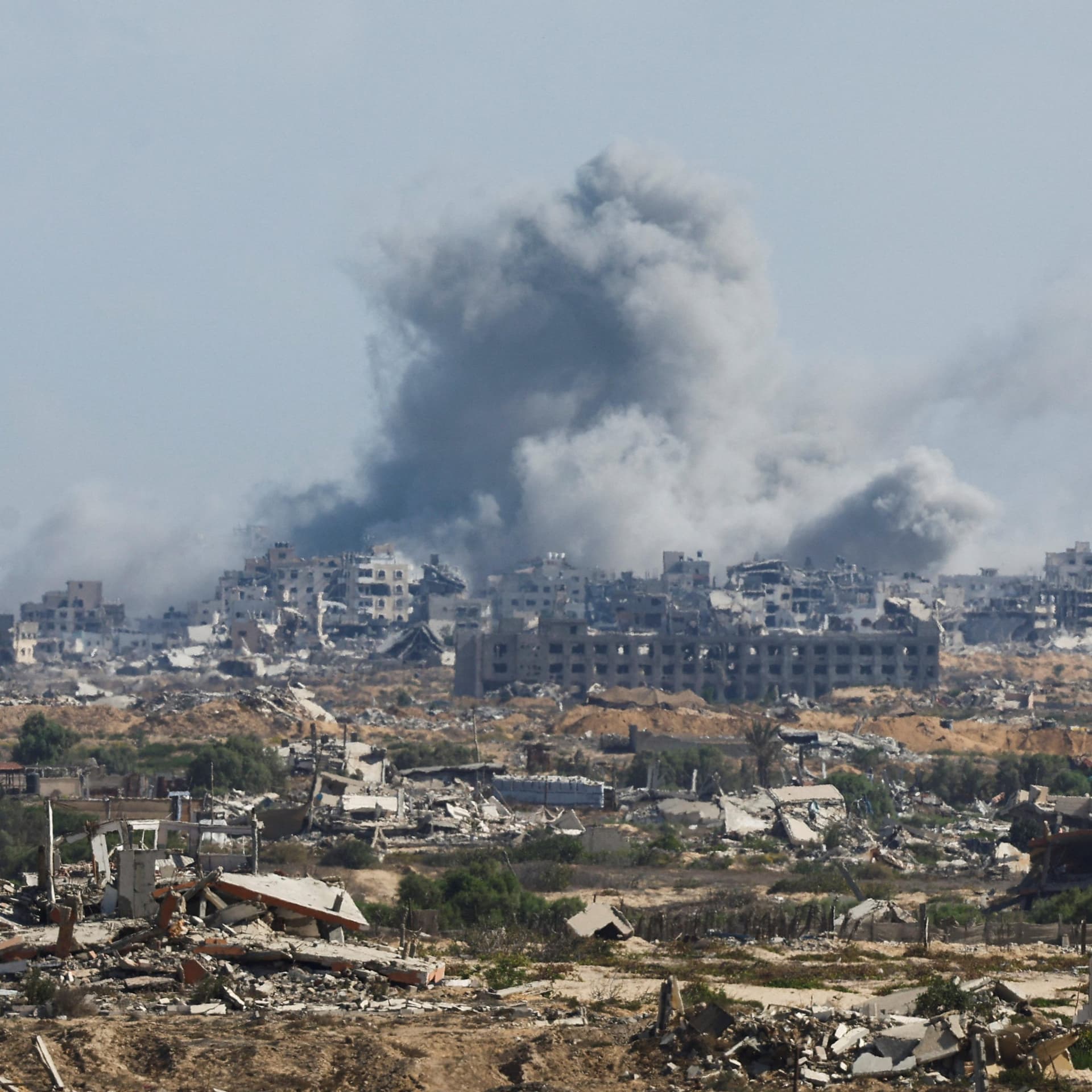
Image: Gaza City on Sunday 5th October, 2025. Mahmoud Issa/Reuters