
In short
BBC “The Global Story” reports on rising settler violence and harassment in the occupied West Bank, amid Israel’s approval of 19 new settlements. It contrasts UN/OCHA claims of increased attacks and Palestinian displacement with a settler/Israeli government rationale tied to security and opposition to a Palestinian state.
Guests and backgrounds
Sarah Montague, BBC presenter and reporter, recently reported from Jerusalem after an intensive West Bank reporting spell. Simcha Rotman, Israeli Knesset member (Religion Zionist Party), chair of the Constitution, Law and Justice Committee, described as a driving force behind the settler movement.
Key claims
UN says violent attacks on Palestinians by Jewish settlers are at their highest in nearly 20 years; OCHA documents 3,200 displaced Palestinians and 1,680 attacks on 270 communities this year. Palestinians say settlers aim to drive them off land; police often side with settlers. Rotman argues “illegal Arab expansion” and claims a Palestinian state is a “grave danger,” citing distrust after Oct 7.
Notable examples
Bedouin community near Jericho—volunteers film settlers; settlers allegedly throw stones at goats and enter/harass homes. Refugee camp community in the Alsaj Valley—masked settlers allegedly break into shelters, threaten to kill residents, and force displacement; demolition orders reportedly issued by the Israeli government (e.g., a school).
Written by AI. May contain mistakes. Listen to the episode to check what was said.
Chapters
Tap a time to open that second in VOSettlements and Tensions in the West Bank
0:37 to 1:58
Overview of the recent approval of new Israeli settlements and rising tensions in the West Bank.
“In the last couple of days, Israel has approved the recognition of 19 new settlements in the occupied West Bank.”
Interview with Sarah Montague
1:58 to 4:25
Discussion with Sarah Montague about her reporting in the West Bank and the issues faced by Palestinians.
“On today's episode, we're talking to Sarah Montague, one of the BBC's most respected presenters and reporters.”
Life Under Settler Pressure
4:25 to 6:43
Details of the daily challenges faced by Palestinians from settler harassment.
“between Palestinians and Israelis living in a similar area.”
Eyewitness Accounts from Bedouin Community
6:43 to 9:13
Eyewitness accounts of settlers attacking a Bedouin community and the response from volunteers.
“These hoodlums come into people's houses, terrorise the people.”
Challenges of Displacement and Violence
9:13 to 11:35
Exploration of the impact of settler violence on communities and the fear experienced by residents.
“and that's twice a day, twice a day, every day.”
Testimonies of Fear and Threats
11:35 to 14:03
Firsthand testimonies from Palestinians about threats and violent interactions with settlers.
“The settlers we saw at the start were just two young kids, and you are a big community, grown men.”
Settler Violence and Community Response
14:03 to 14:44
Learn about the daily threats faced by a Palestinian community from settlers.
“So they are masked weapon settlers who are going around the shelters, every shelter, enter inside the shelters and ask people they will kill them if they not leave the community.”
Water Access and Infrastructure Issues
14:44 to 17:11
Explore the challenges faced by Palestinians regarding water access and infrastructure.
“that started by establishing a new Israeli outpost inside the houses or between the houses.”
Israeli Government and Settlement Policy
17:11 to 19:30
Understand the Israeli government's stance on settlements and related violence.
“And the Israeli government has also said they're committed to taking action against lawbreakers everywhere.”
Interview with a Settler: Perspectives on Land
19:30 to 21:48
Hear a settler's viewpoint on land ownership and community pressures.
“It's sort of deep in the West Bank, near Bethlehem, up on the top of a hill.”
Show all 12 chapters
Security Concerns and Distrust
21:48 to 24:19
Discuss the security concerns of Israelis regarding a potential Palestinian state.
“The place that I saw on Sunday is being funded by the UK, by the EU, by the US as well, who are...”
Future of Palestinian Statehood
24:19 to 26:05
Contemplate the implications of current settlement policies on a future Palestinian state.
“a Palestinian state is a great danger to Israel and the world.”
Transcript
Automatic transcript. May contain errors.0:00This BBC podcast is supported by ads outside the UK.
0:30so you can monitor and engage with the account while your teen learns how to invest and manage money. Learn more at schwab.com. In the last couple of days, Israel has approved the recognition of 19 new settlements in the occupied West Bank. Israel's far-right finance minister Bezalel Smotrich said the decision was about blocking the establishment of a Palestinian state, something the US had kept on the table in its October Gaza ceasefire deal. Nevertheless, Israel is forging ahead with settlements. And according to the United Nations, tensions in the occupied West Bank have been ramping up. In fact, since the start of the ceasefire, the UN says violent attacks on Palestinians by Jewish settlers have increased to the highest level in almost 20 years.
1:21And the violence goes both ways. Israeli civilians in the West Bank have also been attacked by Palestinians. All of this undermines the hugely optimistic tone that was struck just 10 weeks ago. Can we get the documents, please? When the Gaza peace deal was signed with great fanfare. This took 3 ,000 years to get to this point. Can you believe it? And it's going to hold up, too. It's going to hold up. From the BBC, I'm Tristan Redmond in London, with my co-host Asma Khalid in Washington, D.C. And today on The Global Story, the grinding tensions that one BBC reporter witnessed in the West Bank.
2:09On today's episode, we're talking to Sarah Montague, one of the BBC's most respected presenters and reporters. We caught up with her from Jerusalem after she'd finished an intensive spell of reporting in the West Bank, but before the new settlements were approved. Sarah uncovered evidence that Palestinian communities are facing harassment and violent attacks from Jewish settlers. The Palestinians say the settlers are trying to drive them off their land. And we'll hear from a Jewish settler, a member of the Israeli parliament, the Knesset, who's one of the driving forces behind the settler movement.
2:44First, we began by asking Sarah the basics. What and where is the West Bank? Most people will probably have some sense of the map of Gaza, which is a strip of land along the Mediterranean, used to be home to two million Gazans. It's obviously reduced in the war. There are three million Palestinians in the West Bank, which is to the east of Jerusalem. It's on the West Bank of the Jordan River and runs as a strip down what you might say the east side of Israel. Can you give us a scale of what's the population of settlers and what sort of population are we talking about? There are three quarters of a million settlers in the West Bank and in East Jerusalem.
3:28Half a million of those are in the West Bank. It's a number that has increased in recent years. Basically, what it amounts to is somebody going to a location, initially building what they call an outpost, might just be a small dwelling, a couple of dwellings. And then over time, it's built up, it's built up. They are considered illegal. So the United Nations describes what's happening as illegal under international law because this is considered Palestinian land. Some Israelis see it differently and they would not, of course, describe it as illegal. Obviously, these communities apply to be made legal and the Israeli government has, with a lot of them, decided that they are legal in Israel's eyes, but they're not in the rest of the world's eyes.
4:19And we should say there are lots of different types of settlers. I mean, we drove through areas where there is integration or relative integration between between Palestinians and Israelis living in a similar area. But what has really caught the world's attention is the massive pickup in attacks, in hassling by settler communities of Palestinians, and in some cases driving them off the land. And according to the Office for Coordination of Humanitarian Affairs, the UN agency, 3 ,200 Palestinians have been displaced from their homes. And just this year, the same organisation said they documented 1 ,680 attacks on 270 communities.
5:06That's five a day. In your reporting this week, Sarah, what have you seen in terms of relations between the settler communities and Palestinians? So one of the things we arranged to do was to go and see a Bedouin community that's just outside Jericho, up in the hills. And one of the things we were going to do was to hear about the challenges they face and the hassling that they get from nearby settlers. And as soon as we arrived, we were told there's an issue at the edge of the village. So we just went straight there. So we're watching five people. two are settlers and the others are volunteers who've come here to protect the Bedouin community.
5:51And at the moment the volunteers are filming the settlers and they're in some sort of argument.
6:02There's donkeys, we can see a whole load of goats. One of the settlers was throwing stones at the goats OK, one of the guys is walking towards us. There were three volunteers there. The three of them were living in a sort of tent at the edge of the village, staying there 24-7 to try to protect the community because they say somebody's got to do this. These volunteers and the settlers were filming each other, having an argument. We kept our distance, watching what was going on, and then we got into a conversation with one of these volunteers. Hello, hello, Sarah Montague from the BBC. These hoodlums come into people's houses, terrorise the people.
6:49These goats are from the Bedouin community? No, these goats are from the outpost. These are the settler goats. These two guys come with the herd of goats, drive them into the houses, in between the houses, go around the houses, inside the houses. We are trying to keep them out of the houses. Today they stole a piece of clothing from a rope. That's what they do. That's what they do twice a day. Twice a day. And they're literally, so we saw him throwing stones at the goats, what, trying to get them to move to go into the Bedouin village? Into the village, into the houses. And what were the, I know, listen, you've got a camera that's attached to you, you're filming what's going on.
7:28What are you saying to them? We're saying to them that they are criminals, they're trespassing, They're not supposed to be here. They're not allowed to be here. No one invited them here. Of course, they ignore because their whole existence here is to drive this village away from their land. They don't care because they think they're doing the right thing by driving off Palestinians from their land. I mean, they're young lads. Yeah, this one is maybe 14, 15 years old. Hi, do you speak English? Hello, do you speak English? Do you speak English?
8:07All right, he's a young lad. He must be, I don't know, yeah, 14, 15. He's throwing stones at the goat. They're here. And you are here all the time. Yeah, we are here, international activists, doing protective presents. We're here to prevent them from getting inside the houses, from terrorising Palestinians more than they do. Can I ask, I didn't catch your name. Adam. Adam. And where are you from? I live in Greece, but I'm originally from here. I'm from Jerusalem. So you're originally an Israeli? Yeah. But you've been living in Greece and you've come back because you feel... Because someone has to do something with this crime.
8:50The police either doesn't show up or when it shows up, they talk to them and they show as if there is a law, but there is no law. The police are with them. Imagine yourself living in your home, safe, when someone walks into your window and peeps at you, takes his phone and takes a video of you, takes a picture of you, of your kids, of your baby, and that's twice a day, twice a day, every day. Who can endure that? Is that not violence? It's violence. People are terrified here. The police have turned up. and they're now talking with the volunteers. There are two guys in black and a woman in a green, in a green army uniform.
9:47Hello. Good morning. D 'Aaron. GPO? D 'Aaron. Passport. Passport. Do you speak a little English? No? Do any of your colleagues? It would just be... Sometimes. Sometimes? OK. Do you get called often? No, you don't want to talk. OK. The goats are moving away from the village now. It's probably worth saying that a lot of people we spoke to didn't want to give their surnames because they were very worried about any repercussions from sort of flagging up the problem. Sarah, you also did speak to people from this Bedouin community, right? I mean, what did they tell you? You know, talking to a man probably about my age, he was born there, he's lived there his whole life, and they told me about some of the challenges they face from the settlers.
10:44This is a daily struggle, night and day.
10:52Not to mention the fear and what students have to face every day while heading to the schools. They try to almost run them over with their tractors. They're like little off-road trucks that they use. What we saw this morning, has it ever turned violent? Yes, we usually expect much more from them. What sort of things?
11:28Usually they attack homes, they attack people, women, children, they destroy private property, they attack and kill livestock, sheep. The settlers we saw at the start were just two young kids, and you are a big community, grown men. people will think, why can't you stop it? Why can't you defend yourself?
11:56Their main goal here is to expel us from the land, from our houses, from the community where we lived for decades. The one little boy here is, according to Israeli law, if they're below 18, then the law somehow doesn't apply to them as an adult settler. So this means if you interfere with the settler, if you do anything, this young boy is not only just a young boy. He has an entire government, entire state backing him in being here. If you try to touch him, if you try to hurt him, if you try to just push him away from your house while he's attacking your house or setting your house on fire, the entire community will have repercussions.
12:40The entire community will be punished for trying to defend itself. That's a community that is still in place and trying to hold on to its home. We also saw another community in another part of the Alsaj Valley who actually were in a refugee camp. And they were literally on a hilltop. They could see where they'd come from. And it had got so much more serious for them. With me are Alia and Jamal, who are living here now. But we can see in the distance where they used to live. Is that right? Yes, it's just four kilometres over there. This is their view every morning. Can you ask them what happened, why they left there to come here?
13:25They are here because of the constant assaults, attacks, harassment by the Israeli settlers. Can I ask about the attacks? Alia, can you tell us what form did the attacks take?
13:43So it's about stealing the ships. It's about breaking inside the houses and shelters, damaging everything and preventing people from moving freely inside the community. So what, they broke into houses?
14:03So they are masked weapon settlers who are going around the shelters, every shelter, enter inside the shelters and ask people they will kill them if they not leave the community. So they came into their houses and said, we'll kill you if you don't leave. Yeah. And this was continuously happening on every day. And the outposts, it started what with an outpost outside the village?
14:33So in 3rd of July 2025, the community decided to leave after a massive settlers' attacks that started by establishing a new Israeli outpost inside the houses or between the houses. So what, they constructed something right in the middle of the village? But like a tent or caravan inside the community and start having this continuous series of threatening people. And in most of the settlers' attacks cases, the community called the police to come and protect them. But in all cases, the police comes to protect the settlers. So they have found themselves without any protection from anyone in the world.
15:21Sarah, putting myself in the shoes of the people you've been speaking to here, it's hard not to imagine that I would feel extraordinarily frustrated with my situation. How did you sense that they were dealing with all of this? I think they felt impotent. Even that community, and we should say, I mean, they're one of 3 ,200 Palestinians who have been displaced from their villages by settlers, according to the UN agency. That community have moved and they say they're still getting stressed. They described having drones just over their head, filming where the tents have been set up and seeing where they are.
16:03and they had been using a water well and had been told that they would have to fill it in and not use it because there is a sort of problem. They're not connected to the water. The settlements get connected to the water. They're not allowed to build. The settlements build and then it's a question of who gets told to demolish. So one of the communities we were in, they built a school and they've been given a demolition order for this. I mean, it's a really nice looking school in an otherwise pretty ramshackle village and they've been told they have to take it down. And who gives them the demolition order, to be abundantly clear?
16:37Is that done by settlers? Is that in some ways done by the Israeli government? Who is giving them the demolition order? It's the Israeli government. Can I also ask you about the politics of this all? Because the Israeli government at this moment is led by Prime Minister Benjamin Netanyahu. Is the Israeli leadership not endorsing this? So there's been increasing pressure on the Israeli government to do something about this. The Israeli Prime Minister, Binyamin Netanyahu, convened a cabinet meeting last month, which was to discuss settler violence. And he said his government would take forceful action.
17:13And the Israeli government has also said they're committed to taking action against lawbreakers everywhere. Now, Palestinians in the West Bank say it's just not happening. And one of the challenges is partly the politics. you look at some of the people who are in Binyamin Netanyahu's government and who he relies on to stay in government. They're very supportive of the idea of settlements. The far-right finance minister, Bezalel Smotridge, has previously said that the plans to build homes in settlements will bury the idea of a Palestinian state. Can you explain why that is, Sarah? I suppose it's down to the fact that if you build initially villages that turn into towns, that turn into large towns and you have all the infrastructure there, are you really going to demolish those to give the land back to the Palestinians?
18:19and that's one of the things you see very clearly in East Jerusalem is you see settlements extending and extending and so that's one of the fears is that what you end up with is that you will struggle to create a land that makes sense for the Palestinians. Simply because it would be geographically split and hard to move around. Indeed. Yes, okay. I mean it's probably worth saying that within Israel itself You speak to people and a lot of them are horrified at what the settlers are doing. And then in other cases, it's people are saying, bring it on.
19:04Did you manage to speak to any of the settlers during your reporting? Yes, we arranged to go and see Simcha Rotman. Now, he's a member of the Knesset. He's a member of Bezalel Smotrig's Religion Zionist Party. He's also chair of the Constitution, Law and Justice Committee in the Knesset. And he's one of the driving forces behind settlement in the West Bank. And so we went to his house to see what it was like. It's sort of deep in the West Bank, near Bethlehem, up on the top of a hill. And it's quite a basic village, probably fair to say. There's a gate to go in. There are some caravans actually set up immediately.
19:47And then as you go further into the village, you see better constructed houses, more developed. And we spoke to him about it. We had, you know, it's very polite. We had a cup of coffee sat on his veranda overlooking the hills. But he takes a very, very different position from most people in the rest of the world. I think we should stop illegal Arab expansion in this area because they tried to create a Palestinian state, which is a grave danger to Israel and to the world. Okay, hold on a second. You're sitting here in what almost the entire world would say is an illegal Jewish settlement, but you're talking about illegal Arab expansion.
20:27Of course, of course, and I don't know what the world will say. I know what the world has said and wrote. This area is designated for the homeland of the Jewish people. Can I ask you, do you think it's justified for settlers to put pressure on... I just want to give you, just from this Sunday, let's choose Sunday, okay?
20:50Near the entrance to Efrat, the road that you just passed, and 9.04 in the morning, stoning of a Jewish car because he's Jewish. 10.54 stabbing attempt against a Jew. 10.54. We're talking only Sunday. And then there is another report from 11. Then there was the attack on Sydney because there are Jews. I'm not saying this has not happened. I'm just saying on Sunday I watched young settler boys putting pressure on a community, which apparently happens morning and evening, twice a day. and we know that these communities... I don't know what you saw. I know what exists. What I wonder is, if that happens, is it justified?
21:40Again, I don't know what you saw, so I don't know. But if it does happen... I know there are land disputes all around. When there are Jews and Arabs that are fighting for the same piece of land, usually there is violence too. Usually it's against the Jews. Usually. Sometimes the Jews fight back. But what we do know... It's a civil issue. and it should be dealt with the police. The place that I saw on Sunday is being funded by the UK, by the EU, by the US as well, who are... Why are you funding Arab illegal settlements and not this... They're not illegal settlements. Yes, they're illegal. So I was in a Bedouin community...
22:20They're illegal. ...talking to a man who... Why is it illegal? Why is it illegal? Because it's in areas that does not belong to them. When you want to check legality of a place, you check who owns the land, if it's state-owned land or not. Is it designated to be, is it zoned? How do you see this playing out? Because you will know that all the major powers in the world see what you are doing here as unjustified. They might disagree with what the Israeli government is doing in some areas, but they trust or they believe the motivation is for security. But the building of land by Israelis on the West Bank and the pressuring of communities, people struggle to understand.
23:05I don't know what this pressuring of communities mean. I know there is a pressuring of communities in London when a group of people arrive to a neighborhood and then groups that used to live there move for different reasons. It happens everywhere around the world. It happened in New York. It's not very unique. And this is the same thing? No, it's not the same thing. Because when you have illegal immigrants getting to Britain, they are pushing away people from their ancestral homeland. And we are the indigenous people of this land. So it's almost the same, just the opposite. That is a fascinating...
23:44It's fascinating to hear him, isn't it? I think one of the interesting things about Israel's position is they've been criticised around the world. But if you take the approach that I'm going to question your judgement, not your motivation, you could argue, they would argue, look, a lot of what we're doing here is about security. But the thing with the settlements, I think many people outside Israel and within Israel find it really hard to see the justification for settlements. And there is an element of it that is security, but you heard Mr. Rotman there. Well, the thing that really stands out for me there, Sarah, is when he says a Palestinian state is a great danger to Israel and the world.
24:26Can you explain what he meant by that? Well, it's something we've heard a number of times since we've been here. People feeling frightened of what it would mean if there was a Palestinian state alongside them. And they all go back to October the 7th. What you'll hear again and again is we tried to make it work and it didn't. We can't trust. We can't trust the Arabs. There is a feeling of distrust because they saw Palestinians celebrating that attack. That's what we hear again and again.
25:06Sarah, I have one final question for you. It sounds like from listening to your reporting that Palestinian life in the West Bank is being chipped away by these settlement communities. And any future Palestinian state would, in theory, include the West Bank. It would, in some cases, be centered around the West Bank. In listening to your reporting, Sarah, it makes me question what any future Palestinian state could realistically look like. I mean, I've thought about this obviously a lot while we've been here because, you know, 20 % of Israel is Arab. They're Israeli Arabs. So you could argue you can have a Palestinian state and why shouldn't Jews be living there?
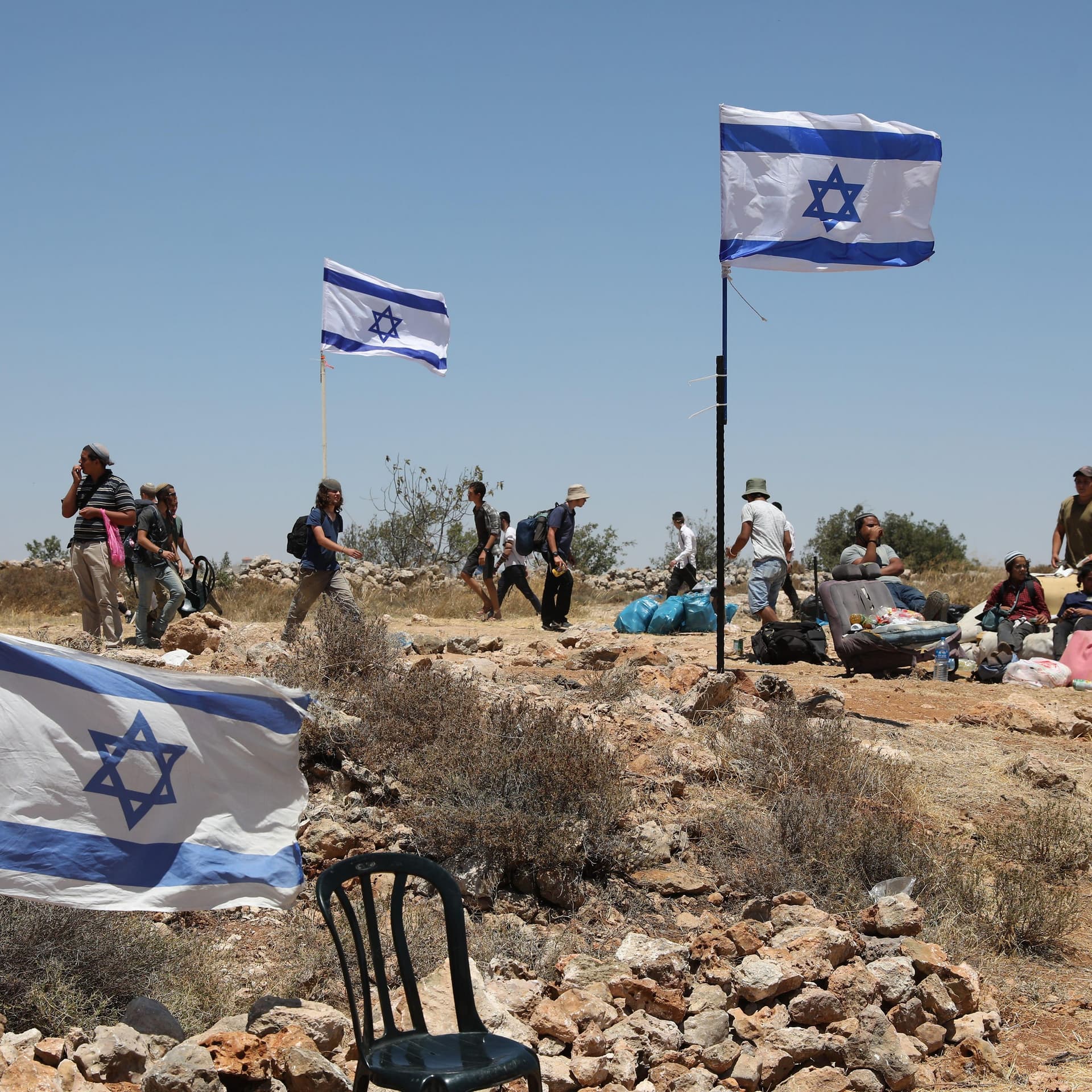
25:45They'd just be Palestinian Jews. But when you see these settlements, what you see is the Israeli flag very clearly outside or the Star of David on the hillside. It is set up almost as if it is an Israeli land. And they would claim that it is Israeli land.
Read the full transcript
26:05Well, thank you so much, Sarah. You've been so generous with your time. Thank you so much, Sarah. It's been a real pleasure. Thank you very much.
26:31I'm Kristen Redman, and my co-host is Asma Khaled. If you'd like to contact us with any comments or story ideas, we're always delighted to hear from you. The address is theglobalstory at bbc.com. And please take a second to rate us wherever you're listening. It helps others find us. Over the next days, we'll be revisiting some of our favourite episodes from 2025, and we'll be back with new ones in January. Thanks for listening. Have a great Christmas if you're celebrating, and we'll see you in 2026. Cheerio.
From the publisher
Attacks by Jewish settlers on Palestinians in the occupied West Bank have broken UN records this year, reaching the highest level in almost 20 years.
Israel’s Prime Minister Benjamin Netanyahu has blamed a “minority” that “does not represent the large settler public”. Meanwhile, Israel’s security cabinet has just approved the recognition of 19 new settlements as the government continues its settlement expansion push. We’re joined by the BBC’s Sarah Montague who has been speaking with Palestinians who say they are experiencing settler intimidation, and with a prominent settler who is a member of the Israeli parliament. Producers: Viv Jones, Valerio Esposito and Xandra Ellin
Executive Producer: Bridget Harney
Mix: Marty Peralta
Senior news editor: China Collins
Photo: Israeli border police remove settlers near Hebron. Credit Abir Sultan/EPA-EFE/REX/Shutterstock.