In short
How Ukraine gave up Soviet-era nuclear weapons after the USSR collapsed, why it trusted (and later stopped trusting) Western “security assurances” under the 1994 Budapest Memorandum, and how that trust was undermined by Russia’s later invasions (Crimea 2014, full-scale invasion 2022).
Guest backgrounds
Andrew Harding (BBC colleague/interviewee; reported on Ukraine since 2022; Moscow-based in 1991–90s). Host: Tristan Redman.
Key claims
Ukraine’s economic collapse and fear of nuclear black-market threats pushed denuclearization; the West treated Russia as the inheritor while Ukraine was pressured; “guarantee” in Russian/Ukrainian was translated as “assurances,” leaving consequences unspecified; Russia later dismissed the memorandum as “just a piece of paper,” and Ukraine now concludes only its own military can ensure security.
Notable examples
Clinton’s tense Kiev airport scene; Clinton–Yeltsin dacha reception; Zelensky letters to security guarantors that “none…came” or replied; Bill Clinton regret and counterfactuals about Ukraine keeping nukes.
Written by AI. May contain mistakes. Listen to the episode to check what was said.
Chapters
Tap a time to open that second in VOUkraine's Nuclear Power History
0:00 to 0:37
Exploring Ukraine's past as a nuclear power and the chaos following the Soviet Union's collapse.
“This BBC podcast is supported by ads outside the UK.”
Ukraine's Nuclear Power History
0:39 to 1:30
Exploring Ukraine's past as a nuclear power and the chaos following the Soviet Union's collapse.
“Ever wonder why we make the choices we do and how to make smarter ones?”
Ukraine's Nuclear Power History
3:06 to 5:32
Exploring Ukraine's past as a nuclear power and the chaos following the Soviet Union's collapse.
“Did you know that in the early 1990s, Ukraine was the world's third largest nuclear power?”
Concerns Over Nuclear Weapons
5:32 to 7:04
The fear of nuclear weapons falling into the wrong hands during Ukraine's economic turmoil.
“Their GDP, their economic output was halved in the early 90s.”
Ukraine's Negotiation Position
7:04 to 9:48
Ukraine's weak negotiating position regarding its nuclear arsenal amidst economic collapse.
“that they frankly can't afford to maintain and safeguard.”
The Budapest Memorandum
9:48 to 14:00
Details of the negotiations that led to the Budapest Memorandum and its implications for Ukraine.
“It's already clear that there's going to be a struggle over what happens with Crimea.”
Ukraine's Risky Deal for Security
14:00 to 15:33
Explore the motivations behind Ukraine's decision to give up nuclear weapons.
“Despite all that, what is it that gets Ukraine over the line and gets them to agree to sign this deal?”
The Misunderstanding of Assurances
16:34 to 24:23
Discuss the ambiguous security assurances given to Ukraine and their implications.
“So what is it that the Americans actually believe that they have signed up to?”
A Shifting Perspective on Security
24:23 to 28:00
Analyze the evolving view of Ukraine's security and its implications for future negotiations.
“But when somebody comes into power who doesn't respect those treaties, who doesn't respect the rules-based order, then what do you do?”
Trust and Agreements with Russia
28:00 to 28:34
Discussion on the skepticism regarding agreements with Russia and their validity.
“I don't think they see that there is the possibility of anything being signed or agreed to with Russia that is worth the paper it's written on.”
Transcript
Automatic transcript. May contain errors.0:00This BBC podcast is supported by ads outside the UK.
0:30business needs in one place, saving you time, headaches, and serious money. Stop paying for missing pieces. Go to odoo.com. That's O-D-O-O dot com to learn more. Ever wonder why we make the choices we do and how to make smarter ones? Introducing Choiceology, an original podcast from Charles Schwab. Join Wharton professor Katie Milkman, an award-winning behavioral scientist and author of the best-selling book, How to Change, as she shares true stories from Nobel laureates, authors, athletes, and everyday people about why we do the things we do and how to make better choices to help avoid costly mistakes.
1:12Each episode covers the latest research in behavioral science and dives into themes like the power of self-control, shaping your mindset for success, navigating new beginnings, and why starting over can feel so hard. Listen to choiceology at schwab.com slash podcast or wherever you listen.
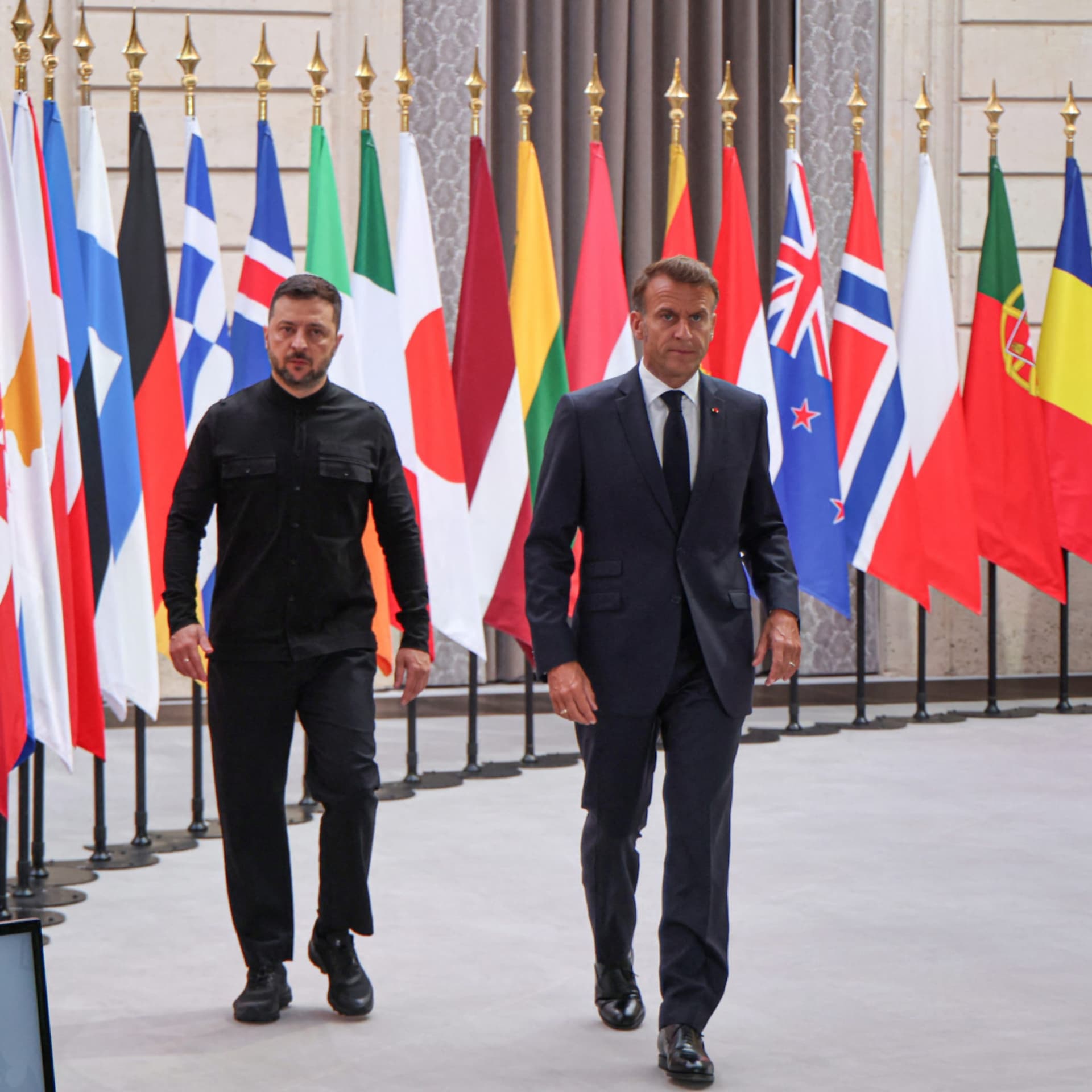
1:35In all the peace talks about Ukraine, there's one phrase which keeps coming up again and again. We will talk about many important topics. The first one is security guarantees. Security guarantees, so important. Security guarantees. Security guarantees. Because when we speak about security guarantees, we speak about the whole security of the European continent. On Thursday this week, most of the major Western powers met with Ukrainian president Vladimir Zelensky to work out what this phrase even means. The question is, if Russia attacks again, who will actually show up to help Ukraine? It's one of the biggest things standing in the way of peace right now.
2:22And the problem is, this is exactly where Ukraine's been burnt before.
2:29Standing next to the French president on Thursday, Vladimir Zelensky said, we don't want a repeat of the Budapest memorandum. Today on the show, we go back to the last time the U.S. promised to keep Ukraine safe. And why Ukraine doesn't trust the West anymore. From the BBC, I'm Tristan Redman, and this is The Global Story.
3:06Did you know that in the early 1990s, Ukraine was the world's third largest nuclear power? They had more warheads than France, the UK and China combined. The story we're telling today begins here, when the US and Russia tried to convince Ukraine to give up its nukes. And in the process, they might have laid the groundwork for the war we're seeing today. It all starts when the Soviet Union fell. So I arrived in Moscow in 91, just as the Soviet Union was collapsing. My colleague Andrew Harding was based there throughout the 1990s, and he's reported extensively on the war in Ukraine since 2022. At the same time, everything else was collapsing.
3:55The ruble, the currency was collapsing. The economy, everybody's sense of what a state was, what capitalism was, everything was in utter chaos. So the memories I particularly have of pensioners who saw their savings wiped out, sitting on little stools in the snow outside metro stations, trying to sell anything they could, their heirlooms, to try to earn enough to afford a loaf of bread, which overnight had gone from something they took for granted to something astronomical.
4:36I remember you'd take taxi rides and everybody had become a taxi driver overnight. Anyone with a car was out there all day, all night trying to earn hard currency. So you'd get a ride in some nuclear physicist's car because he was trying to earn a buck, literally a buck, because a ruble wasn't worth his time. And he certainly wasn't getting paid anything enough from the state, which really was bankrupt. Did it feel the same when you visited Ukraine? In many ways, Ukraine was even worse because Ukraine had so much of the old Soviet heavy industry, but all those industries just died almost overnight.
5:21The factories went bankrupt. So, for instance, you talk about in the West about the Great Depression, America's Great Depression. Ukraine's economic collapse was far more spectacular. Their GDP, their economic output was halved in the early 90s. That's far more than the Great Depression. Demographic collapse, people stopped having babies, people tried to leave to go abroad to find money. Extraordinary economic hardships. So in among all this chaos, there's also a perceived threat of nuclear warfare and weapons kind of getting out of control. How is Ukraine wrapped up in all that? So the West's eyes are all on Moscow, on the Kremlin, on Russia.
6:07That's where their focus is. Suddenly they wake up to the fact, we all wake up to the fact that there's this massive country, Ukraine, that overnight is the world's third largest nuclear power. And wow, Now, what are we going to do about that? Surely the simplest thing, given the economic problems, given the risk of political uncertainty in Ukraine, is to get them, to push them, to give their weapons to Russia. There's real concern that gangsters, mafia are already stealing and selling nuclear weapons on the black market. What would happen if a nuclear warhead went missing? Better to deal with Russia, the Kremlin, get those weapons all back to Moscow, at least back to Russia, and deal with one country than risk having all these other countries with their own nuclear weapons that they frankly can't afford to maintain and safeguard.
7:08So a recurring thing I remember in sort of films of the time was this idea that nuclear weapons in this post-Soviet space would somehow get into the wrong hands. Do you have the same memory? Yes, I remember how forever it seemed the Soviet Union was this supply of baddies for Bond movies, for Hollywood, for villains of all sorts. Suddenly in the 90s, it's no longer the Kremlin. It's breakaway factions. It's bad generals who had somehow grabbed power in some former Soviet state threatening to sell nuclear weapons on the black market. I remember James Bond having to go to St. Petersburg. So it was very much embracing and reflecting this idea that people saw that a fragmented post-Soviet space as being a real mine of drama and danger and risk.
8:09Gentlemen, I have a plan. And I think it becomes such a trope that it's even satirised in Austin Powers. It's come to my attention that a breakaway Russian republic, Krepulakistan, is about to transfer a nuclear warhead to the United Nations in a few days. Here's the plan. Dr. Evil comes up with a plan to hijack some nuclear weapons from a so-called breakaway Soviet republic called Krepulakistan. And he's going to hijack the nuclear weapons and hold the world to ransom. We hold the world ransom for$100 billion. So it's kind of easy to forget how big a fear it was at the time. I mean, what about in Ukraine?
8:55Is there consensus on what Ukraine needs to do about these nuclear weapons? Not at all, no, because, well, of course, they'd gone through the experience, the trauma of Chernobyl, of the nuclear disaster there. There'd also been many other nuclear disasters in places like Chelyabinsk, in the Urals, in Kazakhstan and elsewhere. So the Soviet citizens were well aware of the risks of nuclear contamination, of nuclear war. But there are plenty of Ukrainian politicians in parliament going, we'd be mad to give these nuclear weapons back, or at least mad to give all of them back. Surely we can keep a third or a portion of these weapons because who knows what's going to happen in the future.
9:39There are plenty of people already in the early 90s who are starting to see Russia as a long-term rival. It's already clear that there's going to be a struggle over what happens with Crimea. The problem is that Ukraine was not in a strong negotiating position, not with Russia, particularly not with the West, because it was bankrupt. It needed the IMF. It needed America to help it. And it wasn't in a position to negotiate, to bargain really hard to keep those weapons. And in the end, the Americans played pretty hardball with the Ukrainians and made them give up those weapons. So the Americans are pushing the Ukrainians to give up the nuclear weapons.
10:30You've got a kind of years-long process of diplomacy in the early 90s, which comes to a head in 1994. Can you tell us what you remember about that process and how they got to an eventual agreement in Budapest? So there are a couple of moments that really kind of paint the picture of the negotiations that led to the Budapest Memorandum. One of them takes place in winter at the airport in Kiev, and President Bill Clinton arrives. He's on a sort of urgent mission because the Ukrainians are starting to get cold feet. They're thinking, well, maybe we need safeguards. Maybe we can find a way to keep at least a portion of these weapons for ourselves.
11:14Bill Clinton arrives. He flies in. But although he's famously good at his personal diplomacy, Bill Clinton doesn't play it very well. He leaves the Ukrainian president standing for, I think it's 12 minutes on the tarmac. Very cold weather. before he actually emerges from his plane. Later, there's a press conference. And now the best thing for us to do is to wish Mr. President Clinton bon voyage. And Ukraine's president has handled the press quite well, and Bill Clinton makes a quip about, well, perhaps you could come back and be my press secretary. Let me say this in closing. If he did not have such a very important job, I would invite President Kravchuk to the United States to run my press conferences.
12:05Lighthearted banter, but it makes all the front pages of the Ukrainian press the next day. And it's seen as Bill Clinton not treating Ukraine as a big, important sovereign state. OK, so what's the second scene? The second scene is in a dacha, one of these cottages, if you like, in the woods outside Moscow. It's the sort of place that a lot of the deals that ended the Soviet Union took place in. It's somewhere that foreign dignitaries are always brought to for a bit of drinking, a bit of Russian hospitality. and even though Russia is in a mess, Boris Yeltsin in particular can put on a good show.
12:54Officially the talk is of business-like new partnership, but a private reception last night at Boris Yeltsin's country retreat near Moscow revealed a touch of genuine warmth between the two presidents. There happened to be a saxophone on hand because of course Russian diplomats knew that Bill Clinton played the saxophone and so there it was. They ate moose lips, which is a Russian delicacy. And the implication here was that Yeltsin was trying to do a deal directly with Clinton over the heads of Ukraine. President Clinton and President Yeltsin have signed an agreement in Moscow this morning, paving the way for the dismantling of Ukraine's nuclear arsenal.
13:37And there was frustration there in Ukraine that the Americans, the Western world, seemed to go along with that, that they automatically just treated the Kremlin as the inheritor of all that power. So it sounds like there's a kind of discrepancy in how Russia is treated in this negotiation and how Ukraine is treated. Despite all that, what is it that gets Ukraine over the line and gets them to agree to sign this deal? What do they get in return for it? They get money and they get security assurances in the form of a memorandum signed later in 1994, in December 94, in Budapest, the Budapest Memorandum.
14:27It's a document that appears to offer Ukraine concrete assurances that neither Russia nor America nor Britain will ever threaten Ukraine's territorial integrity once it's handed over its nuclear weapons. In other words, do the right thing, become a non-nuclear power, to be a brave, bold step for a newly independent country, renounce nuclear weapons after the horrors of Chernobyl. and in return, your borders, including Crimea, will be sacrosanct and the combined power of Western assurances and Russian assurances will mean you're safe.
15:24Coming up, what happens when they break their promise?
15:33Thank you.
16:03the things we do, and how to make better choices to help avoid costly mistakes. Each episode covers the latest research in behavioral science and dives into themes like the power of self-control, shaping your mindset for success, navigating new beginnings, and why starting over can feel so hard. Listen to choiceology at schwab.com slash podcast, or wherever you listen.
16:34So what is it that the Americans actually believe that they have signed up to? The Americans believe they signed up to something that means Ukraine will get money from the West, they will give their nuclear weapons back to Russia, and in return there is an understanding from the international community as well as Russia that Ukraine's new post-independence borders are sacrosanct, that Russia is committed to not breaching those borders, that it will respect them. The problem is that the consequences are never spelled out. So yes, there are assurances from the West, security assurances, but they are never clear cut.
17:20On the language, there's a story about a discrepancy in understanding and the actual use of the word guarantee in the Budapest memorandum. I wonder if that's something you've come across. So in the final document, the word used in Russian and in Ukrainian is basically guarantee, but the English translation of that was assurances. And the drafters of the document were very clear to the Russians, to the Ukrainians, that as far as the West was concerned, it wasn't a security guarantee that they were offering because that would be like Article 5 of NATO, that it would require military assistance. So an ironclad commitment to come to your defence.
18:03This was a sort of second tier level. There would be consequences, unspecified, but it was assurances. And to some extent, it was linguistic. Simply the translation in Russian and Ukrainian sounded more like guarantees. They didn't have a word for assurances. And so there was a sort of room for confusion there. For the United States, after the annexation of Crimea in 2014 and then the full invasion in 2022, do the Americans hold up their end of the deal or do they renege on it? Well, you could say that they've held up their end of the deal because they've been supplying Ukraine with vast amounts of weaponry to try and resist Russian aggression.
18:51That's not the same as guaranteeing their security and sending troops in to reclaim Ukraine's lost territory. But it's something. So Russia goes from being a theoretical threat to Ukraine to an actual physical threat. At this point, they've kind of clearly broken the Budapest memorandum they signed in 1994. What's their justification for doing this? There are multiple explanations that the Russians, that the Kremlin has given over the years for why it sees the Budapest Memorandum as not being an obstacle, shall we say. But the bottom line in all of this, you know, one can talk about the niceties, the legalities, but I was at a summit meeting in Cape Town and Sergei Lavrov, the Russian foreign minister, was there.
19:41And I remember sitting in a conference hall waiting for a press conference and I was sitting next to a member of the Russian delegation and we talked for about an hour. And this woman went through all of those excuses for the Ukrainian invasion. This was after Russia had invaded Ukraine in 2022. She went through all of those excuses and I kept going, yeah, but 1994, Budapest memorandum. And every time she'd go, no, no, no, come up with another reason. I'd go, yeah, but you signed that. And finally she went, it's just a piece of paper. And there you have it. Fundamentally, it's just a piece of paper.
20:26Vladimir Zelensky, the Ukrainian president, seems to disagree with the idea that the Americans have held up their end of the deal. There's a very well-known American podcaster of Ukrainian and Russian heritage called Lex Friedman. The following is a conversation with Volodymyr Zelensky, the president of Ukraine. And in January this year, Zelensky went on his podcast and he talked about this. He brings up the Budapest Memorandum. We sent letters to all security guarantors, to all members of the Budapest Memorandum. Everyone must meet urgently. Did anyone come, you ask? No. Did anyone reply to these letters?
21:09No. And why not? None of them gave a damn about this country, these people, these security guarantees, etc. The question is simple about Budapest. Can we trust this? No. Whichever country out of these five sat at the negotiating table, just a piece of paper. This audio, Lex Friedman, whose podcast it is, he's very into AI stuff. So it's actually an AI translation, which is why Zelensky sounds like that. He repeats the phrase that you mentioned. It's just a piece of paper. The Budapest Memorandum is just a piece of paper. I just wondered what your reaction was to all this. There's an element of truth to the Western realpolitik here.
21:53The Budapest Memorandum is dead and buried. To some extent, the Americans are simply recognizing reality. There's no point in haggling over the details of the Budapest Memorandum, an old piece of paper. Now that Putin has completely upended the global rules-based order, the focus has to be surely on containing this threat militarily. Given what they've done, given the total contempt they've shown for anything like a rules-based order, what's the point in wasting time on something that is, to everybody now, a piece of history? Well, Bill Clinton says that he regrets that piece of history. So he, reflecting back on his involvement in the Budapest Memorandum, He questions whether or not Russia would have invaded Ukraine in 2014 and then again in 2022 if Ukraine had still had nuclear weapons.
22:57I feel terrible about it because Ukraine is a very important country. And I feel a personal stake because I got them to agree to give up their nuclear weapons. And none of them believe that Russia would have pulled this stunt if Ukraine still had their weapons. Do you agree with that? Do you think the United States sort of effectively neutered Ukraine by taking its nukes away? It's easy, isn't it, in retrospect, to say, of course, if Ukraine had done X, Y, and Z, and America as well, that things would have been different, probably. But those kind of simple revisionist observations ignore or often tend to ignore the realities at the time when decisions were made, the problems, economic problems facing Ukraine, the sense of instability, of political instability, the pressure, the sense that now is an opportunity too big to waste.
24:01and that Ukraine without nuclear weapons was a worthwhile piece of geopolitical maneuvering. The bottom line is the future is unpredictable and you can make a deal in good conscience. You can write language that works then. But when somebody comes into power who doesn't respect those treaties, who doesn't respect the rules-based order, then what do you do? Well, they're trying to make a deal again now. What would a serious security guarantee even look like at this stage? For Ukraine? Yeah. A security guarantee is a very powerful Ukrainian military. That, I think, is the bottom line for them. Fundamentally, this is not a territorial war for Ukraine or for Russia.
25:03This is about freedom and security. Ukraine wants freedom. Ukraine wants security. Russia wants to deny Ukraine freedom and security. and that's the key to understand not just what's going on now but how you get out of this and so the for the ukrainians this is not a war that can be ended with a peace deal with russia certainly not at this stage because i think even if ukraine were now somehow to win back its territory, its lost territory, to defeat Russia, even to see perhaps the fall of Putin in the aftermath of that, Ukraine would have no reason to believe in a peace treaty with a weakened Russia.
25:52It would assume that Russia will now just bide its time, build up its forces and wait to strike again. The thing that I find interesting here is that both heads of states, Zelensky and Putin have essentially said that the Budapest Memorandum is just a piece of paper. All treaties in some sense are just a piece of paper. They've just kind of been imbued with some greater significance. But if we've got to a situation where we've kind of lost the illusion that a treaty is a treaty and means something, have we lost the sense that a diplomatic solution can ever be possible? We're in a situation where I think a treaty between Ukraine and Russia is complicated, isn't it?
26:42I mean, at some stage, diplomacy, a treaty might play a role, but we are in the realms now of pure military conflict. I don't think Ukraine sees its security anymore as something that anybody else can guarantee. I think Ukraine has come to understand the hard way that ultimately only it can look after itself. And that's why it's fighting. I certainly think that they want the West to help and that they are playing along, for instance, with these negotiations in the hope that that will keep Keep West engaged, keep Trump in his capricious moods engaged and supplying as much weaponry as possible. But I don't think the Ukrainians can afford to leave their security in anybody else's hands anymore.
27:37And I think they've come to understand that. And which is why I particularly don't think that they see any real negotiated end to this with Russia.
27:54I think if there's a deal to be done, the Ukrainians see it as a deal, temporary, long-term, whatever, between the West, Europe and Ukraine. I don't think they see that there is the possibility of anything being signed or agreed to with Russia that is worth the paper it's written on.
28:33Andrew, thank you so much. Thank you.
Read the full transcript
28:43That's it for the global story for today. Cheerio. Thank you.
From the publisher
In 1994, Ukraine surrendered the world's third-largest nuclear arsenal, inherited from the collapsed Soviet Union, in exchange for security assurances from the US, Russia, and the UK.
Ukraine’s denuclearisation is often considered a huge success story in nuclear non-proliferation, but in retrospect, it may have paved the way for Putin's 2022 invasion.
As talk of US-European security guarantees for Ukraine resurfaces in the context of tentative Russia-Ukraine peace talks, we speak with BBC Paris correspondent Andrew Harding about the history of the 1994 agreement, and consider whether Ukraine would ever again believe promises made to protect it.
Producers: Sam Chantarasak and Xandra Ellin Executive producer: Annie Brown Mix: Travis Evans Senior news editor: China Collins
France's President Emmanuel Macron (R) and Ukraine's President Volodymyr Zelensky arrive to chair the Coalition of the Willing Summit, at the Elysee presidential palace in Paris, on September 4, 2025. Ludovic Marin/ Getty