
In short
The episode (BBC “The Global Story”) examines how Steve Witkoff—Donald Trump’s envoy for Middle East and later “everything”—is handling diplomacy amid crises in Gaza and Ukraine/Russia.
Guests
Tom Bateman, BBC State Department correspondent in Washington, D.C., who covers foreign policy for the Trump administration.
Key claims
Witkoff’s lack of diplomatic experience and unorthodox methods (private plane, no official interpreter in Russia) have coincided with stalled ceasefire efforts and rising criticism.
Notable examples
praise for a “temporary ceasefire” Israel-Gaza deal attributed to Witkoff; a Shabbat meeting where he pressured Israel PM Benjamin Netanyahu to see him; multiple trips to meet Vladimir Putin; and the Alaska summit allegedly driven by a misunderstanding about Russian willingness to withdraw from Zaporizhia/Kherson versus Donbass. The episode argues escalation risks for NATO after Russian drone incursions into Poland.
Written by AI. May contain mistakes. Listen to the episode to check what was said.
Chapters
Tap a time to open that second in VOWitkoff's Background and Friendship with Trump
2:38 to 4:42
Uncover Steve Witkoff's rise in real estate and his long-standing friendship with Trump.
“On today's episode, who is Steve Witkoff, Trump's envoy for everything?”
Witkoff's Loyalty and Political Support
4:47 to 7:18
Analyze how Witkoff remained loyal to Trump during critical moments, including the Capitol assault.
“You know, the thing I find so striking about Donald Trump and Steve Wyckoff's friendship is the longevity of it.”
Witkoff's Role in Diplomacy and Negotiations
7:18 to 11:11
Discover how Witkoff became a central figure in Middle East negotiations despite lacking diplomatic experience.
“What was Steve Witkoff's link to Trump at that moment?”
Witkoff's Influence Grows
11:15 to 13:20
Examine Witkoff's unconventional style and increasing influence in Trump's foreign policy.
“And there's this story that is told in the weeks running up to that when it was felt clearly on the American side that they needed to get Netanyahu to move.”
The Shift in Witkoff's Diplomatic Approach
13:26 to 14:00
Learn about the evolution of Witkoff's role and style as a diplomat amidst complex global challenges.
“Coming up, Witkoff takes the lead on the world stage and things get tricky.”
Introduction to the Episode
14:00 to 14:10
An opening statement leading into the main discussion.
Witkoff's Rise in Diplomacy
14:10 to 15:28
Exploring Steve Witkoff's unconventional role and influence in diplomacy.
“So it sounds like in the first couple of months of this Trump administration, Steve Witkoff looks like this somewhat low-key, unconventional diplomat.”
Critique of Witkoff's Approach
15:28 to 16:41
Discussion on the criticisms of Witkoff's diplomatic style and decisions.
“Middle East envoy, by March of this year, it's clear that his portfolio has expanded.”
The Alaska Summit: Behind the Scenes
16:41 to 18:03
An insight into the events leading up to the Trump-Putin summit.
“He on several occasions implied that Russia had the right to capture that land.”
Misunderstandings and Consequences
18:03 to 19:50
Examining the misunderstandings that led to the summit's organization.
“So how did Wyckoff make that summit happen?”
Show all 13 chapters
Assessing Witkoff's Success
19:50 to 22:09
A conversation about whether Witkoff's efforts can be considered successful.
“So I want to be clear, I understand what you're saying.”
Diplomacy Under the Biden Administration
22:09 to 24:28
Analyzing the state of diplomacy and conflict resolution under Biden.
“Tom Asma and I have been having a fairly robust discussion about whether or not it is right to break diplomatic unorthodoxies and whether it was time to do so or whether it's actually counterproductive.”
Escalation and Risks in Global Diplomacy
24:28 to 27:38
Discussing recent escalations and the potential risks they pose.
“And in a sense, Steve Wyckoff, I think, has become the personification of that.”
Transcript
Automatic transcript. May contain errors.0:00This BBC podcast is supported by ads outside the UK. If you are currently overpaying on software to run your business, remember this number, 10 ,000. That's the number of new businesses that join Odoo per month. Join Odoo today at odoo.com. That's O-D-O-O dot com. Decisions made in Washington can affect your portfolio every day. But what policy changes should investors be watching. Washington Wise is an original podcast from Charles Schwab that unpacks the stories making news in Washington right now and how they may affect your finances and portfolio. Listen at schwab.com slash Washington Wise.
0:44That's schwab.com slash Washington Wise. Donald Trump wants to make two big diplomatic deals, Gaza and Ukraine. And this week, both of them are on the rocks. On Tuesday, Trump's Middle East plan took a big hit when Israel targeted the Hamas negotiators in Qatar. That's America's closest Middle East ally firing missiles into its second closest Middle East ally. On Wednesday, Vladimir Putin was testing the boundaries of NATO. Poland's Prime Minister Donald Tusk has confirmed that Russian drones were shot down in Polish airspace overnight. Polish and NATO jets were scrambled to shoot down Russian drones that violated its airspace.
1:38Poland's prime minister says his country is the closest it's been to open conflict since World War II. The incursion by Russian drones into Polish airspace was another big hit for Trump. You can, I think, quite convincingly argue right now that not only has he been played by President Putin, he's also been played by Prime Minister Netanyahu of Israel. Well, President Trump, his ambitions to be this Nobel Peace Prize winning ender of wars appears to be, you know, hitting another roadblock.
2:17And at the centre of all of this is the man Donald Trump asked to sold these two wars for him. His best friend, somebody with zero diplomatic experience, Steve Witkoff. From the BBC, I'm Tristan Redmond, and this is The Global Story. On today's episode, who is Steve Witkoff, Trump's envoy for everything? And what happens when you put a real estate magnate in charge of diplomacy?
2:52Maybe I should just turn my volume down? I'll turn my volume down a bit. All right, well, I think we're ready to... All right, yeah, we're ready to go again. All right, all right. On Monday, Asma and I spoke to the BBC's Tom Bateman. He's our State Department correspondent based in Washington, D.C. So I cover foreign policy from Washington, but that involves quite a lot of trips with the Secretary of State and covering all things foreign policy under the Trump administration. So today we are talking about Steve Witkoff. Could you tell us who is Steve Witkoff? Well, Steve Witkoff is a 68-year-old who made his fortune an empire in the New York real estate world.
3:31Steve Wyckoff started actually as a real estate lawyer and his acquaintance and more importantly, very close friendship with Donald Trump goes back many decades, but notably to the 1980s. There are acquaintances on property deals, Steve Wyckoff, the lawyer, Donald Trump, the property director. And he talks about one night when he was in a New York, Delhi, and in walks Donald Trump. And Trump had no cash on him. So Steve Witkoff says, I ordered him a Hammond Swiss. That appeared to be the moment that encapsulated and started this friendship of trust. And Steve Witkoff then attributed his desire to get into property development to Donald Trump himself.
4:13And he said, I'm going to go in the real estate business because I can do this too. He saw me do it. And he said, if Trump can do it, I guess I can do it. And he has since said that Trump was basically his inspiration and the person he wanted to emulate. He had this swashbuckling style. I used to see him come in and I used to say, God, I want to be him. I don't want to be the lawyer. I don't want to be the scrivener. I want to be that man. And from there grew this huge empire, which is now both him and his sons in ownership called the Wyckoff Group. You know, the thing I find so striking about Donald Trump and Steve Wyckoff's friendship is the longevity of it.
4:54Donald Trump is not someone who is known necessarily to have a whole bunch of loyal, intimate friends. He has even himself said he doesn't trust a whole lot of people. But he seems to trust Steve Wyckoff. Why is that? That was something that Susie Wiles, who's now his chief of staff, had talked about. The fact that, you know, as she put it, Donald Trump has many acquaintances, but very few friends. But Steve Wyckoff is clearly one of them. I mean, there's this story that he is told when the friendship began between him and Donald Trump. When I lost my boy Andrew to an opioid overdose, the pain was unbearable.
5:36But as usual, Donald Trump showed up. He's talked about Trump being a great solace to him at that time. it's been a story that he is told to emphasize the closeness of Donald Trump with him and explaining why he's then supported him later down the line. I have seen his humanity in the quiet moments away from the spotlight. And it's a story he comes back to a lot and especially in the role of what started as Middle East envoy but has then spread to the envoy for everything as some people to put it, that you're often dealing in life and death situations. And so he is lent into that. This is the truth about President Trump, the man I have come to know and admire and love.
6:28You see this relationship deepen in the run up to Trump's 2016 election win. Steve Wyckoff was a donor to his campaign to the tune of up to$2 million. And then Steve Wyckoff being given some sort of minor roles in the administration, particularly after the COVID pandemic. But the key moment for me is after that, because it's in January 2021, when you see the assault on the US Capitol and Donald Trump, you know, hemorrhaging support. And Steve Wyckoff stuck by him. And then into 2024, Donald Trump starts his run again in the primaries for the Republican nomination. And Steve Witkoff is by his side the whole way through.
7:12And so he is an absolutely critical figure throughout that period. Tom, what about the assassination attempt against Donald Trump in 2024? What was Steve Witkoff's link to Trump at that moment? Yeah, and I mean, this is what makes this year extraordinary, I think, because you had the assassination attempt in Butler, Pennsylvania, where, of course, Donald Trump had his ear grazed and was wounded. But shortly after that, there was a second assassination attempt on his golf course in Florida. And I mean, I remember the night that story broke. I was here in our Washington Bureau. We had to rush down and do a live for the 10 o 'clock news and then flew down to Miami and made our way to this golf course.
7:59You know, so this story is unfolding of a man who was basically hiding in the bushes on the perimeter of the Trump golf course and had then been spotted by the Secret Service with the barrel of his gun pointing out and Trump with Wyckoff and the Secret Service on the golf course. And Wyckoff tells this story. Here he was yesterday on a beautiful day just trying to get some rest and relaxation like all the rest of us. And there's a man with a machine gun. It was terrible. And again, it's this sort of story of literally being by the side of Donald Trump. And he says in his telling of the story, the Secret Service spotted this gunman.
8:39They're firing shots at him. You knew immediately it was gunfire. It didn't sound like firecrackers. Donald Trump's being bundled back into the golf course. The Secret Service were exceptional. They were on, they were, they had the president secured. And Steve Witkoff says, I don't know why, but I continue to stand there. And you feel this idea of a sort of protector. I have a little love thing for my dear friend. And I say to myself, thank God that he was not injured or killed. In a sense, at the end of that year, he gets his reward. As he is named by Mr. Trump, Middle East standpoint.
9:25Can you help us understand how he got that job? Because he is not a diplomat. He is, as you say, a real estate developer. Now, the story as it is told by Lindsey Graham, a Republican senator very close to Trump, is that it was on the golf course or at a golf lunch in Florida, and they were talking about what Steve Wyckoff was going to do if Donald Trump won the presidency. And then, according to Lindsey Graham, Steve Wyckoff says, oh, I want to be the Middle East envoy. I think that's an area I can really help him. Because he has these business contacts with Qatar and with the Emiratis and across the Gulf and with the Saudis, because he has very strong support for Israel historically and he knows the politics there.
10:10And according to Lindsey Graham, Donald Trump says, yeah, whatever you want, Steve. And literally that appeared to be the way in which that decision was made. The first time, Tom, that I really recall hearing a lot about Steve Whitcoff in his new Middle East envoy role. I'm sure you recall this. It was January during the transition period. The Biden administration was still in office and they held a briefing call with a bunch of us reporters in which the senior Biden official very directly and explicitly praised Steve Whitcoff for making that Israel-Gaza temporary ceasefire deal happen. They were effusive in their praise and thanks for Steve Witkoff, which caught my ear because, frankly, there's not a whole lot that you heard from the Biden administration that they were praising the incoming Trump folks for.
10:58I mean, I think since then, the account of this has diverged quite a lot. But what you hear from the Trump administration and officials within it is that the deal wouldn't have happened without Donald Trump and Steve Witkoff. And Steve Witkoff was the middleman that really made this happen. And there's this story that is told in the weeks running up to that when it was felt clearly on the American side that they needed to get Netanyahu to move. Wyckoff turns up on Shabbat on the Friday night in Israel and asks to see Benjamin Netanyahu, the prime minister. Now, the protocol of the Israeli prime minister's office generally is that he wouldn't do any diplomatic work or see foreign visitors over the Shabbat.
11:41But Steve Witkoff put his foot down and basically said, well, we're here to see you and forced that meeting. And that was described as being instrumental in getting towards this cease foreign hostage release deal. Tom, so that was just before the inauguration. But when did you first come up close with Steve Witkoff when he was fully in his role as this Middle East and Ukraine negotiator? Well, the first time I met him properly was in Saudi Arabia. Now, I was on the plane with Rubio as part of the press pool, and they met the Russians. So they met the foreign minister, Sergei Lavrov, and the Russian delegation in Riyadh.
12:18And I saw the two sides facing each other across the table. After that, Wyckoff was with Rubio and Mike Waltz, and they basically did a sort of 15-minute interview with a small number of us. So I got a chance to sort of see him up close at that point. What did you make of him? Well, I mean, I thought he was very charming. You know, he's clearly very bright and he's quite disarming. But I did also feel quite strongly a kind of sense of deference from him to Rubio and Waltz. I mean, he didn't say much during that period of time. And I felt also the way he described it was very much how you might talk about a sort of real estate deal.
12:56It was positive, upbeat, constructive. You couldn't have imagined a better result. But he didn't feel like the kind of key player among them. Will you be travelling to Russia again, Mr. Witkoff? I'm not sure. We'll make that determination in the next couple of weeks. But having said that, you know, clearly he has the greatest amount of trust from the president himself and probably the president's ear, much more than the other two men in the room.
13:26Coming up, Witkoff takes the lead on the world stage and things get tricky.
13:55Thank you.
14:01your way. Visit schwab.com to learn more.
14:10So it sounds like in the first couple of months of this Trump administration, Steve Witkoff looks like this somewhat low-key, unconventional diplomat. But as the months and months have gone on, he has become this far more influential figure on the diplomatic scene who is rather controversial in some circles. Yeah, I mean, I think the point to remember here is that Donald Trump's major foreign policy goal was to end the wars. So, you know, Russia, Ukraine and Gaza, what you see over this period of time is then several trips by Steve Wyckoff to Moscow. I think he's now made five or six to meet Vladimir Putin.
14:55But what starts to emerge is this incredibly unorthodox style, him flying in his own private plane, which doesn't have secure government communications, him meeting Vladimir Putin without an official State Department interpreter. You start to see the Gaza ceasefire deal fall apart, the demand by the president to try and get somewhere on Russia-Ukraine going absolutely nowhere. So on all those key objectives that have been set, no progress and increasing criticism about the way some of this diplomacy is being done. So even though Steve Witkoff's original job title and job function was supposed to be Middle East envoy, by March of this year, it's clear that his portfolio has expanded.
15:39He is no longer just covering the Middle East. And he did this rather lengthy interview with the podcaster Tucker Carlson. I mean, this is one of the features of the Trump administration. There is an openness. And to have the envoy on these key areas do a 90-minute interview in a podcast, I mean, I can't recall anything like that in the middle of such sensitive diplomacy. But it caused in both areas a huge amount of disquiet, but largely to do with his descriptions of his discussions with Vladimir Putin. Because first of all, he lavished praise on Putin. He was calling him a great guy. He was super smart.
16:20He's a super smart guy. OK, you don't want to give him the credit for it. That's OK. I give him the credit for it. They must hate you for saying stuff like that. Very gracious in how he had dealt with him. But then I think even more significantly than that, when he describes the Russia-Ukraine war, was basically repeating what are Kremlin talking points. In terms of territory, first of all, he couldn't name them, the four regions in play in the east. Donbass, Crimea, you know, the names. Lugansk, yeah. Lugansk, and there's two others. He on several occasions implied that Russia had the right to capture that land.
16:57And the argument of the Kremlin has always been that these are basically areas of Russia, you know, Russian-speaking, and that they held referenda there where people voted to remain part of Russia. There have been referendums where the overwhelming majority of the people have indicated that they want to be under Russian rule. Yes. Well, of course, as far as the Ukrainians are concerned, that was a referendum held at gunpoint under military occupation, so it's not free or fair. And so that was derided after the fact. And I think there were a lot, you know, across both sides of the aisle and voicing extreme concern that he had been sucked in by Russian disinformation and was repeating these Kremlin talking points.
17:37You know, one thing that I found interesting in that interview was also Wyckoff's insistence on talking to all the parties involved and the idea that if you don't sit down and talk to somebody, even if you're in a fight, you're sort of in a blind negotiation. And ultimately, that kind of thinking leads us to what we saw last month with this summit in Alaska between Russian President Vladimir Putin and President Trump. It was unprecedented. So how did Wyckoff make that summit happen? What has happened, I think, during several meetings is you have had Donald Trump get to a point where he believed that the only thing that would create a breakthrough was a summit between him and Putin.
18:20And Wyckoff became the middleman in that. And it's interesting that during the summer, Trump was getting much more vocal in his anger and frustration with Putin. And then suddenly you have this meeting on August the 6th when Wyckoff travels to Moscow again and they have a lengthy discussion. And Wyckoff comes out of that briefing the president saying that in effect he believes there's a breakthrough. Trump called it great progress. The day after this, on August the 7th, there was a phone call involving Wyckoff and European leaders where Wyckoff told them, according to the European accounts, that Putin was prepared to withdraw from Zaporizhia and Kherson in the east, in return for taking fuller control of two other regions in the Donbass.
19:09The problem was that Steve Wyckoff, according to the accounts, didn't have any notes of the meeting with Putin. Now, Steve Wyckoff was suggesting the Russians had conceded to quite a significant territorial concession to withdraw from parts that they currently occupied. But it turns out that was wrong. By the next day, again, according to the European accounts, on a call where Rubio is now also on the call, Steve Witkoff's position had shifted in terms of his interpretation of what had been said by the Russians in that meeting and had moved to a position where clearly the Russians were not prepared to do any kind of significant withdrawals.
19:47But it was on the basis of that meeting with the Russians that the Alaska summit was then set up. So I want to be clear, I understand what you're saying. You're saying that that meeting between Putin and Trump ultimately took place because of a misunderstanding that Wyckoff had with the Russians. Yeah, I mean, that appears to be exactly what happened. Having said that, two things to remember, Trump had wanted the Putin summit. And it's hard to know the degree to which perhaps the Russians had sold a position that they later backtracked on. But according to the European accounts, clearly there was a change in interpretation in the course of 24 hours by the administration about what Wyckoff said Putin had said to him.
20:29If we look at Steve Wyckoff through the Alaska summit, Tom, how do you view it? Do you view Wyckoff as a success because he actually got the sides talking? Do you see it as a failure because there's been no actual outcome yet? There's no resolution to the war in Ukraine? Well, I think the outcome of that really characterise both Steve Wyckoff and what we've seen of him this year and the wider diplomacy of the Trump administration. Because you had this, you know, hugely visual moment with the President of the United States welcoming Vladimir Putin, the architect of the Ukraine war, onto US territory with a red carpet and a round of applause.
21:08The key question then is, well, how did the diplomacy see progress. And I think this is why it characterizes things, because we were left confused. You had within two days, Steve Witkoff appearing on the US network saying that the Russians had conceded to what he called a game changer, that they were prepared to allow for a NATO style security guarantee that would protect Ukraine in the event of a ceasefire and an end to the war that would guarantee no further Russian invasion. If that was correct, that is absolutely fundamental. And in the same period of time, over the next week or so, the Russians said, no, we didn't agree to that.
21:48And then you're left thinking, well, where are things at? In the end, it's become clear that nothing like what Steve Wyckoff has suggested had been agreed had actually been agreed. The outcome of that is that nothing has changed. And in the end, who's the winner of that? It would seem to me that the winner of that situation is always going would be Vladimir Putin. Tom Asma and I have been having a fairly robust discussion about whether or not it is right to break diplomatic unorthodoxies and whether it was time to do so or whether it's actually counterproductive. Do you think that Steve Whitcoff is actually advancing US interests at this point or are they regressing?
22:31I think when he reports back to Donald Trump, Trump believes he is getting the unvarnished position that's sort of untainted by, you know, veteran foreign policy experts or the deep state or however you want to see it, people with their own agendas and political ambitions. And as far as Donald Trump is concerned, Steve Wyckoff has none of those. So I think from the perspective of the White House, this is an envoy in the purest form that will deliver the message of the president and bring back exactly what was being told. So So that may be an advantage in the way that the diplomacy is done. But I think what the critics of the administration will point out is that so far, the evidence is they haven't been able to get the breakthroughs on those two key areas, on Russia and Ukraine and on Gaza.
23:20And here we are now getting on for nine months of the administration. What the objective was from the president has yet to be fulfilled. But Tom, can't you also argue that nothing changed under the last couple of years of the Biden administration either on this conflict? His critics are judging him for failing to solve two of the world's major, major wars and crises at this moment, both of which were unsolvable under the previous American president as well. Yeah, of course. You know, to go back to the Biden situation, I mean, their policy was basically to support Ukraine as far as was going to be possible politically within the United States.
24:00And that political will was draining. So it was not politically viable to maintain that situation. So things would have had to have changed anyway. The interesting thing I think about Steve Wyckoff and the Trump position is that there are very clear objectives that have been sold to the American public in a very sort of clear and vivid way, which is an end to the war. The issue has always been that it lacks a clear strategy. And in a sense, Steve Wyckoff, I think, has become the personification of that.
24:36OK, when we first spoke to Tom, that was back on Monday. But a lot has happened very fast this week. That was before Israel attacked Hamas leaders in Qatar and before Poland shot down Russian drones. And both those events have changed the picture for the US. So on Wednesday, we caught up with Tom again on the phone. I mean, the old saying is that war is diplomacy by other means. Given that we have these developments, what does it say to you about the state of American diplomacy right now? Well, it feels to me that in the two wars that Donald Trump said he would stop, you now have a real sense of escalation.
25:18Now, you know, who's to say this wouldn't have happened anyway? But I think that it sort of goes back to a point about what the strategy is for Donald Trump and Steve Wyckoff and the administration here, because they have tried to get involved in these things in a fairly unorthodox way, wanting to end them. But the warning there was always if you try a peace process in a way that hasn't been tried before, there is always the risk you can make things potentially worse because you might empower one of the sides. you may also give a sense that deterrence has disappeared for another of the sides, for example.
25:57So clearly, this is a really dangerous moment, I think, because if Poland is at threat as a NATO member, and Article 5 of NATO says an attack on one is an attack on all, and the Americans as the most powerful leading member of NATO would by default be there to defend that country. But of course, under Donald Trump, and I think one of the things Vladimir Putin has tried to test is whether or not the Americans would really do that. And so it feels in some ways as though we are inching a bit closer towards that moment. And of course, that is a big risk for Europe and global security. The question is always, if this process that Donald Trump has tried to pursue to end the Russia-Ukraine war doesn't work, or he loses interest in it, in the end, who does he blame for that?
Read the full transcript
26:46And that becomes a critical question. Well, could he end up blaming Steve Wyckoff? I mean, there is always the potential for Donald Trump to sort of take it out internally, I suppose, on his own officials. But I think everything we've talked about, about the reason he appointed Steve Wyckoff to this role, I think means that he won't do that. And he's much more likely to point the finger at one of the sides involved, I think. He blames the Ukrainians and there's no longer American weapons support. then the Europeans are left and the Ukrainians in an extremely vulnerable position. Having said that, the Europeans have tried to give every bit of energy they've got to try and ensure that that doesn't happen.
27:31Tom, thank you so much. Thanks, Tristan.
27:38That was Tom Bateman, the BBC State Department correspondent. And that's it for The Global Story today. See you tomorrow. Cheerio.
From the publisher
Donald Trump wants to broker peace in two of the world’s most intractable wars: Gaza and Ukraine. But this week, both crises have escalated – and the man he’s tasked with solving them has no previous diplomatic experience.
Steve Witkoff, a real estate mogul and Trump’s closest confidante, is now at the center of American foreign policy as the ‘envoy for everything’.
On today’s Global Story, we speak with the BBC’s State Department Correspondent, Tom Bateman, and ask whether Witkoff’s unconventional style is a weakness – or a strength.
Producers: Cat Farnsworth and Aron Keller Executive producer: James Shield Mix: Travis Evans Senior news editor: China Collins
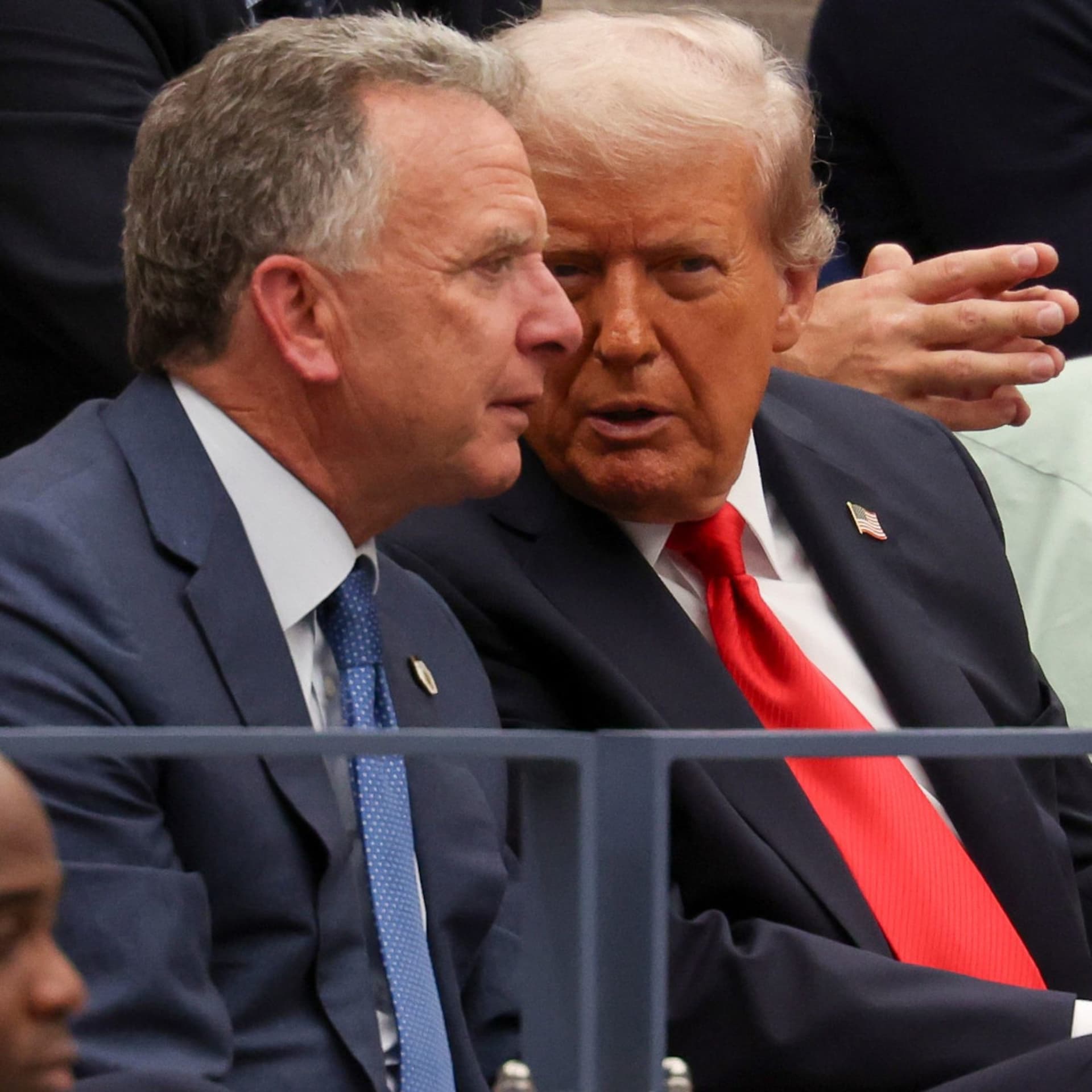
Image: President Donald Trump and Steve Witkoff. Sarah Yenesel/EPA/Shutterstock