
In short
How Trump-era USAID cuts after the 2021 Taliban takeover affected women’s maternal care and worsened Afghanistan’s hunger and child deaths, with reporting from Badakhshan and Herat.
Guests
Yogita K. Lamai, BBC South Asia and Afghanistan correspondent (reported in Afghanistan for 6+ years, before and after Taliban takeover). Host Asma Khalid (BBC).
Key claims
USAID was a major funder of public health; clinics closed after cuts; women faced longer, unaffordable travel; hospitals became overcrowded and underfunded; Taliban restrictions on women’s education reduced future midwives/doctors. U.S. officials deny deaths from USAID cuts, but Lamai says clinic closures removed women’s chance to survive.
Notable examples
A pregnant woman (Shahnaz) gave birth in a roadside gravel area after a USAID-funded clinic was shuttered; she and her baby died. Fezabad hospital beds were overcrowded with multiple women per bed; funding dropped from ~$80,000 to ~$25,000. In Herat, a mother fed a 1-year-old bread fragments and used anti-anxiety/high-blood-pressure tablets to help him sleep; WFP hotline saw more suicide threats. A graveyard reportedly had ~300 graves, ~200 children, attributed to hunger/malnutrition.
Written by AI. May contain mistakes. Listen to the episode to check what was said.
Chapters
Tap a time to open that second in VOImpact of USAID Cuts on Afghan Women
0:38 to 1:50
Exploration of the severe consequences of USAID funding cuts for women in Afghanistan
“troops pulled out of Afghanistan and the Taliban quickly regained control, it's the women of Afghanistan who have borne the worst costs.”
The Withdrawal and Humanitarian Assistance
1:50 to 4:38
Discussion on the U.S. withdrawal from Afghanistan and the subsequent aid provided
“I have been reporting from Afghanistan for more than six years now, so a little bit before the Taliban takeover.”
Traveling to Badakhshan Province
4:38 to 7:38
Describing the journey to Badakhshan to assess the impact of clinic closures
“You're talking about more than 40 percent of all the aid going to Afghanistan last year came from the United States.”
Heartbreaking Stories from the Ground
7:38 to 10:46
Personal accounts of families affected by the closure of health clinics
“These clinics, you know, they don't look like much from outside.”
Debating USAID Responsibility
10:46 to 11:58
Discussion on the claims regarding deaths resulting from USAID cuts
“And that to me was, I think, the most heartbreaking bit of it because how do you get people to sit up and take notice of what's happening?”
Current State of Healthcare in Badakhshan
11:58 to 14:00
Conditions and challenges faced in healthcare facilities in Badakhshan
“But I think we can say with certainty that without that clinic, they didn't have a chance.”
Impact of USAID Cuts on Women in Afghanistan
14:00 to 16:50
Learn about the severe impact of USAID funding cuts on women's healthcare and education in Afghanistan.
“And that had come down this year to$25 ,000.”
Challenges Faced by Women Under Taliban Rule
16:50 to 18:31
Explore how Taliban restrictions exacerbate women's challenges in accessing education and healthcare.
“Just tap into iHeart to start watching, and we hope you enjoy the show.”
Malnutrition and Hunger Crisis
18:31 to 20:08
Understand the emerging hunger crisis and its effects on Afghan families and children.
“What is life like then once they deliver the baby?”
Desperation and Coping Mechanisms
20:08 to 22:20
Hear the desperate choices families make to cope with food insecurity and their dire consequences.
“He should have been able to at least kind of sit up and hold himself up.”
Show all 12 chapters
Grave Consequences: Infant Mortality
22:20 to 24:16
Discover the heartbreaking reality of rising infant mortality rates due to malnutrition.
“You know, I can't remember the conversion, but I'll tell you the like the comparative is what you'd be able to buy one piece of bread in 10 Afghani.”
Global Indifference to Afghan Suffering
24:16 to 27:02
Gain insight into how Afghan people feel abandoned by the world after the withdrawal of support.
“They break walnut shells for a living and have had no support from anyone, not their government, not NGOs.”
Transcript
Automatic transcript. May contain errors.0:00Yogita Limaye:This BBC podcast is supported by ads outside the UK.
0:30Just tap into iHeart to start watching. And we hope you enjoy the show.
0:37Since 2021, when U.S. troops pulled out of Afghanistan and the Taliban quickly regained control, it's the women of Afghanistan who have borne the worst costs. The Taliban tightly controls where they can go, what they can wear, and even how loudly they can speak. Teenage girls are not allowed to go to school, let alone university. and women can't take on most jobs. For pregnant women in a country where maternal mortality rates are already high, foreign aid has been a lifeline. The U.S. alone has sent more than$3 billion to Afghanistan in the past four years. That is, until earlier this year, when the Trump administration cut nearly all of that aid.
1:22From the BBC, I'm Asma Khalid. And today on The Global Story, we go inside Afghanistan's maternity crisis to find out what the true costs of cutting American aid are.
1:45I'm Yogita Lamai, the BBC South Asia and Afghanistan correspondent. I have been reporting from Afghanistan for more than six years now, so a little bit before the Taliban takeover. And I've been there quite a lot after the Taliban takeover. Were you there in 2021 when U.S. forces and their allies withdrew from Afghanistan? So I wasn't there on the day that the Taliban actually walked into Kabul, but I was there in the weeks and the months preceding that, particularly when actually the U.S. withdrew from the Bagram base in July 2021. I remember being there and we woke up one morning suddenly to the news of U.S.
2:26forces withdrawing from the airbase.
2:28Yogita Limaye:To Afghanistan now, where with little fanfare, the massive airbase that served as the anchor of America's two-decade-long war is now in Afghan control. And since the Taliban takeover, I've been in the country quite a lot. And specifically this time, it was our first time going in. since the U.S. withdrew nearly all of its aid to Afghanistan earlier this year. And we really wanted to go in and see what impact that was having on the ground. You mentioned U.S. aid being withdrawn. I'm here in Washington, and I think so many people remember the chaotic withdrawal of U.S. military troops from Afghanistan.
3:07Yogita Limaye:An American military transport plane on the runway this morning, mobbed by Afghans trying to flee their country.
3:17Yogita Limaye:Eventually, the plane takes off. Moments later, as it gains altitude, it appears that two people fall to the ground. There were those images famously of people clinging to the military plane as it tried to take off. Thousands of American and British troops have been sent to secure the airport. With helicopters being used to clear the runway, it's chaotic and ugly. I think what a lot of listeners might not know is that even after that point, when the Taliban returned to power, the U.S. was still providing a lot of humanitarian assistance to Afghanistan. Can you give us a sense of what type of support the U.S.
3:53had been providing over the last couple of years? So I'd say firstly, the U.S. has been the single largest donor to Afghanistan for decades. During the 20 years that there was a U.S.-backed government, it pretty much propped up all public health care in the country. But it continued to do so afterwards. And it was even during the Taliban days. Yes, but it changed post 2021. Obviously, you know, the Taliban couldn't be given money directly there. And there are still sanctions against the Taliban government. But the U.S. continued to give. And in fact, in some years, it actually increased the aid it was given from 2021 till now.
4:29It's given roughly about three billion dollars in aid. And in 2024, U.S. funds made up nearly 43 percent of all foreign aid going to Afghanistan. That's a sizable amount. You're talking about more than 40 percent of all the aid going to Afghanistan last year came from the United States. And then that came to an abrupt halt this year.
4:52Yogita Limaye:In its first two weeks, the Trump administration has already slashed some international aid programs and suspended dozens of senior USAID officials. It's all part of the president and Musk's goal to cut a trillion dollars in government spending. You know, we've heard a lot here in Washington about the dismantling of USAID. We don't actually hear too often about what that looks like on the ground. So I was really excited to have you on the show because I wanted to hear what it looks like. Can you walk us through where you began your trip and what you saw? So firstly, we knew even before we went into the country that because of USAID cuts, there were more than 400 medical facilities and clinics which had closed down in different parts of the country.
5:36So when we went in, we were really trying to go to some of these areas where we knew that a clinic had closed down. We went specifically to the Northeastern province of Badakhshan. And there were a number of different reasons why we went there. Because back in 2001, when the US-led invasion of Afghanistan happened. This is a province that had really poor rates of maternal mortality, of newborn mortality. And in the 20 years of the US-backed government being in power, actually, there had been quite a lot of progress made on the ground. And it was because of clinics like these, which were on the ground.
6:13They had a midwife, they had some services where there had been done before. And we went to two districts where these clinics had closed down. To get there from Kabul, we actually the only way to go, you could do a road journey, but that would probably take you more than a full day. So how did you get there? Well, we actually asked the UN for help, and the UN does fly there a few days a week. But that was only to get to the capital, the provincial capital. And then it took us about, I think it was a four and a half hour journey one way. I'd say four hours was off-roading. It's really kind of rugged mountainous terrain.
6:54It is strikingly beautiful but it is also it's punishing, it's unforgiving, really bumpy, basically just gravel tracks. There was one point at which we had to cross like a gushing, raging river, the Kokcha River. That was only a part of the journey and it took us about four and a half hours, one way to get there. And we were really keen to go to the remote places. We could have gone to districts that were slightly closer, but it was important for us to see because it's in these places, you know, you can't as a pregnant woman or even as somebody who's really ill, you can't make that journey. You can't make that journey to the closest medical facility now because the clinic in their area had been closed down.
7:31And that is precisely the impact that we wanted to see. What did you see when you arrived at the clinic that you were hoping to visit? it. These clinics, you know, they don't look like much from outside. It was like a single-story structure, painted white. It had a little board in front of it, which said it was an FHH or a family health house, as they were called, you know, in Afghanistan. And this clinic was funded by USAID. Yes, that's right. Can you give us a sense of what it has meant for families that these clinics have shuttered, that they are no longer open for women when they're pregnant.
8:06So I can describe, you know, that through the story of one particular family who we met. So Abdul Vakil, his wife, Shahnaz, was pregnant and he's got two other children and both of them were born at the clinic. So when she went into labor, he spent what would be roughly about 50 to 70 percent of his monthly earnings to rent a car to go to the clinic. It was the closest medical facility. It was about a 20-minute drive away. And then it turns out they didn't know the clinic was closed. So they saw a shuttered door in front of them. The other clinic was simply too far away and he didn't have the money to afford a longer journey.
8:48And so he turned back and they were making their way back home. But she was literally on the verge of delivery. So they stopped the car by the side of it. And when I say road again, it's not roads, it's gravel tracks. And she gave birth. And he said there was a lot of blood loss and that's why she passed away. And then the baby girl also passed a few hours later. Abdul took us to Shahnaz's grave. It's where he brings his young children, two-year-old Medina and her brother Fehzal, when they ask about their mother.
9:26Yogita Limaye:We had a hard life, but we were living it together. Now, I have no one. Graves in Afghanistan, you know, in many areas are basically just, you know, it's a pile of stones. You know, on some of them you'll have plastic flowers. And I think Shahnaz's grave had red and pink plastic flowers on it. And the baby's grave was tiny. and actually because it was kind of at a place where I think they were worried that perhaps dogs or wild animals could get to it. And so it was covered with thorns and that was essentially to protect, you know, an animal from digging it up or something like that. Villagers gathered around us, telling us of more maternal deaths.
10:07Daulat Begi Jawar. So we've just been told that all of these three graves are of women who died. Jawar, Dolat Begi, Shahnaz. Those two graves were also of women who had died in childbirth three to four months ago. Their names, Dolat Begi and Jawar. And it's really important, I feel, to say their names because these are not deaths that are being counted. This is not being recorded anywhere. These deaths will not be registered. You know, this is potentially happening in all of the districts where these clinics have closed down, but there is nobody actually collecting this data and these names. And that to me was, I think, the most heartbreaking bit of it because how do you get people to sit up and take notice of what's happening?
10:56We can see it in front of our eyes. This is a silent wave of mortality. Yokita, the U.S. government has repeatedly said that no one has died because of USAID cuts. I've heard the Secretary of State testify in Congress to this point. I'm sorry, the question is, has anyone what?
11:14Yogita Limaye:Has anyone in the world died because of what Elon Musk did? Yes or no reclaiming my time? If you won't answer, that's a loud answer. No one has died because of USAID. The people who have died. He again defended the Trump administration's moves in an interview on ABC News just this past September. You're no longer disputing that the aid cuts have caused people's lives. You're no longer disputing that. I think anybody who tells you that somehow it's the United States, if we cut a dollar, or somehow we're responsible for some horrific thing that's going on in the world, is just not true. But based on your reporting on the ground in Afghanistan, is that true according to what you witnessed and what you saw, that no one has died because of USAID cuts?
11:57So I think we can't say with certainty that, okay, if the clinic had been open, they would have survived. But I think we can say with certainty that without that clinic, they didn't have a chance. We can say that. So where are pregnant women going? If you say the clinics closest to them have shut down, are big hospitals still open? So yes, we went to Fezabad, which is the capital of the Badakhshan province, and we visited the provincial hospital, which is the biggest public medical facility in the province of Badakhshan. Firstly, outside it, there was just a stream of men, men sitting everywhere.
12:34where these are men who had come with their wives. Their wives were inside. The men were not allowed inside the maternity ward. When we went in, I think what was really stark was that every room there was in, and I'm, you know, sometimes... I'm not exaggerating. It was every bed, a minimum of three women. On the same bed? Yes. All around us, families who've spent whatever little they have to bring their babies here. Musleha is five months old, suffering from measles and malnutrition. Her mother Karima told us she'd hardly opened her eyes in the past few days. There was a room which had women who'd suffered a miscarriage and there's been a sharp increase in the instances of miscarriages and they didn't have one bed on which they could kind of lie down and recuperate.
13:26Zora Shahvan told us this is the third time she's suffered a miscarriage.
13:32Yogita Limaye:I was bleeding severely and didn't even have a place to sit. It was really hard. By the time Abed is free, a woman could die bleeding. It's overwhelming because these facilities then closing down in the districts means that people are then coming to the provincial hospital. And the hospital was overcrowded, you're saying? Yes, and the hospitals also faced cuts. So we were speaking to the main doctor, the head of the hospital. He said the funding three years ago was about$80 ,000 for operating costs for the hospital for the whole year. And that had come down this year to$25 ,000. Why is that? Same thing, aid cuts.
14:13Aid cuts across the board. So no other country is stepping in and filling that gap. You're saying the United States was providing a lot of it, but they haven't seen sort of resources and funding come from other countries. No. And, you know, again, WFP and agencies like that who we questioned about this were very clear. They said, yes, yes, the U.S. has pulled back funds, but we've had this year, they said they've had eight or nine other donors who've walked away. There are a few other donors who are giving less than what they were last year. The U.S. justification to pull, you know, nearly all of its funding from Afghanistan is that this money was being siphoned off and was enriching the Taliban, specifically$11 million.
14:52I did question the Taliban about this, saying that this is what. And what did you hear? Yeah. Their response was, this is not true. We're not taking any of the money. The money goes directly to the UN and it is distributed to people on the ground. But then there's also the reason of the Taliban government, which is not recognized by most of the world. There are still international sanctions and UN sanctions against it and its policies. And particularly, I would say, its intransigence on women's rights. I think that affects its bid for international recognition. And I think it definitely affects how much the world is willing to come forward and help its people.
15:28And now you've got a situation in Afghanistan where in 2022, higher education, including medical studies, were closed down for women. So no more female doctors since then. And just late last year, even midwife and nursing training was closed down. So you're not going to have any new female nurses or midwives coming in as well. So the staff told us they were exhausted. There was a midwife who said she was working 36 hours at a stretch, even though her shift was only eight hours. But there's no reinforcements coming because they're not being trained. Coming up next, as the aid cuts and Taliban restrictions limit women's lives, some are making desperate choices.
16:49Transcription by CastingWords Just tap into iHeart to start watching, and we hope you enjoy the show.
17:00It's so striking to hear what you're saying, because it sounds like women in Afghanistan are dealing with challenge upon challenge. There are funding cuts, right? And so the clinics are not open and able to be staffed. At the same time, you're saying the Taliban has returned to power, and they have severely limited the freedom and mobility of women to get higher education, to become doctors, to become midwives. What was your sense on the reasoning for the Taliban to do that? So we've asked this question to, you know, pretty much every Taliban official or leader or spokesman that we've had access to in the past four years in the interviews that we've done.
17:40And we kind of get one answer that there is a plan, at least as far as education is concerned, but it has to be done according to Islamic laws, according to the Sharia law. And our supreme leader and our leaders, they are the ones who will make decisions on the basis of what the society needs. You're denying the right to access health to half your population. Isn't that a bit hypocritical?
18:08Yogita Limaye:It is our internal issue. These are our issues. We've been discussing throughout this conversation the situation of women who are dying in childbirth, medical clinics closing, the lack of medical care. I am curious what the situation is like for women who do manage to give birth to children. What is life like then once they deliver the baby? So, you know, collapsing public health care system is one problem that Afghanistan is dealing with, triggered by a number of different reasons, aid cuts particularly. But this country is also facing an unprecedented crisis of hunger. And we've literally been on the ground in areas where people do not know what their next meal is going to be, or all they're really surviving on is dry pieces of bread and tea.
19:00And, you know, I want to describe what Afghan tea is because it's not tea with milk and sugar and anything which has got any nutrition. It's literally hot water with green leaves in it. So we were in this particular area, which is outside of the third largest city, Herat, in the west of Afghanistan. Again, an area we've been to before. And we know that the WFP and other agencies were operating there when they had funds and distributing food sachets and flour and oil and some basic things to these people. All of that's now gone away. And firstly, the rate of stunting in Afghanistan is staggering.
19:40It's 45 % of children. Sorry, what do you mean by stunting? Meaning they're not at their growth levels. That's right. So they're not at the correct height. They should be. And that's usually because of undernutrition and various other factors. But it's basically about they're not getting nutritious food. And basically, if that continues for a long time, actually, you could have a situation where physical and brain development can be severely affected for life. And we met a woman called Hanifa, who's got a one year old. He should have been able to at least kind of sit up and hold himself up. But he couldn't.
20:16Like he would just barely about hold himself up for a few seconds. and then, you know, he would fall back. And this mother, you know, it was literally like while we were sitting in their home, the children were kind of hungry. You could tell they were crying and a neighbor came and gave this like one small piece of bread and they all kind of tore pieces out of it and they were eating it. It was that literally that was the situation. She showed us actually the amount of food she had in her house and she just had enough flour to probably make three, four pieces of bread. And then she'd have to figure out what happens after that.
20:45Her husband's not well and not able to work. So she works in a brick, like in a brick making, like a kiln. Yes, exactly. So she said, you know, I feel so desperate that, you know, my, especially her baby boy, she isn't able to feed him anything and he really cries and he's not able to sleep. And so she said, oh, I give him some tablets to sleep. He's not getting sufficient food. He doesn't sleep. So I just want to calm him down and at least have him sleep. And I said, okay, so what tablets? And she pulled out two strips of tablets. And basically, you know, we looked it up. One of them was an anti-anxiety medicine.
21:19The other one was one for high blood pressure. Wait, these are the medicines she's giving to her child who's one years old? To a one-year-old child, yeah. And she said she went to the pharmacy and said she wanted sleeping pills for herself. She didn't say that she was going to use them for her children. And at one point, she literally looked at us and she said, I feel so guilty that my children are suffering like this.
21:45Yogita Limaye:I feel suffocated and like I should kill my children and myself. I feel so guilty that my children are going hungry and I can't do much. There are times when I feel like I should kill myself and my children because I'm not able to give them any food. It's awful. That is so awful. We asked what was the cost of these tablets because, you know, if she wasn't able to afford food, how was she able to afford the medicines? And actually one strip costs only about 10 Afghani. You know, I can't remember the conversion, but I'll tell you the like the comparative is what you'd be able to buy one piece of bread in 10 Afghani.
22:27So it made sense for her to buy a strip of medicines that would probably help her put this boy to sleep for about whatever, eight or 10 days with the same amount of money that would cost her to buy one piece of bread. Is this unusual that she's doing, giving her child these anti-anxiety medications? Did you meet other people who were doing this? Not on this trip. We have found it before. I'd say about two years ago as well, we met families who were giving their children antidepressants and anti-anxiety medicines for the same reason. And we had at the time as well, and even this time, we consulted with doctors to ask what the effects of this would be on children.
Read the full transcript
23:06And we were told by doctors that, look, it can affect their heart, their kidney, their liver. If there's an overdose, it could also be fatal. And the women don't know that because there's not sort of a medical education? There's no education at all. We were speaking to the World Food Programme's country head, and he said they have a hotline on which people can usually call, you know, to ask sort of all kinds of different questions. And what he said is they are having to retrain the people who are receiving those phone calls because they're getting an increasing number of calls from women who are threatening suicide because they have no food to give their children.
23:47So that, you know, that certainly isn't a one-off. We've heard it from other places as well. But I think, you know, another kind of really stark part of our reporting was that when we were looking at malnutrition and hunger. We went to a graveyard and I've never seen a graveyard where there were so many small graves. In the western province of Hirat, Gulaam Muhedin and his wife Nazu take us to the graves of the three babies they lost in the past two years. The youngest, just three months ago. They break walnut shells for a living and have had no support from anyone, not their government, not NGOs.
24:30We counted all the graves. We counted the big graves and we counted the small graves. And I'm not saying it was a 100 % accurate count, but I would say there were roughly about 300 graves. 200 of those were of children. Because it's quite easy to tell the children's graves were quite small compared to adult graves. Again, we asked, is this a specific graveyard for children? They said, no, this is a normal graveyard. We said, when did you start using this place as a graveyard? And they said it was only about two to three years ago. So essentially, it's all in that span of time.
25:08Yogita Limaye:Watching helplessly as my children cried out of hunger, it felt like someone was cutting me into half with a saw from my head to my feet. And there, of course, we asked what was the cause of death. And again, you can't, you know, there's no way to verify this because there are no medical records. You don't even have the names of these people who are buried there or these children, rather, who are buried there. But the villager said it was, you know, these are children dying off of basically a lack of food, of hunger and malnutrition.
25:37That is awful. I'm really glad we had you on the show, you know, because I think for nearly 20 years, it felt like every American news outlet had a bureau in Afghanistan. and we as a country here in the United States were rather closely following this news. And then the U.S. forces withdrew. And we'll say it feels like it's sort of become a news black hole. We don't hear much about what's going on. I want to know from your vantage point, how did people in Afghanistan feel about this all? About the USAID money leaving? About the media's attention sort of collectively turning away? Do they talk about that at all?
26:17I would say as far as being forgotten by the world is concerned, you know, there's a very strong feeling of that. Over the years, we've spoken to so many women. And, you know, there's a strong sense that the world doesn't really care about what's happening to them in Afghanistan anymore. And, you know, at various levels, governments are engaging with the Taliban government. You know, the U.S. is engaging with the Taliban government. You had kind of U.S. representatives in the country really recently, only just, you know, not very long ago. And so women often ask me this question that, you know, why aren't they able to use the leverage that they have to try and get something to change for us?
26:57Has the world forgotten about us? Yogita, thank you so much for bringing your insights and your reporting. We all appreciate it so much. Thanks so much for having me and thanks so much for giving so much time to the story. It's really important and I'm glad people will be listening to it.
27:21That was Yogita Lemai, the BBC South Asia and Afghanistan correspondent. You can read her reporting on USAID cuts and see pictures of the people she spoke to on the BBC News website. And folks, that is it from us for today. This episode was produced by Hannah Moore, and it was engineered by Travis Evans. The senior news editor is Chyna Collins. And thank you all, as always, for listening. We'll talk to you again soon.
28:16And new episode every weekday. Just tap into iHeart to start watching. And we hope you enjoy the show.
From the publisher
Since the Taliban takeover in 2021, the US has contributed billions of dollars in aid to Afghanistan for food and medical care – a lifeline in a country ravaged by two decades of war.
But earlier this year, following deep cuts to USAID under the Trump administration, more than 400 USAID-backed medical clinics have closed, and for pregnant women in desperate need of care, the impacts are devastating.
The BBC’s South Asia and Afghanistan correspondent, Yogita Limaye, tells us about the families she met on her recent reporting trip, and the lives lost because women did not get the care they needed.
Producer: Hannah Moore
Mix: Travis Evans
Senior news editor: China Collins
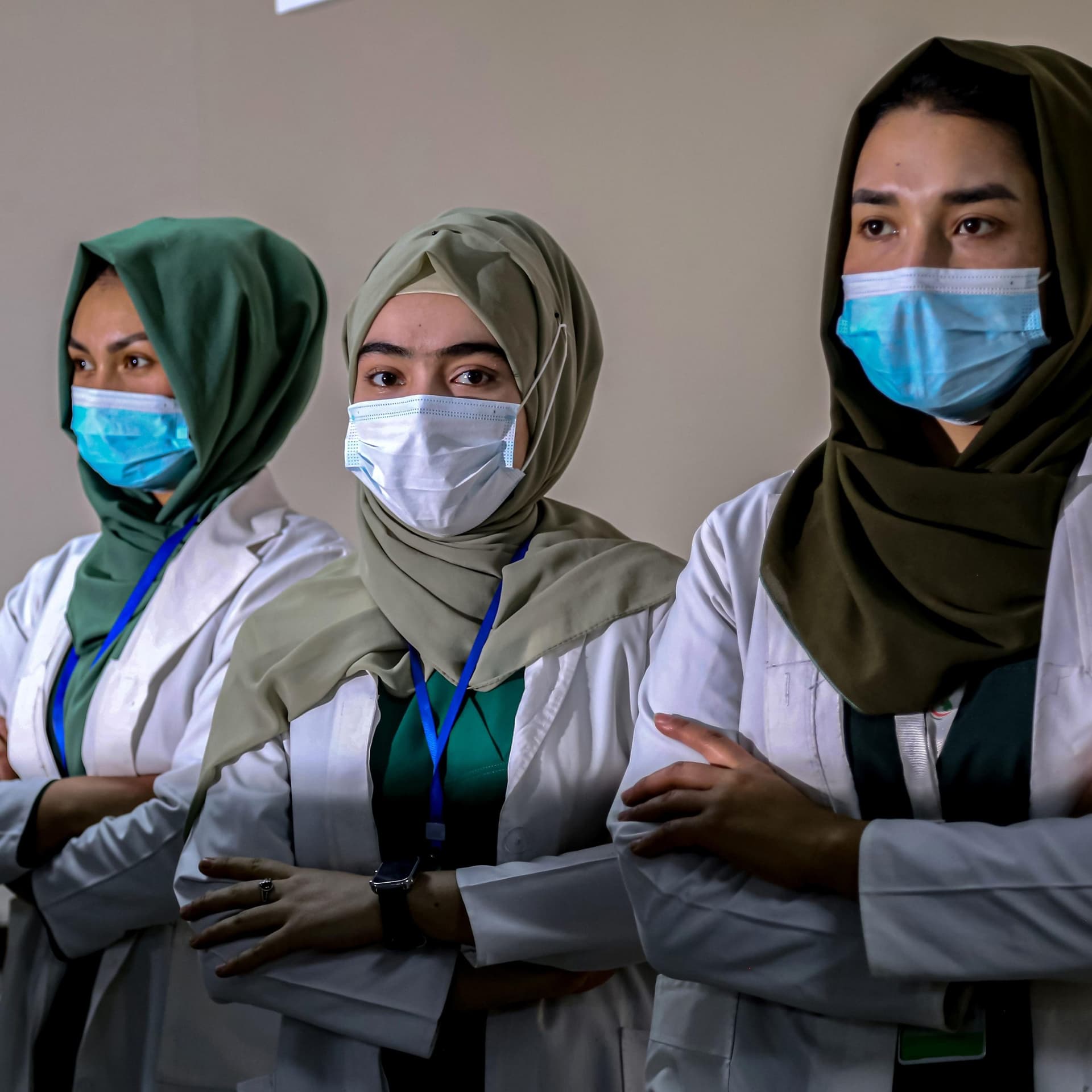
Picture: Taliban bans female medical education, Afghan female doctors and midwives face setback, Kabul, Afghanistan, 24 Dec 2024. Samiullah Popal/EPA-EFE/REX/Shutterstock