
In short
Children and preteens using sophisticated skincare and makeup on social media to achieve “younger-looking” skin, with regulators and health experts warning about skin damage and mental-health harms; the episode also profiles how this trend becomes lucrative for families and raises questions about marketing to minors.
Guests
Ruth Clegg, BBC health and well-being reporter; Ellie May (13), a TikTok skincare influencer who began advertising skincare at age 8; Ellie May’s mother (Sophie), who manages/monitors her daughter’s products and online content.
Key claims
TikTok shows tens of millions of views on “children and skincare”; dermatologists/psychologists coined “cosmeticorexia” (no formal diagnosis) tied to obsession, shame, and heavy routines (reported 10+ products/day). Experts cite “retinol burn” and contact allergies from anti-aging/active ingredients. Regulators investigate alleged micro-influencer marketing by companies owning Sephora (LVMH) and actions in Connecticut.
Notable examples
Ellie May’s multi-step routine and 330,000 TikTok followers; family earnings around $70,000/year; Italy Advertising Authority investigation into LVMH; Connecticut attorney general agreement requiring safeguards for anti-aging product marketing to under-13s.
Written by AI. May contain mistakes. Listen to the episode to check what was said.
Chapters
Tap a time to open that second in VOThe Rise of Skincare Among Kids
0:00 to 0:45
Discussion on the trend of children using skincare products.
“This BBC podcast is supported by ads outside the UK.”
The Rise of Skincare Among Kids
0:48 to 1:00
Discussion on the trend of children using skincare products.
The Rise of Skincare Among Kids
2:23 to 4:13
Discussion on the trend of children using skincare products.
“I'm the BBC's health and well-being reporter.”
Impact on Mental Health and Skin
4:13 to 5:01
Concerns from healthcare professionals regarding skincare trends.
“TikTok alone, 64 million hits when it comes to children and skincare.”
Ellie May's Journey in Skincare
5:01 to 7:42
Insights into Ellie May's experience as a young influencer.
“And there are even face masks for three-year-olds.”
Influencer Families and Financial Impact
7:42 to 10:01
Discussion on the financial benefits of being influencers.
“were in the same sort of situation a lot of people were just doing it for fun and everyone was on TikTok back then, even my mum doing TikTok videos.”
Concerns About Cosmeticorexia
10:01 to 11:49
Understanding the term cosmeticorexia and its implications.
“Ruth, you say that we are seeing an increasing trend of young girls using skincare and makeup products.”
Risks of Using Anti-Aging Products
11:49 to 14:04
Exploration of potential harm from anti-aging skincare products for young skin.
“You're saying they're not even meeting members of their own family.”
Concerns Over Ingredients in Skincare for Young Skin
14:04 to 14:44
Learn about potential allergies and long-term effects of cosmetics on children.
Marketing Skincare to Young Consumers
15:18 to 17:19
Explore how skincare brands target young customers and the implications.
“or if skincare brands are actively marketing some of these products to young customers.”
Show all 15 chapters
The Role of Young Influencers in Skincare
17:20 to 18:36
Discover the connection between young influencers and skincare brands.
“following a very basic skincare routine to maintain skin health and then using 10, 15 products on a daily basis.”
Regulatory Concerns on Youth Cosmetics
18:37 to 19:58
Understand the investigations regarding cosmetics marketed to children.
“You mentioned a moment ago this term cosmetorexia.”
Parental Responsibility in Skincare Choices
19:59 to 21:34
Discuss the balance of responsibility between parents and companies in marketing.
“She said they're cooperating with the Italian authorities and they maintain that they do not specifically target young people and they only work with influencers over the age of 18.”
Child Influencers and the Monetization of Youth
21:35 to 24:16
Analyze the implications of child influencers monetizing their online presence.
“I mean, here in the United States, to my knowledge, we don't penalize companies that sell junk food, even though obesity is a huge problem in the United States, for example.”
Reality vs. Digital Influence for Young Girls
24:17 to 27:14
Explore the impact of digital influence on the reality of young girls' lives.
“Her mum is really proud of Ellie Mae and she says that she's watched her daughter's confidence grow and grow.”
Transcript
Automatic transcript. May contain errors.0:00This BBC podcast is supported by ads outside the UK.
0:30Asma:Schwab offers. Because Schwab knows that when it comes to your finances, choice matters. No matter your goals, investing style, life stage or experience, Schwab has everything you need, all in one place, so you can invest your way. Visit schwab.com to learn more.
1:00Asma:you see Ellie May, a young girl, not even yet a teenager, showing off her multi-step skincare routine. Her face is dewy and smooth as she holds product after product up to the camera and applies it expertly. The video has thousands of likes. They smell so good and they're so refreshing. I actually love them so, so, so, so, so, so much. She's part of what some are calling the Sephora kids' generation. Young children now using sophisticated products that were once only the domain of adults. Many of these kids go on social media to show off their haul from some of the biggest and most expensive beauty brands in the world, which has recently prompted industry regulators to investigate claims that some brands are using young influencers to sell products to other children.
1:56Asma:But it's not just an ethical issue. There's a growing concern from healthcare professionals that this desire to have a flawless complexion is leading some young people to use anti-aging serums that could damage their skin. Some dermatologists and psychologists are so worried they've created a new term for this all. Cosmetic arexia. From the BBC, I'm Asma Khaled in Washington, D.C. And today on The Global Story, the kidfluencers selling us younger skin.
2:31My name's Ruth Clegg. I'm the BBC's health and well-being reporter.
2:35Asma:Ruth, welcome to The Global Story. First time you're joining us. So thanks so much. Thanks so much for having me today, Asma. I'm really excited to talk. So I will say, Ruth, anecdotally, it does seem to me like we see a lot of young people focused on skincare earlier than they were perhaps in my days. Maybe that kind of interest started when you were a teenager, I will say, when I was growing up in the 90s. And so I get the sense, you know, if you walk into, say, a Sephora shop here in the United States, you'll see a lot of young girls. And why I wanted to talk to you is your reporting isn't just based on the vibes, right?
3:08Asma:I say I walk into Sephora, I notice something. You've dug into this all. And I want to know why you wanted to report this out. I'm curious why this story caught your attention. it's resonated with me for a while just because it's been such a kind of growing phenomenon over the past couple of years and there's it has been that kind of sense of is this a normal thing that we understand and can relate to as older women or is this something completely different and I think you can look at it in so many different ways and see in some respects like you say young kids going to Sephora and trying out makeup but at the same time we've got dermatologists psychologists even regulators across the world getting involved, trying to kind of slow down this ever-growing market of children's skincare.
3:55And the fallout that we're beginning to see, which I've detailed in my reporting, is the impact that we're seeing on children's skin, for a start, and their mental health. And part of that is intertwined inevitably by the fact that this trend is absolutely booming on social media. TikTok alone, 64 million hits when it comes to children and skincare. 64 million? Yeah. Wow. So it's such a huge global phenomenon. Is it a content curiosity or is it also bringing in dollars? Some analysts say it's worth about$1.5 billion at the moment. $1.5 billion. Okay. Yeah. One and a half billion dollars when it incorporates children's skincare and children's cosmetics.
4:45And how young are we talking about? Well, type in children and skincare into any social media engine and you'll be inundated with videos of young children, some as young as three and four years old. And they're following these multi-step skincare routines. And there are even face masks for three-year-olds.
5:06Asma:who already have that baby skin, to be clear. I have a young child. They have that luxuriously soft skin. So that's wild. Yeah. Like one of the dermatologists I spoke to said, the irony of all this is at that age, never can you have more beautiful, soft, perfect skin in the sense of you've got a really good skin barrier and it's plump and it's healthy and it's shining. What I would give for a 10-year-old skin with this face, I would give a lot. So I want to ask you a lot more about the industry itself, Ruth, because I've got a lot of questions. But I know that you have also been speaking to one young girl in particular.
5:45Asma:Yeah. By the name of Ellie May. Yeah. Can you tell us more about her and why you decided to meet with her and to follow her story? Well, I thought it was really important while reporting on this to not just kind of look at the trend. is to really try and understand it and try to speak to children and young people who are actively involved in the trend and are enjoying it. So I got hold of Ellie Mae. I met her through TikTok and through her mum. And we began chatting and she is 13 years old, but she started using and advertising skincare when she was eight years old. And speaking to Ellie Mae, when we were chatting, just the two of us, she was a lot quieter.
6:26And what do you like about doing other skincare stuff, Ellie? It's like, I don't know. It's just because I feel like everyone on social media does it. So, like, it kind of, like, influences people to do it because it looks fun. But when she's on camera and she's kind of doing her videos, she is very smooth, she is charismatic. My routine at the moment is I wash my face in the mornings, put a good moisturiser on, do light makeup for school and then when I come home from school I clean my face sometimes I'll use serums and blemish patches if I need to and definitely always a lip balm She can really kind of talk about her products and how much she loves the product she's quite funny, she says she's very much herself I got my face roller out I'm not even joking, this face roller is one of the best face rollers ever She seems really natural I love it so much they're such a good combination they last for ages and I haven't ran out of it and that's just been saying bye and you can tell she's genuinely enjoying being on camera and her mum explains to me that this began in Covid as a bit of fun we were stuck indoors and I think a lot of people were in the same sort of situation a lot of people were just doing it for fun and everyone was on TikTok back then, even my mum doing TikTok videos.
7:58And at that point, Ellie May had seen some of her friends who were into skincare. And so she just started posting videos about it. And what became as a bit of fun started to grow rapidly and they were getting contacts from other brands. I just feel like we started to take it more serious when we saw that actually quite a lot of people were interested and we would start going out. Like we would get people coming up to us and saying, oh, can we have a picture? And to us, we're just like, what? You know, like, you want a picture with us? And then they started to think that actually this is actually becoming something that could turn into something quite lucrative.
8:35And she says she gets a lot out of it. She loves the amount of followers she has. She's got 330 ,000 followers alone on TikTok. And it's become something that's not just about Ellie Mae posting things, her mum posts things. and speaking to both of them they explain that actually the mum says it's changed their lives I just think the life that it's given my kids the experiences that they get um like VIP um day and um staying in hotels and getting VIP access to theme parks and just the experiences that we would have never, ever had before. For me, I just think our lives are so different now. And they've gone from being able to afford a lot more than what they'd been able to.
9:22And her mum says that she's now got six children and being influencers has helped make them more financially stable. So she can even have that amount of children that's helped, she says, grow her family to a certain degree.
9:35Asma:So they're making money off the content, to be clear, Ruth? Yes, yeah, yeah, yeah. How much? So the whole family are now influencers and their accounts have got accounts across TikTok, Instagram, Snapchat and across their different accounts. They're making around$70 ,000 a year. And some of that comes from Ellie Mae and her posting about skincare. OK. Wow. Yeah. So it's a good income. It's a good income. Ruth, you say that we are seeing an increasing trend of young girls using skincare and makeup products. And as we talked about at the outset here, in some ways, there's nothing entirely new about young girls and young women experimenting.
10:18Asma:But it sounds like the degree to which this is happening, you're saying, feels new. The sophistication of products. And I want to get a sense of how concerned are dermatologists and experts about this goal for flawless skin? Well, there is definitely growing concern among dermatologists and psychologists and even regulators. And a dermatologist and a psychologist over in Italy have coined a new term in their research called cosmeticorexia. Cosmetic erexia refers to young people from a young age having an obsession with trying to achieve this flawless skin. And that leads to an obsessive use of cosmetic products.
11:01And what this dermatologist found when he was researching it, he interviewed 55 of his patients aged between 8 and 14 years old. and he found that there were common themes that kind of pointed towards signs of cosmetic orexia which were using around or above 10 products a day. 10 products a day? Yeah. Wow. Having an obsession with their mobile phone to the point where it was seen as kind of phone addiction where they were addicted to looking at social media and crucially they They were not leaving the house, socializing, meeting even members of their family, even going to school without having gone through their skincare routine and put on a full face of makeup.
11:48Asma:Wow. That's sad a bit. You're saying they're not even meeting members of their own family. They don't feel comfortable with going out with just their natural, natural skin. yeah one of the the psychologists said that they felt at the ages of eight or nine years old a sense of shame and embarrassment because they they would look at what they were seeing online and see this flawless skin this korean glass skin look and look at themselves feel like they didn't they didn't meet that beauty aesthetic and then at such a young age said it was really worrying that these children were feeling a sense of shame for not, in his words, and how they describe themselves, for not looking beautiful enough.
12:32Asma:That term, cosmetic orexia, it's quite a provocative term. Is it really a diagnosis or is it just a new label for an old problem, you know, perhaps to garner attention around the issue? Yeah, that's a really good point. It is a very new term. It's just recently been coined. There's no diagnostic criteria. Yeah. There's no diagnostic criteria. Okay. No. And in addition to those three concerns you outlined, are the actual products causing harm at all to young people using them? I mean, a lot of these products are anti-aging products, retinol. I'm curious if, I don't know. I mean, look, if people are just putting moisturizers on their skin, a part of me wonders, like, yes, that might affect young girls' self-confidence and appearance as they go out, but is it actually harmful or not to the skin?
13:21Well, a lot of these products, like you say, have got anti-aging ingredients in them and they're called like active ingredients. That's the likes of retinol, vitamin C, niacinamide. And a lot of these products have these in and active ingredients are basically ones that change the form of the cells in the skin. So they help with anti-aging, but they can be quite dangerous for younger skin.
13:47dermatologists have told me that they've seen some young clients coming in with retinol burn where they've actually burnt their skin using these products and some of the the other ingredients in these products sound harmless enough and this is what dermatologists have told me like some of the botanicals like lavender oil or white tea and it sounds lovely but what their concern is and what they're seeing is that these can cause contact allergies because they shouldn't be put on young skin that's not that's still developing and contact allergies are basically where you develop an allergy to a certain ingredient which can mean long term you can't use that cosmetic that product again in the future so these creams can have long term effects if used on young skin
14:44Asma:Your package says delivered, but delivered where exactly? The hallway? The lobby? Your neighbor's apartment? Instead of playing detective with your deliveries, get a mailbox at the UPS store. We'll sign for your packages, text you when they arrive, and keep your deliveries low-key under locking key. Get three months free mailbox services with a new annual agreement at the UPS store. For full details and to get your coupon, visit the upsstore.com slash offer.
15:17Asma:Ruth, I'm wondering if young children are seeing these products on the shelves and just buying them because they want to, or if skincare brands are actively marketing some of these products to young customers. It's definitely a mixture of both. definitely young girls who are seeing products that are marketed towards the older age groups who love the sight of them the colors on them and some of the ingredients and they're buying them and or getting their parents to buy them but there are also brands that are targeting younger children there's a brand that puts k-pop demon hunters all over their packaging to try and attract a certain age group and the brands that are targeting the younger children would say that we're putting safe ingredients in.
16:04We're not putting the likes of retinol and anti-aging ingredients in and we're just trying to attract them because taking care of your skin is a good thing and we want to see, you know, young people understand the dangers of not taking care of your skin. But there's obviously the criticism that young children are perhaps being involved in something they don't need to be involved in at such a young age.
16:22Asma:Yeah, Ruth, I mean, the counter to some of the concerns here is, look, I'm in my 40s now and I will say candidly, I wish I had realized the importance of taking care of my skin more when I was younger. There wasn't as much of a conversation I felt around this, hey, even when I was in my 20s. And isn't there an argument that perhaps it's a good thing to teach young people how to look after their skin from a young age? Yeah, I definitely think that's, there's a lot of people that say that's a good thing. And dermatologists say that actually, young people putting SPF on their skin is a good thing.
16:59Asma:I wear sunscreen nearly as much as I should have. I realise that now. Oh my God, I wish I'd been putting sunscreen on. I remember being quite cocky, thinking, well, I'm not getting burnt, so it's fine. Little did I know that I would have skin like this now. But I think there is definitely a growing awareness that children can look after their skin. I think there's that line between following a very basic skincare routine to maintain skin health and then using 10, 15 products on a daily basis. So Ruth, as we've seen this increased consumption of skincare products among young customers, are brands, skincare brands actively sending their products to young content creators like Ellie May to advertise?
17:42Asma:I'm curious what the nexus is between being a young child influencer, let's say, in this market and the brands themselves. Is there a connectivity? There is definitely a connection and you do see a lot of young girls on social media saying they are brand ambassadors. But it's very different between young girls saying they're a brand ambassador and the company using them as a brand ambassador. So the companies that I've contacted, many of them didn't get back to me, but a source closely associated with Drunk Elephant, a really well-known skincare brand. Yeah. They said that they are not a youth-focused brand and they don't target under-18s and they don't use brand ambassadors.
18:26I don't want to go as far as say that brands, from what I can categorically say, are sending their products to young people. But young people are definitely using them and describing themselves as brand ambassadors.
18:40Asma:You mentioned a moment ago this term cosmetorexia. Is that a term that is being taken seriously in the industry? Are there any calls to look into this further, any calls for regulation? I think when you say the term cosmetic erexia, I think that term in itself is something relatively new. But there is concern within the industry about the amount of young children who are becoming involved and using these multi-step skincare routines. And that regulators are getting involved. New questions this morning about the use of makeup and skincare products by preteens and the marketing of those products to children online.
19:20In Italy, for example, the Italian Advertising Authority has recently launched an investigation into LVMH, which is the company that owns both Sephora and Benefit, investigating whether that LVMH has been targeting children under the age of 10 and using them as micro-influencers online. The investigation reflects concerns growing across Europe.
19:45Asma:Among the alleged practices, companies using young influencers to promote their products. These regulators claiming these practices are linked to the broader issue of cosmetic orexia. And that investigation is ongoing. I contacted LVMH. She said they're cooperating with the Italian authorities and they maintain that they do not specifically target young people and they only work with influencers over the age of 18. And also in Connecticut, the attorney general there has been basically investigating and raising awareness and raising his concerns for a good couple of years about Sephora and the attraction that he's got with young children.
20:29Asma:Attorney General William Tong accused the company of marketing adult anti-aging products to kids. He's reached an agreement with Sephora and Sephora has said that they're adopting new safeguards regarding the marketing of the anti-aging products specifically at kids. And they are now requiring all employees who assist consumers in their shops to be educated and trained on what products are safe for young children, children under 13 in particular. And they're also saying that they will start to put on their website which products are suitable for those children under 13.
21:14Asma:So it seems like there is some momentum globally to regulate or to at least address the issue of younger children using some of these skincare products. And it seems like they are trying to possibly hold businesses accountable for what children are buying and using. And I imagine, Ruth, there are going to be people listening to our conversation wondering, well, isn't some of this about parental responsibility? I mean, here in the United States, to my knowledge, we don't penalize companies that sell junk food, even though obesity is a huge problem in the United States, for example. But it sounds like a lot of the effort around regulation has been targeted towards businesses.
21:59Asma:And I'm curious if you've heard any pushback about that, because there are many things that children may buy and use, at least in the United States, where we don't necessarily go after the company. Yes, so some skincare brands a couple of years ago were a lot more active in this market when it comes to children and skincare and were putting on their websites about the kind of products that were more suitable for a children's skincare regime. But you're still talking a multi-step expensive skincare regime, but there was a lot of widespread criticism. So some of those companies have stepped back a bit and said, we're not focusing our products on young people.
22:40And we're very much more an adult, older skincare range. But in some respects, the horse has bolted. These products are out there. Children are using them. They are seeing these brightly coloured packages. They want them. And you're seeing that very much on social media, that whether brands like it or not, young children are getting hold of these products and their parents are helping them and they're using them and seeing how good these things are.
23:11Asma:I can't help but acknowledge that women's bodies have always been big business. You can go back to the 90s. There was an obsession around being as thin as possible. Fast forward to the 2000s. you know, we saw a lot of focus on having big lips, tiny waist. Now the focus may be on being young forever, but it's always been a money-making business. Is the difference now that young girls are being monetized? I mean, it strikes me that Ellie Mae has taken on a role as a moneymaker, and this is not just in regards to the companies, its products, right, that she may be using, but she's making money for her family, you say, and she's only 13.
23:53Yeah, I think that is definitely one of the differences. And I think one of those, what it comes down to in some respects, is that the platform is there to make money from. So the likes of Ellie Mae and other influencers have got something there in their bedrooms that they can easily post on and post on social media and money can be made from it. And it's not seen as kind of child labour to a certain degree by the families who are doing this because it's something that Ellie Mae does as a hobby. Her mum is really proud of Ellie Mae and she says that she's watched her daughter's confidence grow and grow.
24:33Have you had criticism from other people about kind of having your children on socials and that kind of thing doing skincare? Yeah, 100%. And she says she's been criticised in the past for her daughter unboxing various creams that have got retinol in, but she is very adamant that her daughter doesn't use them. People are seeing you doing unboxing and they're seeing all these like skincare and these products. I think they just think that's all for Ellie and it's not the case. It's we're just showing what skincare we've got. Her mum Sophie says that she monitors the skincare that she uses, that they don't use any harsh products like retinol on her daughter's skin.
25:14And they also monitor her social media accounts. They make sure that what she's putting out there is kind of age appropriate. There has been comments about having the kids on social media and is it worth it and do I see the dangers? but we have our own things in place so um like schools they weren't they would never have their school logos on show or um just like little things in place and she says that it's really really helped their family she's an influence herself she involves a whole family in posts you know when like sometimes i sit and think am i doing the right thing and but then there's just so There's just so much around it that I think it will always be, is it the right thing, is it not, you know?
Read the full transcript
26:04So it's seen as something that's a hobby, but also something that makes money. I think if you're being safe with it and you have them things in place, then I think it's OK. But I do think if you're doing social media and you do have children, there's a lot to think about. from a society perspective it feels that we're entering new territory in the sense that we now live in the digital world or alongside the digital world and you could say that young girls children teenagers adults who you who make money on these digital platforms are not just surviving online they're thriving online but then there are huge questions that are coming from the likes of dermatologists and psychologists that then say is this not another circus for young children to perform in and actually when it comes to reality because reality is there and even if you can exist in a digital world for hours and hours a day you still have to face reality can that then translate into making money and surviving in the real world.
27:22Asma:Well, thank you, Ruth, for joining us. I really appreciate it. It was such a pleasure to speak with you. Thank you for having me.
27:32Asma:That was Ruth Clegg, the BBC's health and well-being reporter. And a quick note before we wrap up today's show, I want to tell you all about a special series that we are working on tied to the United States' 250th anniversary. We're working on a whole special week of shows, and as part of that, we'd love to hear from you all, our listeners. As you all might know, we've done a lot of coverage about how President Trump has ripped up the old world order and a new world order appears to be forming. Do you all have questions about where we might go from here? If so, you can send us a note. Our email address, as always, is theglobalstory at bbc.com.
28:10Asma:Today's show was produced by Sam Chantarosik. It was edited by Chyna Collins, who's also our senior news editor. It was mixed by Travis Evans. Our digital producer was Tom Bage. And I'm Asma Khalid. Thanks, as always, for spending some time with us. And we'll talk to you again tomorrow.
From the publisher
Growing concerns over young people using anti-aging products, have prompted industry regulators in Italy to investigate claims that some brands are using young influencers to promote skincare products to other children.
Investigators say that the practice is linked to the broader issue of ‘cosmeticorexia’ - a new term coined by some healthcare professionals to describe an obsession with skincare.
Asma speaks to the BBC’s health and wellbeing reporter Ruth Clegg, about how harmful skincare is for the social media generation.
Producer: Sam Chantarasak
Sound engineer: Travis Evans
Digital producer: Tom Bage
Senior news editor: China Collins
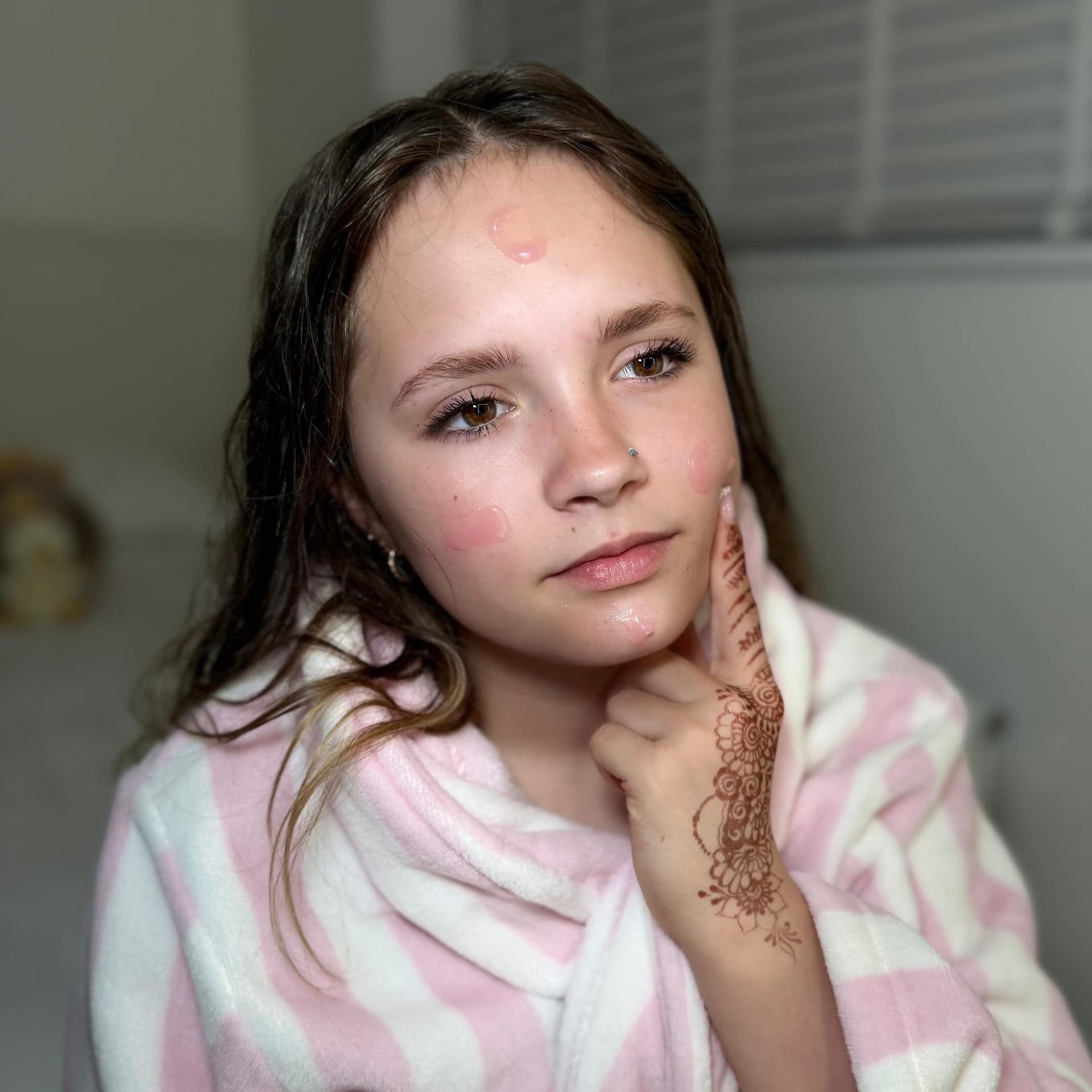
(Photo: Young content creator Ellie-May. Credit: Sophie/BBC)