
In short
The BBC “Global Story” episode analyzes the Louvre daytime smash-and-grab heist, how it was executed, what thieves can do with stolen museum objects, and broader patterns in art crime.
Guest backgrounds
Erin Thompson, professor of art crime at City University of New York; PhD in art history and law school background, specializing in intersections of art and crime.
Key claims
At least four men used a cherry picker/basket lift to reach an upper window, wore reflective construction vests, used an angle grinder to break fortified glass, and spent about four minutes inside. They targeted display cases in the Apollo Gallery, escaped on motorbikes, dropped a crown, and left a helmet that may contain DNA. Security concerns followed a prior Louvre guard strike.
Notable examples
Napoleon-era 19th-century royal jewelry (including a tiara associated with Napoleon’s wife, Empress Eugénie); the 1990 Isabella Stewart Gardner Museum theft (13 works, never recovered); the 1911 Mona Lisa theft; and the “takeaway Rembrandt” sting at Dulwich Picture Gallery.
Written by AI. May contain mistakes. Listen to the episode to check what was said.
Chapters
Tap a time to open that second in VOThe Louvre Heist Overview
0:38 to 1:27
Discussion about the recent Louvre heist and what was stolen.
“have you ever assumed that if you get too close to a painting, a steel shutter will snap down, and armed men will jump out and stop you?”
Interview with Erin Thompson
1:27 to 2:15
Erin Thompson discusses her background and expertise in art crime.
“And today on The Global Story, we delve into the underworld of art theft.”
Details of the Heist
2:15 to 4:29
In-depth discussion on how the thieves executed the heist.
“So just a couple minutes after the museum opened, the guards suddenly encountered intruders in the Apollo Gallery, which is a large, ornate gallery stuffed full of the French crown jewels.”
The Value of Stolen Art
4:29 to 6:45
Exploration of the value of the stolen gems and historical significance.
“They hopped onto their motorbikes and they took off.”
Museum Security Insights
6:45 to 7:21
Discussion on museum security challenges and past incidents.
“So if I were an enterprising thief, I would have been very interested in that news story.”
Profile of the Thieves
7:21 to 8:09
Insights into who the thieves could be and their motivations.
“And museums are supposed to be this calm, contemplative aesthetic experience.”
What Happens to Stolen Gems
8:09 to 10:57
Discussion on the fate of stolen gems and how they might be sold.
“who are doing it for a reward, who are hired to do it.”
Insurance and Recovery Process
10:57 to 14:00
Explains how stolen artworks can be returned and insured.
“And you have to find somebody who's not going to ask too many questions.”
The Process of Art Theft and Insurance Rewards
14:00 to 14:51
Learn how stolen art can be returned for insurance rewards without tracing back to the thief.
“transport a painting across the national border, much easier than a suitcase full of cash.”
Case Study: Stefan Breitweiser's Art Theft
14:51 to 17:58
Discover the story of art thief Stefan Breitweiser and his bizarre relationship with stolen art.
“Could you just go through every step of that process, please?”
Show all 14 chapters
Collateral and Criminal Financing with Art
17:58 to 20:59
Understand how stolen artwork is sometimes used as collateral in criminal activities.
“They earned paintings by Lucas Cronach and Watteau, and they threw a lot of musical instruments and silver goblets into a canal.”
The Infamous Isabella Stewart Gardner Museum Heist
20:59 to 24:12
Explore the details and aftermath of the largest art theft in American history.
“They have probably disintegrated long ago.”
The Mona Lisa's Theft and Its Impact
24:12 to 26:39
Learn about the theft of the Mona Lisa and how it changed the painting's legacy.
“Because it seems like once a stolen item goes back to a museum, it becomes the hit tourist thing everybody's got to see.”
The Cultural Fascination with Art Heists
26:39 to 27:31
Discuss why art theft stories capture public imagination and reflect on cultural issues.
“So, yeah, the museums, both victims and perpetrators in the trade in Stolen Art.”
Transcript
Automatic transcript. May contain errors.0:00This BBC podcast is supported by ads outside the UK.
0:30Just tap into iHeart to start watching. And we hope you enjoy the show.
0:37Erin Thompson:When you're visiting a big museum, have you ever assumed that if you get too close to a painting, a steel shutter will snap down, and armed men will jump out and stop you? Well, it turns out that just isn't the case. At least not at the world's largest and most visited museum. On Sunday, thieves broke into the Louvre in Paris and took just a few minutes to steal some of France's most valuable treasures. And they did it by using a ladder breaking through a window. They escaped with diamond-steady jewelry that belonged to French royalty and a tiara given by the Emperor Napoleon to his wife. And the thieves?
1:18Well, they're still on the run.
1:21Erin Thompson:From the BBC, I'm Tristan Redman in London. And I'm Asma Khalid in Washington, D.C. And today on The Global Story, we delve into the underworld of art theft. How do criminals steal priceless works of art? And what could they possibly do with them next?
1:44We called up Erin Thompson, a professor of art crime at City University of New York, to walk us through what happened at the Louvre. Well, Erin, thanks so much for joining us. Could we have you just introduce yourselves to us? So you described as an art crime professor. What does that mean? It means I've gone to way too much school. I have a PhD in art history, and then I went to law school. And now I look at various intersections between art and crime. So forgery, fraud, theft, I could teach you how to steal a masterpiece, but then I'd have to catch you. I love that. So just a couple minutes after the museum opened, the guards suddenly encountered intruders in the Apollo Gallery, which is a large, ornate gallery stuffed full of the French crown jewels.
2:39And they had come up through a cherry picker, a basket lift, parked on the street below. Also, if you want to be lifted up to change the bulb on a street lamp, for example, you'll see this type of equipment. They used it to lift themselves up to an upper story window and get access. How many of them are we talking about? You're saying they. How many? We know there were at least four men involved. Two of them put on construction worker reflective vests and operated the equipment, which is always good to know that if you act confident and have a reflective vest, you can really get away with a huge amount of things.
3:21People will just assume.
3:22Erin Thompson:The high-vis vest is a good hiding in plain sight tactic, isn't it? Exactly. So once they got to the right level, they used an angle grinder to break through the window, which indicates that it was probably a fortified glass of some sort, bulletproof strength. So they like smashed a window. They cut an opening in the window. As soon as the glass breaks, alarms go off and the timer starts ticking from when you can get out of the museum and escape before the police cordon off the street. And we think that the thieves spent only about four minutes from when they hopped through the window to when they hop back out.
4:06So they clearly had scoped out everything. They went right to the display cases they wanted to target, smash them, grab the things. Because they got a lot of stuff in four minutes. Four minutes is actually pretty long for a heist of this type. Yeah. Usually it's more like two or three minutes. Then they went back out onto the equipment, lowered themselves down. They hopped onto their motorbikes and they took off. They did drop at least one of the crowns, which suggests they didn't plan very well for what they were going to put the objects in.
4:41Erin Thompson:Shouldn't drop a crown. And even more devastatingly for the thieves, one of them also left behind his motorcycle helmet, which might contain traces of DNA. So the police are definitely running that through the databases right now. Okay, Erin, I want to pause. you said crown jewels. You know, we don't have crown jewels here. So I just want to understand what do you exactly mean? These are artifacts, crowns that the monarch had at some point. Help me understand what they are. All of the stolen pieces were from the 19th century. So Napoleonic era emperors and empresses. And they are super blingy.
5:27Imagine your stereotypical princess crown, something that Sleeping Beauty would wear at the end of the movie. They look like that. Very traditional. Necklaces, crowns, earrings in matched sapphires and diamonds.
5:44Erin Thompson:And what's the value of this entire haul that was taken? Have we got any idea? The value is hard to calculate because you can look at it in different ways. There's the value of the raw materials, the gems and the metals. There's the historical value, which is greater than that. And then there's the black market value. So even if you are just ripping out the gems and melting down the metals, you're going to have to find somebody a little less scrupulous to take them. So the theft is probably going to yield only less than half the street value of these pieces if they get away with it. Inevitably, I'm sure questions will be asked at this stage about the security in the gallery.
6:32Erin Thompson:I mean, how surprised are you that this situation has played out the way it has? A few months ago, the Louvre security guards went on strike, saying that there wasn't enough security in the museum. There are too many visitors. There weren't enough guards. So if I were an enterprising thief, I would have been very interested in that news story. And the museums always have a tension between budget and security. There's a limit to how much security you can put into a museum, because museums are just really strange places. Where else can you get within a few inches of things worth millions of dollars without being searched on the way in or out, without passing a background check?
7:20Not many places. And museums are supposed to be this calm, contemplative aesthetic experience. So if you're having an armed guard standing behind you, it's not very relaxing. So museums have to compromise between what they want to let you do, get up close to the works of our shared cultural heritage, and what they are supposed to do, which is protect those works from being snatched by anybody who comes in off the street. So at this point, Erin, what do we know about who the police thinks did this? We don't know anything for sure. Almost every case like this where it's a smash and grab in a museum, the people who actually are entering the museum are hired guns.
8:06They are low-level, habitual thieves who are skilled at doing this sort of thing, who are doing it for a reward, who are hired to do it. By who, though, usually? It can be a local gang. It can be broader than that. I would say that this is well-planned crime, but not necessarily organized crime, especially if you're taking something that can be melted down. Anybody can walk into a gold resale shop and sell it by the pound. You don't need to be in the mafia to have the connections to do that.
8:48Erin Thompson:Erin, I have to ask, is it possible that someone in the museum could have been in on this? Could it be a kind of inside job of some description? How often does that happen? It does happen, but museum insiders are usually smarter. They don't take art from display, they take art from storage. The secret there is that a museum might not realise that art is missing for months or years or ever, so you have plenty of time to sell it. Are there amongst these jewels, are there particularly large diamonds or other rare gems like that? I mean, you can melt down a gold crown, but you can't melt down a diamond.
9:33Erin Thompson:So what do you actually do with a big jewel? There's really two sizes of gems in the pieces that were stolen. There's little, like, eraser-sized diamonds, which are valuable but harder to keep track of. Those they can probably resell fairly easily. The larger gems, the centerpieces of the crowns and the earrings, those will be very recognizable to anybody who buys and sells gems. They're huge. They're gorgeous. Yeah, Tristan, you have to look at it. They are gorgeous. The sapphire is, like, yay big. I don't know. What, you mean like a tennis ball? Macaron-sized. to give an appropriate French comparison.
10:14All right, so imagine, Erin,
10:16Erin Thompson:tomorrow you find yourself with a macaroon-sized sapphire. You're sitting in your kitchen having just robbed it. What are you doing with it? You can't just take it to a jeweler and sell it. They're going to look at it and say, oh, this is an old-fashioned 19th century cut on that gem. I've been reading in the papers about gem thefts. I can send the police the exact weight of this and they will be able to recognize it like that. So you have to, if you are selling stolen gems of that size, get them recut. And there are a limited number of people in the world with those skills. And you have to find somebody who's not going to ask too many questions.
11:00So we might find that the sticking point of this case is finding the crooked lapidary who is being hired to recut these gems.
11:08Erin Thompson:OK, so the crooked lapidary in this case is the kind of crime fiction equivalent of after you rob a bank and one of your crew gets shot by one of the security guards, you have to go to see the crooked doctor who will pull the bullet out of someone's leg. Is that right? Exactly.
11:38Erin Thompson:Hi there, I'm Asma Khalid. And I'm Tristan Redmond. And together we're the hosts of the Global Story podcast from the BBC. For those of you all who might be new to our show, we here at the Global Story dive deep every weekday on one big story at the intersection of where the world and America meet. And you can now watch the global story on the iHeart app. Catch every brand new episode every weekday. Just tap into iHeart to start watching. And we hope you enjoy the show.
12:12Erin, you've been describing these gems as being, at least in their current form, extremely recognizable. And one of the questions we've been wondering is, well, why would a thief steal extremely recognizable art? What do you do with these? There are a couple of different routes to profiting from stealing from museums. One is if you take things that you can transform easily, where the raw materials are valuable. So here the gems in their current state are recognizable. But if you cut each big one down into a couple of new ones, nobody's going to be able to tell the difference. And some thieves steal very recognizable paintings or sculptures because they're good at stealing stuff and not too good about thinking through the consequences.
13:00It's like an adrenaline high. You spot the security flaws. You think, I could take this. And you do. And then the next day you wake up and the newspaper headlines are full of pictures of your saying that you've stolen and you're like, oh, crap. and some thieves then just destroy the paintings. Some turn them over to police to try and take the heat off. Some get caught the first time they try and sell something. So a surprising number of like, why not, explains museum thefts. And then a third main category are people who take works of art knowing that they're recognizable, knowing they'll never be able to sell them, but have different plans.
13:43Some of them use them as bargaining chips. If they're caught for some other crime, they say, well, if you reduce my sentence, I'll tell you where the missing Matisse is or whatever. Some of them use them as collateral for black market drug deals because it's very easy to transport a painting across the national border, much easier than a suitcase full of cash. and then if they ever need to cash it in, they will collect an insurance reward from giving it to somebody's girlfriend who'll go to the insurance company and say, hey, I found this thing. And often in European museums who have insurance, the reward for no questions asked return is about 10 % of the market value of the piece.
14:28Sorry, insurance like the museums you're saying insure these pieces of art. Yes. And you'll get an insurance reward from it. Huh.
14:35Erin Thompson:Could you just walk us through step by step how that actually works, right? Imagine that I have stolen the Mona Lisa. How is the Mona Lisa going from being in my possession to being handed back to the museum for a reward without it being traced back to me? Could you just go through every step of that process, please? Yes. So if you have a stolen work of arts that has been stolen from a museum that has insurance, often Lloyd's of London or whatever insurance company will offer a reward for return. Because if they can recover the piece and give it back to the museum, they won't have to pay the full value of that piece.
15:14So they'll say usually around 10 % of the value for whoever gets it to us. The thief can just give it to somebody who'll pretend they don't know about it and turn it over to the insurance company. The real trick is that, of course, the insurance company doesn't want to pay that reward. So they'll often try and set up a sting operation to entrap the person who is trying to collect the reward to show that they are actually connected to the theft. the Dulwich Picture Gallery in London did this for a Rembrandt painting that's been actually stolen three times so often they call it the takeaway Rembrandt that sting operation almost went off the rails because they convinced Amanda Flyover from Amsterdam with the painting but he noticed they had only bought him a one-way ticket and got a little suspicious.
16:14They managed to convince him it was all in error, and he came over, got arrested, and they got the painting back. So Erin, you laid out all these reasons why a thief might want to steal a particular piece of art. Does anybody ever do this just because they love art and they just want to have a particular painting around their house? A lot of art thieves appreciate art, but very few people actually keep the art that they steal. There are a handful of exceptions, but they can wreak a lot of havoc. So the Frenchman Stefan Breitweiser spent about seven years stealing from over 50 museums. He took around 300 pieces and he didn't sell them.
16:59He just kept them all in his bedroom where he would lay on his four poster bed and contemplate them. Wow. And what happened to those works in the end? He was arrested. Ironically, his girlfriend, who was the only one who knew he was stealing, had made him promise to wear gloves. He stole a hunting bugle from the Richard Wagner Museum in Lusser in Switzerland and didn't wear gloves. So she insisted on going back to the museum a few days later. She went inside with some rubbing alcohol and a handkerchief to rub things down to make sure that there'd be no fingerprints. He took a little walk in the park around the museum and was recognized by a retired journalist walking his dog who had seen the announcement.
17:45So he called the cops and they came and arrested him. And while Brightweiser was in jail, his girlfriend, who wasn't recognized, drove back home. And the girlfriend and Brightweiser's mother between them destroyed all of the works of art. Oh, that's terrible. They earned paintings by Lucas Cronach and Watteau, and they threw a lot of musical instruments and silver goblets into a canal.
18:15Erin Thompson:Oh, that's terrible. Can we just rewind a second just to, you were talking about artworks being used as collateral in criminal undertakings. Could you explain exactly how that works, please? Sure. So criminals, just like everybody else, need to put down some collateral if they want a loan. So say you want to sell some coke, but you don't have the money to pay for it up front. You have a painting stolen from a museum. You give that over to the person who's selling you the drugs. You go and sell the drugs and then pay them back and recollect your painting. If for some reason you're arrested, that person can turn over the painting for the insurance reward.
19:02So it's a handy form of collateral that can be easily concealed and carried across borders. Is it usually the case that artwork is recovered? And Erin, I asked this in part because I was a reporter for several years in Boston, and the classic case of art heist that I recall is Isabella Stewart Gardner Museum, which for listeners who are unfamiliar, To this day, that artwork hasn't been recovered. And there's like these two empty frames. And everybody goes and visits the museums just to go see the two empty frames that are there. Multiple empty frames. They still have 13 pieces. Oh, it's more than multiple empty too.
19:36Okay, the two are the ones that I always remember, the two big ones. The big ones, yeah. So tell us, is that an anomaly that those artworks were just never recovered? The Gardner Museum heist is still the largest property theft in American history in terms of value. On St. Paddy's Day night, 1990, two men dressed as police officers knocked on the door of the Isabella Stewart Gardner Museum in Boston, saying that they had received reports of a disturbance. The guards on duty let them in. There was only two night guards, and they were promptly threatened by guns, overpowered, tied up. And the thieves spent an incredibly long time, nearly an hour in the museum, cutting artworks out of their frames, stealing 13 pieces before disappearing.
20:27The works have essentially vanished. A few reports came in of people claiming to have them, but it was never certain that they actually had them versus were just trying to calm their way into a share of the reward. And those artworks have never been recovered. And my extremely depressing take is that they will not be recovered. I think that either they were destroyed to take the heat off, or even if they were stashed, you know, buried, put in somebody's attic, those paintings are fragile. You can't just chuck them in an attic. They have probably disintegrated long ago. As soon as stolen art begins to circulate, the chances of it being recovered go up.
21:08And sometimes it takes a long time. It can take decades before a stolen artwork makes it back to a museum, but it'll happen.
21:16Erin Thompson:Could you tell us a little bit about the, I mean, earlier on we were talking about my hypothetically stealing the Mona Lisa, but the Mona Lisa was actually once stolen. Could you tell us the story of that, please? Because I don't really know it. In 1911, an Italian man who is living in France was working at the Louvre. He was helping reframe some of the paintings to make them more secure, to be in locked frames. But the problem with making things more secure is that the people who do it then know all the secrets. So he kept his little worker's uniform, dressed in it, went into the museum on a day when it was close to the public, took the Mona Lisa into a stairwell.
21:59It was just hanging on a hook on the wall. Undid it from the special secure case, stuffed the painting under his smock, and then faced his first big challenge, which was he was locked in the stairway. But he made enough noise that another workman just heard him and let him out because he thought he was another worker. And then he walked right out. The empty space was noticed, became a huge outcry. Thousands of people came just to look at the empty space on the wall. Many people were arrested and suspected of the theft. Picasso was even hauled in because, you know, radical young artist. who knows what he's capable of.
22:40And the thief tapped the painting under his mattress for years. He always said that he did it out of patriotism. He wanted to bring it back to Italy because it was a great work by an Italian master, Leonardo da Vinci. But I kind of doubt this patriotic story because the first time it showed up was when the thief tried to sell it to an Italian dealer who basically was like, oh, very nice. Why don't you wait here while I go into the back room? And, you know, called the cops right away. So he was put on trial, luckily for him, in Italy and got an extremely short sentence and was more or less a national hero.
Read the full transcript
23:19Erin Thompson:And what happens to the Mona Lisa in the Louvre after that? So the Mona Lisa hadn't actually been that famous before the theft. In the inventories of the Louvre, when it was still a palace, we know at one point it was hung up in a bathroom. It was essentially a little decor you would look at while brushing your teeth. That's comical. And it's only after the theft that people are like, oh, this is amazing. It's not even the only Leonardo da Vinci that the museum has, but it becomes very popular. And now you have to stand in line and you can hardly see it because it's behind always smeary, bulletproof glass.
23:58So it's possible that if this crown of the Empress Eugenie, the one with all the pearls and diamonds, is found, it could suddenly become this major hit tourist attraction at the museum. Because it seems like once a stolen item goes back to a museum, it becomes the hit tourist thing everybody's got to see. Just what the Louvre needs. Yet another tourist hit. Well, Erin, the French government has been describing this theft as a great tragedy for the French nation. And the reports I've seen, it's really being seen as sort of a demoralizing moment of French national shame. I mean, what did you think of when you heard about this heist?
24:41I wonder, when the Musée d 'Art Moderne in Paris was hit in 2015, there was kind of an upsurge of support for the thief who was known as Spider-Man because of his skill in climbing into buildings. So I wonder if there are similar admiring French people of the ingenuity of these thieves.
25:09Erin Thompson:Well, I have to say that if I were an art thief, I would want to have a good nickname. And I would say Spider-Man is a good nickname for an art thief, all the more so because if you're French, do you know how you say Spider-Man? You say Spiderman, which sounds much better. Okay, Erin, what would be your nickname if you were an art thief? And don't tell me you've never thought about this. I have never thought about that. Oh, so disappointing. I guess I would just be the professor, but in a sinister way. That professor. That's fantastic. Erin, I will say that when we came in this morning, everyone on our show was obsessed with this story.
25:50It was the major headline, you know, that we thought from around the globe this weekend. And I want to get a sense from you as to why you think these sorts of stories capture people's imaginations. it's tempting to touch art. Everybody wants to hold a masterpiece in their hands, and I think we're all a little jealous of thieves who get to do that, much less maybe even put on the Empress Eugénie's pearl and diamond diadem. It's a little surprising to me that the story is so big because I know that museums are full of stolen objects that have been taken from colonized cultures around the world. So, yeah, the museums, both victims and perpetrators in the trade in Stolen Art.
26:47Erin Thompson:Okay. Well, Erin, thank you so much. We so appreciate you taking so much time to speak with us. Thank you, Erin. It was a total pleasure. Thank you so much. Thanks for having me.
27:03That was Erin Thompson, professor of art crime at City University of New York. If you've been enjoying our show, please take a moment to rate us. It helps other people find the show.
27:14Erin Thompson:The producers today were Viv Jones, Aaron Keller, Valerio Esposito, and Kat Farnsworth. The executive producer was Annie Brown. It was engineered by Travis Evans, and our senior news editor is China Collins. And folks, thank you all, as always, for listening. We'll talk to you again tomorrow. Cheerio.
28:01of where the world and America meet.
28:03Erin Thompson:And you can now watch the global story on the iHeart app. Catch every brand new episode every weekday. Just tap into iHeart to start watching. And we hope you enjoy the show.
From the publisher
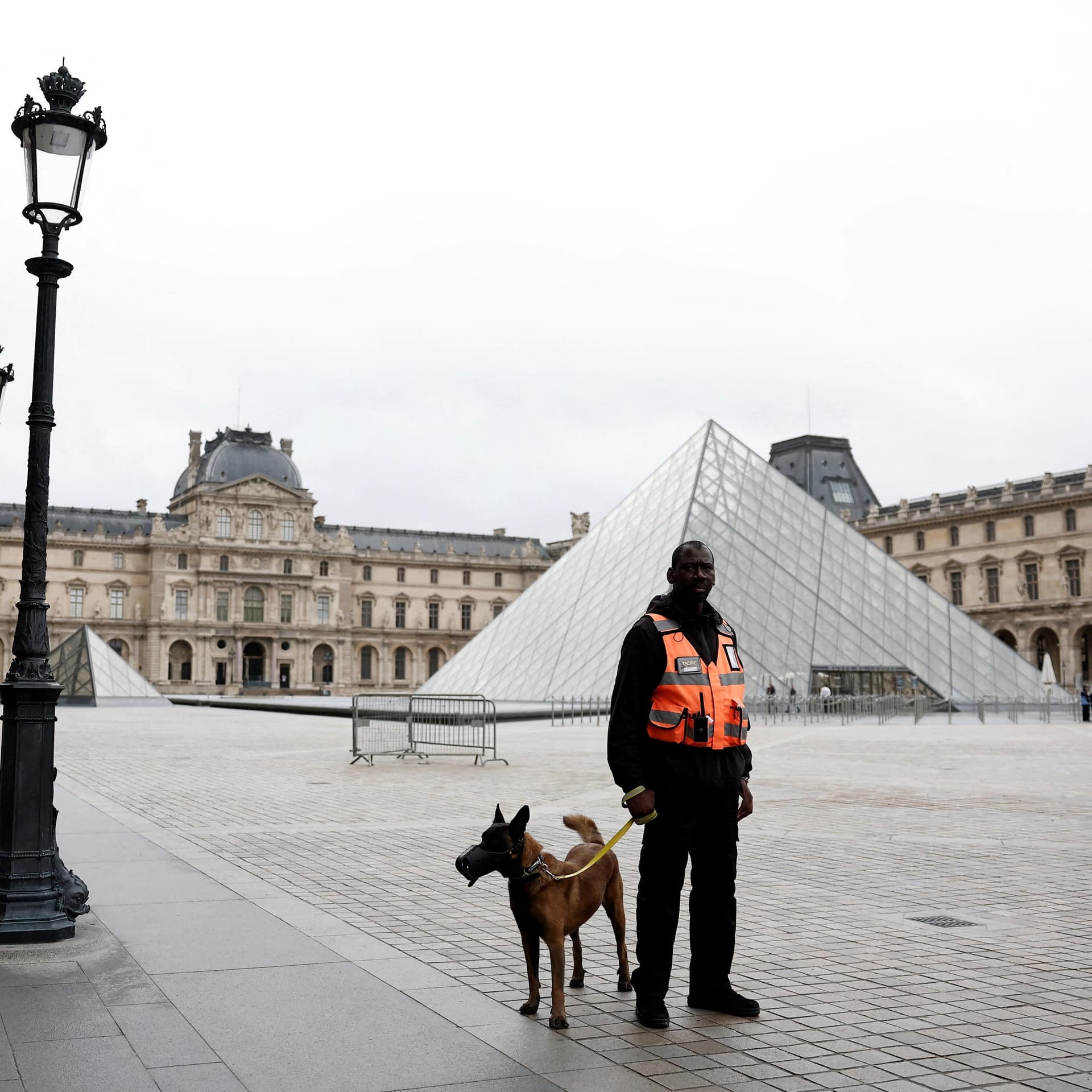
The Louvre Museum in Paris was closed for 2 days as the police investigated a brazen heist which resulted in the theft of France's “priceless” crown jewels. Thieves wielding power tools broke into the world's most visited museum in broad daylight, before escaping on scooters with eight items of jewelry of great historical significance.
Erin Thompson, Professor of Art Crime at The City University of New York, tells us about the crime that has stunned France - and the rest of the world.
Producers: Viv Jones, Aron Keller, Valerio Esposito and Cat Farnsworth
Executive producer: Annie Brown
Mix: Travis Evans
Senior news editor: China Collins
Image: A security employee near the glass Pyramid of the Louvre Museum, Paris. Benoît Tessier/Reuters