
In short
A BBC investigation into dopamine agonist medications (used for Parkinson’s, restless leg syndrome, and sometimes depression) that can trigger compulsive sex and gambling, with claims that patients weren’t adequately warned.
Guests
Asma Khalid (host). Noel Titheridge (BBC investigations correspondent; worked over a year, contacted 350+ people).
Key claims
Dopamine agonists boost dopamine reward/motivation and can overstimulate “dopamine hit” pathways, leading to impulse-control disorders. Many report delayed onset, insufficient leaflet/doctor warnings, and language that downplays severity (e.g., “increased libido” vs porn/sex-worker use). Some cases include suicide, criminality, and severe financial loss.
Notable examples
Charlene (Massachusetts; depression treated with a dopamine agonist in 2016) developed sudden hypersexuality (sex with ~25+ men in 2017, including abuse), compulsive spending/shopping and shoplifting after draining ~$50,000 retirement savings; later suspected medication and stopped it. A French court case is mentioned: compulsive hypersexuality and $100,000+ gambling losses. A UK regulator said it will review warning labels for several dopamine agonists.
Written by AI. May contain mistakes. Listen to the episode to check what was said.
Chapters
Tap a time to open that second in VOCharlene's Experience with Medication
0:00 to 0:37
Exploration of Charlene's life-changing experience with dopamine agonists.
“This BBC podcast is supported by ads outside the UK.”
Charlene's Experience with Medication
1:18 to 2:44
Exploration of Charlene's life-changing experience with dopamine agonists.
“she began taking this new medicine to help her with mild depression.”
Investigating Dopamine Agonists
2:44 to 4:07
An overview of dopamine agonists and their effects on patients.
“Noel Titheridge is an investigations correspondent at the BBC, and he's been working on this investigation for over a year.”
Impulsive Behaviors and Consequences
4:07 to 5:31
Discussion of the impulsive behaviors and serious consequences experienced by patients.
“So the drugs can be really effective for Parkinson's sufferers that suffer from shakes and tremors.”
Charlene's Decline and Self-Destructive Choices
5:31 to 6:50
Details of Charlene's descent into compulsive behaviors and their aftermath.
“And I was seeing a psychiatrist for depression.”
Understanding Impulsivity and Awareness
6:50 to 8:12
Analysis of the lack of awareness regarding medication side effects among patients and doctors.
“Ethically, it wasn't something I would do.”
The History and Popularization of Dopamine Agonists
8:12 to 10:00
A historical perspective on the development and use of dopamine agonists.
“I needed to have sex with as many people as I could have sex with.”
Clinical Evidence and Ongoing Research
10:00 to 14:00
Discussion on the research and evidence linking medications to impulsive behaviors.
“Maybe this is what it's like to not be depressed.”
Investigating Side Effects of Medications
14:00 to 17:40
Learn about the emerging evidence linking medications to impulsive behaviors.
“Throughout the early 2000s, there's still no official report on the side effects, no warning that's being given to patients.”
Patient Experiences and Awareness
17:40 to 21:28
Hear personal stories of patients and their struggles with understanding medication side effects.
“So, you know, anyone can behave impulsively.”
Show all 12 chapters
Legal and Ethical Implications
21:28 to 24:42
Explore the legal challenges faced by patients regarding medication side effects.
“That is a really interesting ethical question.”
The Need for Improved Warning Labels
24:42 to 26:22
Discuss the importance of clear warning labels and communication about medication risks.
“It gets me choked up to even talk about it a lot of the time.”
Transcript
Automatic transcript. May contain errors.0:00This BBC podcast is supported by ads outside the UK.
0:30business needs in one place, saving you time, headaches, and serious money. Stop paying for missing pieces. Go to odoo.com. That's O-D-O-O dot com to learn more. With the new Schwab Teen Investor Account, teens can gain hands-on investing experience and build positive money habits. It's an account co-owned by you and your teen, so you can monitor and engage with the account while your teen learns how to invest and manage money. Learn more at schwab.com. Today, we've got a special BBC investigation for you all. It's a really, really fascinating story. But I also want to note that this episode talks about sex and there's a mention of suicide.
1:11So please take care while listening. And if you have little ones around, you might want to listen to this at a different moment. When Charlene was 42 years old, living in Massachusetts, she began taking this new medicine to help her with mild depression. The drug worked. Her mood improved. But after taking it for a while, her behavior also started to change dramatically.
1:33Noel Titheradge:I had this kind of insatiable sex drive all of a sudden, and that meant seeking out men wherever I could seek them out. What Charlene didn't realize, because the thought never crossed her mind, was that these changes were a side effect of her new medication. Millions of people all over the world have been prescribed drugs like the one Charlene was taking. They're called dopamine agonists. And they're used to treat various illnesses, from Parkinson's to depression. But for an alarming number of patients, these drugs don't just treat the symptoms of those diseases. They also have side effects that can fundamentally alter people's personalities.
2:16I'm Asma Khalid, and today on The Global Story, a new BBC investigation. has heard from hundreds of people whose lives were turned upside down by prescription medications. How did this happen? And why do patients say they weren't sufficiently warned?
2:41Well, Noel, it's a pleasure to meet you. Thanks for coming on the show. Thanks for having me. Noel Titheridge is an investigations correspondent at the BBC, and he's been working on this investigation for over a year. I kicked off our conversation by asking him how he first came across this story. Well, I heard about a case going through the courts in France. So that involved a French man who's suing a pharmaceutical company, saying that they didn't properly warn him about side effects of the medications he was on. He says that he developed compulsive sexual urges, what's known as hypersexuality, that ruined his relationship.
3:18He also said that he had lost more than$100 ,000 to compulsive gambling. I'd never heard about this before, and I couldn't believe that prescription medications could be that powerful. So I wanted to know, you know, how widely are these drugs used and how common are these side effects? Okay, and I know your reporting specifically looks at this class of drugs, dopamine agonists. Can you walk us through what these drugs are used for? What do they do? What do they do to our brains? Yeah, well, they're a family of drugs. They were developed and manufactured by multiple companies. These drugs are widely used for Parkinson's and then other conditions like restless leg syndrome and even in some cases, depression.
4:01Now, the way they work is they boost dopamine activity in the brain. So dopamine's this chemical that's vital in coordinating our smooth movements. So the drugs can be really effective for Parkinson's sufferers that suffer from shakes and tremors. But we also know dopamine is that key chemical in driving feelings of motivation and reward. You know, the idea of the dopamine hit, this need for instant gratification. And it's thought that these drugs can overstimulate these feelings of motivation and reward. So just to be clear, you've been investigating this, Noel, for is it more than a year now?
4:39and spoken to hundreds of people, you say, who took these medications who had very similar problematic side effects. Yeah, that's right. You know, over 350 people in all have been in touch with us. Many of them talk about ruinous sexual urges, about compulsive gambling that cost them tens, hundreds of thousands of dollars. And what's really striking is that many of them say that they weren't properly warned about these side effects. And this has had devastating consequences. So as you say, you have spoken to hundreds of people. And I know you've done some original reporting for us here at The Global Story.
5:18You spoke with a woman by the name of Charlene, who lives in the US. Can you tell us a little bit about her? Yeah, so Charlene's 52. She's from Massachusetts.
5:28Noel Titheradge:At the time, it was 2016. And I was seeing a psychiatrist for depression. I'd had depression on and off since I was a teenager. I was functioning, though. I had a career, had a master's degree, was doing well, had a partner. So life was going pretty well. It was just these symptoms that I wanted to see if we could control better. So she was already on an antidepressant drug, but her psychiatrist prescribed her another drug from this family that we're interested in called dopamine agonist. and it was this drug she was prescribed alongside her antidepressant. So Charlene starts taking one of those dopamine agonists.
6:12And what happens after she starts taking that medication? Well, for the first couple of months, nothing. And that's actually common to lots of people that have contacted us. It's not like these side effects immediately emerge, and that often makes it hard to spot them when they do emerge. Now, Charlene works with blind people. That was her job. She helps them, teaches them navigational aids, things like canes and guide dogs. And it was while working with a client that she'd already known for some time that her new behavior began to emerge.
6:41Noel Titheradge:I was working with this client who was very flirtatious with me. So I would tell my colleagues, oh, he's very flirtatious with me. But never in my mind would I have thought I'm going to have a relationship with this person. Ethically, it wasn't something I would do. But then one day, something changed. All of a sudden, I was very bold and went up to him and just said, why don't you just kiss me? And he did. That launched me into so much more danger from that point on.
7:19Noel Titheradge:I should provide a little bit of context. Next, imagine you're a person who's had this kind of depressive state for your life. And then suddenly this dopamine is in your brain and it's pushing it to the highest level that it can get. It feels pretty good. You think your depression has been cured and it feels like you're living your best life. And part of living my best life was, well, I had this kind of insatiable sex drive all of a sudden. And that meant seeking out men wherever I could seek them out.
8:02Noel Titheradge:I would go to bars and get all dressed up and just pick somebody up at the bar. It can be anybody on the street. I went into the local pizza place and found a guy. The local 7-Eleven found a guy. I needed to have sex with as many people as I could have sex with. That's what it felt like. Like there was this drive that you had to do this.
8:37So for Charlene, this had consequences. She'd been in a stable relationship for six years. is she confessed to her partner that she'd been sleeping with other men and he ended the relationship. But crucially, he would have had no idea that her new impulsive behavior could be attributable to the medication that she's on. But after the relationship, the consequences begin to get even more serious. Some of these sexual encounters that she described involved significant physical abuse. So that one summer of 2017, I had estimated I had sex with about 25 different men.
9:17Noel Titheradge:And they would bring a friend the next time and it would be a threesome and then a foursome. And then I think it got up to one time five, five different men. It ended up turning into some very unsavory characters. and so when you think about how that feels in the moment it felt good it felt like I was really elated doing that that that satisfied that need but then after you you realize why am I having sex with five five men but it doesn't occur to you that something's wrong something's wrong with you due to the medicine. It's just, you kind of think, well, I'm 42 or 43. Maybe this is what it's like to not be depressed.
10:04Noel Titheradge:Maybe this is what it's like to be perimenopausal. And there was no kind of thinking at that time that something was really wrong. Gosh, Noel, this sounds really, really awful. And it sounds like she also doesn't know why these things are happening to her. Were the behavior changes that Charlene exhibited largely sexual behavior changes? Did she experience other types of compulsive behavior? She did. Many of the people that have contacted us talk about developing multiple impulsive behaviors. Now, hypersexuality was a really significant one for Charlene. She also developed other forms of impulsive behavior, which again had significant consequences for her?
10:53Noel Titheradge:There were so many things that I did compulsively. I would dye my hair day after day until it finally all started falling out and I had to shave it off. I was driving aggressively, getting into road rage incidents with people. One of them was spending money. So I'd go into any kind of clothing store and buy a lot of clothes, just spent money until there was no more money to spend anywhere and there were no more credit cards I could get. And then I ended up taking out all of the retirement I had in a previous job and just kind of bottomed out. Gosh, it seems like she did not understand the risks of the medication she was taking.
11:45And my understanding from your reporting is that it seems like the awareness of these drugs is not as high as it could be. So what's the history of this? Where does this all begin? Well, this goes back a long time, actually. You know, these drugs began to be used for a particular type of tumour in the 1980s, a tumour that's called a pituitary gland tumour, but relatively at low levels. But then in the 1990s, they begin to be used for Parkinson's disease. You know, Parkinson's disease is the fastest growing neurological condition in the world. There are some 12 million sufferers. And that number is thought to be about to double before 2050 because of aging populations.
12:26But this drug was this time seen as a miracle medication. A previous generation of drugs used for Parkinson's had side effects all of their own. They cause involuntary movements, which are highly embarrassing for sufferers of Parkinson's. So these dopamine agonists are able to tackle the shakes and tremors that sufferers of Parkinson's face. But they also don't cause some of the involuntary movements. So these drugs then widely begin to be used for Parkinson's and then other conditions like restless leg syndrome and in Charlene's case, depression. And what exactly is restless leg syndrome? Yeah, restless leg syndrome is a condition which causes an uncontrollable urge to move.
13:08Many sufferers of this condition describe awful sensations, particularly late at night, that can cause chronic sleeplessness and really affect people's quality of life. So to be clear, when the medications first were put on the market, no one, it sounds, was talking about these side effects. You didn't hear this from doctors. You didn't hear this from researchers. Well, exactly. These hadn't appeared to any great degree, as far as we understand, in clinical trials. So you've got a situation where patients aren't aware, prescribing doctors aren't aware, and they don't appear in leaflets at all.
13:39But our investigation found out that doctors did begin to share stories about the crazy, wild experiences that their patients were having. These side effects that led to huge debts, they led to the breakup of marriages, criminality, and even in some cases, suicide. I see. So you've outlined a timeline for us in which these drugs really started to become popularized in the 1990s. Throughout the early 2000s, there's still no official report on the side effects, no warning that's being given to patients. But it appears there is some anecdotal evidence building that these drugs might not be safe for everyone.
14:19So when are these side effects, this anecdotal evidence, when does it actually first begin to be properly investigated? Well, academics in the early noughties begin to publish reports proving this link between these drugs and impulsive behaviors. And this is followed by clinical research by the pharmaceutical companies. So this is the early 2000s then? Yeah, this is the early to mid-2000s. There's a significant study that finds that one in six people on these drugs develop impulsive behaviours. Now, to kind of put that in perspective, health authorities here, they say that a side effect is very common if it affects one in 10 sufferers.
15:01So while not all side effects will be extreme or severe, some academics put the relationship even higher. They say one in three people are affected. Oh, wow. I mean, that's staggering data to see in the side effects. And so once researchers detect that these side effects are indeed fairly common, once that is proven, why do the drugs stay on the market? I mean, presumably I understand they are helping patients, but there has got to be some sort of tension looking at the pros and cons in that dynamic. Well, these drugs can be life-changing for many people, particularly, we're told, by Parkinson's sufferers, for them in the early stages of the condition.
15:43And regulators have always made these calculations that the benefits overall outweigh the risks. But what many people tell us, these people that have gotten in touch with us, that have experienced these side effects, is that the complete scale of these side effects and the nature of them, everyone needs to be aware of it. So warnings do appear in the mid to late. And how so? How are the warnings disclosed to the public? So they begin to appear in the leaflets, the packaging that you'll receive in the medication in that small font. It'll say that in that small font. Exactly. But what people say to us is that the warnings weren't sufficient enough.
16:17They hadn't been sufficiently warned to make the link between their newly developed impulsive behaviors and the drugs that they were taking until it was far, far too late. So Charlene, in her story, she started taking these drugs 10 years ago. I find it hard to compute why, if the research was done, you're saying in the early 2000s, why someone like Charlene in the year 2016 was not aware of the risks of the medication she was on, unless that information was not being fully disclosed, right? You say that the risks were known, that they were beginning to be printed on leaflets. How do people continue then to take the drug and not know the side effects?
17:03Well, we've kept hearing the same complaints by people. One is that they weren't warned properly by their doctor. It wasn't taken seriously enough, that there was a kind of like tittering or a kind of joke made about the sort of sexual side effects, when actually it was a lot more serious for these people when they developed. Other people complained about the language of the warnings, that they weren't clear enough. What do they say? Do you have an exact language description for us? Yeah, so around sexually impulsive behavior, this term hypersexuality that for a lot of people is quite hard to understand.
17:36And what does that mean? Because isn't hypersexuality an actual disorder? Yeah, it's compulsive sexual urges. So, you know, anyone can behave impulsively. But when impulsive behavior is deemed as harmful, that's considered an impulse control disorder. and hypersexuality is one of these kinds. I see. And in the warnings that appear on leaflets, they talk about sexually altered interest, increase in libido, generally harmful behaviour. But the people that developed extreme cases of these side effects, they say that the way that these manifest is often in porn addiction, in use of sex workers, and they're saying that that's the sort of language that they think the warning should include.
18:16I mean, increased libido by itself doesn't sound particularly harmful. Well, and many men say that when they were told this in appointments in their 50s and 70s, they actually thought this might be a good thing, you know, when they're experiencing declining libidos themselves. But if the language had talked about, you know, porn addiction and partners, families would hear that language, they may be able to recognise these new behaviours when they emerge.
18:43but crucially the other aspect of all this is that people say that some of these behaviors sex addiction gambling addiction they can be really shameful how do you tell your doctor in a brief appointment what you're going through that's what stops a lot of people reporting this and getting into further and further problems
19:23you've spoken in your reporting to hundreds of people did any of them bring legal cases against the drug companies, against their medical providers, as a result of the side effects they experienced? Yes, some have. They appear few and far between. So there are clinical negligence cases. That's where you say you weren't warned by your doctor. But this can be really hard to prove, right? So people say, how do you begin to evidence that your doctor didn't warn you about a side effect in an appointment that may have taken place, you know, a decade ago? Where there have been cases generally they involve gambling.
19:59People that can say, look, I wasn't gambling before. You can see that through my bank statements. I begin taking these drugs and look, I've lost $100 ,000. But with other forms of impulsive behavior, like sexually impulsive behavior, where relationships have been ruined, families have been broken up, how do you evidence the harm in those cases? I imagine it's also difficult for the patients you've spoken to to weigh up how much agency they had, right? Because I do think, particularly when you talk about sexual behavior changes, some folks might be wondering, well, hey, is this just not on me? People do change their sexual behaviors over their life.
20:33And is that just not a part of it? Do they wonder and do they struggle with how much agency they had? Yeah, that's a real theme here. So there's one particular case, which is quite striking in that regard. It involves a family whose previously really respected father stole more than$600 ,000 from vulnerable elderly clients. So his legal practice involved having control of the financial affairs of lots of local elderly people in his community. But extraordinarily, he was stealing this money and he was paying for sex workers with the money. And bizarrely, he was using it to pay for antiques. One of his great hobbies was antiques, and he was spending huge amounts of money on antiques, stealing from his clients.
21:22More than a dozen people that lost huge sums of money. This story took a really tragic turn when the lawyer was sent to prison. But interestingly, the sentencing, the judge said that while the drugs were responsible for this man's behaviour, he still felt he must have been able to spot his behaviour and he should have been able to warn someone and seek help from a doctor. That is a really interesting ethical question. Exactly. And it's very tricky territory. But I think as Charlene put it in one of the clips that we've played here, you know, you've got this dopamine hit loop and it changes your judgment.
21:57Where does the personality begin and where does the medication end? I have to ask, what have drug companies said in response to your investigation? Yeah, so we've spoken to some of the manufacturers. They say that these drugs were extensively trialed, that they've been approved and continue to be approved by regulators around the world who make this benefit versus risk calculation. And they say that the side effects are clearly stated. So you say that drug companies put these warnings on the medication. Is it your sense that there is more that can be done to make these drugs safer somehow? Well, there have been attempts over the years.
22:37So one American academic paper said that there should be a black box warning on these drugs. Like cigarettes. Exactly, like cigarettes. You know, that extreme in terms of the potential side effects. In big font, you're saying. Exactly, in big font. But the FDA, the US drug regulator said that it didn't feel that these side effects were sufficiently serious when compared with the benefits. And it said it's extensively evaluated this and issued multiple updates. Okay. We want to know how Charlene's story ends. You know, she talked about bottoming out. How does she finally realize what was happening?
23:17Well, Charlene had taken out$50 ,000 from her retirement savings to fund her compulsive shopping. But soon that money dried up and she began shoplifting. And it's at this point, amidst all her other behavior that she goes back to her psychiatrist.
23:35Noel Titheradge:And I went to see her and said, you know, I think there's something wrong. Maybe I have bipolar disorder because that was what I thought. And I remember her whipping around and she had a rolling chair and she whipped around and said, it's the medication. She was 95 % sure it was the medication. And she had to get me off of that medication. But even then, Noel, I was not convinced. I thought there's no way it's the medication. How could the medication do all that? In my head, that's what I thought, because that's how much I was unaware that something like that could happen. Gosh, does she go off the medication?
24:21Yeah, she does. But she says it's had a significant impact on her, that her depression has gotten worse, and she cites the PTSD that she developed from the sexual encounters and the abuse that she suffered as a cause of that.
Read the full transcript
24:36Noel Titheradge:It's had a devastating impact. I mean, I'm still trying to recover. It gets me choked up to even talk about it a lot of the time. I know there are many people out there who are on this drug and they have no idea of the damage that this can cause. So I think it's really important to get the word out there that there are other people who've been through this and you can make it through. And two, that it doesn't have to keep happening. This doesn't have to happen to them. So Noel, you started investigating these cases more than a year ago. And as we say, you've spoken with hundreds of people, hundreds of case studies, people are still, in fact, getting in touch with you.
25:26So I just want to ask Noel here at the end what you've learned. Well, it's been an overwhelming experience. You know, these are really difficult stories to hear. But there's also something really satisfying.
25:41Whenever we publish one of these stories, we're flooded with people getting in touch. And what's been really striking is the number of cases from people in the U.S. where this seems a really underreported subject. You know, we've been approached by lots of people in America who are sort of saying, I've never seen this written about before. Thank God it wasn't just me that this happened to. But it feels to me that unless we can reduce the shame and the stigma that people suffer when they take these medications and experience these side effects, then they'll continue to be underreported. And unless people have true knowledge of the scale of the side effects and their consequences, how can they make truly informed decisions?
26:31It's a really, really interesting story. Noel, thanks so much for bringing your reporting to us. Thanks so much for having me.
26:46That was Noel Titheridge, an investigations correspondent at the BBC. And in response to Noll's investigation, the national drug safety regulator in the UK has said it will begin reviewing the warning labels for several dopamine agonist medications. If you appreciated today's show, and broadly the type of journalism that we bring you here on The Global Story, where we go in-depth every day on one big story at the intersection of where America and the world meet, then I've got a favor to ask. Could you take a moment to write a review or rate us wherever you listen? It really helps other people find us.
27:19And by the way, if you all have questions for us, we love hearing from listeners. We want to know what stories you're interested in hearing. You can email us at theglobalstory at bbc.com. Today's episode was produced by Viv Jones. It was edited by Bridget Harney and mixed by Travis Evans. Our video producer is Matt Pintis. Our senior news editor is Chyna Collins. And I'm Asma Khalid. Thanks, as always, for spending some time with us. And we'll talk to you again tomorrow. you
From the publisher
A BBC investigation has heard from hundreds of people who say they developed sex and gambling addictions after taking a category of prescription drugs called dopamine agonists.
Millions of people in the US and around the world have been prescribed these medications, which are used to treat various illnesses, from Parkinson’s to depression. But they have well-established side effects: around 1 in 6 people who take them develop impulse control disorders.
Noel Titheradge, investigations correspondent, shares the story of one American woman who developed hypersexuality after she took a dopamine agonist drug. Like many of the patients Noel has spoken to, she says she was not warned that her medication could dramatically change her personality.
Noel’s investigation is also a BBC podcast series. Search for ‘Shadow World: Impulsive’.
If you have any concerns about medication you’re taking, speak to your doctor. For further information on the issues raised in the programme, contact support organisations in your own country. For a list of organisations in the UK that can provide support go to bbc.co.uk/actionline.
Producers: Viv Jones
Executive producer: Bridget Harney
Mix: Travis Evans
Senior news editor: China Collins
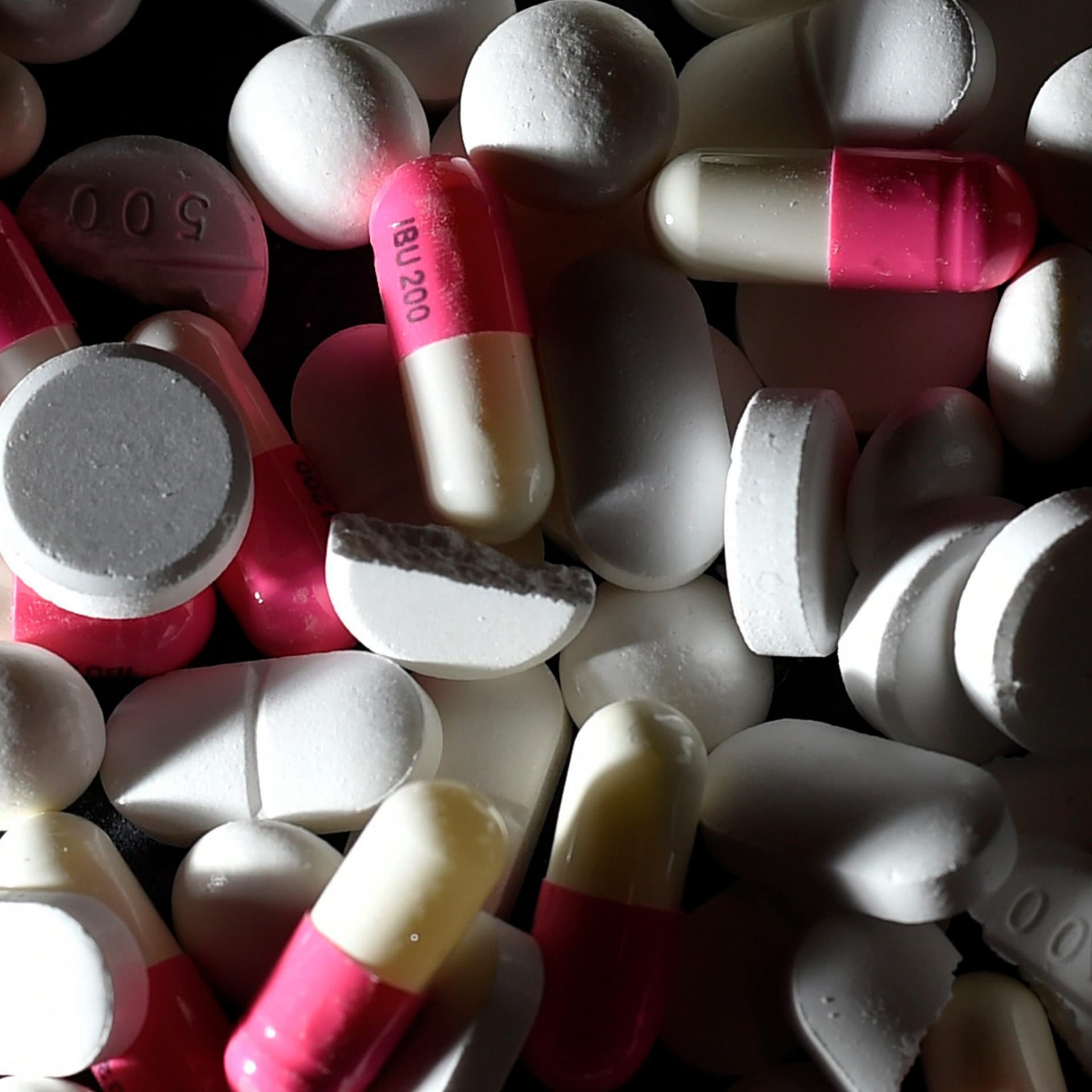
Photo: A mixture of pills. Credit: Lauren Hurley/PA Wire