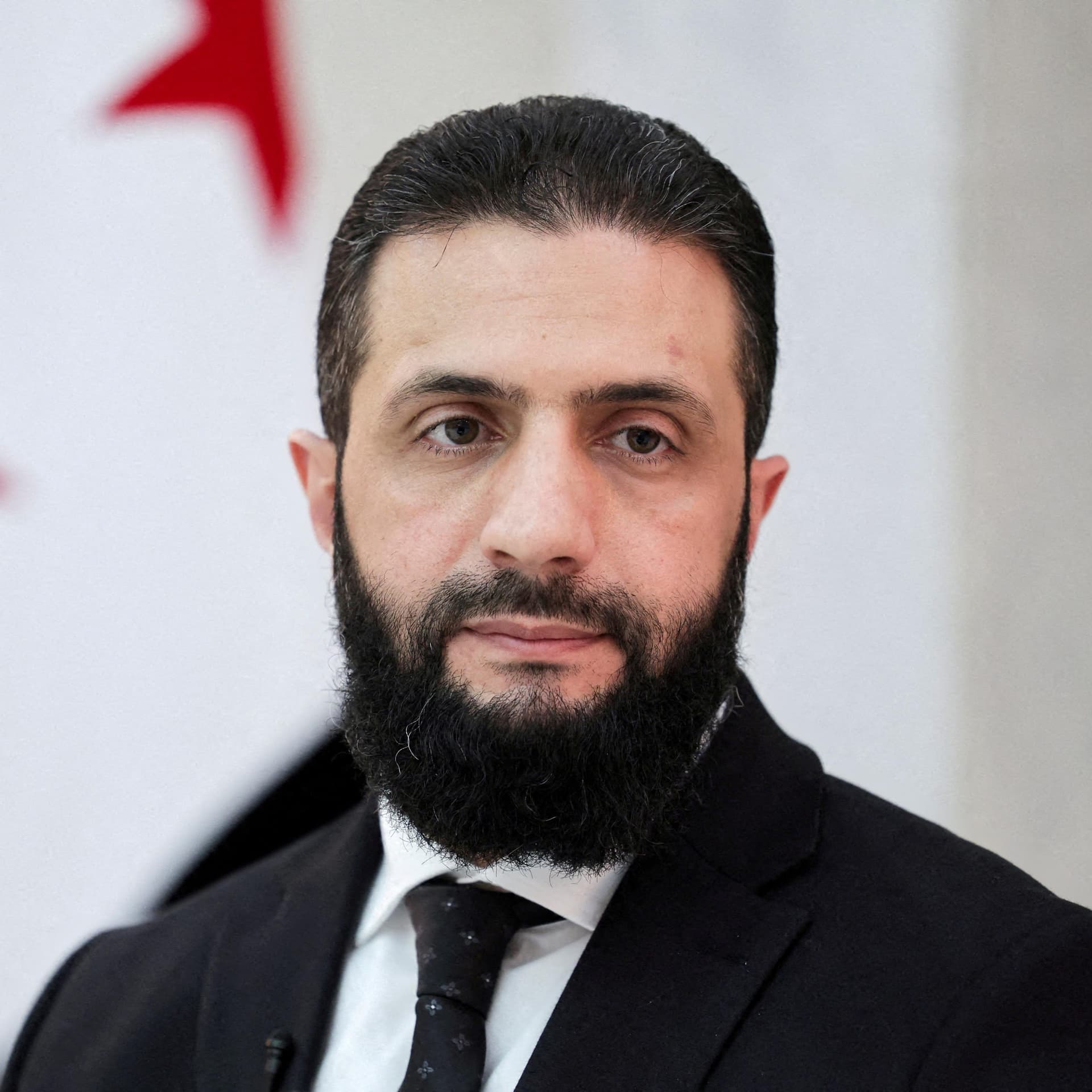

In short
The episode discusses two Middle East developments: a proposed US-Israel “peace” plan for Gaza tied to Hamas accepting terms, and Syria’s rapid political transition after Bashar al-Assad’s fall. It highlights a “small miracle” of former jihadist Ahmed al-Shara gaining international legitimacy, including meeting David Petraeus and appearing at the UN.
Guests
Orla Guerin, BBC senior international correspondent (Damascus-based), and Jeremy Bowen is referenced as the BBC international editor who previously interviewed al-Shara.
Key claims
al-Shara’s background includes fighting with al-Qaeda in Iraq, detention at Abu Ghraib, and later founding Jabhat al-Nusra; his governance aims to woo investors, unify Syria, and keep a “moderately Islamic” line.
Notable examples
UN red-carpet treatment in New York; Syria’s planned transitional assembly elections (not full direct elections); Israel-Syria tensions over the Golan and alleged Israeli raids; concerns about cronyism and al-Shara’s brother’s influence.
Written by AI. May contain mistakes. Listen to the episode to check what was said.
Chapters
Tap a time to open that second in VOTrump's Peace Proposal in the Middle East
0:00 to 0:48
An overview of Trump's plan for peace involving Israel and Hamas, and its implications.
“This BBC podcast is supported by ads outside the UK.”
Trump's Peace Proposal in the Middle East
0:52 to 3:18
An overview of Trump's plan for peace involving Israel and Hamas, and its implications.
“So this is a big, big day, a beautiful day, potentially one of the great days ever in civilization.”
Introducing President Ahmed al-Shara
3:18 to 5:08
Discussion about the new Syrian president's emergence and significance in the region.
“But today, we have a story of just this kind of small miracle happening potentially elsewhere in the Middle East.”
Orla Guerin's Insights from Damascus
5:08 to 8:08
Orla Guerin shares her experience covering the new Syrian president's rise to power.
“Or is America repeating a mistake it's made in the Middle East many times by backing tomorrow's dictator?”
Al-Shira's Path to Leadership
8:08 to 13:12
Exploring Ahmed al-Shira's background, experiences in Iraq, and rise in Syria.
“Al-Shirran not wearing his camouflage military fatigues, but looking very comfortable in a smart business suit.”
The Nusra Front and Its Impact
13:12 to 14:00
Discussing the significance of the Nusra Front in al-Shira's military strategy.
“But he then went to the northwest, to Idlib province, which is a very conservative area.”
The Rise of al-Shirah and the Fall of Assad
14:00 to 19:53
Learn about the factors that led to the rise of al-Shirah and the fall of Assad in Syria.
“eventually end up capturing the city of Idlib in Syria.”
Challenges of Governance in Post-Assad Syria
19:53 to 21:01
Explore how al-Shirah is attempting to govern Syria and his challenges in doing so.
“We debate about food, deep dish, tavern style, who's got the best beef.”
The Future of Democracy in Syria
21:10 to 28:08
Discusses the state of democracy and governance under al-Shirah's leadership.
“Because it's obviously a country that's come out of decades of dictatorship.”
Israel's Influence on Syrian Politics
28:08 to 29:56
Explore Israel's military actions in Syria and the potential for peace agreements.
“And in fact, where I'm sitting, I can see the defence ministry, which was bombed by Israel.”
Show all 11 chapters
Reflections on the Situation in Syria
29:56 to 30:16
Discussion about the hope and uncertainties surrounding Syria's future.
“Ola, we've watched the sun go down behind you whilst we've been talking.”
Transcript
Automatic transcript. May contain errors.0:00This BBC podcast is supported by ads outside the UK.
0:30And to think, that's just a small taste of what Schwab offers. Because Schwab knows that when it comes to your finances, choice matters. No matter your goals, investing style, life stage or experience, Schwab has everything you need, all in one place, so you can invest your way. Visit schwab.com to learn more.
1:00Trump's plan for ending the war. So this is a big, big day, a beautiful day, potentially one of the great days ever in civilization. The proposal has been agreed by the US and Israel. Everything getting solved. It's called peace in the Middle East. But no peace can be agreed without Hamas. And they haven't agreed to anything yet. Jeremy Bowen, the BBC's international editor, who we've had on the show, has been looking at the plan. 20 points, which include things like Israel withdrawing to an agreed-upon line, an amnesty for Hamas fighters if they drop their weapons, which would be controversial in Israel, full aid going into the Gaza Strip, important things for Palestinians, no one has to leave, and those who've left can come back.
1:52That's very controversial for the Israeli right. Israel will not occupy or annex Gaza. The IDF will withdraw. That's a disaster for the Israeli ultra-right. But crucially, from the Israeli perspective, there is the, as soon as this thing goes into action, 72 hours, all the hostages, living and dead, are allowed to leave. Trump has made it clear that if Hamas rejects the deal, that Israel has his full backing to, as he puts it, do what you have to do. And on Tuesday, he set a deadline for Hamas. We're going to do about three or four days. We'll see how it is. All of the Arab countries are signed up.
2:31The Muslim countries are all signed up. Israel's all signed up. We're just waiting for Hamas. And Hamas is either going to be doing it or not. And if it's not, it's going to be a very sad end. On the Hamas side, it's hard to say how they'll respond. And don't forget, Hamas is an acronym for the Islamic resistance movement. Resistance, sacrifice, martyrdom is a big part of who they are. Trump said that if the deal gets done, it will be, quote, an A plus. But it would be more than that. Getting this deal over the line would require a kind of a small miracle, persuading two sides who rarely agree on anything to stop fighting.
3:15We're going to come back to this story in a later episode. But today, we have a story of just this kind of small miracle happening potentially elsewhere in the Middle East. Please join again in welcoming President Ahmed al-Shara to the stage. Last week in New York, we saw the new Syrian president, Ahmed al-Shara, appear on stage alongside David Petraeus. These two men have every reason to hate each other. Because the fact is that we were on different sides when I was commanding the surge in Iraq. You were, of course, detained by U.S. forces for some five years, including, again, when I was the four-star there.
4:00And here you are now as the president of Syria. Petraeus was the commander of U.S. forces in Iraq in the 2000s. And al-Shirah was an al-Qaeda soldier who fought against the American soldiers under Petraeus' command. Yet the old general couldn't speak more highly of him. Are you getting time to do some thinking? Are you getting enough sleep at night? Again, I've been there, and it is so very, very hard. And you're many fans, and I am one of them. We do have worries. These days, US leaders want to like Al-Sharah. They believe he's stopping Syria from disintegrating. The country's about to hold its first serious election in decades.
4:52But there are doubts about whether these elections might just be a sham. And there are big questions about who Ahmed al-Shara actually is and where he might lead Syria. I'm Tristan Redman, and today on The Global Story, are Syrians living their own miracle transition to peace and democracy? Or is America repeating a mistake it's made in the Middle East many times by backing tomorrow's dictator?
5:24Hello, Orla. This is Tristan. Hi, Tristan. How are you? Very well, thank you. Thank you so much for taking the time to speak with us, Orla. I really appreciate it. I'm on a quite noisy route. Orla Guerin is the BBC's senior international correspondent. She spent decades covering the Middle East, and she's talking to me from the top of her hotel in Damascus in Syria. Kind of swirly carpet from the 1970s. Oh, OK. Terrible coffee and dreadful food, yeah. OK, I'm sorry to hear it. Don't worry. There's plenty of good food to be had in this town. A lot has happened, Orla, in the last year in Syria. After decades of dictatorship, Bashar al-Assad was ousted from power.
6:05He got on a plane and flew to Russia. There is a new president in Syria who's come to most of us out of nowhere. And then here we are nine months later and he's being feted by all and sundry in New York at the United Nations. He was being shepherded around for high level meetings by Tom Barrack, who's Trump's envoy to Syria. How surprised were you at the level of treatment that he received when he was in New York? Well, you couldn't really imagine more of a red carpet being rolled out for anyone. It was quite staggering to watch when you consider that until last December, Ahmed al-Shirah was an individual with a$10 million US bounty on his head who led a prescribed organisation that was considered to be a terrorist group by the UN, by the EU, by the US.
6:56And then we have him in New York where he's being taken to fancy restaurants, where he's standing addressing the United Nations General Assembly. Syria today is rebuilding itself through establishing a new state, building institutions and laws that guarantee the rights of all without exception. A land of ancient civilization and culture deserves to be a state of law. where he's being interviewed on a podium by the former director of the CIA, David Petraeus. I watched those exchanges at the time and I found them absolutely extraordinary. I mean, one thing for David Petraeus to be respectful towards the man who is now the head of state in Syria, but it was far beyond that, you know, sounding worried about him on a personal level.
7:51I think that was a degree of warmth that I wasn't expecting. These two men were firmly, firmly on opposite sides of a very bloody conflict. And to see them both face to face, sitting together, Al-Shirran not wearing his camouflage military fatigues, but looking very comfortable in a smart business suit. And it was interesting, when he was speaking that night, we were on the roof here in Damascus doing some lives. His speech was being broadcast in the main square behind me on a big screen. There were fireworks going off. The traffic came to a standstill. Syrians were staying to watch. And we had spoken to people a few hours beforehand saying, what does this mean?
8:37And one young woman said, listen, my father can't remember a time in his lifetime when Syria has been represented like this. That's extraordinary. It is. It is. and it's happened at a speed that I think few could have imagined. But we have seen from the very start last December when Ahmed al-Shirah swept into Damascus, there has been huge buy-in from the United States and there is a huge desire internationally that Syria should be stable at a time when the Middle East is more unstable than ever. Well, today we really want to get a sense of where he comes from, who the man is and what we might be able to glean about his future plans and the future prospects for Syria if he remains president.
9:25Where does Al-Shiraz's story start for you? Well, he came from an educated family. His father worked overseas in Saudi Arabia. He spent his first few years there. Then the family returned to Damascus. People who knew him during his childhood say that he and his siblings were disciplined, he was religious, he was well educated. But I think his path, quite possibly, to jihad was because of the huge events that happened in the region at the time. The 9-11 attacks carried out by Al-Qaeda, the second Palestinian Intifada, it was a time very much of turmoil in the region. My fellow citizens, at this hour, American and coalition forces are in the early stages of military operations to disarm Iraq, to free its people, and to defend the world from grave danger.
10:23And he got on a bus in Damascus, as many other young Syrians did at the time. America faces an enemy, has no regard for conventions of war or rules of morality. And he went and he took up arms in Iraq. And he was there for seven years. These are opening stages of what will be a broad and concerted campaign. And there are reports that during that time his family didn't really know whether he was dead or alive.
10:53He has not said that much about that period of his life and has not been anxious to answer questions about it. But it's certainly something he cannot deny. It exists and it's on the public record. He was a member of al-Qaeda in Iraq and he left Iraq and came back to Syria and set up Jabhat al-Nusra, which was actually the al-Qaeda affiliate here in Syria. He obviously doesn't like talking about it, but do we know anything about what he did in those years as a fighter or as a militant in Iraq? Little enough. I mean, the key point that he has claimed is that he does not have blood on his hands in relation to civilians in Iraq.
11:35That is something we cannot confirm or deny. I have no doubt that in the last 10 months, people have been digging furiously into his background and trying to make contact with people who may have known him in Iraq during that time. But there is very little information or detail about it. You mentioned that al-Sharah was in Abu Ghraib prison in Iraq. Now, that was the notorious prison where there was a famous scandal which revealed mistreatment of Iraqi prisoners by American jailers and caused a huge scandal in the region. How formative was this experience for him? Well, I think we have to assume that, as with many others, that he learned in prison from other jihadis, that he made connections.
12:22We certainly know that he got to know Abu Bakr al-Baghdadi, who went on to become the leader of IS, the Islamic State. And little enough is known or written about that time. But it has been reported that he was in prison as he was out of prison, a very conservative, religious, very serious figure, a very disciplined figure. And that seems to have been his reputation right through the years. So you said that he was sent back to Syria to form this organization called the Nusra Front. Who were the Nusra Front? Well, they were all the fighters he could gather together. He came back here to set up this organisation.
13:05This was after the Arab Spring. This was after the revolution had begun in Syria. He was an opponent of the Assad regime. But he then went to the northwest, to Idlib province, which is a very conservative area. And over time, he attracted more supporters and fighters, including foreign fighters, to Jabhat al-Nusra. and he built this fighting force which came to be seen as effective and serious and disciplined and perhaps more professional, if I can use that word, than some of the other groups that were part of the rebel alliance that was trying to unseat Bashar al-Assad. Ola, we can hear the call to prayer behind you there, which is quite evocative, given that I'm sitting in a small studio in a building.
13:57So Al-Shirar's group, the Nusra Front, eventually end up capturing the city of Idlib in Syria. How significant is that in his story? Well, it became a very important power base and I suppose in a way a testing ground for him. He and the group took over and his emphasis at that time seems to have been to show himself to be an efficient administrator. And there are some who feel that his approach was And I use this word carefully, moderately Islamic, rather than more strictly so. He proved himself as a leader who could do things in the civilian arena as well as on the battlefield. From his base in Idlib, he then advances on Damascus, which results in the fall of Assad.
14:51How does he pull this off militarily? It would be wrong, I think, to paint al-Shirah as the man who managed to single-handedly topple Bashar al-Assad. Without other regional developments, that simply would not have happened. First and foremost, the Russians, who had been very strong supporters of Bashar al-Assad militarily, going as far as dropping barrel bombs on Syrian civilians at the behest of the regime. The Russians obviously got very busy elsewhere. President Putin was prosecuting and still is a war in Ukraine. So his focus was not on saving Bashar al-Assad. The other thing that was extremely significant at that time was the weakening of the Iranian-backed militia Hezbollah, which again had been an important ally of President Assad.
15:41Hezbollah was greatly weakened because Israel had gone to war again in Lebanon and really targeted the organization. So Assad's key allies, one by one, had basically fallen away or got preoccupied elsewhere. And we also had a very strong push from Turkey, which has backed the anti-Assad rebels from the very beginning and which wanted to see them get as far as Damascus. And there's another interesting point that a lot of people speculate about here. Was there a deal done? Was there some kind of agreement made with the regime or elements of the regime? because it is worth noting that in that 11-day sweep that al-Shara had to Damascus, you know, there wasn't much fighting.
16:25He arrived here without too much opposition and an awful lot of the regime simply melted away. Well, it's been about 10 months since Assad has fallen and 10 months since al-Shara has taken power in Damascus. What has he shown us since then about how he intends to govern Syria? His focus has been very much in the first few months on wooing the international community, not just the US, but of course, particularly the US, but also Gulf Arab states and the EU. He wants to get investors into Syria. He wants to do that as quickly as possible. I mean, this is a country where many people are living below the poverty line.
17:07They have been unable to find work. There are areas of massive, epic destruction. so there are many Syrians displaced, there are many unemployed and one of the key things of course is that he needs to reconnect Syria to the international banking system. At the moment if you want to pay a bill in Damascus you're carrying around bricks of Syrian pounds in a plastic bag. He needs to try and address those issues and I think he has to have something to show. The goodwill that he enjoys at the moment will last a certain amount of time but you already hear people saying he's made a lot of promises, he's made a lot of announcements, we've heard that money is coming but we're not seeing it yet.
17:48One of his key messages since last December has been that he would be a president for all Syrians and that he would unify the country and that was very much part of his interview when he spoke to the BBC's international editor Jeremy Bowen here in Damascus last December. You've made a lot of promises. You said that you'll respect the mosaic of different sectarian groups, minorities as well. Are you going to keep those promises?
18:21The Syrian population has lived together for thousands of years. We're going to discuss all of it. We're going to have dialogue and make sure everyone is represented. The old regime always played on sectarian divisions, but we won't.
18:40Is there a sense in Damascus that people feel concerned about his supposed conservativism? Is Damascus a relatively liberal place? I think it's quite mixed. I mean, when you go to the old city, it's full of surprises. There's a tattoo parlor and a karaoke bar. I don't remember them being there on my last visit in 2005. Maybe they were and I missed them. but you do find people who are concerned about things like, for example, is there going to be a prohibition on alcohol? Are women going to be told to dress more conservatively? In the past, when Ahmed al-Sharahi has been asked about this kind of issue, he has said, look, when I was in charge in Idlib, 60 % of the university graduates were women.
19:30So that has been his answer. So I think he is trying at the moment to kind of walk a fine line and find the middle ground. But there are certainly deep-seated concerns that people here have that this may be the honeymoon period and that a more hard-line approach could emerge.
19:52Coming up, there are early signs that all is not as it seems in the Middle East's newest democracy.
20:05Chicago Talks. A lot. Hold on, let me step over here. People are talking too much. We debate about food, deep dish, tavern style, who's got the best beef. We yell across rooms, across blocks, across generations. Yes, nice earrings, Grammy. And now we're doing it on our phones, too. Video calls from the L train, group chats that never shut up. Neighbors texting you the score before your TV catches up. Come on! Get a load of this guy. Ketchup on a dog. Yeah, we've got thoughts. Too loud? In Chicago, you're gonna hear it. Because nothing here gets built without conversation. Nothing moves without connection.
20:43So if you think you know AT &T, it might be time to rethink that. Because their network has improved, like, a lot. So Chicago can keep speaking its mind with AT &T Wireless and AT &T Fiber. Chicago won't stop talking. Our improved network backs it up. AT &T, connecting, changes everything. AT &T Fibre, limited availability in select areas.
21:09Who's actually in charge in Syria right now? Because it's obviously a country that's come out of decades of dictatorship. Who is running the show right now? So there is an interim administration which he heads. He is the transitional president. He has said it will take four years, about four years to write a new constitution, slightly more than that to hold full elections in the normal sense. We have an electoral process that will take place here in the coming days, but not a real election as we would know it. Members of a transitional assembly will be chosen, but two thirds of them will be chosen by committees in various districts and one third will be appointed by the president.
21:55and certainly you hear rumblings here, complaints that powerful family members of the president, including one of his brothers, are being given an outsized role and you hear people saying when you contact the various ministries, okay, there are the officials there, but somehow there's a sheikh, a religious figure in the background and he really is the one who has the say. And somebody made an interesting point this week. They said that al-Shirah is benefiting from the legacy of fear that remains, that people are afraid, that they don't want to challenge the new authorities, that they're still very much sort of feeling out this new phase for Syria.
22:36Well, the way you describe the elections to me there, Orla, it sounds like this is not direct suffrage. This is not direct democracy. How confident do people feel there in the state of a future democracy? I think the jury is out. Many Syrians hope that the future for them will hold a proper democracy, that their country will stay together, that they will finally have some stability and some peace. This exercise, this representative assembly that's being chosen, some are welcoming it as a first step. Others will say this is a charade and it really doesn't mean much. Ola, you mentioned that al-Shirah's brother is playing a role in the government.
23:23It strikes me that Syria has just emerged from a dictatorship where family ties were kind of a key part of the government. You had Assad the father, Assad the uncle, Assad the president, Assad the brother. How do Syrians feel about the possibility of this family element starting to creep into government? People are very concerned about this, very anxious. They certainly do not want to see a repeat of the Assad era dynasty. Now, at this stage, we cannot say if he is going down the path of Bashar al-Assad in plundering Syrian resources or accumulating national wealth for himself. We simply don't know.
24:06But people are concerned about the appearance of cronyism and about the appearance of undue influence by some of his family members. So we've talked about the lack of direct democracy, potentially the appearance of cronyism, which brings us back to Al-Shirah's appearance in New York last week at the United Nations. What is it that he wants from the international community and what do the international community want from him? I think he wants legitimacy. He's certainly appealing for more support for Syria, for more investment. One of his big pleas when he spoke to the General Assembly was for the lifting of all US sanctions.
24:48You may remember that President Trump announced that sanctions would be lifted. But in fact, the legislation which governs them is still on the statute books and Congress hasn't yet taken action about that. And Ahmed al-Shirah and many Syrians feel that until that happens, there is kind of a block in the path of the international community coming in here to invest, to trade, to accept that Syria is back in the international community. But I think with that one speech and that one appearance at the General Assembly, he did a massive amount to bring Syria in from the cold. Well, I just wonder, Ola, if you think that there is a helping of maybe hoping for the best from some leaders in the international community.
25:35I mean, isn't it a well-worn path, especially for the United States, in the Middle East to back a new leader who claims to be a transitional figure in the hopes that that leader will hold together a difficult situation, prevent a descent into chaos, and possibly later on things don't turn out so well. You might find a dictator in charge. Have we been here before? We have been here before in the Middle East, certainly, and more than once. There is no doubt that the international community wants to see al-Shirah succeed and may, if the time comes, be willing to turn a blind eye to things that appear troubling to people in Syria.
26:23They want to see him hold the country together. I think one of the major concerns is that we do not have yet more instability in the Middle East. But certainly Donald Trump was characteristically quick to pass judgment on al-Shirah. How did you find the Syrian president? Great. I think very good. And after their first meeting, pronounced him to be a tough, attractive guy. Young, attractive guy. Tough guy. with a strong past. Strong past. Very strong past, fighter. Which I think was a phrase that many found slightly curious, given that that strong past was bound up very closely with al-Qaeda. But it showed...
27:06Strong past is doing a lot of work in that situation. It is. And, of course, that says a lot about Trump himself and about the approach, the very transactional approach he is prepared to take to international politics and the allies he decides to make. But I think to some extent, and perhaps with more caution and more nuance, the international community has adopted a similar approach. Donald Trump has made it very clear that he wants a peaceful resolution to the situation in Syria. What does the United States have to gain from having such a close relationship with Ahmed al-Sharah? Well, I think as ever when it comes to Donald Trump and the Middle East, you have to consider Israel and Israel's position.
Read the full transcript
27:51There is a lot of friction and a lot of tension between Syria and Israel because there is the unresolved issue of the Golan Heights. Now, this is Syrian land that was occupied by Israel in 1967 and was annexed by Israel after that. And since last December, when al-Shirah came to power, Israel has been pushing forward, carrying out incursions, carrying out raids, attacking Syria over a thousand times, in the words of al-Shirah. And in fact, where I'm sitting, I can see the defence ministry, which was bombed by Israel. So Israel is pushing for a greater degree of control here. President Trump is pushing for a security pact between Syria and Israel.
28:40Syria seems willing and principled to come to some sort of agreement. It wants to have a de-escalation. It certainly does not want to be bombed by Israel on a regular basis. And Ahmed al-Shirah has said we are not interested in war, we are interested in rebuilding. But that is an issue that remains to be resolved. Orla, you've reported from all around the Middle East for a very long time. Is this what a transition to democracy looks like? I mean, I'm sure you've seen things go badly and you've seen things go better. What's your gut feeling about what's happening in Syria right now? I would like to say I'm optimistic.
29:20In all honesty, I'm not sure. I think we will know a lot more in the next six months when the initial euphoria that people felt has worn off. One Syrian said to me this week, we're cursed by hope. Which I thought was a very poetic way of putting it. And I think a lot of people here have the curse of hope. They really want to believe after suffering for so long, for more than 50 years, that Syria will now have a chance to fully emerge from this nightmare.
29:57Ola, we've watched the sun go down behind you whilst we've been talking. I have to assume that this is the moment of the day when you go off to the karaoke bar. Is that right? I wouldn't subject the people of Damascus to karaoke by myself. No, no. This is the moment when I go off to do some more work. Okay, thank you so much, Orla. We really appreciate it. Cheers, guys.
30:26That's it for today's show. And if you like what we do, please rate us wherever you're listening. Today's episode was made by Kat Farnsworth and Valerio Esposito. It was edited by James Shield and mixed by Travis Evans. The senior news editor is China Collins. We'll be back tomorrow. Cheerio.
From the publisher
After getting the red-carpet treatment at the UN in New York last week, the former al-Qaeda fighter who now leads Syria is about to hold an election. But is Syria’s new president, Ahmed al-Sharaa, really about to transition the country into democracy? Or does he have other plans?
The BBC's senior international correspondent Orla Guerin joins us from Damascus, where she’s been speaking to Syrians about the country’s future. Producers: Cat Farnsworth and Valerio Esposito Executive producer: James Shield Mix: Travis Evans Senior News Editor: China Collins Image: Syria’s President Ahmed al-Sharaa. Khalil Ashawi / Reuters