
In short
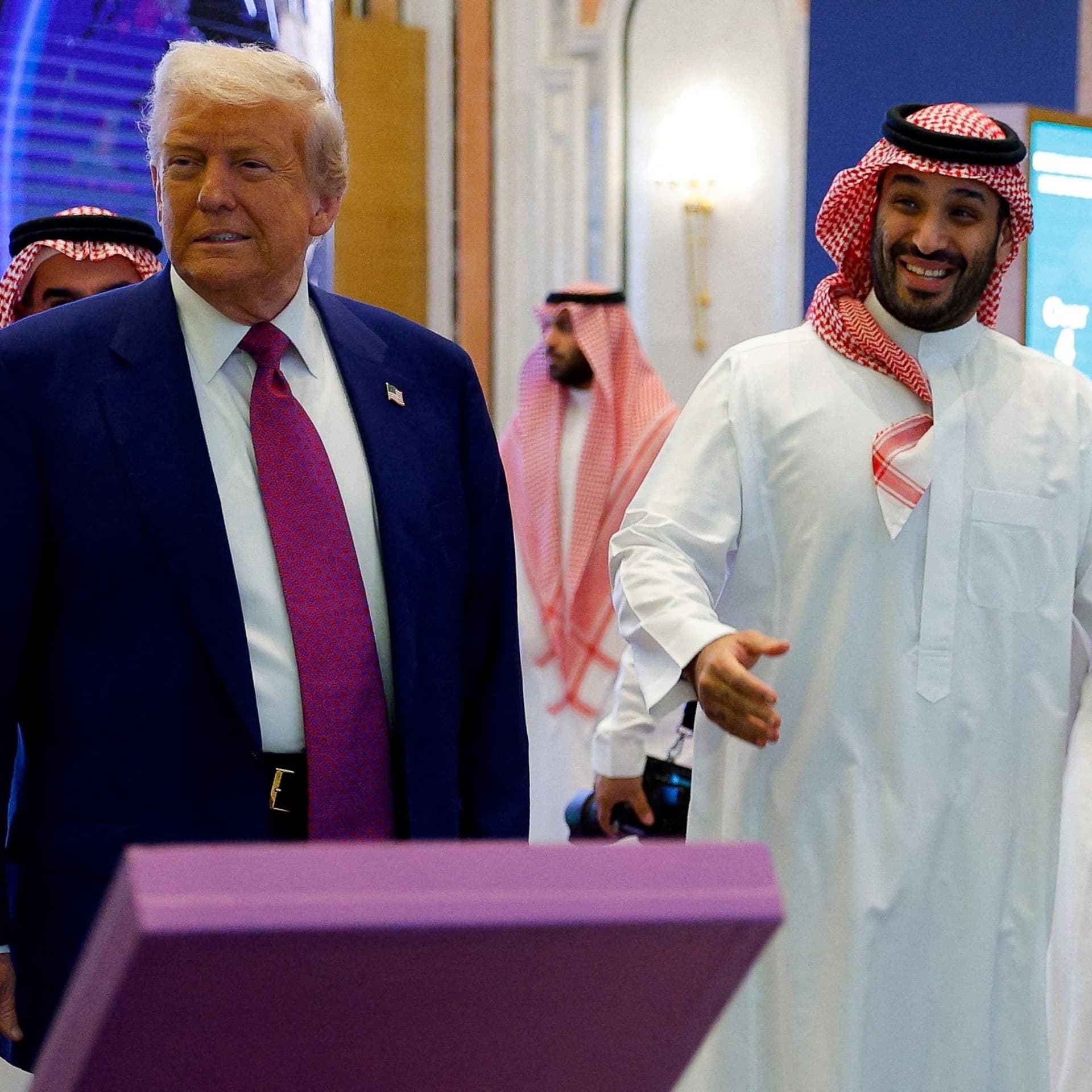
MBS’s “rehabilitation” and return to Washington after years of Western ostracism following the 2018 murder of journalist Jamal Khashoggi; the episode also weighs what Saudi Arabia and the Trump administration want from each other during MBS’s visit.
Guests
Frank Gardner, BBC security correspondent (former Middle East correspondent in Cairo; based in Dubai; long-time Saudi reporter; Arabic at university; travels across Saudi).
Key claims
MBS has engineered social liberalization (women driving; gender mixing; public entertainment) while maintaining political repression. Saudis separate dislike of US policy (especially support for Israel) from cultural attraction to American fast food. Khashoggi’s killing led to US/Turkish conclusions that MBS likely knew; MBS denies involvement. Saudis stayed largely forgiving domestically, prioritizing jobs and daily life over Western media focus.
Notable examples
Trump’s 2017 Riyadh visit; Biden’s “pariah” stance and the 2022 Saudi fist-bump controversy; Saudi ambassador Prince Khaled bin Bandar’s contrition; MBS’s May 2025 $142B defense deal; US desire for Saudi normalization with Israel via the Abraham Accords, blocked by Netanyahu’s opposition to a Palestinian state.
Written by AI. May contain mistakes. Listen to the episode to check what was said.
Chapters
Tap a time to open that second in VOFrank Gardner on MBS and Saudi Changes
2:28 to 6:10
Insights on Saudi Arabia's evolving social landscape and MBS's influence.
“and why the Saudi crown prince might not give Donald Trump the very thing he wants most.”
Trump, MBS, and the Saudi Relationship
6:10 to 9:00
Exploration of Donald Trump's close ties with Saudi Arabia and MBS.
“And, you know, Trump and MBS have these personal affinities, but politically may not be entirely on the same page.”
The Khashoggi Murder and Its Aftermath
9:00 to 14:01
Discussion on the Khashoggi murder and its impact on US-Saudi relations.
“The Saudi leadership are not very fond of the Democrats in terms of President Obama and President Biden.”
Khashoggi's Impact on US-Saudi Relations
14:01 to 18:08
Explore how the Khashoggi murder affected Saudi Arabia's relationship with the US and foreign investment.
“And he was clearly reluctant to do anything to spoil that, or indeed to spoil Saudi Arabia's ties with the US, which are deep.”
Public Perception of MBS in Saudi Arabia
18:09 to 19:59
Discuss the popularity of Mohammed bin Salman among Saudis and the impact of Khashoggi's murder.
“Frank, MBS was to a degree ostracized in the West.”
Shifts in Saudi-US Relations Under Trump
20:00 to 22:52
Analyze the changes in Saudi Arabia's relationship with the US following Trump's return to presidency.
“But then in January 2025, Donald Trump becomes president again.”
The Dynamics of the Abraham Accords
22:52 to 28:01
Understand the complexities surrounding Saudi Arabia's potential normalization with Israel and the obstacles involved.
“AT &T Fiber, limited availability in select areas.”
Regional Dynamics and Human Rights
28:01 to 28:39
Learn about the shifting political landscape in the Middle East and its implications.
“And Hamas is essentially destroyed as an army.”
Transcript
Automatic transcript. May contain errors.0:00This BBC podcast is supported by ads outside the UK. If you are currently overpaying on software to run your business, remember this number, 10 ,000. That's the number of new businesses that join Odoo per month. Join Odoo today at odoo.com. That's O-D-O-O dot com. Say big on your landscaping project now at Menards. We make it easy for you to enhance your outdoor living space with the largest in-stock selection of concrete landscape block. Ready to take home today. Build a fire pit or retaining wall with our tumbled Belgian wall blocks. On sale now. Save big on your landscaping project at Menards.
0:41Plus check out our weekly flyer on Menards.com for all the great deals happening now.
0:53Saudi Arabia's Crown Prince Mohammed bin Salman, known almost universally by his initials MBS, He's visiting Washington on Tuesday. The last time he was there was in 2018. It was a hugely successful trip at the time. And then, just a few months later, this happened. The journalist Jamal Khashoggi is dead. The journalist was murdered. His body was cut into pieces after his death. MBS denies any involvement in Jamal Khashoggi's murder. Nevertheless, both he and Saudi Arabia were ostracized after the killing. But now MBS is back in Washington. And it looks something like a full rehabilitation after seven years.
1:40Here in D.C., the Saudi flags are hanging on the light posts along Pennsylvania Avenue outside the White House. This is by all accounts expected to be an elaborate, symbolic and highly strategic visit. The Trump administration is throwing a fancy formal dinner, and the mood is likely to be warm. And frankly, why not? Donald Trump and MBS both have something that the other man wants. The Saudis want a defense pact, and Donald Trump wants the Saudis to normalize diplomatic ties with Israel. But behind the smiles, they might not be on exactly the same page. From the BBC, I'm Tristan Redman in London.
2:25And I'm Asma Khalid in Washington, D.C. And today on The Global Story, MBS's long road back to America and why the Saudi crown prince might not give Donald Trump the very thing he wants most.
2:42Frank, it's great to have you back on the show. I know you came on The Global Story a bit ago, But can we have you just reintroduce yourself for us? Sure. So I'm Frank Gardner. I'm the BBC security correspondent. Before that, I was Middle East correspondent based in Cairo and before that in Dubai. I've been going to Saudi Arabia for a long time. I used to do business there. I did Arabic at university. And then I traveled a lot around Saudi, around the kingdom. And it is such a diverse, fascinating country. Very misunderstood. It's getting a bit better understood now. And it's opening up a bit.
3:17I think superficially, the social changes engineered by Crown Prince Mohammed bin Salman, who is the de facto ruler, those changes bring about a kind of lighter atmosphere in Saudi. There is still political repression. Let's not sugarcoat that. You put out one wrong tweet and you're going to have the door crashing in and you're going to put yourself in a world of pain. But it's much freer in terms of society. There is public entertainment. Women can drive. Men and women can mix of opposite sexes. It's still Saudi Arabia. It's still home to the two holy shrines in Islam. And so there is still a deeply religious conservative version of Islam there.
3:59It reminds me, I went to Saudi Arabia with President Biden. This was in, well, I want to say it was 2022. Yes. And I had gone before to Saudi Arabia. And, you know, there were traditionally sections in a restaurant where only men could eat and then a family designated section. But on this trip with Biden, I went out with another colleague of mine, a reporter. We took an Uber, just us two women in the car. We went to a restaurant. We dined ourselves. This was in Jeddah. It was quite late in the evening. And it didn't pose us any problem socially. And to me, that felt really, really different than when I had gone to Saudi Arabia, say, a decade prior.
4:33Yes, you're absolutely right. It was, for a long time, a very ascetic, joyless place. All the entertainment had to take place behind closed doors. And that's largely changed. It's a much happier place. I mean, MBS himself said, for years, we've gone down the wrong route. We need to be more normal, a more normal country that people want to visit. Frank, I know there have been American restaurants and whatnot in Saudi for a really long time. But are these more recent social changes that you're describing, are they seen as an Americanization of culture there? And is that seen in a positive light or not?
5:11Saudis have always had a love affair with American fast food. They've loved all the Hardis, the KFCs, the junk food, basically. They can't get enough of it. They've always loved, you know, great big wide-bodied Cadillacs and Chevys, while at the same time, at street level, loathing American policy in the region. Ordinary Saudis do not approve of the U.S. support for Israel. They don't like many of the things the US has done in the region. That's tempered, I think, in recent years. And they look at the fact that MBS and their rulers have such a good relationship with the Trump administration, for example.
5:52So, you know, to some extent, they take their cue from that. Well, Frank, I'm pleased that you have framed your answer there in the terms of, you know, there's a difference between how the Saudis feel about American culture and how they feel about American politics, because that's kind of what we want to talk about today as MBS arrives in Washington for this big visit. And, you know, Trump and MBS have these personal affinities, but politically may not be entirely on the same page. Let's talk about the personal a little bit first. The Economist magazine has recently described Donald Trump as America's first Saudi president.
6:32Do they have a point? Um, that's a nice way of putting it. I mean, it's very significant for Saudis and for the region that in Donald Trump's first administration, he chose Saudi Arabia as his first overseas destination. As president, he went to Riyadh in May 2017. I covered that visit and they loved him there. I stand before you as a representative of the American people to deliver a message of friendship and hope and love. You know, I talked to ordinary Saudis, not in government, and they said, you know, this is a great honor for our country that the most powerful man in the world, the most powerful leader, has chosen Riyadh, our city, to be his first destination.
7:20We are not here to lecture. We are not here to tell other people how to live, what to do, who to be, or how to worship. Instead, we are here to offer partnership based on shared interests and values. Young Muslim boys... Now, the person I'm told who arranged all of this was Rupert Murdoch, that he persuaded Donald Trump, I'm told, to do this. But there's a key person in all of this is Jared Kushner. Jared Kushner has very deep... The president's son-in-law, yeah. Yes. He's married to Ivanka, Donald Trump's daughter. And he has very profound, very deep-reaching business ties right across the region.
8:06And he's a familiar visitor. He was there, I understand, very recently in Riyadh, helping to prepare for this visit. This visit is hugely significant because it's the first time in seven years that MBS has come back to America and been given the red carpet treatment. In March 2018, he was the darling of America and the West. Here, said one Western diplomat, this is the leader we have waited decades for Saudi Arabia to have. And he went to Washington, to London, to Paris, to LA. He hung out with Dwayne Johnson, The Rock. There were still huge questions over Saudi Arabia's human rights record, but he was seen as a progressive reformer.
8:48Can I just ask you to compare, for example, Donald Trump's relationship with Saudi Arabia now to the relationship that his predecessors had? How does it compare to, say, Obama's? The Saudi leadership are not very fond of the Democrats in terms of President Obama and President Biden. With Obama, they felt very let down by his red line in the sand over Syria. So if you remember, President Obama said, if Syria, Syria's president is found to use poison gas, chemical weapons against his people, that's it. We're going to go in and hit them. And Salman, who is now king, but at the time back then, I think it was 2013, he was crime prince and defense minister.
9:38He was on holiday in Morocco. He flew back in a hurry to Saudi Arabia. I met him in Jeddah. I had an hour with him. And Saudi Arabia was going to go in behind US jets, I was told, and hit Assad's installations, some of his bases. And then Obama just changed his mind. It didn't happen. and the Saudis felt kind of, they felt they were left with egg on their face a bit by the Obama administration. When it comes to Biden, MBS and his people couldn't stand him because after the Khashoggi murder, which I'm sure we'll come on to, but after the Khashoggi murder in 2018, Joe Biden, ahead of his election, he said, we're going to make Saudi Arabia the pariah state that it is.
10:25We were going to, in fact, make them pay the price and make them, in fact, the pariah that they are. There's very little social... I remember that. That was a huge moment here. Yeah. I had totally forgotten about this. Could you tell us the story of that, please? Well, the source of this, of course, is the murder of Jamal Khashoggi, who was a Saudi columnist working for the Washington Post, who was effectively in exile. Although he considered himself a Saudi patriot, He was a fierce critic of many of the things that were happening in Saudi Arabia, saying that it was being pushed backwards. He was very critical of MBS.
11:05I still see him as a reformer, but he is gathering all power within his hand. And it would be much better for him to allow a breathing space for critics, for Saudi intellectuals, Saudi writers, Saudi media to debate. In October 2018, he was in Istanbul. He had to go to the Saudi consulate to get some papers authenticated, testified, whatever, in order to marry his Turkish fiancée. And, in fact, it was a trap. Now to the mysterious disappearance that has prompted an outcry around the world. This is the last time Saudi journalist and Washington Post columnist Jamal Khashoggi was seen alive, entering the Saudi consulate in Istanbul last week.
11:4915 Saudi government agents flew in two Saudi government planes from Saudi to Istanbul. Once he was inside the consulate, they overpowered him, suffocated him, killed him, cut him up. U.S. and Turkish officials tell NBC News the Turks have recordings proving Khashoggi was killed inside. It was a really, truly hideous atrocity, really. Sources tell CBS News the Saudis are now willing to say Jamal Khashoggi died during his interrogation inside their consulate in Istanbul. U.S. intelligence concluded in all probability that MBS, Crown Prince Mohammed bin Salman, if not authorizing it, certainly knew about it.
12:36MBS has always denied it. Did you order the murder of Jamal Khashoggi?
12:46Absolutely not. This was a heinous crime. He said, the buck stops at me, I take responsibility, but I didn't know about it and didn't authorize it.
12:58It's hard to actually, there was no smoking gun that, for example, there was no recording of a conversation between MBS and the killers. But look, any of us who have been in the Gulf, you know that there's no such thing as a rogue operation. They don't happen. People don't do stuff without authorization. So it's pretty suspicious. And that happened during Trump's first term in office. So can you remind us what that meant for President Trump here? Because as you say, Trump went. We all probably remember that image of the orb when he went to Saudi Arabia, was really feted. And then this happens.
13:36Trump trod a very careful path over this. He certainly wasn't as outspoken as Joe Biden. He was very careful in how he chose his words. He said something along the lines of, this doesn't look good, but, you know, let's see how it pans out. Words to that effect. He clearly already had a good relationship with the al-Sa 'ud, the ruling family, in particular with MBS. And he was clearly reluctant to do anything to spoil that, or indeed to spoil Saudi Arabia's ties with the US, which are deep. The oil commercial relationship, as well as the defense relationship between the US and Saudi is profound.
14:18And, you know, at the end of the day, Donald Trump is a business guy, and he is never happier than signing big multi-billion dollar deals. Here in Washington, the fallout was pretty bipartisan. I recall that the House voted to limit arms sales to Saudi Arabia as a result of Khashoggi's murder. Ultimately, I mean, they didn't get passed into law, but there were Republicans and Democrats really singing a different tune about Saudi Arabia. I think MBS's people completely underestimated the impact that that was going to have, primarily in the West. That murder and the fact that US intelligence believed that he was complicit in it had a huge effect.
15:04It held back a lot of foreign direct investment. It has delayed the development of his big super project, NEOM, out in the northwest of Saudi Arabia. And the Saudis didn't do a very good job of explaining it. Initially, they tried to pretend that Khashoggi had left the embassy and there was somebody dressed up as Khashoggi wearing his train. It was all a bit sort of ham-fisted, frankly. And then the incoming Saudi ambassador to London, Prince Khaled bin Bandar, gave me his first interview. I want to turn to the murderer of Jamal Khashoggi. And he was the first senior Saudi to publicly, not quite fall on his sword, but be very humble and contrite about it.
15:56Let me be clear. What happened in Istanbul almost a year ago was a stain on Saudi Arabia, a stain on our culture, our people, our government.
16:11I wish it didn't happen. He didn't blame MBS. That would be stupid. But he accepted what a disaster it had been instead of being defensive. No one's above the law. And I think we've seen that in the past in Saudi, whether you're from the royal family, a friend of the crown prince, it's irrelevant. At the end of it, he said, do you think I'm going to lose my job after this? The case is being investigated. When it's done, we'll know what happened. So that comment from Joe Biden about making Saudi Arabia a pariah state, that obviously didn't go down that well, right? MBS has never forgiven him for that.
16:42And they had that embarrassing fist bump, which you will have witnessed firsthand as mine. New video into Fox News now. President Biden arriving in Saudi Arabia, meeting with the crown prince, Mohammed bin Salman, and watch. The fist bump greeting. You know, I was, in fact, part of this small group of journalists who are known as the pool who were on duty that day. And this was during President Biden's first trip to Saudi Arabia in 2022. And there was a lot of sensitivity from the American side about this interaction because the Biden team had put such a focus, you know, especially during that campaign when Biden was running, on ostracizing MBS and his team for so long.
17:27So we, in fact, as a journalist on that trip, did not witness that fist bump firsthand. We were still sitting in the journalist pool vans. And to my knowledge, the imagery of that was all put out by the Saudis. The American photographers were not even allowed to witness that interaction in real time, which I think speaks volumes to how troubled the relationship was during that time period in Biden's administration. Yeah. And of course, it was a complete failure of a trip. Because if you remember, Biden went there to try and persuade the Saudis to pump more oil to bring prices down at the pump.
18:06And MBS decided actually, no, he was going to talk to the Russians instead. And he did the exact opposite. Frank, MBS was to a degree ostracized in the West. But what I want to know from you, because you have traveled to Saudi Arabia over the years, is how is MBS viewed by his own people? And did that change as a result of the Khashoggi murder? He is popular and he's largely stayed popular. Why? Because people see in him a hope for the future. And many Saudis are prepared, I think, to turn a blind eye to human rights, what we would consider to be really serious questions on human rights abuses.
18:50There have been at least 300 executions by the sword already this year. and there is absolutely no tolerance of any kind of political dissent or not even just dissent, any questioning, anybody who even suggests that it would be nice to have a bit more transparency in government, that is not tolerated. But Jamal Khashoggi is much more popular in Washington media circles than he was in Saudi Arabia. And Saudis, I think, were pretty shocked and horrified and many, I think, probably would have preferred not to believe that their de facto ruler was involved. And they've been relieved to move on. They've got other things to worry about, getting jobs, getting their sons and daughters into schools and universities, getting that new car.
19:38All of these things of daily life are more important to them. And Saudis don't really understand the Western media's obsession with going on and on about Khashoggi, somebody who many Saudis considered to be, frankly, a traitor who didn't represent their views. So to recap, through the Biden administration, MBS is something of a pariah for Western governments. But then in January 2025, Donald Trump becomes president again. What's the story of MBS's relationship with Trump since Trump has come back to the White House? Very close. The Saudis are thrilled that he's back. It's back to business as usual.
20:20They cemented that with his May visit to the kingdom, to Saudi Arabia, where he signed a$142 billion defense deal. There are a lot of areas that they are going to be talking about. A lot of work has already been done, actually, in the last few days. So you've had the Saudi National Security Advisor, Saad al-Iban, has been to Washington. And defense, avionics, AI, data centers, probably more than petrochemicals. You know, there was a time when the U.S. really depended on Saudi Arabia for petrochemicals. Less so now. Why has it changed? The U.S. produces a lot more oil now. Exactly. It's overtaken Saudi Arabia.
21:03Saudi Arabia, I think, is in probably a better position now. For much of the last 40 years, it has suffered from a very damaging rivalry with Iran. They are the two big regional heavyweights and they have fought proxy wars essentially in Iraq and Syria and Yemen and it's been in Saudi Arabia's favor that Iran got a bloody nose this year in the 12-day June war between Israel and Iran that ended up with the US joining in and bombing Ferdau, the mountain. So it's an extraordinary about turn of things and Saudi Arabia is coming to the table in some ways in a much stronger position than it was during the first Trump term.
21:56Chicago talks a lot. Hold on, let me step over here. People are talking too much. We debate about food, deep dish, tavern style, who's got the best beef. We yell across rooms, across blocks, across generations. Yes, nice earrings, Grammy. And now we're doing it on our phones too. Video calls from the L train group chats that never shut up. Neighbors texting you the score before your TV catches up. Come on. Get a load of this guy. Catch up on a dog. Yeah, we've got thoughts. Too loud? In Chicago, you're gonna hear it. Because nothing here gets built without conversation. Nothing moves without connection.
22:33So if you think you know AT &T, it might be time to rethink that. Because their network has improved, like, a lot. So Chicago can keep speaking its mind with AT &T Wireless and AT &T Fiber. Chicago won't stop talking. Our improved network backs it up. AT &T, connecting changes everything. AT &T Fiber, limited availability in select areas. In 2016, a 22-year-old known as Posh George was jailed in the U.S. for wire fraud. Standing by his side when he was arrested was Nigel Farage. Join me, Gabriel Pogan, from The Sunday Times for a wild ride through the worlds of politics, crypto, and crime. It's in our new podcast series, Pos George, The Criminal Behind Farage.
23:21Search for Pos George The Times wherever you get your podcasts.
23:29During the Biden years, the Saudis would say to me, we've had to have a bit of a rethink. We don't see the U.S. as an entirely dependable ally. And therefore, we've got to diversify. 10 % of their defense needs are met by Spain, another 6 % by France. The U.S. still provides the bulk around 74%, but they have diversified to some extent. So they're not as reliant on the U.S., you're saying, for defense purposes as they used to be? No, but there are still, they've got, you know, MBS, let's make no mistake, He's in D.C. with a great big shopping list. And, you know, a lot of which I think he's going to get.
24:10You know, he wants things like chips from NVIDIA. He wants F-35s. He would like a strategic defense pact. He's not going to get the mutual defense pact that I think perhaps he would like. But he'll get something bigger than what he's got already. I think what's so fascinating about understanding this moment, Frank, is that on the surface of it, it appears that the United States and Saudi Arabia at a government high level are closer than they have been in years. Donald Trump, his team seem very simpatico with MBS. And yet it appears that Saudi Arabia is standing in the way of some major foreign policy aims that the Trump administration has in the Middle East.
24:56And namely, I am thinking of Trump's main ambition to normalize relations between Israel and Saudi Arabia. And thus far, it doesn't appear that the Saudis are on board to give that. Yeah. So the elephant in the room here is Netanyahu, the Israeli prime minister. He is the stumbling block to that happening because the US view is, come on, we're doing lots for you. We can supply all of this stuff. We can sign up this defense agreement. We can give you the F-35s. We can talk about advanced avionics, data centers, NVIDIA chips, all of that. But from you, we want you, Saudi Arabia, to join the Abraham Accords.
Read the full transcript
25:34The Abraham Accords are a series of agreements brokered primarily by Jared Kushner, Donald Trump's son-in-law, in 2019 that saw Bahrain, the United Arab Emirates, and Morocco all establish full diplomatic and trade ties with the state of Israel. In other words, they normalized their relations with Israel. And that is seen as the crowning achievement of Donald Trump's first presidency in terms of Middle East foreign policy. And he really wants Syria and to an even greater extent Saudi Arabia to join these accords. But the Saudis have said, and they are still saying it, that can only happen when there is a clear and irreversible path to a Palestinian state, something which the Netanyahu government in Israel is absolutely opposed to.
26:27Netanyahu hasn't budged an inch on that. And so I don't see, unless either side is able to pull something incredibly clever out of the box, I don't see Saudi Arabia joining the Abraham Accords. So MBS is in Washington on Tuesday. And on the surface of it, his visit is to follow up on these major investment deals and announcements that were made when Donald Trump visited Saudi Arabia in May. But it seems like there are two big goals the Saudis have and the Americans have, and they want, it seems, different things. So from the American perspective, my understanding is President Trump, his team is extremely eager to see movement around the Abraham Accords.
27:11And from the Saudi perspective, it sounds like you're saying they really want this defense pact. And is that in a nutshell what they both want? And it seems like then, well, they're not entirely on the same page, despite how warm and cozy the relationship seems to be. There's a lot that they can conclude from this visit without having to spend too much time on the impasse, that I would call it, the roadblock over Netanyahu's opposition to a Palestinian state. Remember, there's lots of other stuff that they can talk about. You know, the whole power play, the whole kind of chessboard of power in the region has changed a lot.
27:53A year ago, this time last year, Hezbollah had a massive arsenal of rockets that were facing Israel. And Iran was the big regional actor. That has all changed. Iran got a bloody nose this year. And Hamas is essentially destroyed as an army. So a lot has changed. The one thing that I think is not going to come up in discussion is human rights. Donald Trump is much less interested in that than he is in the big strategic deals, commercial, defense, tech. Thanks so much, Frank. Thank you so much. Thank you.
28:35That was Frank Gardner, the BBC's security correspondent. And that's it for today's show. Please send us your thoughts and ideas on theglobalstoryatbbc.com and rate us wherever you're listening. It helps others to find us. This episode was produced by Kat Farnsworth and Lucy Paul. It was edited by James Shield and mixed by Travis Evans. Our senior news editor is China Collins. I'm Tristan Redman, and my co-host is Asma Khalid. Thanks for listening and see you tomorrow. Cheerio.
29:12In 2016, a 22-year-old known as Posh George was jailed in the US for wire fraud. Standing by his side when he was arrested was Nigel Farage. Join me, Gabriel Pogan, from The Sunday Times, for a wild ride through the worlds of politics, crypto, and crime. It's in our new podcast series, Posh George, the criminal behind Farage. Search for Posh George The Times wherever you get your podcasts.
From the publisher
Crown Prince Mohammed bin Salman – MBS – will be welcomed at the White House on his first visit to Washington since the killing of Saudi journalist Jamal Khashoggi led to global outrage. MBS has always denied involvement in Khashoggi’s murder. Nevertheless, both he and Saudi Arabia were ostracised after the killing. Tuesday’s meeting between President Trump and Saudi Arabia’s de facto ruler will build on a relationship between the two leaders which has endured the scandal. But can both parties walk away from these strategic talks with what they want? On Trump’s part, some movement towards the Abraham Accords; and for MBS, a chunky defence package. We talk to BBC security correspondent Frank Gardner. Producers: Cat Farnsworth and Lucy Pawle Executive producer: James Shield Mix: Travis Evans Senior news editor: China Collins Photo: President Trump and Crown Prince Mohammed bin Salman. Brian Snyder/Reuters