
In short
The BBC Global Story explains why Steve Hilton, a British political strategist endorsed by Donald Trump, is running for California governor in the November election, and what his campaign says about U.S. politics in a heavily Democratic state.
Guest backgrounds
Nick Watt, BBC Newsnight political editor, who knows Steve Hilton personally; hosts Asma Khaled (U.S. politics) and Tristan Redman.
Key claims
California’s “jungle primary” advances the top two vote-getters regardless of party; mail voting slows counts. Hilton is described as running a “MAGA-lite” campaign, aiming to “make California golden again,” promote “Cal-affordable” (slashing taxes and regulations), and propose a state version of “DOGE” (Department of Government Efficiency). He’s said to have financial backing from Rupert Murdoch and Sergey Brin.
Notable examples
Hilton’s UK role advising David Cameron; his satirical TV association via The Thick of It; his Fox News hosting; and his earlier “cloud dispersal” joke and reduced maternity-leave proposal (not abolishing it).
Written by AI. May contain mistakes. Listen to the episode to check what was said.
Chapters
Tap a time to open that second in VOHousekeeping and Listener Engagement
1:12 to 1:40
Hosts discuss listener questions about the World Cup and encourage submissions.
“A quick housekeeping note before we start.”
Introducing Steve Hilton's Candidacy
1:40 to 2:42
Hosts introduce the topic of Steve Hilton running for California governor.
“Imagine if an American political advisor like Steve Bannon, or back in the day, James Carville, turned up in another country running for office.”
California's Unique Primary System
2:42 to 3:56
Asma explains California's primary system and its implications.
“Asma, as we're recording this conversation, we haven't had all the votes in yet from California.”
Trump-Backed Candidacy in a Blue State
3:56 to 5:50
Discussion on the unusual nature of a Trump-backed candidate in California.
“And that means that there's not always a Republican in the general election.”
Steve Hilton's Political Background
5:50 to 7:06
Introduction to Steve Hilton's political journey and his past in UK politics.
“can tell, he's running more of a kind of MAGA-lite campaign.”
Transforming from Advisor to Candidate
7:06 to 7:54
Exploring Hilton's transition from advisor to Republican candidate.
“For our international listeners, can you paint a picture of who the man is?”
David Cameron's Leadership and Hilton's Role
7:54 to 8:30
Discussion of Cameron’s leadership and Hilton's influence during that time.
“Can you just remind us in very plain terms who Cameron was?”
The Thick of It and Steve Hilton
8:30 to 9:10
Hosts discuss the satirical show 'The Thick of It' and its relation to Hilton.
“So when he started working for David Cameron, the idea was that Cameron was the sort of the establishment figure.”
Steve Hilton's Origins and Early Influences
9:10 to 11:34
Exploring Hilton's background as the son of Hungarian immigrants.
“might be a show called The Thick of It, which is a satirical political TV show made by the same team that went on to make Veep in the United States.”
Shaping Political Image: The 'Smell the Coffee' Approach
11:34 to 14:00
Discussion on Hilton's role in modernizing the Conservative Party's image.
“It was around the time of the 1956 Hungarian uprising against Soviet rule.”
Show all 17 chapters
The Transformation of the Conservative Party
14:00 to 16:40
Learn how Steve Hilton reshaped the Conservative Party's image through innovative branding.
“Steve Hilton was absolutely crucial in softening the image of the Conservative Party.”
The Big Society Concept
16:40 to 19:00
Understand the intended meaning and challenges of the 'Big Society' initiative introduced by Cameron.
“But the problem with it was, was absolutely, as Tristan said, what does it mean?”
Steve Hilton's Controversial Ideas
19:00 to 20:55
Explore Steve Hilton's unconventional ideas and their implications for policy in the UK.
“And when you talked to people in Downing Street at the time, they would say, you know, it's like sort of mining for gold.”
The Fall from Grace
20:55 to 23:05
Discuss the tumultuous relationship between Steve Hilton and David Cameron as Hilton's ideas faced backlash.
“And just to give you an idea of what his mindset was, was that you may or may not remember, but 10 years ago, this country voted for something called Brexit.”
Steve Hilton's Move to America
23:05 to 27:40
Learn about Steve Hilton's relocation to the U.S. and its impact on his career and political views.
“And I think that one of the big things that happened in the Whetstone-Hilton household is they became fabulously wealthy.”
Steve Hilton's Political Evolution
27:40 to 28:00
Examine how Hilton's political philosophy has evolved from the UK to his current campaign in California.
Analyzing Steve Hilton's Political Evolution
28:00 to 28:38
Explore how Steve Hilton's political stance has changed over time.
“and that is the thread that has gone through all elements of his career but he certainly has evolved.”
Transcript
Automatic transcript. May contain errors.0:00This BBC podcast is supported by ads outside the UK.
0:30Just tap into iHeart to start watching. And we hope you enjoy the show. The 2026 World Cup started with 48 teams, and we've now reached the knockout stage. Records have been broken. The way that Messi has been able to score these goals late in his career. He's happy to play football, and broken records is the consequence for him. And new heroes have emerged. This country's caught the fever. Casual fans are now diehard fans. And the More Than The Score podcast is bringing you the stories beyond the scorelines. More Than The Score from the BBC World Service. Listen now wherever you get your BBC podcasts.
1:19Hello friends, Tristan here. A quick housekeeping note before we start. This week, we're recording a FIFA World Cup listeners' questions episode. Anything you want to know about the World Cup, we've had loads of great questions already. But please send any more pressing ones you might have to the usual, theglobalstory at bbc.com. Thanks so much, and on with the show. Imagine if an American political advisor like Steve Bannon, or back in the day, James Carville, turned up in another country running for office. Let's say they were running for the mayor of London. I think the answer is, Asma, they would be a long shot.
1:58They'd be a bit of a curiosity. And people in London might be thinking something along the lines of, who on earth is this dude? Well, that's kind of what's going on right now in the US. A British immigrant backed by President Trump is running to be the next governor of California. Now, that election is in November, and right now votes are still being counted in the primary. But the fact that a former British political strategist named Steve Hilton is even in the mix is unusual. From the BBC, I'm Asma Khaled in Washington, D.C. And I'm Tristan Redman with the skinny from the other side of the Atlantic.
2:37Today on The Global Story, who is Steve Hilton? And how did he become a candidate for the governor of California?
2:57Asma, as we're recording this conversation, we haven't had all the votes in yet from California. But you are our in-house expert on all things U.S. politics. And I know that the California primary system is a little bit unusual. Can you explain it to us? How does it work? Yeah, it's unusual, I would say, even to most Americans. For starters, it takes a really, really long time to count all the votes in major part because millions of people in California prefer to vote by mail. And interested, just to put this in some context, in the last presidential election, about 80 percent of the ballots were cast by mail.
3:33So it takes a while to count those all. But the other thing that makes California really unusual, even compared to most other American states, is that they have a system that is called a jungle primary, where the top two vote getters in the primary advance to the general election. And it doesn't matter if you're a Republican or a Democrat. Whoever gets in that top two category, both of them will move on. And that means that there's not always a Republican in the general election. At this point, only one candidate has reached the vote total tally that means he's going on to the next round, the final round of voting in November, and that's Democrat Javier Becerra.
4:11He was the former Health and Human Services Secretary under the Biden administration. Well, Asma, many of us around the world know that California is a resolutely blue Democratic state. But here we have a Trump endorsed Republican candidate who's maybe the most talked about candidate in this election. He wants to be the state's next governor. What's actually going on here? Yeah, I think, Tristan, he's getting a lot of attention in part because of just how unusual his presence is in the race. If you look at registration right now in the state of California, there are nearly twice as many Democratic voters registered in the state as Republicans.
4:52So, you know, just that that's the context of California. A lot of Californian voters take pride in positioning themselves as the state that is the counter to Donald Trump and the counter to the MAGA movement. And so that means the Democrat I mentioned earlier, Javier Becerra, if he were indeed to face off against Steve Hilton, most political analysts will tell you Becerra's the clear favorite. I will also say that at the time that we are recording this on Monday, June 8th, as you say, Tristan, votes are still being counted. So we don't know exactly what is going to happen. But I will say as someone who's covered and reported American politics for a long time, the fact that we are talking about Steve Hilton as being a major part of this conversation, the fact that he's not just one of the most talked about candidates in California, but I would say even to some degree nationwide, it's unusual.
5:44He's running in California, blue state, and as a Republican, which means, as far as I can tell, he's running more of a kind of MAGA-lite campaign. So he wants to, quote, make California golden again. He says he wants to make California the crypto capital of the world. He says he's planning a version of DOGE, the Department of Government Efficiency for the state. I'm going to be putting the bloated nanny state bureaucracy in Sacramento into the woodchipper as governor. And crucially, he's had financial backing from Rupert Murdoch and Sergey Brin, formerly of Google. You know, he is thought to be an outside candidate, but we think it's worth talking about him because our show, as you all know, is about where the world and America meet.
6:31Well, Asma, I am on the right side of the ocean to tell this story, but I am not the man. We are going to bring you the man today. He's Nick Watt. He's the political editor of the BBC show Newsnight, and he knows Steve Hilton personally, and he's going to tell us all about him. Well, the thing about Steve Hilton is nothing should ever surprise you about Steve Hilton. He is an original. He's an iconoclast. He's out there to change the world. So hearing that he wanted to stand as the Republican candidate for governor of California, not a surprise at all. OK, I mean, you've covered him when he was in a previous incarnation in British politics.
7:13For our international listeners, can you paint a picture of who the man is? Like, what was he known for in the UK? So what a lot of people say is, how is it that Steve Hilton went to working from David Cameron when he was leader of the opposition in the UK in 2005 and then became Conservative Prime Minister in 2010? How could he go from working for David Cameron, who is a sort of a very mild, measured, moderate figure? How has Steve Hilton gone from being David Cameron's right-hand man to being the Donald Trump sort of approved MAGA Republican candidate in that primary to be the Republican candidate for Gunther California?
7:54How on earth has that happened? Can you just remind us in very plain terms who Cameron was? So in the late 1990s and in the early noughties, the Conservatives lost three general elections in a row. And there were some people in the Conservative Party who were saying, guys, we keep losing. What are we going to do? You know what? We need to modernise. And David Cameron, who was only about 39, became leader of the Conservative Party on a modernising ticket. We have to change. We have to listen to the British people. And one of the people that he appointed to his team in a really senior role when he became leader of the Conservative Party was Steve Hilton to be his free thinker.
8:39So when he started working for David Cameron, the idea was that Cameron was the sort of the establishment figure. David Cameron has an aristocratic background. The word we use is he's dead posh, two words. And Steve Hilton was meant to be the sort of the original thinker, to think ideas. But even at that time, you could see the elements of the Steve Hilton today. You could see them then. I mean, the thing Steve Hilton is probably best known for popularly in the United Kingdom might be a show called The Thick of It, which is a satirical political TV show made by the same team that went on to make Veep in the United States.
9:24It was kind of a seminal comedy show made by the BBC here in the UK. You know, I actually didn't know that that was the origin of Veep until you all told me that. Tristan was telling me that recently. Well, I think The Thick of It was such an incredible hit in the UK. And there was a desire by HBO in the US to make a US version, but it started off in the UK. What was the Steve Hilton character like, Nick, in The Thick of It? The character that is said to be based on Steve Hilton in, as you say, The Thick of It, is Stuart Pearson. And in The Thick of It, he does things like, let's talk about thought circles.
10:04Thought Camp ETA, 13 minutes, OK? And things about how knowledge is porridge. So, how are we going to deploy this? The point of departure is this. Knowledge is porridge.
10:23And he's a sort of political, in his own words, blue sky thinker, ideas man in the show, right? We do away with computers. What do we think? How will it affect us? Good idea? Bad idea? Yeah, that's the idea of Steve Hilton. And it is absolutely true. You know, he just wants to sort of think out of the box. And he was always railing against the system. So famously would walk around Downing Street, which is obviously where the prime minister's based, not wearing shoes, wearing a tatty T-shirt, wearing shorts. That was very much the Steve Hilton, which, you know, when you have this establishment figure, David Cameron as conservative prime minister, that was quite something.
11:02But yeah, that sounds quite as it might well have been behind that big black door in Downing Street. You've talked about Steve Hilton being this top political advisor to the conservatives in the United Kingdom. But what's his origin story? Where did he come from? How did he get involved in politics? Yes, so I think to understand the Steve Hilton of now, to understand the Steve Hilton of 20 years ago, you need to understand his background. And Steve Hilton's background is that he is the son of Hungarian immigrants. So this his mum and his dad came from Hungary. It was around the time of the 1956 Hungarian uprising against Soviet rule.
11:42Steve, I think I'm right in saying, was born in 1969. So in other words, he was born in the UK. But one of the things that always strikes me about Steve Hilton, and this is a thread that has run through early Steve Hilton, middle Steve Hilton, the Steve Hilton we're seeing today, is railing against overbearing authority. and where is that in his DNA? That would be being in a country in the Warsaw Pact under, as he would see it, the thumbscrew of the Soviet Union and that's why when you examine him 20 years ago and you examine him today, there are huge differences but there's one thread all the way through, hating overbearing authority.
12:26He becomes prominent in UK politics sort of in the early 2000s when he becomes the top advisor of soon-to-be Prime Minister David Cameron, as we've mentioned. And so at this point, the Conservatives are struggling. Labour have been in power for quite a long time. But he gets them into power in 2010. The Conservatives just scraped through as the largest party in election. What was it at that moment that Steve Hilton realized about the public mood that brought his party back into government after a long time in the wilderness? So the key phrase around about the time that the conservatives moved after losing the 2005 general election, which was the third general election in a row that they'd lost to somebody called Tony Blair.
13:20The key phrase then was smell the coffee. And the Smell the Coffee was a report by a big pollster. And the Smell the Coffee was, guys, can we just wake up and realize there are probably some pretty good reasons why we keep losing general elections? David Cameron was a slow convert to the Smell the Coffee approach. But Steve Hilton was pretty much in there in the guys, let's get with Smell the Coffee. There was a famous phrase around about that time by somebody called Theresa May, who later became Conservative leader and UK Prime Minister. She talked about how there was a perception that the Conservative Party was the nasty party.
14:04Steve Hilton was absolutely crucial in softening the image of the Conservative Party. And the hard image has its roots, doesn't it? Largely in the history of Margaret Thatcher, who had a lot of opponents for closing down the mines and things like that, right? Well, the famous symbol of Margaret Thatcher was a hand carrying a torch that was very sort of strong. Steve Hilton dropped that, turned it into a green soft tree. That was one of the most important things he did for softening the Conservative Party. And it was in that period that I really first got to know Steve Hilton. I'd have lunches with him.
14:42I'd have dinners with him. One of the things that he did was he ran something called Webcam. So remember, this is 20 years ago, so it might sound all a little bit old-fashioned, but webcam was that Steve Hilton would go round to wherever David Cameron was and he would film him. And then he'd upload it onto something called the internet, onto a site called webcam. And I can remember having long, long conversations with Steve Hilton almost every Friday night. And he'd be reporting to me, you know, what he'd filmed on webcam and me getting lots of colour from all of that. These were really, really important changes in the branding of the Conservative Party.
15:21So Nick, it sounds like you're saying he was essentially the big policy thinker, the brains behind Conservatives' return to power, behind David Cameron's branding of himself. You're kind of describing him maybe as sort of akin to someone like a Steve Bannon to Donald Trump in the run-up to the 2016 election. Asma, I think you've absolutely nailed it. And I tell you the thing is, the thing about David Cameron, I mean, he won't like me saying this, but hey, here goes. David Cameron is very, very clever, but he's not really an intellectual. He's not really a thinker. And so he needed a thinker. And that is what Steve Hilton did.
15:58And the big idea that they took into the 2010 election, that was the one that they won. But as Tristan was saying, only just sort of got over the line. Their big thing was the big society. That was the big thing they put before the British people in the 2010 election. And what's the big society? What is the big society? That's a good question. We're still trying to work it out, aren't we? We're still trying to work it out. What is the big society? So I think the idea was that it was to get away from the idea of an overbearing state, to encourage sort of grassroots and encourage those elements of the volunteering side of society, encourage those and get the state off their back.
16:40But the problem with it was, was absolutely, as Tristan said, what does it mean? And the other thing, the big thing that happened in 2010, which happened everywhere, is we were in the thick of the global financial crush, where you had to have spending cuts, and it looked like the big society, not intended this way, looked like it was a cuddly cover for spending cuts.
17:35Transcription by CastingWords Just tap into iHeart to start watching. And we hope you enjoy the show. The 2026 World Cup started with 48 teams, and we've now reached the knockout stage. Records have been broken. The way that Messi has been able to score these goals late in his career. He's happy to play football, and broken records is the consequence for him. And new heroes have emerged. This country's caught the fever. Casual fans are now diehard fans. And the More Than The Score podcast is bringing you the stories beyond the scorelines. More Than The Score from the BBC World Service. Listen now, wherever you get your BBC podcasts.
18:26I want to ask you about the policies that he was pitching, the ideas that he was offering to the British public at this time period, because in prepping for this interview, I got the sense that some of the ideas that were maybe unconventional. Can you give us a sense of what he was offering, what he was bringing to the table? So the big thing that Steve Hilton brought to the table successfully was softening the image of the Conservative Party. He then, when they got into government in 2010, did have, he's an ideas factory and he spews out ideas all the time. And when you talked to people in Downing Street at the time, they would say, you know, it's like sort of mining for gold.
19:11You had to look hard because most of the ideas were completely unworkable and you wanted to get to the golden nuggets. But two of the ideas he was associated with, which were not seen as golden nuggets, were using technology to disperse clouds and abolishing maternity. Wait, wait, hold up, hold up. technology to disperse clouds because Britain is very cloudy? Yeah, we don't get enough sun. We'd love to have more blue sky. So using technology to disperse clouds and abolishing maternity leave. So what Steve Hilton said about that was that the first idea was a joke. Okay. And on maternity leave, he said, look, my view has been misunderstood.
19:51And what he believed is you should absolutely not abolish maternity leave, but that you should reduce it to somewhere between six and four months because his view was that having maternity leave for a year, he believes is too long and potentially harms women's career prospects by holding them back. Obviously, that would be hugely contested. So that gives you an idea of the sort of ideas that he was putting there. But what is interesting is that he went to work for David Cameron in Downing Street when he became prime minister in 2010, but he didn't last very long. I think he was only there for about two years.
20:28And my memory of the time is what happened with Steve Hilton when he was in Downing Street is he just started to rage against the system. He thought the system was designed to sort of stifle innovation. And he actually became quite angry. And I remembered sensing, I think this relationship with David Cameron is going to end in tears. And indeed, it did end in tears. and they had a bit of a falling out. And just to give you an idea of what his mindset was, was that you may or may not remember, but 10 years ago, this country voted for something called Brexit. Oh, yes. It was an earthquake even here in the US.
21:10I totally forgot. No one remembers that. That kept us going for a little bit. I mean, but even in the US, that was a huge, huge story. Well, remember when he had his falling out with David Cameron, that was around about 2012, which was four years before Brexit. But it is certainly true that Steve Hilton was very much on the side of Brexit when that happened a good few years after he left. And his relations with David Cameron soured when they fell out in Downing Street. But also anyone who is in the David Cameron circle who supported Brexit is no longer in the David Cameron inner circle. I think what you're saying is like his political instincts, at least in the constructs, at least as it relates to the UK, it sounds like both in terms of him turning around and bringing the conservatives to power and then having the mood of the country correctly diagnosed when it came to Brexit.
22:04He was right in both of those things. Would you agree, Nick? Yes. Yeah, yeah, yeah. Yeah. I mean, let's talk about the political journey just in the context of the geographic journey he made. He left Downing Street. You said he had this falling out with the prime minister and then he moves to America. How did he end up coming to America? I think how and the nature of Steve Hilton's move to the United States is really important to working out his mindset now. So as I understand it, the principal reason for him moving to the United States was that Rachel Westone, his wife, got a big job on the West Coast.
22:42I think she worked for Netflix. The big thing she did was that she worked for Google. Yes. And the way that it was put to me by somebody who knows Steve Hilton and Rachel Whetstone really well is that she became the sort of the whisperer of the Google founders, Larry Page and Sergey Brin. She became a consulted confidant of those two. And I think that one of the big things that happened in the Whetstone-Hilton household is they became fabulously wealthy. That's really important to say. But the other big thing that happened was that they became very much part and parcel of the West Coast tech world.
23:27And so all that thinking that Steve Hilton had about not liking overbearing authority then has another turn of the wheel when he's in that tech world about how essentially the world would be so much better run if it was run in a sort of a Google tech sort of world. And you can tell how important that world is because Sergey Brin is a big funder towards a lot of what Steve Hilton does. So that relationship continues. So in the process of coming to the United States and choosing then to run for governor, there are a number of years that have passed. And so I am curious both when and why he became an American citizen.
24:17And do you know? And then ultimately why the guy who was the behind the scenes policy thinker decides he wants to be the front man, decides he wants to be the one running for political office. It strikes me that one of the really important things that Steve Hilton did in the U.S. was he became a very successful Fox News host. As America's economy roars ahead, tonight we bring you the truth about the man who says he wants to take us back. Evening, everyone, and welcome to The Next Revolution. I'm Steve Hilton and this is the home of positive populism pro-worker pro-family pro-community and what you see with Steve Hilton is He's a very very fast Very slick communicator growth up investment up incomes up it is an incredible performance And he was a communicator who very much fitted in with the Fox News family This is Donald Trump's blue-collar boom, delivering historic results for working Americans, exactly as he promised.
25:18And I think that his profile on Fox News was hugely significant in giving him that platform in the MAGA world and must have brought him to Donald Trump's attention, because how do you come into Donald Trump's world? You do well on Fox News. Did he sound different than what he sounded like in the UK? Certainly his ideas in California are not the ideas that he was putting in this country. I mean, isn't his big way of putting things, isn't he talking about how he wants to have a process that's cal-affordable? Cal-affordable, isn't it? We can't go on with this crushing burden of the highest cost of living in America.
26:03And that's why the centre of my campaign for governor is to make our state cal affordable. And that is slashing taxes, slashing regulations. The number five on my plan to make our state cal affordable. We are going to end the ridiculous rules and regulations that make it so expensive to build anything in California. which in many ways gets back to sort of the big society approach. Although the big society was meant to be about taking the state off your back, David Cameron was very, very nervous about being too clear about totally slashing the state to pieces. But you knew sort of that's pretty much what Steve Hilton was thinking in that time.
26:47So this is evolving from the Steve Hilton that I knew 20 years ago. Can I just say Cal affordable as a term is not a million miles away from the in the thick of it character who would say things like knowledge is porridge. They are maybe sort of of the same ilk of the same expressions. Yeah, but Cal affordable, that's quite clever. I mean, you can you can sell that. You know, that's quite catchy. I have a song about it. If you look at his career from all the way back at the beginning to where we are now, do you get the feeling that there is a kind of consistent school of thinking in Steve Hilton?
27:26Or is he more of a kind of chameleon who bends himself to circumstance? I think that Steve Hilton has the two elements of what you're talking about, which is consistency and an element of the chameleon. so the consistency is i just believe his founding family history with parents who left hungary i think that led to his belief and his hatred of over arching overbearing state authority and that is the thread that has gone through all elements of his career but he certainly has evolved. So the Steve Hilton who was turning the sort of strident talk to the Conservative Party to the little green tree of the Conservative Party, that is different to the pretty strident figure we see now standing as the sort of MAGA anointed candidate.
Read the full transcript
28:37on that note nick thank you so much for joining us on the global story really appreciate it thank you
28:47that was nick watt the political editor for the bbc show news night and that's it for today's episode friends before we go a quick shout out to matthew in montreal to say thanks for your message and your suggestion for an episode about the latest on Doge. Now, strictly speaking, Mathieu, that's a subject that doesn't come under our remit because it's all America and not much world. But if you have a more where the world in America meets angle on Doge, then please share it with us. This episode was produced by Viv Jones and Aaron Keller. It was edited by James Shield and mixed by Travis Evans. Our studio manager was Mike Regard.
29:25Our digital producers are Tom Beige and Matt Pintus. Our senior news editor is Chyna Collins. And I'm Asma Khalid. And I'm Tristan Redmond. Thanks so much for listening. We'll be back again tomorrow. Cheerio.
29:47Hi there, I'm Asma Khalid. And I'm Tristan Redmond. And together we're the hosts of the Global Story podcast from the BBC. For those of you who might be new to our show, we here at The Global Story dive deep every weekday on one big story at the intersection of where the world and America meet. And you can now watch The Global Story on the iHeart app. Catch every brand new episode every weekday. Just tap into iHeart to start watching. And we hope you enjoy the show.
From the publisher
A British immigrant backed by President Trump is running to be the next governor of California. Once a senior advisor to former prime minister David Cameron, Steve Hilton has since been on a journey – swapping Downing Street for Silicon Valley.
Having made his home in the US, Hilton is now running to become California’s Republican governor on a platform of cutting taxes and regulation.
We speak to Nicholas Watt, political editor of BBC Newsnight, who has known Hilton since his days advising Cameron.
Producers: Viv Jones and Aron Keller
Mix: Travis Evans
Video producer: Matt Pintus
Executive producer: James Shield
Senior news editor: China Collins
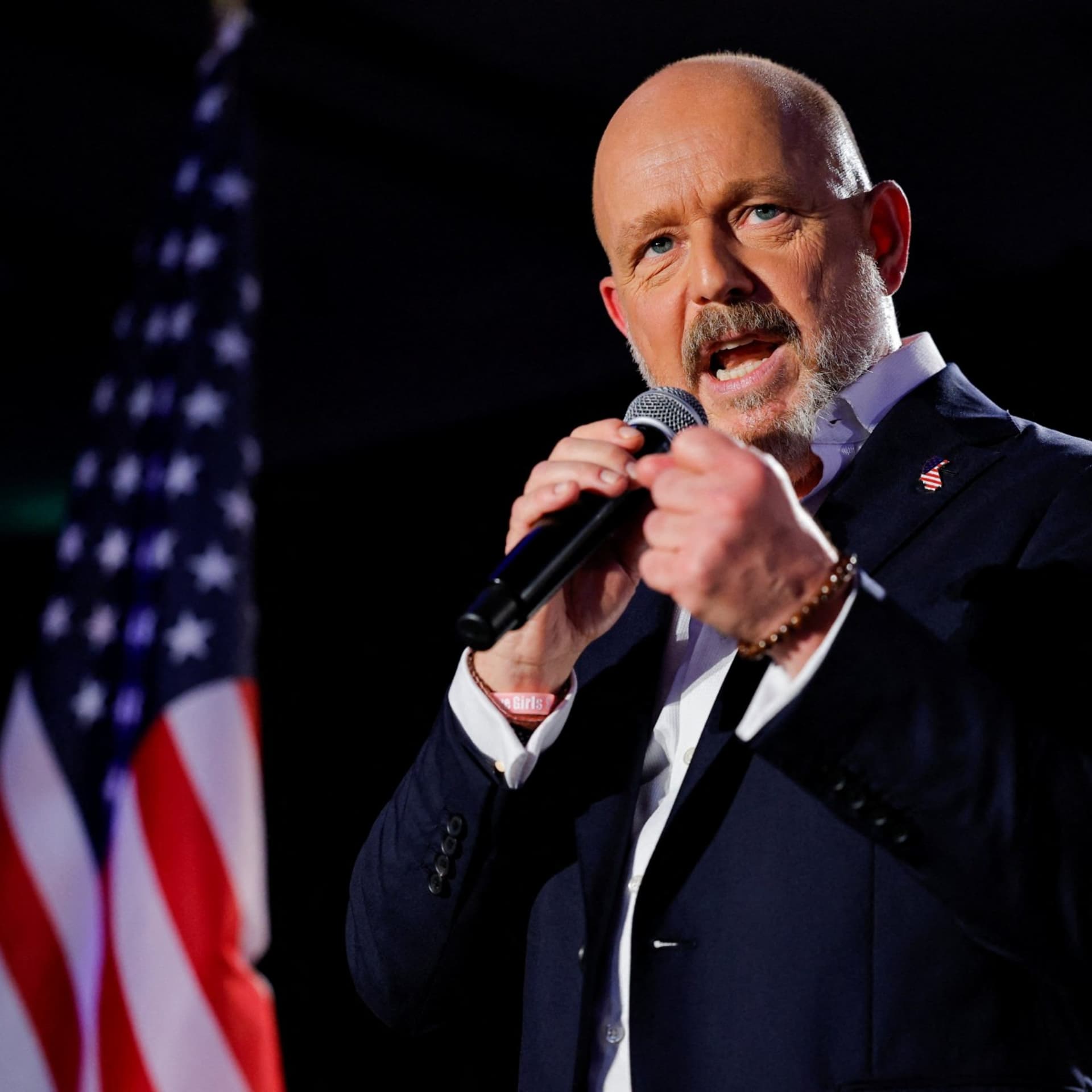
Photo: California Republican gubernatorial candidate Steve Hilton. Credit: Reuters /Mike Blake
Audio for this episode was updated on 9th June 2026 to clarify Steve Hilton's views on Brexit.