
In short
Debate over whether the U.S. and Israel “entered the Iran war together” but now Israel is being sidelined as Washington sets ceasefire terms and negotiations.
Guests
Anshul Pfeffer, Israel correspondent for The Economist; author of an unauthorized biography of Benjamin Netanyahu (“Bibi: …”); previously covered Netanyahu for years and argues he believes his own message. Also referenced: Joe Kent, director of the National Counterterrorism Center (commentary quoted).
Key claims
Trump’s Truth Social announcement of the Iran ceasefire omitted Israel; Israel was notified, not consulted. Pfeffer says Netanyahu helped push Trump toward war via a January insistence on proper preparation, but Trump later “calls the shots,” imposing ceasefires in Gaza and Iran and pressuring Israel on Lebanon. Israel is seen as excluded from U.S.-Iran talks in Pakistan.
Notable examples
Iran ceasefire announced April 7 without Israel at the table; Lebanon strikes intensified right after the Iran ceasefire news; Trump later announced a Lebanon ceasefire and “prohibited” Israeli strikes; Netanyahu’s stated aims (destroy nuclear/missile programs, crush regime, enable uprising) not fully achieved (missiles still launched; enriched uranium still underground).
Written by AI. May contain mistakes. Listen to the episode to check what was said.
Chapters
Tap a time to open that second in VOCeasefire Announcement and Context
1:12 to 2:55
Discussion on the recent ceasefire with Iran and U.S. involvement.
“When the ceasefire with Iran was announced last month, it was done so in typical Trump fashion, in a post on a Tuesday evening on Truth Social.”
Netanyahu's Influence on Trump
2:55 to 4:50
Exploration of Netanyahu's role in influencing Trump's decisions.
“Trump and Netanyahu went to war together.”
War Dynamics and Ceasefire Outcomes
4:50 to 7:30
Analysis of war dynamics and outcomes related to the ceasefire.
“The first person he convinces is always himself.”
Trump's Unilateral Actions
7:30 to 9:34
Examination of Trump's unilateral actions regarding ceasefires.
“In each of these cases, there was a point where Trump kind of said enough is enough.”
Lebanon and Hezbollah Strikes
9:34 to 12:12
Discussion on Israel's military actions in Lebanon post-ceasefire.
“And now finally, just in the last two or three weeks, this war that they began together, Donald Trump is the one who announced that there's a ceasefire.”
Post-Ceasefire Military Strategy
12:12 to 14:00
Insight into Israel's military strategy following ceasefire announcements.
“This was on April 7th, late in the night here at U.S.”
Ceasefire Dynamics Between Israel and Lebanon
14:00 to 18:07
Explore the intricacies of the ceasefire between Israel and Lebanon and Trump's role in it.
“Yeah, I read this report that in a phone interview with an Israeli journalist, he told Netanyahu to low-key it a bit.”
Israeli Public Sentiment and Leadership Challenges
18:07 to 21:06
Understand Israeli public opinions on the conflict and their perspectives on leadership during the war.
“And the reason I'm asking that is that our colleague Nick Beak was out recently reporting.”
Israel's Exclusion from Iran War Talks
21:06 to 24:01
Examine why Israel was sidelined in important talks regarding the Iran war and Trump's strategy.
“though they seem to not really have materialized lately, the latest iteration of these talks between the Americans and the Iranians in Pakistan to try to get some sort of deal.”
Political Implications for Netanyahu and the Upcoming Elections
24:01 to 26:57
Discuss the political ramifications of the Iran war on Netanyahu ahead of the elections.
“And it could factor into the mood, the overall mood that voters have when they cast their ballots this November in the midterms here in the United States.”
Transcript
Automatic transcript. May contain errors.0:00This BBC podcast is supported by ads outside the UK.
0:30business needs in one place, saving you time, headaches, and serious money. Stop paying for missing pieces. Go to odoo.com. That's O-D-O-O.com to learn more. Self-directed investing, trading, full-service wealth management, automated investing, financial planning, thematic investing, retirement planning. Phew. And to think, that's just a small taste of what Schwab offers. because Schwab knows that when it comes to your finances, choice matters. No matter your goals, investing style, life stage or experience, Schwab has everything you need all in one place so you can invest your way. Visit schwab.com to learn more.
1:14When the ceasefire with Iran was announced last month, it was done so in typical Trump fashion, in a post on a Tuesday evening on Truth Social. In a lengthy message filled with quite a few words in all caps and a couple of exclamation points, the U.S. president wrote that it is an honor to have this long-term problem close to resolution. The post had 206 words and no mention of Israel, the other key country in this all. In fact, it was hours later when a matter-of-fact statement was released by the Israeli prime minister's office that read, in part, Israel supports President Trump's decision to suspend strikes against Iran.
1:57For the last several weeks, there has been this ongoing debate here in the U.S. on both sides of the political aisle about how large a role Benjamin Netanyahu played in convincing the American president to launch a war against Israel's biggest enemy. Do you think the public fully grasped just how influential Netanyahu was in President Trump's decision to attack Iran? What have you learned? President Trump was impressed by what he heard. He didn't completely say yes right there, but he did say sounds good to me or something of that effect to the prime minister. The United States went to war in Iran at the behest and then the demand of Israel.
2:35Joe Kent, director of the National Counterterrorism Center, writing, it is clear that we started this war due to pressure from Israel and its powerful American lobby. But when it comes to ending these wars, Where's Netanyahu? From the BBC, I'm Osmar Khaled in Washington, D.C. And today on The Global Story, Trump and Netanyahu went to war together. Are they still in sync? We'll get the view from Israel.
3:07Anshel Pfeffer:My name is Andrew Pfeffer. I'm the Israel correspondent of The Economist. And you've also written a book, is that right, about the Israeli Prime Minister Benjamin Netanyahu? I published an unauthorized biography of Netanyahu called Bibi. It's hair over my shoulder. Product placement. Can I ask you on that note, is there something you feel that many people don't understand about him that you do, having covered him for a number of years? I'll mention one thing which I think is important to understand about him. You interview a lot of people and you've interviewed politicians. So you know that when you interview a politician, they're on record and there's, you know, you're recording them or you're filming them or you've got a notebook open, whatever.
3:50And then there's a moment when the interview ends and you're no longer on the record and you close your notebook. But you're still sitting with the politician and it's like things are calmer and you can crack a joke. there's this feeling that the politician is no longer on the stage, is no longer putting up an act. You don't have to be on message and you can say some things. Sometimes in that situation, politicians will say things to you which they would never say in public. With Netanyahu, there isn't this sort of thing. Anyone who's ever sat with Netanyahu will tell you that on record and off record are the same.
4:26He has his message, he has his way of saying it, but he's totally convinced of it in the moment. And when you're no longer on record, he'll still be saying the same messages. Now, the message may change, but when he's saying it, he believes in it. And people will say that he was not trustworthy. And it's true that there have been many cases when he hasn't been telling the truth, but he believes it. He's a very convincing person. The first person he convinces is always himself. Well, Anshal, I'm here in Washington, D.C. And where I sit, there's been a really active debate. I will say on both sides of the political aisle, both amongst Republicans and Democrats, about Israel's influence in American politics and in particular influencing the war in Iran.
5:12And at the beginning of the Iran war, we heard the Israeli prime minister Netanyahu say that America's involvement was allowing Israelis to do what, in the words of Benjamin Netanyahu, to do what I have been hoping to do for 40 years. There's been a lot of reporting here in the U.S. press about Netanyahu's taking an active role in encouraging Trump to launch these strikes. And I wanted to know from your vantage point, what is the sense of the power balance between Benjamin Netanyahu and Donald Trump?
5:45Anshel Pfeffer:Donald Trump and Benjamin Netanyahu have a longstanding relationship. Netanyahu is the only world leader that Donald Trump knows from way back. They go back to the 1980s when Netanyahu was stationed in New York as Israel's ambassador to the United Nations. And Donald Trump was an up-and-coming real estate tycoon. And so they know each other from back then. Donald Trump went into this war and committed America to this war. I think he's the one who has to be held responsible. But there's no question that Netanyahu had a hand in influencing him. I think originally back in January. And by the way, to all Iranian patriots, keep protesting.
6:30Anshel Pfeffer:When Donald Trump said to the Iranian protesters, His help is on its way. You saw that it put tariffs on anybody doing business with Iran. Just went into effect today. And I say, make Iran great again. Netanyahu said, hold on, wait a minute. You don't just launch a strike just like that. It has to be properly prepared. And that's when we saw six or seven weeks of a military buildup in the region, which led to the war that began on February 28th. Now, when the war did happen, it was quite unprecedented, the cooperation, sort of a joint campaign by America and Israel. At the same time, we've seen various points over the last 16 months that time and again points where Trump sort of loses his patience with Netanyahu and with Netanyahu's policies, and especially with the way in which Netanyahu has been dragging on the various wars in which Israel has been involved in.
7:30Anshel Pfeffer:In each of these cases, there was a point where Trump kind of said enough is enough. We achieved an epic ceasefire agreement as a first step toward lasting peace in the Middle East. In January last year, Trump basically imposed a ceasefire in Gaza and Israel. And this agreement could only have happened as a result of our historic victory in November. The ceasefire collapsed after a month or so, but then in October, Trump said, that's it. Now at last, not only for Israelis, but also for Palestinians and for many others, the long and painful nightmare is finally over. And he basically said the sides have agreed to a ceasefire, even though they hadn't really agreed and imposed on Israel the ceasefire on Hamas to release the Israeli hostages it was holding for two years.
8:21Today the skies are calm, the guns are silent, the sirens are still, and the sun rises on a holy land that is finally at peace.
8:30Anshel Pfeffer:So that was something that Trump did on his own accord. And how is that perceived? Well, it's perceived as Trump dictating terms of Netanyahu. Israelis are not buying. We're seeing that in the polls. Even amongst Israelis who still support Netanyahu, the huge majority in the surveys say, well, this is something that Trump forced upon Netanyahu. And since Israel is a country, I think probably one of the very few, if not the only country, where Donald Trump is very popular. It's something that passes. And even though Netanyahu said that this is a decision that we were part of, there's no illusion that this is something that Netanyahu wanted.
9:08Anshel Pfeffer:It's very clear that Donald Trump imposed two ceasefires in Gaza. Then he basically unilaterally ended the war with Iran back in June. And Iran launching missiles and then Israel launching a wave of planes. We saw that rant of Trump on the White House lawn where he used the F-bomb and said, you know, what are they doing? And called Netanyahu up and said, call the planes back. So that was very clear who was calling the shots. And basically Donald Trump is the only person who can tell Netanyahu to stop wars. And now finally, just in the last two or three weeks, this war that they began together, Donald Trump is the one who announced that there's a ceasefire.
9:47Yeah, I want to ask you about that, Enshul. This was on, at least here in the U.S., it was the night of April 7th, I believe, late at night. President Trump announced a ceasefire with Iran unilaterally. This is a war, as you say, that Israel and the United States joined together, but it was announced by only one of those two parties. How was it received in Israel when that announcement first came down?
10:09Anshel Pfeffer:Well, it was very much seen here as if there will be a deal between, you know, with Iran to end this war. this will be a deal between America and Iran. Israel's not even at the table. The talks which were in Pakistan, Israel was not there. When Trump finally did announce the ceasefire, he called Netanyahu to notify him. But like I said, that was to notify him. He wasn't to say, are you okay with the ceasefire, Donald Trump? Despite the closeness of their relationship, still isn't asking Netanyahu for Netanyahu's agreement on whether or not to end this war with Iran. How do you interpret that? I mean, was the announcement a blow for Netanyahu?
10:50Anshel Pfeffer:Yes, it's being perceived here as sort of Israel not achieving the aims that Netanyahu presented. Netanyahu said that Israel would basically destroy Iran's nuclear program and missile programs. And yes, obviously, a lot of damage has been done to those programs. But we saw that the Iranian missiles were still being launched even after the ceasefire. So the missile program, the missile capabilities are still there. The 400 plus kilos of weapon grades, or almost weapon grades, enriched uranium are still underground. And the other aim that Netanyahu stated for this war, to crush the Iranian regime, to prepare the ground for a mass uprising, that hasn't happened yet.
11:38So the perception in Israel is that Israel went to war with America. And then Donald Trump ended it, or at least hit pause before any of these aims could be achieved. And the deal, if a deal is reached, will be a deal based on Donald Trump's interests and America's interests and not so much perhaps on Israel's terms. Actually, I want to follow up on the ceasefire that we were speaking of just a moment ago, the ceasefire that was announced between the United States and Iran. This was on April 7th, late in the night here at U.S. time. And when that ceasefire was announced, there was some confusion about whether Lebanon was part of the agreement.
12:24And just to remind listeners, Lebanon was the other big front in the war where Israel had been fighting Iran's proxy Hezbollah. Ceasefire is not necessarily the word that comes to mind when looking at these scenes of violence and chaos from the streets of Lebanon today. Explosions in the Middle East threatening a fragile ceasefire. And in fact, the next day we saw the Israeli military intensify strikes into Lebanon. Yesterday, Israeli strikes killing at least 250 people, according to Lebanon's Ministry of Health. Saying that it struck around 100 sites in 10 minutes. Can you explain why the Israeli prime minister decided not just to continue strikes in Lebanon after that announced ceasefire, but to intensify them almost immediately after the ceasefire news came through?
13:08Anshel Pfeffer:Well, there was an intention to try and create a clear divide between the situation with Iran and the situation in Lebanon and to make it clear that the Iranians couldn't dictate a ceasefire through their talks with America for Israel against Lebanon. And so, yes, Netanyahu had no choice but to accept the fact that there was a ceasefire in Iran, because that was a war that he was pursuing together with America. And America is the senior partner. And Donald Trump says there's a ceasefire. There's a ceasefire. But then he said, but we have an issue here with Hezbollah, who have attacked us. And now we're trying to take them.
13:46Anshel Pfeffer:We're trying to destroy their military capabilities. And we're not going to accept a ceasefire. So Trump humored him for a few days, but after a few days, he once again announced, as he had done several times before, that there's also a ceasefire in Lebanon. Yeah, I read this report that in a phone interview with an Israeli journalist, he told Netanyahu to low-key it a bit. That was after a couple of days, but then they did low-key it a bit in the sense that they didn't carry out any more attacks on targets in Beirut, but they did continue airstrikes. And then after three or four more days, Trump came out with his announcement, I think it was almost two weeks ago, when he said, now is a 10-day ceasefire.
14:25And I've spoken to Netanyahu and I've spoken to Lebanese President Aoun, and that's it. And we're going to reach an incredible agreement between Israel and Lebanon. And then he extended that by another couple more weeks. So, you know, once again, we're seeing how at some point Trump is saying to Netanyahu, enough is enough. And, you know, he basically said in one of his posts on his social media network that Israel is prohibited. And he used, you know, he wrote the word prohibited in bloc capitals from carrying out strikes in Lebanon. Now, the war in Lebanon is actually continuing in a sort of a low level.
15:05And it still is, you're saying, despite that announcement. Well, there are Israeli troops on the ground and they're destroying... In southern Lebanon. Destroying buildings which they say have been used by Hezbollah as bases for attacks on Israel. Hezbollah is still launching drones and missiles at the Israeli troops. But the wider airstrikes Israel was carrying out throughout Lebanon against what they say were Hezbollah targets, that is basically covered by the ceasefire.
15:31Anshel Pfeffer:That's not happening now. So we still have in that strip of land around about 10 kilometers from Israel's border with Lebanon, we still have on the ground there a conflict. It's much more of a low-level conflict now. You mentioned that this ceasefire between Israel and Lebanon, though it does not involve Hezbollah, like they were not a party to this overall agreement. Nonetheless, Israel and Lebanon, two countries that hadn't had formal talks in years. Trump got them together, the Trump administration. President Trump announced that ceasefire. And what I want to understand is the United States was technically not involved in that war, right, between Israel and Hezbollah, nor was he involved in Lebanon.
16:15Why would Netanyahu have agreed to the talks?
16:19Anshel Pfeffer:Well, Netanyahu can't say no to Donald Trump. One of the main assets that Netanyahu is presenting to the Israeli voters is that no prime minister has ever had this kind of relationship that I have with such a friendly and such a supportive American president. And once Netanyahu has invested himself so heavily in this relationship, and this is what he's showing to the Israeli public as one of his main assets, that he can't afford to anger Donald Trump. and Netanyahu's biggest nightmare is that at some point from now until the election, Donald Trump would openly turn against him and say the kind of stuff we've seen him saying about other leaders around the world.
17:00So Netanyahu sees that as a major political liability, and Donald Trump knows that he has leverage over Netanyahu.
17:10Anshel Pfeffer:And as we've seen, Trump doesn't just say to Netanyahu, okay, announce the ceasefire now. Trump announces it himself. Basically daring Netanyahu to contradict him, and Netanyahu doesn't dare to contradict him. And the last ceasefire two weeks ago that he announced in Lebanon, he called up Netanyahu and he said, there's going to be a ceasefire in Lebanon, that's it. And Netanyahu was about to inform his cabinet and maybe hold a vote on it, but obviously it would have been a rubber stamp. But even before Netanyahu could inform the cabinet, Trump had already announced it. So it was quite humiliating for Netanyahu.
17:49Anshel Pfeffer:They say to his ministers, well, there's a ceasefire. And they said, you know, we haven't even discussed it. Well, he said, well, Donald Trump wants it. And that's that. You know, the ceasefire in Lebanon, when President Trump announced that, how did it go down with the Israeli public? And the reason I'm asking that is that our colleague Nick Beak was out recently reporting. And he interviewed someone who told him that the majority of Israelis don't want the fighting in Lebanon to be over until and unless Hezbollah gives up their arms. I know you were out reporting in the north of Israel. Does that jive with what you've heard?
18:27Anshel Pfeffer:Well, there certainly are people who are saying that. And there are people who are saying that they think that the war in Lebanon is useless. But they're saying, in essence, that they want a solution whereby Hezbollah can no longer strike Israeli communities in the north. Now, Israelis have lots of views. There's certainly not a consensus on what's the best policy in Lebanon. But whatever people think should be done, whether it should be a devastating campaign or it should be diplomacy, they're feeling that none of these things are really happening. What's just happening is that there is someone else sitting in Washington pressing a sort of a play and a pause button.
19:07Is that really how it's perceived, Eshel, that it's someone in Washington who pushes play and pause?
19:12Anshel Pfeffer:No, Donald Trump is making it very clear. I mean, the way in which he's announced the ceasefire is a way in which he said Israel is prohibited from airstrikes. And the way that Netanyahu takes hours and hours to sort of respond and come up with some statement doesn't give Israelis any reason to believe that. And yet you say President Trump remains enormously popular in Israel. Yes, because Trump has spent so much time praising Israel and saying good things about Israel. In his first term, he carried out policies which Israelis thought were pro-Israeli, like moving the American embassy to Jerusalem and recognizing Israel's sovereignty over the Golo Hanks and other things like that.
19:53Anshel Pfeffer:And the mood music of the Trump administration has been, this is the most supportive administration ever for Israel. Now, you could argue whether all these policies are good for Israel in the long term, but the perception in Israel is that Trump is someone on their side. But it certainly is putting Netanyahu in a very bad position because he, on the one hand, says, what a great relationship I have with Donald Trump. And there's never been a closer relationship between Israeli prime minister and American president. And at the same time, it's never been so clear that he's not calling the shots and that Trump is imposing ceasefire.
20:34I mean, it's not that it never happened in the past that America pressured Israel into ceasefires in previous conflicts. But it was always something that, at least for appearances sake, would be allowed to be seen as Israel making the decisions. Trump, as we've seen, is a different type of president than any of us who preceded him. And he's very interested in showing how he calls the shots.
21:05You mentioned earlier that there have been these talks, though they seem to not really have materialized lately, the latest iteration of these talks between the Americans and the Iranians in Pakistan to try to get some sort of deal. I wondered why the Israelis were not part of those talks. I mean, I realize Pakistan and Israel don't have a diplomatic relationship. And it's worth pointing out that the talks to end the war in Iran, a war started by the U.S. and Israel, were happening in a country in which Israel doesn't have a diplomatic relationship with. And I just wondered why Israel was not part of those talks.
21:44And did the Israeli government feel sideline?
21:46Anshel Pfeffer:I'm interested in having anyone else there. He wants to end the war on his terms. Did he ask the Israeli government at all to come? No. He did not? You know that he did not ask? It's simply not an issue. For Donald Trump, he is the guy who is going to decide, from his perspective, I'm sure the Iranians will have his say as well, he may take some of Israel's interests into consideration and there certainly will be conversations between him and Netanyahu and other people in his team will be talking to Netanyahu about this. But ultimately, Trump isn't interested in someone else helping him to shape the post-war climate.
22:26Anshel Pfeffer:And I think he's also worried that Netanyahu has other interests, and he's, to some level, he's prepared to indulge Netanyahu's interests, but not all of them. But Esha, when those talks were happening, right, this was, when was this, the weekend, I think it was April 11th, right? When these talks were happening in mid-April in Pakistan, I mean, it was a big deal, right, to have the vice president of the United States go, how was that perceived by the Israeli public? I mean, did the Israeli government feel sidelined? I just wonder, what is it like to be sitting far away watching the news happen, and they were not involved in those talks?
22:59Anshel Pfeffer:Well, as you say, they did feel sidelined. And I think it's interesting that J.D. Vance is seen here in Jerusalem by the Israeli government as probably the least pro-Israel figure of the senior figure in the administration. J.D. Vance is seen as sort of the head of the isolationist wing in the administration. And he has a level of relationship with Tucker Carlson, who's now very, very anti-Israel. So there's a, you know, there's this quite a lot of concern in Israel, whatever J.D. Vance takes the leadership on foreign policy. I know in Washington it's been seen that Trump may be kind of setting Vance up for a fall.
Read the full transcript
23:41Anshel Pfeffer:And that also may be the case. But if Rubio was running the show, I think in Jerusalem, there'd be a lot less concern. So not only is Israel sidelined, but the chief negotiator for the United States is the figure in administration who Israelis feel least they're comfortable about. The final question I have is that we've talked about the fact that here in the United States, the war in Iran is a political liability for President Trump and Republicans. And it could factor into the mood, the overall mood that voters have when they cast their ballots this November in the midterms here in the United States.
24:20And I'm curious if the wars are a liability for Netanyahu. My understanding is that Israeli elections must be held by October of this year. So we saw, you know, in the polls in the last couple of weeks, support for Netanyahu going down. We saw his coalition losing a couple of seats. I mean, these are just polls. what will happen in the election. But he certainly hasn't emerged well from this war as far as the Israeli public is concerned. I've spoken to political scientists who see these things through theoretical frameworks that what's happened in Israel, like any country which has been attacked, Israel was attacked on October 7 and then October 8 by Hezbollah, is a rallying around the flag effect.
25:07But one of the things that the classic rallying around the flag effect includes is not just support for the war and support for the armed forces and so on. It's also support for the leadership. For the leader, in theory, right? I mean, I think of George W. Bush after 9-11. Yeah. Yes, because that is the classic thing. If you look at countries where you have the rallying around the flag effect, you'll always see a bump, a major bump of support for the leader. In this case, we didn't see that. So every poll conducted in the last two and a half years has shown a lack of support, a lack of trust for Netanyahu.
25:43His party and the parties in his coalition polling much worse. So it's a unique phenomenon where the majority of the public in the country supports the war, but do not support the war leader. So what happens if these objectives are not achieved by October? I'm not going to predict the outcome of the election because it's in six months and the polls have often been against him and he's somehow managed to turn them around. Does this moment feel different? Well, everything is different after October 7 in the sense that Israelis are in this traumatic loop that they don't seem able to break.
26:26I think if Netanyahu does lose this election, there will be a major period of reckoning in Israel. And that's going to be for a lot of things that have happened that led up to October 7 and happened since. And all these things have been blocked by Netanyahu because he wants to end this in some incredible victory where everyone else will run at white flags and surrender and he will be the great victor of the Middle East. And it looks like time is running out for that to happen, if it ever could happen.
27:03Well, Anshul, thank you for taking the time to speak with us. It's been really informative. Thank you for having me.
27:14That was the Economist Israel correspondent. Ashul Pfeffer, who's also written a biography of the Israeli Prime Minister Benjamin Netanyahu. He was speaking to us from Jerusalem. And as always, a reminder that we love hearing from you all, from listeners. So if you all have any story ideas or questions for us, you can send us a note. Our email address is theglobalstory at bbc.com. And here at The Global Story, as you all know, we go deep every weekday on one big story at the intersection of where the world and America meet. If you're also looking for a way to catch up on the latest headlines from around the world, then check out our sister show, the Global News Podcast.
27:53Today's episode was produced by Sam Chantarasek and Zandra Ellen. It was edited by Chyna Collins, who's also our senior news editor. It was mixed by Travis Evans. Our video producer was Matt Pintus. And I'm Asma Khalid. That's it for the Global Story today. Thanks as always for tuning in, and we'll talk to you again soon.
28:16Thank you.
From the publisher
Since the start of the US-Israel war with Iran, there has been an ongoing debate over the role played by Israel’s Prime Minister Benjamin Netanyahu, in convincing Donald Trump to go to war.
But when it comes to ceasefire announcements, it has been the US President taking the lead - if the Israelis are present at all. So when it comes to ending the wars in Iran and Lebanon, are the Americans leaving Netanyahu out in the cold?
We speak to Anshel Pfeffer, Israel correspondent at The Economist, and author of Bibi: The Turbulent Life and Times of Benjamin Netanyahu.
Producer: Sam Chantarasak and Xandra Ellin
Sound engineer: Travis Evans
Senior news editor: China Collins
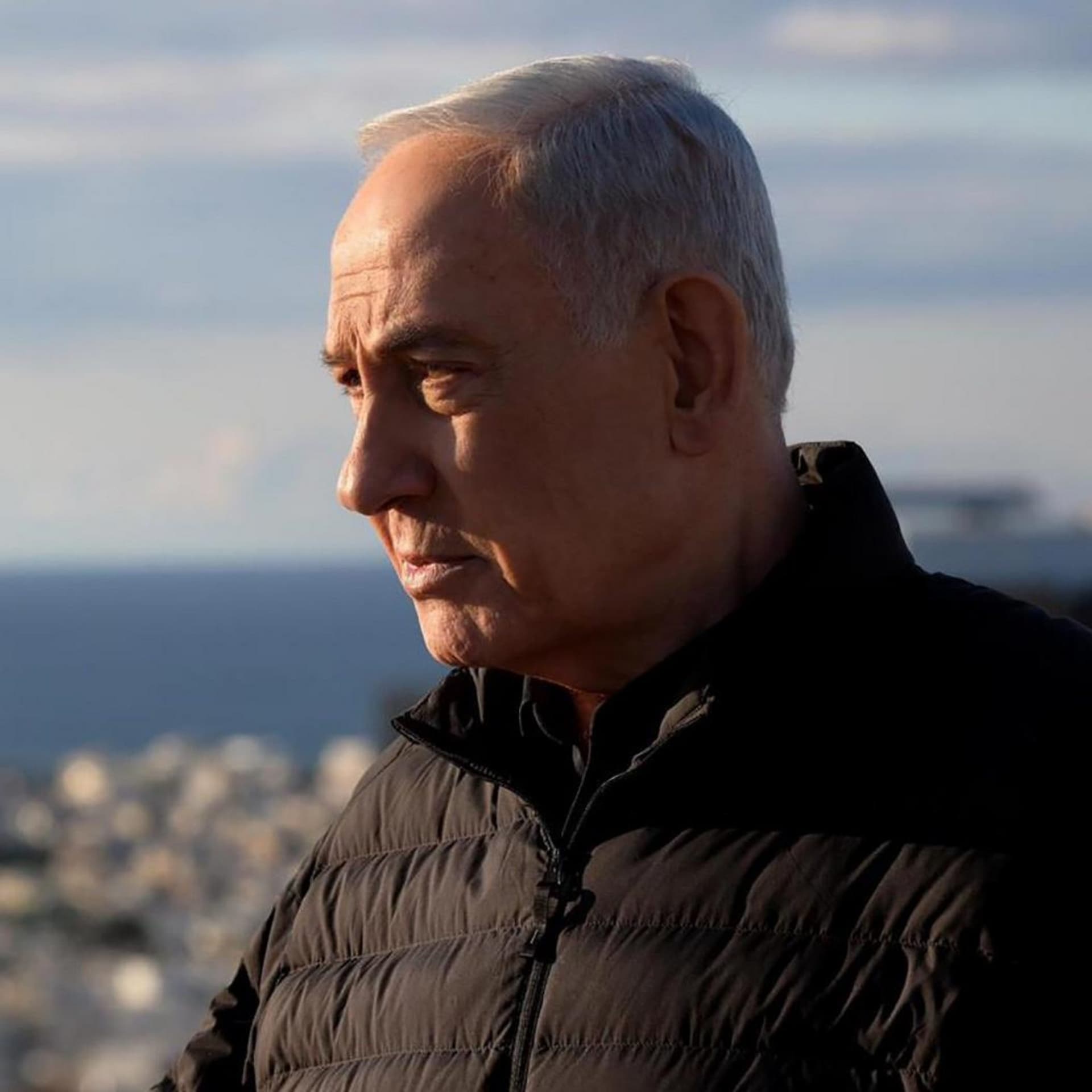
Photo: Prime Minister Benjamin Netanyahu delivering an address from the roof of the Kirya in Tel Aviv, Israel, 1 March 2026. Credit: Avi Ohayon/EPA-EFE)