In short
The Iran nuclear deal (JCPOA) and why it was negotiated, what it required, and how Trump’s withdrawal and current talks differ.
Guest
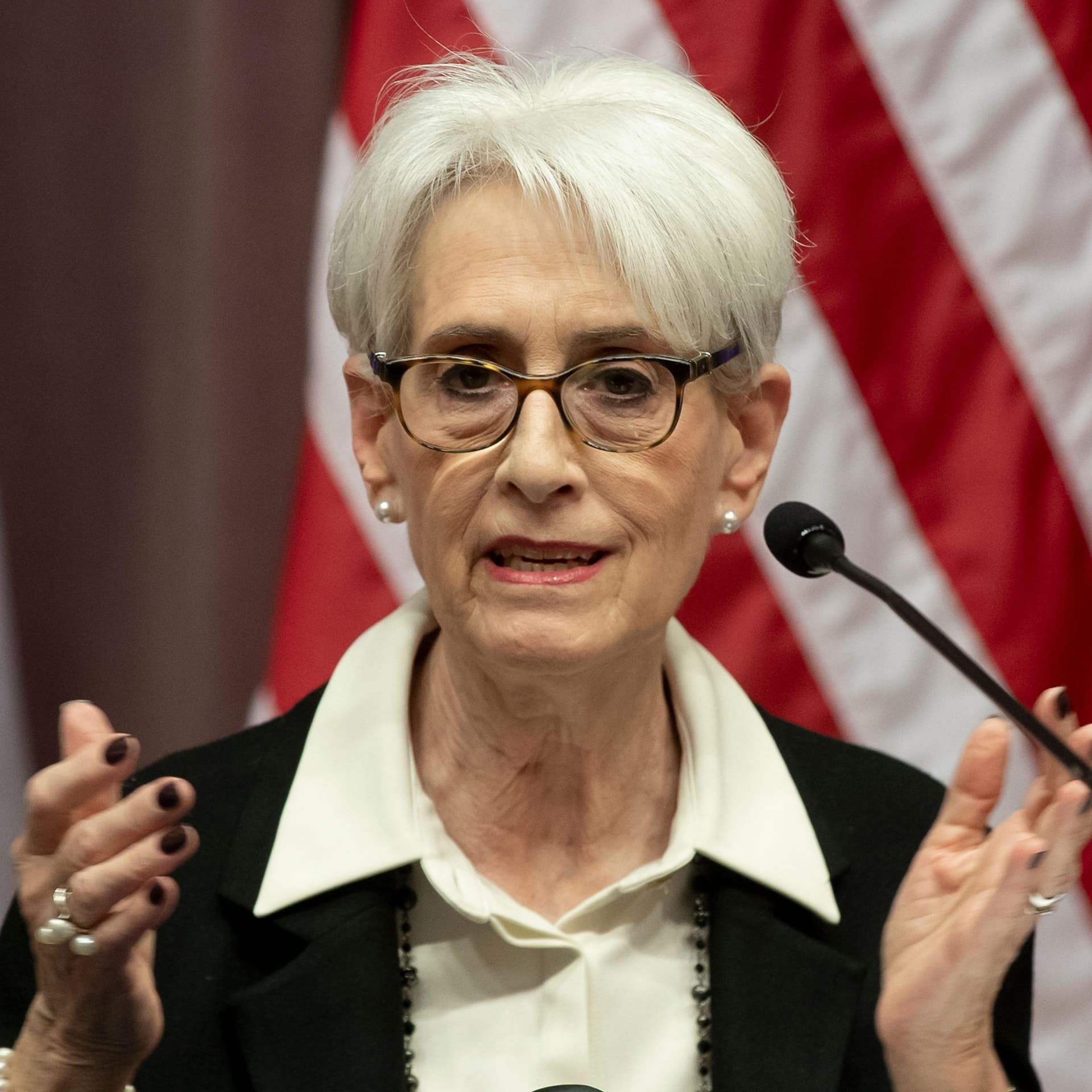
Ambassador Wendy Sherman, lead U.S. negotiator for the JCPOA in the Obama administration.
Guest background
Senior U.S. diplomat; negotiated the 2015 deal with Iran and P5+1/EU partners; later discusses diplomacy’s role in crises.
Key claims
Iran began talks via a secret channel seeking sanctions relief; Obama chose diplomacy to avoid war and allowed limited civil enrichment with intrusive monitoring. The deal limited Iran’s nuclear activities and enabled IAEA verification in exchange for sanctions relief. Critics said it was too limited (sunset clauses) and strengthened Iran/proxies; Sherman argues dismantling enrichment wasn’t feasible and that nuclear talks were too complex to bundle with missiles/proxies.
Notable examples
28 days in Vienna (Palais Coburg); Iran enrichment rise from 20% to 90% cited as urgency; Kerry’s tense Geneva meeting; 2018 sailor detentions resolved via Zarif call; Sherman says bombing can’t erase knowledge and that Hormuz leverage complicates current negotiations.
Written by AI. May contain mistakes. Listen to the episode to check what was said.
Chapters
Tap a time to open that second in VOIntroduction to the Iran Deal
1:12 to 2:12
Understand President Trump's views on the Iran nuclear deal and its significance.
“What Obama did with that Iran nuclear deal, that was the worst deal ever made that gave them a path to a nuclear weapon, a short-term path to a nuclear weapon.”
Negotiating the JCPOA
2:12 to 4:58
Hear Ambassador Wendy Sherman discuss the origins and critical decisions in the Iran negotiations.
“Global Story, we hear about the JCPOA from its lead U.S.”
Challenges in Negotiations
4:58 to 7:35
Discover the challenges faced during negotiations with Iran and key moments of tension.
“So you say that Iranians came to you all and you decided that it was worthwhile to negotiate because you said this a moment ago that otherwise it would lead to war.”
The Final Deal
7:35 to 10:25
Learn about the details and implications of the final JCPOA agreement.
“You mentioned a name that I want to ask you more about, Abbas Araqsh.”
Criticism and Controversy
10:25 to 14:00
Understand the criticisms of the Iran deal and the differing opinions surrounding it.
“There was a point I remember in the Beaux Rivage Hotel in Geneva, and we all came to agreement on what we thought was a set of parameters for a final deal.”
Understanding the Iran Deal's Framework
14:00 to 15:15
Learn about the foundational goals and limitations of the Iran nuclear deal.
“I respect that people had differences of opinion.”
Diplomatic Channels and Their Impact
15:15 to 17:02
Explore how diplomatic communication played a key role in resolving crises.
“Soon after the deal, a bunch of American sailors found themselves in Iranian territory and got picked up by the Iran military.”
Critiques of the JCPOA and Its Consequences
17:02 to 19:52
Discuss the criticisms of the JCPOA regarding sanctions relief and regional proxies.
“Was that never, by the way, part of that?”
Trump's Withdrawal from the Deal
19:52 to 20:16
Examine the implications of President Trump's decision to withdraw from the Iran deal.
“We also saw the State Department-issue a report that said Iran was indeed implementing the agreement.”
Shifting Dynamics in U.S.-Iran Relations
20:16 to 22:29
Analyze the changing dynamics and current status of U.S.-Iran negotiations.
“I want to then bring us up to the present, where we are now in Trump's second term.”
Show all 12 chapters
Challenges of Nuclear Negotiations
22:29 to 24:44
Understand the complexities involved in negotiating nuclear agreements with Iran.
“is that they say they were in the midst of talks with Iran but that they were not serious.”
Future Prospects for U.S.-Iran Agreements
24:44 to 26:47
Speculate on possible future agreements and the geopolitical implications.
“deal, you say, because of its own internal economy.”
Transcript
Automatic transcript. May contain errors.0:00This BBC podcast is supported by ads outside the UK.
0:30business needs in one place, saving you time, headaches, and serious money. Stop paying for missing pieces. Go to odoo.com. That's O-D-O-O.com to learn more. Self-directed investing, trading, full-service wealth management, automated investing, financial planning, thematic investing, retirement planning. Phew. And to think, that's just a small taste of what Schwab offers. because Schwab knows that when it comes to your finances, choice matters. No matter your goals, investing style, life stage or experience, Schwab has everything you need all in one place so you can invest your way. Visit schwab.com to learn more.
1:14Mr. President, let me ask you. What Obama did with that Iran nuclear deal, that was the worst deal ever made that gave them a path to a nuclear weapon, a short-term path to a nuclear weapon. That's President Trump in an interview on the Fox Business Network, talking about the Joint Comprehensive Plan of Action, more commonly known as the JCPOA. It was the big nuclear deal under President Obama in 2015. It's a deal that Trump ripped up in his first term in 2018, and it's a deal that he cannot stop talking about. I terminated it. It was the greatest thing I did. They would have had a nuclear weapon four years ago.
1:56And yet it's also a deal that seems to haunt him as he tries now to land his own, as he puts it, far better deal. But getting a better agreement could be a daunting task. From the BBC, I'm Asma Khaled in Washington, D.C. And today on The Global Story, we hear about the JCPOA from its lead U.S. negotiator, Ambassador Wendy Sherman. And we talk about what Trump needs to know about the art of the Iran deal.
2:29Ambassador Sherman, welcome to the Global Story. Thanks for joining us. Glad to be with you, Asma. Thank you for having me. I began my conversation with Wendy Sherman by asking her how these talks with Iran actually started. The final deal was worked on and signed by a number of countries, including China, Russia, and the European Union. And, you know, frankly, it's easy now to forget how extraordinary it was for the U.S. and Iran to make a deal like this, because as you all might know, the U.S. and Iran have not had a formal diplomatic relationship for decades. Wendy Sherman told me that the seeds of this all began when Iran reached out to the Obama administration through this secret channel.
3:10She said that the Iranians wanted to talk because their economy had been under enormous pressure and they were keen to see if they could negotiate some sort of sanctions relief from the U.S. President Obama made a very critical decision. He knew that we could either negotiate with Iran or we could face war. And we had gamed this out. We all knew Iran could strangle the Strait of Hormuz. We all knew that Iran could take on our partners and allies in the region, that the world economy could be at stake. So the president thought it was critical to see what diplomacy could achieve. And he also made another critical decision, which was to say to Iran that he would consider a small, very small civil nuclear enrichment program for civil purposes if there was intrusive monitoring and verification.
4:13The United States had never said that before. We don't believe that a country has a right to enrichment. So he opened the door. We worked on that draft. I asked our team to write what they thought would be the ideal agreement. They wrote 100 pages. Oh, wow. All of the team, no matter what their role, met in a conference room for two days. And we went over that line by line, not because we knew we'd get that exact deal, but because I needed to know, every member of the team needed to know what we were trying to achieve. was the crux of what you wanted to achieve trying to prevent Iran from having a nuclear weapon.
4:57Absolutely. So you say that Iranians came to you all and you decided that it was worthwhile to negotiate because you said this a moment ago that otherwise it would lead to war. And can you help me understand that? Because the United States and Iran, as you know, have been at odds for years, have had no formal diplomatic relations. But what made you think that it would lead to war at that particular moment. We didn't know that it would happen at that moment, but we thought it would indeed happen. And Iran was clearly improving their nuclear capacity every single day. The Iranians had gotten up to 20 % enriched uranium.
5:35From 20 % to 90%, which is what you need to have enough material for a nuclear weapon, was a leap we did not want them to make. Were you trying to stop it the development of a nuclear weapon. Oh, no. We were trying to stop it. We were trying to ensure they could never get enough material for a nuclear weapon. You mentioned a moment ago that the negotiations took some time. I believe it was about 18 months in total, a year and a half. Tell me about when you first met your Iranian counterparts. So I had met an Iranian delegation even before 2013, actually starting in 2011, when Syed Jalili was head of their delegation.
6:22He was a leader in the Iranian government. He was assigned to lead this delegation. It was very performative. Hmm. Iran made us go to Almaty, Kazakhstan twice because it took 19 hours for the Americans to get there. We were in Iraq during a sandstorm. It was pretty crazy. And all of the discussions happened in Farsi. We didn't make much progress. Then Rouhani became president. In 2013, is that right? Yes, in 2013. Things changed. Javad Zarif became the foreign minister, and he led the delegation. He had spent 30 years in the United States. He spoke perfect English. He knew us. And Abbas Arachi was my counterpart and now the foreign minister.
7:12So we began much more serious negotiations and ultimately brought in this short-term agreement. Ultimately, it led to 28 days in a Vienna hotel, the Palais Coburg. Secretary John Kerry came for the last two and a half weeks to get to a final deal. You mentioned a name that I want to ask you more about, Abbas Araqsh. You say he was your counterpart in the Iranian delegation. He's now Iran's foreign minister. We see his name tossed around in the current talks. We saw news that, in fact, he was just recently in Pakistan. What's he like? How did you build rapport with him? You know, I don't believe these kind of negotiations are about trust.
7:57I don't trust Iran today. They don't trust me. I respected that they had national interests, some of which made no sense to me, but in their culture, in their framework, it did to them. Abbas Arachi is very smart, very tough, knows every detail of the deal. And Abbas and I became grandparents at the same time. During the talks? During the talks, we shared photos of our grandchildren. So you do things like that, not because it's going to change what President Obama and Secretary Kerry required of our team, but it does make us more human. It helps. Ambassador, you mentioned that during the final stage of negotiations, there was this period of intense talks where you all spent essentially nearly a month in that hotel in Vienna.
8:50What was that last month like? Very pressured, very exhausting. At one point, I remember talking to my husband, who was, of course, back in Washington, D.C., and really focusing on our daughter. I said, I'm so sorry to be away for so long. And he said, you are part of history. This is important. Having that kind of support was critical. One of our team members' kids made sock puppets for everybody in our team and sent them to Vienna, which was really sweet and very cute. The Europeans could always go home on the weekend because it was a short flight. From Vienna, yeah. From Vienna, if they needed to go home.
9:36Not so much for the Americans. So I tried to work things out so that team members could go home for a weekend. That wasn't true for me. You were there for, what was it, 28 days, you said, right? 28 days, ate one meal outside of the hotel in those 28 days. We had two dining rooms because particularly my European colleagues, my Russian colleagues too, probably, wanted to have alcohol. And of course, the Iranians didn't want that. But towards the end, Foreign Minister Zareef invited us into the Iranian dining room, and I had the best pistachio chicken of my life. Oh, wow. And so you all did dine together occasionally during that?
10:18Occasionally. Yes. That time period. Yes. Did you ever feel there were moments where it seemed like it all might just fall apart? Many times. Many, many times. There was a point I remember in the Beaux Rivage Hotel in Geneva, and we all came to agreement on what we thought was a set of parameters for a final deal. And soon after, the Supreme Leader gave a speech and set out a whole bunch of new parameters. I'm not even sure Zarif knew that was coming. And we had a very difficult meeting suddenly in Geneva with the Iranian delegation where we had to figure out a way to meet some of what the Supreme Leader was asking for and keep the deal moving forward.
11:09Secretary Kerry is an extraordinary negotiator. He never runs out of energy, and he rarely gets angry. But he got so angry at that day-long meeting in Geneva that he banged his hand on the table, and, hey, Penn flew across the table and hit Arachi. He didn't mean to, of course, but it was a very tense and very difficult time.
11:42Today, after two years of negotiations, the United States, together with our international partners, has achieved something that decades of animosity has not. So the final deal was 110 pages long. It is finalized, signed in the summer of 2015. Because of this deal, the international community will be able to verify that the Islamic Republic of Iran will not develop a nuclear weapon. And in the end, and I'm going to summarize this here, but in the end, Iran agreed to limit its nuclear activities and allow in international inspectors in return for the lifting of some economic sanctions. I know that the Obama administration lauded this as a major achievement.
12:26This is an historic day, but for me, it's an historic day because it represents the first time in six weeks that I've worn a pair of shoes. Today, in announcing a joint comprehensive plan of action, the United States, our P5 plus one and EU partners and Iran have taken a measurable step away from the prospect of nuclear proliferation towards transparency and cooperation. I also recall there were some Republicans and some prominent Democrats who criticized it. They have presented us with a deal that strengthens our adversaries, threatens our allies, puts our own security at risk. They had concerns that Iran would not moderate.
13:13And that in some ways this deal might in fact actually help bolster the regime, might help it actually acquire a nuclear weapon in the long run. A deal that provides weapons and funds to a regime that has pledged to destroy Israel and maintains death to America as a central pillar of its policies. They felt the deal in particular, I will say, I think because of the sunset clauses, right, which were these key parts of the agreement that expired in 10 to 15 years. They felt that it didn't do enough to limit Iran's nuclear programs. This agreement sanctions a threshold Iranian nuclear state after 10 to 15 years.
13:52That means the United States and all the governments of the world say it's OK for Iran to be a threshold nuclear state. What do you make of the criticism that the deal was simply too limited? I respect that people had differences of opinion. But our whole notion, and I think what President Obama understood, is if we could have these very severe limits for 15 years, that that gave us time to see what else we could achieve. Was dismantling it just not on the table? The Iranians would not agree to it. It was not on the table. Did you all try to discuss it or you did not try? Of course, of course, of course.
14:34But Iran is a culture of resistance. And part of its national identity is this ostensible right of enrichment, which, as I said, America still does not agree to. And Iran's believing that we were trying to take away the country's right to its own sovereign sense of itself. Today, we are seeing this again. Iran is not going to give up the right to enrich at some point. But of course, we preferred to eliminate everything. But that wasn't going to happen. We also developed channels of communication that we thought would be important. This is a Fox News alert. Iran has our sailors. Soon after the deal, a bunch of American sailors found themselves in Iranian territory and got picked up by the Iran military.
15:33Dramatic new video of the moment 10 American sailors were detained by the Iranian Navy. In other times, that would have been a disaster that would have gone on for some time. They would have become hostages. That appears to be the moment of capture when those sailors were there on their knees, as you see in the video, with their hands up. Instead, John Kerry could pick up the phone, call Javad Zarif, foreign minister of Iran. U.S. Secretary of State John Kerry thanked Iran for its cooperation. And within 24 hours, those sailors were free. I think we can all imagine how a similar situation might have played out three or four years ago.
16:14So did we think it would change everything? No. But did it open a door? Yes. This kind of issue was able to be peacefully resolved and efficiently resolved. And that is a testament to the critical role that diplomacy plays in keeping our country safe, secure and strong. Europeans very much wanted the middle class market of Iran. They wanted to get their car manufacturers back in to Iran. They saw a real possibility for commercial success. So it did open channels. And if we were getting close to that 15 years, we could go back to the negotiating table and see what more we could get. And now Iran has a new weapon, the closure of the Strait of Hormuz, which was open before this war began.
17:10Was that never, by the way, part of that? Was that never perceived to be a threat when you were negotiating with them, you said? No, it was not. We knew it could become one. And certainly if we went to war, we had spent many hours gaming that out. But it was not used as a leverage point in the negotiation. Another major criticism of the JCPOA, of the deal that you worked on, is that because it lifted sanctions on Iran and granted access to billions of dollars of unfrozen assets, is that it could use that sanctions relief to arm its proxies in the neighborhood, organizations like Hamas or Hezbollah.
17:50And in fact, you could make the argument that the funds did strengthen the Iranian regime over the years. How do you reconcile that? So there is no question. The regime is horrible. It has slaughtered its own people. At the time when we discussed some of those frozen assets, a humanitarian channel was set up for those funds to go for food and medications and humanitarian purposes to help out the Iranian people. And if those frozen assets helped on the humanitarian side, there's no doubt it freed up some funds for Iran to deal with its proxies. But had the deal stayed in place before President Trump in his first term withdrew, we would have been able, I believe, to go back to the table to discuss some of these other issues.
18:44A lot of people have said, why didn't we do it at the time? Why didn't we discuss proxies and more on missiles and other things of concern? Well, it took us years, the Europeans had been negotiating with Iranians for a decade, and then it took us 18 months to get this final deal. If we had tried to do other things, we'd probably still be negotiating. And if you do other things, then the Iranians might say, okay, we'll give a little less money to Hezbollah, but we want more sophisticated centrifuges to be able to enrich more uranium. And there are so many elements just on the nuclear side that are so complicated, it.
19:28Because every time you agree on what the stockpile can be or what the percentage of enrichment can be, you affect a hundred other things and you have to manage all of them at the same time to ensure you've reached your objective. The deal was ultimately only in place for three years. And during that time period, the International Atomic Energy Agency, known as the IAEA, which was responsible for inspecting Iran's activities, made several reports detailing Iran's compliance with the deal. We also saw the State Department-issue a report that said Iran was indeed implementing the agreement. America will not be held hostage to nuclear blackmail.
20:09But nonetheless, in May of 2018, President Trump, during his first term, pulled the United States out of the deal. And we will not allow a regime the chance death to America to gain access to the most deadly weapons on Earth. I want to then bring us up to the present, where we are now in Trump's second term. We are now in another moment where the U.S. is trying to reach another deal with Iran. How does this moment feel different to you than 2015? It feels terrible. I think the president has engaged in a war of choice, not of necessity. I don't think there was an imminent threat to the United States.
20:55I think diplomacy was what was called for, not war. I understand the June bombing by the U.S. and Israel. June of last year, you're saying? June of last year, yes. It did set back Iran's program, there's no doubt about it. But you cannot bomb away knowledge. So you ultimately have to sit down and talk. The Strait of Hormuz was opened before this war. And now I believe that Iran will always feel that it has ownership over the Strait of Hormuz. It will always be a leverage point for Iran. Before this war, we were seeing a recovery from COVID in the world's economy. And now the world's economy is facing great risk.
21:42We are seeing very desperate times. So I believe that President Trump has accomplished giving Iran the leverage of the Strait of Hormuz. He has alienated our European allies because he never included them in this process. He has gotten mixed reviews from our Gulf partners. and, of course, 13 American soldiers have died. Many more have been wounded. And thousands of civilians in the Middle East, including in Iran, have died. And the Iranian people are not better off. They are worse off because we have a more hardline regime than we had before. One of the things we've heard from the Trump administration is that they say they were in the midst of talks with Iran but that they were not serious.
22:35That is their argument. They say that they felt the talks weren't going anywhere, and therefore, ultimately, they launched those strikes in late February on Iran in coordination with Israel. What do you make of that argument? I think President Trump likes to get quick wins. And he thought he could lay down what was necessary, they could agree on the top lines, and he could have that quick win. I think he has never understood Iran. This is not Venezuela, which he has often pointed to as such a success. This is not just pulling someone out of a country. This is life and death, war and peace. And Iran is, as I said earlier, a culture of resistance.
23:21They lasted in an Iran-Iraq war for eight years. They will not give up easily. And they feel that we in the West keep on tricking them. Back in 1953, the U.S. and Great Britain got rid of the prime minister because we were afraid he was going to nationalize oil. That led to the Shah of Iran, who worked well with the West, but was a terrible dictator and oppressor of the Iranian people. We began negotiations under the Trump administration twice. And while those negotiations were happening, attacked. So sort of no wonder Iran wonders whether we are serious, let alone us wondering whether they are serious.
24:07These negotiations are hard. They cannot be done in a day. They cannot be done in a week. I had sanctions experts and lawyers and nuclear physicists. You cannot do this just with us terrific diplomats, you need a team of experts who understand all that is necessary here. Our military is exquisite. They have done a remarkable job, but Iran has asymmetric capabilities and they've used them quite well. If back in 2013, 2014, 2015, Iran really wanted a deal, you say, because of its own internal economy. They reached out via Oman to start conversations with the United States. If that was the case back then, is it your sense, I know there are different people, I know the terrain is different, that Iran also wants a deal or wants a deal as much as the U.S.
25:06and this Trump administration wants? I think both parties are in a bit of a stalemate at the moment. I think they would do a deal, But we now have an antecedent to all of this, and that is the leverage of the Strait of Hormuz and the American blockade. And in my own view, we won't get to the nuclear negotiation until somehow we unlock that so that oil, helium, fertilizer, and other goods can flow again to the world economy. Now, as we're talking today, ostensibly, Foreign Minister Arachi is putting together some kind of proposal to open the Strait of Hormuz, leaving Iran still in control of it, asking for the blockade to end, unfreezing assets, opening up sanctions.
26:04Now, the U.S., I don't believe, is going to agree to all of that. But I could see a deal where there is some suspension on both sides of the blockade and the closing of the Strait of Hormuz and a ceasefire for negotiations to happen around the nuclear program.
26:28So I think the president of the United States has a lot of diplomatic work to do. I think Iran is putting some ideas on the table, and although I don't agree with where they are, I think I could probably work with them and President Trump's teams could to figure out a way forward. The world's economy is really what's at risk here, and we have a responsibility to try to fix that for the American people and for the rest of the world.
27:05Ambassador Sherman, thank you so much for your time. And thank you, Esma. It was a great conversation. Appreciate it.
27:17That was Ambassador Wendy Sherman, the lead negotiator on the Iran nuclear deal in the Obama administration. And as always, we love hearing from listeners. So if you've got a story idea or a question for us, you can send us a note. Our email address is theglobalstory at bbc.com. And a reminder that we here at The Global Story go deep every weekday on one big story at the intersection of where the world and America meet. If you're also looking for a way to catch up on the latest headlines from around the world, then check out our sister show, The Global News Podcast. Today's episode was produced by Viv Jones and Zandra Ellen.
27:53It was edited by Bridget Hardy and mixed by Travis Evans. Our video producer was Matt Pintis. Our senior news editor is Chyna Collins. And I'm Asma Khalid. Thanks, as always, for spending some time with us, and we'll talk to you again tomorrow.
From the publisher
When President Trump talks about his attempts to reach an agreement with Iran, he often mentions a previous deal: the 2015 JCPOA (Joint Comprehensive Plan of Action), or Iran nuclear deal.
Trump pulled America out of the Obama-era accord during his first term and has called it, "the worst deal in history". His own deal, he says, "will be FAR BETTER".
Asma speaks to Ambassador Wendy Sherman, the lead US negotiator on the JCPOA, to get the inside story on how the deal was done, and ask what it might take for Trump to get a deal now.
Producers: Viv Jones and Xandra Ellin
Sound engineer: Travis Evans
Senior news editor: China Collins
Photo: Wendy Sherman. Credit: Michael Reynolds/EPA-EFE/REX/Shutterstock