
In short
The UK and other European allies have sanctioned Israeli West Bank settlements, calling some settler actions “ethnic cleansing,” and the episode examines why and the diplomatic fallout—especially the muted response from the Trump administration.
Guest backgrounds
Tom Bateman, BBC State Department correspondent in Washington, D.C., previously a Middle East correspondent based in Jerusalem.
Key claims
The UK says the occupation is unlawful (citing the International Court of Justice) and bans/trades restrictions on goods/services from settlements; the US response has been restrained because Trump’s focus is Iran and avoiding wider regional escalation, plus strained Trump–Netanyahu relations. Israel argues sanctions will increase anti-Semitic attacks in Britain and warns of retaliation.
Notable examples
UK sanctions on settlement imports (e.g., olive oil, dates, wine) and financial/advertising/arms-license measures; joint Canada + 10 European nations statement on restricting trade. Israel’s counter-escalation includes plans to close the British consulate in Jerusalem.
Written by AI. May contain mistakes. Listen to the episode to check what was said.
Chapters
Tap a time to open that second in VOContext on UK Foreign Secretary's Statement
0:57 to 2:05
Discussion of Ed Miliband's statement on Israel and Palestine in the UK Parliament.
“If you are currently overpaying on software to run your business, Remember this number, 10 ,000.”
Reactions to British Government's Announcement
2:06 to 2:54
Analysis of the UK government’s decision to sanction Israeli settlements and its implications.
“Canada and 10 other European nations joined the Brits, issuing a joint statement saying they support the plans to restrict trade with illegal settlements.”
Significance of the UK Policy Shift
2:55 to 5:00
Examination of the implications of the UK's new stance on Israeli actions in the West Bank.
“I'm the BBC State Department correspondent here in D.C.”
The Broader Impact of Settler Violence
5:01 to 7:42
Discussion on the rise of violence by Israeli settlers and its consequences in the West Bank.
“So again, that's a very significant shift.”
Political Context of UK Government's Actions
7:43 to 9:50
Exploration of the political motivations behind the UK's recent policy changes regarding Israel.
“And I also want to say emphatically to people in Britain and indeed across the world.”
E1 Settlement Block and Its Implications
9:51 to 13:54
Analysis of the strategic importance of the E1 settlement block in relation to the Palestinian state.
“and you saw more settler outposts effectively take advantage of that change on the ground.”
Israeli Government's Reaction to Sanctions
14:00 to 17:53
Learn about the Israeli government's fierce response to British sanctions targeting West Bank settlements.
“So it's in the words of the Israeli leadership itself.”
US Diplomatic Shield and BDS Laws
18:25 to 27:38
Explore the shift in US diplomacy regarding Israel and the implications of anti-BDS laws.
“Tom, earlier you said that what you heard from the foreign secretary in announcing this decision was stronger than anything you've ever heard from the British government in the past.”
Listener Engagement and Feedback
28:00 to 28:29
Learn about listener feedback and appreciation for past episodes.
“Our address is theglobalstory at bbc.com.”
Transcript
Automatic transcript. May contain errors.0:00This BBC podcast is supported by ads outside the UK. Decisions made in Washington can affect your portfolio every day. But what policy changes should investors be watching? Listen to Washington Wise, an original podcast for investors from Charles Schwab to hear the stories making news in Washington right now. Host Mike Townsend, Charles Schwab's Managing Director for Legislative and Regulatory Affairs, takes a non-partisan look at the stories that matter most to investors, including policy initiatives for retirement savings, taxes and trade, inflation concerns, the Federal Reserve and how regulatory developments can affect companies, sectors and even the entire market.
0:44Mike and his guests offer their perspective on how policy changes could affect what you do with your portfolio. Download the latest episode and follow at schwab.com slash Washington Wise or wherever you listen. If you are currently overpaying on software to run your business, Remember this number, 10 ,000. That's the number of new businesses that join Odu per month. Join Odu today at Odu.com. That's O-D-O-O dot com. Thank you, Madam Deputy Speaker. With permission, I would like to make a statement on Israel and Palestine. On Tuesday, the British Foreign Secretary, Ed Miliband, stood in front of his colleagues in Parliament and spoke in deeply personal terms.
1:27I do so as a proud British Jew, someone with the deepest gratitude to the state of Israel for giving a home to my grandmother after she lost her husband, my grandfather, and 60 other family members at the hands of the Nazis. He went on to call for a new approach to Israel and its actions in the Palestinian territories. The British government agrees that there is ethnic cleansing of Palestinians in areas of the West Bank, perpetrated by settler terrorists. And all too often, the Israeli government has turned a blind eye to this. And so, in this speech, Miliband announced that the British government would sanction Israeli settlements in the West Bay.
2:06The UK is not acting alone. Canada and 10 other European nations joined the Brits, issuing a joint statement saying they support the plans to restrict trade with illegal settlements. All right, let's go. But in the hours after this all played out, the response from the United States, including from Secretary of State Marco Rubio, was notably muted. Obviously, we're not going to do what the U.K. did. We saw their announcement today, but I don't have any comment on it right now. From the BBC, I'm Asma Khaled in Washington, D.C. And today on The Global Story, how this new announcement from the U.K.
2:43and other longtime American allies may have suddenly put the Trump administration in a bind.
2:54My name is Tom Bateman. I'm the BBC State Department correspondent here in D.C. And I was for seven years a Middle East correspondent based in Jerusalem. Just the person we want to have on to help us understand both what is happening, why the Brits took this decision, but also the diplomatic repercussions. Before we dive into all of that, let's just break down the announcement from the British government. This made headlines when it was announced yesterday. I started getting push alerts from American news outlets. And Tom, can you walk us through piece by piece? What was said and why was it so significant?
3:22I mean, you know, I sat there listening to this announcement in the British Parliament by Ed Miliband, the Foreign Secretary, and I've never heard these words come out of the mouth of a British government minister in relation to Israel. And he said that they now regard actions by what he called settler terrorists in the occupied West Bank, some of those actions as ethnic cleansing. Now, that is a very significant shift. Those are strong words. Absolutely. His starting point was that Ehud Olmert, a former Israeli prime minister himself, had said this. Ehud Olmert, the former Israeli prime minister, has described what is happening as, I quote, a violent and criminal effort to ethnically cleanse territories in the West Bank.
3:59The bodies of the United Nations also regarded some actions in the occupied West Bank as ethnic cleansing. Ethnic cleansing is defined by the UN as a purposeful policy designed by one ethnic or religious group to remove by violent and terror-inspiring means the civilian population of another ethnic or religious group from certain geographic areas. He said that is now the position and the way that the UK government regards this. Beyond that, he talked about a decision by the International Court of Justice, which is the UN's highest judicial body internationally. Now, for a long time, the British government has rightly said settlements are illegal.
4:35But we have remained silent on the question of the legality of the occupation as a whole, which in 2024, the International Court of Justice concluded was unlawful. Today I announce that the official view of the British government is that the occupation is unlawful. Because of Israel's entrenchment of its control, its intention to extend permanent sovereignty, and its expansionist agenda via illegal settlements. So again, that's a very significant shift. This is a reset, as the government's called it, between the UK's relationship with Israel. What he actually announced practically, I mean, the headline was this trade and imports ban on goods and services from Israeli settlements in the occupied West Bank.
5:18Largely, this will be around goods. You know, it will be around things like olive oil, dates, wine. Do the Brits import some of that from settlements in the West Bank? Well, they do. And actually, one of the issues has been about these imports. One campaign group that did a deep dive into this found that one of the issues is about labeling. So although under the law, there's supposed to be clarity of labeling about whether things have come from settlements or not, sometimes it appears that the labeling isn't clear. So something might say it's produce of Israel, whereas it's come from a settlement.
5:50There were some other things that were announced. There was, for example, not just the sanctions on settlements, but also on the wider financial system that supports settlements, any advertising of settlements in the UK, but also things like arms licenses, which the UK already has some limits on, particularly when it comes to Gaza. But fundamentally, what this was about from Edmett Mnibam was cutting off trade between the UK and settlements in the occupied territories. So one of the things that I was struck by is that this policy announcement was put forth, as you say, by the British Foreign Secretary, essentially the equivalent of our Secretary of State.
6:25And he spoke about his Jewish identity as he outlined this really major policy shift toward Israel. His own identity was absolutely fundamental to the starting point of this speech. Madam Deputy Speaker, my personal story, and that of thousands of British Jews, is one of the many reasons why I say to anyone here or around the world who questions Israel's right to exist as a homeland for the Jewish people, you are wrong and we will call you out whenever you engage in this attempt at the erasure of Israel. He repeatedly actually made a distinction, as far as British government policy was concerned, between the actions of the Israeli government, and in his view calling those to account, and Israel itself.
7:12So, Madam Deputy Speaker, I am proud of my Jewishness and unwavering in my support for the State of Israel. And there is absolutely no contradiction between this and my support for the State of Palestine. Indeed, quite the opposite. it. The two-state solution is based on an explicit belief that the only route to security for both peoples is to live side by side in peaceful coexistence with freedom, security and self-determination. He was absolutely clear that blaming Jewish people in the UK for the actions of the Israeli government was anti-Semitism. And I also want to say emphatically to people in Britain and indeed across the world.
7:51Holding British Jews responsible for the actions of the Israeli government is anti-Semitism, plain and simple. And this was a theme that he referred to really repeatedly, right from the outset with this speech. It seems notable that these actions, this rhetoric we've heard from the British Foreign Secretary, seems to go further in condemning settlements in the West Bank than we have seen in the past. It's notably a shift from what we saw under the previous British government of Keir Starmer. Why is the new British government, the new British prime minister, taking this stance now? I mean, it's such a good question because the answer to that itself has become quite politicized because the Israeli government and the British government's opponents in the UK are basically saying that this is political.
8:41They're saying that there's been a shift to the left with Andy Burnham now prime minister, that this is about, so says the conservative opposition, an appeal to Muslim voters in the UK. And that's why this is being done. And also that the Green Party, which has sort of taken the further left flank in UK politics, you know, they're arguing that the Labour government... So you're saying it's sort of about domestic UK politics? Yeah, I mean, that's been... I mean, the Israeli government itself is saying that, and so are political opponents in Britain, that this is the motivation. But the other issue about timing is we've seen this huge surge in settler violence in the occupied West Bank.
9:14She hit her! Hey! Oh my God. Hey! Hey! Now, there have been increasing numbers of attacks by Israeli settlers on Palestinian villages and farms in the occupied West Bank. Now, it's been growing really for, you know, for about a decade on its current trajectory, but it has exploded since October 7th, 2023. You might have seen the worst attacks by Jewish settlers here in the occupied West Bank, but behind those lies a much wider campaign of violence against Palestinians. And in part that's because the IDF further restricted Palestinian movement in the West Bank and you saw more settler outposts effectively take advantage of that change on the ground.
9:59From this rooftop you can see a couple of new settler outposts that have been set up nearby. Meanwhile, here in the actual village of Qusra, there was an Israeli army raid this morning and they basically occupied 11 or so houses on the hillside. All Israeli settlements in the occupied West Bank are illegal under international law. But Palestinians in Sara say that won't protect them from settlers with a government and an army behind them. And the more that's been seen, I think, in Europe and externally, the more it is driven, a desire to do something, to try and shift the situation in the West Bank.
10:40And so, you know, the argument here was basically from Ed Miliband that the two-state solution, which has been the longstanding position of British governments of all political stripes, is being destroyed, he says, by the actions of the Israeli government. And so, in his view, now was the moment to stop that. But it's been bad, Dot. I mean, I get that the situation has been worsening. But are you saying that the situation on the ground in terms of settlements has just reached a point where the government felt like they needed to take this action? Well, I think, you know, settlement expansion has obviously been an ongoing process since the 1970s, basically.
11:15But several things have changed, remember. There has been, over the last decade, successive governments, most of the time, led by Benjamin Netanyahu, who has followed a tractor shift within Israeli society to the right. But you have seen his own political support fracture within the system. And he has had to build a coalition that has further and further appealed to the ultra-nationalist far-right in Israel to bring in those voters and supporters and those political parties. So those people who are settler leaders who believe that Palestinians don't even exist, in their view, are now sitting in the Israeli security cabinet.
11:49So that has been a shift about policy as far as the Israeli government is concerned, which has had real impact on the ground in the West Bank. But then, of course, after the October 7th attacks, what happened in the West Bank was the IDF further restricted Palestinian movement. there has been politically far greater settlement expansion, more outposts. The most ideological settlers took advantage of those shifts on the ground. And we've seen this explosion in settler violence. So there has been a fundamental shift on the ground. But the real trigger, as far as the British government says, is this announcement by the Israelis, the Israeli government, that they were putting out for tender the building of homes in this so-called E1 settlement block.
12:30Can you explain that? This is an area of the West Bank. If you go to Jerusalem and you go into East Jerusalem, if you go up, there's a big hill actually in part of East Jerusalem near to where the British consulate is. And you look out over to what looks like hills and desert and so on. But this is a vast expanse of the West Bank. And you can almost see over to Jordan and to the River Jordan from East Jerusalem. That is an absolutely strategically critical area. Because if you're going to have a Palestinian state in the West Bank, for Palestinians, the city of their national and religious life is Jerusalem.
13:00them. If Israeli settlements ring Jerusalem, there is no access for Palestinians from the rest of the West Bank. Now, already the Israelis have built around Jerusalem, making it much, much harder for Palestinian access. It's not just about the settlements, of course, but it's about separation barrier and other measures that prevent them. But it had always been seen largely by the Europeans and the US that building a settlement right there was basically the end of the possibility of having a contiguous Palestinian state. So that is entirely severed the West Bank. It would ring Jerusalem. I mean, basically, and you have, yes, as you say, the West Bank severed.
13:40So European governments and the US under previous administrations had largely seen that as a red line, that if that was, if that building took place, the facts on the ground shifted to the extent that a Palestinian state was completely unviable. And but Zalel Smotrich, a far right government minister in Israel, had said himself that the point of E1 was to bury the idea of a Palestinian state. So it's in the words of the Israeli leadership itself. And that, I think, is another key reason why this British government said it was going to act. How has the Israeli government, Israeli leadership responded to the British government's move?
14:16It has responded with absolute fury. I mean, the perspective of the Israeli government fundamentally is that Jews have the biblical right to settle in what they call Judea and Samaria, the West Bank, and they simply do not recognize or dispute the international legal position that this is occupied territory, even though you only have to go to the West Bank to see the Israeli military absolutely everywhere. This is territory that was captured by force after the war of 1967. But the position that we've heard laid out from Israeli government ministers is they think that by singling out settlements like this for sanctions and trade bans, that it will lead to an increase in anti-Semitic attacks.
14:55And we heard actually from one senior government advisor in the UK who said that in his view, this announcement will put a target on the backs of Jews in Britain. So, I mean, the British government for its part and Ed Miliband in the statement, the way he structured that whole announcement say that this is complete nonsense, that there is a total separation between the moral need to prevent the destruction of a viable Palestinian state in the West Bank and the attacks that are being carried out daily on Palestinians there versus the wider issue of what is going on in UK communities. Gideon Saar, who's the Israeli foreign minister, announced these countermeasures.
15:35One, the closure of the British consulate in Jerusalem. The Israelis are saying they're going to close the British consulate in occupied East Jerusalem. United Jerusalem is the capital of Israel, will always remain the capital of Israel, and is under its full sovereignty. Any activity by a foreign state within it must be carried out with the consent of the state of Israel. So the British consulate is in all but name the British embassy to the Palestinian Authority. Because it's in East Jerusalem, which was meant to be in theory a capital for a future Palestinian state, you're saying. Exactly. So that is a very significant diplomatic escalation by the Israelis.
16:22they will say in response to an escalation by the UK. But I mean, I know that building very well. And I mean, it's, you know, you have a British consul general there who is in effect the ambassador to the Palestinians. That's a very, it's a senior British diplomatic position. There are officials who work with the Palestinian Authority, both, you know, in a political sense as diplomats, but also actually in a training role with the Palestinian Authority security forces. That's always been a key thing since the Oslo Peace Accords of the 1990s. But that also has a very important role for the British government in terms of information gathering, in terms of what's going on in the West Bank.
16:58So the closure of that, and we don't have the details or a timeline for this yet, but the Israelis saying they're going to close that is very, very significant and potentially will lead to a British diplomatic response. The other point about it is I think, you know, what it's doing for the Israelis, this is about showing who runs things on the ground. And I mean, Israel has control of East Jerusalem. That threat always lingers over Europeans about the ability to basically close diplomatic facilities that support the Palestinians. It's gone there to some extent in the past with other European countries, but this is a really, really big deal.
17:38And it's a very, very steep escalation.
17:52Hi, I'm Angie Hicks, co-founder of Angie. When you use Angie for your home projects, you know all your jobs will be done well. Roof repair? Done well. Kitchen sink install? Done well. Deck upgrades? Done well. Electrical upgrade? Done well. Angie's been connecting homeowners with skilled pros for nearly 30 years, so we know the difference between done and done well. Angie, the one you trust to find the ones you trust. Find a pro for your project at Angie.com. Tom, earlier you said that what you heard from the foreign secretary in announcing this decision was stronger than anything you've ever heard from the British government in the past.
18:36I also will note it is so unlike anything I've ever heard from an American administration, frankly, of either party. And I've covered American politics for a long time. What has struck you about how the Trump administration has been responding? Well, I think, you know, to take a step back, traditionally the role of the US is as a diplomatic shield for Israel, both in the United Nations, but also in its wider diplomatic relationships. it is and has been for decades the superpower sponsor of the state of israel and that when israel believes that it's been wronged with something like this in particular it will expect a support and defense from the united states diplomatically so there's always going to be a question when we knew this was coming that the brits were going to do this what's the trump administration going to do like you know how far will president trump go out to bat for the israelis So, you know, Mike Huckabee is the U.S.
19:32ambassador to Israel in Jerusalem. He has long been an absolute champion for the state of Israel and for settlements in the West Bank, which he uses the biblical term that many Israelis use now of Judea and Samaria for the West Bank. He is an evangelical Christian. He believes in the project. Mike Huckabee spoke to the Today program on the BBC. I don't know if they're really aware of the implications and how it's going to affect Brits. And basically suggested that there will be an American response to this, but he didn't know what it was yet. I don't know what all of the national sanctions or repercussions or retaliations will be from the US.
20:12Hasn't been announced yet. He said he hadn't spoken to the president so far. I mean, I would say under President Trump, these very high profile ambassadors like Mike Huckabee have the ability to freelance in a way that we haven't seen. we don't traditionally see with U.S. ambassadors. So what Mike Huckabee says does not necessarily represent the position of the State Department and the White House. What about the idea of states having possible boycott bans? I saw a congressman from Florida suggest that could be coming down the pipeline too of, you know, British goods that are imported. Yeah, and that's potentially significant because most American states now have these so-called anti-BDS laws.
20:50So BDS or Boycott, Divestment and Sanctions, which is a campaign by activists and campaigners to boycott Israeli goods, and particularly goods from the occupied West Bank. There has been, probably over the last decade or so, growth in so-called anti-BDS laws, which are designed to punish organizations or companies that have boycotts against Israeli goods. So Florida is one of those as a Republican-run state, where there are laws, meaning if a company boycotts Israel, it can't then get government contracts or state contracts. So those anti-BDS laws are something that now supporters of Israel in Congress and Mike Huckabee have referenced saying, well, this could impact British companies.
21:34I mean, Mike Huckabee said that it meant any British company that was involved in this settlement ban, which now is British law. Then Brits will not be able to do business with any company or business in Florida. That to me feels like sort of overstating what the law in Florida actually says. But these things could be significant. I mean, these states have huge economies. The argument against these boycott divestment sanctions moves is that they are anti-Semitic, that they are hate-fueled. Why are boycotts and sanctions such an essential issue for pro-Israel lawmakers, but also it seems like for the Israeli government as well?
22:11I mean, it seems like the response to this has been very forceful from the Israeli government so far. Well, I think, you know, from my time based in Jerusalem, you know, you would see the There are some things that can be imposed externally on Israel that really do rattle and concern policymakers, diplomats in Israel. And one is BDS. It's about boycotts because of the potential power that has to undermine Israel's economy. The argument that's used by proponents of BDS is they make an equivalence to apartheid South Africa, where economic boycotts had a very significant impact back in the 1980s.
22:54So that is a worry for the Israelis. Now, this movement simply just has not had that effect, in part, I think, because of the way the Americans have really targeted it and punished it. About a year ago, we did an episode about the push by a number of European countries to recognize Palestinian statehood. It was just about a year ago leading up to the U.N. General Assembly. And, you know, I looked at the calendar and I noticed, oh, here we are in September and here is a push. It's not just the U.K., we should note, who made this move. They say they've joined with France and Canada. And I believe it's nine other nations have joined them as well.
23:34also in total talking about what a dozen countries um again it appears the u.s is not pleased by this move as they were not pleased by the move last year to recognize palestinian statehood unilaterally and this moment kind of reminds me of that moment we are creeping closer to the u.n meetings um and there's a part of me that wonders how much of of what we are seeing is is sort of diplomacy is is symbolic trying to show that you're willing to stand up perhaps to the united states over this issue. Well, I mean, the actual practical effects of this trade and import ban are marginal, you know, that that is symbolic in the sense that, you know, we talked about dates, wine and olive oil and a few other things.
24:15So, you know, these are not a huge part of either country's economies, but it is that both the symbolism, but also the rhetorical shifts are important. And fundamentally, you know, countries, especially European countries with relationships with Israel are so much about signaling and about, you know, the very deep history of involvement of especially Britain and France in that region. And the relationship with Israelis, what you say really, really matters. So, you know, and nothing is said without a huge amount of thought, clearly an announcement like this, having gone into it, not just what it actually says in its own right, but how it's going to be perceived in the region, how it's going to be perceived in Washington and therefore what the response to that will be.
25:01How do you understand the somewhat muted response we've seen from the Trump administration? You know, Donald Trump has one priority at the moment, and that is Iran, and that is the Strait of Hormuz, which is becoming the defining issue of his second-term foreign policy, something that he didn't expect to take place with the attack on Iran, remember, which he did with Israel, has become something that is constraining his presidency, that he's desperately trying not to further slip out of control, further put up gas prices. So that matters because what the Americans need to happen here is basically to try to either put so much pressure on the Iranians that they comply or to get back to deal making.
Read the full transcript
25:43Now, to do those things, they do need their European allies. They need support with economic pressure on the Iranians. But the other thing is the relationship between Donald Trump and Benjamin Netanyahu, which frankly is in a pretty bad place. And that is largely because the war hasn't gone the way Mr. Trump wanted. We still don't know the full degree to which he was convinced or persuaded by Benjamin Netanyahu. I mean, he says he wasn't, but it was all his idea. But clearly the Israelis had a major factor in pushing for the war. And so now you have to remember that the thing Donald Trump wants least is for things to go wrong even more with Iran and with Australia for movies.
26:23Now, the Israelis are still occupying southern Lebanon. They're still fighting Hezbollah. That always has the capacity to explode in a way that the Iranians will say, you know, there's supposed to be a ceasefire. This isn't supposed to be happening. And things can flare up. And that can draw Donald Trump back into this conflict in a way, you know, a couple of months before the midterms of elections. He's desperately, desperately trying to avoid. That's the prism through which to see everything, including the US relationship with Israel at the moment. Is it a priority for Donald Trump to come out and say, I'm going to lay tariffs on Britain, it's outrageous, you know, we'll defend our Israeli allies over the issue of settlements in the occupied West Bank?
27:05Frankly, I'm not sure how much Donald Trump really understands the West Bank at all. He sees his legacy issues as being Gaza, Lebanon, and of course, Iran. And I just don't think it's enough of a priority that he wants it to get in the way of the other ways in which he's trying to leverage the Israelis at the moment. So I think that's the way he's viewing the region. And it is part of why we're not, you know, so far seeing a huge sort of angry American response.
27:38Tom, thank you so much for joining us on The Global Story. Thanks very much for having me.
27:48That was Tom Bateman, the BBC's State Department correspondent. And as always, if you all have any thoughts or questions about today's show or story ideas for a future episode, we love hearing from you all, our listeners. You can email us. Our address is theglobalstory at bbc.com. And thank you to Brian from Western Australia, who wrote in with a lovely message about our recent episode on how the U.S. dollar became the go-to currency for the world. Brian writes, thank you for bringing on guests who are knowledgeable and able to present information clearly, clear enough that a financial wood duck like me can understand.
28:23That kind of made me laugh, but that is a credit to you, Professor Kenneth Rogoff. So thank you for joining us on the show. And that's it for the global story today. Our show today was produced by Zandra Ellen and Hannah Moore. It was mixed by Travis Evans. Our digital producer is Charlie Firth. Our executive producer is Martine Powers. And our senior news editor is Chyna Collins. I'm Asma Khalid and thanks as always for spending some time with us We'll talk to you again tomorrow
28:54Get more with BBC Podcasts wherever you listen Be the first to listen to your favourite shows like Evil Genius, Good Bad Billionaire and You're Dead to Me with a subscription to BBC Podcasts Premium on Apple Podcasts You can also enjoy a range of our podcasts ad-free with an Amazon Music subscription.
From the publisher
On Tuesday, the government of the United Kingdom announced sweeping sanctions against Israeli settlements in the West Bank, and accused settlers of ‘ethnic cleansing.’ Soon after, 11 other countries, including Canada, France, Spain and Poland, announced a ban on goods imported from illegal settlements.
In response, US Ambassador to Israel Mike Huckabee said there would "without a doubt" be a reaction from the US, adding that the move could have a “huge economic impact on British businesses." What do the sanctions suggest about the US’s complex relationship with its western allies?
The Global Story’s Asma Khalid speaks with BBC State Department correspondent Tom Bateman about the diplomatic consequences of US allies sanctioning the West Bank.
Producers: Xandra Ellin and Hannah Moore
Executive producer: Martine Powers
Mix: Travis Evans
Technical producer: Philip Bull
Digital producer: Charlie Firth
Senior news editor: China Collins
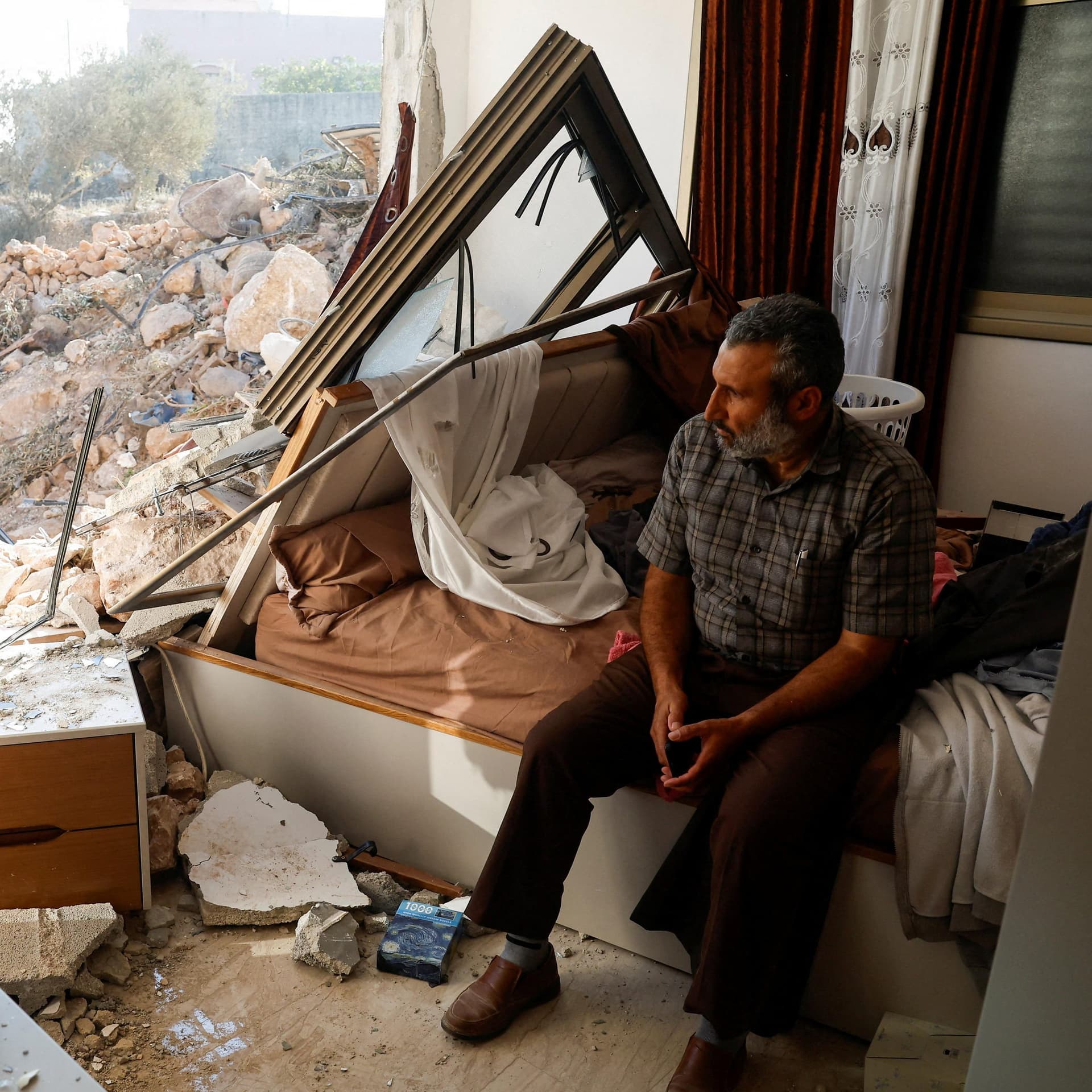
Photo: A man looks on at the damage as Palestinians inspect the site of a demolished house after an Israeli army raid, in the village of Aqraba near Nablus, in the Israeli-occupied West Bank, September 8, 2026. Credit: Mohammed Torokman/Reuters.