
In short
Explains why Tony Blair was named in Donald Trump’s Gaza “20-point” peace framework, including the proposed “Board of Peace” overseeing a future governance structure for Gaza after war.
Guest backgrounds
James Landale, BBC diplomatic correspondent; reported on Blair for decades and traveled with him to Iraq while Blair was prime minister.
Key claims
Trump’s plan is a framework, not a detailed timetable (no maps, precise sequencing). Blair would sit on an international oversight board chaired by Trump, with Blair chosen for his dealmaking network and past mediation roles. Blair is described as a “persuasion” specialist and a former Quartet envoy (US/EU/UN/Russia) focused on Middle East issues.
Notable examples
Blair’s role in the Good Friday Agreement; his Iraq-era reputation (Iraq invasion, WMD claims, post-invasion governance failures); criticism that Palestinians may distrust him as too close to US/Israel.
Written by AI. May contain mistakes. Listen to the episode to check what was said.
Chapters
Tap a time to open that second in VOTrump's Peace Plan Overview
0:30 to 0:45
An overview of Trump's announcement regarding the Gaza peace plan.
“Because Schwab knows that when it comes to your finances, choice matters.”
Trump's Peace Plan Overview
0:48 to 2:19
An overview of Trump's announcement regarding the Gaza peace plan.
“So this is a big, big day, a beautiful day, potentially one of the great days ever in civilization.”
Interview with James Landale
2:19 to 3:06
Diplomatic correspondent James Landale discusses Tony Blair's involvement.
“And today on The Global Story, how did the former British Prime Minister Tony Blair become such a central figure in Donald Trump's latest plan to end the war in Gaza?”
Details of the 20-Point Plan
3:06 to 6:10
Analysis of the specifics and implications of Trump's 20-point peace plan.
“On Monday at the White House, President Trump stood alongside the Israeli prime minister and he announced this 20-point plan for Gaza.”
Tony Blair's Role and Reputation
6:10 to 10:29
Exploration of Tony Blair's controversial role and public perception after his premiership.
“The chair will be the president himself.”
Blair's Post-Premiership Activities
10:29 to 14:03
Discussion on what Tony Blair has been doing since leaving office and his involvement in the Middle East.
“Seems, yes, Republican or Democrat, right?”
Understanding Marmite and Tony Blair
14:03 to 14:38
Explore the analogy of Tony Blair as a 'Marmite' character in politics.
“There's a spread that goes on toast in the UK called Marmite.”
Tony Blair's Role in Gaza's Future
14:38 to 16:42
Discuss Tony Blair's involvement in planning Gaza's post-conflict governance.
“Coming up, why is Tony Blair involved in the day-after plans for Gaza?”
Pop Psychology and Tony Blair
16:42 to 18:59
Investigate Tony Blair's motivations and psychological factors relating to his role.
“And if you remember, even when he was in office, he was heavily involved in supporting President Clinton's attempts to try and find peace with the Palestinian issue and the Oslo Accords and all of that.”
Trust and Diplomacy: Blair's Unique Position
18:59 to 20:38
Analyze why Tony Blair might be trusted by Trump and the implications.
“Now, I have no evidence for that, but people talk about it.”
Show all 13 chapters
Global Reactions to Blair's Potential Role
20:38 to 22:46
Examine the varying global perceptions of Tony Blair's potential involvement in Gaza.
“I'm still a little perplexed, though, as to why Trump would choose him, given where the Republican Party in the U.S.”
Obstacles to Peace: Framework and Gaps
22:46 to 24:48
Identify the challenges and gaps in the proposed peace plan for Gaza.
“I mean, to that point, James, I do think that Blair's role in all of this is wildly fascinating.”
Strategic Ambiguity in Peace Negotiations
24:48 to 26:39
Learn about the concept of strategic ambiguity in diplomacy and its relevance to Gaza.
“What that means is being deliberately obtuse and vague about what you mean about something.”
Transcript
Automatic transcript. May contain errors.0:00This BBC podcast is supported by ads outside the UK.
0:30Schwab offers. Because Schwab knows that when it comes to your finances, choice matters. No matter your goals, investing style, life stage or experience, Schwab has everything you need, all in one place, so you can invest your way. Visit schwab.com to learn more.
0:51So this is a big, big day, a beautiful day, potentially one of the great days ever in civilization. On Monday, President Trump stood next to the Israeli Prime Minister Benjamin Netanyahu at the White House and unveiled his new peace plan to end the war in Gaza. If you heard our show yesterday, we brought you the big headlines from that announcement. But there's something we haven't talked about yet. This plan is not just a proposal to end the war. It's a plan for what Donald Trump envisions could come next. To ensure the success of this effort, my plan calls for the creation of a new international oversight body, the Board of Peace, we call it.
1:35The Board of Peace, sort of a beautiful name, the board. This Board of Peace is a hypothetical international committee that would govern Gaza in the future, chaired by Donald Trump himself. Trump didn't mention all the other members, but he specifically singled out one person by name. We'll have a board, and one of the people that wants to be on the board is the UK former prime minister, Tony Blair. Good man, very good man. Sir Tony Blair. He's a politician familiar, some would even say infamous, to Brits, Americans, and Arabs across the Middle East. Trump clearly trusts him. Others, not so much.
2:17From the BBC, I'm Asma Khaled. And today on The Global Story, how did the former British Prime Minister Tony Blair become such a central figure in Donald Trump's latest plan to end the war in Gaza?
2:45Well, James, thanks so much for coming on the show. It's great to have you. It's great to be here. In order to find out more about what Tony Blair has been up to since he left 10 Downing Street, I've called up our diplomatic correspondent, James Landale. He's reported on Blair for decades and even traveled to Iraq with Blair when he was the prime minister. On Monday at the White House, President Trump stood alongside the Israeli prime minister and he announced this 20-point plan for Gaza. Can you broadly outline what is in this proposal? Well, it was an unusual press conference in as much that you simply had the two principles giving long statements.
3:26There was no repartee or questioning from the press, which is always interesting. If Team Trump want to control things a little bit more than they normally do and they want to avoid any questions, they just stick to statements. That was the first thing to note. In terms of the actual detail, essentially what the president did is he set out his 20-point plan that involved the release of hostages dead and alive, the release of hundreds of Palestinian prisoners, the process of some form of withdrawal of IDF forces from Gaza, the disarmament of Hamas military forces, and, you know, the massive influx of aid and the creation of a new governance structure that would potentially temporarily run Gaza before some kind of Palestinian rule will be established at some stage in the future.
4:20And this was all set out in what I call relatively modest detail. It was sort of, you know, a few pieces of paper. Normally, peace plans involve detailed structures that are negotiated over weeks when you're talking about what will happen when. There'll be precise timings, timetables, maps showing which forces will be withdrawing where, which arms will be handed over at what time, how many hostages will be removed from which location. It had none of that. So in other words, it was more of a framework than a detailed plan. One tiny detail in his remarks caught my ear, and that was a name check of the former British Prime Minister, Tony Blair.
5:03What is Tony Blair's role supposed to be in this all? I think to many of us here in the United States, We were sort of confused. We've heard his name referenced at various moments with the Trump administration's proposals to try to bring about peace in Gaza. But it was a bewildering kind of moment to me. Tony Blair has been talking to the White House and the Trump administration for some time about proposals for some kind of peaceful resolution to the war in Gaza. We know that there was a big meeting in August in the White House attended by the president that former Prime Minister Blair was at, you know, with the key advisers, you know, Wyckoff, Rubio, Derma, all of that in a crowd.
5:45What he said was that Tony Blair would be on this new, what they're calling a board for peace. In other words, this overarching body that is going to give a supervisory oversight role to a specific executive committee that will be doing the day-to-day running of Gaza, you know, schools, hospitals, welfare, policing, all of that, Tony Blair will be one member of that board. The chair will be the president himself. Can you take us back to the days when Tony Blair was the prime minister in the UK? I was certainly surprised to hear Tony Blair's name mentioned as the man who, in Donald Trump's thinking, might help bring peace to the Middle East.
6:27And the reason I say that, James, is I think I, like many, many Americans, think of Tony Blair as the man who stood alongside George W. Bush during the invasion of Iraq in the early 2000s. On Tuesday night, I gave the order for British forces to take part in military action in Iraq. He was seen as George W. Bush's best friend during those days, I remember. You know, when the rest of the world, it seemed, was so critical of the United States, Blair was right there beside him. Some say if we act, we become a target. The truth is, all nations are targets. America didn't attack al-Qaeda. They attacked America.
7:05Britain has never been a nation to hide at the back. But even if we were, it wouldn't avail us. The image of Tony Blair that you just portrayed is absolutely there. And it is there deep within the culture of a lot of Arab countries and other parts of the world. But also, in some minds, if you go back to those days of Tony Blair, Tony Blair always saw himself as a, I kid you not, you know, in the context of Iraq, but around all of that process, as a peacemaker because of what he did in Northern Ireland. The Northern Ireland peace talks have ended with an historic agreement. The prime ministers of Britain and Ireland sealed with a handshake, an achievement that eluded all their predecessors.
7:47His government was basically the final sort of end point in quite a long set of negotiations that have been going on with the various warring parties in the Northern Ireland conflict, the Troubles as they were known. And his government did a huge amount to end up negotiating what became known as the Good Friday Agreement, which essentially brought a degree of political stability to Northern Ireland and reduced the violence substantially. It didn't resolve every division and every point of difference between both sides, but it was a hugely successful arrangement and a deal that Tony Blair devoted a huge amount of time to.
8:29I said when I arrived here on Wednesday night that I felt the hand of history upon us. Today I hope that the burden of history can at long last start to be lifted from our shoulders. That's one point, is that Blair is seen by some, and he sees himself as somebody who can do peace deals. This agreement is good for the people of Ireland, North and South. It was made possible by the leadership, the commitment, and in these last few days, the personal negotiating skill of Prime Minister Tony Blair and the Taoiseach Bertie Ahern. And that is something that he has, since he left office, tried to replicate.
9:16So in his post office years, he has not only been involved in various as a sort of private citizen, chairing an institute, involved in negotiating various on behalf of various governments or trying to mediate between various governments. He was also crucially that literally on the same day he stood down in 2007, literally the same day, he was appointed by George Bush and others to be a special envoy to the Middle East on behalf of something that was then called the Quartet, which was obviously four groups. It represented the US, the EU, the UN and Russia. And Tony Blair was their envoy. And he was their envoy for the next, I suppose, eight or so years until 2015.
10:06heavily involved in the Palestinian issue. And so I think those are probably the reasons why Donald Trump was ready to engage with him, because he has a track record. He knows people. He has a network. And also because Tony Blair being Tony Blair has kept on good terms, you know, with all US governments since his time in office. Seems, yes, Republican or Democrat, right? I mean, you mentioned the quartet. That was during some of the Obama administration. days. You know, James, you mentioned he has a long track record. How do folks grade him? I think in the UK, if you were to walk down the street and ask somebody, you know, what do they think of Tony Blair?
10:46You know, you'd obviously get mixed opinions. There'll be some who would talk about Iraq, and they'll be very critical of that. There are some people who you just mentioned his name, and they accuse him of being a war criminal. And they just say that, you know, there was a strategic error. And so there's so many problems in the Middle East as a result of that. As a result of the Iraq war invasion, you're saying? As a result of the Iraq war. I see. And they blame Tony Blair for that? Well, they blame Tony Blair for that because he, you know, went in with George Bush and the Americans wholeheartedly.
11:15And the problem was that the threat from weapons of mass destruction, as those called, turned out to be not there. I did not mislead this country. I made the decision in good faith on the information I had at the time and I believe that it is better that we took that decision. I acknowledge the mistakes and accept responsibility for them. What I cannot do and will not do is say I believe we took the wrong decision. And also there was this strong accusation of just simply lacking the planning of what on earth was going to happen afterwards and basically just removing all the key organs of state that had held the Iraqi country together, particularly the army.
12:01The disbanding of all of that meant the country just fell apart and civil war ensued.
12:0933 were killed here by Sunni militants targeting the Shiite crowd. The attacks come in the midst of a deep political crisis, a government crippled by factional divisions and parliament unable to meet. Iraq is a complex catastrophe, and the idea that there will be one outright winner who can control the whole country is a fallacy. And so a lot of people blame Taylor Blair for that. So that's sort of one strand of the Blair reputation. The other strand, his crucial political skill, and this is the key point about Blair, is he is willing to make an argument and he is willing to bring people together.
12:44An awful lot of politicians these days try to respond to what focus groups say. Tony Blair was prepared to be unpopular and to make an argument and try to win it. Can you give us a better sense of what Tony Blair has been doing in the years since he left the prime minister's job? You mentioned his UN envoy role in the Middle East, but what else has he been up to? Well, he set up an institute, the Tony Blair Institute for Global Change, that is quite a substantial organization. It employs a fair number of people. It does an awful lot of policy work. Some of that work has been focused very much in the Middle East.
13:23He's got a lot of good contacts in the Gulf. At various stages, there have been sort of more private business dealings involving various countries, Saudis and others in the Gulf, that has led some people to say, look, is there a potential conflict of interest here? Tony Blair, he's been criticized, for example, for advocating for governments that some people would disapprove of because of where they stand on certain positions. Human rights issues, you're saying of some sort. Human rights issues and things like that. So I think that Tony Blair is still a, you know, for some people, he's still a critical figure.
13:56He's a lightning rod. There's still a sort of psychodrama around him. There's a spread that goes on toast in the UK called Marmite. Oh, I've heard of this. Yeah. It's made from a sort of vegetable extract. And it's quite a strong thing. And you either like it or you don't like it. You say Tony Blair is Marmite. Yeah, so people will say there are Marmite characters. And when they say there's a Marmite character, that means there are people who say, you know, this is a guy I don't like or this is a guy I do like. And I think he's somebody like that. He provokes strong opinions. I see.
14:38Coming up, why is Tony Blair involved in the day-after plans for Gaza?
14:52So it sounds like Tony Blair has been heavily involved in the Middle East, you say, in the years since he left his job as the British Prime Minister. Has he been more involved even in these issues after October 7th? I think since October the 7th, Tony Blair's name has popped up again and again, associated and attached to various different ideas that have been put forward for what's called the day after in Gaza. In other words, what could be done if and when the fighting were to stop. But with all of many of these ideas, Tony Blair's name was attached to them. Quite often, it was indirectly, it was not public, it was just sort of, you know, his name would pop up as somebody who's been working through some ideas.
15:38Specifically, his name was attached to Jared Kushner, the president's son-in-law, who was also looking at some of these ideas. And the trouble with all of this is that a lot of these ideas fell by the wayside because at the time, nobody could see a way through to reaching any kind of a ceasefire. But throughout that period, clearly, Tony Blair, both on an individual level and also, you know, some of the work of his institute, has been focused on how do you govern, secure, and reconstruct Gaza after any kind of war? Who should be involved? How do you give any kind of governance legitimacy? Where's the money going to come from?
16:22How do you ensure that Israelis feel secure, but at the same time, Palestinians feel they're not having to live with the sword of Damocles of another Israeli invasion hanging over their heads? All of those issues, which to this day remain unresolved, Tony Blair, I think, has been focused on for a long time. And if you remember, even when he was in office, he was heavily involved in supporting President Clinton's attempts to try and find peace with the Palestinian issue and the Oslo Accords and all of that. He was thinking of the 90s, yeah. Yeah. So this is something that he's been engaged with for a long time.
16:58Why would Tony Blair want to be involved in this moment? I understand what you're saying, that he's been involved in these issues for some time. He's also a man into his 70s now. And, you know, we were talking about his involvement in the Iraq War. And James, from this side of the Atlantic, I will say there is no world in which I think any American would see someone like George W. Bush taking on a job to sort of try to rebuild Gaza. And there's no world in which the current Republican Party would trust someone like George W. Bush, who was known for his interventionism and nation building. So why does Tony Blair want to be involved in this?
17:35And then I have a follow-up question, which is why Trump would trust him. Okay, first question. You know, we're into the realms of pop psychology, and I can't get myself into Tony Blair's head until I can get an interview with him, which thus far he's saying no. But look, let me tell you this. Having spent many years of my life watching Tony Blair, he is fascinated by persuasion, by how do you get somebody to do something that they might be reluctant initially to do. This is something that clearly stimulates him, interests him. Let me give you an anecdote. For instance, at one stage when I was a political reporter, I took some time out and took part in a round-the-world sailing race.
18:19And I was on a bus with the then Prime Minister on some political thing. We were talking about it. And what was interesting was that Tony Blair was less interested in the race. He was interested most in how I had persuaded my employers to let me do this, to take the time off. I mean, that's a good question, James. I will say that's a very good question. So I think Tony Blair is interested in persuasion, in convincing people. That's point one. I see. Second point in terms of pop psychology, you get into the whole space of is this unfinished business? Is this him trying to correct the dial slightly?
18:59after 2003 in Iraq. Now, I have no evidence for that, but people talk about it. People suggest it might be a motivation, that this is tying up some loose ends, some unfinished business. To me, that seems slightly simplistic, but some people do sort of mention it. Look, I think the other reason this begins to get to your second question is, is there any other ex-head of government in the world who potentially could play this role? that Tony Blair may play, namely somebody who could have a role as an interlocutor. I can't think of any other former Western leader who has the trust of the White House, who is trusted by the Gulf, and has a relationship with the Palestinians.
19:50I think there's still a question as to how much he's trusted by the Palestinians. There are some analysts who told me very explicitly they think the Palestinians won't trust him because they think that his time at the Quartet, he didn't do enough to help them, that he didn't do enough to push for the beefing up of the Palestinian state institutions so that it potentially could become better ready for becoming a Palestinian state sometime in the future. So he's by no means a perfect candidate for a job like this, but he ticks an awful lot of boxes. And I think that is probably what lends himself to Team Trump.
20:29So it sounds like you're saying there really isn't another former head of state who has the relationships and the network that Tony Blair has. I'm still a little perplexed, though, as to why Trump would choose him, given where the Republican Party in the U.S. is at this moment, that they were so suspect of the Iraq war. The current Republican Party is so suspect of someone like George W. Bush. I wonder what you think it tells us that Trump is putting forward Tony Blair in particular. And does it suggest something about American diplomacy? That's a really good question. President Trump is probably not thinking about the Iraq war.
21:14I think President Trump is just seeing Tony Blair as a dealmaker, somebody who can get this over the line. And to that extent, if he believes that Tony Blair could be somebody to help make this deal happen and to give it some sort of leg so it can sustain itself, if and when, if this happens, because again, you know, we're still a long way from this deal being agreed. I think that's the perspective that Trump has given to this. You're a diplomatic correspondent. Um, what sort of global reaction have you been hearing to any possible Tony Blair involvement? Well, largely externally in the West, there's a sort of, okay, that sort of makes sense sort of reaction.
21:58Some Palestinians have been pretty critical, uh, saying that they, they see him as someone who's always lent in their minds too closely to the Americans and, uh, to the Israelis. There's been quite a large Iraq focus in terms of, is he really the guy to do this? The thing about Iraq is it's not just a question of, was the invasion right or wrong, and Tony Blair's responsibility for that. There's also the question of the governance of Iraq after the invasion, and the poor quality of that governance. So people have been using phrases, you know, do they really want Blair as a sort of consul or viceroy governing Gaza?
22:37And I think they will want to avoid that. And I think Tony Blair would want to avoid that sort of moniker. But the thing is, you know, we're still a long way from this becoming reality. I mean, to that point, James, I do think that Blair's role in all of this is wildly fascinating. But it feels far-fetched also, I think, at this point. In major part because we don't even know what is the likelihood of this plan becoming a reality. And so I want to ask you about that. What do you see as the biggest unknowns or obstacles for the plan itself? I think the biggest problem is that the plan is just a framework, as I said.
23:15It's a structure. It's not detailed. So there's a problem with the posh phrase, a lacuna. The lacuna, the gaps are a problem because there's spaces there where people can disagree. Secondly, there are also fundamentals in there that I think both sides could get concerned about. So a member of the Israeli far right, membership of the Israeli government, might well object to the plan's at least conceptualization of there being a separate Palestinian state. You know, Hamas, they clearly have problems with the lack of time frame for the IDF withdrawal. They're clearly concerned about the fact that they are expected to disarm very early on in this process and hand over all the hostage so that effectively Hamas become defenseless if the Israelis were to claim that the deal had been breached and recommenced military forces.
24:14The deal also does not conceive of Gaza and the West Bank being united into one political entity. So if you are a supporter of a Palestinian state, that could be a problem for you. So there are lots of things that are not agreed and the potential of a dispute. Now, in any peace negotiation, you always need to leave room for maneuver. So you need to have a phrase that Tony Blair used to like called strategic ambiguity, which was something that was used a great deal to get peace in Northern Ireland. So in any deal... Strategic ambiguity. Strategic ambiguity. What exactly does that mean? What that means is being deliberately obtuse and vague about what you mean about something.
25:00So being deliberately unclear about when some weapons should be handed over, when a troop should withdraw to a certain place, when a new political institution should be set up. So it allows both sides to claim something different when they both know they're doing that, but it keeps their supporters happy because they can claim two contrary things at the same time. You know, it's a tool of peacemaking, of diplomacy, of allowing a certain sort of sleight of hand to get to the next stage. So to that extent, having some gaps in a deal is fine if it gives you strategic ambiguity. I think here, though, these gaps are pretty fundamental and there's some pretty strong divisions here that I think could make it hard to get this deal over the line.
25:49So, James, it sounds like you're saying this war could just keep continuing on and it is nearly now almost two years old. Yes, no, I am saying that that is definitely a possibility if this peace deal does not agree because there are still so many questions outstanding. Do I think that both sides have reached a point where they both believe that continuing the fight is no longer in their interest? And that's the question I ask of every war in every point when we get to a ceasefire. And to my mind, having listened to both sides, I'm not yet sure if either side has reached that point where they think that continuing the fight is not worthwhile.
Read the full transcript
26:39Thank you so much. We really appreciate you bringing all your reporting and expertise to us. Thank you so much. It was great to be here. It was a fascinating conversation. That was James Landell, the diplomatic correspondent for the BBC. This episode was made by Sam Chantarasek, Viv Jones, and China Collins. It was engineered by Travis Evans. I'm Asma Khalid, and that's it for today's episode of The Global Story. Thank you, as always, for listening, and we'll talk to you again tomorrow.
From the publisher
On Monday, President Trump outlined his proposal for a peace deal in Gaza, a moment he described as ‘potentially one of the great days ever in civilisation’. In a press conference announcing the plan, the President name-dropped Sir Tony Blair and said the former UK Prime Minister would have a key role in the governance of post-war Gaza. Blair has been part of high-level talks with the US and other parties about ending the conflict. To many in the Middle East he remains a divisive figure who is remembered primarily for his role in the US-led invasion of Iraq. So how did Blair become a central figure in this latest plan to end the war in Gaza, and what does this tell us about diplomacy under Trump 2.0? Asma Khalid speaks to the BBC’s diplomatic correspondent James Landale, who charts the story of Blair’s involvement in the Middle East and his warm relationship with President Trump.
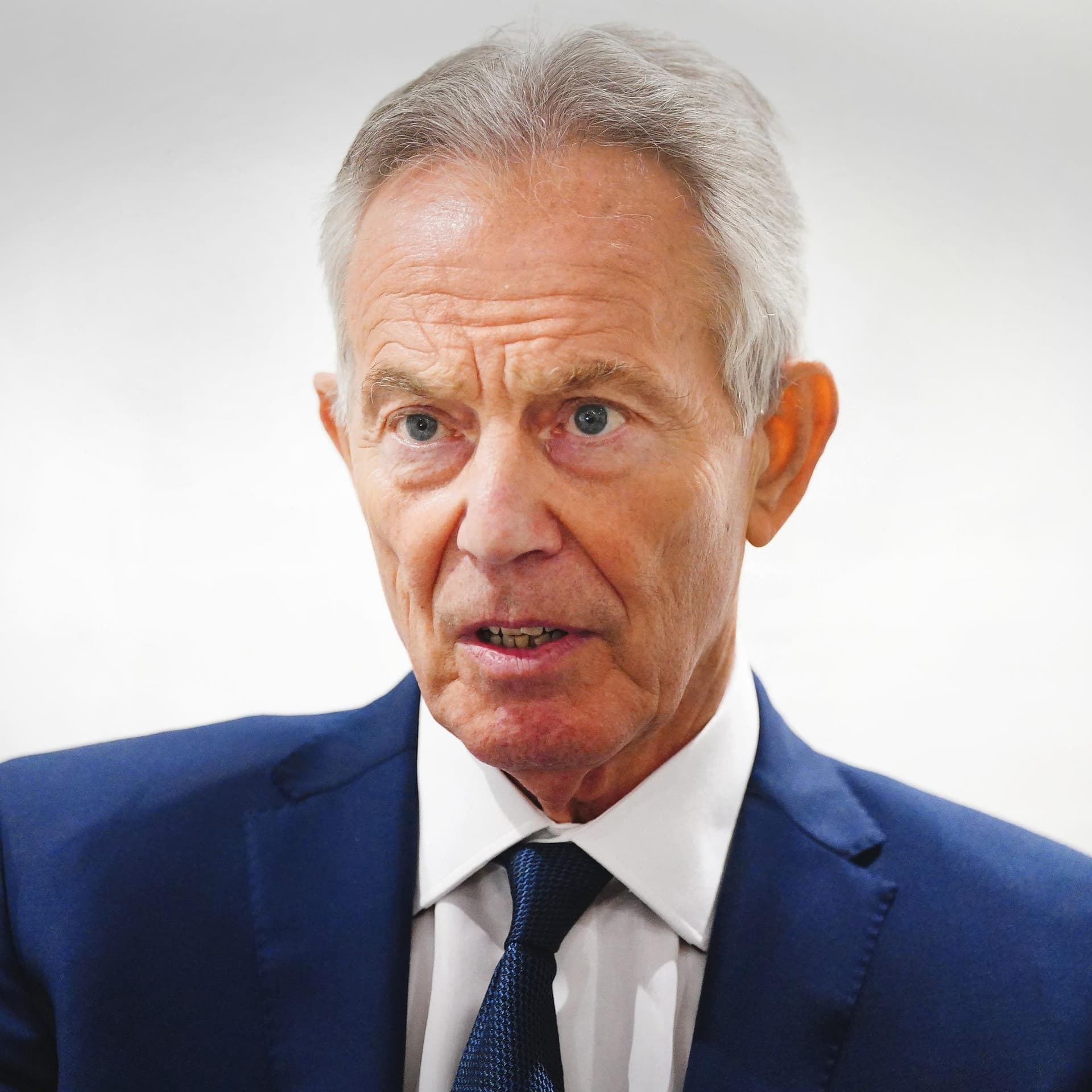
Producers: Sam Chantarasak, Viv Jones Senior news editor: China Collins Mix: Travis Evans Picture: Former Prime Minister Sir Tony Blair. Credit: Victoria Jones/PA Wire