In short
France’s political turmoil after the government fell, and why Marine Le Pen’s National Rally could soon control parliament and potentially win the presidency by 2027, reshaping EU policy.
Guests
Asma Khalid (BBC host/interviewer) and Tristan Redman (BBC political journalist; covered French politics; lived most of his life in France).
Key claims
Macron has lost multiple prime ministers; parliament is fractured; new elections could yield a far-right-controlled parliament. National Rally’s rise is driven by “de-diabollisation,” a shift to a socialist-leaning welfare agenda plus hardline social/immigration stances, and economic anxiety (inflation, squeezed salaries). A major obstacle is Le Pen’s recent corruption conviction (potentially barring her for five years), but the party’s plan B is Jordan Bardella.
Notable examples
2002 shock when Jean-Marie Le Pen reached the presidential runoff; 2014 repudiation of anti-Semitism and 2015 expulsion of her father; 2017 debate where Macron outperformed; October 7 Israel attacks prompting a pro-Israel repositioning; Bardella pulling out of CPAC after a Nazi-salute controversy.
Written by AI. May contain mistakes. Listen to the episode to check what was said.
Chapters
Tap a time to open that second in VOUnderstanding the Current Political Crisis
2:47 to 3:00
Discussion on the fall of the French government and its implications.
“And today on The Global Story, why the far right in France could be on the brink of power.”
The Rise of Marine Le Pen and the Far Right
3:01 to 4:54
Exploration of Marine Le Pen's increasing influence in French politics.
“Well, OK, let me just give you a really quick primer on French politics.”
Historical Context of the National Rally
4:55 to 8:35
A deep dive into the origins of the National Rally and its founder.
“so he may be in a position where he might have to call new elections.”
Marine Le Pen's Transformation of the Party
8:36 to 12:13
How Marine Le Pen reshaped the party to appeal to voters.
“I am the only candidate who is in order to be on the second round.”
Radical Views and Political Proposals
12:14 to 13:21
Discussion on the far-right's controversial proposals in France.
“And I use that term kind of loosely because I don't even know that it always means the same thing around the globe.”
The 2017 Presidential Election Face-off
13:22 to 14:02
Recap of the pivotal debate between Marine Le Pen and Emmanuel Macron.
“So, Tristan, you mentioned that in 2015, Marine Le Pen kicks her dad out of the political party.”
Marine Le Pen's 2017 Debate Performance
14:02 to 15:45
Explore the intense political debate between Marine Le Pen and Emmanuel Macron in 2017.
“She has this like massive thick folder of notes and she faces off against Macron.”
Le Pen's Political Comeback
15:45 to 17:04
Understand how Marine Le Pen shifted her political prospects after a major loss.
“He's seen by many as arrogant, aloof, a kind of elitist who's detached from reality, doesn't really care about people.”
Growing Support for National Rally
17:04 to 19:05
Learn about the demographic changes contributing to the National Rally's support.
“Okay, so you say she has become the leader of the party.”
Challenges Facing Marine Le Pen
19:05 to 20:18
Discuss the legal challenges that could impact Le Pen's political future.
“So you've been discussing how the national rally has been gaining a whole lot of momentum over the last several years.”
Show all 15 chapters
Jordan Bardella: The Rising Star
20:18 to 23:09
Examine the emergence of Jordan Bardella as a key figure in the National Rally.
“But the thing is, the National Rally Party have got a plan B.”
The National Rally's Shift in Image
23:09 to 24:18
Analyze how the National Rally is attempting to rebrand itself post-anti-Semitism.
“I'd say the Jewish community in France is divided.”
Implications of a Far-Right Government
24:18 to 26:05
Explore the potential consequences of a National Rally government on France and Europe.
“And if that happens, what does that mean beyond the borders of France?”
US Relations with a Far-Right France
26:05 to 27:25
Discuss how a far-right French government could redefine US-France relations.
“So looking beyond Europe, France and the United States have been close allies for years and years and years and years.”
US Relations with a Far-Right France
28:02 to 28:12
Discuss how a far-right French government could redefine US-France relations.
“No matter your goals, investing style, life stage or experience, Schwab has everything you need, all in one place, so you can invest your way.”
Transcript
Automatic transcript. May contain errors.0:00This BBC podcast is supported by ads outside the UK.
0:30No bouncing between tabs. And best of all, no spreadsheets. Stop managing software and start managing your business with one unified system. Try for free today at odoo.com. That's O-D-O-O dot com. Decisions made in Washington can affect your portfolio every day. But what policy changes should investors be watching? Washington Wise is an original podcast from Charles Schwab that unpacks the stories making news in Washington right now. and how they may affect your finances and portfolio. Listen at schwab.com slash Washington Wise. That's schwab.com slash Washington Wise. Tristan, one thing I would say a lot of folks might not know about you is that since you've got this quite posh British accent...
1:20If you say so. There it is. Despite that, you have in fact not actually lived most of your life in the United Kingdom. No, I've lived most of my life in France. And you spent years covering French politics. And I actually wanted to switch up the format on our show a bit today and interview you, because you know a whole bunch about French politics. And France is going through a major moment of political turmoil. You're right. Yes. France is going through a huge moment of turmoil right now. The government's fallen. We've had huge demonstrations. The French president, Emmanuel Macron, he's lost his fourth prime minister in two years.
1:54And it's starting to look like the end of the Macron era and the beginning of a very different one. It's a big moment for the far right. It's a big moment for the far right leader Marine Le Pen. Her party could be on the cusp of power, if not in the next few months, probably by 2027. Certainly, Marine Le Pen right now smells blood.
2:24And it was just yesterday that she was firing up the crowds at a rally in Western France in Bordeaux.
2:32And all of this could be a big change, not just for France, but also for the whole of Europe.
2:43From the BBC, I'm Asma Khalid. And I'm Tristan Redman. And today on The Global Story, why the far right in France could be on the brink of power.
2:58So what exactly happened? So the government fell. What does that mean? Well, OK, let me just give you a really quick primer on French politics. OK. So the way you need to think about French politics is a bit like if you're comparing to the United States, the French president is very powerful, like the U.S. president is. The president has executive power. They're in charge of foreign policy, military matters, and they really push the government agenda most of the time. Now, underneath the president, you have a government that's led by a prime minister. The best comparison is to think of the prime minister in American terms is a bit like the speaker of the House.
3:42So they kind of lead the business of government in parliament, the equivalent to Congress. the prime minister is appointed by the president essentially just to manage the day-to-day workings of government. And so what we have seen is the prime minister, François Bayrou, be toppled by a vote of confidence in parliament.
4:04The prime minister must now tender his resignation.
4:14Now in breaking news this hour, Emmanuel Macron has just appointed Sébastien Le Corneau as the new French Prime Minister.
4:25That's the sound of anti-government protests in France today taking place under the banner of... ...is fractured with the far right demanding fresh elections and the far left going even further and calling for Macron himself to resign.
4:43Macron has appointed a new Prime Minister but it's going to be hard for that new prime minister to get enough support in parliament to be able to assemble a coherent and cohesive government. Macron doesn't have a lot of options left, so he may be in a position where he might have to call new elections. Now, we don't know exactly what would happen next, but the most likely outcome for me is that we would end up with a far-right controlled parliament. Not very long ago, it would have been unthinkable for the far right in France to be at the gates of power. I mean, it would be cataclysmic in French politics and in European politics, because France is one of the key members of the European Union.
5:24And along with Germany, it's the driving force of the EU. You seem fairly convinced that the far right party is about to take control in France. Why is that? The far right party of Marine Le Pen in France has been on the rise now for a considerable amount of time. and they are now the preeminent force in French politics. They are the favorites to win the Elysee Palace in 2027 and take over the presidency of the country when Emmanuel Macron has to step down at the end of his second term because he's limited to two terms. So I think it's important to understand the origin of this party, the national rally, because a lot of people, I would say, know about Marine Le Pen, but where does the party come from?
6:13Okay, so the National Rally Party or the National Front, and that's what they were historically founded as, was founded by Marine Le Pen's father, who's a guy called Jean-Marie Le Pen. He died earlier this year, but he's an old school French political operator. He first became an MP just after the Second World War. And his origin story is that he comes from a modest family of fishermen in Brittany in the northwest of France. And he has this kind of popular story of being a good old boy from the provinces who was going to go to Paris and shake things up. He became more prominent as the decades went past until the early 70s when he founded with a group of other far-right activists.
6:57He founded the party which exists today. Then it was known as the National Front. Now, the people he founded the party with had links to some of the more complex parts of France's recent history, shall we say? What do you mean? Well, there were people who were linked to collaborationist elements in the Second World War, people who had links to the Nazis. There were people who had links to France's colonial wars. Jean-Marie Le Pen himself fought in the French colony of Algeria. And that really kind of forged the identity of the National Front from its earliest days as a party that was interested in three things.
7:41One was saying that France shouldn't be ashamed of its collaborationist past. The same could be said of France's colonial wars and colonial occupations. We did what we had to do and the past is the past. We can't apologize for it. But the third string to the bow of this National Front Party was its connections to anti-Semitism. There are very prominent examples of prominent people in the party, including Jean-Marie Le Pen, making anti-Semitic comments. I just said that the gas chambers were a detail of Second World War history, which is clear. Jean-Marie Le Pen has a conviction, a criminal conviction, for making anti-Semitic Holocaust denial remarks.
8:31So those are the roots of the party. And many French people found those roots extremely troubling through the early years of the party. I am the only candidate who is in order to be on the second round. In 2002, Jean-Marie Le Pen got through to the second round runoff of the French presidential election. And the country was hugely shocked. There were demonstrations, there were hundreds of thousands of people in the street. But that was a kind of real wake-up call for French people, that the far right were on the rise, and that process of rise has continued since then. So that's the origin of the party, how it was founded.
9:15I think so many of us associate the party, though, as being Marine Le Pen's party. So explain to me how she took over the party and has the party evolved and morphed? Presumably it has to reach the point where it is today. Sure. So in 2007, Jean-Marie Le Pen ran for president again and was roundly beaten. And at that point, it seemed to appear that he needed to hand over the reins to a new generation. So in 2011, there's an election to decide the successor of Jean-Marie Le Pen. and, you know, whoop-de-doo, look at that. His daughter just happened to be selected. Yes, okay. Because, I mean, one thing I should say about the party is it is a family business.
9:58It's a political dynasty, a bit like the Kennedys in the United States or the Trumps in the modern day. Now, she at that moment is seen to be the kind of modern, promising, bright new face of far-right politics in France and that she is the woman who's going to normalise the party essentially to make it electable. And so she begins a process, which in France is known as dédiabolisation, which means an undeviling of the party. That essentially the party was too controversial, too sullied by what had gone before it, and that she needed to distance itself from its origins and create a more modern, inclusive party that had an actual chance of winning it.
10:44So how does she do that? She has repudiated its past. So in 2014, she said, I want to reiterate that the National Front most firmly condemns every form of anti-Semitism, whatever form it takes. And so even, for example, in 2015, she threw her own father out of the party after he repeated comments about the Holocaust. That's a pretty clear condemnation. Yes. She also does some symbolic things. She changes the name of the party ultimately to National Rally because National Front was imbued with too much symbolism from the past. She changes the economic policy. Now, this is one of the most interesting things that she does because until she takes over the party, it's been a traditional kind of fiscally conservative belief in free markets, strong on capitalist values.
11:34And then where does she morph to? Well, she basically does almost like a kind of survey of the French population. She works out that if her party is going to stand any chance of winning power, she needs to give them what they want. And economically, that means a kind of socialist economic agenda. A populist. Well, a socialist economic agenda with, you know, a strong welfare state and protections if you lose your job and good health service. So what she did, she mixed a socialist economic policy with a conservative social policy, you know, suspicion about things like abortion, gay marriage. And that was the moment that her party really kind of took off.
12:12And she's been affiliated with the far right. And I use that term kind of loosely because I don't even know that it always means the same thing around the globe. No, no, you're absolutely right. And I should clarify and specify. In the case of France today, Marine Le Pen's party espouses quite radical views on the far right of the French political spectrum. So that means nationalistic ideas. The central one of these is something that's called national preference. The fact that what they call Français de souche, which is quite a controversial term, native-born French people should be entitled to things like welfare benefits, health care, over and above people who are not Français de souche, native -born, which is currently an illegal thing in France.
12:58You can't show that kind of preference, but they would like to make it part of the constitution. But there are other things. There's a very hard line that they take on immigration. Marine Le Pen's party have suggested that Muslims with so-called extremist views should be stripped of French nationality. They may even try to ban people from wearing the Muslim headscarf in all public places. Now, those are considered to be quite radical views. And that's why in France, Marine Le Pen's party would be known as far right. So, Tristan, you mentioned that in 2015, Marine Le Pen kicks her dad out of the political party.
13:33What happens then? The next phase in the story is 2017, which is when we have a presidential election. And the main forces in the presidential election are going to be her and this little-known guy who's emerged from Nowheresville, Emmanuel Macron. He was a minor minister. The two of them get through to the second round of the French election, and there is a face-off between them. They have a TV debate.
14:08Marine Le Pen comes in ultra prepared. She has this like massive thick folder of notes and she faces off against Macron. Mr Macron is the candidate of savage globalization, uberization, economic uncertainty, social brutality of every man for himself. And it was one of the most extraordinary bits of political theater that I have ever seen. And the thing I remember is her floundering around in her notes. She can't find what she needs and she totally loses the thread of what she's supposed to be doing. And Macron basically sees blood and he goes for the jugular. You have shown yet again that you're unworthy by insinuating that our magistrates, our judges are not independent.
14:58I regret it. France deserves better than you. and he just debate-wise tears her apart. Demolishes her, complete demolishes her. More neutral analysis. You can check out a poll by Ilab that was carried out immediately after the debate. Who was the most convincing? Well, according to this poll, 63 % of people thought it was Emmanuel Macron. And nobody thinks she'll ever be able to come back from that. As we know, Emmanuel Macron wins the presidency. I mean, he's seen as this kind of great savior figure of the center left. And it's thought at this point that Marine Le Pen's career is probably politically over.
15:44Coming up, how did she go from that to her party now being on the cusp of power?
15:57so it seemed like maureen le pen had a terrible debate in 2017 she lost the election how does she ultimately turn her political prospects around well two things one is that macron's popularity starts to go down quite rapidly and we've got to a stage now where there are some people in France who quite viscerally despise Emmanuel Macron. He's seen by many as arrogant, aloof, a kind of elitist who's detached from reality, doesn't really care about people. And the second is that she sticks to her guns, kind of bided her time and waited for the political weather to improve for her. And that's kind of what happened.
16:40And we got to a stage where the next election, which was a couple of years ago, she lost to Macron again, massively reduced her She improved her margin. Yeah, she improved her margin significantly. And the trend indicated that she was probably on course to win the next presidential election in 2027, which Macron cannot run in because he's limited to two terms. Okay, so you say she has become the leader of the party. The party's support has grown. Can you help me understand where its support has grown? Has she broadened demographically the support amongst the French people? Definitely, yes. There are quite a few French people of, for example, North African Arab origin who may have roots in former colonies like Tunisia or Algeria, for example, who have emigrated to France who may vote for Le Pen.
17:34That's not uncommon. I would say maybe 15 years ago that would not have been the case. But these days, it's not uncommon. And what's changed? I think two things have changed. One is that they have done a good job of convincing voters that they've cast aside their former extremism. The second thing is, is that the political context has changed. You know, their main issue is fighting against immigration. That's certainly what I know of her and her party. And you're saying that the idea of being an anti-immigrant party is no longer such a political liability anymore. Exactly. It's a genuine public concern that France is not able to integrate all of the people who want to come to France.
18:20You know, one thing you mentioned earlier is that Marine Le Pen has shifted the economic message of her party. So how does the current state of the economy in France, the way that people are feeling about their personal income, how is that all factoring in? Oh, I mean, it's hugely important. France is going through the same economic difficulties as many other European or Western countries. Inflation, the cost of living is huge. Salaries are really squeezed. People are really struggling to get by. That's an aspect that Marine Le Pen's party has really attracted voters with. They say, you know, the old economic model is broken and it's time to do something about it.
19:01It's time to shake things up. And people have really signed up for that message. So you've been discussing how the national rally has been gaining a whole lot of momentum over the last several years. What obstacles, if any, stand in her way to assuming power? Well, there's one big obstacle, and it's what Donald Trump would call lawfare. Now, she has a criminal conviction, which she got earlier this year for corruption. And she was accused of embezzling money from the European Parliament. It was quite a serious conviction. And part of the conviction was that she wouldn't be able to run for office again in France.
19:42Now, for how long? For five years, which would put her out of action for the 2027 presidential election. Now, Donald Trump has heavily criticized this. He says it's a political intervention. A witch hunt. Yes. In order to eliminate a political rival by the establishment. She says she still wants to run. She has an appeal to run through before 2027. In theory, that conviction could be overturned. But as somebody who covered the court case, I would say that the evidence is quite solid and she's going to have her work cut out trying to get it overturned.
20:24But the thing is, the National Rally Party have got a plan B. It's Jordan Bardella. And he's a pretty nailed-on choice.
20:36Because he is, according to polls, the most popular politician in France. He's the chosen successor.
20:48He may be president one day. He's very young. He's 29 years old. 29. Yeah. He's been a political activist for the party since his teenage years. He comes from a kind of unexpected background. He comes from a family with immigrant origins. He comes from a housing project. His story is that he grew up in a really rough part of France, just outside Paris, and that he saw crime all around him. He saw the negative effects of immigration and he saw ordinary French people who wanted to restore order so they could go about their jobs and bring up their families in a normal way. Now, there are a few things to know about him.
21:35One is that he's a very good looking young guy. Young people get very excited about him. He's very popular. So he's attracting younger people to the party. He's attracting younger people to the party. He's big on TikTok. He attracts huge crowds. I mean, just a few months ago, I went to a book signing. And Jordan Bardella published a book. It was a Friday evening. It was raining. But there was a line that went hundreds of meters down the block. Were they older people? They were old, they were young, and some of them who I spoke to had driven from like two hours away to come and have a book signed by Jordan Bardella.
22:15How has he embraced or distanced himself from some of the anti-Semitic origins of the party that you had referred to earlier? Well, that's a very good question, because October the 7th, the attacks in Israel have been a big turning point, because the national rally has really seized the opportunity to recast itself as a pro-Israel party. There are parts of French society that believe that the far left has a big problem with anti-Semitism. And Marine Le Pen's party has tried to double down on support for Israel in order to differentiate itself as much as possible from its rival on the far left.
22:55And Jordan Bardella has been part of that process. He made a trip to Israel. He's made a big deal of saying that the National Rally Party supports the French Jewish community, which is big. And do they really? I'd say the Jewish community in France is divided. I have met French Jews who say that they do not trust the national rally, that their memories are long and they remember the roots of the party as an anti-Semitic party. But there are plenty of French Jews who are strong supporters these days, which is something you would never have expected 10, 15 years ago. There's one other thing that Bardella did, which is that he was due to speak at CPAC in the United States.
Read the full transcript
23:40Yeah, the Conservative Political Action Conference. That's right. Earlier this year. And he pulled out after Steve Bannon, Trump's former advisor, was criticized for something that resembled a Nazi salute. And Jordan Bardella said, if that's the kind of thing that's happening at this event, I cannot be seen there. So that was very much seen as part of his effort to woo Jewish voters in France. So this all brings us back to the moment we're in now. The government of France has collapsed. It's very likely you've been saying that a new political party will come to power and it's likely that this will be the national rally.
24:18Yeah. And if that happens, what does that mean beyond the borders of France? If they do gain power, the implications for, for example, the European Union are huge. The indications are that they will want to kind of deconstruct the European Union from the inside. So they don't want France to leave the EU like Britain left. You remember Brexit. There isn't the public appetite for that. But what she does want is to change what the EU looks like. It might, for example, mean European countries getting rid of freedom of movement within the EU, bringing back strong border controls. There have been a lot of moves in recent months to maybe move towards something more like a European army.
25:05That would get scrapped. So there's a lot of uncertainty about to what extent the European Union would function in anything like the way it's functioning now. And that's a huge thing for the world economy because the EU is a massive, important bloc. Do you see what's happening in France as also having a potential domino effect with ripples all throughout Europe? If Marine Le Pen's party takes power in France, it would be a massive shot in the arm for other far-right parties that are hoping to take power in other countries. So I'm thinking particularly of AFD in Germany, which is the other major European economy.
25:46that changes the landscape in Europe completely. And what happens next? You might get a kind of cascade effect of other countries. So there is definitely a sense of a potential domino effect, yes.
26:05So looking beyond Europe, France and the United States have been close allies for years and years and years and years. What would it mean for the United States' relationship with France if France ultimately has a far-right government? Well, that is an excellent question because if you'd asked that question three or four years ago, you'd get a totally different answer to the answer now. When Joe Biden was president. Yeah. So actually now, if there were a far-right leadership in the Elysee Palace, in the French presidency, it would mean that France might actually be more aligned with the administration in Washington, D.C.
26:42So actually, you might see the United States and France get closer to each other. What would they actually share in terms of values or priorities? The worldviews. Yeah, so skepticism about international institutions, whether it's the EU or the United Nations. Skepticism about things like climate change. A strong priority on cracking down on immigration. A nationalistic agenda. And if they get into power, they will find a U.S. president who shares a lot of their values. And that hasn't been the same in the past.
27:25Feels a bit weird to say thank you to you. Thank you for having me as a guest on your show, Asma. That's it for The Global Story. We'll talk to you all again tomorrow. Salut.
27:43Self-directed investing, trading, full-service wealth management, automated investing, financial planning, thematic investing, retirement planning. Phew. And to think, that's just a small taste of what Schwab offers. Because Schwab knows that when it comes to your finances, choice matters. No matter your goals, investing style, life stage or experience, Schwab has everything you need, all in one place, so you can invest your way. Visit schwab.com to learn more.
From the publisher
France is in political turmoil. President Emmanuel Macron has just appointed his fifth prime minister in two years. But it’s unclear whether he’ll be able to form a government. There are calls for Macron's resignation amid nationwide protests and shutdowns. He is running out of options. Waiting in the wings is Marine Le Pen, whose far-right National Rally party has surged in popularity and seems poised to take power. On Sunday at a rally in Bordeaux, she repeated calls for new national elections.
So how did this party, with its controversial history, rehabilitate its image? And what would the first far-right government since World War Two mean not just for France, but for Europe and the rest of the world?
Producers: Lucy Pawle, Sam Chantarasak Executive producer: James Shield Mix: Travis Evans Senior news editor: China Collins
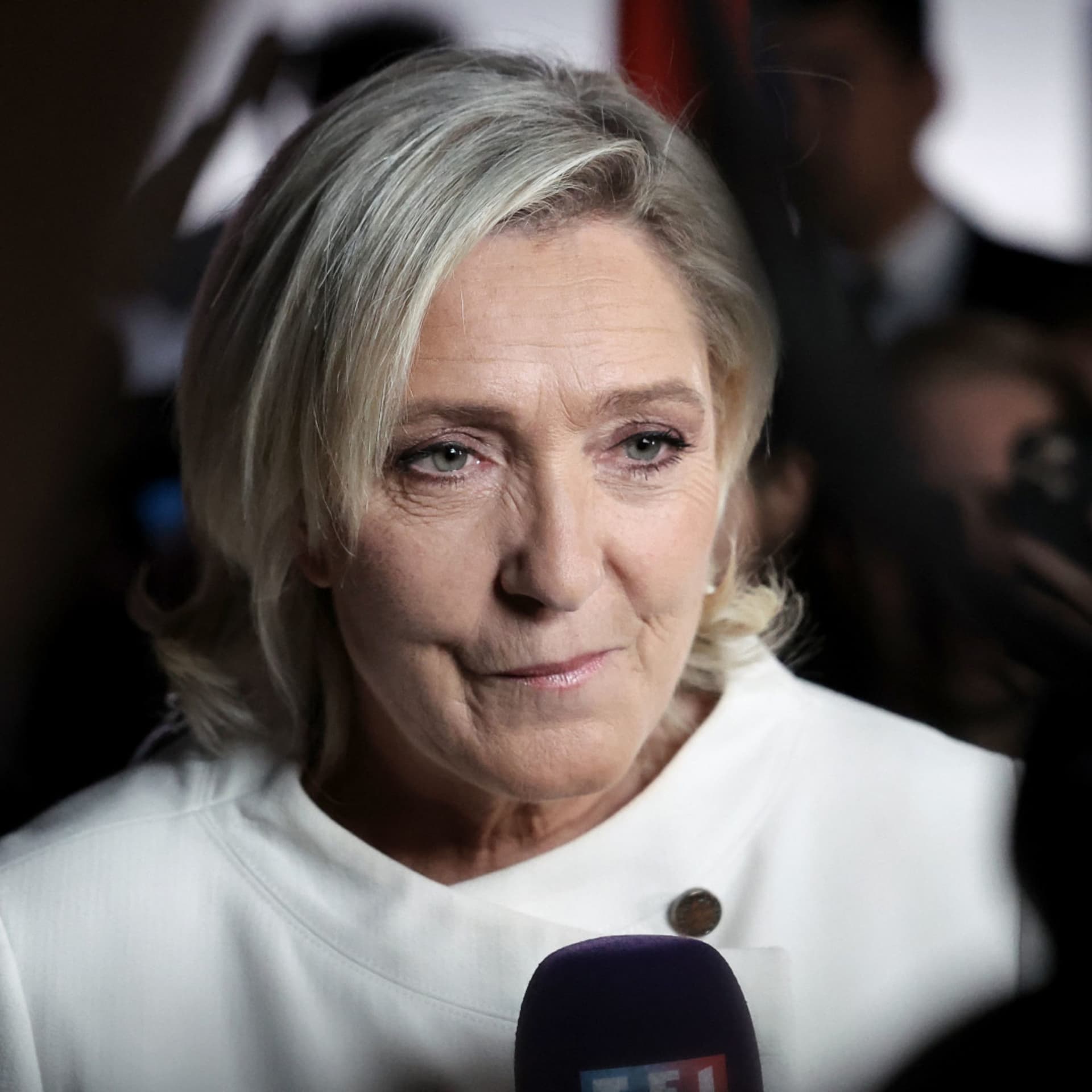
Image: Marine Le Pen. Yoan Valat/EPA/Shutterstock