In short
The BBC Global Story episode explains why the US is ending PEPFAR (President’s Emergency Plan for AIDS Relief) funding for South Africa, arguing it’s driven by US–South Africa political tensions and foreign-aid cuts, not just budget issues. It says PEPFAR began in 2003 under George W. Bush, has operated in about 50 countries, and has saved an estimated 26 million lives; South Africa has about 8 million people living with HIV (~13% of the population).
Key claims
The State Department announced a “phased drawdown” because South Africa failed to make “demonstrable progress” on policy requests; the episode links this to President Trump’s claims of a “white genocide,” which South Africa denies. It also places PEPFAR’s cut within broader Trump-era USAID foreign-aid reductions.
Notable examples
a mobile HIV clinic run by the Desmond Tutu Health Foundation in Philippi Village (Cape Flats); the “white crosses” video near Newcastle that the episode says was a short-lived memorial, not mass graves.
Guest backgrounds
Ed Habershin, BBC News senior Africa producer based in Johannesburg.
Written by AI. May contain mistakes. Listen to the episode to check what was said.
Chapters
Tap a time to open that second in VOPEPFAR's Impact in South Africa
2:51 to 4:25
Discussion on the PEPFAR program's objectives and its success in South Africa.
“ending HIV and AIDS funding to South Africa?”
Political Motivations Behind Funding Cuts
4:25 to 6:41
Analysis of the political reasons for the recent funding cuts to PEPFAR in South Africa.
“And this was an opportunity for the country, for South Africa and the U.S.”
Consequences of Funding Cuts
6:41 to 8:01
Exploration of the implications of reduced funding for HIV programs in South Africa.
“But let's talk about global health funding and PEPFOR itself.”
Local Healthcare Initiatives and Challenges
8:01 to 10:11
Insights into local health initiatives and the challenges faced in funding and support.
“Then we see the foreign aid cuts happen.”
The Broader Context of South Africa's Funding Needs
10:11 to 14:00
Discussion on South Africa's financial challenges and the need for autonomous funding.
“So even though South African government was talking the talk, it wasn't really able to fill that gap that PEPFAR had left empty.”
The Wake-Up Call for South Africa
14:00 to 14:51
Explore the implications of the US ending AIDS funding and South Africa's response.
“cuts were announced last year, he said this is a wake-up call for South Africa.”
Trump's Focus on White Afrikaners
14:51 to 18:16
Discuss the political implications of Trump's policies regarding white Afrikaners.
“I mean, it didn't come out of nowhere for President Trump, but it did for the rest of the world.”
Debunking White Genocide Claims
18:16 to 20:45
Analyze the claims of white genocide in South Africa and their impact on politics.
“I mean, you might remember when President Ramaphosa, Sarah Ramaphosa of South Africa, visited the U.S.”
Politics Behind the PEPFAR Cuts
20:45 to 22:35
Understand the political motivations behind the cuts to PEPFAR funding in South Africa.
“is that the justification for this all from the Trump administration isn't that, sorry, we've run out of money.”
The Consequences of Funding Cuts
22:48 to 26:26
Examine the immediate effects of funding cuts on South Africa's health programs.
“They have developed what they call this America first global health strategy, where they cut bilateral deals with a number of countries.”
Show all 12 chapters
Global Impact of South Africa's HIV Crisis
26:26 to 27:57
Discuss the significance of South Africa's HIV situation on the global scale.
“So what I'd say is to any listeners in the US who might be listening to this on their phone, on a bus in Boston, or reading at their home in Los Angeles and thinking, why should I care about this?”
Listener Engagement and Upcoming Series
28:01 to 28:56
Listeners are invited to submit questions for a special series on the USA's 250th anniversary.
“That was Ed Habershin, Senior Africa Producer for the BBC, speaking to us from Johannesburg, South Africa.”
Transcript
Automatic transcript. May contain errors.0:00This BBC podcast is supported by ads outside the UK.
0:30business needs in one place, saving you time, headaches, and serious money. Stop paying for missing pieces. Go to odoo.com. That's O-D-O-O.com to learn more. Self-directed investing, trading, full-service wealth management, automated investing, financial planning, thematic investing, retirement planning. Phew. And to think, that's just a small taste of what Schwab offers. because Schwab knows that when it comes to your finances, choice matters. No matter your goals, investing style, life stage or experience, Schwab has everything you need all in one place so you can invest your way. Visit schwab.com to learn more.
1:13While there is not a whole lot in Washington that people agree on, somehow, for the last two decades, a massive program to curb HIV and AIDS has continued to have support and financial backing from Republicans and Democrats alike. It was such a big deal to George W. Bush when it was started that he announced this program, known as PEPFAR, in his State of the Union address in 2003. Today on the continent of Africa, nearly 30 million people have the AIDS virus. It's been described as the largest commitment by any nation to address a single disease in the world. And to meet a severe and urgent crisis abroad tonight, I propose the emergency plan for AIDS relief, a work of mercy beyond all current international efforts to help the people of Africa.
2:01Over the years, PEPFAR reports that it has saved an estimated 26 million lives. I had some disagreements with my predecessor, but one of the outstanding things that President Bush did was to initiate the PEPFAR program. Even President Trump was praising the program in his first term. We have invested in better health and opportunity all over the world through programs like PEPFAR, which funds AIDS relief. But last Friday, the State Department announced that it would be ending its support for the program to South Africa. The United Nations warned that this move could cost lives. Please do not take money away because you're taking lives away.
2:46From the BBC, I'm Asma Khalid in Washington, D.C. And today on The Global Story, why is the U.S. ending HIV and AIDS funding to South Africa? Is it just about money and foreign aid? Or is something else more political going on?
3:10My name is Ed Habershin. I'm the producer for Africa for BBC News. I'm based in Johannesburg, but we cover the whole of the region and often travel beyond as well. Ed, welcome to The Global Story. We really appreciate you taking the time to come on. Thanks for having me. Ed, I would say to many Americans, even if you don't know the ins and outs of various aid programs put out by the United States, chances are you may have heard of PEPFAR. And I bring that up because, Ed, our show is fundamentally about where the world and America meet. And so how was this plan back in 2003 when it was first announced by George W.
3:46Bush, how was it received in South Africa? What was it intended to do? So PEPFAR, the President's Emergency Plan for AIDS Relief, as you say, started in 2003 by George W. Bush. Its principal plan really was to eliminate HIV and AIDS across the world. The plan actually is active in around 50 countries around the world, but South Africa is the most crucial one because South Africa is the country in the world that has the most cases of HIV. South Africa now has about 8 million people in the country who have HIV. It's about 13 % of the population. So obviously when PEPFAR was launched, it was a huge moment for South Africa.
4:28And this was an opportunity for the country, for South Africa and the U.S. and the world to try and eradicate HIV. And Ed, how was it received there in the country? Was it seen as being a great success over the number of years in terms of reducing the number of HIV cases? Yeah, no, it was received extremely well. I mean, if you look at the numbers, they think around 25 million lives have been saved by the PEPFAR program. The PEPFAR program has spent over$100 billion U.S. dollars over the years since it's been running. And millions of cases of HIV have been prevented. So it's seen as a success there in South Africa.
5:10A huge success, yeah, a huge success. On Friday of last week, we saw that the U.S. State Department announced that they were going to stop the funding for PEPFAR in South Africa. What was the reason given? it. So it's worth noting this is a political move. The relationship between the US and South Africa has deteriorated ever since President Trump got back into the White House early last year. It described on Friday, I think it was called a phased drawdown of PEPFAR. And I've actually got the statement from the State Department here. Yes, yeah, could you tell us what does it say? So it says the US have decided to initiate a phased drawdown of PEPFAR programming in South Africa following South Africa's failure to make demonstrable progress on policy requests by the administration.
5:59That is the opening sentence of its statement. So straight away, it's very obvious that this is a political move. It goes on to say the U.S. communicated to South African government multiple times at many levels that PEPFAR funding would be terminated if they failed to address President Trump's concerns. Did the statement spell out what the specific policy concerns were? The statement didn't spell out, but President Trump believes there is what he calls a white genocide in South Africa. South Africa has denied that that is an issue. But because President Trump doesn't think the South African government is tackling that issue, that is his main reason for putting an end to PEPFAR last Friday.
6:39So, and I have a lot more questions about that issue because it really has been, I would say, the focal point of the Trump administration's tension in many ways with South Africa. So we'll come back to it. But let's talk about global health funding and PEPFOR itself. These PEPFOR cuts to South Africa, as we say, were just announced the other day by the State Department. but it comes after months and months of seeing the United States under the Trump administration slash foreign aid. And so I imagine cuts to PEPFAR might have seemed sort of inevitable. Can you walk us through how what we saw with PEPFAR fits into that context?
7:18Yeah, so I think this story goes back to when President Trump was inaugurated for the second time early last year. And I think within hours of his inauguration, He announced those huge cuts to USAID, which is the United States Overseas Aid Program. I think it's crazy. And we have to solve the efficiency problem. We have to solve the fraud, waste, abuse, all the things that have gone into the government. You take a look at the USAID, the kind of fraud in there. I do remember that. It was just, I think there was an executive order signed. There was, yeah. Within hours of him entering the office saying that he was going to review foreign aid.
7:57It sounds like you're going to line down USAID. It sounds like it, Taffy, and I think so. Then we see the foreign aid cuts happen. The very latest out of Washington, D.C. is this. Staffers of the U.S. Agency for International Development were instructed to stay out of the agency's Washington headquarters today. Then we saw the dismantling of USAID. That is according to a notice distributed to them after billionaire Elon Musk announced President Trump had agreed with him to shut the agency. And so you're saying PEPFAR was administered largely through USAID, is that right? Yes, PEPFAR was a casualty of those cuts.
8:39And so overnight, South Africa lost around a fifth of its funding for its HIV programs. Then in July, it looked like PEPFAR might be saved because the Senate in the US voted to reinstate PEPFAR because I think even they realized that cancelling PEPFAR is a bad idea. The next thing we heard was that a PEPFAR bridge plan was announced in October last year that would last for six months. But that was only worth$115 million, which is less than what PEPFAR was worth before. And then at the end of March this year, when that bridge plan ran out, we didn't really know where PEPFAR was going. And that brings us to last Friday, when the U.S.
9:23State Department announced the phased drawdown that was effectively going to see the end of PEPFAR altogether.
9:31What has that looked like, though, over the course of the last several months? presumably PEPFAR, even though you say it has been funded, it hadn't been supported with that same sort of bipartisan rigor, maybe an enthusiasm that it had over the years. What has that meant in South Africa? So I think there's the government level and then there's on the ground. So we've interviewed the health minister here twice. We happened to interview him on the day of the USAID cuts. We interviewed him in his office in Pretoria, where the government's based. and he said in his own words this is a wake-up call for South Africa that he realized that the U.S.
10:08was going to be have a very different approach to South Africa under President Trump and that South Africa would have to start funding its HIV program almost entirely autonomously but it did then announce that it would be putting in around 50 million dollars which is around 10 percent only of what PEPFAR was putting in. So even though South African government was talking the talk, it wasn't really able to fill that gap that PEPFAR had left empty. We also went, for example, to a mobile HIV clinic that's run by the Desmond Tutu Health Foundation here in South Africa. And these sorts of mobile clinics are vital, but the cancellation or drawdown of PEPFAR is going to directly affect mobile clinics like that.
10:54So we're going to be seeing fewer mobile clinics. We're going to be seeing fewer services like medication deliveries to households that need it. And you're going to see less funding for medication, but also you're going to see less funding for research and less funding for things like data collection that allow the government and South African organizations to know exactly how many people have HIV in the country. You mentioned you went to this HIV mobile clinic. What was that like? What did you see? Yeah, so it's in, I don't know how well you know Cape Town, but the Cape Flats is one of the poorest, most dangerous parts of Cape Town and certainly South Africa.
11:34And so we traveled into a place called Philippi Village, which is in the heart of the Cape Flats. And it's exactly the sort of place where the population needs this medication. It's very helpful because you don't have to walk that much, you don't have to use money for taxes and all that. I think it's important because I think we are the ones with the most high number of people who are infected with HIV. So I think it's very important that they do fund us. There's also a huge stigma around HIV. So often, particularly young women feel judged. They don't like to go to hospitals, to clinics to get their medication.
12:14So they feel that these mobile clinics set up by people like the Desmond Tutor Health Foundation make it more welcoming for them to go. How significant is PEPFAR in the South African HIV and AIDS prevention plans? I just want to understand what exactly the PEPFAR funding has been used for and how much other funding is there, whether it's the South African government, whether it's other philanthropic organizations. So PEPFAR accounts for around 17 % of South Africa's HIV program. Obviously, there's poor fifths from elsewhere. So the government does provide its own funding. And then you do have other organizations like Global Fund, for example, which is a huge sort of conglomeration of governments around the world, of philanthropic organizations, private donors.
13:04So it does to get funding from elsewhere, but one fifth comes from PEPFAR. You know, where I sit here in Washington, D.C., and in prepping for our conversation, I went back to Project 2025. I don't know if you're familiar with this, Ed. It was sort of described, I would say, as a political wish list by a conservative think tank put out before President Trump's second term. And even in that Project 2025 document, I mean, what's interesting is they do account and say they They praise PEPFAR for saving countless lives over the years. But they talk about the desire to have programs become an integrated network within developing countries.
13:41They want there to be more localization and less dependency on foreign aid. I mean, that seems to be the principal explanation that you hear from the Trump administration around foreign aid cuts. Definitely. And as I said, when we interviewed the health minister here on the day that those cuts were announced last year, he said this is a wake-up call for South Africa. So even he was admitting on behalf of his government that it was time that South Africa probably started to entirely fund its own HIV program. But South Africa government has its own, I mean, financial issues. It's a whole other story for another podcast, I think.
14:23But South Africa has not shown in the last 18, nearly 18 months that it is able to fill that gap yet. And I think it will take some time for it to do so. You mentioned earlier how President Trump has criticized South Africa for his treatment of white Afrikaners. Can you elaborate on that? How do you see that issue playing out and affecting this PEPFAR issue? Yeah, so the white Afrikaner issue sort of came out of nowhere. It's really quite extraordinary. I mean, it didn't come out of nowhere for President Trump, but it did for the rest of the world. Just to put it in perspective, the US Refugee Assistance Program, which is known as USRAP, used to take in, under President Biden, around 130 ,000 people a year on the refugee program.
15:12And they would come from all over the world. Yes. Particularly from countries that most need it. Countries that, you know, we visited here as journalists in Africa, you know, Sudan, the DRC in Southeast Asia, Myanmar, you know, you think of all the countries, Afghanistan, Syria. When President Trump came in, he effectively closed that program down, reinstated it, and set the bar at 7 ,500 people. So it went from 130 ,000 people to 7 ,500. And the only people that were allowed in on that program were white Afrikaners from South Africa. He's now increased that in the last month or so to 17 ,500.
15:51I just saw that, yes, yeah. Exclusively white Afro... Well, he's actually expanded it to, I think the term is to persecute minorities in South Africa. So the last figures that came out, every single person that admitted as a refugee was white Afrikaner, bar three people from Afghanistan. I mean, he really has laser-focused his refugee program on the white Afrikaners. And I know you, I know the BBC team there in South Africa have been speaking to white Afrikaners over the course of several months, right? Trying to get an assessment of why they want to move and what they make of this all. I'm curious what you've heard.
16:34Yeah, we have. We actually interviewed someone here in South Africa about a month ago who's applied for the program. He hasn't moved over yet. But basically, he reiterated all of President Trump's issues with their community. He feels that they're being persecuted. He feels that as a minority in South Africa, that they're being persecuted by the ANC government and the coalition government in South Africa at the moment. And it's got so bad that he feels unsafe and he needs to moved to the U.S. and has decided to apply for this offer that President Trump has put on the table for him and other Afrikaners.
17:12You know, I've also seen that the President Trump, as you alluded to earlier, believes there is a white genocide occurring in South Africa. Have you gotten any sense of what is spurring his thinking in that? It's a very hard one to answer that because he's never explicitly explained where this has come from. Some people point to Elon Musk, who was obviously heavily involved in the early days of Trump's current administration. Elon Musk, as you may know, is South African born. He grew up here before moving to Canada in the US. He has been very vocal about his views on the so-called white genocide in South Africa.
17:54What are they referring to? So they believe that white Afrikaners, particularly in the farming community, are being persecuted and murdered in great numbers, deliberately so, by other people in South Africa. And to be clear, your reporting has not mapped or correlated with that at all, right? The South African government's denied it. We've debunked it as well. I mean, you might remember when President Ramaphosa, Sarah Ramaphosa of South Africa, visited the U.S. last year. Thank you very much, everyone. It's a great honor to be with the president of South Africa, President Ramaphosa. The event was carried live around the world, as often these events are, and President Trump started listing all of these accusations about South Africa.
18:44And then one of his staff wheeled the television into the Oval Office. Turn the lights down, turn the lights down, and just put this on, it's right behind you. And then they showed a video of aerial footage of a series of white crosses lining a road in rural South Africa, actually near a city, a place called Newcastle, which is just south of where I am here in Johannesburg. These are burial sites right here. Burial sites. Over a thousand of white farmers. So that was the moment where this sort of issue became a sort of presenter to the world. We managed to track down the man in the area who organized these crosses.
19:32And what it turned out was that those crosses weren't a masquerade at all. They were a memorial put up for a white farming community couple who were murdered in their home a few years ago. But those crosses were up for 48 hours and they got taken down again. So there was no mass grave. There are no mass graves of Africana farms in South Africa. It's worth noting, too, that since Trump's accusations of white genocide, the South African government has started publishing in its crime statistics the race of people who have been murdered. So the murder rate in South Africa is huge. It's 27 ,000 people are murdered a year in South Africa.
20:16It's massive. So the crime rate is huge. But they published last year, of those, 50 of those 27 ,000 people in the last statistics we've got were white people from the farming communities in South Africa. So that shows you statistically it is not a white genocide. So it sounds like what you're saying, Ed, is that largely the central focus, at least as it's understood there in South Africa, is that the justification for this all from the Trump administration isn't that, sorry, we've run out of money. It's political, you're saying. It is political. and as I said in the beginning the relationship between the US and South Africa has been seriously problematic ever since Trump got in for a second administration so not only have you got the Africana refugee program and the BEE issue you might remember South Africa went to the ICJ in The Hague over the Gaza war which the US didn't like It also hosted Iranian, Russian, and Chinese warships for a military drill earlier this year, which the US didn't like either.
21:29So there are certain policies that South Africa has that the Trump administration doesn't like. It has said to the South African government, it doesn't like it. And we've got to this point where PEPFAR has been scrapped because as that statement from the State Department says, it's kind of like, we told you so, you haven't corrected anything. and so we're going to act because we said we would if you didn't.
21:59This July, we celebrate America turning 250, and there's one question on every grill. Is your beef actually American? Before you fire up the grill, did you know that more than 85 % of grass-fed beef sold in grocery stores is imported from overseas? That's exactly why I choose Good Ranchers. Good Ranchers delivers a 100 % American meat from local farms and ranches straight to your door. So when the burgers hit the grill and the backyard fills up, you know you're serving meat you can feel proud of. This year, don't just grill American style. Grill American meat. Go to GoodRanchers.com today and start your plan to get free meat for life.
22:39That's GoodRanchers.com. Good Ranchers. American meat delivered.
22:47As we discussed earlier, Ed, the Trump administration came in on a mission to slash foreign aid. They have developed what they call this America first global health strategy, where they cut bilateral deals with a number of countries. They say it is to avoid long-term aid dependence. And so South Africa watched other nations on the continent of Africa cut those health deals. did the South African government see that and say okay you know we're going to prepare for this moment and how so and is the funding that you're seeing now being stopped immediately or is it being phased out so the details of this drawdown we don't know all we know is it's called a phased drawdown we haven't been given a timeline we don't know when the money's going to start I mean I think we can only assume that it's going to be fairly rapid because when the USAID cuts came in at the beginning of last year, that was pretty much overnight.
23:40But in terms of what the South African government's going to do, I mentioned our interview with the health minister last year. We interviewed him again in February this year as a sort of one year on from the USAID cuts, where is the South African government in terms of funding itself? And the minister told us this time that effectively the government knew that it was on its own. It had to assume, even though we interviewed him before the end of that PEPFAR bridge plan, that that money was most likely going to run out. In fact, he said to us, we're just working on the premise that this money is no longer going to be available and we're going to have to make our own plan.
24:21If I just go back to that statement the State Department sent us last week, there's an interesting line in there from the US government that says, South Africa is a middle income country and is more than capable of supporting its own health programs. So that message could not be any clearer. This is what the US government is saying to countries like South Africa, that you need to stand on your own two feet now. We've provided you money for too long. But it's worth remembering too that South Africa is, I think, the biggest economy in Africa. So particularly the US would look at a country like South Africa and think, well, this is what Trump's thinking is, South Africa can handle itself.
25:01And you refer to this new overseas health plan that Trump has launched. It's very transactional. You know, it's things like going to an African country and saying, okay, we will provide you with healthcare, but you're going to have to give us some of your critical minerals. Yes. You're going to give us some of your intellectual property. You're going to have to give us something in return, which, as we all know, is how President Trump operates. And South Africa has no interest in cutting one of those deals at this point? No, it doesn't. No, no. It sounds like the cuts to PEPFAR are not entirely a global health story.
25:39It's not really just a foreign aid story. It sounds like it is a political story. PEPFAR funding, as you say, has gone to dozens of countries over the years. And so is it presumably still out there? I mean, it is specifically South Africa that's being targeted. Is that right? That's right. Yeah, I actually went to check this this morning. I went on the PEPFAR website and it says it still goes out to around 50 countries. This has been very much targeted at South Africa, this PEPFAR cut to funding. And as we've discussed, it's a political move. So I imagine other countries that aren't particularly in the political crosshairs like South Africa is, that they may be OK.
26:16I've not seen any evidence of PEPFAR being cut entirely or being cut to other countries. This story that we're discussing is exclusively South Africa. You know, we've been talking about the repercussions in South Africa, but what's your sense of the wider impact? So what I'd say is to any listeners in the US who might be listening to this on their phone, on a bus in Boston, or reading at their home in Los Angeles and thinking, why should I care about this? Why should I care that a US program has cut funding to a country on the other side of the world, on the tip of Africa? And I think it's best summed up by the head of the Desmond Tutu Health Foundation, who we've interviewed quite a few times in our reporting for this story.
Read the full transcript
27:04She said this to us in February when we were doing one year on for the USAID cuts, is that in order to solve the global HIV problem, we need to solve the South African HIV problem. Because South Africa has the most HIV patients in the world, around 8 million, 13 % of its population. and a sort of weird result of having such a serious HIV problem is that it has produced the best HIV scientists in the world. So if you pull the plug or part of the plug on funding to the fight against HIV in South Africa, that is going to have a huge knock-on effect for the rest of the world because South Africa is effectively the crucible of the fight against HIV.
27:57Thank you, Ed. Thanks for taking the time. Thanks for having me.
28:09That was Ed Habershin, Senior Africa Producer for the BBC, speaking to us from Johannesburg, South Africa. And listeners, before we wrap up today's show, just a quick reminder that next week we have a special series coming to you all that is tied to the United States' 250th anniversary. And as part of that special series, we would love to hear from you all, our listeners. We've been talking a lot here on the show the last few months about this new world order, how President Trump has ripped up the old way of doing things. And so we want to know, do you all have questions about what might come next, not just for the United States, but for the world?
28:45You can email us. Our address is theglobalstory at bbc.com. And next week, we're going to be joined by some of the BBC's top-notch international correspondents to help answer your questions. That's it for the global story today. Our show was produced by Kat Farnsworth, Valerius Posito, and Aaron Keller. It was edited by Bridget Hardy and mixed by Travis Evans. Our digital producer is Richard Kenney. Our senior news editor is Chyna Khalids. And I'm Asma Khalid, wishing all my European colleagues a cooler weekend and relief from that heatwave. And to all of you listeners, thanks as always for spending some time with us.
29:20And we'll be back again on Monday.
29:25Thank you.
From the publisher
For two decades, PEPFAR, the US program to curb AIDS/HIV, enjoyed support and financial backing from both Republicans and Democrats, saving an estimated 26 million lives in what is described as the largest ever commitment by any nation to address a single disease.
Previous presidents - including Donald Trump in his first term - continued to praise and support the effort. But last week, the State Department announced that it would be ending its support for PEPFAR in South Africa. The UN has warned the decision could end up costing lives.
US officials told the BBC that the funding cut was in part a response to South Africa's alleged failure to protect the white-minority Afrikaner community, an accusation Pretoria rejects.
Asma speaks to the BBC’s Senior Africa Producer Ed Habershon about what drove this decision and what the impact could be.
Producers: Cat Farnsworth, Valerio Esposito and Aron Keller
Executive producer: Bridget Harney
Sound engineer: Travis Evans
Digital producer: Richard Kenny
Senior news editor: China Collins
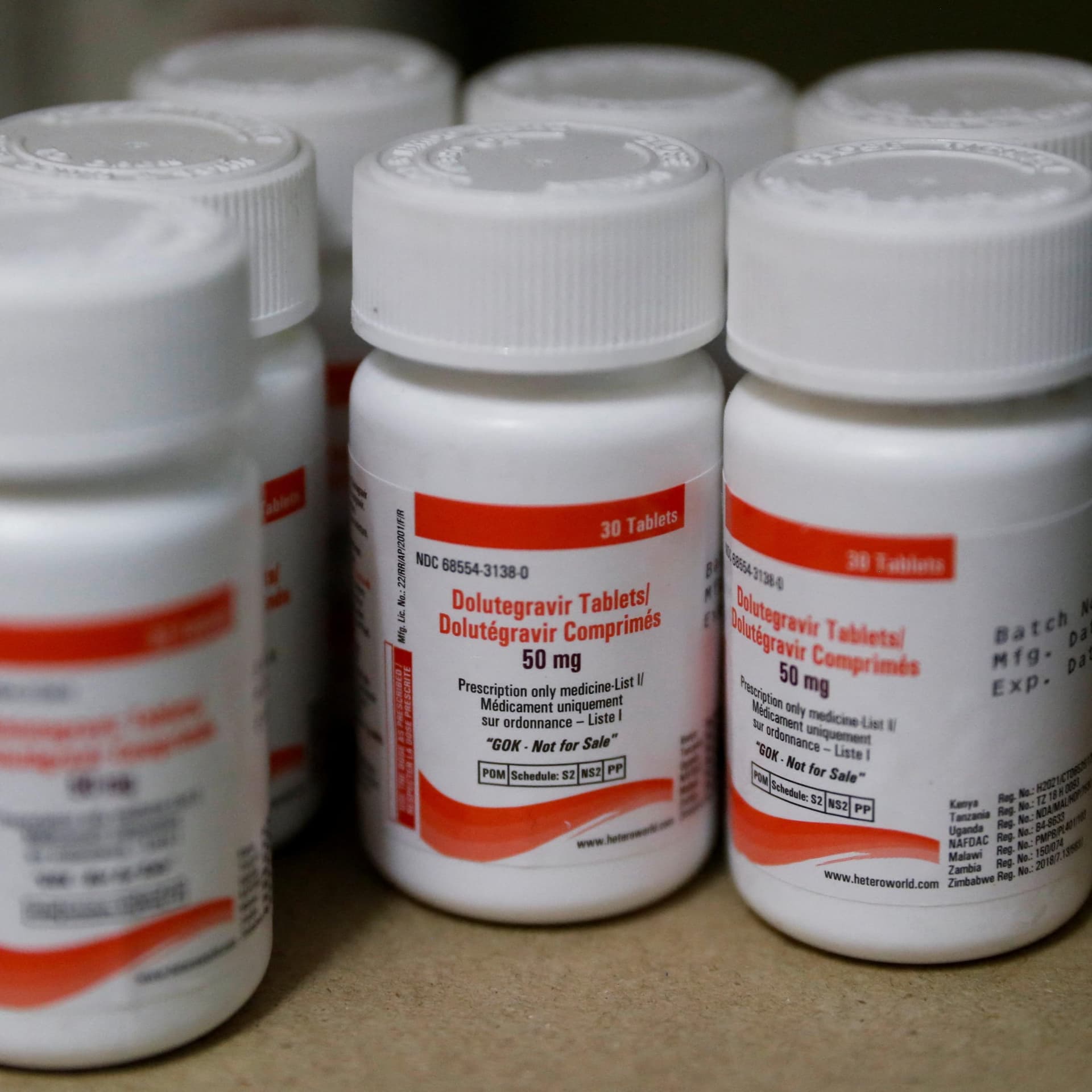
Photo: Bottles of antiretroviral ARV drugs used to prevent HIV. Credit: Thomas Mukoya/Reuters