
In short
The BBC Global Story episode explains why a Trump-brokered ceasefire between Thailand and Cambodia unraveled, despite claims it would “solve” the conflict. It describes renewed border fighting, mass displacement, and the fragile nature of dealmaking without deeper diplomacy.
Guests
Jonathan Head, BBC Southeast Asia correspondent based largely in Bangkok for about 30 years; he reports from the Thai-Cambodia border near the front lines and interviews displaced locals.
Key claims
Trump’s involvement relied on tariff pressure and produced a ceasefire, but underlying grievances persisted. Escalation was triggered by disputed incidents, including Thai claims of Cambodian landmines and Cambodian denial. Social media amplified nationalist anger, limiting compromise.
Notable examples
Surin province’s evacuated communities and repurposed government buildings; rockets/artillery along a 500-mile border; July ceasefire followed by Thai F-16 bombing after alleged landmines; Trump’s “Trump show” signing ceremony in Malaysia.
Written by AI. May contain mistakes. Listen to the episode to check what was said.
Chapters
Tap a time to open that second in VOTrump's Role in Thailand-Cambodia Conflict
0:30 to 1:33
Discussion of Trump's claims on solving wars and his involvement in the Thai-Cambodian conflict.
“Think of it, eight wars have been solved.”
Current Situation at the Border
1:33 to 3:00
Jonathan Head reports on the violence and situation on the Thai-Cambodian border.
“From the BBC, I'm Asma Khalid in Washington, D.C.”
Origins of the Thailand-Cambodia Dispute
3:00 to 5:10
Exploration of the historical roots of the ongoing conflict between Thailand and Cambodia.
“But we've seen fighting resume rather intensely over the last week.”
National Identity and Nationalism
5:10 to 7:40
Jonathan discusses the national identities of locals near the border and the impact of nationalism fueled by social media.
“Can you give us a sense of what the origins of this dispute are?”
Political Tensions and Recent Escalations
7:40 to 11:50
Analysis of the political tensions in Thailand and Cambodia and how they relate to recent escalations in fighting.
“of defining the nation's sort of self-worth.”
Trump's Negotiation Claims
11:50 to 14:00
A look at Trump's claims about his negotiation efforts during the conflict and their implications.
“Thai politics was profoundly shaken up by that.”
Trump's Role as a Dealmaker in Thailand-Cambodia Conflict
14:00 to 18:14
Explore how President Trump's involvement shaped the peace deal between Thailand and Cambodia.
“So as these skirmishes were going on over the summer, we saw the man who really takes pride in viewing himself as a dealmaker enter the picture, and that is President Trump.”
Fragility of Peace and Resurgence of Tensions
18:14 to 19:18
Understand the underlying issues that led to the resurgence of tensions despite a ceasefire.
“And it's going to take a very different kind of diplomacy to help settle it.”
Military Actions and Diplomatic Challenges
19:18 to 24:59
Examine the military incidents that escalated the conflict and the diplomatic challenges ahead.
“There were a few meetings between soldiers from both sides to start demarcating a few parts of the border.”
The Future of Thailand-Cambodia Relations
24:59 to 26:32
Discuss potential paths forward for resolving conflicts between Thailand and Cambodia.
“You've got Venezuela, you've got Ukraine, you've got Gaza in the background, all these other conflicts.”
Transcript
Automatic transcript. May contain errors.0:00This BBC podcast is supported by ads outside the UK.
0:30how to invest and manage money. Learn more at schwab.com. We've solved eight wars. Think of it, eight wars have been solved. President Trump is once again flexing his negotiating skills. Although Thailand and Cambodia, I think I'm going to have to make a couple of phone calls on Thailand and we'll get that one back on track. On Friday, he made phone calls to try to stop the fighting at the border between Thailand and Cambodia. He said both sides had agreed to seize all shooting effective Friday evening. But over the weekend, the fighting continued with reports of more bombings and more rocket attacks.
1:10Cambodia announced it was closing all border crossings with its neighbor. In this long-running conflict in Southeast Asia, at least half a million people have been evacuated on both sides. In his second term, President Trump often claims to be a dealmaker and a peacemaker. And in this last week, he's again taking credit for solving eight wars. But what happens if the deal he strikes can't actually solve the war? From the BBC, I'm Asma Khalid in Washington, D.C. And today on The Global Story, why did this Thai-Cambodian peace deal unravel?
1:53I'm Jonathan Head. I'm the BBC Southeast Asia correspondent. It's a position I've held for about as long as any BBC correspondent has held any position. I first came out here 30 years ago, and though I've been based in other places, most of my reporting's been from here, most of it based in Bangkok. So I'm what you might call an old hand. When I spoke to Jonathan, he was reporting from the Thai-Cambodian border, just miles from the front lines of the fighting. Jonathan has been following this deal for months and has deep insights into why it's fallen apart. So I'm in a little town called Surin.
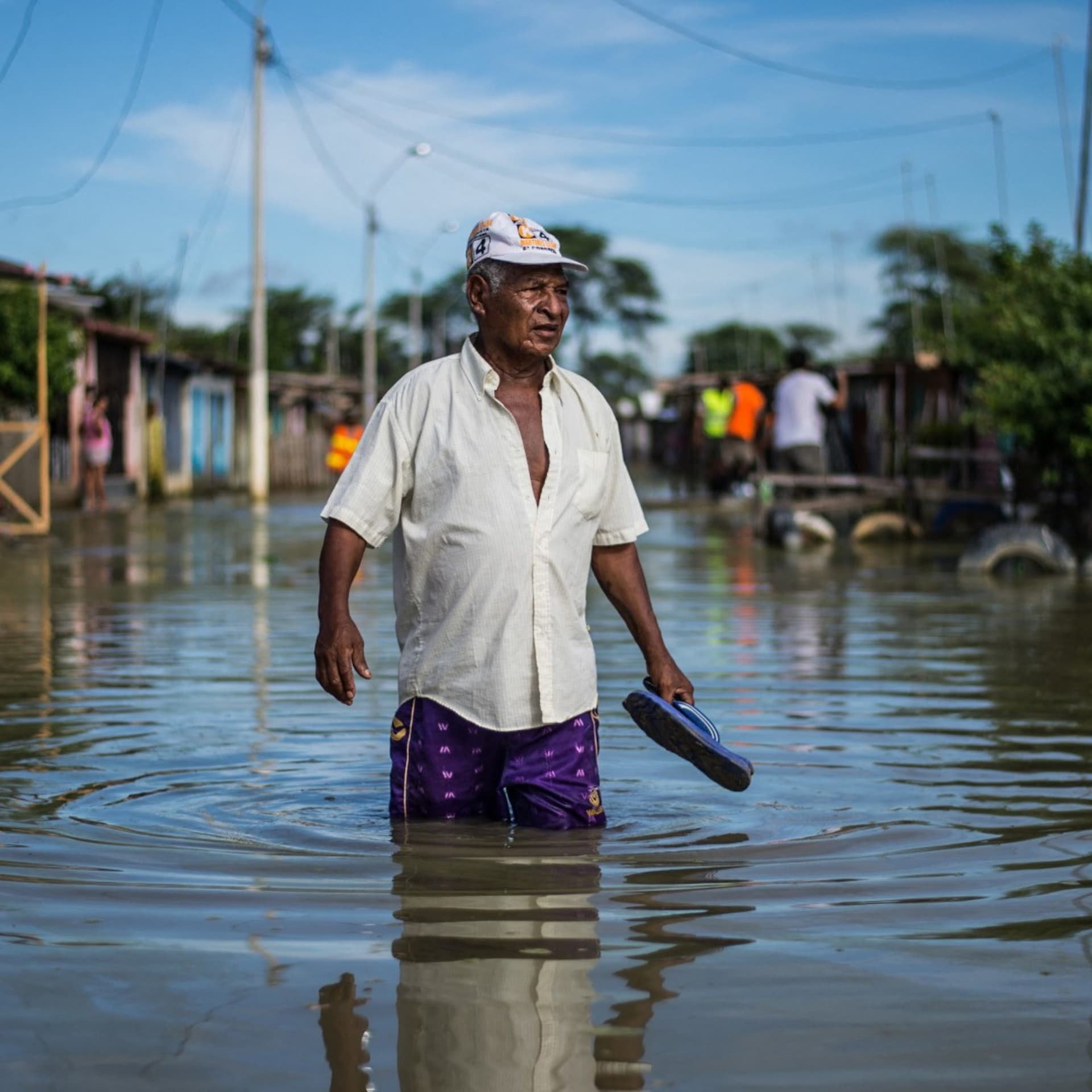
2:30It's one of the provinces in Thailand that borders Cambodia. That area has been very, very heavily affected by the current fighting. Most of the population has been displaced. And indeed, here in Surin itself, the government buildings, universities have all been repurposed to accommodate these tens of thousands of evacuees.
2:49Jonathan Head:Well, Jonathan, I'm ever so grateful to have you with us on the show today, because over the summer, fighting between Thailand and Cambodia escalated, and we saw President Trump step in. He took credit for brokering a ceasefire. But we've seen fighting resume rather intensely over the last week. And I just wanted to get a sense from you here at the outset of what the situation on the ground has looked like where you're at. We can't get close to what we call the front lines. And these front lines are right along a border that runs for 500 miles all the way around Cambodia. So there are incidents going on all along this border as Thai and Cambodian troops fight pretty intense battles.
3:29We can't go there partly because it's unsafe, but partly because the armies won't allow us to see their operations close up. We can get quite close. We can get to within. I've been within perhaps two miles of the border. What you see are, particularly on this side, lots of communities. They're small rural communities that have been almost completely evacuated. You can go for literally hundreds of miles. The shops are all closed. Everything's shut. The houses are deserted. They've left, in some cases, their pets behind, the dogs, if they can cope. You see farm animals. A few men stay behind usually, and they've built concrete bunkers to shelter in because they're worried about protecting their properties.
4:07Up and down the road, constant traffic of military vehicles, including tanks on transporters, armored vehicles. And always you can hear this rumble of artillery and you can see Thai heavy guns posted in the fields. We also hear Cambodian rockets. The Cambodian sees these multiple rocket launchers soaring overhead. You get a kind of jet whoosh as they go overhead and you hope they're not going to come too close to you because they're quite deadly. It's a very strange atmosphere because in between it, you've just got the sound of birds chirping and sort of normal rural sounds until you hear these guns.
4:42Jonathan Head:Does this feel like a sort of low simmer? You mentioned rockets wishing pass, or is this, from your vantage point, a full-out war? Look, it's not a full-out war in that, I mean, nobody in Thailand is seriously talking about marching into Cambodia or trying to overthrow the government there, but it's very intense at the moment. Jonathan, you alluded to the fact that this is a long-running conflict, that this is the latest skirmish that we are seeing between Thailand and Cambodia. but it is a conflict that has been going on for a lot longer. Can you give us a sense of what the origins of this dispute are?
5:18The origins are in the making of countries in this region, and they're all quite new countries. Most of them came out of the experience of being colonized. Lots of countries in Southeast Asia actually do have border disputes that they've never finally agreed. In the case of Cambodia and Thailand, Thailand wasn't colonized, But at the beginning of the last century, it feared it might be, and it rushed to finalize its borders with the British, who controlled Malaysia and what was called Burma then, Myanmar today, and the French, who controlled Laos and Cambodia. But Thailand didn't have any mapmakers at the time.
5:57The traditional Southeast Asian kingdoms didn't worry so much about where their territory ended. So they relied on French cartographers to draw the line. And these French cartographers drew a line that was supposed to follow a watershed, but sometimes they deviated it to put some bits of it inside Cambodia, what today is Cambodia. The Thais didn't protest at the time. Later on, in the 1950s and 60s, as these countries became independent and Thailand was growing, they started to challenge it. Thailand lost a case at the International Court of Justice in 1962 and has felt very bruised about that, particularly about a very fine temple that's right on the cliff edge that they feel should be in Thailand.
6:35But for most of the time, Thailand and Cambodia have kind of put their border dispute aside. Thais and Cambodians have lived along the border. They've traded with each other. the trade up until this conflict was worth about$5 billion a year. Cambodians in huge numbers come to work in Thailand. So some Thais as well, they say, why are we doing this? These slivers of territory shouldn't matter. Most of them are forested. They don't really have any economic value. But they are tied up with a national narrative. And even though Thailand wasn't colonized, there is a sense among Thai nationalists and conservatives that they were forced by the then colonial powers, France and Britain, to give up territory.
7:13Cambodia has a story of once having been a great empire. If anyone's ever been to Cambodia, it's the most famous tourist attraction. Angkor Wat, yes. This incredible temple to Angkor Wat. At that time, Cambodia ruled the whole of Southeast Asia, but its history in the 20th century has been so wretched and miserable. And Thailand and Cambodia were for centuries rivals for power. So all of that plays into the importance of where this border lies. And so these tiny bits of territory have actually become terribly important in terms of defining the nation's sort of self-worth. Where you've been reporting from at the border on the Thai side, how do the people you've interviewed identify?
7:56Do they identify as Thai or as Cambodian or neither? They all identify as Thai and Thai nationalism is quite strong. This is a country that has quite a strong sense of itself. It's relatively unified. side, but the people who live near the border very often speak Khmer, the Cambodian language. They have strong relationships with the people on the other side. It's very interesting, this age of social media. I was talking to a guy in this bunker today in this village and hearing these rockets going overhead. And we asked him, you know, what do you feel about this? And he said, we just wish it would stop.
8:28And he said, you know, we've had this before. There was a crisis about 14 years ago when there were clashes. The difference, he said, is that back then, there was no animosity between the two peoples. This time, he said, there's a different mood. Because of social media, the nationalist feelings on both sides have been whipped up, and there's this tremendous sense of indignation and anger. Of course, people have been killed on both sides. That's been really built up as a sort of grievance. And so the peoples of both sides are just much more mobilized behind this nationalist identity, and they're less willing to forgive the other side, I think the people on the border would really like to go back to the way it was before.
9:10Their entire livelihoods depend on cross-border trade. And as I say, they're bilingual. They speak the languages of both countries.
9:17Jonathan Head:That is fascinating to hear you talk about the power of social media to just solidify nationalist sentiment. I suppose it's a phenomenon we're seeing around the globe, but it's really, really striking to hear you talk about that power within the context of physical fighting that you're seeing now at the Thai-Cambodia border. Jonathan, I want to go back to when I recall hearing about this conflict quite a bit in the headlines, and that was over the summer. In July, what was happening at that time? In some ways, pretty much what's happening now. But the reason it started is, you know, I was with the Thai foreign minister the other day.
9:53He's a very seasoned diplomat. And he said to me, he still doesn't really know. I think he suspects. It caught us all by surprise. There was a lot going on politically in Thailand. We had a party in power and the patriarch of that party, a very mercurial man who's been a huge figure in Thai politics, called Thaksin Shinawat. He's a billionaire tycoon. He'd come back from exile. He'd formed a government. he traditionally has had very close relationship with the ruling family in Cambodia. They're known as the Hun family. The current Prime Minister Hun Manet, his father Hun Sen, has dominated Cambodia for an incredible amount of time.
10:31He was Prime Minister back in 1985. And these two powerful families have been close. They've done business with each other. They've been friends. But that raised the suspicion of nationalists in Thailand who feared that Thang Sinh Nhat and his party in government would sell out the country's national interests in order to do business with Hun Sen. In the middle of all of this, somehow their relationship broke down. We circle back to the big story. We have been tracking the scandal over leaked phone call rocking Thai politics and threatening to topple the government. Hun Sen in Cambodia leaked a phone conversation from Tak Sin Shenawat's daughter.
11:11She was the prime minister at the time. Prime Minister Pétong Thanh Shenawat battling public and political backlash over her conversation with former Cambodian leader Hun Sen. In its essence, she said, you're like my uncle. I want to solve this border problem. I don't trust my own military. Pétong Thanh was heard to disparage a Thai military commander in a conversation about a border dispute with Cambodia. Why he leaked that is still a mystery to us, but it broke their relationship. But also, it devastated her as a prime minister. She lost her job. Thailand's prime minister has been removed from office.
11:45That's after it was found that she had violated rules on ethics. Her father has gone to prison. Thai politics was profoundly shaken up by that. And it created a very toxic atmosphere where Thais felt that Cambodians were meddling. And in the middle of all that, we had growing clashes between soldiers on the borders. And it just escalated. This is the deadliest day of conflict between Thailand and Cambodia in more than a decade. For a second day, the guns boomed across the Thai-Cambodian border. Thailand has closed all its checkpoints into Cambodia after fighting broke out between Thai and Cambodian troops along a disputed section of the border.
12:25To be honest, we still don't exactly know who made the decisions in July to start firing heavy weapons. The first were rockets coming from Cambodia. They killed a lot of civilians. From what independent investigators who've looked at the satellite data have concluded, the Cambodian soldiers were pushing. In areas that were disputed between these two countries, they were pushing forward and provoking, and the Thais were pushing back. It's definitely a two-way thing, but it looked like the Cambodians, but probably for their own reasons. Cambodia's economy is in pretty bad shape. You've got an autocratic family who dominate it, a very poor country, extreme inequality, and a bunch of tycoons who, in many cases, have made a lot of money out of scams.
13:09We think that the scam industry in Cambodia, which is getting a lot of attention now, might be about more than half of the entire economy. All of that might have required a distraction.
13:18Jonathan Head:You're talking about like online internet scams. Absolutely. It's huge in Cambodia. Whatever the reason was, these skirmishes between soldiers ramped up. But it's hard to pinpoint one incident. What's really upset the ties in less politically heated times, more mature diplomacy might have come into play and stronger leaders in each country might have said, it's regrettable, but let's settle it. But we don't have that. We've got weak leaders, leaders under pressure in both countries. Thai politics has been chaotic this year. We've been through three prime ministers in a year. And I think that has allowed the military really at the moment to have a free hand.
14:11Jonathan Head:So as these skirmishes were going on over the summer, we saw the man who really takes pride in viewing himself as a dealmaker enter the picture, and that is President Trump. I know he has gotten involved. He has taken credit for resolving the conflict. Can you remind us what his specific role was? President Trump at that time, he described how he was playing golf and his Turnberry golf course in Scotland. I was actually at Turnberry in Scotland when I did this. And we had a lot of phone calls, the three of us and then the four of us. We had a lot of phone calls. It was a beautiful day. I remember how beautiful it was.
14:56Turnberry is a great place, but I said, this is much more important than playing a round of golf. He said, this is more important than a game of golf, which I suppose it was. I could have had a lot of fun, but this is much more fun for me than anything having to do with almost anything, because you're saving people and saving countries. He got on the phone. The timing was almost perfect for him, because at the time, he had imposed quite high tariffs, and they were all negotiating hard with him to get a lower level. But the deadline was the 1st of August. This conflict broke out on the 24th of July.
15:29So they only had a few days left to negotiate this trade deal. All of them are really export-dependent countries. Cambodia and Thailand depend very heavily on exports to the US. So in effect, he held the tariff guns to their heads. He said, I want this to stop. And they really had no choice. They had to swallow it. But I know they weren't comfortable.
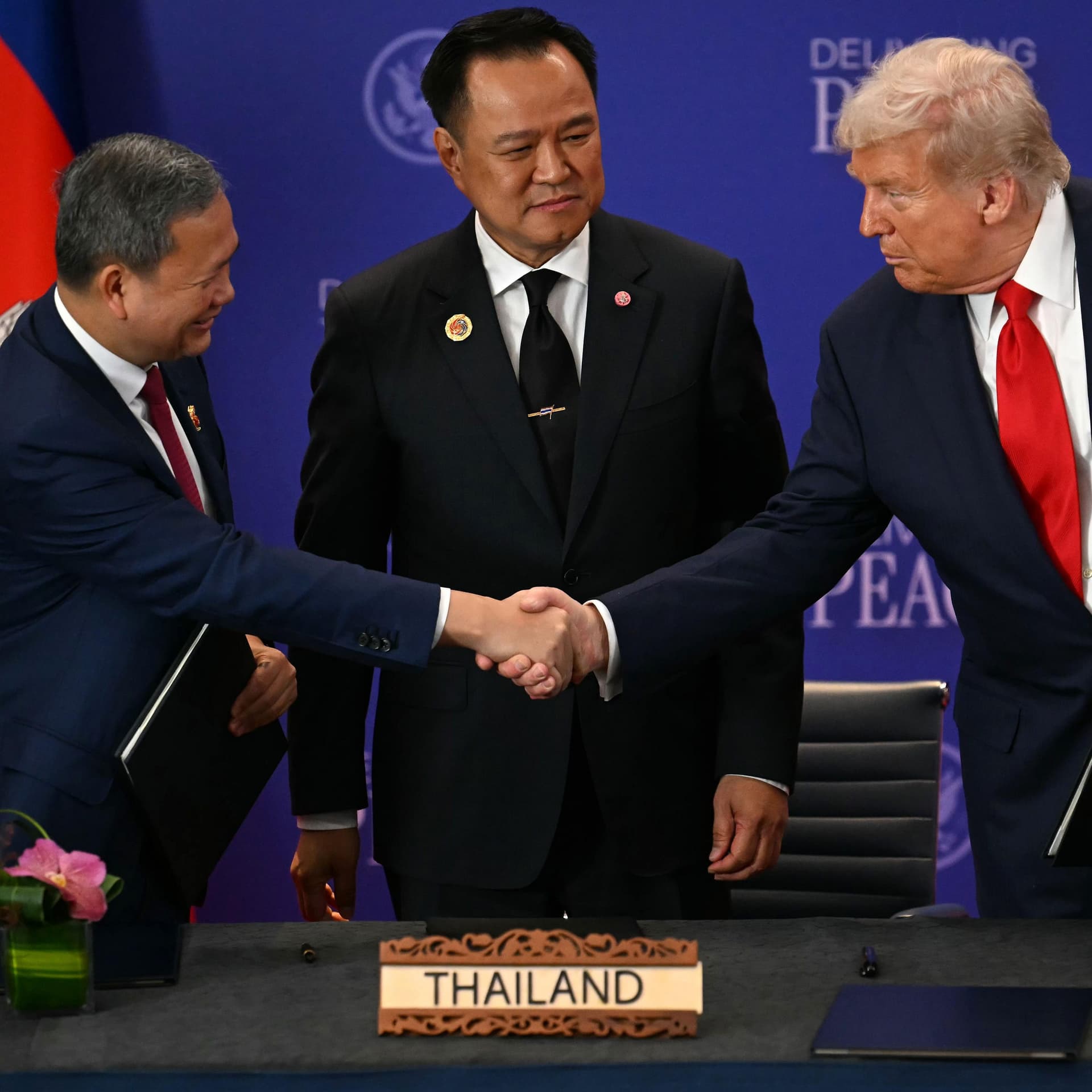
15:49Jonathan Head:A few months after that phone call President Trump made, He went to Malaysia to conduct a ceremony for the official signing of this deal between Cambodia and Thailand. And Jonathan, I know you were there. Can you describe what that moment was like? I mean, it's extraordinary. We called it the Trump show. Trump is a showman. So when he comes in, he just totally dominates. He said, there must be a ceremony where my achievement of bringing peace to these countries is recognized. The Thai diplomats at the time were very uncomfortable with this. They said, look, this isn't solved. It's just a ceasefire.
16:22It's a very uneasy ceasefire. We don't trust the Cambodians. They really didn't want to do it. But you can't really say no to the president of the United States when he really wants something. For the very first time, Prime Minister Dato Sri Aano Ibrahim and President Donald Trump stand together. He came off Air Force One, greeted by Malaysian Prime Minister Anwar Ibrahim. Two leaders from two nations meeting face to face on Malaysian soil. And they had a troop of Malaysian traditional dancers there and he started dancing with them. And what a wonderful sight we are witnessing right now at Complex Bungaraya.
16:55In rare and light-hearted moment, President Donald Trump has joined the Malaysian dancers' spontaneous gesture of goodwill that instantly lights up the ceremony. He had everyone in stitches. I mean, on that day, it was all President Trump. Well, this is so exciting because we did something that a lot of people said couldn't be done. And, you know, he really bigged up this achievement. And we saved maybe millions of lives on this one-piece deal. I mean, he described the Cambodian and Thai leaders as courageous leaders. I want to congratulate the two courageous leaders, and that's what they are.
17:31They were courageous. The Cambodian Prime Minister Humele is literally just a functioning of his father. He wasn't there. The Thai Prime Minister, Anishin Chalmurikun, both of them look like awkward schoolboys. And President Trump's a big man, too. He's a tall guy. So he towered over them. And we're so honoured to be involved in that. It's so important to me. Two great countries, but they were going at it. He described their battles as like a playground brawl between two kids. I think he generally felt his charisma and deal-making skills could just bang heads together and make it stop. And he can do that.
18:09Jonathan Head:And it did stop for a while. It was quiet for several months. But it doesn't last. These are deeply felt grievances that have really festered this year. And it's going to take a very different kind of diplomacy to help settle it. And it's not going to happen through just a couple of sort of big showcase visits. It's going to take months or years. So President Trump can put that notch on his belt as this is one of the wars I've ended. But sadly, up to now, President Trump's initiatives have done nothing to resolve the underlying issues. President Trump often talks with great pride about the many wars that he says he has solved.
18:46Jonathan Head:And we've seen this situation be relatively calm at the Thai-Cambodia border until this last week. And you've given us a little bit of a glimpse into why the tensions at the border flared. But I wonder if you can give us a sense of what happened and what it tells us about the fragility of these peace deals. Even since the July ceasefire that President Trump brokered, and it did stop the all-out fighting back then, there were constant incidents. The Thais kept complaining. They accused the Cambodians of bad faith. The war of words really didn't stop. There wasn't any significant diplomacy. There were a few meetings between soldiers from both sides to start demarcating a few parts of the border.
19:31So there was incremental progress in a few small areas. But it was always a matter of one of these instances is going to spark something off. Now, in this case, there was a Thai team that were trying to fix a road up to one of their posts that's in the sort of disputed area. And they were fired on, they say, by the Cambodian side. Cambodia disputes this. This is the Thai version. We've seen the injured soldiers. One soldier was hit in his chest, but he was wearing body armor, so he's quite badly bruised. One soldier had a bullet in his leg, but nothing life-threatening. The next morning, Thai F-16s were bombing Cambodian positions.
20:04That was a drastic escalation. The Thai military is taking a pretty hard line. They're a much more powerful armed force than the Cambodians. They're furious that Cambodians have been planting landmines. They've shown us very compelling evidence of that. Seven Thai soldiers have lost limbs, even when there was a ceasefire on. And my sense is the Thai military were increasingly frustrated with these nasty incidents like the landmines. They felt Cambodia was in bad faith and they just used this and said, right, we're going to hammer you. The Cambodian version of events is denial, denial, denial. They always say our troops aren't doing anything.
20:40They claim they're not laying the landmines. I've looked at the evidence. It's been taken by the Thais to a meeting in Geneva of the Ottawa Convention, which governs landmines. It's pretty convincing. It's pretty obvious that Cambodia has been deliberately laying brand new landmines. But Cambodia does deny it. It insists these landmines are leftovers from the civil war in the 1980s. It just blames Thailand. It says Thailand's aggressive. The military dominates Thailand. That's pretty true. I agree with that. And that the military wants to retake territory. I think there's an element of truth in that too.
21:12But there's a different narrative from each side. And to be honest, as a journalist, you're never going to get the access, the independent free access, to really see what the truth is. We are dependent on what each army tells us. And we know that we have to treat each of those versions with a good deal of circumspection. Last week here in Washington, D.C., we heard President Trump mention all of these wars that he says he has ended. In 10 months, I ended eight wars, including Kosovo, Serbia, Pakistan and India. They were going at it. And he specifically brought up the situation in Cambodia and Thailand.
21:49And I hate to say this, one named Cambodia, Thailand, and it started up today. Tomorrow I have to make a phone call. He spoke about making some phone calls to get that one back on track. Who else could say, I'm going to make a phone call and stop a war of two very powerful countries, Thailand and Cambodia. They're going at it again. As you heard him, he was speaking with a great deal of confidence. And so I'm curious, Jonathan, from where you sit on the ground, does it feel like the president of the United States has the power to stop this violence? I think he has the power to persuade each country that they must stop the fighting.
22:28How quickly it happens is a different matter. In July, with the tariff lever he had, there really was no choice. Tariffs were the biggest issue they had to deal with. It's existential for these export-dependent countries. This time around, of course, he could say, I'm going to slap tariffs back on them. But especially in Thailand, the mood is much tougher now. We've got a government in power that is giving the military carte blanche. It's a much more conservative nationalist government. And there is a feeling in those circles that Cambodia is always going to act in bad faith. It's not serious about settling the issue.
23:04And to be honest, my sense is they say Cambodia needs to be punished. And Thailand is a very old treaty ally of the United States. It was a crucial military ally during the Vietnam War. As long as I've known Thailand, its elites have been very pro-American. Huge numbers of Thais live in the States. They get educated there. But that has started to shift in the last 25 years or so. And growing numbers of Thais are saying, we don't like being pushed around by America. And they increasingly admire the enormous strides that China has made economically and diplomatically. So at the top levels of the Thai government, while they know they have to listen to President Trump and they will want to be seen to be taking him seriously, they also will not like it if they think they're being pushed around.
Read the full transcript
23:49They might just push back and say, you can't tell us what to do. The Cambodian side is a bit different. Hun Sen, the most powerful figure in Cambodia, the real grand old man, actually really admires Donald Trump. And I watched him back in 2017 when President Trump made his first visit to Asia as president. And we were at another big regional gathering in the Philippines at the time. It was another ASEAN meeting. At that stage, Hun Sen was persona non grata. The State Department said, we have nothing to do with it. The Cambodians are doing terrible things to their opposition to their democracy.
24:20But at a party where they were in the Philippines, they all wear the local shirt, Hun Sen sneaked up to Donald Trump and got lots of selfies taken with him. And it was clear that President Trump then didn't know who he was. And he was so proud of it. And He posted all these images. So there is an admiration for President Trump. You know, among strongmen around the world, they like his sort of bold, bombastic style. And Hun Sen's that kind of a guy. He's a very wily, tough old leader, and he admires other strongmen. And I think he would really badly want President Trump to be more involved in this conflict.
24:53The real question is, does the Trump administration have the bandwidth to pay that much attention to this conflict? You've got Venezuela, you've got Ukraine, you've got Gaza in the background, all these other conflicts. I know President Trump wants to be seen as the guy who settled this dispute. But if it becomes apparent to him that he's not going to be easily settled, he might get a ceasefire, but he's not going to solve it. Maybe he might just put that in his too hard basket and move on.
25:18Jonathan Head:If it's not the president of the United States, what do you think needs to happen for this conflict to end? That's a really interesting question. I mean, what needs to happen is we need a great deal more patience and maturity in the leaderships in both countries. But I don't think we're going to see that for all sorts of reasons. And I'm not blaming the individuals involved. It's not their fault. It's the cultures in each country and the kind of political turmoil they've had that's allowed this sort of nationalist sentiment to take over and box their leaders in where they feel they can't be seen to be weak and make any compromises.
25:56The sentiment has really changed in Thailand, and I know it's true in Cambodia too. Civilians have been killed, soldiers have been killed, the mood has changed, and it makes it very hard for their leaders to make concessions. Having said that, all my time living in Thailand, there tends to be quite a strong vein of pragmatic thinking. These economies are business-focused from the most part. There will have to be some realisation that they can't go on like this. These countries are joined together. They've got a long shared border. They can't move into a different part of the world. They need each other.
26:32And hopefully that realization will start to come to the fore at some point.
26:38Jonathan Head:Well, Jonathan, thank you so much for bringing all your insights to the show. We really appreciate it. It was great to talk to you. That was Jonathan Head. He's the BBC's Southeast Asia correspondent. This episode was produced by Zandra Allen and Sam Chantarasek. It was edited by Bridget Harney and engineered by Travis Evans. Our senior news editor is Chyna Collins. By the way, if you have any thoughts, ideas, or questions for us, we love to hear from you all. So send us an email at theglobalstoryatbbc.com. And thanks as always for listening. We'll talk to you again tomorrow.
From the publisher
Fighting broke out last week on the Thai-Cambodian border, despite a US-brokered ceasefire in July. The conflict was one of the eight wars that President Trump claimed to have ended, so why did this peace deal unravel?
We speak to Jonathan Head, the BBC’s southeast Asia correspondent, from Surin on the Thai side of the border.
Producers: Xandra Ellin and Sam Chantarasak
Executive producer: Bridget Harney
Senior news editor: China Collins
Mix: Travis Evans
Photo: Thailand's Prime Minister watches as Cambodia's Prime Minister and President Trump shake hands. Mohd Rasfan/EPA/Shutterstock