
In short
The episode explains how the Houthi advance in Yemen could disrupt Red Sea shipping at the Bab al-Mandeb choke point, raising oil and broader commodity prices and pressuring the global economy and US policy.
Guests
Frank Gardner, BBC security correspondent; previously on the show. Host is Tristan Redmond (London) in this segment.
Guest background
Gardner is the BBC’s security correspondent and a regular contributor, known for Middle East conflict reporting and analysis.
Key claims
Houthis control much of Yemen and are allied with Iran via the IRGC/Quds Force but act independently. They threaten shipping and Saudi oil exports by targeting the Red Sea route; Saudi Arabia faces constraints from earlier Strait of Hormuz disruptions and a damaged east-west pipeline. The US is reportedly avoiding direct escalation because its Navy is already tied down in the region and Iran has shown resilience.
Notable examples
The 2014 Houthi takeover of Sana’a; the 2015 Saudi-led coalition bombing campaign; “Signal Gate” (March 2025) involving leaked encrypted Signal chat about US strikes; and the Bab al-Mandeb’s importance for about 17% of world shipping.
Written by AI. May contain mistakes. Listen to the episode to check what was said.
Chapters
Tap a time to open that second in VOUnderstanding the Houthis
0:57 to 1:44
Exploration of the Houthis' recent advances and their implications for global finance.
“How many streaming subscriptions do you have?”
Frank Gardner's Insights
1:45 to 2:24
Expert insight from Frank Gardner on the military and political dynamics in Yemen.
“and are now threatening some Red Sea shipping and Saudi oil exports, well, they might just be about to tank the global economy and all of our finances with it.”
The Houthis' Background
2:25 to 4:10
A detailed history of the Houthis and their rise to power in Yemen.
“Unfortunately, I think that might be a sign of the state of stability and perturbation in the Middle East.”
Regional Implications
4:11 to 6:14
Discussion on Saudi Arabia's military response to the Houthis and regional tensions.
“advancing towards the narrowest point where the Red Sea comes down, that choke point, the Bab al-Mandeb.”
Houthis and Iranian Relations
6:15 to 7:57
Analysis of the relationship between the Houthis and Iran, including their shared interests.
“Because the Houthis had an alliance with Iran, Saudi Arabia was extremely unhappy about this.”
U.S. Involvement in Yemen
7:58 to 10:50
Overview of U.S. military involvement in Yemen and its significance.
“The Saudis were feeling pretty boxed in after 2003 because you've got Iranian influence now spreading across their northern borders into Iraq.”
Recent Developments and Risks
10:51 to 14:00
Examination of recent military advances by the Houthis and their strategic implications.
“A lot of things changed on October the 7th, 2023.”
The Houthi Advance and Its Implications
14:00 to 16:17
Learn about the recent military actions of the Houthis and their potential global economic impact.
“All of this, Frank, brings us to the present day then, when the Houthis have suddenly found themselves in the limelight yet again.”
Saudi Arabia's Strategic Challenges
16:26 to 28:00
Explore Saudi Arabia's current geopolitical struggles and the impact on oil exports.
“I just want to try and sum up here, Frank, the situation as Saudi Arabia might see it, because there's a lot going on in this story.”
Listener Feedback and Episode Acknowledgments
28:00 to 29:09
The hosts reflect on listener feedback and acknowledge the production team.
“wrote to us about our AFD German election episode to share his criticisms.”
Transcript
Automatic transcript. May contain errors.0:00Frank Gardner:This BBC podcast is supported by ads outside the UK. Decisions made in Washington can affect your portfolio every day, but what policy changes should investors be watching? Listen to Washington Wise, an original podcast for investors from Charles Schwab, to hear the stories making news in Washington right now. Host Mike Townsend, Charles Schwab's Managing Director for Legislative and Regulatory Affairs, takes a non-partisan look at the stories that matter most to investors, including policy initiatives for retirement savings, taxes and trade, inflation concerns, the Federal Reserve, and how regulatory developments can affect companies, sectors, and even the entire market.
0:44Frank Gardner:Mike and his guests offer their perspective on how policy changes could affect what you do with your portfolio. Download the latest episode and follow at schwab.com slash Washington Wise, or wherever you listen. How many streaming subscriptions do you have? Is it the same for your business? Avoid it by having all your business on one platform. Try Odoo for free at odoo.com. That's O-D-O-O dot com. If you're anything like me, you have an ambitious pile of books. It's close to your bed and it's called Books I'm Gonna Read. But the thing is, it keeps getting bigger, not smaller. Now, Now, figuratively speaking, most of us have a pile of news stories, a bit like that too, in our brains.
1:30Frank Gardner:And probably somewhere in the pile is the story called Houthis. It's the story we'll all get around to understanding eventually. But today, listeners, is the day that changes. Because the Houthis, an armed group in Yemen, who've just made a lightning advance and are now threatening some Red Sea shipping and Saudi oil exports, well, they might just be about to tank the global economy and all of our finances with it. So it's really time to get to grips with this story. And to help us do this, we're bringing in our old friend Frank Gardner, the BBC's security correspondent, a regular on the show, and just the man to help us understand it.
2:15Frank Gardner:From the BBC, I'm Tristan Redmond in London. And today on The Global Story, we need to talk about the Houthis.
2:30Frank Gardner:Well, we had you on last week, Frank. We got you back this week. Unfortunately, I think that might be a sign of the state of stability and perturbation in the Middle East. But great to have you back nonetheless. Last week when we had you on the show, Frank, we were talking about the 9-11 anniversary and you made a prediction. And as you know, we like to keep track of the predictions that you make on the show. We spoke to you on Thursday and you said, you know, Iran's not going to invade the United States. But it can hurt the US in other ways, as it's already doing by driving up gasoline prices at the pump.
3:08and if they're able to get their Houthi allies in Yemen, for example, to choke off the narrow waterway on the other side of the Arabian Peninsula, the one that separates Arabia from Africa, it's a waterway called the Babel Mandib Strait, if they can choke that off as well, that's going to drive up petrol prices and oil prices and not just oil but gas, fertilizer, everything else even more.
3:31Frank Gardner:Were you surprised that something resembling this has happened so quickly. Well, I'm certainly not surprised that it's happened. Yes, things have moved perhaps quicker than people expected. Let's start with the Houthis, who control most of the important areas of Yemen. We are now getting a clearer picture of the fighting that led to the Houthis' lightning advances as they swept down Yemen's Red Sea coast, routing the Saudi-backed forces of the internationally recognized authorities. They took a huge amount of coastline in a very short time. They advanced south from the direction of Hodeidah, the main port, Yemen's main port on the Red Sea, advancing towards the narrowest point where the Red Sea comes down, that choke point, the Bab al-Mandeb.
4:22It's Arabic for gate of tears or gateway of misery, as some are calling it. It's the southern exit of the Red Sea, where ships pass out that have come often from through the Suez Canal, from Europe and the Mediterranean, all the way out into Asia. But it really matters to the global economy, because that is the route currently that Saudi Arabia is trying to export its oil to its Asian customers. There is no dressing up what has happened as anything other than a disaster for the Saudis and their allies. The Houthis are at war with Saudi Arabia. So they've said, look, all shipping can pass through here.
4:59Global international shipping can pass through here, except Saudi-flagged tankers, which is a major exception. That's a big problem for the economy, the world economy.
5:09Frank Gardner:Well, today, Frank, with you, we're going to do the complete Frank Gardner primer on the Houthis, on Yemen, and why we should all care, why potentially this is a huge story for the United States and for the world, just kind of set the table for us. So the Houthis are a tribal grouping within Yemen. They are a mountain people. Their home base is a town, a city called Sa'dah, right up in the north of Yemen. I went there years ago, and it is a pretty wild, volcanic, arid place. Everybody's got guns. They've all got Kalashnikovs. In late 2014, in September 2014, the Houthis marched down on the capital, Sana 'a, took it over almost without a shot.
5:56And you remember the Arab Spring from 2011? A lot of countries - I remember it well. Huge upheavals. In Yemen, it led to the overthrow of the strongman guy in charge, Ali Ad-Dalla Saleh, the president. He'd been holding the country together since 1978. He'd in fact unified north and south. But he was overthrown. The Houthis then took over the country. Because the Houthis had an alliance with Iran, Saudi Arabia was extremely unhappy about this. They said, we can't have an Iranian proxy on our southern borders like this. So in March 2015, the following spring, they launched an air war and a ground invasion to try and dislodge the Houthis from power.
6:41It was a coalition because it was the Saudis, the Emiratis, the Sudanese, various other countries, and they tried to bomb the Houthis into submission, hoping to just use their, you know, massive superior firepower to so terrify the Houthis that the Houthis would surrender. The Houthis are tough. They are not ruling in a nice way, but they are very resilient and tough. And they have managed to survive seven years of bombing, many of which went wrong. So a lot of people lost their lives. Many people lost their lives from malnutrition and hunger. It was a humanitarian disaster from 2015 till 2022.
7:24And some would say it's still continuing.
7:30Frank Gardner:Just to be totally clear, Frank, Saudi Arabia feels threatened by the rise of the Houthis in Yemen, which is a country that borders the south of Saudi Arabia. And that's why Saudi Arabia decides to take military action, because Saudi Arabia and Iran are rivals in that region, right? That's exactly right. Iran and Saudi Arabia have always been rivals. It's partly religious. Iran is a Shia-dominated country. Saudi Arabia is Sunni-dominated. The Saudis were feeling pretty boxed in after 2003 because you've got Iranian influence now spreading across their northern borders into Iraq. that you've got Lebanon, where you've got Hezbollah, which is very much an Iranian proxy.
8:18And you've got Hamas in Gaza, which, although it's sunny, nevertheless, it's backed by Iran. So they thought, hang on, we're getting absolutely surrounded here. We can't have this.
8:31Frank Gardner:So that was the Saudis in 2015. And that conflict is still ongoing. Can you explain to us exactly what the link is between the Houthis and the Iranians. What brings them together exactly? Well, for a start, they are both Shia. So Islam has two major divisions. The Sunnis, who are the mainstream Orthodox. They are the mainstream. And then there are the Shia. There are Shia Muslims all over the Middle East. Yemen has a minority. I think it's roughly about 30 % of Yemen are Shia. But the Houthis represent the Zaidi branch. I mean, I don't want to compare apples to oranges, Frank, but very roughly speaking, Iran is Shia and therefore has a predisposition to the Houthis, who are also Shia.
9:26Yeah, it's predominantly Shia. So Iran has something called the IRGC, the Islamic Revolutionary Guards Corps, which started out as the kind of praetorian guard of the revolution. Iran had the Islamic Revolution in 1979 that overthrew the Shah, the Western Bakshar. And it's been an Islamic Republic ever since. The IRGC has a kind of export wing, as it were. It's a thing called the Quds Force. And that was commanded up until 2020 by a very charismatic leader called Qasem Soleimani. He was amazingly successful at forging alliances for the Islamic Republic in Lebanon, in Iraq, in Syria, in Yemen. And the Quds Force has been involved in training the Houthis,
10:17Frank Gardner:Ansarullah, in Yemen. How autonomous are the Houthis in their actions? Or does Iran completely dictate what they do? No, it definitely doesn't dictate. They are independent. They are fiercely proud, nationalistic. They don't necessarily dance to Iran's tune, but it's an alliance of convenience. They need them because Iran has got a lot of expertise and it's got weapon supplies that they need. But no, they are independent. They are an ally, not a proxy of Iran. When does the United States become actively involved in the Yemen situation? A lot of things changed on October the 7th, 2023. That was the Hamas-led raid from Gaza into Israel.
11:02And a short while after that, the Houthis, they decided to attack Israeli shipping, but also launch ballistic missiles at Israel. Their motto is, God is great, death to America, death to Israel, a curse upon the Jews, victory to Islam. So the official name of the Houthis is Ansarullah, meaning helpers or supporters of God. So they decided that they would threaten shipping that was coming through the Red Sea. And this matters because all shipping coming through the Suez Canal that is going to go on down the Red Sea into the Indian Ocean and to markets in Asia has to pass Houthi territory. So they've been able to weaponize geography, just as Iran has done along the coast opposite the Strait of Hormuz, and threatened shipping.
11:53And they've done that very effectively. You know, it's pretty scary stuff. The Houthis have got Iranian and possibly Chinese-supplied weapons, including anti-ship missiles. So that is a danger to any shipping coming through there. And I don't think the world really knows what to do about it.
12:11Frank Gardner:Essentially, American interest in what's happening in Yemen and what the Houthis may or may not be doing escalates as soon as it becomes clear that the Houthis have an interest in the ships that are passing through the Red Sea to its west. But the Houthis themselves don't necessarily arrive on people's radars in a really big way until the scandal that became known as Signal Gate, which was in March 2025. Could you give us a reminder of what actually happened, why it became such a big deal and what Yemen and the Houthis had to do with it, Frank. Sure. So this was at a time when the U.S. was bombing Houthi targets in Yemen.
12:59Frank Gardner:The Pentagon says it will continue attacking targets in Yemen until Houthi rebels stop attacking shipping in the Middle East. The U.S. launched a sustained military attack, taking out multiple Houthi leaders. That's according to a top Trump advisor. A Washington journalist was staggered to see on his phone advance notice of airstrikes that the U.S. was going to conduct on Houthi positions. Senior Trump administration officials, including the vice president and secretary of defense, used the encrypted commercial messaging app Signal to debate the pros and cons of launching military strikes. And they accidentally invited the editor-in-chief of The Atlantic and Washington Week moderator Jeffrey Goldberg to be part of that chat group.
13:46I mean, it was pretty detailed. When targets were going to be targeted, how they were going to be targeted, who was at the targets, when the next sequence of attacks were happening. It was a really dangerous lapse of security, of operational security, because if he had chosen to publicize that with those planes in the air, you know, there was a risk that pilots could have lost their lives or been captured.
14:13Frank Gardner:All of this, Frank, brings us to the present day then, when the Houthis have suddenly found themselves in the limelight yet again. and right now have had this recent military advance along the Red Sea coast. Why is it so important? There's an island which in colonial, British colonial times was called Parim Island and in Arabic it's Mayun, right at the mouth of the Red Sea there. And the Houthis took it. There was a report a couple of days ago yesterday that it had been retaken by Yemeni government forces. That may or may not be true. It's important because if you mount a radar and missile bases on that island, you effectively become a toll on shipping that's going through there.
15:06You can absolutely dictate what comes through there because you can threaten it. So it's perfectly likely or perfectly conceivable that the US, Saudi and possibly some European countries may decide that they can't let the Houthis dictate global shipping. I mean, something like 17 % of world shipping goes through that choke point. They may decide that they can't allow that because it's going to affect prices at the pump. It's going to affect growth rate, its inflation and things like that. It's going to bounce back on all our domestic budgets. So they may decide that they have to do some kind of a joint operation down there.
16:11Frank Gardner:live streaming the BBC News Channel and acclaimed documentaries to in-depth analysis and features. Visit bbc.com forward slash subscribe to find out more.
16:26Frank Gardner:I just want to try and sum up here, Frank, the situation as Saudi Arabia might see it, because there's a lot going on in this story. At this point in time, on the eastern flank of Saudi Arabia, there is trouble because the Strait of Hormuz has been shut. So Saudi Arabia would be struggling to get anything out of its eastern side into the open ocean through the Strait of Hormuz. But on the western side now, if the Houthis, as they say, control that Bab al-Mandeb Strait, this narrow choke point, does that also mean that the Saudis have completely lost access to the open sea on the Western side and therefore have no more access to the open sea?
17:17Frank Gardner:Almost, yes. They have suffered three blows. So the war that Donald Trump started with Benjamin Netanyahu on February the 28th has not completely closed the Strait of Hormuz. There are tankers that are getting through under US escort, hugging the Omani coast, but it's a trickle. It's a tiny fraction of what it was before this war started on February the 28th. So they are constricted in the Gulf. Up until last week, they were able to pump around 5 million barrels a day, between 4 to 6 million barrels a day, through an east-west pipeline that went from the Hassa, which is the oil-producing area of eastern Saudi Arabia, to the port of Yanbu al-Bahar on the west, on the Red Sea coast.
18:05And there it was being loaded onto VLCCs, very large crude carriers, and shipped south through the Bab al-Mandeb out to markets in Asia. That currently is pretty difficult to happen. But for a start, the pipeline has been hit by drones fired from Iraq and caused a lot of damage. The Saudis have shut that pipeline. It's going to be shut for some time. So that oil isn't getting pumped west now. And anyhow, the very large crude carriers, my understanding is that they can't get through the Suez Canal. That's too big.
18:44Frank Gardner:So they do have an escape valve to the northwest through the Suez Canal. Okay. Yeah. So smaller ships, but not the very largest. So they can ship some things north, but it's got to go all the way through the Mediterranean. And if it's going to Asia, it's got to go all the way around, as I say. It takes about a month extra to go all the way around Africa, which, of course, is going to put a huge inflationary pressure on the global economy. So, you know, bottom line with all of this is that I would expect, and I'm not an economist, but I would expect this to, if it's not resolved, and it could get resolved diplomatically, There are ways of defusing this, but if it's not defused, I would expect to see oil prices continue to go up, especially futures.
19:33I mean, we've already seen Brent crude go above, well above$100 a barrel, back up close to where it was at the height of the war in March, April. And that's already reflecting on prices at the pump.
19:47Frank Gardner:Absolutely. I mean, it's a major concern, I imagine, in Washington and around the world in economic terms. Now, we mentioned how the U.S. had bombed Yemen and the Houthis back in 2025 in March around the time of Signalgate, so-called Signalgate. Well, this time, Frank, the reports are that Saudi's de facto leader, Mohammed bin Salman, has asked Donald Trump for assistance in countering this Houthi advance. But it would appear that this time Trump is declining to lend him a hand. Could you explain to us from your perspective, Frank, why that would be, why the United States would have helped in March 2025, but is declining to do so right now?
20:40Well, in March 2025, it was all about airstrikes. And the US wasn't embroiled in any other conflict directly in the Middle East. It was trying to sort out the Gaza, stage two of the peace plan. But the Iran-Straight of Hormuz war hadn't happened. It was June 25 when they did Operation Midnight Hammer on Iran. But that, again, that was a quick in and out, an Air Force job. But now you've got a huge amount of the US Navy of its operational force bogged down in the Arabian Sea in an expensive and probably unwinnable conflict with Iran. I mean, they are winning economically. They are choking off Iran, its Gulf ports.
21:22There's no question about that. But at enormous cost. and they went to war thinking that the whole Islamic Republic would just sort of implode with the assassination of the Ayatollah Ali Khamenei. And that, of course, hasn't happened. Just like the Houthis, the IRGC have been remarkably resilient. So I don't think Donald Trump is in a hurry to get involved in another conflict on the other side of the Arabian Peninsula. What he has done is sent the commander of US Central Command, Admiral Bradley Cooper, He's sent him to Jeddah to discuss with the Saudis what help the US can give short of going to war on their behalf.
21:58So it will be intelligence, satellite, possibly some logistics, refueling, things like that.
22:05Frank Gardner:Okay, but how might all of this complicate resolving this situation over the other side of Saudi Arabia in that war with Iran? Is this just becoming more and more difficult to solve with every passing day, Frank? A lot depends on how eager Donald Trump is to resolve this before the midterms. If he is, I mean, there are indications that he is more or less saying this war is going to end after the midterms, but indications that actually, some people are saying it could go on a lot longer than that. You know, this could extend well into next year. Now, if the Americans are prepared to accept that and higher prices at the pump, which I don't think the population are, then it could go on a long time.
22:55But if they want a deal, it may have to be closer to Iran's terms. And what Iran wants is they want some kind of recognition of their sovereignty over the Strait of Hormuz. So prior to this war on February the 28th, there was something called the traffic separation scheme, whereby ships coming into the Gulf went a northern route. They were separated by two miles from ships coming out that went the southern route. And that has worked really well since 1968. The IMO, the International Maritime Organization, liked that deal. It all worked. But this war has completely tipped that upside down. and Iran, which underwent over 20 ,000 airstrikes from the Israeli and US air forces, and yet its Revolutionary Guards survived, despite taking huge military losses, they have survived.
23:50And they've said, right, so sorry, the old paradigm doesn't exist anymore. We are now going to exercise our sovereignty over the Strait of Hormuz. And they've been sitting down with the is. Oman controls the southern coast opposite the Strait of Hormuz. And they're trying to come up with some kind of a regime that serves both Oman and Iran. But America is very unhappy about that because they're saying it's an international waterway. Nobody should control it. Or if anybody's going to control it, we should. I mean, there have been suggestions from the White House that America might have some kind of control long-term over the Strait of Hormuz.
24:35That I don't think is going to be the case, because it takes a lot of naval assets to do that. And you've got to remember, this is Iran's backyard. It's got by far and away the biggest coastline on the Gulf. It is a stronger country strategically than any of its neighbors. And it can afford to, you know, to some extent dictate what the final arrangement is going to be for the Strait of Hormuz. So this will be a deal that is extremely unpalatable to Donald Trump and Pete Hegseth because they haven't won. They are putting a lot of economic pressure on Iran. There's no question about it. It's driving up prices.
25:15Iran can't get its oil exports out through the Gulf. It is, Iran is hurting, but they've got a very high tolerance for economic pain. And of course, they are ruthless at putting down dissent. We did see protests in December and January, and the authorities had no hesitation in shooting to death thousands of their own people. So there's no sign that the population, although they must be really chafing about this, there's no sign that they are about to rise up and try and overthrow the revolutionary guards that control the country yet.
Read the full transcript
25:52Frank Gardner:And from the story you're telling us, Frank, Iran has some levers at its disposal yet to make things more and more difficult for the United States in the region, right? Well, not just for the United States, but for the world economy. So, So Iran is like a chess player. It's thinking two or three steps ahead, three moves ahead. It will be thinking, if our allies in Yemen, the Houthis, put pressure on global shipping, especially Saudi oil exports, by choking off their access to the Indian Ocean at that Bab al-Mendib strait, then that's going to be very unpopular with the whole world, especially with Asian markets.
26:38and that will mean there's more and more pressure on Donald Trump to end this whole conflict. Because it's blown and blown up and it's got bigger and bigger and involved more and more people. When this started, this was just something people watched on television in March. Oh, there's a war in Iran. Well, wasn't there one there last year? Yeah, you know, that's the kind of thing that people were saying. This has got much bigger and its effect is reaching far wider and far deeper than anybody imagined. Certainly deeper, I think, than the White House imagined. They really didn't seem to plan ahead for Iran closing the Strait of Hormuz and what effect that that would have on the world economy.
27:29Frank Gardner:Frank Gardner, thank you so much. it's such a complex but really fascinating subject thank you so much for talking us through it you're welcome
27:46Frank Gardner:that was Frank Gardner the BBC security correspondent and that's it from us for today thanks so much for tuning in as always our email address is theglobalstory at bbc.com don't be strangers Andy from Leipzig in Germany wrote to us about our AFD German election episode to share his criticisms. We always appreciate your feedback, whether it's positive or negative. And Andy, I've reflected on your message since you sent it. Thanks so much for listening. Today's episode was produced by Aaron Keller and Lucy Paul. It was edited by Bridget Harney and mixed by Travis Evans. Our digital producer is Charlie Firth.
28:25Frank Gardner:Our studio manager is Philip Bull. Our senior news editor is China Collins. And I'm Tristan Redman. We'll be back again tomorrow. Cheerio.
28:47With a subscription to the BBC website and app, you can now get early access to your favorite BBC podcasts. Listen to shows like You're Dead to Me, In Our Time, Good Bad Billionaire, and more. Plus, there's all the other great benefits you get with a BBC subscription, from live streaming the BBC News Channel and acclaimed documentaries
29:07Frank Gardner:to in-depth analysis and features. Visit bbc.com forward slash subscribe to find out more.
From the publisher
Over the last week, the Houthis - an Iran-backed militant group in Yemen - have captured two strategic islands along the Red Sea coast, consolidating its control of a key international shipping route known as the Bab al-Mandab strait.
Saudi Arabia has relied on access to the strait for exporting it oil to customers in Asia. With the Strait of Hormuz already closed due to the Iran war, the Houthis’ control of this vital waterway threatens to deepen the global oil supply crisis.
Tristan Redman is joined by the BBC’s Security Correspondent Frank Gardner to unpack who the Houthis are, what they want, and how they have come to hold so much influence on the world’s economy.
Producers: Aron Keller and Lucy Pawle
Executive producer: Bridget Harney
Digital producer: Charlie Firth
Sound engineer: Travis Evans
Senior news editor: China Collins
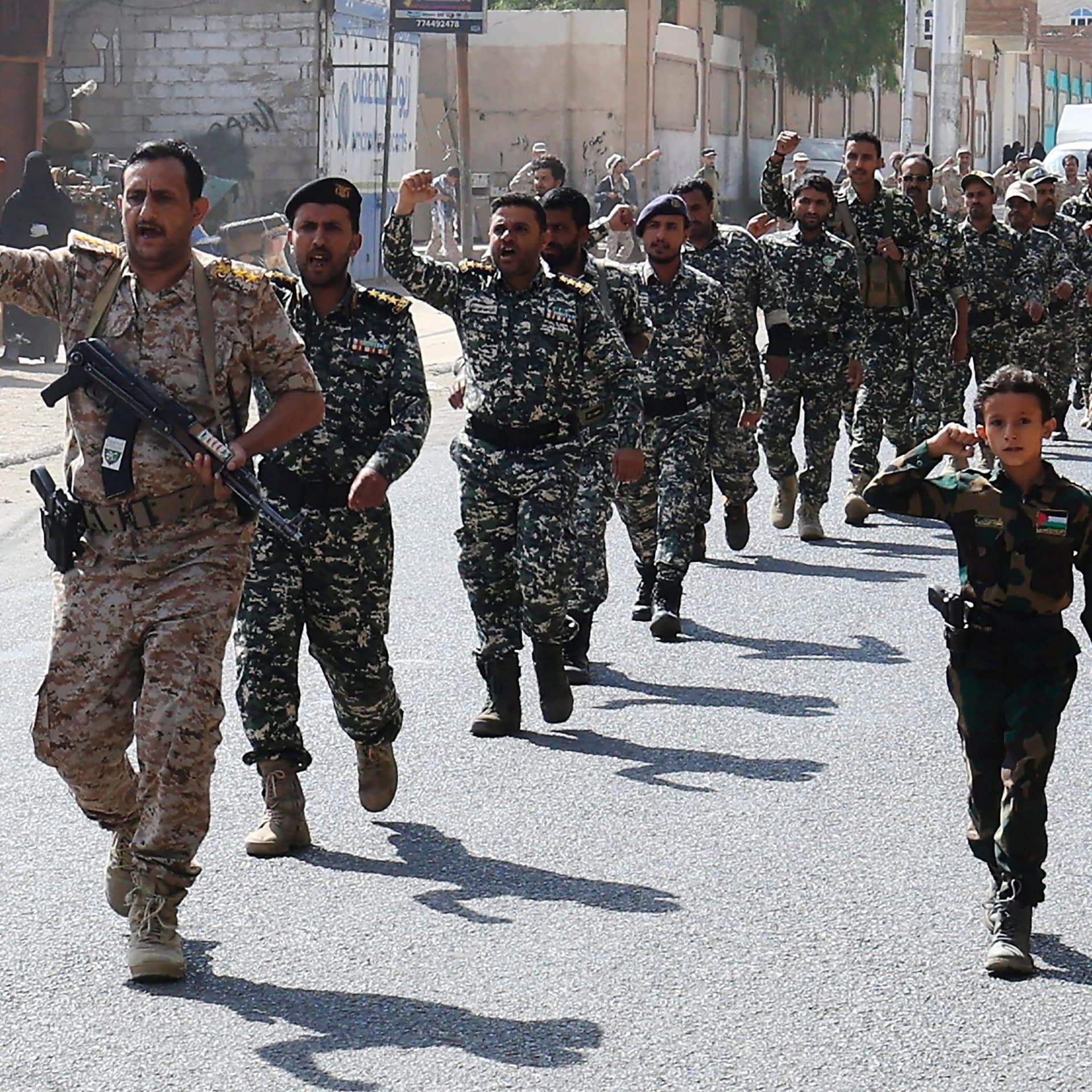
Photo: Houthi fighters in Sana'a, Yemen, 10 September 2026. Credit: EPA/ Shutterstock / Yahya Arhab