Ask ChatGPT

 The High Flyers Podcast with Vidit Agarwal
4 Aug 2026 · 1h 31m · 33 chapters
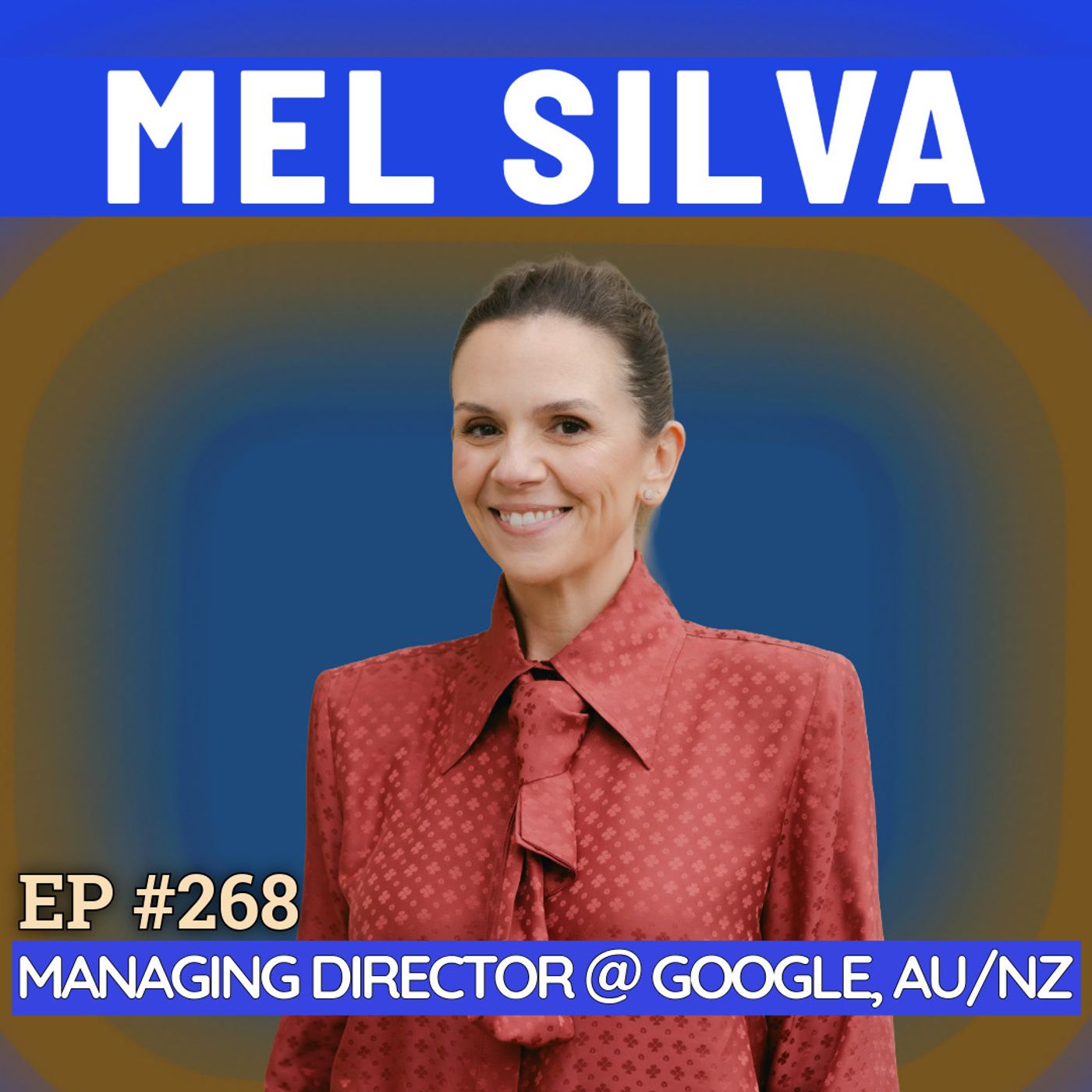
Mel Silva (Google Australia & New Zealand VP/Managing Director) discusses her career path from a small-business upbringing in Sydney to senior leadership at Google, emphasizing “saying yes,” building a broad toolkit (customer service, digital product building, trust), and creating psychologically safe cultures where people can surface bad news early. She also addresses pivoting out of banking, leadership behaviors, and family logistics for senior women.
This episode’s guest is Mel Silva, VP and Managing Director for Google Australia and New Zealand (also covering APAC projects). She previously worked in banking/financial services (including call centers, product/marketing/operations roles) and in digital roles at places like Fairfax Digital.
Written by AI. May contain mistakes.
Mel shares her childhood, early jobs, and her family's catering business.
“where we do reimagine a high flyer, showcase the brightest and most relatable role models and companies and their journey from sunrise to today.”
Mel outlines her responsibilities at Google and her leadership approach.
“She's been to, through my business, we do a lot of work with the founder community, a lot of dinners and lunches and workshops.”
Mel highlights an inspiring female founder and her impactful work.
“And then I actually started my proper career pretty early with some part-time work at Citicorp at the time, but while I was still studying at uni.”
Mel discusses her tight-knit family and the values instilled in her.
“I'm curious if I met your high school teachers, how would they have described the young Mel?”
Mel reflects on her personality traits and how they shaped her school experience.
“They are seeing mum like a couple of three.”
Mel discusses her early aspirations and the uncertainty of career choices.
“I mean, so you had aspirations to become a journalist.”
Mel reflects on the importance of hard work versus luck in career success.
“I think that all of those things you just said are the result of hard work and doing things well and, you know, striving to be excellent.”
Mel emphasizes the value of diverse career experiences in building a strong foundation.
“It was not intentional is basically the TLDR bit.”
Mel shares her journey from banking to technology and the skills gained in between.
“How do you reflect on, like, I always love using, talking about the toolkit.”
Mel talks about the signs that prompted her to pivot away from banking.
“leadership behaviours that were not congruent for me.”
Learn about the factors influencing career decisions and the importance of risk-taking.
“because I think, again, a lot of people go through this.”
Discover how personal relationships impact professional growth and success.
“But, you know, for me, it was a general manager job.”
Explore the challenges and choices of balancing family responsibilities with career ambitions.
“It's a topic that's top of mind for me because of our two recent guests.”
Learn about fostering an environment where people feel safe to express vulnerabilities and ideas.
“And I don't expect people to be deferential.”
Learn how Mel Silva fosters openness and vulnerability in leadership.
“Like that part of my shtick is that I'm a bit of a clown.”
Discover the importance of learning from both good and bad management experiences.
“They want the pay rise and they want the title and they want to be in the decision-making room.”
Understand how leadership culture impacts organizational behavior and accessibility.
“And I think the one lesson I learned from leaders in the past was around the environment you create.”
Explore how leaders can exhibit different behaviors in public versus one-on-one settings.
“I've also seen a leader like yourself, an MD or a GM, can be one personality in a group setting, but then a different personality in a one-on-one.”
Learn to distinguish between the inner critic and instinct in decision-making.
“He talks about it all the time, but you know, and look, I've had to just get real about that.”
Hear how Mel learned to manage self-doubt after maternity leave and regain confidence.
“I hate people who are really like self-inflated.”
Discuss the significance of feedback and its emotional effects on leaders.
“That stays with them and they go home at night and go, was that valid?”
Mel discusses the importance of feedback in her career trajectory, particularly when she did not get the MD role.
“Even though it could be from a random person.”
Mel reflects on her experiences and learnings from her challenging APAC role at Google.
“Well, I mean, I think back then I would have said I've got the hearts and minds of the people.”
Mel shares insights on preparing for leadership roles, including feedback and personal reflections.
“to do in a country, in a region like APAC.”
Mel describes her mindset during a high-pressure Senate committee appearance while pregnant and navigating leadership challenges.
“key participant in back in then few years later in 2020 2021 so let's go into that which I think was a a big crucial moment in your career.”
Mel Silva reflects on her leadership during the COVID lockdown and its challenges.
“So if you were to ask me, that whole experience kicked off in about April of 2020.”
Mel discusses her return from maternity leave and the changes she faced at Google.
“It was, it was very, very high pressure at the time, but again, we were really prepared.”
Mel shares insights on empowering others and preparing for leadership transitions.
“leave, you know, I don't want to discount that.”
Mel provides insights into Google's positioning and strategy in Australia amidst global trends.
“And I think that should be like whatever.”
Learn about the excitement of technological advancements and personal leadership challenges.
“of why, why, why that's important and impactful is, you know, that means Australian businesses and businesses all over the world are innovating at, you know, putting this latest AI technology to use.”
Discover Mel's commitment to the arts and her ongoing learning journey in leadership.
“what I worry about is I worry about my kids a lot.”
Explore unique interview questions and personal pet peeves that reveal character.
“Is there one interview question you love asking prospective candidates in our hiring process?”
Reflect on memorable concert experiences and the joy of conversation.
“is just rephrasing certain words we use in day-to-day life and the way you have taught me to rephrase them because it's the story we're telling ourselves.”

Get the gist, explore an idea or ask about something said.
 Claude
On The High Flyers Podcast with Vidit Agarwal, what are the key points of this episode?
Searching your listeningAutomatic transcript. May contain errors.
0:00Hi, I'm Vidit, the founder and host of this podcast, The High Flyers. And hi, I'm Mel Silva, the VP and Managing Director for Google Australia and New Zealand. Mel, I am so excited to do this. A common theme in my research was people said, don't put a microphone in front of Mel, she'll start singing. So hopefully we don't, I actually love to hear you singing today. We'll see how we go. I mean, only if you're lucky, Vidit. Yep, yep, yep. It came up in every one of the people I spoke to. You must be a fantastic singer. Well, you know, look, it's 99 % attitude, 1 % talent, I think. Carry on. That's the philosophy I subscribe to.
0:38I see. I see. The humility's already started, so that's good. Hey, friends. Welcome back or welcome to the High Flyers podcast, where we do reimagine a high flyer, showcase the brightest and most relatable role models and companies and their journey from sunrise to today. As one of the premier products in our Curiosity Center lineup, providing on-demand intelligence to help you be 1 % better every single day. I'm your host, Virita Aguil, and let's have some fun. Our listeners have called this podcast a meticulously researched biography unveiling the extraordinary lives and decisions of the most remarkable individuals and companies from around the world.
1:21We hope you're enjoying our catalog of 200 plus episodes since we launched in 2020. with many of our guests appearing in rare public interviews. It's now time to explore your curiosity. Please enjoy. Let's set the scene with some fun facts to get us going. Where were you born and where do you live now? Well, I was born in the western suburbs of Sydney. My family lived in Kings Langley and now I live in the eastern suburbs of Sydney. Very cool. And work, what was your first job and what do you do now? So I am the child of a small business family. My family had a catering business. So my first job was chief potato peeler.
1:56And then it kind of, I worked my way up through the sunset catering ranks from there. But that's the first one. And how would you describe your role now at Google? Look, I think three big buckets, leading the business and maximizing the business, making sure that Google shows up really well from a national context, and then leading our incredible Googlers. So the people side bit as well. And your remit is Australia, New Zealand, but then you've also got APAC back under you. Is that right? I look, I've been doing a little bit of a bungee, as we call it. So that's coming to an end soon. But there's always a lovely array of kind of global and regional projects that you get to work on, which I find really stimulating and fun, too.
2:35So that's great. And Mel, as you know, the purpose of this show is to reimagine the concepts of a high flyer to go beyond just the job title and recognise people for their humanity and their impact. Is there a person you know, we feel hasn't got the recognition they deserve? My gut instinct is to talk about all of the incredible people who work on my leadership team. I think they are just an awesome bunch. It's one of those teams that I really enjoy working with. But I thought I'd use this opportunity to shine a light on an incredible female founder who I've been sort of in close contact with, who I think is doing amazing things, Dr.
3:07Ariella Heffernan-Marx. And she's the founder of Ovum AI. And I just love what she's doing. It's mission driven. It's working super well and I'm really pleased to even be in her orbit. So she will be on your podcast one day, I'm sure. I do know her actually. She's been to, through my business, we do a lot of work with the founder community, a lot of dinners and lunches and workshops. And I think she's been to two of them in the last year. So yeah, she is well known and I think they've just raised a round of funding and they're doing really well. So yeah, it's a cool space that they're in and an important space.
3:40So yeah, good call out and a different call out than the usual people that tend to come up. So I like that. Let's wind back the clock and go to your sunrise, your childhood. And I think this is particularly interesting because most of the interviews I listen to, they ask you at present day. So I don't know how much of it you've actually shared. So let's see how far we can go. You mentioned growing up in the Western suburbs of Sydney and you mentioned small business household. Tell me about both. Let's start with the environment. It sounds like you had a pretty tight knit family. Yeah, really, really tight knit family.
4:08Both of my family, both my parents immigrated from Malta when they were kids. So they came from families who had taken that really massive leap, right? And have that kind of stereotypical goal, like I just want to do better and I want to make sure my kids have a great sort of foundation. And we definitely grew up in a very close family. But I think a family business kind of doubles that down a little bit because you just, it's rare that you get to see your parents at work, right? And so for me, I had this kind of bird's eye view of just how hard my parents work like seeing my dad go do his day job Monday to Friday and then literally put on his catering gear and start at six o 'clock in the morning and finish at midnight seeing my mum be the chief hustler on the phones like our living room was the boardroom and our garage and backyard became a big food prep area that stored all of the stuff and you know my brother was involved in that business as well all of my mum's friends and family worked in that business.
5:08So it was a really, really great glimpse in terms of what it takes to build a successful business and to make those kinds of sacrifices. But it was, it was a wonder, I'm so grateful for it now. And so that was your entire childhood. Like if you think of your whole time in high school was being involved in that business and seeing it. I had a couple of like little side hustlery jobs as well, particularly once I left high school. I worked at, it was Grace Brothers at the time, it became Maya. So I got a little bit of retail experience. I also worked at, it was the Royal Institute for the Deaf and Blind Children.
5:43It's now called Next Sense, but it's basically the fundraising and ticketing, raffle tickets selling over the phone. Now, I just want to posit that this was in the very early nineties. And so we would like show up to work at four o 'clock and get a page ripped out of the phone book and handed that page and your job was to ring all of those people. You got a ruler and a pen basically and your job was to ring up all those people and try and sell raffle tickets. But again, you kind of look at it and go, well, that was such a good grounding in selling and selling with just your voice. And, you know, the difference between talking with a smile and talking with a, you know, reading a script, that kind of thing.
6:24So I did lots of different things. And then I actually started my proper career pretty early with some part-time work at Citicorp at the time, but while I was still studying at uni. And tell me about the heritage, so Maltese heritage, is that right? Yes, Maltese heritage, which is, you know, a tiny island, which is kind of off the coast of Italy, very, very family orientated, very Catholic. And, you know, I still got some family members over there. My dad's actually over there right now doing a bit of a trip with my brother and my nephews. Yeah, I think it was a really close community. We would, you know, spend every Sunday going to see my grandparents, the whole family.
7:03My mum had quite a big family, so we would spend a lot of time with our cousins. And, you know, it was just a really lovely way to grow up. Another common thing that came up in my research and even just talking to you recently has been is that you're just bubbly and charismatic and everyone says you're easy to talk to. Were you like that as a kid as well? Yes, I think I was. I mean, I don't like small talk. Like, I'll be honest, I don't like small talk. I am easy to talk to and I think I'm good at small talk, but I don't enjoy it. I will much prefer to sit down and have a real deep and meaningful with someone.
7:34Yeah, I was always a bit of a bubbly kid, always the one maybe talking a little bit too much in the classroom and that report card of she's a natural leader, but she's got to watch it and tone it down a little bit, you know, and that did carry through to my early performance reviews as well I've got I actually did did that did come up in my research and I want to ask you about that because that I think is a common feeling we all have right is that is that a story we're telling ourselves or is that actually true and I think you actually you actually um characterize it in a really interesting way in one of the interviews you did the thing Dom Price where you you unpacked some of that so I want to come to that in a moment but you talked about high school and upbringing.
8:20I'm curious if I met your high school teachers, how would they have described the young Mel? I think they would have described me as very conscientious. Like I always did my work. I was a high functioning, naughty girl. That's what I would say.
8:37I was a high functioning, cheeky, boundary pusher. I feel like I was always the person who started things but never got into trouble as well. Like, you know, you'd start the water fight and everyone else would be soaking wet at the end of lunch and get into trouble and you'd be just sort of like, okay. But yeah, a little bit cheeky and a bit of a smart ass, I think some of my teachers would say, but I always got the job done. That's good. That's good. And you're clearly getting the job done now as well in your role currently. You mentioned your brother. So one sibling, is that right? one sibling he's seven years older than me which is an interesting time gap right because it's sort of you you are close but you're you're in a different sort of generation so I think he was finishing high school I was starting high school you know all those kind of things so um but we're very close now it sounds like my wife she's she's got a brother who's 10 years older than her and she always says that was quite interesting because he was finishing school as she was kind of starting and his friends were much older than her.
9:40So that would have shaped you in an interesting way. I mean, I always joke, I've got a younger brother who's four years younger. And I always say growing up, if he made a mistake, it was my fault. And if I made a mistake, it was my fault as the older sibling. I don't know if that was true in your family. Well, he did torment me a lot. And I was, I feel like, a little bit of an experiment for him many times. Like if he wanted to see if he could tow my bike behind his bike, I would, you know, That's not ever a good scientific experiment. So I would be the one wrapped around poles and I would be the one whose frisbee would get thrown God knows wherever.
10:16But it's funny now because I have that in my family as well. So we've got two kids that are quite close and then a younger one. And my eldest son is 11 years older than the little one. And the sibling rivalry at the moment is real, can I just say. But I hope that will foster up into a closeness when they're a bit older. I mean, even that is interesting, right? Because, I mean, you would probably think, I think about this with some friends that I chat to, if you've had a different upbringing, but then your kids are growing up in a different household where they're not seeing a catering business and mum and dad waking up at three in the morning, right?
10:52They're seeing a senior executive mum. They are seeing mum like a couple of three. Yeah, but the principles that I think are the same, right? They're seeing hustle. They're seeing hard work. They're seeing two parents who really value that family unit. They're seeing my husband look after his elderly dad and help out with his sort of extended family. They're seeing me work really hard and get up at all hours to take global calls, but traveling a lot. And, you know, so I think they still see the hustle. It's just got a different form. And tell me about this story with, I believe as a kid, you were obsessed with broadcasting.
11:36Did you do an assignment in high school where you recorded a segment? I did. I pretty much did every assignment like that, I think. And, you know, my dad was really into electrical engineering and he was a very technical person. So he would always bring home things that were like for us to tinker with. And one time he brought me these like helicopter headphones that had the microphone attached. And once I figured out I could plug that into my stereo hi-fi system, I would record like radio shows. My dad would then get his video camera and I'd do my assignments that way. I still actually have the VHS because I made like a cover for it and everything.
12:19And it was called A Commerce Affair. and so I would interview people about you know running a small business or doing whatever but you know I've and I've shared this many times before I just loved Yann Event when I was growing up I idolized her I thought it was so just distinctive for me to see someone who had a name that was a little bit hard to pronounce who was such a big deal like she was everywhere in the mid 80s right and she was just known for being smart she was respected yes she was also physically beautiful but that was not the thing people talked about they talked about how good she was at her job and that was really unique for that particular period of time so basically all of those assignments were an attempt for me to sort of be Yana Venta and I did actually want to be a journalist for a huge chunk of my high school years.
13:16I really thought that's what I was going to do. I did work experience at a really large newspaper. And then I think as I got into year 11 and 12, it sort of evolved a little bit. But that was always something that, you know, I look back on it now and just think how I did, I was so serious about practicing so that I would get a head start. So yeah, it was, it's funny. Well, if you want to start a podcast, I might know someone. I'll hit you up. I'll take you up on that one bit. Maybe my farm is gone. You actually would be great. You could, you could sort of rehash your, your childhood aspirations now, and you could just interview all the people you meet in your day job.
13:59Well, my Aussie Legends Curiosity Tour could be a great one. Yeah, that could be a great podcast. stuff. Absolutely. I mean, so you had aspirations to become a journalist. You clearly didn't. What did you want to do? I'd say at age 18, so you're just finishing year 12. If I'd met you at that time, what would I assume you'd do with your life? I really love that you are asking me this question because the short answer is I actually didn't know. Like I just knew that I wanted to be in a business role. I knew I wanted to be successful. I was fascinated by economics and fascinated with politics, like unhealthily so for a 17 or 18 year old girl in the early, very early 90s.
14:48Right. I was just always really intrigued by how things changed and how things happened. And so when I started studying economics in year 11, I kind of got a sense that that's what I wanted to study in university, but I didn't, I didn't know what job I wanted to have. And, and I think that's a really important message to get out there. You know, I do also have a son who's at that point where he's about to choose these things. And I think it's healthy not to know. I think it's healthy just to kind of follow the, follow your nose, like what is interesting you and what is fascinating you and what is something that makes you want to read more or go deeper.
15:30And then that's a really, really good signal for you to follow. But I mean, I think if you'd have asked my friends, they probably would have said, I'm going to be the prime minister or something one day because I was like a little bit of a political nut running around the playground. But yeah, I don't know if that came up in your research, but it was a golden era in Australian politics as well. so it was it no it actually did not so so that really is a is a story that's not been widely shared but but I think on your on your meta point about not knowing what to do at age 18 I mean that's been a consistent theme of the conversations that I have on this show but but that is a you're right it's a absolutely I mean over the last nearly seven years people that I've met I think the perception externally is oh Mel always knew what she wanted to do but then when you hear Mel's story, you go exactly like you said, you didn't know what you wanted to do.
16:24And I think I've I feel like luck plays a big part in people's journeys where even like we talked earlier about founders, a lot of founders will say I'm self-made. I mean, I'm a founder of my own business and I go, yes, I'm self-made to some extent, but people have believed in me. People have either been a customer of my company or been an employee or what have you. So I think that's not as appreciated, do they feel either? I mean, I think that is 100 % true, but I really gristle at the word luck. I do not think I was lucky and I don't think you've been lucky either, Vidit. I think that all of those things you just said are the result of hard work and doing things well and, you know, striving to be excellent.
17:07And I think that is the hallmark of where I was. I got the opportunities because I was good. I got the opportunities because I had a good work ethic. And so it's not luck would be what I would say. I think, but bigger picture, you know, like I run an internet-based company. The internet was not even really a big deal when I left high school. I couldn't have possibly divined this job if I tried, right? It didn't exist. It wasn't in the world. And so, you know, yes, there's a little bit of being in the right place, but there's getting yourself to the right place. And I want people to give themselves the credit and to try and be a bit intentional.
17:53Because I do think for the early part of my career, I was just open. Because I didn't have a plan, I think a plan leads to no more than it leads to yes in that early part of your career. If you don't know, you're more willing to say yes when an opportunity comes your way because, yeah, hey, why not? And if you are like, no, I really want to be X, Y, Z, I only want to work in a professional services firm and I only want to get a job in a grad program at a large CPG company, then you say no to all the other things that, you know, might come your way. And that was definitely part of my story, was just saying absolutely yes to everything and being a little bit of a snoop, right, like popping my head over.
18:39outside my cubicle. You know, I talk about this meerkat moment that I had when I was working at A &P very early in my career and someone's talking about the internet and I just pop my head over and go, I'll help, I'll help out, you know. And it's those sort of moments that I think are just absolute sliding door moments in your career. Totally. I mean, I have actually learned in my career, you know, that line, find your passion. I've actually learned I've realized what I don't like faster than realizing what I do like. And that often tends to be my, do you agree with that? A hundred percent. And like every single thing and every single person is going to teach you something, whether it's how to do something or how to do something badly.
19:25And if you can accumulate as many of those learnings, I think for me, it's also been like, how did people make me feel? right and did they get the best out of me I'm really fascinated by that as a leader like how do I get the most out of these incredibly smart people who work around me and I often draw on well I remember this one time when this boss did this and it had the complete opposite effect right but I also have this experience where this boss really engaged me and was curious about my career and threw me kind of in ahead of my capability, right? Because that's what development is. And that really worked.
20:05And so I try to kind of, you know, hoover up all of those experiences and bring them to bear in the day to day here at Google. This is fascinating, because another reflection that I've had a lot of the last many years is, I'd say the first five years of my career I was impatient arrogant and not a high performer but I was on this bullet train to get somewhere that I didn't know why and now I look back and I go what a dummy what was I trying to achieve I'm curious like when you think of your early careers you said banking which we will talk about yeah so you finished university you went into AMP like you mentioned me there for a couple years and then you're at ING for a couple years what were you like at that time in your career did you have that natural tendency to be impatient and chase the next job?
20:53I wouldn't say that I was chasing it actively. I would say that I took a lot of risks and a lot of different like curvy opportunities during that whole period. I went from being in a call centre to being in kind of a product team to launching a product, then back into kind of a marketing role then back into product then into an operations team then into it so I did so many things right and again hindsight's 2020 but I often look back at the lack of thought and the speed at which I made the decisions to take these complete different turns. It was not intentional is basically the TLDR bit. I was not saying, okay, well, I need to get from here to here to here to here.
21:46I was just like, well, that sounds interesting. And that sounds fun. And it is something I think now is quite distinct because I have conversations all the time with folks all around Google globally that are kind of the you that you describe, right? Like I've been here for two years. I really want to get this next job. I really want to get this next promotion or I really need people leadership skills. And it's like, why? And what are you going to bring to it? And that is a real crack open question I find for these people because they want it just because it is the next rung, right? And it is kind of blindly chasing.
22:22And so for you, I think for me to be able to stretch their heads a little bit to say, well, what's going to make you a really great leader is having a much broader base. And while you are young, do as many things as you can, like do as many different things before you're 40. Because even then, like you've probably still got the way we're going and living, like you, you might have another 40 years of working. So you've got 40 years to get good and you've got the first 20 years of your career to just learn and grow. And so the analogy I've been using lately is, you know, if you want to build a skyscraper, you've got to have really solid foundations, right you don't want to build it on a tiny set of specialized skills at 20 you kind of want to use that time to build a really broad foundation and then you can go all the way up let's go into your foundation so banking for nearly a decade i think so you mentioned amp then you're at ing and then you're at citibank for a period which is very different like you said to tech at least banking today maybe it's more similar to tech and there's more integrated but yeah back in that time in the early 2000s, perhaps it was different.
23:27How do you reflect on, like, I always love using, talking about the toolkit. If you think about Mel's toolkit, what were the skills you learned and the foundation you built in that first decade of your career that you look back on now and it helps you in your role perhaps today? Yeah. So there are a few things. One is, and this came from even from the sunset catering days, right? Ruthless, like unshakable belief that the customer is always right. And just having a customer service mentality is, I think, foundational to any job. It will, or if you're going to be the CEO of any company, they are your biggest stakeholder.
24:07And in tech, it's probably easier to lose than anyone else. You're only ever a click away, right? As we like to say around here. So I think that foundation in customer service was really, really foundational. And my first three or four jobs were all in call centres, right? So either servicing advisors or servicing high net worth individuals or whatever. So getting that full spectrum of what service means to different stakeholders was really important. I think the next one was really about understanding an industry and understanding of verticals because the finance industry is quite broad. I was lucky.
24:48This was just the sort of beginning of that real superannuation period. So I got to learn about investments. I got to learn about retirement planning and all of that and financial planning, which, you know, in hindsight was also a very good skill to acquire. But even though I was in a banking and financial services construct, my first internet experiences were there. And so being able to build a website for a financial services company was probably, you know, building that in a highly regulated area where customers expect the highest levels of trust is just such a great foundational skill. And I think because it was one of those first ones, the whole process of designing a website and all of the backend integrations and all of the user experiences and design elements became part of it.
25:42So I just felt really lucky that I got that. And that was what inspired me to move into sort of more marketing and product roles after that, because seeing how you could design a product to, or manufacture a product to deliver to people in a digital way was really, really new at that time. So you kind of were allowed to learn and grow. And I think that, you know, it was a big leap for me to unhinge myself from financial services because I did end up going to move around at a couple of other places. I worked at Fairfax for a while, Fairfax Digital, running a financial services business. My first job at Google was a financial services based one.
26:26But I think the next sliding doors moment for me was cracking out of being a financial services chick and expanding that vertical exposure, which at the time was terrifying for me, but was absolutely an unlock in my career here. I actually read in one of the interviews you did a long time ago that apparently you've realised you didn't want to be a senior leader in banking. Is that true? I didn't. It's not that I didn't want to be a senior leader. I just got to this point where I wasn't enjoying it anymore. And if I sort of on balance looked at where I got my bits of joy, the spikes of joy from, it was in building digital experiences and building customer connections and growing value through digital experiences more than banking and the sort of banking ecosystem.
27:27It was a confluence of things. I think there was definitely some leadership behaviours that were not congruent for me. But I got this feeling, which I think all people should really listen to. If you get that sick feeling at two o 'clock on a Sunday that you've got to go to work the next day, something's off. And it did get like that to me. and so it was just time to make a bit of a pivot. This is interesting because I'd love to ask how you made that pivot because I think, again, a lot of people go through this. I've been through this. I'm the kind of person who if I have those butterflies, I leave as negative butterflies.
28:07I think nervousness is okay but negative butterflies. But I know a lot of people that will stay in a job because it's got a level of social validation or it's got a level of financial security and they'll just put up with the side they don't like weekend and come home and complain. Like I met a friend over the weekend and he was complaining. And I said, okay, why don't you do something about it? He said, oh, I've got kids. I've got a mortgage. I know the office. I know the acronyms. Why should I move? And I said, you hate it. He said, well, it's worth the trade-off because I don't want to start from scratch.
28:40But you clearly, I don't know whether it was by choice or by circumstance that you said, okay, I want to stretch it myself beyond banking. How did you do that in practice? Yeah. So, I mean, first of all, I think that you are spot on. The two handcuffs that keep people in a place are financial and ego, right? And whether that's ego of I'm scared to learn something new, because that actually is, I think, what sits behind the, oh, I know it, I'm comfortable. it's that's a fear of doing something new that you need to get better at um or you know there are financial reasons but you know I think for me there's always been like a bit of a checklist of five things right um sometimes you want to leave because you need a promotion and you are ready and you know you're ready and that's just that's totally valid right you are you're ready to go to that next level and you're capped where you are um the other reason again totally valid is financial.
29:41If you've been doing something for a while and you are at a different phase in your life and you need more money or you check and scan and you can see that you can get more money, that is a valid reason to leave a job. The third one is, you know, do I need to learn something new to unlock the next phase of my career? And so I think leaving to learn is also a really valid reason. The next one is your life as a human being, right? Like sometimes your circumstances are, I need to stay in Sydney. I need to stay in Australia right now. I've got kids here or aging parents or whatever that might be. Or there's other times where it's like, you know what?
30:19The kids are actually at a good point now. Let's go overseas for a while. And that's a great career experience that you might want to leave for. The last one, which people don't give enough credit to, and this is kind of what sits behind the, you know, feeling sick at two o 'clock, is where do I get my dopamine hits from in this job? And for me, I think I've always been really tuned into if, you know, there's always going to be 20 or 25 % of a job that's kind of, you've got to do it. It's a bit, you don't love it, but it's fine. But if you don't have line of sight to 70 or 80 % of your time being spent on things that, you know, give you a bit of a buzz, I think you think you've got to go, right?
31:01And that's, you know, only underlined by the fact that that's if you want to keep progressing. Some people are really happy just to stay doing what they're doing. And that's cool. That's totally fine. But if you want to be ambitious or you want to move, then it inherently requires risk. And then on a good day, I think of those five things I mentioned, you'll get to optimize for two of them. You'll never get to optimize for all five in one move. I mean that would be like an absolute jackpot but I think that's the decision matrix that I've always run through in my mind which made the switch pretty easy I mean look I think the other thing is it feels like a risk maybe leaving to go from a bank to a publishing company which is what I did and it was a startup at that time it was a small company at that time it had just been acquired by Fairfax and was a very tiny business.
31:58But, you know, for me, it was a general manager job. And I thought, well, I'm going to learn new things. I'm going to run a P &L. I'm going to lead the whole team. I'm going to work within a kind of funky digital environment that is 100 % digital, whereas a bank was never 100 % digital. You were, you know, so I looked at it less and I feel like I had a hand on financial services as well. So I knew I was bringing some strengths. I knew I would learn a lot more, but I was going to be in a different environment. And that's kind of what I wanted to test really was the environment. So, yeah. And then I doubt in 2006, you would have thought about what would have happened during COVID when we'll get to that shortly, where you were involved with the media bargaining agreements and government.
32:43And I mean, you kind of achieved a lot of your aspirations. You talked earlier about politics and then during COVID, you had a lot of interaction in politics. You talked about media. You had that in COVID. So we'll come to that in a moment. Sure.
32:58So Fairfax, and this was 2006. So by this point, you are 12, 13 years into your career, if I'm getting my nuts right. And you had met Marcella at this point. You were married? I had. We met when I was at ING Direct. And we, no, yeah, I got married while we were at Fairfax. So. And tell me about, tell me about that, because I think what's clear in my research is the role he's played in your life. Again, we talk about high flyers who get the, who don't get the recognition they deserve. I mean, I think he gets it. I think you talk about him in interviews quite a bit, but maybe do you want to give him some recognition?
33:35I mean, look, I would say that there is zero chance that I would be where I am today if it wasn't for the partnership that we have built together. And, you know, in that first kind of 10 years of our relationship, we were both in a digital space. We were both, we both had kind of adjacencies to marketing and, you know, I could see him at work and it was wonderful to see. He was a real pioneer back in those days. I mean, I think he was someone who always pushed the boundaries of where digital marketing was going from a CMO perspective and always right in the room where it happened in like really incredible startups.
34:20So working at PayPal, starting off ING Direct in that sort of launch period and a lot of jobs prior to that. But I think that was kind of an initial bond. We had the same work ethic. We had the same approach to life. And then I think, you know, just jobs and worlds happen. And I think for us, the moment was when the Singapore opportunity came up and just being a little bit intentional about the sort of family we wanted to have and the sort of experience we want to give to our kids. I want to be really careful here because people make choices that are right for them. And this is not a juggie thing, but I didn't, we didn't feel like it was comfortable for us to outsource the raising of our kids.
35:06And so it was going to be a choice. And I think we just made that choice for what was good for our family at the time. And look, again, it's not like it's without bumps, but that's why you want that really strong partnership to kind of work through those issues. But at every single junction where I've either had to make a big choice or I've been really struggling with something, he is the number one cheerleader for me that just reminds me that I've got what it takes to get there. So yeah, I'm forever grateful for his support and the way he is as a dad, as a son, but also as an awesome hubby. It's a topic that's top of mind for me because of our two recent guests.
35:58So we had Culture Amp's CEO, Caroline Rawlinson is the new CEO there. And she talked about how her husband is a stay-at-home dad and that's allowed her to get to her role. And then Vandita Pant, who's the CFO of BHP and a very senior leader in the company. And she talked about how her husband is also, I think, a stay-at-home dad. And I think he does a number of philanthropic endeavors now. And these are just the last two weeks of episodes on this podcast. And it got me thinking that, is that correlation or causation? And it's an interesting thought that I think you and I were talking about the other day too like is that reflective of what a female leader needs to have in the family household to achieve success or is that just three sample sizes um look I part of me wants to say to you um you never ask that question of senior men who have stay-at-home whites right like so I'll just leave that one there for a hot minute it's choices but it I think it's just choices that you want to make in terms of the way you want to run your household.
37:03Marcello and I had probably seven or eight years where both of us had really, really big jobs. The kids were really young and it was bloody hard. It was just like military grade logistics and I'm traveling this week and you're traveling that week and who's going to pick up this and you know like it was intense and I think once they get a little bit older, particularly actually, it's harder when they start school. It is harder when they're at school, believe it or not. You know, I've got the benefit of hindsight now. I think everybody assumes that it's the first couple of years that are the toughest, but it's not.
37:43I think it's the school, the school holidays, the drop-offs, the getting all of the stuff done during the week. But just being there as well when you need them to be there. Like when kids come home and there's someone home, I just think that's a lovely thing. And we believe that's really important for our kids. So is it a condition? No, I don't think so. I think people, I know people around here make all sorts of different choices, but I think increasingly where females are the breadwinner in the household, you know, you are seeing a lot more men choosing to stay at home. And I think you're more broadly seeing a lot more dads wanting to be involved in the way their kids are raised, right?
38:31I think society has still got a long way to go in terms of inclusion for stay at home dads and, you know, whether that's as socially acceptable, but it's just time. I think, I think it's just time. Yeah. I think on the male CEOs I do try and ask that actually and it actually comes up more often now I think I think you've had it's it's a recent phenomenon around either their wives or husbands whichever way they they choose to go around the support they've played and I think what was evident for me you were kind enough to connect me to a lot of people in your life for research is you seem to be the same person even with the success you've had I think I've met a lot of people and I'm sure you've met a lot of people who change with the success they've had and people go no I can't connect to that person the way I used to when they were early in their career and I think that just as a comment to you I think that is kudos to you and you're probably your parents and Marcelo and the family you've built where a lot of people change with success yeah I think so and I think you've got um when you've got things that anchor you down that don't change like you know I've got the same group of five girlfriends that I met when I was in year eight like we are still that that group of five so there's no hiding with those girls when you've got that kind of presence in life they know you you know my parents were also very like this combination of um you can do anything you want but very tough love as well and I think that combination um is again very grounding but I've just always, I rail against authority and I rail against being told what to do or hierarchy or any of those things.
40:20I'm not deferential at all. And I don't expect people to be deferential. Like if you want to make me be very uncomfortable, it's when I can see that my presence is changing a room, I feel like obliged to cut it in half. Because it's just the death of that is so interesting yeah I hate it it makes me want it like itch like you know I mean I would love to ask you how do you create that culture and environment like Google where unfortunately not just Google any big corporate there is hierarchy there is process there is structure it's yes you can be a entrepreneur and in a big organization but that's not the same as starting a startup and just throwing things at the wall and seeing what sticks right in an environment like Google, there are processes and structures.
41:07Yeah. And when you come into a meeting, people probably go, okay, the boss is here, so I better present in a certain way. Yeah. I mean, look, I think that the deaf now for any later is when you only see the happy slides. Right. Like if all you get is the good news and you're not curious enough to ask about what's standing in the way or how could we do this better or differently and people that are not psychologically safe to tell you the truth. Like that is my mission here. Create an environment where people are totally okay to start waving before they start drowning, right? Because it's harder to help when you're drowning than it is if you're just waving.
41:49Look, I think to use your term, there's a couple of things in the toolkit. Some of them are just very practical um kind of things right talk last that's a good way um don't set the kind of precedent that you're going to give people a position and show your hand like invite that conversation little questions like when when I do say something it's often has a chaser of how could I be wrong and I want people to tell me how I could be wrong. It's being a bit of a clown. Like that part of my shtick is that I'm a bit of a clown. And so if I feel like people are worried that they're presenting to Mel, oh, you know, nothing a good fart and poo joke won't help or way to kind of self-deprecate.
42:40You just bring a bit of levity to the situation and it makes a huge difference. and I also think for me part of my just approach and look this is not something I actually do intentionally it's something that I others have told me that I do that helps so I've kind of banked it into the toolkit is I speak very openly about my flaws and about my vulnerabilities like I just I've never really been one of those people who's worried about appearances and how people think about me or talk about me. I'm much more focused on the way I, what I can control. And so for me to say like, oh, today was really hard because this and this happened and shit, I think I screwed that up or whatever.
43:26I think it lets people, you know, feel comfortable that it's not this illusion. It's not this perfect leader. But yeah, I've seen it time and time again that it where leaders create environments where there's such a harsh reaction to bad news that you just end up sanitizing the information that that leader gets and that's that's a lose-lose for any organization so it's kind of one of the things I want to avoid at all costs. Tell me about how you've learned some of these behaviors maybe you always like this as a kid and you're one of these people who just have disability which is great but maybe you also learned and watching other leaders like when I think about my own career I've learned a lot about what not to do from some of my managers when I was in jobs for about a decade and and I think about that frequently and people come to me and I share some of my learnings frequently and even now as being a manager of my own business I think about that a lot and it's probably a huge responsibility the joke I always say is people want to be people managers for the glory that comes with it but they don't want to do the work they don't want to do the one-on-ones and the emotional management and the, like you said, asking about their families and they're bringing their full self to work.
44:37They want the pay rise and they want the title and they want to be in the decision-making room. So I find that hilarious. But anyway, how have you learned some of these traits? Like even at Google, you've been there nearly two decades, I think. Like was it one of the roles you worked at Google where perhaps you made mistakes or perhaps you had a really good manager who taught you some of these behaviours in terms of people management? I mean, I think I've always been, I did have a manager quite early in my career who I really felt spotted my spark and then she was able to name it and then she was able to, I want to say exploit it, but that sounds like a bad word, but you know what I mean?
45:15She used it to her advantage. And so that has been something that I, again, I'm very intentional about. Like when I get to do work with someone, not if I just have like a hallway conversation or, you know, office hours or whatever, but if I've genuinely seen someone's work and I think it's excellent, I make a point of telling them about it because sometimes like it's a massive blind spot for people. And one thing that Google has brought out in me is it is such an open culture and it is a feedback culture. And so, you know, it's just as important for people to hear what they're good at as it is what they need to improve on.
46:01So getting that sort of balance right. But it's also little things. And I think the one lesson I learned from leaders in the past was around the environment you create. And I think very deeply about the blast radius of things. Like it is something that I'm very intentional about. So I don't see my role in culture as setting a strategy and naming what a culture should be and the culture of my leadership team. The blast radius for my leadership extends to the people who work in security at our gates in the front of this office, right? That's the experience that I want them to have of the sort of organisation we are.
46:45um you know so I think I think I've worked with leaders before who come in come up the private elevator sit in their office all day people like gently on the door and nine times out of ten get told that they're busy and to go away that that was maybe a long time ago but you know that is not the culture I have here I will walk in very loudly hey legends how's it going you know I want to make sure people say hello the door's open if I'm not you know in a meeting with someone the door is always open people knock and come in all the time um you know I have office hours all the time so I'm I'm very physically accessible to people um and that was something that Google taught me really early on that super senior people were just available to anyone all the time for coaching for like whether it's technical coaching on your job career coaching for you um open to feedback, all those sorts of things.
47:44So I guess when I got here, it was able to unleash all the things that I wanted to do, but maybe didn't always have the culture in previous organisations to execute on. I've also seen a leader like yourself, an MD or a GM, can be one personality in a group setting, but then a different personality in a one-on-one. So you mentioned CPG, LAI. I worked at Coles for a number of years in the head office when Westphal was acquired and that's where I started the grad program and I remember one of the directors who I won't name he was horrendous in team meetings you would not want to be in front of him you would get ripped to shreds and retail as you know is a very can be a very challenging environment but then someone said to me reach out to him and have a one-on-one I said no way why would I do that they said no try it he's actually really good at mentoring people and coaching people and I did that and we struck up a great friendship where he I was at Coles for nearly I was just over three years.
48:39He was a great mentor to me and we'd catch him every few months. But then I'd see him in team meetings and he was a senior commercial leader. He was the worst person to present to because he would just rip you to shreds. And I learned afterwards, it was actually because of the boss he had, where he was under a lot of pressure to deliver certain business results. And he's now at a different company, again, that I won't name. And apparently I'm not in touch with him, unfortunately, but apparently he's a different person now because he has a bit more autonomy and he's not got that pressure down. his neck.
49:08Again, that I think is interesting where leaders can have two personalities and people learn that over time. I mean, look, I think you've hit on one of the other sort of core truths, right? Like shit flows downhill. And that's why when you are the boss, the way you show up all the time really, really matters. The blast radius is large. I actually have had the opposite of what you've just described. I've had a boss who used to be so glowing about me and my team in public settings. And then in our one-on-ones, he would rip me to shreds. And that was almost, I'm sure it was tough for you too, but it was almost harder because you had nowhere to go.
49:52Anyone you spoke to about that would just say, what are you talking about? He thinks you're a legend. He talks about it all the time, but you know, and look, I've had to just get real about that. That was just a power play. That was just he could see someone who was being successful and getting a lot of attention it was starting to like dim his light a little bit and he just wanted to use those one-on-ones to keep me in a box right um so whatever man can I ask how you manage that because that would be mentally really challenging for anybody yeah poorly and then I left okay so your your route was okay you need to go somewhere else.
50:29Okay. Like I'm not getting my 80 % dopamine test fail. I'm out of here. Right. I'm out of here. Yeah. Yeah. This goes into a line I came across in the interview you did with Dom Price, who's been on the show and is a friend. You said early in my career, I would misread the inner critic for my instinct. And I found that incredible. I actually wrote that down because I went, huh, I think most of us have that. I definitely have that. Can you just unpack what you met by that and how did you realize that? Yeah so this is something again that I give a lot of thought to and I'm trying to get to the heart of it because I am seeing it come up in a lot of coaching conversations that I have around the place.
51:13I think earlier in my career I've just made what felt like very instinctive decisions right. I would you know like we've talked about I've taken new turns. I went to work with new managers. I really didn't do the due diligence that you should do. I took one job after I had a two-hour coffee with a guy. There was no interview panel. There was no, no. I just, you know, and so it felt opportunistic, but I think at the time it was I just was listening to my instinct, right? As I got older and more senior, there was this voice that kept coming and saying, no, don't do that. I don't, you know, it was a really risk averse voice and it was a really crippling voice that would tell me you're either not good enough or no, you won't be successful if you do that or you've got a lot to lose now.
52:04So don't take that opportunity or maybe don't have that confronting conversation. And I mistook that for my instinct for a pretty sustained period of time. right um and then I had a excellent coach um who I started working with he's still my coach now and he really helped me to kind of manage that inner critic and put it into a really constructive place right so the reason that inner critic exists is because I have high standards and it's because I've got this mongrel this like inner mongrel that is trying to keep me grounded right because I hate arrogant people. I hate people who are really like self-inflated.
52:49And that voice is a version of me just trying to regulate that kind of thing. But this concept of my instinct versus my inner critic, I can tell you now, my instinct is right 99 % of the time. My inner critic is wrong 99 % of the time. So, you know, a lot of people, especially in tech, they're talking about signal and noise, instinct, signal, inner critic, noise, running. So the more you can learn to put that noise to the back, except very realistically that that's never going away. That's just part of who you are, but really figuring out how and when to listen and what to tune in and what to tune out.
53:35and now it happens in the you know in the physical world as well not just in my own brain um you know you'll get some feedback from people and you know you get as you get older I think you develop a little bit of a a bullshit radar basically like is that feedback coming from a place of you know if you can tell me in this situation this is the behavior and this is how it impacted me I am here for it. I will listen so intently and change what I'm doing. If it's, I didn't like this, you know, meh, I'm not listening to that, you know, or if, if changing that would really compromise some of the things that I value about my approach, I'm not listening to that.
54:18Right. And that's, that's kind of an inner confidence now that is just part of the instinct piece building, building back up again. But yeah, it nearly knocked me. And I think it can knock people off a career if you're not careful. And can you just help us understand when in your career did you realize this? Was this recently or was this a while ago? Believe it or not, I think it kicked in sort of, I think just before I went on my first maternity leave. Okay. So you were five, six, seven years into your career at that point? No, I was like nearly 20. Oh, wow. Okay, right. At Google, yeah. I mean, I had been at Google for about three years when I fell pregnant.
55:00So it would have been, yeah, 2008, no, 2009. And I had a great job. I was leaving to go on mat leave and someone else was going to take over my job. And I had a wonderful year of maternity leave. And then when I came back, I just feel like I locked into, oh, you know, I was working four days a week and maybe I'm not good enough to do that. And maybe I just need to like, you know, hold on a little bit. And, you know, just I wasn't actually looking at all of the information available before I made decisions. I let the inner critic drive the car for about two or three years. And then when I got this coach in 2013, I just was able to really start working on that and getting better at it.
55:43I'm glad you shared that because I think all of us go through it. And I actually say people that don't admit they go through it are BSing their way because the most senior, most leader, I mean, you've met prime ministers, I've met a couple of prime ministers, even they go through it where they get negative feedback. That stays with them and they go home at night and go, was that valid? Or did I do something wrong? Even though it could be from a random person. And I think it's often those random people that give the feedback that at least for me stings the most because like, I don't know that person.
56:10I don't know where it's coming from, but they've gone out of the way to give me feedback, either online or in person or an event or what have you. So I want to talk about Google because I realized we haven't really talked about Google. And I've spent a lot of time thinking about what are some questions I can ask you that others maybe have not asked. So a couple of topics that I definitely want to unpack is one is not getting the MD job. But I want to ask you before that, like, how did you realize you were ready for it? Because I think people didn't ask that. People asked about how did you deal with their feedback?
56:37So you were industry director, I think, for financial services for four and a half years and then travel, government, utilities, education, all of the above for two and a half years. Yeah. Firstly, those roles, I think, are pretty senior in the Google world because the industry director, you're in charge of an industry. And then you applied for, I think, the MD role. You said 10 years ago, so I assume 2016. Can you just talk about those roles? What did you, what were those roles and what did you achieve? and maybe what was some of the feedback that confirmed to you that you were on the right path in your career?
57:10You know, I think earlier in our chat I talked about that, the hinge away from financial services. Like so that move was actually the first of that. So not being a director at Google in financial services, my subject matter expertise, I was leaving it to the side, right? And this is actually the sliding doors moment, right? This is the one where the inner critic starts to come and play a much more dominant role. I had a new boss who I didn't really know but believed in me and saw the spark in me and knew that it was good for my career development for me to get out of financial services and to prove my worth in another set of verticals, right?
57:53But I was convinced and telling myself that she was trying to sabotage my career and that this was the end of me and she's taking away, you know, like the story that I told myself, holy moly, like it was just crazy. And my coach said to me like, very powerful question, which I still use to this day. What evidence do you have that that's the truth, you know? And so this, it's part of this instinct versus inner critic thinking that I've been noodling on, which is just because you think it, it's not, it doesn't mean it's true, right? That's a very confronting thing for people to hear a lot of the time.
58:31And when they really deeply think about it, they get it eventually. But I had made up a whole story arc. There were characters, there was a plot line. It wasn't true. And it was just not true. And the minute I cracked out of that, I was able to just go in and see it for what it was, like a really good opportunity to be stimulated again and to learn again and to remind myself how to learn right that was a really really big moment for me um but a huge credit to my boss Miley Carnegie at the time um who just went no you need to kick up the bum you need to change this is what's going to be good for you in the long run um so yeah you know fast forward a couple of years and then she decides to leave Google and I'm like right well it's my time.
59:22I've proven my agility now. I've done the other verticals. It's my turn, right? Can I ask in that, like back to feedback, whether it's from her or others? Because I think a lot of people are ambitious. Like I said to you, I'm ambitious. Sometimes it can be delusion, right? People can go, I'm ready for the next job. But actually they're like, oh shit, I didn't actually get the feedback or I didn't get the performance. It sounds like for you, clearly you were confident enough to go, you're ready for it. What were those signs that you were given? I mean, I was more than confident. I was like, I'm a shoo-in.
59:56And was that just inner belief? Yeah. Well, I mean, I think back then I would have said I've got the hearts and minds of the people. I've, you know, I've always been a person who's taken on roles that have a country remit. I understand the business deeply. I was completely blind as to what I didn't have. um but you know I mean I I hope that the people who interviewed would say I came a close second um but I didn't get it right and that was crunchy to hear that time like the person who um got it was so deserving and in hindsight again like you just go well he was obviously so much more well-rounded than I was at that particular point but um again another sliding doors moment because the way that hiring manager Karim Temsamani showed up in that moment, boy, like masterclass, masterclass.
1:00:56And it's something again that I take and I do religiously. Now, if I know people in my team have just gone for a job and didn't get it, they have a meeting in my calendar the next week, the next week. And I, again, explicitly share this story, but he just basically said, you know, it's clear you're ready for something else. This is the gap for you. There's two jobs. There's one that's a little bit kind of, you could do it with your eyes closed. There's another one that's way beyond your skis. Like it's going to be a risk and it's a big step. So of course I choose that one. That was the job that got me to Singapore.
1:01:35I got to work really closely with him in a COO kind of capacity in Asia for three years or so. Best thing that ever happened to me. Made me a great country manager that I am now. So many of those experiences, so much of that exposure, so much of that network just within the Google machine that makes me a much, much more ready to have done the job when I finally did get it. So, you know, I'm very grateful for not getting that job. A few folks that have been on the show, Mel, have talked about how APAC roles can actually be really hard. One example that comes to mind is Jodie Oster, who's at Uber, who you might know, she came on the show a couple of months ago and she did that role.
1:02:20I don't know if it's similar to Google. I assume it's somewhat similar given the Matrix organization. And she said it was the most challenging role she's done. And she worked with Dara recently. She was his like pseudo chief of staff. And she said, no, no, that role was nothing compared to the APAC role because you're dealing with all these markets and cultures and launches and things. Can you share some of those learnings you had from that APAC role that set you up for the role you have today? Yeah, 100 % agree with Jodie. It is. On one hand, it's like the most rich and diverse and, you know, exciting region on the planet right now.
1:02:58On the other hand, it's like a hornet's nest. And if you are in any sort of job that aims to bring a level of consistency or scale, it's bloody hard to do in a country, in a region like APAC. Because like, let's face it, it's just like a random circle drawn around these countries. There's no unifying thing. And, you know, in that circle, you have Australia, Japan. I mean, Japan is not like any other market in the world. India, China and all of Southeast Asia in between. It's just there's no unifying thing right. So practically the time zones are really tough and horrible when you work in a global organisation so that's always hard.
1:03:45B I think you know Google is a company that operates at unprecedented scale and complexity and speed. And so you add that to the power of APAC complexity and, you know, those APAC jobs are very, very tough. But, oh gosh, I learned so much. I mean, I had the greatest experiences ever, like building strategies for certain products, adapting, like working on product market fit issues for APAC, you know, building our long-term strategy and being close to some sort of big investments that we made during that time. Working closely with country managers. So I got like this, again, bird's eye view of how country managers lead from all of those countries.
1:04:32And being able to bring your commercial acumen and your culture building skills. You know, I had a lot of hiccups. I mean, I remember the first presentation I ever did to my APAC team. It was like, I'm a big music fan. So it was full of the musical references and I you know get off stage thinking it's the coolest bloody thing ever and like everyone's going who's Elvis like I've never even you know I was like lesson number one culturally relevant all of the time um you know so just things like that where you just you learn and you become very audience centric all the time and speed and how to draw out insight from certain cultures, you know, your leadership toolkit in Australia is very different to your leadership toolkit in APAC.
1:05:18So yeah, it's a tough one, but worth every minute. So you've been MD Australia, New Zealand, I think seven years approximately now, give or take, maybe a bit over almost eight years, actually, almost eight years, if I understand correctly. So you've got enough success to maybe talk about this is the feedback you actually received back then in 2016, 17, 18. And because I think a lot of people will look at someone like you and go, oh, Mel's had success all the way and up and to the right. But as we've alluded in this conversation, no, there's a lot of knocks. With that particular knock of not getting that MD role and getting the APAC role, you mentioned some of the feedback that Karim gave you.
1:05:55Can you talk about what that feedback was and how you actually worked on it? Yeah. So I basically had no experience dealing directly with the government. I mean, I had played around on the sides, you know, of some financial services legislation, but that was largely done through industry associations. So it was that government piece. But it was also just, you know, I think Karim knew and what he expressed to me in that moment was, you know, you can be the queen of Australia and you still, you don't understand Australia's role in Google. And like, you know, it's a very large organisation. And if you think that Australia is it, then, you know, you're missing a trick a lot.
1:06:37So, you know, I think for him, he knew there was going to be value and unlock for me to kind of move up to a different altitude for a little while to then see Australia's place in the Google machine. And that would make me a better leader of Australia. so it was the government piece which at the time like in that moment I'll be honest I was like well how do you bloody learn that until you actually do it like you know I can't go and do work experience like it's not gonna I'm not gonna solve it with a student trip to Canberra right um but you know what I did do about it was I started to be very close to those particular issues I would have coffees with people um who worked in our government affairs team and asked what was going on I would be like leaning into some of the partnerships teams to think about how these issues impact them.
1:07:28And then, you know, the second time I went for the job, I actually had this plan that was ready to go. And like, I don't, I don't strongly advise that people do that all the time. It made a lot of sense for me to do it because I was an Australian going back to Australia and I had an APAC view and I wanted to kind of put my thoughts onto a piece of paper to help my prep for the interview. but you know it was so comprehensive in terms of the understanding like you're not just running an ads business you're actually like leading a whole you know diverse group of people you're actually making sure that the best of Google comes to Australia and the best of Australia gets up to Google headquarters and the brand and reputation piece is very very real for a company like ours right um so it was just brilliant to put it all down on paper actually ironically the other thing I did um as prep for that the second time around was I wrote I called it in like in my google drive it's called the eulogy but I wrote what I wanted people to say about me when I leave it you know and I've like I've probably looked at it once or twice since then but I was just clear of what I wanted to achieve and what I wanted people to experience right um so I found that really really useful and again two things I couldn't have done if I just graduated up from the job that I'd had three years previously well the government one you had a front row not a front row seat you were a key participant in back in then few years later in 2020 2021 so let's go into that which I think was a a big crucial moment in your career.
1:09:11And a lot of people today say that's where you solidified your reputation and you are who you are and you're revered in the tech industry. So 21, I think it was January 21, if I understand correctly, you were pregnant, you were in front of the Senate committee and you might've given birth that afternoon or the next day from what I've been told. Just take me, before we even go into the specifics of what was going on. Take me into your mindset at that time. You are at the height of your career, you're pregnant, Google is getting all this pressure from all walks of life. What was going on in your mind?
1:09:49I mean, I think Vidit, for me to really tell you that we have to kind of go like back in time a little bit because that moment was the culmination of, in my view, eight or nine months of sustained pressure, right? So if you were to ask me, that whole experience kicked off in about April of 2020. Let's also just remember it was COVID. And so, you know, March, we went into lockdown, April, this happens. You're trying to, as a leader, figure out how do I connect with 2000 people virtually in this new world? You know, you literally were going from dressing up like a clown one minute to host in all hands all the way to like, oh, I've got to be on the phone with this person later in the afternoon.
1:10:40So it was high intensity, high pressure from April. I haven't talked about this publicly before. I actually, again, I gristle a little bit when it's talked about in terms of the moment and the baby and all that stuff, because, you know, yes, it's extraordinary in that it doesn't happen often. But personally, in my memory book and in my kind of, you know, reasons for why that was an interesting or extraordinary time for me, it was the way the cross-functional team came together. And, you know, I'll be honest, my leadership of that team at that time is one of the proudest moments of my career, because you are leading people in probably the toughest circumstances, right?
1:11:30They were all under pressure. We were all COVID. It felt very existential for us for a very sustained period of time. And so for me, like that Senate hearing, like that is one day of 200. And, but the team and the way we, it was just a really good kind of masterclass in how to quickly build why team norms matter, why reaching out to people individually matters, why having a North Star and a really clear strategy matters. Because in a time like that, it's so easy to jump at shadows. It's so easy to think that what you've read in the paper that day is gospel truth. It's so important to have contacts and networks and to make sure that you've got those relationships there.
1:12:21So yeah, I mean, I think the leadership of that team and the way that team showed up for that sustained period of time will go down in history as my biggest and proudest moment. So like just to get it all out, yes, there was a big Senate inquiry and I was very pregnant at the time and the baby did come that night. But you know, women squat in fields and have babies every day, all day so like it's I was in a lovely hospital it was you know um but I think it was one of those moments where like after the big stress had been released everything was like oh okay let's have a baby now um I like it that's I'm glad that's how you put it I think other people have have feel the pressure it was a very pressure situation but I'm glad you have a positive and you're smiling as you're reflecting on this that that probably is your strength right which is dealing with this of a smile.
1:13:18It was, it was very, very high pressure at the time, but again, we were really prepared. And so I wasn't nervous going into it. I knew what our principles were. We had a strategy. We knew what we were doing. So, you know, when you got all those things, it's, um, they're fairly straightforward to do, but, um, yeah, little Freddie, I mean, he's five now. Yeah, yeah. Time's fine. Yeah. I don't want to ask you about legislation. I think there's enough press about it and people can Google search it or ask Gemini about it. But what I do want to ask you is you actually took some maternity leave, I believe, after you had the child.
1:13:58And a few of your colleagues said to me when he came back, Google had changed a bit. And one of the questions you were asking yourself is, where do I fit into this puzzle? And I think that's a fascinating conversation because you were the boss. You were the MD. I think you left as the MD. You came back as the MD. But back to what we talked about earlier, feeling doubt. People said you felt that. Can you tell me about that period and how did you navigate the change when you came back to a different organization? Yeah. I mean, again, it was about where do I fit? I think that's a really accurate description, but it did come actually, in my view, from a place of growth.
1:14:40Because when I went on maternity leave, I had people step up into my role and then that creates two opportunities. So by the time we kind of, all the dominoes fell, there were about 10 people in the business who'd had a, you know, experience, right, a development experience. And so I was sort of like, well, I don't want to just like rip all these things back off this person if they're doing them well and great. And where can I spend more of my time if they're doing that? So it was a little bit of a how do I figure out how to slip back in while still giving people these opportunities? Because I know that in the long run, if they keep doing that stuff well, then it frees me up to be a little bit more either strategic or to do different things or interesting things.
1:15:27And, you know, these things always work themselves out. I think you, I was very pleased though, that so many people got an opportunity. And I still, to this day, I'm very passionate about that, that, you know, like the way managers show up when someone says they're going to take parental leave, you know, I don't want to discount that. The logistics is hard. Like it's like, sometimes you feel like you're rostering people on and off because there's such long extended periods of leave. But if you are smart and intentional about it, this is the best career development opportunity you can ever give someone, right?
1:15:59To step up and into a role for nine or 12 months, incredible. And then have a safe place to land afterwards, incredible. So, you know, we try to have a bit of a system around how we do that here at Google. And, you know, so far, so good. But, you know, it's weird when someone's been looking after your, you know, your baby for a long time, not your physical baby people have said yeah yeah metaphorically metaphorically well you did have a real baby but but yes people have said you're doing you've done that even now you talked at the start about the stretch role you're doing with APAC where people have said you have trusted others to step up and and I mean even people like Cindy and others who I spoke to for research where they're doing a bigger role and they said that's one of the things they really appreciate that working with you and for you, I guess, is that you do that where you don't need to hog all the responsibility.
1:16:51But again, that sounds easy. Like you said, you've got systems in place. Sure, many big companies have systems, but this stuff doesn't work. I've seen it myself where things just fall through the cracks and the person who was in the role gets another role and the company goes through two years of being in the wilderness. Whereas it sounds like you haven't done that. Google, again, can you share if someone, let's say I came to you, Mel, and I said, hey, I've got a stretch role and I'm going to be managing another geography. I need to set up my team for success. What would be the three or four things you would advise me to keep in mind?
1:17:22So first of all, you know, if you stay ready, you don't have to get ready. So who is your successor? Because if you're a leader and you want to do one of these things, you better have two or three people who can step up and who you've been grooming to be your successor, right? It's easier for us because that is locked and loaded right um we've you know reese who's been stepping in for me um this time has done it twice before like one when i was on mat leave and while their code stuff was really intense he had he took the reins on certain parts of the business for me um what i do want to acknowledge is that i've gotten a little bit better at it as well and again a great lesson i learned from one of my former bosses scott beaumont um i think the first time I handed over the reins, I said to, um, that two people were taking my role and I said, look, you know, obviously go for it.
1:18:18I'm going to be going on mat leave. Um, but I'm here. And if it's this issue or this issue or this issue, please just give me a call. I'll be available. Right. I'm just going to be at home. So it's no big deal. And I think what I learned, um, a couple of years later, my boss went on long service leave and I stepped in for him. And when he was doing the handover for me, he said, I want you to make all the decisions. I don't want to know. I don't want you to call me and I will back you a hundred percent. And just the feeling of empowerment that I had in that moment, it was empowerment with support.
1:18:53I was blown away by it and it gave me so much confidence for that three month period when I was stepping in for him. And so this time when I handed over the reins, I was very clear to say to them, you know, you guys make good decisions. I'm going to be here. I'm in the corner. I'll back you. I'll back whatever decisions you make. And if you want to come and chew the fat on them, great. But if you don't, I don't have any expectations. And so that's sort of been an evolution of how we've done it this time around. Fascinating. You've done it twice. And I think that should be like whatever. If you ever write a book, I think that'll be a fascinating reflection on how do you set up teams for success when you're not doing a day-to-day, but you have done it before.
1:19:36and you're coming back and doing it. So it's not like you finish up the role and someone's got a full time. It's a caretaking test period. Yeah, like an apprenticeship. Yeah, exactly. But in the best way, because you're still there and you're still responsible. It's not like you've moved to another role and you're busy with learning the new role. So I think that's super interesting. I'm conscious of times. I want to move to rapid fire sprint in a second. But before that is, maybe just talk about where Google is today. Google Australia in the global context, even in the APAC context. So one comment that I often think about is, Anil Sabarwal, who came on my podcast years ago, who you might know, he's only on one interview, and that was with me, that means the world to me.
1:20:12And I don't know what I did to Anistrust, but he did that one interview with me. And he always talked about that. I said to him, I said, the success you had, could you have had this if you were at Google US at the headquarters? And he said, no, because in Australia, no one really focused on us in a way. So I could build Google Photos, and I could build Chrome and do all that. And then if I did it well, I would get recognized. And then I'd get moved around. And he, as you know, came back to Australia for various reasons and did it from here, which is, again, unique. I mean, I don't think anyone else has done that the way he has and built a global org.
1:20:44But in your context with Google Australia, maybe in the sense of Google APAC, but also Google World, where is Google Australia in that context? Like most people would say it's a mature market. It's a developed market. I think with AI, there's a lot of interest at the moment. One of your leaders was in town recently with data centers and things. Just give us a sense of what are some of the things you're thinking about in a Google Australia context that are relevant for the world as well. Yeah, I love that you started there, because I think when I did take the role back again, I kind of looked at the memes that I was hearing around Australia from a global context.
1:21:20And that was super helpful in terms of shaping the strategy in the early years. And they are all the words you just said, bit it, right? They are, It's mature. It's, you know, high digital penetration, all of those things, kind of low headroom, yada, yada. And I am just a big believer in the fact that language matters. And so I don't use the word mature. I use sophisticated. And then the strategy that we parlayed was, you know, we are going to write the blueprint for how Google navigates in sophisticated markets moving forward. And we have been really innovative, I think, with the way we've built our strategy.
1:22:03So look, Australia punches, I think, well beyond its weight. If you look at population and GDP perspectives, I think we do very, very well for Google Australia. But you probably know where I'm going to go with this. I think what Anil was also alluding to is just culturally here, it's a really different place. you know each each Google office has got its own unique little quirk or thing that makes it unique and people talk about the Google culture a lot but it's not a monoculture at all it is really really distinct in each of the markets in which we operate and I think some of the things that I know I've been very deliberate about is you know people genuinely want to know what great things Australians are doing.
1:22:48And so there's a really good culture of sharing and respecting one another, but deeply about having each other's backs. And that's something that, you know, we carry into absolutely everything we do. It also helps with things like, you know, there's a resource gap here. We need to backfill. This is an opportunity for you. Let's go do it. You know, the way we show up with our customers, it also helps in that kind of stuff too. So look, I think, you know, financially, business-wise, it's a really, really robust business. So yeah, it's a good place to be. My business works very closely with your cloud business with MIGS and Seb Hendricky and others in various ways.
1:23:29And they're one of our biggest partners. And I mean, just the growth cloud has had over the last 18 months, right? I mean, I say to Seb all the time, I say, good luck trying to cycle that number because you've had some exceptional growth. Even the public results that came out that Sundar announced the other day, the Google Cloud global results were exceptional. So I think just a variety of Google's products where, I think, again, when you talk to someone at a barbecue, they think of Google Search or Google Maps, but Google Cloud being a behemoth now. Yeah, which is like, you know, when you think about the kind of why, why, why that's important and impactful is, you know, that means Australian businesses and businesses all over the world are innovating at, you know, putting this latest AI technology to use.
1:24:13So I think it's just exciting for the world that we're in at the moment. I am a tech optimist, obviously. It doesn't mean that you don't broach things with a level of care and responsibility. But boy, it's an exciting time to be in tech. And I mean, we talked earlier about founders. One question, I do a bit of angel investing in a question I always like asking founders is what keeps you up at night? Like we all have stresses and worries. I mean, in your role, you've got many things, some you can talk about, some you probably can't. what what keeps you I mean you're an optimistic person clearly you've been smiling through this whole conversation which I'm amazed at that you have that skill but what are some things that keep you up at night like you've got you've got a big remit doing Australia doing other other jobs now as well yeah I don't know I think I've definitely gotten better at this as I've gotten a little bit older but um if it's not in my control I'm pretty good at not worrying about it Right.
1:25:06Like if I if I can't change the way I act or react to change an outcome, then I'm not really one to carry the weight of it. what I worry about is I worry about my kids a lot. And it's not that they're like in, you know, horrible situations or anything, but, you know, I think your just natural lioness mother instinct is to kind of think about their futures and where they're all going. So I spend a bit of time on that. But I think the times when I am actually up and awake for things at work, it's because more I'm excited about something than it's a big problem looping around in my brain. Fair enough.
1:25:50Let's move to rapid fire final sprint to wrap this up. You've been very patient with my questions. Is there one non-work investment, ideally of time and energy? Is there a course you've done or a holiday or a hobby that you consider the best? Yeah, I'm like seriously loving my work with the Sydney Opera House. I sit on the board of trustees there and I am just, I love every minute of it. I love it because I'm learning a lot. Like hopefully I feel like I'm making an impact, but it's just so different from my day to day. Like it's inherently tangible. It's inherently like non-scalable. So it's the complete opposite of Google.
1:26:28And so I get to learn a lot and it's a wonderful bunch of people that gets to indulge my love of music and the arts as well. So, yeah, that's just been a really great investment of time. Yeah, a super cool role and a very unique role, I'm sure, that you probably can do forever, right? Is there one thing you want to learn in the next six months? This could be in a life context or work? Look, I think I want to, I mean, I have been spending a lot of time learning about different AI tools and techniques, but I've actually been leaning into more of the leadership change management elements of that, and that is, proving to be my new little fascination point.
1:27:09So how to drive meaningful business transformation with commercial results, with that complete human interaction or transforming workflows that involve humans and will always involve humans, you know, not like full automation pieces, but like how to leverage AI in those kind of more human experiences is a very big fascination. And that's on my list. Is there one interview question you love asking prospective candidates in our hiring process? Yeah. What scares the shit out of you about taking this role? You asked that directly? I ask that question almost every time. And I'm going to regret this because the last time I did this, people started gaming.
1:27:55I did ask what your biggest failure was. And that was a little bit of a trick question sometimes. But what scares you about taking this role is probably more an insight into what they're feeling vulnerable about and that just opens up a very different level of conversation um so yeah that's my favorite question at the moment last two one pet peeve oh missing a deadline i hate it but give me one life like for me a pet peeve is like things need to be organized and tidy like i don't like the kitchen they're messy is there a pet peeve in in your house or marcello tell you about something here because like maybe maybe not It depends what your answer is.
1:28:36Oh, man, like I think that if, yeah, like if people just leave cupboard doors open, that annoys me. If people, like if I've done 90 % of the washing and stuff and then I leave it ready for you to put away and then I find it in a pile three months later, like that really annoys me. So people who refuse to do the last mile in our household, children. children yeah tidiness for me is a big one like my my my family is very messy and I need tidiness like things need to be organized like almost OCD it's quite it's it's a problem that I have I don't think it's OCD I don't highly efficient why do things and you know it's not nagging yeah yeah I think I think this is the key takeaway I've taken from this conversation is just rephrasing certain words we use in day-to-day life and the way you have taught me to rephrase them because it's the story we're telling ourselves.
1:29:35And last one, Mel, I ask every guest, if you want to recommend a question, I should ask the next guest. Of course, you don't know the next guest, but anything I should add to my prep? Well, you can steal my interview question, Bidit. What scares the shit out of you about the next three months? Yeah, that is a good one. But unfortunately, all the people that come on are very good storytellers. So hopefully we'll get an answer to that. But I think they'll come prepared for them. What was the best gig you went to? Was the best concert you've ever seen? Yes. Yes, that's a good one. That's a good one.
1:30:03Have you been a good one? You've been a good one recently? I've hit it this year. I've been going to a lot. But, like, I've got a very exciting one coming up on the 8th of August. I'm going to see Gang of You at the Opera House. Oh, cool. But, like, best one of all time, I did fly with my friends to go see Beyonce Renaissance Tour in Texas. That one's Chef's Kiss. Nice. Very cool. That's a good note to end on. Mel, thank you so much for being patient with my questions and just for being you. I think you are unique compared to the other CEOs I've met in that you've been smiling through this whole conversation.
1:30:38I don't know how you do that, but good on you and Ania. Thanks so much. And yeah, talk soon. Thank you. And congratulations on this podcast. I think it's just so awesome. And you're such a easy person to talk to, Vidit. So thanks for having me. That's a wrap. So if something in this episode sparked a thought, send it to a friend or colleague. And if you're curious about partnering with us at the Curiosity Centre, whether it's this podcast, to our reports, events, and more, and join the ranks of existing commercial partners, including Google, KPMG, Vanta, the University of Melbourne, and others, my details are in the show notes.
1:31:14Until next time, I'm Viti Tagawal, and this is the High Flies Podcast.
Mel Silva is the Managing Director of Google for ANZ. She has held senior leadership roles across Asia-Pacific, including leading Google's APAC Go-to-Market Strategy & Operations from Singapore. Today, she oversees one of Google's most influential regional businesses, and serves on the board of the Sydney Opera House.
In one of her most candid interviews, Mel shares the story behind leading Google. From growing up in a family business to taking career risks that meant pay cuts and missed promotions, she reflects on the setback that changed everything, the mentor who saw potential she couldn't yet see, and why learning to separate instinct from her inner critic transformed both her career and her leadership.
Vidit and Mel explore leading Google through Australia's landmark News Media Bargaining Code, returning from parental leave to a transformed company, building leaders who can one day replace you, balancing ambition with motherhood, and how AI is reshaping the way we work, learn and lead.
Please enjoy exploring your curiosity.
________
Get in touch with us via email at [email protected]
Join our stable of commercial partners including the Australian Government, Google, KPMG,, Allens, Macquarie Capital, City of Sydney and more.
Show notes and more episodes here
Follow us on LinkedIn, Twitter and Instagram
Get in touch with our Founder and Host, Vidit Agarwal directly here
Contact us via our website
________
TIMESTAMPS
02:18 Growing up in a family business
08:41 The career move that changed everything
14:55 Joining Google after a pay cut
22:36 Losing the MD role
31:18 The move to Singapore
40:27 Australia's News Media Bargaining Code
52:11 Leading Google through crisis
1:04:52 AI: Google's biggest platform shift yet
1:18:30 Parenthood, ambition & identity
1:31:42 The future of Search
1:43:15 Leadership lessons
1:49:30 Quickfire
________
The High Flyers Podcast features in-depth interviews with the world’s most influential figures in business, tech, finance, government and sport. Launched in 2020, it has ranked in the global top ten for past three years, with listeners in 27 countries and over 200+ episodes released, and featured in Forbes, Daily Telegraph, and at SXSW.
Our guests include -- Malcolm Turnbull (Prime Minister of Australia), Jason Collins (Head of BlackRock, Asia Pacific), Brad Banducci (CEO, Woolworths), Michael Schneider (CEO, Bunnings), David Eckstein (CFO, Legora), Jesse Zhang (CEO, Decagon), Vandita Pant (CFO, BHP), Elena Verna (Head of Growth, Lovable), David Haber (a16z Partner), Jodie Auster (Uber's Global Head of Travel), Rob Giglio (CCO, Canva), Jean-Michel Limieux (CTO, Shopify and Atlassian), Stevie Case (CRO, Vanta), Cristina Cordova (COO, Linear), Gautam Chari (Head of Capital Commitments, Bank of America), John Haddock (CBO, Harvey), Mark Suster (Partner, Upfront Ventures), Niki Scevak (Partner, Blackbird), Craig Tiley (CEO, USA Tennis), Jeanne DeWitt Grosser (COO, Vercel), Paul Bassat (Partner, Square Peg), Bowen Pan (Creator, Facebook Marketplace), Peter Varghese (Secretary of Foreign Affairs, Australian Government), Sam Sicilia (CIO, Hostplus), Jack Zhang (CEO, Airwallex), Tim Doyle (CEO, Eucalyptus), Sukhinder Singh Cassidy (CEO, Xero), Sanjeev Gandhi (CEO, Orica) and Philip Green (Australia's Ambassador/High Commissioner to India).