Ask ChatGPT

 The High Flyers Podcast with Vidit Agarwal
10 Nov 2026 · 1h 18m · 24 chapters
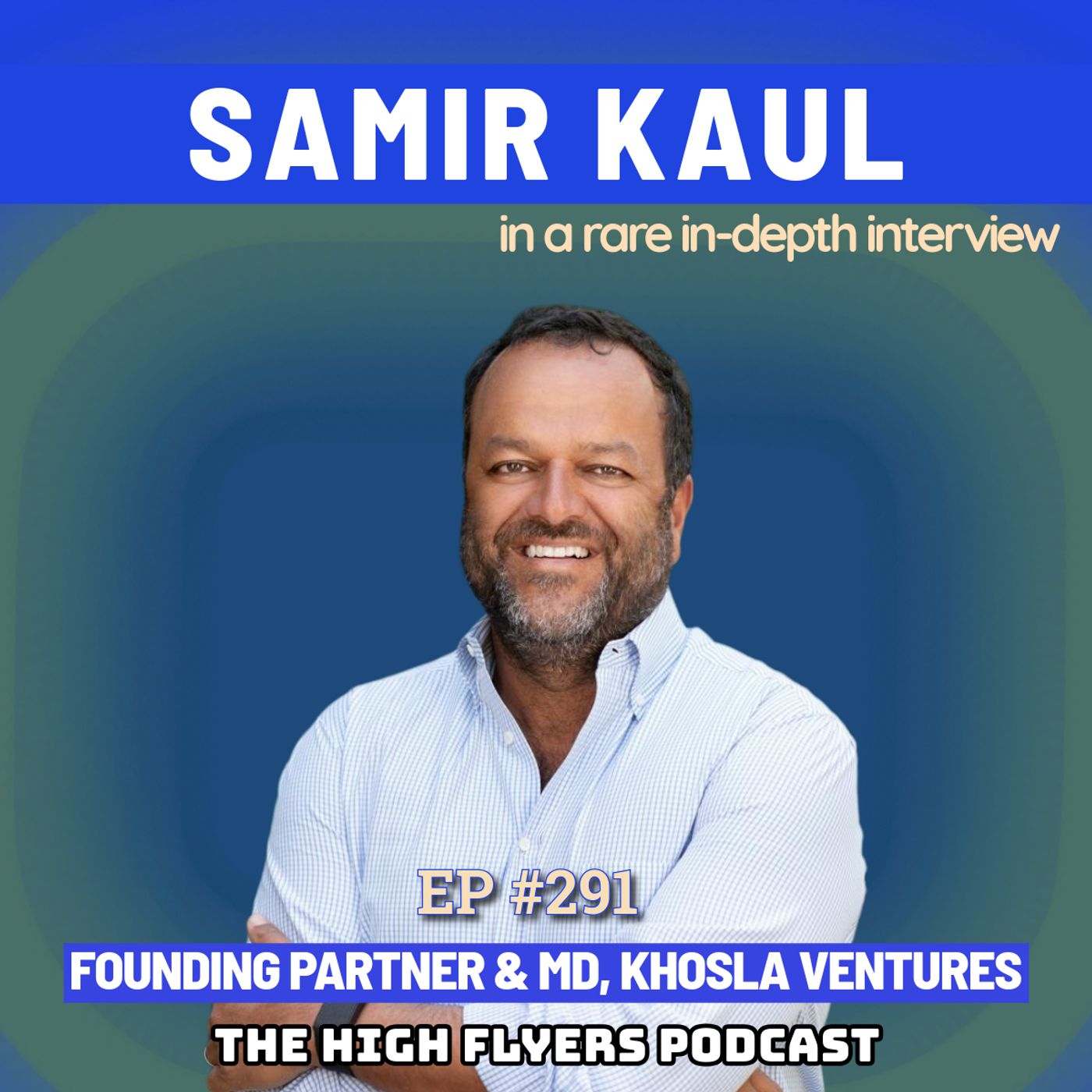
Samir Kaul, longtime partner at Coastal Ventures, discusses how VCs chase hype, the cost of doing so, and how his scientific background and mentors shaped his investing and identity.
Samir Kaul was born in Silver Spring, Maryland and now lives in Atherton, California. He’s a managing director at Coastal Ventures (22 years). He studied science (biochemistry/PhD track) at the University of Maryland, worked under Craig Venter on the Arabidopsis sequencing project, then earned an MBA from Harvard. He’s married to Pooja (a former top corporate lawyer who retook the bar and later focused on raising their three kids).
Scientific training teaches control-variable thinking and helps evaluate technology; it can also make innovation harder. Coastal Ventures avoids “party rounds” and logo-chasing, focusing on steady-state value, pricing power, margins, and team quality. VC success should be judged by inputs and decision-making, not just outcomes. Specialist funds are too cycle-prone; generalist investing is preferred.
Early bets from New Zealand (LanzaTech; Rocket Lab) and space-adjacent investing (Skybox sold to Google; Varda’s microgravity pharma manufacturing concept). He also cites the cleantech bubble crash and Vinod Khosla’s patience during losses.
Written by AI. May contain mistakes.
Samir shares his childhood memories, family background, and early experiences.
“Let's set the scene with some fun facts.”
Samir discusses his wife's career and the lessons he learned from her.
“And it's particularly an important point in this world of AI.”
Samir reflects on his Indian heritage and the cultural experiences growing up.
“Let's run back the clock, Samir, to your sunrise, as I call it, your childhood.”
Explore how competitiveness shapes both personal and family dynamics.
“You were kind enough to connect me to some people in your family for research.”
Learn about Samir Kaul's transition from academia to a successful business career.
“And I want to spend a bit of time about your scientific background, because I think that shapes a lot of what you've done in different facets of your career.”
Understand how scientific training influences venture capital decision-making.
“because you just assume that things are done a certain way.”
Discover innovative investment strategies in emerging markets and technologies.
“really started with Nubar and then Vinod, obviously for the last 20 plus years, we've refined it.”
Discover the innovative potential of manufacturing pharmaceuticals in space and its implications for healthcare.
“If we make the assumption in five years that space launch is three rockets a week, easy to get on, not that expensive, what would we have wished we would have invested in before that became obvious to everybody?”
Learn about the speaker's unconventional journey from science to venture capital and the key decisions along the way.
“Because being in space is just no big deal.”
Explore the importance of mentorship and learning from experiences in shaping a successful career in venture capital.
“And two - Well, a lot of people do want to be a VC.”
Samir discusses the importance of mentorship and learning from experiences, particularly through failures.
“all this stuff is just so foreign to me.”
The conversation shifts to the pros and cons of generalist and specialist investment approaches in the current market.
“And that's really a tribute to Vinod and just his patience, his long-term thinking.”
Samir evaluates the current investment landscape, emphasizing the importance of long-term thinking and market assessments.
“And I think this is where you connected me to a bunch of your founders and I know a bunch of your team really well.”
Samir shares insights on the qualities and traits that he values in startup founders and executives.
“raised large funds and are trying to find areas to deploy.”
Explore the driving forces behind successful founders and their dedication.
“So many of the great companies are people, Travis started Uber because he couldn't get a cab in Paris.”
Samir discusses his experience with Codon Devices and the challenges faced.
“meeting them and telling them what they missed out on.”
Understanding the dynamic between Samir and his partner Vinod Khosla.
“And the mistake I made there, we were too early.”
How Samir and Vinod resolve disagreements in investment decisions.
“So we can't do the four-hour board meeting like we used to be able to do the board dinner and then the board meeting and then walk around and take a tour.”
Samir reflects on networking, his partners, and interpersonal relationships.
“No, I am interviewing them because I kind of interview everyone that comes in through here.”
Samir discusses who he would invite to a learning room and the value of their insights.
“His Twitter persona and his true persona are very different, which is why we work well together, frankly.”
Samir reflects on personal and professional goals for the future, emphasizing resilience and mentorship.
“So look, Vinod would be definitely up there.”
Samir shares the value of family vacations and experiences that strengthen bonds.
“You have to keep your finger on that pulse.”
Discussion about learning new skills and the importance of open-ended questions in interviews.
“Is there one thing you want to learn in the next six months?”
Samir expresses a pet peeve and suggests insightful questions for future podcast guests.
“It'll find a warrior's hat if you're going to the game and your kid doesn't have a hat.”

Get the gist, explore an idea or ask about something said.
 Claude
On The High Flyers Podcast with Vidit Agarwal, what are the key points of this episode?
Searching your listeningAutomatic transcript. May contain errors.
0:00Hi, I'm Vidit, the founder and host of this podcast, The High Flyers. Hi there, I'm Samir Kaul. Samir, I am intrigued how this goes because you've not done, you've led a handful of interviews in your life. So I'm just grateful that we're doing this. Thank you.
0:14Samir Kaul: No, this is gonna be a lot of fun. I'm looking forward to it. What if we could reimagine the traditional notion of a high flyer? hey friends welcome back or welcome to the high flyers podcast where we do re-imagine a high flyer showcase the brightest and most relatable role models and companies and their journey from sunrise to today as one of the premier products in our curiosity center lineup providing on-demand intelligence to help you be one percent better every single day i'm your host vidit agaral and Let's have some fun. Our listeners have called this podcast a meticulously researched biography unveiling the extraordinary lives and decisions of the most remarkable individuals and companies from around the world.
1:03Samir Kaul: We hope you're enjoying our catalog of 200 plus episodes. Since we launched in 2020, with many of our guests appearing in rare public interviews, it's now time to explore your curiosity. Please enjoy. Let's set the scene with some fun facts. where were you born and where do you live now? So I was born in Silver Spring, Maryland, and I currently live in Atherton, California. And we will talk about that journey shortly. And work, what was your first job and what do you do now? My first job was a shelf cleaner at a hardware store. And right now I'm a managing director at Coastal Ventures. Yep. My first job was at a restaurant and I think it teaches you a lot about life.
1:46So yeah, shelf cleaning sounds more intense.
1:48Samir Kaul: Yeah, they fired me after three weeks. So I was clearly a lousy shelf cleaner. I got fired after three months. You were better than I was. Better than I was. And Samir, as you know, the purpose of this show is to reimagine the high flyer, to go beyond just the job title and show people stories. Is there a high flyer you know who you feel hasn't got the recognition they deserve? Oh, sure. My wife. It's funny. She was a corporate lawyer at the top of her game when Vinod patted me on the shoulder to come move from Boston to San Francisco to start the firm. So she had to retake a bar exam, start at the office.
2:28Samir Kaul: She went from the top law firm in Boston to their satellite office and had to get that going. And then gave that all up to raise our three kids. And people just make the assumption that was the smart economic decision. but she actually made more money than me when we had our first child. So not only was she smarter, better looking, and making more money, she won the coin flip on being the better parent also. And this is Pooja? Yes. Yeah. She came up in my research. I think people rave about her. So I'm glad you've mentioned her and all credit to her. I actually would love to ask you, what have you learned from her?
3:06I don't know if I'd ask this later on, but is there anything you've learned from her that has influenced you?
3:12Samir Kaul: Yeah, she's very patient in her decision-making, whether it be buying a dress or in her assessment of people. So I actually love when she comes to the holiday parties or comes by the office because she has a very good read on people. I'm pretty impulsive, which I think is almost required for our business where she's much more thoughtful and measured. It sounds like my wife. Sometimes when I meet a, I do a bit of angel investing. Sometimes when I meet a founder, I'll ask her about it and she'll think about it a lot more deeply than I would. And she's a doctor. So I think that maybe comes with the craft is need to be intentional.
3:50So that's good. Go Pooja. Back to the episode in a moment. Something I've heard a lot from business owners and leaders is that speed only matters if you still feel confident in the output. And it's particularly an important point in this world of AI. Xero's answer to that is accountable intelligence. AI that shows you what it's doing and works from your own real data and is designed to keep you in control before anything happens. As Xero puts it, most AI asks you to trust it. Accountable intelligence shows you why you can. And that's how it works with JAX, Xero's in-platform AI finance partner.
4:32So whether you're running the business, advising the client, or working with your board, JAX ensures that you get the upside of automation without giving up any of the control. If you want to see this practice, head over to xero.com forward slash highflyers for 90 % off your plan for the first six months. Terms apply and go to the website. That's zero, X-E-R-O dot com forward slash highflyers. Now, back to the episode. Let's run back the clock, Samir, to your sunrise, as I call it, your childhood. And this one's interesting because I don't think you've ever talked about this. So let's see how far I can get into this story.
5:13You said Maryland. Tell me about that. Tell me about the memories of growing up there.
5:18Samir Kaul: It was great. My grandfather immigrated to the States in 1963. He was at the Reserve Bank of India and took a two-year posting at the IMF in D.C. And after two years, he was set to go back to Mumbai, where he was based. And my dad's brother, or my dad was at GW undergrad, and my dad's brother was in high school in D.C. at Wilson High. Both were like, are you kidding me? This is the 60s. The opportunities in India were very limited, and America was truly the land of opportunity. And they didn't want to go back. And so he turned it into a permanent job at the IMF and stayed for an additional 20 years.
5:57So it was a great childhood because we grew up middle class in lower middle class in Gaithersburg, Maryland.
6:04Samir Kaul: My father worked at CompSat Labs and then started his journey at a startup, which ultimately became Hughes Network Systems, which he ultimately was CEO of. But he was there for 50 years. and it was a great upbringing because every weekend I would spend with my grandparents. They lived in DC. So until I was 12, that was every weekend we'd go there and then watch the Redskins games together on Sunday. I got thrown out of one elementary school and then went to private school at a school called Bullis. And this was funny because the elementary school that basically asked me to leave was a public school and I had skipped a grade and was helping the teachers teach.
6:47Samir Kaul: So I was actually doing pretty well academically. I was just causing all kinds of problems. And so my parents felt like, oh boy, what are the Indian immigrant parents? Their son was causing disturbances at school. They didn't really know how to do anything with that. So they sent me to boarding school, which I still remember them talking about at the dinner table, how they were going to afford it. It was$4 ,000 a year. And so I went to Bullis. It was great. Still some of my best friends in the world from there. played competitive soccer and tennis but it was i think when i started at bullis i used to take the bus and i was the first kid being picked up and the last kid dropped off my father was did in the end did very well and was very successful was in the national academy of engineering and distinguished alumni at berkeley and gw but at that time he was a mid-level engineer moving his ranks up and so we were one of the when i started one of the least well-off kids and we lived the furthest away.
7:43Samir Kaul: And by the time I graduated, we were on the other side of it. But that taught me a lot of resilience and scrappiness and street smarts on how to make things work. I was one of maybe one or two Indian kids in the school, lived 30, 40 minutes from the school, had to take a bus in. So that really taught me a lot about resilience. And like I said, when we graduated, I was one of the wealthier kids lived less than five minutes from the school. Things dramatically changed. But like I said, some of my best friends in the world are still living, live near the school, live near Potomac, Maryland. And so it was a great experience.
8:24I want to come to the Indian heritage in a moment because you and I clearly share that. The Redskins was interesting. Keith said to me that was how you and him bonded. This is Keith Raboy. Tell me about the Redskins.
8:35Samir Kaul: He was a huge, yeah. So he was leaving Square, and I went to his house to interview him for a job at KV. And we didn't have a lot in common. And so I was desperately trying. I always try to, when I meet someone, find one point of connection. I feel like people always are guarded. But once you find that one connection point, the walls come down, and then you can actually really get to know somebody. But Keith was a tough cookie. And then finally, we started talking about sports. and it turns out he was a huge Cowboys fan. And the Cow, which made no sense. Most things with Keith make no sense. I love him dearly, but come on.
9:15Samir Kaul: Like he's a kid from New Jersey. Why would he be a Cowboys fan? Probably because he wanted to piss everyone off at his school. So he decided to be a Cowboys fan. But the Cowboys were our arch rivals. So we talked a lot about Tony Dorsett, Roger Staubach and different championship games. And it was great. It's great that we hit it off and we've been pals since. Yeah, that was such a great story that came up in the research. So I'm glad you shared that. On the Indian heritage, one is interesting, Samir, because as I grew up in Australia, I'm a little bit younger than you. And one of the things I often...
9:50I think a lot younger, but a lot younger, or tell me whatever peptides you're shoving in your face. We can chat about it afterwards. Sure. I don't take peptides, but we can talk about it. is as I get older and one of the chats I have with my wife and friends is like appreciating my Indian heritage. I feel when I was a kid, I was the same as you. I was one of probably three or four kids that were kind of Indian sounding name and Indian looking face. And I ran away from that for most of my life. I'm curious, how was it for you? Cause did that Indian heritage play a big role growing up?
10:22Samir Kaul: Yeah, it was dichotomous though. So all my friends from school, my friends on the soccer team, the tennis team, there were no Indians. It wasn't that I ran away from them. There was no choice. But if you've seen the namesake or read the namesake by Jhampalahiri, the book was eerily similar to my childhood, my wife's childhood. We had this incredibly close knit Indian community. Because remember, my grandparents came in 63. My mom came in 1971 after she got married. She was married at 19, arranged marriage to my father, had never been on an airplane. The first time she gets on an airplane, and obviously the first time she left India, was to fly to Washington, D.C.
11:02Samir Kaul: to be with my father. So we had this incredibly close-knit Indian community in Maryland, D.C., Virginia area. Because back then, if you saw another Indian on the street, you cross the street, exchange numbers, and you know how it is. You give someone your last name half of their story. And my dad actually told a funny story when he went to Berkeley for his master's, he knew nobody, he landed. It wasn't like today. Like when we dropped my son off at college, we all went and we went to Target and Bed Bath Beyond and bought him a plant, all this hung up curtains, like all this stuff. He went with a suitcase and he stayed at the international house.
11:40Samir Kaul: And he goes, well, now what do I do? And he played ping pong. So he found a table tennis table and he played, he made some friends. And he said, he remembered looking in the phone book and looking for other Kashmiri last names, because we're Kashmiri. And he found one, because it was like Kaldar, and he just called him. And he goes, hey, I'm Prabhupada, I'm from Srinagar. And they're like, oh, we know some fifth standard deviation in their family. And he says, the wife then said, you must really be craving a Kashmiri meal. And my dad, that was like his favorite part of the day was dinner. and he said, are you kidding me?
12:22Samir Kaul: And went over there and had a full Kashmiri meal. He remember, he just still would tell that story until he passed about how that meant so much to him. Now Indians are, we're everywhere. But back then, so he has incredibly close community I'm still very close to. So, but that was very separate. I had an Indian birthday party and an American birthday party. All through your childhood. All through your childhood. Yeah, absolutely. Until I had stopped having birthday parties, but yeah. Yeah. But as I got later in high school, college, we mixed because they're just friends, but it was just very different back then.
12:57That's so interesting. I don't even know what an Indian birthday party means. Does that mean -
13:01Samir Kaul: Oh, it was a bunch of aunties in the kitchen - I see. Making Indian food. The uncles were playing cards, smoking cigarettes, drinking Johnny Walker, and the kids are running around like zoo animals. And that was like every weekend. I also discovered in my research that apparently you went to Kashmir most summers through your childhood. I spent every summer there. So we would, that was our vacation. We didn't have vacation really anywhere else, but we would, my parents would save up. And when school ended in June, I'd go to Kashmir for 10 weeks. And then my dad would usually meet us for the last three weeks of the trip and bring us home.
13:39Samir Kaul: And it was awesome. We had a big family, we had two family houses, my mom's side and my dad's side, probably 15 minutes apart and just lay out mattresses for 20 cousins jammed in one room and they'd pick them up. We'd play all day and there are no phones, no internet. And then at night, beat the crap out of whichever cousin went to bed first and then start all over the next day. It was great. You were kind enough to connect me to some people in your family for research. And one of the things I discovered there is they said you've always been competitive, whether it's golf or card games or anything.
14:15Were you always like that?
14:17Samir Kaul: I was always competitive. And it's funny as a parent, when I watch my kids play, you have to teach them differently. So my daughter, my middle daughter is actually qualified for states and tennis. And she's a lot like me. You can't encourage her. You have to basically shame her to success. So if she's playing badly, I'll just say, hey, Hila, you're playing like shit. Get your head out of your ass and start playing. With my younger daughter, who's a competitive horse rider, you have to basically say, look, just do your best. That wasn't your best ride. You can do better. Come on, an encourager.
14:55Samir Kaul: And with my son, Neem, who you spoke with, it's a mix. Depending on the sport, you can be tough. And on other sports, you have to be a little bit more encouraging. But I was always, I still am kind of almost unhealthily competitive. It reminds me of a story of our recent guest who you probably know, Mike Van Al, who's at Conviction, who was formerly at Sequoia and Facebook. He said the same thing with, and he's got a Indian American wife, as you might know. And he said one time he'd be in the car and he'd tell his kids, he'd tell one of the kids they're better at baseball. And the other kid would spend the whole day reminding him that, dad, why did you say my sibling is better than me?
15:34And he had to explain himself for the rest of the day. And he said, that is a competitive spirit that he didn't appreciate.
15:41Samir Kaul: I tell people, Vinod and I joke about in the office, we're like, every entrepreneur needs an Indian father. Because you come, first of all, growing up, whatever your dad said was law. Like, the only thing, my father-in-law would always crack this joke. He said, the only thing that's devalued more than the Italian lira is the Indian father. Because when we were growing up, what dad said was the law. He didn't do anything around the house. He wasn't doing dishes. He wasn't picking anything up. And they're pretty quiet. I'd hand them my report card and I'd either get yelled at or just a nod and that would be it.
16:16Samir Kaul: They weren't like graduation participation kind of stuff. I think that was a little bit of an extreme, frankly. I think we all have real mental health issues from that. But I think we may have seesawed a little bit too much the other direction. I'm sure your dad would have been very proud of your career now. Hopefully he's looking down and he's very proud, right? Like you've ticked the boxes. Yeah. No, he was. Yeah. Tell me if I met you with all these experiences, if I met you at age 18, so you've just finished high school, what would I have assumed you do with your life? Probably working for my dad as a kind of screw up kid.
16:52Samir Kaul: I didn't really apply my side. High school, I focused on sports. In college, I focused on fun. And I had a 3.01 at Michigan. Like every other Indian kid, I was going to be a doctor, an engineer, but my father was an engineer. So I wanted to do something different. I did so poorly on the MCAT because I partied the night before that I didn't even bother applying to med school. It would have been a waste of$75 or whatever. And so I was having a lot of fun, but I was pretty directionless, like rudderless. And so my father then basically said, you need to apply to grad school. And one of the many things that he was really adamant on, he was like, hey, you're not going to get a business degree or a finance degree or a history degree.
17:41Samir Kaul: He goes, you want to do that? You go to state school and pay for it yourself. If you want me to pay for out-of-state tuition, you need to leave college with a skill. Now, because I did so poorly in college, I wouldn't say I really left with a skill. So I did a master, I started a PhD in biochemistry at the University of Maryland. I came back home and I lived on campus, but I was near home. And that's the first time I really applied myself because I was like, okay, what kind of jobs can I get? And it was like a lab tech that were awful. And I'm like, oh my God, God, have I screwed up this bad that this is what my future is going to be like?
18:18Samir Kaul: I'm going to be a lab tech cleaning pipettes. And so then I really applied myself. I studied my butt off to basically make up for four lost years in college and did quite well and stumbled into Craig Venter, who was leading the Human Genome Project at the time. So I stopped. I just wrote a thesis, got a master's, and went to work for Craig. And that's where kind of my career kind of took a massive 180. Craig was an incredible genius, entrepreneurial scientist, and took me under his wing. And I was 23 years old. I had a master's. I had no PhD. I didn't know anything about genomics. And he put me in charge of the institute's largest project, which was the Arabidopsis sequencing project.
19:04Samir Kaul: It was the first plant genome to be sequenced. And the relevance, it's a mustard seed. So why do you care about a mustard seed? The same reason we study rats and mice to kind of understand how humans operate is you study mustard seeds to understand how corn, wheat, barley, rice, which are the cash crops, and you can study on a smaller basis so it's easier. And the guy that I was hired to work with quit six months into my job, and they had hired two PhDs, professors to kind of split his job in two. But there was a six month window between when their teaching obligations that they're, I think one was at like Michigan State and the other one was at WashU, St.
19:47Samir Kaul: Louis. But there was a six month window that they basically put me in as like interim head and I ran with it. And so those two people who are nice people never really got to run the project. And they were not happy about working for a 23-year-old who do nothing. But Craig gave me that shot. And then when the project was over, there wasn't really much for me to do. So he encouraged me to go to business school and was very instrumental in me getting into Harvard. And the idea was, he said, look, go to Harvard. And then, and he, at this point he had left the nonprofit Institute where I was working and started Solera, which was one of the hottest companies out there.
20:32And they were going to sequence the human genome and change the way medicine was being done.
20:37Samir Kaul: And he said, look, go to Harvard, come back, you run the company, I'll be your boss. And this will be great. And I was like, wow, this is awesome. I get to work with Craig. I get to live near my parents. I was married at the time. My wife was from the area. And I was like, great, now I can go to business school, get a Harvard degree, and I have a ready-made job. Except that six months into my school, he got fired. And I can keep going. But that threw another wrench in the plans. That story is so interesting. And I want to spend a bit of time about your scientific background, because I think that shapes a lot of what you've done in different facets of your career.
21:16But I'd be curious if we jump around here, if we connect that study to even present day, how do you feel your scientific study, if you want to call it that, helps slash hinders you as a VC?
21:31Samir Kaul: I can certainly comment on how it helps. I think when you study science to that level, it gives you a way of thinking, of asking questions, of designing, so many things in life are control variable where you're trying to get to an answer and you keep things in control, but you vary one question or the other to see how things change. And I think that applies to when you try to understand any kind of technology, whether it be life science, energy, tech, infrastructure, software, it doesn't matter. I think that scientific reasoning, scientific method that's ingrained in your head when you study like that is always there.
22:12Samir Kaul: The other area is that a lot of what I've done in my life is start companies directly from universities with professors. And that background I have allows me to establish a level of trust because I was a colleague of theirs at one point. Hindrance, I think the hindrance is that when you know an area really well, it's often paradoxically harder to innovate because you just assume that things are done a certain way. And I think that's why Travis at Uber or Brian at Airbnb, Jack Dorsey at Square didn't come from financial services, hotel management, or car, the auto industry. It had to be somewhere from outside the auto industry.
22:59Samir Kaul: GM didn't create Waymo. NASA didn't create SpaceX. It was people that dared to dream and were truly unreasonable that did that.
23:15That one's, again, interesting because people would say your roles today, like the impact you've had has been across so many areas that traditional VC wouldn't have invested in, right? But you have made it work. Again, I'm curious, like we can jump around again. I think we're slipping between present day and your early career. That is incredible because I think you've built a name and Coastler's built a name for that you can commercialize a lot of these scientific research at scale, right? Did that, again, idea come early in your career?
23:47Samir Kaul: It was that I have to give a lot of credit both to Vinod for allowing that, for encouraging it, not just allowing it. I think that's probably why he tapped me on the shoulder along with David Wyden to be co-founders of the firm. but i learned a lot of that from my first job out of business school which i worked for new bar fan at flagship and new bars now famously known for being the co-founder of moderna and that came out of flagship in their mind everything there was incubation find technology spin it out build the initial team file a lot of intellectual property recreate what was done in the lab in a more robust way, right?
24:31Samir Kaul: Because academics basically do something extraordinary once, publish a paper and move on. If you're going to commercialize it, you got to do it tens of thousands of times, has to be repeatable, has to be industrialized. And I learned that craft really started with Nubar and then Vinod, obviously for the last 20 plus years, we've refined it. it also like right now there are certain areas that are so overfunded and companies will raise money at 20 billion dollar valuation and then 60 days later raise at 40 and then 60 days later raise at 100 and boy chasing logos is a tough way to make money what's the alpha what's your edge how do you justify charging fees and carry in making those kind of investments i always found that you could catch the biggest fish in the ponds that people aren't fishing in.
25:24Samir Kaul: And if you fish a popular river, you may catch a fish, but it's going to be very undifferentiated from the fish the guy sitting next to you is catching. And the areas where I think we've pioneered investing and no one else was doing, and I'll give you an example. So we initially did a company in New Zealand called Lanza Tech, which is now a public company. And I went to visit them 2008 because my son, Niamh, who you spoke to, was six months old. And in the building that Lonza Tech was in were two other startups, Bio Consortia, which is still around, a pretty good company, and Seeds, and Rocket Lab.
26:04Samir Kaul: And we ended up investing in all three. Rocket Lab, we put$5 million in for a third of the company. and Pete Beck was, I think, a dropout and he had this vision of space. And we actually still own 28 % of the company when we went public. And I think the company's worth, I don't know, 30 or 40 billion now. So it was a really good outcome for us. But it came out of New Zealand. A kid with paper plans, blueprints on how to build 3D print rockets for... And we made that bet. But then what we did on top of that is that we made an early bet in a company called Varda. because so if you take a big bet like that, you have to take advantage of it.
26:45Samir Kaul: And what I mean by that is we had a company called Skybox. Skybox was going to build launch microsatellites into space. This is like kind of the predecessor to Starlink, but it was too early because there weren't a lot of launches happening. So you're fully dependent on Lockheed or NASA or someone doing a lot or receiving spacex as i was doing and you had to be on the schedule and they could drop you from hitching a ride they could delay their schedule by six months which was no big deal to lockheed but for a startup that's six months of burn that you've just trashed right without real progress and so we sold the company to google i think for half a billion dollars we made a lot of money it was great but it never hit the potential so we said boy if traveling to space was ubiquitous, like calling an Uber, and it was that cheap, Skybox would have been very successful.
27:39Samir Kaul: It would have been Starlink. It would have been Starlink. So what else, since we're investing in Rocket Lab, we obviously believe that putting stuff in space is going to be no big deal in the next five years. If that's true, what else would we have wanted to have invested in then today, right? If we make the assumption in five years that space launch is three rockets a week, easy to get on, not that expensive, what would we have wished we would have invested in before that became obvious to everybody? And that's where Varda, Adelian, is a great entrepreneur, used to work for us, came to us with his idea.
28:19Samir Kaul: He was at Founders Fund and he incubated this. And the idea initially was we were going to make fiber optic cables in space. And because with microgravity, you wouldn't have these tiny fractures and blah, blah, blah. And it was a good idea. We invested. But soon we kind of thought about it and we said, look, that's more commodity. We're going to make things in space at this early stage. What can you charge the absolute most per pound for? So you don't have any weight restrictions. And it was pharmaceuticals. And then we researched it further. and a lot of pharmaceutical companies had done research on using microgravity to manufacture drugs.
29:01And so you'd say, well, explain that to the common person.
29:04Samir Kaul: What does that actually mean? Well, all of us sadly probably have someone who's had cancer and had to go through chemotherapy. And if you do that, you know, you go to these infusion clinics and you spend all day there and it's miserable. And you have these chemo dates where your partner or your friends come and just hang out with you because you're just so bored. And the reason is a lot of those drugs, like Keytruda and et cetera, when you formulate them on Earth terrestrially, their formulations are such that they have to be given by infusion or they clump up. And there's now evidence that if you do those in space, in microgravity, where there's no gravity, you actually get around those problems.
29:45Samir Kaul: And you could actually dose one of those drugs like you dose Ozempic or Munjaro, with an injection. And just think about how amazing that would be. Forget how profitable it would be. But just think for the patient, how amazing that would be if they could take an injection, self-inject as opposed. And then, of course, what would that do for the healthcare cost? The infusion clinics are expensive as hell, having someone sit there. So people are like, you're crazy. I'm like, well, are we really crazy? We think Rocket Lab is about to do their hundredth launch. SpaceX is launching rockets. They're now reusable.
30:21Samir Kaul: It is not a big deal to get into space or throw stuff in space. In fact, there's now a space junk problem because there's so much crap up there. So why not manufacture things up there? And now you're talking about data centers, right? Which is why these large lift rockets like Blue Origin and SpaceX are going to be really valuable because who else is going to be able to put those in space for the same reason? Because being in space is just no big deal. yeah well it's still early but yeah you're right there's so many but that's it's given the risk we take ultima genomics we did with galat i've done five companies with galat he's a total stud and he'll tell people like he's only going to work he'll work with he will not do a company without coming to me first and could we built this incredible loyalty over time but he we asked i asked my team that I go look he's going to be able to sequence the genome like in an hour for 10 bucks so what are the companies today five years before he actually can prove it and the rest of the world knows our dirty little secret what would we want to invest in and go do that because if in five you don't come up with anything and in five years there's something that has started that's taking advantage of a 10 or 25 genome by lunch and you guys haven't found it then shame on you.
31:43Samir Kaul: Because we have this insight. And you're seeing it. He's getting great traction. He just announced a big deal with Singapore. He's getting tremendous traction, lots of machines out there. And so it's real. I'm really curious to ask you back to your early venture career, because your education is quite contrarian in that you did two degrees in science. I think one was in biology. And then he did the MBA at Harvard. And then he went into VC. I'm sure a lot of your classmates that you went to college with would have looked at you maybe and gone, hey, why are you going down the business, private sector, commercial part?
32:23Like, why don't you go become a scientist or a researcher or something in that space? Was that a crossroads moment for you?
32:29Samir Kaul: Not really. I was making$29 ,000 a year. that sucked and the that was it so there it was like a very clear incentive well actually puja's parents when we started dating were not happy with me because i kind of screwed up in college and then was at maryland doing about and they had aspirations of her marrying a doctor or someone from harvard or whatever so i said okay well sure i'll go so i got into harvard and really And then I got into Harvard and the answer was, yes, you can marry my daughter. But no, I wasn't a great scientist. Where I flourished was like managing the project, getting the team to work around the clock.
33:13Samir Kaul: And it was a nonprofit. I couldn't give them stock. I could buy them dinner maybe. But that was about it. But got them, rallied the troop. It was like a total esprit de corps and present the work at conferences and schmooze with people to get us on the cover of nature. That's where my skill was. And to Craig's credit, he recognized that and said, look, you can go do a PhD or you can do an MBA. You've kind of done what would be the pinnacle. I had four nature papers, a science paper, a paper of the Proceedings of the National Academy of Science, and a few others I can't even remember. But anyways, but I had already had eight or nine publications and top journals spoken at a bunch of different conferences.
33:50Samir Kaul: And I was 26. He was like, you need a PhD and do what? That was the case. He says, go to business school. By the way, I had never seen a P &L statement, a balance sheet, or anything when I went to business school. So they had this program we called Math Camp. And it was for people like me, people from the military, medical doctors, people who just weren't your traditional Goldman Sachs, McKinsey, Morgan Stanley-like people that were coming to business school. And that's where I learned how to use Excel and a bunch of these other things. but even when I went to business school, I did not know what venture capital was.
34:27Samir Kaul: I just assumed, like my dad who worked his way up and had a great career, that I would, with an HBS degree, get a job at Genentech or Amgen or something like, or stay in Boston at Genzyme. And I thought I was going to be working with Craig at Solera, but so that went out. And then maybe I'd be a country manager and go work in India or Thailand or somewhere exotic and fun and be an expat. And then And ultimately, I figured I was good enough and with the HBS degree that I'd be like a vice president somewhere. And that was like 500K a year and a pretty nice job. And I was like, that's awesome. I'll do that.
35:04Samir Kaul: And maybe you get lucky and you get tapped to be something more than that. But I was pretty content at that. So at the time, two of the most prominent biotech CEOs, Gordon Binder at Amgen and Ray Gilmartin at Merck, were both HBS alums. And they came on campus serendipitously my first semester, soon after Craig had been fired. And they invited me to have dinner with them because I was like the only biotech-y kind of person. And I worked at a nonprofit institute. It wasn't like I was really at a biotech company. And I was so excited to have dinner with these guys. One, it was a free meal. And then second, it was to meet these guys.
35:39Samir Kaul: And I asked them questions about what they did, what they loved about their job. And I was like, so are you working on the next type of cancer cure or cardiovascular cure? Are you in the lab? Are you doing? And they're like, no, we're managing people. We're flying around country to country, visiting our different groups, spending a lot of time on Wall Street and talking to the analysts. This job sucks. I wouldn't want that job. I don't care how much they paid you. And that's what drove me to then, okay, option three, which was startups, entrepreneurship, and venture capital. And my very close friend from business school dragged me to a talk at Harvard Medical School, where Nubar was speaking.
36:20Samir Kaul: And he had worked with the company called Applied Biosystems that was generating the NextGen Sequencer. And in his talk, he referenced Solera, and he referenced the Arabidopsis project. And so I was like, wait a second. So I went up to him after. I said, by the way, I was lead author on that slide you had up there. And he said, okay, great. Gave me his card. And he said, you should come work for me. And so I did for that summer, and that was fun. and then he's like well do you want a job after you graduate and i'm like well i don't really want to be a venture capitalist because yeah i think at that time they were paying 120k which was awesome but i didn't even know what to do with that much money i'd come in making 29k and i said but all you're going to have me do is be like a diligence donkey for you and doing tons and tons of diligence i'm not going to really learn anything and in three years you're probably going to tell me I'm not on the partner track and I'm going to have to go work at a portfolio company and you're not going to give me much carry.
37:18Samir Kaul: And so I was like, this seems like a shitty job out of HBS. Why am I doing that? And he said, okay, well, why don't you do a hybrid job where we'll pay you the venture salary, which was important. We'll give you the mice nuts carry we give everyone else. But if you start a company, you can have direct equity in that company. I go, okay, well, that's interesting. That makes sense because then I don't have to wait for the fund to be paid back. And I'm actually getting real direct equity on what I'm doing. And I'm competitive. I always wanted to be the guy to bet on, right? I wanted to serve to win a match or take the penalty kick or that kind of thing.
37:56Samir Kaul: I didn't. So I was like, great. And that worked out well. And I did four of those and Vinod invested in three of them. And that's how he got to know me. yeah i want to come to vinod in a second because that relationship is so enduring and so rare two points on the vc one it's really interesting because i think most people would say what you said which is like you don't go to your college university wanting to be a vc the only person i met who said that was venki from menlo he came on my show recently you might know venki and he said from day dot he wanted to be a vc and i was blown away by that comment but kudos to venki for having a clear path in life.
38:31And two - Well, a lot of people do want to be a VC. So I just spoke - I think now, I think today they want to be a VC, right?
38:37Samir Kaul: No, but even back then, people, because they view it as like this great job and I'd interview all these kids and they'd be like, well, I just feel like I have enough energy and interest, not just to be tied down to one thing. And I'd be like, okay, so you're smarter than Bill Gates, Steve Jobs, Larry Page, Sergey Brin, Mark Zuckerberg, who are just tied down to one thing. I go, and, but the reality is coming right out of school, you don't know anything. And then if, and if you don't have the, the experience set that an entrepreneur isn't going to listen to you and isn't going to pick you over another firm, unless you're the highest bid.
39:18Samir Kaul: And if you're the highest bid, you're guaranteed to lose money over the course of a portfolio. So I had a bunch of kids today were asking me, what do we do? We want to be in VC, want to be VC? I said, I would go join a company where you think there'll be multiple startups that come out of it and make friends with everyone in that company and invest whatever you can afford,$5 ,000, $1 ,000 into all those companies. And that's what Keith did. Keith was a white shoe lawyer, I think at Sullivan Cromwell or White & Case. And Peter called him to come join PayPal as their lawyer. He didn't know anything about this stuff.
39:57Samir Kaul: Moved back, did that. Was living in DC and came back and invested in basically every startup out of PayPal and learned a lot. He's smart. So he added a lot of value. And that's what propelled him to be one of the great VCs, was that initial start by having all these hot companies like YouTube and Yelp and LinkedIn, et cetera, that he invested in. Yeah. Yeah. The PayPal network, Yeah, absolutely. It came in very handy. So you want to look for what's going to be the next PayPal type network where people, you're going to have 50 companies that are started. And if 20 of them are successful and you put money in as many as you can, your net net can be pretty happy.
40:40Totally. We could be here for hours and talk about your impact at Coastline and we could probably still not cover it. So I've tried to think of some questions that capture some of that, like the learnings, but also the highlights. I'm curious, like you said, you've been running Coastline now with Vinod for 20 plus years, is that right?
40:57Samir Kaul: 22, yeah. 22 years. 22 years is a very long time and kudos to you guys and the rest of the team. Is there a moment in that 22 years that you feel you learned the most? Well, one, I would say the most blessed part of my career is that I've had incredible mentors. starting at home with my father. My dad would take me to the office on Saturdays and he wouldn't have a ton to do, but he would just be, and I'd play tennis and I'd kind of, I don't know, write on his chalkboard or whatever that you'd think was so cool back then. And I'd say, dad, you didn't really have a lot of meetings today. Like, why are we here?
41:37Samir Kaul: And this is back in the eighties, right? Where you had parking spots and stuff. And he showed me, he pointed to the parking lot and he said, because I'm here, there are a hundred other cars are here. And so if I just have to sit here for six, seven hours on a Saturday and I get seven or eight hours times 100 employees productivity, you're going to do it. And that always stuck with me because like this like work from home, work life balance, all this stuff is just so foreign to me. I'm not saying it's bad, but I think in the startup world or in a job where like venture capital, where I make everyone come in five days a week, where it's an apprenticeship model, you can't mentor people by Zoom.
42:18Samir Kaul: You have to mentor people by them sitting next to you on your hip and learning. But I'd say starting with him, going to Craig, going to Newbar, going to Vinod, whatever success I've had, that's a huge part of it is the mentorship. And so I learn every day from Vinod, David, Keith, Swen, everybody. And from the junior folks too, I learned from them. But I think when I graduated from business school, my favorite professor, Richard Hammermesh, who was the entrepreneurship professor, took me out for a beer. And he gave me all these accolades and I was feeling good. And at the end, he said, Samir, I wish you a non-fatal setback.
43:01Samir Kaul: And I was like, what the hell is that? I thought we were pals and I was like your favorite student. And that happened. And I tell this to a lot of people who are younger now. So when the cleantech bubble crashed, we lost, I lost a lot of money for the firm and our investors. And I was like, man, do I suck at this? And it was really interesting the way Vinod handled it. He could have easily fired me, blamed me, but he stuck with me and he stuck with renewables. We still have a pretty robust, solid energy portfolio. and he was always like, look, it's not about the outcomes because there's so many things about outcomes in this business that are out of your control.
43:49Samir Kaul: I care about the inputs and the decision-making and the thought process and the effort. And that gave me, I learned a lot from that because too many people, you've had so many companies that have been acquired by Facebook or Anthropic or OpenAI that are going to be worth tons of money. but that doesn't necessarily mean that those are good investments but the people that lead those investments are going to tout themselves as hey look i put 50 million bucks in this company and i got a billion dollars in anthropic stock but they made a bad investment that got a lucky aqua hire or got acquired and now anthropic is obviously one of the great companies of our generation, sticking with people, sticking with an investment class, not being so reactive to the markets has really taught me how to be more patient and how to think of things like, not will it get to 100 million of revenue next year, but will it get to a billion of revenue in five years with still solid growth and sustainable margins that aren't going to be prone to margin compression is how we look at things now.
45:00Samir Kaul: And that's really a tribute to Vinod and just his patience, his long-term thinking. And he's the most resilient, tough under pressure guy I've ever met. And I've worked with a lot of interesting people. Can I ask you about like generalists versus specialists? Because I feel this has changed over time where we had all these funds that popped up over the last 20 years in the US that were specialists, right? That only did a particular sleeve. Whereas I feel with AI, we've gone back to general. We were always a generalist firm. And I think specialist firms can look really good in stitches in time.
45:37There was a time where a specialist crypto fund
45:40Samir Kaul: would have outperformed everybody. But you want a portfolio. The whole reason of doing a portfolio is to have diversification and to manage the risk to get to your desired outcome, which for us would be like, hey, we tolerate a 3X fund, we'd want a 5X fund, and better than that would be great.
45:59So you're saying either is fine? Because in AI, I think most VCs would say...
46:03Samir Kaul: No, I don't think... I wouldn't put a dollar of my money in a specialist firm. Interesting. So if I come to you tomorrow and say, Samir, I am only doing renewable energy, and that is going to be my fund, you feel that it's too specialized? Yeah, absolutely. You're too prone to cycles and to the whims of the consumer. No way. I wouldn't give you a penny. I'd wish you luck. I think it's great. And I think that energy is important, but I wouldn't invest a penny in you. And is that your lived experience from the climate tech 1.0 era? We never planned on being that concentrated in climate, but everyone else bailed.
46:44Samir Kaul: So we were like last man standing. So we had to, we over, we got lucky that fund had Square and a few other things that saved us, but yeah. And tell me, like we talked earlier about, I call it frontier tech. Maybe that's the wrong terminology and that's the catch-all word. How do you assess that today? Like you referenced earlier about like fundraising rounds. I think you said every 60 days, like a markup or a price increase, right? I think you were maybe exaggerating a bit, but there is some truth to that. Yeah, I think there's a lot of truth to that, but yeah. How do you assess the landscape today?
47:17Someone who's been around this game a while, and you probably sit there and talk to Vinod, and you guys say, this is ridiculous. This is good. What is the assessment? If I popped into Planet Earth today, and I go, Samir, I've never heard about venture capital. I want to get the one-on-one from you on where the market's at, what's working, what's not. What is your feeling? And maybe you're getting these questions when you speak to other folks, right?
47:41Samir Kaul: Look, I think you've got to ignore short-term perturbation, then you can't be myopic. Again, you got to look at like, what would this company be worth under normal circumstances in five to seven years? Right now, we've got some crazy dynamics, right? We have data centers shortage, we have power shortage, we have rare earth shortage. We even have shortage in semiconductor supply, which to me is kind of crazy right now. And so you're getting all kinds of short-term valuation perturbations. So you have to think about it in a steady state, in a relatively normal market, what would these companies be worth?
48:18Samir Kaul: They're not going to be worth 100 times revenue. They're not going to be, people are going to look at, hey, do they have a unique product? Do they have pricing power? Do they have good margins? Do they have a great team? is the market growing? What are the competitive dynamics, et cetera, et cetera. So you have to be careful. It's really easy to kind of join these party rounds and chase logos, but the party always ends. And for people who have that as their main strategy, the party usually ends poorly. I totally agree. And I'm seeing this across the board. And I think this is where you connected me to a bunch of your founders and I know a bunch of your team really well.
48:56And this is where KV, candidly, have done really well, where you've always been quite upfront about what you do and what you don't, right? I think you and I were talking about this the other day. Even if people look up your activities online, on Twitter and other profiles, your team is direct. And I think people appreciate that, hopefully. I appreciate that, because I think a lot of VCs do content marketing, what they say one thing online.
49:18Samir Kaul: I think the right CEOs appreciate it. It's a good screen, right? Even today, there's a really hot company in Europe and everyone's flying out there to meet him. And I did a zoom with them this morning and they have a COO that isn't, that's remote. And I said, how the hell does that work? And this guy clearly had been, it gotten his ass kissed by everyone. And I was just like, he goes, what do you mean? I go, well, COO is supposed to be onsite, like managing the troops. And this guy's living somewhere here, like 10 ,000 miles away. He's like, well, he travels. I was like, what? I go, that's the most ridiculous thing I've ever heard.
49:57Samir Kaul: And I said, this is just a preview to us. If you choose us and we get there to want to invest, I'm not going to sit there. Like, I don't care that you got 10 term sheets and everyone thinks you're the next Steve Jobs. I'm telling you, you're stupid. Like, this is crazy. And then he later told me, and he appreciated sending me a text after because you're the only guy. That was such an obvious kind of yellow flag. Now, whether we do the investment or not, I don't know. but I'm not going to not be truthful or transparent with somebody, even if I'm trying to win. Because the right CEO would do what he did and say, wait a minute, that was actually great feedback.
50:33Samir Kaul: No one else gave me that feedback in 20 minutes. That's what I want. Right. Whereas so many VCs are scared. The VCs that sat around and let Adam Newman get like a sauna in his office and do shots every hour or something. Like what the hell? and i remember an lp once said to me you guys are pretty tough you would never get into we work i'm like you're goddamn right but then we work explodes and i'm not saying that we would have been able to we maybe we couldn't have done anything different either but i tell you i wouldn't be sitting there cheering on a guy who's doing that kind of stuff yeah i decide to this is a lot of vcs say that a big part of the job is you're humbled by it right where you get proven wrong more times than you're right, but you want the ones that are right to be home runs.
51:20If you think in the past, say two years, let's put a window on it. Have there been things you've changed your mind on?
51:26Samir Kaul: Oh, yeah. I think the sign, I think people's ability to change their mind because of new data is a great feature, not a bug. We had someone here at KV who was the most rigid thinker ever. and if we made an investment that he didn't like, he would root for the company to fail. And I'd say one of, I think hopefully mine and certainly one of Vinod's strengths is he'd rather be successful than correct. And I think that's like a really important trait. I want to come to Vinod in a second, but one of the things I'm deeply curious about, and I think you have a well-formed view on this, is there's this whole fashion today of physical AI, robotics, infrastructure from a VC perspective, right?
52:14That I say three, four years ago, VCs would, most VCs, not all, would run away from that idea. Whereas now when I speak to VCs, the first question they ask me is they go, is there a company in this space that you know of that we should meet? And I go, that is so funny. In the past, if I came to you with a company in that space, you'd go, we only invest in SaaS or we only invest in software. How do you look at that landscape? I think back to the point of, you know, that line someone said to me a while back, A lot of companies die of indigestion, not starvation, from a capital perspective. They just raise too much capital and they get very fat.
52:48How do you assess that sudden interest in a lot of spaces that you and Vinod and others have invested in for decades? We stop investing in it.
52:57Samir Kaul: We stop investing in it. Well, because what's clear is that these folks don't know shit about the space, but have raised large funds and are trying to find areas to deploy. so many people are just in the business of collecting fees and building these empires vano and i are always large investors in these funds don't most of the fees get put back as deemed contribution just not it has worked out great because our funds have done well and life's great but but so many people just want to get logo chasing physically is hard now you have to be really careful too because it's also very competitive. A lot of these robotics companies, a lot of people just aren't investing in robotics companies because they just feel like China will win all of that.
53:43Samir Kaul: I don't believe that. And I don't believe the Chinese robots have the quality of what some of the things that our companies are making here. I've seen it. We've ordered their robots. They haven't. They've caught on fire, broke, fractured. But I think you have to be disciplined. We haven't changed in 20 plus years materially. We've always started with the motto, bold, early, impactful, and we're sticking with it. We always look for high, large markets, potentially game-breaking technology, which reduces market risk, and then try to get the assemble the best teams we possibly can on terms that we can swallow.
54:20Tell me a bit about talent. I think this came up a lot of my research is people say you're very good at both talent for KV. I think you're deeply involved in the recruitment of a lot of folks, but also talent for your portfolio companies. I think some of your CEOs said to me that often you're the last interview. They want you to have the spidey sense. And I think back to that point of being direct and transparent, they want someone like you who can read through the cell. What are you seeing when you look at talent? This may be a little broad, but when you look at talent, what are the kind of skills or traits that are getting you excited, both in founders, but then also execs for your portfolio companies.
54:59Are there particular two or three traits that you think is underappreciated today? Yeah.
55:05Samir Kaul: I think too many people think that you can compromise on IQ because of AI. Compromise. Yeah. Sorry. Compromise on IQ because of AI. I just don't believe it. I think that, yeah, of course, it's not just in code. It's on judgment. It's on strategic direction. It's on knowing how to handle yourself. So I think that's one thing that people don't pay enough attention to. And then for me, it's always been resilience. If it's some kid who went to Exeter and then went to Stanford and then went to Google and Meta and then, hey, I want to do a startup. That feels, hey, I want to learn how to surf or I'd like to be a pilot.
55:44Samir Kaul: That's not. Someone asked me today at Stanford, how do you know if you want to be a founder? I said, that's not the way to look at it. The way to look at it is that you identify a problem that you are committed to solving, and you'll do anything to solve that problem. Then you're a missionary who happens to found a company to go do that. But you can't do it any other way. So many of the great companies are people, Travis started Uber because he couldn't get a cab in Paris. people people start companies because they have a visceral instinct on a problem that they think that they have to solve and so then they're going to spend all their energy to go solve that problem and i tell people if you want to be a founder it's hard you got to really be a missionary you got to turn down birthday parties anniversaries holidays and just be like if i get a call the answer is yes when we started our firm vano david and i the answer was always yes someone wanted to invest we raised our first fund in the middle of the financial crisis and not one kleiner perkins lp invested in us even though vano that made them tens of billions of dollars not a single kleiner lp invested in us and now our performance speaks for itself and i told those guys i was young and pissed and i was like well one day we're not going to let you in our fund and they kind of laughed at me like huh we don't care and that kind of thing i remember all those guys who fucking passed yeah and then yeah there's a vc that said to me the other day he's got a inbox called a middle finger which is all the people that said no i don't need i don't need an inbox i got them all in the frontal cortex and yeah i kind of and i sometimes i enjoy taking meeting them and telling them what they missed out on.
57:38Yeah. Yeah. It sounds like your drive, you and I both, my drive comes from if someone tells me I can't do it, I go, great, game on. I am going to show you and I'm going to put all my fuel into this. I hear you on that. I'm curious if there's any, like, again, this came from my research and I don't want to name companies. Maybe you can choose to do that is I asked your CEOs, I said, what are some questions I should ask Samir that maybe he's not being asked so that are going to get him intellectually excited? And a lot of them said, asking about some of the companies that maybe didn't work out the way you thought they would, either in terms of growth rates or team changes and how that influenced the next investment you made.
58:15Can you think of, I'm sure there's many in the 22 years, but can you think of some companies you can name or not name them? Sure.
58:23Samir Kaul: So I started a company called Codon Devices. It was the first synthetic biology company that was started in 2004. and the idea was we were going to be the intel of biology and we were going to fabricate long pieces of DNA for people to do all kinds of studies that they wouldn't have to do it the old-fashioned way which is cloning and growing it in bacteria then purifying it they just print it out just print out long stretches of DNA and it'd be like this fab and we get we We would develop our own parts too and have IP on it and blah, blah, blah. And we raised a bunch of money and we got revenue.
59:05Samir Kaul: And then I replaced myself as CEO, which was the right thing to do. But we never could get sequencing costs were too high. So we were making these beautiful pieces of DNA. People loved it. But people weren't going to pay more than like a dollar a base pair. I still remember these numbers 23 years later. and the QAQC was still sequencing. People wanted the piece of DNA that they got to be fully verified as being actually what they wanted. And clearly they weren't going to pay more than a dollar. Some paid$1.10, most wanted to pay less. But they were not willing to compromise on the fidelity of what they got.
59:45Samir Kaul: And at that point, the cost of sequencing was still too high. So our cost of sequencing was 65 cents of, and so we just never could generate enough margin to sustain the business. And that was a bummer because we really were the first ones to recognize that synthetic biology was going to be a big place. I had all the, there was a big synthetic biology conference. I got every main speaker to join the advisory board. It was, we were poised to do great things. So that was a bummer. And the mistake I made there, we were too early. And I didn't appreciate how much people really cared about the quality.
1:00:23Samir Kaul: I thought that people would just be psyched to just be able to play around with this stuff. And the sequencing costs didn't decline fast enough for us to have that business. Should we spend a few minutes on talking about you and Vinod, your incredible relationship? And you know what's fascinating here is, again, I spoke to a lot of founders for research, some that know you really well, some that follow your path. They said one key difference between you and Vinod is they said Vinod has this incredible curiosity where he can spend hours just wanting to learn about a tech where they said you want to reach a decision.
1:00:55You will not spend three hours asking questions and learning. You want to get to the one thing that's going to move the dial. Two questions. One, do you agree with that perception? And two, how do you complement each other?
1:01:07Samir Kaul: I totally agree with that. Obviously, I love technology, but I feel when I'm in a room with somebody, my ADHD kicks in and I just like, I feel like time is so, time is like the one resource that no matter how successful you are, you can create more of. And so I always feel like, let's get to what are the, so I tell my CEOs, for example, that I don't want to sit in a four-hour board meeting and I don't want to have your CFO come in and your GC come in. And, ah, that sounds terrible. I can give me your previous, I go, I want to spend an hour with you and all these other smart people you have on the board.
1:01:45Samir Kaul: And I want to have a discussion about the two or three things that are keeping you up at night. So make that a separate part of the board meeting, and I'll come to that. And just this like presentation where you're just reading me slides I've already read, I have no time for. I'm not doing that. So I do totally agree with that. And I think it's a very good compliment for me and Vinod. We have a lot of things in common. We're hardworking, we're competitive, we're tough negotiators. We recognize that talent is the most important thing in a company. I think we share similar ethics, but he really wants to go deep on the technology.
1:02:20Samir Kaul: And for me, I feel like, is that adding a lot of value to the company for them to teach me all the intricacies of the technology? Or should I learn enough to be dangerous and then help the CEO do what they need to do? And I think the answer is both. Because if Vino gets really curious and he gets more excited, he'll spend more time and energy on the company. That's a benefit, right? So you're almost like selling Vinod on, hey, pick me to be one of the 10 or 15 companies you're really going to spend time with, right? Whereas with me, I'm much more like, okay, how do I help you get over this next two or three?
1:02:58Samir Kaul: I look at every company as what are the two or three risks that we have to retire with the capital we have right now so that we get to live to fight another day because that's all that matters again your founder said you have this incredible ability on going deep on one thing you're like what is that one thing and if they send you a long message you can pick out the one thing i think that is what founders want from their board member right is what is that one thing that's going to move the business forward and i think but that's the only way we can also multitask because all of us in today's day and age are on too many boards have too many companies.
1:03:34Samir Kaul: So we can't do the four-hour board meeting like we used to be able to do the board dinner and then the board meeting and then walk around and take a tour. There's not enough time. Tell me about you and Vinod both and Keith. You're all very proud people. You have strong opinions and I like that. I love the discussions I have with some of you. How do you solve a disagreement? You and Vinod go into a discussion and you both have a strong opinion and it probably happens every week, I assume. How do you solve that? Who gets their way and what is the process? Well, look, if it's for an investment decision, because we tend to invest early enough, where if we had a lot of consensus, we probably eliminate the alpha.
1:04:15Samir Kaul: So we have this policy that depending on the size of the investment, if just one of us is supportive, the other person can't veto. As much as Vinod may hate something, or I may hate something, up to a certain dollar amount, it doesn't matter like i'll listen and with vinod i actually pay more attention when he's negative on something because he's such a techno optimist he can see things that no one else can see it's when he's not excited about something or he's also the most aggressive risk-seeking person i've ever met so when he's like god that sounds risky that i really pay attention because that's abnormal for him to be like, I don't like this, or I think this is too risky.
1:04:58Samir Kaul: It's just so rare. Now, as the dollar amount goes up, then you have to get two people to support it, et cetera, et cetera. You never have to get unanimity because if you do that, then there's no way there's alpha left, right? So depending on how much money we're putting at work, two of us have to say yes. For most things, it's just one of us. So that's the main way. And then when it comes to hiring internally, it has to be unanimous. I don't want to bring anyone in here that everyone isn't excited about because it just sets them up for failure. Are you doing the recruiting for Vino Chief of Staff?
1:05:30Samir Kaul: No, I am interviewing them because I kind of interview everyone that comes in through here. Right. He's had some wonderful chiefs of staff though. His last chief of staff, Nicole, now runs Capital Formation here and led our investment in General Intuition, which is one of our most exciting companies. She's outstanding Rhodes Scholar, super person, office next to mine. I love spending time with her. The other one of note, and they're all been good, so I'm probably forgetting some, I don't mean to offend, but Hari was a Palantir early employee, became chief of staff, started a company, us and Andreessen invested in, and then came back to us and has just done an outstanding job.
1:06:08Well, and also your chief of staff, I hear great things. I've never met her, but I hear incredible things. She ever says she's upleveled you in many ways.
1:06:16Samir Kaul: Without question. The whole platform team, which has now become a massive competitive advantage for our firm was her idea. She ran with it. She manages it. I just kind of gave her air cover. One other couple of questions, and we're coming towards the end shortly as well, and we're rapid fire after this after a couple of questions. I think a common one, and I said this to you the other day, is I'm amazed at your ability not to go out and do every interview and be on X five hours a day. A lot of your partners are. Keith is on there all the time and he and I laugh about it. I had fun with Keith last night.
1:06:51You did have fun with him? Vinoid is very active and has very strong opinions. We don't have to go into details. How do you manage that? Because I can tell you, Samir, I am insecure. I want people's approval. I deeply want people's approval and I want people to say, Vidit, you're good at what you do and I like you and I look for that. And as I get older, I've learned that that can draw me back as well. Wes, you don't seem to seek that approval from the external world.
1:07:16Samir Kaul: look it's easy to be like oh i'm not insecure i don't need that and that's bullshit everyone has a level of high level of insecurity right and there was definitely a time where people would say oh is that vano's family office or kind of oh so how's your boss doing and that kind of stuff but that used to bug me i'm not gonna lie that used to bug me but the answer was never going to be i'm going to get more likes or followers than vano's that's how i'm gonna establish myself it's My dad was a terrific engineer in the National Academy. That's why I went into life sciences. I wasn't going to, you got to find.
1:07:52Samir Kaul: And so, but I humbly think I'm pretty good at a couple of different things. And I'll focus on those. But it's not like I'm an introvert. People meet me. They're like, this guy must be some nerdy introvert that kind of Vinod locks in a closet and does all this stuff. and keep it. And then they meet me and they're like, wait a second, you're more outgoing than those guys. But we all know our roles. And I'm now incredibly comfortable where I'm at. That doesn't mean I was always like that. But the solution was I was never going to outplay Michael Jordan in basketball, or I just wasn't going to do that, right?
1:08:31Samir Kaul: Or have more championship rings than Tom Brady. But no, look, he was number one on the Midas list 25 years apart. That just doesn't happen. And Keith is comedy on Twitter. He can be wrong 99 % of the time, and he still goes right back at it. He admitted he was wrong the other day. You probably screenshotted that. Well, he had to. He had to, because Keith, as much shit as people give him, Keith, he honored his bet. You got to give him credit. He honored his bet, as painful as it was, and boy, did he go down swinging. But Vinod and Keith's willingness to put themselves out there is what also makes them so good at what they do.
1:09:14Samir Kaul: They are two of the best investors in the history of venture capital, period, full stop. The amount of people that want to work with Keith is just incredible. And we get preference. That's how you make money. You get the best entrepreneurs wanting to work with you and they work with you on better than market terms, right? And I will say Keith much better than I do, but I've gotten to know him fairly well recently. He is a very different person one-on-one compared to what he is on Twitter. Oh, totally. He is not, at least to me, he's not been brash and abrasive. He is supportive and open to listening.
1:09:51Even yesterday, we spoke on a couple of things and he had some ideas for me. Whereas if I did that on Twitter, he probably would give me a one word answer back.
1:09:59Samir Kaul: So yeah, no, he's very different. His Twitter persona and his true persona are very different, which is why we work well together, frankly. In fact, a lot of the entrepreneurs that we serve boards on together, we work on together. It's kind of like with me and Vinod, it's a very powerful combo. And I wish we could do it for every company. There's not enough hours in the day, but working with Keith is obviously Vinod is the most important person in my professional life ever. But Keith played a big part of my professional career also, and I enjoy all my time with him. On that point, you've met some fascinating people.
1:10:33I love asking people if you could visualize a learning room. And assume there's five chairs there. You have one chair, and you can invite four people. Four people you know, so it can't be celebrities and tennis players. Maybe you know the tennis players. Who would be the four people you'd love to spend two hours with and just ask questions?
1:10:52Samir Kaul: That's a great question. So look, Vinod would be definitely up there. Bill Gates, I have so much. I learned so much every time I spend time with him. He's been a mentor and friend for now 20 plus years. Look, I think Elon Musk is the great entrepreneur of our time. And though we've had a lot of disagreements publicly and privately, he is the best entrepreneur of our generation, period, full stop. And I'd actually have Zelensky in there. What I talked about, what I love in entrepreneurs is resilience. Who's more resilient than that guy? Yeah, yeah. Without going to politics. Yes, yes. Particularly right now.
1:11:34So yeah, that's a good mix of folks. That'll be a good meal. Last question, then we're going to rapid fire sprint. I think people are very curious about it. People say your book, you've written many successful chapters, but there's many chapters left in the Samir Cole book. We're recording this towards the end of 2026. if I sat down with you this time next year in 2027, what would you have hoped to have achieved? Do you have, are you the kind of person who sits down at the end of the year and makes a list of goals for the next year?
1:12:03Samir Kaul: No, not really. Look, I'm trying my best to, with my partners, build the best firm to continue to be bold, early impact on mission-driven things and not compromise those principles. Try my best to be the best dad, husband, son, brother, friend that I can't be. And then I'm, frankly, I'm also, once you get to 52, you start really worrying about, not worrying, but you got to be focused on your health and those. But look, if I wasn't being, if I wasn't doing what I'm doing now, I love teaching. So I love, I love going to Stanford, Harvard, any, you know, Michigan, where I went to school and do a fireside chat.
1:12:42Samir Kaul: And then I often will say, look, let's grab 10 of the kids that you think would be really interesting and take them to dinner. And to me, that's like, those are my favorite days of the year. My wife will notice I come back, I'm so happy and relaxed. I just love spending time with the next generation because it actually helps me also figure out where we should be investing. Because your investments are only going to be as good as the people that do it. And so where the smartest kids at the smartest universities are going is wanting to spend their time. You have to keep your finger on that pulse.
1:13:12Yeah, and I'm sure you've that, there's that line And I can't remember who said it, but can the next 20 year old appreciate you as an investor? If they don't know anything about VC, do they come to you and go, I want Samir on my board? Right. Yeah.
1:13:27Samir Kaul: Absolutely. Well, that's because you have to have, you have to see every investment, pick the right ones and get a below market deal and then use whatever talent, skills, network you have to tip it a little bit over to the success scale. That's the game. Absolutely. I want to move to Rapid Fire Sprint. Before I do, is there anything I haven't asked that you want to touch on? No, this is a lot of fun. How have I done, by the way? Have I done a decent job, Sam? I think you've done a great job. I'd recommend anyone jump on your podcast. I'm going to save that and frame it. Save that and frame your voice saying that.
1:14:03Let's move to Rapid Fire Sprint to wrap this up. Is there one non-work investment? And when I say investment of time, energy, or intellect that you've considered the best, is there a holiday you've done or a course or a hobby?
1:14:17Samir Kaul: Yeah, I think I'd say the family vacations that we've crafted for our kids. We've gone one of the most fun ones we did. We spent a week in a yurt in the Gobi desert in Mongolia. So no phones, no internet, and just the five of us. And that was pretty, pretty awesome. Is there one thing you want to learn in the next six months? And this could be in a VC context or it could be in life? Yeah, I'd like to, it sounds, I just started scuba diving. So I'd like to actually get quite better at that because my kids love it and it's a great way for us to spend time together. That sounds great. That's so different to the usual tennis and paddle and all that stuff.
1:14:55It's getting the rage at the moment. Is there one question you ask founders when you meet them in a diligence process?
1:15:03Samir Kaul: Yeah, it's always, I ask them, I ask them to tell me their story and what the hardest obstacle they've got to overcome. And is there a different question you ask when you interview a candidate? No, I still, it's, I like to keep it open-ended, let them tell their story. Last two, is there one AI product that you're using that is not mainstream? Yeah, I use Faux a lot, which is from one of our companies, Wajo, which is an AI assistant. And it's been like, how do you spell that? F-O? The company is W-A-J-O, but the assistant's name is F-O, F-O. It's awesome. And it's out there for people to download?
1:15:42Oh, yeah.
1:15:42Samir Kaul: The other day, it'll call restaurants, make a reservation for you. It'll find a warrior's hat if you're going to the game and your kid doesn't have a hat. It's fantastic. I will check it out. Is there one pet peeve? Oh, yeah. When people don't push their chairs in. I think I find it very disrespectful when people leave a conference room and don't push their chair in. Yeah. And last one, I ask every guest if you could recommend a question I should ask the next guest. Of course, you don't know the next guest. Anything I should include in my prep? Again, you didn't really ask me. I kind of babbled about my whatever obstacles or few obstacles like life.
1:16:21Samir Kaul: I think that's always key. And maybe asking what your inspiration was or who in your life has influenced you most because you get very different answers. Well, I think you said your, was it your grandfather? My parents, my mom, my dad. Or maybe another question would be like, who that had impact in your life that isn't around today, would you love to be able to see where you are today? That's a great point. Yeah, I think as, yeah. Someone said this to me the other day, just to round this out. Like someone said to the term middle age. And I said, what do you mean by middle age? and they said, oh, we need like 40 and plus.
1:17:00And I said, why is that so pivotal in people's lives? And they said, exactly for this reason. People start passing away and that makes you look at life in a very different way. And I said, I've never thought of that.
1:17:11Samir Kaul: Yeah, well, you're young and spry. I'm closer to 40 than I am to 30. But Samir, that brings us to the finish line. I am so glad we did this and I'm sure I'll see you soon. Awesome, thank you. That's a wrap. So something in this episode sparked a thought, send it to a friend or colleague. And if you're curious about partnering with us at the Curiosity Center, whether it's this podcast, to our reports, events, and more, and join the ranks of existing commercial partners, including Google, KPMG, Vanta, and others, my details are in the show notes. Until next time, I'm Vidit Agawal, and this is the High Flies Podcast.
This episode is supported by Xero, helping businesses use AI with more control through JAX, its in-platform AI finance partner. Get 90% off your plan for your first 6 months at xero.com/highflyers.
________
What does it take to spot billion-dollar opportunities before the rest of the world sees them? And what happens when some of your biggest bets fail, even after you've helped build one of Silicon Valley's most successful venture capital firms alongside the legend Vinod Khosla?
Meet Samir Kaul -- one of three Founding Partners and a Managing Director at Khosla Ventures, one of Silicon Valley's most influential venture capital firms, with investments including OpenAI, Rocket Lab, Guardant Health and Impossible Foods. A scientist turned investor, Samir has spent over two decades alongside legendary investor Vinod Khosla, backing unconventional founders and breakthrough technologies across healthcare, energy, space and AI.
In this rare and unusually candid conversation, Samir shares his remarkable journey. From growing up in an Indian immigrant family, getting kicked out of school and nearly abandoning his medical ambitions, to working with genomics pioneer Craig Venter, attending Harvard Business School and stumbling into venture capital.
Vidit explores the extraordinary bets and lessons behind Khosla Ventures, including how a $5 million investment in a little-known startup became Rocket Lab, why manufacturing drugs in space could transform healthcare, and why Samir believes much of today's venture capital industry is chasing the wrong opportunities. He also shares what separates exceptional founders from the rest and where he sees the biggest opportunities emerging.
But the most revealing moments are personal. Samir opens up about losing significant money during the cleantech crash, questioning his abilities and how Vinod's response changed his perspective on failure. He also reflects on the insecurity of working in Vinod's shadow, his relationships with some of Silicon Valley's most influential figures, and the family sacrifices and lessons that have shaped his life.
Please enjoy exploring your curiosity.
_______
Get in touch with us via email at [email protected]
Join our stable of commercial partners including the Australian Government, Google, KPMG, Allens, Macquarie Capital, Xero, JP Morgan and more.
Show notes and more episodes here
Follow us on LinkedIn, Twitter and Instagram
Get in touch with our Founder and Host, Vidit Agarwal directly here
Contact us via our website
This episode is supported by Xero, helping businesses use AI with more control through JAX, its in-platform AI finance partner. Get 90% off your plan for your first 6 months at xero.com/highflyers.
________
TIMESTAMPS
00:02:00 – The unsung hero behind Samir's success
00:05:00 – Growing up Indian-American, family expectations and finding his competitive edge
00:16:00 – From a directionless student to working with genomics pioneer Craig Venter
00:23:00 – Why the best investments are found where nobody else is looking
00:32:00 – His unlikely journey to Venture Capital
00:40:00 – Losing millions, questioning his abilities and Vinod Khosla's surprising response
00:45:00 – Why Samir wouldn't invest a penny in specialist VC funds and the dangers of chasing hype
00:54:00 – What separates exceptional founders and why Samir never forgets the rejections he faced himself
01:00:00 – Inside Khosla Ventures: disagreeing with Vinod, making bold bets and operating behind the scenes
01:07:00 – Finding his own idendity
________
The High Flyers Podcast features in-depth interviews with the world’s most influential figures in business, tech, finance, government and sport. Launched in 2020, it has ranked in the global top ten for past three years, with listeners in 27 countries and over 200+ episodes released, and featured in Forbes, Daily Telegraph, and at SXSW.
Our guests include -- Malcolm Turnbull (Prime Minister of Australia), Keith Rabois (Managing Director, Khosla Ventures), Jason Collins (Head of BlackRock, Asia Pacific), Brad Banducci (CEO, Woolworths), Michael Schneider (CEO, Bunnings), Aleks Spaseska (CEO, Kmart) David Eckstein (CFO, Legora), David Schneider (Growth Fund Co-Lead Partner, Coatue), Venky Ganesan (Managing Partner, Menlo Ventures), Shiv Rao (CEO, Abridge), Jesse Zhang (CEO, Decagon), Vandita Pant (CFO, BHP), Elena Verna (Head of Growth, Lovable), David Haber (a16z Partner), Jodie Auster (Uber's Global Head of Travel), Paul Grosmann (CEO, RM Williams), Rob Giglio (CCO, Canva), Jean-Michel Limieux (CTO, Shopify and Atlassian), Stevie Case (CRO, Vanta), Cristina Cordova (COO, Linear), Gautam Chari (Head of Capital Commitments, Bank of America), John Haddock (CBO, Harvey), Mark Suster (Partner, Upfront Ventures), Niki Scevak (Partner, Blackbird), Craig Tiley (CEO, USA Tennis), Jeanne DeWitt Grosser (COO, Vercel), Paul Bassat (Partner, Square Peg), Bowen Pan (Creator, Facebook Marketplace), Peter Varghese (Secretary of Foreign Affairs, Australian Government), Sam Sicilia (CIO, Hostplus), Jack Zhang (CEO, Airwallex), Tim Doyle (CEO, Eucalyptus), Sukhinder Singh Cassidy (CEO, Xero), Sanjeev Gandhi (CEO, Orica) and Philip Green (Australia's Ambassador/High Commissioner to India).