Ask ChatGPT
 The High Flyers Podcast with Vidit Agarwal
26 Oct 2026 · 1h 8m · 29 chapters
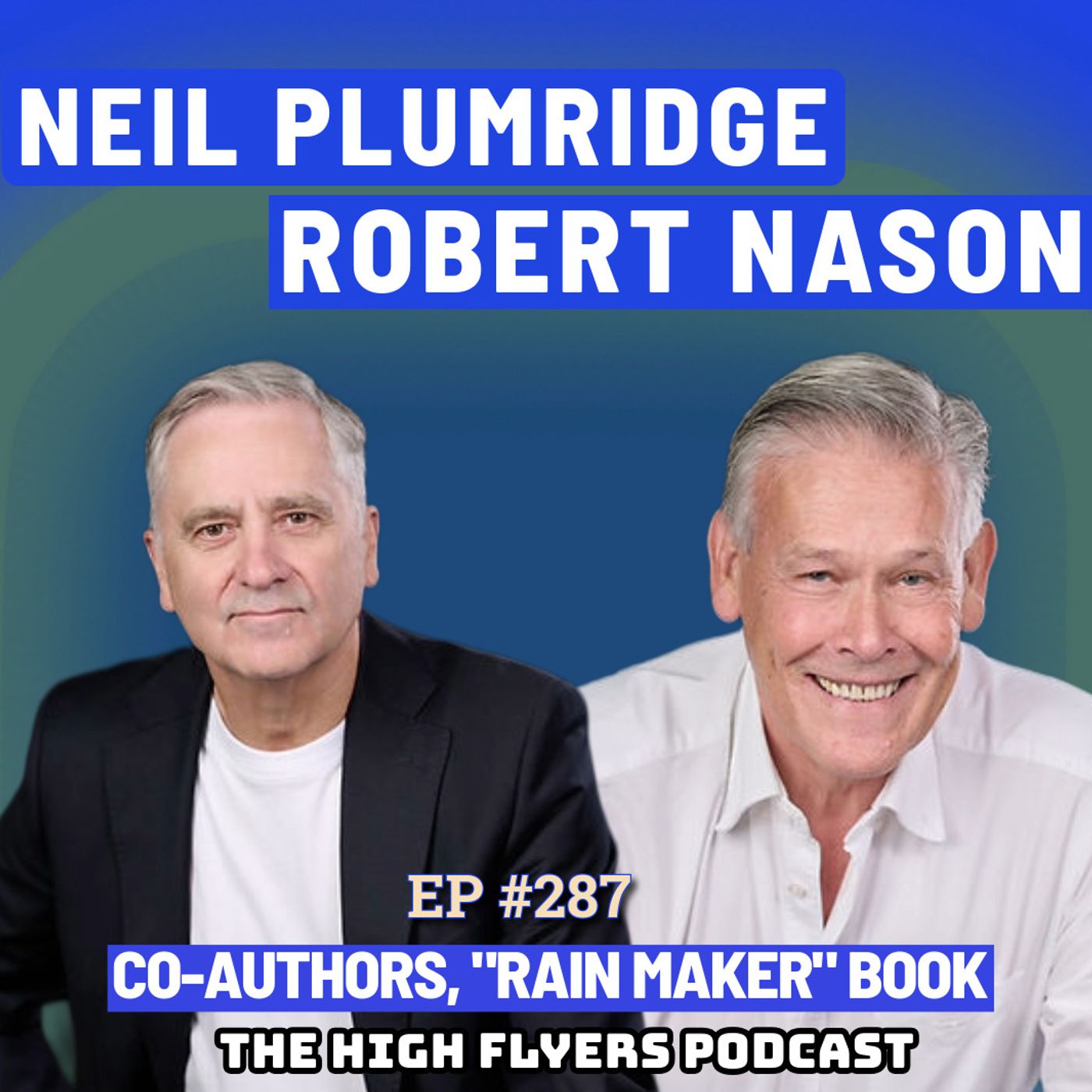
The hosts unpack the “DNA of Rainmakers” in consulting—how exceptional deal origination, trust, and routines drive winning in an AI-accelerated world. They also discuss the origin and research behind their book Rainmakers: How the Best Consultants Think Act and Win, plus their training firm RAINN Group.
Neil Plumridge, co-founder of Rain Group (Melbourne-born; lives in Melbourne; has a farm in Gippsland; former trainee accountant at a Melbourne television station; later worked across major firms including EY and PwC; started a LinkedIn blog after retiring from full-time work). Robert Nason, co-founder of Rain Group (born Adelaide; lives in Sydney; first job as a tally clerk on the Melbourne waterfront; completed high school part-time after leaving at 15; later led consulting and corporate roles including executive leadership at Kearney; CEO experience including Telstra).
Rainmakers are developed, not born; exceptional consultants reach “level 4–5” trust; most big work comes from origination via events and client insight; relationship-first beats content-first; AI transformation requires proactive, C-suite-aligned positioning.
Neil’s Mumbai “coalface” lesson riding motorbikes to see how mobile-phone markets work; Telstra culture impact under David Thodey; a 25-year-old “next generation cost reduction” procurement insight that was sold globally ~14 times.
Written by AI. May contain mistakes.
Neil and Robert discuss their successful book launch and express excitement for the journey ahead.
“Welcome back or welcome to the High Flyers podcast, where we do reimagine a high flyer showcase the brightest and most relatable role models and companies and their journey from sunrise to today.”
A fun segment where Robert and Neil share personal background facts and early careers.
“reside in Sydney New South Wales in Australia and work what was your first job and what do you do now?”
Discussion on individuals in consulting who deserve recognition but often go unnoticed.
“And a quick fun fact is Robert are and Neil, and the Y is silent for RAINN.”
Robert and Neil share their career journeys, including challenges and pivotal moments.
“That's zero xero.com forward slash highflyers.”
Neil shares insights about his career journey and key moments.
“And Neil, you've kind of collected all the consulting logos, right?”
Neil discusses the inception of the book and the collaborative writing process.
“Yes, I would say Neil is the best consultant I've ever worked with.”
Robert talks about the learning experience while co-authoring the book with Neil.
“but I had all my questions just like this interview process.”
Neil and Robert share insights they learned about each other during the writing process.
“And I always kind of knew that, but then to commit that to black and white ink and actually write it was really great, right?”
Neil discusses the challenges and importance of the editing process in book writing.
“Now, before I get into the book and give people a bit of an entree on what they can expect, the writing process is fascinating because maybe you spoke to other authors.”
Learn about the importance of the human aspect in exceptional performance.
“And I think the premise of the book, at least my understanding, the human side of exceptional performance, right?”
Discover a transformative business lesson learned in Mumbai during a client meeting.
“I'd love to cover some aspects of the book.”
Explore the debate on whether Rainmakers are natural talents or cultivated professionals.
“And the penny dropped for me completely that it's not about the content first.”
Understand the common practices and attributes of successful Rainmakers.
“I think, again, people think of Rainmakers or High Flyers as people that are charismatic and extroverted and all that.”
Examine the significant shifts in the consulting industry and their implications.
“Yeah, Neil, do you want to go with this one?”
Learn about the five levels of trust and their impact on client relationships.
“Robert's worked in more than 30 countries.”
Hear about a pivotal project that shaped the careers of the speakers.
“And often it takes a long, longer time, right?”
Learn about a successful cost transformation project in the telco industry.
“All the vendors for the telco were moving from copper to fibre as a network, were moving from analog to digital.”
Explore common mistakes successful consultants make and how to avoid them.
“success of that work and having the consultant coming up with that idea.”
Understand the significance of nurturing professional relationships.
“I'm very busy, so I turn off business development, not interested.”
Discover how to provide value in professional relationships without selling.
“value to people that are in your industry sector, in your domain of knowledge and experience where you can offer help.”
Get insights into the services and training offered by the RAINN Group.
“RAINN Group itself, the firm that you're building and the services you're providing?”
Learn about the future of AI transformation and its impact on consulting.
“Every organization in the globe is going to need to do one in the next five years, probably.”
Learn about the shift in technology selling strategies for executive teams.
“Those decisions have moved into the total C-suite.”
Discover how personal retreats and hobbies can rejuvenate your life.
“No mobile phones, Michelin star quality food, came back refreshed, fit, and to tackle the next 12 months.”
Explore how breathwork can enhance mental well-being and reduce stress.
“Yes, I'd have to say I tried yoga in one of my many episodes of retiring.”
Understand the importance of continuous learning and adapting in work and life.
“yeah great for jet lag too you wake up at 3 a.m and you need to go back to sleep you just have to breathe and you fall asleep yeah yeah it's a lot better to do that than go on emails or LinkedIn or whatever, right?”
Discuss the challenges of balancing work commitments with personal enjoyment.
“I think Neil and I are in a privileged position here because we're getting into doors that others don't get into, to have discussions that others don't have.”
Debate the pros and cons of concise communication in consulting practices.
“you can actually go and stay in the cool district where all the restaurants and bars are and have some fun at night.”
Receive insights on how to approach reading a new consulting book and engage with its content.
“The book, everyone will come at the book with a different level of experience, different level of understanding.”

Get the gist, explore an idea or ask about something said.
 Claude
On The High Flyers Podcast with Vidit Agarwal, what are the key points of this episode?
Searching your listeningAutomatic transcript. May contain errors.
0:00Hi, I'm Vidit, the founder and host of this podcast, The High Flyers. I'm Neil Plumridge, co-founder of Rain Group. I'm Robert Nason. I'm also a co-founder of The Rain Group. Neil and Robert, I am so excited to do this and I love the timing of this. We're doing this in between your Melbourne and Sydney launches. We had a very successful Melbourne launch last week that I was grateful to be involved with and we've got the Sydney one coming up in a couple of days. So firstly, big congrats on the book. It's a big undertaking and congrats on the launch. We're excited too. And this is the start of a journey, Vidit.
0:35And we're absolutely delighted to be here today and also have you as part of the book launch process. So thank you. What if we could reimagine the traditional notion of a high flyer? Hey, friends. Welcome back or welcome to the High Flyers podcast, where we do reimagine a high flyer showcase the brightest and most relatable role models and companies and their journey from sunrise to today. As one of the premier products in our Curiosity Center lineup, providing on-demand intelligence to help you be 1 % better every single day. I'm your host, Virita Aguil, and let's have some fun. Our listeners have called this podcast a meticulously researched biography unveiling the extraordinary lives and decisions of the most remarkable individuals and companies from around the world.
1:28We hope you're enjoying our catalog of 200 plus episodes since we launched in 2020, with many of our guests appearing in rare public interviews. It's now time to explore your curiosity. Please enjoy. let's start with our quick rapid fire fun facts to set the scene so Robert I'll come to you first where were you born and where do you live now I was born in Adelaide in South Australia and I now reside in Sydney New South Wales in Australia and work what was your first job and what do you do now? My first real job was a tally clerk on the Melbourne waterfront for a timber company. I can tell you what a tally clerk does if you're interested, but that was a really fun job.
2:15Today I run my own private consulting practice and this author role has taken a lot more of my time than I anticipated and that's what I'm focusing my attention on. And Neil, where were you born and where do you live now? So born in Melbourne, live in Melbourne. I've got a farm about two hours outside of Melbourne to the east in an area called Gippsland. So I spend 30 or 40 % of my time out there when I can. And work, what was your first job and what do you do now? So first real job was as a trainee accountant of a local television station. And I now with Robert, co-founder of the RAINN Group.
2:59It's a business development learning program or business that helps partners and directors of consulting firms around the world lift performance. And that's RAINN with a Y, R-A-Y-N. Yeah, R-A-Y-N, that's right. And a quick fun fact is Robert are and Neil, and the Y is silent for RAINN. So that's how the RAINN came up with. Oh, is that how? Oh, this is the first time I'm hearing that backstory. That's great. That's a good, very creative way of coming up with a name. And as both of you know, the purpose of this show is to reimagine the concept of a high flyer, to celebrate the people that are doing great things, but perhaps don't get the recognition, particularly beyond their job title.
3:44Robert, can I start with you? Is there anyone you know who you feel hasn't got the recognition they deserve? well we come from an industry which is full of people that meet that description consultants rarely get the recognition of their achievements they're silent achievers if you like but there's a couple that sort of stand out for me one is my sister Jennifer who's got a similar background and experience to me but she was took herself to New York and became the global leader of JP Morgan's investment banking business in a career that spanned 35 years. She's just retired, but I'm extremely proud of her ability to cut it in a very difficult business and achieve huge success while bringing up four kids.
4:35And one other that I do recognize because of his humanness is David Thodey, the CEO of Telstra, who I worked for. He got lots of accolades for what he achieved at Telstra, but having been there and been an employee working for him, I saw the impact he had on 50 ,000 people and how he changed a culture of an organisation. And that is something I think everyone who was there at the time recognises, but few outside recognise that level of impact that he had. Both great names and David might be coming on the podcast soon so stay tuned. He and I have been in discussions and I'm trying to convince him it's been a two-year process that he eventually might agree to so let's see.
5:26And Neil I feel like you are the high fly in terms of my definition who likes to stay under the radar. I think in the time I'm going to know you but I'm curious are there people that you've come across your journey that you want to recognize? So there are many, and I would do someone injustice if I didn't call their name out, but I'm not going to. I'm going to call out a cohort inside the consulting business. And the cohorts are the senior managers and directors, so one or two levels below the partner. I think they, or that cohort or that level is often underappreciated. They're under the most pressure.
6:01They have partners often demanding high expectations. They have client delivery issues. They have teams that they've got to keep busy and engaged. And they're also often in life-changing moments. They're moving house. Something's going on in their own personal life. So it's a really difficult group. And for me, the senior manager and director cohort in consulting firms are the real high flyers. Back to the episode in a moment. Something I've heard a lot from business owners and leaders is that speed only matters if you still feel confident in the output. And it's particularly an important point in this world of AI.
6:42Zero's answer to that is accountable intelligence. AI that shows you what it's doing and works from your own real data and is designed to keep you in control before anything happens. As Zero puts it, most AI asks you to trust it. Accountable intelligence shows you why you can. And that's how it works with JAX, Xero's in-platform AI finance partner. So whether you're running the business, advising the client, or working with your board, JAX ensures that you get the upside of automation without giving up any of the control. If you want to see this practice, head over to xero.com forward slash highflyers for 90 % off your plan for the first six months.
7:25Terms apply and go to the website. That's zero xero.com forward slash highflyers. Now back to the episode. Now, before we get to the book, the Rainmaker and the work you both are doing with your business, I would love to set some context in each of you. And as I said to you before, I found this process fascinating because I discovered things about both of you that I didn't know. And I thought we'd gotten to know each other a bit over the last little while. Robert I was blown away to discover that apparently you dropped out of high school when you were 15 is that a true story yeah I would say yeah family circumstances required me to go out to work and so I completed my high school part-time and I then completed my university degree part-time so I didn't graduate until I was 30 and yeah that probably changed my perspective on work and I learned a lot by being in the workforce at a young age I took senior positions very young in public service before I moved into consulting so it gave me a background that you find consultants that you end up in consulting if you have that sort of background I think I've met many people with, you know, unique backgrounds and experiences that find consulting as a home.
8:54Yeah, you talked earlier about David Todi, one of our previous guests, Andy Penn, the CEO of Telstra to go from David. I think he dropped out of school as well. Yes, he did. We had a good talk about that. Yes, that's true. Yeah. And before I come to Neil, Robert, just to go to your career as well, you both have had very successful well-established careers but Robert if you had to summarize it is there a highlight from your career to date and a learning? Well I found myself without realizing it I suppose that consulting was really a really nice fit for me but I moved into corporate life after sort of a failed attempt in the US to get a technology firm and a consulting firm working together in the EDS Kearney merger.
9:42So I was on the executive team of Kearney during that time. And I decided when that split up in quite acrimonious terms, I came back to Australia and decided to enter corporate life. So I just found myself in a series of disrupted industries going through major transformational change and learnt a lot about how to cope with those sorts of changes and execute and achieve transformational change while still trying to run big organisations, big industries and manage that. So that was sort of a skill I picked up that I've transitioned and used my consulting experience to achieve that. So I feel even in my corporate life, I was operating more as a consultant inside a corporate structure than otherwise, even as a CEO, I had a consulting bent to how I solve problems.
10:44And would you say your Telstra time is what I think you built your credibility on? Well, I got a lot of, again, I didn't necessarily seek it, but I got a lot of recognition for that. but it's something, yes, I've told the Telstra story so many hundreds of times now of what was achieved in that period under David Thode's leadership. Maybe a different question, if I may, on that, Robert, is if you didn't have the Telstra experience, do you think your career would have panned out differently? Well, I think it's more to say that if I didn't have my previous experience, I wouldn't have walked towards the Telstra job.
11:25It was described as the worst job in corporate Australia when I took on trying to improve Telstra's customer service and it was only that I had my consulting background that gave me a confidence that it could be achieved. So I think it's more the reverse. I was confident I could do it. Few others were and it built momentum over time and when I say I it was the team that we constructed that got behind it and we achieved very good things for a company that needed it and Australia needed it as well. Yeah and then I think even some of the other roles you've done through your career have been really interesting but I want to come to you Neil.
12:13I think Neil you finished high school so I can't ask you that question. Maybe give us some context on I think some of your hobbies are quite interesting. You were telling me you're into sport quite a bit. So maybe touch on that, and then we'll come to your career. Yeah. So look, middle-class family, growing up in the eastern suburbs of Melbourne, stable family, hardworking family. I think my dad had two jobs forever. Mum volunteered a lot, three kids under the age of 20. So in our household, it was always busy. Supplemented to that was dad's desire for his sons to play cricket at a high level.
12:48So we had a cricket bat in our hand seven days a week and we were always practicing. We were always trying to do something different. My brother went on and played great cricket at Carlton and had an unfortunate accident. Could have played for Australian under 21. He was an outstanding cricketer. I was okay. Played at a reasonable level. Went to university in Melbourne, and then went and got this job at the television station, had a dream job for five years, but I'd stopped learning. And fortunately, someone tapped me on the shoulder and said, hey, why don't you go to the US and further your education?
13:26And if it wasn't for that individual, it was like a sliding doors moment, you know, and it wasn't that I, you know, I was open to that at that point. If I didn't do that, my whole career would have been quite different in life, frankly. So I took his advice, went to the US for a few years, learned how to learn again, and I've had a thirst for learning for the last 30 years. Came back after that, met Robert, interviewed with Robert, who was running a successful consulting business in Australia at the time. I joined that business. 30 years later, we're sitting here, the three of us having a chat.
14:00Yeah, absolutely. And Neil, you've kind of collected all the consulting logos, right? Because you were at Carney, then you were at EY, and then you're at PwC. Again, we could spend a whole episode talking about your career, but if you had to summarise it, is there a highlight from your career that you can share?
14:21Look, yes, I've enjoyed every firm I've worked with. They are all outstanding firms and there's more that I haven't worked with. Our industry has outstanding people and outstanding firms across the board and so I've been lucky. I've met the right people at the right time. And events have changed my career. I didn't go seeking the moves. It was an event that happened and I was open to a conversation and that conversation then turned into an advance in my career and I took that advance a little bit like you jump into the unknown. I'm not all that well planned and I'm not sort of a five or ten year planner.
15:01I'm a what's real now and where can I make the greatest difference? And so the changes were opportunistic and just hit me at the right time. And I've been very lucky to be given those opportunities by the people that reached out. I think he's being very humble, Robert, right? Neil's had a very successful career, but he's extremely humble. Yes, I would say Neil is the best consultant I've ever worked with. There you go. And he's regarded that way by those around him. He became, and I didn't have visibility of this because we were together with two of those firms, but then Neil went his own path.
15:43So I never saw Neil in his practice management era. We sort of competed a bit crossing paths at that time, but I see his results and he was incredibly capable as a leader of large firms as well. i want to come to the book and neil i believe you are the brains behind the startup that has become the book and a firm behind it rainmaker how the best consultants think act and win in an ai accelerated world i mentioned earlier we just had the melbourne launch and we've got the sydney one coming up neil take me back to when you started thinking about the book i think in the time I'm going to know you, like, I don't, I never would have thought of you as someone who'd go, let's write a book and let's do a big celebration about it.
16:35But clearly you felt there was some content there that you should put your intellect and time behind and involve Robert. Take us inside that period in your life and those early conversations that led to the book. A couple years ago, I retired from full-time work. Well, I thought I'd retired from full-time work. A month into that retirement, I reflected on the 30 years I had and the amazing people I'd worked with, including clients, and I started to write a LinkedIn blog. So the genesis of the book and our training business is actually a LinkedIn blog. But I don't write a lot of LinkedIn blogs, so I kind of didn't know where to start.
17:13So I just started writing and it became a lot more than a LinkedIn blog. And by chance, again, my life's, you know, often sliding ball moments, I met someone who said, well, why don't you turn that into a book? Because I never published that original LinkedIn blog. And they encouraged me to just share stories. Don't get into the theories and the frameworks and the models, but just share your stories. You've got amazing stories. This is someone I trusted and involve others. So draw up a list of people that you'd like to get their stories from. And so Robert was on my list of people to interview.
17:49I've had the privilege of working with thousands of partners and managing directors over the 30 years in those firms you've mentioned. But there were about 50 that I really wanted to understand their best deal, the deal, where did it start from and how did it come about? So Robert was very early on in that because Robert's one of my heroes and rainmakers. I put him in that class. And so very early on in the interview, I started interviewing Robert. but I had all my questions just like this interview process. And I then said, hang on, time out. You're taking this to a different level that I hadn't even considered.
18:29You should be co-authoring this book with me. It's your book just as much as my book. And so a couple of weeks went by. We went backwards and forwards. And then, yeah, so the very early thinking was, the start was mine. But I would say I'm not the brains. It's a collective effort. We're co-authors. I'm very proud of Robert and being a partner of his. And so then we went and finished the interviews. We did a lot of research on others that we didn't get the chance to interview, but through different means, we collected their stories. In the book, we've got over 80 academic cited journals and thought leadership that we think every consultant, whether you're a graduate or a senior partner, should be across.
19:11So we've incorporated that into the book. And here we are two years later. you've done the book launch we've got one more to go and we're doing this podcast which we're delighted about Robert give us your side of the story how did you how did Neil convince you to come on board and what excited you about the project yes well somewhat like Neil I think I've retired about seven times and had farewell functions and then come back again so no one was surprised to see me back doing something I suppose but I was interested like the conversation with Neil was good. Conversations with Neil are always good.
19:48And he'd done a lot of work and had some very good thinking behind the book. I had an opportunity of reviewing an early draft and gave him comments. I remember coming home and saying to my wife, look, Neil's written this. It's 80 % there. This is going to be a soda. He wants me to go in. I'm happy to help him finish it. And it'll be a bit of fun and he's got some good ideas of where to take it so this will be an easy process well then it became you know Neil and I are both sort of serious people and we have good conversations we have good ideas exchange conversations where we saw an issue if it needed the book needed rewriting or a chapter needed rewriting we would rewrite it and Neil had the energy to go back after having, you know, completed most of a manuscript to say, okay, we've got a different thought there.
20:47Let's have another go at it. And we actually put that work into doing it. So it became a very intense learning process to do this. And I have to say, I thoroughly enjoyed meeting the people we met, the rainmakers in other firms, some clients discussing this topic you meet high energy people that are changing the world doing great things and just exchanging views and ideas and concepts with them was really a big pleasure in putting the words down on paper I'm curious you both would have spent a lot of time writing the book and you probably would have learned a lot about each other that perhaps you didn't know before the book writing process can you take me into that like was there something Neil did you discover anything about Robert through the book process that perhaps surprised you so more reinforcing vivid I've always known Robert as someone who kind of sees things that others don't and that's one of the characteristics we call out in some of the early chapters of the book around origination, rainmakers see things others don't earlier.
22:01And I always kind of knew that, but then to commit that to black and white ink and actually write it was really great, right? You can have a conversation like this, but then to actually try and put it in ink and then both agree. So it was more reinforcing of a characteristics Robert Hazard and other rainmakers have around seeing things that others don't. And then there was just the gaps. Okay, Robert's given me credit for doing a fair manuscript. Let me tell you, there's a couple of chapters in the book that weren't in the original that are now. And one's on the importance of ethics and responsibility of rainmakers.
22:38So we spend a whole chapter talking about if you are given great access to boards and CEOs as a senior person. That's a level of trust that 99.9 % of people don't have. You have a responsibility to treat that information and discussion at a different level than what's in a company policy on protecting information. So that was Robert's early ad that I completely missed. And Robert, did you learn anything about Neil through the process that perhaps surprised you? Yeah, look, Neil and I have always been close. We were close when we worked together. I was MC at his wedding back in the day. So I felt I knew Neil really well.
23:27I didn't realise how good a writer, like writing a book is different to writing a consulting report. Neil was very good at writing consulting reports, but his style of writing is very easy to read, interesting and I learned the quality. So I sort of bow to Neil on his ability to put down on paper thoughts and concepts in a book sense absolutely is something I've learned out of this. And the other one is just how widely respected Neil is. When you've spent a long time in consulting, 30 years, you know a lot of people, a lot of people have worked for you and a lot of people move to different firms.
24:12So Neil's coverage of the industry in all its respects, at all levels, globally, is astonishing. The number of people that know Neil, used to work for Neil, have fond memories of doing a project with Neil, that surprised me and made our collaboration on this in terms of learning from other firms very easy. Now, before I get into the book and give people a bit of an entree on what they can expect, the writing process is fascinating because maybe you spoke to other authors. I love asking authors about their writing process. I remember I had the former prime minister, Malcolm Turnbull, on the podcast last year, and he wrote his own autobiography.
24:57And one of the things he said is when he read it back to his like family or friends he would discover a lot of errors because he had to vocalize it but when he wrote them he wouldn't pick that up and that made the editing process really annoying because he would vocalize it with friends and family in the evening and then go back to the editor and say you know what I'll make these edits are there any anecdotes like that Neil from your own writing process in terms of how you managed to distill thoughts on paper I, as Robert gives me credit for the writing, we would have a conversation, I'd go away and write it as best I could, flip it back and then I used a whole bunch of tools, AI tools, Grammarly was my favourite best friend around grammar and really trying to get some clarity in what I'm saying.
25:45I used different AI tools for research so we would have a conversation on say, say trust in the AI area and some of the emerging trust topics that we should be talking about. And so I'll call out, you know, Rachel Botsman in the UK. She's one of the leading thinkers around trust in today's world. And we would go away and research what she's doing. So it was an iterative process, a bit like a consulting process, right? You kind of have some hypotheses where you want to take it and then you go and find the data, that proves up, that doesn't, and then you iterate and run it through an editing process.
26:22Probably wouldn't do it again until it killed Robert and I in terms of this, but it's been a really enjoyable process and I can say that the book is full of stories and it's us sharing our stories, sharing other stories, but I personally have learnt a lot through this too. And I mentioned this at the book launch. I didn't realise the degree of how trust in professional services is different, the degree of it and magnitude, if you like, across cultures. So researching and learning about, even though we've consulted in Brazil, is different than Poland and different in Tokyo than different in Sydney.
27:02We've got you know half a chapter or chapter on that dimension so learning as part of the writing process it wasn't just telling our stories it was actually a learning process too you know Neil and I sort of pride ourselves on our quality of our end product so we said to the editor before the editor had a look at a book you won't find any typos in this book and we're pretty confident we've got it pretty right well what we got back you know sort of put us made us eat humble pie a bit that that we needed that edit process to correct things you've said on page eight that aren't consistent with what goes on page 210 all of those things being picked up so the the editing process certainly lifted it beyond what i thought it was going to need but you know that's writing a big 300-page book is different than writing a 30-page consulting report.
28:02That's the difference. That is so funny. And I think the premise of the book, at least my understanding, the human side of exceptional performance, right? I think even my podcast, that's what we do here is reimagine the concept of a high flyer and showcase the human aspect of exceptionalism in different industries. I'd love to cover some aspects of the book. Of course, we want people to buy the book and read it, but we can give them a bit of an entree. I love the story you start the book with, Neil. I think you take us into Mumbai and you're riding on the back of a client's motorbike, I believe, without a helmet.
28:38Yeah. Can you just recount that day and what you learned about business then? Yeah. So I learned that's why it's at the start of the book because it was really the pivotal moment that changed. I was successful at that point in time. I had great bookings, had great clients, mostly in Australia. I was taken into the opportunity to do a big project for a large mobile phone company in Mumbai. I was well prepared for that meeting with the client. I was a COO, had all the slide packs, had all the questions I thought were going to get asked. And then he said to me, you know, I'd arrived the night before.
29:18and he said, actually, I don't want to go through your slide pack because I don't think you actually understand how business is done in India and how my business actually really works. He obviously said that politely and respectfully. So he said, leave your jacket behind. We went downstairs, jumped on a couple of motorbikes and he then took me to where they were selling mobile phones in the markets in Mumbai. It was an exhilarating, scary emotion. all the emotions you've ever got experienced, but I really learned that to be an effective consultant, it's not in the boardroom, it's not in a nice glass office, it's actually you've got to be at the coalface to really understand how that business works at the coalface and then how he interacted with his customers.
30:12And so I learned about connection before content, It's something we're big on as a theme. You know, he was, he's the COO in the markets in Mumbai selling mobile phones and making a connection with his customers. And the penny dropped for me completely that it's not about the content first. It's not about slide packs. It's not all about boardrooms. It's something different. Yeah, it reminds me of prior to starting my business, I spent a decade in FMCG and retail and we'd often from the head office or store support center as you'd call it go into the retail stores and it was always a very humbling experience to spend time with the staff on the shop floor and be told this isn't working and that isn't working and we'd come with our suit jackets as well and end up leaving with our sleeves rolled up and humility very much left on the shop floor and yeah it's and then we had a big floor of consultants at most of these firms I was at and And I think for them, it was a big eye-opening experience that actually, this is how the retail shop environment works.
31:20So great story. Robert, one of the things that you and I have talked about, and we covered this in the Melbourne launch the other day as well, is are Rainmakers born or are they made? I think both you and Neil have some very well-developed thoughts on this. I think, again, people think of Rainmakers or High Flyers as people that are charismatic and extroverted and all that. What has been your experience, Robert, through the book about answering that question? Are rainmakers born or developed? Yes, and absolutely they are developed. We are convinced of that having spoke with many rainmakers in various firms.
31:58There's some are extroverts, some are introverts, some are specialists, some are client relationship you know leaders and it's different across the world across firms but there is a consistency in terms of the fact that they adopt similar practices that anyone can follow so there is a control and a discipline around their work habits behaviors that they consistently apply and he just captured that. So we aimed to investigate this topic in every dimension. So we looked at how they do origination, what are their attributes, what are their behaviours, what are their principles they abide by, what are their routines that they follow.
32:49We explored that in depth and the fun thing for Neil and I, and it's something that is an issue in professional services, I think. No one really analyzes exactly why something was achieved, like why you won this project. And there's various systems that exist within the firms to reward people for sales success. So generally, the lead on the project gets to allocate things called booking credits or sales component to different staff members who contributed to the result. Neil and I had the opportunity of actually working with people who had achieved success and the people around them to actually determine what actually did win this project and what was it.
33:39So we came to conclusions that sometimes the firm had not concluded, they hadn't asked the client or the client made a decision what not knowing what the consultant had actually put together. So that gave us an opportunity to actually pull out, okay, what are these factors that lead to success? So that was very interesting for us that we put those judgments, which are basically Neil and my judgments of what it took to win. And just quickly, secondly, we looked at what's changed in consulting and there's been dramatic change in the last decade. But then we went back through our personal histories to say, what's the best evidence?
34:22What's the best case study of this working? And sometimes it was something that happened long ago, but it's an example of this trait or this behavior having success. So we put those stories into the book. So we actually have, I know we've put 35 stories in the book we've got about 90 of them we had to select which ones made the book because they reinforced the right points but we learned some really interesting stories from people in the industry i want to come to a couple of other stories that i picked up in the book but just your point there robert about how the industry has changed is a really interesting one that maybe we can spend a minute on but question to both of you can you share any anecdotes on how has the industry changed?
35:12Yeah, Neil, do you want to go with this one? So a number of changes. There are some enduring things that have been around for eight years and will continue like independence and objectivity and the like, but probably the one that I'd call out is origination. From our research and conversations is the majority of work today comes from the consultant pitching a point of view or an idea or a concept or a major event, and a major event being a leadership change, a cyber event, an unexpected M &A event. So some sort of an event occurs or the consultant sees something that the client doesn't see and pitches an idea.
36:01So that's where the majority of big transformational work is. There's still lots of other work around RFPs and the client deciding what projects to issue. But the big deals, if you go through the top 100 deals in the last 12 months, the majority of those have come from the consultant initiating them or a major event has occurred. Does that also differ by geography where all three of us are pretty well-traveled and we've had extensive experiences in different countries? We've just come back from the US. I was in Europe recently on your point, Neil, like the industry has changed in different ways if you compare, let's just say, Australia to the US?
36:39I'll maybe defer to Robert on this one. Robert's worked in more than 30 countries. I've worked in a few, but perhaps Robert, you want to? Yeah. And I would say no to this. The approach might be different in Japan to the US in terms of how you pitch it, but the concept of relationship first, C-suite people choose transformational consultants based on their trust in the firm and the individuals leading it to deliver what is a very high risk-based decision for them. So relationship comes first. point of view we think comes second so consultants having a view that is aligned with their client on what's achievable and the scale of what is achievable so you don't sit on the fence saying we're here to help let us know what you want us to do you lose doing that these days you've got to be proactively putting forward we believe in ai transformation we believe ai transformation can lead to productivity savings of up to X.
37:51We've got a position on that. We know how to do it. That gets you in the room. And then demonstrating where you've done it before and that you learned the lessons of experience and having a technology vision as part of your offering. So understanding the client's technology and moving on. We see that as moving on from the old days of having a methodology and the consultant saying you've got to come to our boot camp where we'll train your staff in our methodology on capability where consultants try and prove they're the smartest people in the room that no longer washes in any organization globally.
38:35It's collaboration with the client, working with the client to get results is what it all means. And the flashy presentations, the PowerPoint decks, the long quoll statements don't cut mustard as much anymore. It's not that they're not important for the contract, but you need to be able to get your message across succinctly and you need to simplify what's required, not complicated. They're big changes that have occurred and we've tried to tease out in the book good examples of that happening in the last period of time. Maybe a story that we can also cover, not a story, but a perspective from the book is the, I believe, Neil, you argue the five levels of trust.
39:26I think if I read correctly, you say that most consultants get to level three, but the exceptional ones get to level four and five. Can you just maybe educate us on those five levels of trust? Yeah. So the starting point was in a lot of the conversations we had, it became quite obvious that trust is not binary, but a lot of consultants think it's binary. You either got the trust with the client or you don't. We think there's a nuance to that and we think there's five levels, level one being sort of at the foundational level where you kind of do what you say you're going to do and the client trusts you to deliver what you've said you're going to do.
40:06I won't go through each of them, all the way up to a personal level of trust. And it's at that level four and five where you've earned the confidence of the client to be able for the client to have a big conversation with you. And that conversation may or may not materialise into work, but there is the client opening up their whole agenda to you. They're not talking about doing a single functional review or doing a specific project. They're actually talking about something more transformational. And it's at that level of trust is where you can have confidence to put forward points of view, co-create paths to address that particular agenda item.
40:54And often it takes a long, longer time, right? It's not the client issuing a brief. The client doesn't have a brief. they've got an issue or a problem. And it's of a magnitude that they'll only deal with people at what we call level four or level five.
41:12Before we move to the next topic and I guess talk about AI and how that's enabling and changing industry at large, was there anything else in the book that either of you want to cover? well look i think there was one story that was the last project that neil and i worked on together that we reflected how that changed both of our careers and if you like the moment has caught up to that time we actually believe what happened a long time ago 25 years ago with the last project, Neil and I, we'd worked on a procurement job for a telco. And in that procurement job, we found that the industry was moving in a separate direction than the telco was.
42:06All the vendors for the telco were moving from copper to fibre as a network, were moving from analog to digital. We're moving from fixed to mobile. But the telco that we were working with was still stuck in the old world and was still doing long-term maintenance contracts for a copper network that wasn't going to survive the decade. So we thought there was a big cost transformation opportunity coming out of that. Neil and I was sort of a junior partner at the time. Neil was not even a partner at that time, we sat down and said, what do we do with this? We don't know the CEO. And this is sort of a CEO decision.
42:53So we decided to approach the head of procurement and say, we think you should go to the CEO and offer to do a cost transformation of the company based on your findings out of the procurement work that we've done with the vendors. so that was the concept that was the idea that was the point of view that we gathered we persuaded the head of procurement to do this we worked and coached them on the evidence that he could take to the ceo the ceo gave them gave him the job and it was an enormous success neil as he does said we have to brand this because this is relevant for every telco in the world.
43:41So we called it next generation cost reduction. I went around the world selling it and then sent Neil to Brazil to do it. We did it in America. We did it in Europe. We did it in Asia and sold it about 14 times as a project. And that I think the world has caught up to that style of consulting, the consultant leading with an opportunity, something they've done, selling it and getting reward for doing a good project by selling it multiple times is something that gave Neil the confidence. We've done it again and again in our careers doing similar sorts of things based on the success of that work and having the consultant coming up with that idea.
44:28We put that story into the book because it's sort of foundational for us of the the lessons learned from history i'd also be curious like one of the things i was wondering after the book launch the other week and reading your book is what are some of the mistakes even the most successful consultants or quote unquote rainmakers make okay i'm curious open question to either of you in the journey of interviewing all these people and spending time with them and reflecting on your own careers is there one mistake that even the most successful rainmakers tend to make
45:07well there's a couple i'll talk about personally i didn't put myself in the rainmaker category but there's a couple let me share that i've made along the way one is where you're so confident in your point of view that it comes across as selling and you are you're forcing a solution on a client that's not ready and it moves from, let's call it a point of view or concept into a solution. So I've made that mistake a few times and the most successful people don't do that. They put forward an idea and a concept. The second is on trust. So it takes often years to get a senior level of trust, what we call a level four, level five level of trust.
45:51and I've had those relationships. But, you know, one story which we tell in our training programs, our learning programs, about how quickly you can lose that trust. If you make a couple of mistakes and take the client for granted, you know, it can happen in a millisecond and it happened to me. But I won't on your podcast, maybe podcast two, I'll share that story but not this one up. Maybe your next book, if that happens, the next edition of the book, you can include that. Yeah. And look, a couple from me, I think the trap you observe good consultants falling into is the boom-bust cycle. I'm very busy, so I turn off business development, not interested.
46:33I've got projects. I'm busy for the next, sold out for the next couple of months. So they do nothing. They develop no relationships. They just focus on delivering their project. Then they hit the beach. They're quiet. and then they turn full throttle on the business development and have 10 coffees in a week catching up with people they haven't caught up with. That boom-bust cycle does not work and rainmakers don't follow it. They do business development every day, every week, no matter how busy they are. They put into their calendar relationship development and the things required to develop the next job.
47:14And the second one, I think, is waiting for the phone to ring is you've lost before you've begun, if that's your strategy. If you think, put my brand out there and wait for clients to ring me with work, the industry is too hungry right now and your competitors will get in ahead of you and take your client from you, if that's what you're going to do. You've got to be proactively engaged and up to date with knowledge and experience and working your relationships to succeed in today's world. Yeah, I'm nodding my head furiously because I see this all the time, even in people looking for the next job or if they've had a setback is they've not built the relationships because they don't want to be the quote unquote networker because they feel that's transactional.
48:06but then they're out of work and I had a call the other day from someone and then he said to me he said I've been given my notice the company's going through a restructure and I said you're a senior executive and you've spent no time nurturing your network he's like yep I've got a family and I've got a demanding job and I've got my health to focus on I'm now getting out there and building that network and I said it's going to take you months before someone can give you anything and you don't know any of these people like even me you hadn't spoken to me for two years and you've reached out for a call.
48:37I find that baffling. Like I see that every day and I'm sure you both see it in a consulting context or just in a general work context. Look, that's right, Fird. I'm not a networker either. I don't like the concept of networking, but I do like the concept of providing value to people that are in your industry sector, in your domain of knowledge and experience where you can offer help. So I come from that service side. This is a service to clients. It's not selling. It's your job as an experienced professional working in an organization to find ways that organization can be better and to communicate those to the people that matter and to have views of where the industry is going.
49:24If you're just sitting back, not doing that, then you don't deserve success to me. and it's a service to the client it's not selling it's actually adding value you're putting forward things you would like to do for the client because that makes their business better yeah the story of how robert and i met i think as an example of this where we met at the tennis and we sat on the same table but then we didn't speak for probably eight ten months after that and then a mutual friend connected us and then we had a coffee and then again i don't think we spoke for a couple of months and then Robert texted me about your book.
50:00So life also can be random. I think to your point, Neil, life can be very random where it's not always planned. And I've seen that in my own journey where you just have a good conversation with someone and you're introduced by someone they trust. And often that can end up opening doors that you never expected. Yeah. And look, to give your own business a plug, the Curiosity Center, one of the things we've found in successful people just generally through this process is they're very curious. People are curious in other people. You know, the reason we connected with you is you're both interested in what each other were doing, but that's the consultant and the client.
50:40Just be interested in what they are doing and be curious about their performance, their own careers, their personal situation. Just be curious. Absolutely. Let's go into RAINN Group, your new firm and the work you're doing in addition to the book. You're high in demand. You're getting invited all around the world to run training courses and other things. Do you want to just give us an overview on the RAINN Group itself, the firm that you're building and the services you're providing?
51:12yeah i'm happy to go first and then okay so yes so we're being quite selective we're we i guess trying to you know focus on those areas those clients where we can make the greatest difference but we are working in london we've been working and supporting in north america We've been in Australia and will be in Asia in the new year. We basically offer a few things. We offer a one - and two-day training program. We call it a learning, a peer-to-peer learning program for partners and aspiring partners. And there's three things that go on in that. One is around deal origination and using the participant's information, their own information, not theoretical, is how do we lift the bar on playing bigger and bolder around deal origination?
52:05Second is around the relationships. How do you move from level one or level two into a level four relationship? So there's quite a lot of work on personal relationships. And then the third is around these habits and routines. High performers in all fields have daily, weekly, monthly routines and habits. So we call that out. So look, it's a bit more than that, but that's the essence of it. We also offer our content to buy. Firms can buy our content if they like. And then we're also open to doing webinars, although to be honest, we've been so busy, the webinars have kind of fallen away. But we're flexible.
52:42Yeah. Sorry, I was going to say, can you share an example? So if I'm a CEO of a big, say, ASX listed company or a Fortune 50 listed company, what should I be thinking of the RAIN group for? Are there any particular areas that you help with or like is it a series of workshops? How do the engagements generally work? So we're mainly focused on the professional service sector, consulting firms, accounting firms, engineering firms. That's our main focus. And so the CEOs of those can expect to see if they hire the RAIN group, which is Robert and myself, they'll see an uplift in their sales pipelines.
53:24They'll see their win rates go up and they'll see an overall lift in performance from the cohort that joins our programs. Yes, we don't like to describe what we do as training fitted. Like we've been there. Neil and I have been partners. We've been leaders of consulting, but we know the game. We know the numbers, the number you get, the pressure every year to start again from zero and deliver a result as a consulting partner. So we feel we're collaborating by sharing what we've seen and what we know and discussing that with partner groups, you know, reflecting on what has changed and what needs to, in their daily time allocation, and there is a lot of flexibility at the partner MD level as to where you spend your time.
54:17Are you allocating that time in the optimum fashion to build your pipeline, to develop your relationships, to give you a continuity and an expanding volume of work in the areas that you're most interested in? So it's both a stress release, if you like, it's getting you in more in control of your professional life, doing the work you want to do and having the success that you aim to achieve. And just some facts these days, we believe every company is facing an AI transformation. Every organization in the globe is going to need to do one in the next five years, probably. Some of them are going to do complete organization-wide transformations and the firms that undertake that work will shut out all the others.
55:14So clients will get turned off. We noticed, for example, in a recent client that did a joint venture with a professional service firm to do AI transformation, 11 other consulting firms were exited that were doing AI work with that contract being led. That's going to be the future. So if you don't go for the bigger deals, you've got a strong risk of missing out. If you're playing down in middle management, doing small projects, you're going to be disintermediated. So you need to target the bigger projects and have a point of view and work the team. The CIO is no longer the technology decision maker.
56:02Those decisions have moved into the total C-suite. So if you're a technology vendor, you've got to learn how to persuade an entire executive team because they're talking about a transformation of the company with technology as a driver, a completely different selling concept. And how do we get our heads around that and how do we deliver to that? So they're the sort of issues we try and use the real data of the firms we work with and provide a mechanism for the senior partners, MDs within the firm to share their stories as well as the stories of Neil and I. So it's a tool for getting the learning exchange going that some firms have dropped off over the last few years because they've been so busy.
56:56yeah there's some some really interesting points there and we could talk for another half an hour and unpack each of those but like Neil said that might be part two of when you come back on the podcast I'm conscious of time so I'm going to move to rapid fire sprint but before I do is there anything that either of you want to touch on that I haven't asked no no you've covered it well okay thank you for the live feedback Robert is there one non-work investment that's had an outsized impact on your life neil a non-work investment so when i say non-work investment an investment of time energy is there a hobby or a course or a holiday that you've really appreciated yes i did a i was burnt out a couple of years ago self-inflicted working too hard my wife and i went to a a five-day a vegan-only retreat in New Zealand.
57:54It was outstanding. No mobile phones, Michelin star quality food, came back refreshed, fit, and to tackle the next 12 months. That sounds incredible. You'll have to give me the name of this retreat. Yeah, and I'll do it offline, but it was amazing. Only 16 people there. It was a reset, and I would do it again if I was in that situation. Great. Robert? Yes, I'd have to say I tried yoga in one of my many episodes of retiring. I did it for about two years and I found it really helpful as a means of tuning out, of getting a complete sort of break, refresh of your mind. And I often hear my yoga instructor telling me to breathe because I get tense and hold my breath and particularly when you're under strain doing those exercises.
58:52But learning how just to breathe through things caused me to reflect that I need to find ways to recharge the batteries and that's added a dimension to my life, I think. Yeah, it sounds funny, but breathwork actually is something most of us are really bad at. I only discovered this concept probably a year ago and similar to you, I'm not someone who's very good at slowing down, but I have learned like just focusing on my breath and sometimes when I've had a really stressful day I'll just sit on the couch or lie down in bed for 10 minutes play some meditative music and just focus on my breathing and it changes the rest of my day it is incredible yeah great for jet lag too you wake up at 3 a.m and you need to go back to sleep you just have to breathe and you fall asleep yeah yeah it's a lot better to do that than go on emails or LinkedIn or whatever, right?
59:46Don't turn your device on. Yeah. Is there one thing you want to learn in the next six months? This could be in a work context or outside work. Neil? Yes, I do. I want to learn how I can restart a physical exercise routine. I've dropped that away in the last 12, 18 months. I used to run. I used to keep fit. this book and program or business has taken my life away. I'm going to learn at my age what is right. And it might be yoga, but I think there's got to be some cardio there. I think there's got to be some other things. So that's what I've got to learn how to do. Well, you've put that on the record now, so you better do it.
1:00:30Yeah.
1:00:33Robert? Yeah, I've sort of got two. I think Neil and I are in a privileged position here because we're getting into doors that others don't get into, to have discussions that others don't have. So we're at the forefront of what's changing in the AI world and how people or organisations are dealing with it. We're getting information thrown at us. We're working with an AI developer ourselves for our own content. So we've got an obligation to share that, I think, because we've established that position. So we're looking at ways and means of doing that. So that's one where I think we've opened Pandora's box, but we're here now and we should make the most of sharing perspectives and helping the world transition to this new place.
1:01:26And secondly, something Neil's raised all along is, you know, We're getting on in our careers. It's time to have some fun. And while we're doing this and exploring different parts of the world and visiting different countries and meeting different people, we should have some fun while we're doing it and making sure we're reserving that time while we're also running our business to enjoy what we're doing. Please teach me how to do that, Robert. I was just having this chat with my wife the other day. I travel for work like you do and I do not do any like touristy things. I'm just either in a hotel room or in meeting rooms or on the airport.
1:02:08And she said to me the other day, she's like, you're going to all these cool cities. Why don't you like take out a couple of hours and go to the museum or go to a nice restaurant? And I'm like, no, I'm just running from one meeting to the next. No, but Neil's very good for me on that. Like it's where you, like I've learned, you know, you don't have to stay at the hotel the client suggests, which is around the corner from their office in the boring part of town, you can actually go and stay in the cool district where all the restaurants and bars are and have some fun at night. Neil's teaching me all of these things that I haven't adopted in my career.
1:02:45I like it. It's called Gemini. Google Gemini, Robert.
1:02:52Very good. Last two. Is there one consulting practice you'd happily see disappear? Robert? Well, I've covered a few of them today. Those that have worked with me over the years, the word mumbo jumbo, they mention quite a lot. So I'm very anti-fluffy consulting ease language and spending a page to write what you could write in two sentences. So concise, simplified, actions, that's what I would like to see disappear. So the future of consulting is achieving results for clients, not proving how smart you are and how complicated an issue is that only the consultant understands. That does not work, doesn't cut mustard any longer.
1:03:51So writing concise reports or doing in five pages what you're doing and relying on explaining to the client what change needs. I would actually say one of my pet peeves, Robert and Neil, is we live in a world that is too concise now because of AI. I think everyone is now distilling everything into a two-sentence summary and we've lost a lot of the nuance that used to exist when humans had to use their brain to summarize something if we talked earlier about boards i hear this all the time with boards where they're like yep we put the board pack into ai and we got the summary and it's like you might have missed some of the nuance in the board pack because you just summarized that using ai well yeah and i'm happy that's your view but gee i got tired as a ceo of having 50 page powerpoint decks to explain a simple issue of what's our campaign for the next mobile phone device and there were really only three things they were saying but you had to dig them out and it's just unnecessary it's fluff and it doesn't make you look smart to have you know what you don't measure things by weight you measure them by content and businesses are just not that complex to me it's you know it's a telephone company runs a big network sells time and use of that network and extracts a fee that's all they do it's pretty straightforward i noticed that at telstra particularly when i there you can complicate things the cows come home you can use jargon it just slows down decision making and those that simplify make progress in those sorts of organizations yeah yeah that is true and last one for you neil for anyone looking to buy the book or read the book is there a particular chapter you would encourage them to definitely read so look the book is not a book that you take three lessons out of.
1:06:00The book, everyone will come at the book with a different level of experience, different level of understanding. So what I'd encourage is everyone to buy the book and scan it for the main topics and themes and then do a deep dive in the areas of interest, whether it's its origination, whether it's the history. We spend a whole chapter on the history of consulting all the way back to Arthur D. Little in the 1880s. So whatever it is, we just encourage people to scan it first, then do a deep dive. There's a set of questions. We then encourage everyone to go on to rain.com.au, subscribe to our newsletter.
1:06:41Robert and I periodically send out detailed newsletters, not very often, but maybe four, five times a year, of things that we're seeing and hearing right here, right now, that we want to share with our subscribers. Or people can hit me up on LinkedIn too. I'm happy to respond via LinkedIn as well. Yeah, absolutely. Well, Robert and Neil, that brings us to the finish line. Again, a huge congrats on the book. I think as we've just spoken, it's a big undertaking and I, for one, have really enjoyed getting to know you both through this process and, yeah, looking forward to what's ahead. Thanks. Thank you, Vida.
1:07:17That's a wrap. So if something in this episode sparked a thought, send it to a friend or colleague. And if you're curious about partnering with us at the Curiosity Center, whether it's this podcast, to our reports, events, and more, and join the ranks of existing commercial partners, including Google, KPMG, Vanta, and others, my details are in the show notes. Until next time, I'm Vidit Agawal, and this is the High Flies Podcast.
This episode is supported by Xero, helping businesses use AI with more control through JAX, its in-platform AI finance partner. Get 90% off your plan for your first 6 months at xero.com/highflyers.
________
What separates the world's most successful business people from everyone else? Intelligence, charisma, connections, or something less obvious?
Neil Plumridge and Robert Nason are co-founders of RAYN Group and authors of Rainmaker (available here), bringing decades of global leadership experience across Kearney, EY, PwC, KPMG and Telstra. Robert shares his unlikely journey from leaving school at 15 to helping transform Telstra, while Neil reflects on the pivotal moments that shaped his international career.
In this conversation with Vidit, they unpack why exceptional performers are made, not born, how major business deals are won long before the pitch, and the five levels of trust that separate good performers from extraordinary ones. From a hair-raising motorbike ride through Mumbai to turning one idea into 14 global consulting engagements, they reveal the hidden habits behind lasting success and why AI could make human relationships more valuable than ever.
Please enjoy exploring your curiosity.
Purchase Robert and Neil's book, Rainmaker: How the Best Consultants Think, Act, and Win in an AI-Accelerated World: https://www.amazon.com.au/Rainmaker-Consultants-Think-AI-Accelerated-World/dp/1394440677
_______
Get in touch with us via email at [email protected]
Join our stable of commercial partners including the Australian Government, Google, KPMG, Allens, Macquarie Capital, Xero, JP Morgan and more.
Show notes and more episodes here
Follow us on LinkedIn, Twitter and Instagram
Get in touch with our Founder and Host, Vidit Agarwal directly here
Contact us via our website
This episode is supported by Xero, helping businesses use AI with more control through JAX, its in-platform AI finance partner. Get 90% off your plan for your first 6 months at xero.com/highflyers.
________
TIMESTAMPS
00:00 Meet the Rainmakers: Neil Plumridge & Robert Nason
01:40 First jobs and the unsung high flyers
07:45 Robert: From school dropout to global business leader
10:45 Taking on the 'worst corporate job' at Telstra
12:00 Neil's ife-changing US move
14:00 Climbing the ranks at Kearney, EY and PwC
16:15 How a LinkedIn post became the book Rainmaker
19:00 Writing a book together: Harder than expected
28:15 A terrifying Mumbai motorbike ride and a business revelation
31:15 Are rainmakers born or made?
35:00 How the world's biggest consulting deals are won
39:15 The five levels of trust that separate the best
41:15 How one idea became 14 global deals
44:30 The mistakes even top performers make
48:00 Why networking isn't really about networking
50:45 Building RAYN Group and the secret to high performance
54:30 Will AI upend the consulting industry?
57:00 Rapid fire: Burnout, reinvention and life beyond work
________
The High Flyers Podcast features in-depth interviews with the world’s most influential figures in business, tech, finance, government and sport. Launched in 2020, it has ranked in the global top ten for past three years, with listeners in 27 countries and over 200+ episodes released, and featured in Forbes, Daily Telegraph, and at SXSW.
Our guests include -- Malcolm Turnbull (Prime Minister of Australia), Keith Rabois (Managing Director, Khosla Ventures), Jason Collins (Head of BlackRock, Asia Pacific), Brad Banducci (CEO, Woolworths), Michael Schneider (CEO, Bunnings), Aleks Spaseska (CEO, Kmart) David Eckstein (CFO, Legora), David Schneider (Growth Fund Co-Lead Partner, Coatue), Venky Ganesan (Managing Partner, Menlo Ventures), Shiv Rao (CEO, Abridge), Jesse Zhang (CEO, Decagon), Vandita Pant (CFO, BHP), Elena Verna (Head of Growth, Lovable), David Haber (a16z Partner), Jodie Auster (Uber's Global Head of Travel), Paul Grosmann (CEO, RM Williams), Rob Giglio (CCO, Canva), Jean-Michel Limieux (CTO, Shopify and Atlassian), Stevie Case (CRO, Vanta), Cristina Cordova (COO, Linear), Gautam Chari (Head of Capital Commitments, Bank of America), John Haddock (CBO, Harvey), Mark Suster (Partner, Upfront Ventures), Niki Scevak (Partner, Blackbird), Craig Tiley (CEO, USA Tennis), Jeanne DeWitt Grosser (COO, Vercel), Paul Bassat (Partner, Square Peg), Bowen Pan (Creator, Facebook Marketplace), Peter Varghese (Secretary of Foreign Affairs, Australian Government), Sam Sicilia (CIO, Hostplus), Jack Zhang (CEO, Airwallex), Tim Doyle (CEO, Eucalyptus), Sukhinder Singh Cassidy (CEO, Xero), Sanjeev Gandhi (CEO, Orica) and Philip Green (Australia's Ambassador/High Commissioner to India).