Ask ChatGPT
 The High Flyers Podcast with Vidit Agarwal
16 Sep 2026 · 49m · 28 chapters
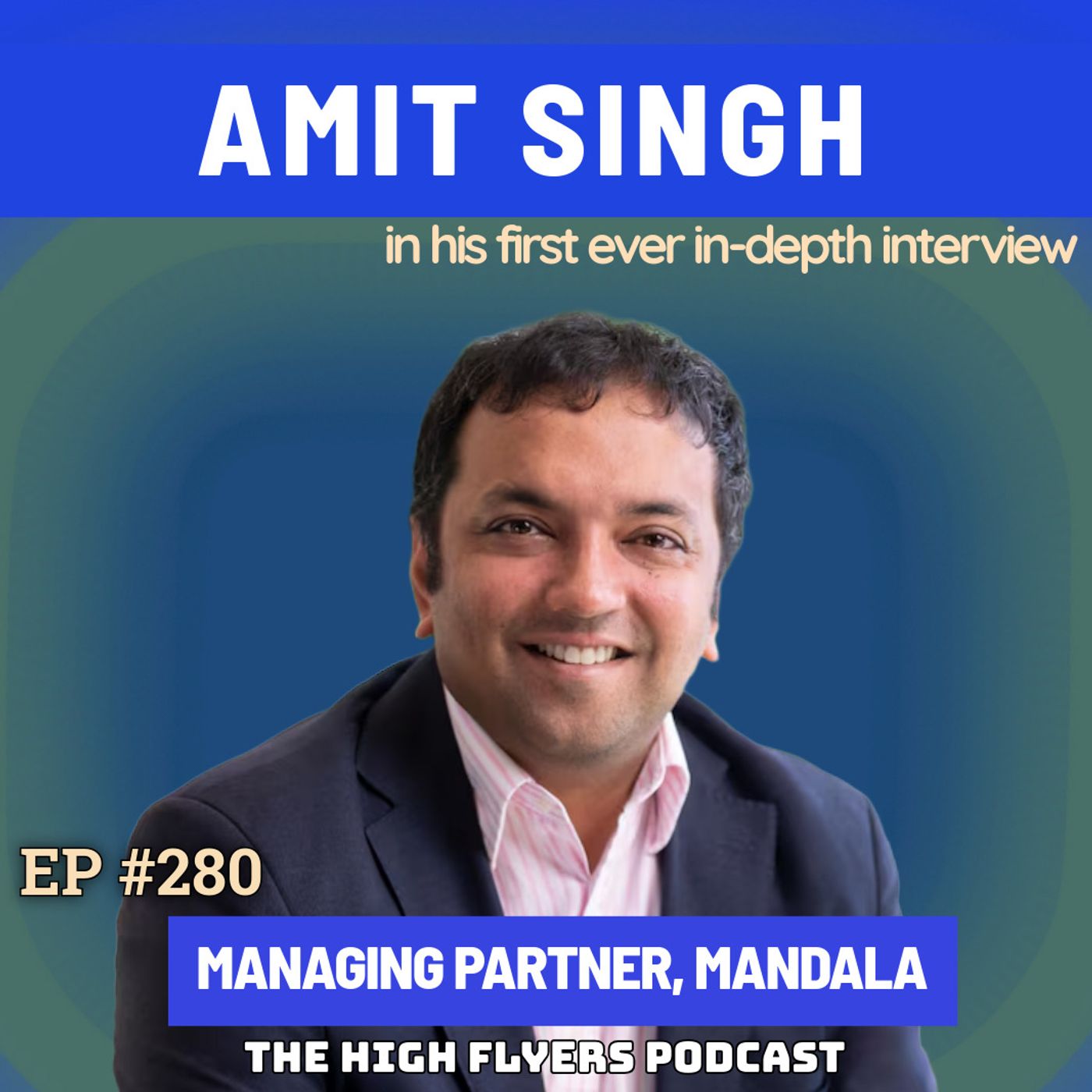
Amit Singh’s journey from Suva, Fiji (Fijian-Indian roots) to Australia and then into Australian politics, tech (Uber), and founding Mandala, an economics research firm advising on public policy and business strategy; plus his views on why Australia-India enthusiasm hasn’t yet translated into stronger outcomes.
Amit Singh is managing partner of Mandala (global offices in Australia-born firm with work across US, UK, Singapore, Japan). Born in Suva, Fiji; moved to Australia as a teenager (Year 10, finished high school early due to an administrative error). Studied Commerce and Law (double degree, plus honours) at Sydney University; was student union president; worked at Freehills; advised Prime Minister Kevin Rudd and Prime Minister Julia Gillard (and also worked across other PM tenures).
Public service is the real driver behind politicians; aim for “the puck” (ambitious steps) without losing the conversation; Australia-India lacks the institutional framework to translate intent, but will accelerate “from the bottom up” as demographics and skills change.
Equal pay case delivering 23–45% pay increases for ~150,000 mostly women care workers; Mandala’s focus on new data to support policy decisions; business models for India should be services-based (not goods/trade “to-and-from” like East Asia).
Written by AI. May contain mistakes.
Amit shares his journey from Fiji to Australia and his first job selling limes.
“As one of the premier products in our Curiosity Center lineup, up, providing on-demand intelligence to help you be 1 % better every single day.”
Amit discusses the undervalued contributions of artists and creatives.
“the Australia-India relationship has never been more important.”
Amit explains the significance of the Australia-India relationship and the project they are collaborating on.
“exploring their stories, their identities, their ambitions, and activating the full potential of the Australia-India relationship.”
Amit reflects on his upbringing in Fiji amidst political instability and his family's sacrifices.
“They'll be very pleased to hear that, I think.”
Amit discusses how his parents shaped his values and career path.
“Yeah, it actually was kind of, I think we connect because of that similar background.”
Amit shares his experiences and reflections on moving to Australia and adapting to a new culture.
“I finished when I was 16 and a bit, right?”
Learn about the experience of managing a large student organization and its impact.
“The student union was, Sydney University had the oldest student organizations in the country.”
Explore the transition from leading a student union to entering the legal field.
“And was there also a policy element to it that was the start of your career in policy?”
Discover how connections from Freehills led to working for prime ministers.
“So tell me, how does a young lawyer go from doing Freehills to ending up advising the prime minister?”
Understand the insights gained from advising leaders in public service.
“Julia Gillard and Kevin Rudd, but no one did the three, if that makes any sense.”
Examine the significance of the equal pay case and its effects on workers.
“Yeah, I think that sometimes politicians in particular almost get like caricatured by TV, by media, by movies, by creative sectors, sort of having these particular types of kind of tendencies, right?”
Learn how to maintain trust and purpose while working with different leaders.
“Like politics is famously a low trust, people churn quickly culture.”
Explore the decision to move from politics to a tech career at Uber.
“I think it was 2016 is when you went into tech and you moved to the US.”
Amit discusses his journey from public policy to a tech-focused career.
“And it was difficult initially, but then I was quite surprised at like how much there was convergence in all of the work.”
Amit reflects on his earlier tendencies to choose safe options over risks.
“I think you've done only a handful about your own career.”
Amit shares insights on confronting personal challenges in his career.
“down to something that meant that you were not able to continue that conversation.”
Amit discusses the instability of working in politics and its impact on job security.
“I think the things that have challenged me are not specific like roles or specific kind of opportunities.”
Discussion on Amit's unique people management skills developed through various roles.
“But technically, you do get sent a letter saying, thanks very much for your service.”
Amit explains how and why he founded his research firm, Mandala.
“In fact, I felt like I was probably the least capable person, which is why I had to make sure I managed people well, because I mean, I needed to be pulling my wage.”
Amit evaluates the current state and potential of the Australia-India relationship.
“So Mandala started, and it's quite funny.”
Discussion on the need for Australian business schools to adapt to Indian economic realities.
“government's feature to shine a spotlight on Indian Australians.”
Amit shares his views on enhancing economic ties between Australia and India through technology.
“So when you say business schools, you mean Australian business schools should be taught about Indian culture?”
Amit emphasizes the importance of goodwill and paying it forward in professional relationships.
“I think I would lean into the technology aspect of the work.”
Amit shares his feelings of gratitude towards the support he's received throughout his career.
“Before I do, is there anything I haven't asked that you want to touch on?”
Amit discusses his joy in helping others and the importance of non-work activities.
“I mean, my partner's played a huge role.”
Amit expresses his desire to improve as a parent and discusses family life.
“And I think in the, my daughter is going to turn nine at the beginning of September.”
Amit shares his thoughts on hiring and the importance of empowering junior staff.
“That's quite a deep, deep question that probably requires a bit of thought.”
Amit reflects on the influential people in his life and the challenge of expressing gratitude.
“Of course, you don't know the next guest, but anything I should include in my prep?”

Get the gist, explore an idea or ask about something said.
 Claude
On The High Flyers Podcast with Vidit Agarwal, what are the key points of this episode?
Searching your listeningAutomatic transcript. May contain errors.
0:00Hi, I'm Vidit, the founder and host of this podcast, The High Flyers. Hi, I'm Amit from Mandala. One of my reflections from all our chats so far, and we've caught up a bunch of times, is you're a very thoughtful guy. And I think that's what I've enjoyed about chats. Tell me if I could promise you one thing to make this a really fun conversation for you, what would that be? I think all our chats have been a lot of fun. So what I'd like this conversation to be is actually a lot of fun and seeing where we can kind of go. I like the idea of your curiosity idea. So let's just kind of see where this sort of goes, you know what I mean?
0:28And let's have a bit of fun along the way. I agree. It's just one of our chats. Exactly. We're just chatting like two mates again. Hey, friends. Welcome back or welcome to the High Flyers podcast, where we do reimagine a high flyer, showcase the brightest and most relatable role models and companies and their journey from sunrise to today. As one of the premier products in our Curiosity Center lineup, up, providing on-demand intelligence to help you be 1 % better every single day. I'm your host, Virita Aguil, and let's have some fun. Our listeners have called this podcast a meticulously researched biography unveiling the extraordinary lives and decisions of the most remarkable individuals and companies from around the world.
1:13We hope you're enjoying our catalog of 200 plus episodes. Since we launched in 2020, with many of our guests appearing in rare public interviews, It's now time to explore your curiosity. Please enjoy. Let's set some context for our listeners. Where were you born and where do you live now? I was born in Suva, Fiji, and I live now in Richmond in Melbourne. The Fiji one is fascinating. I'm so keen to unpack that. Work, what was your first job and what do you do now? My first job was selling limes to the local supermarket in Fiji. I got the limes off my grandfather's lime orchard. And what I do now is I am the managing partner of a economics research firm called Mandala, which was born in Australia, but works in and has offices in the US and UK, Singapore and Japan.
2:01And Amit, as you know, the purpose of this show is to reimagine the concept of a high flyer to go beyond just the job title. Is there a high flyer you know who you feel hasn't got the recognition they deserve? Yeah, I think a lot about, I do a lot of work in the arts and kind of creative sectors. And I think that there's actually a whole bunch of people that work in that space that care a lot about their work. And I think that's something we'll talk about a bit later. And I think they don't get the recognition that they typically do because when you meet them, you realize that these guys are genuinely, particularly the people you get to work with, are genuinely some of the best in the world.
2:31And so those are the people I think are talking about. This episode is part of a special series in partnership with the Australian Government and its Centre for Australian Near Relations in the Department of Foreign Affairs and Trade. the Australia-India relationship has never been more important. Two vibrant democracies with growing ties across tech, business, media, culture and sport. Did you know Australia is now home to around 1 million people of Indian heritage, the fastest growing large diaspora community in the country. And many are quietly leading in boardrooms, in startups, in hospitals and in creative industries.
3:11but often their stories go untold. That's why the Centre for Australia-India Relations exists to build deeper connections between two nations. And in this series on the High Flies podcast, I'm excited to interview many of these relatable role models, change makers with ties across both countries, exploring their stories, their identities, their ambitions, and activating the full potential of the Australia-India relationship. So I hope you enjoy listening. super interesting so you mentioned Fiji I think that was my biggest discovery in the research for this I think a lot of people will be surprised when they meet you that you actually weren't born in Australia because you sound Australian you're as Australian as anyone else tell me about the upbringing in Fiji what are your memories yeah so I grew up in Fiji and moved to Australia as a teenager it was a sort of interesting experience because you were kind of growing up in the middle of quite a lot of chaos you know there was a range of different political and military kind of instability, a range of different coups.
4:10But at the same time, it also gave you a sense of like comfort and focus because of the things that you were working on, or at least that you got to experience. I had a pretty happy childhood, worked on a lot of different and interesting things, got to go to a bunch of different schools. I went to a Chinese school in Fiji. And for a period of time, I learned Chinese. I could write better Chinese than I could write in Hindi. That is so interesting. I didn't discover that in the research. So clearly, that's the new fact. Tell me about your parents, because that came up consistently with everyone I spoke to, like I think Jag and Jyoti, your dad and mum.
4:41Tell me about that because everyone said to me they have shaped the person you are today. I mean, we are all shaped by our parents, but they've said you are particularly shaped by them, like you've picked up all their strengths. Tell me about that. They'll be very pleased to hear that, I think. Look, I think the main thing about my parents is the sense of sacrifice that they made in moving us to Australia. They had great jobs in Fiji and great jobs that had worked to build like status. They had a great set of friends and they gave all of that up basically for us to move here. And it kind of sounds like the same canned story that you hear every migrant kid talk about.
5:14But what that did was it also made put a sense of responsibility, that sacrifice put a sense of responsibility on us, not in a way that was like kind of stressful. It was just almost like something that you just kind of think about a lot. We had a fun time. They were pretty fearless. My mom was an Indian lady who was a school teacher and she was the first Indian, let alone a woman, but she was the first Indian manager of one of the big school rugby teams in Fiji, which is a really big deal, right? And so they had like profiles of national newspapers and things like that. My dad taught us the kind of value of learning.
5:47My mom's a school teacher, my dad's an academic. They taught us the value of kind of learning from when we're little kids, you know, like he'd make us read The Economist. He still sends me articles from the Harvard Business Review because he's trying to give, I think it's like gratuitous feedback about how I run my business. But one of the things that was really important for them was in that sense of sacrifice and responsibility was this sense of service, right? The sense of sort of giving to other people, but also in some senses, the sense of caring about it and caring, not in a soft way, caring in terms of like, if you're going to do something, do it really well or don't do it at all.
6:17And I think that was something that I really took out from them. I've been told that your caring people first approach to business comes from your dad. Any reflections on that? Yeah. I think he once said that before you can get anybody to listen to you, You have to get them to believe that you care about them, right? And so I think that's been a big part of how he's approached his work. He, I said, is an academic, is a management trainer. So he's basically spent most of his life teaching in business schools or teaching management to people in professional disciplines. So he used to teach doctors how to be better managers.
6:46Yeah, like doctors are really great doctors, but they don't know how to manage an ER. And so it sort of comes from them. But I think it's actually both of them. I don't think it's one or the other. It was this sense that we always had to be doing something for someone else, right? and not in a way that was because it was the right thing to do or because you were somehow virtuous. You had to do it because actually it made you feel good. It was actually an individualistic exercise to give it to somebody else. And you said we a couple of times. Did you have any siblings? I've got a sister who is smarter than me and actually, ironically, when you have to make really big life decisions, she makes better life decisions.
7:20What I've discovered in my life is that all the people around me make better life decisions for me than myself. It was my sister's decision. My sister convinced my parents to let me leave home and go to Sydney for uni. My wife convinced me that, I mean, it was a good idea for us to give up the secure jobs in Australia and move to San Francisco. So yeah, I've kind of basically outsourced all the hard decisions of my life to people around me. And so sister, is she older or younger? She's younger. It was pretty ballsy of her to go to my parents and say, your son has gotten into university in another city.
7:50It's time for you to let go and let him leave home. I couldn't do it. Yeah, but she pulled it off. And tell me, so you moved to Australia. You said you moved as a teenager, which is I moved as a teenager too with my family from India. And maybe that's why you and I connect. My parents came here on a business visa and dad came and expanded his family. And one of my reflections as I'm getting older now is I appreciate my heritage a lot more now than I did back then. I was trying to fit into Australian culture and I had a very happy, good childhood. I was never abused. I was never, at least never to my face and things were good.
8:18I'm curious for you because Fiji and Australia, one could say is similar because they're closer in geography, but actually culturally they're fairly different, I think. What is that reflection on the Indian heritage being of Fijian Indian descent and then coming to Australia as a teenager? Yeah, it actually was kind of, I think we connect because of that similar background. And also, I think it was also a point in time, like I think that point in time in the sort of 90s, 2000s in kind of Eastern Melbourne, Southeastern Melbourne was like a particular time to kind of think about these questions.
8:48Australia and Fiji were actually pretty similar in many respects because they were both, Fiji was an offshoot of Australia. And actually one thing that is not often forgotten is that in the original Australian constitution, Fiji was invited to be part of it, right? They later decided not to include it, but Fiji was actually meant to be in the original Commonwealth of Australia, right? And so I actually didn't find the transition that hard. I found what was, to your point, it resonates a lot when you say that you tried to run away from your identity a lot because it was really complicated, right?
9:16It was complicated to explain to Indian kids that you were not from India or South Asian kids that you were not from the subcontinent, right? But then also really complicated to explain to your new friends in Australia that you were from this island in the middle of the Pacific that no one really knew about except when they occasionally went on holidays from time to time. And when they did go on holidays, they didn't really experience a lot of Indian people, right? And so it was a pretty kind of interesting experience around that time. But it was also, I think, formative in a way because it helped sort of shape, I think, a lot of the ways in which you respond to those things today as well.
9:46The other common thread in my research, and I've noticed this in just your and I chats over the past probably year or so, is you know a little bit about everything. People said you are the kind of guy at a party where you just have random facts and topics that are deeply irrelevant, but you know something about something. Where does that come from? Like as a kid, were you just curious about the world? Yeah, I think, so we didn't have TV in Fiji until like 1991. And so a lot of the things that you got were from reading or listening to the radio, We had this national quiz show that I loved. And in fact, later in schooling, we used to be competed.
10:21The competition was between different schools to win different quiz competitions. And our school actually ultimately won one of those things later on. So I was just always curious about random facts about what's happening in the world and ways in which you can kind of relate to those things. And so that was always something that came to me as a kid. And I've kind of always kept that interest going forward. I also think it in some ways, I find that I find a lot of solace in like the world being small. So if I could relate experiences to things that I did somewhere else or bring that back to explain the world, it made me feel a lot more comfortable.
10:53Right. And so you're right. I have most useless sets of facts about a lot of different things. That is so interesting. And tell me, fast forward to when you were 18. So you're finishing high school. Actually, before that, how long had you been in Australia? So you came here in year six? Year 10. So it was really late in the kind of peace. I came to Australia in year 10. They made a mistake and put me in the wrong year level, which was great because then I could learn a lot of new things. It was bad because I finished high school when I was really young. And so it was sort of a little bit of how do I find my, I mean, how do I find my place in the world?
11:27And you're not really, I wouldn't recommend it. I think you should finish high school when you're 17 or 18 and not really earlier than that. How old were you when you finished? I finished when I was 16 and a bit, right? And that wasn't because of any great speedy program. It was because of an administrative screw up, right? You know what I mean? So yeah, so I finished high school around about that time. So I generally ask age 18, but in your case, I guess 16 and a half. If I met you at that age, what would I have assumed you would do with your life? Yeah, I was extremely embarrassing. Like, you know, when I think about it, I had studied science.
11:58We all were, right? I think we all were. I'd studied science all through school. I was determined that I wanted to do something that would build on like what I was talking about earlier with my parents' sense of kind of service. I wanted to do it in the least stressful way. So, I wanted to do something in a health or medical kind of field. So, I did all science through all of high school. And then on the day when it came to changing preferences on what you were going to study, I basically, well, two things happened. One was in order to get into medicine, you had to do a particular test and I didn't do well on the section of the test that was about personality.
12:33I mean, I basically didn't have the personality to become a doctor apparently. And then I kind of decided that actually what I cared about was social sciences. All the things that I had spent a lot of my childhood doing is the things I love doing were how economies work, how systems were shaped. I mean, what did it mean to think about the role that policy played and driving situations? how did history play a role in how societies dealt with each other and so those were all the things that made me kind of interested in going and studying law and that's sort of how I basically flipped on the literally on the day that I had to fill in my forms I changed out of all science to basically all social sciences and law and so you studied law at uni you did two degrees right back to back I did I did commerce and law so I did double degree of commerce and laws I actually spent six years at uni rather than the usual five.
13:23I added honours in there as well. And I was also the president of the student union, which is a full-time job while you're at uni. So it was a particularly stressful year that I got that job because there was a piece of legislation that was passed that was directly aimed at the business model of student organisations at the time. But yeah, I was at uni for about six years. So you made up for the one year you finished school early. I definitely made up for that. Yeah. Yeah. Tell me about the student union, because that connects, I think, in two ways. One, would love to unpack that legislation you referred to.
13:52And two, you went into government after pretty early in your career for many years. And that student union period, was that the start of your policy career in some ways? The student union was, Sydney University had the oldest student organizations in the country. The Sydney University Student Union that I led actually at one time was led by Edmund Barton, who was the first prime minister. So it was extremely old. And they were divided up into different organizations. One was the political organization, which was the Student Representative Council. And the union was basically a services provider for services across the university.
14:23But it had a big workforce, a big asset base. It was essentially a big business. And what was interesting was having to run that business because it was an unincorporated association. And so it had a turnover of about 20 million. You're like 21 years old, and now you're running a business that's about that big with 200 employees. And one of the things I was proudest of that period of time was that there was a piece of legislation that was introduced that was passed as law in Australia, which prevented these organizations from collecting fees up front from every student on a compulsory basis. And so it was a shift to a voluntary fee.
14:58And at the time, there were about 40 student organizations across the country and nearly 40 universities with student organizations across the country. and every one of them handed in the keys to the administration. But we managed to keep this unbroken spell of student control of this organization for 100, it's 150th year now, I think 150 plus years. But for that entire period of time, it's been run by students. And that was because actually we were better at managing the business and operations than the consultants that were hired by the university. And was there also a policy element to it that was the start of your career in policy?
15:35So what was interesting was I did that and then got involved and then got interested in policy after that, right? I was always interested in policy. There was a policy element to that work. But what I think was interesting was the public administration part of that. I mean, so it's that policy was important to create the structure, but then how could you run it in the public interest? And what did that actually mean for the way in which you might think about the services that you were delivering? How would it continue to create the opportunities for a range of different people as you went along.
16:03So it was all of those things kind of, I think, came together. So there was a policy element to it, but it was also how do you act and operate something in the public interest and get motivated around those particular issues. So it sounds like by this point, you were pretty ingrained into Australian society. We talked about the Fijian kid coming to Australia. By this point, you were pretty local. So tell me post-university, you did go into the legal industry. I think you were at Freehills for three years. Yeah. How do you reflect on those three years now, like were there any skills experiences from that that set you up for the foundations in your career?
16:37Yeah, I worked for my boss at Freehills. I had two partners that I worked for at Freehills. Both of them were really great women. One of them was an extremely strong influence in my career, even to this day. And I think the way in which I got to work at Freehills was actually an incredible gift in a way, because I didn't want to study law. Sorry, I studied law. I didn't want to go and practice law. And then I met a, at the time, the chancellor of the university, and I, when I was the president of the student union, was sitting at a, we were sitting at a dinner and we'd kind of run out of things to talk about, right?
17:10Because we'd been in the midst of a very stressful negotiation about how the university was going to support the union and what the union was going to do in response. And we'd landed on a pretty good spot. And so he then sort of moved to talk about, you know, what are you going to do with your life, right? And I was like, well, well, I kind of like this sort of work. Maybe I can continue to do this. Maybe I should go and work in business. And he said, I think you should go and work in law. And I said, I'm not sure that that's a great idea, which was a really stupid thing to say, given that he was a Supreme Court judge.
17:39But he then subsequently connected me up to a bunch of different people. And eventually, in this long, circuitous route, I ended up basically at Free Hills, which is where he had started his career. And it was a really incredible experience. And I really enjoyed Working there, yeah, it was a really incredible experience. So tell me, how does a young lawyer go from doing Freehills to ending up advising the prime minister? That's how it looks like on your resume, but I'm sure there were a few steps before that. So connect the two for me, connect Freehills to the government. It actually isn't really that connected.
18:11It is as, but the change is almost as direct as what it says in my CV, right? I had been working at Freehills. When I studied at university, I did a lot of research on economic policy and a lot of research on constitutional settings and constitutional law. And so I got to meet a bunch of different people through that exercise. And I also got to meet a bunch of people through running the student union. So it was always sort of vaguely connected in those kinds of circles. When Kevin Rudd became prime minister, one of the people that I was pretty close with was building a team inside Kevin Rudd's office.
18:43And he offered me a role through that. So it was really just kind of staying in touch with all the people that you had worked with. But it was as simple as like, I think I left Free Hills on Monday and I started my job working for Kevin Rudd on a Wednesday. It was as kind of direct a switch as a CV actually suggests. So take me inside the role itself, particularly how did you set yourself up for future success? I mean, I read in Bill Shorten's farewell speech, he calls you out by name as one of the six or seven people that he considers the smartest people he worked with. So clearly you did something and that was towards the end of your, I think, policy time in government.
19:19I don't know the dates exactly. But before we get to that, connected to the early days, like the first six months, how did you get into government and earn the trust of the... Were you working with the PM from DayDot or did that role come afterwards? I worked in Kevin Rudd's office from DayDot. So I worked for Kevin Rudd, then I worked for Julia Gillard, and then I went back and worked for Kevin Rudd after that. Many people did Kevin Rudd and Julia Gillard, and some people did Julia Gillard and Kevin Rudd, but no one did the three, if that makes any sense. Although I wasn't there for the whole of the first period, which is important to kind of qualify.
19:52How did I set myself up? To be honest, I think I knew from when I started that it would be difficult, that it would be challenging and it would be spiky, right? And so what I was really always looking for was the great reason why you were there, right? And thought of every other step as being a process to get there. So let me just make, unpack that a little bit. In any job, what you do is you might do 10 or 20 things, right? And really what you're looking for is if you're looking for 10 or 20 things to be amazing, then you're setting yourself up for failure, right? In those 20 things, I say this even when I get the chance to talk to young staffers today is that there'll be 15 things that you do, which will be pretty mundane and largely will be really difficult and a bit challenging and not that exciting.
20:36There'll be three things that you do in that exercise that will be pretty interesting and where you'll learn a lot. There'll be one thing out of that 20 that you will do, which will be like something that you will remember and something that'll be important. And be one thing on that 20 that you would do that will change the country, right? And so as long as you're getting that ratio right, you'll do the 15 things if you know you're going to get your 20th thing on a regular kind of beat. And so it was pacing yourself and understanding that that was the way in which you needed to deal with it. The second way was to care about the work from the beginning, right?
21:09Like what was the reason for the work? Why did people do it in this particular way? You know, you were surrounded by some incredibly smart people and they would have come to their journey through some context. So how do you kind of respect that journey, but also hold true the ability to kind of challenge and find the right kind of virtue? And then the third thing I think I did, which probably set it up, was be genuinely curious about every person that you work with. Like, what do you do? Why is it important to you? What can I do to help you? Like, those are pretty basic things. But I think that it actually over time compounds when people can see that you want to support them, you're interested in what they're trying to do.
21:43You are applying yourself in your work in a way in which it advances the overall kind of objective of the project, those types of things. I'm curious, Amit, was there anything you learned being that close to two prime ministers that you wouldn't have learned if you hadn't and that experience? Yeah, I think that sometimes politicians in particular almost get like caricatured by TV, by media, by movies, by creative sectors, sort of having these particular types of kind of tendencies, right? And it's all about some narcissistic pursuit of their own kind of self-importance, right? But what I think is really important about being really close to them is you realize actually how committed people are for public service, right?
22:21Like you don't get into this work because it makes you feel like a minor celebrity. You can do that. There are better ways in which you can become a celebrity, but you do it because you want to get your levers on the big systems to actually genuinely affect people's lives, right? And what I think was really interesting was just seeing how that belief in public service manifested because what I expected it to be was to be like one particular version of that. But in working for Kevin Rudd, I worked for Julia Gillard, there was a very brief period in which I worked for Anthony Albanese and then there was a long period.
22:52There's a decent period in which I worked for Bill Short. And all of them were very interesting individuals or each committed to public service, but in very different ways. Your point about the perception versus the reality, I think is spot on. I definitely have that. I've never sat in parliament in the roles you have. Maybe we can clarify it with a project you worked on or a decision you were part of. Take me inside that decision. What would we as the public assume? And then what actually happened inside the four walls of parliament? Yeah. So one of the things I'm proudest of at the time that I worked in politics was there was a thing called the equal pay case, right?
23:29So Australia was unique in the world when Kevin Rudd was elected and Julia Gillard was the minister for workplace relations. And then in the end, it was a decision that basically delivered a 23 to 45 % pay increase for 150 ,000 workers, mostly women that worked in care work to make their salaries similar to work that was being, you know, to this level of capability that work was done in other sectors in the economy, right? And to speak to some of these workers after that decision was like an incredible thing where they said, I would have left this work. I worked in a homelessness shelter. I couldn't afford to work in this homelessness shelter, but that decision helped me continue to stay in that sector.
24:07I mean, you referenced earlier about working for Kevin Rudd, then Julia Gillard, and then back for Kevin Rudd, even just saying that out loud would sound odd to a lot of people, right? Like politics is famously a low trust, people churn quickly culture. Again, maybe that's a perception that I have as a observer. How did you manage that? Because again, I almost feel like back to our conversation earlier about you being a very people oriented, trust oriented character. Did that challenge your own internal way of operating where you went from one leader to the next and back to the first one? Yeah, I think it's because you've got to like, It's what are you committed to, right?
24:40So you're committed to the work, right? And I have a good relationship with both of them. I hope they think the same as well. And I think that I enjoyed working for them in the times that I did work for them. It was important to me in that work to remember why I was there. And I think it's important in every job that I've done since is purpose and mission is a big part of the way in which I think about my work. And it's a big part of how I think about how everybody should think about it, right? Like I was there to do a job. I had an idea of what I wanted to work on. I had a positive view of how I wanted to achieve certain things in my own space, but in a way that could advance their particular programs.
25:15I had this access to be able to work with people that could make decisions. And so it was a balance of being able to bring all those things together. It was an incredible privilege to be able to work for one prime minister, let alone working for two over an extended period of time. And so every day was something. Lots of politicians say this. I think I heard the current prime minister say this, say every day in the government is better than all of the days in opposition. And so you take that privilege very seriously. And if you, going back to that early experience of Fiji, where you can hold two truths of the chaos that's going on around you, but the focus of the things that you were dealing with.
25:50If you do that in your career, where yes, on the outside, it looked like it was pretty chaotic. And to be honest, it was, but if you could remain focused on the task that you were set, if you could believe in the thing that you're working on, if you could be committed to doing that work really well and demonstrating care with it, then it should be easy for you to be able to continue to do that work. So with all these experiences, take me, let's go into the next stage of your career. So as history shows, you went to Uber. I think it was 2016 is when you went into tech and you moved to the US. Was that a crossroads moment?
26:20Because perhaps you had a conversation where some of these people you worked for said, Hamid, do you want to enter politics yourself? Versus you deciding, you know what I want to say in the private sector. Tell me about that moment. I've always been interested in is how people think about the exercise of power in a way in which it can develop and drive like positive outcomes, right? And so the reason that I got interested in tech was actually because I thought this was an interesting and new way in which people were exercising power to deliver like positive outcomes for people. Like if you think about the digital economy grew because of the consumer surplus that it created, right?
26:56And so how could I get a better a sense of being able to access that? And how could I get exposed to being able to do that work? I had started a, in between when I left politics and when I went to California, I had started a business with a friend, but I kind of gave up on it too quickly because I wasn't really ready for startup life. The business continued and remained very successful. And we joked about it. The friend of mine who did pretty well from it, he and I continue to joke about the fact that I just basically gave up on it too early. But it gave me this sense of like, I wanted to do something entrepreneurial and I wanted to do something that had a global scale.
27:28And that's what I got from working in tech. So we've talked about a fair few transitions, Fiji to Melbourne, Melbourne to Sydney, Sydney to San Francisco. By this point, how would you consider yourself? Like you're pretty senior in your career. You worked with all these prime ministers. You've got a pretty important portfolio at Uber. You're in San Francisco. You've had all these life experiences. Before I go to the next step, just tell me where were you at in life at this point when you were at Uber? Uber was interesting for me because I went to America to almost test myself and to see what all the new things I was going to learn and how was I going to be able to adapt and grow as a result of that.
28:02And it was difficult initially, but then I was quite surprised at like how much there was convergence in all of the work. So you had to translate the tech, you had to translate your career and sort of public policy to your career in tech. But actually, once you figured out the language, the common language, the trends and the systems and the ways which thought about it came pretty easily, right? And so that kind of gave me a sense of confidence about the fact that I had always believed that I needed to do policy in the first part of my career, but to get out of that and move into more of a business role.
28:34And what San Francisco gave me was confidence that actually I could do policy for the rest of my career because A, I liked doing policy. Two, it was interesting enough, but the world was very big and there was lots more policy questions to kind of answer. So that was like, I think the big kind of takeaway of San Francisco I was one, there were enough staying in policy would basically define the rest of my career. And it would be a choice that I would be happy to make. Well, I was trying to find previous interviews you've done. And you've not done many. I think you've done only a handful about your own career.
29:02But one you did a while ago, a quote you said that I want to read out in your words. Earlier on, I had a tendency to pick the same option. And you said something about skating to where the puck is going. It would actually surprise me because I would say you're very, I mean, you've proven that with Mandala. You're very entrepreneurial. I think you said this pre-Mandala potentially, or you were reflecting on the period post-Uber and pre-Mandala. How do you reflect on that comment now? Because you are very entrepreneurial. I mean, you've taken all these risks moving countries, some because of your parents, but then some on your own accord later in life.
29:32But then you say you had a tendency to pick the safe option. What I was reflecting on in that comment is most of the time, I didn't feel liberated enough to try something, in a sense, like what I loved about the tech industry was this idea of like, shoot your shot, right? I mean, like if you're in an opportunity, there is a chance for you to have this conversation with someone, take the chance, aim for the most ambitious step, right? And I think that I had in the very early part of my career when I decided to study accounting, had wondered about taking the safe step. In the time that I worked in government, most of the decisions you made were ones that were around achieving consensus, right?
30:06Which is important and I'm not denying that. So what I then discovered was I actually, the times I enjoyed doing things were when you were trying to be a bit ambitious and where you're trying to sort of go for something that was a little bit harder and realizing that actually the cost of that wasn't to fall back down to something that meant that you were not able to continue that conversation. It's just that somebody said no to something ambitious. It doesn't mean that the next best option is you not being able to have that conversation with them. You don't lose the right to have a conversation just because you aim for the ambitious step.
30:37And so, yeah, you're right in a way that if you actual look at it sort of looks contrary to that decision. But my framework for thinking about it, I think, has always been careful. And this is, I wonder whether you feel the same, right? This, I think, when you move here as a migrant, you're always asking yourself that question, is this the point at which I aim too big and then I get cut down and lose everything that I built up to this point? And I feel like as time has passed, I've become more and more secure in being able to aim for those higher things and not be scared of losing something in return.
31:07And also you would know this having worked with these prime ministers is we're all human. I mean, again, something my dad used to say to me when I was a kid, he said, Kevin Rudd has to brush his teeth in the morning and put his pants on. You and I have to do that too. Like he just has the title and we don't. But I think that's something I've learned through the podcast is humans are humans. We're all insecure. We're all wanting connection and relevance, irrespective of who we are. So I think that gives me today a lot of comfort that, yes, that person is three, four steps away from me, but I know I can connect with them because they're also just human.
31:38Tell me, Amit, out of all the career experiences you've had, which one challenged you the most? I think the things that have challenged me are not specific like roles or specific kind of opportunities. is I think the things that have challenged me are things where I've had to kind of, in some ways, learn about myself in a way that's been kind of confronting and in a way that I have probably wanted to resist. And so, I think that it's really important to learn about the content of your work and the substance of your work to be able to apply that in the best way possible. But I think also having a great career is also being able to learn about yourself as much as you can.
32:14And I think where I've found that challenging is when I've had to confront something where I think is a really important value, but I've not been able to live that out. Or I found it a challenging situation where I've not been able to convince others that those things are really important. So you're saying there was no particular period, like some have said, the period even pre-Mandala was an interesting period. You learned a lot about yourself. I think if I look back at my career, which it's funny because I think of my career as a complete mess. I think politics was challenging because I can't imagine how hard it would have been to be made redundant, but walking into work every day, knowing that you could lose your job that day.
32:50So when you work for a politician, once they lose their job, you lose their job. So actually, in the time that I described where I worked in politics, I actually technically lost my job five times. And so you just kind of stuck around for the next person. So it was okay. But technically, you do get sent a letter saying, thanks very much for your service. Here's your payout, Jimmy. Yeah. And so those things were kind of challenging. On the creating the best environment, I referenced earlier that you connected me to some of your previous direct reports and they said your people management skill is very unique.
33:18And I think just hearing that, I agree. I've had some horrendous managers who are either too chill and relaxed or too micromanagement. And I can connect with you being a founder myself, right? When it's your own business, of course, you take it personally and you want the high standards. But when did you first manage people? Because I think that might be interesting. We talked earlier about your parents' influence. Did you learn a lot of your people leadership skills through being a people leader yourself? Yeah, I actually think that this was where Uber was extremely valuable because I had managed people in politics.
33:49When I worked in politics, the people management side was pretty poor, as has been borne out by reviews and inquiries since. And I'm pleased to say that that side of things has improved considerably. considerably. The people management side, but working in tech and in particular working for people that worked in tech, their expectations of people management were really high, right? I had an incredible team at Uber that were made up of people that had PhDs in economics from Harvard, that were Rhodes scholars, that were, I was definitely not the smartest person in my team by like a long way. In fact, I felt like I was probably the least capable person, which is why I had to make sure I managed people well, because I mean, I needed to be pulling my wage.
34:28You know, the way I've learned to manage that is by running my own business. I go, I'm in control of my doubts and no one else can decide my doubts. I will decide my own doubts. Yeah. Like the last vestige of an absolute dictatorship is a private company. I don't know. Like one of the things I was thinking about this weekend ahead of this was how proud I am of what you've done, right? You know, what you've built, because I was looking at your list, your back catalog, and it's a really impressive, right? Like we've been fortunate to have met along the journey and not through it, right? And so being able to like have the fortitude and the kind of focus and the care to be able to get to this point, that doesn't happen by accident.
35:05And so in some ways, I said before that it's really nice when you can liberate yourself with other people's success. So when I was thinking about that, I was thinking like, oh, actually, like it's really cool how you managed to do this the way you've managed to do it. Thank you. And thank you for being a great supporter. And I mean, to return the compliment back is I've earned, I'm getting better guests now. So you've come on seven years in. So it. So the guests are getting better. Tell me, how did Mandala form? What were you in that 2018, 19 period? What were you seeing in the world? What were you reading?
35:34What were your career plans? Yeah. So Mandala started, and it's quite funny. I get really caught up in this thing, which is my partner, like I said earlier, all of the big decisions in my life are outsourced to other people. So my partner came up with the name Mandala. This is your wife. This is your life partner. This is my wife, right? My life partner, right? Yeah. So, my wife came up with Mandala and she said, you should come up with a Sanskrit name so it has like some connection to you into the future. She's an Australian woman with an Irish background, right? So, it was very funny that she came up with a name.
36:06It's an economics research firm. To go back to your point about 2018, 19, when I was in California, one of the things I was thinking about was how the work that we do on policy and economics around the world, and this was the experience of running a global team there. And so when we started the business, we wanted to build something that was a global capability born in Australia, but where we do quite a lot of work in the United Kingdom. We do a reasonable amount of work in California. And what we try to do is look at, is there a new piece of data or insight that you can bring to support a public policy decision, either in advocating to governments or in governments being able to make decisions that affect industries?
36:45And how can you bring an academic discipline? A lot of our colleagues are from academic economics. How can you bring commercial understanding, having worked in industry, or how can you bring a public policy background? So we have people that have worked for not just Prime Minister Zia in Australia, but in the United Kingdom, people that have worked for presidents in the United States, and just kind of bring all those disciplines together to provide a type of advice that looks at growth in businesses from an external perspective or from the kind of what I would kind of describe as the outsider view of what people expect companies to do and what they expect industries to be able to produce.
37:24I'm conscious of time. So I want to come to Australia-India relations, which you and I are involved in. I mean, this episode is part of the Australian government's feature to shine a spotlight on Indian Australians. One of the conversations you and I have privately, and you and I were there, the prime minister's events that happened three, four weeks ago, I think now, is there's a lot of enthusiasm. A lot of enthusiasm. Some would call it progress, at least publicly. But then I think most people would agree the outcomes are perhaps not where they could be. And there's things you've said to me privately that I've always appreciated, but I don't want to put words in your mouth.
37:52I'm curious, why do you think there's a delta between the enthusiasm on the Australian-India relationship and perhaps if a firm like yours was asked to come in and write a paper on the progress we've made, it might could be better than it perhaps is today. Is that a fair comment? Yeah, I think it's important to put the Australia-India relationship in context, right? And so like there's never been a lack of intent. The last interview that Ben Chifley gave before he went upstairs in the Karajang Hotel and passed away was to an Indian journalist, right? And where he said, and this was pre-independence, where he said, tell Nehru to keep the dream of independence alive, right?
38:25So then goes upstairs and passes away. So there has never been a lack of intent. The problem is that we've never found a way to translate that intent. And unfortunately, that's been a function of the fact that we've not had the right institutional framework to deal with it. We have got very used to this idea of the Australia-India relationship, in a sense, copying what Australia did very successfully in East Asia with first with Japan, then with Korea, then with China, right? And those things cannot be the same where we deal with it. But I actually have like a counter view, which is I'm optimistic about the Australia-India relationship, even though I think it's underdone today relative to what its intent is.
39:01And the reason I'm optimistic about it is because instead of us trying to change that institutional framework, it's almost like we're going to change it from the bottom up. And what I think will happen to that is give it, I feel like in 10 years time, the Australia-India relationship will have accelerated to a faster degree because the composition of the Australian population will have changed. And because of the focus of the ways in which we think about that will have changed. Can you unpack that comment? So when you say business schools, you mean Australian business schools should be taught about Indian culture?
39:30No, they should be taught about like what the Indian economy is, right? Like what the Indian economy is, what the possibilities of how we can work together with India. And so we are taught an analytical framework of business in Asia, which is a to and from relationship. We send them raw goods in a particular way and we buy it back basically through a trading channel. The India relationship cannot use the same structure. It is a services channel. So it's how do we work with India to sell to the rest of the world? And how do we work with India on sets of services? So we think about the new AI economy and you go back to this idea that I was talking to you, that I mentioned before about we haven't changed the institutions or the skill sets to make that work.
40:07The biggest constraint on AI adoption is workflow. The people that know the most about AI workflow are the various like centers of excellence in India. The easiest way in which you can accelerate workflow is actually by using more connection between the two places to identify the weakest links and then work out ways in which you can improve overall workflow. So services is like an obvious place where you can do that. And so to my point, yes, I would just teach like a whole different way in which you would do business in India. What does the new Indian economy look like, right most perceptions of australian business people of india are still grounded in an idea of like india when it was 20 years ago or 10 years ago when the last time they visited i think we talk about this i can't remember who so much just take credit for the quote because it's quite good which is like the best thing most australians need to do is just go to the airport in india just go to any airport and they'll give you a sense of like what you're actually dealing with in terms of the economy that you're dealing with tell me you so you left the government role if i know the numbers correctly in 2016, approximately, right?
41:05We're 10 years in 2026. If you got a phone call today, hypothetically, and the prime minister said, Amit, I want to appoint you as the India economic advisor, what would be, you've said one thing, which is the business schools education opportunity. What are a couple more areas you'd advise the government of today on deepening relationships with India? I think I would lean into the technology aspect of the work. You do a lot of the work in this space, but the tech council, for example, did an agreement with NASCOM a few years ago, that has kind of stalled in this. I'm not close to the progress in it, but I would just turbocharge that.
41:36So I would lean more in the technology question there. I'd lean more on the technology question on implementation of AI workflows and understanding better AI workflows and how you might think about that. I would also think about ways in which we can complement each other in developing services that we can deliver to the rest of the world. And those are in spaces that people have not historically thought about. I want to move to rapid fire sprint. Before I do, is there anything I haven't asked that you want to touch on? No, I think I feel like it's been a fun conversation. I hope you felt the same as well.
42:07I mean, I would love to talk to you for another two hours, but I know you've got many things to get to and prime ministers to speak to. So I don't want to talk to the prime minister that often. I think the main thing for me, if I could say, is one of the things that has made me feel incredibly at home. This is the earlier point about when you go into a room and you don't, you think about yourself in a different way. One of the things that's been really important to me is that I've benefited from the goodwill of like a lot of people. And I don't know why. And I have no idea how to deserve it. And every one of them that I ask for, what can I do in return?
42:40Their response, which now is like, I think I've probably asked this question 20 times to different people, or maybe not 20, but 10 times to different people. The answer has always been just paid forward. Like you can't do anything for me, you've got to do it for the next person. But I think one of the messages I think if I would be remiss of me not to say is like that I can't believe that luck that I've had. Totally. I mean, even me, I mean, I think just to round this out and we moved to Rapid Fire Sprint is one of my development areas when I started my business was I'd say I'm self-made, right?
43:07A lot of founders will say self-made. And now I go, no, I'm not self-made. I've had people help me every step of the way. And you're never self-made as you know, you have employees, you have customers, you might have investors, you have the community at large, your wife, my partner, my family. I mean, my partner's played a huge role. Maybe let's just quickly spend a minute on that. Let's move to rapid fire sprint. Is there one non-work investment, ideally of time and energy that you consider the best in your life? Is there a hobby or a course or a holiday? I like being busy and I like being busy on like other people's things, which sounds like kind of a bit creepy, but like non-work investments are things like in investment senses, like how can I help my friends succeed in their disciplines and what they actually care about and making sure that they do extremely well.
43:51And so I'm really like, I find a lot of joy in that. I mean, like more joy than going on holidays is actually having a friend that wants to do a project, get a business up, do something else. And then just being able to like use that as some time where I'm not thinking about my things and focused solely on them. This came up actually in my research quite a bit as people said you're a perfectionist, even with your birthdays or your wife's birthdays, you like go to the nth degree to plan stuff out. It surprises me because you made a comment earlier that your career has been messy and you talked about time efficiency.
44:20I've always thought, and I was really surprised when I heard that in the research, because I always felt you're kind of the 80-20 guy where you will do the main things that achieve 80 % of the work. But then I learned you actually will go to the next degree just to do the work for the sake of doing the work. Yeah, so I think Ro and I compliment each other because she is the big visionary and I kind of care about like every implementation detail, like for example, the font. And so it was a very spirited debate when we started Mandala about what font we would use. And everybody couldn't really have that debate because they knew that I'd have a very strong view at the end of it, right?
44:53So yeah, so I wish I was an 80-20 guy. I'm actually not really 80-20. I did hear that story in my research and it's a great example of your attention to detail. Is there one thing you want to learn in the next six months, ideally outside of work? Great question. I'd like to get better at trying to learn from other people by being a better parent. I'd like to be a little bit more deliberate about the sets of things I could do. Like, I think I nailed how to do being a parent from like zero to seven. And I think in the, my daughter is going to turn nine at the beginning of September. And I feel like this phase of like childhood, I'm not like nailing.
45:29So I'd like to probably get better at that. I would also like to get better at being able to garden. My mom is a very good gardener, but I am like very good at killing things. So we're doing a project at the moment of trying to plant some things at my place. And I'm just hoping that I can kind of not let that die. Is there one interview question you love asking prospective candidates in a hiring process? Yeah. What's something that they wish somebody had done for them that could help them succeed? What is the one thing that in all of their experiences up to this point, did they feel like they didn't get from their managers that if they had gone, they would have succeeded?
46:03Interesting. That's quite a deep, deep question that probably requires a bit of thought. I like that. Last two, one pet peeve. Yeah, I kind of, I sort of got to it before. is like it really annoys when people, senior people try to basically use being senior to do really dumb things to like their people that work for them or work with them. I don't know if this came up, but like I have a strong view about where people sit in an office and the best seat should be given to like the most junior people. And the reason why I think that that's important is because it's a reflection of actually what's the most simple thing for the organization.
46:37Simple thing for the organization is the people that are doing the most work are given the best conditions to succeed in. You don't want senior people to have nice offices, right? Like my office is the converted broom closet, right? Because you want people to, you want them to be out and about talking to people, right? Like, so it's just these exercises of power that are done for gratuitous purposes, just to be able to like be showy and not for any actual like method. Totally. It's, it's, it's command and control. I mean, absolutely. And last one, I ask every guest, if you could recommend a question I should ask the next guest.
47:09Of course, you don't know the next guest, but anything I should include in my prep? Yeah. Just going on the theme that we were talking about before, I'd like you to ask them if they wouldn't mind sharing the person that they thought had the most amount of influence on them, like as in a professional person that had helped them out in a way in which they wish they could pay them back, but they're not allowed to because that person doesn't want them to. And so, yeah, a way in which they've had a huge influence in their career. Like we mentioned, you and I have both had the benefit of having those people, but I'm like generally curious about how people have managed to not managed to but it's just like I struggle with the lack of not being able to thank them and so just I'm just curious about how people have thought about that like well you've got the platform now so if you want to call out anyone by name you know it's just like it will be here for the next two hours right you know I mean like they're all incredible people right like and they would hate me doing it that's why I don't want to do it but like I wish I could yeah that's a good note to end on Amit you have made it to the end.
48:02Thank you so much. And thank you for just being you. I think I've enjoyed our chats and hopefully this was just another chat. So appreciate it and see you soon. Thanks a lot. Thanks very much for making the time and thanks for including me. That's a wrap. So something in this episode sparked a thought, send it to a friend or colleague. And if you're curious about partnering with us and the Curiosity Center, whether it's this podcast, to our reports, events, and more, and join the ranks of existing commercial partners, including Google, KPMG, Vanta, the University of Melbourne, and others, my details and the show notes.
48:37Until next time, I'm Vidit Tagawal, and this is the High Flies Podcast.
Welcome to the 14th episode in our special series with the Australian Government and their Centre for Australia–India Relations (CAIR), spotlighting the growing Australia–India relationship across technology, business, media, culture and sport.
Other guests in this series include BHP's CFO Vandita Pant, Bank of America's Head of Capital Commitments Gautam Chari, Austrade's GM for South Asia Mukund Narayanamurti, Renowned Music Composer Tushar Apte, Australia's High Commissioner to India Philip Green, MUFG's CEO Vivek Bhatia, Australia's Secretary of Foreign Affairs Peter Varghese, NAB's EGM Sweta Mehra, Deputy Secretary of Australia's Home Affairs Brendan Dowling, Orica's CEO Sanjeev Gandhi, Sports Journalist Bharat Sundaresan, Cricket Legend Lisa Sthalekar and CAIR's CEO, Ryan Neelam, reflecting the breadth of Indian-Australian leaders at the most senior levels.
________
This episode is supported by Xero, helping businesses use AI with more control through JAX, its in-platform AI finance partner. Get 90% off your plan for your first 6 months at xero.com/highflyers.
Get in touch with us via email at [email protected]
Join our stable of commercial partners including the Australian Government, Google, KPMG,, Allens, Macquarie Capital, Xero, JP Morgan and more.
________
Amit Singh is Managing Partner of Mandala, a global economics, data and policy research firm. He has advised three Australian Prime Ministers, served as Uber’s Global Head of Economic Policy in San Francisco, and more. Today, he leads Mandala and serves on several prominent government and public-policy boards.
In this conversation with Vidit, Amit shares his journey from growing up amid political instability in Fiji and moving to Australia as a teenager, to running a $20 million organisation with 200 employees at just 21 — before going on to work at the highest levels of Australian government.
He reflects on going from Freehills to Kevin Rudd’s office in the space of two days, subsequently working for Julia Gillard and briefly Anthony Albanese, and the experience of technically losing his job five times during his political career. Amit also shares the equal-pay decision he is proudest of, which delivered a 23–45% pay increase for 150,000 predominantly female care workers.
Amit also explains why he left government for technology, what moving to San Francisco and working at Uber taught him about ambition and taking risks, and how those experiences ultimately led to building Mandala as a globally focused economics and policy firm.
They also explore Amit’s Fijian-Indian identity, why he believes the Australia–India economic relationship remains underdone despite decades of intent, the opportunity across technology, AI and services, and why changing Australians’ understanding of modern India could unlock a much deeper relationship.
Please enjoy exploring your curiosity.
______
Get in touch with us via email at [email protected]
Join our stable of commercial partners including the Australian Government, Google, KPMG,, Allens, Macquarie Capital, Xero, JP Morgan and more.
Show notes and more episodes here
Follow us on LinkedIn, Twitter and Instagram
Get in touch with our Founder and Host, Vidit Agarwal directly here
Contact us via our website
This episode is supported by Xero, helping businesses use AI with more control through JAX, its in-platform AI finance partner. Get 90% off your plan for your first 6 months at xero.com/highflyers.
________
TIMESTAMPS
00:00 Who is Amit Singh
01:28 From selling limes in Fiji to building Mandala
03:43 Growing up Fijian-Indian amid political instability
04:31 His parents’ sacrifice — and the values they passed down
08:11 Navigating identity after moving to Australia
11:42 Finishing high school at 16 — by accident
13:12 Running a $20M organisation at 21
16:13 Law, Freehills & an unexpected career path
17:52 From lawyer to Kevin Rudd’s office in two days
21:51 What working closely with Prime Ministers taught him
23:21 The decision that changed pay for 150,000 workers
26:10 Leaving government for Uber and Silicon Valley
28:57 From playing it safe to “shoot your shot”
31:38 The hardest parts of Amit’s career
33:36 What Uber taught him about managing exceptional people
35:22 Building Mandala
37:22 Why Australia–India remains underdone
42:13 Why no one is truly self-made
43:24 Rapid fire
________
The High Flyers Podcast features in-depth interviews with the world’s most influential figures in business, tech, finance, government and sport. Launched in 2020, it has ranked in the global top ten for past three years, with listeners in 27 countries and over 200+ episodes released, and featured in Forbes, Daily Telegraph, and at SXSW.
Our guests include -- Malcolm Turnbull (Prime Minister of Australia), Keith Rabois (Managing Director, Khosla Ventures), Jason Collins (Head of BlackRock, Asia Pacific), Brad Banducci (CEO, Woolworths), Michael Schneider (CEO, Bunnings), David Eckstein (CFO, Legora), Kevin Hartz (Partner, A*; Founder, Eventbrite), Shiv Rao (CEO, Abridge), Jesse Zhang (CEO, Decagon), Vandita Pant (CFO, BHP), Elena Verna (Head of Growth, Lovable), David Haber (a16z Partner), Jodie Auster (Uber's Global Head of Travel), Rob Giglio (CCO, Canva), Jean-Michel Limieux (CTO, Shopify and Atlassian), Stevie Case (CRO, Vanta), Cristina Cordova (COO, Linear), Gautam Chari (Head of Capital Commitments, Bank of America), John Haddock (CBO, Harvey), Mark Suster (Partner, Upfront Ventures), Niki Scevak (Partner, Blackbird), Craig Tiley (CEO, USA Tennis), Jeanne DeWitt Grosser (COO, Vercel), Paul Bassat (Partner, Square Peg), Bowen Pan (Creator, Facebook Marketplace), Peter Varghese (Secretary of Foreign Affairs, Australian Government), Sam Sicilia (CIO, Hostplus), Jack Zhang (CEO, Airwallex), Tim Doyle (CEO, Eucalyptus), Sukhinder Singh Cassidy (CEO, Xero), Sanjeev Gandhi (CEO, Orica) and Philip Green (Australia's Ambassador/High Commissioner to India).