
 Ask ChatGPT



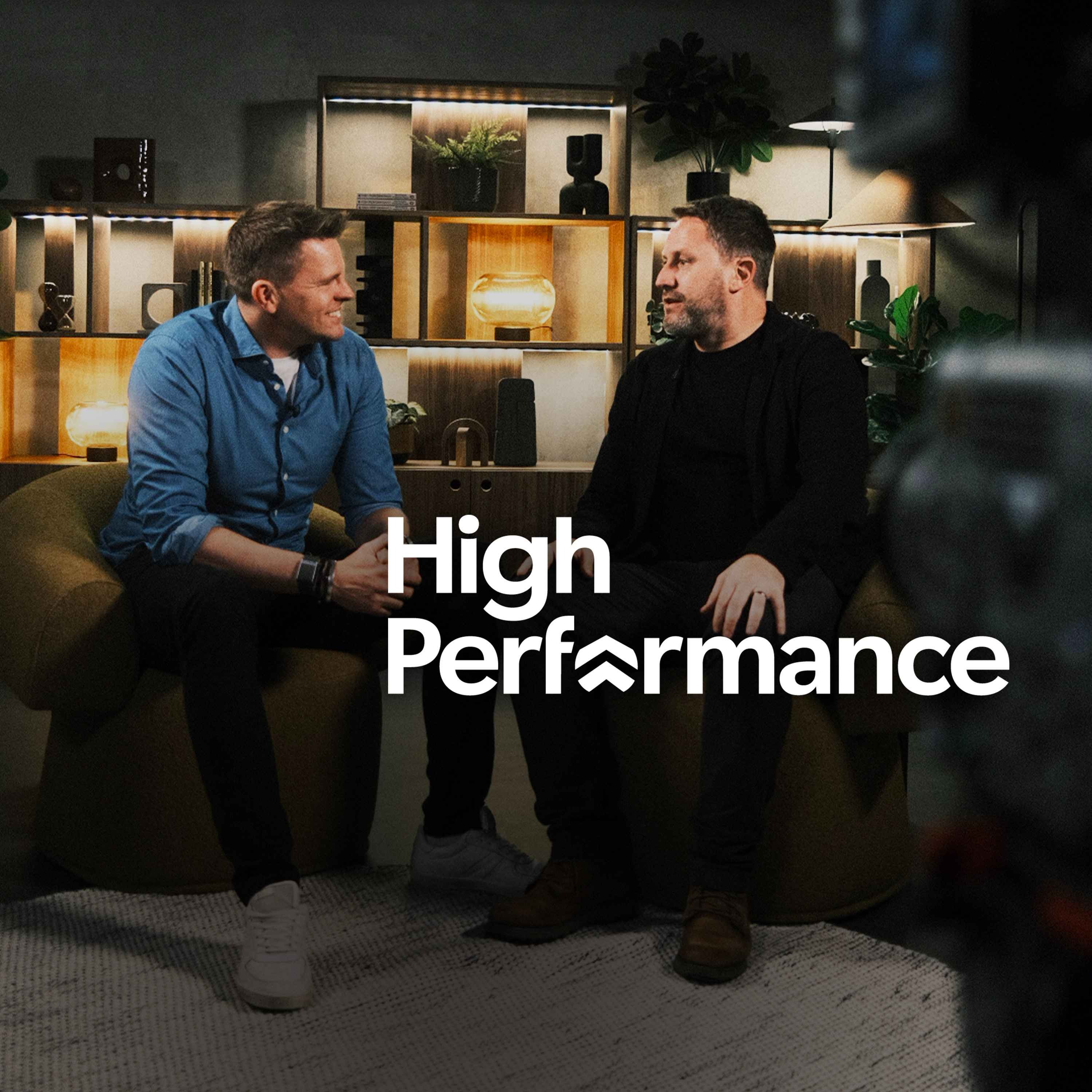
The High Performance Podcast, hosted by Jake Humphrey and Damian Hughes, delves into conversations with high achievers across various fields, exploring their secrets to success and the non-negotiable behaviors that helped them reach their goals. This particular episode features Ben Foakes, Founder and CEO of Base, discussing his journey from BMX athlete to entrepreneur, focusing on resilience, adaptability, and core values in achieving lasting change.
Written by AI. May contain mistakes.

Get the gist, explore an idea or ask about something said.
 Claude
On The High Performance Podcast, what are the key points of this episode?
Searching your listeningAutomatic transcript. May contain errors.
0:00Watch it early on the High Performance app. Available now, Roman Kemp, the broadcaster, opens up a powerful conversation on success and mental health. Welcome along to High Performance, the show that aims to understand the stories, the successes, and the struggles of some of the most fascinating people on the planet. And you know what, Damien and I, we love bringing you these slightly shorter episodes where we actually get the chance to indulge a bit in some of the 300-plus conversations that we've had, and we lean into some of the lessons from the people that have joined us on the show and try and pack these conversations with as much value as possible.
0:36And we've actually also got an extra special treat for you on this episode. We're going to invite a guest to come in and speak to us because I think sometimes we hear from these amazing people, Damien, and they've got some brilliant life lessons. But I'm also left sometimes thinking, well, how does that relate to everyone else's life? How can we actually take those lessons into our own lives? And we're going to be joined today by someone who, when we talk about change, which is the focus of this episode. He's been able to absorb change. He's been able to cope with change. And I think his story is going to be inspirational for people.
1:09Yeah, I absolutely agree, Jake. I like going back into the archive. Like you say, it's like going back and reading your old favourite books when you realise, oh, I forgot that line or I missed that. So we're going to do that and we'll go back into some great guests that we've not covered for a while. But our guest today as well, I think your point is perfectly made that it's about translating some of the lessons we hear from the rich, the famous, the successful, and translating it how anybody can do it. And our guest is somebody that has definitely applied some of the same common sense principles and just made them come and practice.
1:43And I also think it gives you at home a bit of an insight into how we work as well here at High Performance, because Ben Folks is the name of the guest that's going to join us. He runs a business called Bass. We actually work with them. And so I think it's also quite cool to talk about the way we work on high performance and how we actually take the lessons from our own show to make the business operate in a better way. So all of that is still to come, but let's start then with a few clips. And before we delve into kind of the three key areas that we want to focus on, I've actually realized that you and I talk so much about change, and I wonder why it keeps on coming up time and time again when we are on the topic of high performance.
2:19Yeah, well, I think everybody has to go from where they are at some stage to where they want to be. You know, whether that's about anybody watching this thinking, I want to be a better parent or I want to help my children progress at school. Everything involves change or transformation. So understanding the almost rhythm that change applies and how we have to adapt at different stages becomes really important. So a really easy way that we often think about it in terms of the scaffolding of our conversation is we use the model from Joseph Campbell. the sociologist that talks about there's five very distinct stages we talk about the dream stage where we spend a lot of time planning and imagining what our amazing future could be then we take the leap where we take a step towards making that imagined future a reality and then we hit our arch nemesis the messy middle as Brené Brown calls it the bit in the middle where you're too far in to go back but you're not far enough to see the end and that's the bit where so many people crash and burn And that's a bit where we fail, our morale declines, our patience wears thin, and that's where we tend to abandon ship.
3:30But as we've seen so often with so many of our guests, your ability to live in that discomfort eventually takes you to stage four where you start to climb, momentum becomes your friend rather than your enemy. And then you arrive, the fifth stage, where you stop, you celebrate, but then you plan again. So at any stage of our life, including our guests, including for us, we're always going to be at one of these five stages. So if we can pick out little kernels of wisdom, bits of knowledge that can help us in our own journey, we become better as high performers. And I think that we talk actually personally too much about the first stage and not about the second.
4:07If I think back to all of the sort of well-known famous people, how often are they asked, when did you first dream this could happen? When did you first believe that maybe this might happen? Did you dream about this as a child? Was this always a dream of yours? No one ever goes, when was the first time you made a leap to try and make your dream a reality? So can we start there? Do you mind? Yeah, no, I think that's a really good place to start. And I think when people ask me around this, I often talk about a theory that's been around for nearly 100 years from a guy called Dr. Kurt Lewin, who was a social psychologist who often spoke about who we are or how we behave is often a function of both our personality, so who we are, but also where we are, the context in which we operate.
4:48And I think when we understand it through that lens, we start to see that sometimes we're too quick to label people's personality. You go, oh, they're a cynic, oh, they're a resistor, they're old school, they're a dinosaur, when actually it's where they are at that moment in time. Maybe they're not surrounded by the right people to encourage them. Maybe they don't feel that they have the trust. Maybe sometimes it's just around making sure that they've got social proof that there's another group of people that have already pioneered the way for them. And I think that leads us to our first guest, George Russell.
5:23So when we sat down with George, we met him at some posh country estate, didn't we, where he was filming some... And like most Formula 1 drivers, he did arrive in a helicopter. You and I drove and sat in traffic for hours, but hey, there was the brakes. Yeah, but then he turned up and he was... I think what was remarkable about him was just how grounded Grounded and down to earth he was, despite the sort of opulent arrival and the surroundings. He was somebody that hadn't forgot his origins. And it was about how did he go from Formula 2 to getting a seat in Formula 1. And at some stage, he had to take the leap.
5:55He said to us, I realised talent wasn't enough. I realised just having a great reputation wasn't enough. I had to take steps to make it a reality. And here's what he did. yeah I think I thought at the age of 16 the world would come to me and as I said it was only during that year that I realized they're not looking for me you've got to go and look for them you've got to knock on their door you know Toto's not going to look at British Formula 4 and say you know as a kid George Russell here who's won the championship by a couple of points we need to sign him but if I put myself in front of him and talk to him and show him what I'm made of maybe there's an opportunity so it was I remember I was in Abu Dhabi at the time doing a test in Formula 3 I managed to get hold of his email I thought I've got nothing to lose you know worst case he doesn't reply in which case I've lost nothing best case he replies and I literally just sent to an email I didn't want to um go in too hard I just said you know I'm Joel Russell I race this uh the it would be great to meet you and and talk about the future potentially and um I think it was a good time to do it as well I think timing is key they'd just won the championship he was standing himself on the podium after the was that luck on your part or was that a bit of foresight no I that was luck but now I look back and I realize you know these small things make a difference you know you you need somebody on the receiving end to be in the right state of mind if he's having a bad day or he's busy and he sees this if i sent that email one week earlier which is for tuesday before abu dhabi grand prix last race of the season he probably would have seen it and disregarded it but it was the tuesday after abu dhabi grand prix season's over he's relaxed won the championship you know here's an opportunity oh this you know this kid's just emailed me and I sent this email I think it was about 9pm in the evening and he replied within 15 minutes.
7:56You know there's a lot to pick out there and I suppose what I often think about when you hear George talk and he talks about he was concerned about the timing he said I didn't want to go in too hard and I suppose one of the reasons why a lot of people don't take a leap right is because they think will I come across as too pushy will I come across as not pushy enough how do I sell myself is is it the right time to do it um i i feel like it stops so many people because they have all of these sort of preconceptions about how their leap is going to be perceived by others yeah definitely and i think that well that's the old saying that paralysis by analysis that we can often stop ourselves doing anything because we let our thoughts get in the way i mean there's an interesting caveat to george's story was that when he met total wolf total gave him some advice on a team to join and he disregarded the advice he went to a different team but again he contacted Toto explained his logic and just maintained the relationship so for people thinking they need that one break George's example tells us that that email he sent was only the start of the relationship it wasn't the answer to his prayers but he took action and didn't allow himself to to be sort of frozen in place by all those anxieties and worries that many of us often to have.
9:12We also talk often when it comes to change about this, you know, relentless ability to remain resilient in the face of adversity at times. So would you mind if I shared a clip that I think would be useful for people? Go on. Which one is it? Well, you know, when you just said that, you know, that email that George sent to Toto Wolff was kind of one step on his journey. Yeah. I think that we live in a world of impatience. I think we live in a world where we see perfection on social media. We live in a world where people talk about being self-made people. We live in a world where we laud and celebrate the kind of fast track to success.
9:44And I think that when it comes to true change or truly getting to that place where you want to be, this idea about how long it should take is really disruptive and really dangerous because I kind of feel like it will take as long as it takes, right? You know what, Jay, there's some really interesting research on this from a brilliant psychologist called Philippa Lally, who studied how long it takes for a habit to become common practice? And the answer is, it depends. Exactly what you've just said, that we get caught up in this idea that it takes you 30 days to change your beliefs. And we always look for these answers, don't we?
10:15Yeah, yeah. How long till I can do that? Yeah, and what her research says, it can take, for some people, you can change your habit in three days. For some, it might be 133 days. It depends. And that's the point that we need to be patient, whatever it is we're seeking. Okay, well, let's hear then, if you don't mind, from Russell Kane, the comedian. He joined us, do you remember, on stage in Manchester as part of the High Performance Tour. I mean, 90 % of the conversation was hilarious, but also peppered with brilliant insights. And I wanted to just share this kind of idea that he told us about making sure that you're patient, you're resilient, you put the work in, it takes time.
10:52Brilliant. Okay, here he is, comedian Russell Kane. So what do you say to people then that send you a message and say, oh, I'd love to be a stand-up comic. Can I shadow you, support you? Come on, talk. I always encourage. But what they mostly want is a veiled thing. Oh, man, I'd love to do it. Have a look at my YouTube link of my hilarious sketches I'm doing at home. Sometimes they might be funny. What they really want me to do is to give them, like, artificial, yeah, come out to the Lowry, where I am in September. Come out to the Lowry and do 20 minutes first so that 1 ,600 of you immediately, you know, 10 % of you go and see their tour.
11:27It doesn't work like that. They want to cut out the three to five years, unpaid, three to four times a week, 20-minute sets in comedy clubs. That is roughly what you need. Three times a week, unpaid in all areas of the country with Edinburgh shows for three to five years. You can't cut out the H, the G, the graft part. So what I say to them is, I applaud your passion. I've seen your stuff. It's funny. But you wouldn't go up to a guy in the gym. You know some guy with a neck so big he looks like he'll shit himself if you call his name? With massive guns and say to him, Oh man, can I get your muscles?
12:06What do I need to do? Because he would go, well, just get on the machines and go. Just put the five years in. Eat fucking shitloads of chicken. And get on the machine. There's no substitute for getting on the machine. I wish there was. I wish I could sit here and go, the secret to high performance is you download this app and then you just turn around in a circle and then the next day you sell out of it. It's long, boring graft. It's the same as raising a child. Anyone got children? Would you like it if someone came up to you and went, your eight-year-old's so magical. How can I get mine like that overnight?
12:40You'd probably scream in their face. That's eight years of sacrifice graft mixed with joy. There's no magic formula or secret answer here. It's get on the machines and start Bicep Curl. Brilliant. I mean, there is an app that you can download called the High Performance app, which can get you closer to high performance. But no, in all seriousness, I think this is something that we don't talk about. Even we are guilty, I think, of not talking about this often enough. It's not about the – you know when you say to someone, tell us about some of the hard work you've put in, they often will automatically tell you about the great moments that that hard work has shown up.
13:17What they don't do is talk about the hard, lonely, early starts, late finishes, no reward, no glory. because we almost, I think we almost disregard the value that those years bring us because they don't carry clear and obvious lessons, right? Yeah, exactly. It's that line that we've repeated a few times. The public praise people for the practice they do in private. Yeah. You know, we love the outcomes. We love seeing the success. But what we're actually praising them for is those hours they've spent lots away working in the shadows, perfecting their craft when nobody else is watching it. Why are we so obsessed with this, with it happening quickly?
13:52because it's a bit like a football team beating a non-league team 10-0. There's no thrill there. I think the thrill of high performance comes from the years of it not being there. Absolutely. And I think that is the journey, the message that we constantly hear from our guests is it is the journey because along that journey, you meet the people that are going to be with you along the way, the people that really count. So, you know, when you see like big events and you see people crowding the winner and they want to surround them. There's that great phrase that, you know, the process is where you work out who should be around for the outcome.
14:29You find out the people that are with you in those low moments. So I think it's such a valuable part of it. We haven't met any overnight successes that have taken less than 10 years to get there, have we? And that leads us to our next guest. So talking about persistence, there's a nice story that leads to this one that a friend of mine worked down at the Stormers in Cape Town, a brilliant guy called Tom Dawson Squibb, And he'd text me when we first started the podcast and he said, you need to get Sia Khaleesi on the podcast. Now, I knew who Sia was because he'd captain South Africa to win the 2019 World Cup.
15:02But my question to him was, why? Like, beyond his obvious achievements, why are you so strong about it? And Tom gave me the response back. He said he gives the best hugs I've ever received in my life, which is an intriguing response. So when we sort of continued the conversation, he came back and just said it's the consistency of it he hugs the cleaner in the dressing rooms at the stormers in cape town like he hugs the president of south africa when he turns up to meet him and it's the consistency that just seems to evoke understanding empathy decency and compassion that you need to get him on he's got a great story to tell so he got me see his number and then it was persistence of keep texting him phoning him until eventually do you remember the day when he came back and said, I can do it.
15:49It's a Sunday afternoon. I've got an hour free. I remember. Do you remember? So we sort of mobilised ourselves. Yeah. And he didn't have the best internet connection. No. But we all persevered again. There was perseverance in this. Yeah. He had his little kid on his knees and he joined us. I remember. What clip do you want to go to? Well, there's the bit where he talks about when, like, you've got to be ready when opportunity strikes. Let's listen to the way Sia explains it. Just because your friends are poor doesn't mean you're going to be poor. You've got to work each and every single day. For me, because the opportunity will come.
16:23That's what I realized. The opportunity will come, or it might not come, but some people doesn't come. But I prepared each and every single day by going to training. And when the opportunity came, I was ready when I got my anniversary. Most people complain and complain and complain. Opportunity presents itself, and they're not ready. And that's where the difference is. Every single time I've had an opportunity, I've been able to grab it with both hands because I've been preparing and the way that my grandmother raised me. You've got to make use of what you have around you before you start complaining about what you don't have.
16:54One of the biggest things that I've learned I'm going to use everything I can. If I can't make it then I'll go look for help because maybe this is not enough anymore. Sio Khaleesi there and look you're probably thinking the audio wasn't the greatest which is true but it's kind of like the audio is not amazing but the messaging is really strong and the reason for it sounding like that was because it was back in the COVID days and see I didn't have the best internet connection in his house. But it was just brilliant to, although it was grainy, to see him on that video and to hear those messages from him and that bit that he said there about people keep complaining and complaining and complaining and then when the opportunity arises, they're not ready and it's a great reminder to do the thing that gets you ready rather than thinking about the fact that the thing hasn't happened yet.
17:38Yeah, definitely. Just do the preparation, the work in the shadows and then be ready for that moment when it comes. Don't moan that, oh, I've not been spotted yet, like George Russell. Don't wait for Toto Wolff to find you. Go and create the opportunity, but then be ready to take it when it occurs. Like Russell came when you stood up on stage with 1 ,600 people laughing. That's the moment to be funny, to have learned and honed your craft. So like Sia as well, going back to back on winning the World Cup as a captain of it, he was ready for those opportunities when they came. Yeah, brilliant conversation.
18:12You can, of course, hear the full episodes with each of those guests, George Russell, Russell Kane and Sia Kulisi, by going into the High Performance Back catalogue or maybe listening on the app as well, where you can get loads of other content. But it's one thing hearing from those people. It's another thing hearing from someone like you and I, someone who's had to learn their own lessons along the way. And this is also an opportunity for us to introduce you to a vital member of the High Performance team, which I think is cool because we get so many messages, don't we, from people asking us, how do you put the show together?
18:39How does it all work? Well, this is also going to give you a little look behind the scenes because we're going to introduce you to a guy called Ben. Now, he's the founder of a business called Bass, and we are so reliant on Bass. So many of you know that we release three episodes a week on podcasts. But, of course, we also release two episodes a week on YouTube. We then create an incredible amount of social media content. We produce all different clips and stuff for all the different social media platforms. I mean, the amount of work and the amount of media and the amount of content that we're trying to deal with is so difficult.
19:12And on top of that, we've got people working in different countries, dealing with enormous files. And so six months ago, we started talking to Ben and he told us all about his business base and the way that they can streamline all of that work for us. And it has utterly transformed the way that we operate here at High Performance. But on top of all of that, Ben has also got a fascinating personal story of resilience, of setbacks, of taking leaps, of being ready when the moment arises, all of which led to him creating bass and ultimately working with high performance. So it's time to introduce Ben folks to come and share his lessons.
19:51You were just listening to that sort of first conversation that Damien and I were having. Before we talk about your own journey and your experience, I wonder how it felt hearing from those people and what resonated. It was so fascinating. So taking leaps is exactly what it's like building a business. And I love the expression operating in the messy middle. That's what it feels like continuously when you run a business. And I love the last clip around being prepared. And then when you see an opportunity, just going for it. and it reminds me of Ross Brawn's quote which I think is there's no such thing as luck it's preparation awaiting an opportunity which is basically how I see life.
20:31You were a sportsman. I was yeah I was in extreme sport as a youngster so in my teens me and my brother Sam who's the good one the talented one we both got into freestyle BMX and my brother Sam actually became world champion flatland BMX in 2008 and that's a whole nother story but he's a legend in the sport and I was the kind of slightly more alternative street rider so flying down handrails doing backflips that type of thing and it taught me so much because at a young age I was touring around the world doing competitions being on film shoots and whatnot and had to really build my confidence but also taught me about getting up when you fall because you're constantly crashing hurting yourself having to try and try again and actually think that gave me the the founding principles for building business.
21:21I'm a massive advocate for sport for young people and what it can bring both physically but also with kind of mental fortitude. So what did falling off that BMX actually do for you when you entered, let's say, the real world and things were tough? What did you lean on in those moments that you'd learn in the early days? So when I was a BMXer, I was kind of notorious for inventing tricks. But to invent tricks, you have to visualise it before it's happened and then try and try again hundreds of times to learn it because it didn't exist before. So the biggest thing it taught me was about visualisation and setting a goal and then never giving up until you get there.
21:59So it taught me about never giving up and to the exact point about kind of falling over and getting back up. I think when you're young, if you take hits like that physically and then you bounce back from it, it teaches you how to just get on with it and pull your socks up and so when I moved into business which actually transitioned from my BMX life I think I was kind of well placed to go for it and the story is quite interesting I used to film videos back in the days of VHS so not these glorious 4k cameras but like I literally had a VHS camera with a fisheye lens gaffer taped to the front and we'd be on tour making videos we'd then edit them distribute them and that was my first kind of foray into business and it was that which actually led to getting into broadcast and media technology and the career I've then enjoyed over the last 20 years.
22:49Let's talk then about the transformation into business because lots of people listen to this who are in business, running their own businesses but also loads of people that would dream of it. They're either employed by somebody or maybe they're a lot younger, they're just starting out in life and they're thinking actually in the modern world working for myself looks really appealing but it's often a confidence thing. So what gave you the confidence to go I'm gonna go and do something on my own I think it's a few things I've been reflecting a lot on this recently because my father passed away last month and when that kind of thing happens to you it makes you kind of stop and think and I'm 43 I've got two young children so I've been going through this really interesting period looking back at like why am I like the way I am what did dad teach me when I was a kid where'd I want to go it's been a huge amount of self reflection.
23:35When we were kids, my mum and dad told me and Sam, you can be anything you want to be as long as you're happy. The best advice any parent gives you, but they didn't then say, here's some guidance, here's how to manage your money, here's some tips to get going. But the cool thing about it was we had the freedom to choose. So that precipitated becoming BMXs because we were allowed to experiment and try. So at a very young age, we were confident in making our own decisions. We weren't told, you've got to be a doctor, you've got to be a lawyer. We kind of got left to crack on. And then through going through that process, I had to meet so many people and I had to show up.
24:12So one minute I might be talking to a teammate who was maybe homeless or had a really difficult background, but they'd found BMX and it was their route into a new life. The next minute I'd be talking to a massive brand owner, like the management director of Van Shoes or something about a deal. And so you have to learn to speak to all different people that builds your confidence and i genuinely think that that sporting grounding at a young age gave me the confidence to then go do you know what i can start a business or i've got this idea let's just give it a bash what's your dad's name richard richard he was called the bear the bear the bear will be why was he called the bear because he looked like one he was huge very hairy yeah man well he'll be very proud of what's going on and what you've done and the fact you're sitting here you know thanking him really for what he did yeah i want to honor him yeah absolutely i mean i also know that values at base are really important for you especially as you've grown the company values i'm interested in how much your early years influenced and helped shape those i think if you speak to any founder owner who really cares about their business their personality trickles the organization i know you guys are the same because i've listened to this show since the pandemic here and I know that's what you stand for.
25:23But as the leader, you're kind of taking your personality and you're imbuing it into the culture of the company. So I didn't really think about it before. It just happened by osmosis. But about two years ago, I documented it. I was like, what do I stand for? What does base mean? What do I want my staff to care about? How do we want to perform in our industry sector? And it's been transformational. So this whole episode is about change. We went through a massive change in 2021 to 22. we tripled in size and we went through this mad period of growth. It was quite painful actually, it was the messy middle and at that Christmas holidays I was like, you know, I cannot carry on like this, we need some formal structure and some process to get my brain onto paper and so we developed this plan which was, here's the vision of the company, this is what we stand for, here's our core focus and here's where we're heading and then I've shared that with everyone in the company, doesn't matter what level you're at, everyone knows where we're heading.
26:19We interview by our core values. And what are the values? Bold. So we stand up for what we believe in, we make things happen, we say it how it is. I'm a huge advocate for radical candor. Curious. So I'm a massive believer in growth mindset. And I really encourage the team to constantly be learning, trying new things, pushing themselves. And I get a huge amount of joy from that, actually, seeing people progress. We're collaborative. So as you guys know from where we work together, I see high-performance podcast as a partner, not a transactional customer. And that's the way that we treat all of our clients.
26:52And that's how we built our reputation over the years. And we show empathy and honesty in all that we do. So I basically teach all the leadership and all the staff, if you're in a difficult situation, maybe a challenging customer meeting or an impolite partner or some technical issue, think about the person on the other side of the table and use empathy in your decision making. And it's really working. And I realized that's how I got brought up and now it's disseminating into my business but too many big companies don't do the stuff and they they think of team as like numbers on a spreadsheet um it's not the way I do business I also want to talk about um the moment there's often a moment where you do something incredible or something comes your way and you kind of deliver and it gives you that sense of the fact you're on the right path have you got a moment like that you could share There's been quite a few.
27:45And I think if you've got a business, there's normally what you might refer to as inflection points, like something will happen. That's the moment where we lift it up to the next level. So for us, a few things happened. We basically help media companies move all their workloads to the cloud. So you don't have to have physical premises anymore. So this filming that we're doing today is all going to be in the cloud, available to edit and share and stream. When the pandemic hit, at the point of the pandemic, we had maybe five staff. We were sub one million pounds revenue. We were all trying to evangelize and win business.
28:18And the pandemic struck and it changed everything. And there is a funny story about it. Bob, in February that year, rings me up one morning. He goes, Ben, I've just watched the news. Have you seen this crazy flu thing in Wuhan? He said, get ready. I guarantee you the whole media industry is going to come to a striking halt and everyone's going to move to the cloud. I'm like, Bob, you're being so fatalistic. Went into the office, told my team in my morning stand up. They're like, yeah, yeah, whatever. That afternoon, I got a phone call from a friend of the BBC. He's like, just to let you know, probably gonna have an announcement from Boris coming out.
28:52And I'm gonna need to move all of my editors to work from home from Monday. How quickly can you move? So we built a whole cloud platform for the BBC in one weekend. And on the Monday morning, all of their producers and editors were working from home on the kitchen tables. And that was the lift off point for our company because we'd been like evangelizing about the move to the cloud for goodness, a number of years, five plus years. And all of a sudden we were there prepared and ready for the opportunity and everyone signed up. And it's since then it's been like a bit of a rocket ship. So that was a major point.
29:25And there've been others since, but I'd say in terms of a moment for us, that was probably a big one because it validated the idea and accelerated adoption. And when you look back at that inflection point, what are the kind of characteristics that you'd been, or the seeds you'd been sowing in that five years previously, that actually were invaluable to be able to meet that pressure deadline? It goes back to some of the clips you played earlier about preparation, preparation, preparation. We'd already learnt it all, right? So we already knew how to do it, how to execute it at a high standard, how to be secure, how to build the workflows.
29:59And so it wasn't, there was no real decision making. it was basically the opportunity came in and we just delivered it we didn't even think and I guess we were maybe a bit early to market maybe five years too early but it's all about being prepared when the opportunity comes along the next big one was again during the pandemic when everyone was working from home a huge RFP came out or request for proposal if you're not in procurement and it was for the one of the world's biggest ever media asset management contracts for a major luxury brand. And I was like, let's go for it. I had five staff at the time.
30:34And it had literally gone out around the world to all the biggest companies. And we're this scrappy little startup in a London WeWork. And we won it. And I remember winning it and taking the team for pizza and champagne around the corner. And we nailed it. And it's a long-term customer. We love them. They're having a great experience with the platform. But it helped to lift the business to the next level. And it makes me think back to your point at the beginning of the show around leaping. Like if you don't have a go, you've got no chance of success. And that was the point where we lifted up into becoming a provider for like major gaming studios, movie studios, publishers, and the business became a proper business in my eyes.
31:13What a journey, what a story. And well done to the bear for being sent to the whole thing. He was. Yeah, this episode is in honour of him, isn't it? Yeah, absolutely. Really interesting. Thanks very much, guys. Thank you very much. Thanks for having me enjoying us. Thank you. And I hope you've enjoyed not just all the brilliant lessons that Ben's shared from his experience of being a competitive BMX rider and then the struggles in business, then the success with bass. But I hope also that you were inspired by the lessons you heard from some of the previous guests on high performance as well. And don't forget, you can go into the back catalogue and enjoy all of those.
31:45And actually, the best place to enjoy high performance is on the high performance app, where as well as listening to the episodes, you can watch boosts, you can create your own playlists. And there's loads of exclusive content on there as well. don't forget to like and subscribe High Performance wherever you enjoy it and we'll see you again soon
In this episode, Jake and Damian chat with the Founder and CEO of base, Ben Foakes, about his journey from BMX athlete to successful entrepreneur. Ben opens up about the challenges he faced, how a setback in his sports career led him to rethink his path, and the mindset he built to tackle new challenges, leading him to build a business rooted in confidence and strong values.
Listen in for powerful insights on resilience, focus, and turning setbacks into opportunities and hear how Ben was able to build his company from ground up, focusing on core values and visions.
Base offers cloud-native media services to securely store, process, and manage content at scale. They help you migrate to the cloud, build a content hub, and streamline workflows.
Learn more: https://base-mc.com/case-studies/high-performance-streamlined-its-editing-workflow-with-base/
🚨 Partners
Huel 👉 Get £25 off the Taster Bundle. Unlock your offer here: http://huel.com/highperformance
Explore offers and discounts through our other partners:
https://hppod.co/partners
Hosted on Acast. See acast.com/privacy for more information.


