
 Ask ChatGPT


 The High Performance Podcast
9 Sep 2026 · 33m · 14 chapters
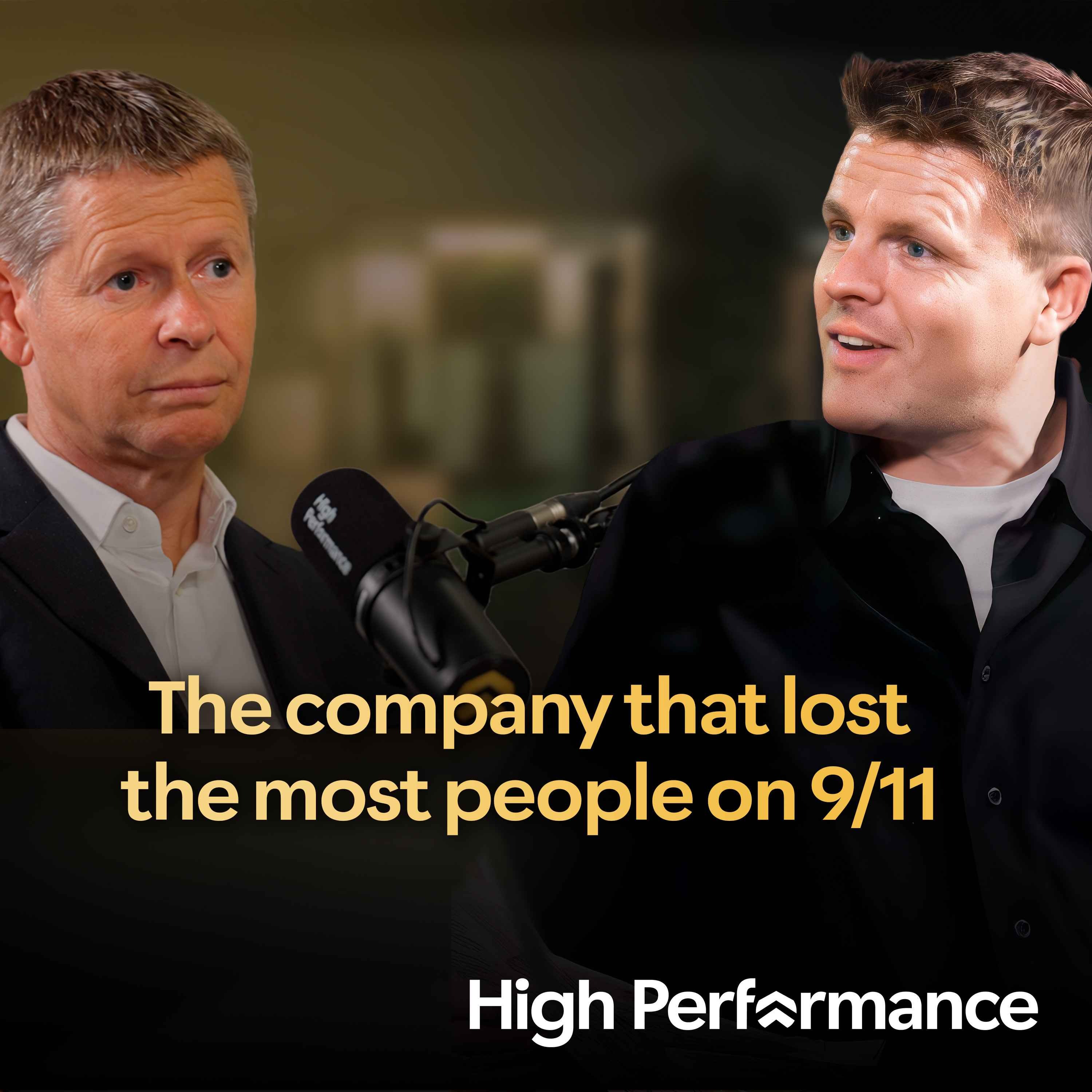
A 25-years-later reflection on Sept. 11, 2001 at Cantor Fitzgerald—losing 658 employees (about two-thirds of the New York workforce)—and how the firm rebuilt while embedding a culture of responsibility and large-scale giving. The episode also explains BGC Group’s “Charity Day” model and its impact.
The guest is Sean Lynn, co-CEO of BGC Group. In 2001 he was a 27–28-year-old finance employee in London; his US colleague in the North Tower died. He was pulled into rebuilding the business immediately after the attacks and later rose to board and co-CEO roles.
Crisis created “togetherness” and a long-term culture; there was no textbook for managing it; rebuilding success was framed as a legacy for families and first responders; balance (profit plus giving) improves performance.
The market resumed within 72 hours; money for families was largely distributed by end of October; Howard Lutnick pledged 25% of profits to the Cantor Relief Fund; Charity Day has raised about $235M (targeting $250M) and uses celebrity phone-answering (e.g., King Charles/Prince William).
Written by AI. May contain mistakes.
Sean reflects on his experience of the day and its immediate impact.
“And ultimately, I guess what 25 years of rebuilding of learning and giving back has taught you about what really matters.”
Sean discusses the urgency and responsibility he felt in the wake of the tragedy.
“my first thoughts are always back to that morning and that time.”
Sean shares insights on coping with emotions while focusing on business recovery.
“And, of course, it took me about, you know, 30 seconds to say, of course, I'll be downstairs very soon.”
The critical role of teamwork and communication in rebuilding the company.
“However, the flip side is, and obviously what did end up happening is you say, right, what can we do?”
The solidarity and support from the broader business community during the crisis.
“because every day was a different challenge.”
Reflecting on how the worst of humanity can bring out the best.
“Then when we did find some space in New York, there'd be people from the UK going to New York to pick up the business that obviously the New York-based people were obviously no longer there to do.”
Learn how the business community offered support and resilience after the tragedy.
“Most, not all, but most of the business community were incredibly helpful, from people offering a space in New York to people here, to businesses in the UK.”
Explore the invaluable lessons learned from managing a crisis like 9/11.
“And I think so often we try to avoid the hard things, but they can ironically be so valuable for us.”
Discover how BGC's values and charity initiatives were shaped by past events.
“It wasn't at that point a public company.”
Understand the role of charity in creating a successful business environment.
“Now's the time to start our charity day.”
Learn how engaging celebrities has transformed charity efforts at BGC.
“And watching the benefit of those charities over the number of years is such a powerful thing.”
Learn how competitive spirit in elite sports enhances fundraising efforts.
“And when I give you the nod, this is the way we're going.”
Discover insights on personal growth and leadership through adversity.
“I wonder what that young guy sitting in his London office would make of where the business is today, but more importantly, where you are as a person today?”
Explore how tragedy can catalyze positive change in individuals and organizations.
“it teaches you that you can't do everything on your own and it's all about the team.”

Get the gist, explore an idea or ask about something said.
 Claude
On The High Performance Podcast, what are the key points of this episode?
Searching your listeningAutomatic transcript. May contain errors.
0:04Sean, welcome to High Performance. Thanks very much. So I want to just start by rewinding the clock. 25 years, you're sitting in a London office. You're on the phone to a colleague of yours in New York when the line suddenly goes dead. And that colleague was inside the North Tower of the World Trade Center. Cantor Fitzgerald would lose 658 people that morning, around two thirds of their New York workforce. And the next day, you were pulled out of accounting and told to help rebuild the business. And what followed, I think, is not just a story of survival, but of responsibility, of leadership, of culture, of extraordinary generosity, all of the values that we hold so dear here on High Performance.
0:41And today we have this conversation with you as the co-CEO of BGC Group, and the charity day born from that tragedy has now raised more than$220 million. So in this conversation, I want to explore how you rebuild a business when the human loss makes business itself in some ways kind of feel irrelevant, where ambition and success sit once you've been reminded how fragile life is, how adversity can create an extraordinary culture, and how you stop success, scale and money from slowly destroying that culture. And ultimately, I guess what 25 years of rebuilding of learning and giving back has taught you about what really matters.
1:19Does that sound okay? That sounds great. So what is September 11th like for you 25 years later. Look, I mean, as you're reading, you're reading the timeline, firstly, it takes me back to that day. And, you know, as you rightly say, I was a 27, 28-year-old young guy working in the finance department of a large broker. And I think that day, every morning, I would speak with my colleague in the US, go through the business that had been done in the US treasury market and the interest rate swap business in London every morning. And that morning on September 11, 7th, 2001, like nothing different on the phone, 15 minutes into the call, the line went dead.
2:21And I was sitting there in that finance department, big open plan office. You know, you look across at one of the screens. You're talking 2001, so it wasn't full of screens in that particular office, but yeah, back then. And at first you were trying to work out, oh my goodness, is that our building? You know, was it the North Tower? And then within a few moments, you realize exactly what's happened. And, you know, the shock that goes through your, the shock that goes through your whole system on that day, you know, I'll never forget it. And so you say to me, what do I think even 25 years on? Every charity day or every September the 11th, my first thoughts are always back to that morning and that time.
3:14But then, and I think as time goes on, our view and my view in particular is turn that into something incredibly positive. And I think so now you make sure on September 11th when we do our charity day, the most important thing is get all of those emotions out in the morning be ultra focused therefore that way we're going to be as positive as you can to make as much money as you can for the charities and when it comes to um dealing with your own emotions as i guess you have to do every september 11th when you wake up in the morning how long did it take to sort of come to terms with the randomness of the fact that you could easily have been in new york you could very easily have been in that building that day and how that kind of informs the way you've lived um yeah well well first you remember the you know my the ultimate boss of the company so Howard wasn't in the building that day by chance uh because he was taking his uh his son to kindergarten uh so he could have been in the building number one uh my my what became what became my boss as in Sean Lynn who became the the president of the company um he could easily have been in in New York that day.
4:32In fact, I think he was there the week before from memory. The person who hired me, the CFO who'd set up the finance department in London was back in New York and obviously did not survive. And so what I think it teaches you straight away is you have to make the most of opportunities that you get because life can throw really weird curveballs at you. And the very next day, you were asked to kind of help take this business from its knees and try and find a way forward, right? I don't even know how you would have begun to do that. Look, I was, I mean, I think about it. I was incredibly, you know, how fortunate that the next day, Sean Lynn called me from his office down on the fourth floor as I was on the fifth floor.
5:30And he said, he said, remember I offered you a job two years ago and you turned it down. He said, well, you've got 20 minutes to make it down to my office because, you know, we've got a job to do now. And we've got to, you've got to work with me to help me with others to rebuild this company. And, of course, it took me about, you know, 30 seconds to say, of course, I'll be downstairs very soon. I walked downstairs and I said, you know, what's the job? And he put in front of me a piece of blank paper. He said, who knows? Because at that point, nobody knew what was going to be happening with what was Count Fitzgerald at the time.
6:13We were in ultimate crisis mode. It's powerful, that blank piece of paper thing, isn't it? That kind of makes you realise just So how much was lost that day? Absolutely. And look, to be clear, I couldn't be proud of sitting here today 25 years on. Back then, you know, he employed me as a business manager to help him with, you know, to help him and lots of others, you know, rebuild the company. You had the chairman and CEO in Howard who'd lost his brother, lost a lot of his friends, his company effectively at that point. And so his co-CEO, Liam Atis, and Sean Lynn together with numerous others all rallied around together and said, right, Howard's going to be focusing on the families and on that side of the business.
7:10it's up it's up to as as lee and sean said to me it's up to us to try and do the balance and uh that's you got to work literally that afternoon and i think even this brings an instant challenge because you know your focus has to be on saving this business because there were people relying on it for their jobs who had survived but also the families of the people who'd lost their lives you know you were there to support them as well and if there's no business, there's no support. But it's a really difficult kind of psychological game of chess here that like it kind of doesn't matter anymore. Money becomes irrelevant in the face of death, yet it was so not irrelevant.
7:51Do you know what I mean? Yeah, I do. And you could have gone two ways, right? The first thing is it could have, you know, Howard could have said, you know what, way too hard, too much to deal with. You know, companies, I'm going to sell the balance of the company and that's it. Could have done that. However, the flip side is, and obviously what did end up happening is you say, right, what can we do? And to your point, we owe it to the people who lost their lives, the families of the people who lost their lives, the first responders. What can you do that's positive? And I think, and as Howard decided at that time, the best thing you can do is to work as hard as you possibly can to rebuild that business and create, if you like, a legacy.
8:43And the best legacy that you can create from something so tragic is to create success. So what is the first thing that you found was effective to bring everyone together and make them understand that it kind of still mattered? what i what i remember being so uh so so amazing actually on the the early the early points is you didn't have to ask anybody oh please could you do this please do this it was it was incoming the there's the family culture at that time everybody working pretty much 24 7 uh primarily in the London office, because New York was in the state that New York was in, people coming forward, volunteering, what can we do to help?
9:32What bit of knowledge do they have about the particular parts of the business that they're going to need to get more knowledge so they can help save this business? And I think in the very early stages, when you see management, and I wasn't management at that time. But when you see your senior managers working so hard, I think it gave everybody the confidence that the company was, they needed to help the company and that by pulling together was the best way that it could succeed. I also think, but communication was key, really key. Because, and not just communication as we do today with things like this.
10:18That didn't exist in 2001. But communication so that the staff around you can see, I'll tell you what, these guys, they're working, this company's going to survive. I don't need, therefore, to go and try and find myself, you know, another job, because that could easily have happened. And so I think the leadership that was shown by the gentleman that I was working for at the time, I think was extraordinary. And that really flowed down to the rest of the employees. And the month of September, I mean, it just went by so quickly because every day was a different challenge. But every day was a different challenge that there was no textbook for it.
11:11You couldn't go, you couldn't work out, you know, I haven't worked on clearing treasuries before. Who cares? The answer is you've got to go learn it and you've got to work out how to do it. And you've got to take all the advice you can get. And in the end, you know, the market was up and running again within a 72-hour period. and you know within six weeks of six seven weeks of that day Sean and myself had worked with the information that we had to get as much money out as we could to the families of the obviously of all the people that lost their lives and we managed to do that pretty much I think by the end of October that year Wow Wow.
11:57So, I mean, I kind of get this sense that there was this like incredible energy from all of you to kind of do this for those that lost their lives, for the business, for the families. But I wonder whether on a kind of much more personal level, whether imposter syndrome was very high up on your emotional kind of scale at this point, because as you say, you're 28, you're not a senior manager. Right. But suddenly everyone's a senior manager and equally everyone's at the bottom of the ladder. It's like everyone is everything at this point in this business. That's right, yeah. Look, do you know what?
12:30I certainly didn't think about it at the time. All you're thinking about at the time is, what can I do to help? And it really was. I think, you know, today and on Charity Day in a few days' time, there'll still be 60 or 70 people in that London office who were there 25 years ago. and they're still working for the firm. And so I think that family piece that I talk about, people wanted, everybody wanted to help. I don't think I was sitting there thinking, oh my goodness, I'm doing this, my boss is doing that. I think the answer was everybody was just working together. We had people in New York, the people who obviously fortunately were not in the office on that day.
13:22They didn't have an office to go into, so they'd come to London. They'd be working New York hours sitting in London. London was pretty much working around the clock. Then when we did find some space in New York, there'd be people from the UK going to New York to pick up the business that obviously the New York-based people were obviously no longer there to do. And it really was a bit of everything. I think also the business community came together. Look, what is a competitive marketplace, right? But that didn't matter. Most, not all, but most of the business community were incredibly helpful, from people offering a space in New York to people here, to businesses in the UK.
14:18Obviously, I know some of the names. you shouldn't necessarily name individual companies because so many were helpful. But from companies flying our employees across the Atlantic at unbelievably discounted prices just to help out, from people giving us office space, from people helping to clear business, from the technology side, most people were helpful just so that business community got together and really helped put us in the position that we're in today. I've always had that that emotion about 9-11 which is at the worst of humanity ironically brought out the best in humanity didn't it? It did and how would you describe the kind of the values across the business at this period so we sort of moved on really I guess from the initial shock and the devastation of what happened and maybe we're like a year later and the world is starting to get back on its feet not forgetting what it's been through and everything as we know the common phrase the earth shifted on its axis that day and there's no doubt about that it's only there particularly for your business almost more than any other on the planet but obviously then you still have to have a business so how what would you like to tell our audience about how tragedy and how the hardest things we ever go through actually can be the thing that creates a togetherness creates a culture creates a sense of energy and momentum that actually can't be achieved in any other way.
15:46And I think so often we try to avoid the hard things, but they can ironically be so valuable for us. I think this is one of the perfect examples. You know, we spoke about how you go into crisis mode. I think a year on, you know, what did we learn? Well, firstly, we learned that there's no textbook that teaches you how to manage through a crisis like that. There's lots of textbooks that will teach you that will educate you on how you're supposed to do, but I think this was pretty unique. And the first thing we did is you saw the togetherness, right? So that you saw straight afterwards. One year on, you've now, you know, the management has now communicated, look, we're in this for the long haul.
16:39We're rebuilding this business. We, within a short space of time, you know, Howard had said, we're going to pledge 25 % of our profits to what became the Cantor Relief Fund. So to support the families of the people that we lost and the first responders, you know, to give them, you know, an amount of money plus, you know, healthcare for life. And the best way, what, 25 % of nothing is nothing. So if the business wasn't there, what use is that? What uses that to everybody? Everybody. I think that really helped pull people together. And remember, we were a partnership. The business was a partnership.
17:22It wasn't at that point a public company. And so the partners really pulled together. There were no complaints. Of course, that's exactly what they wanted to do. And I remember, it's interesting that you talk about a year on, because first we've, the company has stabilized, okay? And at the end of 2022, you know, I remember, I remember heading to Switzerland and opening up our Swiss office at the end of 22, beginning of 23. So that's one, that was, that was really, after that first year, that was the first time that you'd gone from, you know, ultimate saving mode, right now we're rebuilding again.
18:10And that lives long in my memory. And look, since then we've spun the company out, become BGC, become a public company, bought 30 plus companies. But that one always rings true to me. And I think that was a great message as well to our employees around the UK and the rest of the world, ah, okay, the company's not only is the company back, but it's now growing again. And I think at that point, messaging becomes, not just messaging, but actions and messaging is so important. Can we talk then about what they look like internally, the action and the messaging? If I would have arrived as a new employee at BGC today, what would I see that has been informed by what happened on September 11th?
19:02Well, if you're there today, I think the history, firstly, what a perfect time. They understand the history of the company and they understand what charity day means to us. Is that because you speak to your new employees almost on day one about the energy behind the charity day and the impact of September 11th? Absolutely. The way I describe the company is we're a public company, but with private partnership values. And I think you see it in the level of turnover, which is low. I already said that there'll be more than 50 people who are on the training floor who were there 25 years ago. So I think they understand how charity is important, but they understand why charity is important to us.
20:00And it's important to us because of what happened back in 2001. Once we'd looked after our own, as it were, once we'd looked after the families, it was in 2005 that we said, right, now's the time. Now's the time to start our charity day. Because at that point, we'd looked after the families. We thought, what better thing now to do than to look after charities around the world? and the most, I think you said at the beginning, we've raised over$220 million. In actual fact, it's$235 million to this point. And fingers crossed, if things go well on Friday, hopefully we'll get to that$250 million raised via the charity days, and that'll be in excess of$335 million from the Cancer Relief Fund that's distributed to charities all around the world.
20:59And I think, going back to your point, I think for, in today's world, it's, yes, business, the city, it's a really competitive world. But I think from time to time, you have to then take a step back and say that today's the time when you're giving to other people. And that's what this week's about. and the reason why I was really keen for us to have this conversation is I grew up in a house my dad was a charity worker I'm the chairman of one charity I'm on the board of trustees of a couple of others we've also created the high performance foundation through this podcast which I know you're well aware of and we're going to do some stuff together which is really exciting but the reason why I like doing this and why I talk about it is because I still think so many people particularly young people emerging in the world today they have this mindset of either you can be ruthless and successful, or you can be kind, caring, and unsuccessful.
21:58And I'd really love you to tell these young people emerging into the world of business, actually, what having a heart does for a business, how having a heart can actually make your business more successful. What a great question. And I think the success of, you know, BGC was, is that of culture. I think most people listening in to your podcast will be aware of our ex-chairman in Howard Lutnick, who is a fierce businessman. Our ex-president, Sean Lynn, again, a driven business person. but both of those individuals would say and i would and they taught me for sure and both of them would say balance is is you have to have balance yeah right and and you can do both and actually i think by doing both makes you more successful think about it you know 25 years ago So, Cantor Fitzgerald was the leading player in this business.
23:15And it's taken 25 years for BGC to get back to being the leading player again, 25 years. And we've done that based on the values of, obviously, it's a tough business, but at the same time linking that in with the ethos of our charitable giving as well. And I think it's important. I think it's a mindset. I think for me, if you're 24-7, pure business, all about the drive, all about the money for your business, all about the success, if that's something I think, you lack balance. What you've got to do is there's time for both. And I think I've witnessed through the charities, and it's great, it's so good to hear about High Performance's charity.
24:13And I think you see the good that that does. I think it gives you a clearer mind. I really do, knowing that I know that when I'm in the office on Friday, all I'm thinking about, I'm definitely thinking about the most amount of money, but the most amount of money for charities, not for the most amount of money for the business. And bring it to the London office. I'll have, you know, we've got, what, 1 ,200 brokers in the London office on Friday will be working as hard as they can to generate money for charities. 50 of those were there on September 11th it's not about that it's about making sure it's their time to give something back you know I think charities are struggling more than ever I think I read something recently that sort of charitable giving is down around 10 % this year because people are struggling and the first thing that goes is the money that is not for them of course and so you know I think that it's certainly a responsibility of companies, companies like ours, you know, successful companies, you know, to do their bit.
25:28How can people do it? They can do it from giving money. They can do it from giving time, you know, and we do a little bit of both. But, you know, and I think it helps them. It helps charities so much. And watching the benefit of those charities over the number of years is such a powerful thing. And I think that you can hire better people if you're trying to hire people into a business that has a heart, that has a purpose, that has something beyond the financial gain? I think in today's society that is absolutely true. You know, it's not, it is, and I think it goes back to the point of balance.
26:07If somebody sees, it's about culture and they talk about tone from the top and how people, how your employees view the company and they just, they look at your actions. right and i think and and don't get me wrong being a successful company is of course important and as a public company that's incredibly important but i think you have to you have to use this part of the business as as the positive that it is because i think i think it helps performance yeah i also think a real genius move of yours because you can raise money by getting your brokers to do deals that bring profit that you then give to the charity, right?
26:51But the genius move, I think, was asking famous faces to come and answer the phones in your offices on your charity day. Where did that concept come from? Well, yeah, that, wow, all the way back in 2005. Really, right at the start? Yeah, right at the start. And the theory said, look, you know, I mean, I remember, I think actually 2005, King Charles, who of course was not King Charles at the time. And he came to the offices. And, you know, with all of the charities that we would invite, obviously the way to make more money, as you quite rightly say, is to have famous faces and celebrity ambassadors picking up the phones and talking to clients.
27:32You know, what a great concept. When we first started doing Charity Day, they'd come for 15 minutes, if you're lucky. Right now, they will stay for hours. You know, number one is I think they enjoy it, right? It's a relaxed atmosphere. But number two, they know that their charities are going to make more money the more business they generate. And I actually remember five or six years ago now, I remember when Prince William was there and his security brief had said to me, you've got to look at me. I've got a certain amount of time. And when I give you the nod, this is the way we're going. We're going out.
28:13Of course, he gave me the nod. I look up at his Royal Highness and he looked back at me and he said, Sean, he's going nowhere without me. Let's go do another trade. And I thought, you know, I just think it's just, honestly, it's so good. It's so good. And that is genuinely across the board where we have people who come back every year, really enjoy it. I think elite sports people, by definition, they're elite. And therefore, they want to be the best at whatever they're doing. And so when they're coming back, they're studying what they're doing. They talk about who did the biggest trade, who made the most money.
28:58You know what? How good is that you can take that competition, that competitive edge to making more money for charities? It's wonderful. It's so good. and it's a reminder as well that charity shouldn't be boring and stuffy. It should be like dynamic and fun and creative. And I think you've managed to bring the world of finance and the world of charity together better than anyone else has ever managed. And obviously it comes from tragedy. If we could rewind finally to September the 10th, 2001, I wonder what that young guy sitting in his London office would make of where the business is today, but more importantly, where you are as a person today?
29:39What do you think he'd be most proud of? I think back to two years prior to 2001 when Sean had offered me the job to go and work with him. And I said, you know what, I just don't think I have enough experience yet. I've only been working in the business for two years. And so two years later, through adversity, that opportunity came up. But that said, what I did is I listened. I listened to great people around me, be it from Howard, from Lee, from Sean, from lots of others and plenty to mention. And that's a key, making sure you listen and learn. And that 28-year-old that was in 2001, you know, then was fortunate enough to be invited to join the board when BGC went public in 2008.
30:27And then when Howard left to join the US administration in February of 25, what a great honor to be offered to be the co-CEO. And look, the company's gone from when BGC was formed in 2005 with 400 people and 250 million of revenue. And now we're 5 ,000 people in total. And, you know, this year, this year pushing sort of 3.3, 3.4 billion of revenue. It's obviously incredibly proud. But also I feel incredibly fortunate that of the people that I've learned from. And I think that's the key in today's world. You're always learning. and as my ex-CEO said to me, he said as he was leaving to go to the administration, he said, anything you're thinking about.
31:24I said, well, you know, it's the big shoes to fill. He said, look, a great CEO does two things. They're either world-class at what they do or they're world-class at hiring people to do things they can't do. And I think that it's all about the team. It's all about the group of people. and if September 11, 2001 teaches you nothing else, it teaches you that you can't do everything on your own and it's all about the team. So, so brilliant, so powerful. Where can people find out more information about the work you do and the charities you support? So you can look at the website at bgc.com. Also on the Cantor Relief Fund has its own website as well and you can see all the great work that we've done around the world.
32:12Also, if you're from a charity, if a charity wants to get involved, the application forms are on there as well. And we'll look forward not just to this year's, but to multiple years after that of doing our charity day. I love that. Well, look, I'm really excited that between us, we can reach more young people across the UK that are struggling and having to deal with challenge right now through the High Performance Foundation, the great work you do at BGC. But I think in terms of this conversation, it's just such a brilliant reminder for people that we go through life thinking, if everything goes right, then everything will be okay.
32:45And actually there are times when the very worst thing happens that brings out the very best in us. And that's absolutely the case for you on a personal level, but also on a business level as well. So good luck on September 11th. I hope you raise as much money as possible. And I think the biggest victory for you is that it remains as relevant as it was 20 years ago to raise this money. And I think that's rare and very special. so congratulations on keeping the energy high. Thanks for your words, Jake. I really appreciate it. And you should come on charity day. I think I might have to pop down.
33:16But listen, it's a real pleasure and a true high performance. Thank you. Thank you very much. Good man. Thanks. John, thank you so much. Thanks for that. Thank you.
On the morning of 11 September 2001, Sean Windeatt was a 28-year-old in Cantor Fitzgerald's London finance department, fifteen minutes into his usual morning call with a colleague in New York, when the line went dead. That colleague was inside the North Tower. By the end of the day the firm had lost 658 people alongside 61 Euro Brokers employees— around two thirds of its New York workforce, and more than any other company in the tragedy that morning. The next day Sean was called downstairs, offered a job he'd turned down two years earlier, and handed a blank piece of paper. He asked what the job was. "Who knows?"
Twenty-five years on, Sean is co-CEO of BGC Group, and he joins Jake to tell the story from the inside. Why the company chose not to sell when selling was the easy way out. Why pledging 25% of profits to the families only meant anything if there was a business left to earn it, and how a firm rebuilt itself working around the clock, while competitors offered office space and airlines flew its staff across the Atlantic at cost.
It's also a conversation about a false choice Jake puts to him directly: that you can either be ruthless and successful, or kind and unsuccessful. Sean's answer — and a Charity Day that has now raised over $235 million — suggests otherwise. Along the way: what it's actually like to wake up on 11 September every year, why Prince William refused to leave the trading floor, and the two things Sean was told a great CEO does.
If you want information on the BGC Charity Day: https://www.bgcg.com/charity-day/
Hosted on Acast. See acast.com/privacy for more information.


