
 Ask ChatGPT


 The High Performance Podcast
3 Aug 2026 · 1h 45m · 42 chapters
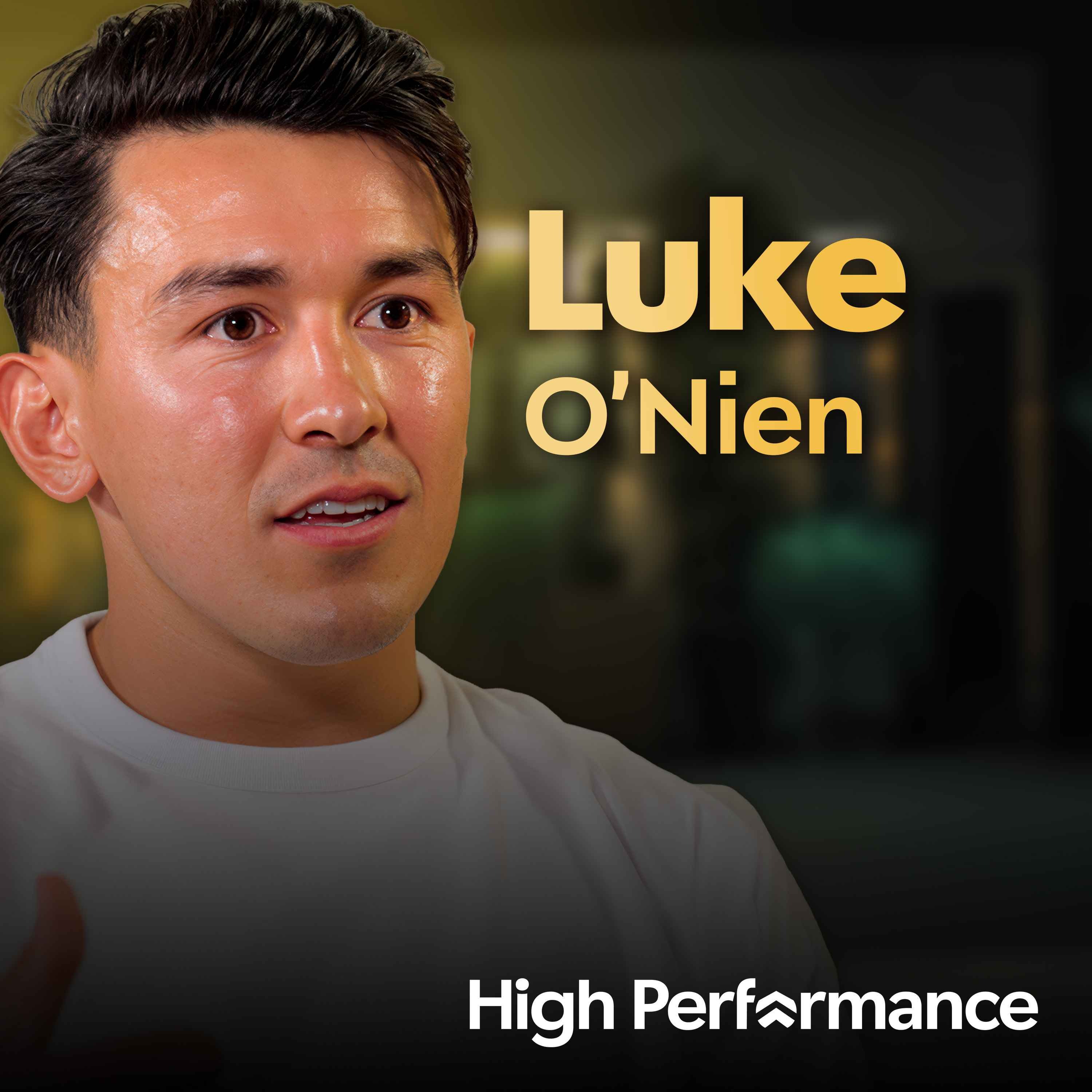
Luke O’Nien argues most footballers live in “survival mode” rather than thriving—driven by fear, overthinking, and emotional suppression—creating heavy, joyless performances. He links this to academy culture (“perform, perform”) and to a lack of mind-body training, then explains how therapy, emotional regulation, and evidence-based confidence helped him shift.
Luke O’Nien is a Sunderland footballer (former Watford academy; played League Two with Wycombe). He discusses working with performance coach Rob Blackburn and using two therapists (football and everyday life). The episode also includes a clip from Barry Quinn, former Watford youth/academy manager and head of coaching.
“90%” of players are surviving; confidence is built through reps/evidence, not slogans; fear narrows peripheral vision and makes players override instincts; hard work without psychological training leads to self-preservation and stagnation.
Sunderland debut: hooked at halftime in a 1-0 loss; he describes feeling groans, heaviness, and shutting down risky passes to protect “100% pass completion.” He stayed hidden afterward (toilets/phone, then solo ball work in the Astro). He contrasts this with later change after becoming a dad, journaling, and reworking his approach after therapy and Rob Blackburn’s guidance. Barry Quinn recalls Luke asking for extra ball bags after training, practicing obsessively.
Written by AI. May contain mistakes.
Discussing the emotional state of footballers and the pressure they face.
“I think 90 % of players are in this survival state.”
Exploring the need for therapy and personal coaches for footballers.
“I always think, do you remember Johan Cruyff years ago saying every player should have their own individual coach?”
Understanding the significance of human connection in football and life.
“And like, that's how I didn't want to, I don't want to be like that.”
Reflecting on the emotional challenges faced in football academies.
“because in football and in life, you need to take that moment to understand someone else before you bring yourself to the conversation, is that?”
Linking the ideas of success, suffering, and mental health in sports.
“Like it's a big step up for a, like I was a young player as well.”
Learning the importance of linking mental and physical health in sports.
“And then adapt that to my, and I still do that now.”
Understanding the change in mindset regarding success and happiness.
“I need to just grind my body into the ground.”
Exploring the need for personal change and emotional regulation.
“And then life experiences happen, or you go on a journey if you choose to.”
Luke O'Nien discusses the shift from thriving to surviving in his football career.
“You guys haven't got as much dust as me, so I'm winning.”
An old coach's message highlights the importance of mental skills and intrinsic motivation.
“were at this stage where it was all about the grind um I'm gonna play you this this clip I I should also say who it is.”
Luke reflects on the struggle to find balance between hard work and mental health.
“I'm not saying, and this is why I maybe got lost in the Johnny Wilkerson podcast.”
Discussion on the impact of fear on a player's performance and mental state.
“percentage 99 of my time was physical technical 99 of my time half a percent was maybe tactical and the other half a percent maybe was psychological.”
Luke shares insights on how many players operate from a place of survival, impacting their game.
“You're like, I can feel it in my body now.”
Discussion about comparison among players and the importance of appreciating others’ skills.
Luke O'Nien shares his experiences with the survival mentality in football and its impact on performance.
O'Nien discusses how self-awareness and practice help build confidence in players.
“Before, I didn't improve for, I stayed the same player for maybe a decade because of this self-preservation.”
Exploration of how football players can learn from their mistakes and the importance of creating a supportive environment.
“And they started to give players like a mistake list.”
Learn about the mental challenges faced after a difficult football experience.
“So when it went wrong, I went into my shell, I closed up.”
Explore the pivotal moment of joining Sunderland and the challenges that followed.
“I had eight missed calls because my phone was off because I'm a nightmare to go out of.”
Discover the emotional challenges and lessons learned from a difficult debut game.
“All my family came up, my wife's family.”
Discuss the feelings of shame and coping mechanisms after a crushing defeat.
“And that wasn't the ideal start because again, I had the expectations.”
Understand the long journey of recovery and the importance of hard work in healing.
“And I'm always intrigued about that night you've described with your family.”
Learn how mindset changes play a crucial role in healing emotional scars.
“I'm so much more free, but I would go back to that version of me.”
Explore the process of self-discovery and emotional growth through challenges.
“Who's worked with people that got there?”
Learn about the relationship between emotional intelligence and performance in football.
“I have a debate with someone the other day, I still draw like a five-year-old.”
Hear Luke O'Nien discuss the challenges and realities of reaching the Premier League.
“So are you saying that the first time you've become a Premier League footballer last season, you thought you had to be somebody different again?”
Explore how players cope with setbacks and the expectations they face.
“my best match in the Sunderland, by the way.”
Discover how personal challenges can lead to growth and transformation.
“I went for a walk around the training ground and there we had a lake at the training ground and I didn't even know it was there.”
Learn how to maintain your value and enthusiasm even when not playing.
“So next season, for example, it's going to be a nice test for me.”
Discover how empowering players fosters a strong team culture and accountability.
“And you'd imagine that's happening at every football club, in every league, in every country.”
Learn about the evolving nature of leadership in football teams and the importance of player ownership.
“I was like, no, you give someone the opportunity to step into leadership and then they work it out as they go.”
Discover the technique of maintaining a running commentary to enhance focus and performance during games.
“You were playing in the Premier League for the first time.”
Understand the significance of interpersonal relationships among teammates and how they impact performance.
“When I'm present, it gives me the best chance of reading the information in front of me and then making the best decisions.”
Explore the emotional challenges athletes face and the importance of vulnerability and support in overcoming them.
“Yet football fans don't see footballers as fellow human beings a lot of the time.”
Learn about the common fears footballers face and the paradox of embracing judgment to overcome them.
“The minute you try and be something that they're not expecting you to be, the backlash was incredible.”
Discover the metaphor of the buffalo and cow in facing challenges and how to tackle fears head-on.
“Them four fears are just, they shackled me for years.”
The hosts lead into a conversation about small changes adding up and ask what one habit has had the biggest impact on their lives.
“And I think we would all agree that's the case, which is a perfect topic for this conversation.”
Engage with Luke's insights on habits, strengths, and personal development.
“The most improvement you can be is not having a habit.”
Luke discusses his strengths, weaknesses, and the importance of self-discovery.
“and I always want to be contributing and doing things.”
Luke shares crucial pieces of advice and his philosophy on enjoying life.
“I've told the story about Edmund Hillary before, you know, the explorer.”
A discussion on vulnerability in football and the pressures athletes face.
“Your one golden rule to living a high-performance life.”
The hosts reflect on Luke's insights and the importance of his message.
“I haven't fully learned it yet, so I had to make note of the thing that I enjoyed the most.”

Get the gist, explore an idea or ask about something said.
 Claude
On The High Performance Podcast, what are the key points of this episode?
Searching your listeningAutomatic transcript. May contain errors.
0:03I think 90 % of players are in this survival state. You take a touch and it goes wrong. You start to hear the groans, you're like, I can feel it in my body now. You don't just move yourself. Everything, you have to like pick everything up. It's heavy. I got a phone call from my agent. Sounded under interested and I was like, what? I was starting the midfield, got hooked at halftime, 1-0 down. The manager said it was for tactical reasons, which is a polite way of saying you were crap. I remember I used to get in before anyone would get there. I'd get in the pool, do the gym, and then as people would arrive, go on my phone in the toilets, just trying to avoid that social side of it, trying to protect myself, knowing that I've just had that bad experience.
0:44How long were you wounded for, do you think?
0:55I think everybody needs therapy. Yeah, yeah. Like, it's just... I always think, do you remember Johan Cruyff years ago saying every player should have their own individual coach? He was saying this like 20 years ago, like every player should have an individual coach that if you're a goalkeeper, what you need is very different for a striker. I have minimum two. I see kind of like two therapies, one for football, one for like everyday life. But like I'll carry that on for like the rest of my life. Did you intentionally have two therapists, one for home life and one for football life? Not intentionally, but it worked out that way.
1:33I was always good at gravitating towards the next big thing that would help me go far. And I didn't know that was that until I saw it and I was like, oh, I need that. Did you hear the interview we did with Joe Hart on that? I haven't seen that one yet, no. He goes to see Pellegrini and Pellegrini goes, there's something wrong with you, I don't know you, but I can't trust you. and then he goes and works for the coach and the guy goes to him why don't you engaged in like passive aggressive war with the goalkeeping coach what do you know about his family nothing he knows about your family won't mention it what do you know about his wife nothing I bet he knows about your wife yeah why don't you go and have a coffee with him and just find out and he goes one coffee the whole relationship changed that's the bit I underestimated out of football yeah that's the bit I massively underestimated out of football how do you mean
2:27i that human connection i spent a lot of time when i was a kid um just like how johnny wilkinson would explain it just over the park bagables in the gym like obsessive silly hours i couldn't stop and didn't have that human connection i was just like it's just me and my dad sometimes and then it was just me and that got me so far that i think i was just so used to just doing it by myself yeah i think still trying to work that bit out to be honest with you because it's it's yeah that wasn't sustainable so i'm at a stage now like you know what it's like with kids kids they poke the emotion out of you and then they'll poke sometimes and then something will come out and i'm like whoa where's that come from so i'm trying to find ways to like go back to the source um so like just auto like just emotion where I'd they'll do something I'd emotionally react and there's no time to make a choice so for example my little girl will say something or no do something and I'd go to like raise my voice to her within like a second of it happening there's no delay in order for me to work out and process it was she'll do something and I'd be ready to be like, why are you doing that for?
3:50And like, that's how I didn't want to, I don't want to be like that. There was no space there to decide. That make sense? Yes. And you're linking that to football because in football and in life, you need to take that moment to understand someone else before you bring yourself to the conversation, is that? Not just like even, yeah, other people, but also when you play football, you need to understand, you might tackle me if I lose my head. in the moment I could cost the game. So it's also like learning that emotion for so many reasons, like being a dad, being a husband, being a player, being a teammate.
4:31Like that was just all so important. Okay, so we're about two minutes in and we've discussed therapy, parenting, connection, teammates. Is this stuff talked about a lot in the game, do you think? Is this a normal conversation in the world of football? or are you still a bit of an outlier, do you think, in the game?
4:54What, talking about the mental side? So coming through the academy, no. So coming through the academy, it was just play, perform, play, perform, play, perform. I'd go as far, there wasn't really a time for acknowledge emotions. I think that's where I some of my downfall is now is I'm kind of not paying the price but that's kind of a way to put it is there was never an acknowledgement it was just perform, perform, perform, perform onto the next thing you're not in the team okay let's find a way to get into the team then you're in the team you're playing it's like well you're good well you've got to be better than him now he's the older age group and it's just constantly looking to the next thing so yeah there wasn't any time to be like I'm struggling right now what are you struggling at?
5:46I don't know if I can make that level. I don't know if I am better than him. I've just jumped up an age group. It's just hard for me this. Like it's a big step up for a, like I was a young player as well. I wasn't emotionally that high. My emotional intelligence was low as well. So stepping up was big for me. And there was no, there was never a space of, how are you finding it? Like, because it's hard sometimes going up age group. You're constantly comparing to other people. you're constantly comparing to where you want to get to and it's it's relentless I never felt it was do like yeah that was big for me as a kid it was a lot of doing not a lot of feeling so that's fairly cumulative how did it eventually overspill oh yeah yeah I was never I'd never had a mind body connection like that didn't exist it was what do I need to do in order to get there so it was like okay i always look to see what the best were doing and i didn't really know but i was looking for it all the time so the best i saw an article where johnny wilkinson my hero um was out there just drilling balls till the floodlights went off so i was like well there's my model if i want to be elite because he was elite when i was growing up that's my model i've got a copy because i was gravitating towards the best that's what i wanted to be so i was like that's the model i'm going to adopt.
7:11So I went and did all that extra training. I kicked more balls. I'd get obsessive over the detail, but I need to do five in a row and I wouldn't, I'd restart. Then I'd look online again and there was sledge prints and I was like, buy myself a sledge. And I'm talking to my wife yesterday, them oxygen masks were coming out and I bought one of them oxygen masks and I was just running up hills because I was like, okay, let's keep trying to source what the best thing for me is. And then adapt that to my, and I still do that now. Like I still do that now, but it was, i do it with a bit more thought of okay how does my body feel with this back then it was i don't care how my body feels i don't care if i'm tired or frustrated or angry this needs to get done but johnny wilkinson when we first sat down with him on this podcast actually said he wanted to wish you an apology to young men and you would fit within the generation he was apologizing for and when we asked him why he said because i never spoke about joy i never spoke about happiness i never spoke about doing things for pleasure i spoke about just doing exactly what you've described just keep scaffolding one effort after the other after the other so when did you learn that you needed to link the mind and body more explicitly
8:3126 25 26 the last five years and ironically probably the most successful five years i've had so that aligns with like how important that is but that johnny wilson podcast it's funny that he came out and apologized i don't think he should because i always have like one of my favorite quotes i live by um is you gotta forgive yourself what only time could teach you yeah and And that's... It's a great quote. But the funny part was, is when I listened to his first podcast, I loved it. Like it was, I was just like, I love this podcast. I read all his books. And I was like, because I gravitated to everything he did.
9:14All the gym sessions, all the suffering. Because I thought you had to, I think I attached success to suffering. So I was like, I need to go suffer. I need to get up at 6 a.m. I need to do hill runs. I need to just grind my body into the ground. And the funny thing is, people always say the word grind in sport. And it's like, well, if you keep grinding, you'll turn to dust. And I started to see this pile of dust appearing. And I was like, okay, that's not a sustainable way. But when Johnny Wilkerson did his second podcast, which we talked about, he changed completely as a person. I listened to that podcast and he was my hero.
9:47And I switched off after 15 minutes. It triggered the hell out of me because he changed as a person. I hadn't. I was still attaching massively to the older version of him. So, okay, I then started working with a performance coach. Rob Blackburn, who you know. And I worked for them for a couple of years, which I didn't want to, but I eventually did. And I just loved it. And I got hooked. And after about two years, he went, I want you to go re-listen to the Johnny Wilkerson podcast, the second one. And I was like, I can't. He went, no, no, trust me. So I listened to it. And I've never wrote so many notes down in my life.
10:27I think I transcribed the whole thing because AI wasn't out there. So you can just try I transcribed and wrote the whole thing out and I was making notes and I was like, what's like 15 minutes in? I took me two hours to get to the first 15 minutes. I was rewinding it. I was playing it. And yeah, that was amazing for me because I realized I shifted as a person. We'll be right back after a quick word from our partners.
10:52Do you keep hearing podcast ads like this one, for example, but always wonder how you actually get involved with them for your own brand or organization? Well, it's easier than you think. We're Acast, and we give you the platform to do it all yourself. Browse thousands of popular podcasts, choose the shows that match your perfect audience, set your budget, and launch. And if you want a hand, our podcast specialists are there to help you launch with confidence. This is podcast advertising without barriers. Get started at Acast.com slash advertise.
11:29let me say luke what triggered you on the first listen that you were able to accept on the second i saw so this is what i yeah i'm still trying to understand and and rob helped me with that he sent me a diagram and there's like there's four types of people and it's like life happens like to me for me through me and as me or and it was like where johnny wilkerson was was where i was in the grid. And then life experiences happen, or you go on a journey if you choose to. It's very easy to stay the same person if you want to. But Johnny Wilkerson shifted with life experiences. I think he saw his emotion as feedback.
12:09So I'm feeling this way. I don't like this. I need to change something. Whether before I was like, I don't like this, but I'm going to double down on it anyway, because I didn't have that mind-body connection. He started to listen, as he said in the podcast to his body he kept getting warnings and he kept not listening and he said that so many times you're not listening here's another injury I'm not listening here's another pain point he can still choose which he did to stay as that version of himself but eventually it was like one knock too many that he realized he needed to shift and we're all going to get them knocks along the way that's just a fact of life it's just how we choose to respond and eventually I got them knocks to realize okay I need to shift as a person I think the kids were the big one for me.
12:52Like kids are big emotional beings. And I didn't have that regulation and flow in me. So when I had my little girl and she was this big bundle of emotions and my job is to be a safe container for that, I can't even contain mine. So how am I supposed to contain this little girl that needs me if I can't even regulate myself? So that was my reason to change. I think without her and my wife, I'd be in that old version of myself. I think it's fascinating. The other thing that I guess we need to unpick is this moment where you realise that, as you say, if we keep on grinding, all that we're left, right, with is dust.
13:36And you said, I could see this dust was starting to gather. So obviously your daughter was influential, your wife was absolutely influential in helping you to change. but I also get the sense that you internally had this feeling that you just can't keep grinding because you saw the dust starting to gather. Yeah, and I think I attached that dust to that's my success as well at the time. Like that's my trophy right there. Look at all that hard work. You guys haven't got as much dust as me, so I'm winning. That's how I kind of saw it. When did I need to change? I was massively playing football in survival mode.
14:18It was playing to survive rather than playing to thrive. And I knew I could feel that in me. And I thought that I was playing the game and doing well. But I was just out there surviving at the time. It stopped becoming fun. I was going out to games 1-0 down in my head. I could feel it in my body shifting like the emotion now the heaviness in the legs and the arms and the body yeah that's how I that's how football became so far from the kid that started the game and why do you think that your approach to grinding had created that sense in your body for a match why did I go to survival
15:08it was my thoughts and my expectations and relationship to my yeah my expectations were one of the biggest things my lack of coping mechanisms my lack of emotional intelligence because I would grind so much I never accessed how I felt so I could be really really tired I could be exhausted I could be angry. But I was very, I'm very, I was very list orientated. So today, in order for me to maximize myself and be the best, I need to do this many reps, this many, this many ball strikes, I'd write everything down. And I'll be like, tick, tick, tick, tick, tick. So that was my, my way, it was never how do I feel it was I need to do this, I need to do this, I need to do this.
16:01And then there was like a huge sense of satisfaction. But the problem was, is I didn't know how much or when to stop it was i can do endless amounts here so why not just carry on doing it okay i'm a little bit tired i've read so many times that when people get tired that's when you've got to crack on and double down and keep doing more it's how you get fitter so there was just a just a big unbalance there um and i think i was going into game shattered i was overthinking it massively but didn't really know what to do with it all to be honest with you like I've never been to the top before I've never played professional football so I'm just working out as I go in and now I'm trying to fill that void now um in my spare time but like I I've never been there before I've never been on the journey so how am I supposed to know what it looks like interestingly we've had a message from someone who was part of your footballing life when you were at this stage where it was all about the grind um I'm gonna play you this this clip I I should also say who it is.
17:02This is Barry Quinn, who was the Youth and Academy Manager, right, when you were at Watford, which was really early in your career. Hi, Luke. Barry Quinn here, former head of coaching and head of academy at Watford Football Club, where, of course, we both worked. I just wanted you to know that I hold you up there as an example to young players as a class act. Well, I often get asked, what's the X factor for a player? What's going to make them stand out? What makes them get a career? The one thing, in my opinion, that will see how far you go is the psychological side of the game, the mental skills.
17:39I think you've got that in abundance. It's very rare that when working with young players, you see someone that's got intrinsic motivation and self-belief that you had. I think you bounce back from things and you drive on and that becomes from you intrinsically. I can remember when you got your first little car and it had an amazing boot and when I say amazing it was because when you opened it it had all these different shapes size balls in there that you used to practice with and a bit of a legend with your tennis ball keepy uppies on YouTube so it's an attitude that you had practice practice practice brilliant basics it was all there I remember when you went up to the first team and we're training with those and uh you came back one day when they'd all gone and asked me for a bag of balls and I said why and you said well I want to practice some more and I said no you need to go home like you'll get me shot or or worse to that effect and you said no no they don't do enough I need to practice some more And it's no surprise to me or anybody that knows you, I'm sure, that you've done what you've done and you're doing so well.
19:00Don't ever change. Keep that attitude going and look after that lovely family of yours. What a guy. What a guy. And it's really interesting hearing that after the conversation we've just had. I mean, the fact that he says there, don't ever change, when we've just spoken about the absolute power of changing is interesting. but I think what's fascinating there from Barry is that he speaks about how you were mentally equipped for the game how you had the resilience he called it the intrinsic motivation to do well really what he actually saw from you was just hard work to the point of self-punishment, right?
19:35So what he doesn't understand is I used to go up to training and ask for a bag of balls and stay there for an hour and a half after and that was, I still do that now like I still stay out What he doesn't know is that I then drove home and stopped off and did another hour and a half. And that's why I got the balance wrong. I'm not saying, and this is why I maybe got lost in the Johnny Wilkerson podcast. I'm not dismissing at all hard work. It's just having, it's hard to get that balance. And it's okay to like, you have to cross the line. So I crossed the line way too many times. I just didn't know where the line was.
20:12And my dad was great for me, but he doesn't even know where the line was. he's never been he's never been to professional football so how where is the line and we had to explore that and between me and my dad we crossed way too many lines and I don't regret that because now I'm in a stage now where I'm I'm trying to mentor professional footballers I'm trying to raise my two kids I'm trying to help them cross lines but stay closer to it because I also don't think a lot of players get anywhere near the lines anymore like I I went way past the lines but I don't think people get anywhere close to the line this idea of hard work and balance I think that you've got to remember that you were also a product of the world that you were in right and that in football particularly with young footballers the reward is the hard work the applaud that's come from the hard work the pat on the back comes from the effort the desire, the determination the players that want to go should we have a conversation about whether we've really actually enjoyed ourselves today should we talk about whether we're in balance should we talk about whether we've got the mix perfectly right guys between the effort and the reward and are we are we reminding ourselves that we're also vulnerable human beings underneath this hard exterior of sport that's the conversation i think that needs to be had the hard work has to remain but it has to be hard work in the context of it's not only hard work and i think you know barry there loved your hard work well of course he did because that's the thing that gets players to the first team right you loved your hard work because they got you to your first team your dad loved your hard work because they got you to the first team it's the balance it's the balance of the hard work i i will never knock that and i still do that to this day like i will go out and do my extras all the time the balance where i lost it is the fact that i grew up in football hammering like if i had to break it down to percentage 99 of my time was physical technical 99 of my time half a percent was maybe tactical and the other half a percent maybe was psychological.
22:12The only mental side in the game came from my dad and my family. None of it came from sitting there and actually the same amount of time, the same amount of reps I would do in the gym, now I have to do the same reps up here. That's where the balance was lost. I did nothing whatsoever. Hence, when I stepped onto the field and I couldn't manage my confidence, I couldn't deal with the judgment, I couldn't deal with the expectations or that heaviness why couldn't I deal with that when I came to the biggest stage I never worked on it it's like rocking up to the golf course for the first time and expecting to shoot under par on one of the biggest stages in front of the best players well how are you going to play well if you've never learned the skill and I just assumed that this because I could think and I could work really hard I just assumed that I had that side of the game so the balance isn't doing less hard work always will get you so far.
23:09But it's actually, okay, well, I've got to do hard work on this part of the game that was just completely neglected, apart from what my mum and dad helped me with. So if you could go back, though, because you were in survival mode in your own language, if you could go back and speak to a 16-year-old Luke, what would you say to him? I'm going to throw out that really bold statement. I think 90 % of players are in this survival state. I think 90 % of players, I just hear their languages. And had you asked me at 24, are you thriving? I would have said, yes, 100 % I am. Are you surviving? No, I'm not.
23:49When you're actually on the field and you're playing through fear, you're playing with the fear, what is going through your head? What's happening to your game? The game starts way before the day of the game. It starts three, four, five days before. the overthinking starts in the bed of, okay, this could happen. What if I'm going to make this mistake? You're attached to like previous mistakes. You'd replay it. So then you'll start to replay it and that will trigger the emotion because you can feel it live. So you say, let's go with, let's roll with an old version of myself. Let's go Sunderland debut, for example.
24:25And you take a touch and it goes wrong. You start to hear the groans. You're like, I can feel it in my body now. You can feel the groans. You can feel, you start to feel every movement in your body. It's like you have to move your body yourself. It's not just, you don't just move yourself. Everything, you have to like pick everything up. It's heavy. It's lethargic. You, I had an expectation that I had to have a hundred percent pass completion. So then I would only give the ball to you because I knew I could make a one yard pass and that would keep my expectation of having 100 % pass completion.
25:01I would go against my, this is the biggest thing, I would go against my instincts 100 % of the time. So the ball would come into me, I'd see like a 40-yard pass and I'd be like, I'd go to do it and I'd be like, nope, I'd shut it down because I'd have a really quick way of breaking it down, going, if I do that, I know that can go wrong, I know the noise is going to come with it, I know the judgment that's going to come with it, I'd give it to you. And then all I would do is just, that's how I would stay, and I'd survive in games. I'd give it to you and then I'd run round like a bit of a headless chicken.
25:31I'd put my weight around. I'd win tackles and I'd justify that I was doing well. I'd finish games and the fan would be like, you never gave the ball away today. How good's that? And I'm like, I was so good today. 100 % pass completion. And I didn't realise, I think a part of me did, but I didn't realise, for example, that I was just surviving and I could probably go back and watch all my games. You'd go to take like the ball would, everything would open up for a shot. And your whole being, the crowd of shouting, shoot, you want to shoot. But it's like you just can't do it anymore. Like your body doesn't allow it.
26:04There's like an override and it's so well drilled because that's a decade of going against your instincts that got you into the game, that served you so well. And you're constantly going against them through fear of, if this goes wrong, I am going to have these people growing up. I'm going to have the teammates. Like you just keep attaching to all of this and it's just too much. And you believe that that approach, that fear-filled approach, was how you got to the top level, right? So you were used to playing that level. Define top level. Well, it got you to being a professional footballer. Yeah, it got me to League One.
26:43So fear-filled approach got you all the way into the game. And for 99.9 % of kids playing football today, if you say you can just have a career as a player, they will take it. and that's the learned behavior of so many players right yeah and you believe what percent do you think of players are playing in that same way with that fear uh you say 90 probably yeah 90 maybe 95 yeah so what are you seeing in them where you know they're also feeling how you felt they become numb to like the i see it in people in training where someone will do something outrageous or like just they'll do a part of the game or whether it was a goal or a long pass or a skill and I'm like I'm now like wow that was so good I'm like I'm going like nuts how good was that and what I realized I never used to do that because I was so focused on what I needed to do and how did I look in myself how did I look how did I look through his eyes how did I look through I was just trying to survive and I wouldn't even notice what other people were doing so for example we had um Eze come alone to Wickham and what a talent he was and a part of me part of me would love to go back and play with him because I was so focused on what I was doing and what I needed to do I didn't appreciate how good he was if anything it was a threat to myself it wasn't wow how good is he because in the academy you're growing up all the time you need to be better than him to get into the team you need to now be better than him to get into the team you're out the team what do I need to get into the team or you need to create more goals like him it's always a comparison so when people came in I was always comparing to others and instead of now doing what I do now and appreciating them maybe learning from them trying to help them I think I went into like a threat state and it kind of doubled down on my survival it was wow he's talented I'm nowhere near that i need to get better at that i need to and i never really appreciated how good he was and i still talk to him now and i'm like i like but players i see players they don't appreciate what other people do sometimes some they come numb to like something wonderful it's just like oh that was normal because and i think it comes from you're so focused on what you are doing and how do you look they don't have time to see just all the beautifulness going on and if there's enough people acting from a place of threat what does that do for a dressing room or a culture i was really good at hiding it like i was first class if there was a trophy for hiding this or huh on top of the class at this and that's that's the scary thing it's i didn't know i was into the survival state i can see it in others in their decision making and their behaviors and after games it's like you see players turn straight to social media after because you know things haven't gone well and you're looking for that quick justification of how do they look for other people's eyes I used to all the time and it's like that stuff's irrelevant um so yeah what does it create I tell you what it doesn't create is easier it doesn't create an environment where you can really really improve and thrive it's really hard to improve in threat state because you're always self-justifying everything you do so I used to give a pass to you and someone's like well you're not but well I gave it to him it was the right decision and you're constantly trying to justify your actions even though sometimes they're wrong it's really hard to like invite feedback and invite change because you're you're doubling down on what you think is successful so it's really really hard to invite information in because everything is information every time I make a mistake I just see that now as information so if I give a long pass away I used to just see it as I'm terrible I've just given a long pass away I'd go practice it a thousand times but now when I give a long pass away.
30:36Everything's information there. Where was my left foot? Where was my hips? Where were my shoulders facing? What did I see? What didn't I see? Like all of this is information. But when I used to make mistakes, I used to quickly go to self-preservation. I used to blame it maybe on someone else. I used to, wouldn't even listen to other people. But now there's like a feedback loop of, yeah, okay, I got that wrong. That's on me. Anything that goes wrong in a game now, I try to take it on all as me. We'll be right back after a quick word from our partners. What if the real question isn't where you're going, but the adventures you experience along the way?
31:10It's time to set your sights higher. On peaks still to be climbed, rivers still to be crossed, and greater dreams to pursue. It's time to embrace the impossible with Defender. A family of vehicles built around capability, durability, tested on some of the most difficult terrain, Defender defines tough luxury. And I should know, I've driven one for the past three years. I have the Defender 130, but from the compact confidence of the Defender 90, to the versatility of the 110, through to mind the Defender 130 with seating for up to eight, there's endless potential. You feel it in the details as well, the rugged body design, the robust materials, all working together so you can head out with confidence.
31:47And inside, ClearSight technology helps you see the world around you in a new way, while the PV Pro keeps your navigation routes and playlists flowing seamlessly as you go. And with up to 89 cubic feet of cargo space, there's room for everything you need on your journey. Explore the full Defender lineup at LandRoverUSA.com. Here's a tip for you. There's a podcast out there with fans waiting to be your next customer. They tune in every week. They trust the host. And that host wants to talk about brands like yours in their own words to their audience. The problem is you just haven't been introduced yet.
32:23We're Acast, where that introduction happens. As the world's largest podcast marketplace, we let you browse shows, see who's listening, and book host-read sponsorships or run your own ads all from one platform. Transparent pricing, real-time data, complete control. Start advertising on podcasts by visiting acast.com slash advertise.
32:48Because when I take that on, I'm like, okay, well, I can explore and maybe find something useful here. Before, I didn't improve for, I stayed the same player for maybe a decade because of this self-preservation. And you can see it probably in my game. And I see a lot of players, why am I staying the same, why am I not improving? You keep having the same thoughts. You keep having the same thoughts, you can have the same outcomes. Do you manage your... Same behaviors. Did your manager not say, Luke, when you have freedom on the training pitch, I see some beautiful football? No, no, no. I don't see that.
33:24No, no, no. The survival was on the training pitch as well. You don't just switch on for the game. I had it in both So you were permanently I mean that is exhausting right? Yeah thinking about it now Yeah When was the first time that you managed to drop this survival mode? Where were you playing? Sunderland So even in your time at Wickham which was good for you? Loved it You were still in survival mode there? Yeah Because I thought Gareth Ainsworth was exactly the kind of manager that would have given someone like you some freedom to express yourself And he did but that doesn't mean I'm going to bring that out like someone can say to you you know you can bring that out but there's far deeper work that needs to go on with me there I need to fully understand I think you talked about it in the Liam Lawson one when you talked about confidence confidence is a belief system it's when I'm confident it's a positive prediction of the future is the way I see confidence so for example I wasn't very confident getting here on the metro because I haven't been on the metro for a long, long time.
34:29Up north, I'm confident at doing the metro because it's just a one line and you get on and get off. So confidence for me is I don't know if I can get here. So that is a negative prediction of the future. So that's where my lack of confidence came from. How do I get confidence coming here? Well, if I come here 10 times in a row, I'm going to keep coming here until Johnny Wilkerson comes here for the third one so I can meet him. If I keep coming here, that is reps. That is me building my confidence. Does that make sense? Yes. And so like, if I had to go to you now, here's your confidence, like have confidence, go play, go play with confidence.
35:03They're words. No, no, no. It's reps. And that's what... Yeah, it's reps. It's evidence. Okay, so in order for me to be confident, okay, I need to go do reps. I need to go build a belief system. Someone saying to you, go have the confidence. It doesn't work like that. It's just constant reps. But can I ask you though, because we get like lots of like coaches listening to this or teachers that might be thinking, but I do say the words, I do want you to be confident. I do want you to go and play with freedom. What's the disconnect? What could they do that takes you one step closer that actually gives you the impetus to want to go and take them up on their word?
35:42For me, the biggest, in order to change, the first step for me is always self-awareness. so it's an understanding straightaway of yourself. And it annoys me saying that, because had I listened to this version of me saying this five years ago, I would punch myself in the face. It doesn't really make sense, but I've been on this journey. So it's how do I explain this?
36:09It's the self. I can only give you an example. Say, for example, I play my matches and I'm constantly going against my instincts. It's that I kind of felt like I was doing it all the time. but like for me so I'm now mentoring players um uh with Rob who we know we set up something called the Elite 11 and a player came in and he's like I don't have confidence and I'm like okay let's talk a little bit so I started talking about his game and he was saying I was like do you go against your instincts he's like well I'm not really he didn't really know he didn't know what he didn't know so I was like okay well let's let's put you in there because what a lot of I've realized about players is players have a really good memory for a game.
36:51I can go back and feel any moment, especially the big ones. I can go back and feel it. So I go back to a moment. Do you go against your instincts? And he was like, yeah. I'm like, how many times? And he's like, I don't know. So I was like, okay, next week, go play your game. I said, what I want you to do is go count how many times you feel an action that you want to do. And then you stop yourself and keep it safe. I said don't get angry don't try to fix it just count because I was it I was doing that 50, 60, 70 actions a game and he went yeah same he did it I did it one week and I was like brilliant now you have a self-awareness of where you are because he can't I can't tell him just go against like start trusting your instincts he needs to know his baseline so I said okay we're at 50 times a game okay next game what I want you to do is go against that action once so you You feel something, you go to do it.
37:45When your body stops you, you just have to do it once. And when he does that once, I'm like, brilliant. Because it's a really hard step to take because you've conditioned not to do it for so many years. So he said, you've just got to try it once. Because once you do it once, it's a belief system now that you can do it again. But before you take that first step, it's impossible. So I was like, do it once. Okay, now how many times do you do it again? Two or three times. And what he's going to do, he's going to bring that 50 times he goes against his instincts down to 40 and i'm not telling him to do it in a game this is something that's built over time so going back to your last question can someone create an environment yeah of course they can gareth hainsworth and richard dobson were phenomenal for me but i didn't really know what i needed to do to get there to unlock it and that took years of work with rob but it reminds me i remember working in in rugby in rugby union and uh asking the coaches for certain players in certain positions why don't you set them a target of mistakes that they have to make because in their position it was always like if if your winger gets the ball 10 times that's how many times he needs to have his hands on the ball to give himself a chance of scoring so tell him that you want him to to give the ball away at least 19 times because it'll give you it it just increases the odds that actually you only need one to go right for it to do it.
39:08And they started to give players like a mistake list. They had a target of we want you to make so many mistakes that liberated them to be able to get the hands on the ball and not be conservative. Have you ever had a manager that's asked you to go and make mistakes? No, no, not at all. What would be the reaction to that? No, you're not allowed. You're not allowed. You make mistakes. You get crucified. You feel like you get crucified because that's just how, I'm just thinking like going back to the academy. As soon as you make a mistake, tidy up. Keep the ball. I'm just, go to a Sunday league match.
39:47I'm going to stop off on the train on the way home and just stop off on a Sunday league match and listen to the language that's being said out to the kids. That is them getting conditioned from a very, very young age. Well, that was going to be my question because my boy's 10 and plays football at the weekends every weekend utterly obsessed as many 10 year olds in this country are should we be having conversations with players at this age about like saying to said my boy how often do you want to do something and then you're scared to do it oh a million percent yeah i journal with my little girl every evening i don't make her do it i journal myself it's like the biggest tool that's ever like my biggest self tool that's helped me progress with all of this and she sits saying oh what you're doing dad I'm just journaling I want you what's the question and she fills it in next to me and sometimes if she sees this in a few years and I'm sorry about this I make up a cup what does that say dad oh this says what happened at school today that you weren't proud of or something like that and she's like oh okay and she writes it down but like she sits there and journals with me in the evening and I'm now designing a I'm designing a kid's journal for her to like I'm trying to work out how her brain works but I'm I'm just getting her to wonder because otherwise it's going to be a massive surprise for her.
40:59She's learning now. She's learning as she goes, which is fine. We all do that. But it's really like learning as you go and then stepping onto a football pitch and having to learn in front of thousands of people watching you. That's difficult. Imagine my little girl was learning to ride a bike, not just me and her in the park, but 30, 40 ,000 people trying to watch her. That's intense. There's no chance. My little man just got a brand new pair of boots and bright orange. and he's put them out the box and all the family in the room, he's come out and we've gone, you look so cool. And he's gone really, really shy and he's gone back into the room.
41:34And it's like a little example of when there's a lot of people and a lot of eyes on, like I saw him, his body goes like that and he was like hiding, he didn't want to go out in the garden with them. And it's like, imagine my little girl's learning to ride a bike in front of 40 ,000 people. And then she makes a mistake and they all go, oh, you're telling me she's going to get back on that bike. Well, that was me on the stadium alight learning skills, mental skills for the first time. That's what I had to do. So when it went wrong, I went into my shell, I closed up. Did I want to go back out there?
42:07Reality of it, not really. Sounds bad saying it, but why would I? I just had a really bad time. I didn't have the skills to deal with it. I've just fallen off my bike. Why would I want to get back on the bike? And the reality is I've got to get back on the bike tomorrow. And there's another game next week. But I don't know how to ride a bike and there's 30 ,000 40 ,000 people watching me judging me this isn't a fun environment to learn the skills for the first time I think that this is the most interesting element of this whole story which is going through this period where you start to finally realize that you're not serving yourself living in this way so there has to be another answer the answer came at Sunderland but the ironic thing is it came at the football club where your debut you arguably couldn't have been a more painful experience for you would you take us back to that that first game for something before we start to unpick how you finally found freedom at this football club yeah so i did three years in league two with wickham and i loved it and then i was looking to take a step up because players like you've got to keep progressing so I was like okay well got to look for a step up and then there was two teams interested Luton and Sunderland and I was set to go to to Luton at one point and my wife and I were like we're on a dog walk around Dorney Lake lovely 5k walk and I had a game that evening for Wickham I was silly playing five a side the day before my hamstrings were too tight because I don't know when to stop and I got a phone call from my agent.
43:47I had eight missed calls because my phone was off because I'm a nightmare to go out of. And I picked up, what do you want? He goes, Sunderland are interested. And I was like, what? So he's like, you've got to let us know quick, this is happening. So I then basically, long story short, Sunderland wanted someone else. They were too expensive. My agent went, this guy's pretty cheap. And I went, I'll take it. So I was sloppy seconds and it's the best sloppy seconds I've ever had. so yeah that was great I love that so yeah it wasn't like the yeah they really wanted you no they didn't and I was like I don't care how I get here as long as I get half a foot in the door I'll make the rest of it work so then I was driving up to Sunderland and I had a lot of people saying to me if you get that right there it's a sleeping giant you get it right there you're just going to have the best time of your life and you're just going to be set and all this and I was like okay so I filled up my Audi A1 with everything I had because I just lived at home with mum and dad.
44:43Believe it or not, I fit everything in. And just drove up to Sunderland. And I had five days of training. Did really, really well. And then they gave us a starting shirt. All my family came up, my wife's family. And my mum and dad, everyone came up. And yeah, I was starting in the midfield because I was a midfielder at the time. And yeah, I got hooked at halftime, 1-0 down. Why? The manager said it was for tactical reasons, which is a polite way of saying you were crap. Yeah, I think I had a cut. I actually haven't. I can't remember the last time I watched it. I can feel it like it was yesterday.
45:31But yeah, just a couple of decisions. Tactically, we're all wrong. The team wasn't balanced. They were dominating us. A couple of times the ball went under my foot. I was maybe out of position like I turned up at Sunderland and I learnt my trade at Wiccan man for man and I remember starting the game and I was following my man around the pitch because I learnt my trade on man for man and a player turned around to me what the are you doing over here and I went that's my man he went no we don't do that here and I was like oh okay so I was like trying to learn a new style on the go and it was too much for me I just didn't know I didn't know where I was going the ball was coming into me I remember losing the ball in the first one or two times and then what I've learned in the last couple of years is when there's pressure your peripheral vision narrows by like 30 40 percent you can quote me on what it is by the time the ball was coming into me all I could see was this and then I'll turn and then I'd see some boots didn't know if it was my team I'd lose the ball and I was just like I don't know where I'm going here so I went in at half time going And that wasn't the ideal start because again, I had the expectations.
46:39Let's score the winning goal. Let's start this way. Let's start that way. And it just went the opposite way, like the complete opposite way. And I was like, okay, well, self-talk, come on, second half, let's get myself going. Let's do this. I came inside and I was, I was ready to come out for the second half. And the manager just went, uh, yeah, Luke, you're coming off. And I've just gone, Um, okay. And I sat there and, um, yeah, that was hard for me. It was really hard. What happened? I sat in the changing rooms. Um, it felt like it didn't really happen. I went back out, sat on the bench. I remember eating about four Jaffa cakes.
47:24I was emotionally eating. And then I went for dinner with my family all along the beach. They all came up. And the funniest thing about all of this is my wife started working for Sky Sports and it was her first ever live game. She did the graphic for me to come off the pitch. You can't write it. So they were going to her, who's coming off? And she was like, yeah, that's my boyfriend. Okay, brilliant. So I asked her, did you not give me a man of the match or something like that after it? She said, no. So like, honestly, and it's funny at the time, but, and then I went for food with my family after I'm walking along the beach which i i live really close to now and uh i just remember just i just didn't want to be there with my family my family like oh everything's okay you weren't that bad and like trying to distract my mind but i just i was shot like i was properly wounded from that how long were you wounded for what do you think
48:23three years yeah three years yeah maybe not completely healed as well I think scars scars are left and they're there for a reason and it's helped me navigate my way so like I don't think you can ever completely heal scars that's the point of them they're always there as a reminder so there's a scar there but I wasn't the scar was still pretty open at three years later yeah and I carry that into every game But you've done the equivalent of what you said, your daughter's followed off a bike with 40 ,000 people. You did have to get back on that bike. And I'm always intrigued about that night you've described with your family.
49:05What was it like getting in the next morning? I was pretty ashamed, to be honest with you. I remember, and I'm not sure how many people I've actually said this out loud to, I remember I used to get in at half seven-ish, eight o 'clock, before anyone would get there. I'd get in the pool do the gym and then as people would arrive I'd go to the toilets and I'd kind of like go on my phone in the toilets just trying to avoid that social side of it trying to protect myself knowing that I've just had that bad experience I didn't want people coming up to me and going you okay do you need help with anything and I remember doing that for and then yeah for quite a while just trying to like plan it all out and then everyone would go home I got the keys to the Astro I've still got them now don't tell something and I used to go into the Astro in the barn taking a bag of balls when everyone left and I'd stay there for an hour and a half two hours um just doing the reps and I kept working hard and I just kept and I was getting so tired I just kept one thing I always knew was just just work hard it was the thing that got me so far so you lent into the thing that got you into the game i didn't mean to it i doubled down on it i doubled down on it like like i've never done before but that word shame can only grow in the dark expose it to the light and and it suddenly starts to dissolve so what did you i mean but but it's a powerful word to use about a young boy making his debut learning a new system and not playing particularly well yeah and if i like now i'd go back i'd go back 31 year old me could go back now i'd i'd put her arm around myself i'm like it's okay i'd see it all as informations which i do now everything that happens to me now is just information i used to see it i never used to see it like that and like now i see football like clear as day like wide-eyed i love stepping out onto that pitch.
51:07I'm so much more free, but I would go back to that version of me. I'd put my arm around me and I'd probably tell him, listen, it's all going to be okay. But we need to change. I went and did the reps in the gym again. Like I lifted so much more weights. I kicked so many more footballs. And this is the beauty of what I've learned. and I'm going to smile saying it because it's so true. I used to think, um, like form is a mindset problem. It's nothing to do with technical, tactical, like form is all mindset, like how you play. And I used to think form was hard work. It's nothing to do with it. Form is all mindset.
51:53And I wouldn't have agreed with that, that old version of me. Like again, like that, had I said that years ago I would have completely just nope it's all lies but there comes to a point especially that you have to nail all like the technical side of it but there comes a point where you know it so I didn't become a bad player overnight I had I could pass the ball I could turn but that all just disappeared the skill set was always there the ability to reproduce it in the right environment that's a thinking problem not a skill set problem and the funny thing was why did I stay the same player for the next few months because I went and hammered the skill set side of it and it wasn't until I started working with Rob Blackburn who you know that I started to work on the mindset side of it and started bit by bit to sync everything up so is that when you started to heal the scar when you started working with a sports psychologist yeah yeah the wounds it's it's more it's also knowing what to look at it's it's yeah Yeah, it's understanding what that information is telling you.
53:00I'd never listened to anyone. I was like, this is the way. So it's attaching to mentors that have been on that journey. So I know where I want to get to, but I've never been there before. So I can't do it. So who's been there? Who's worked with people that got there? Okay, what don't I know that I need to know? And I didn't want to work with a sports psychologist. Like I just wasn't interested. I was like, you can't teach me anything I don't know. you haven't played the game and he was recommending that you should no one like absolutely no one right um but he kept reaching out to me and i kept batting him away so what had he seen something i wonder then he everyone he worked at wycom and everyone at wycom kept telling him you need to go work with luke and i just kept batting him away i just wasn't interested and yeah like i I went through like after that time I went through like a big identity wobble um straight after that because during that time I started working really really hard and then I was getting worse because again the shame was growing as you said in the shadows and it made no sense for the first time my career I was like it's the first time hard work is not serving me I'm getting worse and I was just getting to the point where I was like, okay, maybe I found my level.
54:19Maybe this is me. Maybe I am literally just not good enough. So I was like, no, that doesn't sound right. So what I started to do, I started to look at everyone else and I started to try to be like him. So I wore your shoes for the day. I went, oh, that didn't work. I'm going to try your shoes today. That didn't work. And I went round trying to be every single person. And because obviously I didn't work. So I had to reject myself because it failed so i did the next honest thing was who is working they are i need to be like him and i tried on so many people's shoes and honestly i got to november and i've never been in a mess like it before it was a beautiful mess when i look back at it now but i didn't know who i was but i was a beautiful mess now i see it's a beautiful mess because i had a therapy session two months ago and the lady said a word that just it just sits with me so well and she said before creation there's always destruction and she said it I went oh stop there stop there I went let's just stay with that and she said it and I was like that is just the most beautiful way to describe the last eight years for me it's like okay you're building a house you've got to destroy it you've got to rip it down before you create something wonderful to live in and I was just like and I look at back that period and it's like i was just at a baseball bat and i was just destroying everything and at a point where everything was just a destroyer in a big mess that was the start of the creation where i am now was there a low moment all of it but what was the particular low moment then when the house has been knocked down and you're surrounded by rubble so that the funny thing is that cycle that rubble it repeats so i had one this season in the premier league and it repeats but once you've been through one that's the coolest part of it all because you're like i know where i am now i know this process i look forward to this process because look where i am now i'm i'm in massive destruction when you're first trying to map out that first creation at, I don't know when it is for everybody.
56:31For me, it was around that 20s, because I was really, I was 20, when I was 23, maybe emotionally, I was still really young, like years behind, like maybe down at like 12, 13 emotional intelligence, because your emotional intelligence only goes as far as when you start practicing it. I have a debate with someone the other day, I still draw like a five-year-old. Why? Because the last time I did art was when I was five. and it's the same with mindset like my mindset ability only took me to okay let's say 13 14 because that's when that's how far that took me that's the only skill i learned it too so then i had a 13 14 year old making his debut and it's like we'll get a 13 14 year old and tell him to go on the pitch that'd be difficult but everyone sees him he's a grown man he should know how many times you get that he should know better well i don't how sometimes you don't know what the skill is.
57:22You can only learn it to, and yeah, so my lowest moments, that one was, that was a really hard three months. I just, I kept trying to show up. I kept trying to smile. I kept trying to work through it. I tried to say everything was okay all the time when it probably wasn't. But it took, I remember one coach coming up to me after a game, we played Gateshead behind closed doors. I've got it saved on my Toshiba laptop. That's the only reason I've kept that laptop. I was horrific like I got the ball and I went to go right but my body was telling me to go left the ball would go under my foot and that was the point where I was just I was I was laughing at myself I got to the point where I was just like oh my god what am I now and I just had I had to go to the humor stage of it because I just didn't know what I was doing anymore and it took one coach said to me he said you are trying to be everyone else but you and i went you're right and he went we signed you for you and we need that we don't need him the winger that's doing the tricky skills we don't need the tools whatever that he we need you for your skills and i really disvalued what i did yeah to the point now where i now know exactly who i am because of that period so it was really important for me but it was um yeah but the funny part is that all cycles around again it's cycles again that destruction last year in the premier league when i thought get to the premier league life will just be like that and i'm sure it's going to cycle next year but now i'm at a stage now where i'm like bring it on but before then i was like oh no i dreaded that because there's no one wants that we all think best case scenario we're trying to attach to that end goal when we're in that destruction phase.
59:09We're so far away from being there. That's the problem. So are you saying that the first time you've become a Premier League footballer last season, you thought you had to be somebody different again? No, not at all. I just thought like, I'll get to the Premier League one day and life would just be a Premier League player. And it's so far from that. However I felt in League Two is the same feeling you'd get in the Premier League. It's no different. There's no sense of extra accomplishment or value. However you felt playing in non-league, I still feel the exact same. It's the same game for me. So when I'm not in the squad and they go, Luke, do you want to go play in the 21s?
59:53I'm like, yeah. Most people are like, no, I don't want to play in the 21s. I'm like, yep. Because it's the same feeling for me now, playing in front of 40 ,000 people as it is just playing in the 21s. I'm there to play football like but yeah like it's that's what kind of like the experience tells you but I had that I had a destruction moment this season in the Premier League tell us it's a weird one I spent my whole life chasing the Premier League and it was always so far away and then for the first time it like sneaks up on you and you get there and you're like whoa this is this is here this has always been the goal that's like 13 years ago I didn't have a club no one wanted to give me a contract my dad had to write to every EFL club and no one replied and we still had to go right my dad always said to me we're training Premier League standards we didn't know what that meant but we were like let's look for Premier League standards but then no club wanted me so I'm really far from the Premier League right now.
1:01:01So, but then the Premier League arrives. But I started the Premier League season three months after everyone else. I had shoulder surgery, came out at Wembley after my 30 seconds, my best match in the Sunderland, by the way. 30 seconds in, I don't think it was even that. So then I did my rehab in the off season and I started the season three months after everyone else. And little did I know that the club would spend 150 180 million pounds on some unbelievably talented players and when I got back I think I was 10th in the pecking order in the toughest league in the world bearing in mind I just played every game for the last seven years so I came back and I looked at the team and I'm trying to I don't really want to touch people because I'm trying to build this back up I'm looking at athletic monsters, technical, like the highest quality players.
1:01:55And I'm like, I've got to get ahead of these now while trying to recover from this. And I was like, okay, at first it was like, let's, let's go. And I started to just attack it. And then the squad would come out, wouldn't be in the squad. So I was like, I need to get in the squad. Let's break it down. Let's get back in the squad. Eventually got in the squad and I sat on the bench and I just couldn't get in the team for, it wasn't till December, I think I made my Premier League debut. But every week that went past, a part of me was like, did I think I was failing? I'm not sure. But yeah, it was, I just kept, the Premier League goal was so close and I just couldn't get that final step.
1:02:42And every week would go past, I'd carry on working, I was like, this is the week, this team sheet would come over, it wasn't the week. And it just went on for so long that, yeah, I cracked. I just had one day where it just all built too much. I think you do things and I realised there was an expectation that I needed something back. that that's what I learned from this scenario and what I've tried now to build into next season is can I be so committed to the processes that when I don't get what I think I should get I just carry on being me I think that's where I went wrong so what was the crack what was the crack some people are gonna laugh at this all that some of the lads know and they laughed I was training and every Sunday you'd see the lads play they'd do really really well and you'd then have to train on the Sunday they'd be like a small group and every Sunday I was like I need to try and get in the team and every Sunday that went past and I wasn't I was like I didn't think I was progressing because I'm not getting in the team not getting any closer and then Sunday was my job to to run the Sunday sessions because it was players that we all think we should be starting.
1:03:57We all think we're the best. We all think we should be in the start of 11. And it was managing all them players that didn't play and trying to get the best session. So I tried to drive the standards. I would try to be the best version of myself. And I'd do that every Sunday. And I took great pride in doing that. And I'd thank the lads because it wasn't easy. I would do sometimes a talk before the session going, guys, this is difficult. We all want to play, but this session needs to be done properly because what people don't know is the players that don't play, they're the culture. They are the culture of the football club, the ones that don't play.
1:04:28I did that. Sunday went past. Someone else got in the team. They had their moment. Next Sunday, someone else went in. I looked around and it got to a point where everyone played and I was just, I didn't. And I think I had an expectation that I deserved a chance. I was smart enough to realize that there was players that were better than me, but there came a point where I thought I deserved an opportunity and that was the expectation that killed me and like now I'm so glad I went through that I had a session where I got tackled by one of my close mates my shoulder nearly came out and I just cried because I thought I my my whole rehab flashed before my eyes again like that pain that that three months it's a long it was a long three months of you can't hold your kids you can't write you can't do this and all the things I wanted to do I couldn't do it And that flashed before my eyes and I just, my eyes started to fill up.
1:05:22I was like, don't cry. Everything's fine. Everything's fine. And then I just, I just let it all out. I went for a walk around the training ground and there we had a lake at the training ground and I didn't even know it was there. And I found it and I sat in the lake with my feet in the lake for two hours, just let out all my emotions. the part that one of the boys laughs at and I'm going to tell him that because he's going to laugh at this point I threw my boots in the lake yeah I can hear you laughing my boots are at the bottom of the lake at the training ground and I just yeah I realized that I needed I needed to change something in me I realized when people have problems it's always people think it's external I was like no no this is always an internal thing and I needed to do a lot of looking inside during that time and uh yeah again there was the destruction and the creation after that was was this version now what did you find that you needed to bring to the table at that point what had to change i had to shift my expectations a little bit it's playing goes a lot far a lot further than just playing a match.
1:06:33There's so much more detail behind it. And what do I need to shift? I think it's really hard because we do everything to play. So I do all my reps. So I always say like, I try to build my body like a Ferrari. Then you try to fill it with the right things. But it's like keeping a Ferrari locked up in a garage. You just want to take it out for a drive and test it. And if it goes wrong, like for me, the funds and then trying to correct it and perfect it and get better. But when that Ferrari is just revving it in the garage, it's like, I need to get out. I need to play. So how do I then manage that if the game time's not there?
1:07:19I think you have to shift your mindset to attach to other people so I started to invest into other people so for example my friend good friend Wilson wasn't playing either so I was like right let's do extras right now I get better you get better because we're going to get a chance and you're going to the world cup so let's get better for a moment that we don't know when it's going to be and the funny thing is I had my breakdown and then I started my next Premier League game two days later. That was my debut and I was captain. So you don't know when it's going to appear. And there's a beautiful picture where someone's mining and it's like, you never know when you're two inches from gold.
1:08:04There's one person that's been at it and at it and at it and they stop when they're that far away from the gold. And for me, what I needed to create, I needed to create like like a storyboard at home, like a visual thing of things that are important to me that go beyond and beyond football. So for example, I'd have a picture of my little girl and it's like, am I acting in a way that's make her proud? Okay. I had a Simon Moore shirt in my locker and the Simon Moore shirt of the locker was he's our goalie. And he is one of the most important players in the group. The season we got promoted from the championship to the Premier League, he was the epicenter of that promotion.
1:08:44Guess how many games he played that season? Four. So how can someone be the epicenter of a promotion season and play four games? Yeah, how? Because it goes beyond just what you do in 90 minutes. It's how you come in every day. It's how you show up. It's how you interact with people. It's how you bring people together. It's how you look after one another. Because it's just a game of football and it's like, okay, well, that's 90 minutes. You've still got how many more hours left in the week let you do the maths on that one 126 and a half you're better at maths than me yeah um so you got the rest of that so what were you gonna do in that time so i had a i kept saying that season he was the most important thing so i asked him for a shirt and i put it in my locker when i knew i wasn't going to play many games this season and i'm like this season i'm going to try to be more like him because he was everything i said if i'm everything i said i wanted to be like him then this season.
1:09:35So that was one of my goals is can I be like him? Okay, I'm not playing this season. I'm worried, not worried, I'm concerned and thinking about when football stops for me, how am I going to act as a dad, as a husband? So I'm not getting what I'm getting right now, what I want to get. I want to play. So okay, let's work on the worst version of myself, because it really needs to work on the best version of yourself. When you're getting everything you want to get life happens really well like if your kids are healthy and you're starting and you're playing well guess what you're a good dad you're a good husband you're a good teammate but what's that version when you're not playing when you're not getting what you want and you're not getting what you deserve what does that look like and for me you're only as good as that worst version of yourself so i realized that that that worst version of myself needed work and now i'm going to work on that.
1:10:28So next season, for example, it's going to be a nice test for me. One, I'm going to try and work my ass off to get to the team. There's a big win. If I get in the team, I've earned it. If I don't get in the team, I'm going to work on the best version of myself. But either way now, I've got a goal that's bigger than football. It's can I work on everything and bring it to the game, be a good teammate and lead the group? Okay, I'm not playing. How's that worst version of myself looking? Am I still showing up with the same enthusiasm and the same work ethic and the same drive as if I'm playing every minute and scoring every goal that's my goal but having been in dressing rooms I think there's a invisible barrier that a lot of players put in their way that you seem to be addressing which is if I'm not playing I can't contribute I can't be loud I can't be enthusiastic I can't drive standards because I don't have the credibility to do that tell us about how you can give value even if you're not in the team and give us examples of it yeah you've you've nailed that straight on the head so I'd I'd rock up to the first game of the season and sometimes the changing room was like the changing room's quiet because you got new new boys signing different languages and there's not really an atmosphere so I wouldn't be in the squad and I'd be in the changing rooms and I would try to feel that voice and I'd come home to my wife and I'll be like, I feel so awkward inside and so judged trying to say things to the group before the game, knowing that I'm not going out there with them or my arms in a sling and I'm not going to war with them.
1:12:03It's so uncomfortable inside trying to feel this silence, but I know I need to do it. So I was like, okay, just do it. So I remember the first few games of the season, it's silent I'm like say something just say it I don't know what I'm gonna say and I'll just start with like all right boys come on come on to the engine and I'll be so constantly trying to think about it but I was like I need to contribute in a way that I feel is right and then throughout the season you just start to build that voice up a little bit and you just you just be there you don't know if someone might need you don't know if it's a conversation that's going to help you don't know if you need to help in the at half time but at half time I go up to the center half I'd give them another eyes from a different angle.
1:12:46How do you feel? What do you see? I saw this. Well, how do you see it? Or I just try to, if I was playing, what would I need? So I try to think about that and then give that to the group. And then one of the nicest things is we've got, obviously, Granit as our leader. I could do a whole podcast now, great he is. Really? He, before the Newcastle game at home, he looked at me, wasn't in the squad um he looked at me across I remember locking eyes with him and he went I want you to deliver the pre-match talk and I went what he went yeah I just feel it you're you're just so perfect for it I went what he goes can you do that for me and I was like yeah no problem so what we do before every game we did it the season before he came we all huddle up for the group um all huddle up staff teammates physios everybody and there's like a final few words before you go out and I did that last the year before he came um I did the year before he came and then when he came he did it all and then he asked me to do one and they went out to train and it's the last thing you do before you go out so I'm there in the change rooms my eyes are like trying to fixate on words what to say I was emotional and then everyone huddled up 40 people and then Granite just looked at me just nodded and it was really powerful for me because I was searching for value I was trying to find my way in an environment where i felt like the new person because i've just come back and we've got 20 new players i'm the new person back to the group and i was just consistent i showed up i was in the changing rooms and he just gave me a moment that i remember for the rest of my life i was nervous i had water behind my eyes i think when i was trying to deliver it and um yeah like he just gave us a part to play what did you say it was the it was the derby one so i just spoke with emotion about when we lost the derby once before they um they had a photo on our home pitch they did it in front of our crowd at our stadium i remember just feeling like i let let the group down or let the city down when we use derby day you want to do well and we didn't perform which is sport but then they had a photo at our stadium and I thought it was a bit disrespectful but I remembered it every day I went into training I was like I'm going to remember that moment and use that as a motivation and then we got our opportunity to play them again and I said guys I remember this moment and I said when you go out there I said I'm carrying this moment there's a lot of fans that remember that day I said we owe them for that moment right there so when we won all the boys were shouting to me team photo and uh yeah we had a team photo which was a bit of crack amongst uh you know back and forth amongst our derby rivals but um yeah it was it was special but it was nice that i just tried to contribute tried to show up you never know what is going to happen and you never know where you're going to be ready but for me like the thing i learned from last season is you need to keep working on your worst version of yourself we can't do an entire podcast on granite jacka but you can tell us one thing that you've seen from him that you think would be of most value to our audience his football iq is unbelievable so he can his every movement is calculated and organized and there's a reason behind it all i used to just go out and play football and move where i thought i wanted to move.
1:16:24It's like, no, no, no. Everything he does is in relation to the opposition. He moves, depending on where their six is, he'll move in different directions. If I ask him in training, why did you do that? He'll be able to break it down to every step why, to the point where I know he's that good because he teaches me it. So I sit there on the train, I go up to him with my clips and I go, teach me. And he's like, okay, well, your timing was wrong here. Can you see this? and he breaks it down for me. So he's teaching me the football IQ, which I've never seen before. Like it was, it's another level stuff, which I've met two people with this information.
1:17:04And yeah, I go to him and a guy called Mertz and they break down the game into the simplest of forms. And yeah, like it buys me more time. The thing everybody chases in football is time. But the time you get is all based on your decision-making and where you go. I used to watch Premier League and be arrogant and ignorant enough to go I could play Premier League one day look how much time they have on the ball and you've probably heard people say that before and that's the beauty and what I've realised with playing with these players is that is where the top players you know that's they earn that you don't just step into Premier League and get that time it is high intensity high press and then you see these players with that time that's the art but what I love there is like the only other player that comes to mind when you describe somebody because this is the tribute to you to go into a teammate and ask him will you teach me will you look at this was Robin Van Persie when he was at Arsenal and he said a seminal moment for him was when Wenger had said you're not a world-class player and he said who is and he went look around the dressing room work out who's world-class and then go and pick the brains and he told the story about going to Saul Campbell and saying what is it like to play against me and Saul Kammer went, you're easy.
1:18:22But if you did this, you'd make my life a lot more difficult. And he started to incorporate it. I'm interested because we associate that kind of behavior with elite cultures. And you're describing this at Sunderland where you've got Granit Xhaka and you're going picking his brains. Has that always been the case that players are coaching each other and helping each other? Or is this something that's different that you've seen at Premier League level? i think it's probably been one of the coolest parts i've seen over the last seven eight years is that transition but also like it's hard for me to answer because the version that joined sundan for me i'm a completely different person and player now so i would have viewed me being at 23 i might not have been as forthcoming with sharing this side of it or spending enough time with players getting to know them so was it there as much i wasn't ready to explore that like now i am and i see it in abundance at the training rounds like the culture that sunderland's building now like i'm love being a part of it is right up my street it is how would you describe it alignment
1:19:34connected which is your manager's favorite word from what i've noticed in media it is indeed I think there was one interview where he said connection six times in like a two minute conversation with some of the media yeah and that's how was Regis yeah how was Regis Gaffer I can't call him that's a fine I'll call him Regis you have to call him Gaffer how has he created that connection it's understanding of job roles on the pitch and where everybody fits in and that has been one of the biggest things that he has done to this group to make us successful. Which sounds so simple. And you'd imagine that's happening at every football club, in every league, in every country.
1:20:19Yeah. He breaks it down the most. I always feel like the people that can break it down the most are the most successful. You always got to go back to the root cause of all decision making, because if you come in at level three, you're going to keep repeating it because the decision will come from here so you always got to change it at the base because if you change it too high then you're always going to repeat the behavior so we if you stop any defensive action and just pause it you'll be able to tell me where you should be you should be able to tell me where I should be it doesn't matter what position you are hence why players come on in the group I came on and made my Premier League debut at left wing because I understood the job role of a left winger like everybody knows their role defensively everywhere.
1:21:07Pause the video, it's like, I know where you should be. There isn't, which we've had before, wingers go in, ah, you guys are concealing again, have you? They've scored two, but when we defensively, they're still looking to get the hat trick, for example, which happens. They're there to produce the goals, but if you see us, everyone defends. It's not a disconnect. We have a pure connection everywhere. And other ways have worked, don't get me wrong, But this way, the reason why I like this the most and see the most improvement is because everybody knows their roles of where they should be, there's a lot of improvement to happen because it's not open to interpretation.
1:21:44In previous ways, if it's not really broken down, then it's open to interpretation. So when you try to do meetings, it's a debate. Then it's egos. Then no one's improving. even if it's broken down into no no this is the way then you're not it's not argument this no no why are you not there it's not what did you think oh it's not a you know where you should be what's the distance between you and him look at that it's 20 minutes what should it be 10 max okay so why you're not there is that laziness is it a choice and then if you don't do it again the knocking effect is then you get you get taken out but it's like everything's broken down where there's a complete understanding of what you should do and then we're adding layers so that was the first layer now we're just adding layers and then that layer expands to cultures and timekeeping and how we interact with one another like it's that's just expanding does that make sense yeah it makes perfect sense and it and sometimes um you know rules don't create culture right they enforce the culture but standards absolutely do create a culture and it sounds like he's brought in real standard high expectations but it also sounds like maybe the players are the ones who are holding people to account on this not even the manager yeah he wants players leading it so one of the cleverest things I saw the gaffer do was we the season we got promoted from the championship to the Premier League he used to take that team talk that I talked about he used to take the team talk and then one day before a game we lost quite a few and he just looked at me and went you're taking the team talk today and I went I haven't planned anything so then what I realised from that and having conversations with him is he taught us everything we needed to know and if we're not doing that then it's not us he knows that we go onto the pitch and we have to deliver what he's taught us it's very hard for him to have impact when there's so many voices so he gave us an opportunity as a group where every week someone would alternate who did the team talk so he was given us the opportunity to do that side of it to take that ownership.
1:23:51He had a leadership group of which there was leaders in there that after debate, you might not say if they're ready. And I was like, is he ready for that yet? And he went, no, but were you ever ready when you stepped into leadership? I was like, no, you give someone the opportunity to step into leadership and then they work it out as they go. For me, no one's born a leader. All this, all skills, you learn that as you go. It's a skill sets always built and he created them opportunities to the point now where he wants the players running it because the players have to run it on the pitch so we could change formations if we saw it was right to change formations we're coming at half times so why did you do that this this this and this no problem and if we get it wrong it's like yeah that was that was my call i made the call it went wrong but this is why i did it no problem so it's giving the ownership to the players and he wants the players leading the groups um leading the timekeeping leading um So yeah, because if you have one person leading it and pulling everyone along, it's going to get exhausted.
1:24:48Yeah, and when that one person leaves, the culture dies. Yeah, it's like building a culture now that long exists past all of us being here. And coming back to you, arguably it was your biggest test this season, right? You were playing in the Premier League for the first time. How many times in a game were you taking the safe option after feeling the fear this season? That's a really good question. so making my premier league debut i it's like a self-talk in your head not a lot which i'm really proud of it cycles so one of the coolest hacks i teach people and when i mentor players is what i realize what i do when i play football and it's one of the biggest things i want um people to maybe try is when i play football i have a running commentary in my head and what that does it keeps me present right when i make a mistake the commentary goes silent because my brain's now attaching to that so it's in the past so what i always say to myself is i've got to get the commentary back whether that's out loud so i can do it now talking to you or so as i'm playing a game what i'll do and it comes from um if you ever go to japan it comes from their railway systems called point and i think it's called point and shout and basically they employed these people and what they do is everything they see, the train wardens, they have to point and shout what they see.
1:26:17So it's like, you off the train, please. You get on the train now. Everything's clear. Train leaves. And they have to point and communicate out loud what they do. What they realize is there's an 80 % chance less of them making mistakes because the minute they go silent, they're like, I'm having dinner tonight. I know this is a bit boring, a bit hot here, mistake. And I realized this when I was coaching is I have a commentary in my head. I've done it my whole life. So it'd be like, you're on the ball. Looks like you're about to play him behind. I need to drop, I need to drop. And he hasn't played.
1:26:48I need to step up now. I need to step up. Where's the striker? Strikers here. Let's play him offside. Where's my teammate? Then that's going on in my head. I then might go out loud in my head and be like, Jake, tuck in, tuck in, tuck in. I need you closer to me. Then I go, when I go silent out loud, I go loud in my head. And that's basically a way of me staying completely present and not focusing on mistakes. and it's like the best thing that's ever happened to me. So when I made my mistake at Newcastle, I started to go really quiet in my head and I was like, get back to talking, my friend, get back to talking.
1:27:18Because when I'm talking, pointing and shouting what's in front of me, I go back to being present. When I'm present, it gives me the best chance of reading the information in front of me and then making the best decisions. When I go silent, I then start to attach the mistakes anger builds frustration builds my peripheral vision narrows i can't see the picture quit clearly make more mistakes and the whole process officially repeats in a bad way or i get the commentary back and i stay around here and how much of the conversation that we've had over the last probably hour and a half have you had with your teammates because you know it really stuck with me when you said quite early on in the conversation you're 90 of top footballers playing with fear if you can help to remove the fear from Sunderland like there is your instant competitive advantage right yeah yeah I I wish I was better at doing this when I first joined and trying to build relationships and again like forgive yourself or any time can teach I always have to say that to myself I wish I was a better teammate for some of the players that joined and helped them with these things but I was a lot in the survival mode and trying to navigate my own way I didn't have time really now in the last five years I probably spend more time trying to help other people and what I've learned by that is I happen in like automation a little bit now because it's like I'm just going to let myself my habeas just go which is what I want to get to but yeah it's my job now is just to make sure that people are in their best playing state whatever that looks like yeah and i don't know what that looks like for next season because i don't know how people are and at times i'm gonna need to rely on other people it's trying to see where they're at trying to see what they need and then just build relationships and see we can help one another like i did that with some of my team and that's where you build that's when players leave you build that relationship because when you do that on the stage when the emotion is high like they're the ones that you the moments you remember in games is when you lean on someone and you change each other's state based on them conversations that you have on away trips but i never used to be on away trips and talk about this stuff with players in the last three four years we go on an away trip we sometimes sit there till 10 11 at night talk about this stuff ah so good like i used to go up to my room and just um listen to podcasts listen to read books to do my own work we sometimes sit in there kids are ringing me I'm like it's like half ten at night but just being just in a nice debate about the reality of the things you want to talk about but you never do yeah but they're the areas you need to spend time on and to unlock parts when you realise that we're all literally feeling and struggling with the same things like that's powerful that actually is one of the most important points that we haven't discussed I just want to touch on this before we wrap up with our quickfire questions is that we're all the same person struggling with the same things, trying to get to the same place.
1:30:24Yet football fans don't see footballers as fellow human beings a lot of the time. I wonder if there's something that you think all of us can do as people that aren't out on the pitch playing the game to help players at every level, whether they're our 10-year-old kids or our 31-year-old heroes. What can we do to try and remove some of the fear for the people that are just entertaining us? See, I'm massive. One of my biggest drivers is energy. Like it's the biggest thing that I want to protect with me, with my kids and the people I meet. So whatever I try to do, the conversations I have, I see it as two ways.
1:31:11You can either bring energy or you can take it away. and all I ask for people is whatever you're doing, you're giving energy. And that doesn't mean that you can't demand from someone. You can demand from your kids, but you can still spark them to want to come back to be better. So it's any conversation, anything you post on social media, I have a filter now where it's like, am I giving energy to this person by saying this, or am I taking it? And don't get me wrong, there's times where I'm like, I'm taking energy here, why did I do that? But it's being conscious of that and making sure that any conversation you have, any mark you leave in this room when you meet someone on the street, you give that person energy.
1:31:49For me, it's like a big sin to take energy from someone. It's a great message. We've got Georgia with us as well today, who, by the way, is the light in the room when you walk in and she's there. She's like, she's fantastic. She's been sending through a few messages while we've been having our conversation. She said, when I first met Luke at Wickham, he was up at 5 a.m., training before the training session, went to the local swimming pool to do 50 to 100 lengths would then come home, do a training session at the club then go to the gym and then doing exercise until 9 o 'clock at night. She also told us that you found out you were joining Sunderland while sitting on the toilet.
1:32:29I left that port-a-cavin bit out, I didn't think it would... It's not the Instagram look, is it? I was walking around a lake, but yeah, that was in a port-a-cavin loo, yeah. But I do think that we can't end a conversation like this without you talking about what she has given you and what you would like to say to her? Oh no, my eyes were filling up there. She was, and I call her, she is my compass. I, along the way, got lost in this old game and I lost my way. I was driving myself into a bit of a hole and I completely cut off emotion to the detriment of all my relationships and she was my compass back to that and I will never be able to repay that debt to her but she put me back in touch with how I felt which was one of the biggest things I think anyone can ever give anyone and she did that to me so I could be a, you know, dad because that's like my proudest thing i could be a husband i could be a friend without being that robot that just plowed through life without any acknowledgement of how i felt and yeah that was who she is to me my compass she says also she had to give you a little pep talk about coming on the podcast last night is that right yeah i was so nervous why you've got my hero on here johnny wilkinson you've had sirs and dames and now you've got me it's it just yeah it's um yeah it's bizarre for me so despite all the work the imposter syndrome does remain i also i would applaud as well your bravery at talking about these sorts of things as a footballer because i when i was doing the job that people knew me for which was being a tv presenter talking about football they're totally accepting of you talking about a tackle or interviewing a manager or discussing a result or whatever.
1:34:34The minute you try and be something that they're not expecting you to be, the backlash was incredible. I've never known criticism like it just because I started to talk about what I love, which is psychology and mindsets and behaviors and digging in. And I think it's all good, valuable, powerful stuff for people. But it's very interesting how much it has triggered people to come with, you know, like almost like, oh, Mr. High Performance, like it's some sort of like dig. It's like, I don't see why you think that's a dig. isn't that what we all want to be? Do you know what I mean? Yeah, I just think it's the step into the unknown.
1:35:11The biggest things footballers struggle with is the fear of judgment, fear of making mistakes, fear of the unknown, fear of expectations. Them four fears are just, they shackled me for years. And talking about stuff like this, it's really hard because it just attacks all the four fears that are constantly attached to football. But the irony is the price of playing Premier League football is more judgment. And the more you get judged and you get through it, the more you just realize you're okay with it. So the paradox is in order to release these shackles, you need to step into the fear, the unknown.
1:35:54And that's the paradox of it, is the things that we're trying to hide from. And I hid for many, many years. it's I actually need to go the other way and if you don't mind me saying I had a friend and he says it's the best quote I've ever heard and he says every single morning I got to him and we go morning buffalo and he goes the difference between a buffalo and a cow a cow always runs away from a storm so it stays in the storm for longer a buffalo heads straight through it and uh yeah it's like every morning when we step into the trainer and he goes, good morning, Buffalo. And it's just head into that storm of judgment, unknown, and you'll find a way through it.
1:36:35Sometimes you don't know how, just take that first step and you'll work out the rest of it. I love that one. Well, you are a Buffalo and a knowledgeable, wise one at that with so much value for our audience. Are you good for a few quick fire questions? Fire away. Okay, here we go. Then these are brought to you by our partner Vitality, the life and health insurer that's proven to help you live up to five years longer. Did you know that? Incredible. Five years longer. I'm with them. Are you? Yeah. Well, you look like a picture of health. So Vitalis, you're obviously working for you, Luke. They know that small changes add up, right?
1:37:07And I think we would all agree that's the case, which is a perfect topic for this conversation. What is one habit that you think has had the biggest impact for you in your life? The most improvement you can be is not having a habit. It's stopping a bad habit. oh yeah nice that's what I've realised myself in the last couple of years it's I'm always good at trying to add habits in and go I'm going to do this it's no no my biggest improvement is trying to stop my worst habit which is what what's my Georgia what's my worst habit what's his worst habit Georgia his phone his phone are you too much on your phone so I have a rule with my little girl I said if you ever see him on my phone you tell me off and I put it straight away and I have a problem with always trying to do things and that kind of gives me value and I always want to be contributing and doing things.
1:38:03So I write lists down on my phone I'm trying to always achieve and I get lost in sometimes just trying to be. But yeah, the habit I'm stopping is I'm not allowed my phone in my bedroom. Like I just brought a Lumi light because I don't got my phone for that day where the kids are there but I go to bed and as soon as they fall asleep I'm like, let's go to work let's listen to podcasts let's achieve and I get lost in that so my habit I stop is I keep my phone downstairs great what's your biggest strength? Georgia we're highly reliant on Georgia for these quick five questions energy energy that just came to me it wasn't anything yeah I'm yeah I'm I'm massive on energy so I will Georgia says it to me if my energy goes at home she she realizes that she goes no no no no no we rely she said something really nice she goes we rely the whole family relies on your energy you're very consistent with that every day it's borderline sometimes too much for her but uh she's like your energies um it's the one for the family and i i try to bring that into the training ground every single day and that's the thing i try to protect nice what is your greatest weakness things i don't know about myself yet so for example i I think a lot of us act on automation.
1:39:21We'll just do things, but that's driven by things we don't know about ourselves. So like we talked about earlier, sometimes I parent on automation, but I don't know why I do that. And sometimes I don't want to. So it's unlearning things and finding out things about me that I don't know yet. That's driving my behavior. So it's, yeah, it's probably things I don't know about myself yet. Nice. What's one single piece of advice you'd give to a young Luke? just starting out make sure you're always enjoying what you're doing use that as the guide because if if that fear's becoming too much then it's overriding the fun so yeah it's or using emotions as a roadmap one of them too as we've already discussed your insurer vitality help people to live longer if you had an extra five years added to your life what would you do with those five years just what i'm doing now i i love what i'm doing now um yeah just everything i'm doing now what's the single best piece of advice you've ever been given in the last five years since doing my therapy uh it's forgive yourself for what only time could teach you um but the other one i'd say is little enough long enough big enough soon enough was That's probably how I got to the Premier League, my recipe.
1:40:51Just keep chipping away little bit by little bit. And to do it for long enough, it'll be big enough. And then you'll arrive. And then you arrive. You don't even arrive. You just keep going then. You look for the next thing. So you don't even arrive. It's my formula for improving. I've told the story about Edmund Hillary before, you know, the explorer. He reportedly climbed the highest mountain. any human that had ever been. Have you heard this story? No. And when he came back, he spoke to the media and they said, what did you think when you got to the top of the mountain? And Sir Edmund said, he said, well, I looked to my left, saw a taller mountain.
1:41:27That is the lived human experience. No matter where you get, it's always about what's next. Look, we're just about out of time. As you know, we've partnered with Vitality. We believe their approach really works. They use a behavior change program to incentivize healthy lifestyle choices. You can find that more at vitality.co.uk. but Luke, one final question for you. Your one golden rule to living a high-performance life. Your diet will drive your lifestyle and when people say diet, they think about the things they eat but it's also about what you're listening to and what you're looking at. So protect your diet and make sure you're eating the right things, looking and listening to the right things because that will drive your life.
1:42:12What an episode. Luke, thank you so much for joining us on High Performance. My absolute pleasure. Thanks for having me on. Damien, Jake, I would say that's one of the bravest conversations from a guest we've had on High Performance. And if people immediately think, well, why is that brave? He's just talking about important things in his life. It's brave in the context of the fact that he remains a professional footballer and the day after this episode is released has to go back into the dressing room or walk out onto a pitch or spend time around people who aren't used to hearing someone in Luke's position talking the way that Luke just did.
1:42:46But in many ways, that's why it's such an important conversation. Yeah, to me, it's a watershed moment that I think for a current Premier League footballer to talk so candidly, so openly, and make himself so vulnerable, just taking the concept of fear and stepping into it and showing us what it looks like, what it feels like to be there, to me that's really courageous and I think it's an important conversation for us to have for every other footballer for every football fan for anyone that's interested in their kid pursuing their dreams of playing football because at the end when we said to him that was really brave and really important he said well I think it matters because footballers aren't enjoying being footballers anymore and he spoke to us didn't he off camera about the fact that all of the pressure that comes with the game is removing the very reason why these players got involved in football in the first place for the thrill and for the joy and for the freedom and for the love that all disappears under the pressure we told that lovely story didn't we when we were chatting afterwards and i hope he doesn't mind us sort of sharing it was when sunderland played chelsea in the last game of the season and he said he was stood opposite cole palmer and was just smiling and cole palmer said what are you laughing at and he went the fact that i get to play football on a field with you when you've been in a fantasy football team is just an absolute pleasure and I was like I would have expected you'd be trash talking each other and trying to smash each other and he went I would have done that six years ago I'd have fired myself up and believed that he was my enemy but now coming at it from a place I just really admire you well it's because he's found freedom and I think almost every athlete that gets to that place gets to it like Johnny did when their career is over many athletes and we see them on a lot of podcasts and doing a lot of punditry and working on a lot of shows they never find the freedom So they're still living in the world of the anger and being combative and giving no quarter.
1:44:40They give no credit to this psychological view of the world and this freedom approach that Luke has. But I think the fact he's found the freedom to come on a show like this and talk in the way he has and say things like that to Cole Palmer or to see the wider picture of the game whilst still a player is the greatest gift he has because he will be enjoying it because he sees it for what it is. yeah I'll tell you the one line that really stuck with me and again if anyone was listening to this was when he went when I draw I draw at the level of a five year old because that was the last time I tried drawing whereas when he described that he was a like a 13 year old boy going out playing sort of league football it was a really stark observation that if we stunt our emotions and our emotional growth it stays at the level where we decide we're going to stop investing in it and I think for all of us to be able to step into where we are at the moment, to be mature enough to listen to somebody like Luke, make himself so vulnerable.
1:45:39I think that's incumbent on us. I haven't fully learned it yet, so I had to make note of the thing that I enjoyed the most. It was when he said, little enough, long enough, big enough, soon enough. So if you just do little enough for long enough, it will become big enough soon enough. And again, he's breaking down something as complex as becoming a professional footballer to the simplest way of seeing it, which I think is great. I really enjoyed it, didn't you? Yeah, I loved it. I'd put it up there as a high-performance classic. I would agree. And he came in nervous, full of imposter syndrome, because he clearly puts Johnny Wilkinson on the pedestal of all pedestals and then went and delivered an episode that is comparable to Johnny Wilkinson's conversation, in my opinion.
1:46:19Don't you think? Absolutely. It was brilliant. So, Luke, you should be really proud and really happy with that. And I really hope that you at home felt like you gained and learned so much about what's actually going on behind the eyes of the professional footballers that we all celebrate week in, week out, the amount of pressure that they live under. And I just don't think there's another platform where these kind of conversations are being had. So please hit like, hit subscribe, share this conversation with Luke O 'Neill, with someone in your life that you think will benefit. Maybe they dream of being a professional footballer.
1:46:48Maybe they just want to let go of the fear. Maybe they just need more freedom in their life. Whoever it might be, please pass this episode on to them. It might be just the thing that they need. keep on coming back for more from us and for you please remember to be humble curious and empathetic and we'll see you next time on high performance
1:47:15here's a tip for you there's a podcast out there with fans waiting to be your next customer they tune in every week they trust the host and that host wants to talk about brands like yours in their own words to their audience. The problem is you just haven't been introduced yet. We're Acast, where that introduction happens. As the world's largest podcast marketplace, we let you browse shows, see who's listening, and book host-read sponsorships or run your own ads all from one platform. Transparent pricing, real-time data, complete control. Start advertising on podcasts by visiting acast.com slash advertise.
Sunderland captain Luke O'Nien has built his career on resilience, determination, and an unwavering belief that hard work can outlast natural talent.. He joins Jake and Damian to reflect on the setbacks that shaped him, from being overlooked early in his career to leading his club back to the Premier League.
Luke explains why he no longer relies on confidence to perform, how embracing discomfort became his greatest strength, and the simple mindset shifts that help him stay present under pressure. He also shares the habits and systems that have enabled him to keep improving throughout his career.
This is an insight into why great performance is built on systems, not feelings, and why resilience is forged long before the biggest moments.
Away from the pitch, Luke runs Elite XI, a mental performance programme for professional footballers. Head over to www.elitexiapply.com to find out more.
AG1 👉 Head to http://drinkag1.com/highperformance to save £20 on your first month, plus a free welcome kit, Vitamin D3 + K2 and five travel packs
Revolut Business 👉 High-performing businesses need powerful financial tools. Get a £200 welcome bonus with Revolut Business when you sign up at https://revolutbusiness.onelink.me/jLOt/hp-ep9-aud and add money to your account by 30/09/2026. Fees, promotion terms and T&Cs apply.
Go Henry 👉 Grow their skills and their money at gohenry.com/highperformance with £5 FREE to get started!
Vitality 👉 We've partnered with Vitality because our philosophies align perfectly: healthy habits build high performance and can lead to a healthier, longer life. Find out more about health and life insurance with Vitality: https://highpfrmc.com/vitality-hpp-au
Hosted on Acast. See acast.com/privacy for more information.


