
 Ask ChatGPT


 The High Performance Podcast
6 Jan 2025 · 1h 1m
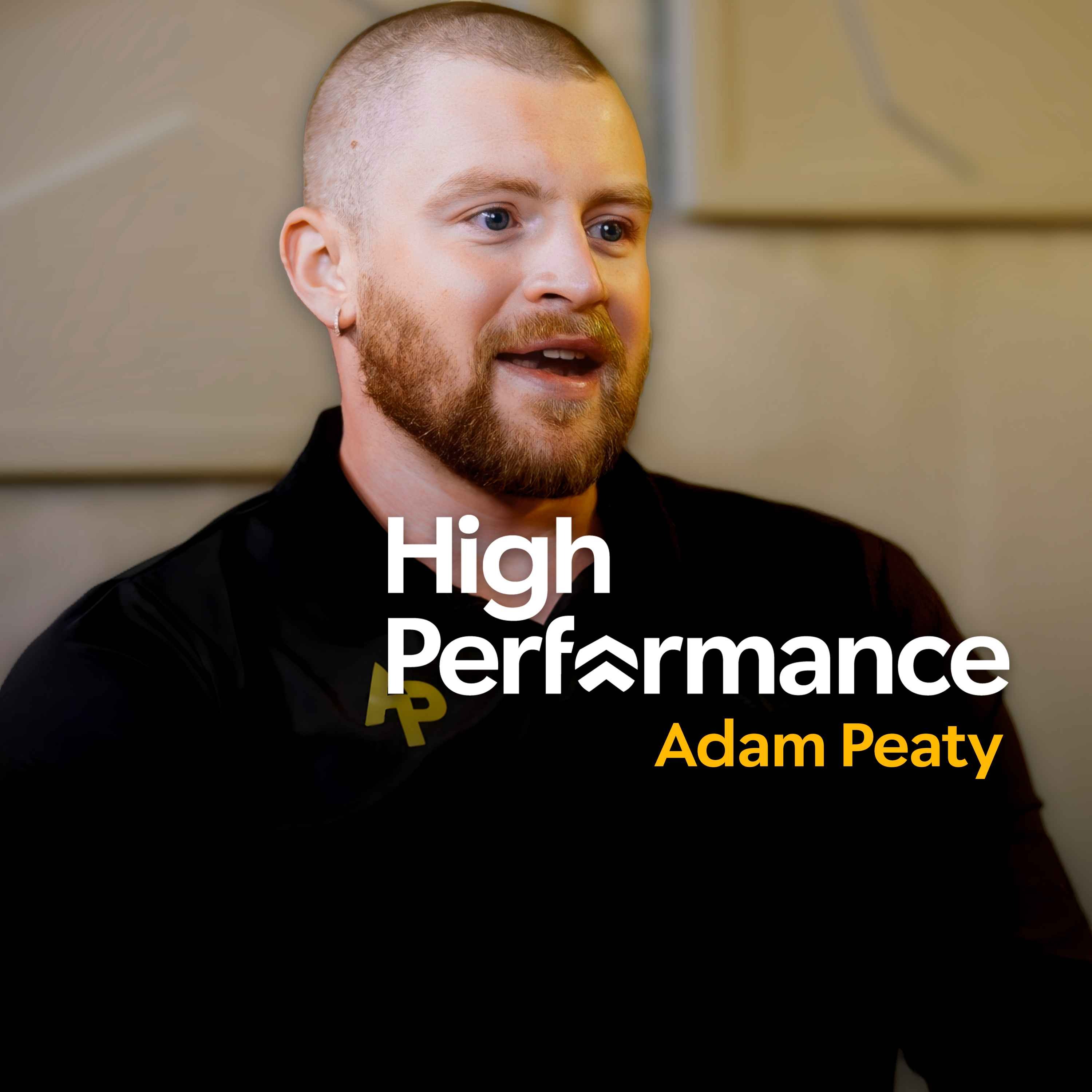
In this episode, Olympic gold medalist Adam Peaty returns to discuss his journey through mental and emotional struggles leading up to the Paris Olympics. He shares moments of vulnerability, triumph, and resilience while reflecting on the importance of relationships, support, and personal growth. Peaty emphasizes the role of faith and community in overcoming challenges and stresses the importance of finding joy in sports and life.
Written by AI. May contain mistakes.

Get the gist, explore an idea or ask about something said.
 Claude
On The High Performance Podcast, what are the key points of this episode?
Searching your listeningAutomatic transcript. May contain errors.
0:28Watch it early on the High Performance App. excellence is a high price and what happens if I get up on a Monday morning and I'm done like I'm tired because we still need to find a way through that to be able to win. That was the voice of six-time Olympic medalist Adam Peaty who joins us today on High Performance. I'm Jake Humphrey and along with Damien Hughes we explore the experiences and the mindsets behind some of the world's most fascinating people. Now on paper Adam is an incredible athlete with three Olympic golds and three Olympic silvers to his name. He's a true GB legend in the pool. But this isn't about what he's done, it's how he's done it.
1:04It's about his journey, which hasn't been a smooth one. Struggles with mental health and alcohol, leading to a moment of breakdown a year before the Paris Olympic Games. In this episode, you'll hear him tell us he was ready to walk away, yet he went to Paris. He competed and incredibly won silver. This is a story of resilience, determination and sacrifice, but also of transformation as Adam reveals how he's managed his own recovery and personal growth, how his faith has guided him through the darkest of times, and how you too can transform your personal situation. All of that comes next with Adam Peaty on High Performance.
1:47Adam, welcome back to High Performance. Thank you. Thank you for having me. I want to start with that brilliant, moving, emotional interview that you did after your silver medal in Paris, where you said you're crying because it took so much to get here. We're interested in what it took to get there. Well, if we rewind a little bit, it was 14 months from that interview that I had a breakdown, basically. You know, this sport of swimming, any sport, is incredibly hard. Life's incredibly hard, right? And, you know, I got to a place after coming off a training camp for 10 weeks, missing my son, missing home, and I kept getting ill.
2:23So my body kept telling me, you don't want to do this. You can't do this. And I went to Edinburgh to race and my times were about ridiculous, like ridiculously slow to what they normally would. And three days later after that, I was already contemplating, I was like, I don't want to do this anymore, but we got to keep going. I had that thought a lot of times. And I got back home three days later and I did 400 meters warm up, as I always do, a 25 meters breaststroke. And I did the breaststroke and I just felt weak. I just felt tired. I felt broken. And I finished, I touched the wall. My goggles are filled with tears.
2:59I said, Mel goes, are you okay? I was like, no. And that's the first time I've ever said no. So I got into the shower, just crying. Mel was there. And I said to myself, I don't want to do this anymore. She goes, you know, take a week off, see how you feel then. I said, I don't, I don't think a week's going to do this. So we took two weeks. And then we started to, you know, question if Paris was even in the, you know, agenda. And thankfully, you know, with Aquatic GB and the people around there, we have such an amazing team that so many people don't have access to. And from that point, I knew that the pain of regret would be greater than the pain of loss.
3:34So it was never about medals this time. It was about the opportunity and not regretting the opportunity. So fast forward, you know, 15 months, 14 months to Paris in that interview, I gave my absolute best in that environment obviously some cards were dealt with me that you know I had COVID at the time when I was racing my lungs literally couldn't work and I touched a wall and I think it was my most favorite race because what it took to get to that moment but also the adversity that I've had to get through and also the choice of actually going to the Olympic Games in the first place and obviously my son was in the crowd my fiance Holly and my mum and all the people I care about.
4:12And, you know, it's just incredible that sport can give you so much in success, but also so many failures and so many moments of testing yourself. So yeah, Paris was a very good one in terms of what I expected out of myself. And, you know, obviously now we're looking forward to, you know, what does that look like next year or the next four years, even if it is going to be that thing. It's so interesting hearing you talk about that moment that your goggles were full of tears and you told Mel that you're not okay? Because when you were last on our show, and Mel's been on as well, the both of you spoke about the fact that you always wanted another session, always another lap, always to go a bit further, never miss a day, never miss a moment.
4:53So can you take us to that moment when you finally said that you're not okay and how it felt? I think, you know, you're absolutely right that if Mel ever requires me to do something, I'll turn over the whole earth to do it. any session anywhere anytime any place that's our kind of motto that we perform at any cost anywhere in the world and this one I just wasn't willing to pay the cost I was broken and upset by myself really I felt very lonely and a lot of things that we had in place just weren't you know I almost call it a backstop that you revert to this level and it just wasn't happening and it was an extreme environment for me to be in because again I am that person who always delivers and always expected to deliver.
5:38But I think in sport and in life, I think we're getting more lonely. We're getting more kind of self-centered, more just this is our journey. And I had to rely on a whole wealth of people to get me back up on that block and what that looked like every single day. And I said to myself that from that point, it would never ever be about the outcome anymore. It'd be about the journey and the happiness of that performance through that whole journey. And, you know, even now I'm still figuring it out. And how did I even get to that point? how do I allow to get myself to that point but I think it's you know you can't take it on just a mental aspect it's also a physical aspect that we're delivering these results every single day 10 ,000 meters 12 ,000 meters every single day plus gym plus all the business and all the nutrition all the psychology all the physiotherapy and even though you're interacting with hundreds of people a week or a month you can never ever be more alone on this journey so those goggles filled up because again, yes, it was a mix of everything.
6:36I like to call it the triangle. You know, you've got your mental, you've got your physical and you've got your spiritual. And they rely on each other that every day you're not going to be physically able. Every day you're not going to be mentally able, but maybe, you know, you're going to be spiritually able. So you have to rely on each part of the triangle for me. And, you know, when those goggles filled up, I was like, I'm done. I am done. I do not care. I could not care less about an Olympic gold or Olympic silver or Olympic bronze, or the Olympics in general. So it's about finding the love and the joy in that again, I'm, you know, really stripping everything back.
7:08How close were you to quitting at that point? Oh, like a nanometer. Honestly, extremely close, extremely close, because it just wasn't worth it. In that time, when I was so broken, nothing mattered, if you weren't happy. And there's nothing a gold medal or award record give me, you know, go back a few years to 2019, when I broke the world record in 100 meter, which is still the world record, I touched the wall, even though it was a second and a half faster than everyone else and faster than I've ever been by a huge margin. I was like, that's not enough. So if that's not enough, what is enough?
7:41And happiness and peace is enough.
7:59proven freelance talent fast. No bulky overhead. No rigid long-term contracts. Just the right expert right when you need them. Work smarter and faster with Upwork. Go to Upwork.com now and find your freelance expert. That's U-P-W-O-R-K.com. Post a job for free and get started today. At Capella University, learning online doesn't mean learning alone. You'll get support from people who care about your success. like your enrollment specialist who gets to know you and the goals you'd like to achieve. You'll also get a designated academic coach who's with you throughout your entire program. Plus, career coaches are available to help you navigate your professional goals.
8:42A different future is closer than you think with Capella University. Learn more at capella.edu. This episode is brought to you by Opera Air, the first browser with mindfulness at its core. Now, most of us spend hours every day online, but how often do we pause to take care of ourselves whilst we're doing it? And that's where Opera Air comes in. It's a lightweight, fast, secure browser built not just for productivity, but for your well-being. With Opera Air, mindfulness is built right in. You'll find free breathing exercises, guided meditations, and soundscapes with ambient sounds, lo-fi music and binaural beats, all designed to help you focus, relax and even spark creativity while you browse.
9:29Will you take us into that period when, between Mel speaking to you in the showers where you agree a week and then maybe two weeks, and then you deciding to make that commitment to come back, what were you asking yourself? What were the kind of questions that you engaged in? I was like I need some good food firstly to get my calorie intake up to make me happy so I drove straight to the shop bought loads of chocolate bars that's my instant gratification it's done but on a more serious note that I was again just questioning how did I get to this point and what does it look like now to Paris and beyond and does it end here and it's really hard because I haven't gone back to that moment in a very, if ever.
10:13This is the first time I've actually gone into a conversation about that because it's so vulnerable. But people are coming in and out of the showers and I'm just there crying and Mel's there and everyone can see me, you know, crying. Not too fussed about that. I'm very secure in myself, I think. But I think that shows the rawness of what it takes. I think a lot of people would see, although a lot of people do see, especially at Olympic Games, the 1 % of what it takes or 0.1 % in the light. they don't see the 99.9 % in the dark and those are the dark moments that are going to make or break you and I think everyone in life has those moments whether you're a seven-year-old kid you know wanting to go to the Olympics or a 40-year-old picking up sport again or having troubles in their career you have to go through those moments to really define you know who you are what values are you setting yourself but also where do you want to be you know next week or where do you want to be in two years time so in that moment in the showers it's all about how can I get happy now and those next two weeks was about gardening walking living simply and i get a lot of my happiness from doing simple things it's not about the olympic gold it's not about the world records that matter of time is so small it's about who makes me happy what makes me happy and how can i get that now to get away from this crisis how long had you not been happy for tell you what we're going pretty deep now i think 2019 and the crack started to show that I knew as soon as I touched the wall and I wasn't happy, something was going very wrong.
11:44And it wasn't ever about the results. It wasn't ever about, you know, touching that wall and getting world records. But it was like day to day, I'm not happy. And I couldn't find it for a very long time. I remember having the conversation with my, you know, best friend and business partner, Ed. And I was like, we're just sitting in the car on the way back from train. I was like, I don't want to do this. I'm not happy. I've got to find it. And that was the first time where I've showed vulnerability to him. and you know obviously COVID hit in 2020 and we've gone through that in the last podcast in 2021 and that changed my world when I had George and the perspective changed again I'm committing so much time I almost felt feel so selfish for this one goal and I've got to be away from home I've got to be on training camps I've got to perform how do I get this balance now with my family and And I really couldn't say, I think it was from 2019 to just before, you know, I decided to go in Paris where I've restructured my whole life.
12:40It's a good four-year block of severely hard times and purpose because your purpose will change when you become a father. Your purpose will change as an athlete as you get older because, again, what made you happy and what you set out to do, those goals and those goalposts will always change as well. and one of the things that I've read that you spoke about was that in that 14 month period that you gave yourself to decide to go after competing at the games in Paris you wrote a contract with yourself yes so the contract for me was what is the cost and do you want to pay the cost do you want to pay the price and for me I sat in a room with the previous head of coaching he was the head coach bill and he put that forward to me and i say okay what is it going to take to get there and do we even want to do it and are we willing to pay the price because you will have a receipt when you stand up at the olympic games in lane four hopefully you will have to show your receipt of hard work because if you don't that mindset will play tricks on you that you don't deserve to be there you haven't done the work uh all these you know things that play in those high pressure environments that your brain doesn't want to be in so you know i looked at it and i overviewed it we made a roadmap a visual roadmap so we could follow that roadmap and look at the areas of potential burnout which is december to april for example because that's the hardest block of work and obviously it comes back to do i want to do it do i am i willing to pay the price i've always been willing to pay the price i always want to work harder be the hardest worker in the room that's not you know non-negotiable for me but long term you know do you even want to do it and your heart will tell you if you want to do it so recently we're in um you know going away from this question a little bit we were in vegas and it comes back because i spoke to michael phelps for about 20 30 minutes i just saw him and he goes you've retired two times and what did it take to bring you back because i'm in a situation now where i'm like do i go for la and he goes basically forget all the bullshit what does your heart tell you and my heart says that Paris wasn't enough I don't want to end in Paris but my experience tells me am I done here because the amount of effort took to get to Paris alone so yeah I mean it's uh it does change that contract will change if I decide to go on for LA and um you know there's people you rely on experience you have around in your family and friends that's where the contract is uh very important because I love the idea of this in the legal profession they refer to it as the ulysses contract which is basically you're agreeing something with the future version of you aren't you that when you're in lane four in that olympic final you're making an agreement with that person 14 months out from it so give us an idea of the price that was on the receipt oh i mean everyone throws around the word sacrifice i don't believe it as a sacrifice because it's my choice to be there.
15:36So it's a choice. So the choice to be there firstly, and you can go into the more technical things about how many meters. So we're probably covering 10 to 12 ,000 meters, always about 10 to 12 ,000 meters a day, plus all the gym work. But that doesn't bother me. It's the time I lose doing that and the energy I lose because you will be broken physically and mentally that you can't even operate. You can't even get up in the morning and get to work with a stable mind because all these things are at play. So you've got that on the table. You've got the time away from your family, time away from their son, that I see him grow without even being there, which I feel guilt.
16:12I think any high performer and anyone in an industry where it requires all of you, to a certain extent, if you've got children, you feel guilty for spending that time away from them. So the guilt there, but also, you know, the constant effort of human excellence is a high price. to constantly find a pathway to human excellence is probably one of the hardest things ever to do and constantly changing that short-term motivation which may last an hour and might last a day and changing that into an inspiration am i self-inspired do i require people to inspire me and what happens if i get up on a monday morning and i'm done like i'm tired what's the go-to then because we still need to find a way through that for moments in paris where you know we have a bad card we still need to be able to win and i hope you don't mind this question i think it's important that we we just ask it which is that i think when someone says i was broken or had enough or you know i had tears in my goggles and i needed some support we we still talk a bit in riddles right about mental health and actually how we're feeling and how it manifests itself and i think the the issue with that is that people might be listening to this going oh what what i've got is far more serious and that I can't be helped perspective I've got a genuine mental health problem that is no doctor no no counsellor I'm on I'm you know I'm so broken I can't be fixed that kind of thinking so would you mind sharing with our audience that when you say I felt broken actually the feet how that manifests itself so they can understand that actually there's a strong chance they are in a similar position to you and that they can be helped I think comes down to perspective I can sit here all day and talk about what I've been through but people may not understand it such as I may not understand someone else in another industry that is going through the maybe the same so you have to kind of revert it or you know simplify I guess to what it means and for me that is something you love and something you care about deeply if you don't care about it anymore that's a huge red flag yeah and for me when I was when my goggles did fill with you know tears my I could just feel my soul screaming for help and my heart screaming for something else to fill that void.
18:21And I think a lot of people, especially in sport, would turn to something else, you know, gambling, alcohol, and other things to fill that void, to fill that high of the arena. And I never got to that place, I don't gamble, for example, you know, for that sole reason. You know, but I have had trouble with alcohol, for example, that you try and fill that void with something else. And, you know, it's very hard for me to say what it felt like, because I try to forget it as well that you try and move on you you know we're men we're meant to be brave we're meant to be doing this and I think that toxicity and that thinking is so old school yes it gets a lot done but it's not sustainable so you have to look at yourself and say I'm going through this real hard time now and is it sustainable and is it something I want and what's where's the end where's the light at the end of the tunnel because if you're placing that light too far down the road, you're never going to get out.
19:17So find that light tomorrow, find that light today. And that could just be, again, like simply just going into the garden and just doing something different. I never really did gardening before that. I just, you know, let it just do itself really. And I'm like, actually, I really enjoy this simplicity and I could start to see a little bit of light now. But I think a lot of people, well, I know a lot of people, especially in this day and age with modern society are going through some horrendous times. And they may be listening to me right now and going, well, I'm going through something much worse.
19:45And I want to reach out to those people and say, okay, but what's the plan here? What is the, you've got to see it in a process, you know, really. And that's how I've always dealt with things and always dealt with problems. And the first one is reaching out to a loved one or reaching out to a professional. And, you know, I've got an incredible doctor at Aquatus GB, Kate Jordan. She was one of the first. She was texting me multiple times a day saying, are you okay? for those instant two weeks and still checking in with me every few days after that, after I got past that crisis mode. And then obviously Mel, she'll be texting every day, calling me every day and making sure I was okay.
20:22But not many people have that privilege. So I already understand that I'm extremely privileged. I've got a lot of resources behind me to get a gold medal, but also to be a healthy, happy human because at the end of the day, if I'm not a happy, healthy human, I'm not going to get anywhere near a good performance in an athlete. There was a line in your book, The Gladiator Mindset, that preceded this crisis point where you spoke about that we all have demons inside of us, but we need them to be controlled to be able to go and perform. So what was it you feel that allowed these demons to get out of control?
21:00I think, I mean, I've got it on my wrist here, on my forearm. It says, conquer your demons. someone said to me once that you'll never ever get rid of your demons but you can learn to live with them and i think it for me it's learning to live with whoever or whatever things i have going on here because some days i wake up and don't want to do anything and that's completely abnormal for me i'm a person who gets up quite early goes for a run or goes for a swim and then starts to pretty tick off everything that i've got going that day and sometimes that demon will be like no you can't do this or you can't, you know, you feel anxious for no reason.
21:36And for me, that's where breathing techniques come in, for example, living with those demons, whether that comes in a manner of insecurity, anxiety, or, you know, lack of purpose, you've got to live, you got to live with them and learn to overcome that with positivity, or an angel or whatever that, you know, the light is to overcome the darkness. You know, one of my favorite books in the world, the Bible has got so much you know wisdom from thousands of years ago that is still relevant today and i look to that now for guidance and or almost to navigate that darkness the high seas can we explore the role of faith then adam because you've referenced it there and it's probably one of the most under-researched area of performance psychology the role of the importance of faith and i'm wondering if you'd tell us a little bit around what it has done for you so for me you know i want to go back to that moment where we where I was broken down and for me I hadn't been church since I was 12 years old at this point so I was 28 and I reached out to some of the Australian swimmers when I was going you know out there for 10 weeks some good friends some real close friends and they're Christians and he said oh just reach out to Pastor Ashley and he lives in Berlin but he comes to London you know once a month for theology and you know to look at the books in the library and start to translate stuff basically very very clever person wrote a few books on finding real joy in performance or finding real joy in sport reached out to him and he's been a mentor for me to find happiness in other areas so there's two things i want to talk about is happiness but also the community that that provides in church so for me the faith has made me understand that the good and the bad have got to come through the same funnel so if you want to live your life and forget all the bad it goes through the same funnel as the good and if you cut off the bad you'll get no good if you just want good that bad is going to creep in and overflow and it's just going to come all at once so understanding that firstly but also the community in in church i've mentioned that it was a very lonely journey uh always has been a lonely journey even though you're surrounded by a team and you know all your other athletes around you you're the one that's going there on your own and going away from the pool on your own and this journey is really on your own.
23:50Mel's always knew that and she's always understood it. But I was like, I actually looked at myself, you know, when I came back from Australia, I was like, I don't actually have a community outside of sport. I say hello to everyone. And on the Monday morning, you know, everyone's having a good time, sometimes not. But where's my support network outside of that? And church has been an incredible help for me to understand that sport isn't everything. It's, you know, an important thing for me, but for the world, it can inspire so many people to do better or even get 1 % better marginal gains, you know.
24:21But for me, that community was a stable and still is a stable block of reaching out to people who don't care about what you've done. They just care who you are, intensive, are you happy? And, you know, are you being guided down the right path? This idea of human connection, again, is underexplored when it comes to high performance because we're taught to believe we can do it on our own. Yes. So when you found that human connection through the church, what did it do for you? Understanding that, you know, Pastor Ashley said to me, because I was really struggling to find peace. And he says, peace is just, if you can look yourself in the mirror every single day and be happy with the values that you set yourself.
25:04So am I a good father? Yes. Do I try my hardest? Yes. Do I give joy and love to everyone I can possibly do it to? Yes. And as soon as I started to answer those yeses or no's and tried to rectify the no's, that's gave me peace. And I think for me, in that community and in my faith, that that's the thing that matters. Yes, we have our happiness and we have our long-term and short-term gratification and whatever that looks like, but it's all about peace. And I think if you're peace, you can make better decisions, long-term decisions, but also you become a more effective person, but also a more effective athlete from our job.
25:42So faith has led me down these incredible paths. and for people who don't believe and that's perfectly okay. But for me, I knew it was, and Pastor Ashley was sitting next to me my first time going back to church because he said, Nottingham, there's this great church, great community. I was like, okay, I'll turn up on the Sunday morning, 9.15 a.m. And we sat down and the first service, the whole service, no one knew I was going to go. I went in there kind of incognito, sat at the back. The first service was about the Olympics. I was like, this can't be chance. this can't be chance and it's all about the Olympic torch coming through Nottingham in 2012 and he pastor actually wouldn't mind me saying but he was just in tears that it led to me this moment where I was broken down and now I've had a reaching or helping hand um from what I believe in and that was a moment where I was like this is something that's really helping my heart recover and my soul recover to be able to live my life uh peacefully he sounds like an incredibly wise guy maybe someone we should investigate inviting on to high performance it's incredible do you remember something that he said to you early in this relationship that you think would be valuable for us and our audience to hear well he's a very emotional guy and he's very wise and i think he put into helped me put into perspective because mel has always been there she's like my third parent you know i've been with her for 15 16 years my coach and now she's going to australia But back then, 15, 16 months ago, we're in a position where everyone wants you to win.
27:16Everyone wants to get all this. But that's one community around my job. But Pester actually had no real intention for swimming. He just wanted me to be happy. And he says, he looked me dead in the eye and goes, you don't have to do this, but you can. But make sure if you do, you absolutely go for it. And I've worked with some incredible people who have reinforced that, like Stephen Peters, another incredible person who has helped me along the way, visiting, you know, two times a month up and where he lives. And those kind of people can don't get anything out of your performance. They just want to make sure you're okay.
27:53I'm not going to be in the black hole of life, which is, you know, we all know it's an incredibly dark place. But I didn't want bias. I didn't want another person telling me I've got to swim because that's what I've heard my whole life. I wanted these people that gives me perspective for the rest of my life to not only, you know, be happy in my purpose, but be the best father I can be and be the best, you know, one day husband I can be, the best friend I can be, and the best energy I can give to the world as well. There's a bit that you spoke about, your relationship with George, your son, having to dedicate time away from him during that.
28:30And I think there's a lot of people that watch this that maybe are wrestling with the same dilemma of needing to provide for families, but also not being then able to be physically there. How did you reconcile that, Adam? I'm still fighting it. Because, you know, every two weeks I get to see him, which is nowhere near enough. And, you know, that's down to our agreement. And that work's amazing. It's very amicable. So we want to create the best environment for George to bring up and you need healthy relationships with each other but also everyone involved in that picture. But when I'm going away for 10 weeks or I'm going away for a long time, especially the Olympics, and I'm FaceTiming him as much as I can.
29:10And he'll cry on FaceTime because he misses me. And the guilt there is the most horrendous feeling in the world. But that's where I've got to bring in my experience, knowing that if I do a good job and I give my absolute best, one, hopefully we're going to get success that he benefits from further down the line. But also, it also shows him that you have to be courageous to achieve something great. so I think yes as a athlete it's a very different question but as a father that's the most important one for me that just because you have this guilt and just because you have these times which are very hard to make decisions doesn't mean you have to succumb to that you have to navigate it and find a way so hopefully he'll you know as he gets older and you know he's four years old now and he probably won't understand it but very soon he'll start to understand that to achieve greatness you have got to make the choice to get that you know i didn't say sacrifice but you have got to give a huge amount because if i'm not willing to pay that price right now or overcome that guilt or find a way through it for him or my future children i guarantee whoever's in lane five whoever's in lane three will and that's where it really matters that i've got to make choices to win but i've also got to make choices to be the best father and you know he's an incredible he's gonna be a great athlete by the way a great athlete but even if he's not uh he's got an incredible charisma he loves to dance he loves his skateboard loves his bmx and um you know i see it now that's the joy that being a parent gives me i smile when i even think of him and i cry when i miss him and so i'm not afraid to show that emotion and so don't block it off that's my biggest advice don't feel the guilt you know feel the guilt sorry but don't let it overcome what potentially is that long-term and hopefully inspiration for them at one date that when they have their children i love the the pride the emotion that you have when you're talking about your boy and you said don't don't block it off and i wonder sitting here now able to reflect having gone through this journey whether actually blocking it off was one of the root causes of all this i mean i think back to the guy that joined us on our podcast and told us he had a bulletproof mindset and nothing could affect him a guy who had never said no to his coach a guy who admits when he told his friend in the car that he was struggling, it's the first time he'd ever been vulnerable.
31:25I wonder whether you were paying the price of years and years of blocking it off. I think so. When it comes back to that funnel, that it overloaded at the wrong time, or at the right time, whatever I think of it. But I think if you block off that emotion, you're just paying that debt down the line. And that debt is always going to come and collect. So I think if you really recognize what is going wrong, what am I unhappy with? Some days I'll be anxious when I wake up and say, well, I'm anxious. I've got nothing to worry about. But then I think a little bit deeper. I'm like, oh, it's because of this in the next week or I need to do this now.
31:59So I rectify that now. I listen to myself a lot more. But there is a time and a place to be a warrior. I wrote in my own mindset book, Claudia and Mindset, that you have to be ruthless with yourself. But my next book would be, how do you do that with balance? Because balance is the one that really matters for me. and when you do get to that point, it will overflow you, it will kill you if you don't listen to yourself and everything I do, every single choice, even the micro choices such as what am I going to eat for lunch? That's the decision you've got to make because you can go down the easy route of eating cake or eating something rubbish or you can go down the hard route and something I've understood that you have easy and hard choices every single day but it's the people who make the hard choices every single day, they're the ones that are going to be successful they're the ones that are going to be on top of that podium so yeah it's a very hard one to navigate when you were choosing to drink when you were drinking alcohol were you aware that you were self-medicating I think I was trying to find a high in something that didn't exist and as we know you feel a bit happier you feel a bit number and I know genetically I've got to be very careful of that addiction is a certain sense genetic, I'm not a scientist but I know that it does pass down and you get susceptible to that but when i've got no purpose in training for those first few weeks say in off season i like to party i like to have a bit of fun not so much now but back in the day used to do it a lot trying to fill that void or trying to feel something like performing in front of 20 000 30 000 people millions on tv but that's never going to do it that is never going to do it and to a certain extent was it just the high that i was seeking or was it numbness i was seeking from the bad that I've ignored.
33:45And it's probably the latter, that I was using alcohol or partying or those environments, yes, for a bit of fun in that time, what I thought. But again, I was just paying that debt down the road that that's not a sustainable way to really listen to yourself. But also, you don't want to numb yourself to anything. I think numbness is probably the most dangerous feeling you can ever get, that you want to feel the bad with the good. And when you are are going to alcohol and when you are going to other you know things to to fill that void it's not a very healthy way to to really address that problem but you know that's took me what until now until last year to really recognize because again numbness and addiction with something will put itself first and that's very very hard to have that conversation with okay this isn't okay these behaviors aren't okay and you know i'm ruining relationships and i think it does come back down to relationships and the people around you because i truly believe and this is another thing that pastor actually said to me that happiness the majority of the time is down to the relationships you have with people and other people and the people you love in your life and that was ruining alcohol was ruining that relationship with people can i talk about a relationship in your life of course i got um if i can find my phone i got a text message this morning which I'd like to read out to you.
35:08I'm scared now.
35:12Said, hey my friend, hope you're well and the family are all excited for Christmas. I'm currently in Melbourne. So you know who this is from. I'm currently in Melbourne, Phil, and I can't wait to get back home. Have a great time with Adam this morning. I think he saw that on my Instagram that you were coming on or something or maybe spoke to you. And this is what he said. I want you to know he's an amazing young man with such a great attitude. honestly I could not ask for a more down-to-earth respectable future son-in-law what he's achieved is incredible and this is the bit I love and he's not done yet I'm looking forward to catching up soon Gordon see that makes me emotional I don't want to cry on the podcast but it makes me very emotional because for him especially these last you know this last year or so for seeing how he performs firstly but also the balance he has to create in his life with high performance and family life and love for his children and his wife and his family is incredible.
36:08I love how he's already signing me up for LA. But he's a great father-in-law, hopefully next year. We already call it father-in-law and mother-in-law. But he's also very down to work with what he's done and a great guide. Another blessing for me to look up to someone like him and Tana, as well as my own parents who you know give their perspective on my life and very important going forward that you know you have those people but it's good because his humor is always uh so so funny same with me i'm a very humorous person to to get through life but um you know holly for example she came to me not she came to me but we came together sorry uh on a walk uh last year and ever since then, you know, life's just been incredible.
37:00Obviously, it's been incredible challenges, but it comes back down to relationships with people. If you're choosing to spend your time or 90 % of your own time with someone you love and that is the right person, it makes everything easier. And yeah, what a text, eh? What a text. And for people who might be a partner or a friend to someone who is actually struggling at the moment, what have you learned from the likes of Holly and Gordon and other people in your life? in terms of what people should be doing and should be saying to people that are having a hard time? I think giving time to people.
37:32I think time, yes, we have money, yes, we have all these things, amazing things, material things, that you can give to people, but I think time is the most valuable resource we ever have, because we never know when it's going to be over. We never know when this journey will fully end. I don't want to get too depressed, but I could die tomorrow, and would I be happy with my legacy? Or could I have given more time to the kids we interact with every single clinic or around the world? and even time to my parents, time to Holly. And Holly is incredible because she will always give time. She's very gentle.
38:05So if I'm on the phone and I've got Tom, who's my other performance psychologist in the car, he goes, wow, just how calming she is all the time. And I think a lot of people can take away that, especially when I'm walking around the streets of London, everyone's in their own zone and everyone's just kind of selfish in the extent that it's their day. they've got to get to their from point b to point a and doesn't matter just don't interact with anyone but for me and seeing gordon even in vegas for example he always say hello always give his time to other people and the same with holly and for me now i start to give my time a lot more to to other people who may need it because it'll only take one conversation to change a trajectory of someone who's going through a bad time and hopefully guide him through that you can't help everyone just through resources but hopefully through podcasts like this we can reach out to a lot of people that it only requires one conversation to change that trajectory for the rest of your life but there's an interesting line there that just occurred to me that you said you and Holly met on a walk or you came together on a walk and we've had another guest on here that spoke about a seminal walk that she did with you Sarah Davis and she spoke about how she came away from that like felt a million times better by going on that walk with you and i'm interested in what is it about going on a walk with adam what are you doing i don't know i don't know but i've always believed that the brain is more active and well definitely more active but it thinks a lot better when it's moving right i can't sit still really like i'm constantly moving but i can't sit down and meditate i have my meditation is active and i think a lot better with people if i'm moving so actually same place the same park for some reason i choose that bradgate park for all my walks with people but just being out in nature i'm one with nature i'm like if i'm in the trees i grew up in the countryside and i just feel i don't know just safe nice no worries no anxiety nothing can reach you in that moment and i didn't want to go you know when you start dating and stuff you go oh let's go to a fancy meal but you know you don't want to do that it's how you live most of your life and I was like to be a person I want to change I've got to do it in a different way and I think a walk's the best way to get to know someone firstly and that walk was about two hours long of okay you know you know who are you basically what do you want out of your life you know what's your goals what's your aspirations it sounds like an interview doesn't it but for me it was more about okay this is who I am and I was very not and that's the thing my and Holly's relationship has always been extremely honest about the highs and the lows and she, you know, I had the conversation with her about potentially going on to LA and she will give her perspective that it's not free.
40:48You have to work extremely hard. And, you know, when we're married next year, God willing, they will have children as well and that's going to take time away from them. But that's where we can look at, you know, for example, what, you know, Gordon and Tana do and my mom and dad who have been there and done it with me. So it's, yeah, it's going to be hard if I do do it. I can't obviously announce it just yet if I'm going to do it. But I think the best one or the best thing I can say is I want to stay ready. So staying fit, staying healthy, but also being restful. If you're still overpaying for wireless, it's time to say yes to saying no.
41:24At Mint Mobile, their favorite word is no. No contracts, no monthly bills, no overages, no hidden fees, no BS. I made the switch because I was tired of those ridiculous bills and sneaky charges from my old provider. With Mint, I'm paying$15 a month than getting the same high-speed data, unlimited talk and text, and coverage on the nation's largest 5G network. Honestly, the quality is just as good, if not better than what I had before. And the best part? You don't need a new phone. You can keep your current one, bring your number, and all your contacts. I use Mint Mobile, and you should too. Ready to say yes to saying no?
41:59Make the switch at mintmobile.com slash HPP. That's mintmobile.com slash HPP. Upfront payment of$45 required, equivalent to$15 a month, Limited time new customer offer for first three months only. Speeds may slow up a 35 gig on unlimited plan. Taxes and fees extra. See Mint Mobile for details.
42:38with Upwork. Go to Upwork.com now and find your freelance expert. That's U-P-W-O-R-K.com. Post a job for free and get started today. At Capella University, learning online doesn't mean learning alone. You'll get support from people who care about your success, like your enrollment specialist who gets to know you and the goals you'd like to achieve. You'll also get a designated academic coach who's with you throughout your entire program. Plus, career coaches are available to help you navigate your professional goals. A different future is closer than you think with Capella University. Learn more at capella.edu.
43:24Maybe one of the big issues you had in your career was this rigidity. This is how I think, this is how I act, this is what I do. Maybe the best thing now is that some days you wake up and you think i can't wait for la 2028 and other days it's probably okay as well isn't it to wake up and think i'm it's not for me i do wake up i can't wait for la but every time yeah not every time but most days because you're seeking purpose yeah my whole life i've had a routine you know it's like people who come out of the military and you're like oh what's next i've had a routine most of my life you know 4 a.m starts you know 10 p.m finishes for days at a time weeks at a time years at a time so when you take that routine away what fills that again what fills that void so yes I do wake up and go oh it'd be amazing to go to LA and what does that look like but then my experience tells me that I'm not ready yet I've got to keep resting but I had a phone call with Mel who is going to Australia now and that's going to be a different program and this one is pretty much my decision now only my decision and with the guidance of you know the people around me to make sure it's not a selfish decision firstly so yeah i mean it's and that's why i say i want to stay ready because if i want to get ready it'll take six months but if i stay ready it'll take a month to get to where i want to go and i'll take next year off from competing uh but i'll be ready i'll be staying ready if i want to do it but you know you may get to 2026 and go actually that's enough for me but i think a lot of people put pressure on athletes to make these instantaneous decisions and actually a decision that requires about a year of thought because it's so, so heavy and it's such an investment that you don't want to put all your eggs in one basket if you're not ready.
45:05So yeah, it would be incredible to be there, but I also know the cost after going to three Olympic Games, winning two of them, just narrowly missing out on the third one. And that's just reminding me that I don't want to get to LA and all that, I get ill again. so what happens if you invest all that time away from your children and your family when you could be obviously doing other things in the world as well such as business and have a bit of an easier life in a sense of time and then you get ill and you get a bad card so I'm still addressing that thought or potential problem that must still hit heavy huh very very fucking heavy because when I got there I knew something wasn't right.
45:54I was walking out in the arena. I just felt a little bit just out of it. Like I was, it was a dream. Like, do you know when you try and run in a dream and you can't get away? I felt a little bit like that. And I know because normally when I compete, I'm really excited. I'm full of adrenaline and just full of just, yeah, let's go. Let's rip someone's head off pretty much. And I got there and I was like, I feel weak. My tongue is dry. My mouth's dry. I was in the call room. I was like, something's not right, but I can't pinpoint it. and that was on the heats so that was a saturday morning i did the semi-final and it's still slow times and i'm like why is it so slow i'm like i've trained this i've gone a second faster at trials in april something's wrong here but you can't think about the wrong in the moment because you can't let that demon in you can't even open the door to have a peek and the sunday morning i woke up and everything above here was just so painful headaches migraines congestion my lungs didn't work.
46:48So normally I do four, 25 meters on the water, like very quick after one another. So 10 seconds rest. And that's enough to get my lungs warmed up. I did 15 meters and I had to come up for air. So the doctor came around, Kate, incredible doctor, as I always say, incredible person. And she goes, yeah, there's a really bad hay fever going around at the moment. I was like, Kate, this is not hay fever. But she was protecting me. Because if we tested for COVID and we tested for viruses down that last 25 meters i may would have not tried or knew that was an excuse in my head so she played her role and we tested after the press conference uh after we got the silver and it instantly covid done like and i started crying because i was like i knew it nothing i could done done about it but why of all times the one week or one day you've got to be healthy and the best of your best have you given me the worst card but i truly believe that silver medal and i said it in my interview that or the interviews after that maybe that silver medal would give me more than gold in that moment ever would have about perspective and happiness and the journey so i've got that to look forward to in la and i've got that in my bank to have that experience you know we interviewed steven gerrard and we asked him if he hadn't slipped against chelsea costing liverpool the premier league would he have been so driven to become a manager right and he very honestly went no and I wonder if you've got the gold in Paris whether the fire inside you to go and do something in LA would be there I'd be absolutely done I'd be retired now I think for sure but I've got a I wouldn't say a chip on my shoulder but something inside of me doesn't want to end an incredible career on what I deem as a moment that was taken away from me and I want to be very clear here that if I didn't have COVID it's saying that I would have won it for sure that is that is not what I want to get across Nicolo is an incredible athlete and you know I've raced him for a very very long time you know I look up to him about what he's doing and I love all the Italian fans how passionate they are and I'll always enjoy that and I want to get that very clear that that doesn't mean I would have got gold but let's say hypothetically I got gold I would have been absolutely done but there's something inside of me this dying something coming out my soul and my heart that you know michael phelps helped me recognize last week was i don't think i'm done i don't think this is enough for me to end on and we may get to la and you know potentially get nothing but we also may potentially get gold but again it comes back to that first thing we discussed today about the pain of regret is always going to be greater than the pain of loss and i'm still young i'm 29 30 this month actually but i'll be 33 that's when phelps retired around 33 when he was 26 in 2016 thought about this in detail i'm just like you know what stars are aligning aligning but i've also sport is getting better you got better physios better understanding of how the body and you know the mind works and i've got an incredible sport network so i've already got all these resources behind me if i do decide to go which would make it a little bit easier but yeah it requires a lot more conversations with the people that I care about and care about me and maybe that's a gradual decision that I just get back in the water and see how it feels.
50:06You've used the term balance a few times, both in your recovery personally and your future father-in-law and the way that he manages it. Do you think it's possible to still be an elite champion, to go to these extreme lengths and have balance? I always listen to my instinct. As soon as you said that, I said no. but then I look at my experience which is very different to my instinct and I say yes because if I look at what makes me happy I can incorporate that into my training so Cam McAvoy who won the 50 meter freestyle in Paris he's had an incredible career because he wasn't winning in 2012 he was the next up in Australia swimming then he had a bit of a period where he wasn't winning and wasn't making finals, but then how did he turn it around to win in Paris?
51:01And I followed his whole journey on Instagram and reaching out to him. But some days he'll get up and go, actually, I'm not going to get anything out of training today. I'm going to be better off resting. Or I'll go do something different. Or I'll turn up in the afternoon instead of the morning. And that's balance for him, from my understanding. So to be a sprinter, yes, you're going to have to have a certain amount of meterage and a certain amount of investment. But also if you get up on a Monday morning and go, actually, I've had a very heavy weekend with my boy, we've been traveling, maybe I'll just go in in the afternoon.
51:31And that's balance. Or actually, I'm going to do a bit of gardening or get all the business stuff done on the Monday morning or the admin, then I'll go training. So yes, you can do it with balance, you just have to restructure it and still be accountable that you can't just be lazy and go, actually, I don't feel like this today. Because that demon in my head will be like, no, someone else is training right now, you got to get ahead of it. And that's going to be a constant fight that we've got to address. I'm very excited for what comes next for you and I think that if you're still thinking that your legacy is gold and silver medals, I think that's wrong because I think that there could be a real opportunity here for you to prove to people that you can be at peace and be a high performer.
52:08You can have a reflective mindset and perform at the elite level. You can think like this and you can still be a champion. And the fact that your gut instinct automatically goes no, is probably because for the last 20 or 30 years you've been told you can't have both. imagine if you're the person that shows every young kid that dreams of being an elite athlete now all right so i can be at peace and i perform i can be content and in balance and still do great things you can help change the conversation around this i think yeah and you know that's something we we do a lot actually at the moment not around that's that certain scenario but for us that a lot of these kids so in the summer you know we'll do it over eight days ten days we'll see over 1500 kids for example with ap race with ap race which is you know our company and we don't call it a swim clinic we call it a race clinic because we're preparing them not only to be the best races but the best high performance so i start the day off and i go look there's 1500 kids no matter where you are it could be in liverpool could be in london it could be in cornwall it's all around the country scotland we go statistically none of you are going to get that trajectory or look around what are you going to do better than people around you but even if you miss and it's not about olympics of course it's about olympics but it's not about olympics even if you miss you've got a skill set that not many people have got through sport learning how to work hard learning how to goal set very important learning how to lose with grace win with dignity learning how to require you know lean on a team all these you know resilience perseverance, these amazing things that so many young people aren't taught because they don't do sport so actually we take it from a negative the odds are against you but actually even if you miss or get to nationals, incredible feat still but you can have all these skill sets to be the best teacher, the best pilot the best doctor, something that's going to give you a 1 % margin on everyone else going through the same thing at your age you're going to be one up from them and you can put that on your resume, on your CV So it's not about win at all costs then with young people.
54:20That's not the right message for young people. It's joy. Enjoy it. And I always get asked, what's the one thing you wish you did a bit better? And at that age was enjoy it because I was a very serious guy, very serious performer, still am. But I just wish I enjoyed it a little bit more. And you've got to obviously understand that if I enjoyed it more, would it give me the performance I had? Maybe, maybe not. But I look and some of the kids come up to you and they're shaking because they're so excited for the day ahead or they finish the day and say, it's giving me the confidence. And we, in swimming, and all the clubs around the country, even the world, you have to deal with some very complex problems.
54:57So Kev, who's come with us today, he'll deal with the parent side of things. And we have parents that have lost children. And the most, oh, you know, it makes me emotional even thinking about that scenario. But how do they get through that and guide their club swimmers or help their club to perform or help other kids come through that. And all these things we have to deal with that no one else is doing in the world. No one else is doing in the country. So AP Race and our kind of identity is about enjoyment, but also you have to give 110%. That's a non-negotiable. If you go through those days or you go through whatever we do or the events, we have an event in May, the London International, AP Race International.
55:39And that's about getting the world's best swimmers for prize money and they get to race in the London Olympic pool. But we'll give hundreds if not thousands of tickets to grassroots sports and we'll have grassroots finals so they get to experience what it's like to stand behind an Olympic champion or the race before them, but also enjoy a full crowd that no one else is doing. And I can't figure out why they're not doing it. I mean, it requires a huge amount of resources and money, which I invest in myself and in the company because it really matters to me that, yes the gold medals I guess are my legacy maybe it's not but the biggest legacy for me is guiding that and mentoring the next generation to fill that gap because what happens when I stop yes there's other amazing swimmers currently on the team but what happens in 10 years time 20 years time we need to be looking after that generation Can I also pick up on that because I think one of the things that has been seminal in your career has been what you said earlier relationships and most notably with your coach, Mel Marshall.
56:42So what are the kind of messages you would want to give to any aspiring parents or coaches on this for young people in terms of how they can find the joy? You know, again, I get it asked in any Q &A session, wherever we're doing it or whatever day it is, about my kid doesn't want to do it, but I know it's good for them. And that gives me a red flag because the parent wants it more than the kid. but I also understand that sometimes you have got to push the kid to do it so for one example on a Sunday night I was um I didn't want to do it anymore I was 14 15 years old it was too much too much training and I just wanted to go down to skate park and just be like everyone else and I was like mom I just don't want to do it anymore I want to quit and she was like okay you know turn up at 4am the next morning and I absolutely loved it so if she let me quit then I wouldn't have done any of that I wouldn't be sitting here right now potentially but on that Monday morning if it wasn't for my mum telling me that actually this is just a bad time just keep turning up and keep having fun and that's the biggest advice for me that you've got to protect the fun because that's how kids that's their foundation and if you build a foundation out of concrete instead of sand you've just got to build that technical strategic and what it looks like after that which is obviously a house but again you can't build a house if it hasn't got a good foundation and that for a kid is always love always enjoyment and always joy I love that because the stats are alarming in swimming the amount of young people that fall out of the sport right before they get to where they would dream of the same happens in every single sport and it's because we're not prioritizing joy in what young people are doing and I think the fact that you're doing that at AP Race is fantastic thank you can we talk about some quick fire questions let's go
58:32I'm interested to see how these compare to the previous ones first of all your three non-negotiable behaviours what are the three behaviours after everything you've been through that matter more than anything else hard work obviously resilience for the hard times and now it's a really hard one to answer isn't it I think you've got to have a passion and love for something well I know you've got to have a passion for it to all happen you've got to have the passion to be able to work hard and be resilient what advice would you give a teenage Adam? calm down calm down and if it wasn't for Mel I would have burnt out 100 % she guided me through the highs and the lows but also challenged me in ways which are entertaining to me so I'd go on a race on my own to set a record even though I didn't get the record as a challenge so she knew exactly how to push my buttons and just get that balance right really we have a new feature on the high performance app where we allow people to really focus on their daily habits, the small things that make a big difference.
59:34If you see something from someone else and you want to adopt it yourself, we make it easy on the app. What is the one daily habit that really stands you in good stead? My to-do list. Honestly, that helps me massively. I mean, I've said it publicly, and I don't want to throw it around, but I've got ADHD, so I can't really sit still, but my brain moves at 1 ,000 miles per hour. But my to-do list and my calendar has to be extremely organized for me to be a high performer. And if it's not, my energy starts to go like this, just out. So yeah, just keeping focused on the morning. What do we need to do in the morning?
1:00:07What do we need to do in the afternoon? And just following that. Brilliant. What's your biggest strength and your greatest weakness? Emotion. My biggest strength. I can use emotion. I can use music to get me fired up. I can also use my emotion very cleverly. Emotional intelligence is so underappreciated. I think that's my biggest strength. But my biggest weakness is also emotion. But sometimes I do let the wins get to my heart or my head, sorry, and the losses get to my heart. So both on the same kind of a plateau there. And the final question, after this incredibly honest and open and brilliant conversation, thank you for it.
1:00:44What would you like to leave ringing in people's ears as your one golden rule for living a high-performance life? Keep turning up, keep turning up. Because it's so simple and I hear a lot of people say it, just keep turning up to be successful. but keep turning up and live every single day like it's your last or every single opportunity is your last because we've seen it in paris we don't know when the last opportunity is going to be and we've seen it you know before olympics before that and you know i could get injured or i could get ill yeah so live every single day and take every single day as an opportunity and find a way to be happy through that love it look what you're doing with ap race what you've done in your career and as gordon says the best is still to come right applying a little bit of pressure there but I think um I think the biggest thing is you're able to sit and talk openly and honestly about what you went through and I hope that if you haven't if you're not there yet that there is a time where you were almost grateful for the experiences that you went through because of what it's given you extremely grateful well thank you for having me today we're grateful thank you for coming Adam Damien Jake you know I think about the first time we spoke to Adam on the podcast and if if we call that one the episode where he was inspiring I think we can now refer to this one as the episode where he's honest I think that when we first spoke he was in a world where he couldn't tell us actually what was going on but he was in the midst of the challenges that he now is openly talking about and it's a great reminder to our audience that when you stop and you give in to how you're feeling and you are vulnerable and you are open with people it can take you to the kind of place that Adam is at now.
1:02:19Absolutely I mean I scribbled notes down prodigiously then And as Adam was talking, then the one that jumps out at me was that triangle that he spoke about of, you know, both the mental, the physical, and also the spiritual balance and making sure that they're all in equilibrium. Because I think once we neglect one of them, it's almost like a stool. You take one of the legs away, it will inevitably start to fall over. And I think so often for many of us, we sort of see guys like Adam that seem to have this bulletproof mindset. they've got the chiselled abs and, you know, they're delivering performances.
1:02:55But in his case, it was that spiritual element of not feeling that he had a purpose and a community around him that caused that wobble for him. And there's valuable lessons in that for anyone. You don't have to be an Olympic or world record holder to maybe think about balance in our own lives. Absolutely. And I think it's great to actually see him sit there and almost cry when talking about his next father-in-law, Gordon Ramsay, or to almost cry when he talks about his love for his son because it's a reminder that you can still be an alpha male. You can still be that strong, powerful winner with a gold medal around your neck and be connected to your emotions.
1:03:32Yeah, absolutely. I think how often have we heard people, whether that was Tyson Fury telling us how he was chasing a dream and then when he got there, he realised there was other areas of his life that he'd neglected. It was his own coach, Mel Marshall, that said we're all capable of competing in our own Olympics. And I think that's what Adam's reminding us all of doing the best that we can in any moment. It's something that's within our reach, but we need to do that as balance. There's no point in sort of becoming a world record holder and then torching relationships with our family or the loved ones in our lives.
1:04:11So I think there's so many important reminders he's offered us there. And, you know, his humility and his candor there has been a fantastic example. Absolutely. Thank you, mate. Thanks, mate. That's it for today's episode with Adam Peaty. Thank you, as always, for sticking with us to the end of the episode. Listen, if you enjoyed what Adam had to say, please feel free to share the show with someone that you think would benefit from the conversation. And if you want to watch our conversation, you can do so on the High Performance app, which is without doubt the best place to enjoy our content. Just download it from the App Store.
1:04:45We're back soon with more fascinating conversations. Thank you once more for listening to High Performance.
1:05:18You'll get support from people who care about your success, like your enrollment specialist who gets to know you and the goals you'd like to achieve. You'll also get a designated academic coach who's with you throughout your entire program. Plus, career coaches are available to help you navigate your professional goals. A different future is closer than you think with Capella University. Learn more at capella.edu. Airwick Essential Mist Diffuser transforms your space, creating your perfect ambiance with a wide range of inviting fragrances that make your guests go airwick essential mist diffusers easy to change refills allow you to choose your perfect fragrance for any occasion like apple cinnamon medley and pumpkin spice and if guests start shifting from the table to the couches no worries it's perfectly portable and cordless airwick essential mist diffuser always inviting Anything?
We’re thrilled to welcome back Olympic gold medalist Adam Peaty to High Performance. In this episode, Adam returns for an honest and raw conversation about his extraordinary journey, sharing moments of triumph, vulnerability, and resilience.
Adam speaks openly with Jake and Damian about the challenges he faced in the run up to the Paris Olympics, delving into the effects of his mental and emotional struggles. He recounts the pivotal moment he acknowledged his struggles, the steps he took to rebuild himself, and how he coped with feeling broken.
He also reflects on the role of faith in helping him navigate some of his darkest times. From valuable advice from figures like Holly and Gordon Ramsay to practical tips for parents and coaches on fostering joy in young athletes, Adam shares the hard-earned wisdom he’s gained along the way.
This episode explores the mindset of a champion, the reality of defeat, and what it truly means to rise again.
🚨 Partners
Huel 👉 Get an exclusive 15% by using code: HP at: https://hppod.co/HP
Payhawk 👉 See our sponsor, Payhawk in action here: https://hppod.co/Payhawk
Heights 👉 Get 20% off your subscription by using Code: HP20 here: https://hppod.co/Heights
FORA 👉 Claim a free day pass at any Fora workspace and find the perfect home for your business here: https://hppod.co/FORAHP
XTB 👉 Download the XTB app today and start making your money work for you. Buy stocks and ETFs commission-free, open an ISA account, earn up to 4.75% interest on uninvested funds, and more at: https://hppod.co/xtb
HP Foundation 👉Do you want to kick-start an evolution that will change the lives of millions of children? Find out more about the High Performance Foundation: https://hppod.co/foundation
HP Corporate Events 👉Click here to book High Performance Events: https://hppod.co/corporate-events
Explore offers and discounts through our other partners:
https://hppod.co/partners
Hosted on Acast. See acast.com/privacy for more information.


