
 Ask ChatGPT


 The High Performance Podcast
28 Nov 2024 · 1h 6m
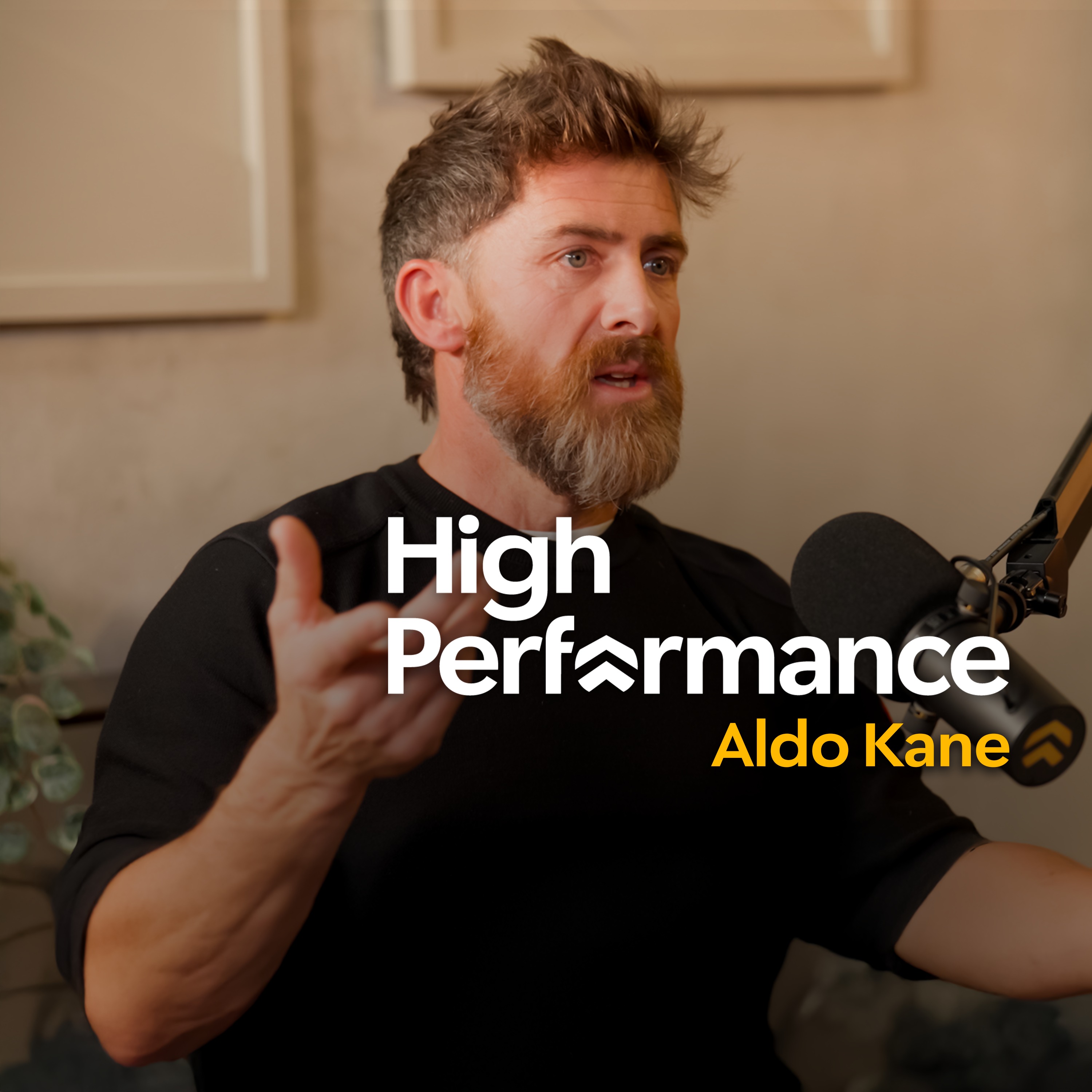
In this episode, Aldo Kane, a former Royal Marine sniper and extreme explorer, shares insights into his life experiences and the pivotal role fear has played in shaping his career. Hosted by Jake Humphrey and Damian Hughes, the conversation delves into Aldo's unique framework for decision-making, personal well-being, and the importance of aligning one's life with personal values.
Written by AI. May contain mistakes.

Get the gist, explore an idea or ask about something said.
 Claude
On The High Performance Podcast, what are the key points of this episode?
Searching your listeningAutomatic transcript. May contain errors.
0:00Watch it early on the High Performance App. Available now, Roman Kemp, the broadcaster, opens up a powerful conversation on success and mental health. The commando spirits, courage, determination, unselfishness, cheerfulness in the face of adversity. For me, they all form part of what character is. Indecision in my line of work or deliberation will get you or someone killed. The biggest one that I felt the most scared was receiving mortar fire and RPG fire. I was incredibly lucky not to be dead. That was the voice of the former Royal Marines commando, Aldo Cain, who joins us today on High Performance.
0:44I'm Jake Humphrey, and quite simply, I'm fascinated by stories from the world's most high-performing people. And I'm Damien Hughes. I work with people and teams to help them understand how to create environments and get the best out of themselves and others. These include professional sports teams like the England football team and with leading business people. So, Aldo Cain. You're about to hear him talk about the 10 years he spent doing what is arguably one of the most elite jobs in one of the most elite military units in the world. He was a sniper in the Royal Marines Commandos. Since then, he's guided countless expeditions to the most dangerous places in the world, taking film crews to active volcanoes, Narcos strongholds, and recently, to the most remote parts of the ocean.
1:28You're going to hear what it was like to be a sniper behind enemy lines during conflict, how Aldo learned to manage his fear and channel it towards completing his mission, and the lessons he'd learned which can transfer into civilian life and help all of us. So here he is, former sniper in the Royal Marines Commandos, Aldo Cain on High Performance.
1:53Aldo, welcome to the show. Thank you. Thanks for having me. I'd like to start with a line from you, actually. You once wrote, don't let fear become the helmsman of your rudderless ship. And that leapt out to me because I would love to have a conversation about how all of us can stop fear taking over our lives. I think it's about, for me, it's about taking charge of it. It's about understanding that one, fear is an emotional response to something, a stimulus, which we all get from lots of different areas. And then working out whether that is rational or irrational. So for me, it's about dealing with facts.
2:31I get, when I'm in the moment in a thing and I feel fear and I'm reacting to it, the first thing that I do is then question it. Is this rational? I'll probably say it out loud. And I'll probably, the precursor to that is me doing a weird clicking noise with my tongue in the roof of my mouth, which I know I'm like, I'm scared. So I'm like, I'll be doing something. Let's say it's on a big wall and I'm doing something and there's rocks falling and I'm like, it's just a weird, like it's a tick literally. And then I'll be like, I'm scared. I talk to myself and then I deal with the facts. Why am I scared?
3:09Is there a reason? is it based on something that's happened before that isn't in this situation if that's the case then I can park that and deal with the current situation is it something that is dangerous in this moment that requires me to take action more often than not at that point yes that's acute rock fall avalanche someone holding a gun at your head I need to take acute action now if I have all the facts I can be analytical about it if not then I can be intuitive about it as in I get a feeling and I'll act on that until I have enough information to then change the course of where I'm going so to basically not be driven by fear for me is about diving into the reality of it what are the facts, what are my options and then getting from all of that to making a decision about the thing.
4:08Because indecision in my line of work or deliberation will get you or someone killed. So you have to take all of this information in, process it, deal with it, work out if it's relevant, then make a decision and then go. And actually, if you transfer that into normal life, that deliberation and sort of dilly-dallying and denial phase in any situation a relationship breakup taking the job not taking the job creates so much disquiet in in you personally inside in your head in your and in almost everything that you do and so just by making the decision for me taking the facts making the decision straight away kind of gets rid of the fear because you're then into the known, you've like taken that first step.
4:59More often than not, people that I work with are scared about the things they've heard about, but not been through. So they're apprehensive or worried. And that's all natural. It's all perfectly normal. Life as a sniper is sort of shrouded in mystery. I've got no idea what it's about. Neither do you. I think we all know the idea of looking through a site, pulling a trigger, right? That's about it. it's the sort of polar opposite of kicking doors down and sort of you're working in a two-person team and it's very controlled more often than not you're out on your own sort of working under your own sort of set of orders set of routines and you're very much this is what I love about it autonomous yeah um autonomy being like one of the the key drivers to for me um to be able to perform.
5:53You're essentially autonomous. You have a set of orders and you get given a task and then you go out onto the battlefield. But you are more often than not working in a very, very small team and you're working in a very, very high consequence environment with, you know, backup is not necessarily coming to help you anytime soon. So you kind of need to be fully self-sufficient in every regard, physically, with your kit, mentally and emotionally. And I think that's what either drew me to it when I was, you know, when I was 12, I wanted to be a sniper in the Marines and then I became one. So I guess there's a lesson there about what you think about like essentially becomes your reality at some point.
6:39So it was something that I wanted to do. And it wasn't about becoming a sniper and going off and pulling the trigger. It was about What type of person do you need to become to be able to move through enemy territory and not be seen? You know, that's what we train for. That's the Royal Marines training. Basic training is probably the longest, hardest infantry training in the world. And then to add on top of that, you have probably the hardest sniper course in the world to pass. So, you know, it's an incredibly long process to get there. And for me, it was like, what do you have to, what type of person do you have to become to be that self-reliant, that resilient, robust and confident, but not, I don't mean outwardly confident.
7:25I mean, to have courage in your own convictions, to be able to do the thing, knowing that, you know, there's only two of you doing it. I guess passing that course and knowing that that's the level you were at was a very proud moment in my career in the Marines, I guess.
7:48The market's uncertain. Revenue's tied and hiring on hold. That's why results-driven companies are using Upwork to keep work moving. Go to Upwork.com today and start hiring proven freelance talent fast. No bulky overhead. No rigid long-term contracts. Just the right expert, right when you need them. Work smarter and faster with Upwork. Go to Upwork.com now and find your freelance expert. That's U-P-W-O-R-K dot com. Post a job for free and get started today. At Capella University, learning online doesn't mean learning alone. You'll get support from people who care about your success. Like your enrollment specialist, who gets to know you and the goals you'd like to achieve.
8:31You'll also get a designated academic coach who's with you throughout your entire program. Plus, career coaches are available to help you navigate your professional goals. A different future is closer than you think with Capella University. Learn more at capella.edu. This episode is brought to you by Opera Air, the first browser with mindfulness at its core. Now, most of us spend hours every day online, but how often do we pause to take care of ourselves whilst we're doing it? And that's where Opera Air comes in. It's a lightweight, fast, secure browser built not just for productivity, but for your well-being.
9:10With Opera Air, mindfulness is built right in. You'll find free breathing exercises, guided meditations, and soundscapes with ambient sounds, lo-fi music, and binaural beats, all designed to help you focus, relax, and even spark creativity while you browse.
9:28and you describe it although you say a sniper has to do everything in a slow controlled relaxed way which is the textbook definition of what mihali six cent mihali describes as flow yeah which is that sweet spot that so many people are looking for so how did you become the person that could access flow i guess at the time i was just going through the process of learning like to learn how to shoot a rifle accurately up to a kilometer away requires you to first of all understand all the mechanics and all the bits and bobs of ballistics, internal, external, terminal ballistics. You also need to understand the environment.
10:07You need to understand as in the temperature, what does that do to you around? You need to understand humidity. You need to understand elevation. Like at school, I wasn't going to do trig. I just wanted to get out of school and not do trigonometry. and then it becomes one of the major parts of the job that I'm going to do for the next 10 years. So in the very process of learning the shooting part, which I have to say as a sniper, it's probably 20 % of what that job is about. But it's an incredibly elite level of doing the shooting part of it. But when you shoot, you go through a process of breathing.
10:50and that breathing is if you look at rugby players about to take a kick or you look at people that are trying to calm themselves down then it's very, very similar. So you go through a breathing protocol which is essentially getting you relaxed enough that your sight is moving up and down in the exact same spot every single time and you can close your eyes and open your eyes at the point and it's the point where you want to be on target. There's obviously a lot more to it, but that breathing, it alters your state, you know, by breathing to get you into that camp position puts you into that state.
11:28And oftentimes you need it, you know, either you're running around or you're, you know, you're scared. And so by default, as a byproduct of, you know, getting yourself into having a clear line of sight and a good sight picture, marksmanship principles, you also affect your autonomic nervous system in the process. So can we talk about how you end up a kilometre or less away from the enemy in a battlefield situation? There's so little that we know about it. Would you mind taking us with you on a mission? So you're basically stalking. That's the terminology before it got sort of used for something a bit weirder.
12:11You're basically utilising camouflage and concealment, the terrain map reading, and you're essentially trying to move through the terrain without being seen. The battlefield has changed a lot, I have to say, since I was doing this. You know, in 20 years, even the technology would render most of that stuff unusable if you're looking at the tech that's out there and there with drones and thermal. But for me, it would be the same as like deer stalking, for example, is that you are trying to move in, close with and kill the enemy, essentially. You would be the process of stalking. you know this isn't secret is out there there's there's a royal marines documentary on the sniper course which is fascinating um to watch essentially you take risks early so you're doing a lot of moving at the start fast speed covering ground and then the closer you get the less risks you're taking as you get closer and you're much more methodically much more what counts as closer I mean you on the course you're training to go from 300 metres in that sweet spot because obviously the further out you are the riskier it is that you're going to drop a shot Do you not feel super vulnerable though?
13:23Because there's only two of you you're on your own as you said you've got no backup and you're 300 metres away from the enemy in a foreign country but that's the job so you're incredibly vulnerable and you're kind of you're not you're not on your own you have backup of several hundred or thousand men at any one point but they are probably not going to get to you in the time that you need them which is why pulling the trigger as a sniper is like the last thing that you do because as soon as you've done that you've given your position away and then you will be essentially even if they can't find you specifically all of those areas will be bombed so really it's about being the eyes and ears that's why you know the sniper course it was a long time ago for me now but the majority of it is about observation it's about following the pattern of life gaining information, it's about focus it's about building a picture and putting that together it's about dealing with facts it's about passing those facts up the chain it's about gathering information as soon as all the glamour of any sniper film you've ever seen they're shooting you know, as soon as you've done that, you've given the position away.
14:38I've had a really interesting paper in preparation for you talking to today, Aldo, from an anthropologist in Israel called Neto Bar, who'd interviewed over 30 snipers. And what she'd spoken about was that snipers were less likely to dehumanize the enemy. And I assume some of that is because you are watching patterns of behavior, you are getting up close to see the whites of their eyes. But I'm interested in how you made that mental leap then to go and observe somebody, maybe observing family practices, and then be able to pull that trigger to take a life. For me personally, it came down to that's what you've trained for.
15:20So there was never any moment where you go, I shouldn't be doing this, I should be doing this. You know, looking back on it, yeah, sure, should we have been there? Who knows, there's a big conversation there. But in the moment, you're going through a process, you've trained so hard and for so long that essentially you're going through, you know, you're taking things off. What's the wind doing? What's the weather doing? You're disassociated. I guess, you know, it's probably psychologists could have field day talking to people about, snipers about how they disassociate and what that means later on down the line.
15:57Essentially, I would be going through a series of processes and calculations and checking it off with a number two, and then you do the job, which is the last 1%. But then there was another study from the Royal Military College of Canada who said that snipers had the lowest risk of PTSD and also had the highest levels of job satisfaction. So I'm interested in, after a job, how did you process what you'd done and decompress? I can believe that in that you you train very hard to do it obviously soldiers train very hard all over the world to do these things but you're if you're employed solely as a sniper then you're not going in kicking doors down you're off at flank you're sort of removed in a way and you're looking at this scene from a distance and everything that you do is calculated it's not rushed or certainly in my experience it's not rushed and it's not sort of in the heat of the moment you know you're about to make a you know a 50-50 call you're kind of always or I was always in the position where you know you know exactly what you're there to do you've trained for it you're in a good sort of you I would have been scared excited and a load of emotions I don't even know the world's for which is why you have the process of going through this because you know we know that when you're in you know you don't get you don't get more clever when the shit hits the fan um it's probably the opposite side of that and so you you have this process there's like takeoffs that you just go through and and it's a process so i can imagine i can imagine that that study holds holds fast and also you don't just end up becoming a sniper by accident it's one of the hardest courses to pass with one of the highest attrition rates of people who go on the course and then fail it and it's all self-induced you know no one's shouting at you it's all just you either are going to pass this test on this day or you're not and that's it and so to get to that point you know you've kind of crossed all of these gates or barriers um and you're very much in a position of being very well trained and ready to go.
18:16Why is the sniper course one of the hardest, if not the hardest in the world? I think just generally because of the amount of self-induced pressure and the amount of areas that you cover in a course. It's essentially taking all elite soldier field craft and then taking it to another level. So everything from insertion, navigation, cam flash and concealment, escape and evasion the maths of shooting ballistics, terminal ballistics like there's just so many facets to it that require you to be operating in the top 1-5 % of your game for the entire time that you're either on the course or when you're doing the job So how old were you when you joined the Royal Marines?
19:0416 So what role did FIA play in your career? In the Marines? not a huge amount up until probably, you know, the very end when I actually went to war for the first time. Because in training, it plays a small part in it because that's the whole point of getting, you know, sort of inoculating yourself against these stressors is to slowly and incrementally introduce you to more pressure, more stress. The Marines and the military have a thing called adventure training. where they take you and they put you on a climbing wall, or they take you whitewater paddling, or they take you up into the mountains to do mountaineering.
19:47And that is to, in a controlled environment, test various different parts about how you operate as a team, how you operate as an individual, to then extrapolate how you operate under fire when the stakes are at the highest. So I think for me, fear has been constant through my entire career, but I think that's really, that's what's created the job and the role that I do now is, it's intriguing. You know, it's intriguing to be in a situation where you're feeling fear and, you know, we automatically assume that, let's say climbing up a huge emergent tree in the canopy of the jungle somewhere, I mean, that's scary.
20:32Once you get up high, it's scary, but you kind of trust the gear, you trust the kit. and the likelihood of you coming unstuck and dying there is minuscule. But the perception is very high that you could come a cropper there. Fear for me is about perception and about knowledge and then the more that I know about a circumstance or a situation, the less fearful I am about it. And it's quite an analytical way of looking at it. initially you're scared because the environment is x and you're not used to it you eventually calibrate into that environment whatever that is whether it's dealing with people narcos volcanoes wild animals you sort of calibrate into it then there's a spot after that where it drops off and you become complacent and that's when you take more risks accidents and you have less fear but ultimately it's probably the time where you're most likely to come unstuck Well they often say don't they like mountain climbers the most dangerous part of the climb is the descent because you've got that.
21:38So how do you avoid that complacency? That's a good question. I think for me, time on task is huge. I used to work offshore on the oil rigs for three years. And if you get to 21 days, it certainly was back when I did it, you get to 21 days, you're not allowed to go out in the, they call it the park, but you're not allowed to go out into the platform to work. You have to stay inside the accommodation because accidents go up exponentially. after that 21st day. So the sweet spot was like 14 days. And then you had a few days buffer, and then, you know, ideally you're off the rig at day 21. So expeditions, you know, I just, you know, the one that I did with Alex Honnold two years ago, that was two months long.
22:32And you're in and around dangerous situations for that two months. But that expedition was like short chunks of like maybe 10 days crossing a glacier. It might have been 10 days on a big wall and then another two or three days in boats and then another. So even in that expedition, you're chunking it down and having a smaller amount of exposure to that one single risk. So I think probably timescale is one. And then just for me, it's like regularly checking in with facts. you can easily have a confirmation bias that nothing will happen to you because you've had 30 years of nothing happening to you but everyone that's been killed in the outdoor industry in climbing, mountaineering, caving, diving, skydiving were all just people like us that were going out felt good on that day, blah blah blah and then something happened it's one of those things that it's reducing your time on the risky end of their activity.
23:37Before we talk about how you spend your time now, I'd really like to talk about your military career and what you learned from it. You said you didn't really sense fear until you actually went to war. Would you take us to one of those moments? Yeah, I think probably one of the biggest one that I felt the most helpless, which equals to me the most scared, was receiving mortar fire and RPG fire. I was a sniper, so I was all about accuracy, camouflage, and about being very detailed and specific about what I do. My personal opinion was that bombing and RPGs was a bit indiscriminate, and regardless of how good you were, then it was just a luck game.
24:25the more I know now about me and how I act and react in strange situations like that is that that sense of lack of control is the is the thing that drives the biggest uh like fear or precursor to fear you know it's the it's the thing that that it says to me like you're out of control here you don't you know you need to take action you need to do something now to pull the reins back in so i would say that being you know having receiving mortify on rpg fire see what fascinates me about that when you're describing it is because you confess in your book and you've you've alluded to it here that school wasn't for you and you've said about one of our favorite questions is not asking people how clever they are but how are they clever how would you answer that how am i clever i don't think i would ever say that i was clever i think the way that i I'm clever would be the way that I've dealt with high stress situations and have it, I feel, reasonably well adjusted afterwards, whether that's spending three months down in West Africa during the Ebola outbreak whether it's being at war whether it's being with Foxy doing the narcos stuff there's quite a lot of things that I could have easily taken that's affected me down the line.
25:53But I think that would be probably the only way that I'm clever is the fact that I've managed to find out a way for me of being able to work in process through doing really hard, difficult things and have it not detrimental to my mental, physical and emotional health. And did it ever get overwhelming? Yeah, I mean, the first thing I did when I came back from Iraq in 2003 was pay for my own therapist because I just, I was like, I don't want to be, this was 20 years ago now. So I was like, some of the things you do in war is not normal and it's not a normal thing to see or do. And I'd grown up with my mum and dad both being paramedics and talking about, I remember one meal, they were talking about who got what parts of the body off the train track when they worked in the same ambulance.
26:49And over dinner, there's five of us kids and mum and dad are having this conversation. And I think I had this moment when I came back where I thought, I don't want to be dealing with this in 20 years' time, so what do you do? So I did a bit of research, found a, I think it was this cognitive behavior or therapist. Anyway, I went and spoke to this bloke. I booked in probably 12 sessions or 10 sessions. I sat down and talked to him about everything that I'd seen and done there, preempted it. I'd also left the Marines at this time as well. So I had a bit of time. So I thought, well, you know, this is a good time to work on that.
27:31No like epiphany, but also looking back, I probably made meaning of all of that immediately after getting back and was able to take the good parts from it, park the bad parts and not let it affect me too much. Was there one thing that the therapist said that still stands with you? Not that I can remember but the general thoughts that I was having at the end of it was this was an exciting, not normal, a quite stressful time and you've witnessed x y and z which isn't traditionally normal for a 25 year old boy to see um so whatever you do feel is probably normal you know i'm not any superhuman or any different to anyone else so i think it was probably more the fact of actually one thing that i would take away from it is that i do that now anyway after all jobs it's just not official you know i don't go and speak to a therapist or a counselor but i come back from a tricky job and i'll go and speak to either someone that was in that or Foxy, for example, or a mate of my twin, and then just like talk through it all.
28:42And that to me seems to work. One of the interesting things that you've described, although as you said the best thing I ever did was to join the Marines and in hindsight the second best thing I ever did was to leave the Marines. Can you advise us on how you learn to recognize the best time to walk away from a situation? Because it felt incredibly uncomfortable, because it would have been... The thing that drove me into the Marines was a quest for adventure and a quest to get into the unknown. That's what I wanted. I needed that. And once I'd been doing it for eight, nine, ten years, it was kind of like, well, I know this now.
29:26I still get the same buzz from it. And when I started thinking about leaving, I started to feel really uncomfortable. because it meant that I was back out onto the battlefield on my own with no backup. And that actually excited me. So, I mean, essentially, even in the role that I'm doing now in TV and the things that I'm doing, I've realized I've been doing it for, say, 12 years. I'm having the same feeling now where I'm like, this is comfortable, it's good. But, you know, there's something that's pushing me to get me out and to do something that I would be uncomfortable doing at the start. And also, I have a track record now.
30:06The last three times that I've done it, it's felt incredibly comfortable, but I've grown after that. And the easiest thing to do would be for me to stay doing the same thing and rinse and repeat. So how do you silence that voice? Because it is a human instinct to stay where we have certainty, we have autonomy, we have competence. and you get lots of applaud. It's for the nature of what you do. So there must be part of you that says, just stick here for a bit longer. So how do you quieten that part to go, no, I'm going to jump out into the unknown again? For me, I mean, for everyone, I guess, it's really easy to get in a rut.
30:43You know, we see it everywhere. You get in there, it's comfortable. By doing, when I do some hard things and some hard jobs or hard physical things, that reminds me of like what it's like to be slightly out of control being slightly in a position where I need to learn think fast and so I just I just always look back actually now I look back to what I was doing when when I was leaving the marines and I was scared you know that I was more scared leaving the marines than I was at any point ever in the marines and that's because it was you know this blanket even though it's a tough job and it's hard you know it's a safety blanket um and then to leave you are really out on your own and that excited me and I think that's what still excites me now is that unknown that unknown driving into it finding out about it becoming less scared trying to best understand it and not conquer it but you know like use it um and then when that becomes routine then then it's time to go and this plays nicely into something that i know that you talk about which is designing a life you know not not stumbling through life but really designing a life would you explain to our audience what that is and how they can design a life when i got back from iraq and i went and spoke to um this therapist guy what i kind of was getting towards the end of was realizing that i I was incredibly lucky not to be dead.
32:13And that moment early on of realizing just how fragile it is, you know, when you're 25, 26, you're essentially invincible until you're not, until you see someone else who you think is sort of becoming not alive. At that point, kind of like if I was to look at how I was affected by going to war and, you know, and I've done next to nothing in comparison to what then unfolded over the next 20 years. But for me, that drive, I remember coming home from then thinking, I don't want to sleep, not because I'm like dealing with trauma or PTSD. I was like, I have no time left. And it really affected me. I became manic about achieving things and doing things and never missing the thing and always attending um and doing the course and doing this thing and saying yes to this and um which is obviously tiring but essentially what I then got to the point of very quickly is is about well if this is all you've got um at 100 years let's say max it's still brief um then what am I going to do with it and it was at that point probably about it was probably about five or six years after I left the Marines that I then realized that actually I had thought about something.
33:41I had consciously and subconsciously got myself through it, got to the best that I could, and then left. And I was like, I've just achieved a thing that is, you know, I didn't realize, you know, at the time that essentially what I was doing was like confirming that when you put your mind to something, It sounds cliche, but even more so now in this generation and this world where people need stuff now, instant gratification, likes, follows, social media is a huge part of it. is that for the people who are willing to spend a little bit of time designing their day, designing their week and designing the life that they want to have, which is essentially what I have now.
34:30I've just spent the best part of 14 months on back-to-back expeditions doing some world firsts, some, I mean, all pretty amazing stuff that 20 years ago when I left the Marines, I would have been like, that's exactly what I want to be doing. I didn't know at the time, but you kind of go through this process of saying, well, I like that. That makes me happy. I'm going to do more of that. I like that. I can see where that might go. I'll go down this route. That's useless. That got me in trouble. And I'll get rid of that. But essentially what designing a life is about is exactly that. We spend more time planning a summer holiday or a half-term break than you would do where you want to be in five years and 10 years and 15 years' time.
35:18And I think for me, it was much more because I was face-to-face with it early on, as lots of people are. We come face-to-face with our own mortality at all ages and in all different ways. But for me, that then made me go, I need to take action in like making sure that I have the most fulfilling life that I can. So what questions should people ask themselves to design their own perfect life? I mean, it's ridiculously easy. What makes me happy? What do I want to do? There are so many people that end up getting, and I've done it where you end up down the line in a job, and a relationship in a rut where you think, how did I get here?
36:02And the reason most of us get there is because we're not asking these questions. We're not saying, what really, really makes me happy? And when you start looking at those questions, like for me, it was like I'd been trying to get into doing all of this business stuff around oil and gas and wind turbines and rope access, and none of it was making me happy. And I kind of went back to the drawing board. I read a book, Acres of Diamonds. It was essentially a fable. It was a fable about not spending time cultivating what you actually already have. And I started looking at what I had, what skills I had.
36:42It was good with people. I enjoyed helping and serving people from a leadership point of view. And I loved traveling. I loved adventure. and all of that fell into place when someone asked me to get them and a film crew inside an active volcano and everything that I'd been doing in my life up to that point clicked and that was through asking the question right at that time I was like what makes me happy so I had in my head I was starting to ask these questions I was starting to piece together I knew what made me happy I knew what made me not happy. And as soon as that clicked into place, the rest of it, I was just like, well, gap analysis.
37:25It was like, this is where I am. This is where I want to be. This is what I need to do. Tick, tick, tick, tick.
37:33If you're still overpaying for wireless, it's time to say yes to saying no. At Mint Mobile, their favorite word is no. No contracts, no monthly bills, no overages, no hidden fees, no BS. I made the switch because I was tired of those ridiculous bills and sneaky charges from my old provider. With Mint, I'm paying$15 a month and getting the same high-speed data, unlimited talk and text, and the coverage on the nation's largest 5G network. Honestly, the quality is just as good, if not better, than what I had before. And the best part? You don't need a new phone. You can keep your current one, bring your number, and all your contacts.
38:08I use Mint Mobile, and you should too. Ready to say yes to saying no? Make the switch at mintmobile.com slash HPP. That's mintmobile.com slash HPP. Upfront payment of$45 required, equivalent to$15 a month. Limited time new customer offer for first three months only. Speeds may slow up a 35 gig on unlimited plan. Taxes and fees extra. See Mint Mobile for details.
38:43Proven freelance talent fast. No bulky overhead. No rigid long-term contracts. Just the right expert right when you need them. Work smarter and faster with Upwork. Go to Upwork.com now and find your freelance expert. That's U-P-W-O-R-K.com. Post a job for free and get started today. Your business is one of a kind, so your website should be too. With Wix, it's easy. Almost too easy to create a website that's perfectly yours. Just tell AI what kind of site you want to build or choose from thousands of templates. Change whatever you want, whenever you want, and get everything you need to start running your business your way.
39:22No matter what you sell or what you aspire to be, you can do it all yourself on Wix. Go to Wix.com.
39:36I'm sure there are lots of people that listen to this who have a dream life. but the mortgage and the salary and the family and their location, none of it plays to that dream life. What do they do? It's a good question. I mean, what we have to remember is that we're not trees. So we can literally do anything. We can live one way for five years, change it, live another way. I guess it depends on how much pain you're getting from not doing a thing and how much pain you're getting from or would get from doing the thing. And more often than not, a small amount of temporary pain is enough to stop all of us achieving the things that we want to do.
40:18And of course, worrying about what other people say, especially now, you know, social media, it's very easy to be publicly shamed if you get something wrong, whereas before, you know, no one would really know about it. So I guess it depends on, you know, yes, work out what it is that you want to do. ask the questions what makes me happy what makes the family happy but you know ultimately real life is you know we get ourselves up to the hill in debt with mortgage with you know all of the rest of the trappings of comfortable normal life and the further down that line we go the harder it becomes to then change direction you made reference as a upselling into that volcano in the democratic republic of congo is that right yeah and one of the things that really intrigued me with that is you describe almost this sense of awe you allow yourself moments to appreciate where you are and what you're seeing and there's research on this that talks about how powerful that is in terms of giving us perspective allowing us to ground ourselves in a moment how can we all get better at allowing ourselves to be awed by where we are what we're doing I I do it all the time and I've done it.
41:28The first time I remember doing it was in Iraq in 2003. And I remember sticking my head up and looking at this weird landscape of unexploded ordnance, you know, like bombs in the ground and burnt out buildings. And it was all in a different way. But I remember just looking at it thinking this is insane and like take a moment like what I can tell you what that smells like I can tell you what that felt like in my hands I can tell you the little nook that I was looking into at the point the jacket that like the kit looking at my left boot like I can remember every single detail about that thing and I've actually done it since then a lot like I can pinpoint times I now do it deliberately because I know that how powerful it is to take you back.
42:24I remember in 2002, I was leading an expedition, so it was before I'd even been to Iraq. Maybe that was the first time, but I was leading an expedition in, where was it, in Guyana, and I had 20 school kids. And I wasn't that old myself, you know, at that point I'm 24 and I'm leading like 16, 17 school kids on an expedition for a month through the jungle. And we came up to this rock on top of Kaichu Falls. It's quite famous. It's a big waterfall. It's, I think, the biggest free flow waterfall, not Angel Falls, but it's big. And I remember getting the kids to sit down there and I was like, close your eyes.
43:06Imagine you're in school in three weeks time, and you're just about to go into double maths. You're blah, blah, blah. You've had a crap day. and I just portrayed this really crap situation with them and then I was like now open your eyes and look at where you are because they'd all been a bit knackered and they're teenagers and they all didn't want to be there and they still now to this day those kids I still get messages saying thanks for doing that I can still go all the way back there so I do it a lot now where do you go? as in when I'm doing it the last one I just did was in Balneau a couple of months ago and we're in this amazing place.
43:47And it's just as the sun goes down and the call to prayer of the guys that we'd been working with and the cicadas. And now I make a point of remembering the thing. It's just like a snapshot photo of that moment in time. And what does it do for you? When I'm in the moment, it's making me pay attention to it. So I will sit and go, right, I'm going to pay attention to this for like two minutes. No phone, no work. I'm just going to sit and listen and watch. Like, that's it. I don't have any sort of protocols or whatever about it. I just sit and pay attention. As a sniper, I've spent many, many, many days, weeks, months lying in a place just being and looking and listening.
44:33And I guess, you know, that's kind of what I do, which kind of grounds you. I mean, there's so much work out there now about people. we're so busy that doctors are prescribing people forest breaks and time and you know time in the forest and time outside and grounding and naturally it's I'm really lucky with my job because I get to do that a lot you know I know for a fact my blood pressure and resting pulse rate come down progressively over a trip like and even though I'm doing hard stuff because I'm outside and I'm getting up when it's light and I'm going to bed when it's dark and I'm not on tech and I'm not on screens um as it has a i'd say a pretty profound impact on my well-being and how was the impact on your well-being had an impact on how you parent being a new parent of three so i've got two kids one's three and one's five months i'd say it's had the biggest impact on my life for lots of different reasons as it is because it's hard right it's it's like it's you know you think you've done some hard stuff and then you have your first kid you're like the world's about to end in My missus does all the hard graft, basically, when I'm away gallivanting.
45:42But what it has actually made me much more aware of is probably a couple of things. One, how I interact with the world. I now have repercussions. I have a mirror of what I say and do now. And that can be quite frightening as well. I then realize how woefully underprepared I am with vocabulary in describing something like emotions. I've been trying to read as much as I can about emotions and how to recognize them and how to deal with them and given names to them because I now recognize that that's, you know, it's a disability for me that I've had. You know, I have four emotions. I'm angry, I'm sad, I'm whatever.
46:30as a new dad I have the ability now to change the narrative of what's gone before you know we can buy a book of a child psychologist that's you know their entire life working get it for seven quid and you can learn all the right things and the wrong things to do and the things that might make things easier for you and um so I guess in a way it's it's like that uh what would you call that like a sort of circuit breaker that allows me to to then say hey like i don't have the words for these things either but i'm going to learn with you can you give us an example then of a of an emotional label that you've identified recently that has found you found helpful i mean frustrated was one uh the other day you know dealing with the second little one you know and i'm like naka just getting back decompressing after a trip not able to not able to fully engage with the new one because we're not on bottles yet.
47:28And just being stressed by it to the point where I'm having to like have to regulate my breathing or regulate my state, go for a walk with the dog because I wasn't able to deal with this situation. And it was actually my little lad. He was like, you need to try harder. Because we have this thing where I'm like, what do we do when things get hard? We would say, try harder. And he could see I was frustrated. And he was like, you need to try harder. And I was like, I do. But I would have just been like, I'm pissed off, I'm knackered, and I can't do this. So interesting, because I imagine not going too deep into your emotions was really valuable when you were in the military, right?
48:05Yeah. And it's adaptive. That was adaptive for me as a sniper to be not emotionless, but to be calculated. But I can tell you, when I talk to my missus using the same strategies that I used as a sniper, it does not go down well. And, you know, it's maladaptive to bring up a kid and not have the vocabulary, you know, to deal with potentially what he's feeling and what he's going through. Like, I'm loving the learning journey. I didn't have my first kid till I was 42. I'm 46 now, so I'm kind of, you know, I left it a bit later. And I'm loving the learning now. Like, all of the stuff that I'm going through now with him is like, this is amazing.
48:51You know, like the way they see things, the way they understand, the way they're going through their life. But I'm a little surprised that, if I'm honest here, you talk about that you didn't feel that emotionally literate, partly because the second act of your career has been all about bringing people with you, taking people into hotspots or dangerous situations and being sensitive and emotionally intelligent enough to keep them calm and allow them to do their job. That's probably the biggest part of my job. So when I say that, you know, I was able to, as a sniper in the first 10 years, my kind of life's been like 16 to 26 Marines, 26 to sort of 32-ish was oil rigs and wind turbines, and then the rest of it was TV.
49:40And actually, you know, as a sniper, I was probably fairly emotionally literate to maybe like a middle degree or a middle level. But working in TV and you're working with lots of different creative types of people, you kind of have to be a people person. So yeah, I mean, I probably am slightly more emotionally aware than the rest of my cohort potentially as snipers in that perspective. And it's actually what gets you asked back is how you are as a person. So would you give us some tips then on how to be a valuable team member because that's i think that again is an area that we don't often touch on about how can we be a great teammate yeah i mean i guess there's loads there i mean you can read any amount of leadership books that will tell you these are the models to do x y and z but ultimately to be a good leader or member of a team boils down to very few things is like character trust like characters you know the type of character you are has a massive effect on what do you mean by that how you come across as a person, whether you're negative, positive, your character traits directly impact a situation.
50:52So if I look at like almost everything I learned in the Marines is gone apart from the commando spirit, which is like a thing that they don't ever teach you it. It's like it's four words, but it just kind of you become the epitome of by going through that process and it's courage, determination, unselfishness and cheerfulness in the face of adversity. And if you look at well-performing teams in the line of work that I do, that is like their cornerstones. I know it's the Royal Marines sort of commando spirit there, but if you took them as basics, courage, not running out in front of a hail of bullets, which is obviously part of the job in the Marines, It's moral courage, which is doing the right thing when it's the hardest thing to do, when you're knackered, especially when no one's watching, right?
51:50That moral courage is a key marker of a Royal Marine commando. And that transfer over into the business world is worth its weight in gold. Drive determination, like what it is that intrinsic drive to be a good team member and a good leader. My own opinion is that you need to be intrinsically motivated and driven, not by extrinsic, not by external, not by promotion, not by recognition, not by pay rise, likes, all of this stuff that we now take as granted as means I've done a thing. So that drive, intrinsic drive, motivation or determination. Um, unselfishness, like, I don't, I mean, I don't read many management books or leadership books, but I'm guessing there's not very many of them that have got a whole section on unselfishness or altruism or kindness.
52:52But I tell you, when Foxy and I were rowing across Atlantic, you know, he would, I would come off shift two minutes early and I would go in and I would put his toothpaste on his toothbrush, and I would lay out his bedding and I would get his stuff ready. and this isn't a cabin that's the size of like this mat and I would get all his stuff done completely without any thought of him doing that back for me. So that unselfishness like goes a long, long way because if you've got a section of four, eight, 12 people, you know there's always someone there that's willing to watch your back. It's just like these things are essentially free, cheerfulness in the face of adversity.
53:30You know, we, you know, in the Marines, we have quite hard jobs to do and ultimately people also die in the process of doing that. It's the highest category of risk and consequence. But still, even in amongst all of that, there's still the ability and the necessity to control your reaction to a situation. And you always have control over how you react to it. And I guess, for me, they all form part of what character is. it's so underrated you know someone who has like an unshakable character you know who they are and you know you can rely on them you know you can trust on them but there aren't many courses that can teach you character and you know train it potentially so I think that would be it and trust and integrity and all these other things that are actually intrinsic to me and the Marines but you know as soon as you leave that world and you get into the big bad world out there you realise that that's not common And something else that's vital in the work that you do now is your physical abilities.
54:40We've spoken so much over the last hour about mental dexterity and sometimes kind of slightly ethereal areas of life. Whereas let's talk really clearly about the power of making sure you're in physically good shape. And I think a lot of people would benefit from knowing what your daily routines look like, from the time you wake up to the food you eat, to the exercises that you do, the supplements that you take, the things that you do to keep yourself in this great place? So I'm 46 now. I would say I'm in good shape mentally, physically, and emotionally. I feel strong and robust. I don't feel fragile in any way, apart from if I've not had sleep after dealing with a night of two kids that are up.
55:23But there's no magic, and I'm not an expert on this, but for me, I have sleep exercise and nutrition. are like three non-negotiables that without, you know, on expedition, then I can let one or two slip. But in the process of letting those slip, I know and understand that my performance is like massively reduced, potentially dangerous, potentially making bad decisions either that could cause injury or potentially even moral decisions that, you know, that I might regret further down the line. When you're on expedition, you can deal with that and you can sort of work out what's worth doing that and what isn't worth doing.
56:09When I'm at home, I try and prioritize my sleep. My chronotype is a lark. I'm up five, six, something like that in the morning. That's always been the case for me. If I need to get more sleep, I have to go to bed earlier. So I'm probably in bed by nine, half nine. I'm definitely not getting as much as I should be or could be. You know, it's interrupted, it's broken, new kid. Exercise is non-negotiable. It's when I'm at home, it's, in fact, I did this when we moved to the new house. I prioritized converting the garage into a gym because I thought we've got a kid on the way. Like I was trying to lubricate as much, as much as I could to reduce the amount of, you know, you speak to so many people that go, I've had kids and then I stopped training and you're like, well, so I kind of had that insight and I was like, I need to make this as easy as possible.
57:05So I put in a gym in the garage, which is a luxury, you know, like to have a garage in the first place. And what does training look like? Training for me is strength. I'm probably in a bit of a plateau. I haven't done much in the last five months because I've been back and forward on different jobs. but it's strength so I'm very much about an interesting point about that as well since I moved into the garage I'll be doing five by fives is probably a good one so I'll do like in a Monday I might do strict shoulder press five sets of five as heavy as I can go plus also squats five sets of fives as heavy as I can go that would be the two main lifts and then in between that I'm doing all the old school stuff, pull-ups, burpees, press-ups.
57:52I'm not mega religious on what I do, but what I try and do is full body on most of the days that I train, apart from if I'm doing cleans, for example, because that's like my entire body gets wrecked. I've always trained five days a week, Monday to Friday, and have the weekend off. I run probably twice a week when I'm back, six miles, something like that. I don't see the need to go any further than that. And I've got a stationary bike that I'll do three or four sessions on, steady states that will probably keep my heart rate at 125, 130, something like that. But I'm not a ninja in any of this. And if my sleep isn't great the night before, then I sack it off.
58:42I'm not a nut about any of it. what I need to be is resilient when I go to work. I need to not be at the peak physical fitness or mental fitness where I go on a job and then I'm instantly fragile. I need to be able to fall over with a bargain on, with a rucksack on, and then still get up and still tweak my back or tweak my knee. I still need to be able to do the job. So a lot of the stuff that I'm doing is just basically keeping my core solid. so like my day is up phase gets done between probably half five and seven take Atlas to nursery on the bike come back and then I'm into when I'm writing so I wrote lessons from the edge in lockdown brilliant book by the way yeah thank you and we're into sort of in the second one now so I'm starting to put the ideas for that together so that'll be like I'll do a block of work in the morning of like two or three hours that's uninterrupted.
59:44So phone off, everything off, just do the thing. And then the rest of the day, I'll be like on Monday, I went out downhill mountain biking, just because it's been bumpy re-entry coming back from this last trip. So I just needed a reset. I've gone out doing something hard where I wasn't thinking about anything. And if you do downhill mountain biking, you take your eye off the front wheel for a second, then you're going to be hurting. So I spent Monday doing that. And actually it gave me clarity to think through this podcast, another one I'm doing next week and two talks that I'm doing. And that was without sitting down behind a laptop.
1:00:25I also put a sauna in at home. So I've started doing that. It's tiny. It's literally like the size of this chair. So I've started doing a bit of that. But essentially I try and spend as much time as I can outside and especially when the boys are atlases off necessarily then then we're out yeah um putting an adventurous spirit into your into your youngest and your oldest trying to i'm trying to and and you know the the more you read about what's sort of going on with yeah young people and anxiety and depression that's linked directly to smartphones social media all the rest of it all the stuff that i still need to use you know it's that's that's being affected a little bit what I was going to say about putting the gym in the garage what I have noticed is I have lost a big chunk of where I got my community from CrossFit, I was in a CrossFit gym Covid happened and then I put the gym in, I haven't trained with other people in three years I do miss that other people outside of work it's about gym, it's about fitness so I need to redress that I think.
1:01:38Ready for a few quick fire questions? Yes.
1:01:43The three non-negotiable behaviours that really matter to you? Sleep, exercise, nutrition. That's one. I mean that's an easy one right there. The second one for me is taking action. It's like a bugbear of mine when people say I was going to do this and you're like yeah but you didn't like why didn't you do it? But for me, take action. The best time to take action is when you have the idea, when you're still like G'd up and you can't sleep and you're wild from that. So take action. And the third non-negotiable behavior really is about focus. And it's something I'm like working hard on is like ditching that need to pick up my phone and have a look at it and check in and all these bits.
1:02:30I've just recently got rid of all social media off my phone. So I have to, you know, and I, you know, it's the same as lots of us where we need it to promote ourselves and do the thing. But, you know, I've just taken it off my phone to stop that focus interruption. So sleep, exercise, nutrition, taking action and focus doing work, proper work. What advice would you give a teenage elder just starting out? teenage aldo i would say don't worry about what other people are thinking about what you think about people are so interested in their own lives they don't actually give a bleep about you um so basically get on with it but be careful what you are thinking about because it does become your reality whether you're thinking about it consciously or subconsciously what's your biggest strength and your greatest weakness my biggest strength is my ability to be not not resilient but like anti-fragile I've seen Taleb's book there you know that what's the difference uh resilience would be you know coming out the other side of something the same not broken um anti-fragile or post-traumatic growth would be coming out the other side of it and and growing from it.
1:03:53And if I look back at every single thing that I've done, that's been, my trajectory has been growth, not anything else. So that would be, I think, my biggest strength is to be able to find a way out of it that suits me, make meaning from it that suits me. My biggest weakness would probably be, that's hard because I've got loads, my my ability my ability to stay on task focused like my attention is quite easily fragmented with all of the stuff that's going on especially now in this world of you know like i'm doing tv and you know you get pulled from pillar to post and it's it's quite easy to get distracted by the blinking lights of all sorts what's the single best piece of advice you've ever received and why?
1:04:47I would say it's probably along the lines of taking action. It's about going after it. You know, when I passed out of the Marines, I went almost straight on recce selection and everyone was like, who is this guy doing this thing? And I just thought, well, if I do it now, I get the feedback immediately at where I fail and then I can redress that and then I can do it again and pass. And I guess that advice about just doing the thing came from, he was actually a scout leader. And he was just like, you've got to be clear about what you want to do and just do it and don't worry about other people. And finally, for the people that have listened to this conversation, what would you like to leave ringing in their ears, your one golden rule for a high performance life?
1:05:37You know, a high performance life can be distracting. And, you know, for people that that want to achieve greatness the minute that there isn't greatness, then it can be a spiral into a pit of despair about lots of different things. I guess to borrow a phrase from Professor Andy McCann, who basically would say that performance is about resilient performance. It's about turning up on that day with what you've got. And that resonates with me so much. It's like your performance on that day with, you know, with the kit you had, the sleep you had, the information that you had at the time. That performance there is the best that you could have done on that day.
1:06:25Damien. Jake. What I like about Aldo is that he is, he's not a show-off. Do you know what I mean? He's lived this incredible life. He's served his country as a Royal Marine. he now spends his time keeping people safe in some of the most dangerous and difficult places on earth if you walk past him in the street you would know none of that but even after him sitting opposite us you know he's not sitting there telling us about all these incredible things we're having to kind of draw that information out of him and in some ways that's kind of the magic I think of Aldo isn't it? Yeah definitely he used that phrase about being anti-fragile and I think it's a really interesting concept like Nicholas Taleb talks about this that when difficult moments hit us Some people are fragile that they break on the back of it.
1:07:08Some people are resilient that they can cope with it. But then being anti-fragile means you come back even stronger from those difficult moments. And I think we all live difficult moments or tough times. What Aldo really taught us there was about taking time to look back on those tough moments, appreciate the characteristics that got you through from it, what you learned from it. And then we can all instantly start to become a little bit more anti-fragile. And I think that's a man that's lived through tough moments, coming and sharing them, but more importantly, sharing his learnings from it. Yeah, he's also a tough guy as well.
1:07:43You know, he's like, clearly sets his stall out and does the things he says he's going to do. Like when he said, what really annoys me is people that say they're going to do something. Well, if you're going to do it, you would have done it. So you're obviously not going to do it. You know, even when he talks about his training regime and he runs through numerous runs, getting on the bike three or four times a week, lifting heavy, being in the gym, and then sort of tries to downplay it. And I'm thinking, hold on, you've just done more exercise in a week than most people manage in a year. So I think this is absolutely someone who sets extremely high standards for himself, but then achieves them through willpower.
1:08:18And there's a great list in that. And I was thinking of a lot of my friends when we were talking about not achieving your full potential in life. I was thinking of three or four of my mates that are still doing jobs they don't like, living lives they don't want to be living, and moaning to me every single time I see them about that life. And Ethan says, well, you're not a tree. Get up and move. And sometimes it's the hardest thing, but the reward can be the greatest thing. And I loved what he said about that. Yeah, you know, we're either moving away from something that causes us pain or we're moving towards things that bring us pleasure is the organizing principle of our brain.
1:08:53And some of his questions that any of us can ask, what makes me happy? What do I enjoy doing? What lights my soul up? all those kind of questions of being willing to ask them and then lean into the discomfort the uncertainty of going after them ultimately brings its own reward thanks mate thank you that brings us to the end of today's show huge thanks to aldo for his time and sharing his experiences and his ideas with us if you want to delve deeper into aldo's world then his book lessons from the edge is available now and of course you can watch these conversations over on YouTube or get even closer to your own version of High Performance using the High Performance app.
1:09:31Thanks so much for listening. We hope you join us again soon for another conversation here on High Performance.
1:09:59Fall is all about cozy comforts, but when you're prioritizing your health, it's easy to feel like you're missing out. With Hero Bread, you can enjoy all your fall favorites because they're made with Hero Bread sliced breadloaves, tortillas, bagels, dinner rolls, and more. Try their all-new Hero Noodles with 12 grams of protein and just 80 calories. So skip replacing every carb with cauliflower and indulge in your breakfast, lunch, and dinnertime favorites while still hitting your goals. From breakfast bagels and meal-prepped enchiladas to mouth-watering burgers and cheesy noodles. You won't believe Hero Bread's options have 0-5 gram snack carbs and are high fiber from the taste and texture.
1:10:39They've even got small batch drops of indulgent favorites like the popular Hero Croissant. And right now, Hero Bread is offering 10 % off your order. Go to hero.co and use code FALL25 at checkout. That's fall25 at hero.co. All figures are per serving of Hero Bread. Contains 2 to 18 grams of fat per serving. See the product nutrition panels on hero.co for more information. Your business is one of a kind, so your website should be too. With Wix, it's easy. Almost too easy to create a website that's perfectly yours. Just tell AI what kind of site you want to build or choose from thousands of templates.
1:11:14Change whatever you want, whenever you want, and get everything you need to start running your business your way. No matter what you sell or what you aspire to be, you can do it all yourself on Wix. At Capella University, learning online doesn't mean learning alone. You'll get support from people who care about your success, like your enrollment specialist who gets to know you and the goals you'd like to achieve. You'll also get a designated academic coach who's with you throughout your entire program. Plus, career coaches are available to help you navigate your professional goals. A different future is closer than you think with Capella University.
1:11:53Learn more at capella.edu.
Aldo Kane is a former Royal Marine sniper turned adventurer, author, and world-record-holding extreme explorer. With a career spent navigating some of the world’s toughest environments, Aldo’s life is a testament to resilience, adaptability, and the power of pushing boundaries.
In this episode, Aldo joins Jake and Damian to dive into the pivotal role fear played in shaping his career, from his time as a young recruit in the Royal Marines to life in high-stakes environments. He breaks down his "three decision gates" framework, a method he uses to make clear, fearless choices, and reveals lessons learned from critical moments in the military.
Aldo also opens up about the personal side of his journey, sharing how his well-being impacts his approach to parenting and his daily routines for staying in peak condition. He discusses the importance of designing a life that aligns with your values and how to know when it’s time to walk away from situations that no longer serve you.
This episode offers practical advice on overcoming fear, becoming a valuable team member, and taking control of your life's direction.
🚨 Partners
Huel 👉 Get an exclusive 15% by using code: HP at: https://hppod.co/HP
Heights 👉 Get 20% off your subscription by using Code: HP20 here: https://hppod.co/Heights
Payhawk 👉 See our sponsor, Payhawk in action here: https://hppod.co/Payhawk
FORA 👉 Claim a free day pass at any Fora workspace and find the perfect home for your business here: https://hppod.co/FORAHP
HP Foundation 👉Do you want to kick-start an evolution that will change the lives of millions of children? Find out more about the High Performance Foundation: https://hppod.co/foundation
HP Corporate Events 👉Click here to book High Performance Events: https://hppod.co/corporate-events
Explore offers and discounts through our other partners:
Hosted on Acast. See acast.com/privacy for more information.


