
 Ask ChatGPT


 The High Performance Podcast
2 Sep 2024 · 1h 20m
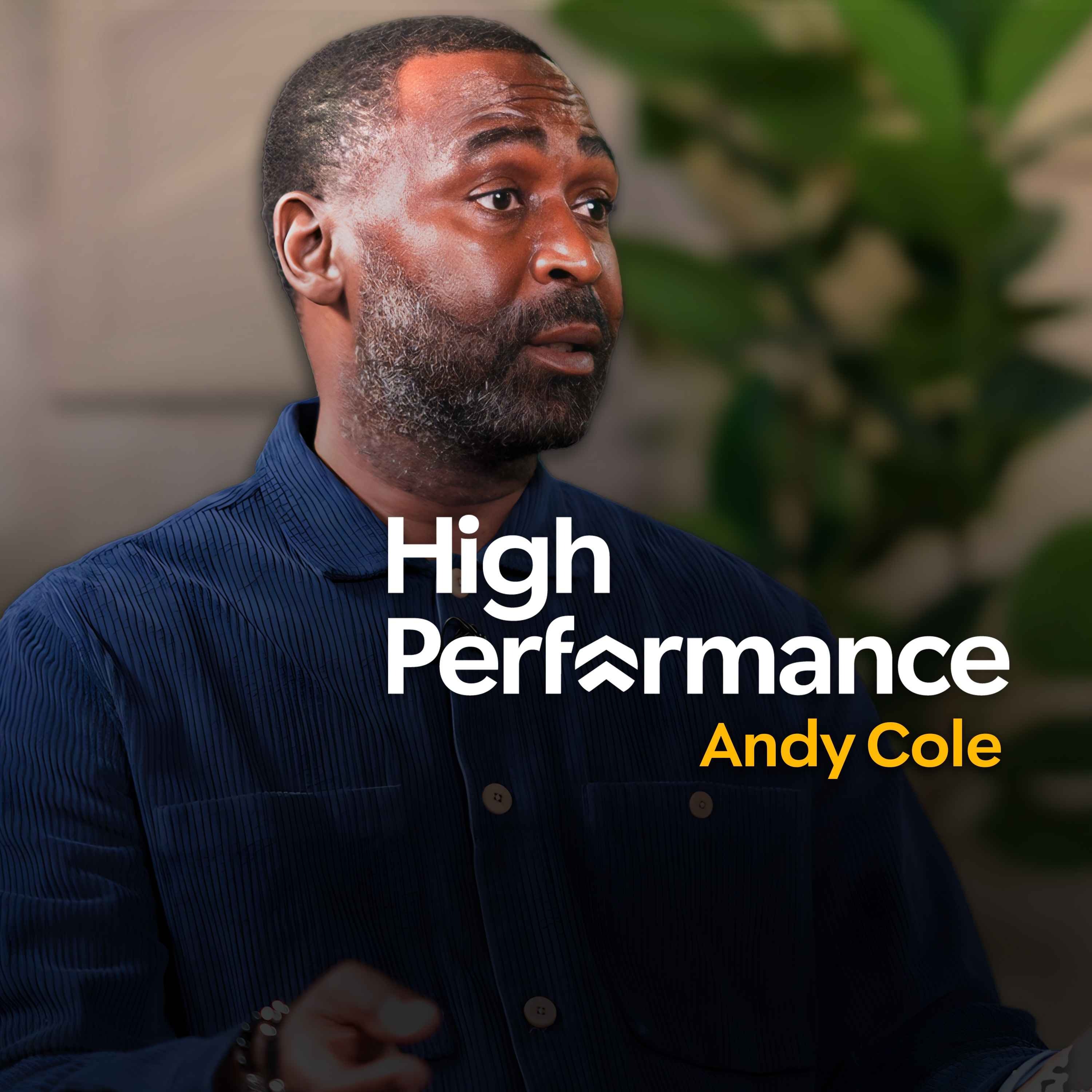
In this episode, legendary English footballer Andy Cole shares his journey from being an iconic striker at Manchester United to battling a serious kidney disease. The conversation delves into his career highs and lows, the importance of mental health, and the resilience required to overcome personal challenges.
Written by AI. May contain mistakes.

Get the gist, explore an idea or ask about something said.
 Claude
On The High Performance Podcast, what are the key points of this episode?
Searching your listeningAutomatic transcript. May contain errors.
0:00Watch it early on the High Performance app. Available now, Roman Kemp The broadcaster opens up A powerful conversation On success and mental health Without my mentality I don't sit there and have this conversation with me The gaffer always used to say to me Ultimately your pride will come in there I always just say Boss, what does a man have if he doesn't have pride? Back in those days we played people at Old Trafford We beat teams in the tunnel Team ethic, that's what you're playing for It's not about me it's about us Dr Stone called me he said Cody you need to get yourself in the hospital you've got a problem with your kidney basically then finally they turned around and said to you you're going to have to have a kidney transplant I remember sitting there just crying mentally saying to myself I can't do this anymore and you will always ask yourself why me don't concede defeat whatever it is just get on with it That is legendary footballer Andy Cole the latest guest here on High Performance the show that delves a little deeper into the stories and ideas of some of the most extraordinary people in the world.
1:05I'm Jay Comfrey, and like a lot of you, I'm simply fascinated by unlocking a better version of me. So, along with Damien Hughes, this show discovers not just how people achieve great things, but the why that drives them. And what a career this guest had. I mean, we know that he had an incredible time with Manchester United, Newcastle and Blackburn, but he also remains the fourth highest goal scorer in Premier League history with 187 goals. In fact, for a long time, he held the Premier League record for the most goals scored in a 42-game season. 34 goals! I mean, the guy is an absolute legend. But this conversation is not just about Andy Cole, the footballer.
1:47This conversation is about Andy Cole, the man. Because what you may not know is that in recent years, he's had a health battle that at times has not only tested him physically, but mentally it's absolutely pushed him to the brink and Andy doesn't come from a family and a world where you talk openly about your mental health and your weaknesses and your vulnerabilities and your challenges and so he's been on an incredible journey and in this conversation we will uncover exactly what happened to him you will hear how his health troubles unfolded the way he reacted to them but most importantly of all the things that he's learned from the hard journey he's been on that he wants to share with you.
2:27Of course, we also delve into some amazing stories about the managers he's worked with, the players that he's played with and the life that he's lived. But this is not just a conversation about football with a footballer. This is a conversation about how you can live a life where your body gives you so much. And then when you least expect it, that body starts to let you down. As we welcome football legend Andy Cole to High Performance.
2:58We always start this conversation with what do you believe high performance to be? And I'd like to know from you how different your answer would be today compared to the guy that was playing football 20, 30 years ago. Yeah, most definitely it would have been different, yeah. What would it have been 20, 30 years ago? What would you have described high performance like as then? Most probably we're making it. Getting to that level. Plus you get to that elite level. because ultimately you're always striving to try and get there, especially when you're younger. I'd never actually got there until I actually retired.
3:31I can look back and say, yeah, I couldn't say anything more of myself because I've done everything I've always wanted to do. So, yeah, that's what most of it would be for me. I'm personally really pleased that we've managed to get you to come and join us on High Performance. Because do you remember the last time you and I met? I think it was being on the TV, wasn't it? Yeah, it was on the TV, but you were not well at that time. Yeah, yeah, yeah. Do you remember, there was no dressing room for you? Yeah. I remember looking at you thinking, he doesn't look well at all. I remember saying to you, are you okay?
4:02Do you remember? Yeah, yeah, yeah. And then I took you and you took my dressing room. I remember I let you lay down in there and then I went and rehearsed, got ready for the show. And time was moving on and we were getting close to going on air and you hadn't appeared, Andy hadn't appeared. And I remember someone saying, well, where's Andy? I said, well, I'll go and find out. And I went back to my dressing room, opened the door. and you were lying there in the dark. You remember this spark out? You were just, you know, completely asleep. Yeah, that's when I was really ill. Yeah. And did you know you were ill?
4:32Yeah, I know I was ill. But mentally, I think, obviously, you're coming from the background. You're coming from, you're just saying to yourself, man, get on with it. You ain't got time for this nonsense. You know, you play football, you go in a dressing room. You ain't got no time to sit down and speak to anyone about your problems or if you're feeling ill or anything like that, it's like, hey, just get on with it. So for me, that's exactly what I did my illness. Man, I'm getting on with it. You do what you can do, you get through your days and whatever you don't ask for help, just keep pushing through.
5:04And how long were you doing that far? I don't know. Six, seven months into my illness, I finally kind of like conceded defeat. Like, yeah, okay, yeah, I get it now. I'm very ill. So look, for people who aren't actually aware of the fact that you have been seriously ill. What happened? When did you first notice that something wasn't quite right? I was on a trip for Manchester United to Vietnam, a promotional trip for Manchester United. Flying back the day. Just went to the toilet. Had a wee. And it just smelled really, really strong. I just thought, dehydrated. Crack on, get on with it. Got home.
5:46For instance, I think I got home the Wednesday. Just felt a bit tired. Typical man, can't go out of the seat at Moors. Yeah. Go to bed, I'll be okay in the morning. Next morning I woke up, just started gaining a lot of weight, like water retention, but I just thought, enough, you'll fit. So by Friday, when I called my ex-club doctor to pop around, come and see him, popped around, just looked at me, ran a few tests on me. He said, okay, Cole, if you go, because I was living in obviously Manchester at the time, if you go to the private hospital Saturday morning, they're going to take some scans and all that.
6:21And I'll speak to you most probably Monday. So I said, ah, not a problem. Did that. First thing Monday morning, so Dr. Stone called me, he said, Colby, you need to get yourself in the hospital. I'm like, doc, I've got a few things to do. He said, no, seriously, Colby, you need to get yourself in. So I said, OK, I went in the hospital. And the crazy thing is, my consultant at the time was actually waiting for me at the entrance. So I walked in, he said, hi Mr. Cole, how are you? I said, yeah, I'm fine. I remember saying, look, I'll be honest with you, I don't have time because I've got things to do today.
6:53So he said, I don't got a problem in there, no problem. Just going to run a few tests with you and then you can go. So I'm thinking, oh yeah, brilliant, I'm not going to be here long. Took a biopsy, just sitting there chatting. And I remember him saying to me, have you had any of these symptoms? And I said, no, nothing at all. Just kept saying, I need to go, I need to go. He said, no, no problem, I'll let you go. have a chat do that symptoms no symptoms he said okay then fine I think within about 20 minutes of him asking me about the symptoms I had every symptom that he told me about but he knew he already knew but he was just waiting and obviously getting me to stay there because he knew the symptoms at any stage what sort of symptoms?
7:35so one was hiccups and then itching you feel like you've got a thousand ants on you you can't stop itching and it was absolutely ridiculous I was itching, tried to talk to him, I got the hiccups, I'm itching, I got the hiccups. I remember him saying, okay, bang, there you go. And then it all, all hell broke loose from there. Rushed me upstairs and then tried to get a needle in me, couldn't get a needle in me. I mean, because I'd basically swollen up all then, all swollen up. Finally got one in my foot, ended up my foot popped out. And then, yeah, the car made down, settled me down and just, when they had the opportunity to tell me look you've got a problem with your kidney basically and why I kind of like took so long with you because I kind of like knew already but I didn't want to tell you because it's kind of like protocol thing as well and I was like yeah but why does it take so long so he said the good thing with you well the good thing and the bad thing is because you were so fit basically that was your last day so if you hadn't come in today I'm not sure what tomorrow would have brought so he said basically because I got to the end of the cliff and the end of the cliff was in hospital yeah now we can obviously look after you maintain and work so if what happened to you in hospital the hiccups, the itching like that sudden onset of the illness if that happened somewhere else there you go it's a million dollar question
9:07the market's uncertain revenues tied and hiring on hold That's why results-driven companies are using Upwork to keep work moving. Go to Upwork.com today and start hiring proven freelance talent fast. No bulky overhead. No rigid long-term contracts. Just the right expert right when you need them. Work smarter and faster with Upwork. Go to Upwork.com now and find your freelance expert. That's U-P-W-O-R-K.com. Post a job for free and get started today. How many times have you wished you could be in two places at once? With Wix, you practically can. Wix's website builder is packed with powerful AI tools to make running your business online easier.
9:49Build a full site just by talking with AI. Get an AI agent to manage your sales and marketing. Or work like a 10-person team, even if it's just you. So you don't need superpowers to get everything done. You just need Wix. Try it now for free at Wix.com. This episode is brought to you by Opera Air, the first browser with mindfulness at its core. Now, most of us spend hours every day online, but how often do we pause to take care of ourselves whilst we're doing it? And that's where Opera Air comes in. It's a lightweight, fast, secure browser built not just for productivity, but for your well-being.
10:26With Opera Air, mindfulness is built right in. You'll find free breathing exercises, guided meditations, and soundscapes with ambient sounds, lo-fi music, and binaural beats, all designed to help you focus, relax, and even spark creativity while you browse.
10:47And what was the impact on you, Andrew, like mentally? Like you're a guy that we were talking earlier about, you're very independent. So to find yourself incapacitated and vulnerable, what did that do for you? I think that was the toughest thing for me. Like I mentioned, I've never relied on anyone. I left my parents when I was 14, went to the national school for two years. Obviously signed for Arsenal when I was 14, went to Arsenal. She was with my sister, my nephew and niece. For me, my career was like, just get your head down, keep working on what you want to do. Don't really ask for help. It is what it is.
11:32you'll get there in the end if you just get your head down and that was always my mentality so when I actually had to rely on someone it was a bit foreign to me and ultimately when I did and the individual did what she did in the end mentally it was like that's why I've never relied on anyone because I knew in the end someone would do something like that to me when you really need someone to help you mentally and physically someone does what they do what do you mean by that? mentally that kind of like half broke me so obviously when i went through what i went through i mean i was still married at the time and whatever and then i didn't want to talk about my illness to anybody because i think i'm not i think i'm a typical man if i've got a problem it's my problem i deal with it the way i believe is right if i'm ill i deal with it the way i think is right for me i don't want to try and burden anyone and i remember i kept saying to my ex-wife at the time.
12:29I don't want to burden you with anything. Obviously it's tough with the kids and all that kind of stuff. I just want to get my head down. But in all of that, I was still very thankful. I kept saying thank you for everything you've done. My ex-wife was saying to me, why do you keep saying thank you? Why do you keep saying thank you? I mean, just get on with it, get on with it. I'm saying, yeah, I am, but I just want to say thank you for what you've done, you know. So we got through that. I had the transplant and then I might have been three, about three months, yeah. Three months after my transfer, my ex-wife said, I can't do this anymore.
13:08So when I'm saying to myself, I've actually relied on someone for the first time ever. And then someone's done that. I've always said to myself after that. That's why I've never done it. Did she mean she couldn't look after you anymore or she couldn't even be in the marriage anymore? Couldn't be in a marriage anymore. So mentally, I was like, how did you actually get your head around this one? How did you? A lot of help. A lot of help from my friends. And I was fortunate that quite a few of my mates stuck around and said, look, we'll get you through this. Sisters, nephews. Obviously, my nephew donated his kidney.
13:46A few of my other nephews as well were all stuck by and said, look yeah we're here for you my sister was absolutely brilliant for me as well so yeah so i got i got there in the end you mentioned your nephew there let's just rewind the clock a bit so you've you've gone in you've been diagnosed with what is the actual diagnosis that you were new photic syndrome right yeah caused by uh my consultant said airborne virus whatever that means so you've literally breathed something in that's caused this to happen basically So I'm interested in the mental impact really early on here. When you're in hospital, you're someone that's relied on your body to take you to the highest highs, which we'll talk about later in this conversation.
14:29How was, and I think it's so important for somebody who's been in your position to talk really openly about the mental health challenges that illness can bring. What was that period like just after diagnosis when you were in hospital? Can't comprehend. I mean, ultimately, you will always ask yourself, why me? I'm fit, I'm healthy. I mean, I'll still go to the gym. And then when someone tries to break it down to you, it's like, no, I can't have that. There's got to be more to it than that. You know, and I think just at that stage, I was just trying to understand what it is, how to break it down, how to compute it.
15:10And the maddest thing then is, well, you know, during that same period when I'm very, very ill, My son was at Man City then and he was um he didn't want to sign his new contract because he wanted to go out on loan and they kept saying to him we don't think you're ready to go out on loan. So that was happening that was happening and they pulled his contract. So we had no contract he had no club and I'm I'm lined up in hospital and he's like looking at his dad as he said well look at my dad I mean I don't know if my dad's coming out I have no contract I don't know what's happening with me. So sitting in a room with my son, I know where he's at and I'm saying to myself, I need to do something for him.
15:57Because if I don't make it out, I've got to make sure he's going to be okay. Don't want to sod me. I mean, I've got to make sure he's okay. And if he's not okay, that's on me. I mean, so for me, I wasn't even worried about myself. I've got to be very honest. I wasn't worried about myself. Nothing, my kids are worried about me, but I'm like, right back, no, it's not about me, it's about my son, it's about my daughter. And did that help you then, having that sense of purpose to help your son and your daughter? Yeah, because it takes everything away from me then. I don't need to worry about myself.
16:29I'm more worried about, right, what can I do for my son? How can I make sure my daughter still feels okay about things? You know what I mean? So yeah, I'm more focused on them. I'm trying to take everything away from myself. I've got my mum and dad. I mean, they were mad wired. I've got all my family members who were mad wired as well. But when you're in that position, you don't really have too much time to think about yourself. Well, that's me personally. I'm all different. I didn't think too much about myself. So for anyone watching this episode, Andrew, anyone that might be feeling simply lost or hopeless or a sense of despair, what did you go through that you feel you could pass on and help others?
17:10In the end, just to sit down and talk to people. I remember sitting down with counsellors and talking with counsellors, just getting a lot of things off my chest. Not just my illness, but life in general. How I got myself to that point, for instance, from a kid to getting to where I ended up. So knowing that, just how tough it was. During that period, you do bottle up a hell of a lot. Being professional football is not the easy sport in the world. because you can't go in the dressing room and speak to you. Oh, I've got this going on. You get laughed out at the dressing room. Basically, you've just got to be as strong as you can mentally and continue to do just that.
17:51I imagine when you first had the diagnosis, your brain was going, okay, give me some tablets. I'll take those and I'll just get on with my life. Oh, 100%. I remember when we was having a conversation, I was just thinking, I'm used to taking tablets. I've done it for 20 years, so it doesn't bother me. just give me some tablets I'll crack on I'll get on my finger no problem to me and I remember them saying yeah yeah we can obviously give you tablets which they do anyway protocol they give you all the medication that they believe that can possibly help but ultimately they know from the offset where you're at but everything's protocol so medication medication and then finally they turn around and say to you like you're going to have to have a kidney transplant and that's what it was with me protocoled all these tablets and all that I remember that they gave me a set of tablets and I was speaking to someone and I was just got the same problem with me and he was on the same tablets and we had a conversation he said these tablets are absolutely vile where these tablets take you physically or mentally where they take you is like tough, very very tough I remember when I used to watch people talk about medication on TV and I always just thought Oh, I can't be that bad, come on.
19:07The medication can't make you have these crazy thoughts. Oh yeah, oh yeah, certain tablets and medication make you think some crazy things. Like what? Just like, I remember sitting there just crying, mentally saying to myself, I can't do this anymore. And all these kinds of thoughts, you know? But like I said, when I spoke to a friend of mine who's got the same thing, he had exactly the same thing with the same medication. I know I don't want to go back to that place because it's a tough place. Is it lonely? Yeah, very, very lonely. I don't think people would ever understand it. When you find yourself in a predicament like that, and it is a predicament, you know, I think we kind of like go searching a little bit to see, right, who's around me, who's going to help me, whatever, maybe.
19:58And I think if someone turns their back or a couple of people turn their back, you like saying to yourself, I don't really want to talk about this anymore because I've gone here for a little bit of help and yeah, you'll be okay, you'll be okay. Don't worry about it, you know. You don't actually want to hear that at that time. I mean, you want to just get things off your chest or whatever it may be and tell someone how you feel. And sometimes, yeah, you do find yourself in a position where people's fob, you'll be like, I don't worry about it, you'll be okay, no problems. I hear where you're coming from, but not generally taking it in.
20:29You know, and I think that was really, really tough as well. And how long were you ill for then, before a transplant was arranged? For me, it was about a year. Mentally, I was like, I know I can beat this. I know I can do it. I attacked it the same way I would when I was playing football, being a ninja. You'll be okay. I'm going to get your head down, work hard. I remember going to the gym. I was in the hospital. So I went out to something like 17, 18 stone. And I come out and I was still carrying a lot of weight, a lot of water retention. I was going to the gym and people were looking at me and saying, what's he doing in the gym looking like that?
21:09But me, I was like, I don't care. I'm still doing exactly the same thing. Not realizing that if I go to the gym, by the time I got home, instead of I got home at 12 o 'clock, I fall asleep till possibly three, four o 'clock in the afternoon, I have something to eat, fall asleep again until possibly nine might have something and then fall asleep again until the following morning so all I was doing was sleeping anyway but I couldn't change my mindset until I actually conceded defeat by saying look I'm actually ill and when I did that that was the toughest thing like I was saying that was the toughest thing for me to do to concede defeat and say you're actually ill by the way why was that so tough?
21:51don't concede defeat I just That's my mentality. You don't concede defeat. Whatever it is, just get on with it. Okay, so you're in the gym. You're 18 stone. Was there a moment of realization where you thought, actually, this isn't something that I can do on my own. I'm going to have to have a transplant? Well, the gym stuff, when I realized all I was doing was sleeping all day, everyone's just setting me cold. You need to stay at home now. Similar to that. Got that in my head. Transplant. I never ever conceded defeat until they actually said to me I think my kidney capacity went down to 7 % something like that and I remember them saying to me Mr.
22:34Cole we're at that stage now we're going to have to transplant and I remember saying to him give me one more week I'll be okay in another week just give me another week and they said Mr. Cole we're actually there now and when I actually said okay we're there now I remember I was packing my gear to go to the hospital and I was like, we're going now and I remember saying, oh yeah, yeah, yeah okay, I'm coming, I forgot something this time knowing that I hadn't forgotten anything and I just said to myself, it's going to change it's going to change doing that, getting my back, going to the hospital and I remember them sitting down, it's like, Mr.
23:16Cole we're going to go down this time tomorrow this is what we're going to do we're going to take your nephew down first take the kid out of him and then obviously he was down second and just teleported basically take it from there and put it straight in you I'm like oh yeah okay okay no problem do we have to do it tomorrow? he was like yeah we have to do it tomorrow so I'm still trying to find excuses after we read that chat and I finally agreed with him then he said just to let you know you've got my medication for the rest of your life I'm like nah Nah, nah, nah, I can't do that nonsense. I say when I'm playing, they give me anti-inflammatories for a week, I take two, three days and I'm done.
23:59And it's no other way around it. You know, medication for life. Basically, that's what's going to keep you going because ultimately that's what it does, it keeps you going. So even today, you're on medication? For life, yeah. Why? Because I've got a foreign aid in my body. And immunosuppressants, obviously your body knows that the kidney doesn't belong to me. So your body's so complex, you end up fighting it. You end up obviously killing it off. And then you're back to square one. So you've got to deal with those. And with medication, those good days, those bad days. I remember the first set of medication they put me on.
24:35They said to me, right, you might have a few complications or whatever. And I'm thinking, yeah, no, I'm okay. I'll be okay. Every complication they spoke about I had with the first set of medication. I'm like, I can't do this anymore. I remember sitting down telling the doctor, he said, no, just keep trying, keep trying, you'll be okay. I'm like, no, I'm not. He says, well, the other ones are expensive. I'm like, you're trying to tell me about the expense of the other ones and I can't stop shaking because that's one of the symptoms and other things as well. You're worried about me going on something else that's a little bit more expensive.
25:15I said, no, no, no, this is a nonsense. So finally, they gave me the other ones. And since then, yeah, I still have tremors in that. But they've been better. They have been better. They've been a lot better. Now, I've heard you mention your nephew a few times, right? I'm an uncle, you're an uncle. Obviously, you're an uncle as well. And I just, I suppose I just think that actually, like when you have nieces and nephews, you love them like your own children, right? and suddenly you're asking your nephew to undergo a transplant to save your life. That feels to me almost like the most emotional and difficult part of this whole story and I just wonder what the impact of that was on you psychologically.
25:55It was tough. It was really, really tough. He came up to see me one day and as per normal I was just fast asleep. And I woke up and he was just sitting on the couch. and we were just having a little conversation. He said to me, I'm unks. I said, I can't see you like this anymore. I'm like, what do you mean? He said, the way you are, I'm going to be your donor. I'm like, nah, nephew, you're too young for that. You're far too young for that. He just said to me, nah, I'm done. He said, look, I've seen you, obviously fit strong and I look at you now and I can't see anymore. I can't do it it was an emotional time I'm like no it's too much for you I mean you're a young man you've got all your life in front of you but he was so adamant that this is what I'm going to do and you're going to have to get on with it it's as simple as that I've made my mind up we've gone in we've run tests and he was kind of like a perfect match but the good thing for me I had quite a few people that were so prepared to do his role but he was like this is what I'm doing I don't care what a gesture of love to you though I mean unbelievable and that's why I'm forever indebted to him because once he made his mind out that was it I mean there was so many things that we went through and continue to go through like what?
27:18you know just the bond I think our bond's even stronger now you know I remember I mean because I started to have a lot of seizures as well I remember I just passed out and was having a seizure in the hospital he's had to see me go through all those kind of things and you know manage me and get me back on my feet and all those kind of things so yeah it's been out it's been tough and did and did you get any help in terms of for the two of you to talk about this post recovery period what's that for you and your nephew to almost get this idea of you know like you've got this bond together now no no I've always said when I mean the NHS do an unbelievable job I don't want to sit there and tell you that they don't do an unbelievable job because they do but when it comes to you having your transplant you know, they do it.
28:08Thank you very much. You're out within a week. Excuse me. There's your medication. You've got to be in every day, basically, if you leave early every day. Thank you very much. So there's no, like, oh, you can see this counsellor once a week or twice a week. It's like, thank you very much. Kind of like, we wish you all the best kind of thing. So then that's when you've got to work out yourself, right? hmm, how am I going to get to this next period? They've done their job. So the next period is like, you take your medication and you don't know what you're going to face or what you're going to go through, but let's see how it goes.
28:50So it was a bit trial and error for me because I'm thinking, oh yeah, medication and that. I remember sitting indoors when I'd just come out, not too long after I'd come out, big bad of medication. I threw them all on the floor. I remember saying to myself man this is what resulted it's just going to be life for me from now on in and I was kind of like yeah I was kind of like broken at the time you know because I've seen myself fit and well for so many years and all of a sudden someone says to me Mr. Coldeagle this is your medication you've got to take it every day and at best you can put it around the garden I've been an athlete for 20 years and now you're telling me basically that's what you can do.
29:34So to get through that period was, yeah, it was mind-boggling, it was tough. But then I think during that period, that's where I grew as well. A lot of people made me grow as well. Go on, give us a little bit. Just mentally and physically made me grow, telling me, look, remember where you've come from, obviously, yeah. This is a new part of your life now. So we're going to get there, it's going to take time. Mentally, it's going to be tough for you because you've always been an elite sportsman. but we all know you can get there. I think one of the bravest things that I saw you do during this period, Andrew, was when you gained the weight and you were still putting yourself out there in public, facing roles and letting people know that you were poorly, but judgments were still being applied.
30:18What advice would you give to anybody within the inner circle of somebody that's going through a tough time like that? Open up. Talk about it. But continue to be you. That's the way I always viewed myself, you know. I'm not really fussed about what people like to say when I put on all the weight and all that. Ultimately, I had to get out and just continue to do what I do. I'll continue to be myself. We all got things to say about individuals, you have to put on a little bit of weight, but no one actually knows. I remember all the stick I used to take. I remember my daughter, you know, when people say, oh, your dad's putting all this weight, your dad's fat now.
30:59I knew how much it hurt her because she knew what I was going through, but a lot of people didn't know at that time, you know. And I just said to myself, just get on with it. The world is what it is, you know, get on with it. Be who you are, yeah. In all my years that my dad was alive, I never ever seen him concede defeat on anything, you know. Never. If he was ill, still went to work. All those kind of things. I remember my dad always used to say to me when I was playing and I have a day off. He's saying, have you not got work tomorrow? I'm like, you know what, Dad? I'm actually allowed a day off.
31:33He said, oh, okay, okay. You must work every single day. That was his mentality. So yeah, I think that's where it just came from. You know, my grandfather was exactly the same. I mean, you have to work. So can we talk about your dad then? Because he's a fascinating character in his own right. When we were researching his background, he was part of that Windrush generation that came over. Yeah, I think my dad was a bit of a star in his own right. And I think what I got from my dad is, you know what I mean? You just get your head down, you work, and it's just quite an individual. I went on a few holidays with my dad.
32:10I just remember my dad talking home to Jamaica a few times. As adults? Yeah, as adults, yeah, yeah. Because I think me growing up, when I was younger, me growing up, my dad, we were like that. Because I couldn't understand where he was coming from. because coming from the Caribbean, obviously the way he was brought out was totally different to how he was growing up in England. Like, we were so far apart. And then as you grow, you get older, I get it. I get it. All my dad ever wanted to do was like, look out for me and get the best out of me and hopefully go on to succeed in life and whatever I did.
32:42So as I got older, we spent more and more time in Jamaica on holiday and that, just to have the conversation with him, how he felt when he first came to England, how difficult it was for him to find work. and everyone, once they landed in London, everyone started to migrate if there wasn't enough work in London, migrate and things like that. I've never known that because I'm thinking, come on, it couldn't have been that bad. But what do I know? Because my dad never opened up about his traumas of first coming to England and how tough it was for him. And when you think back to the messages that he gave you that you're passing on to your children now, what are the big themes?
33:21Hard work. Hard work. Yeah, whatever you do, hard work. I'm an individual, I always say you don't rely on anybody. I mean, my granddad, my dad always used to say that to me, you don't rely on anybody, you do your hard work and you earn your own money. And I thought, yeah, yeah, of course, but no, you earn your own money, you don't rely on anybody for anything. You know, and I thought, how I took that into my footballing career, I remember when I was at Man United and that, and I wouldn't be playing week in, week out, and the managers changed the system, and I wasn't playing in the big games. I'm sitting there saying to myself, I'm getting paid good money to be sitting on the bench.
34:02That's not me. I can't do this. I can't do it. I need to play. I need to feel like I'm contributing. And that was one of the reasons I left Man United, because I wouldn't feel like I was contributing. And that's obviously, that's come from my dad. He's always just saying to me, whatever you do, you work, you make your own money. And that's always stayed with me, definitely. are you now reflecting on it are you proud of the actual mental strength that you showed the growth that you that you've experienced the awareness you now have for communicating and talking to other people yeah most definitely you know I think even more so because everyone was so surprised that me being who I am that Coli can actually come out and talk about these kind of things everyone knows I'm a private guy I'll get my head down I'll only voice my opinion when someone cheeses me off.
34:52And everyone knows that. Everyone knows. So when I started coming out and speaking about things like that, everyone was like, wow, that takes something to do. You're physically weaker now than that man who at one time dominated English football. I wonder whether though, mentally, you're stronger now. Yeah. Definitely, yeah. Because I know the journey I've been on. I know this journey here compared to that journey. Yeah, there's ups and downs in that journey. Yeah, I get that one. But this journey is life you know it's about your life journey and it's about trying to stay focused enjoy the rest of your life you've got kids i mean um i've got nieces i've got nephews who look at me and like well from where he's come from there to where he's at now i'll be so proud of him i mean so yeah and i think having the opportunity to help so many other people as well find himself in the position that i've been i'm very proud of that as well very proud because and i never thought that I'd have the influence to be able to help someone else.
35:52Playing football is totally different, you know, running around, I mean, chase a ball, score a few goals. Adulation was never, for me, I find that really, really tough. I only play football. I do something that I thought I was good at. And adulation for me was tough, like I said, but to try and help people mentally and physically to get out of a situation to find themselves in, I'm very, very proud of that. Yeah, definitely. But there's no doubt about it that what you've done recently has helped so many people. But actually, let's also remember that scoring goals, right, put a lot of smiles on a lot of faces.
36:23So let's rewind to those days. When do you believe you were at the peak of your powers? Oh. No modesty here, by the way. No, no, no. I'll be very honest.
36:3820... 26... Yeah, 26. It's about 20... 29, 30, yeah. Yeah, peak of my powers, yeah. So where were you then? Man United, yeah. I thought I was at the peak of my powers when I first went to Newcastle, playing with someone like Peter Bezzi and scoring all these goals. And I thought, oh man, that's what it's all about. It's all about scoring goals and enjoying it. But then you grow, you become more experienced, you play with better players that make you a better player. I thought when I played with Peter, I thought, wow. I'm not going to play many better players than him. He's absolutely unbelievable.
37:20And I'm a kid then as well. I'm still learning the game. And I went to Man Utd. It's like, wow, that's the next level. And then you're learning off so many more other players. You're bringing so many different things into your game. And obviously when Dwight come to Manchester United, I think that really propelled me forward. You know, that combination that we had. I think a lot of people then saw not just that I could score goals, but I could actually play football as well. Because you always get pigeon-dolled into being able to do one thing and nothing else. And then once the media starts to sell that dream to everyone, they'll, oh yeah, but he only scores goals.
37:57What's he supposed to do? It's one of those, yeah. But he doesn't get involved. And then you get involved. Oh yeah, he gets involved too much. He doesn't score goals. So it's, I mean, in marrying those two things together. So yeah, I think when I was about that, it's definitely... Give me an insight into your mindset. Let's say like 99. What was your mindset being that year, that amazing famous year at Man United? Start of the season, what will be will be. Yeah, Yorkie came in. I knew the manager was trying to bring Patrick Cliver in as well. And I was like, I'll get on with it. I battled with anyone from my place.
38:34If the manager wants to pick an individual in front of me, I'll keep doing what I do and I'll keep doing it to the best of my ability. Pat didn't come Yorkie played up front with Oli Teddy Giggsie Scose and then the manager played me and Yorkie against Southampton at the Old Dell I think we won 3-1 all three and then the partnership from there was what it was for the next few years at Old Trafford and my mindset was from the start of the season I've had it last season someone else is coming in get your head down do what you do best just keep working at your game that was always me I wasn't an individual I could never brown nose I'm straight down the middle I mean once I make my mind that's what I'm going to do and it's the same as that even with Sir Alex Ferguson I can't brown nose even with Sir Alex Ferguson I can't brown nose I'm built the way I'm built for a reason and I look back I remember the gaffer always used to say to me ultimately your pride will kill you in the end I always used to say boss What does a man have if he doesn't have pride?
39:42So what was your relationship like with him? Good. Very, very good. For me as a manager, he always knew what made me tick. Which was? He could scream and shout at me as much as he liked. Because that's what I grew up with. But he was always a G-up and I always responded to a good G-up. I wasn't a flaky individual that if someone has a guy at me I'm a shrinking violet no that's what I enjoyed I enjoyed the manager pulling me up at times and saying look I want more from you whatever maybe yeah I think that galvanised me I think mentally he wasn't just your manager he always wanted to get into your psyche he always wanted to know what made you tick I remember sitting down having conversations with him I used to say to myself he's the only person that can actually get into my head Because at times I can't get into my head.
40:35But he was so good because he just knew how to manage me. What things would he ask then to really understand you? Family life. Obviously, parents' background. Hard work, all that kind of stuff. He always knew that. I mean, the way I worked, the way I was, the way I conducted myself, always very respectful because that's where I'd been brought up. And little things like that, I'm like... But he always watches people around the hotels or how you interact with people and, you know, I'm manageable and all those kind of things. I remember sitting down and saying to myself, yeah, I know you're very respectful, you're very manageable.
41:11I'm like, why is he watching me like that? But that's just the way I deal with people, you know. The way I've grown up, I've always been told, you know, respect your elders. I mean, there's certain things that I knew I had to do. And for me, I took that into my footballing career as well, you know. I always had an unbelievable relationship with the laundry ladies. I used to go in there and have a cup of tea, have a laugh and joke with them. Because I've always said, without them, my job becomes harder. If they're not doing my kit, the way I want my kit, it makes my job harder. So for me to be respectful to the girls in the laundry room, that's nothing.
41:49I used to go in there and have a laugh and joke with them, kit man. Whoever it was, I would always have time for them because we're all a team.
42:02If you're still overpaying for wireless, it's time to say yes to saying no. At Mint Mobile, their favourite word is no. No contracts, no monthly bills, no overages, no hidden fees, no BS. I made the switch because I was tired of those ridiculous bills and sneaky charges from my old provider. With Mint, I'm paying$15 a month and getting the same high-speed data, unlimited talk and text and coverage on the nation's largest 5G network. Honestly, the quality is just as good, if not better than what I had before. And the best part, you don't need a new phone. You can keep your current one, bring your number, and all your contacts.
42:37I use Mint Mobile, and you should too. Ready to say yes to saying no? Make the switch at mintmobile.com slash HPP. That's mintmobile.com slash HPP. Upfront payment of$45 required, equivalent to$15 a month. Limited time new customer offer for first three months only. Speeds may slow up a 35 gig on unlimited plan. Taxes and fees extra. See Mint Mobile for details. The market's uncertain. Revenue's tied and hiring on hold. That's why results-driven companies are using Upwork to keep work moving. Go to Upwork.com today and start hiring proven freelance talent fast. No bulky overhead. No rigid long-term contracts.
43:17Just the right expert right when you need them. Work smarter and faster with Upwork. Go to Upwork.com now and find your freelance expert. That's U-P-W-O-R-K.com. Post a job for free and get started today. Fall is all about cozy comforts, but when you're prioritizing your health, it's easy to feel like you're missing out. With Hero Bread, you can enjoy all your fall favorites because they're made with Hero Bread sliced bread loaves, tortillas, bagels, dinner rolls, and more. Try their all-new Hero Noodles with 12 grams of protein and just 80 calories. You won't believe Hero Bread's options have 0 to 5 grams net carbs and are high fiber from the taste and texture.
43:55They've even got small batch drops of indulgent favorites like the popular Hero Croissant. And right now, Hero Bread is offering 10 % off your order. Go to Hero.co and use code FALL25 at checkout. That's FALL25 at H-E-R-O dot C-O. All figures are per serving of Hero Bread. Contains 2 to 18 grams of fat per serving. See the product nutrition panels on Hero.co for more information.
44:21So take us into your relationship with Dwight York. And I suppose what we're really interested in is less like two great players linking up on the football field. but actually why that relationship was so good like why did it work oh Peter Pan is that what you called him yeah Peter Pan he's he was crazy I've always tried to explain his feet he's one of those things that just happened and you don't know why it's happened but it's happened and Yorkie coming to Manchester United I found out he was coming spoke to him He was staying just at the hotel at the bottom of my road then. And I used to pop around and go see him, invite him around my house for dinner, all those kind of things.
45:05And then the relationship, like you say, if you take away from football as individuals, we've gone really well. I understood him for what he was and he understood me for what I was. And just the interaction, the laughing and joking we used to have away from football, you know, was massive to obviously what you do on the football pitch. But as people, you know, we've grown people and we always knew how we could try and help each other and make each other better people. There are also players who it didn't work so well with and I would love to look at that and maybe talk about some of those players like Teddy Sheringham.
45:39For me personally, I remember saying to everyone about this. I remember making my debut. I've always grown up watching England. Whoever's making their debut, whoever it is, respective players, does always make a massive beeline for that individual to make them feel very, very comfortable. Because it's your first time you're going to play for England or whatever respected country it is. I remember I had the opportunity to come on. And naturally, he was disappointed he got taken off. I get it, I get it. Well, even more so now I'm older. But not even to shake my hand, not even to wish someone making a debut good luck, I mean, that really hurt.
46:21I mean, that cut like a knife. I remember running out on the pitch and saying to myself, I don't know how many people at Wimbledon at the time, 60 ,000, 70 ,000 people. I'm all worried about how many people have seen him snubbing on the line and me making my England debut. And that always stuck with me. You know, because to play, to represent your respective country, to make your debut, I suppose it would be one of the biggest things in your footballing career or whatever career you have. For me, it was like, I don't actually want to be here, you know. I felt violated. at that time a senior pro could do that and yeah it wrangled me for a hell of a long time yeah it definitely did why didn't you go back in afterwards because you've always said you're someone that you front up if someone winds you up or whatever why didn't you just go in and say what debut debut making a debut for England it's not as if you go in a dressing room shirt wearing a tear up with someone who's made numerous amount of plays sorry numerous amount of times for England sometimes you know you've got to swallow that bitter pill.
47:24And I just thought at that time, yeah, it's... I'm hurting at the time, to be brutally honest. Like I said, when people already have these perceptions of me as an individual, I can't really go in the dressing room and kick off and make your debut. You know, and it was a little bit like that. So when he come to Manchester United, yeah, things change, yeah. Because that's when I had the opportunity to tell him how I really felt. What happened? No, I just went, when he come to Manchester United, and you know, I remember I'd been at Manchester United a few years now. I remember him coming, we were playing a pre-season friend and he was trying to coach me into positions and things like that.
48:02I'm like, just to let you know, I've been there a few years now. I actually know what I'm doing. So slowly, I mean, I'm dropping little hand grenades in there, as if to say, tread easy. And then finally it all exploded and I got things really off my chest then but everyone already knew by then I remember the manager pulling this in and saying look I know you don't get on I know you don't talk and things like that but I can't condone those kind of things in my dressing room So what happened that day when it finally came to the end? Yeah we nearly we played Bolton at Old Trafford and came in that 1-1 I remember Bolton scoring and he turned around for some reason and blamed me I'm like blame me?
48:47I'm a centre forward I'm not a defender I don't know if I give the ball away or whatever it may be. I said, okay, not a problem to me. For this day, I'm the first person off the football pitch. So I ran in the dressing room. I'm waiting for him in the dressing room. Just kind of some words in there. I just lost it. And by the time I lost it, just about to have a tear out of him. I remember Roy jumped in and stopped me from doing it. And then Roy actually getting involved himself. That's football. That's all by the by. Roy Keane couldn't resist getting involved in it, you know? By the by. And have you and Teddy patched things up in the years since?
49:27Hmm. I think, like I say, with age, especially with me, with age and obviously going through my illness and all that, you can't hold grudges forever. You know? And that's it. Because what I've been to is like, there's some things I need to let go of. You know? And what did it do for you to be able to let go of that grudge? For me, what it did for me. Because I do hold grudges, by the way. Jesus, I do hold them. Yeah, I think... Just burden, lightens, you know? Life continues. Tomorrow's not a given. So just enjoy. You said a couple of times there, people have an opinion of me. People have sort of pigeonholed me a certain way.
50:21100%. What did you think or believe people's opinion was of you? Oh, what did I think or believe? I wouldn't say that. I believe, I 100 % believe. Arrogant, surly, moody, all those kind of things. Well, let's address those then. Are you arrogant? No, I don't think I'm arrogant at all. Ultimately, I have to believe in who I am, what I am. But arrogant? I haven't got time to be arrogant. I really don't. Because what is arrogance? Surly and moody? No. Keep myself to myself. I'm just wondering if it bothered you. Nothing slightly. Because for me, I love Diagro. But it must have bothered you a bit because you said that when Teddy snubbed you, you're like, oh, he snubbed me.
51:14And there's already this opinion of me that I'm an arrogant, surly guy and I don't get on with people. I think that, because I was younger then, obviously I'm trying to get myself in a position whereby I want to try and establish myself in an England team. But in general, it never, ever bothered me. Some of the stuff the media used to say about me, I used to laugh to myself. I used to absolutely laugh to myself. I'm saying to myself, one, you couldn't spend five minutes in my shoes. Two, you're making all these presumptions about me as an individual. you know nothing about me. You know, and I always laugh about things like that because sometimes I think people say things to hurt you, especially when it comes to football.
51:53They do say things to hurt you. When it comes to the media, I'll be very honest as well, I've never seen any of those individuals who can actually play football. They can write about it extremely well, but actually doing it, there's not many. if any. So how do you feel now all these years later when you see criticism around this England team? What I've never understood is when people say oh you know there's no effort they're not trying. Who leaves the dressing room to represent their country to not try? But that's what people are afraid. Oh they're not trying. Oh they get paid too much money. What has that got to do with you not playing particularly well?
52:39I think we're in a really interesting place at the moment with this England team where everyone says, well, we're being critical of England because they're not playing very well. But I don't think that the people realise that they're not playing very well because of the burden of playing for England caused by the criticism. And if we change the whole narrative around playing for England for a period of time, two, three, four years of positivity, then you'd eventually pull the shirt on it and feel light, not heavy. I really firmly believe that. And I wonder whether, as someone that's done it and I never have and never could, I wonder whether that...
53:07I'll agree with you. I remember when my limited time with England was like this. Okay, you get called out to England. You play Saturday. You meet Saturday evening or Sunday morning. Gaffer don't want to go. What do you mean you don't want to go? No, I don't want to go, Gaffer. Say I'm injured. Okay, no problems. Pulled out, injured. Because mentally, you know, you go away for 10 days, week or whatever. and the dogs abuse you'll get from the Monday and considering Monday is only training to the game on the Wednesday to the game possibly on a Saturday is like ridiculous so you get dogs abuse for 10 days you come back you've got to pick yourself up to play for your club on a Saturday or whatever maybe and that's actually when you feel like oh it's the environment that I'm happy in you know like I said my time with England you go you have a Man United table you have a Liverpool table and then you have a table that all the other boys will sit on and if you want to sit on a Man United table where you're more than welcome to, if not, as Man United players, we're not bothered.
54:14You know, because there's six or seven of us. I mean, it might be four or five Liverpool players on table and things like that. Naturally, I think it's changed now but representing England was, it was hard work due to the fact that the media's perception on so many different individuals was, it was never harmony. It was never, ever harmony and then they want to pick the team. And would you mind telling us how this narrative impacts a player on the pitch. So I look at someone like Phil Foden, who looks so comfortable for Manchester City, does unbelievable things. And then you see him in an England shirt and people are critical that his performances aren't at the same level.
54:49And I do believe it's because he is thinking, this is England, this is different. I know the criticism's going to be high. I know it's going to be all over the papers. I know there's going to be memes and jokes and things. So would you explain how the way we talk about the game impacts the actual performance on the pitch of a player? Ultimately, when you're playing in a club situation, you know where you're comfortable. You know where you're going to get the ball. You know what you're more than entitled to do when you get on the ball. I think when you play for England, you've got so many people trying to impress as well.
55:24So when you talk about a team thing, it's difficult as a team as well. You've got this player who wants to impress, that player wants to impress. But you can't all impress together. So that's why you have to play as a team. I think when you play for England, you want to try and impress, not just for yourself, but you want to try and impress the crowd as well, the manager, the media. It doesn't work. If you look at, for instance, if you break down how Spain ended up winning the Euros and the World Cup, because in the end, they have to put all the nonsense aside, Real Madrid, Barca, put all that aside and say, hey, we're representing Spain.
56:02We all have to buy into it. forget what they want we have to buy into it I think as England players now they've got to say I know the kids say oh yeah we need you guys we need you guys ultimately you need each another yeah to play as a team and to believe in each another because if you don't believe in each another why are they going to buy into it and once you start performing and buying into each another as a team that's when they buy into it and it's that simple and I think sometimes what the media don't like is well someone comes out and says ah I don't like what's been said well you haven't been playing well have you well I know but you think I'm trying my best not to play well yeah well you need to do better I don't need you to tell me I need to do better I know and that's what the media need to understand no one needs to tell me get behind me galvanise me I try my best and ultimately that's all I can do I mean if you don't respect yourself who else is going to respect you I think that's been the theme of growing up as well.
57:03You know what I mean? You have to respect you before anyone else is prepared to respect you or don't respect you. Because ultimately, if you do or you don't, you can't harm me. Because I know what I am. I know where I've come from. I know where I'm trying to get to. I think that mentality for me has always helped me. I mean, you can't go out there seeking approval off anybody else. But has it damaged you at times as well? And the example I'm thinking of is when you're a young boy before you've got this track record of success and you go into Arsenal, you're trying to establish yourself as a player, but you feel that you're treated disrespectfully.
57:39Yeah, 100%. I remember Paul Davis, you know, when I was at Arsenal. Obviously, one of my seniors always used to sit me down and say to me, Coley, come on. You have to do it this way. Coley, come on. You have to try and do it that way. And I remember we used to call him Pops because he was obviously one of my elders. I said, Pops, I can't do it that way. I have to do it my way. And I remember he always used to say to me, but this might happen, that might happen. And I turned around and said to him, if it happens, it happens basically. But I have to do what I believe is right for me. And we had a conversation many years later and I remember him saying to me, Coley, you did it your way.
58:20I remember saying to him, I know no other way. Because if I didn't do it my way, I don't think I'm being genuine to myself. and I've always wanted to be genuine to myself. People could never turn around and say, oh, he's changed or whatever. I'm the same individual. Did you walk away from Arsenal at one point? Yeah. Tell us the story there. I was a kid. I was 16. Yeah, 16. 16 and a half. And Ricey, Pat Rice just kept chirping in my head, kept chirping. I was a foreman. so as a foreman so as a foreman you obviously you delegate I said delegate to the boys and say right crack on just do your jobs but I don't chase anyone do your jobs and then we can leave early and all that kind of stuff because I wasn't forceful with anybody like oh Coley you don't like the job I'm not saying I don't like the job but if I tell someone to do the job I'm not going to chase them because I've told you to do the job now let's do the job and work together as a team and then he just kept banging on about that training, banging on about.
59:26I wasn't working hard enough. Just typical RICI back in those days. So we were training one day, took someone on, scored a crazy goal and everyone was going absolutely mad in training. I picked the ball up and just volleyed it. I walked off here and got showered, got changed. I remember David O 'Leary was there and I said, Paddy, can I have a lift please? He He said to me, Coley, have you done your job? I said, yeah, Paddy, I've done everything. I've done everything. He said, are you sure? We have to do jobs then. I said, yeah, Paddy. He said, OK, he gave me a lift. He gave me a lift. He gave me a lift up to Cockfosters.
1:00:05Went home, packed my bags, and that was me done. I just walked out. I remember my sister saying to me, where are you going? I said, ah, I can't bother anymore. And she said, Andrew, no, you can't do it. I said, nah, I'm done. my brother-in-law who came sat down and he said what are you doing I said nah I'm not having people talk to me like that he said but that's it's gonna happen I'm like don't happen for me don't happen for me he said no you can't do it so my brother-in-law my sister and then I went missing and then they spoke to my mum I remember my mum saying he'll make his own mind where did you go I went back to see my mum and dad I just I remember my dad saying what are you doing and I said dad I'm finished I can't be bothered and he's like no you don't you can't quit like that I said no I don't like the way people are talking to me I remember my dad was saying to me obviously when I first come to the country yeah the way they spoke to me I mean I'm like yeah yeah but that's you yeah I mean things are changing for me and I was so headstrong I remember they spoke to my mum my mum kept saying to them if Andrew makes his mind that's it.
1:01:16There's not a lie I can do. I'm being very honest, you're so headstrong. So, I went through all that rig and all that, spoke to, like I said, numerous parts of my family and in the end it's just like, go back for a month or possibly another six months and see how you get on and then we'll make our mind up from there. So I went back and then things changed after a little bit. Not too long after that, obviously, I ended up turning pro, training the first team and all those kind of things. and then just basically got my head down from there but in the end it didn't work out didn't work out I'm just interested in at 16 years of age having the the courage of your convictions to do that lots of 16 year olds would go I'm really annoyed about this but they'd actually just go home and turn up the next day but not you no I just just some I just were you angry yeah yeah very very much so but I had a this inner fire as well I just felt that was burning and burning.
1:02:16I mean, I wanted to play football. I just wanted to know that I was good enough to play football. And when you say angry, that makes me laugh straight away because I've known like Jordi Morris for years. And I remember Jordi always saying to me, Cody, when you was younger, oh my God, you was a nightmare. You were so angry. And it makes me laugh when you said that because, I mean, when people like that say, yeah, when I was younger, very. Yeah, very angry. Very, very angry. I think that, obviously, the way I grew up and all those kind of things. But fire. I just had this fire. So did you have the belief that you would make it right from the beginning?
1:02:54Yeah. I believed I would play football, put it that way. I don't think anyone can sit and say, yeah, I believe I just want to play at this level. I always believed that I would play football. So who did control that fire best for you? In what way? Well, I'm interested that, again, there's a pattern in your career where you seem to have really thrived at certain periods of your life when you've had a manager that's tried to understand you for you rather than try to change you. So you spoke about that first period under Keegan at Newcastle and Ferguson at United. And both times they seem to just accept you for who you are.
1:03:30And I'm interested in how they went about controlling that inner fire so it was in the right direction rather than all-consuming. Yeah, I think with Sir Alex, just having the opportunity to sit down and get to know me, what drove me. I mean, what kept that fire going. And he always knew, if he left me out, for instance, to say, I'm leaving you out this weekend. You know, that absolutely drives me mad. But you're playing on Wednesday. And I'm like, I don't care if I'm playing Wednesday, I need to play today. He was like, no, no, Wednesday, because I know now. But he knew, yeah I've got him now I know he's revved up for Wednesday or Tuesday whatever and I know he's Tuesday I've got him and then with Kevin because he was so up and down at times I mean he was good one day we played well we'd win and then he's happy he's happy with everyone whatever and then we played a weekend and we lose and he wouldn't talk to anybody and I'm like I was with senior pros and I didn't actually know what was going on as a manager and it was like nah that's not right that's not right so very up and down there To sit down with him on a level, yeah, he was very, very good.
1:04:41But I've never enjoyed a manager that's actually trying to control me. For what I am. I mean, I had a few problems. I had a problem with Graeme Sinness, you know, when I was at Blackburn. I mean, intimidation factor and all those kind of things. Those kind of things never, ever bothered me. Did he try that? Yeah, he tried to intimidate. In what way? I mean, Graeme's an imposing fella. you know, obviously he's playing career and he's always been known as the hard man of his generation and all those kind of things. And he, because he obviously got those players promoted and a lot of them respected him, but a lot of them feared him as well.
1:05:21I mean, because his reputation as a player, he was a fantastic player. But for me, going to play for Black, playing for Graham, intimidation factor never worked for me. Because ultimately, the background is what makes you. so what Graham was doing trying to intimidate people I've been watching people intimidate people the rest of my life you know I'm like I'm half having a laugh in the end you know the way he used to try and talk to me and things like that so we fell out early doors you know what I mean we fell out proper early doors and I used to go and he didn't talk to me I didn't talk to him for me it's not a problem because if people don't want to talk to me I'm fine with that so you carried on playing you carried on scoring yeah but you weren't talking to the manager I wouldn't talk to him and then with an altercation one day in training I always used to say to him I mean with all the mad respect I had for him because he was a fantastic player like I said when you're playing in the boxing as a coach as a manager come on man bring in one of the kids you know why are you playing why are you getting involved I always say to him why are you playing I'm the best player here
1:06:31as I look back laughing yeah It's a good answer. It's a good answer. Come on. You know why I'm laughing, yeah? Because we get on fine now. And that's why I'm laughing now. But when you're in it, obviously his mentality is my mentality. And I say, let's get one of the kids in. No, I'm the best player. Okay. So we're playing Toro in that. And I knew what he was going to do. I knew what he was going to do. We was at that position. And he dropped one short. And he said to me, right, you're in. I ain't going in. He said, you're in. I said, I can guarantee you no, I'm not going in. So he starts going off, he starts going off.
1:07:10My head falls off, just falls off. And I just said, you know, I've had enough now. This has been going on for months. I started marching over to him. I mean, he said, let's just have it. And once we have it, we get it off our chest and whatever. I remember the boys grabbed me and then forced me into the dress room. And he said, ah, there you go. I said, OK, not a problem. So we're going the day after, playing Arsenal on a Saturday. I'll go in as per normal. Name's the team, I'm not on the bench. Not a problem, I didn't expect to be. John Williams was there then, chief exec, and my agent, Graham, wants you to apologise.
1:07:53No, won't be any apologies from me. Well, if you don't apologise, you don't play. that's fine by me I don't play well you don't driven the first team that's fine by me I won't driven the first team so we sat down we had a meeting I remember John Williams was saying look this is getting ridiculous now we've got a record signing here he's not playing he's falling out the manager you've got to come to a compromise yeah because he basically needs to play so we end up coming to a compromise end up playing but the relationship was broken from them I remember calling John Williams at home I said John I'm going to be very honest with you you're going to have to let me go.
1:08:30If you don't let me go, you're going to end up sacking me. He said, Cole, we don't want that tap. I said, well, I'm just being honest with you, John. We were at that position. So in the end, John said, I get it. And basically, I got a free transfer. I moved on. I went to Fulham after that. Because I said, you'd have sacked me in the end. And there was no way for me to end my career at Blackburn or for Blackburn to end their career with me. How does the Andy Cole that's been through his recent health challenges and has kind of been given a second shot at life and has been helped to realise the really important stuff out there.
1:09:08How does he view the Andy Cole that used to play football? Hmm. I play football with everything I have. Passion, fire, desire. I knew no better so that was my personality. It had to be like that? Yes. That was my personality. I've never, ever tried to shout away from what I am. Some people try and shout. I can't do it because what I am is what I am. You know, now you either love me for what I am or you hate me for what I am, but this is me. I've always tried my best to be that. I've always tried my best to be respectful. You know, the way I look at myself now to when I was playing football, I couldn't change anything because I don't think I'd achieved what I achieved if I wasn't who I was then.
1:09:58No, I don't think I could have even got close to what I achieved in the end, definitely not. Really? No. Do you now reflect? Have you taken that time to reflect on actually what you achieved? Have you thought about what it means to have scored the goals you did and had the moments you had and lifted the trophies you lifted? The craziest thing is, the only time I even thought about it or actually reflected the second lockdown. Where did your brain take you when you were reflecting? Just how much I enjoyed it back then. How much I enjoyed playing. How much I enjoyed the dressing room back then. Just being around all the boys and that.
1:10:35Just team ethic. I mean, what it's like to be in a good team effort with a great dressing room, but all buying into it. All knowing that in the season, which that game was last game of the season, that's what you're playing for. It's not about me. It's about us. Can you take us into that dressing room, Andrew? because what you did achieve as a team was so unprecedented that so many people have tried to explore it and understand it and replicate it at their own level. How would you go about explaining it? When you're in there, you're focused on yourself, but naturally you're focused on the team.
1:11:10But you never know how each individual is. So being in that dressing room when we was in it, naturally, yeah, we're all leaders. That's what people fail to understand. You're all leaders when you play football. you're leading your own shit you play together as a team but you all lead but to have someone like I don't know Roy Keane in there and Peter Schmeich and all those kind of guys you know vocal people I mean very very vocal people you just manage yourself you manage yourself around those people you're all mucking you all have a laugh and joke yeah you're going to have a tear up in the dressing room every now and then that's football you know you've got I don't know 20 men all with big egos inflated egos because you have to every now and then you're going to fall out but like I said everyone believed in each another you know we all believe if we go on a football pitch I've got your back you've got my back and if you look at that team if anything ever went off at any stage every single player gets involved because we trusted each another implicitly I'm always interested in that quote that's attributed to Steve McLaren but I think it originated with an American football coach where he said that Manchester United never get beat.
1:12:21We occasionally run out of time, but we never get beat. We always say we didn't lose any football matches. We ran out of time. If we didn't run out of time, the referee was poor. The linesman gave a bad decision. I mean, that was our mentality. It was very much a siege mentality. When you sign for Manchester United, and the manager gets you involved in Manchester United, within the first six months, you know this is Manchester United. This is siege mentality. Everyone hates us. Yeah, we get it. we appreciate it but there's nothing wrong with us going to respect your ground and absolutely spanking you and then leaving your ground and letting you know right Man United just beat you you know back in those days we played people at Old Trafford we beat teams in the tunnel would you like you'd know that literally beat teams in the tunnel we could go out I mean take it easy today I mean if you can keep until two to half time they'd say that's in the sort of yeah the fear The fear that teams had come to Old Trafford.
1:13:22No one could beat us at Old Trafford then. Yeah, we'd have a flute result, something like Derby or whatever maybe, and something like that. But in general, if Man United weren't, in those days, beating people 3 or 4, people would turn and say, Man United have had an off day. That's the way we was playing. That's how much confidence we had in ourselves. Brilliant. I wonder if they ever get back there, hey? I hope so. I really do hope so. it's going to take time consistency bringing in players with the right mentality to play for Manchester I don't think people actually understand what Manchester United is so what what is the right mentality to know that you have to play a certain way of football you have to appreciate what Manchester United is as a football club and you have to play to win what is it as a footballer special it's a family club it's an unbelievable family club people won't understand that but when you get involved as a player the love you get from everyone in that football club very very special especially back in my time it was wow yeah and there was a conversation I've heard you talk about that Brian Kidd had with you as well like set former European Cup winner himself that challenged you to understand what Manchester United yeah I remember Kidd pulling me one day and Kidd was saying to me Coley if you think scoring 40 goals at this football club is good enough you're mad.
1:14:48I think my time at Newcastle was about me scoring goals, everyone wanted me to score all the goals. Man United, you're playing a team and the team ethic is what we do, everyone buys into it. It's not about I, it's about us. You play the way you play and that took me a bit of time to transition into playing from Newcastle when the team was built for me to playing in a team that's no longer built for me. I have to build myself and integrate myself into a team to make myself a better player. Amazing. I've absolutely loved this conversation. Before we move on to our quickfire questions, I just want to talk about that young footballer who was super fiery and really got wound up by people to the guy who managed to control his emotions and become one of the greats of English football of all time to the person that's sitting in front of us now that's been through this, you know, life-changing or almost life-threatening issue.
1:15:41And I just think like when you reflect on everything how much of it do you put down to your physical abilities and how much do you put it down to your mental strength oh good question oh mentality without my mentality i don't sit there and have this conversation with you i'll go 80 20 mentality is everything mentality is Right, let's go through some quickfire questions. What are the three non-negotiable behaviours? The three behaviours that are most important to you? To me personally? I don't like people who lie. Honesty. I'm not hard-working people. Respect. What's the best piece of advice you've ever received and why?
1:16:33Hard work, dedication. Why? because without hard work, where do you get? Without being dedicated, where do you go? So, yeah. Except for your dad. Dad, granddad, in general, everyone I've been around. I mean, young footballer, hard work. You've got to be dedicated to putting things out of hard work. The greatest player you've ever played against?
1:17:06R9. Everyone laughs at me. I played Inter Milan, San Siro, quarters. They said he was struggling with a knee injury, which obviously he was. I remember looking at him in the tunnel, I was like, he's a superhero. People are looking at me, they say, Coli, you okay? I'm like, yeah, yeah, I'm okay. And he went out, I think he only played 60 minutes. The best 60 minutes I've seen. He's phenomenal. Absolutely phenomenal. If he'd have stayed fit. What's your greatest strand? and your biggest weakness?
1:17:42Biggest strength? Probably go with my mentality and the way I try and deal with things. Weakest? Trust. I don't trust. And if I do, I don't trust easily. If you could go back to one moment in your life, where would you go and why? You know what? Imagine just being a kid, being a scholar again. the enjoyment you have as a scholar is just it's mad as a white tea it's just the banter the laughter it's yeah I'll definitely go back there yeah really under no pressure for the first year and then second year and then when you become a pro that's when it really kicks in so partly linked to that what advice would you give to a 14 year old Andrew just starting out what would I give to me
1:18:36wow what I would give to me is don't be me I always say that I'd always people say to me Cody would you coach I'd love to coach but the scariest thing is I wouldn't like to meet someone like me because I'm not sure I'd deal with that individual so yeah I think that's what it would be so explain what you mean by that it just scares me to be able to like if I come across someone like myself, how would I deal with that? You know, because I know what I was like when I was young and obviously coming to and whatever. And do you ever say to yourself at some stage, how would I deal with a younger me or whatever it may be?
1:19:19We all know what we are. We all know our tendencies or whatever it may be. We all know what cheeses people are and all those kind of things. And I wouldn't be sure I would deal with a younger me. I've got to be very, very honest. I think Andy Cole versus Andy Cole could be. Yeah, a challenge. A little bit of butting heads right there. And finally, what is your one golden rule you'd like to leave ringing in people's ears? Your, I guess, biggest bit of advice for living a high-performance life? I'd give everything I had. Yeah. I left nothing out there. No stone unturned. Listen, what a fascinating conversation.
1:19:57Andy, thank you so much. No problem, thank you.
1:20:04Damien. Jay. Look, as I've read, I'm sure that was an interesting conversation for you to have. But I think for both of us, just a really fascinating insight into the mind of, without question, one of the greats that the Premier League has ever seen. And a reminder to us all that, you know, you can achieve incredible physical feats, but you do not know what's around the corner. And that requires a whole different set of mental skills to try and cope with. Yeah, yeah, dealing with adversity is something that every one of us is going to have to face at some stage. So hearing how Andrew did it was fascinating.
1:20:39And the fact that he gave us that same proportionality of difference between physical gifts and mental gifts and the strength that he had is 80 % of his success. Well, we can all replicate some of those mental tricks that he described. I still do firmly believe, you know, that as I think we kind of got to in the interview, without that single-minded determination that at times meant he was called a troublemaker or that he was a problem or that he was a bit chippy and aggressive or that he had attitude problems. All of those things that people criticised him for without doubt were instrumental in getting him to the top.
1:21:15And I think you see this across sport. You've probably seen it many times in your career working with various teams. Yeah, I often think there's a great quote from the Danish philosopher Soren Kierkegaard that says that when you label me, you strip me of my complexity. and I think using stereotypes, like you say, of seeing somebody as moody rather than, actually, why are they stubborn? And using a more nuanced term like that gives you then the complexity to go and explore it and I think what Andy described there of the durability of his grandparents, then the sheer hardiness of his dad that was moved over here as a win-win generation went down in the mines, the idea of relying on other people and working hard.
1:21:53They're all characteristics that have been passed on to him that he's been able to use. And like I say, when you start to explore something around the details of it, you see the complexity of us as humans rather than just the labels we like to apply. I don't think it's easy for him to talk in the way he does now. Or maybe it is easy now for him to talk about his emotions and his mental health and things. But I do get the impression that if we'd have spoken to him 20, 25 years ago, that would have been, well it would have been about a five minute interview I don't think he would have given much to you Yeah, no, and I think he'd have said that himself but again, I love that example of the Alex Ferguson question of just somebody taking the time to explore, tell me about your parents tell me about your family, tell me about the things that put that fire in your belly that was where he described it he felt understood, he felt seen and he felt like he was being respected and once that happened his ability to perform went off the off the charts and I think any of us can do that with somebody in our lives that we might not be getting on with or we might be feeling with this untapped potential the phrase you often use Jake lean into them rather than away from them and just see where it gets you Great what a cool guy thanks mate Yeah thank you And that's it for today look if you enjoyed this conversation with Andy then I mean I can't even begin to list out the incredible number of football players football managers football executives that have been on our show.
1:23:21But just have a look through the back catalogue of high performance episodes and you'll pretty much see people that have either worked for or represented just about every single football club in the UK and many of them abroad as well. Thank you so much for listening as always. Please, if you can, just hit the follow button. It means we can grow high performance and it means we can attract even more incredible people to have some really special conversations with us. Remember, there is no secret. It is all there for you. so chase world-class basics don't get high on your own supply remain humble curious and empathetic and we'll see you very soon
1:24:20Wix. It's where website creation meets AI and where your boldest ideas become real. It just takes one platform to build a site that looks great and does everything you need it to. And it just takes one person, you, to start taking care of business like a 10-person team. With AI tools for creating an entire website from scratch or testing new ways to make money, Wix is there with you from day one. Try it out now at Wix.com. At Capella University, learning online doesn't mean learning alone. You'll get support from people who care about your success, like your enrollment specialist who gets to know you and the goals you'd like to achieve.
1:24:59You'll also get a designated academic coach who's with you throughout your entire program. Plus, career coaches are available to help you navigate your professional goals. A different future is closer than you think with Capella University. Learn more at capella.edu.
Andy Cole is a legendary English footballer best known for his time at Manchester United, where he became one of the Premier League's all-time great strikers. With a career spanning nearly two decades, Cole's talent and determination earned him a place among the sport's greats, both in club and international football.
In this episode, Jake and Damian sit down with Andy Cole to discuss the highs and lows of his remarkable journey, both on and off the pitch. Andy opens up about the challenges he faced after being diagnosed with a serious illness, the mental health struggles that followed, and how these experiences reshaped his outlook on life.
He also reflects on the pivotal moments of his football career, including his peak performances, the unique pressures of playing for Manchester United and the complexities of his football relationships, including his bond with Dwight Yorke and the tension with Teddy Sheringham.
The episode offers a deep exploration of resilience, mental health, and the importance of support systems during difficult times.
🚨 Partners
Huel 👉 Claim your FREE t-shirt HERE: my.huel.com/hpblack
Discover all 154 health benefits at uk.huel.com/benefits
Heights 👉 Click here for 20% off your subscription! https://hppod.co/heights
FORA 👉 Enjoy 25% off your first meeting room booking at a Fora workspace HERE: https://hppod.co/FORA25
Explore offers and discounts through our other partners:
Andy Cole Fund - Kidney Research UK. The fund is for helping people like him who are living with kidney disease and goes to research into transplants and mental health and wellbeing.
https://www.kidneyresearchuk.org/andycolefund/
Hosted on Acast. See acast.com/privacy for more information.


